

USA - VERMONT: Oxbow High School Sets Up Hydroponic Farm In Shipping Container

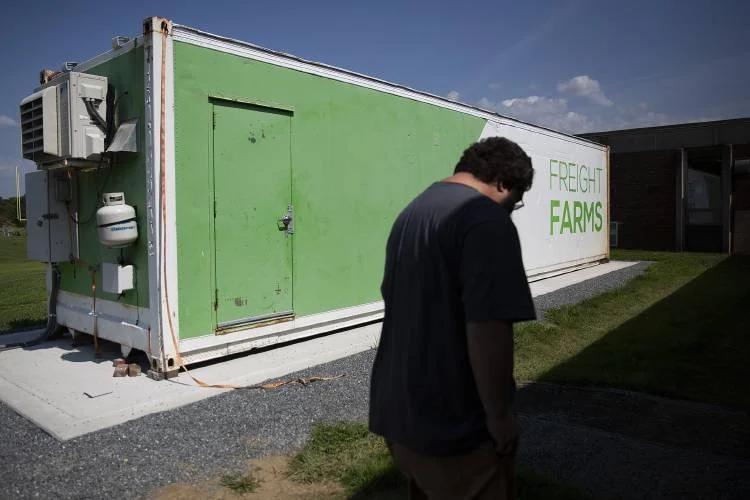
Dylan Greer, building operation supervisor, walks by a Freight Farms hydroponic growing operation built inside a shipping container, at Oxbow High School in Bradford, Vt., on Monday, Aug. 11, 2025. The hydroponic farm, which will be used by students to grow a variety of produce, was donated to the school by Stony Brook University. (Valley News - Alex Driehaus) Valley News — Alex Driehaus
BRADFORD, Vt. — Oxbow High School is in the process of setting up a hydroponic farm built inside a modular container that will serve as an educational tool for students year-round.
Stony Brook University in New York donated the structure, which was designed by Boston-based company Freight Farms, to Oxbow last fall. An average Leafy Green Machine unit costs about $76,000.
Oxbow staff learned about Stony Brook’s plan to part ways with the Freight Farm through a facilities person at the college who is a relative of a staff member at Oxbow. The high school “seized the opportunity” to acquire the farm, Oxbow Principal Ken Cadow said via email.
Oxbow’s Freight Farm will be located behind the school’s library and STEM (science, technology, engineering and mathematics) lab, which opened last fall.
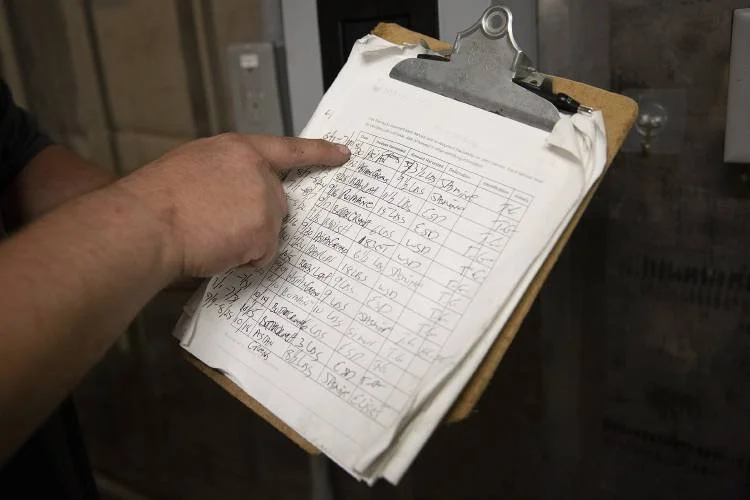
Dylan Greer, building operation supervisor, looks through the production log left by the hydroponic farm's previous owners at Oxbow High School in Bradford, Vt., on Monday, Aug. 11, 2025. Freight Farms says that the container can be used to grow the equivalent amount of produce that would be grown on 2.5 acres traditionally. (Valley News - Alex Driehaus)
The structure offers a hands-on learning opportunity for students in Oxbow’s STEM classes, said Building Operations Supervisor Dylan Greer, who has been overseeing the project.
Instead of using soil, in indoor hydroponic farming, roots are submerged in nutrient-dense water that nourishes the plants. The indoor set-up allows crops to grow year-round using light from LED bulbs.
In addition to being used to cultivate vegetables, Oxbow’s Leafy Green Machine will be used to help students learn to measure the pH levels and control the humidity and temperature inside the farm — skills “a typical classroom doesn’t get to engage in,” Greer said.
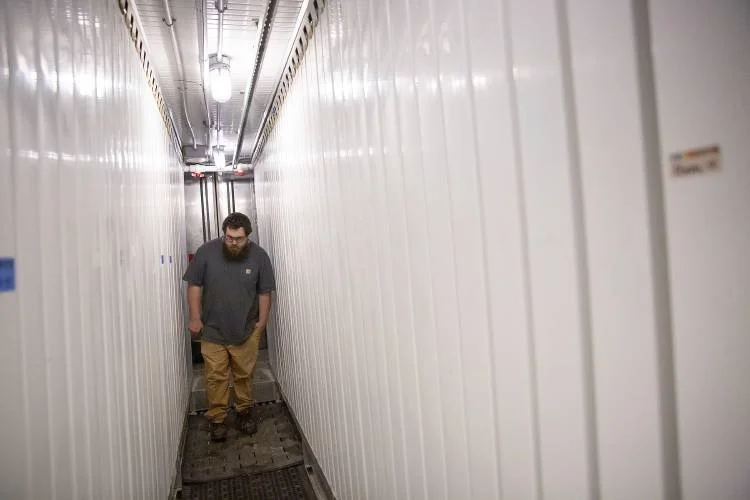
Dylan Greer, building operation supervisor, walks through the grow rows inside at Oxbow High School in Bradford, Vt., on Monday, Aug. 11, 2025. Greer hopes to have the farm operational in the fall, and plans to use the produce in the school's cafeteria and donate extra food to local businesses. (Valley News - Alex Driehaus)
The farm would also be used as part of Oxbow’s Pathways curriculum, a special education program that serves approximately 12 to 15 students.
Special education teacher Samantha Greer, Dylan’s wife, said the farm will help Pathways students learn about “giving back to the community” and develop practical skills that could bolster their resumes when it comes time to apply for jobs.
The farm also offers Pathways students an opportunity to collaborate with peers in other classes, Samantha Greer said.
The Freight Farm’s hydroponic system uses five gallons of water a day and yields between two and six tons of produce yearly, according to the company’s website.
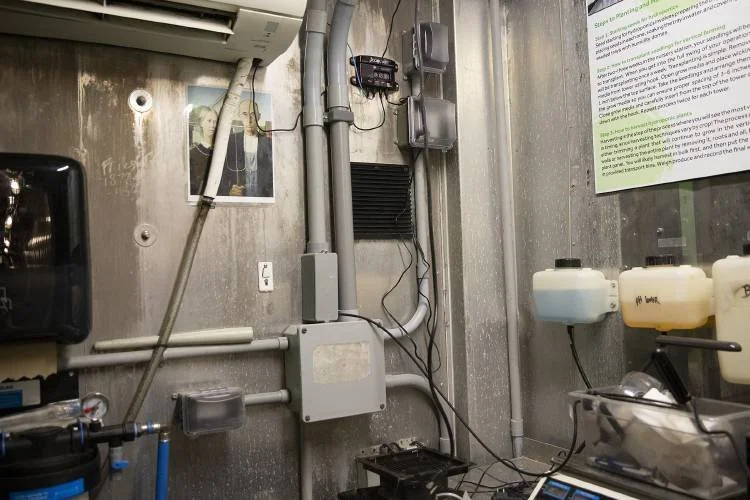
The farmers in Grant Wood's "American Gothic" look over operations at a hydroponic farm at Oxbow High School in Bradford, Vt., on Monday, Aug. 11, 2025. (Valley News - Alex Driehaus)
The farm will cost approximately $5,000 a year to operate, including the purchase of seeds and other materials, Dylan Greer said.
The plan is to grow leafy greens such as romaine lettuce and kale as well as other vegetables and flowers for prom, he said.
Some produce would be used in the school’s kitchen, while a portion would be donated to the Bradford Teen Center, the town’s food shelf and Oxbow families facing food insecurity.
Until plants start growing, it’s unclear how much the farm will yield, Dylan Greer said.
Before the farm can be used by students, an instructor has to demonstrate how the equipment is used and help faculty complete the setup.
The goal is to have the farm ready for students by September or October, and to start harvesting by winter, he said.