

Arkansas Colleges of Health Education Brings Hands-On Learning to Area Classrooms Through Hydroponic Gardens

September 6, 2026
by River Valley Democrat-Gazette
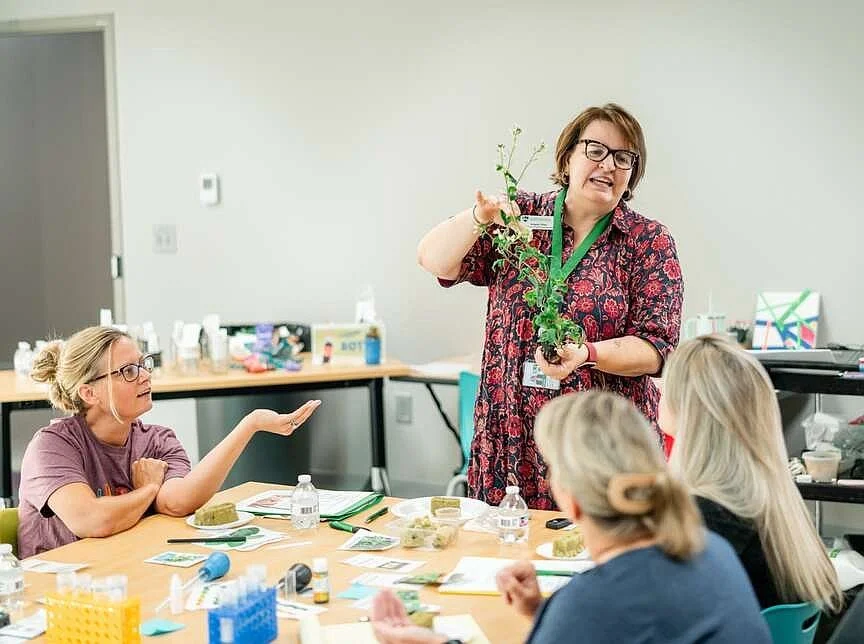
Angela Tilley discusses plant growth and hydroponic gardening with local educators during a summer professional development session at Arkansas Colleges of Health Education Research Institute Health & Wellness Center. (Submitted Photo/Arkansas Colleges of Health Education)
FORT SMITH -- The Arkansas Colleges of Health Education Research Institute Health & Wellness Center expanded its hydroponic gardening efforts this summer by equipping area teachers with the tools and knowledge to bring hydroponics directly into their classrooms.
Through two professional development sessions, 21 teachers, representing 17 schools across the region, learned how to operate hydroponic tower gardens and incorporate them into classroom instruction, according to a news release from Arkansas Colleges of Health Education.
Educators from schools throughout Fort Smith and surrounding River Valley communities participated in the training, with teachers representing elementary, middle and high school classrooms.
"A head of lettuce, a handful of herbs or even a pumpkin growing inside a classroom can become much more than a lesson in gardening. It can introduce students to science, nutrition, agriculture and potential careers, all while giving them the opportunity to take ownership of something they helped grow," according to the release. Unlike traditional gardening, hydroponics does not require soil. Plants receive the water and nutrients they need through the growing system, allowing fresh produce to be grown indoors and in spaces where a traditional garden may not be practical.
The 17 gardens distributed this summer join 15 already located in area schools and community organizations, along with 10 housed in the Research Institute Health & Wellness Center Hydroponic Lab, bringing the total number of gardens to 42.
The idea for the professional development grew from both an opportunity and a need, according to Angela Tilley, ACHE wellness program development and engagement coordinator.
"It's not enough to give a teacher a garden," Tilley said. "Teachers need to know where to get the materials, how to plant the gardens, lessons you can use, and responsibilities that you can give your students."
That realization helped shape the summer professional development sessions into what Tilley described as a "turnkey" experience. Teachers are left with a tower garden, supplies, educational resources and lesson ideas, along with a network of fellow educators they can collaborate with throughout the school year, the release states.
For many schools, establishing a traditional outdoor garden can be difficult because of space, weather and other limitations. Hydroponic towers offer a way to bring the growing experience directly into the classroom.
Each tower requires roughly a 2-by-2-foot space, access to an electrical outlet and the necessary growing materials, according to the release. That small footprint can make gardening accessible to schools without the space or capacity for an outdoor garden while introducing students to another form of agriculture.
What happens with the garden from there is largely up to the students and their teachers.
"The goal this go-around is for it to be student-driven, and for the teachers to have the knowledge to then engage the students in the choice," Tilley said.
At Chaffin Middle School, one participating teacher plans to use the garden as part of a botany club where students can explore biodiversity and grow plants from heirloom seeds, the release states.
Tilley said she hopes the experience exposes students to career paths they may not have previously considered, including botany, food science and other agriculture, science and health-related fields.
"When students are hands-on, they learn better. They can make a connection," Tilley said. "We also want students to realize that there are scientific careers that can come out of using the gardens."