

Hydroponic Farming Takes Root in Indiana

By Livability
September 2, 2025
©Journal Communications/Jeff Adkins
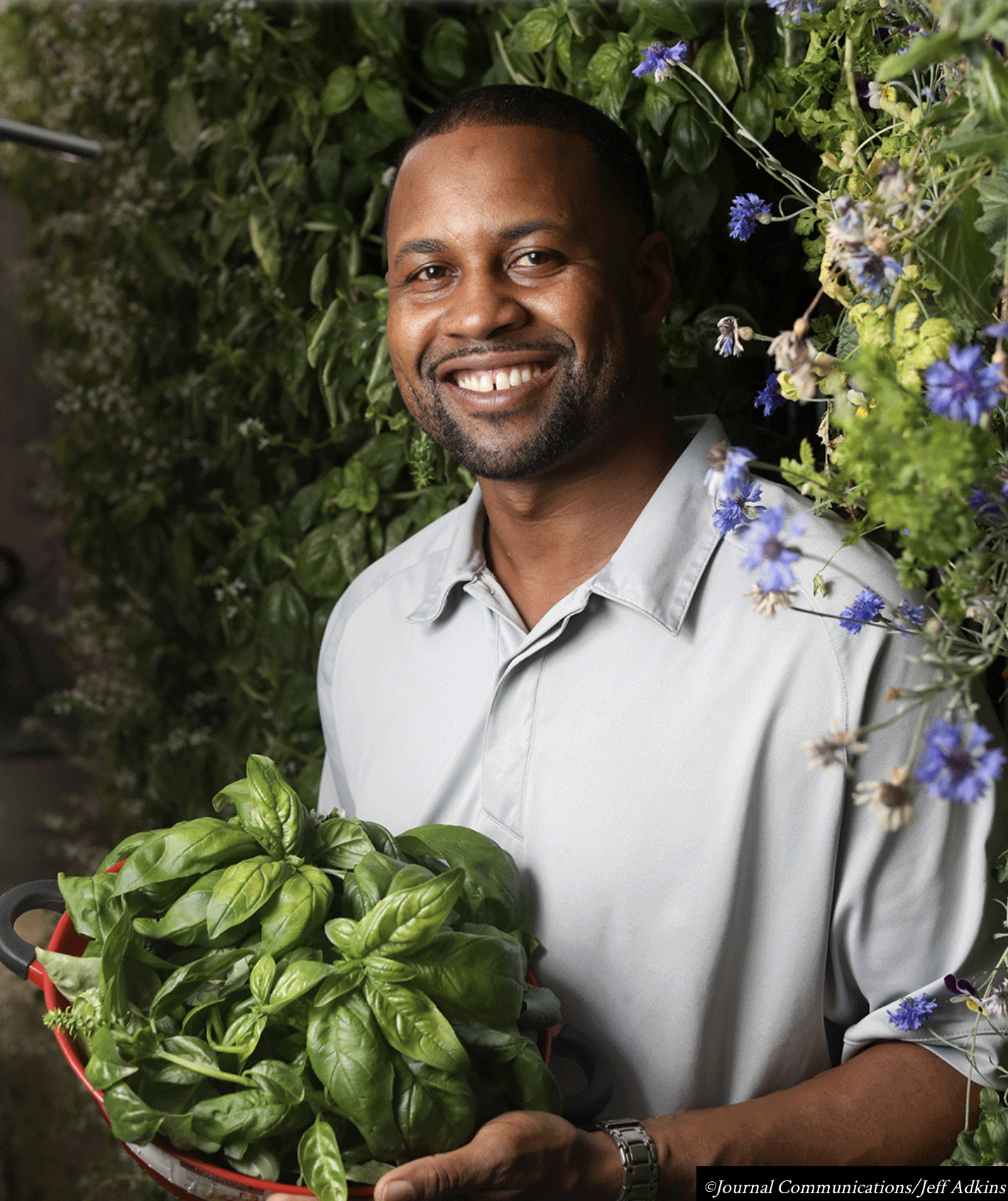
Mario Vitalis, owner and founder of New Age Provisions in Indianapolis, Indiana.
Hydroponic farming is a growing industry in Indiana.
“Hydroponic farming allows us to reimagine how and where we can grow food,” says Mario Vitalis. “We are no longer bound to the rules of traditional farming. Technology gives us a new way to farm and a fresh take on the supply chain.”
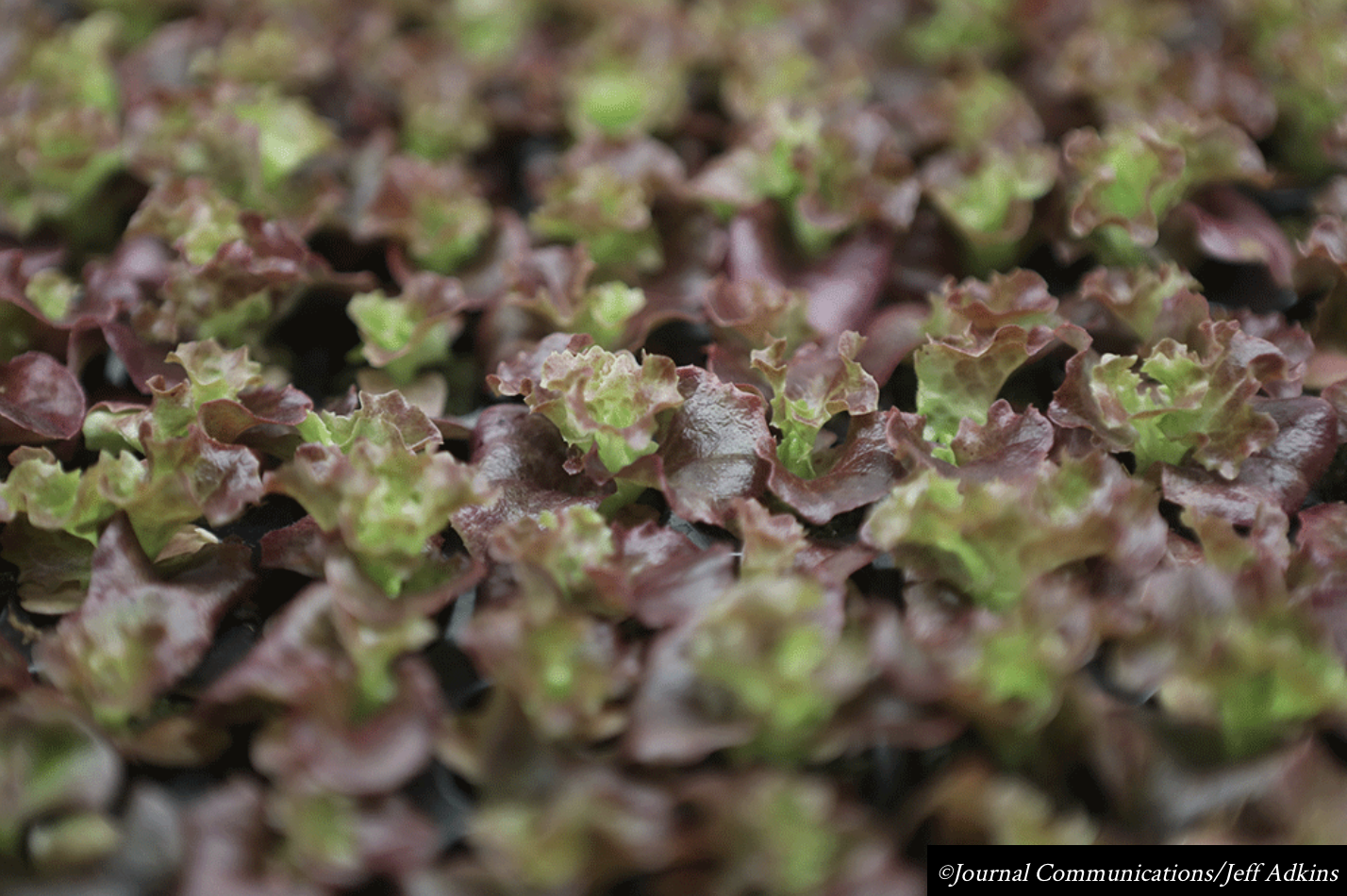
Vitalis is owner of New Age Provisions, where he grows a variety of leafy greens inside two 40-foot shipping containers on a repurposed used car lot off 10th Street in Indianapolis. His Indiana-based hydroponic farming operation requires no land or soil, and it uses controlled lighting and less water to produce nutritious, locally grown kale, lettuce, herbs and collard greens.
For New Age Provisions, the technology is a turnkey solution – a container already outfitted with a system that controls air, lighting and water, so plants can be grown efficiently 365 days of the year.
“Each container is equal to what can be produced on 3.5 acres of land,” Vitalis says. “The benefits are that we don’t have to worry about Mother Nature, about harsh weather or drought. The environment is controlled, so the plants get exactly what they need. Plus, we can get the produce to the customer right after we harvest it. In an urban environment, we’re filling a real need for fresh produce.”
Just Add Water
That freshness is a key reason hydroponically grown produce is quickly becoming a consumer favorite, says Joe McGuire, CEO of Pure Green Farms, a 3.5-acre hydroponic farming operation in South Bend, Indiana.
“Right now, 95% of all fresh lettuce in the country is grown in Arizona and California,” he explains. “By growing closer to consumers, we can ensure a fresher product for those in the Midwest. In our case, the greens can be harvested, shipped and packed within four hours. Because of our location, consumers in our state, as well as large nearby population centers like Detroit, Chicago, Cincinnati and Grand Rapids, can rely on our product being fresh and having a longer shelf life than a product from the West Coast.”
The Pure Green Farms greenhouse operation, which produces 2.5 million pounds of leafy greens throughout the year to meet consumer demand, has other benefits, as well.
“While the climate in the West is great for growing lettuce, we can create that ideal climate indoors through hydroponics,” he says. “We can control the temperature, light and humidity so the plants thrive. Plus, we don’t have the water issues here that they have in California and Arizona. We are fortunate to have ample access to water.”
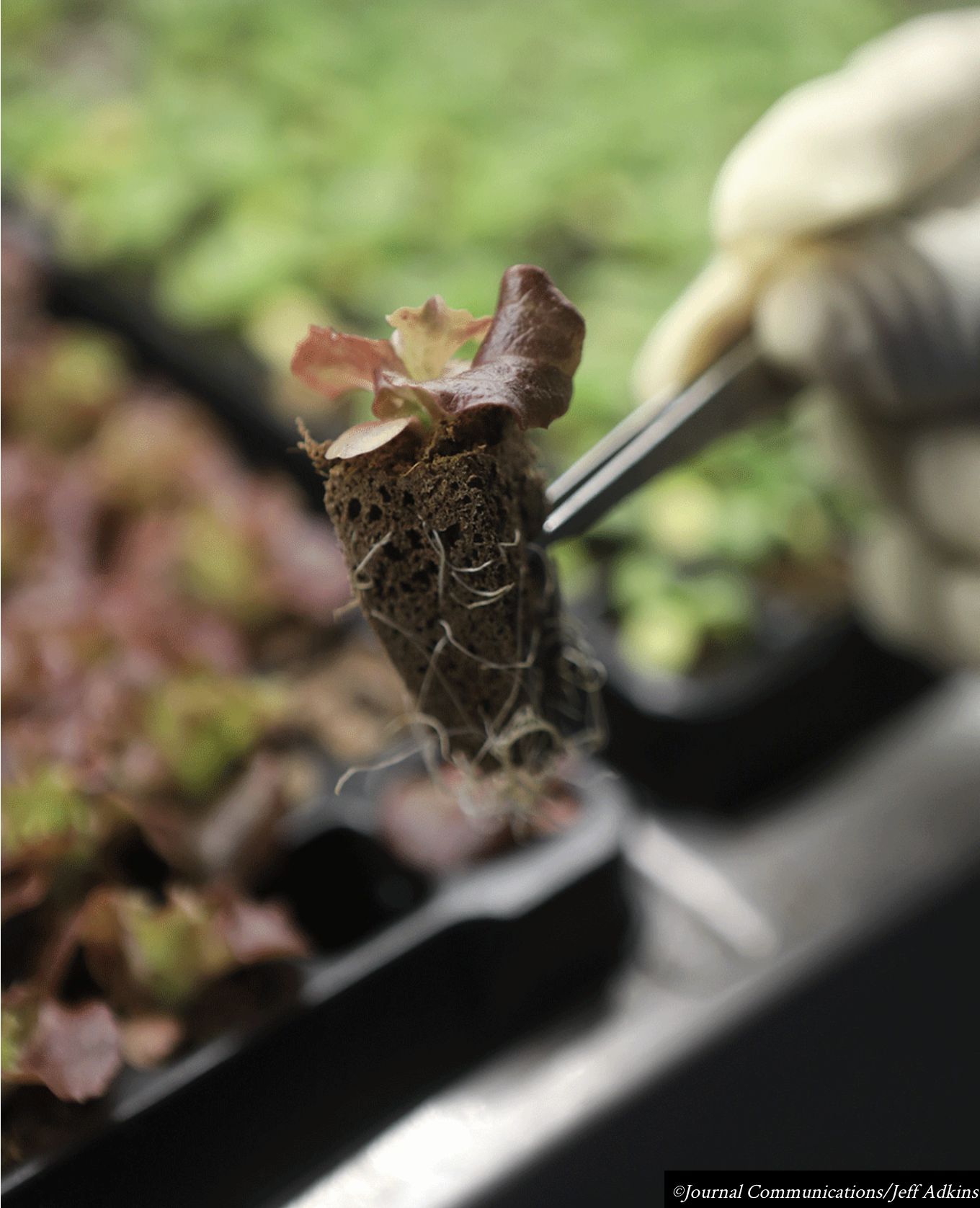
That’s key, because the basic principle of greenhouse growing is that “you feed the nutrients to the plants through water,” McGuire explains. “They sit in a gutter system, where the roots grow into the water. The plants take up that water, which is filled with natural nutrients. We don’t use any pesticides or herbicides, and we can accurately estimate and target the natural fertilizer needs of the crop. All of that means we use less fertilizer and less water, which creates overall environmental benefits in addition to ensuring a nutritious, fresh product for the consumer.”
Farm of the Future
With such benefits, it’s no surprise hydroponic farming, or controlled environment agriculture (CEA), is a growing industry, including among farmers in Indiana.
Many factors are spurring that growth, says Krishna Nemali, associate professor of controlled environment agriculture at Purdue University.
“While controlled environment agriculture systems are in their early stages and can require a large financial investment in the technology, there is no doubt that CEA will play a significant role in the future,” Nemali says. “One big reason is the impact of climate change. As drought conditions and extreme weather become more common, this method of production will become increasingly valuable.”
That’s because CEA allows producers to control the growing environment, create a year-round growing season and manage water resources.
A hydroponic system uses every drop of water,” Nemali says. “It recirculates the water. Nothing is wasted. Hydroponics uses only a third of the water to produce a similar quantity of lettuce as in the field per square foot area. Fresh water is a limited resource, and hydroponics helps us use it wisely.”
Those environmental benefits ensure the conservation of other resources, as well – from reduced pollution and decreased transportation costs in getting products to local markets to less waste of the products themselves. Because growing locally ensures freshness, the product lasts longer so less is thrown out before it can be consumed.
According to McGuire, the CEA salad industry recently passed $500 million in retail store sales nationally, with the category growing by 30% each year. He says this is happening because the product is fresher and has inherently better taste due to the way it is grown.
Nemali sees a bright future for the CEA industry.
“In the next five to 10 years, we should see an increase in the range of crops that can be grown,” Nemali says. “Now it’s mostly leafy greens, mint and cilantro. But we need to consider how we can bring more crops into it and collaborate with researchers to develop plants that fit these systems – and not just more crops, but crops with increased nutrient density for human health. That extends the benefits of CEA even further.”
This first appeared on My Indiana Home.