

Hofstra University Announces Hydroponic Container Farm to Advance Sustainability, Interdisciplinary Research, and Community Food Access

November 20, 2025

Hofstra University unveiled plans to install a Freight Farms Greenery™ S hydroponic container farm on its North Campus as part of the University’s ongoing “Pride Farm” sustainability initiatives. The announcement was made at a legislative breakfast held on campus, Monday, November 17, 2025. The container farm is supported by New York State Senator Siela A. Bynoe.
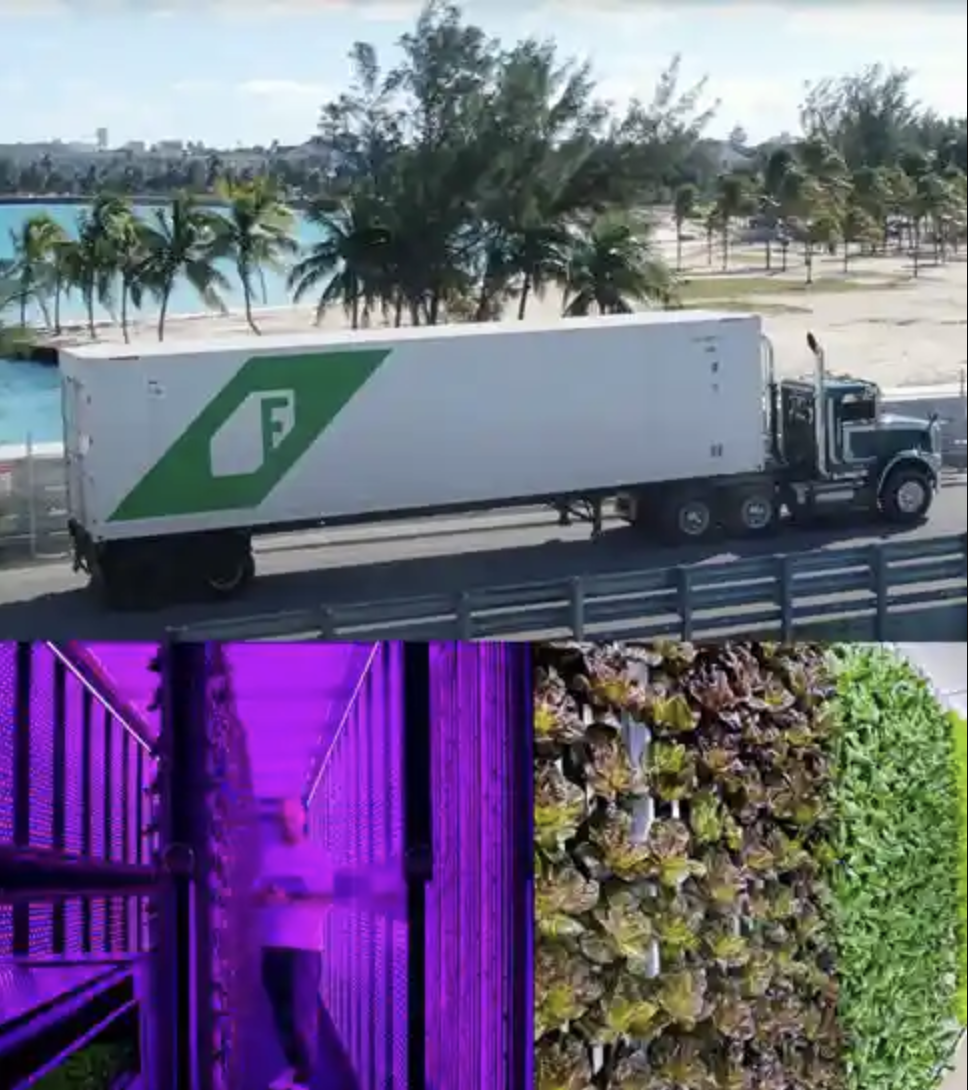
A Freight Farms Greenery™ S hydroponic container farm will be installed on Hofstra’s North Campus.
“We are thankful for Senator Bynoe’s support as we expand Hofstra’s role as a campus laboratory for sustainability and public health,” said Hofstra University President Susan Poser. “The container farm advances the pillars of our Hofstra 100 strategic plan, which highlights integrating research, student experiential learning, and community impact.”
The Greenery S is a hydroponic farm constructed inside of a standard shipping container that can be operated 365 days a year in any location with connections to power, water, and Wi-Fi. The 320-square-foot system can produce 2 to 6 tons of produce annually, the equivalent of 2.5 acres of traditional farmland.
The project is headed by Dr. J. Bret Bennington, professor and chair of Geology, Environment, and Sustainability; Dr. Sasha Pesci, assistant professor of Sustainability Studies; Steven Richman, associate vice president for Student Health, Wellbeing, and Campus Support Services; and Jessica Eads, senior vice president for Student Enrollment, Engagement, and Success.
The Greenery S container farm is one of several initiatives introduced by Hofstra’s Department of Geology, Environment, and Sustainability to help the University campus and the surrounding communities become more sustainable.

The container farm will serve as a hands-on teaching tool across the academic disciplines, including Sustainability Studies, Food Studies, Engineering, Nursing, Business, and Public Health. Students will operate the farm alongside faculty, gaining experience in controlled environment agriculture, supply-chain planning, resource-efficiency analysis, and community outreach.
The Greenery S will also serve as a research platform to evaluate water and energy usage, crop choice and yields, and the dietary and health impacts of increased access to hyperlocal fresh produce. Hofstra faculty and students will investigate renewable energy options to offset the farm’s electrical needs, optimize workflows, and test methods to expand the range of crops grown in container systems.
Hofstra plans to make a substantial portion of the harvest available to campus dining services, the Hofstra food pantry, and neighboring communities in Uniondale and Hempstead through local pantries and farmers markets.

Groups from local K-12 schools will be invited to campus to learn about urban agriculture, hydroponic gardening, and the value of growing nutritious food locally.
Hofstra University plans to partner with community organizations and local school districts to host educational visits and distribute produce to those with limited access to fresh food.
“Pride Farm” is an example of work demonstrates how Hofstra continues to build upon the R2 research designation received earlier this year from the Carnegie Classification of Institutions of Higher Education, a testament to the University’s dedication to research, innovation, and societal impact.