

Hale Kipa Installs ‘Freight Farm’ in Ewa Beach, Honolulu, Hawaii

August 4, 2025
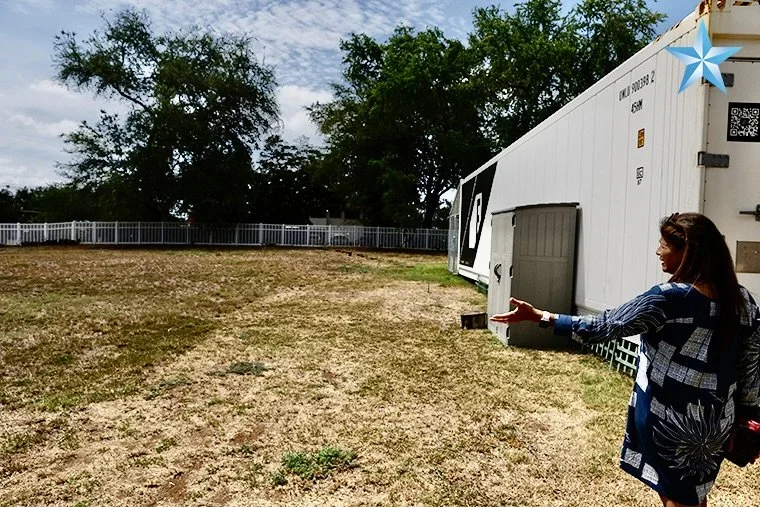
Venus Kau’iokawekiu Rosete-Medeiros, CEO of Hale Kipa, shows the land area outside the Freight Farm structure, seen at top right, that is going to be used for aquaponics, Thursday, July 24, 2025, in Ewa Beach.
Hale Kipa installed the “Freight Farm,” a hydroponic agricultural facility built inside of a shipping container, which can grow 2 to 6 tons of green crops a year.
Homeless and at-risk shelter residents will cultivate their own healthy food and share with the community.
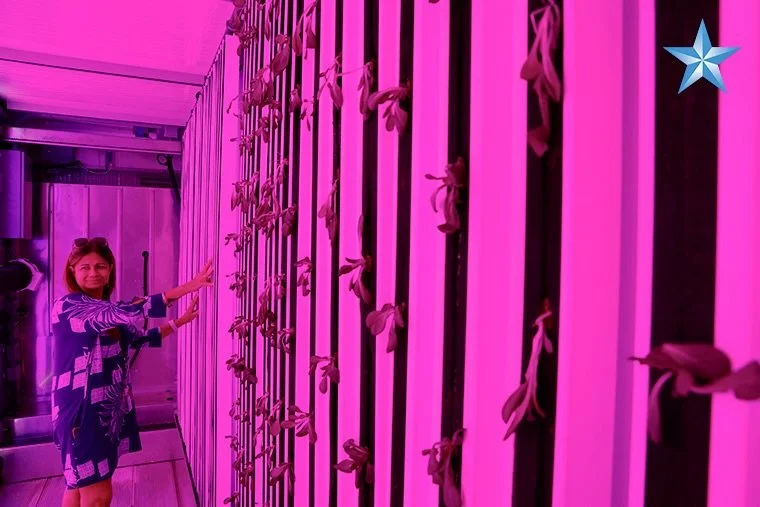
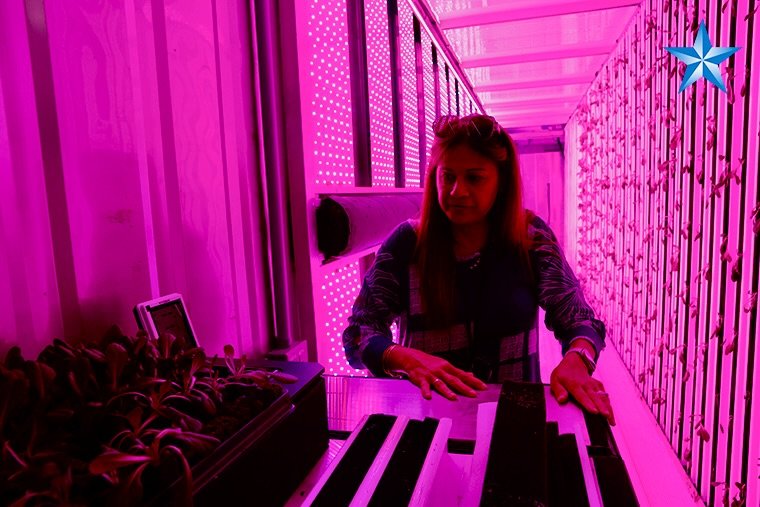
Venus Kau’iokawekiu Rosete-Medeiros, CEO of Hale Kipa, checks on growing crops inside the Freight Farm at Hale Kipa, Thursday, July 24, 2025, in Ewa Beach.
Hale Kipa installed the “Freight Farm,” a hydroponic agricultural facility built inside of a shipping container, which can grow 2 to 6 tons of green crops a year.
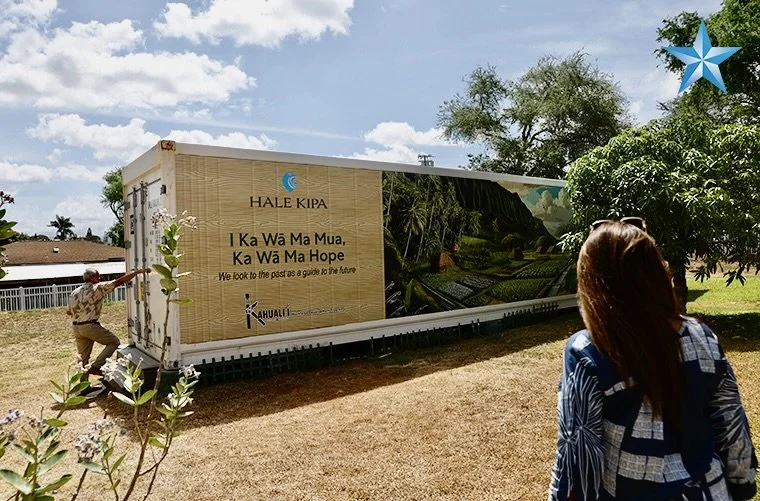
Venus Kau’iokawekiu Rosete-Medeiros, right, CEO of Hale Kipa, and Gerry Labiste, left, communications manager at Hale Kipa, walk toward the Freight Farm structure, Thursday, July 24, 2025, in Ewa Beach.

August 4, 2025
Hale Kipa installed the “Freight Farm,” a hydroponic agricultural facility built inside of a shipping container, which can grow 2 to 6 tons of green crops a year.
Homeless and at-risk shelter residents will cultivate their own healthy food and share with the community.
Vulnerable youth and Hale Kipa’s emergency youth shelter residents grow fresh produce, learn about farming, earn a stipend and invest in the community at a recently installed agricultural facility built entirely inside of a shipping container.
The “Freight Farm” will grow 2 to 6 tons of crops a year just inside of a single 40-foot long, 320-square-foot shipping container, tucked away on Old Fort Weaver Road in Ewa Beach, next to Hale Kipa’s 24/7 emergency shelter.
Venus Kau‘iokawekiu Rosete-Medeiros, president and CEO of Hale Kipa, said initially the organization had tried to introduce aina-based learning into programs for youth shelter residents but found that not everyone was motivated when working in the hot sun out on a typical farm.
“At Hale Kipa we are trying to plant seeds for transformation, so the container is metaphorically what we are doing with our kids,” Rosete-Medeiros said. “We’re taking them (in) and transforming them.”
The crops grown at the facility are farmed through hydroponics, a method of growing plants without soil, using nutrient-rich water solutions. Inside of the shipping container, environmental factors like air, light and space all can be controlled to optimize the plant growth.
Many of the Freight Farm’s youth workers are ages 12-17 and come from the emergency shelter, but current or past residents from any of Hale Kipa’s campuses are welcome to join in.
One 15-year-old girl began working in the Freight Farm about six weeks ago while she was a resident in the emergency shelter, but has since transitioned out of the shelter and continues to visit the farm to grow crops.
She enjoys “helping teach everybody else how to do it and trying to get everybody on the same track,” she said as she prepped planters for new lettuce sprouts. “I try to take my mind off of what’s going on, and it’s a space I can feel free with myself and get away from everybody for a moment.”
She said that her favorite part about the farming process is learning about the growth process, which can be monitored digitally.
“You can all control it just from the computer, through the coding,” she said. “It’s really good experience working with it.”
Each crop — like the butter lettuce currently growing — has a corresponding “recipe” that is programmed on a computer, made up of different lighting, nutrients, temperatures and water levels, the 15-year-old said. “Everything that you see in here (the shipping container) is for the plants.”
Ron Musch, chief program officer at Hale Kipa, said the computer makes the farm easy to monitor for the workers that oversee the project.
“You can hook your phone up to it with an app and I could be at home and go, ‘Oh, there’s a flood. I’d better get down there, or I need to change the recipe,’” he said….