


Welcome to iGrow News, Your Source for the World of Indoor Vertical Farming

Skyscraper Farm: Army Ranger Takes Aim At Global Hunger
By Skyscraper Farm - Thursday, October 11, 2018
Everyone knows what’s coming: The agricultural sector will face enormous challenges to feed the 9.6 billion people projected to inhabit the planet by 2050. In order to do so, food production must increase by 70 percent in spite of the limited availability of arable lands. Another 8.5 million square kilometers, or land the size of Brazil, are needed.
Not only is land needed but there are also increasing needs for fresh water — more than 70 percent of the world’s fresh water already goes to agriculture. As Skyscraper Farm CEO Nick Starling puts it: “We don’t have a water crisis. We have a water allocation crisis.”
Society has responded to these challenges with three innovative shifts: new farming techniques, younger farmers to pioneer them and utilizing technology to make fulfillment easier. Vertical farming refers to the practice of growing crops indoors in vertically stacked layers or on vertically inclined surfaces inside structures like warehouses, shipping containers or even skyscrapers.
These indoor farming systems are designed to maximize crop yields while minimizing environmental impacts. Moreover, by bringing farms closer to where people live, this farming method is expected to be both efficient and cost-effective by reducing transportation expenses and environmental damage.
SPECIAL COVERAGE: Agricultural Mixed-Use: Revolutionizing Farming
Indoor farming has its challenges: Most methods consume a surplus of energy, calling into question the impact on sustainability, or are located too far from urban centers where populations need it most. Thankfully, one firm is ready to bridge the gaps.
Skyscraper Farm, LLC, is a Virginia-based business venture dedicated to vertical farming. Founded by Nick Starling, an Iraq invasion war veteran, its vision is to bring sustainable, cost-effective agricultural products to city centers and remote sites in the U.S. and abroad by combining cutting-edge vertical farming with high-end, attractive, mixed-use real estate.
Skyscraper Farm specializes in the construction of urban, mixed-use buildings that feature an indoor, vertical farm that uses primarily sunlight to grow plants and has the capacity to have 20 harvests a year.
The Company has designed three types of buildings: a four-story facility that is solely outfitted for growing space, a mid-rise built on top of grocery stores, and a 52-story skyscraper that includes residential condos, commercial office space and restaurants.
Buffalo, New York - Vertical Farming Co-Op Growing Into New Space On East Side
Michael Zak, the chairman of vertical farming organization GroOperative, is moving his company to a 4,200-square-foot space at Clinton and Bailey avenues.
DMFOTOGRAPHY
By Dan Miner – Reporter, Buffalo Business First
October 10, 2018
Michael Zak has been searching for ways to make a big impact on inner-city Buffalo youth since he was a teenager.
Now the 34-year-old will have his chance.
Zak, the chairman of vertical farming organization GroOperative, is moving his company out of the small basement he leases underneath Buffalo Roots in University Heights to a 4,200-square-foot space at Clinton and Bailey avenues. He has room to grow the second-story space out to 20,000 square feet.
The move was supported with a $100,000 grant award won during this year’s Ignite Buffalo competition. Zak said he is also launching a $100,000 capital campaign in which people can buy shares of common stock in the company, earning them a small dividend while supporting urban farming in Buffalo.
The new home is expected to give GroOperative the scale to be a profitable enterprise while meeting the surging demand for its basil, lettuce and micro-green products. Zak said he will be able to grow more fish – which provide fertilizer for his plants and are also sold to customers – and expand his mission of teaching children about sustainable agriculture.
“This is becoming the business I always wanted it to be,” said Zak, who was part of GroOperative’s founding team in 2014. “We’ll be able to take up to 20,000 square feet of space, employ 20 to 30 people, provide fresh produce for people in the Buffalo area and teach children about sustainable farming systems.”
The African Heritage Food Co-Op will lease first floor space in the building, which was last home to Willowbrook Farms and is in a section of the city known for its cluster of food distribution warehouses.
GroOperative is built as a farming cooperative, and Zak said the goal is to support more owner-operators working alongside him. He expects to move into the new space by January.
Living Greens Unveiling Large Aeroponic Vegetable Farm
Living Greens said that its Faribault farm will be the second-largest aeroponics operation behind that of industry leader AeroFarms.
OCTOBER 6, 2018 - NEAL ST.ANTHONY@STANTHONYSTRIB
LIVING GREENS Executives Dave Augustine, left, and Dana Anderson foresee a rapid expansion of Living Greens Farm of Faribault.
The several-year founder of a growing aeroponic farm near Faribault is ready to prove his Living Greens low-input, no-dirt operation will have a big effect on the emerging world of year-round indoor vegetable growing.
CEO Dana Anderson, 50, a former financial adviser who worked on farms as a youth near Spicer, Minn., started tinkering with aeroponics in his Prior Lake garage in 2010.
Last year, Living Greens, staked by $8 million over several years contributed by founding shareholders, started slowly by testing and eventually producing increasingly larger crops of lettuce with a high-tech, rapid-growth system rooted in nutrient-rich misting and LED lighting.
By early next year, following completion of the last stage of construction, Living Greens should amount to 60,000 square feet of stacked, mechanized growing space capable of producing up to 3 million heads of high-quality lettuce.
That’s several fast-growing crops in one year.
The business plan and initial production proved impressive enough to recently draw $12 million in an inaugural round of institutional funding from Boston-based private-equity funds NXT and Wave Equity Partners.
“We’re exiting the research-and-development stage and going to market,” Anderson said.
The $6 million Faribault factory-farm will prove Living Greens’ technology innovation and its year-round, premium-lettuce model and spur construction of a second plant within a year outside of Minnesota, backers said.
“We think we have an opportunity to be a market leader in leafy greens,” Anderson said. “There are projections nationally that up to 50 percent of leafy greens could be grown indoors within 10 years from almost nothing today.
“Our goal is to be the largest indoor [farm operation]; corporate-owned and through licensing of the technology,” Anderson said. “We’re looking at joint ventures with food-service companies around the world.”
Living Greens said that its Faribault farm — a floor footprint of about 20,000 square feet that rises to about 16 feet, thus providing its 60,000 square feet of growing space — will be the second-largest aeroponics operation behind that of industry leader AeroFarms of Newark, N.J. It operates a 70,000-square-foot indoor farm in addition to smaller installations.
Living Greens already supplies a growing list of Minnesota and Wisconsin grocers with several types of leaf lettuce, arugula and mixed greens through Robinson Fresh, a division of C.H. Robinson.
By next year, it will have installed the technology to produce around 3 million bagged packages of salad greens for retail distributions.
Typical salad bags, depending on whether they include dressing and other ingredients as part of planned “salad kits,” will retail for $2.99 to $3.99.
“We’re producing about 500,000 units a year now, and it will be a sixfold expansion by spring,” Anderson projected.
The 20-employee Living Greens operation includes chief technology officer Dave Augustine, a University of Minnesota-trained electrical engineer and veteran industrialist who joined the board several years ago.
Augustine, 55, who grew up on a farm, was a several-year board member who stepped into the executive ranks as overseer of the company’s technology integration.
Living Greens has been awarded four patents on its growing process, according to Anderson.
The firm plans to produce as much lettuce indoors as would be produced by 100 times the farmland, using 95 percent less water, no pesticides, herbicides or other chemicals.
It does so thanks to its density and computer-controlled environment that blends natural light and ultra efficient LED lighting that has dramatically dropped in price in recent years thanks to widespread business and residential embracement.
“The price has been dropping by about 20 percent a year as illumination has increased by about 50 percent,” Anderson said. “The risks of foodborne illness are extremely muted compared to the traditional food chain. We use a ‘reverse-osmosis’ process to remove all the particulates from the water.”
Then there’s the local pitch.
Living Greens plans to deliver a premium product locally, at lower cost, because it won’t have the long-haul transportation expense and up to two weeks’ time to deliver from Mexico or the California-Texas Sun Belt where most fall-winter vegetables are grown.
To be sure, Living Greens has dreams of being a big company in a fragmented but fast-developing indoor agriculture market.
They include Revol Greens, the Minnesota-based greenhouse grower that has added some water- and energy-conserving wrinkles of its own, as well as Plenty, the California-based indoor grower that has raised $200 million and also has its eyes on China.
The sector is driven by the premise that farmland is limited, and industrial-scale farming can be very expensive and uses what can be unsustainable amounts of water, chemicals and land.
The challenge for the small, indoor innovators such as Living Greens is to entice buyers with tasty produce at a competitive but profitable price that customers also will patronize for their regional and environmental pitches.
“This took us longer and cost us more than we’d hoped, but I think we have a better system and technological lead,” Anderson said. “It’s a tremendous opportunity because of the demand for fresh, year-round local produce.”
Neal St. Anthony has been a Star Tribune business columnist/reporter since 1984. His work has been recognized by the Minnesota Society of Professional Journalists and the Society of American Business Editors and Writers.
Neal.St.Anthony@startribune.com 612-673-7144 @StAnthonyStrib

Microgreens Maker
Written by Jim Ray
October, 2018
Grow Love. Feed. Every. Body.
Maker is coming out soon, and here is a sneak preview. Given that a farmer is able to grow microgreens in a 1020 tray and get a couple of pounds yield every week, we may pack 3 of those trays into one layer, stack 4 layers in one rack, and yield 24 pounds per system per week of cilantro microgreens that currently sell for $80 per pound. That’s $2,000 per week revenue from a $4,000 system that draws less than 500W.
We are in the process of finalizing our patent, and plan to have product available for sale in the near future.
The following drawing shows more details on the modular and scalable system along with call outs.
Wayne Community College
Wayne Community College is getting 5 of our systems, and placing them in a cargo container. Although we could easily pack 10 systems in one cargo container, they are allowing room for a preparation table by each system.
With 5 systems, that’s $10k per week market potential with 52 crops per year for an annual gross income of $500k+
Their plans revolve around applied technology as opposed to commercial potential, and will give their crops to the community while providing an opportunity to educate students in urban agriculture.
Here’s a picture of the cargo containers that will go on their campus:
Cargo Containers
We’ll add our system to our shopping cart, and open our doors for business in the very near future.
Here’s a 3D CAD drawing of our 5 systems inside a cargo container:
Multiple Systems
NetZero // Urban Agriculture – Grow Love. Feed. Every. Body.
office: 855-636-9114 cell: 984-459-0458 email: jim@hq.net0ag.com
Posted in News
Urban Farming Organization Visualizes a Franchise Model To Produce Fresh Fish And Vegetables
Lisa Waterman Gray
On a cool September morning, Dre Taylor dodged raindrops while talking with several people tending beans, peppers, tomatillos, collards and more outside of a 4,500-square-foot building. This is Nile Valley Aquaponics, a vibrant fixture in Kansas City, Missouri's urban core. The name came from Egypt where people cultivated plants and fish thousands of years ago. Goats and picnic tables share outdoor space and offices occupy a nearby house.
Last summer (2018), Nile Valley Aquaponics grew dozens of fruits, vegetables and herbs, from tomatoes and squash to basil and sage, kale and Swiss chard. Its 100,000 Pound Food Project seeks to produce 100,000 pounds of local fresh fish, vegetables and herbs, creating greater access to healthy food choices, while providing volunteer opportunities and economic stability in the area. Health education is also important. Several October classes will address growing mushrooms, building a greenhouse for less than US$500, and building a personal aquaponics system.
Nile Valley Aquaponics' 100,000 Pound Food Project seeks to produce 100,000 pounds of local fresh fish, vegetables and herbs, creating greater access to healthy food choices.Lisa Waterman Gray
The organization operates under the 501c3 M2M (Males to Men) Community Foundation mentorship program, which Taylor launched in 2013. He also founded the Kansas City Urban Farm Co-Op whose Fruit Orchard opens on Sept. 29 in Swope Park.
Taylor's interest in aquaponics began following a Will Allen workshop by former professional basketball player and founder of Milwaukee-based Growing Power Backyard Aquaponics (the nonprofit has closed). After creating a personal aquaponics system and a 2013 visit to Growing Power Backyard Aquaponics, Taylor's dream expanded. Once he had a 378-liter (100-gallon) fish tank operating, Taylor began talking to potential funders.
Construction began in October 2015 on two vacant lots donated by long time residents and community leaders Harrel Sr. and Myrtle Johnson. Three conjoining vacant lots were also purchased from the Land Bank of Kansas City. Taylor and volunteers removed 18 trees, which became tables, benches and a desk.
By March 2017, these previously distressed vacant lots had become a welcome urban oasis. "Our goal is to grow all fish food here, by January 2019," Taylor said. "About 800 people have worked on this project. Everybody loves it and we have a lot of community support. We're building a community based on food. Kids involved during the summer received stipends funded through grant money."
Nile Valley's facilities are welcome urban oases for the community.
Lisa Waterman Gray
Modern-day aquaponics facilities operate from Myanmar to Peru. Aquaponics critics fear energy consumed by these indoor farms may negate potential climate benefits and Taylor admits his monthly electric bill can top US$1,000.
But these operations typically use less water than traditional farms do. Aquaponics farmers re-circulate water while housing more fish in smaller spaces. With plants included in 'the loop' the land and water needs decrease. In Half Moon Bay, California, Ouroboros Farms circulated the same 227,125 liters (60,000 gallons) of water for a year.
Organic certification has been another sticking point. However, late last year, the National Organic Standards Board rejected a proposal prohibiting hydroponic and aquaponic farms from organic certification. Nile Valley Aquaponics isn't currently certified.
Taylor has patents pending on his state-of-the-art system. Today, approximately 30,000 tilapia thrive here, while three six-foot-deep troughs feed and water 5660-square-meters (20,000-square-feet) of indoor 'farmland' on four levels.
Taylor also created an organic pesticide liquid that should be available for sale next year. Every week three hundred pounds of coffee chaff from a coffee roaster, plus water, create 'feed' for more than a million Black Soldier Flies that eat it while breeding. This yields one ton of waste per month, making compost and releasing a natural pesticide liquid that is mixed with water before application to plants.
In 2019, a major expansion will unfold. Designed by St. Louis-based HOK (a global design, architecture, engineering and planning firm), it will incorporate two additional greenhouses, raised garden beds, a chicken coop and beehives. Sustainable materials, a wind turbine and rainwater cisterns will enhance the site, where neighbors will find community gathering and event spaces too.
"The new facility will be a sleek, new urban [agriculture] design that can be used in a mixed-use area—from neighborhoods to new developments," Taylor said. "Nile Valley is a game changer, bringing healthy food, community, education, and economic development to an underserved community."

South Korean Road Tunnel Smart Farm No Rose-Coloured Pipe Dream
Behind a blue wall that seals a former highway tunnel stretches a massive indoor smart farm bathed in rose-tinted light.
AP | 30 August 2018
Behind a blue wall that seals a former highway tunnel stretches a massive indoor smart farm bathed in rose-tinted light.
Fruits and vegetables grow hydroponically — with no soil — in vertically stacked layers inside, illuminated by neon-pink LEDs instead of sunlight.
Operators of this high-tech facility in South Korea say it is the world’s first indoor vertical farm built in a tunnel.
It’s also the largest such farm in the country and one of the biggest in the world, with a floor area of 2300sqm, nearly half the size of an American football field.
Indoor vertical farming is seen as a potential solution to the havoc wreaked on crops by the extreme weather linked to climate change and to shortages of land and workers in countries with ageing populations.
The tunnel, about 190km south of Seoul, was built in 1970 for one of South Korea’s first major highways.
Once a symbol of the country’s industrialisation, it closed in 2002.
An indoor farming company rented the tunnel from the government last year and transformed it into a “smart farm”.
Instead of the chirrups of cicadas, Claude Debussy’s Clair de Lune resonates in the tunnel in hopes of stimulating the crops’ healthy growth.
“We are playing classical music because vegetables also love listening to music like we do,” said Choi Jae Bin, head of NextOn, the company that runs the vertical farm.

Head of NextOn Choi Jae Bin explains how his high-tech tunnel-based vertical indoor farm NextOn in Okcheon, South Korea, could be a potential solution to the havoc wreaked on crops by the extreme weather linked to climate change, and to shortages of land and workers as the country ages.Picture: AP
Sixty types of fruits and vegetables grow in optimised conditions using NextOn’s own growth and harvest systems.
Among them, 42 are certified as no-pesticide, no-herbicide and non-GMO products, said Dave Suh, NextOn’s chief technology officer.
He said the tunnel provided temperatures of 10 to 22 degrees celsius, enabling the company to optimise growing conditions.
High-tech smart farms, used also in places like Dubai and Israel where growing conditions are challenging, can be a key to developing sustainable agriculture, experts said.
“Society is ageing and urbanisation is intensifying as our agricultural workforce is shrinking,” said Son Jung Eek, a professor of plant science at Seoul National University.
Smart farming can help address that challenge, he said, as well as make it easier to raise high-value crops that are sensitive to temperature and other conditions.
Only slightly more than 16 percent of South Korea’s land was devoted to farming in 2016, according to government statistics.
The rural population has fallen by almost half over the past four decades, even as the overall population has grown nearly 40 per cent.
The Agriculture Ministry announced earlier this year it would invest in smart farm development nationwide, expanding their total area to 7000ha from the current 4010ha.
Turning a profit can be challenging for indoor vertical farms given the high cost of construction and infrastructure.
NextOn cut construction costs in half by using the abandoned tunnel and developing its own LED lights and other technologies.
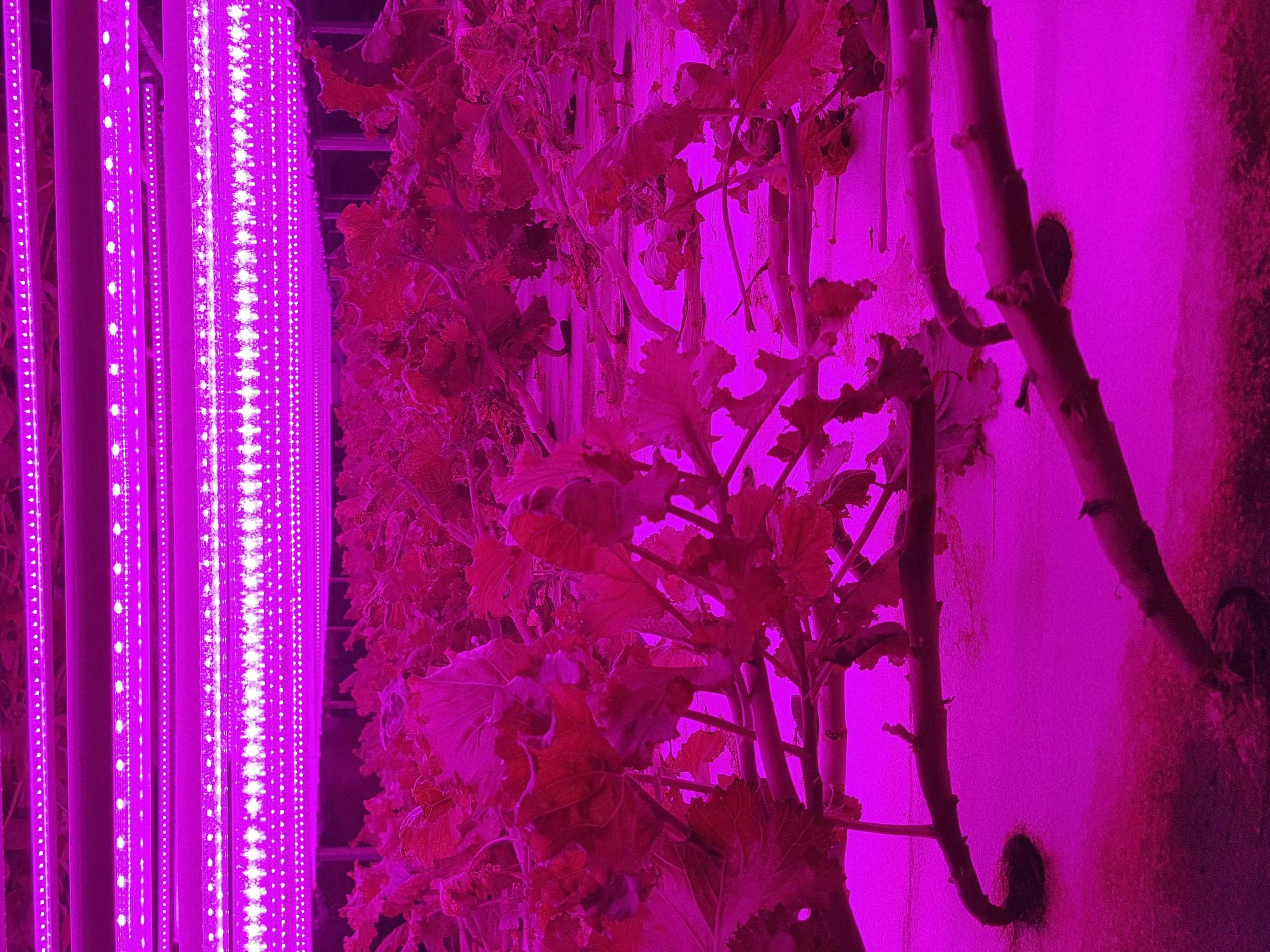
Sesame leaves grow on a vertically stacked styrofoam layer.Picture: AP
The proprietary technologies reduce water and energy use and the need for workers, cutting operation costs, Suh said.
Sensors in each vertical layer measure variables such as temperature, humidity, light, carbon dioxide and micro-dust levels to maintain an optimised environment for each crop.
The crops will cost less than conventionally grown organic vegetables, Suh said.
The farm will begin supplying vegetables to a major food retailer and a leading bakery chain beginning in late August, NextOn said.
Suh said the medicinal plant market was currently dominated by a few countries and regions.
“Our goal is to achieve disruptive innovation of this market by realising stable mass production of such premium crops,” he said.

New Autonomous Farm Wants To Produce Food Without Human Workers
To View Video Please Click Here | COURTESY OF IRON OX
Down on a new robot farm, machines tend rows of leafy greens under the watch of software called “The Brain.”
by Erin Winick
October 3, 2018
Iron Ox isn’t like most robotics companies. Instead of trying to flog you its technology, it wants to sell you food.
As the firm’s cofounder Brandon Alexander puts it: “We are a farm and will always be a farm.”
But it’s no ordinary farm. For starters, the company’s 15 human employees share their work space with robots who quietly go about the business of tending rows and rows of leafy greens.
Today Iron Ox is opening its first production facility in San Carlos, near San Francisco. The 8,000-square-foot indoor hydroponic facility—which is attached to the startup’s offices—will be producing leafy greens at a rate of roughly 26,000 heads a year. That’s the production level of a typical outdoor farm that might be five times bigger. The opening is the next big step toward fulfilling the company’s grand vision: a fully autonomous farm where software and robotics fill the place of human agricultural workers, which are currently in short supply.
COURTESY OF IRON OX
Iron Ox isn’t selling any of the food it produces just yet (it is still in talks with a number of local restaurants and grocers). So for now, those tens of thousands of heads of lettuce are going to a local food bank and to the company salad bar. Its employees had better love eating lettuce.
The farm’s non-lettuce-consuming staff consists of a series of robotic arms and movers. The arms individually pluck the plants from their hydroponic trays and transfer them to new trays as they increase in size, maximizing their health and output—a luxury most outdoor farms don’t have. Big white mechanical movers carry the 800-pound water-filled trays around the facility.
COURTESY OF IRON OX
At first, making sure these different machines worked together was tricky. “We had different robots doing different tasks, but they weren’t integrated together into a production environment,” says Alexander.
So Iron Ox has developed software—nicknamed “The Brain”—to get them to collaborate. Like an all-seeing eye, it keeps watch over the farm, monitoring things like nitrogen levels, temperature, and robot location. It orchestrates both robot and human attention wherever it is needed.
Yes, although most of the operation is automated, it still does require a bit of human input. Currently, workers help with seeding and processing of crops, but Alexander says he hopes to automate these steps.
But why go to the trouble of automating farming at all?
Alexander sees it as solving two problems in one: the shortage of agricultural workers and the distances that fresh produce currently has to be shipped.
Rather than eliminating jobs, the company hopes, the robots will fill the gaps in the industry’s workforce. And he believes that by making it possible to grow crops close to urban areas without paying city-level salaries, the automated farms will enable stores to chose vegetables fresher than those that had to travel thousands of miles to get there. That is, assuming the startup can get its prices to match those of traditional competitors.
COURTESY OF IRON OX
“The problem with the indoor [farm] is the initial investment in the system,” says Yiannis Ampatzidis, an assistant professor of agricultural engineering at the University of Florida. “You have to invest a lot up front. A lot of small growers can’t do that.” This could risk creating a gap between the big farming institutions and smaller family-owned operations, in terms of gaining access to new technology.
To View Video Please Click Here | COURTESY OF IRON OX
Despite this, Ampatzidis says that bringing automation to both indoor and outdoor farming is necessary to help a wider swath of the agricultural industry solve the long-standing labor shortage.
“If we don’t find another way to bring people [to the US] for labor, automation is the only way to survive,” he says.
Erin Winick Associate Editor
I am the associate editor of the future of work at MIT Technology Review. I am particularly interested in automation and advanced manufacturing, spurring from my background in mechanical engineering. I produce our future of work e-mail… More

DelFrescoPure Goes Year-Round With Indoor Vertical Farm
Chris Koger October 9, 2018
CubicFarms constructs containers that grow leafy greens, like this one from the company's website. ( Courtesy CubicFarms )
DelFrescoPure is investing in technology with a new mechanized stand-alone growing system for the company’s living herbs and microgreens in a year-round process.
The system, known as LivingCube, is from CubicFarms, a supplier of indoor vertical farms.
The LivingCubes are 40-foot climate-controlled growing chambers that have 12 growing, germination and irrigation machines, according to a news release. The system includes a fully-enclosed work area.
The system is at DelFrescoPure’s Kingsville, Ontario, headquarters, and will be used to grow living lettuce and basil, and microgreens.
“We wanted to offer our retail partners new, innovative and local commodities and the ideal solution was to partner with CubicFarms,” Carl Mastronardi, DelFrescoPure president, said in the news release.
DelFrescoPure powers the LivingCube system with an off-the-grid cogeneration system, according to the release.

A National Security Perspective On Vertical Farming
By Dr. Robbin Laird - - Wednesday, October 10, 2018
Since the very earliest wars, battlefield commanders have known that a successful strategy is to use food as a weapon. Vertical farming is a bold approach that will become a critical national asset — and will require protection.
Vertical farming — growing multiple crops in specially designed tall buildings in urban and suburban areas — is taking international farming into the 21st century. As urbanization accelerates in the 21st century and as many of the world’s urban areas are by seas, ensuring the security of these areas — inclusive of provision of basic quality of life, such as food — is a key requirement and challenge.
When nations go to war, history has shown that control of sea lines of communication is an essential element of strategic war planning. Consequently, the most visible aspects of a nation flexing its muscle are airplanes and ships rather than other dimensions of national security such as the industrial heartland and the great agricultural farms.
However, history shows that the free movement of all logistics, including agriculture products, during times of crisis and actual war can be the key to eventual victory.
With vertical farming, the output of food is significantly larger than horizontal farm land. So fully understanding the need to militarily protect vertical farms as a critical national asset, greater output means much greater sustained deterrence.
An additional aspect of modern continental war is that flat or slightly rolling farmland is often a perfect battlefield for mechanized war. Tank engagements with infantry and combined arms artillery fires are very destructive of harvests. That is the tragedy of Poland’s and Ukraine’s topography.
This is where 21st century vertical farming can make a major difference.
Vertical farming’s infrastructure directly supports defense and security by reducing stress on transportation and delivery systems.
And one of the most important aspects of this infrastructure is the ability to provide for self-sufficiency without the need to rely on global supply chains and long-distance shipping. By removing chokepoints for provision of basic sustainment of a nation, national security is enhanced and defense demands are reduced.
And for a country like the United States, which is a large federal system with several key urban areas defining its global reach, enhanced autonomy within those urban areas is paramount. Vertical farming provides both a self-sustaining flexible farming infrastructure for urban populations and increased redundancy to support operations from a variety of points of operation for U.S. forces. Global military installations with self-sustaining vertical farms might be a way for future mitigation of the need for global transportation of agriculture products.
Put in other words, the success of the vision of vertical farming is part of a 21st century renaissance in reshaping the infrastructure for the security of the nation. And when that vision is implemented in the urban areas of our partners and allies, an overall enhancement in infrastructure security is clearly on the way.
Moreover, by introducing vertical farming in dense and packed urban areas in Third World nations, poverty could be reduced as well the demand side on countries like the United States that are often required to provide global assistance.
In short, agility in a much more efficient supply coupled with a commiserate reduced demand on the transportation system are major enhancements to the theory and practice of combat logistical planning to the national security system — these are part of the benefits that can be delivered by vertical farming.
• Robbin F. Laird, Ph.D., is a senior military and security analyst and author of 16 books. He is a member of the Breaking Defense Board of Contributors (https://breakingdefense.com) and Editor of Defense.info, which looks at the changing global strategic environment.

Ellepot And TTA Enter Strategic Alliance
Danish supplier of the world-leading paper pot system, Ellepot and the world-leading Dutch young plant handling and selection experts, TTA form key partnership targeting forestry sector worldwide.
Global suppliers to the horticulture industry, Ellepot and TTA, have formed a partnership to better serve professional forest nurseries. The partnership is a formalization of many projects which already have been executed in good cooperation. The announcement comes at a time when both companies are realizing the benefits of strategic partnering to achieve enhanced customer service and company growth.
Ellepot developed the unique Ellepot Propagation System – an integrated eco-friendly growing method for healthier roots and high-quality plants that eliminates the need for plastic. Known for their game-changing innovations, within advanced machines for sorting, grading and transplanting, TTA became a market leader and continuously invests in R&D to deliver the best in production equipment for the handling and selection of young plants.
GREATER CONTROL THROUGH THE ENTIRE CHAIN
The two industry pioneers will offer a fully automated system to forestry customers worldwide, where every process is designed to optimize efficiency and production.
“Teaming up with TTA means that we can offer customers an even broader automated package, giving them the opportunity to influence the handling of young tree plants completely,” says Ellepot CEO, Lars Steen Pedersen.
“It is an honour joining forces with such an exceptional global industry player as TTA. Ellepot and TTA can learn from each other and use this synergy to help forestry customers all over the world benefit from improved production processes and quality throughout the entire value chain. We both have a strong focus on creating customer value through increased control in production, and this is the ultimate goal to bring to customers in the future.”

"Producing More With Less Water And Nutrients"
Stefanie van Wienhoven, Grodan
The concept of 'Precision Growing' stipulates that optimal growing conditions can be achieved during an entire growing season. In precision cultivation the plants are supplied with the exact amount of water and fertilizers they need. Excess water and fertilizers can be collected efficiently and be reused. And while less resources are needed, the crop yield per square meter increases.
Water management
Precision cultivation literally translates into more growth with less input. In this context, Grodan focuses on water management in the root environment of the mat. By using water and nutrients more efficiently and in a more targeted manner, crop yield and fruit quality improves. This can be achieved by carefully aligning the water content (WG) of the substrate and the electrical conductivity (EC) in accordance with the current climatic conditions and generative/vegetative plant balance.
Extra attention for root environment
"By matching the needs of the plant in a smart way with the characteristics of the substrate mat, a strong and productive plant can be planted without waste of water and nutrients," says Stefanie Wienhoven of Grodan.
In greenhouse horticulture, much more efficient use is made of water than with (uncovered) open field crops. However, large amounts of water and fertilizers are lost in freely draining substrate systems. Water use efficiency can be improved by collecting the drain water and bringing it back to the crop. In this way glasshouse horticulturists can further improve their efficiency of water use and become more sustainable producers.
Careful management
Careful management of water and nutrients in combination with re-use of the drain water in the cultivation can have the following benefits according to Wienhoven:
Reducing total fertilizer use
Saving costs
Optimizing crop growth
Ensuring sufficient and clean irrigation water
Keeping a sufficiently wide range of crop protection products available
Protecting the environment
Complying with the legislation
Sustainable cultivation methods
According to the stone wool manufacturer, precision cultivation is an interesting concept for helping with current and future challenges in the area of water management. They continue to think about even better and smarter ways to grow crops in a sustainable way. They want to cooperate with growers, retailers and scientists for this.
The drought of this summer and the consequences of climate change motivate the company even more to think again about the best methods for efficient cultivation and the saving of even more water. This should be possible with newer, innovative techniques in water management.
Source: Glastuinbouw Waterproof
For more information:

World Food Day 2018 - Our Actions Are Our Future - A #ZeroHunger World By 2030 Is Possible
October 16 is World Food Day, a yearly initiative created by the United Nations to promote awareness and action for those who suffer from hunger and for the need to ensure food security, healthy, safe and nutritious diets for all. Across the world, many initiatives are organized over 130 countries, making World Food Day one of the most celebrated days within the United Nations calendar.
This year's main theme is focusing on the Sustainable Development Goal No. 2: Zero Hunger. It is not just linked to eradicate hunger, but also aims at improving nutrition and sustainable agriculture. In fact, after a period of declining in the global data, hunger is once again on the rise. According to the FAO's report "The State of Food Security and Nutrition in the World 2018", over 820 million people worldwide are suffering from hunger and other forms of malnutrition.
What can be done? Policy-makers, media, governments, civil society and International institutions can take the lead to reach SDG2 of the UN 2030 Agenda.
The solution can be transforming radically the way we look at the food we produce and consume, changing our nutritional habits that have created a a sustainable and healthy diets, such as Mediterranean Diet. Recent data show the alarming trends, particularly among young generations: in Italy 36% of children and adolescents between 5 and 19 years old is overweight, a percentage that exceeds 58% in adults.
Overweight and obesity, unhealthy diets and poor physical activity, contribute to the proliferation of non-communicable diseases (especially diabetes, some forms of cancer and cardiovascular problems) that put quality of life at risk and in some cases lead to premature mortality.
According to the preview of the data based on the third edition of the Food Sustainability Index (which will be released on 28 and 29 November at the International Forum on Food and Nutrition, organized by BCFN in Milan), Italy is trying to limit the progressive "nutritional transition", putting in place some concrete measures in school canteens that focus on portions, quality of ingredients and nutritional standards of meals.
"Never before has there been such a need for a food revolution that can make food the focus of our way of thinking. .Thanks to our partnership with the MIUR, we created the Digital Education initiative “Noi, il Cibo, il nostro Pianeta”, which aims to educate new global citizens by way of an innovative digital program centered round the role of food and the effects that its production and consumption have on the environment, health, society and even the phenomenon of migration. We will be discussing this issue at the International Forum on Food and Nutrition to be held at Hangar Bicocca" explained Anna Ruggerini, Operations Director of the BCFN Foundation.
An educational program for tomorrow's adults
The BCFN Foundation is committed to building a new food and environmental sustainability, paying particular attention to education and the active role of young generations. This means opening a dialogue with children and young people, contributing to food education which pays closer attention to health and the environmental impact of eating habits. Within this view, teachers play a critical role, and the BCFN Foundation supports their work with the 'We, food, our Planet" program.
Part of a Memorandum of Understanding with the Ministry for Education, 'We, our food, our planet' is an educational project designed to provide incentives for innovative ways of teaching. It offers online training for teacher on the themes of food and food sustainability and digital tools for class work. The project, which also comes with practical lab activities for more dynamic learning, and is designed for three different age groups to better prepare tomorrow's global citizens.
The interactive program, available on the website www.noiilciboilpianeta.it, is divided into four modules and is based on one assumption: food is the element that connects all 17 Sustainable Development Goals (SDGs) established by the United Nations.

Co-Living Series - Alexander Olesen on Innovating Urban Agriculture With Micro-Farms
August 28, 2018
Indoor farming can be a solution to encouraging people to integrate nature into their urban lives. As part of the Co-Living Series, we asked Alexander Olesen, founder of Babylon Micro-Farms, to explain how his project is making this experience more user-friendly and more sustainable.
When nature enters the household
Urban agriculture is currently a trending initiative in the Western World and considered as a potential solution to making cities more sustainable. The Micro-Farm is an automated indoor farming appliance that was designed in Charlottesville, Virginia (USA) by a recent graduate from the University of Virginia. It allows anyone to grow fresh leafy greens, herbs, flowers and vegetables at the push of a button. Through Babylon’s proprietary technology, it grows a wide variety of plants two times faster and uses up to 90% less water.
Access to hydroponics plant cultivation has been limited by three main problems: the cost of technology, growing expertise and space requirements.
Design is fundamental to adapting our cities for the future. In order to get people to engage and learn about innovations, we must embrace design as the first line of attack when introducing people to new ideas.
Making urban agriculture more accessible
Thanks to a high-level of automation and pre-seeded refill pods, the Micro-Farm creates an intuitive user experience simple enough for people of all ages to experiment with. All users have to do is scan in the pre-seeded refill pod and the technology takes care of the rest, it grows automatically from seed to harvest and sends alerts to users.
The automated growing platform is capable of powering a wide variety of urban farming operations. This could range from a small residential appliance, a larger installation such as an amenity at a housing development, or a full-scale commercial operation.
Designing technology and consumables to be adaptable and scalable all while simplifying the user experience is key. Seeing is believing and the creation of eye-catching structures is essential to garnering public support that will ultimately drive policymakers to introduce nature into cities.
The Future
Smart Micro-Farms may soon be commonly found in all sorts of buildings, from offices to schools, apartments, hospitals, or anywhere else. By making automated indoor farming accessible to anyone, Babylon is proactively making people healthier and happier, creating environments that offer a sustainable source of sustenance, as well as shelter!
ABOUT BABYLON MICRO-FARMS
Babylon is an indoor farming specialist, combining cutting edge technology with innovative agricultural methods to empower a new generation of urban farmers. They have created a system that automates all of the complex aspects of plant cultivation.
Watch the video here

How Urban Farms In New York Schools Are Raising Food To Fight Inequality
Teens for Food Justice’s farm-to-table concept brings fresh, student-grown produce to the cafeteria
September 27, 2018
Teens for Food Justice
It’s the type of experience expected at a top-rated restaurant: Diners gaze at produce growing in a hydroponic garden next to the kitchen. Behind plexiglass, herbs are carefully plucked in anticipation of being added to every plate.
This high-tech take on farm-to-table, however, is being built for the cafeteria of a New York City public school in Manhattan.
As part of a nonprofit program called Teens for Food Justice, a handful of schools in Brooklyn, the Bronx, and Manhattan have turned spare classrooms, unused science labs, and, in one case, an empty closet into urban hydroponic farms, an experiment in self-sufficiency, science education, and food equity.
It’s not unheard of to find produce grown within the five boroughs: supermarket chains like Whole Foods and companies such as Gotham Greens have helped pioneer and popularize large-scale commercial farming in New York City.
But Teens for Food Justice isn’t just about urban farming, it’s about using agriculture in the classroom as a tool to educate and empower communities without easy access to fresh produce.
“These communities lack access to healthy food,” says Katherine Soll, the founder and CEO of Teens for Food Justice. “How could we utilize a school program to make it possible for food desert communities to provide food for their community?”
Teens for Food Justice
Teens for Food Justice now has more than 300 students in New York City public schools actively participating in hands-on learning, either during the school day or in after-school and weekend programming. The student farmers at the program’s three locations manage to raise an impressive annual harvest of leafy greens, herbs, tomatoes, and cucumbers: DeWitt Clinton High School in the Bronx grows 25,000 pound of produce a year, Brownsville Collaborative Middle School in Brooklyn brings in 15,000 pounds, and Brooklyn’s Urban Assembly Unison School nets 3,000 pounds.
After the food is harvested, cleaned, and cut, most of it gets used in school cafeterias to supplement existing dining options. Think salad bars with most of the items raised on site, including tomatoes, cucumbers, peppers, lettuce, kale, swiss chard, basil, and bok choy. Any remaining fresh produce gets sold at an affordable price to the community via farmer’s markets.
Connecting salads and service learning
Soll initially became involved in student service and philanthropy in 2009. A mother of two on the Upper West Side, Soll was disappointed student volunteer options weren’t addressing issues of inequality in New York City, and decided to take it upon herself to create more community-oriented programming.
“There wasn’t any rich service learning opportunities,” says Soll. “We felt that was really the key to creating a generation of young people who were civically engaged and involved in local justice.”
Soll helped launch Students for Service, which offered a variety of service learning opportunities. Within three years, the program was working with more than 1,000 students across a variety of city agencies and nonprofits. As the program grew, volunteers often worked on issues of sustainability, emergency food assistance, and urban gardening. According to the New York Food Bank, 16 percent of New Yorkers are food insecure, meaning they lack reliable access to fresh food, and more than 1 million reside in “food desert” communities, which lack access to fresh food.
An idea started taking shape: what if you could create a Gotham Greens-esque program, but for schools, and they could sell produce into their local communities?
The first Teens for Food Justice garden launched in 2013 in Bedford Stuyvesant, Brooklyn, at Urban Assembly Unison School. Initially, the program worked on a volunteer basis, with students from across New York participating in after-school gardening. In 2016, TFFJ decided to change how it operates, focusing on drawing volunteers from within the school. By integrating the program in the school day, the thinking went, the program offered new classroom and learning opportunities.
“For a youth led-project to really move the needle, the community needs to drive it,” says Soll. “If you really empower the children and families and leadership, you can embed it deeply in the ongoing learning of the school.”
Teens for Food Justice
Supporting social change from the ground up
With funding and support from companies such as Whole Foods and Green Mountain Energy Sun Club, as well as support from city government, the program is expanding its aim. Soll says the program is looking to increase the size of the farm at Urban Assembly Unison School, build a new farm at Manhattan’s Martin Luther King, Jr. Collaborative School in Columbus Circle, where the garden-in-cafeteria-concept is taking shape, and potentially launch new in-school farms in Miami.
The focus on sustainability isn’t just about produce. Soll says the program is working with Boston Consulting to develop a more self-sustaining platform, to make it easier to expand into new schools while helping existing sites grow and make a great impact on their communities.
The benefits of onsite gardens go beyond fresh food (which is a big deal in food-insecure communities). Students gain lessons about biology and nutrition, and DeWitt Clinton High has incorporated farm work into AP courses. Evaluations discovered students learn a lot of soft skills around collaboration, and gain confidence in the garden. But more importantly, Teens for Food Justice shows teens how they can make an impact.
“When children speak passionately about an issue, adults listen to them,” Soll says. “If you believe your voice can be heard, and you believe you have the power to make a difference, that builds confidence on so many levels, and triggers engagement and involvement.”

The Hydroponics Company Ltd (ASX:THC) Positioned For Canadian Recreational Cannabis
Oct 16, 2018 (ABN Newswire) - The Hydroponics Company Limited
ABN Newswire) Canada
Legalisation of Recreational Cannabis - Positioned for Canadian Recreational Cannabis Sydney,
Key Points
- THC Global welcomes legalisation of recreational cannabis in Canada - expansion of THC Global's addressable market
- THC Global incorporating new subsidiary in Canada - Vertical Canna Inc to undertake further investment in the Canadian market
- Crystal Mountain expanding warehouse complex and product range to support increased demand including rebranded website to be launched in days
On Wednesday 17 October 2018 it will be legal for adults in Canada to purchase, possess, or grow recreational cannabis:
- THC's wholly-owned subsidiary, Crystal Mountain (CM), currently manufactures and distributes hydroponic equipment and supplies, with Canada being its principal market;
- CM has expanded its warehouse complex and product range to meet expected demand resulting from the legalisation of recreational cannabis;
- THC Global CEO, Ken Charteris, is currently in Canada with Jason Colquhoun, the Global Head of CM to promote THC Global to the investment community and to further develop strategic alliances across THC Global's cannabis and hydroponics businesses;
- THC Global's various partnerships and alliances provide THC Global with market access to Canada in both the medicinal and recreational cannabis sector and through hydroponics equipment which is expected to be in high demand, driven by the multitude of new micro-cultivator and home-growers in Canada; and
- CM will launch a new website and undertake a corporate rebranding to target the Canadian micro-cultivator and home-grower markets.
THC is incorporating a new subsidiary, Vertical Canna Inc which will be used as an investment and operations entity for the Company's expanded Canadian operations over the coming months.
Ken Charteris commented from Canada,
"This is a historic time to be in Canada, on the eve of legalisation of recreational cannabis.
"Whilst our focus remains on revenue generation from our global medicinal cannabis operations, our expanding presence in the Canadian market through Crystal Mountain and our partners will enable us to take advantage of the broadening of the Canadian market. THC Global has a vertically integrated strategy, providing both the means to grow cannabis to micro-cultivators and home-growers from Crystal Mountain with a view towards selling cannabis products into the Canadian market".
Jason Colquhoun commented,
"We are excited to be able to expand our operations to take advantage of this new opportunity in Canada. Combined with the launch of our new website and additional focus towards the micro-cultivator and home-grow markets, we expect to see great results over the coming quarters".
Crystal Mountain (CM)
CMP’s expanded facility in B.C. Canada
Crystal Mountain is located in Vancouver, Canada. It has been operating for over a decade. CM holds 9 trademarks and two patents. It manufactures and distributes wholesale across North America and is expanding into Europe.
CM has been able to compete with competitors while operating with a very low overhead. This allows CM to be competitive, nimble but also scalable. As a subsidiary of THC, CM is well positioned to take advantage of the rapidly changing cannabis market and growth in personal indoor farming.

Economics of Urban Ag
Economics of Urban Ag
Departments - Urban Agriculture
Targeting high-value, niche markets or products, and adapting a social business model can help urban greenhouses derive profit.
September 27, 2018
Robin G. Brumfield and Charlotte Singer
Brooklyn Grange’s Brooklyn Naval Yard FarmPhoto courtesy of Brooklyn Grange
Editor's note: This article series is from the Resource Management in Commercial Greenhouse Production Multistate Research Project.
Urbanized agriculture is gaining momentum in response to increasing demands for locally produced fresh vegetables. Greenhouse or indoor vegetable production to meet local demands is the backbone for this evolving scenario. The viability of various indoor crop cultivation options demands proper documentation to guide appropriate recommendations that fit different production circumstances for growers.
Recently a popular trend toward eating local, deemed being a locavore, evidenced by a growing social movement, has evolved (Osteen, et al., 2012). While the benefits of buying food locally are debated due to the economics of comparative advantages, consumer groups support urban agriculture for a number of reasons, such as to support local farmers; to provide local, fresh food in inner city deserts; to buy fresh food; to know from where their food is coming; and to respect the environment (Peterson, et al., 2015). Specifically, one study found that 66 percent of those surveyed welcomed more local food options because local food supports local economies (Scharber and Dancs, 2015).
Many consumers also cite environmental impacts as a reason to buy local, evidenced by one study finding that environmental factors were an important reason to buy locally grown food for 61 percent of those surveyed (Scharber and Dancs, 2015; Reisman, 2012). Another popular reason is to reduce food insecurity. USDA defines food insecurity as “a household-level economic and social condition of limited or uncertain access to adequate food” (USDA ERS, 2017).
Buying locally grown food can reduce food insecurity in that having local farms provides consumers who might not have previously had access to fresh produce the opportunity to purchase it. Some urban farms make a point of targeting food insecurity, and having local farms allows a city to rely less heavily on external markets to feed its population. Despite debate of realized benefits, consumers eat local food to feel good about it (Scharber and Dancs, 2015).
High capital costs
The low supply of special varieties such as these microgreens can drive a higher price to help cover the high costs of running a greenhouse.Photo courtesy of Robin G. Brumfield
Regardless of the strength of their consumer base, the number of urban farms is still low due to the high costs that urban farmers face compared to rural farmers. Not only is the land more expensive, but also the limited plot size and probable contamination of the land with lead and toxins essentially necessitates the use of a greenhouse with high investment costs. Cost challenges that many urban greenhouse farmers face include securing funding, finding economies of scale, and facing high capital and operating costs.
The energy necessary to heat a greenhouse through the winter makes utility costs high, the most productive greenhouse technologies are expensive, and land is of much higher value in cities than in rural areas (Reisman, 2012). Not to mention, the initial infrastructure cost involved in building a greenhouse is much higher than the costs that farmers growing in a field face. The costs of urban greenhouses vary greatly depending on size and type. The construction of, for example, a hydroponic greenhouse entails costs for site preparation, construction, heating and cooling equipment, thermostats and controls, an irrigation system, a nutrient tank, and a growing system (Filion, et al., 2015).
Another problem with growing in cities is shade from tall buildings and skyscrapers. Jenn Frymark, chief greenhouse officer at Gotham Greens, cites this as the primary reason that the business built rooftop greenhouses. This creates its own set of problems and increases costs compared to standard greenhouses on the ground. Other urban producers address the shade problem in cities by producing in buildings using vertical agriculture and artificial lights. However, this increases the costs even further because of the need for light all year. These high costs keep the number of urban farms small.
Marketing: quality optimization, high-value plant products, year-round production
Due to these high costs, urban greenhouses must derive profit in creative ways, such as targeting high-value niche products or markets, and producing year-round. Targeting niche products and markets allows urban farmers to charge a premium that covers the added costs of operating in the city. Targeting a niche product could entail producing special varieties of vegetables, like how Brooklyn Grange, a successful New York City-based greenhouse, grows microgreens and heirloom tomatoes. The low supply of these special varieties can drive a higher price to help cover the high costs of the greenhouse. To increase profitability, farmers can also find a high-end market (Sace, 2015).
Targeting a niche market could entail selling produce to high-end restaurants and supermarkets, such as Whole Foods, whose customers are already expecting to pay a premium price, or it could entail marketing produce specifically to locavores. In fact, one study found that, for example, consumers were willing to pay a $1.06 price premium on one pound of locally grown, organic tomatoes. In the same study, the researchers also found that urban consumers were more likely to buy locally grown produce, compared with rural consumers (Yue and Tong, 2009). The high costs associated with living in a large city means that cities have a high concentration of people who can afford to eat local in this way, and the demographics of large cities translate to a high concentration of people who also see value in eating locally produced food. Together, these create a market of locavores willing and able to pay a premium for locally grown produce.
By targeting niche products and markets, urban greenhouse farmers can take advantage of existing high-end markets to cover their relatively high costs. Since these producers use greenhouses, and a few use indoor facilities, they can produce year-round, thus providing a constant supply and a steady demand for their products.
Harlem Grown in New York gives students the opportunity to learn about agriculture and the food system in a hands-on nature.Photo: Instagram: @harlemgrown
Agricultural jobs in urban settings and other social values
Adapting a social business model can open urban farmers up to alternate sources of funding. They may want to provide jobs to disadvantaged groups such as low-income inner-city dwellers, or people with autism. Some of these businesses have reduced labor costs through volunteerism, as individuals may be willing to volunteer on a farm that supports a social issue (Reisman, 2012). Some examples of causes that urban greenhouse social businesses focus on include education, research, the environment and food security. Harlem Grown in New York adds an educational component to the greenhouse, namely the opportunity for students to learn about agriculture and the food system in a hands-on nature, allowing the greenhouse to become eligible for funding from schools, governmental programs or donors particularly interested in education.
Targeting niche markets or products, adopting a social business model and finding inexpensive plots of land can help urban greenhouses derive profit.Graphic: Charlotte Singer
Other urban greenhouses can, for example, pitch themselves to city dwellers as an environmentally friendly alternative to commercial farms, using less fuel for transportation and fewer chemicals. This could again render the greenhouse eligible to new sources of funding. AeroFarms in Newark, New Jersey, has adapted a combination of the previous two models. It uses environmentally friendly techniques and collaborate with Philip’s Academy Charter School (Boehm, 2016).
Greenhouses can additionally focus their business models on alleviating food insecurity by providing fresh produce to urban food deserts (US. New York State Energy Research and Development Authority, 2013). Unlike the previous cases, greenhouses that choose to focus on alleviating food insecurity would not be able to additionally use the method of targeting high-end markets, unless they make an effort to use the high-end markets to subsidize the cost of providing their produce to food deserts. An example of an urban farm targeting food insecurity is World Hunger Relief Inc. in Waco, Texas, which brings produce grown in its greenhouse to food deserts in the City of Waco at a market or discount cost. What these three options share is a business model that incorporates multiple bottom lines, which allows them access to new funding and volunteer labor to reduce costs.
As consumers increasingly look to eat locally produced food, for reasons such as to support the local economy, to protect the environment, to change food deserts and to understand better where food is coming from, urban agriculture is becoming a growing trend. Targeting high-value, niche markets or products, and adopting a social business model to provide agricultural jobs in urban areas, constitute some of the ways urban greenhouses to derive profit in a capital-intensive industry. By utilizing these techniques, individuals looking to start their own urban greenhouses can add value to their business and derive profit.
Robin is a Professor at Rutgers, the State University of New Jersey, where she has been the Farm Management Extension Specialist since 1988. She is internationally known for her work in greenhouse economics. brumfiel@njaes.rutgers.edu
Charlotte is senior economics, mathematics, and statistics major in the Rutgers University Honors College and worked on urban agriculture through the Aresty Research Assistant Program. cts86@scarletmail.rutgers.edu
References:
Turner, Michael. 2008. A History of World Agriculture from the Neolithic Age to the Current Crisis By Marcel Mazoyer and Laurence Roudart. The Economic History Review 61(3): 766-67.
Vitiello, Domenic, and Catherine Brinkley. 2014. The Hidden History of Food System Planning. Journal of Planning History 13(2): 91-112.
Peterson, Hikaru Hanawa, Mykel R. Taylor, and Quentin Baudouin. 2015. Preferences of Locavores Favoring Community Supported Agriculture in the United States and France. Ecological Economics 119: 64-73.
United States. Department of Agriculture. 1945 Census. Vol. 2.USDA ERS. 2017. Farming and Farm Income. Feb. 2017
Osteen, Craig, Jessica Gottlieb, and Utpal Vasavada. 2012. Agricultural Resources and Environmental Indicators, 2012 Edition. SSRN Electronic Journal
Scharber, Helen, and Anita Dancs. 2015. Do Locavores Have a Dilemma? Economic Discourse and the Local Food Critique. Agriculture and Human Values 33(1): 121-33.
Reisman, Alexandra. 2012. A Greenhouse in the City: The Uses and Roles of Community-Oriented Urban Greenhouses.” ProQuest Dissertations Publishing.
USDA ERS. 2017. Definitions of Food Security. USDA ERS - Definitions of Food Security. Oct. 2016.
Filion, Nicole, Carly Wine, and Eli Turkel. 2015. Urban Farm Complex Research. University of Delaware Center for Research in Education and Social Policy, Apr. 2015.
Sace, Chito. 2015. Economic Analysis of an Urban Vertical Garden for Hydroponic Production of Lettuce. International Journal of Contemporary Applied Sciences 2(7).
Yue, Chengyan, and Cindy Tong. 2009. Organic or Local? Investigating Consumer Preference for Fresh Produce Using a Choice Experiment with Real Economic Incentive. HortScience 44(2).
Boehm, Jessica. 2016. Ag for Urbanites. New Jersey Department of Agriculture.
United States. New York State Energy Research and Development Authority. 2013. Sustainable Urban Agriculture: Confirming Viable Scenarios for Production., Mar. 2013.
Urban agriculture Tomato Sustainability Urban farm Local food Education Labor Microgreens Marketing

Locally Grown Foods: Fresh, Delicious And Nutritious
04/04/2016 - Boston, Mass. - LinkedIn head shots for students attending Public Health and Nutrition Career Expo. (Matthew Healey for Tufts University) more >
By Courtney Millen - Wednesday, October 10, 2018
In 2007, the New Oxford American Dictionary dubbed “locavore” the “2007 Word of the Year,” adding the term to its pages and solidifying the local food movement as a piece of American culture. From a grassroots beginning to dictionary recognition to being spoofed on sketch comedies like “Portlandia” (“Ah [the chicken’s] name was Colin. Here are his papers.”), eating local is a trend that’s here to stay.
More than 10 years after the concept’s introduction, the emphasis on locally grown foods remains prominent. According to the National Restaurant Association’s 2018 Culinary Forecast, a focus on local foods occupies two of the top 10 concept trends, with “hyperlocal” claiming the highest spot (think chefs using restaurant gardens) and locally sourced produce coming in at No. 8.
So what nutritional benefits does local food offer and how does Skyscraper Farm distinctively provide those benefits?
First, let’s look at the national and global landscape of healthy eating behaviors. According to the U.S. Department of Agriculture’s 2015-2020 Dietary Guidelines for Americans, fewer than 20 percent of Americans consume the daily recommended amount of vegetables (2.5 cup-equivalents for a 2000-calorie diet) and fewer than 30 percent of Americans consume the daily recommended amount of fruits (2 cup-equivalents for a 2000-calorie diet).
Yet research consistently shows that increased fruit and vegetable consumption is part of a healthy eating plan, influential in weight loss and in lowering the risk of a variety of chronic diseases (cardiovascular disease, type 2 diabetes, some cancers).
Global intake of fruits and vegetables also falls short of recommendations, and in 2016, 3.88 million deaths were attributed to a diet low in fruits and vegetables according to an analysis of the Global Burden of Disease Study 2016. Additionally, even if the global population adhered completely to the Dietary Guidelines, growth to support such demand would require an additional 3.86 million square miles (roughly the size of Canada) of fertile land using current agricultural methods.
Enter Skyscraper Farm. With vertical farming practices utilizing sunlight instead of artificial light, Skyscraper Farm is uniquely positioned to sustainably combat the land-deficit problem while providing local, nutrient-rich produce.
With current consumption habits in mind, Skyscraper Farm provides two important shifts offering health benefits. The first relates to access. Skyscraper Farm increases access to healthy food, allowing consumers to make healthier choices. As explained in the 2015-2020 Dietary Guidelines for Americans, environment strongly impacts people’s eating behaviors.
These behavior changes may require additional resources such as nutrition education, but increased access through sunlight-driven vertical farming provides the option to select healthier items, which is a necessity when implementing a healthy eating plan.
The second shift that Skyscraper Farm provides relates to diet quality. When a fruit or vegetable is harvested at peak ripeness, the nutrient content is at its highest. When grown and sold locally, farmers can pick fruits and vegetables at peak ripeness and quickly bring them to market.
Conversely, when fruits and vegetables are shipped a longer distance, harvesting occurs earlier than peak ripeness to reduce chances of bruising or overripening during storage and transportation. Those fruits and vegetables never reach their full potential for nutrient content. Additionally, fruits and vegetables are subject to nutrient degradation once harvested related to the effects of temperature, light, oxygen and water within storage and transport environments. The longer the timespan from harvest to table, the greater the vitamin, mineral and water content decreases.
As Skyscraper Farm increases accessibility to healthy food while improving the nutrient content of those foods, people within the community will be better equipped to increase fruit and vegetable intake, reaping the benefits of vitamins and minerals that aid in reducing the risk of chronic diseases.
As access to fruits and vegetables becomes as common and convenient as access to less healthy foods, the potential for positive nutrition behavior change increases. Local, sun-ripened fruits and vegetables picked at their peak, offering the highest quality in nutrition and taste, will land on plates shortly after harvest, providing the nutrient-dense options that fall within a healthy eating pattern. Locavores, rejoice.
• Courtney Millen, MNSP, RD, is chief operating officer at Skyscraper Farm LLC. She is founder and lead dietitian of Palate Theory (palatetheory.com) and has worked professionally in food-service management, provided evidence-based nutrition counseling and conducted nutrition workshops in academic and military settings. Follow her on Twitter @palatetheory.
“Farm.” Portlandia, season 1, episode 1, IFC, 2011. Netflix, https://www.netflix.com/watch/70222162.
National Restaurant Association. (2018). What’s Hot - 2018 Culinary Forecast, 114. Retrieved from http://www.restaurant.org/Restaurant/media/Restaurant/SiteImages/News and Research/Whats Hot/Whats_Hot_Culinary_Forecast_2018.pdf
Global, regional, and national comparative risk assessment of 84 behavioural, environmental and occupational, and metabolic risks or clusters of risks, 1990 2016: a systematic analysis for the Global Burden of Disease Study 2016. (2017). Lancet, 390, 13451422. https://doi.org/10.1016/S0140-6736(17)32366-8.
Rizvi, S., Pagnutti, C., Fraser, E., Bauch, C. T., & Anand, M. (2018). Global land use implications of dietary trends. PLoS ONE, 13(8), 112. https://doi.org/10.1371/journal.pone.0200781.
Rickman, J. C., Barrett, D. M., Bruhn, & M, C. (4179). Nutritional comparison of fresh, frozen and canned fruits and vegetables. Part 1. Vitamins C and B and phenolic compounds. Journal of the Science of Food and Agriculture, 87, 930944. https://doi.org/10.1

Canada: Factory Of The Future: The Automatic Farm
The company, formed by CEO Amin Jadavji and six fellow foodies in 2017, had a simple mission: to grow high-quality herbs and salad greens such as kale and arugula for five Toronto restaurants.
Linked by Michael Levenston
Shining down on each tier are nine-foot-long lamps equipped with 60 LED lights. Those lights are a specific combination of light (cool white, green, deep red, ultraviolet, far red), depending on the plant being grown.
The company, formed by CEO Amin Jadavji and six fellow foodies in 2017, had a simple mission: to grow high-quality herbs and salad greens such as kale and arugula for five Toronto restaurants.
Photography By Nathan Cyprys
Written By Judith Pereira
Globe And Mail
Published October 1, 2018
Excerpt:
That’s where the University of Guelph’s Controlled Environment Systems Research Facility (CESRF) comes in. CESRF is home to the Space and Advanced Life Support Agriculture program, which has been at the forefront of trying to grow plants in a variety of hostile environments without an atmosphere—think of The Martian’s stranded astronaut, Mark Watney, growing potatoes using a complex hydroponics system.
The Guelph facility started off testing the kind of warm lights used by greenhouses, but then it began experimenting with LED systems created by Intravision Group, a photobiology company based in Norway. Intravision founder and CEO Per Aage Lysaa studies how plants respond to various wavelengths of light spectrum and intensity, and how changes in light could affect a plant’s nutrient or medicinal properties.
Read The Complete Article Here.

Greenroofs.com Featured Project October 15, 2018
Skool4Kidz Campus @ Sengkang Riverside Park
30,138 sf Greenroof
Singapore
Greenroofs.com Featured Project October 15, 2018
I had selected the Skool4Kidz Campus @ Sengkang Riverside Park as one outstanding project that just had to be included in my “Greenroofs.com 2018 Top 10 List of Hot Trends in Greenroof & Greenwall Design” long before I recently received a Project Submission from our friends over at Elmich Pte Ltd in Singapore.
Its stunning, curved, and joyous greenroof just screamed at me – plus it looks like a juicy multi-colored caterpillar!
Photo: Elmich
I shouldn’t be glib about it, but it’s hard not to find a wonderful greenroof or greenwall project in Singapore.
With extreme governmental support to provide healthier living spaces in the tight quarters of the very built-up island nation and create a City in a Garden, it’s no wonder their plans are to have 200 hectares of greenroofs and walls in place by 2030 -that’s 2 million m2!
Photo: Darren Soh, Freight Architects
Mini Description & Details
Situated in the middle of a highly developed and built-up area, the new Skool4Kidz Campus @ Sengkang Riverside Park preschool is the largest childcare center to be located within a public park in Singapore. It’s also the first collaboration between the Early Childhood Development Agency and the National Parks Board.
Designed by Freight Architects, the flagship 4,000 square meter complex is not only an architectural work of art but is imbued with biodiversity, inside and out.
Image: Freight Architects
Photo: Elmich
The nature-focused campus is designed to integrate seamlessly into the green surroundings of the park in order to keep the children in touch with nature, providing them with a safe and nurturing environment for their holistic development.
Resembling a “green cocoon,” the 2-story green roof is supported by steel ribs that open up towards the edges, merging into the landscape. Perforated by skylights and left open on the ground and second levels, the structure provides fresh air and dappled natural light indoors.
Photo above and below: Chng Shao Kai/TODAY
Due to the heavy structural load of the barrel-shaped roof, a lightweight, flexible, and erosion-proof design was required, as well as good thermal insulation properties. The Elmich green roof system was selected and to enhance drainage capabilities, Elmich’s VersiCell® drainage cells were placed underneath the planting boards and beneath a layer of geotextile.
Planted with twelve different species, the lush landscaping was implemented by Nature Landscapes. A Garden Atrium houses indoor trees, shrubs, an eco-garden, and a sky bridge, and children can learn about different flora and fauna.
Herbs grown in the eco-garden are cooked and served in the kids’ meals, giving them a unique “garden to table” culinary experience. To promote sustainability, rainwater is also harvested for irrigation and learning purposes.
The beautiful Skool4Kidz Campus @ Sengkang Riverside Park green roof is designed to thrive year round in Singapore’s tropical weather and encourage healthy and strong, socially-emotionally confident, and environmentally responsible children.
Photo: Skool4Kids Facebook

Photo: Elmich
Year: 2018
Owner: Skool4Kidz Pte
Location: Singapore
Building Type: Educational
Greenroof Type: Extensive
System: Single-Source
Size: 30,138 sf
Slope: 3-45%
Access: Inaccessible
Privacy: Public
Credits:
ARCHITECT: FREIGHT ARCHITECTS LLP
GREEN ROOF SYSTEM PROVIDER: ELMICH PTE LTD
GREEN ROOF IMPLEMENTATION: NATURE LANDSCAPES PTE LTD
DESIGN AND BUILD MAIN CONTRACTOR: SANWAH CONSTRUCTION PTE LTD
C&S CONSULTANT: KCL CONSULTANTS PTE LTD
Image: Skool4Kids Facebook
All the Info:
View the Skool4Kidz Campus @ Sengkang Riverside Park project profile to see ALL of the Photos and Additional Information about this particular project in the Greenroofs.com Projects Database.
Photo: Darren Soh, Freight Architects
Featured Project
Watch the Skool4Kidz Campus @ Sengkang Riverside Park Featured Project Video above or see it on our GreenroofsTV channel on YouTube.
Did we miss your contribution? Please let us know to add you to the Skool4Kidz Campus @ Sengkang Riverside Park profile.
Would you like one of your projects to be featured on Greenroofs.com? We have to have a profile first! Submit Your Project Profile.
Love the Earth, Plant a Roof or Wall!
By Linda S. Velazquez, ASLA, LEED AP, GRP
Greenroofs.com Publisher & Greenroofs & Walls of the World™ Virtual Summits Host

Leading Agribusiness Groups Throw Their Weight Behind Australia’s Largest Ever Agricultural Innovation Trade Fair



GFIA in Focus Australia is fast becoming a much-anticipated event within the agricultural community – and with some of Australia’s leading trade bodies recently announcing their commitment to the upcoming exhibition, it’s set to be one of Australia’s most exciting business-to-end-user sector trade fairs in the 2018 calendar.
REGISTER HERE
Nine of Australia’s key agribusiness member organisations have now pledged their support for the show, a satellite edition of a series of fairs that run internationally, driving sustainable food production and innovation. Promoting it as a great opportunity for agri-food professionals to freely attend the exhibitions and adjoining conferences, the organisations include Agribusiness Australia, Queensland Farmers’ Federation, AgForce Queensland, Irrigation Australia, Growcom, Passionfruit Australia, Queensland Olive Council, Society of Precision Agriculture Australia and Northern Territories Farmers Association.
Tim Burrow, CEO at Agribusiness Australia welcomed the collaboration:
“Our mantra is to advocate, to be inclusive and to spread knowledge, with the sole aim of advancing agri-business for the national good. A stronger agri-business sector benefits not only our communities, but also our nation’s financial and cultural wealth, and this event will no doubt be invaluable in creating new business opportunities, advancing knowledge and supporting greater collaboration.”
For Travis Tobin, CEO at Queensland Farmers’ Federation, the upcoming fair aligns with QFF’s key strategies. “In representing the interests of peak state and national agriculture industry organisations, we engage in a broad range of economic, social, environmental and regional issues of strategic importance to the productivity, sustainability and growth of the agricultural sector. With our mission being to secure a strong and sustainable future for Queensland farmers, GFIA In Focus is a great opportunity to learn more about developing sustainable farming for the future.”
The Australian edition takes place at Brisbane’s Convention & Exhibition Centre from 27-28 November 2018, and organisations like these, which represent tens of thousands of corporate agri-businesses, farmers and growers across the country will now be involved – a move which it’s anticipated will greatly extend the exhibition’s reach and influence.
With the world’s population expected to increase from seven billion to almost nine billion by 2040, the Global Forum for Innovations in Agriculture (GFIA) was born with the belief that continuous innovation in agriculture is the only way to sustainably feed us all.
To support the Australian Government’s ambition to increase our agricultural output to a $100 billion industry by 2030, the Queensland Government is committed to growing agriculture as one of the ‘four pillars’ of the state’s economy. However, as David Stradling, Sales Director of One CMG Group, the company behind GFIA In Focus Australia explained, government’s efforts alone will not achieve the target:
“Unlocking agriculture’s growth potential requires a collaborative effort from all levels of government, industry, researchers and vested interest communities. In the face of continued drought and calls to raise productivity, farmers, growers and agribusinesses will increasingly need to implement more sustainable technologies.”
“We see GFIA In Focus Australia as a prime opportunity for farmers, growers and agribusinesses across the country to learn more about the latest innovations in agriculture,” he continued. “We’re pleased to have nine of the country’s most influential agri-business member organisations on board for this unique event.”
David described the exhibition as the beginning of a progressive long-term strategy to create opportunities that strengthen and support Australia’s agricultural industry. “We anticipate this event will deliver huge business opportunities for ag-tech suppliers in markets expected to experience significant growth over the next few years,” he said.
The two-day show features two world-class showcases of leading-edge technology in precision and smart farming on one side of the Convention Centre’s Grand Hall, and on the other, an exhibition of suppliers in technology for controlled environment and protected cropping. The events are supported by their own dedicated conference and side-event programs, and visitors will have access across the entire event.
GFIA are giving away 2,000 free tickets for November’s In Focus exhibition to food producers, policy makers and investors. Visit www.gfiaaustralia.com to register your attendance, or for further information about exhibiting at GFIA In Focus Australia.
Event details:
GFIA In Focus Australia
27 November 2018: 09.00 – 18.00
28 November 2018: 09.00 – 16.00
Brisbane Convention and Exhibition Centre
About GFIA
The Global Forum for Innovations in Agriculture has emerged as a global authority on sustainable food production, driving innovation through exhibitions and conferences across the globe. GFIA exhibitions have welcomed more than 25,000 visitors, and worked with over 50 international partners to showcase innovative products with a proven benefit to the agricultural industry. Their conferences offer stakeholders pioneering forums and marketplaces to foster meaningful dialogue, collaboration, recognition and action between regional food producers, buyers, innovators, policy makers and investors.
Tim Burrow, Agribusiness Australia

Peter Smith, AgForce QLD with David Stradling, One CMG Group
Travis Tobin, Queensland Farmers' Federation