

Welcome to iGrow News, Your Source for the World of Indoor Vertical Farming
Vertical Farming: Bursting With Promise -- But Unknown Costs
By Dr. Michael Evans - - Wednesday, October 10, 2018
The production of food crops such as fresh greens (like lettuce and arugula) and herbs (such as basil) in vertical production facilities is part of a larger field of agriculture often referred to as controlled environment agriculture (CEA). In addition to production of these types of crops in vertical facilities, production also occurs in such facilities as greenhouses and plant factories inside of converted warehouses and shipping containers. The types of crops most commonly grown in CEA production include tomatoes, peppers, cucumbers, strawberries and fresh greens and herbs.
Depending on the crops being grown, different types of production systems might be used in CEA, but the most common systems are nutrient film technique, floating beads, Dutch bucket systems and various types of gutter systems. These systems might be true hydroponic systems — in which the plant roots are suspended in a static or recirculating fertilizer solution — or a system that uses an artificial soil or substrate in which the plant roots grow.
Across all of the types of controlled environment structures, systems and crops, the production of food crops in CEA has been experiencing rapid growth in the U.S. In fact, Rabobank, a Dutch multinational banking and financial services company, reported that the value of U.S. greenhouse-grown food crops exceeded $3 billion in 2013 and is expected to exceed $4 billion by 2020.
The U.S. Department of Agriculture’s statistics also support the conclusion that greenhouse-grown produce production has been rapidly increasing. Many factors have been reported to be responsible for the growth in greenhouse food crop production including reducing water and fertilizer inputs needed to grow crops, an ability to better program and have predictability of crops in CEA versus open fields, the ability to grow crops year-round and thus better serve the local markets, the ability to potentially better use biorational disease and pest control, the ability to grow food crops on nonarable land, the ability to produce higher volumes of produce on limited land (especially with vertical farms), and the potential for reducing food safety issues as compared to open field production.
In addition to these factors, the growth of CEA was reported as being fueled by market and human factors. Karen Halliburton Barber of Rabobank noted in a report that, “There is a growing preference among U.S. retail and food service buyers for greenhouse produce.” She also noted that, “The buyers are seeking the quality and reliability of supply that greenhouse products provide.”
As a type of CEA, vertical farming affords the opportunity to produce larger volumes of these crops per area than traditional field production. This is achieved by both the potential for year-round production and the multiple levels of production systems employed. Vertical systems also allow for the production of produce crops in areas where land is very limited or very expensive as is often the case with highly urbanized areas. However, compared to both field production and even traditional greenhouse (single level production) hydroponic production, the fixed costs and variable costs of production will be different for vertical farming. Some costs are likely to be significantly higher while others might be lower. Costs are likely to be spread over higher levels of crop production.
It is important to understand these costs. It is important also to understand the market. What is the target market? What crops does the market want? How large is that market and what are the prices for a given product that the market will tolerate are all important questions before deciding to move forward with any type of CEA operation — including vertical farms. Having a strong understanding of the crops to be grown, the level of production achievable, the costs of production and the market will increase the chances for a successful CEA business venture.
• Michael Evans, Ph.D., is director of the School for Plant and Environmental Sciences in the College of Agriculture and Life Sciences at Virginia Tech (@VTCals).

CO2 GRO Is Pleased To Announce The Exercise of 6,214,035 Warrants For Proceeds of $1.24 Million Dollars
TORONTO, ON – October 15, 2018 – Toronto based CO2 GRO Inc. (“GROW” or the “Company”) (TSX-V: GROW, OTCQB: BLONF) is pleased to announce that long term shareholders, holders of 6,214,035, $0.20 warrants with an expiry date of October 12, 2018, have exercised the warrants, raising proceeds of $1.24 million.
The use of proceeds will be employed to accelerate the Company’s business plan on its CO 2 Foliar Spray technology roll-out in California, Colorado, Florida and Michigan, to initiate planned trials and commercial installations and for general corporate purposes. GROW's current annual burn rate is approximately $300,000.00 following the engagement of a project engineer and a bioscientist. The Company believes it is on track to realize first revenues in Q4 2018.
John Archibald, CEO of GROW commented "We are very pleased with the exercise by long term shareholders of warrants generating proceeds of over $1.2 million for GROW. The vision of the long term shareholders is aligned with those of senior management who own approximately 30% of the shares outstanding. We feel it is endorsement of our CO2 Foliar Spray technology and its global potential. The use of proceeds will be employed to advance the Company’s business plan, rolling out trials and commercial installations in high value markets in the United States and Canada, all activities we believe will accrete to long term shareholder value.”
Capitalization Table Post Warrant Exercise
After the exercise of the above-noted warrants, the Company has the following securities outstanding:
About CO2 GRO Inc.
GROW's mission is to accelerate all indoor and outdoor value plant growth naturally, safely, and economically using its patented advanced CO2 foliar technologies. GROW’s global target plant markets are retail food at $8 trillion per year (Plunkett Mar 2017), retail non-food plants at an estimated $1 trillion per year and legal retail cannabis that may reach $50 billion per year by 2022 (Bay St Analyst estimates).
GROW's CO2 technologies are commercially proven, scalable and easily adopted into existing irrigation systems. GROW's proven crop yield enhancements and revenue model are compelling for growers and Agri-industrial partners.
GROW's sole focus is working with its plant grower and Agri-industrial partners in proving and adopting its CO2 technologies for specific growers’ plant yield needs.
The CO2 technologies work by transferring CO2 gas into water and foliar spraying across the entire plant leaf surface area, which is a semi permeable membrane. The dissolved concentrated CO2 then penetrates a leaf's surface area naturally like nicotine naturally dissolves through human skin from a nicotine patch.
Foliar spraying natural nutrients and chemicals on plant leaves has been used for over 60 years by millions of indoor and outdoor plant growers. To date, outdoor growers have not had any way to enhance plant CO2 gas uptake for faster growth.
Indoor use of CO2 gassing has enhanced plant yields for over 60 years. However, over 50% of the CO2 gas is typically lost through ventilation. Current greenhouse CO2 gassing levels of up to 1500 PPM are also not ideal for worker health and safety. GROW's safer dissolved CO2 foliar spray can be used by indoor and outdoor plant growers with minimal CO2 gas lost.
Forward-Looking Statements This news release may contain forward-looking statements that are based on CO2GRO's expectations, estimates and projections regarding its business and the economic environment in which it operates. These statements are not guarantees of future performance and involve risks and uncertainties that are difficult to control or predict. Therefore, actual outcomes and results may differ materially from those expressed in these forward-looking statements and readers should not place undue reliance on such statements. Statements speak only as of the date on which they are made, and the Company undertakes no obligation to update them publicly to reflect new information or the occurrence of future events or circumstances, unless otherwise required to do so by law.
Neither the TSX Venture Exchange nor its Regulation Services Provider (as that term is defined in the policies of the TSX Venture Exchange) accepts responsibility for the adequacy or accuracy of this release.
For more information, please visit www.co2gro.ca or contact Sam Kanes, VP Business Development at 416-315-7477.

dmvA Suspends Greenhouse For Urban Farming Over Steel Rods In Belgium
September 28, 2018
house tp is located in the working-class area in mechelen, belgium – a local woman with green fingers bought there a little house next to the church and asked dmvA to reconstruct it. due to the specifics of the site and the client’s requirements, the architects have created a levitating greenhouse in the home’s courtyard.
the client had the desire to do urban farming, which is not evident in the center of the city. moreover, the plot was fully built and the backside is oriented north, being in the shade of the house most of the time. a green spot behind the house seemed difficult to create due to the lack of sunlight. dmvA, therefore, decided to remove the rear of the building, except for one steel beam.
the beam inspired the architects to add some extra beams and place a greenhouse on top of them. by hanging the structure up in the air, dmvA found a solution to the lack of illumination that ensured the patio to stay bright and light. as there is less light reaching the ground floor due to the orientation of the house, the bedroom is downstairs, while the living room is upstairs. next to the patio, there is a small living space that can also be used as a bedroom in the future.
by removing all interior walls and creating open spaces, the house seems larger than it is, despite its small living area of 80 square meters. the stairs are always placed on a side of the building so that the open spaces would not be disrupted.
Controlled-Environment Farming Advancing With Improved Technologies
Dr. Paul Ulanch, left, executive director of the crop commercialization program at the North Carolina Biotechnology facilitated a discussion on controlled environment agriculture with Michael Barron with AeroFarms, Dr. Ricardo Hernandez with North Carolina State University, and Dr. Matt DiLeo with Elo Life Systems.
Controlled environment agriculture is viewed as another important technology to feed a growing world population.
John Hart | Oct 05, 2018
Thanks to advances in LED (Light Emitting Diodes) lighting, producing crops indoors is now a reality. But will indoor agriculture replace outdoor farming as the technology progresses?
Speakers at a forum on indoor production systems or controlled environmental agriculture held at the North Carolina Biotechnology Center in Research Triangle Park, N.C., agreed that the new technology is just one more tool needed to feed a growing world population, but it will never replace conventional outdoor agriculture. However, they all see great promise for the technology.
“I’m excited about controlled environment agriculture. There is a lot of potential now that we can control these environments and cater to what the plants really need. We can focus a lot more on quality traits, on flavor and nutrition,” said Dr. Matt DiLeo, director of Elo Life Systems, based in Research Triangle Park, N.C.
DiLeo said controlled environment agriculture combined with a suite of new technologies that includes gene editing, genotyping and gene discovery will drive forward improvements in crops faster than has been possible with previous generations of technology.
AeroFarms is a Newark, N.J.,-based company that produces greens in a converted steel warehouse that does not require sunlight or soil. The company has built indoor farms that can produce food using a technology called “aeroponics.” Plants are not grown in soil, but in air canals spayed with water mist. This provides the roots with the necessary water to grow.
AeroFarms is marketing Dream Greens, a retail brand of blends of baby greens that feature baby kale, arugula, ruby streaks and baby watercress produced through the indoor farming system.
Michael Barron, director of research and development for AeroFarms, emphasized the technology is not designed to replace conventional agriculture, but to add to it.
“It is one more step in feeding more people. We don’t see ourselves replacing field faming. It’s more of a complement to current systems. There are a lot of innovations that are needed to address food security worldwide, and this is just one of many advances that will be taking place,” he said.
“With the increased control you can produce more, and you can also have it be higher quality. You can change the nutrition of it. There is lot more you can do. It gives you a lot more control over the crop and the production of the crop,” Barron said.
In fact, Barron notes that with the advances AeroFarms has made in its production system, the growing cycle of producing baby greens has been reduced from 30 to 45 days in the field to two weeks under controlled environment conditions.
Meanwhile, DiLeo points to the benefits-controlled environment agriculture can offer to plant breeding, particular in improving the quality, flavor and nutrition of produce.
“For those involved in breeding, it’s a pretty tough environment out there for plants. Breeders first focus on yield because wherever you are growing your crop, you need to have it survive and produce enough so farmers can make money,” DiLeo said.
“After that you have to have storage and shipping traits because you may be sending your fruits and vegetables 2,000 miles away. They might have to sit in storage for six months or longer. And only after that is quality, flavor, nutrition. As important as that is that comes way below these other practical concerns.”
Through controlled environment agriculture, food can now be grown right next to where the consumer lives and at any time of the year. “That’s going to give us on the breeding and genetics side the ability really to focus on quality in a way that was never really possible before” he said.
DiLeo said controlled environment agriculture will make the breeding cycle faster and produce crops that offer the diversity of flavors and nutritional qualities consumers demand.
At North Carolina State University, Dr. Ricardo Hernández, associate professor in the Department of Horticultural Science, is leading research efforts on controlled environment horticulture. His work focuses on indoor production systems, including greenhouses, vertical farms/plant factories and tissue culture.
Hernandez notes that improvements in LEDs allow scientists to focus on the effect of light quality or spectrum, light intensity and the interaction of light with other environmental factors to produce crops indoors.
“Controlled environment agriculture increases the amount of product you can get for every kilowatt hour of energy,” Hernández explains.
“By doing this, we like to see the interaction between the different components that compromise plant growth such as light, light quality, air velocity, C02, humidity and temperature and then see through a combination of these if we can actually reduce the amount of light needed and increase the amount of grams produced for every kilowatt hour.”
Like Barron and DiLeo, Hernandez emphasizes that indoor farming or controlled environment agriculture is just one more tool to increase global food production and will not replace, but complement conventional agriculture.
TAGS: CROPS TECHNOLOGY VEGETABLES FRUIT
Farming The Cities: An Excerpt From Nourished Planet
The following is an excerpt from Nourished Planet: Sustainability in the Global Food System, published by Island Press in June of 2018. Nourished Planet was edited by Danielle Nierenberg, president of Food Tank, and produced with support from the Barilla Center for Food & Nutrition.
The following is an excerpt from Nourished Planet: Sustainability in the Global Food System, published by Island Press in June of 2018. Nourished Planet was edited by Danielle Nierenberg, president of Food Tank, and produced with support from the Barilla Center for Food & Nutrition.
By 2050, 70 percent of the world’s people are expected to live in urban areas, and if we’re going to feed all those people, we’ll need to continue to make cities and towns into centers of food production as well as consumption. Worldwide, there are nearly a billion urban farmers, and many are having the greatest impact in communities where hunger and poverty are most acute.
For example, the Kibera Slum in Nairobi, Kenya, is believed to be the largest slum in sub-Saharan Africa, with somewhere between 700,000 and a million people. In Kibera, urban farmers have developed what they call vertical gardens, growing vegetables, such as kale or spinach, in tall empty rice and maize sacks, growing different crops on different levels of the bags. At harvest time they sell part of their produce to their neighbors and keep the rest for themselves.
The value of these sacks shouldn’t be underestimated. During the riots that occurred in Nairobi in 2007 and 2008, when the normal flow of food into Kibera was interrupted, these urban “sack” farmers were credited with helping to keep thousands of women, men, and children from starving.
The role urban farmers played in saving lives in Kibera is probably only a precursor of things to come. In large parts of the less developed world, as much as 80 percent of a family’s income can be spent on food. In countries where wars and instability can disrupt the food system and where the cost of food can skyrocket overnight, urban agriculture can play a fundamental role in helping prevent food riots and large-scale hunger. In that respect, promoting urban agriculture isn’t only morally right or environmentally smart, it’s necessary for regional stability.
But urban agriculture isn’t important only in sub-Saharan Africa or other parts of the developing world. In the United States, AeroFarms runs the world’s largest indoor vertical farm in Newark, New Jersey, where it grows greens and herbs without sunlight, soil, or pesticides for local communities in the New York area that have limited access to greens and herbs. Another group, the Green Bronx Machine, which is based in New York City’s South Bronx neighborhood, is an after-school program that aims to build healthy, equitable, and resilient communities by engaging students in hands-on garden education.
Across the Atlantic, in Berlin, Germany, a group called Nomadic Green grows produce in burlap sacks and other portable, reusable containers. These containers can be set up in unused space anywhere, ready to move should the space be sold, rented, or become otherwise unavailable. In Tel Aviv, Israel, Green in the City is collaborating on a project with LivinGreen, a hydroponics and aquaponics company, and the Dizengoff Center, the first shopping mall built in Israel. This collaboration provides urban farmers with space on the top of the Dizengoff Center to grow vegetables in water, without pesticides or even soil. Green in the City also provides urban farming workshops and training in the use of individual hydroponic systems.
Click HERE to purchase Nourished Planet today! Food Tank readers can enjoy a 20 percent discount with promo code: FOOD.
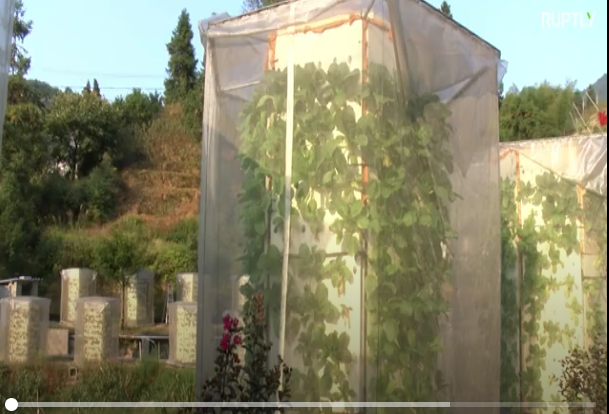
Vertical Farms In China Provide Food For 36,000 DAILY
Farmers in Zhejiang Province have designed 'smart' vertical farms which allow vegetables to be grown without much soil or sunlight. Plants are provided with nutrient solutions through an intelligent control system. A shorter growing season and a ban on pesticides also make smart farms more environmentally friendly.


The Fifth Edition of The Global Summit Showcases International Expansion
From the left: Walid Haidar - Dean of the Consular Corps and Consul General of Lebanon in Milan, Alan Christian Rizzi - Undersecretary to the Presidency of the Lombardy Region, Marco Gualtieri - Founder and President of Seeds&Chips and Alessandro La Volpe - Vice President of IBM Cloud.
Seeds&Chips 2019
The Fifth Edition of The Global Summit Showcases International Expansion
Kicking off on May 6 at Rho FieraMilano, the next edition will welcome world renowned guests, hundreds of speakers, and conference sessions discussing food, innovation, and the planet’s most pressing challenges.
In 2019, Seeds&Chips will also be a part of the Fancy Food Show in San Francisco (January 2019) and New York (June 2019)
Global goals: in September 2019, the first Australian edition of the Summit will take place in Melbourne, and plans are in the works for Africa and China
Milan, 9 October 2018 - The fifth edition of Seeds&Chips, The Global Food Innovation Summit, the most important international event dedicated to Food Innovation, was presented today, with the exceptional institutional support of the Lombardy Region.
From the 39th floor of Palazzo Lombardia, the announcement of latest edition of the Summit was welcomed by consulates representing countries from all corners of the world: Ecuador, Uruguay, Slovenia, Turkey, Lebanon, Algeria, Tunisia, Brazil, USA, Australia, Romania, Kuwait, Latvia, Bosnia and Herzegovina, Estonia, Lithuania, Israel, France, Mexico, the Netherlands, Peru, Argentina and Finland. The President of the Lombardy Region, Attilio Fontana, delivered a video message of greetings and thanks to the assembled audience, while onstage, speeches were delivered by Walid Haidar, Dean of the Consular Corps and Consul General of Lebanon in Milan; Marco Gualtieri, Founder and President of Seeds&Chips; Alessandro La Volpe, Vice President of IBM Cloud, and Alan Christian Rizzi, Undersecretary to the Presidency of the Lombardy Region responsible for relations with international delegations.
With this united front, the Region of Lombardy and Seeds&Chips demonstrated their unity to guiding the future of food system both in Italy and the world; indeed, with the city of Milan as the central point of the debate, this theme was the most important takeaway. Lombardy was the driving force behind Expo Milano 2015 and The Global Food Innovation Summit, born and bred in the region’s capital, is a testament to its legacy, its message and its global reach.
"It is a great privilege for us to receive the both support and concrete backing of the Region of Lombardy and to thus have a crucial partner to carry forward the legacy of Expo Milano 2015 - said Marco Gualtieri, Founder and Chairman of Seeds&Chips. For the first time, the world has placed a conversation about food at the center of an enormous matrix including the challenges linked to the growth of the world population, climate change, urbanization, and to a fundamental word for today and for the next decades: sustainability. I have always considered Expo to have been a huge success but, to be such, we must continue to carry forward those themes and all that they represent, never forgetting to keep both Milan and Italy in the center. In the same year that Expo took place, in New York the United Nations approved the Sustainable Development Goals for 2030 and in Paris almost all the countries of the world signed the Cop21 agreement to combat climate change.
Together, these milestones generated an epoch-defining transformation that crossed every economic sector, each united by the concept of sustainability and with food as the transversal and dominant factor. We created the first edition of Seeds&Chips with the knowledge that it was essential to represent and enhance this transformation as well as establishing three fundamental pillars: the presence and the real and practical involvement of young people including both Millennials and teenagers, the continuous research and presentation of solutions and new models, and a strong international identity. This fifth edition of Seeds&Chips will be a new starting point: much has been done, but much remains to be done ".
"Seeds&Chips has helped to maintain a healthy and articulate debate on the issues that emerged during Expo Milano 2015, thus representing the natural evolution of that first step”, added Alan Christian Rizzi, Undersecretary to the Presidency of the Lombardy Region with responsibility for relations with international delegations. “Food security and food safety, the fight against food waste, agricultural sustainability: these are issues that our regional government is determined to tackle with the urgency they deserve. An event like Seeds&Chips stimulates this discourse through the involvement of experts and authorities from all over the world. Lombardy is the largest agricultural region of Italy, and an area with a storied culinary tradition of food and wine, with dozens of certified products.
The growth and prosperity of the agri-food sector cannot, however, ignore elements such as innovation and research, which are now essential for competing in an increasingly fierce market. The combination of agri-food, research and business in Lombardy is very strong. One example is the High Technology Agrifood Lombardy Cluster, which creates synergies between major universities, large companies, SMEs and regional research institutions to explore the new possibilities of agritech and industry 4.0. Milan, the capital of the region, also hosts 10% of startups in the Italian food sector, with 8.5% located in or around Bergamo. These are the elements we want to enhance and develop.”
A GLOBAL VISION
Seeds&Chips 2019 will take place from 6 to 9 May at FieraMilano Rho, running concurrently with TUTTOFOOD. Over four days, the Summit will host conference sessions and meetings on the major topics related to food and innovation around the globe, from climate change to robotics, from e-commerce to precision agriculture, and from food waste to the circular economy, among many other themes. An exhibition hall will allow start-ups, companies, accelerators and incubators to present and showcase their projects, while hundreds of international speakers, investors and policy makers from all over the world will discuss major global challenges.
Following the success of the last edition’s WaterFirst! Call for Ideas, which gathered more than 65 projects from countries on 4 continents, a special focus will once again be placed on the theme of water, one of the biggest global challenges in the coming years.
The Global Food Innovation Summit recently announced their partnership with the Government of the State of Victoria and Food + Wine Victoria to create Seeds&Chips Australia in the city of Melbourne in September 2019. It will be an international event focused on innovation in agrifood, with the goal of becoming the standard bearer for food innovation not only in Australia, but throughout Southeast Asia. The event will feature sessions, debates, forums, workshops, business meetings and awards, to give a 360 ° view of food and innovation.
Seeds&Chips has already signed a three-year joint venture agreement with the Specialty Food Association, the American organization behind the Fancy Food Show, the oldest and most well-known American event dedicated solely to food. Beginning in 2018, Seeds&Chips will have a significant presence at the both the Winter Fancy Food Show in San Francisco and the Summer Fancy Food Show in New York. The next edition of the show takes place in San Francisco in January 2019, and in New York in June 2019.
The fifth edition of the Summit in Milan will welcome institutions, companies and startups from scores of countries around the world. Australia, Germany, Holland, Israel, San Marino and Slovenia are among the first confirmed for 2019.
In addition, several African countries as well as China will have an important part to play in the upcoming Summit. These regions are strategically vital in developing best practices related to environmental stability, innovation, and the global food chain. Seeds&Chips is also in talks with representatives of these regions to develop international agreements and working relationships.
MILLENNIALS AND GENERATION Z
As always, young people are the real heroes of Seeds&Chips. However, it is not only millennials but the emerging “Generation Z” of teenagers who have a vital role to play. The fifth edition of the Summit will provide even more opportunities for engagement for young people and teens with a range of innovative formats and programs. Each conference will have at least one speaker at the under the age of 30 and will be opened by a Teenovator, activists from 13 to 19 years old who are particularly active in food innovation and the food revolution. Young innovators will also have the chance to participate in the Give Me 5! program, where they will meet with global leaders one on one for 5 minutes and propose their projects, ask questions, and gain inspiration for the future.
INVITED GUESTS AND SPEAKERS
A number of international speakers are already confirmed to join the fifth edition of the Global Food Innovation Summit, with many more to follow. Among those scheduled to speak: Howard Yana Shapiro, Chief Agriculture Officer, Mars Incorporated; Giovanni Battistini, Senior Vice President, Open Innovation Science, Ferrero; Alexandre Bastos, Director of Global Innovation, Givaudan International; Danielle Nierenberg, President, Food Tank, Andrew Ive, Founder, Big Ideas Ventures; Victor E. Friedberg, Co-Founder, S2G Ventures and Founder and Chairman, FoodShot Global; Bernardo Hernández, Entrepreneur e Executive Chairman, Citibox; HRH Princess Viktoria de Bourbon de Parme and Donald Kaberuka, president of the African Development Bank until 2015 and current president of the Global Advisory Council, Africa Leadership University, and member of the Board of Trustees , Rockefeller Foundation.
In addition, representatives of the largest food innovation centers will participate at the Summit, such Natalie Shmulik, CEO The Hatchery Chicago and Angeline Achariya, CEO, Monash Food Innovation Centre.
Finally, Olusegun Obasanjo, former President of Nigeria, will be among the global leaders present at the fifth edition of the Global Food Innovation Summit, along with representatives of the Forum of Kings, the organization that brings together Princes, Sheikhs and leaders of African countries around the themes of peace, economic development and sociocultural cooperation.
Seeds&Chips - The Global Food Innovation Summit, founded by entrepreneur Marco Gualtieri, is the premier Food Innovation event in the world. An exceptional showcase entirely dedicated to the promotion of technology, solutions and talent from all over the world, the Summit features an exhibition hall and a complete conference schedule discussing the innovations that are changing the way food is produced, transformed, distributed, consumed and discussed. The third edition of Seeds & Chips, The Global Food Innovation Summit, featured President Barack H. Obama as a keynote speaker in his first post presidency appearance. The 2017 event featured 300 global speakers, over 240 exhibitors, 15800 visitors and recorded 131 million social impressions over 4 days. The fourth edition of Seeds & Chips featured keynote addresses from John Kerry, 68th Secretary of the United States of America, and Howard Schultz, Executive Chairman of Starbucks. The 5th edition of Seeds & Chips - The Global Food Innovation Summit will be held at FieraMilano Rho, from 6 to 9 May 2019.

Combining Geothermal Heat With Super-Fast Internet
The geothermal heat project Nature’s Heat in Kwintsheul is running at full speed to the satisfaction of the nine growers connected to the project. Not only heat pipes but also fiber optic cables were placed, so now they can even make use of high-speed internet. Nature’s Heat operator Paul van Schie: “More often than not, townships and cable companies don’t see the need to place fiber optic cables in the rural areas. We were able to hitch along with a cable that was placed from the town to a high-voltage tower close to here. Nature’s Heat is now the distribution station for fiber optic cable connections to a variety of connections.
Dennis Bos of CBizz tells us that the plans to put in fiber optic cables have been entertained for a while. “At the beginning of 2018, Paul came to us with the question if we could realize a collective fiber optic connection. In February we were ready to start when the needed number of clients was reached.” Dennis looks back on a fantastic project. “These types of projects are one in a million, they are quite unique. Worthy to be repeated, though a next project will need to be tailor-made again.”
100 percent uptime
Geothermic heating projects require a lot of stamina. Nature's Heat is an initiative of nine horticultural companies in Kwintsheul that, together, grow 51 hectares of tomatoes, bell peppers, eggplants, strelitzias, chrysanthemums, roses, and potted plants. On the 21st of March 2018, the project started. According to Paul, it was the well-executed preparations that resulted in a high-quality project. “We did have some teething problems here and there. In May the installation was turned off a few times for a software update, but we haven’t run into any big problems yet. Since May we've had a score of 100% uptime, not counting the planned pump changeover in July.”
Tailor-made
The software was developed specially for Nature’s Heat, says Paul. The company that designed and built the above-ground installations also wrote the software. And this is very convenient, because of this you have very short lines. This party does not only do the maintenance but also the management of the installation. Every day they monitor from a distance whether or not the installation is functioning accordingly.
“The above ground installation is made of stainless steel and the design of the filter units is different than usual. Also for the de-gassing, an entirely different installation is used. Where the de-gassing normally happens in big horizontal tanks, this installation accomplishes this by using cyclones. Underpressure is created, which separates the gas. You can compare it to the drain in your sink when you pull the plug.”
No free lunch
A heat roundabout in the province of South Holland is meant to connect all the heat projects so that the optimal amount can be saved on fossil energy. “It would be great if heat pipes would be placed from Rotterdam to the Westland, but there's no such thing as a free lunch. The horticulture industry has an important part to play in the supply of electricity. I think we ought to be careful to exclude CHP from the discussion involving the closing of the gas taps. If the demand to be able to flexibly switch to the use of electricity would arise, CHPs have preference over energy from power plants. Wiebes, the Dutch Minister of Economy and Climate, wants to get rid of the use of gas. But do we then need to close down sustainable CHPs and keep coal plants open? These are the questions that you as a grower need to consider.”
For more information:
Nature's Heat CBizz
info@naturesheat.nl
www.naturesheat.nl
CBizz
+31(0)88 002 0200
www.cbizz.nl

Australia: Sustainable Agriculture In The Spotlight At GFIA In Focus
The Global Forum for Innovations in Agriculture (GFIA)
Will Take Place On November 27-28 In Brisbane
The Australian government is pushing for agriculture to become a $100 billion industry by 2030 – and with the Queensland Government aiming to double the state’s food production by 2040, the leading authority on sustainable food production and agriculture is hosting an event in Brisbane designed to showcase sustainable growing practices and new agricultural technologies.
The Global Forum for Innovations in Agriculture (GFIA) In Focus Australia event will take place on November 27-28.


Exhibiting the latest sustainable ag-tech innovations and technology from suppliers across all types of food production, it’s set to be Australia’s largest ever agricultural innovation trade fair.
The event will place a particular focus on ‘growing sustainably’ and ‘unlocking new technology’, with more than 2000 delegates expected to attend from across the Asia Pacific. Featuring two adjacent exhibitions, the first will present Controlled Environments & Protected Cropping, and the second will focus on Precision Agriculture and Smart Farming products. Within ‘Controlled Environments’, exhibitors will promote the latest greenhouses, system integrators, control systems and hydroponic, aquaponic and aeroponic systems – and the ‘Precision Agriculture’ sector will cover everything from data analytics and modeling to harvesting and irrigation equipment, seeding and planting equipment and GPS systems.
A high-level conference programme will also run during the event – and for David Stradling, Sales Director of One CMG Group, the company behind GFIA In Focus, the event is “a rare opportunity to learn from agriculture food producers, policy makers and investors about the latest innovations and technologies for smart food production.”
Among the confirmed exhibitors will be multi-level indoor growing company Vertical Farm Systems, who will showcase their fully automated technology for growing commercial crops all year round, in any climate or location. Executive Director & Design Engineer John Leslie described the new system as the next generation of indoor growing solutions built for profitability more than spectacle.
“Over the past 9 years we have refined the system automation to achieve the best return on investment yields we have seen in the sector. Of the 28 system sizes we supply, our smallest uses only 500 square metres of floor area, yet the 20 tons annual harvest rate is the same as 8 acres of prime agricultural land. The bioponic live microbe based growing system delivers a major reduction in water use, with zero chemicals, pest issues or crop losses, and it can be installed in very close proximity to the end user – all of which is fantastic for sustainable farming.”
One CMG Group Sales Director David Stradling described the significance of the event for Australian agriculture.
“GFIA In Focus is intended to help Australian agri-businesses share knowledge, so we can continue to develop sustainable farming into the future. There are some incredibly innovative technologies and practices out there, and we’re excited to host what’s going to be an inspiring and highly informative event for attendees.”
For more information:
www.gfiaaustralia.com
Publication date : 9/20/2018
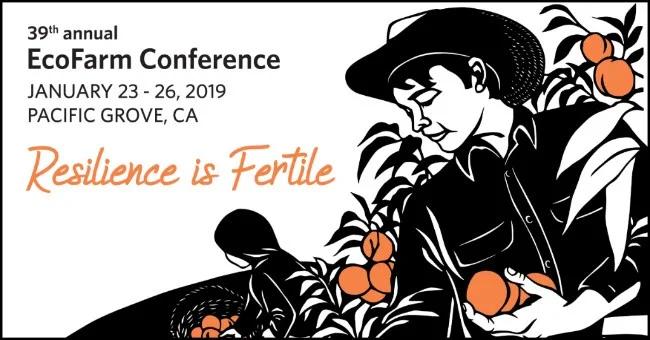
Registration Is Now Open For EcoFarm 2019
EcoFarm Conference is the oldest and largest organic farming conference in the West - an essential networking and educational hub for farmers, ranchers, distributors, retailers, activists, researchers, and educators to nurture safe, healthy, just, and ecologically sustainable farms, food systems, and communities. Join us, January 23 - 26, 2019!
Save 7% with discount code: earlyreg when you register by Sun. Dec 9.
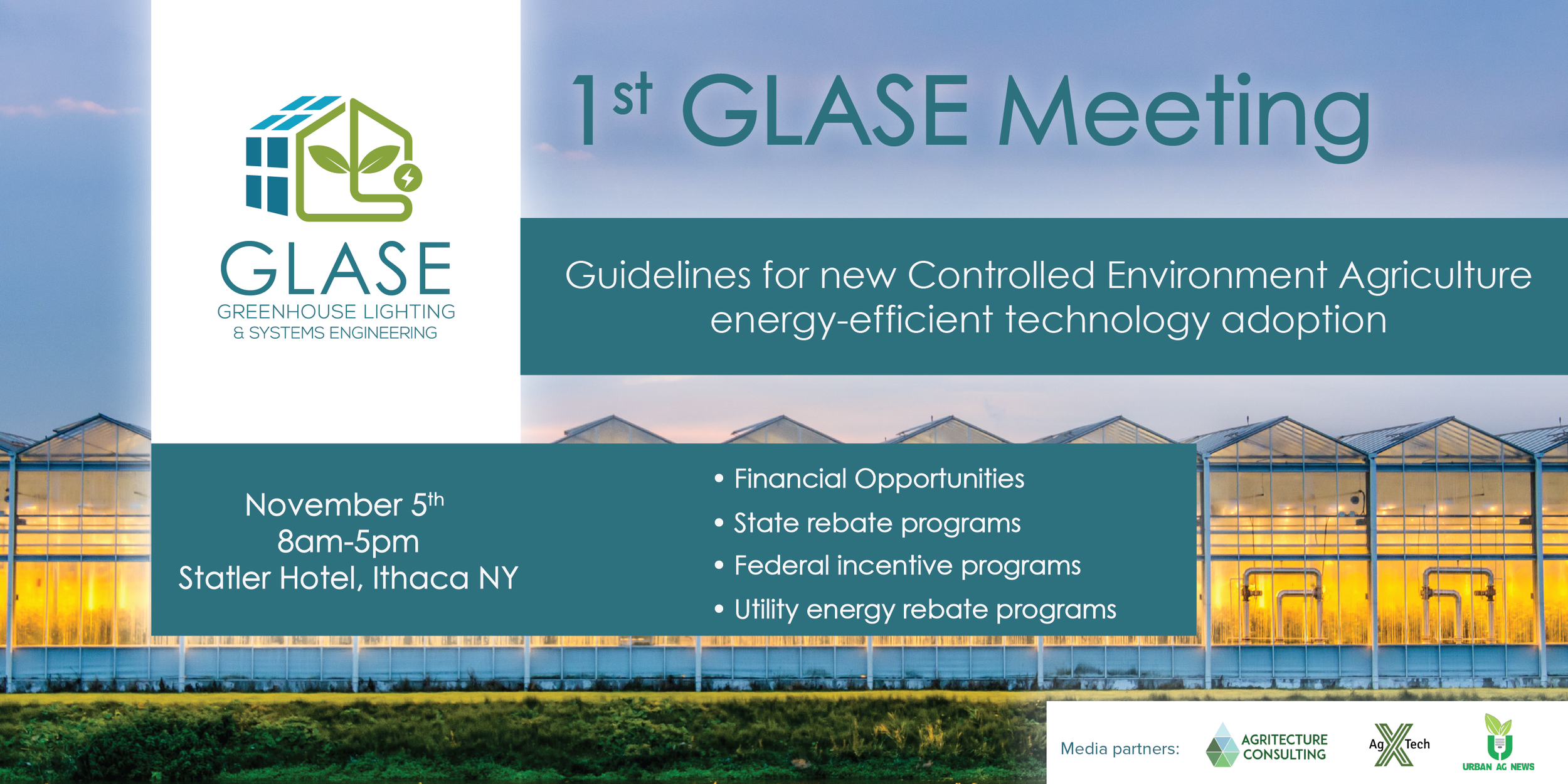
First GLASE Meeting Is November 5th
September 19, 2018
GLASE gears up for their first meeting:
Guidelines for new Controlled Environment Agriculture energy-efficient technology adoption
November 5, 2018
8 a.m. to 5 p.m.
Statler Hotel, Cornell University, Ithaca, N.Y.
Lighting control is the last frontier in controlled environment agriculture. Well-designed horticultural lighting systems can reduce energy use and increase profits for greenhouses and indoor farms. GLASE is bringing together New York Controlled Environment Agriculture (CEA) growers with local utility companies, USDA officials and service providers to provide CEA growers with all the resources available for energy-efficient lighting and control systems technology adoption.
CEA growers attending the conference will have the opportunity to learn about all the opportunities available on the market to support new technology adoption:
• Financial opportunities
• State rebate programs
• Federal incentive programs
• Utility energy rebate programs
Speakers
• Gary Pereira – USDA Rural Development
• Dale Gates – USDA National Resources Conservation Service
• Robert Muller – National Grid
• Dustin Broderick – NYSEG
• Damon Bosetti – DesignLights Consortium
• Owen Raymond – Farm Credit East
• Neil Mattson – Cornell University
• Tessa Pocock – Rensselaer Polytechnic Institute
• A.J. Both – Rutgers University
• Erico Mattos – GLASE consortium
For more information and to register: https://glase.org/conference/

2018 Food Tank Summit (San Diego, CA): Growing The Food Movement
$199 TICKETS
Event Information
The San Diego 1st Annual Food Tank Summit
Wednesday, November 14, 2018
***EARLY BIRD SALE!!! - First 100 Tickets ONLY***
***Tickets are available for $199 and no application is needed. Hurry, this Summit will sell out!***
Food Tank, the Berry Good Food Foundation, and the University of California - San Diego are excited to announce the inaugural San Diego Food Tank Summit! The theme for the Summit is Growing the Food Movement. This exciting event will feature more than 30 different speakers from the food and agriculture field. Researchers, farmers, chefs, policy makers, government officials, and students will come together for interactive panels, fireside chats, and farmer spotlights.
Last year our speakers included Jose Andres, Sam Kass, Tom Colicchio, John Boyd, Kimbal Musk, Dan Barber, Ruth Reichland dozens of others. An additional 90,000 watched each Summit on average via Livestream.
Don't miss this chance to book your spot in person!
As one of the fastest-growing nonprofit organizations in food and agriculture, Food Tank started these Summits four years ago, all in collaboration with major universities and non-profits and bringing together more than 400 speakers for discussions moderated by journalists from outlets like the New York Times, the Washington Post, the Chicago Tribune, Vice, Vox, NPR, BuzzFeed, and Bloomberg.
Delicious breakfast, snacks, and lunch included (with vegetarian, vegan, and gluten-free options).
For sponsorship opportunities, email bernard@foodtank.com. To volunteer, please send your resume and availability on November 13th and 14th to vanesa@foodtank.com with the subject line "Volunteering at the San Diego Summit"
TAGS Things To Do In San Diego, CA Conference Food & Drink

What Humanity Can Learn From Plants
On trees, moss, and feeling at a distance
Recently, on a plane, I remembered the moment when the plane began to descend beneath the clouds. One moment, I could see the brightly lit and expanding city unfolding out below me, a brilliant landscape of lights and systemized movement.
Then the plane began to dip below the clouds, and in that stretched-out moment of time, it felt as if everything slowed down and expanded around me, crushing me with the expanded density, the suffocating largeness of it all, the claustrophobic realization of space and height and my place on that plane, with all the other people sitting in their seats around me.
My eyes locked only with the dismal and thick, thick white outside the window, looming and full; the momentary lapse in sight that was, in its own way, a kind of opening of vision, a revelation. When the apocalyptic moment passed and the city burst forth again beneath the clouds and the familiar brightness reminded me that no time had passed at all, not really, but also knowing that I had lived an eternal purgatory in that moment, as if alone and shivering and quivering in the corner of a tiled shower, the water pouring down and myself a body that could only shake and absorb the water through the skin as the tears rolled out my eyes. And when my feet were finally on the ground again, I thought only of the immensity and magnificence of the sky.
In these strange and sensitive moments when my anxiety flaunts itself as a determined and reverential haunting of sorts, I remember what it was that I really learned from my mother, what I really know through her, because of her, and after her.
I think about a particular individual, perhaps a rare bird, one who has been exiled for documenting facts and archiving flight patterns and creating maps and observing different species of trees, this bird who sees value in concretizing memory to outlast one’s own life and trajectory. This bird is also capable of being homesick, of longing for a home that exists or could one day exist, because language, diagrammed and phantomized and stricken, is also capable of forging a threshold between this world and the dream world, and so that in-betweenness might be construed as a concrete space, and there might be new language vociferated to articulate all that does not yet fit into the confines of the current restrictions of what is known.
That is, there are so many different types of knowing, and we have so many words to describe all these forms of knowing that privilege certainty and fact and truth, so that everything else becomes relegated to the dismal categories of feeling or intuition, as if there is a hierarchy predicated on certainty, though we know of course that certainty is an illusion and a framework for control, for cutting down trees, for carving out swaths of land to be territorialized on maps as evidence, for allowing some categories of living beings to have hope and for others to never glimpse the possibility of future beyond tomorrow.
When I was a little girl, my mother taught me the the Korean concept ofnunchi (눈치). When I was older, I came across more official definitions that defined nunchi (a combination of the Korean words for “eye” and “measure”) as an unspoken social intuition, an awareness of the feelings of those around you, or the ability to sense another person’s mood. Growing up, though, I feltthis concept more eminently. It is about survival, my mother would repeat to me. That friend of yours, 눈치 없다. (She doesn’t have nunchi.) Without a dictionary definition of the word, I inherited a feeling of this concept and its importance through the way my mother would use it to describe other people and in the ways she forced me to pay attention to invisible gestures, details, resonances, feelings. Essentially, she taught me to feel at a distance.
This, of course, is the definition of telepathy. Coined by Frederick W.H. Myers in 1882, telepathy essentially means “feeling at a distance.” In English, we only have words for “intuition” and “feeling” to describe all the kinds of knowing that aren’t grounded in logic, rationale, fact, or certainty. And we tend to dismiss telepathy as an interesting but unprovable concept. For many reasons, our culture has privileged scientific types of knowledge and deemed feelings and emotions as unreliable, uncertain, unpredictable. The thing is when we think of humans and other animals, much of the genetic code for what we’ve labeled “feelings” or “instinct” is some of the oldest code that is shared between humans and other lineages of living species. Evolution has modified and built off more primitive versions of “instinct” or “feeling,” but not only are feelings not unique to humans, I’d also like to consider them one of our most ancient (and therefore reliable) ways of knowing. (For example, there are studies showing how our brains often make decisions instinctually several seconds before we are aware of them, and then we actually spend the remainder of our time rationalizing and justifying the decision that our unconscious has already made for us.)
I have often felt imperceptible shifts in the environment around me, different resonances that resound on frequencies that don’t seem to be visible to a rational frame of mind. Is it so terrible to be irrational?
Life is a series of breaths: to see a perspective only when the seer and the seen are perfectly aligned. That is, to be in a position to be able to see and to want to see. For example, a lunar eclipse occurs only when the sun, earth, and moon are aligned in syzygy, our home planet’s shadow creeping across the moon until the moon appears red because our atmosphere acts as a filter for the sun’s light.
How often we forget the scale of the universe: That is, as Carl Sagan famously declared, we are only a pale blue dot in the vast landscape of space.
How often we forget to look: That is, to look past the mundanities of rational and privileged life and see the worlds exploding between our feet and inside weathered cracks.

How often we forget about the arrogance of finality: That is, with cultural concepts like the apocalypse, we lean toward narratives with grand endings, ones that promise linear time, resolution, and redemption and therefore attempt to secure our role as a worthwhile species in the overall scheme of things.
How often we forget about the constructedness of language: That is, though we articulate what we know using the limits of language, the limits of language are not the same as the limits of knowing.
How often we forget that position and perception are related: That is, we study the gravitational effects of, on, and between planetary bodies but often forget that human bodies, animal bodies, bodies of water are also affected by these same forces and that we are not uniquely immune to any of them.
How often we forget that our future stopped existing a long time ago: That is, our ability to speculate on a future beyond the constraints of the present involves a larger and different vantage point than the one we have limited ourselves to; that because the past and future intersect in the present moment, it is in this present moment that we must learn to see differently.
Witnessing the apocalyptic (not final, but catastrophic; not singular, but simultaneous; not biblical, but unseen) devastation that seems to have become a static reality, and sitting here, feeling the invisible embers of cosmic tremors, it’s hard not to see how we’ve simply deferred the future so many times that we can no longer see where the present ends and where the future begins. For me, this is a question of hope. To be blunt, shit is fucked up on a very large scale, and I think there is little left to be learned from humans’ forms of knowing. And so I have turned to the trees, the moss, the birds, all the other and synchronous forms of knowledge that we have largely ignored or buried.
Let’s consider trees. Standing in an immense forest still induces feelings of awe. This isn’t just about sheer size or power, but how a forest, a community of towering trees, affects our perception of interconnectivity and intimacy and breath by reminding us of the forces of life, the impossibility of presence, and the obviousness of influence.
The oldest trees in the world are thousands of years old. These trees have seen the births and deaths of nations, the migration of human populations, the evolution and extinction of life. How could we not benefit tremendously from the knowledge of trees? How could we not listen?
I first learned truly about the generosity of trees from my friend N.R., who reminded me, as I pressed my palm against the trunk of a huge oak tree, how trees absorb so much for us, not just carbon dioxide and other harmful gasses, but also our pain, anxiety, suffering; how trees gladly extend their wisdom if you only might ask. Always leave an offering, she reminded me. Always remember to express your gratitude to the tree. I lifted my hand away and obeyed her instructions by pouring out the remainder of my water bottle over the tree’s massive roots.
I want to change the way you think about forests. You see, underground there is this other world, a world of infinite biological pathways that connect trees and allow them to communicate and allow the forest to behave as though it’s a single organism. It might remind you of a sort of intelligence. —Suzanne Simard, “How Trees Talk to Each Other”
[T]ree songs emerge from relationship. Although tree trunks seemingly stand as detached individuals, their lives subvert this atomistic view. We’re all trees — trees, humans, insects, birds, bacteria — pluralities. Life is embodied network…Our ethic must therefore be one of belonging, an imperative made all the more urgent by the many ways that human actions are fraying, rewiring, and severing biological networks worldwide. To listen to trees, nature’s great connectors, is therefore to learn how to inhabit the relationships that give life its source, substance, and beauty. —David George Haskell, The Songs of Trees
Apart from humans, maybe, trees are the best form of life on this planet. Trees remain in one place, but reach elsewhere always. They stretch down into the ground, and they constantly strain toward the sun. They are the embodiment of our shared presence on a rocky planet that orbits a star. Hedgehogs and helminths may be interesting, but they don’t constantly remind us, simply by existing, that we are in a solar system. —Rebecca Boyle, “Make Like a Tree and Get Outta Here”
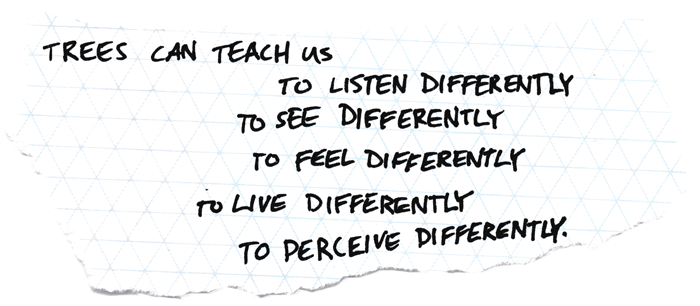
Trees can teach us about interconnectedness and intimacy and communication. We are, after all, more interconnected than we perceive, and the invisible communicatory gestures between all living things are just as significant as the visible ones. Trees can teach us about time and slowness and patience. Trees are slow; they don’t operate on the level of seconds, moments, even hours, nor do they think so constantly of immediate futures. Trees take years, real time. They live and die each year, and yet their lifetimes encompass centuries. Trees can teach us about cycles and circularity. Seasons, cycles of the planet, and patterns both local and beyond are perceived by trees. Time is not linear, trees remind us. Trees can teach us about the long breath, about breathing, about presence. We could learn so much from just looking more closely at the process that involves constant and steady breath, sunlight, growth, water. We could learn more about balance and collaboration, about the merging of body and mind that is unique in every individual but intertwined with the network of other living, breathing beings. Trees can teach us about movement and scale. (Did you know that trees migrate?) Growth patterns and migration patterns of trees exist, just on a different scale than our own. We might learn to see past our own context, past the importance of a single species.
Then, trees can teach us to listen differently, to see differently, to perceive differently, to feel differently, to live differently.
What is important is that seeing trees—not only as trees, but as collaborators, neighbors, givers — allows us to view our own communities and ourselves in a different light. Telepathy is about feeling at a distance, and this is what is required when we attempt to communicate with and listen to anyone who is not your own self. To go further, perhaps it isn’t just telepathy that is required, but clairvoyance. Clairvoyance (“clear vision”) isn’t just about the ability to perceive events in the future. Because the past and future collide so loudly in the present, clairvoyance, in this moment of the speculative present, is also the ability to perceive events that are happening right in front of you, the invisible and spectral gestures of the present, all that is imperceptible or “unknowable.” Do we ever stop conjuring ghosts? Even still, why don’t we listen?
Because I don’t yet fully understand the extent of the telepathy between plants, I water the small patch of moss I am growing on a stone in my bathroom according to the weather patterns outside. On rainy days, I generously drench it with water. On sunny days, just a spritz to mimic the morning dew. When I am traveling, I ask my sister to water the moss while I am gone, just as I also ask her and my father to take care of my dogs while I am gone. If the moss can perceive what is happening outside, or if it is able to communicate with its comrades just on the other side of the window, I want it to feel in synchronicity with its community. So far, it seems to be thriving and is already growing new shoots.
There are many things to say about moss, but perhaps I could just point you to Robin Wall Kimmerer’s wonderful book, Gathering Moss, in which I learned about, through moss, adaptation, in-between states, resiliency, compassion, learning to see, and giving thanks.
Among other characteristics, moss (and the creatures that live among the moss like birds among trees: water bears, or tardigrades, and rotifers) blurs the distinctions between life and death. As Kimmerer writes, “All signs of life are extinguished when they are dry: no movement, no gas exchange, no metabolism. All enter a state known as anabiosis, or lack of life. And yet, as soon as water is returned, life suddenly is renewed. Their apparent death, followed by resuscitation, suggested that life might be stopped and then restarted.” Like with trees and the passage of seasons, we might learn to see past the simple narrative of birth and death and understand the importance of cycles, perhaps also learning to not constantly flee the face of death and instead embrace those processes that affect all those around us, widening one’s own consciousness to encompass so many others.
I also learn, from moss, the importance of language. Many mosses don’t have common names, just their scientific ones, because they aren’t normally attended to by the public in the same way as other plants (trees, flowers, edible vegetables). And yet the vocabulary Kimmerer teaches her students (gametophytes, sporophytes, acrocarps, pleurocarps, etc.) helps the students see the moss more closely, more intimately: “With words at your disposal, you can see more clearly. Finding the words is another step in learning to see.”
It is true that as I learned the words to describe different parts of a moss and different species, I started examining the different mosses that grow in my front yard, in my neighborhood, and in nearby forests, saying their species out loud, calling them by name, pointing at their sporophytes and attempting to bridge the chasm between our seemingly distant species.
Beyond the dignity that might be bestowed living beings by naming, even the grammar with which we use to describe plants greatly affects our entire worldview. For example, in English, we set aside special pronouns (he, she) for human subjects, relegating all nonhumans, objects, trees, mosses, even animals to the category of “it.” Why do we put so much stake in personhood? Kimmerer reminds us that in Potawatomi (as well as other indigenous languages), there is no “it” for nature or beings that exist as part of nature. She writes in an essay, “Living beings are referred to as subjects, never as objects, and personhood is extended to all who breathe and some who don’t.”
Kimmerer continues:
Because we speak and live with this language every day, our minds have also been colonized by this notion that the nonhuman living world and the world of inanimate objects have equal status.
Bulldozers, buttons, berries, and butterflies are all referred to as it, as things, whether they are inanimate industrial products or living beings…[W]e need words that heal that relationship, that invite us into an inclusive worldview of personhood for all beings.
Because we provide such preferential treatment for humans in our everyday use of grammar and language, it becomes easy for us to create a hierarchy, supported linguistically, that privileges humans over all other objects and animal species. With this subject/object dichotomy built into our use of language, and with a linguistic hierarchy that holds humans above all other species, it becomes all too easy to create a similar hierarchy within our own species. That is, we are already accustomed to privileging subjects via linguistic differentiation, and so we can start to see categories of humans as being “better than” or “less than.” We’ve already seen the consequences of such thinking, and continue to see them: false differentiations of race, color, gender and other characteristics as having caused significant damage to our collective consciousness.
Tomorrow, you will go up the mountain. Tomorrow you will sleep and you will dream. Tomorrow, you will kneel down before a tree and realize what it has given you, what you have taken, what you have received. And you will eventually hear the language of the birds and the language of the trees, and you will remember what it was like before home was stripped away from you, and then, on your knees, you will remember how to stand tall like the trees, eyes unfixed and seeing in all directions, especially down, because this is where things happen too, below you, and though gravity asks bodies to fall down, hope asks bodies to rise up.
I return to knowing and the core of it all, the breath, the long and sustained breath that connects us all together. In a time when it seems that people are wanting to feel less and think more, I wonder about the benefits of us all learning to feel more, at a distance. How might our vision of the future change when we can learn to receive more in the present? How might an understanding of telepathy make us more compassionate with trees, with those around us? And how might an understanding of the resilience of moss change our understanding and perception of the future? If only, for a moment. Just remember to breathe.
Building The Sustainable Cities Of The Future
By Heather Snowden - September 12, 2018
The ultimate in urban planning
Earlier this year, a report from by United Nations predicted that 2.5 billion people will be living in cities by 2050; that’s two out of every three people on the planet. While that of course means cities will become increasingly diverse, the demand on resources and services, such as food, policing, and public transport systems, will rise exponentially.
It's understandable then that governments and organizations around the globe are looking to technology to help power the cities of the future, and make them smarter, creating urban areas that use data-driven, innovate solutions to create efficient, sustainable ways to aid economic development and improve the quality of life for inhabitants.
Sustainable food solutions
Cities need feeding. While the number of cities that are taking charge of their own food destinies and looking for new, innovative ways to cut down on their carbon footprint, and making healthy options more readily available as a result, is growing, there’s still a long way to go.
Thinking about how to feed a rapildy growing population while also tackling obesity and global warming is a huge task; it’s also not the most convenient. Of course it would be easier to keep driving to the local store and pick up a packet of beef that was reared a 15-hour plane journey away, but it’s not sustainable.
AeroFarms is building a 78,000 square foot vertical farm. Credit: AeroFarms
AeroFarms in Camden, New Jersey is offering one solution: vertical farming. The company is planning a 78,000 square foot vertical farm that would grow 12 stories of leafy goods, from kale to bok choy. Thanks to tech developments, keeping plants on a steady diet isn’t as time-consuming as it once was; systems can be created that release calculated amounts of nutrients and water into the soil, powered by hydroponic and areoponic systems.
Elsewhere, Good Bank, a Berlin-based restaurant, has implemented urban-farming inside its restaurant space, with incubators growing salad lining the dining room walls.
Looking for alternatives also means opening our palettes to new horizons. Exo and Aspire Food Group are two of the companies currently incorporating crickets into their protein bars – which, by the way, are already sold at Whole Foods.
Vertical gardens
From vertical farming to vertical gardens. As more people flock to suburban areas, we’re forced to become more innovative about how we use the physical space. Green spaces do way more than just make places pretty – they’ve been found to alleviate stress levels, improve biodiversity, attracting birds and insects, help defuse heat from dense urban areas, and improve air quality.
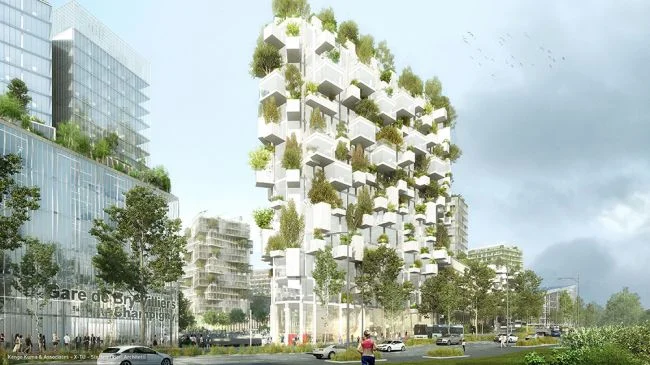
Stefano Boeri Archietti is planning 'vertical forests' in Paris. Image credit: Stefano Boeri Architetti
Italian architecture firm Stegano Boeri Architetti is planning to create a huge Foret Blanche in Paris – a 54-meter high vertical forest that’s planted with trees, shrubs, and flowers. The same firm is also working on a 'Forest City' in China, where everything from schools, to homes, to hospitals will be covered in greenery — CNN dubbed it “the world’s first pollution-eating city”. Meanwhile in London, The Edible Bus Stop is tackling the citiy's pollution with playful ideas like creating an Edible Bus Route, which sees bus stops throughout the city surrounded by herbs and edible flowers.
Two wheels good, four wheels bad
Covering a bus stop in edible petals isn’t the only way to make public transport sustainable. Argentina’s capital Buenos Aires chopped one of the city's major 20-lane avenues in half, leaving 10 lanes for cars. The other half is used as a 'surface subway' – an express lane only for public transport, which gets passengers across the city in half the time.
Other cities are trying to ban cars completely. Madrid has already started to take action by banning non-residents from driving in the city center, and only allowing low-emission cars that belong to locals, delivery vehicles, and public transportation in downtown areas.
Copenhagen is one of the world’s most bike-friendly cities. Credit: Wikicommons
When it comes to eliminating vehicle pollution entirely, however, bicycles are the obvious solution. Improving bike lanes in urban areas is a global endeavor at present, with Copenhagen boasting one of the most highly-developed systems. According to Wired, since 2015 the Danish capital has completed a Harbour Ring bike route along the whole inner harbor, piloted a new traffic light system that prioritizes cyclists, launched digital congestion signs to improve bike traffic glow, and opened new superhighway routes. Some 62% of the city’s residents ride their bikes daily, while just 9% drive.
Policing
One important and perhaps less talked-about aspect of smart city innovation is surveillance; namely how police departments are incorporating technology into their operations. One way in which tech is advancing law enforcement is body cameras, with Smart Cities Drive stating that one-third of police departments in the US either already uses or are looking into outfitting their officers with bodycams. The devices not only help to keep police officers safe, but are used to record interviews, and take photographs.
Law enforcement agencies are increasingly looking to use drones to catch criminals. Credit: Wikicommons
Drones are also part of the move to increase public safety, used to track down stolen vehicles, and chase fleeing ones. Earlier this year the city of Louisville in Kentucky submitted an application to the Federal Aviation Administration asking if it could use drones to respond to shooting scenes – the drones would be equipped with ShotSpotter, a system that uses a series of microphones to identify the source of gunfire within seconds.
If technology can help to make our urban environments safer, as well as cleaner, greener and healthier, then the cities of the future could well be pretty idyllic places to live.
Urban Farm Offers Women A Place To Live & Work After Getting Out Of Prison

October 2, 2018
INDIANAPOLIS -- An urban farm opening in central Indiana will provide women coming out of the criminal justice system with a place to live and work so they can get their lives back on track.
While working at Bellfound Farm, the women will also receive mental health counseling, coaching and skill development training.
Alena Jones, co-founder and COO of Bellfound Farms, says they are getting started with a grant from the Women’s Fund of central Indiana.
“When we’re talking about how nine out of 10 women who have been incarcerated have experienced trauma, what we know about being in a green environment is that it calms your nervous system down and gives you a little bit more brain space to process what’s going on inside of you,” said Jones.
The first group of women are set to move in early next year, once the farm is ready and the buildings renovations are complete.
If you’d like to volunteer with Bellfound Farm you can visit their online website.
'The Next Evolution Of Farming Has Already Begun'
By Austin Stankus - Wednesday, October 10, 2018
The world population continues to grow with ever-increasing urbanization predicted to reach 80 percent by 2050. The U.N. predicts that human population will reach nearly 10 billion by 2050. This increasing population is also growing richer — and hungrier.
To feed this population using traditional farming practices, much more land would need to be brought under cultivation. But, already much farmland around the world has been degraded from poor management practices, and lands remaining available for food production are decreasing from the effects of erosion, salt buildup and pollution.
As you read this today, tens of millions of children are going to bed hungry, with the Food and Agriculture Organization of the United Nations estimating the number of hungry in 2018 at 812 million or approximately one out of 9 people.
Something needs to change. Food production needs to get more efficient, more equitable and more environmentally minded. Moreover, food production should follow the population to the cities, or as Dickson Despommier, a forerunner of this movement, simply states: “Put the food where the people live.”
Indoor farming through controlled-environment agriculture (CEA) will be an important component towards establishing local food systems that can address this pending crisis in global food insecurity. CEA, simply put, is using smart, sustainable farming practices inside of high-tech greenhouses. This is nothing new, and these modern greenhouses are an established technology and can be found around the world. In fact, much of the lettuce, tomatoes, peppers and cucumbers in the EU come from CEA in the Netherlands and Spain.
These greenhouses have incredible benefits compared to traditional farming: They use less water because they are protected from the sun and wind, they use fewer pesticides because insects and disease can be kept outside, and there is less waste because production can be matched exactly to consumer demands.
If hydroponics or other soil-less practices are used, the farmer does not need to use tractors for tilling, plowing and reaping, so the oil bills and energy consumption are lower. In addition, the fertilizer usage is reduced, and all the fertilizer the farmer uses is consumed by the plants, thereby reducing nutrient-rich runoff that can pollute watersheds. Known as eutrophication, this nutrient pollution is a huge problem for coastal communities in the Chesapeake Bay and Gulf of Mexico and has impacted fisheries, recreational activities and livelihoods around the world.
However, CEA greenhouses can occupy a lot of space. So, the next logical evolution is stacking these modern greenhouses, one atop the other.
Vertical farming, as greenhouses stacking is called, has additional benefits. Reducing the footprint means that more food can be grown in a smaller area and therefore can be brought closer to the people eating that food. As populations move toward the cities, it makes sense for the food to follow.
Part of the vision of vertical farms is the reconnection of the producer and the consumer plus the restructuring of food value chains to become more transparent and responsive to the needs and wants of the people.
An added benefit of farming inside of skyscrapers is the option of having mixed-use buildings. When combined with a wholesale market, the skyscraper can not only produce the food but get it to the consumer faster. Less time in storage, less transportation and less handling means fresher produce and reduced need for postharvest treatments like irradiation and chemical fumigation.
There are still some daunting challenges as well as some encouraging recent developments.
Unleashing the innovative power of American small businesses has jump-started the transition to modern farming, and the public desire for local, healthy food is an economic engine driving the industry toward change. In fact, there are currently so many vertical farm startups that a shortage of qualified workers is now the main hurdle to accelerating the establishment of new indoor farms. On one hand this is a challenge to the industry, but on the other it presents an enormous opportunity for job creation in urban areas if an inclusive, enabling environment is codeveloped with the vertical farms to provide vocational training and career advancement prospects.
On a technical level, there is a significant energy demand needed for pumping water, maintaining good environmental conditions like temperature and humidity, and powering the grow lights to keep producing year-round. However, with smart buildings wired on intelligent platforms, the energy consumption can be monitored and controlled to maximize efficiency — and by tying into other green enterprises like photovoltaic and biogas generation, this energy demand is decreasing day by day. In fact, with the new innovations in LED lighting technology, the power demand has been reduced tenfold in the last few years.
The next evolution of farming has already begun, and big players are already involved. In fact, the National Grange wrote a letter to Congress with their support to public-private funding mechanisms to accelerate the modernization of agriculture, specifically highlighting the potential of vertical farming. With this type of buy-in from large agribusinesses, national and international agricultural organizations, funded with innovative financial mechanisms, and driven by the innovative spirit and technological power only found in the U.S., vertical farming will feed tomorrow’s children with healthy, safe food; protect the environment while being resistant to environmental shocks; and spur economic growth in the process.
For a detailed look at one such startup, see the centerfold story on Skyscraper Farm • Austin Stankus, an integrated farming specialist, is chief science officer at Skyscraper Farm LLC
"The Emirates Are An Extremely Attractive Market"
First Harvest BayWa Greenhouse UAE:
Two months after planting the first 90,000 seedlings in Al Ain, United Arab Emirates, BayWa AG, Munich, and Al Dahra Holding, LLC, Abu Dhabi, have begun harvesting the first 1.5 tonnes of snack tomatoes. Starting from October, consumers will be able to find this premium vegetable, going by the brand name Mahalli (mahalli.ae), on local food retail shelves.
The snack tomatoes have ripened over an area of five hectares in a state-of-the-art climate-controlled glasshouse that BayWa and Al Dahra Holding constructed within the scope of their joint venture Al Dahra BayWa Agriculture LLC. The entire production facility comprises two five-hectare climate-controlled glasshouses. As the harvest was getting underway, the second climate-controlled glasshouse was being put into operation and planted.
The goal of the joint project between BayWa and Al Dahra is to efficiently cultivate vegetables and market them locally while conserving resources. The environmental conditions for agriculture are very challenging in the Emirates. At the same time, there is high demand for regional and sustainably produced fruit and vegetables. Even before production began, the complete first harvest had been marketed.
A view of the total of ten hectares of production facilities: as the harvest is getting underway in the first climate-controlled greenhouse, the second climate-controlled greenhouse is being planted.
“I'm delighted that we have built a state-of-the-art, climate-controlled greenhouse in record time with the support of our local and international partners and that we're already harvesting the first tomatoes,” says Klaus Josef Lutz, Chief Executive Officer of BayWa AG. “The project is part of our Group specialities strategy, where we're concentrating on special products for lucrative markets and long-term sales opportunities.”
“The Emirates are an extremely attractive market,” says Christiane Bell, Head of the BayWa Global Produce business unit. The Emirates must import 80 percent of all their goods. “This is why there is strong desire for self-sufficiency, especially when it comes to fruit and vegetables. At the same time, people are highly aware of the value of high-quality foodstuffs.”
Two months after planting in the first climate-controlled greenhouse, the first snack tomatoes are now ripe for harvesting.
The modern climate-controlled greenhouse in Al Ain allows production to be carried out all year round, irrespective of the conditions outside. Using up to 70 percent fewer resources, ten times more produce can be harvested than in outdoor production. By the end of October, the volume being harvested each week in Al Ain will have risen to 15 tonnes, with production and harvesting taking place according to European standards.
The specially trained pickers separate the red fruit from the vine by hand, while unripe tomatoes stay hanging on the vine. The aim is to offer consumers only the best, tastiest snack tomatoes. The harvested vegetables are then fully automatically weighed and packed in trays of different sizes.
The packaging, which was developed while taking sustainability factors into account, was conceptualised for marketing in the Emirates and has a film that can be resealed up to 22 times. A total of roughly 100 people work in the climate-controlled glass house in different roles.

From Seaton’s Basement, This Professor Is Using Aquaponics To Teach Sustainability
October 6, 2018
Kansas State professor of biological and agricultural engineering Stacy Hutchinson pulls dead stems and other plant material from her single-barrel aquaponics system. Hutchinson has run her aquaponics system in the basement of Seaton Hall for around two years, allowing students and other faculty members to assist and/or learn from the system. (Olivia Bergmeier | Collegian Media Group)
Kansas State was built as a college of agriculture, but there is a smaller operation in the basement of Seaton Hall that can help communicate the work of producers to the consumers of the world, Stacy Hutchinson, professor of biological and agricultural engineering, said.
Hutchinson said she uses a single-barrel aquaponics system to help students learn about its use in sustainable farming practices. The system produces vegetables and fish proteins in a circular system where the waste from the fish feeds the plants that then clean the water for the fishes’ habitat.
Kansas State professor of biological and agricultural engineering Stacy Hutchinson poses with her single barrel aquaponics system, where she grows different breeds of lettuce and grows talapia. Hutchinson has run her aquaponics system in the basement of Seaton Hall for around two years, allowing students and other faculty members to assist and/or learn from the system. (Olivia Bergmeier | Collegian Media Group)
“In an aquaponics system, you’re a little more sustainable, because you’re producing both the vegetables, the plant material as well as raising protein,” Hutchinson said.
Kansas State professor Stacy Hutchinson runs her own aquaponics system in the basement of Seaton Hall. “In an aquaponics system, you’re a little more sustainable, because you’re producing both the vegetables as well as raising protein.” (Olivia Bergmeier | Collegian Media Group)
Hutchinson said she oversees one barrel, but her system holds 250 gallons and it holds up to 200 pounds of fish once they’ve matured.
“There’s not much water left at that point, it’s just like a solid fish mass,” Hutchinson said.
An aquaponics system makes it easier to grow protein, unlike with traditional farming practices in beef and poultry, Hutchinson said.
Where it takes a lot of resources to grow those two types of meat proteins in agriculture, an aquaponics system allows for the growth of the protein and the carbohydrates that utilize the same nutrient pool in a circular system, she said. The only input into the system is food for the fish to consume.
“In a very small footprint, you can farm pretty high-quality protein as well as produce you’re vegetables,” Hutchinson said.
Aquaponics is a circular system, meaning the nutrient-rich water from the fish tank below is pumped into the tank where the different vegetables will grow. Hutchinson said, "It’s more sustainable in the fact that you’re recycling fish waste back up into plant food so you don’t have that extra input requirement for the plant food, plus then you’re producing protein which that’s something we have a little harder time farming." (Olivia Bergmeier | Collegian Media Group)
Hutchinson spoke at length about an aquaponics group in Kansas City called the Urban Farming Guys who have tackled a local food desert.
“Jason’s family and the group that he works with went in and set up a lot of garden plots, but they also run a barrel aquaponics system like I’m running,” Hutchinson said.“It’s rejuvenating that area through [an aquaponic] food production.”
“Crime has gone down, people are now wanting garden spots and he’s creating an entire economy off of the urban farming processes and aquaculture is part of it,” she said.
It was not long ago when almost 80 percent of the American population was involved in food production and today there is less than one percent, Hutchinson said.
These beads, located in the highest tank of the aquaponics system, will "catch" algae and other microorganisms to help clean the water for the fish in the lower tank and to help feed the various vegetables. Hutchinson has run her aquaponics system in the basement of Seaton Hall for around two years, allowing students and other faculty members to assist and/or learn from the system. (Olivia Bergmeier | Collegian Media Group)
She said efforts like the Urban Farming Guys and similar operations are where communication between the grower and the consumer are being revitalized.
In what she referred to as the “farmer’s market movement,” people are moving toward more niche or small-town operations that revolve around one-way consumerism and better education about food sourcing.
“You’ve got groups of people now that are producing food at scales that they’re probably not making a full living off of, but they’re connecting back in a way and producing sustainable, high-quality food product that can be sold locally,” Hutchinson said.
International Student Challenge “UrbanFarm2019”
Linked by Michael Levenston - City Farmer News
3 months of time to redesign 3 locations, having a look at the 3 spheres of sustainability. The Grand Finale will take place at the NovelFarm expo in Pordenone Exhibition center in Venice on February 13-14, 2019.
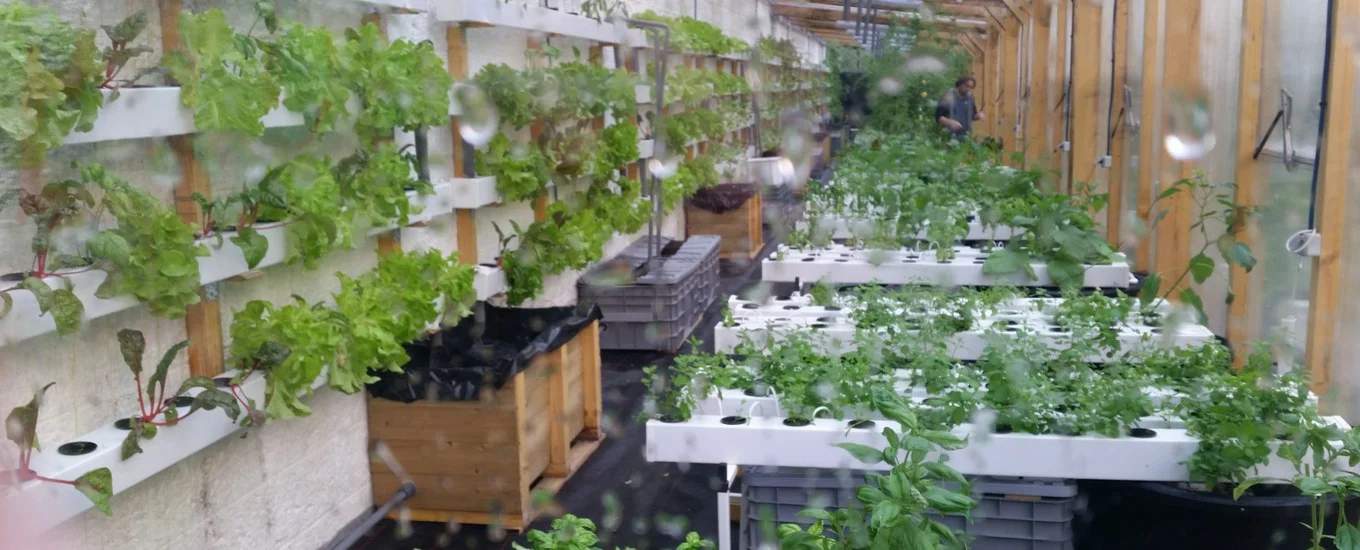
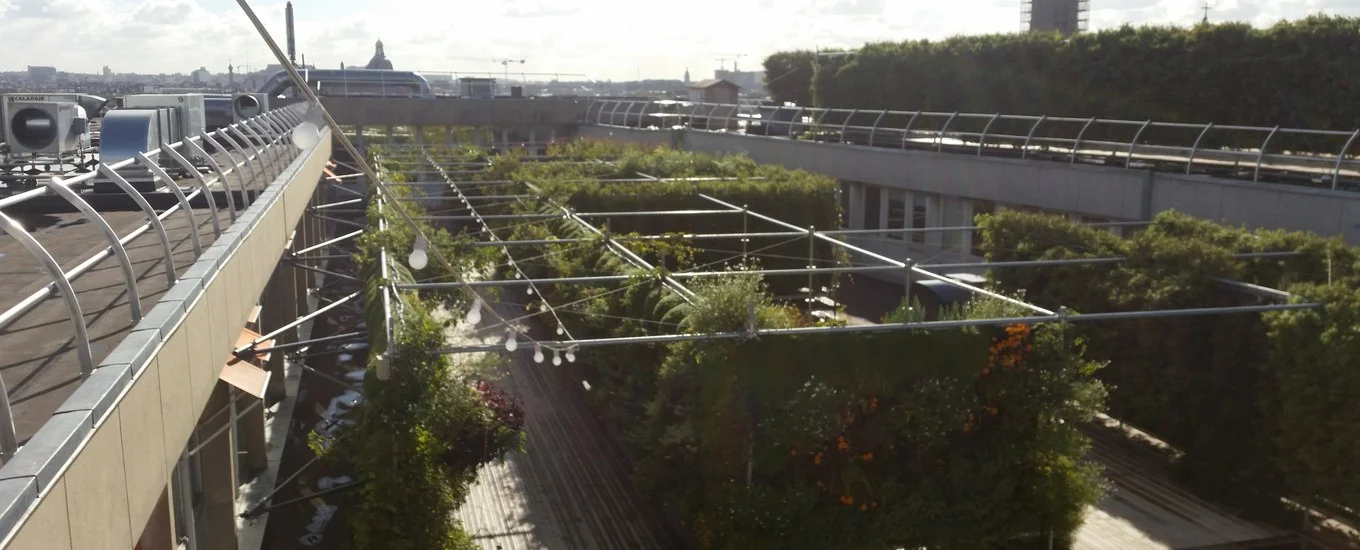
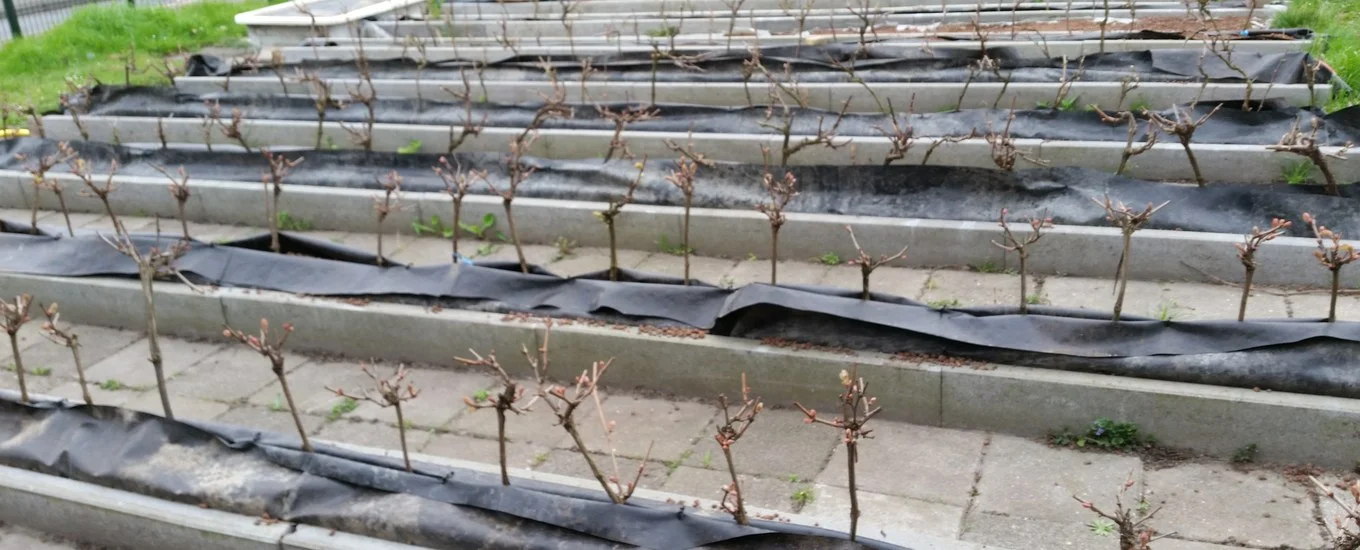
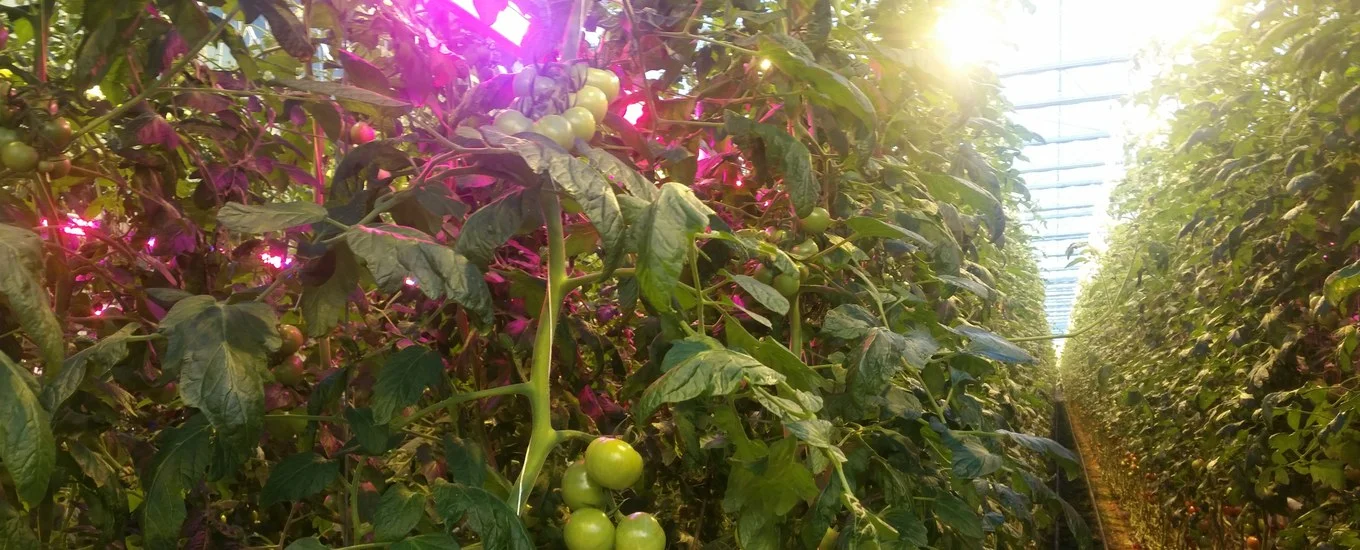
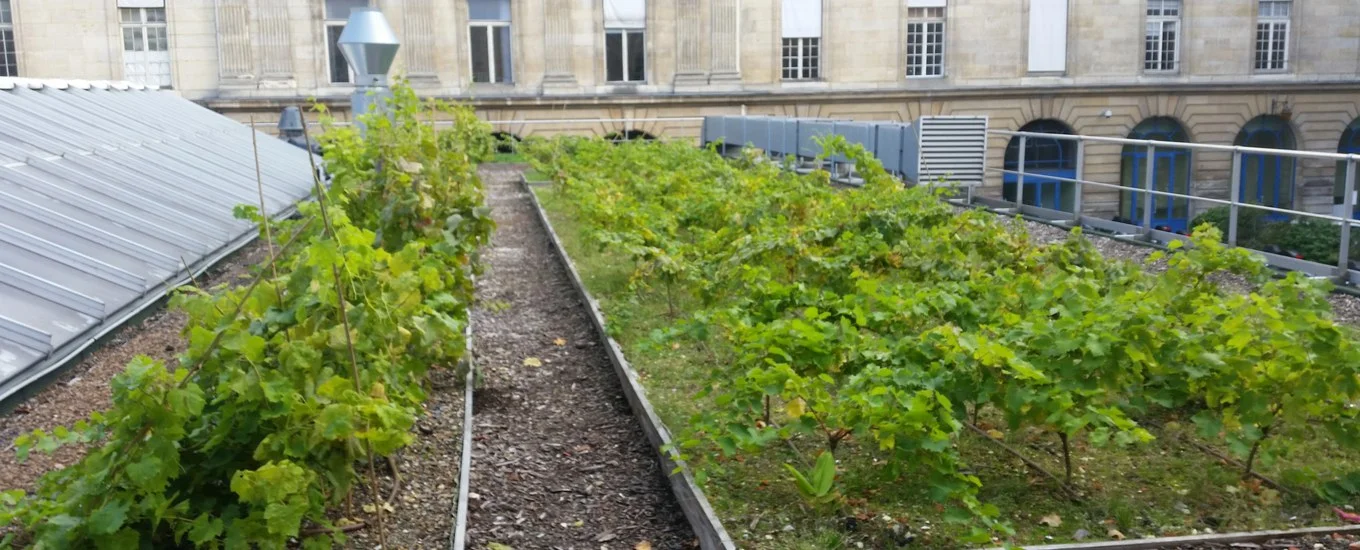
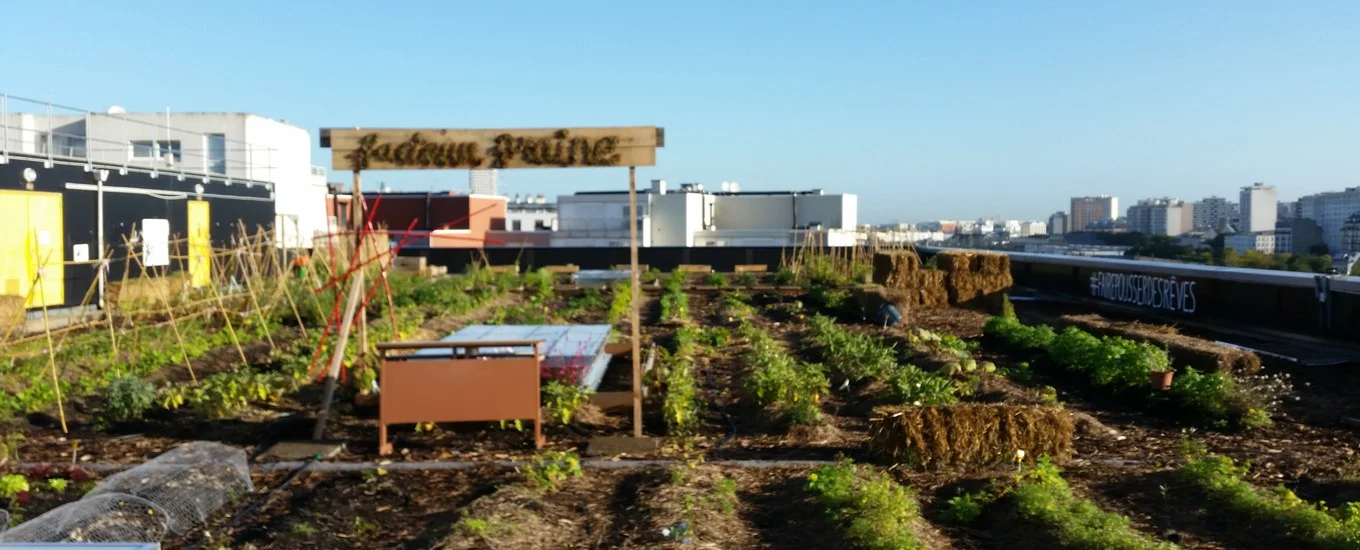
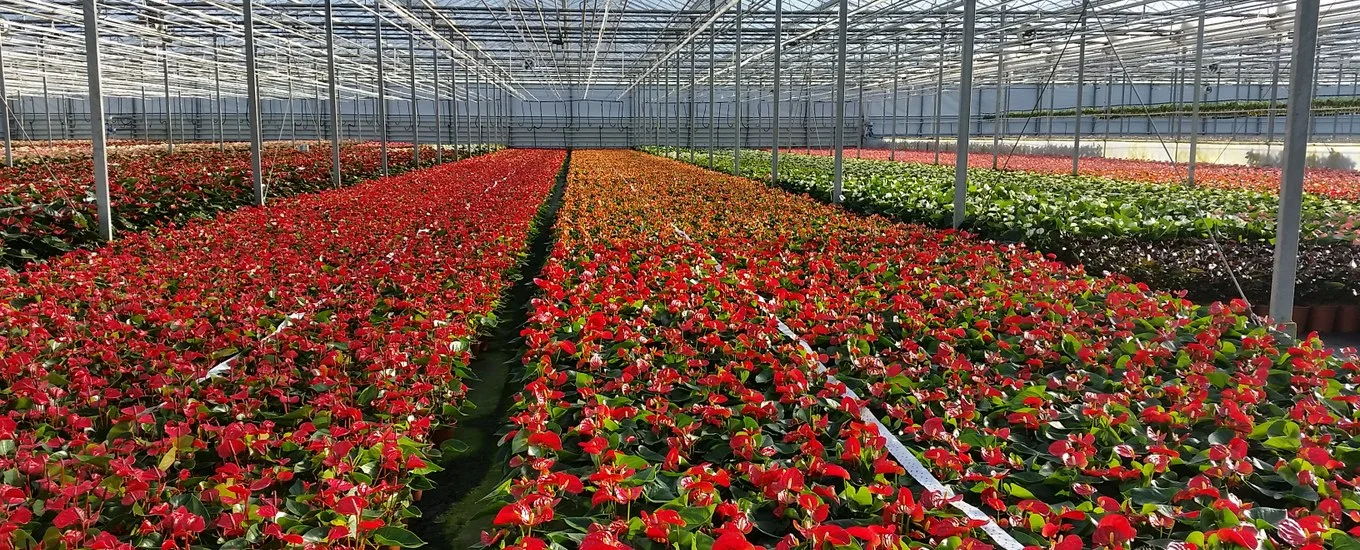
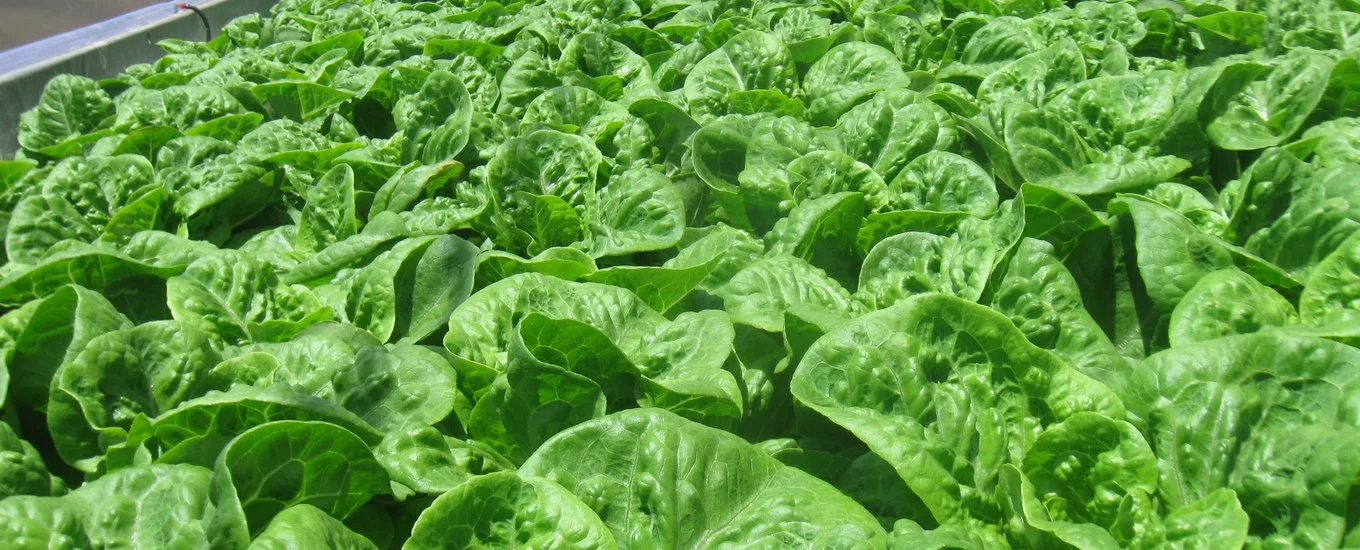
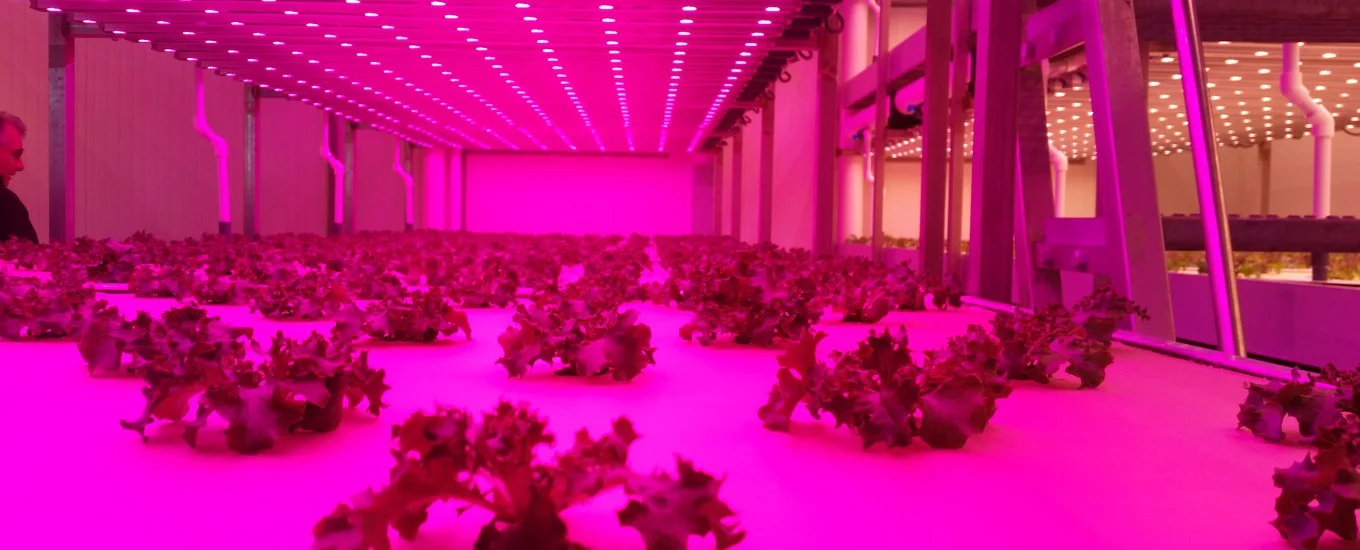
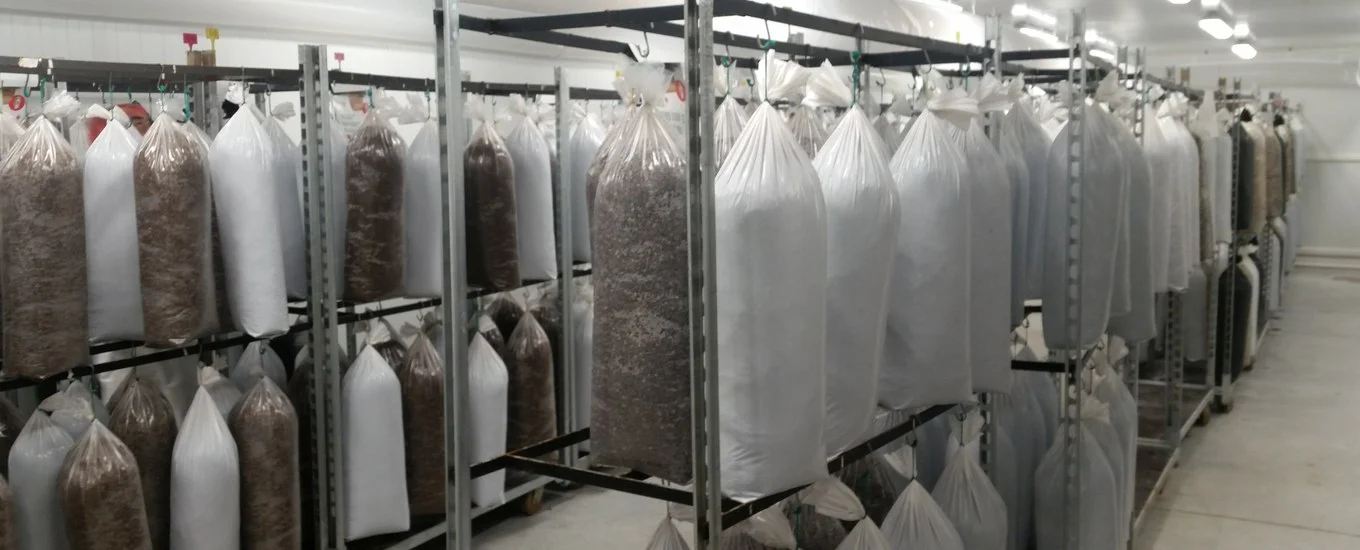
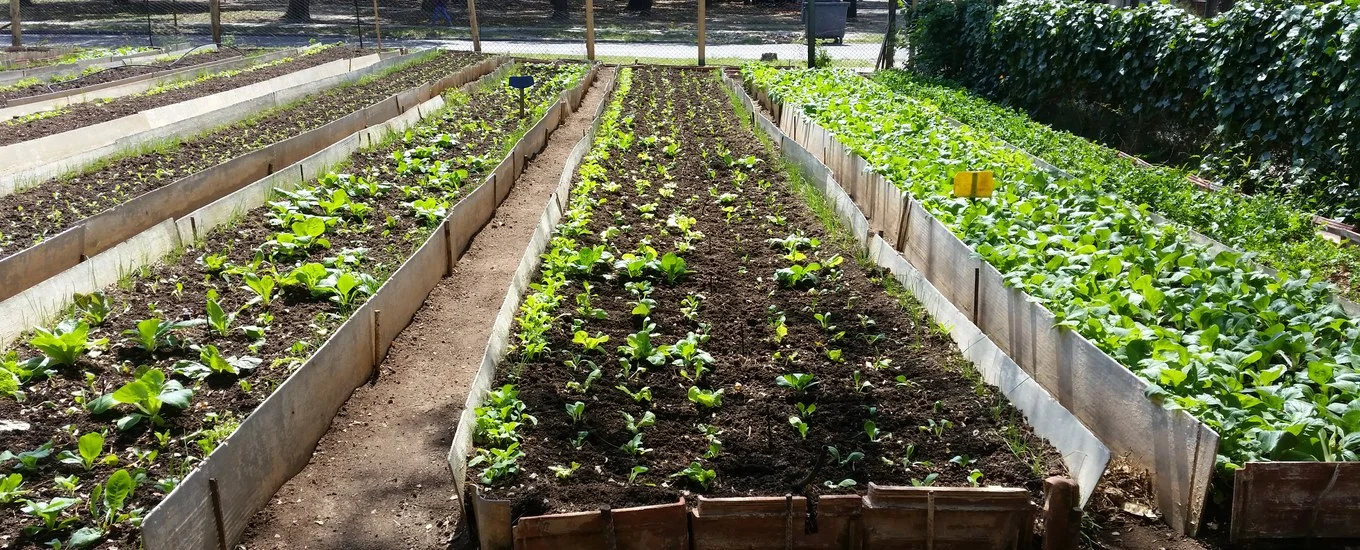
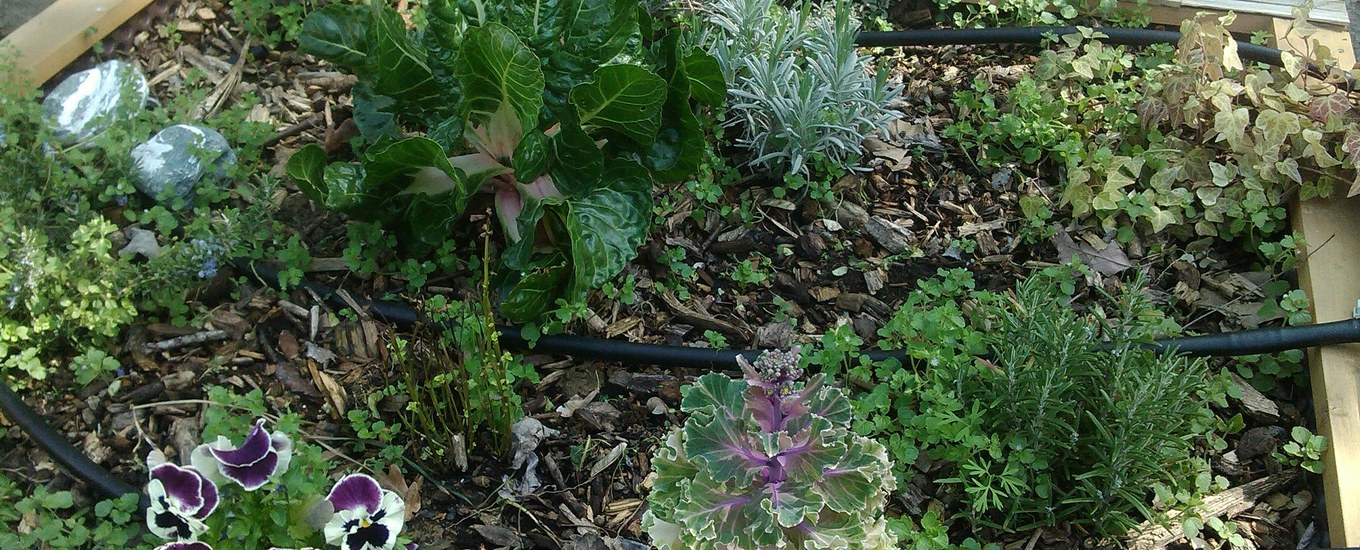
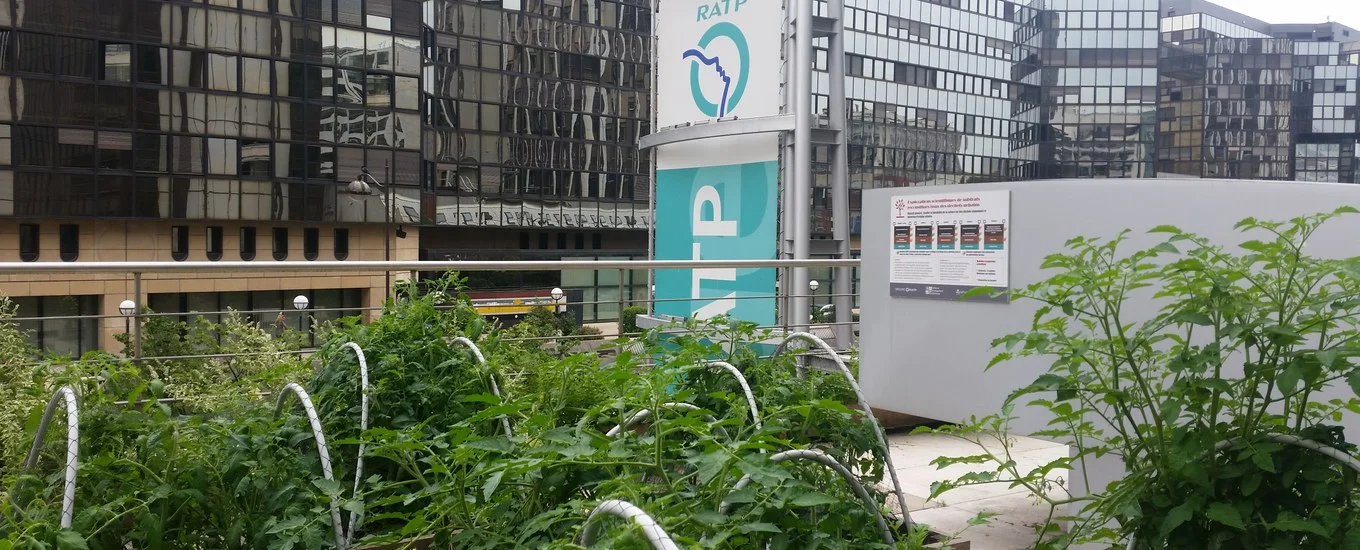
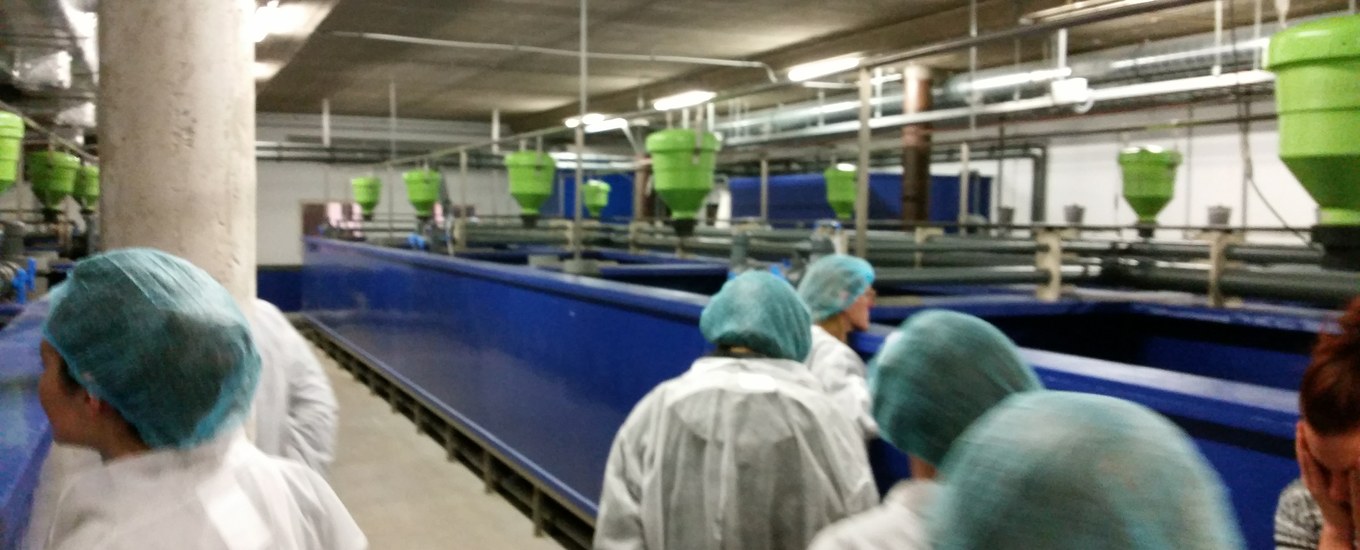
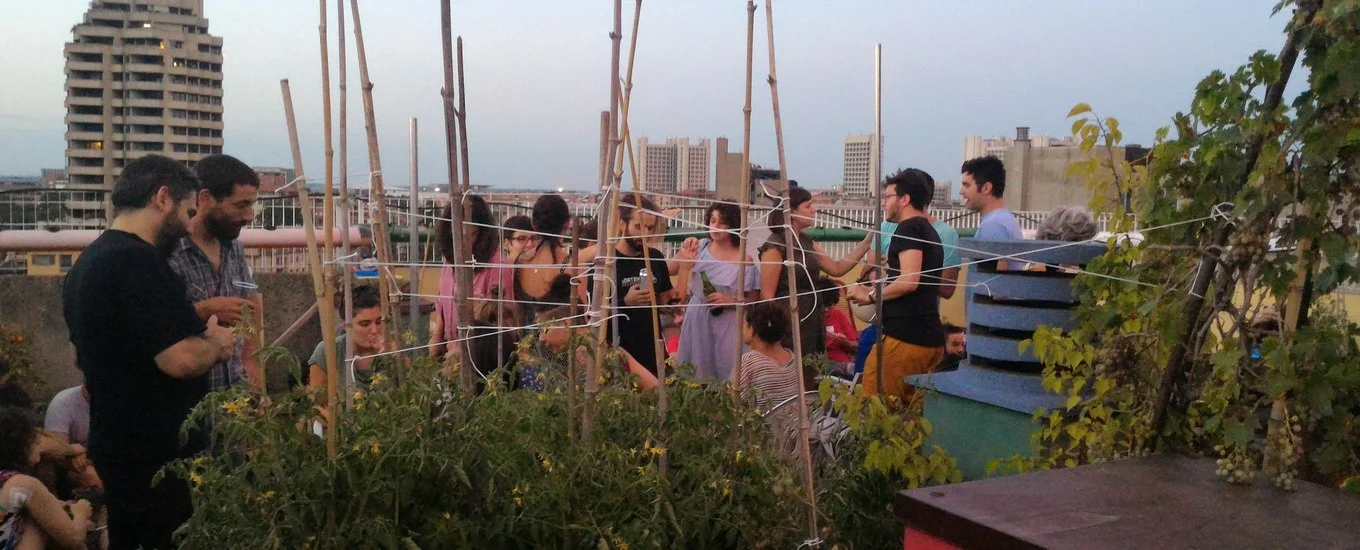
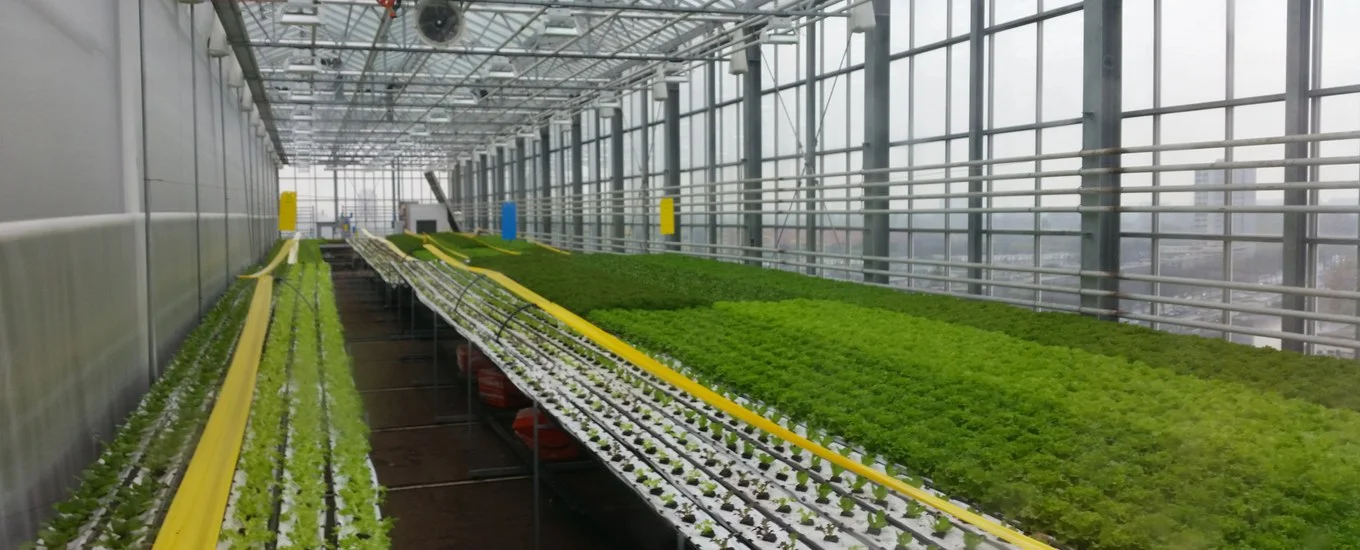
Dr. Francesco Orsini
Researcher, Vegetable Crops and Urban Horticulture
DISTAL – Dept of Agricultural and Food Sciences
Alma Mater Studiorum – Bologna University
This challenge, open to University students from several disciplines and from all over the world, will address the design of urban agriculture projects in three Italian Cities (Bologna, Belluno and Conegliano). The challenge, jointly organized by Bologna and Florence Universities, is also supported by the International Society for Horticultural Sciences. On the website, further information about the awards and components of both the International Jury and the Scientific committee are also available.
The challenge will open on October 15, and two selection steps are foreseen, at December 1st and January 15th. Selected teams will be able to present their innovative project at the International Fair NovelFarm2019, that will take place in Pordenone (Italy), on February 13-14, 2019.
More information will be displayed on the challenge website in the coming days.
Multidisciplinary student teams from the Faculties of Agriculture, Biology, Architecture, Design, Economics, Engineering and Social Sciences, are invited to join the challenge and design innovative urban agriculture systems that integrate the?best architectural and technological innovations for food production in urban environments. Their projects will be based on existing vacant spaces in three Italian cities (Bologna, Belluno and Conegliano), characterized by different peculiarities. Their design should have a strong and entrepreneurial connotation, promoting the generation of new forms of employment for disadvantaged users.
The competition is open to student teams from all over the world, and teams may comprise students from different universities and universities of applied sciences.
REGISTRATION OPENING
1ST ROUND - SELECTION
2ND ROUND - SUBMISSION DEADLINE
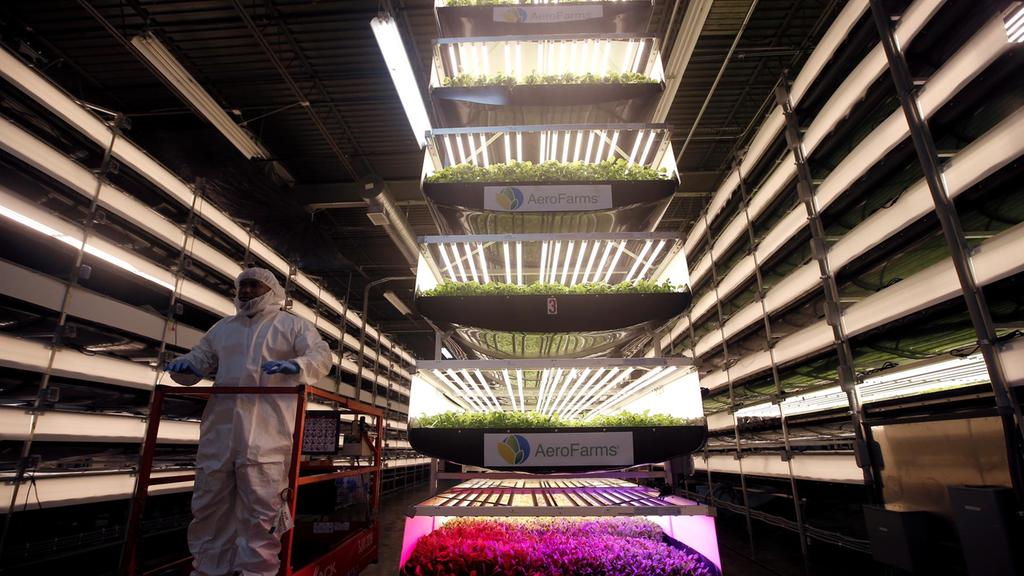
Vertical Farming: The New Way of Urban Life
With cities growing bigger by the day, finding farmland is becoming a prevalent problem. To solve the food shortages that the whole world is facing, vertical farming seems like a surefire solution
ŞULE GÜNER
ISTANBUL
November 2, 2018
With cities growing bigger by the day, finding farmland is becoming a prevalent problem. To solve the food shortages that the whole world is facing, vertical farming seems like a surefire solution
For the past few years, one of the leading problems in the world has been food shortage and safety. Although food production is currently at its highest levels, it is hard to understand why there is still an increase in the number of malnourished people. Likewise, food safety has become a major problem for every country be it a developed or developing country.
With the effects of industrial food on human health often being scrutinized, some believe that excessive meat consumption causes more gas emissions in the atmosphere. Now, we have a new trend that has emerged to offer a solution to these problems - urban farming. The method employed by this farming model is called technological agriculture, or agritech for short.
Aiming to feed more people with foods that have higher nutritional value, agritech's key role is to produce natural food in indoor spaces by making use of technology. Even if you are not a farmer, you can still grow your own fruits and vegetables in your house thanks to agritech.
"Vertical farming" enables you to utilize an empty and unused space in your home or workplace. Vertical farming basically means producing food in vertically stacked growing layers that have their own watering systems with the help of LEDs that mimic sunlight. Encouraging agriculture in urban spaces, this method has been gaining popularity in the U.S. and Asia over the past decade for some viable reasons.
We sometimes forget that a small part of the millions who are struggling with famine live in cities. Access to food products sold in supermarkets or farmers markets in big cities is decreasing day by day. Technologists, who argue that the notion of agritech also has a social dimension, believe that small farms or plantation areas can be built in city centers with the help of technology. Among the innovative solutions offered for urban spaces, vertical farming is the most technological.
HIGH-QUALITY PRODUCTS
I had a chance to have a Skype meeting with Henry Gordon-Smith, a young agriculture technology expert who is the founder of the New York-based Agritecture Consulting, a leading consulting business in the field of vertical farming in the U.S. With five-person team, Gordon-Smith enables the agritech method by bringing together urban agriculture companies and new "urban farmers."
The fact that Gordon-Smith is a young entrepreneur in the field of agritech is an important detail showing that farming is not a job only for older people.
"The average age of farmers in the U.S. is 58. The new generation does not set agriculture and farming as a goal and working in this field does not appeal to them. I want to prove them wrong. My motivation to start this business was to find a technological solution to the difficulties people confront in terms of food in urban life. I believe that smart solutions must be introduced in smart cities. Vertical farming does not only enable the production of higher quality fruits and vegetables, but also demonstrates that everyone, including younger and older generations, can be a farmer," Gordon-Smith explained.
He also describes the working model of vertical farming, a brand new business line in the digital world, as follows, "When a person or a company consults us, we primarily conduct the required research and economic analysis. We firstly ask our clients what their goals are. Do they may aim to grow plants in a small space in their house that would suffice a family, or harvest as much as possible in a wider indoor or outdoor space and sell the product. We offer different solutions according to varying purposes. Sometimes we suggest implementing only vertical agriculture models in a certain part of the production space, and sometimes we suggest conventional agriculture methods especially when there is a vast space. After completing all the analyses, we begin the phases of designing and engineering the farm."
AGRITECH'S POPULARITY WILL RISE
"To give an example, a hotel that wishes to do so will be able to transform an empty space in its basement into a farm illuminated with LED lights. It does not matter how dark or damp the space is. By transforming such a space into a farm, the hotel would be able to provide its restaurant's kitchen with food it knows to be fresh and nutritious. For example, in the U.S., we eat tomatoes imported from Mexico without knowing anything about their freshness. One cannot be sure about their nutritional value," Gordon-Smith said.
He then went on to claim that food grown via vertical farming, which is similar to the common primary school experiment where beans are grown in water, is more nutritious because no supplements are used to grow them. Another benefit of farming indoors is that it allows the maximization of environmental factors that contribute to plant growth.
Vertical farming experts I've met in the U.S. stated that the only thing needed by any person or entrepreneur wishing to get into vertical farming is an empty indoor area with electrical wiring and that the farming spaces created by vertical farming can be offered to the public via small administrations and municipalities.
The companies that have gotten into the business of building urban agriculture farms and creating new technological solutions are sure that the trend of technological farming will continue to grow. These companies in the short term aim to grow "a wide range of reasonably priced and trustworthy produce with long shelf life that can be grown year-long independent of the weather." But the biggest obstacle to the faster progress of such companies is the high cost of technological farming, especially vertical farming.
Henry Gordon-Smith states that the minimum amount of capital required to start vertical farming is $50,000. On the other hand, the requirement to be amateur-engineers that can keep up with the digital environment imposed on people, especially as the projects that intend to transform cities into digital and smart cities progress, is also present in technological farming endeavors.
Anyone wishing to get into vertical farming should be able to navigate the technological expertise required and have enough knowledge to be able to organize the conditions of weather, soil and water suitable for plant growth in nature's stead.
MORE GREENS
The first question that comes to mind regarding vertical farming is usually whether the product grown indoors via LED lights tastes different from the ones grown traditionally. Gordon-Smith answers this in the following manner, "I personally have not discerned any difference in taste but that's my opinion, others might disagree."
After high prices, the second disadvantage to this method of farming is that green vegetables are preferred due to their high yield. Gordon-Smith explains the reason for this preference as follows, "This is not because other products are unsuitable to grow with this method, a very wide variety of vegetables and fruits can be grown, but the yield with leafy greens is especially high compared to other vegetables."
CAN QATAR GET THROUGH THEIR EMBARGO WITH VERTICAL FARMING?
Qatar is now employing methods of urban agriculture in an effort to build self-sufficiency due to sanctions imposed on it by five member states of the Arab League, which includes the trade of food as well. David Forsenberg, the CEO of Aerofarms, one of the largest urban agriculture firms in the world, says that Qatari authorities have a positive outlook on vertical farming and that they wish to cooperate with local business people. Additionally, the Doha News Agency stated, "Qatar is interested in long term projects regarding independent food production and in the case that vertical farming can yield produce at a reasonable cost, it might be implemented in Qatar."