

News About Farming in Shipping Containers & Limited Indoor Spaces

Hydroponic Grower Vertigreens Booms as Lettuce Becomes a Big Concern
While the lettuce-driven cyclospora outbreak has generally been bad for businesses across the nation—including some St. Louis chefs who’ve been forced to take extra precautions—the outbreak has come with an upside for one St. Louis-area startup.

Growing Good: Steel Shells Incubate Incredibly Productive Microfarms
The hydroponic farm is designed by Growcer, an Ottawa-based company that was initially founded in response to high food costs in northern communities. It’s a serious need — according to Statistics Canada, 60% of Nunavut (Canada’s northernmost territory) residents are food insecure, and food prices have risen by 22% (as opposed to 12% across the rest of the country) in recent years.

Rocky View County Farm Uses Hydroponics to Grow Fresh Greens Year-Round
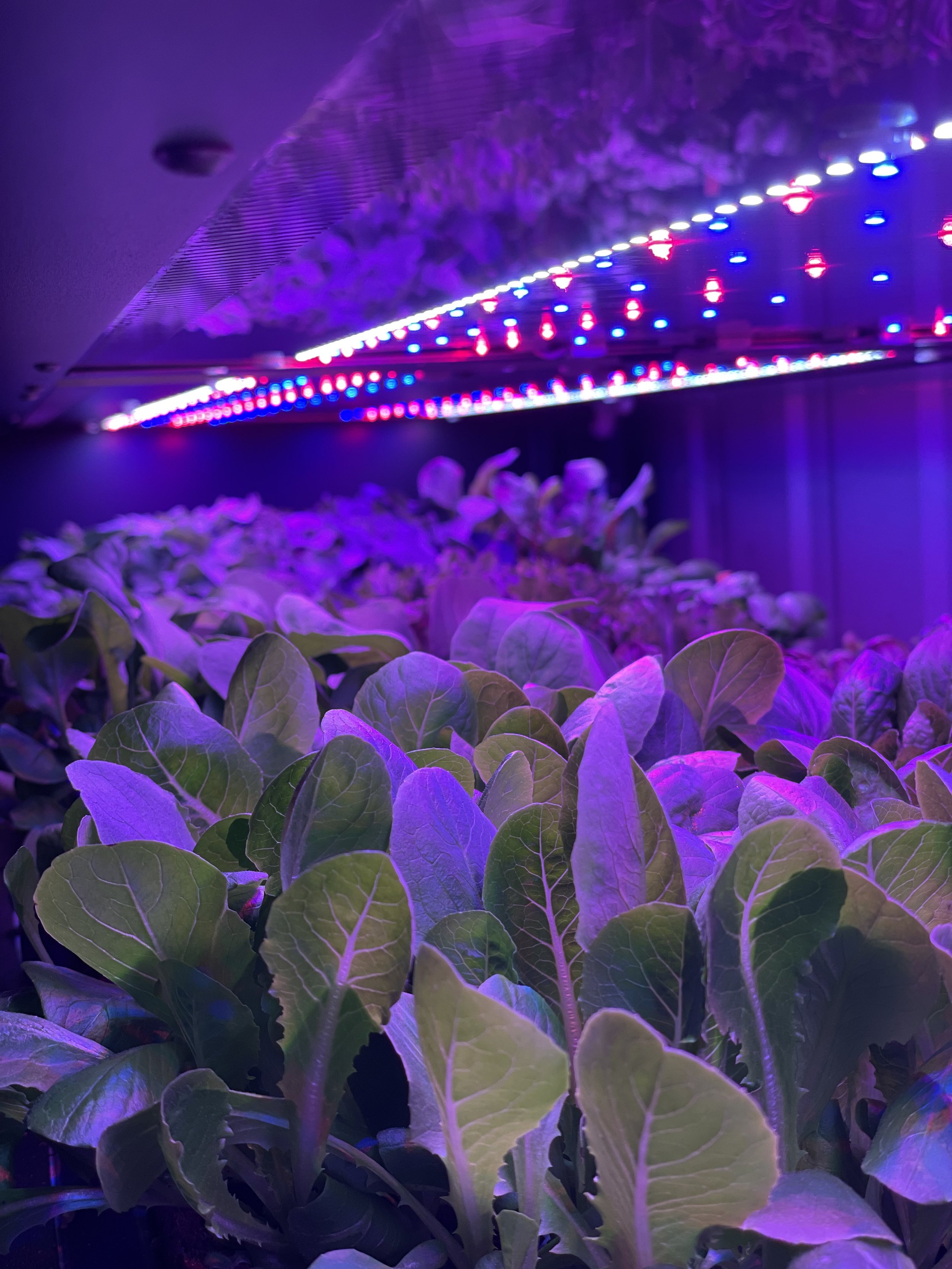
With Growcers’ virtual tour it shows the farm is the size of a large shipping container. Inside are left and right plant reservoirs, a work and seeding station, nutrient monitors, C02 sensors, thermostat, HVAC system, environmental sensors, LED lights and more.

Growing Smarter Farmers: University, Neighborhoods Localize Climate Science
Plantation Park Heights, founded in 2014, is an urban farm sprawling across several blocks in Baltimore’s Greenspring and Central Park Heights neighborhoods, where greenhouses and gardens seem to sprout from every vacant lot.

Mamdani Admin To Turn Felons Into Gourmet-Food Producers for ‘Farm-to-Table’ Dining at NYC Jails
The New York City Correction Department has awarded a nearly $230,000 annual contract to a Colorado-based firm, FarmBox Foods, to teach inmates — or “persons in custody” — at Rikers Island and other municipal jails how to “vertical” farm in an urban setting.

Exciting News From StartLife Alumnus Hippotainer
🌍 This milestone marks an important chapter in Hippotainer's journey to develop innovative and sustainable solutions for the future of agriculture. After the christening, the container will set sail for its next adventure in Bonaire, where it will play a vital role in contributing to local food security.

With Growtainer® Containers, It’s Possible To Grow Almost Anything, Almost Anywhere.
The two climate-controlled containers measure 40 feet in length where DiveDWN can grow up to 36,000 heads of lettuce annually in colder temperatures and when warmer, crops like tomatoes can thrive.

Advancing Food Production Capabilities in Deep Space While Supporting Food Security in Nunavut
The Growcer Inc. will work with Arctic Fresh Group of Companies, an Inuit-owned enterprise in Nunavut, to co-develop a concept for a deployable Controlled Environment Agriculture (CEA) unit.

A Farm in Charlotte Grows Indoors and Offers Options as Cyclosporiasis Cases Go Up
Adrina Farms is a hydroponic farm. They grow in water instead of in soil, and then nutrients get added to the plant in a controlled environment. It’s right in the middle of the City of Charlotte at Innovation Barn, and they grow lettuce vertically.

From Single Unit to Modular Farm Infrastructure 🌱
Not every indoor farming project needs to begin at full scale.
For some growers, a single BioCube Container is the right place to start. It offers a focused environment for one crop, one production model, and a clearly defined output..

CANADA: The Growcer Brings Greens to More Consumers
The Growcer, an Ottawa-based company, allows farmers and others needing fresh vegetables to grow hydroponically in small, self-contained, universal units.
The company was founded in 2016.

How Much Does it Really Cost to Feed a High-Producing Dairy Cow In The Middle East?
Answering this question requires looking beyond the price per kilogram of alfalfa, hay or concentrate. Behind every litre of milk produced in the region, there is a cost structure shaped by raw materials, transport, storage, water availability, forage quality, supplier stability and the farm’s real ability to control its own feeding strategy.

USA - MISSOURI: Local Farms Increase Safety Amid Cyclospora Outbreak
Josh Smith, owner of Neon Greens, outlined the advantages of their closed-environment agriculture. “We’re able to control the sun which are our led’s and the water, the best city water. We’re able to add nutrients to that water as you would your home,” Smith said.
The establishment grows three types of lettuce vertically within a thermally efficient shipping container, combining urban farming with a restaurant model off Manchester.

USA - CHICAGO: Ford Heights, a Cook County Food Desert, Gets a High-Tech Hydroponic Farm
.The town will now be able to grow fresh produce from a shipping container.
Ford Heights native Derek Drake runs a hydroponic farm company called Ditto Foods. He can make a 320 square foot trailer as productive as a three-acre farm.

Jason Brown, Founder of FarmBox Foods - "Let's Just Build The Farm Inside The Container"
It all started with an affordable housing concept that never got off the ground. Jason Brown, a founding member of the FarmBox Foods team, was working on a project to build housing inside shipping containers. The plan included outdoor gardens in the form of vertically integrated, food-safe tubes (foreshadowing is a narrative device, etc.).

Container Farming Is Scaling in 2026 — Here’s What the Box Actually Costs Northeast Growers
If you’ve watched a local farm-to-table restaurant start growing its own basil in a steel box behind the kitchen, you’ve seen the trend that’s quietly reshaping small-scale agriculture in 2026. Container farming — a single shipping container fitted out as a climate-controlled hydroponic grow room — has moved from novelty to working tool, and the buyers driving it aren’t venture-backed agtech startups.

Purdue University Student Farm Grows Partnership With Bistro
2024 saw the installation of Freight Farm growing containers at the farm. These metal boxes allow the students to grow vegetables year-round in a controlled environment. This is where most of Sieber’s lettuce is grown.
Prior to the containers, the farm did sell to HTM but the year-round lettuce production has boosted the farm’s ability to sell to the school, Adair said.

Heatwaves Are Exposing A Problem Many Livestock Farms Can No Longer Ignore
For years, many cattle operations have focused on buying forage when they needed it, storing it when possible and managing price fluctuations as part of normal farm life. That model worked reasonably well when climate, logistics and supply chains were more predictable.
But that is not the world many farms are operating in today.