

A Farm in Charlotte Grows Indoors and Offers Options as Cyclosporiasis Cases Go Up

July 29, 2026
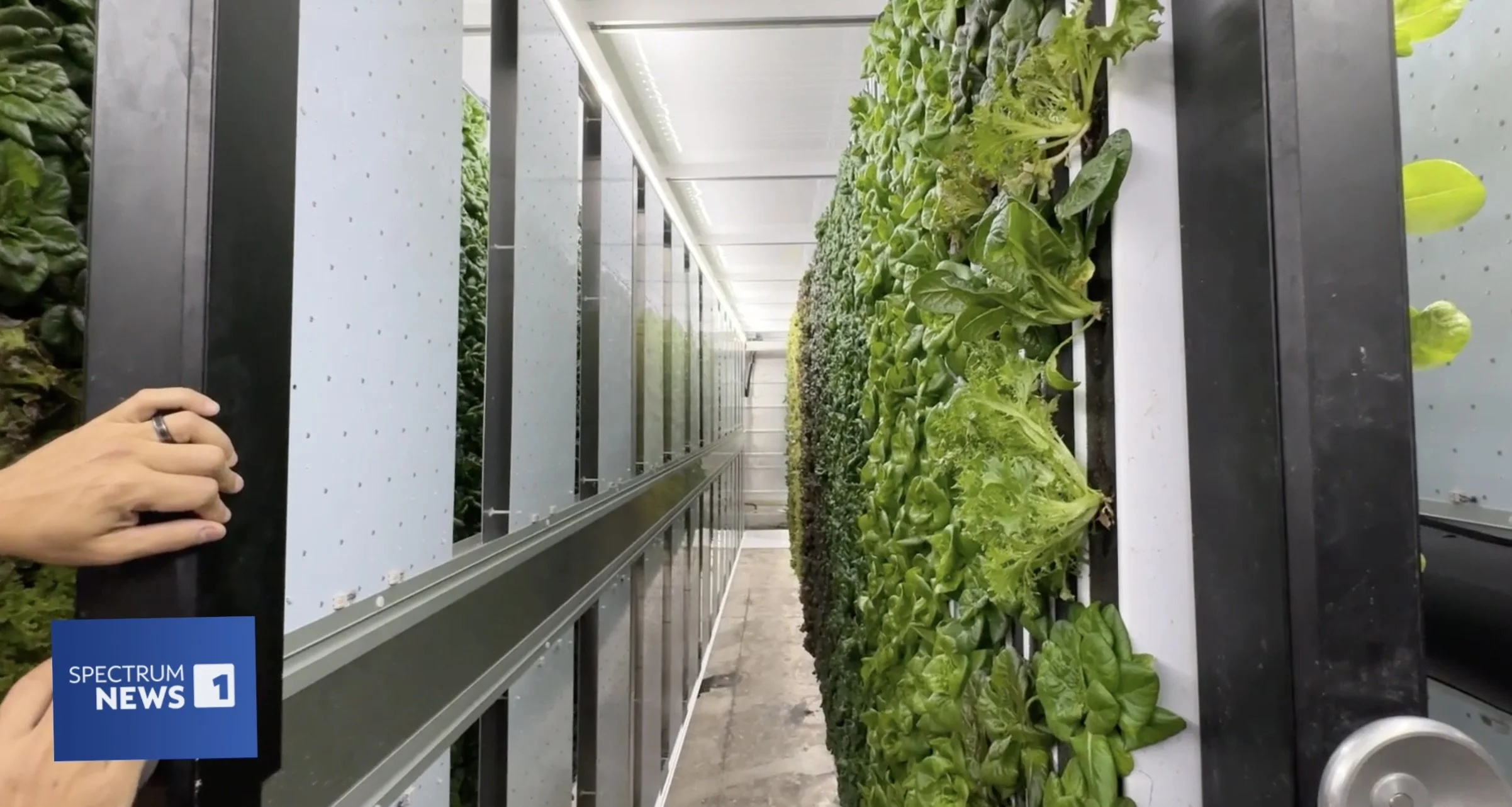
CHARLOTTE, N.C. — Julian Jacobs, the farmer and owner of Adrina Farms, has been selling out of his lettuce faster.
He had no idea how much business he’d get as some people are looking for more local options to buy produce, but says he’s happy to meet a need. He grows about eight or nine different varieties of lettuce.
Cases of cyclosporiasis have climbed over 700 in North Carolina since May 1, according to the North Carolina Department of Health and Human Services.
Adrina Farms is a hydroponic farm. They grow in water instead of in soil, and then nutrients get added to the plant in a controlled environment. It’s right in the middle of the City of Charlotte at Innovation Barn, and they grow lettuce vertically.
“We're trying to grow as much as we can and as small a space as possible,” Jacobs said.
With the touch of a finger, Jacobs and his team are able to control the temperature, light, water, and nutrients the plants get.
“These plants are given the optimum environment. They're bringing up more water, more nutrients and holding that in more than letting that back out into the soil," Jacobs said.
They’re also able to reuse the water the plants don’t absorb. “We use about 95% less water in our farm because we're reusing that water,” Jacobs said.
With cases of the parasite going up around the U.S., and more than 700 cases in North Carolina, Jacobs said his lettuce is selling out fast.
“I love that we can meet that need to be quite honest with you. Like we need more of it. Like, I don't have anymore to sell. We are sold out as a farm,” Jacobs said.
He attributes that to their practices. “It's very unlikely that Cyclospora is something that comes out of a farm like this. We have a very controlled environment. And we spent a lot of time on things like cleaning and sanitation,” Jacobs said.
Associate Professor Ricardo Hernandez at North Carolina State University in the horticulture department said hydroponic farms have less of a risk, when it comes to contamination.
“There is more risk reduction points for that to reach the greenhouse. If you have containments that are brought by people, then that’s the risk,” Hernandez said.
It’s another option for produce.
“The contaminate to be in hydroponic-produced lettuce is low because less people is handling it, there is more water treatment around it, and overall, we produce a lot less in a lettuce greenhouse than when it comes to the field,” Hernandez said.
Adrina Farms sells their lettuce at the Matthews Farmers Market and more than 20 restaurants. They’re working on expanding to other produce. Both the farmer and the expert said this is an additional form of farming, but traditional row crop farming is still needed to feed the population.