

Heatwaves Are Exposing A Problem Many Livestock Farms Can No Longer Ignore
Smart Fodder Farms
July 2, 2026
Extreme heat is changing the way livestock farms should think about feed.
For years, many cattle operations have focused on buying forage when they needed it, storing it when possible and managing price fluctuations as part of normal farm life. That model worked reasonably well when climate, logistics and supply chains were more predictable.
But that is not the world many farms are operating in today.
Heatwaves are becoming more frequent, more intense and more disruptive. They affect animals directly through heat stress, lower feed intake and reduced productivity. But they also affect the system around the animal: forage production, water availability, transport, supplier reliability and the cost of getting fresh feed to the farm.
This is the part of the conversation that deserves more attention. A heatwave does not only make cattle uncomfortable. It exposes how dependent a farm can be on external feed supply.
If fresh forage depends on distant producers, large irrigation areas, long-distance transport or seasonal availability, every extreme weather event adds pressure to the feeding strategy. The farm may still be well managed, technically advanced and professionally operated, but one of its most critical daily inputs remains exposed to factors outside its control.
That is a serious vulnerability.
Cattle need to be fed every day. Milk production and meat production cannot simply wait for better weather, cheaper transport or more stable forage markets. When heat affects the supply chain, livestock farms still have to maintain animal welfare, ration planning and operational continuity.
This is why on-site hydroponic fodder production is becoming a more relevant conversation for professional farms.
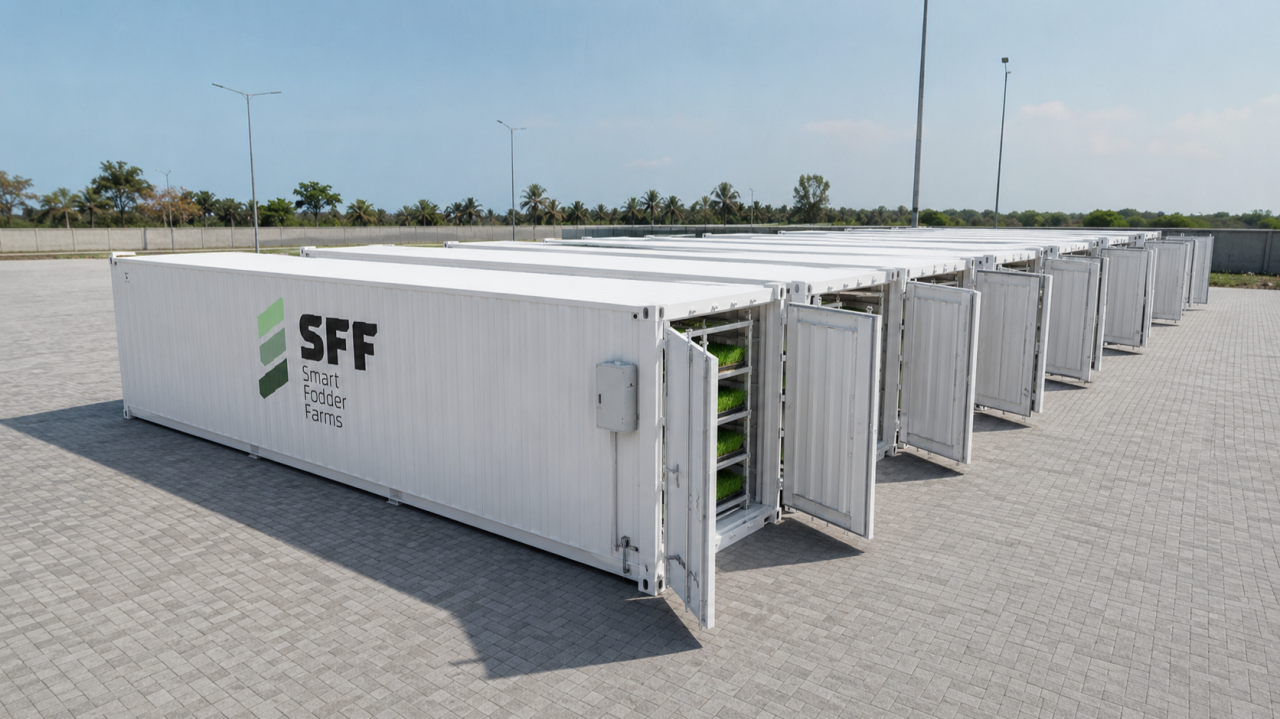
A hydroponic fodder container is not just a piece of equipment. It is a controlled production unit designed to produce fresh fodder directly where the animals are.
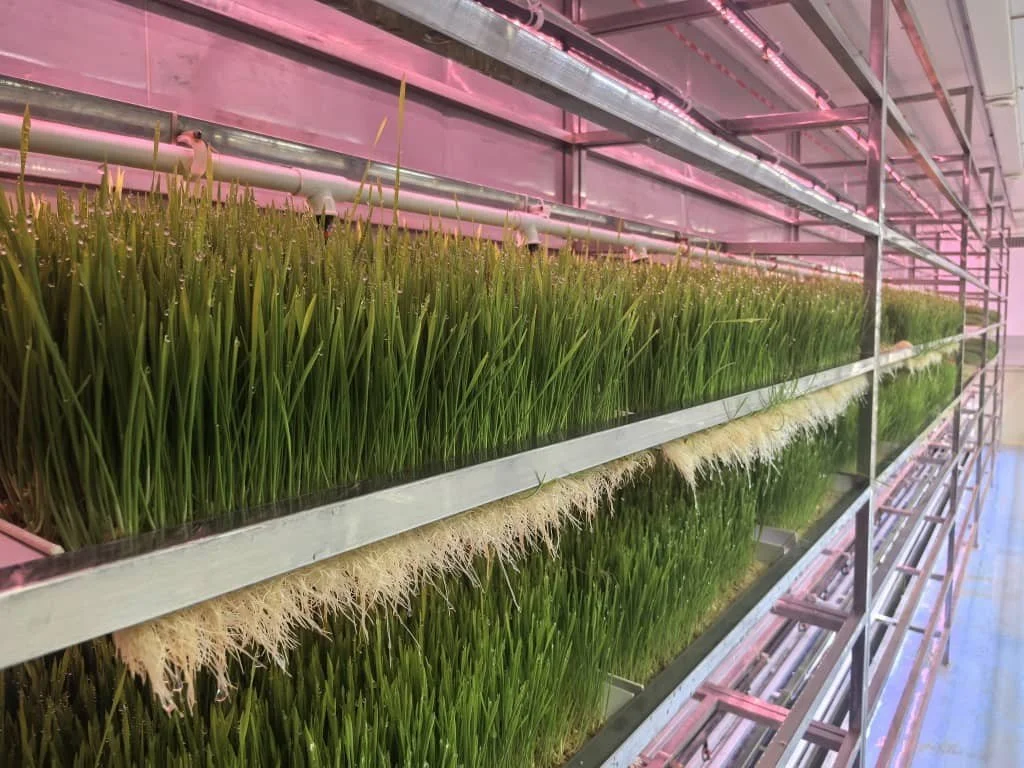
Inside a Smart Fodder Farms container, seeds germinate and grow under controlled conditions of temperature, humidity, irrigation and lighting. The system is designed to produce fresh hydroponic fodder in short cycles of only 6-7 days, without requiring fertile soil, large forage fields or conventional irrigation land.
That matters in hot climates. It matters in regions with limited water. It matters in areas where imported forage is expensive. It matters for farms that cannot afford to depend completely on suppliers, logistics and weather conditions outside the farm.
The objective is not always to replace the entire feeding programme. In many cases, the smartest strategy is to produce a stable part of the fresh fodder requirement on-site and integrate it into the farm’s ration planning.
That single decision changes the position of the farm.
Instead of only reacting to the market, the farm begins to produce part of what it needs.
Instead of depending entirely on external forage availability, it creates an internal source of fresh feed.
Instead of seeing heatwaves only as a threat, it starts building a more resilient feeding model.
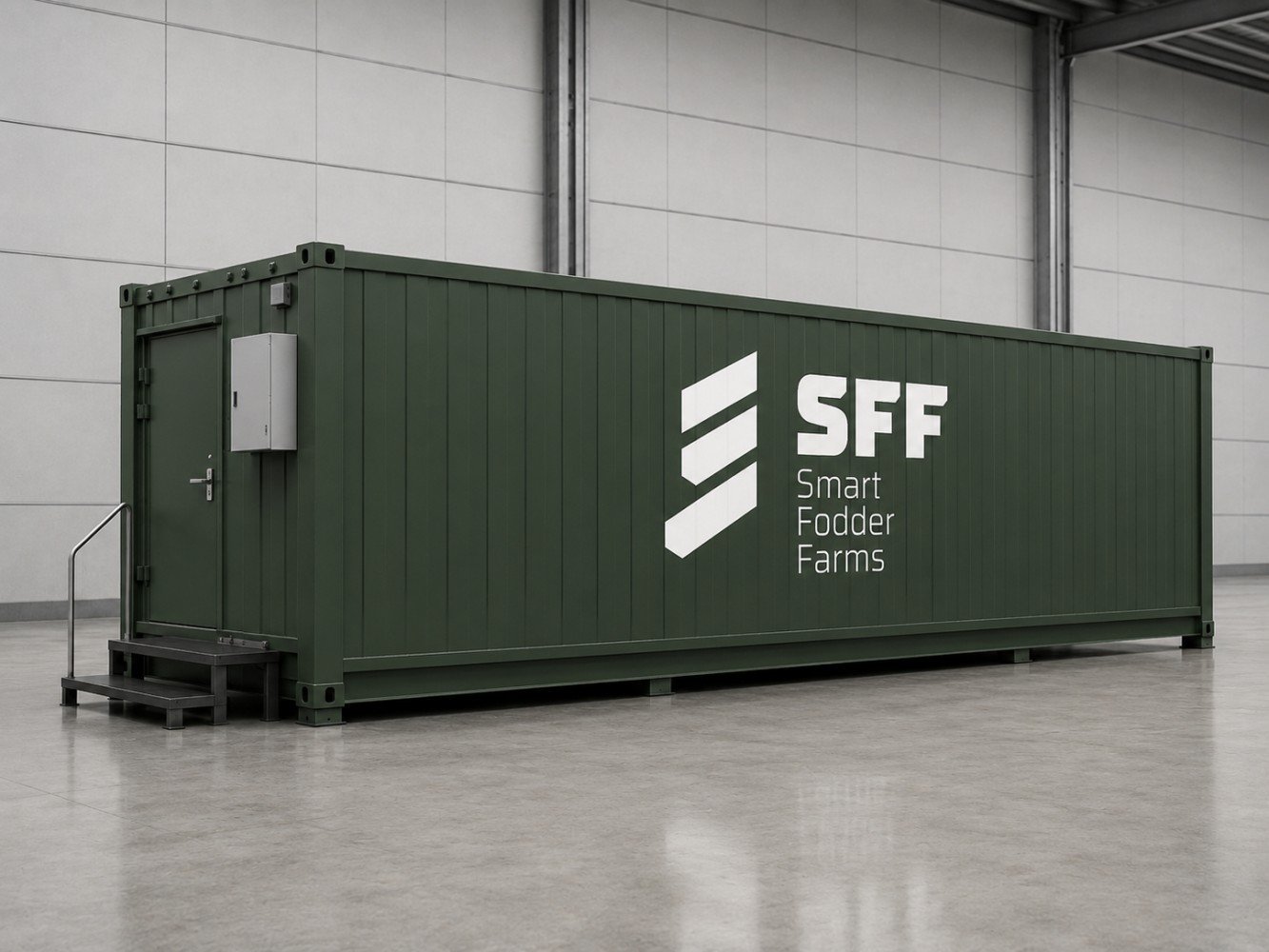
Smart Fodder Farms works with different container formats depending on the size and objectives of the livestock operation.
A 20’ container can be a compact starting point for farms that want to validate production and begin producing fresh fodder on-site.
A 40’ container offers greater capacity for farms with higher daily needs.
A 40’ High Cube container is the highest-capacity option, designed for operations that need serious daily production volume, reaching up to approximately 840 kg of fresh hydroponic fodder per day in 6-day cycles.
This modular approach is important.
A farm does not need to solve its entire feed strategy in one step. It can start with one container, train the team, validate the system, integrate the fodder into its daily ration strategy and scale later with more modules as demand grows.
That is the real value of containerised hydroponic fodder production. It allows livestock companies to reduce dependence at their own pace. For cattle farms, the question is no longer only how much forage costs today.
The better question is:
How much of our fresh feed should we be producing ourselves before the next heatwave, supply disruption or transport increase forces us to react again?
The strongest farms in the coming years will not be the ones that simply wait for the market to stabilise.
They will be the ones that build more control into their own production model.
At Smart Fodder Farms, we help livestock companies evaluate which container configuration fits their herd size, climate conditions, daily production targets and growth plans.
If your farm is exposed to heatwaves, forage dependency, water limitations or rising feed logistics costs, this may be the right moment to analyse how much fresh fodder you could produce directly on-site.