

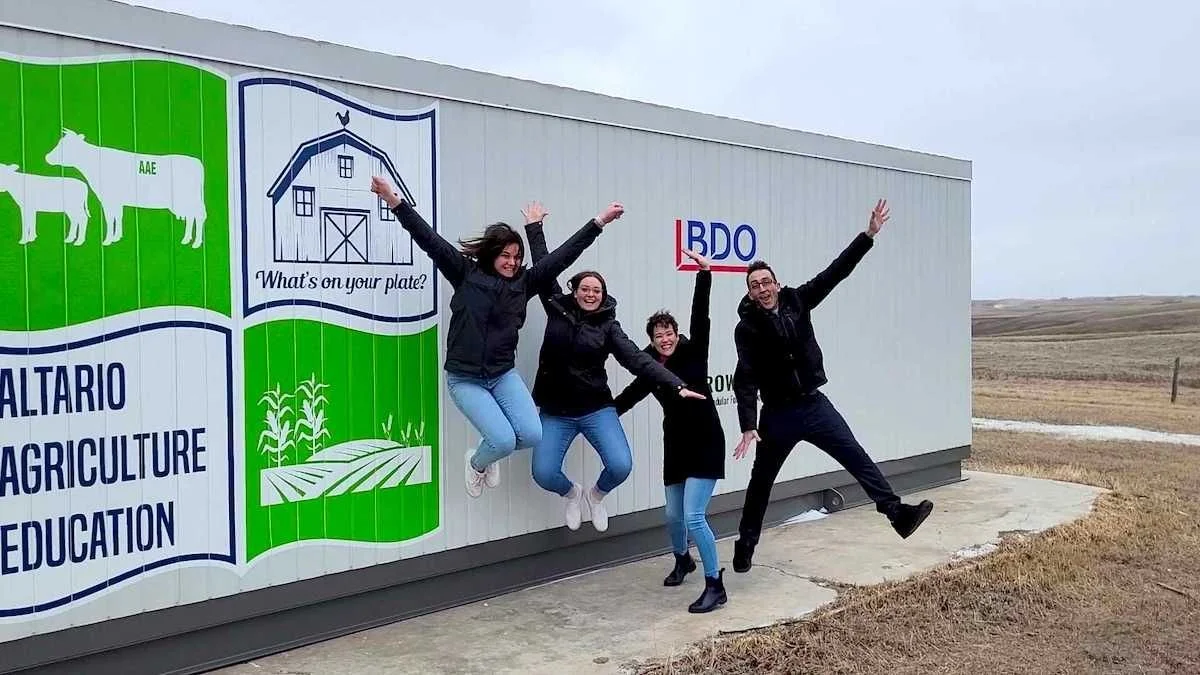
Small rural schools know their students. At Altario School, a school just shy of 70 students on the Alberta-Saskatchewan border, that meant building an agriculture academy.
It makes sense. Principal Kevin Van Lagen noticed that most of a graduating class was heading to university for careers in agriculture. So why should students spend thousands of dollars in university to find out if they like agriculture, when they could try it in high school first?
So Altario built a program where students raise chickens, sheep, cows, turkeys and bees. But not every kid is an animal kid. You’ve got to give students some opportunities outside the barn too.
That’s where The Growcer Farm came in.
“We had a group of students that wanted to be involved in the farm, but there was nothing [specific] they were passionate about. They weren’t interested in working with the animals . . . But this Growcer farm was so much more and different. There was the organization part of it, the harvesting, the customer part,” Kevin Van Lagen says.
One of those students who worked in a Growcer farm was accepted to study agronomy.
“When [the student] toured [the university] and she explained what she did in high school, they were mind blown that she was doing this in high school,” Kevin Van Lagen says.
And the fresh greens for the community? That’s a bonus.
Hear from Altario and other schools on what they had to say during at our webinar, What a School Farm Grows Beyond the Cafeteria.
Watch recording:
https://hubs.ly/Q04B0GFR0