


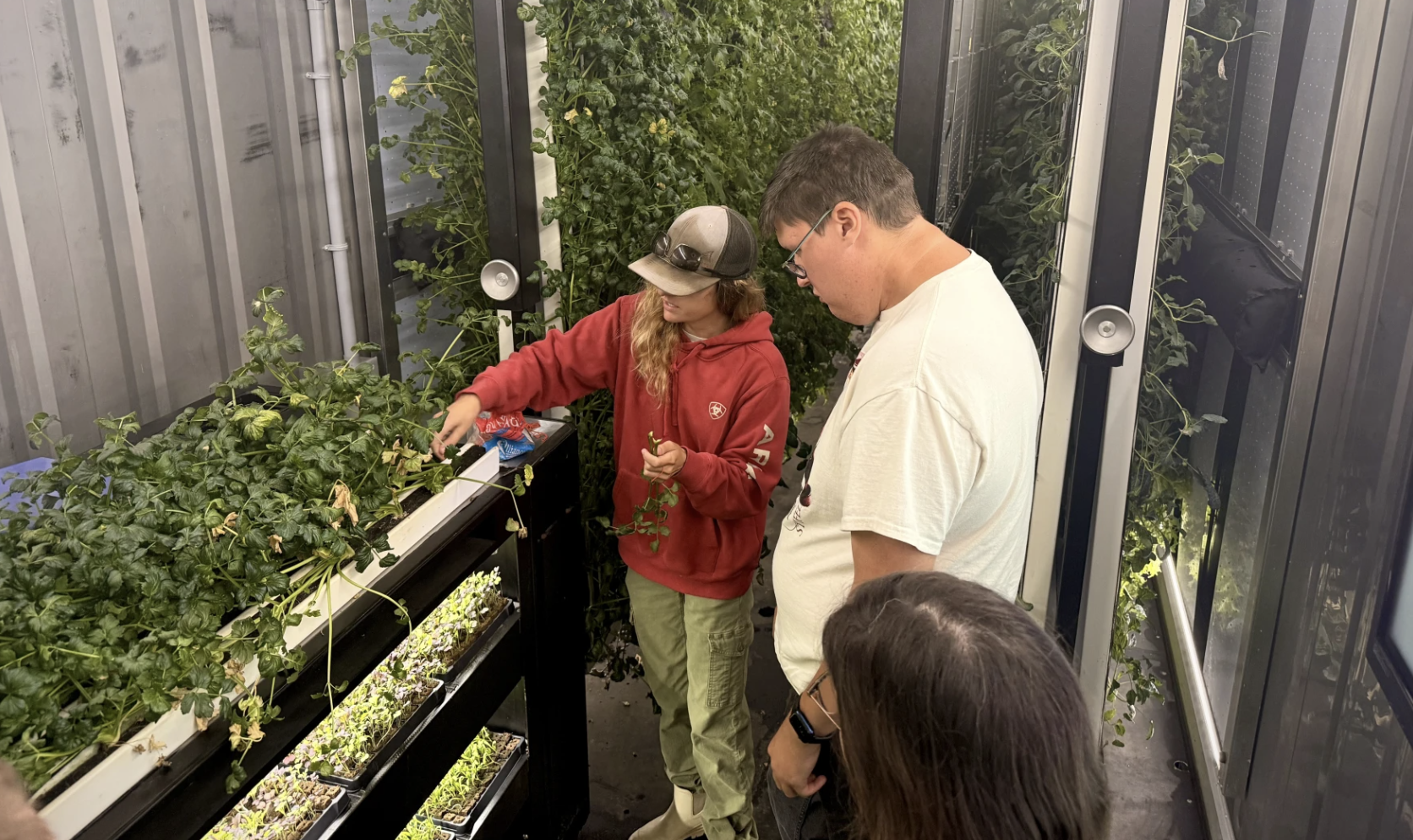
Adelynn Bentley of Theodora Farms shows Challenge Unlimited participants how to properly harvest celery stalks. Jack Hultz, in white, said learning how to harvest vegetables and herbs in a hydroponic farm has been an "awesome" experience.
St. Louis Public Radio / Andrea Y. Henderson
It’s always busy inside Challenge Unlimited in Alton.
People are arriving on buses while others are watching the news, reading or socializing with friends as they wait for their community activity or skills training classes to start for the day. But one group of people has already started one of the classes — harvesting vegetables and herbs from an on-site hydroponic farm.
Participants in Challenge Unlimited’s community day services have significant intellectual or developmental disabilities.
“It’s difficult sometimes for a person with an intellectual disability to find what we call community,” said Susan Wild, Challenge Unlimited’s executive director for community services. “Their supports usually end up to be family or a residential group home, which works well for many people, but it sometimes makes them be only around that small group of people.”
Wild said structured community activities and classes give people with disabilities an opportunity to relate with others who share the same struggles, which eventually garners deep connections.
Challenge Unlimited offers various daily group programs and skills classes including exercising, mental health activities, cooking, automotive courses, and computer lab classes. The nonprofit does not shy away from offering new activities to people, because leaders never know what program will be the right fit for each client.
“We start where the person is, and we help support them to where they want to be, and that's different for everybody,” said Wild. “Some people are interested in working. Some people are interested in building relationships with other people. Some people want to get involved in their community, and so we help them move forward in whatever that path looks like for their future.”
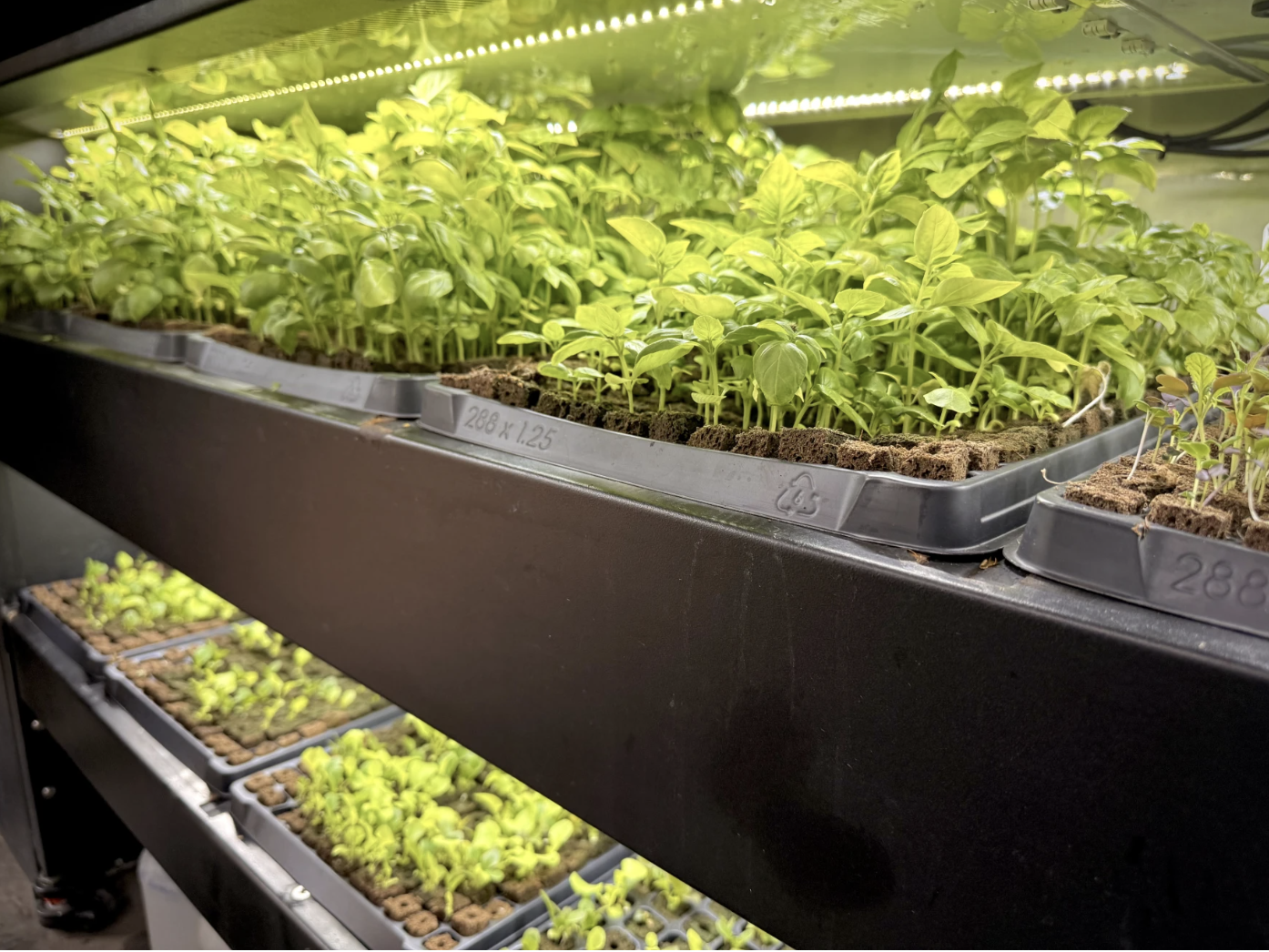
Challenge Unlimited collaborated with Theodora Farms to help people with disabilities learn how to grow and harvest vegetables and herbs through hydroponic farming. Inside the trailer are three horizontal rows full of basil, spring mix greens, lettuce, and spinach, which participants grew over the past few months.
Andrea Y. Henderson / St. Louis Public Radio
Hydroponic farming
While others are waiting for their daily activities to begin, Jack Hultz is in a white trailer behind the building, harvesting dark-green tango celery. He helped cultivate the stalks from seeds several months ago with a few other participants in the hydroponic farm’s trailer.
Inside, to the left of the entryway, are three horizontal rows full of basil, spring mix greens, lettuce and spinach. They are sectioned off in black seed starter trays and sitting underneath grow lights. Some are sprouting more quickly than others, but many are not ready to harvest. Participants are growing hundreds of leafy greens inside the 53-foot-by-8-foot trailer, but one would think that there was only basil growing because of its potent smell.
Hultz is excited to pick and clean the celery because he has been waiting to give the vegetable to his mother to cook with. To him, the hydroponic growing process was riveting.
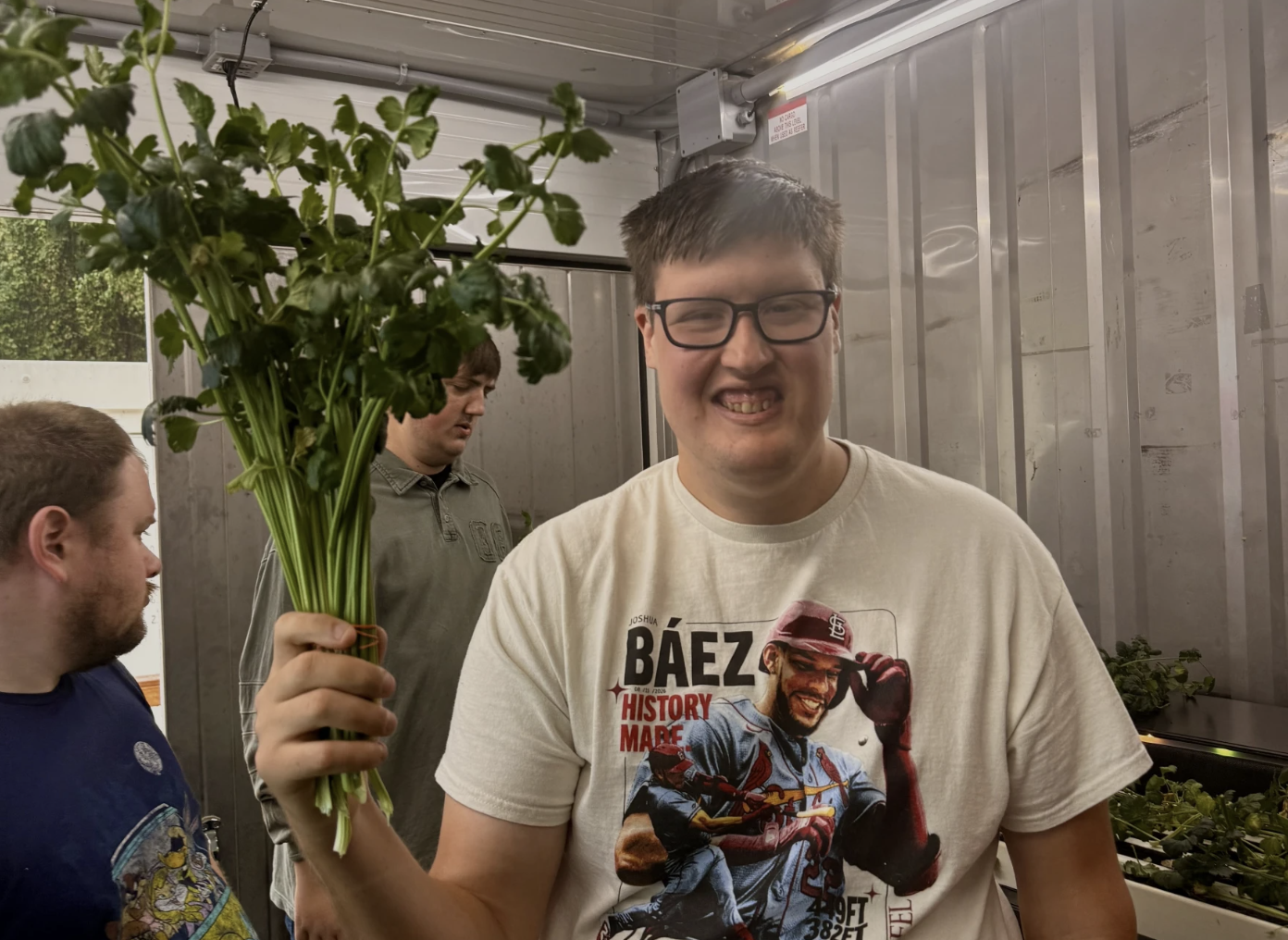
Jack Hultz is proud of the tango celery that he helped grow and harvest.
Andrea Y. Henderson / St. Louis Public Radio
“We took these here, and we put those into the container there, and then we have seeds that we'll put in water, and then it will fit over there … and then they'll do that,” Hultz said as he pointed to seedlings and then to his bundled celery.
He hoped that by signing up for the program, many others would join him because he is an outgoing person, but only a few wanted to experience a soilless gardening program.
Challenge Unlimited partnered with Theodora Farms, a Godfrey-based farm, to teach participants how to grow plants without dirt. It is the first time the nonprofit and the farm have used a hydroponic system for skills training. Prior to the hydroponic farm experience, participants learned traditional soil-based farming methods through Theodora Farms earlier this year.
A hydroponic farm is a plant-growing system that uses water-based minerals and nutrients to feed and mature vegetables and herbs. Seeds can be inserted into growing media like perlite, coconut coir, clay pebbles, vermiculite or rockwool. Challenge Unlimited’s soilless farm grows inside a computer-based climate-controlled shipping container. The plants use five gallons of recycled water a day. While seedlings continue to mature under grow lights, water is flowing from the irrigation system and trickling vertically to other vegetables like collard greens, Swiss chard, kale, lettuce, radishes, turnips and celery.
The hydroponic farm has become a safe space for Challenge Unlimited’s clients to increase their confidence, said Adelynn Bentley, Theodora Farms farm manager.
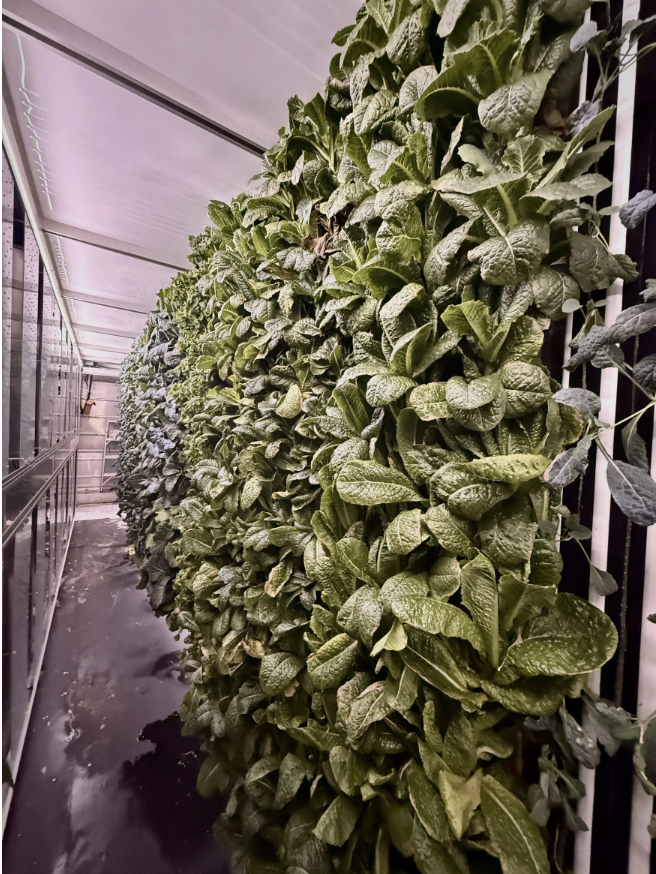
Leafy vegetables grow vertically on panels inside a 53-foot-by-8-foot trailer where Challenge Unlimited participants learn about hydroponic farming.
Andrea Y. Henderson / St. Louis Public Radio
“A lot of them, when they first started, were really quiet and shy and didn't have the confidence that they thought they needed to do farm work, because farm work is hard,” said Bentley, who also leads the hydroponic farm classes. “A lot of them have made a huge turnaround and are now coming in and just starting to work. They're able to just come in and do it, recognize what we did last time, and do it again.”
She added that many are teaching their peers and helping out whenever needed, which is a huge step for people with intellectual or developmental disabilities.
Bentley is proud to work with them and hopes some of them will be employed at Theodora Farms, which aligns with one of Challenge Unlimited’s missions.
Career exploration
Challenge Unlimited was founded in 1959 by parents who had adult children with disabilities. They could not find services for their children based on their individual needs. Challenge Unlimited curates programs for adults with disabilities to help them thrive and build community. They serve families across the country. The nonprofit also helps clients secure employment by helping them create resumes and introducing them to job shadowing.
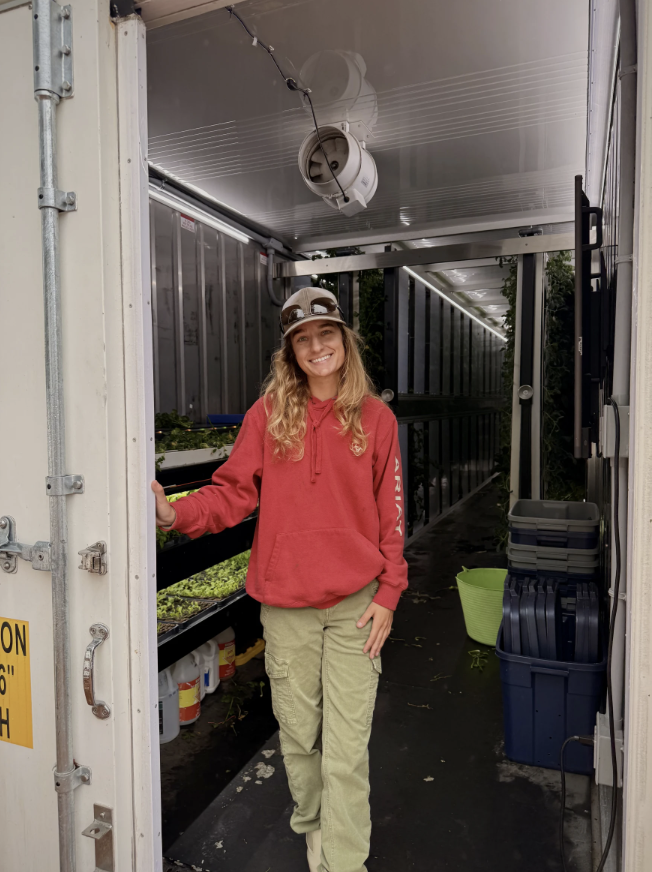
Adelynn Bentley teaches people with disabilities the ins-and-outs of farming without soil. Theodora Farms partners with Challenge Unlimited to bring skills and training to participants that could build independence and workforce development. “A lot of them, when they first started, were really quiet and shy and didn't have the confidence that they thought they needed to do farmwork," she said.
Andrea Y. Henderson / St. Louis Public Radio
Some clients are working, but many are employed at places they are familiar with, which is why the nonprofit offers career exploration to help them move past the familiar, Wild said.
“They historically have experienced employment based on where they've gone — McDonald's, Walmart; those are the popular places … and those are great supporters of people with disabilities and employing them,” she said. “We love that, but it's not for everybody, so we take a lot of time to get people out, engaged.”
Exploring new job opportunities also lowers social isolation levels and increases employment rates among people with disabilities. According to the recent National Trends in Disability Employment Jobs Report, issued by the Kessler Foundation and the University of New Hampshire's Institute on Disability, employment among people with disabilities is on the rise. Reports suggest it is partially increasing because of nonprofits like Challenge Unlimited that are helping develop the skills and training necessary for them to integrate into the workforce. However, disability rights are under attack by the Trump administration, which is pushing to do away with federal regulations that support integrating people with disabilities into the workforce, community and educational spaces.
Challenge Unlimited is receiving some government contracts under the Ability One program. Challenge Unlimited CEO Charlotte Hammond believes the government sees the value of these programs for people with disabilities. However, she plans to continue advocating for more support because she sees the power of skills training programs.
Hammond said people like Hultz are bringing the skills they learned at Challenge Unlimited to schools, home, church and jobs.
“They're productive parts of our community, and that these are individuals that can make a difference,” she said.
Have a question or comment about this story? Email St. Louis Public Radio.
Got a news tip? Send it to Andrea Y. Henderson.
St. Louis Public Radio does not offer or accept money for coverage or interviews. Anyone who makes such an offer or request is not an STLPR employee and does not represent STLPR.
Andrea covers race, identity & culture at St. Louis Public Radio.