

USA - A Farm in Panther Dining Hall? Hydroponic Gardens Grow Fresh Produce at Florida Tech

September 14, 2026
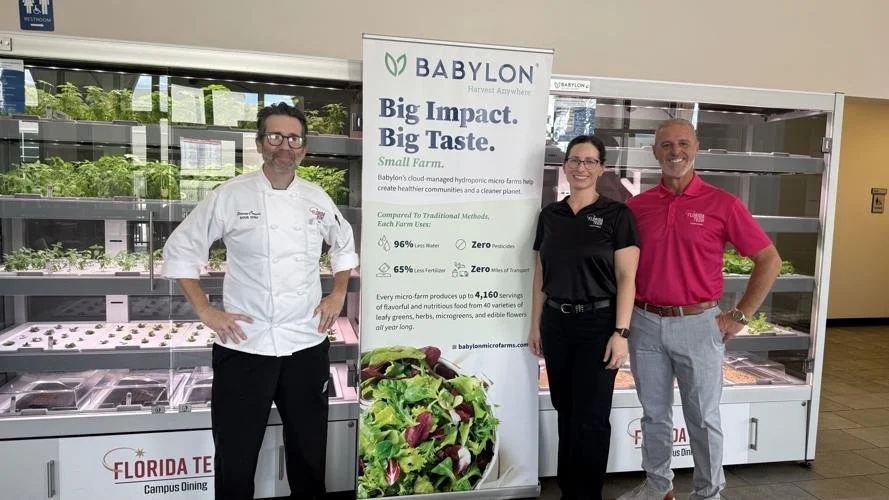
Chef Steven Concis (left), Program Founder Jessica Connor (center) and Campus Dining Director Evan Olsen joining together in front of the two Babylon Micro-Farms.
Students grabbing lunch in Panther Dining Hall (PDH) may be eating produce grown only a few feet away.
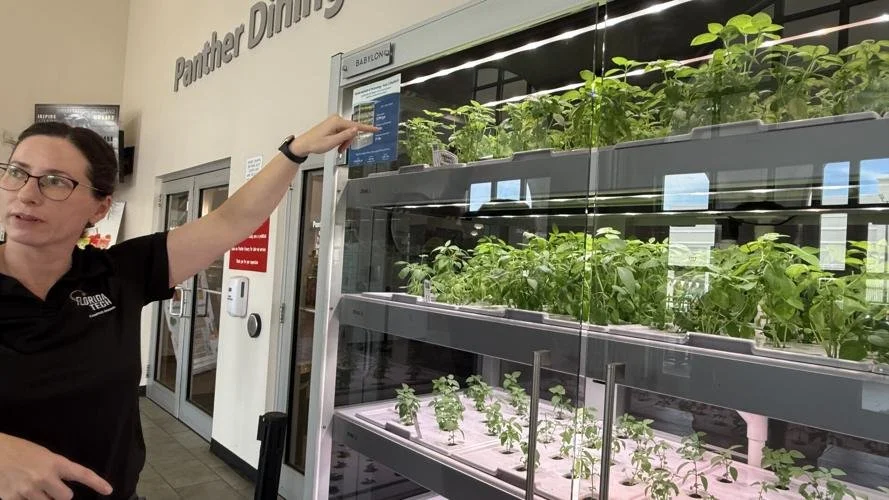
Two microfarms in the lobby of the Panther Dining Hall, right next to the entrance, are constantly growing greens used for meals in the dining hall and for catering events hosted by Campus Dining. You may be wondering, how do those two small systems feed a campus? Their contribution is small for now, but they have become a valuable source of fresh ingredients for chefs to incorporate into their menus.
“What we’re really passionate about is that a lot of people come in here, and they’ve never had a garden before. They don’t know what goes on their own food,” said Jessica Connor, the founder of the program.
Babylon Micro-Farms is a company founded at the University of Virginia that specializes in creating and distributing hydroponic systems for growing plants indoors. The farms, as displayed at Florida Tech, used controlled lighting, water and nutrients to grow plants without soil.
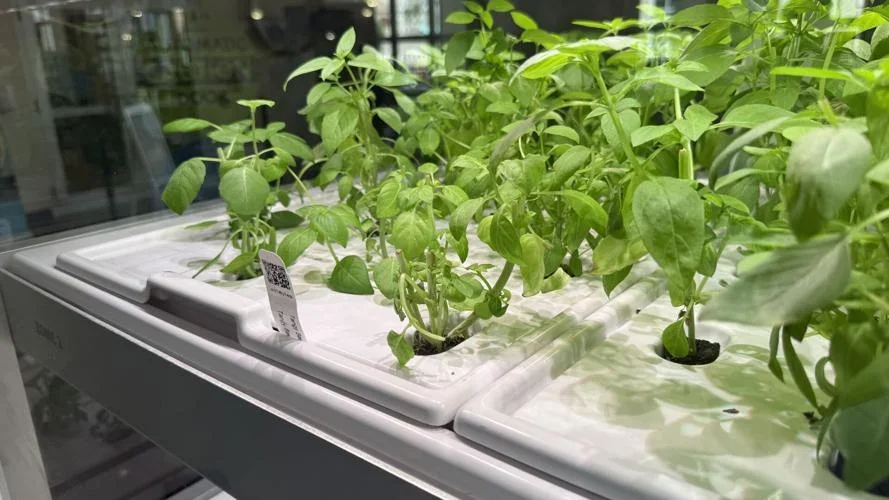
The Tangy Basil Mix being grown in one of the micro-farms in the PDH lobby.
How the farms work
Even though the farms are held indoors, Florida’s heat and humidity still affect the plants. Because it is located in the lobby of Panther Dining Hall, the doors are constantly swinging open, letting in the hot, humid air. Therefore, even though the micro-farms are a controlled environment, the program still decides what is farmed based on the current season.
The farms have sensors that measure water levels, pH and nutrients. The system is managed via a cloud-based application that allows employees to monitor and control the farms remotely.
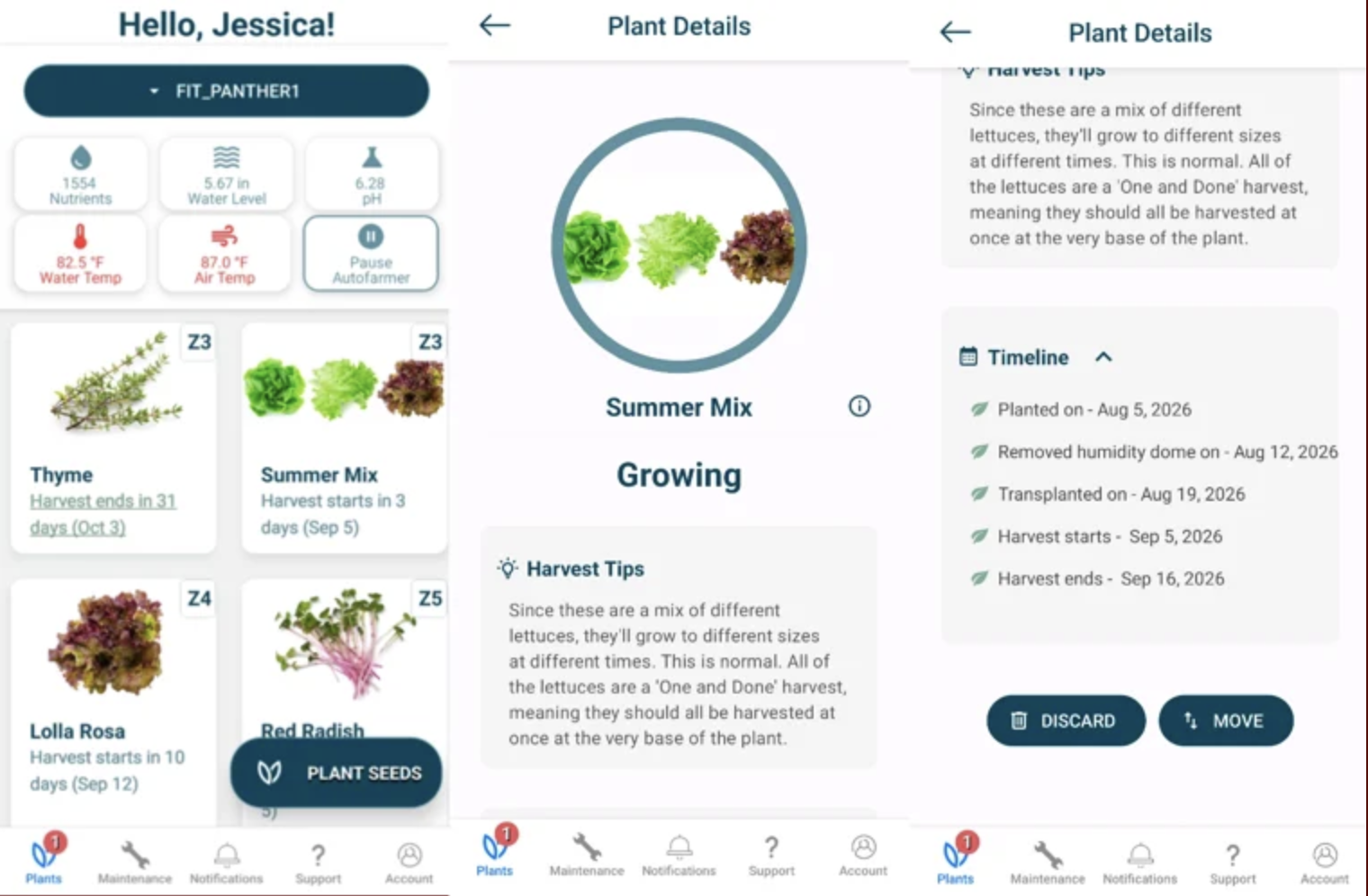
The mobile application that the Campus Dining team uses in order to monitor and make changes to the produce being grown in the micro-farms.
The system also tracks individual crops throughout their growing process. The app will record when the crops were planted and will predict when they will be ready for harvest.
What’s currently being grown at FIT
The produce currently being grown includes a variety of lettuces, herbs, mixes, and microgreens. Current crops include Lolla Rosa and romaine, along with a Summer Mix containing green butterhead, green leaf and Lolla Rosa.
The farms are also growing herbs such as red-veined sorrel, thyme, lemon basil and Thai basil. The Tangy Basil Mix contains lemon basil, Thai basil and holy basil.
The growing time varies by the crop. The lettuce and Summer Mix take about six weeks to grow, which includes germination. Herbs can take between seven and 11 weeks, while basil typically takes nine to 10 weeks. The microgreens, however, are quite quick and can be harvested within two weeks.
The mobile application that the Campus Dining team uses in order to monitor and make changes to the produce being grown in the micro-farms.
From the lobby to the kitchen
The produce grown on the micro-farms is used in several parts of Florida Tech Campus Dining. Its usages include the salad bar, soups, sauces and garnishes. Additionally, much of the produce is used for catering.
“We’re really involving Chef Steven in the farm-to-table program and letting him know what we’re growing and when it will be ready so we can incorporate it into the menu,” Connor said.
The farms have proven to be a good backup for ingredients when outside suppliers cannot provide what is needed. For example, Campus Dining once needed kale for a recipe but did not receive enough from its supplier.
“We needed kale for a recipe, so we harvested a whole row from the farm to meet that need,” said Connor.
The farms provide chefs with access to fresh ingredients when needed, even when the farms are not large enough to supply all of Campus Dining with produce.
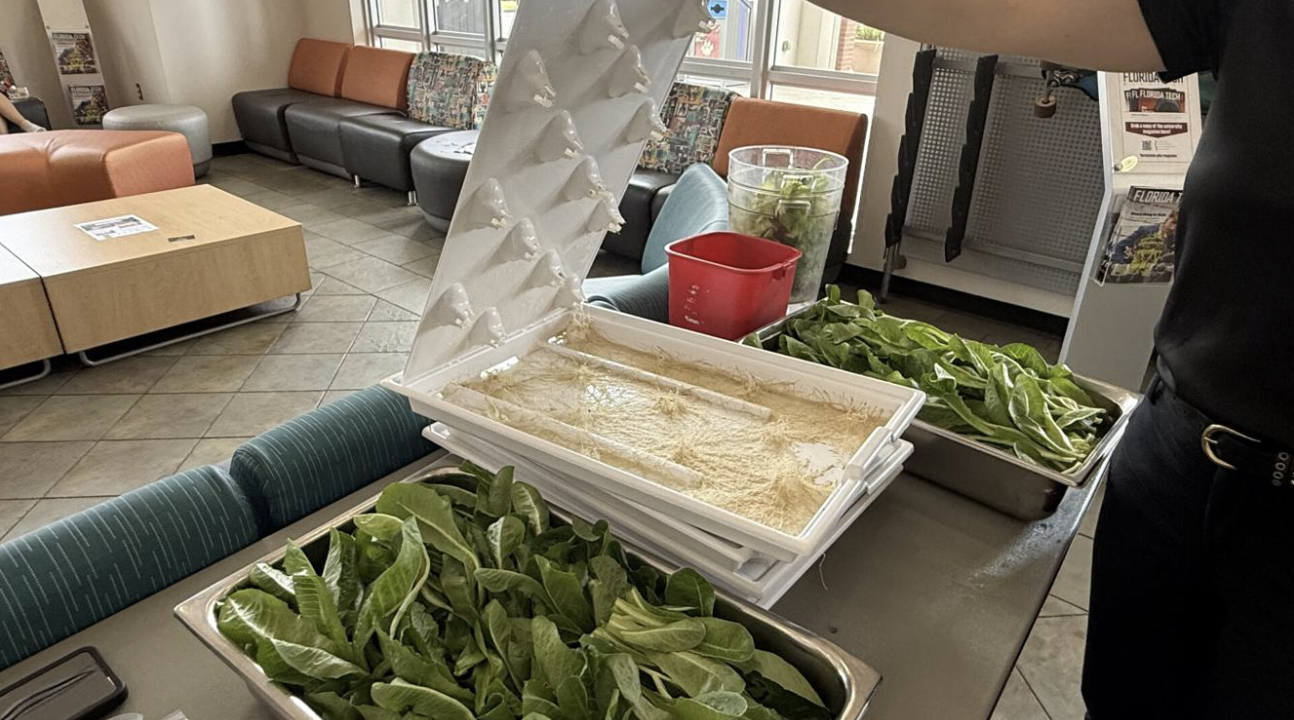
The remnants of roots from the freshly harvested hydroponically-grown lettuce.
The team
As mentioned before, the Babylon micro-farms team is made up of all campus staff. Jessica Connor currently heads the program with the help of many others.
Recent achievements include Connor receiving recognition for reaching 50 harvests since she first began operating the farms in January 2026. Ashley Thompson was recently awarded her Babylon Micro-Farmer certification on the day of the interview, making her and Connor the only Babylon-certified micro-farmers on campus.
As a sous chef and the Culinary Integration Director, Chef Steven Concis is involved in harvesting and incorporating the produce grown into the meals on campus. Chef Jon Skoviera is also an active supporter of the culinary side, working as the Executive Chef and program sponsor.
Other micro-farm operators include Matt Diefenbach and Emily Smith. New operators that are currently in training include Lane Anderson and Milo Casler.
Emily Salazar currently serves as a PDH Supervisor and oversees operations at The Rathskeller. Salazar serves as a culinary integration specialist on the farm-to-table team. Salazar will continue to incorporate fresh produce from the micro-farms into The Rathskeller’s menu. Salazar is joined as a culinary integration associate by Juan Monroy.
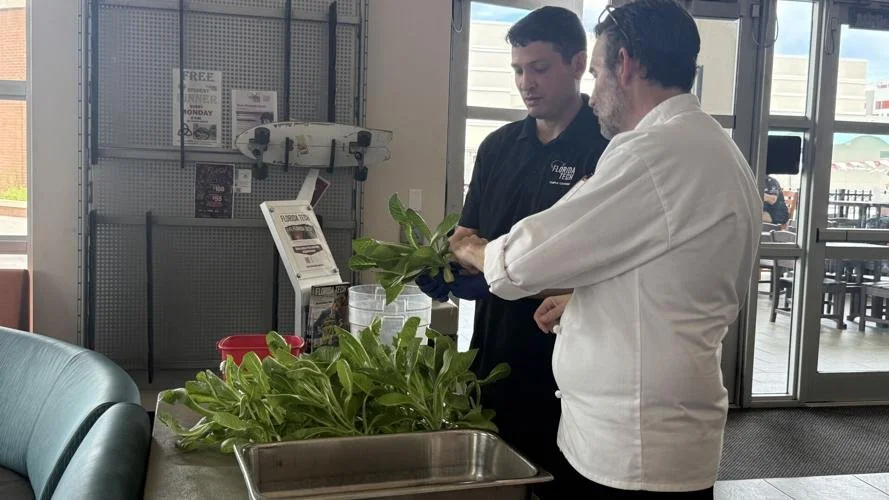
Matthew Diefenbach, an experienced micro-farmer, and Chef Steven Concis harvesting the lettuce for Campus Dining on the second of September 2026.
Student involvement
Students were involved in the micro-farms in the past, but many of those students have graduated, leaving the program to be managed by university staff.
Nevertheless, Campus Dining is interested in restoring student participation to provide educational opportunities.
The farms could offer chances for those visiting PDH to learn more about hydroponic gardening. The current system uses QR codes for staff to track information about the plants. The staff is interested in developing a future display that allows students to scan a QR code to learn what the farm is used for and a summary of the harvest window, making it a more effective educational tool.
The micro-farms could also enable students to participate in developing academic projects in engineering, environmental science, and other academic programs. Senior design projects could be potentially used to create new ways for students to interact with the program.
Sustainability
The hydroponic system also allows Campus Dining to track the farms' environmental impact.
Unlike traditional soil farming, the hydroponic system reuses water by recirculating it through the farms. The cloud-based application produces reports tracking sustainability measures such as water savings and nitrogen runoff. The micro-farms typically use 96% less water than traditional farming.
The controlled environment also means the farms do not require traditional pesticides.
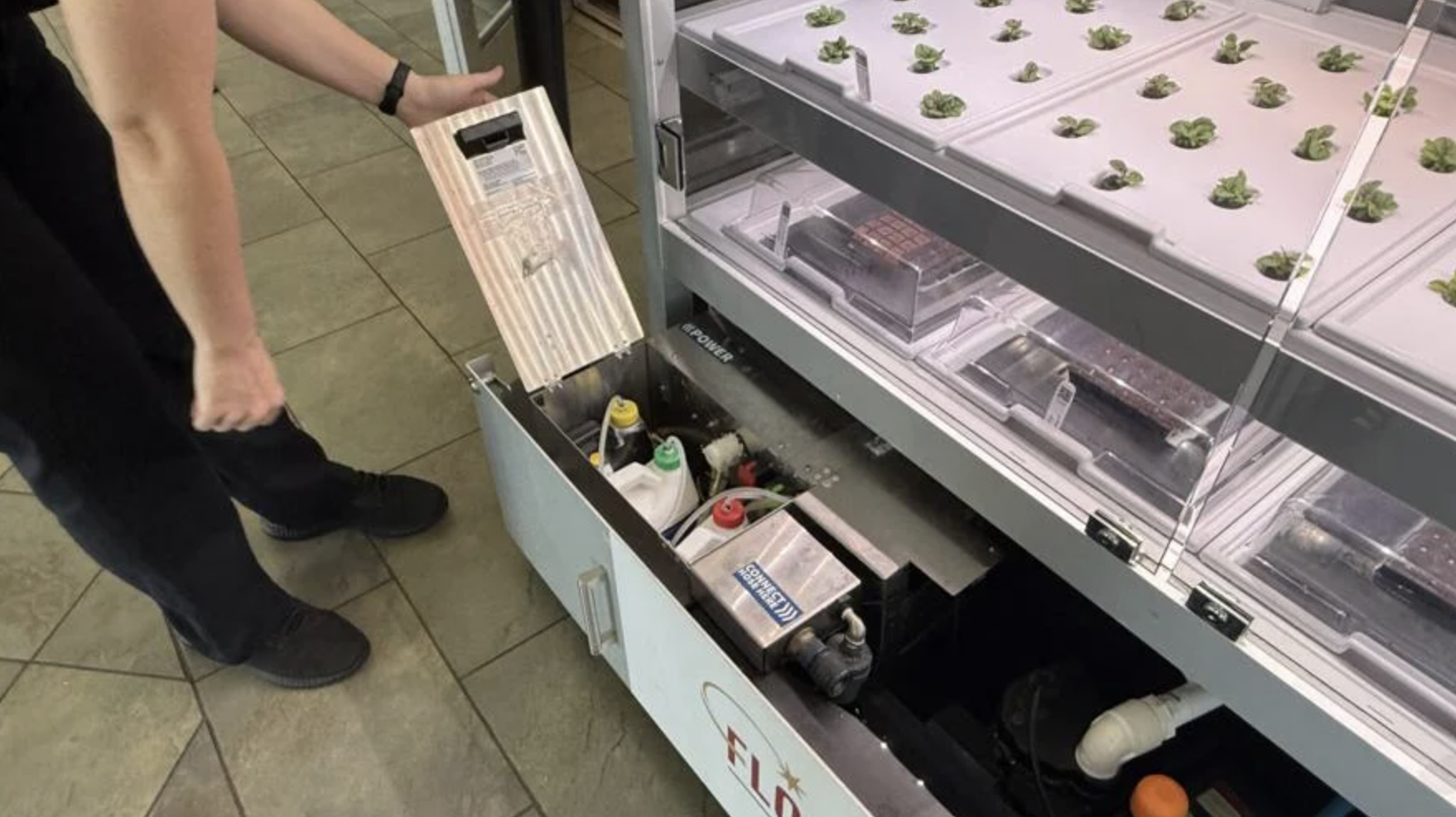
Connor showcasing the unseen mechanical roots of the micro-farm system.
Looking ahead
Right now, the Babylon farms make up quite a small part of the Campus Dining operation; however, staff see potential for the program to grow beyond simply providing fresh produce.
The current goal is to grow the team by involving more students and possibly expanding the farms to include additional academic and educational opportunities.
Connor talked about having deeper desires to evolve the program for the future: “I’m looking forward to involving more students in the hydroponics micro-farms, and I’m excited to see how students, faculty, and staff can continue to grow the program through education, culinary applications, and research.”