JAMAICA: Blueprint Farms Grows Demand After Hurricane Melissa

Codie-ann Barrett | Business Reporter
November 30, 2025
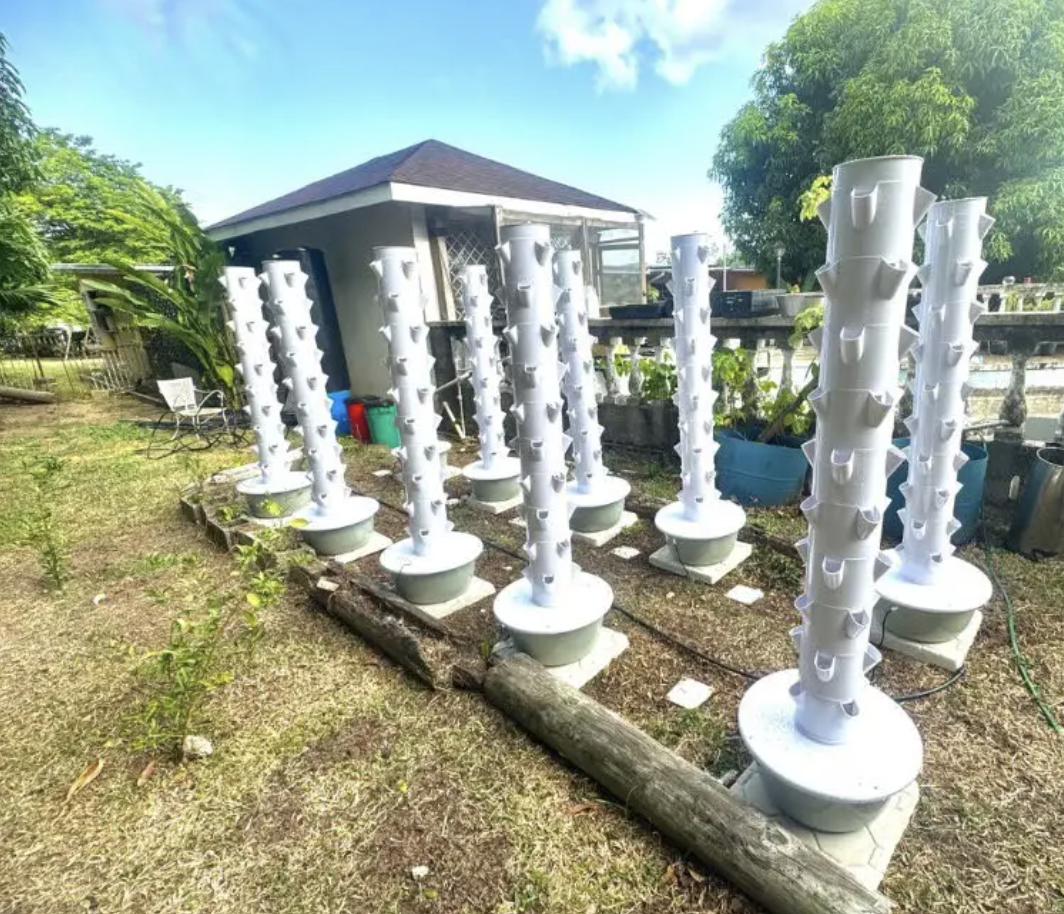
A small tower farm set up by Blueprint Farms.
With farms across western Jamaica badly damaged after Hurricane Melissa and warnings of food shortages beginning to surface, Blueprint Farms is already seeing early signs of rising demand for its climate-resilient hydroponic systems. Founder Jermaine Bryan says the surge in interest comes as households and businesses look for alternative ways to secure fresh produce amid supply disruptions.
“Resilient farming is the way to go. There has definitely been an increase in interest given the fact that this farming model is highly resilient. Many persons have reached out wanting to go large scale with this type of setup based on what is happening now,” Bryan shared in an interview with the Jamaica Observer. “There has been an uptick in business. And I definitely do think we need to bring more awareness to this solution so that people can really see and reap the benefits from this as well.”
The company designs and constructs hydroponic soilless farming systems for households, schools, and institutions seeking sustainable, space-efficient and resilient ways to grow food, whether for commercial use or home consumption. Bryan emphasised that the technology is meant to strengthen, not replace, Jamaica’s traditional farming base. Based in Montego Bay, St James, Blueprint Farms was also affected by Hurricane Melissa, but its hydroponic model allowed the company to avoid major losses.
“I resumed operations after two days downtime, the system is that resilient. Due to less water usage and land requirements,” he said.
Blueprint Farms traces its roots to 2020, at the height of the COVID-19 pandemic, when founder Bryan turned to farming as both a personal outlet and a practical solution. Growing up, Brown often accompanied his grandmother on her farm in Hanover, waking up early to water crops, and it was a routine he never outgrew. The business began with Bryan installing a hydroponic system for himself, experimenting with the design, and learning the science behind the method: germination, irrigation automation, crop cycles, and nutrient management.
“I like to know what I’m doing before I even explain it to somebody else,” he told Sunday Finance.
Searching for ways to add value during a pandemic, he joined the YWOP/YMOP (young women and men of purpose) entrepreneurship programme, which challenged young farmers to design resilient farming solutions. Out of more than 100 applicants, Bryan was shortlisted in the top 20, and his concept later won the prize for Most Innovative Technology Design for Farming. The hobby he started quickly revealed its potential to become a viable business. He later received a YWOP/YMOP grant that helped him register the business and formalise its early documentation.
Blueprint Farms was initially registered in 2021. Bryan explained that the start-up costs for Blueprint Farms were relatively manageable, though he faced early technical hurdles. Jamaica did not have the facilities or materials required to manufacture the hydroponic design he envisioned, so he created a custom mould and sought external expertise overseas, manufactured his systems internationally, and imported and distributed them locally. His first client installation was a single-unit system for a homeowner who wanted a compact setup for growing lettuce and peppers in their kitchen. Bryan provided the full solution, installation, technical support and germination guidance, and the response was immediate satisfaction from clients.
“When they started growing their own food, they were like, ‘Wow, this is amazing. I love this. I wish more people did this.’ That’s the reaction I get a lot of the time: ‘I need to tell my friend about this because this is good,’ ” he shared.
He said customers often describe the experience as therapeutic and fulfilling, especially once they begin harvesting their own produce. For Bryan, those reactions are a core part of what drives him.
“It just gives me joy, a sense of fulfilment. I contributed to somebody else’s passion to enhance their value in whatever way I can. So I love it. It’s a joy for me personally,” he told Sunday Finance.
The first two clients Blueprint Farms served were individuals who wanted small systems for personal farming. As interest spread, he began supplying larger hydroponic towers and eventually moved into more robust setups, including installations in Montego West Village, with additional customers in Kingston and other parishes. This gradual growth led him to expand the scale of his projects.
One of the business’s biggest challenges, he noted, is storage. Although he has a small facility, the products move quickly due to strong demand, especially for single-unit systems used by homeowners with limited backyard space. As a result, maintaining adequate inventory has become difficult. Because he prefers not to tie up cash in large stockpiles, Brown orders inventory in controlled batches. This means some customers may need to order in advance if he does not have systems readily available. Customer demand, he noted, varies by preference, but certain crops and system types consistently stand out.
Lettuce is the most requested plant, particularly romaine, which he says customers gravitate towards more than traditional iceberg lettuce. Others commonly grow mint, celery, basil, and pak choi, depending on their culinary needs. System demand follows a similar pattern. Some customers start with a single unit and return to purchase additional systems after experiencing success.
The most popular option is the Sky Tower, priced at $70,000. It includes the tower, water pump, nutrients, starter seeds, and one month of free support. At about five feet eight inches tall, it allows easy access to every crop on the tower. For smaller spaces, he offers compact units starting at $36,000, suitable for kitchen counters, balconies, or porches, with capacity for up to 25 crops. With hotels, restaurants, and some supermarket shelves running low following the hurricane, Bryan believes hydroponic systems can play a key role in stabilising food access, especially for communities and schools.
“The vision is to be not just a national company but a regional entity that can provide these hydroponic systems and show resilience in farming. Not just within Jamaica, but also the wider Caribbean and eventually globally — just to show that we can rely less on imported goods and produce our own food as well,” he said.
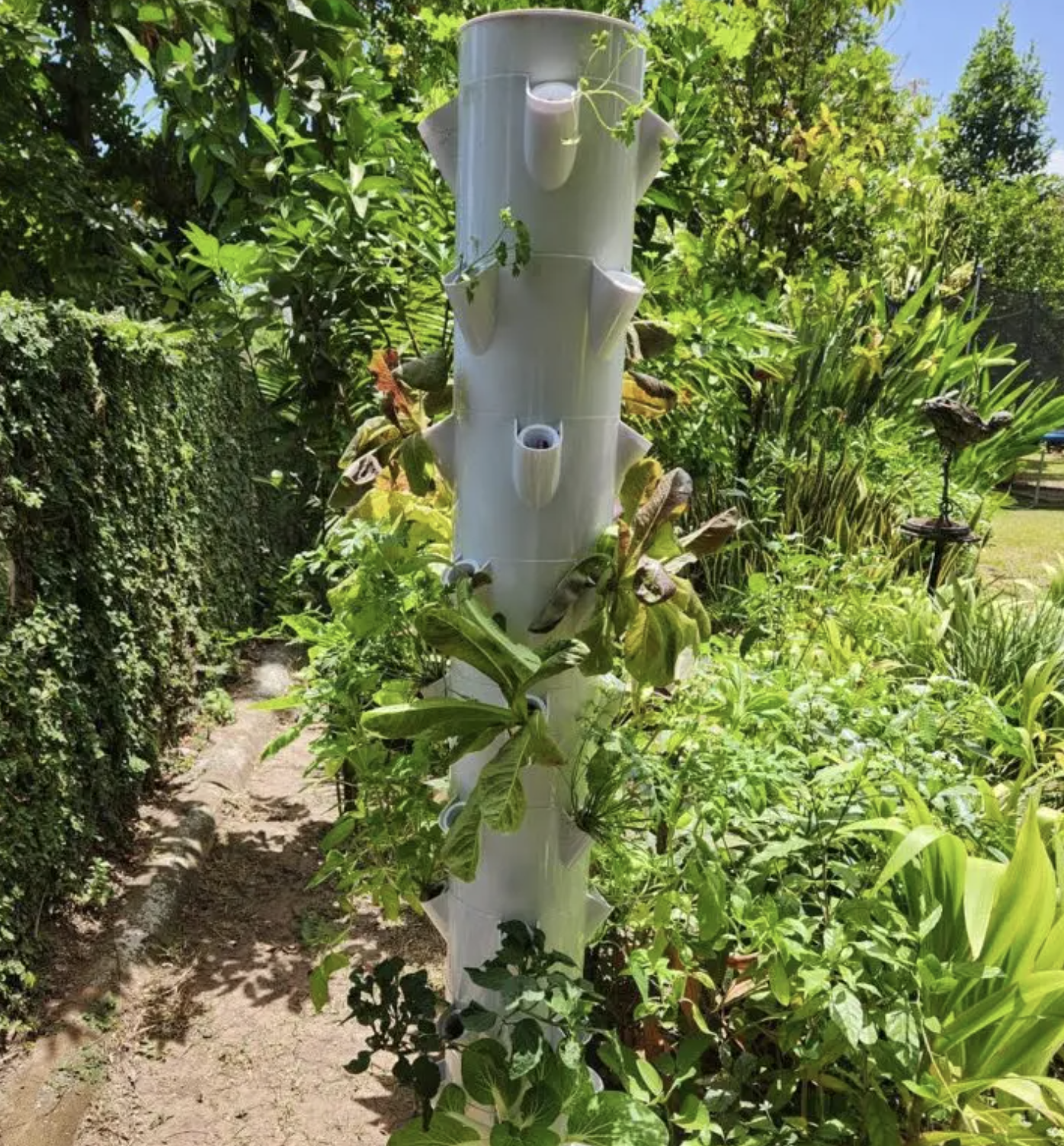
Blueprint Farms’ garden tower.
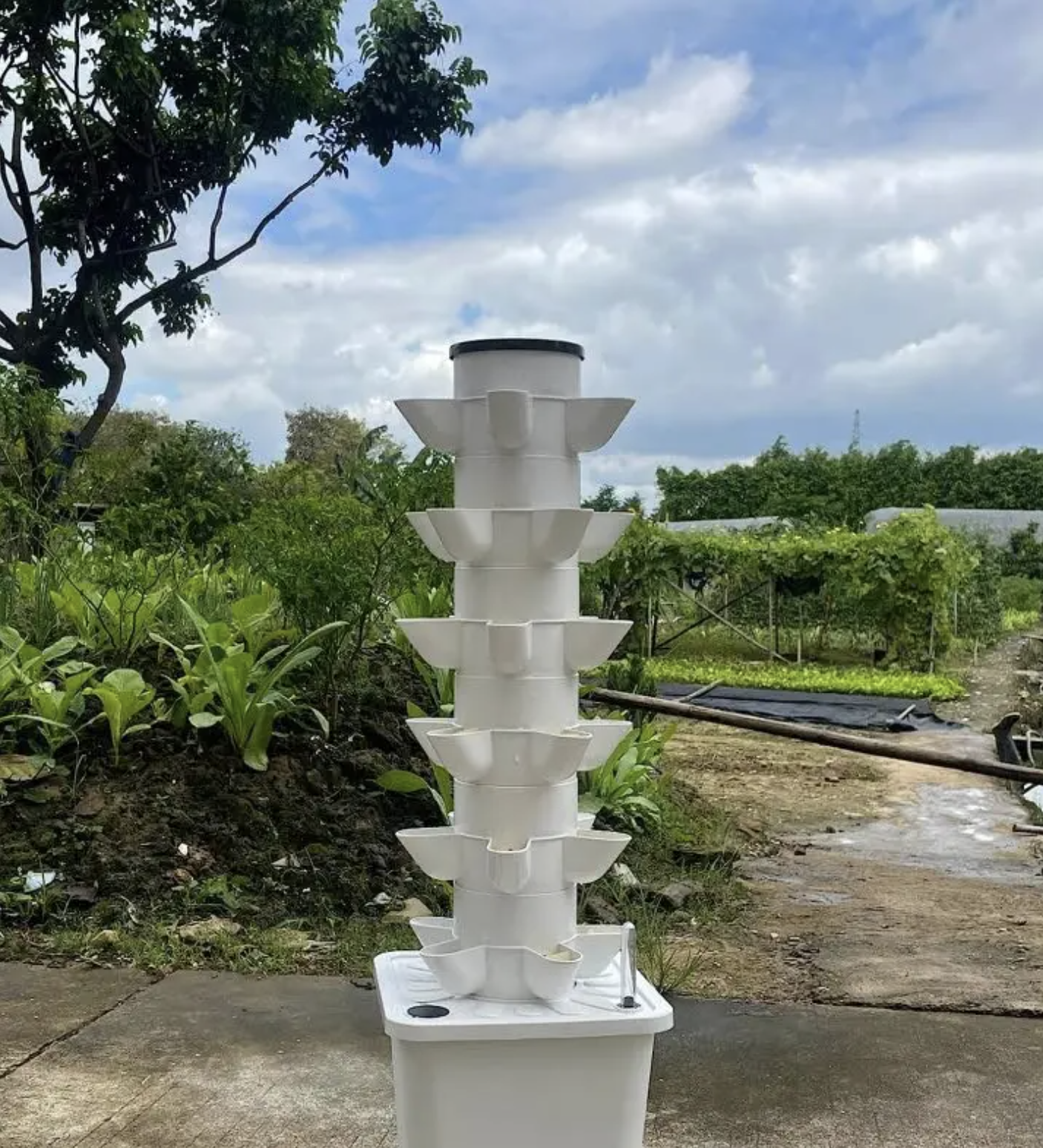
Blueprint Farms’ residential units.
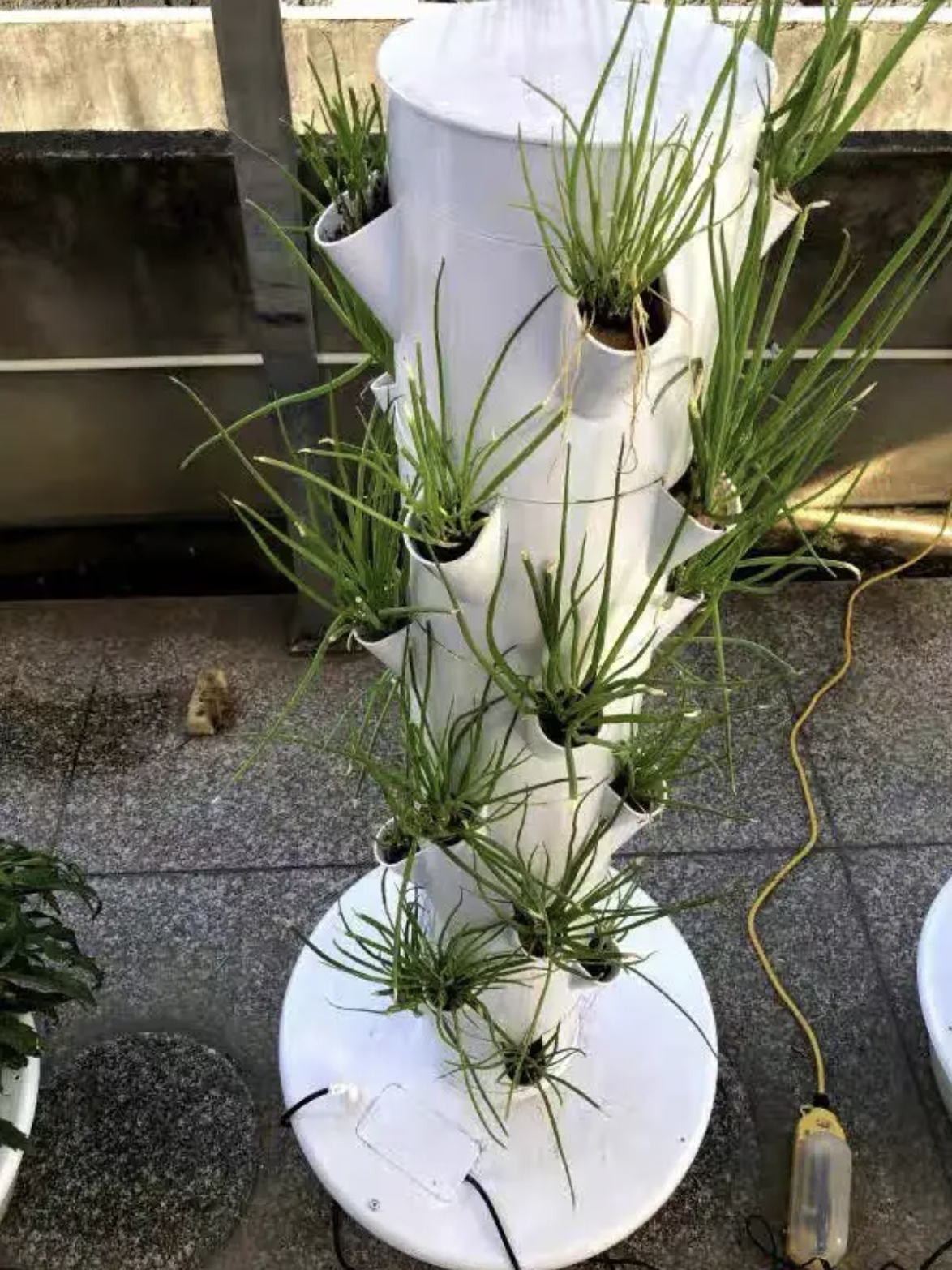
A residential tower farm growing escallion, also known as spring or green onion.

Founder, Blueprint Farms, Jermaine Bryan