

How Hospitals Can Calculate ROI on Onsite Farming Solutions

16th October 2025
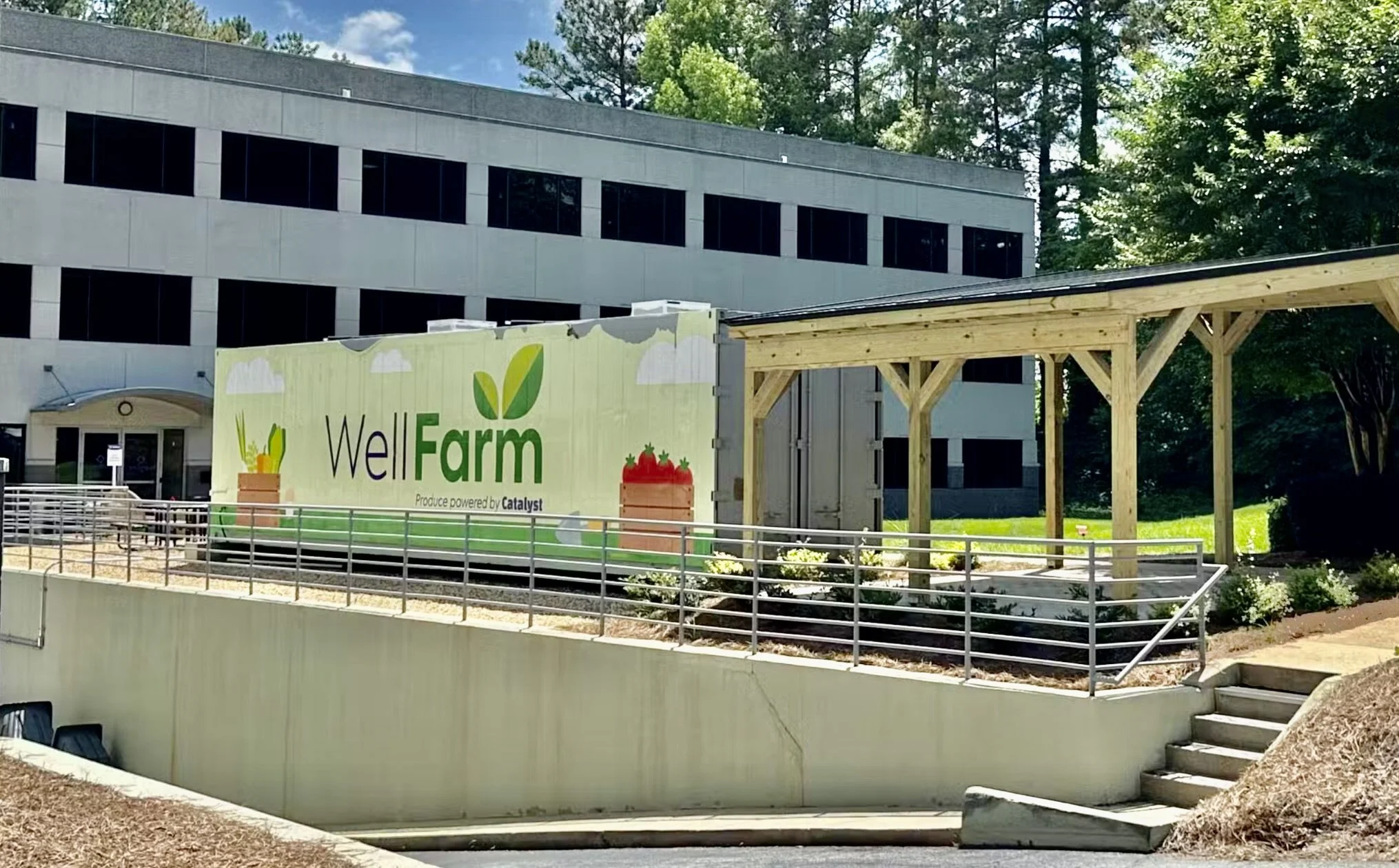
WellFarm by Wellstar. Image provided by FarmBox Foods.
Key Takeaways:
FarmBox Foods helps hospitals estimate financial and nutritional ROI before the implementation of their container farms.
Key factors include operational costs, yield, reduced readmissions, and local sourcing benefits.
Predictable production enables budget planning over the long term.
Bonus depreciation incentives make CAPEX more attractive for institutions.
ROI is also measured in patient outcomes, staff wellness, and community engagement.
For a full look at how hospitals are using shipping container farms to boost patient nutrition and reduce food insecurity, read our main article on container farms for healthcare.
Container Farm ROI In Healthcare: From Cost Center to Strategic Investment
Hospital administrators increasingly recognize that nutrition is not just a cost center but a potential driver of better health outcomes and operational savings. With onsite container farms, institutions can now invest in growing their own food while tracking both financial and clinical returns.
“We provide a full ROI breakdown in the pre-sales phase,” said Brynne Doughten, Sales Program Development Manager at FarmBox Foods. “That includes yield estimates, operational costs, and revenue opportunities.”
Measuring ROI in Healthcare Contexts For Container Farms
Hospitals using FarmBox container farms assess ROI by looking at:
Reduced patient readmission due to improved nutrition
Lower food procurement costs
Predictable weekly yields
Elimination of waste from spoiled or low-quality produce
“In the clinical world, readmission is not a good thing,” Doughten explained. “Improving nutrition reduces that risk.”
Budget Forecasting and Predictable Yields
Chris Michlewicz, VP of Communications, highlighted the budgetary predictability of these systems. “You can forecast your leafy green production ten years out,” he said. “It helps nutrition teams plan more effectively.”
FarmBox’s container farms use energy-efficient designs and water recycling systems, keeping operational costs low. With no pesticides or long-distance transport, hospitals benefit from both quality and cost control. The Vertical Hydroponic Farm grows more than 80 types of edible plants from start to finish, and can complement existing traditional gardening programs at healthcare facilities.
Incentives and Bonus Depreciation
One overlooked aspect of ROI is tax strategy. As Doughten noted, “Recent federal legislation allows for nearly 100% bonus depreciation on this type of investment.”
This makes container farms not only a health initiative but a strategic financial decision for impact investors and healthcare CFOs alike.
The Hard-to-Measure Gains: Community and Wellness
“It's hard to put an ROI on someone’s health,” Michlewicz said. “But the long-term value of better food habits, staff wellness, and community trust is immense.”
Some systems even donate surplus produce to local food banks or use farms as workforce development tools in underserved areas.
Ultimately, container farms offer a holistic ROI—financial, clinical, and social—that many traditional investments cannot match.
Learn more about FarmBox Foods’s ag technology
Enjoyed this article? Share it with your network!
Sepehr Achard
As a dedicated journalist and entrepreneur, I helm iGrow News, a pioneering media platform focused on the evolving landscape of Agriculture Technology. With a deep-seated passion for uncovering the latest developments and trends within the agtech sector, my mission is to deliver insightful, unbiased news and analysis. Through iGrow News, I aim to empower industry professionals, enthusiasts, and the broader public with knowledge and understanding of technological advancements that shape modern agriculture. You can follow me on LinkedIn & Twitter.