


Welcome to iGrow News, Your Source for the World of Indoor Vertical Farming

May Indoor Science Cafe - Tuesday, May 26th, 11:00 AM EDT - How to Fund Your Indoor Farm
Indoor Ag Science Cafe is an open discussion forum, organized by Chieri Kubota (OSU), Erik Runkle (MSU), and Cary Mitchell (Purdue U.) supported by USDA SCRI grants
May Indoor Science Cafe
Please sign up!
Tuesday, May 26th, 11:00 AM EDT
How to Fund Your Indoor Farm
Presented by
Nicola Kerslake
(Contain Inc.)
Please sign up so that you will receive Zoom link info.
Indoor Ag Science Cafe is an open discussion forum, organized by Chieri Kubota (OSU), Erik Runkle (MSU), and Cary Mitchell (Purdue U.) supported by USDA SCRI grants.
Sign up for May 26th Cafe

The Best Growing Mediums For Microgreens
Growing microgreens is an easy and sustainable process that you can do from the comfort of your home. You can grow all kinds of nutritious microgreens that will enhance the flavor of your foods
Growing microgreens is an easy and sustainable process that you can do from the comfort of your home. You can grow all kinds of nutritious microgreens that will enhance the flavor of your foods. These special vegetable-like plants grow from 1-3 inches and are vibrant additions to your foods. They are also jam-packed with vitamins and antioxidants. We're going to discuss the different growing mediums you can use for your microgreens.
Soil
Using soil as your growing medium is a popular and effective choice. Soil will provide you with the best yields over any other medium. We believe the Sunshine #4 by Sunshine Aggregate is the best, and the Black Gold Potting Mix is a close second. Each of these soils are extremely sterile, which is ideal for indoor growing. While these soils can cost more (about $1 per 10x20 tray), they provide the best results. But, don't worry. You can compost and sterilize your soil to re-use it for future grows.
Burlap
Burlap is another popular growing medium because it's cheap. For .25 cents a tray, you can't beat the price. It is made from the jute plant, which is used to make nets and ropes. But burlap is an incredibly difficult growing medium to use. The perfect growing conditions for burlap include 72 degrees Fahrenheit, 65% humidity, and a good micro-dose fertigation plan (fertilizer + irrigation). If you can populate these results, then you can achieve yields and results that match soil mixes.
But be mindful that this takes a lot of practice and time, which is why using burlap is better for expert growers. If you don't get the growing conditions right, then your yields will suffer. We recommend using larger seeds like Pea Shoots and Wheatgrass when using burlap. These seeds will thrive with a burlap growing medium, and you will get bountiful results.
Coco Coir
This growing medium comes from coconut fiber. It's perfect for holding in moisture and is difficult to over-water. It is cheaper than soil (about .60 cents a tray), but it's just as messy. Coco coir has a better yield average than burlap, about a 25% to 30% better average. You will find this growing medium in dehydrated blocks. When you add water, they will expand way past their original size. You can use coco coir with an ebb and flow hydroponic method.
Jute Pads
This growing medium is derived from jute fiber. It's able to transport water evenly through your microgreens and maintain a near-perfect water/air ratio. It holds in water very well, which means you'll have to feed your microgreens less. Kale and broccoli grow especially well in jute pads.
What's the Best Growing Medium?
This entirely depends on your growing intentions. What are you planning to grow and how much effort are you willing to put in? We're going to cover the main questions you should ask yourself that will help you make this decision.
Feeding Your Plants: If you want to water your plants by hand, then we recommend soil and coco coir. But if you're able to feed your plants on a timer, then go for burlap or jute pads. It can be a better option because it's cost-effective and can still get the job done.
Choosing Your Seeds: What kind of microgreens do you plan to grow? If you're growing broccoli or kale, then we recommend buying jute pads. Do you want to grow a wide variety of seeds? Then choose soil or coco coir as your growing medium.
Messy Vs. Clean: Do you hate cleaning up messes? Then it's best to steer clear of soil and coco coir. Go with jute pads since they're easy to handle and clean.
Choosing your growing medium ultimately boils down to what you're planning on growing and how much effort you want to exert. We hope this list helped you understand what kinds of growing mediums there are and how they can help you yield the best results.

We are the microgreen growing experts. We're even working with NASA to help figure out how to get microgreens safely into space for astronauts to use! We meet once a month to discuss a variety of topics about microgreens. So, keep reading our blogs and watching our informative YouTube videos. There will always be exciting news coming your way.
#growing #medium #growingmedium #growingmedia #microgreeneducation #microgreensfarmer #microgreens #microgreen #bestmediatogrow #SmartNaturals #growmedia #growmedium #growingmicrogreens

SINGAPORE: Interest In Urban Farming Sprouts Amid COVID-19 Outbreak
Farm 85 Trading, a vegetable farm which also sells seedlings and farm supplies, said thatits’s sales went up by five times right after the circuit breaker was announced, with customers buying a range of items from soil and seedlings to compost
10 May 2020
SINGAPORE: After Madam Tan Swee Jee’s husband failed to find okra on a recent trip to the market, she revived her interest in farming and began planting again.
The retiree in her 60s had started organic farming a few years ago but grandchildren and other activities left her little time to tend to her garden. As Singapore hunkered down for the “circuit breaker” period, she found time and reason to grow not just okra, but tapioca, papaya, herbs, and other vegetables.
“We rely on other (countries) for our food, if they don’t sell to us we have nothing to eat,” she said in Mandarin. “This way, at least I can still have a lady’s fingers.”
Madam Tan Swee Jee and her husband planting peanuts and sweet potatoes in their garden. (Photo courtesy of Tan Swee Jee)
Farm supply shops and companies that run urban farming workshops told CNA that there has been more interest in home farming since around February or March.
Singapore raised its Disease Outbreak Response System Condition (DORSCON) level to Orange on Feb 7 after some locally transmitted cases of COVID-19 were detected, sparking a brief spate of panic buying.
Advertisement
In mid-March, Malaysia imposed a movement control order which raised concerns that food supplies from the country, including vegetables, eggs, and fruit, might be affected. Authorities came out swiftly to say that food and essentials from Malaysia will continue to flow during the lockdown.
But Trade and Industry Minister Chan Chun Sing have warned that Singapore would have to be ready for disruptions to its supply of food and other essentials as lockdowns in various countries have diminished global production capacities and disrupted global supply chains. About 90 percent of Singapore’s food currently comes from overseas.
As the pandemic spread around the world and worsened here, Singapore announced on Apr 3 that most workplaces and schools would close in a circuit breaker period that started from Apr 7, and that people were to leave their homes only for essential activities such as buying food and groceries.
GROWTH IN INTEREST, SALES
Vegetable plots at Farm 85 in Lim Chu Kang. (Photo: Zach Tan)
Farm 85 Trading, a vegetable farm which also sells seedlings and farm supplies, said that its sales went up by five times right after the circuit breaker was announced, with customers buying a range of items from soil and seedlings to compost.
“Most of the customers we have seen are people who were new to farming or gardening ... Almost all customers were determined to try and grow edibles in their own homes,” said Mr. Zach Tan, the farm’s manager.
Demand for farming supplies has gone up at Farm 85 Trading amid the COVID-19 outbreak. (Photo: Zach Tan)
Mr. Kevin Tan, director of Ban Lee Huat Seed said they saw a 50 percent increase in sales of seeds since the start of the outbreak, along with more interest in Asian leafy greens like bak choy and kang kong.
Urban farming social enterprise Edible Garden City has seen an uptick of interest in home gardening, a spokesperson said. Enquiries for their edible landscaping service increased by 40 percent, but they could not follow up with these requests after circuit breaker measures kicked in.
“Many of those who enquired about garden builds cited COVID-19 as just one amongst a host of reasons why they wanted to have a home garden … Many also added that they now see that food security is an important issue in Singapore,” said the spokesperson.
Two centres that run organic farming courses, Gardens with Purpose and The Living Centre, also said that demand for their courses are at a high.
Ms. Joanne Ng, founder of Gardens with Purpose, said that she was slated to have a large class just before the circuit breaker but she had to suspend it as measures restricting gatherings were tightened.
She is now considering selling the vegetables she grows on her 2,000 sq ft farm as she has been getting more queries from consumers.
Microgreens can be grown at home. (Photo: National Parks Board)
The National Parks Board (NParks) said that as the interest in gardening increases, more people are growing their own microgreens, herbs, and other edibles at home.
“Given the amount of time we are spending at home, it is a good opportunity for more people to learn to garden at home,” said Mr. Ng Cheow Kheng, group director for Horticulture & Community Gardening at the agency.
GREENHORNS & BEAN SPROUTS
Mr. Jack Yam holding a pot of kailan at his corridor farm. (Photo: Jayna Yam)
Rock climbing instructor and gardening enthusiast Jack Yam told CNA that substantially more people have been asking to join the Facebook interest group he runs – Urban Farmers (Singapore).
Some have also been posting questions on how to start their own home gardens or farms, which prompted him to post tutorials on the Facebook page for their reference.
“There were quite a number of posts in the group, new members actually saying that hey, I'm totally new. I have no idea how to start. What are the things that are needed?” he said.
One of them was engineer Ong Chee Lam, who said that he has an interest in growing edibles but has yet to start a proper farm at home. He has begun experimenting with bean sprouts and some herbs.
“The reason why I wanted to start was because of how the COVID-19 situation unfolds, it made us realise that the food security is a real issue so went to read up and see how we can do something in urban Singapore,” he said.
Bean sprouts grown by Mr. Ong Chee Lam. (Photo: Ong Chee Lam)
His first haul was 400g of bean sprouts which added some crunch to his mee rebus, and he will continue, he said.
“I suspect the new normal will not be the same ... (I) will definitely continue to research and take action to keep this as a sustainable hobby,” he added.
FLOURISHING FARMS
Meanwhile, some experienced growers CNA spoke to are growing more edibles rather than ornamental plants.
Ms Mandisa Jacquelin Toh said that her family was working towards self-sufficiency when it comes to vegetables and fruit.
“It's truly a right direction when we are hit by COVID-19 and the circuit breaker period … we don't have to risk ourselves going to wet market and supermarket unnecessarily,” she said.
The IT professional, who is in her 40s, said she has set up a rotating system that allows her to harvest some produce every day from her rooftop garden, which she said is a third the size of a football field.
A basket of vegetables harvested from Ms Mandisa Jacquelin Toh's rooftop farm. (Photo: Facebook/Mandisa Jacquelin Toh)
The list of edible plants she grows rivals a supermarket’s selection, including long beans, figs, mulberries, herbs, corn, tomatoes, chili, lime, okra, and bittergourd. She even has muskmelons, watermelons, guava, custard apples, starfruit, kedongdong, mangoes, and cempedek.
“We regretted not starting even earlier when COVID-19 started,” said the long-time gardener, who started seriously growing edibles about 10 months ago.
Mr. Yam, who grows his plants along the corridor and common spaces outside his Housing Board flat, also made the switch months earlier and said he was glad he did. Now, vegetables including xiao bai cai, kalian, and kale make up 80 percent of his urban garden.
“Because of my space constraints, it’s not fully sustainable, but at least it supplements the food that we are eating,” he said. “Seeing the sudden surge in interest, I'm actually quite excited and happy about it.”
But he found that many people who wanted to start their home gardens or farms were “caught off-guard” and once the circuit breaker started, it was hard for them to get supplies. This was why he also put up a tutorial on growing bean sprouts, and he has seen quite a few people posting their attempts online.
“Green beans are easy to get hold off, and then within three to four days, you can get the harvest. As a parent, you could occupy your kids with this particular activity, yet at the same time grow something that your family can eat,” he said.
NParks has also put up a series of tutorials on home gardening on social media, including DIY gardening videos, information on plants that can be easily grown at home and simple recipes for produce from home gardens.
Some simple plants to start with are microgreens, Brazilian spinach, Indian borage, and herbs like mints and basils, Mr Ng suggested.
GREEN THERAPY
Beyond sustenance, the home farmers said that caring for their plants has been a good exercise and a source of joy in an anxious time for many.
Halfway house The Helping Hand happened to start their urban farm this month, and tending to the vegetables has replaced some of the carpentry and furniture delivery activities residents did before the circuit breaker period.
An underused grass patch at the home now has 20 raised vegetable beds that is providing both food and therapy of sorts.
“It teaches our residents some very important skills and values, which helps us in some ways as an emotional regulator. It teaches them patience, and also introduces the green concept,” CEO Mervyn Lim told CNA.
For now, the vegetables will be cooked and consumed by the residents but they will look into turning the farm into a social enterprise, and may even open a café, he added.
Resident Toh Chiang Hee, who is in his early 60s, told CNA that seeing the plants grow has given him a lot of joy.
“I talk to the seedlings and tell them to grow bigger and taller,” he said in Mandarin.

Vegetable beds at halfway house The Helping Hand's urban farm. (Photo: The Helping Hand)
FOOD SECURITY
These shoots of growing interest come as Singapore aims to produce 30 percent of its food supply locally by 2030. A new S$30 million grant was announced in April for the agri-food industry to help commercial farms speed up the production of commonly consumed food like eggs, vegetables, and fish.
And the spurt of enthusiasm for home farming springs from a gradual burgeoning of interest in recent years said both Ms. Ng of Gardens with Purpose and Ms. Faith Foo from The Living Centre.
“We have been advocating for urban farming through a wide range of urban farming courses since the establishment of our center the last five years, and thus have also seen a progressive trend of people interested in urban farming,” said Ms. Foo, who has moved all their courses online for the circuit breaker period.
Ms. Ng said that she has noticed more young people and families sign up for her organic farming courses before the COVID-19 outbreak and hopes that schools can be next. Before this, many Singaporeans still felt that it was easier to import vegetables from other countries, and the toil for “a few vegetables” was not worth it, she added.
“Toxic chemicals are everywhere, be it food or the environment, so I started to prepare this 10 years ago … now the time is right, Singaporeans didn’t expect the food supply chain can be disrupted,” she said. “I didn’t see COVID-19 coming but I knew there would be a demand for clean food.”
Download our app or subscribe to our Telegram channel for the latest updates on the coronavirus outbreak: https://cna.asia/telegram
Lead Photo: Madam Tan Swee Jee tends to a vegetable patch in her garden. (Courtesy of Tan Swee Jee)
Source: CNA/hm
Tagged Topics food agriculture COVID-19 coronavirus
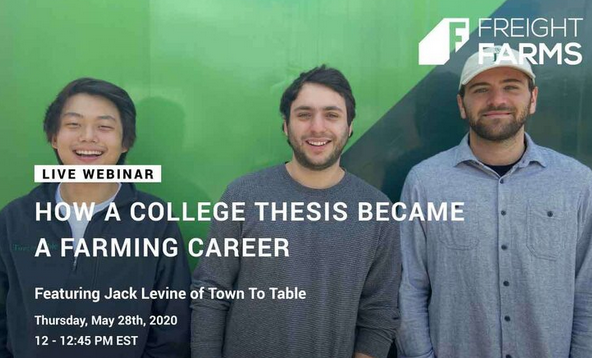
WEBINAR: How A College Thesis Became A Farming Career
WEBINAR: Thurs May 28, 2020 - 12 pm EST. Featuring Jack Levine of Town To Table
Town to Table wants to connect communities
to sustainable farming and local food
When Jack Levine first arrived on campus and saw his university's Freight Farm, he had no idea he was encountering his future career. After graduating in 2019, Jack launched Town to Table, a concept born from a business plan he developed for his undergraduate thesis. At its core, T2T aims to connect communities to farming on multiple levels.
Beyond providing local greens to distributors in the Boston area, Jack and his team work with schools and non-profits to develop interactive school gardens, engaging lesson plans, field trips, job training programs, and more. Hear from this young entrepreneur during our upcoming webinar–RSVP today!


Is Indoor Farming A Solution? UF/IFAS Scientists Explain
As an industry in the early stages, experts indicate that the market has seen more start-ups fail than succeed. Nonetheless, proponents of indoor vertical farming continue to tout it as a food production method with multiple added environmental and social benefits which drives technology in favor of its existence
At one time, the concept of vegetables growing inside a temperature-controlled facility where LED lights and advanced technology set the pace for year-round harvesting, promoted photosynthesis and water use efficiency, and required no pesticides, was considered a scene from the future.
Today, the concept of indoor vertical farming is increasingly becoming a reality. As an industry in early stages, experts indicate that the market has seen more start-ups fail than succeed. Nonetheless, proponents of indoor vertical farming continue to tout it as a food production method with multiple added environmental and social benefits which drives technology in favor of its existence.
Jiangxiao Qiu is an assistant professor of landscape ecology at FLREC
In the latest EDIS publication entitled ‘Indoor Vertical Farming Systems for Food Security and Resource Sustainability’, UF/IFAS scientists give consumers an inside look at the current status of the industry globally.
“The publication explains what we have learned so far about indoor vertical farming, the different techniques and innovations available, as well as the benefits, limitations, and challenges with this young industry,” said Jiangxiao Qiu, Assistant Professor of landscape ecology at UF/IFAS Fort Lauderdale Research and Education Center. “As we seek ways to curb food insecurity and advance sustainability, we also look at the current state of the methods for their economic, environmental, and social viability.”
Indoor vertical farming is the practice of producing food on vertically inclined surfaces. Instead of farming vegetables on a single level, such as in a field or a greenhouse, this method produces vegetables in vertical layers inside structures including skyscrapers, shipping containers, repurposed warehouses just to name a few. The method relies on artificially controlling temperature, light, humidity, and nutrients to promote the growth of food, and uses much less space. Examples of production methods include hydroponics, aeroponics, aquaponics, vegetable towers, modular container systems, and cubic production systems.
“The primary goal of indoor vertical farming is to maximize crop output of healthy organic food in a limited space such as an urban environment, while promoting water and nutrient use efficiencies, eliminating chemicals, and ultimately reducing energy consumption and greenhouse gas emissions through reducing reliance on external food transports,” he said. “One of its goals is to enhance the connection of local food production to consumption.”
The other side of the message for indoor vertical farming systems is that in urban food production, it can be an important piece of the puzzle to finding solutions for global food insecurity and environmental challenges like climate change and sea-level rise, notes Qiu.
“The methods can serve to promote sustainability and community resilience in the face of situations like COVID-19, hurricanes, and environmental crisis,” he adds.
Now that consumers have experienced first-hand the vulnerability of a supply chain when confronted by natural and man-made disasters like hurricanes and COVID-19, Jiangxiao noted, consumers are starting to ask about the potentials of this method. Meanwhile, UF/IFAS Extension office statewide reports an increase in consumer requests for information, webinars, and videos on how to set up indoor gardens.
Contributing scientists to the publication provides some insight into the constraints and challenges that vertical indoor farming currently experiences. For example, production methods limit the range of crops suitable for growing in vertical indoor farms. Those crops include lettuce, tomato, strawberries, peppers, and microgreens. Staple crops, such as corn, soybean, and rice, at least with the current technology, are not ideal for indoor production at present. Costs related to start-up along with a lack of pervasive incentive or policy initiatives, and technical training for workforce development that can facilitate the adoption of vertical indoor farming at a large scale are also barriers to promoting success in the industry.
However, for residents interested in learning about vertical indoor farming, a series of Sustainable Urban Agriculture Workshops is in the works for August at the Fort Lauderdale Research and Education Center. The program, now in its second year, is organized by Qiu, in partnership with UF/IFAS Extensions in Broward and Collier counties. The series covers a variety of sustainable practices through informational and hands-on training on how to establish indoor farming on a small-scale. More information will be forthcoming in the next few weeks as executive orders continue to lift facility lockdowns throughout the state.
Meanwhile, the publication cites environmental and social benefits. For example, indoor farming serves as an enterprise that can create jobs, it can also create a sense of community by providing a variety of urban environments with local places to obtain healthy food.
“This reduces the social inequality among communities targeting food desserts. Having a farm in an urban center revives some of the less developed and neglected neighbors by transforming abandoned warehouses, buildings, and vacant lots into a source of food production and while creating jobs and revenues,” added Qiu. “Ultimately, if the industry gains momentum it will eventually create jobs in sectors of engineering, biotechnology construction, and research and development.”
Publication date: Thu 14 May 2020
Nature Fresh Farms Proudly Announces The Nature Fresh Farms Recreation Centre
The Leamington Kinsmen Recreation Complex is a multi-use facility used by the public for sports, fitness, and community events
Leamington, ON (May 14th, 2020) – On Tuesday, May 12, 2020, the Municipality of Leamington approved sponsorship and naming rights for Leamington’s recreational complex to Nature Fresh Farms Recreation Centre.
Nature Fresh Farms is a greenhouse grower with over 200 acres of greenhouse facilities. Growing in the Leamington community for the past 20 years, Nature Fresh Farms has become one of the largest independent, vertically integrated greenhouse vegetable farms in North America. Along with their new partnership with the Municipality of Leamington, the current Leamington Kinsmen Recreation Complex will now be named the Nature Fresh Farms Recreation Centre, helping to support the programs and activities offered at the complex.
Nature Fresh Farms is thrilled by the renaming and their future involvement with the facility. “Our partnership with the recreational complex fits perfectly with our ideals of promoting a healthy lifestyle and nutritional eating,” shared Vice President, John Ketler. “We are thrilled to support a centre that is committed to providing the community with services and programs encouraging healthy and active lifestyles.”
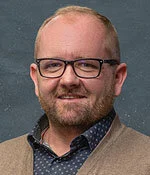
John Ketler, Vice President, Nature Fresh Farms
The Leamington Kinsmen Recreation Complex is a multi-use facility used by the public for sports, fitness, and community events. The 179,000 square foot facility, originally opened in 1985, has a 25-metre swimming pool; two ice rinks; a full gymnasium; fitness studio, training rooms, and meeting rooms, including a variety of programs for all ages available to the public.
Peter Quiring, Founder and President, Nature Fresh Farm
“As a family-run business, we understand the value of family and the importance of community facilities that help bring them together,” said Founder and President, Peter Quiring. “The recreation centre is the heart of a town, a place for the community to gather for sports and activities and enjoy each other’s company. It is an important part of our community and we’re very excited to be a part of it.”
The sponsorship by Nature Fresh Farms was confirmed by Leamington officials Tuesday evening.
“We are very pleased to partner with Nature Fresh Farms,” said Mayor Hilda MacDonald. “Our recreation complex is a vital gathering place for Leamington residents, and with the support of Nature Fresh Farms, we will be able to enhance recreational offerings for the community in a facility they’ll be excited to use.”
-30-
About Nature Fresh Farms -
Continuously expanding, Nature Fresh Farms has become one of the largest independent, vertically integrated greenhouse vegetable farms in North America. As a year-round grower with farms in Leamington, ON, Delta, OH, and Mexico, Nature Fresh Farms prides itself on consistently delivering exceptional flavor and quality to key retailers throughout North America, while continuing to innovate and introduce more viable and sustainable growing and packaging solutions.
SOURCE: Nature Fresh Farms | info@naturefresh.ca T: 519 326 1111 | www.naturefresh.ca
Swedish Startup Receives Funding For AI-Run 'NeighbourFood' project
A newly established innovation cluster will develop the groundbreaking service-model for urban farming, AgTech startup SweGreen’s ‘Farming as a Service’, to contribute to a sustainable food supply chain
A newly established innovation cluster will develop the groundbreaking service-model for urban farming, AgTech startup SweGreen’s ‘Farming as a Service’, to contribute to a sustainable food supply chain. The 2MSEK-project called ‘NeighbourFood’ is granted by Vinnova as an initiative to support innovations in the aftermath of the Covid-19 pandemic. The project NeighbourFood aims to upgrade a modern Urban Farming solution to an optimized smart and digital model for system monitoring and remote-control process steering.
Farming as a Service (FAAS)
"We have developed cutting-edge technology with high technical readiness level for food production indoors. With this project we address the last limitation factor towards a remote farming management model: A cloud-based service that enables a physical food production unit to become available as a service to our customers – as we refer to as ‘Farming-as-a-Service’," Swegreen Chief Innovation Officer Sepehr Mousavi highlights. The vision is to create a realistic alternative to the highly global, and to a certain degree fragile and resource inefficient, food production chains that currently dominate the marketplace. The innovation cluster behind the project, besides AgTech company Swegreen, includes also Research Institute of Sweden (RISE), Mälardalen University and high-profile Swedish chefs Paul Svensson and Tareq Taylor’s newly established restaurant Paul Taylor Lanthandel.
Local food
The demand for year-round urban food production has never been more relevant than now, under the crisis of Covid-19. Production of food is down at 50% in Sweden, which shows our society's exposure, Paul Svensson, top-notch chef and founder of Paul Taylor Lanthandel says. Our aim is to contribute to and increase the trust in and desire for locally produced food near our customers, Paul Svensson continues. We see us as a perfect channel for locally produced food at Paul Taylor Lanthandel we provide both a small general store and a restaurant, and thereby nurse a close relationship to producers and our local neighborhood community. The core of the innovation will take place in Swegreen’s production facility, called CifyFarm, which is an indoor vertical farm for production of nutritious leafy greens, salad and herbs, with a yield of approximately 200 times yield/area compared to traditional farming. The CityFarm uses minimal resources all year round and is isolated from the outside environment and is located on floor -3 of Dagens Nyheter tower in central Stockholm.
Digitally monitored farming units
The Farming as a Service concept of Swegreen’s enables Urban Farming technology to integrate with e.g. supermarkets or restaurants by digitally monitored farming units at the customer’s facility, which will produce food with minimal logistics and almost zero human intervention in a plug-and-play format. This farm management system empowers any entrepreneur with little or zero farming knowledge to grow high-quality food in an optimal environment while reducing risks and elevating the decision-making process, using dedicated decision-support systems and process optimization through the use of artificial intelligence, adds SweGreen’s CEO Andreas Dahlin. The NeighbourFood was one of the few selected projects by Swedish Innovation Agency Vinnova, out of 287 applications filed in response to the call ‘Innovation in the track of crisis’.
Innovative business model
The project will also make use of the sharing economy, innovative business models, and digital twins to speed up a coping strategy towards the Covid-19 crisis and addresses the need for climate transition and secure circular and resilient food supply chains. The project is intended to be integrated into a national Shared Economy platform, Sharing Cities Sweden, financed by the Swedish Innovation Agency and the Swedish Strategic Innovation Program for smart and sustainable cities, Viable Cities. Neighbourfood is an example of the green deal and how the sharing economy in cities can trigger innovative business models for resilient food supply chains – a sharing platform for neighbours, by neighbours! mentions Dr. Charlie Gullström, a senior researcher at RISE and head of Sharing Cities Sweden, Stockholm Testbed.
Collaborations
Swegreens Sepehr Mousavi who will be the project’s coordinator and lead also adds: "We are proud of our collaboration with RISE through one of the most prominent researchers in Sweden when it comes to digitalization and use of sharing economy solutions", Dr. Charlie Gullström and the platform of Sharing Cities Sweden alongside Dr. Alex Jonsson from RISE Prototyping Societies. This service introduces FaaS to our national platform for sharing economy as a new vital function. Sepehr Mousavi continues: "Also having Dr. Baran Çürüklü from Mälardalen University, a vibrant academic center for development of AI-related technologies’ and his team of PhD students onboard adds the competence needed for us to be able to hack the query and guarantee the success of the NeighbourFood project." Dr. Baran Çürüklü adds: "Food production can suddenly be a mission-critical factor as we can see now. Orchestration of production facilities through artificial intelligence may be decisive in managing such a crisis."
For more information:
SweGreen
Andreas Dahlin
andreas.dahlin@swegreen.se
www.swegreen.se
Publication date: Mon 11 May 2020
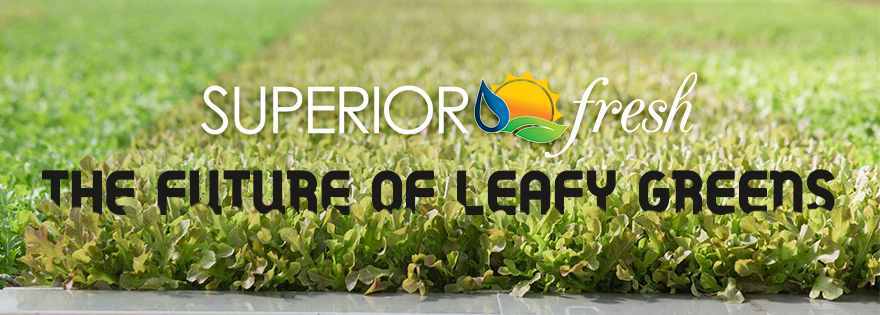
Superior Fresh's Brandon Gottsacker Discusses Future of Leafy Greens
At just 34 years old, Brandon’s journey to the sector is impressive. Taken under the wing of renowned scientist, Dr. Steve Summerfelt, Brandon traveled the world, learning various aspects of aquaculture and hydroponics. Returning to Wisconsin, he quickly began developing Superior Fresh alongside Todd and Karen Wanek
Tue. May 12th, 2020
- by Anne Allen
NORTHFIELD, WI - Although I have only been writing about the produce industry for just over two years, I’ve seen some truly incredible things. The word innovation holds more weight for me now, and I take care when I use it. But nothing quite prepared me for the innovative minds behind Superior Fresh, a one-of-a-kind aquaponics operation in the heart of Wisconsin. Using the nutrients from its Atlantic salmon farm to grow—what I personally can attest to—superior organic leafy greens, this up-and-coming company is about to take the produce industry by storm. I had the opportunity to sit down with Brandon Gottsacker, President, to learn more about how this company is changing the way the world grows food.
At just 34 years old, Brandon’s journey to the sector is impressive. Taken under the wing of renowned scientist, Dr. Steve Summerfelt, Brandon traveled the world, learning various aspects of aquaculture and hydroponics. Returning to Wisconsin, he quickly began developing Superior Fresh alongside Todd and Karen Wanek.
Brandon Gottsacker, President, Superior Fresh, LLC“
Todd and Karen lived overseas for many years and were fortunate to see first-hand how food is grown and how unsustainable certain methods of agriculture can be. They wanted to make a difference in the daily lives of so many people by ensuring a clean and healthy food supply and working to fix our broken food system. My passion for aquaculture and their vision for sustainable food led us to develop Superior Fresh. Our mission is to bring the best products to market. They procured some farmland in Northfield, Wisconsin, with this vision in mind. While they were at it, they wanted to restore the surrounding land to its native habitat of prairie, savanna, and woodlands,” Brandon told me.
Next to Superior Fresh’s organic greenhouse lies its fish house, in which nearly 600,000 Atlantic salmon swim in clean, fresh water being fed a non-GMO organic diet. Through a closed-loop water system, water from the fish is cleaned and filtered to remove impurities while maintaining its nutrient-rich benefits. The water is next circulated to the greenhouse, where plants absorb those benefits and the clean water is returned to the fish house. The two operate in a symbiotic fashion where they act as each other’s cover crop in an extremely efficient model.
Utilizing responsible, sustainable methods, the team behind Superior Fresh grows certified-organic produce that adheres to the highest food safety standards
“We focused on creating value from what otherwise is considered a waste stream in the world of aquaculture,” Brandon explained. “Utilizing the nutrient-rich water from the fish gives us the ability to grow high-quality, certified organic vegetables. We’re using 1/30 the amount of water in comparison to soil farming, growing the healthiest, best-tasting products while restoring the surrounding ecosystem.”
Although Superior Fresh is a relatively new company—its farm was built in 2017—it already has its eyes set toward expansion. Currently, the company has two phases of greenhouses with six acres under glass.
Superior Fresh continues to advance its operations through partnerships, such as its distribution deal with c-store Kwik Trip
“Our phase three greenhouse is an additional seven acres, which will bring us to thirteen acres total and continue to bump our production of certified organic leafy greens,” Brandon noted. “What's nice about our facility is that everything is very consistent. We're harvesting organic product from our greenhouses daily, and we do that year-round. If we're harvesting out of our facility every day, it should be getting to the consumer every day. We want to make sure that the end consumer gets the best quality product possible and get the benefit from a maximum shelf life. That's a huge bonus to being local.”
One of Superior Fresh’s first customers was indeed close to home, as it supplied its products to c-store Kwik Trip.
Superior Fresh has two phases of greenhouses with six acres under glass and is working on its phase three greenhouse, which will add another seven
“There are a lot of small towns in Wisconsin, which means that quite a few people rely on places like Kwik Trip for their food. Being able to provide organic products that are fresh, healthy, and delicious to so many consumers that would normally have to drive many miles to get that opportunity speaks volumes to the mission of Superior Fresh,” Brandon remarked.
Brandon’s enthusiasm for sustainable, organic farming is infectious and led us to a discussion about regenerative ag reimagined and what the company's next steps are. (Hint: We're diving into which new products Superior Fresh is trialing.) Intrigued? Stick around next week for Part Two of our discussion—you won’t want to miss it.
Superior Fresh

IGS Announces Referral Partnership With IREP in Middle East
The agreement will enhance the capacity for IGS to service the Middle East market and bring greater opportunity to secure and deploy vertical farming platforms across the region. IREP’s presence in this market is well established with many existing customers across agriculture, retail, and construction.
Agritech Business Gains A Greater Presence In Middle Eastern Markets
Indoor agritech specialist IGS has today announced a referral partnership agreement with International Real Estate Partners (IREP), the international facilities management firm. The agreement is specifically focused on indoor vertical farming for the UAE and Saudi Arabian markets.
The agreement will enhance the capacity for IGS to service the Middle East market and bring greater opportunity to secure and deploy vertical farming platforms across the region. IREP’s presence in this market is well established with many existing customers across agriculture, retail, and construction. The agreement establishes the opportunity for IREP to refer potential customers and support in the deployment, construction, and management of vertical farms.
The highly sophisticated plug-and-play vertical farming technology developed by IGS assures the efficient production of food in any location in the world. The modular indoor farms offer a highly controllable platform designed to maximize productivity whilst minimizing energy consumption and allowing the production of consistently high-quality produce at scale.
Ole Mygind, Managing Director of IGS Agri business commented: “The signing of this agreement is a very positive step forward for both IGS and IREP in the future deployment of vertical farming platforms in the Middle East. The imperative need for systems such as ours has been highlighted in the last few weeks as global reliance on complex food supply chains has been dramatically impacted.
“Many countries around the world have plans to secure an independent and sustainable food supply chain. Vertical farming can be a key part of that solution, we believe, particularly in areas where arable land is minimal and there is a high reliance on importing food. These systems offer a secure, controlled environment, independent of weather and location to provide a sustainable, secure food supply across a range of crops.”
Christina Porter from IREP commented: “We have been working with IGS since 2018 to enable its entry into the UAE and Saudi Arabian markets. We wholeheartedly believe that IGS’s vertical farming technology is best-in-class, and with an excellent management team behind it, that it can be the solution that many clients in the region are now looking for to address food security and sustainability. Through this agreement, IREP will work very closely with the IGS management team to ensure that its product penetrates the market here and is delivered in a very effective and efficient way.”
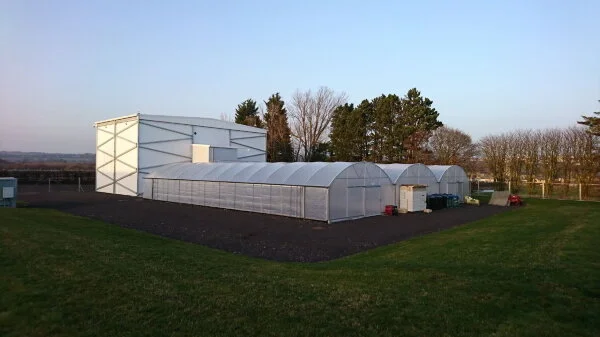
IGS has designed all its products to be highly pragmatic, flexible, modular, and scalable in line with market requirements.
The R&D team at IGS has developed, patented, and productized a breakthrough, IoT-enabled power and communications platform consisting of patented electrical, electronic and mechanical technologies as well as the world’s most sophisticated ventilation system for its Growth platform. All this is managed by a SaaS and data platform using AI to deliver economic and operational benefits to indoor environments across the globe.
Ends
About IGS:
Founded in 2013, IGS brought together decades of farming and engineering experience to create an agritech business with a vision to revolutionize the indoor growing market. Its commitment to innovation has continued apace and it has evolved the applications of its technology beyond agriculture to create solutions for a wide variety of indoor environments that enhance life for people, plants, and animals.
IGS launched its first vertical farming demonstration facility in August 2018.
For more information visit www.intelligentgrowthsolutions.com
About IREP
IREP is a multi-discipline management services firm operating in 25 countries, with its headquarters in Dubai.
We incorporate a high-level structure in all departments that include;
Facilities Management
Asset & Energy Management
Agri-Tech & IoT
Real Estate Advisory
For more information visit www.irepartners.com

VIDEO: "Farmers Bringing Their Field Indoors"
BBC has a series called People fixing the world, in which one episode was called 'The farmers bringing their fields indoors'
BBC has a series called People fixing the world, in which one episode was called 'The farmers bringing their fields indoors'. In this episode about vertical farming, Guy Galonska, Co-founder & CTO of InFarm and Shani Leiderman from Beba restaurant in Martin-Gropius-Bau were featured.
Source and video: Infarm LinkedIn.
Publication date: Thu 30 Apr 2020

Successful CSA Strategies For Small Farms
With grocery store shelves empty in the wake of the COVID-19 pandemic, customers all around the United States are beginning to consider their regional food systems in a new light

BY ALLIE HYMAS
With grocery store shelves empty in the wake of the COVID-19 pandemic, customers all around the United States are beginning to consider their regional food systems in a new light.
“We have never seen this kind of demand,” Vera Fabian of Ten Mothers Farm near Hillsborough, North Carolina, says. “If ever there was a time to be getting into the CSA business, this would be the moment.”
For the last ten years, Fabian and her husband, Gordon Jenkins, have been raising organic vegetables using the Community Supported Agriculture model. Today, Ten Mothers Farm supplies boxes of vegetables on a seasonal subscription basis to 184 households, and they’re pleased with how this format has allowed them to feed their local community, both in good times and bad. “Something that gives me hope in this time is that people are trying to figure out how to have more resilient communities, whether we’re talking about climate change or the coronavirus.”
Ten Mothers Farm’s CSA strategy and offers timely lessons for farmers who wish to build their business around this model and those who simply want to try this approach to reach customers during the stressors of a health crisis. For Fabian, running a CSA is more than just a method of moving her products. “We are more motivated than ever to feed more people and spread the word. If more businesses were run like a CSA then the world would be in a different place!”

Gordon Jenkins, Vera Fabian and Luke Howerter run Ten Mothers Farm. Photo credit: Scott Kelly.
The Ten Mothers Farm Story
The Ten Mothers Farm website explains their name: “there’s an old saying from India that ‘garlic is as good as ten mothers,’ which to us means that food is medicine, as nourishing and powerful as ten whole mothers.” Having met as employees at the Edible Schoolyard in Berkley, a school started by Alice Waters, Fabian, and Jenkins bonded over a mutual love for cooking and an interest in farming, both as a means of social justice and for supplying food.
While Jenkins’ food journey began in the restaurant industry, Fabian discovered gardening with the intent to participate in agricultural relief work in sub-Saharan Africa.
“I wanted to save the world, but simultaneously I found that I loved cooking, which felt like a frivolous thing, and I felt conflicted between the two of them,” Fabian says. “I studied abroad in West Africa in a women’s garden cooperative and I observed these women solving these huge problems of hunger and education through growing food.” Upon her return, Fabian was gripped with the sense that organic agriculture would be her opportunity to make an impact. “I thought maybe my love of food and desire to fix problems could come together.”
The couple took a diligent, methodical approach to begin their farming journey. After working for food-related nonprofits for five years, Fabian and Jenkins took their saved resources and years of research and apprenticed themselves to Bob Cannard at Green String Farm and then to Eliot Coleman at Four Seasons Farm.
“These were two farmers that we really looked up to and knew we would get a great education from. We learned a ton and shook the city life off,” Fabian says.
Having weighed their options between finding land in Jenkins’ home state of California and Fabian’s of North Carolina, the couple chose the more affordable land prices and water accessibility of North Carolina and spent two years working at Maple Spring Gardens, learning how to farm there.
In 2015 Fabian and Jenkins felt prepared to start their own operation and began renting land from a local family. “For our first three years we started really small,” Fabian says. “Farming is definitely an expression of your personality, and we are pretty careful, methodical people. Farming is so risky and we wanted to reduce as much of the risk as possible.” With Fabian working halftime off their farm for a nonprofit agricultural organization serving refugees from Burma, the initial Ten Mothers Farm endeavor was rolled out with the bigger timeline in mind. “We had thought we would be a market farm, but the markets around here are difficult to get into, so we said ‘Okay, I guess we’ll be a CSA!’” Fabian says. Having operated the CSA successfully for five years, she is grateful that circumstances dictated this model for this business. “It’s especially great during this moment in time!”
“We started with 34 CSA families, and we’ve gradually increased it as we felt ready,” Fabian says. Ten Mothers Farms served 54 households the second year, 74 the third year, followed by 125, and this year they will feed 180 families. “We sold a little bit to restaurants too, but the demand for the CSA has felt strong, so over time we’ve focused more on the CSA and less on restaurants.”
Junie with the whole farm and rows of green in early November. Photo credit: Scott Kelly.
Collaborative Land Purchasing Success
The first iteration of Ten Mothers Farm was on a rented quarter acre. “It was really just a big garden,” Fabian says. “Those first three years we stayed at a quarter acre — but we got better, so we were able to grow more food.” Throughout Ten Mothers Farm’s early years Fabian and Jenkins were searching for land in a pricey real estate market. Aware that they could access a more suitable property by joining forces with other buyers of a similar mindset, the couple chose to search for land with several friends. “It was challenging,” Fabian says. “We almost gave up.”
Their search became more heated when the owners of their rented land sold the property. “At the eleventh hour, when our lease was almost up in the summer of 2018, we happened to find a piece of land that was perfect both for us and the friends we were searching with, and we all bought it together!” To make the purchase, Fabian, Jenkins, and their friends formed an LLC through which the purchase was made and then subdivided the land with a parcel for each of them and a parcel held in common. “We’re all folks that want to have a land-based life but also people who want community out there and not be isolated.”
In the winter of 2018, Ten Mothers moved to its new location. “It was a bare field!” Fabian says. “There was no electricity, no water, no infrastructure of any kind. We quickly did the work of turning this field into a farm.” Fabian and Jenkins are currently building a house on the land and hope to move in June. “There are a lot of wonderful things about sharing the land,” Fabian says. “What we were able to afford as just the two of us would have been really small and unsuitable for farming. ”
Fabian says their space-saving strategies at Ten Mothers Farm have come from limited access to land, but their efficiency can actually offer encouragement to others who might never be able to afford a large property. “For our 180 shares, we farm only one acre of land. Being able to farm on such a small footprint means that it’s so much more accessible to people.”
Selecting Varieties to Offer in a CSA
In choosing varieties, Ten Mothers Farm started with what they enjoyed cooking and eating. “For a CSA, we have to grow a ton of different things to keep our customers happy,” Fabian says. “We grow 60 different vegetables.”
Fabian recommends CSAs keep close tabs on what their customers want.
“Every year, towards the end of the year, we send out a survey and use that survey directly to crop plan for the coming year. That way we’re growing more of what people want and less of what they don’t want.” Always mindful to make sure their products pencil out financially, Fabian notes that there are vegetables they can’t offer because the numbers don’t work, or their methods won’t allow them to grow or harvest those offerings. “For example, we don’t grow potatoes because we’re not a tractor farm,” Fabian explains. “The labor just doesn’t work out.”
As long as a vegetable offering can be produced with financial, space, and labor efficiency, it’s just a matter of taste.
“We are into strange vegetables!” Fabian says with a smile in her voice. “One year we tried molokhia, or Egyptian spinach, which does beautifully in the hot, humid summers that we have, but people hated it! It’s just too weird!”
They’ve found at Ten Mothers Farm that customers enjoy experiencing one or two new vegetables occasionally among a steady offering of recognizable staples. “Most of the time people want to see the things they love and know how to cook.”
Amid the changing climate, Fabian thinks about how certain varieties of vegetables offer more resilience and have adapted to their bioregion better than other foods that may enjoy customers’ favor. Using their weekly newsletter, Fabian is constantly working to educate CSA members on how to use new foods or varieties that are particularly hardy to their bioregion.
“We’re constantly explaining why we grow things and when, and as people have that kind of background information they become more open to trying things and more understanding when they don’t have broccoli in July.” They also host events at Ten Mothers Farm to teach their customers about the farming process. “That really brings it all to life; some of our CSA members haven’t been to the farm yet, and it’s our goal to get them all out here.”
Overcoming Challenges
Fabian encourages farmers to consider starting a CSA to be aware of its unique quirks. “It’s a lot of logistics: lots of crop planning and then executing to make sure you have enough vegetables for everybody. It’s a lot of different crops.” Fabian recommends that potential CSA farmers get used to staying aware of details and putting in place good tools to help keep abreast of the various tasks and considerations. “Making sure you’ve packed the right boxes and didn’t pack boxes for people on vacation.”
The second element Fabian brings forward is marketing and customer service. These elements are both critical to this direct-to-consumer, subscription-based model and will either make or break the business. “When we talk to new and beginning farmers we recommend you go with your personality,” Fabian says. “We happened to really like customer service stuff. We like answering our questions and writing the weekly newsletter. But if you don’t like customer service, you probably shouldn’t do a CSA.”
Fabian also recommends that new CSA operators pad their estimated timeline and hold it loosely. “Everything has taken longer than we’ve planned.” She says. “We try to be patient and not too hard on ourselves when things haven’t happened as quickly as we’d hoped.”
Jenkins and Fabian had part-time off-farm work and slowly built up their customer base before making a big land purchase – an excellent example of how being flexible with the timeline is necessary for smart business planning. “Farming and land are so long-term. We’re talking about either the rest of our lives or at least the next 30-40 years. You have to have a long-term vision or else you’ll get frustrated that it’s not all happening in a year or two.”
Collaboration has been another winning strategy of Ten Mothers Farms. While Jenkins’ and Fabian’s landmates are not partners in the farm, they are working on adding another business partner, Luke Howerter. Fabian says adding additional opinions and voices must be done thoughtfully, but such collaborations can make big things happen on the farm. “You have to keep reminding yourself what can we do together that we can’t do alone: it’s a lot of things! We’re more resilient as three people than just as two of us.”
Regenerative Farming is Giving Back
“Farming regeneratively for us means giving back more than you take,” Fabian says. “ We try to think about how we can give back more both in terms of the land and the people. We often leave humans out of the equation when we talk about sustainable agriculture. One doesn’t really work without the other.”
In addition to structuring Ten Mothers Farming practices and land-use strategies around environmental considerations, Jenkins and Fabian are mindful of how their farm can care for those who work there. “A lot of customers ask ‘is this GMO’ or ‘is this sprayed,’ and our methods address those issues, but they might not be asking if the person who grew their food is making a living.”
Given the legacy of extractive agriculture, both of the soil in extensive tobacco farming and of humans in the enslavement of African families, Jenkins and Fabian are hyperaware of how their farming model needs to put nutrients back into the soil and resources into the community. “If you’re going to farm organically in NC you have to be giving back a lot more than you’re taking because you simply can’t grow anything if you’re not giving back a lot.”
In their first year on their current property, the Ten Mothers Farm team amended their soil according to soil test results and found their soil nutrition was still so low that their spring crops would not grow. “We spent the past year doing so much to increase soil fertility.”
No-till farming is another aspect of how Ten Mothers is practicing regenerative agriculture. “We started out no-till for practical reasons: we heard it reduced weed pressure, we didn’t have money for a tractor, we weren’t particularly interested in tractors and we preferred small hand-scale tools. It turns out doing those things is really great for the soil!”
Thanks to their small footprint and their on-the-ground approach, Ten Mothers Farm has been able to improve their soil quickly through major additions of compost and close observation of soil and plant health.
“I think a lot of growers hear about no-till and they’re skeptical. They assume it wouldn’t be too labor-intensive or just wouldn’t work. We’re so used to tillage it’s hard to give it up.” Fabian says. “A turning point for us was when we were able to visit Singing Frogs Farm. They were a small, no-till operation and their soil and vegetables were beautiful and they were making it work. Then, we knew it was possible! Now, so many small farms are switching to no or low-till. We visited Singing Frog Farm in California just to see an example of how it was done, and they have such great soil. It’s so productive. They made it feel totally possible, and now we’re seeing so many farms doing no-till.”
Fabian recommends the No-Till Growers podcast to hear directly from farmers practicing no- or low-till methods.
Building Trust is the Best Strategy
Fabian is always excited to hear about farmers who want to try the CSA model. “Make sure it’s something you’re excited about – you’re asking people to become a member of your farm, and that’s a big commitment,” Fabian says focusing on just one or maybe two sales strategies have worked for them. “We’ve been able to build a loyal customer base through the CSA because we weren’t trying to do a bunch of markets or different income streams. It takes a lot to keep customers engaged each year. If you spread yourself thin, your CSA members will notice and your retention rate will decrease.”
Fabian’s secret sauce for CSA success is gratitude, trust, and sharing. “Your members are making it possible for you to farm,” she says. “Part of them coming back the next year and the next year is giving them the feeling that they’re deeply appreciated members of the CSA. They have to learn a whole new way of meal planning, cooking, and eating, and you have to be their coach. You have to share your love for your produce and the farm with your customers. Part of what they’re buying when they join a CSA is you, your story and your passion for the food and the work.”
To this end, Fabian says it’s tempting to take on too many members at once, but this should be avoided. Doing well with a small batch and working out the kinks in production and distribution will establish the trust that will lead to more customers. “Build a loyal customer base and they will be your marketing; they will get their friends and neighbors on board.”
Having established trust also helps when crises like the COVID-19 pandemic arise. Showing customers online and in a newsletter the additional sanitation practices should be a reinforcement to the work that’s already been done all along in maintaining a good relationship between producer and consumer. Fortunately for Ten Mothers Farm, while farm sales outlets like restaurants and farmers’ markets are drying up, the boxed CSA model is already compliant with increased health restrictions.
Fabian says, “I’m very inspired to see how farmers around here are figuring out ways to cooperate more to sell their goods during these uncertain times.” In addition to their partnership with additional local farms to include a flower and grain share in their boxes, Ten Mothers Farm is working on adding meat and maybe eggs from other local sources, both to help their fellow farmers and to safely provide customers with more local food. Fabian and Jenkins are also working out ways to offer boxes to unemployed members for little to no cost. “Everything’s happening so fast, and we certainly haven’t figured this all out yet, but it’s clear that we’re all going to have to cooperate more and be more generous in the days ahead.”
About Eco-Farming Daily
EcoFarmingDaily.com is the world’s most useful farming, ranching, and growing website. Built and managed by the team at Acres U.S.A., the Voice of Eco-Agriculture, all our how-to information is written by research authors, livestock professionals, and world-renowned growers. Join our community of thousands using this information to build their own profitable, ecological growing systems.
Shipping Container Farm, Vertical Roots Hires Displaced Restaurant Workers To Help Fill Growing Retail Demand
Since launching in 2016, Vertical Roots has expanded from a single hydroponic garden container to a current operation of more than 130, each filled with leafy greens
Vertical Roots hires displaced restaurant workers to help fill growing retail demand
Vertical Roots grows leafy greens in hydroponic gardens inside custom-outfitted shipping containers
With the restaurant and hospitality industry under duress and thousands out of work, container farm company Vertical Roots stepped up to the plate, offering jobs to displaced employees.Since launching in 2016, Vertical Roots has expanded from a single hydroponic garden container to a current operation of more than 130, each filled with leafy greens. For co-owners Andrew Hare and Matt Daniels, their mission is two-fold: delivering a local, pesticide-free product and developing community relationships to serve those in need."I have been in the restaurant industry for most of my adult life, including eight years right here in Charleston," said Hare. "It really hits close to home for me, witnessing this incredible industry turned upside down so quickly by this pandemic."According to Hare, Vertical Roots hired about two dozen chefs, cooks, dishwashers, servers and managers since the COVID-19 pandemic began. In all, employees displaced by the outbreak made up about 25 percent of their 100-employee team split between their two locations in Charleston and Columbia when we spoke in April."We are helping these people get a paycheck and they are helping us get product out of the door," said Hare. "They have been eager, fast learners, which has made the whole process seamless."Many of the new hires have worked with the non-GMO produce in the past. Vertical Roots supplies many local kitchens with their one- or two-day old living baby Romaine, arugula, bibb and butter lettuces.After a food safety course, most new employees started in the "pack room," where Hare said "all the harvested products flow to cool down and be processed for each customer, whether it's making a spring mix of cut leaves or taking living heads of lettuce to clamshell or case."Many of Vertical Roots' newcomers will return to their kitchens as restaurants reopen, but at least one downtown chef currently working with the company said some workers may continue to work at the container farm.For Vertical Roots, the growing season never ends inside their compact, LED-lit shipping containers. The company currently supplies more than 400 stores, mostly in the Southeast. And the customer base is growing, Hare reports."We are 98 percent focused on retail right now," said Hare, who points out that the closure of restaurants in the Charleston area led to an influx of large retail orders.With a hand in every part of the supply chain, Hare knows exactly what's going on with each crop at any given time, and the farm sites' geographic positioning allows the greens to arrive at their final destination within 24 hours of harvesting. Large-scale commercial farms, on the other hand, must contend with corporate concentration, leading to less quality control in a practice where several uncertainties such as soil contamination and water runoff already exist.According to Hare, 95 percent of the leafy greens in grocery stores come from two areas, Yuma, Arizona and Salinas, California. "These products can sometimes have three weeks of travel time," Hare said. "With us, you are dealing with a young, vibrant product filled with calcium and potassium. I would definitely stress how important it is to eat something clean right now."Hare said he feels fortunate for the added business, and they were in need of some help prior to the arrival of their new crew. "What a mutually beneficial thing for us to be able to go out and hire some of our customers who are familiar with our products," Hare said. Having people on staff who know how to use the product is enabling Vertical Roots to meet the growing demand for their seven lettuce varieties," he added.

The Basics Of Hydroponic Lighting
Choosing the best lights for your hydro system can be daunting for a beginner. There are tons of options out there and depending on your system size and type of plants you are growing; some types may be better or more efficient than others.
Hobbyists often take up hydroponics because they want to grow their own food but don’t have access to outdoor space. Although the sun is the ideal lighting source for growing plants, artificial lighting in indoor systems can provide a good substitute within the appropriate color spectrum.
Choosing the best lights for your hydro system can be daunting for a beginner. There are tons of options out there and depending on your system size and type of plants you are growing; some types may be better or more efficient than others.
Outside, a vegetable garden requires between four and six hours of direct sun per day, plus at least 10 hours of “bright light” or indirect sunlight. With artificial lighting in your hydroponic garden, the main goal is to imitate this. You should plan your system on having at least 14 to 16 hours of bright artificial light, followed by 10 to 12 hours of darkness every day. The darkness is just as important as the light—just like animals, plants need time to rest and metabolize.
If your plants are perennials, you will have to have a more strict and calculated lighting schedule to bring the plants through their vegetative (growth) and flowering (production) stages. The easiest way to maintain a lighting schedule is with an automatic electric timer. They are worth the investment because one small mistake or simply forgetting to turn the lights on or off has the potential to affect your plants' growth and production rates dramatically.
Different Plants, Different Needs
An electronic timer is especially necessary if you are growing a variety of different plants. Although you can follow the general guidelines above and have success, some plants do much better with longer or shorter periods of “daylight.” If you have a mix of these in your garden, you will need to figure out a custom schedule. An electric timer allows you to take care of this hassle-free and change it according to your needs as your garden evolves.
Short day plants: These require a long period of darkness to photosynthesize and produce flowers. If they are exposed to over 12 hours of light per day, they will not flower. Poinsettias, strawberries, cauliflower, and chrysanthemums are short-day plants. The short-day cycle mimics the environment in nature for plants the flower in the spring.
Long day plants: These require up to 18 hours of sunlight per day. They include wheat, lettuce, potatoes, spinach, and turnips. The long-day cycle mimics the natural environment of summer-flowering plants.
Day-neutral plants: These are the most flexible. They produce fruit no matter how much light they are exposed to. Some examples include rice, eggplant, roses, and corn.
If you must mix sort and long day plants, it is best to compromise their needs and pick a lighting schedule that is right in the middle, around fourteen hours of light per day.
Parts of the System
All hydro lighting systems have four main parts. These are the bulb, reflector hood, remote ballast, and timer.
Bulb: The most popular wattage for hydroponic bulbs is between 400-600 Watts. Most hydro gardeners use High-Intensity Discharge (HID) lights. HID bulbs produce light by sending an arc of electricity between two electrodes that are encased in glass with a mixture of gas and metal salts. The gas aids the creation of the arc, which then evaporates the metal salts, producing bright white light.
There are two types of bulbs available: High-Pressure Sodium (HPS) and Metal Halide (MH). Conversion lamps allow you to switch between the two types of bulbs easily.
Metal Halide is a good all-around light, and for most vegetables, it will work very well. If you can only afford or only have room for one type of bulb, MH is a good choice. They cost on average $150 or less for 400 watts. These should be replaced at least every two years, but a decrease in efficiency after about fifteen months so may need replacing earlier.
High-Pressure Sodium bulbs are the best choice for the flowering or fruiting stage of your plants. They are more expensive, so are often used in combination with an MH bulb (used during vegetative state) to save money on replacement costs. Although they are more expensive initially, HPS bulbs last up to twice as long as MH, up to five years. But, like MH lights they do lose effectiveness with use and may need to be replaced as often as every two years based on how much use they get.
Reflector hood: The reflector hood is a reflective casing around the bulb. It increases the effectiveness and efficiency of the bulb by reflecting the light down onto the plants at multiple angles, giving a more effective spread. This also allows you to use lights that give off less heat, saving on electricity and cooling costs.
Remote ballast: The ballast is the power box that powers the light. Sometimes ballasts are sold as a part of the lamp assembly, but these are usually far too hot and heavy. Remote ballasts are much better for home systems. This is the most expensive element of the lighting system, so it must be kept off the ground to ensure that it never gets wet in case of a flood or leak. Flooding is risky with systems such as Ebb & Flow in case your drainage tube gets clogged. It is recommended to buy the ballast as a set with the bulb because they must match each other in wattage.
Timer: Timers are the most inexpensive piece of the lighting system, but they are incredibly important. They must be heavy duty and grounded (three-prong plug) but can be either manual or electric. Manual timers use pins and have two plugs on either side so that you can attach it to two lamps at once. Manual timers are more popular because they are less likely to break than electric.
By Christina D’Anna | the Spruce | July 4, 2019


How Sodexo, Ford, And Others Use Sustainable Farming As CSR Platforms
More than ever, it’s important for companies to show that they don’t only just care for their customers and employees, but for the health, well-being, and prosperity of their community as well
4 Companies Championing
Social Responsibility With Sustainable Farming
More than ever, it’s important for companies to show that they don’t only just care for their customers and employees, but for the health, well-being, and prosperity of their community as well. We’ve seen many institutions use container farming as a way to provide people with access to healthy food, education, and jobs. See how four of our corporate customers–Sodexo, Everlane, SEFCU, and Ford–are using container farms in their corporate social responsibility initiatives. (Header image: Times Union).
1) Sodexo champions sustainability on campus
With over 420,000 employees at 34,000 sites in 80 countries, Sodexo is one of the largest multinational corporations. Over the past several years, Sodexo has dedicated countless resources to promoting nutrition, health, and wellness to its customers and employees.
One concrete way Sodexo works to bring sustainability and wellness to its global customer base is through the Better Tomorrow 2025 plan. The plan is Sodexo’s commitment to protecting and rehabilitating the environment, supporting local community development, promoting health and wellness, and developing their team to promote diversity. To achieve these goals, Sodexo partnered with Alliance for a Healthier Generation, Fair Trade USA, the Marine Stewardship Council, the Sustainable Food Lab, the Stewardship Index for Specialty Crops, and Freight Farms.
“Our ‘Better Tomorrow Plan’ specifically focuses on individuals, our communities, and our environment…Freight Farms has given us a great opportunity to have that engagement with students on a higher level, especially with sustainability.”
— Heather Vaillete, District Manager, Sodexo Campus Services & Independent Schools
Since 2016, Sodexo has worked with multiple universities and high-school customers (Clark University and Cumberland High School to name just two) to place Freight Farms on their campuses. The presence of the farm on these campuses is a sure way to add sustainable and fresh produce to students’ everyday diets. Sodexo found that using Freight Farms container farms can continuously provide students healthy fresh food options year-round without reliance on resource-inefficient fresh food supply chains.
2) Everlane & Saitex provide employees with food-safe greens
Everlane is a relatively new company (founded in 2010) which is taking huge strides in reforming the fashion industry. With a focus on “radical transparency”, Everlane’s mission is to sell high-quality clothing with fair pricing and ethical sourcing practices from factories around the world. In doing so, they seek to forge a stronger connection between the end purchaser and the people making the luxury goods in the hopes of instilling consumers with a greater sense of community and transparency.
While Everlane commits to its values all year round, they go above and beyond for their Black Friday Fund. On a day where other retailers focus on making profits, Everlane dedicates Black Friday shopping proceeds to benefit one of their factories.
In 2016, they used the Black Friday Fund to donate motorcycle helmets to workers at the Saitex denim factory in Ho Chi Minh City, Vietnam, to protect them while commuting.
In 2017, Everlane and Saitex raised $300,000 for the Black Friday Fund and used the money to gift Saitex factory employees Freight Farms containers.
Everlane video to promote Black Friday Fund donations to benefit the workers at Saitex Denim in Vietnam.
The hydroponic farms serve an important function for the factory employees. As a result of virtually non-existent regulations, Vietnamese food supplies have been repeatedly doused with dangerous pesticides that are unsafe for consumption (see source). The hydroponic container farms are protected from pests and require no pesticides, making the fresh crops growing inside much safer to eat. With the three hydroponic container farms, Everlane will make a huge difference in the lives of hundreds of Saitex employees by providing them with two fresh and pesticide-free meals a day. You can learn more about the initiative in our joint press release!
Since 2017, Everlane has continued to champion important causes. In 2018, the company partnered with the Surfrider Foundation clean up across the U.S. In 2019, they continued on the theme by partnering with Oceania to help reduce single-use plastic.

3) SEFCU & Boys & Girls Club educate kids about farming & nutrition
SEFCU is a powerful name in the banking world. Established in 1934, it is one of the 50 largest credit unions in the United States, with more than $3 billion in assets. Not only does SEFCU have a lot of money – they also have a lot of heart. From their headquarters in Albany, NY, they are dedicated to making a positive difference in the communities they serve. They assist thousands of organizations through their 2008 Banking with a Purpose initiative and give millions of dollars towards community financial education programs.
They don’t limit themselves to just helping with financial matters but also work hard for food reform to prevent obesity and food insecurity. Over the past three years, they purchased two hydroponic container farms. One resides at the Albany office, where it grows food for the employee cafe and various non-profits in the area. The company also introduced a Produce Shuttle to transport donated fresh food from the farm, restaurants, and food pantries to those in need.
SEFCU’s second farm was donated directly to the Boys & Girls Club chapter in Troy, NY to give kids access to healthy and fresh food, teach them about farming, and–eventually–become a revenue driver for the program.
4) Ford Motors & Cass Community Social Services provide important community access to fresh food.
In 2017, the Bill Ford Better World Challenge awarded $250,000 to the Ford Mobile Farm Project in Detroit. The project involved donating a Freight Farms container farm (named the Ford Freight Farm) and a Ford F-150 pickup to Cass Community Social Services (CCSS) with the goal of bringing fresh food access and nutrition education to at-risk Detroit residents. CCSS was founded in 2002 to fight poverty in the Detroit area. The non-profit focuses on democratizing food access, health services, housing, and jobs to Detroit residents living below the poverty line.
“The greatest feature for us is the ability to have fresh, free, organic food all year long.”
— Reverend Faith Fowler, Executive Director of CCSS
The contents of the Ford Freight Farm will be used to supply the CCSS community kitchen with a variety of fresh leafy greens to provide important nutritional benefits to the 700,000+ meals served each year. In addition to supplying the kitchens, the Ford Freight Farm will provide part-time employment to adults with developmental disabilities. Starting in 2019, CCSS has been using the farm as a revenue stream to fund other projects, selling high-quality greens to restaurants in the area.
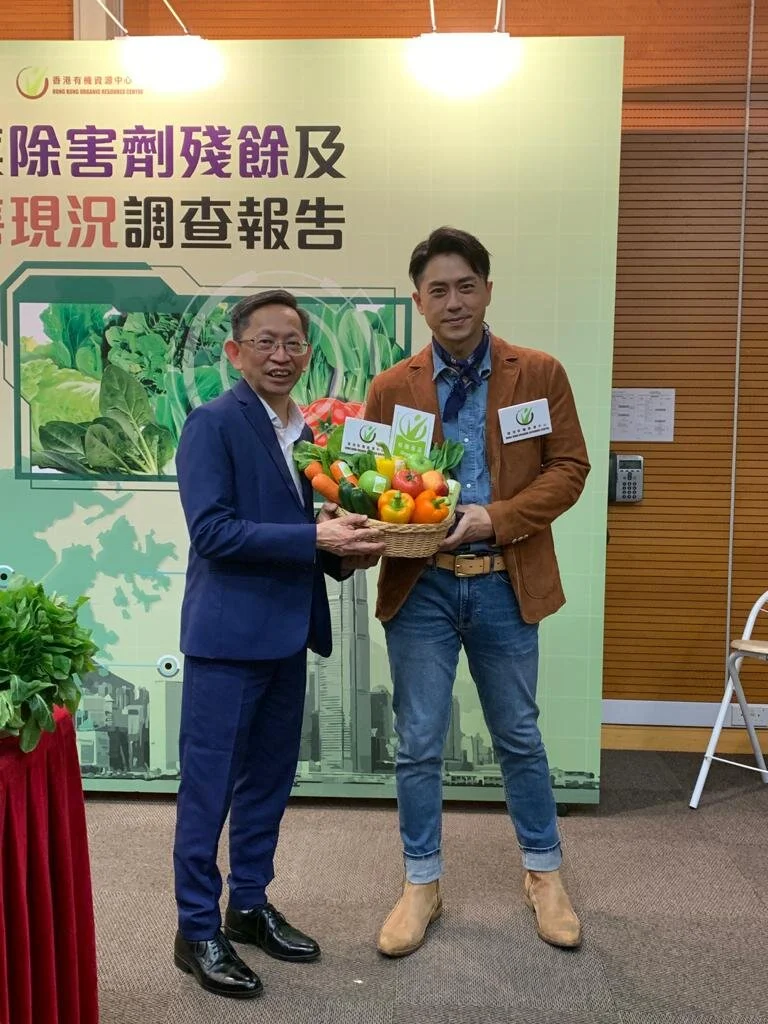
Study Shows More Than Half of Vegetables Tainted With Pesticides Residue
Hong Kong Organic Resource Centre from the Hong Kong Baptist University found a high percentage of conventional and self-proclaimed organic vegetables were found containing pesticide residue
28 April 2020
Local study shows 70 percent of vegetables are tainted with pesticide residue, with two samples of organic vegetables breaching legal limits.
Hong Kong Organic Resource Centre from the Hong Kong Baptist University found a high percentage of conventional and self-proclaimed organic vegetables were found containing pesticide residue.
The study has collected a total of 58 organic and non-organic vegetable samples, including Choi sum, pak choi, amaranthus, and spinach.
The samples were purchased from 149 venues including wet markets, shops, and organic farms across all 18 districts to test the presence of heavy metal and 352 types of pesticide residues.
Seventy percent of the vegetable samples collected, 41 out of 58, contain pesticide residues regulated under European Union standards.
More than half of them, 34 out of 58, contain pesticide residues exceeding the EU’s Maximum Residue Limit.
Those containing pesticide residue beyond the EU standard includes 3 mainland certified organic vegetables, 21 local self-proclaimed organic vegetables, 2 mainland self-proclaimed organic vegetables, and eight non-organic vegetables from the mainland and Hong Kong.
The study also found two self-proclaimed organic vegetables containing pesticide residues beyond the Hong Kong standard’s legally tolerated limit.
One of them was purchased from Chuk Yuen Market in Wong Tai Sin, containing 1.42 milligrams per kilogram of Acetamiprid, higher than the government’s MRL of 1.2.mg/kg.
Another was brought from Tin Shing Market in Yuen Long containing 0.34mg/kg of Cyhalothrin, exceeding the stipulated MRL of 0.20mg/kg.
“The health risk caused by consuming the most tainted Choi sum sample remains low under normal consuming patterns,” said professor Jonathan Wong Woon-Chung, Director of HKORC.
The study also found that less than one-third of the self-claimed or certified organic vegetable stalls, 16 out of the 52, sells certified organic vegetables.
Sai Kung had the highest percentage of retail stalls selling self-claimed organic produce, followed by Wan Chai, Tsuen Wan, Kwai Tsing, and Southern District.
“Compared to last year, there’s a slight increase in the number of organic produce stores in Hong Kong, so there’s a slightly increasing trend of selling fake organic produce in the market,” said Wong.
He suggested that consumers should look for stalls with certified organic produce with certificates displayed in the shop or organic labels when purchasing organic vegetables.
“When going to a wet market you need to be careful with stores that only label organic vegetables by handwriting, and ask them where they produce it, where the farm is and how they produce it,” Wong added.
HKORC urged the government to legislate and regulate the organic product industry and Hong Kong Customs should not ignore the center's request on investigating stalls that sell counterfeit organic goods.


Vertical Farms Boom As COVID-19 Bolsters Appetite For Locally Grown Food
Vertical farms — indoor spaces where climate and light are tightly controlled — were already expanding in urban areas before the pandemic struck

May 1, 2020
The industry is benefiting from the pandemic as consumers crave healthy, regional produce
Vertical farming is booming as COVID-19 bolsters demand for locally-grown greens.
Impact investors might find the sector appealing because the farms offer organic vegetables and fruit while using less water and land than conventional agriculture.
There is a growing interest in vertical farming worldwide, with massive facilities already operating in Asia, the Middle East and Europe, and new projects announced since the start of the COVID-19 outbreak.
While many industries are contracting because of COVID-19, vertical farming is booming as it meets demand for locally grown kale and lettuce.
Vertical farms — indoor spaces where climate and light are tightly controlled — were already expanding in urban areas before the pandemic struck. Since they control everything from seed to store, vertical farms can provide skittish consumers with information about where their food comes from and how it’s produced. While crops rot in fields because of disruptions to farming and supply chains, vertical farms such as Bowery Farming and AeroFarms are boosting output.
“This pandemic exposed the fragility and vulnerabilities with our food supply system that have left people without access to fresh food when they need it most,” Irving Fain, CEO of Bowery Farming, told Karma. “Bowery is in a position to support our communities with fresher, safer produce during this time and beyond.”
Bowery Farms has been pairing technology with agriculture to boost yields and curb the need for water and other inputs. The startup’s software uses vision systems, automation technology, and machine learning to constantly monitor plants. Bowery’s three farms, two in Kearny, New Jersey, about 10 miles from Manhattan, and one in Baltimore, use no pesticides, 95% less water, and are more than 100 times more productive than traditional agriculture per acre.
“Our online sales have more than doubled and demand from our in-store retail partners has gone up 25-50%,” Fain said.
Vertical farms are sprouting in many urban areas. Another pioneering startup in the field, South San Francisco-based Plenty is building a new farm in the middle of Los Angeles. Orlando-based Kalera opened a second facility near the Orlando International Airport that is projected to produce about 6 million heads of lettuce per year.
“Vertical farming will see an economic boon due to increased localization and shortening of the supply chain to be more resilient to crises like COVID-19,” Henry Gordon-Smith, Founder of Agritecture, a global urban farming consultancy, told Karma.
Vertical farming has hit speed bumps. It requires a massive input of capital to launch, and the output isn’t cheap. They are energy-intensive, although much more efficient than earlier because of LEDs. Solar panels have the potential to make them carbon neutral. Industry backers are not projecting that vertical farms will replace conventional agriculture anytime soon, but are bullish about its ability to fill a niche in urban areas.
The high upfront costs haven’t scared off investors. Bowery has raised $172.5 million from investors including GV, General Catalyst, GGV Capital, First Round Capital, and Temasek. Plenty has raised $400 million, with backing from SoftBank’s Vision Fund, Bezos Expeditions, Innovation Endeavors, and others. New Jersey-based AeroFarms in New Jersey raised $100 million in 2019 to expand its facilities.
The growth isn’t limited to the U.S., with large vertical farms found in such varied places as Singapore, Sweden, and the United Arab Emirates. The pandemic has led to increased interest in urban agriculture. Singapore announced on April 15 that it will take steps to accelerate local food output because COVID-19 underscores the need for local food production.” Earlier in April, AeroFarms announced plans to build the world’s biggest R&D vertical farm in Abu Dhabi.
“In addition to the reduced distance to the consumer, indoor farms such as greenhouses and vertical farms have certain abilities to adapt to shocks in the system by changing their crops in hydroponic systems to adjust to demand,” Gordon-Smith said. “Relative to soil, these systems provide some advantages.”

Gardening During Coronavirus: How Going Vertical Can Save Space, Move Plants Indoors
Vertical Field, an international company based in Israel, produces soil-based farms that have their own light source
Heather Clark Poughkeepsie Journal
May 2, 2020
During the coronavirus pandemic, in which much of the country is sheltering in place, gardening is growing in popularity as a hobby, not to mention a reliable resource for fresh produce.
For many, growing vegetables and herbs has provided peace of mind and relieves the anxiety around such questions as "where does this come from?" or "who's touched this?"
But one big question for some remains: What do you do if you don't have the space to make an in-the-ground-garden?
That's where vertical gardens come in.
Vertical gardens bring the plants off the ground. They are available in a variety of shapes, sizes and methods. Some use soil, others only water and air.
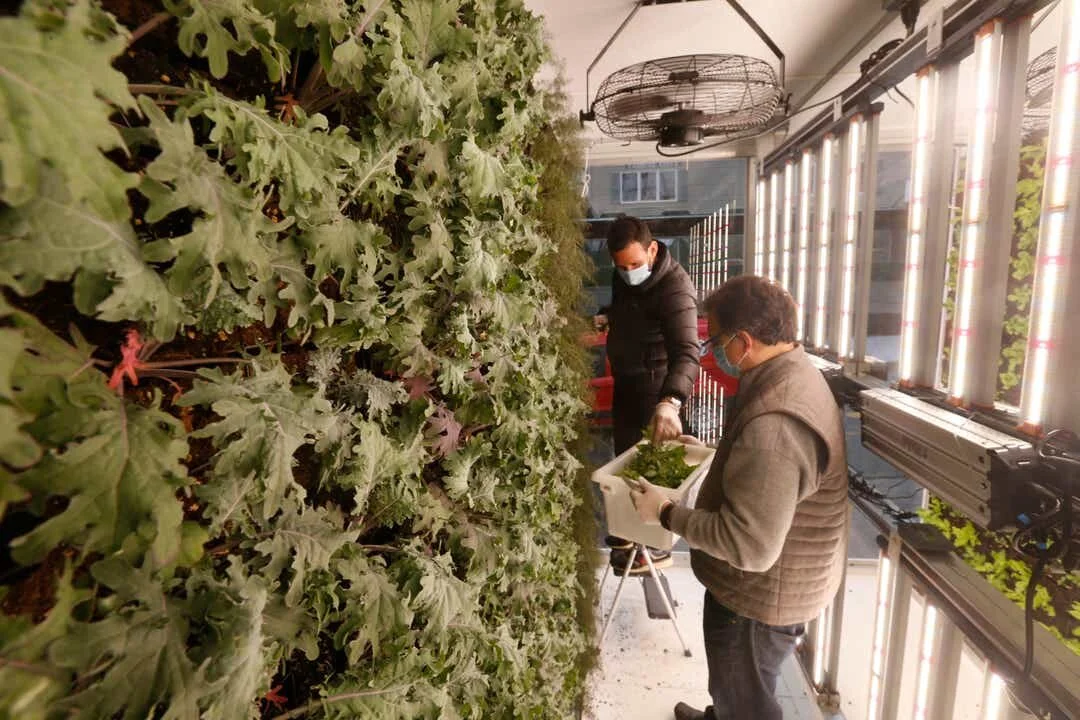
From left, Vertical Field U.S. launch manager Sam Miner and Chef John Lekic, owner of Farmers and Chefs restaurant, food trucks and catering harvest their first batch of herbs and vegetables on April 29, 2020.
Patrick Oehler/Poughkeepsie Journal
Bellefield hires head of agriculture, plans to reduce waste, optimize agricultural space
Dutchess restaurants fight to remain open as losses mount
Orchards in Hudson Valley optimistic for sweet 2020 crop
Fresh, green from the soil
Vertical Field, an international company based in Israel, produces soil-based farms that have their own light source. According to Sam Miner, Vertical Field U.S Launch Manager, the system is designed so its operators can pick and choose what plants go into the garden depending on the menu.
"Essentially within 30 days, someone can have planted plants and be preparing for harvest," Miner said. "The idea is that grocery stores, hotels, restaurants, chefs, nursing homes, and even communities can have these and can become self-sustainable."
In Poughkeepsie, John Lekic, chef and owner of Farmers and Chefs restaurant, recently had a Vertical Field system installed for his restaurant.
"Visually, it's amazing," said Lekic, who also does catering and has food trucks. "I'm really looking forward to the day we can really reopen and customers can experience it."
At Farmers and Chefs, Lekic has grown lettuce, baby kale, brown fennel, basil on the Vertical Field system — and that's just half of their container. Lekic said having the ability to take the vegetable from the farm directly to the customer is a very wholesome experience.
Vegetables grow in the indoor vertical garden at Farmers and Chefs restaurant in the City of Poughkeepsie on April 29, 2020. Patrick Oehler/Poughkeepsie Journal
"I've always been inspired by local farms, and for a chef to be able to grow from the seed then serve on a plate, it really completes the circle," Lekic said. "The technology is a great example of how we can and need to be sustainable."
And the vegetables aren't just used for salads and sides, but dessert too, as Lekic hopes to infuse the ingredients found in their Vertical Field to be used in their vegetable-based ice creams.
Evergreen, a kosher supermarket in Monsey, has installed its first Vertical Field system to ensure customers can see where the vegetables are coming from.
"The fact that customers are always worried about shelf life, they don't know how long it took for the produce to get from the farm to shelf and with this, there's a piece of mind that it's fresh," said Menachem Lubinsky, marketing consultant for Evergreen.
Vegetables grow in the indoor vertical garden at Farmers and Chefs restaurant in the City of Poughkeepsie on April 29, 2020. Patrick Oehler/Poughkeepsie Journal
"This is kind of a resolution, I see it as going beyond the supermarket. There is also a beneficial factor that the taste seems to be better, purer."
Lubinsky also believes the Vertical Field in their stores will give customers a learning experience as they can see how their produce is grown and watch the process.
No soil, just water, and air
Chris Ann Sepkowski of Mamaroneck swears by Tower Garden, a vertical indoor and outdoor aeroponic system that allows you to grow your own produce without the learning curve or time commitment of a traditional garden. There’s no soil; instead, it runs on air and water and takes up just 3 feet of space.
"Especially during this time of the pandemic, it's really a blessing to have it," Sepkowski said. "It provides food security since we can't get out to the store and everyone's a little scared to go — meanwhile here we are picking off of the tower garden. There's nothing like growing your own."
She grows everything on it: lettuce, strawberries, bok choy, spinach, kale, edible flowers, Swiss chard, a variety of herbs, celery, broccoli, Brussels sprouts, squash, eggplant, edamame, green beans, pretty much any veggie that isn't a root.
"People have put (the Tower Garden) on their terraces or even their rooftops in New York City because they don't have access to a backyard," Sepkowski said. "The home model is only 3 feet; it's as simple as removing an end table."
Sepkowski also says it's encouraged healthier eating among her children, who will snack on the variety of vegetables growing.
Elmer Oliveros, co-owner of Brothers Fish and Chips in Ossining, has been using the Tower Garden for a little over a year in the restaurant. He's grown edible flowers used for garnishing as well as lettuce served in the restaurant's salads.
"You know what you put in and where it's coming from. There's more connection, it's very personal. It's right here, I don't need to go anywhere," Oliveros said. "When people come in, there is this aroma from the Tower Garden, it's very pleasant and I really love that. Just the look of having greens right there, during winter especially, it's very rewarding."
Oliveros' word of advice for vertical garden growers is to not let anything overgrow, to keep trimming the plants, and to get rid of the plants that don't quite make it.
Heather Clark: hclark@lohud.com
Published 2:59 PM EDT May 2, 2020

COVID-19, Agriculture Re-Awakened
The COVID-19 Pandemic is a current reality that is forcing the global population to reassess affected industries, and plan a future that will be less dependent on the weak links in our current supply chain facing unprecedented disruptions
The COVID-19 Pandemic is a current reality that is forcing the global population to reassess affected industries, and plan a future that will be less dependent on the weak links in our current supply chain facing unprecedented disruptions. Travel restrictions imposed to limit the virus’s spread have resulted in migrant laborer shortages to harvest produce as mentioned in Essential, but Unprotected.
Leafy green vegetables will be the first affected due to their early spring harvest, while already facing consumer scrutiny over food safety concerns for being highly prone to foodborne diseases when grown outdoors. To make matters worse, these vegetables are a critical part of a nutritious diet needed to support the immune systems of people fighting off viral infections. With many resorting to nonperishable foods and little exercise, there will likely be a spike in obesity which statistically makes the virus even deadlier.

Social distancing and self quarantining have become daily routines for nearly everyone in the US. The concept of decentralized agricultural production, or more commonly known as indoor gardening, enables people to grow safe and nutritious produce within their homes to minimize exposure from crowded grocery stores while shopping for highly perishable goods that require frequent visits.
Gardening has the benefit of educating children who are out of school about agriculture and technology. It also improves the psychological well being of the individuals by being around aesthetically pleasing plants as well as improving indoor air quality according to the EPA (Environmental Protection Agency). Over the past few years, we’ve seen e-commerce aggressively challenge brick and mortar stores across industries. Despite this market trend, the food and grocery industries still heavily rely on in-store experiences, led by big-box chains such as Walmart, Target, and Costco.
This is attributed to the high perishability of produce, two-thirds of which are grown in California which requires an extensive supply chain and energy-intensive refrigeration sections to constantly account for losses. However, in recent times, the value proposition of grocery delivery has seen a meteoric rise in response to consumer viral transmission fears. This is true for one such company, Heliponix, which has built their own direct-to-consumer supply chain for growing food that has been unphased by current events.
Heliponix© provides consumers with the GroPod© Smart Garden Appliance with a Seed Pod™ subscription that could be described as "Keurig for food." Their automated, hydroponic hardware combined with smart, cloud software allows anyone to become a farmer regardless of their climate, space, or existing knowledge of agriculture. Consumers enjoy Pure Produce™ that is better for their health, and the environment by reducing water consumption and food waste through local production while maintaining social distancing. Keeping the plants alive until the moment of consumption will maximize the nutritional content and taste for the user.
Co-Founder and CEO, Scott Massey stated, “We have experienced an explosion of inquiries in light of the pandemic from consumers who want control of their own produce supply. Consumers want food that tastes better, while being healthier for them from a trusted source. The GroPod makes them self-sufficient in production from our convenient seed pod subscription, and automated appliance that doesn’t require agricultural knowledge. Not only is it environmentally sustainable by avoiding the harmful pollutants of industrial agriculture, but it is also financially sustainable for the consumer who will generate a profit from the premium quality produce when all hardware, subscription, and even negligible water and energy costs are accounted for.”
Massey then went on to say, “Our company had a unique founding while my Co-Founder, Ivan Ball and I were both undergraduate students at Purdue University. We met while working as coworkers and worked as research engineers on a NASA funded project to design targeted LEDs to grow food on the ISS (International Space Station) under Dr. Cary Mitchell. We became familiar with many leading experts in this growing industry destined for mass adoption and were very fortunate to receive our first pre-seed and seed investments from Purdue Ventures Ag-celerator fund which focuses on innovations within the AgBioScience realm. I view the adoption of the distributed farming model as inevitable as global food output needs to increase by 70% as we exceed 9 billion people in 2050 according to the FAO (Food and Agriculture Organization of the United Nations), but we’re not making anymore farmland. Vertical, indoor agriculture is the most viable solution, however, energy, labor, and facility infrastructure are the most expensive costs resulting in low margins. This is why we chose a direct-to-consumer model; to decentralize the facility into consumer appliances, developed a more energy-efficient design, and are not dependent on labor to plant/harvest/process the crops since they are grown directly at the point of consumption, the household.”
Ivan Ball explains, “We are now deep into the fourth industrial revolution with blockchain, artificial intelligence (AI), cloud computing, and IoT connecting everything in our homes to our phones. Development of these systems will provide the architecture we need to begin connecting biological organisms to our digital world.” Computer vision and machine learning are the tools needed to understand a plant's response to a given environment and enable our automated device to adapt the environment to a plant’s preference in real-time. Additionally, a user will be able to input their preferred taste preference of a plant, for example, a “sweeter basil”, so that their GroPod can cultivate a garden of plants with a personalized taste. Already we are seeing indoor vertical farming move closer to people by growing it directly in the grocery stores. This trend from dirt to fork is compared to the ice industry of highly perishable goods being decentralized and produced within the home. It is our goal to decentralize agriculture to eliminate food waste, save water, reduce energy consumption, and become the world’s largest farming company without owning a single acre of land.
Heliponix, LLC recently won the Leyton International Startup Sustainability Challenge which landed them a booth within Eureka Park at CES (Consumer Electronics Show) 2020 in Las Vegas. They received a phenomenal amount of press from the likes of The Associated Press among others.
Source: Minnesota Historical Society/Getty Images. A poster from the Minneapolis Defense Council urged planting.
However novel the GroPod Smart Garden Appliance’s innovative design improves efficiencies, the concept of consumers growing their own food has been accomplished before. A similar mass, consumer gardening experiment was successfully orchestrated in 1943 when war-time Victory Gardens produced close to 40 percent of the country’s fresh vegetables, from about 20 million gardens in homes, schools, and community gardens. Our dependence on grocery stores will be greatly reduced by consuming produce directly from the source of a personal farm. Perhaps people may re-adopt the agrarian lifestyles of our ancestors through these automated farming appliances at a consumer level in the new gig economy.

US: OHIO - Amid The Pandemic, A Greater Cincinnati Tomato and Produce Farm Adjusts And Flourishes – Indoors
"With COVID we've realized how valuable supply chains are," said Mike Zelkind, CEO, and co-founder of 80 Acres Farms in Hamilton
Alexander Coolidge Cincinnati Enquirer
Published: May 3, 2020
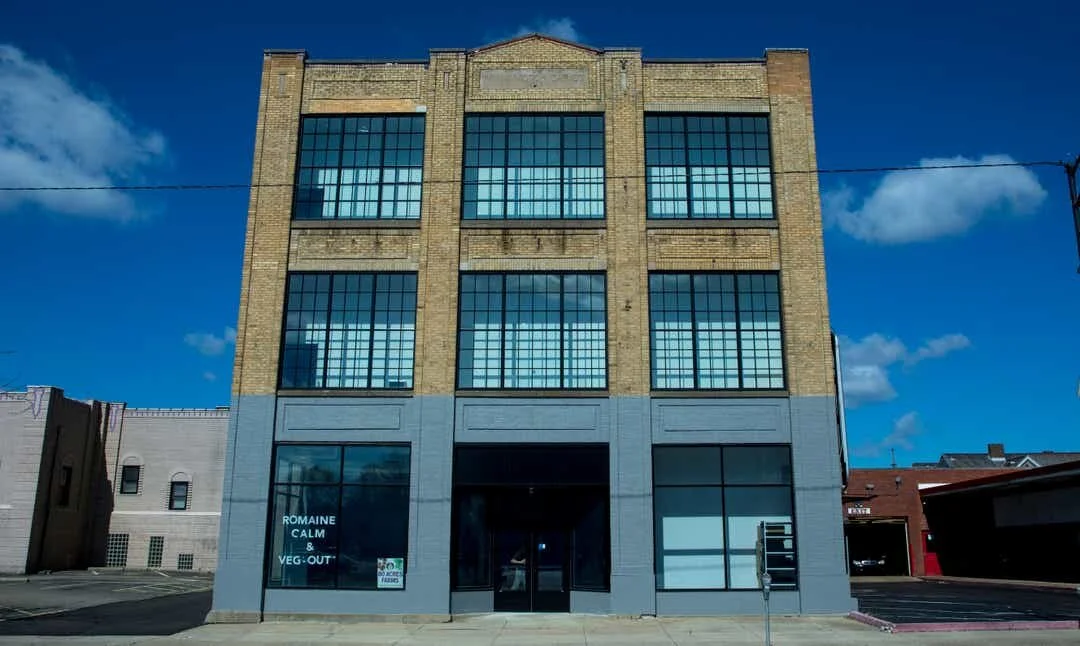
A view of 80 Acres Farms Vine farm facility on Thursday, April 9, 2020 at the in Hamilton. The building is known for being the Miami Motor Car Company building and previously automotive parts were produced in the building. Albert Cesare / The Enquirer
Eat your vegetables
You know your mom told you, but it's gotten harder in recent weeks as supermarkets have scrambled to keep shelves stocked amid the new coronavirus outbreak.
"With COVID we've realized how valuable supply chains are," said Mike Zelkind, CEO, and co-founder of 80 Acres Farms in Hamilton.
Zelkind's business has been forced to pivot with the crisis as well, though with different results: sales have doubled.
A sign outside 80 Acres Farm asking people to "Romaine Calm & Veg Out" in Hamilton on Thursday, April 9, 2020. Albert Cesare / The Enquirer
While 80 Acres previously sold half its produce to restaurants like Jeff Ruby's and Salazar Cincinnati, supermarkets have clamored for its Ohio-grown produce amid disruption to normal supply chains even as restaurant demand dwindled amid Ohio's suspension of dine-in service.
While not as hard-hit as the toilet paper aisle at the grocery store, high-demand items like tomatoes have sometimes been gone or heavily picked over in the produce section.
The gaps on shelves had laid bare problems in the nation's food supply chain: while food is still making it to stores, some crops have been wasted because some farms only sold to restaurant suppliers. Sickness and harsh immigration policy amid the pandemic have also complicated harvesting crops.
A farm tech checks Cheramy Tomatoes while she packages them on Thursday, April 9, 2020 at 80 Acres Farm in Hamilton. Albert Cesare / The Enquirer
Kroger began selling 80 Acres products at some of their Cincinnati stores, including its Downtown location, last fall.
Other grocers carrying their products include: Clifton Market, Jungle Jim's, Country Fresh Market & Wine Depot in Anderson Township and Giant Eagles across Ohio.
Zelkind hopes some of the shift remains permanent. His company is a vertical farmer or hydroponic grower that produces crops without soil. One of its local farms is inside an old 30,000-square-foot auto-parts factory (once called Miami Motors) in Hamilton.
80 Acres grows tomatoes, baby cucumbers, herbs, lettuce and other leafy greens. Because they farm indoors, they don't worry about bugs and don't use pesticides. Because they don't need sunlight (they use LED lighting) or favorable weather, they grow year-round.
And because it's local, it's fresh.
Zelkind and company believe vertical farming is a model for the future because it's more efficient: they use 100% renewable energy powered by the Great Miami River and 97% less water than a comparable outdoor farm. And because a lot of the heavy work is automated, it's a good fit for old industrial buildings.
A veteran of the food and packaged goods and private equity, Zelkind, 51, was the president of Sager Creek Vegetable Co., a Del Monte Foods subsidiary, before founding 80 Acres five years ago with Tisha Livingston, another food and packaged goods vet.
Mike Zelking of 80 Acres Farms stands in front of hydroponically grown Cheramy tomatoes, a variety of cherry tomatoes, on Thursday, April 9, 2020 at the Vine farm facility in Hamilton. Albert Cesare / The Enquirer
The company is in the middle of building another $30 million facility in Hamilton that will produce lettuce, basil and other leafy greens. The indoor farm is expected to begin production in the fall.
The company also operates indoor farms in Arkansas, North Carolina – and New York City. The company is growing cherry tomatoes right outside the Guggenheim Museum as part of an exhibit called "Countryside, The Future."
Guy Tyree, A farm tech, picks ripe Cheramy tomatoes at 80 Acres Farm in Hamilton on Thursday, April 9, 2020. Albert Cesare / The Enquirer
Demand for fresh vegetables has been so strong amid the epidemic, 80 Acres in the last month began selling directly to consumers from a site in Hamilton and one facility in the middle of industrial Spring Grove Village in Cincinnati. Customers can make an order off their website; pickups are on Tuesdays and Fridays from 4 to 6 p.m.
"We were asked to do curbside. We didn't know how it was going to work, but it has been phenomenal," Zelkind said.
Amid the coronavirus crisis, 80 Acres will also take online donation orders for local hospital and other workers on the front-line of the epidemic.
Frill Lettuce and Butter Lettuces are grown hydroponically inside a 80 Acres Farm facility in Hamilton on Thursday, April 9, 2020. After being planted the lettuce is harvested by a robot and a harvester, limiting its exposure to human contact. Albert Cesare / The Enquirer
Guy Tyree, A farm tech, tosses an unripe Cheramy tomato into a bin for unripe tomatoes while helping package them at 80 Acres Farm in Hamilton on Thursday, April 9, 2020. The farm picks their tomatoes daily as they become ripe on the vine. Albert Cesare / The Enquirer
Cheramy Tomatoes wait to be checked and packaged on Thursday, April 9, 2020 at 80 Acres Farm in Hamilton. Albert Cesare / The Enquirer
Butter head lettuce grows on Thursday, April 9, 2020 at an 80 Acres Farms facility in Hamilton.
Albert Cesare / The Enquirer
For the latest on Cincinnati business, P&G, Kroger and Fifth Third Bank, follow @alexcoolidge on Twitter.
Published 8:32 PM EDT May 3, 2020

AeroFarms Recognized by Fast Company For Third Consecutive Year
"Our mission is to grow the best plants possible for the betterment of humanity, and we are honored to be recognized among a group of trailblazing companies working to change the world
Inside AeroFarms
Photo courtesy of AeroFarms
The vertical farm operation was recognized by the magazine as a 'World Changing Idea.
May 2, 2020
Per a press release, AeroFarms has been recognized in Fast Company's World Changing Ideas package for the third year in a row. The company placed in four categories: General Excellence, AI & Data, food and space, and places and cities. AeroFarms was a finalist in both the General Excellence and AI & Data and an honorable mention in the food and spaces and places and cities categories.
AeroFarms' announcement read as follows:
"Our mission is to grow the best plants possible for the betterment of humanity, and we are honored to be recognized among a group of trailblazing companies working to change the world. At AeroFarms, we have developed our own patented indoor vertical farming technology to completely transform the way fresh, safe, healthy, and tasty food is grown at scale. We are not just a farm–we are a group of full-stack, world-class experts where horticulture intersects with engineering, food safety, data science, and nutrition, giving us the unique capability to understand plant biology in an unprecedented way.
In addition to being recognized for our innovative use of AI & Data to grow our plants, we are proud to be recognized for our commitment to revitalizing Spaces, Places & Cities, and bringing green jobs and fresh food to cities. Each of our farms has a unique story breathing new life into abandoned buildings. One of our commercial farms and corporate HQ is built on the site of a former abandoned steel mill in an industrial section of Newark, NJ.
And it doesn’t stop there — we are working with top tastemakers and chefs like David Chang, and leading researchers at Cornell and Rutgers and the Foundation for Food and Agriculture Research on cutting-edge science to create the next generation of Food that has greatest nutrient-density and flavor around…and the results have been absolutely delicious."