


Welcome to iGrow News, Your Source for the World of Indoor Vertical Farming

FINLAND: India Day 2019 - Intia-päivä 2019
Intia-päivä or India Day is a mega event and a unique celebration of Indian culture, yoga, ayurveda, cuisine, film, tourism and the rich heritage of India in the heart of Helsinki
India Day 2019 - Intia-päivä 2019
Public · Hosted by India Day Finland
Sunday, August 18, 2019 at 10:00 AM – 6:00 PM UTC+03
Kaisaniemen puisto Kaisaniemi, 00100 Helsinki
Details
Join us in celebrating India Day on Sunday 18th of August 2019 10-18 on Kaisaniemi Field!
(alempana suomenkielinen tapahtumakuvaus)
Intia-päivä or India Day is a mega event and a unique celebration of Indian culture, yoga, ayurveda, cuisine, film, tourism and the rich heritage of India in the heart of Helsinki. Organized by Suomi Intia Seura ry, Embassy of India in Helsinki and Indian regional associations in Finland, the event brings together the Finnish and Indian communities living in Finland to celebrate the spirit of living and working together.
Save the date and invite your friends!
Programme will be updated.
FREE EVENT
FAMILY FRIENDLY
ACCESSIBLE
www.intiapaiva.fi
#indiaday2019 #indiaday #joinmeatindiaday
SuomeksI:
Tervetuloa juhlimaan kanssamme Intia-päivää sunnuntaina 18.8.2019 klo 10-18 Kaisaniemen kentälle!
Intia-päivä eli India Day on megatapahtuma ja ainutlaatuinen juhla intialaiselle kulttuurille, ruualle, joogalle, ayurvedalle, elokuville, turismille ja kulttuuriperinnölle Helsingin sydämessä. Tapahtumaa järjestävät Suomi-Intia seura ry, Intian suurlähetystö Helsingissä ja intialaiset alueelliset järjestöt Suomessa. Tapahtuma tuo yhteen suomalaiset ja intialaiset yhteisöt juhlistamaan yhdessäolon riemua!
Tule mukaan ja kutsu ystäväsi!
Ohjelma päivittyy myöhemmin, mutta ota päivä talteen!
ILMAINEN TAPAHTUMA
KOKO PERHEEN TAPAHTUMA
ESTEETÖN
#intiapaiva2019 #intiapaiva #joinmeatindiaday
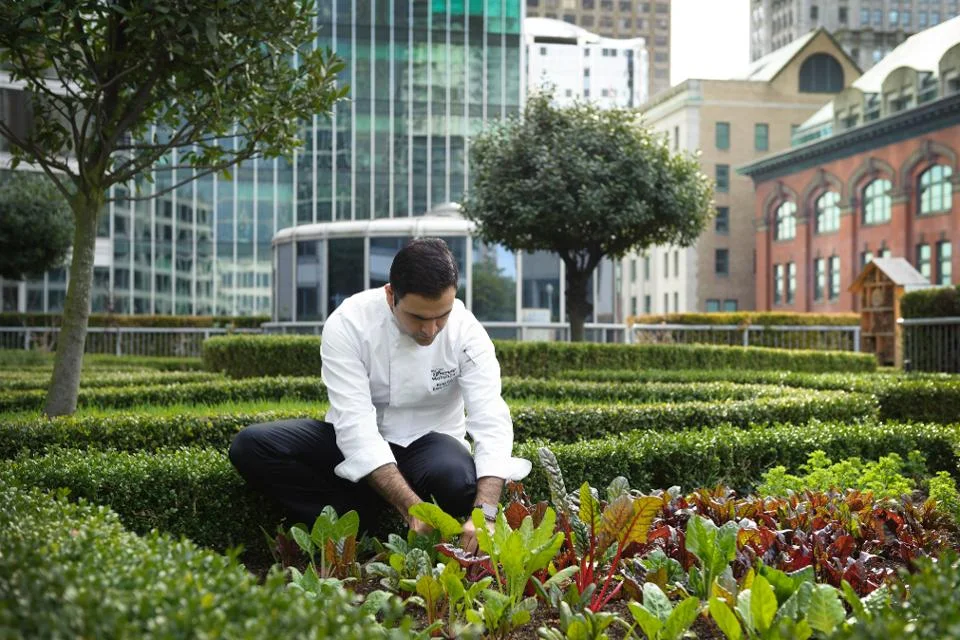
Reap What They Sow At These Amazing Vancouver Hotel Rooftop Gardens
Farm to table dining helps to ensure that food is fresh and local. But what could be more local than sourcing your vegetables, salad leaves, fruits and herbs from right above your head?
Fiona Tapp Contributor
Farm to table dining helps to ensure that food is fresh and local. But what could be more local than sourcing your vegetables, salad leaves, fruits and herbs from right above your head?
These hotels have installed innovative gardens on their rooftop spaces and balconies which, when open to guests, provide a peaceful place to seek solace and relaxation.
In some cases they also provide a source of delicious and uber fresh produce to liven up meals and beverages right in the hotel restaurant.
These are the best rooftop gardens and green spaces in Vancouver and nearby.
Fairmont Waterfront, Vancouver
Rooftop Garden | FAIRMONT WATERFRONT VANCOUVER
The rooftop garden at the Fairmont Waterfront hotel in Vancouver is one of the best examples of this trend and is incredibly well utilized by the culinary team.
Located on the 3rd floor, the 2,100 square foot irrigated garden receives full sun and was one of the city's first green roofs. There are 11 beds growing over 60 varieties of herbs. As well as a selection of vegetables, fruits and edible blossoms, but the real showstopping element of this garden is the presence of bees.
Designated as a Certified Wildlife Friendly Habitat by the Canadian Wildlife Federation, the garden is home to a staggering 250,000 honey bees who produce over 200 pounds of honey annually. There's even a resident bee butler to cater to the hives every need.
Check out the observation hive which allows guests to see what those busy bees are up to!
The on-site ARC restaurant uses rosemary, lavender, basil, mint, bay leaves and sage from the garden as well as garlic, apples, rainbow chard, kale, leeks, tomatoes, lettuces, carrots, peppers, green onion, strawberries, and shallots in their delicious and innovative dishes.
Botanist, Fairmont Pacific Rim, Vancouver
Fairmont Pacific Rim | BOTANIST
At the Fairmont Pacific Rim, greenery, plants and flowers are used in a different way. Although not included in the menu at the restaurant, Botanist for culinary purposes, the living wall is used as decor and as a beautiful design aesthetic.
Enjoy the ambiance as you order from the cocktail lab where incredibly unique drinks are made including the Candy Cap Magic, which features mushroom rye, vermouth, spiced maple, and comes served on a bed of forest moss!
The Douglas, An Autograph Collection Hotel , Vancouver
The DOUGLAS | JEREMY SEGAL PHOTOGRAPHY
The Douglas, an autograph collection hotel and part of the huge Parq Vancouver complex features an enormous 30,000 square foot outdoor park on the sixth floor of the property. More than 200 native pines and 15,000 local plants grow here.
There's also a water feature and a bike path in this urban park, which feels miles away from the city below.
The eco-conscious Douglas hotel also promotes a "conserve together" program where a Douglas Fir tree is planted for every guest who opts out of the daily housekeeping service for two consecutive days.
Nita Lake Lodge, Whistler
Nita Lake Lodge Rooftop Garden | FIONA TAPP
Although not located in Vancouver, the sumptuous Nita Lake Lodge is a nearby retreat to get away from the hubbub of busy city life.
Located in charming Whistler village, just an hour and 40 minutes from town. Whistler is home to two mountains, that can be explored all year long.
The Nita Lake Lodge has a pretty rooftop garden that is put to very good use by the onsite restaurants.
Expect to find herbs, fruits and vegetables from the garden used across the property's three restaurants; Aura, Cure Lounge and Patio and Fix cafe. Try the rhubarb Collins, it's delicious!
Lead Photo: Rooftop Garden | . FAIRMONT WATERFRONT VANCOUVER
Superior Fresh Expanding Salmon Farm In Wisconsin, Looking At Additional Locations
U.S.A.-based aquaponics salmon and steelhead farmer Superior Fresh, which opened in 2015, is undergoing an expansion, with plans to boost its salmon production volume nearly tenfold over the next 24 months
By Erich Luening
August 5, 2019
Hixton, Wisconsin, U.S.A.-based aquaponics salmon and steelhead farmer Superior Fresh, which opened in 2015, is undergoing an expansion, with plans to boost its salmon production volume nearly tenfold over the next 24 months.
The project has an estimated USD 10 million (EUR 8.9 million) price-tag, which includes space to house fish tanks totaling 100,000 gallons in capacity, according to the Wisconsin State Journal.
“Over the past 12 months, we’ve raised 160,000 pounds of chemical-free Atlantic salmon rich in omega-3s,” the company stated in a LinkedIn post earlier this month. “Within 24 months, we’re set to bump that total up to 1.5 MILLION pounds per year!”
Superior Fresh is an aquaponics facility specializing in growing greens, Atlantic salmon, and steelhead. The facility is situated on a 720-acre native restoration property nestled in the Coulee region of the Midwestern state. It is owned by Todd Wanek, the CEO of Ashley Furniture, who has already invested an estimated USD 17 million (EUR 15.2 million) in the facility, according to the State Journal.
“Our harvests this year have continued without a hitch for both Atlantic salmon and steelhead, as we’ve consistently placed fish in the market every week at a mean size of about four [kilograms] and three [kilograms], respectively,” Superior Fresh Chief Science Officer Steven Summerfelt told SeafoodSource.
The company is currently producing approximately 200,000 pounds of Atlantic salmon and steelhead annually, Summerfelt said, noting that the expansion won’t mean additional staff hires.
“We have an excellent fish house team, which we have been slowly expanding and continuously train. This existing team can meet our fish house management requirements during our expansion to approximately 1.5 million pounds per year. We currently employ four to five in the fish house and expect to add another two technicians to help with the upcoming increase in fish harvest and processing requirements,” he said. “The majority of fish house staff time is spent on completing routine SOP’s plus weekly harvesting and processing tasks.”
Aquaponics is systems are a combination of fish and plant production using aquaculture and hydroponics systems, aquaponics is moving from the realm of experimental to commercial, according to the United States Department of Agriculture.
The growing popularity of aquaponics has prompted some analyses of the economics of these systems. The few studies developed to date show good potential for aquaponically produced vegetables to be profitable, with the fish portion possibly breaking even or incurring a net loss, according to a 2015 Southern Region Aquaculture Center (SRAC).
“Premium prices in high-end markets will be necessary for aquaponically produced vegetables and fish to be profitable,” University of Florida’s Carole Engle wrote in the SRAC paper. “Additional costs and risks associated with these complex systems must be analyzed carefully before investing in aquaponics.”
Superior Fresh lettuce is sold at Kwik Trip gas stations across Wisconsin. The farm’s living butterhead lettuce and baby spring mix is also available in more than 600 stores throughout Wisconsin and Minnesota, and the company’s washed leaf lettuce mixes are available at more than 30 stores throughout Wisconsin.
“In addition, our nearly six acres of greenhouses can produce up to two million pounds of leafy greens annually, depending on our production mix, e.g., baby greens versus head lettuce,” Summerfelt said. “Greenhouse production doubled in 2019 and – based on current construction activities – will more than double again in 2020. Thus, we continue to hire exceptional staff to expand our greenhouse team.”
In July 2018, De Pere, Wisconsin-based Festival Foods, which operates 28 stores, began selling Superior Fresh’s farmed salmon in all its stores in time for the Independence Day holiday (4 July). Superior is able to deliver salmon to stores within 48 hours post-harvest, according to the company’s website. Monterey Bay Aquarium’s Seafood Watch program rates Superior Fresh’s salmon a “Best Choice,” according to the supplier
“We are excited to offer such a fresh product to people right here in the Midwest,” Superior Fresh said on its Facebook page in 2018.
Summerfelt told the Wisconsin State Journal that Superior Fresh also begun initial plans to expand into even larger facilities on the U.S. East and West Coasts “that could each be more than twice the size of the operation in Wisconsin and bring locally grown salmon and greens within reach of millions more people.”
“We have great food, a great team and a production facility that can be (replicated) across the country,” Summerfelt told the State Journal. “We’ve developed technology to work within the regulatory framework. We have zero surface water discharge and that’s a very powerful statement.”
Photo courtesy of Superior Fresh

New Life CA Selects AEssenseGrows’ Aeroponic System For Its Socially Conscious Cannabis Business
New Life is a vertically integrated, state-licensed cultivation, distribution and non-store front company based in Oakland, California
The East Bay Cannabis Producer Selected Complete AEssenseGrows Automated System for Precision Cruise Control of Indoor Sterile Grow Environments
SUNNYVALE, Calif., Aug. 12, 2019 -- AEssenseGrows, an AgTech company specializing in precision automated aeroponic platforms for consistent high-yield plant production, announced today that New Life CA, a socially conscious California cannabis company, has purchased the AEssenseGrows AEtrium system for its operations. New Life determined the AEssenseGrows equipment could best deliver the precision and controls needed to grow superior cannabis at its East Bay facility.
“We wanted a cultivation system that was easy to use and provided a great degree of control over and visibility into the grow environment,” said Carlton Williams, founder of New Life. “The cutting-edge AEssenseGrows system meets those requirements with the automation and precision delivered with its revolutionary Guardian Grow Manager software.”
Williams added: “In addition to our own cultivation, New Life is dedicated to fostering opportunities for those in our community considering entering the cannabis industry, and we’ve worked with non-profits to help individuals establish equity requirements and build business plans. I always encourage these budding entrepreneurs to consider an indoor platform like the AEssenseGrows system.”
New Life is a vertically integrated, state-licensed cultivation, distribution and non-store front company based in Oakland, Calif.
The AEssenseGrows AEtrium system delivers cruise-control automation to simplify aeroponics and amplify its inherent benefits. The company's Guardian Grow Manager central management software monitors grow conditions 24/7 and, if needed, automatically adjusts key variables such as lighting, nutrients, and environment to maintain optimal conditions for the grow recipe.
“The AEtrium System can help cultivators achieve breakthrough aeroponic yields and lowest cost of production at the same time,” said Phil Gibson, AEssenseGrows vice president of Marketing. “Whether for large corporation’s or smaller, community-based growers like New Life, we are committed to helping our customers gain a competitive advantage through the integration of plant science and advanced technology.”
About AEssenseGrows
AEssenseGrows (pronounced "essence grows"), founded in 2014, is a precision AgTech company based in Sunnyvale, CA. AEssenseGrows provides accelerated plant growth SmartFarm platforms and software automation delivering pure, zero pesticide, year-round, enriched growth to fresh produce and medicinal plant producers globally. With AEssenseGrows, you can precisely control your production operations at your fingertips from anywhere in the world.

A Flower Grower Recently Contacted Green Living Company Inc. Regarding Cooling Rates of the Flower Before Fresh Dispensed or Secondary Processed
A small carbon footprint with a ‘ton’ of daily freezing output! Canna-Freeze is being introduced at the CannaGrow Expo 8/17 and 8/18
One Pallet Cannabis Freezer v 4-3 | © FR Weeth 2019
Fresh Frozen Cannabis
One Pallet Vacuum Cooler/Freezer System Canna-Freeze
will Vacuum Freeze; 750 LB of Flower Bud
from Ambient to -15ºF <45 minutes.
A small carbon footprint with a ‘ton’ of daily freezing output!
Canna-Freeze is being introduced at the CannaGrow Expo 8/17 and 8/18.
Contact Kimberly: glckimberly@gmail.com
My focus is designing and manufacturing cold chain material handling systems for chilling and freezing. I have partners with off the shelf solutions or can design to fit your needs.
Our goal;
Energy and Labor Reduction with
An Increase in Productivity.
Gregory Smith
gregory.smith@heinen.biz
Cell (863) 581-7279
______________________________________________________________________________________________
Capacity: 750 lb field product
Target Performance: Ambient temp product to -15* F < 45 minutes
Room ID: Materials:
Door: Vacuum:
Temperature: Refrigeration: Control:
Minimum 54” wide x minimum 56” deep x 102” tall
Stainless Steel, Food Grade Interior
Mechanical Structure all sandblasted and epoxy painted mild steel Single Hinged Door with Stainless Steel Interior
211 ACFM, 12Hp, 15 amps 460v/3p/60h
0.3 micron 99.97% efficiency oil mist and smoke exhaust filter Automated dynamic temperature/pressure control
48,000 BTUH @ 95*F/25*F, 13.3 amps 460v/3p/60h
PLC, HMI, recipe functions, valve control, and freeze protect
CIT Gaps Funds Invests In Charlottesville, Va.-Based Babylon Micro-Farms
The provider of an on-demand indoor farming service said it will use the investment to expand operations with new hires in product, sale and marketing.
By Michelai Graham / STAFF
A Babylon Micro-Farms' location at Boar's Head Resort in Charlottesville, Va. (Photo via @BabylonMF on Twitter)
The Center for Innovative Technology (CIT) announced that CIT GAP Funds made an investment in Charlottesville, Va.-based Babylon Micro-Farms, provider of an on-demand indoor farming service.
Center for Innovative Technology - VA@CITorg
Very pleased to announce a new @CITGAPFunds investment in Babylon Micro-Farms! @BabylonMF provider of on-demand indoor farming services https://bit.ly/2KOe0Ky #UrbanFarming #MicroFarms #Cville #innovation
"Tech to inspire a new generation of urban farmers" #sustainability #food
See Center for Innovative Technology - VA's other Tweets
Founded in 2017, Babylon provides small growers and businesses with indoor agriculture modules through on-demand farming services using their patented IoT tech. The financial terms of the investment were not disclosed but Babylon said in a press release that it plans to use this investment from CIT GAP Funds to expand their operations with new hires in product, sales and marketing.
Alexander Olesen, co-founder and CEO of Babylon Micro-Farms, said the startup’s idea was born in a University of Virginia (UVA) classroom when he and co-founder Graham Smith were asked by their professor to develop a high impact, low cost product that could help refugees.
“I quickly discovered and became interested in hydroponics, a way to grow plants without soil, use less water, and grow crops faster,” Olesen said in a statement. “Our mission is to develop technology that will inspire a new generation of urban farmers to grow their own fresh, affordable, sustainable produce at the push of a button. We are grateful for the support of CIT GAP funds at this stage of our development.”
The startup provides 24/7 farming support for the patented IoT system that remotely controls the customizable farming ecosystems. Babylon provides farmers with a guide to take them through the indoor farming process. Some of the startup’s customers include a UVA dining hall, The Boar’s Head’s Resort and Corner Juice.
“Being able to grow any kind of produce year round within our communities, such as for local food service industries, education and assisted living, or community farms to name a few, is a game changer for the state of sustainable urban agriculture. CIT is very confident in Babylon’s future success, and we look forward to being part of their journey,” Thomas Weithman, managing director of CIT GAP Funds and president and CEO of MACH37, said in a press release.
Companies: Center for Innovative Technology
Projects: CIT Gap Funds

The Farms of The Future Were Built For Outer Space. Will They Work On Earth?
It will be years until NASA is ready for a journey to the red planet, but if Earth continues to suffer from climate change, Mars could come to us.
It will be years until NASA is ready for a journey to the red planet, but if Earth continues to suffer from climate change, Mars could come to us.
August 13, 2019
Visitors look at vegetables growing under artificial light on a vertical farm, in the IKEA: Gardening Will Save the World garden, in London on May 20th, 2019. (Photo: Daniel Leal-Olivas/AFP/Getty Images)
On Mars, we'll all farm underground. Our crops will grow in a greenhouse, where large, parabolic mirrors focus the sun's weak rays and transmit them through fiber optic cables. We'll harvest vegetables to eat—but also the purified water that evaporates from their leaves. We'll all be vegan, because raising animals for food will be too expensive. And, most importantly, the plants will give us oxygen.
"That's the starting point to a whole civilization right there," says Utah State University researcher Bruce Bugbee. This is Bugbee's vision, one he's been dreaming of and testing and revising for years as a plant engineer with NASA.
Astronauts going to Mars can eat all the freeze-dried food they're able to ship, but if humans are going to survive on the planet they'll need to plants to produce oxygen. Not just any photosynthesizer will do: Mars is a difficult environment, with many challenges for farmers. Crops will need to be able to thrive in a small area, retain their nutrient content, and still taste good. Structures where they grow on the surface will need to withstand basketball-sized meteorites. The technology used to grow the plants will take massive amounts of energy. Mars also presents the ultimate recycling challenge, since astronauts can't pack all the water and nutrients they need on a two-and-a-half-year space flight.
Bugbee and his colleagues have been working on all these problems for decades, in a sometimes fantastical bid to support life on Mars (and, in the meantime, on space shuttles). Decades ago, NASA researchers ruled out some of the easiest plants to grow indoors, like algae: not enough sustenance, Bugbee says. Very tall crops like corn and sugarcane were also nixed because they wouldn't fit easily into the plant habitats.
What the astronauts really wanted was something green. "They say that having the texture and flavor and color and aromas of fresh foods apparently—and I believe it—really does add to the experience of eating," says NASA plant physiologist Raymond Wheeler.
Scientists started looking at traditional field crops like lettuce, tomatoes, and broccoli. Right now, astronauts are growing mixed greens 250 miles above Earth on the International Space Station, using two small, sealed greenhouse units called Veggie. NASA researchers have planned and adjusted and measured for everything—including which types of lettuce tastes best in space. Astronauts' clogged sinuses already make it so they "can't taste much of anything," according to Canadian astronaut Chris Hadfield, but the researchers are also curious to see whether the space environment affects a plant's flavor compounds and nutrient levels. Panels of specialists at NASA's Johnson Space Center in Houston typically conduct formal taste tests, but sometimes the researchers sample a leaf or two themselves.
What Bugbee and his team didn't expect is that the technology they created for this grandiose, futuristic mission would become somewhat eclipsed by those using it to farm on more familiar terrain.
In 2017, NASA commissioned a space farming project to figure out how to grow food on Mars, but they were also hoping to make some discoveries that could improve crop yields overall. The problems that space farmers of the future will face are similar to those already plaguing earthbound agriculture as climate change grows worse, including a dwindling water supply and poor soil. Now, researchers in Utah and three California universities—NASA's partners with the Center for the Utilization of Biological Engineering in Space—are working on projects that can sustain life not just on Mars, but on Earth.
"I think the reason NASA funds us is a powerful human fascination with being able to go inside a closed system and grow your own food," Bugbee says. "What if the atmosphere went bad and we had to build a big dome ... and go inside and live in it?"
In 1988, Wheeler built the first working vertical farm—growing plants on shelves, typically in a warehouse or storage container—at the agency's Kennedy Space Center. Wheeler's farm was 25 feet high and equipped with a hydroponic system for growing plants in water and high-pressure sodium lamps, the type commonly used for street lighting. All together, it was 20 square meters of growing space—almost 90,000 times less than the size of the average outdoor United States farm. According to Wheeler's calculations, it would take 50 square meters of plants to provide enough food and oxygen—and remove enough carbon dioxide—for one human in space. (Astronauts won't be using sodium lamps, though: A few years after Wheeler's innovation, a different group of NASA-funded researchers patented another significant piece of technology to indoor farmers: LEDs, which require much less electricity than sodium lights and are now used to power most greenhouses.)
Wheeler was focused on optimizing the area inside a chamber aboard a NASA space shuttle—and up seemed like the best way to go. "One of the things you have to think about in space is volume efficiency," he says. "You're vertically and dimensionally constrained." The team had to pick shorter crops: wheat, soybeans, potatoes, lettuce, and tomatoes.
In space, resources are limited: NASA scientists have to extract and reuse the nutrients from excess plant material and human waste; they collect water from the condensation that collects in the closed chambers. Here on Earth, water is also growing increasingly precious—climate change will make droughts more frequent and severe, devastating crop yields and making some staple crops like corn and soybeans obsolete. Every day, Earth looks a little more desolate, a little more like Mars.
When Wheeler started, the term "vertical farming" didn't exist yet. Today it's a $10 billion industry attracting interest from Silicon Valley and start-ups all over the world. Its acolytes believe the technology will one day completely replace conventional field agriculture, allowing businesses to grow crops year-round and indoors, insulated from the next drought or flood and the effects of climate change. "People imagine that we'll grow everything indoors, in skyscrapers in the middle of Manhattan," Bugbee says. "It's a wildly popular idea."
Sonio Lo, the chief executive officer of the biggest vertical farming company in the world, Crop One Holdings, says she believes vertical farming can "liberate agriculture from climate change and geography."
Crop One broke ground on the world's largest vertical farm last November in Dubai: a five-story, 130,000-square-feet warehouse, capable of producing three tons of leafy greens a day. The company is also growing chard, arugula, and other greens in large, sealed rooms—year-round. "I made my whole management team stand in the supermarket and give out samples of what we were growing in the middle of the Boston winter," Lo says.
Soon people across the U.S. can try it too. Crop One is building new farms in the northeast, southwest, and California, where it will grow food to sell through its FreshBox Farms brand.
While researchers have been quick to condemn vertical farming's promises as over-hyped, even the industry's greatest critics acknowledge that this approach eliminates some of the challenges with conventional agriculture: Since vertical farms are located in compact warehouses, they're often located much closer to their markets than, say, the corn belt is to a city, allowing producers to cut down on food waste and save on transportation costs—a major contributor to U.S. greenhouse gas emissions.
The lettuce grows in a controlled environment, free of pests and pathogens, meaning farmers can grow food without pesticides or herbicides, which have a massive environmental and human-health cost. Vertical farmers can also recycle their nutrients—like astronauts do in space—preventing phosphorus or nitrogen from flooding into the world's waterways and wreaking havoc with algal blooms. And indoor growth systems can be very productive: When all the conditions are right, researchers have surpassed record crop yields in the field by as much as six times.
Lo says that a vertical farm using 100 percent renewables has one-tenth of the carbon impact of a conventional farm. But few companies have reached this goal; most are still moving toward a combination of renewable energy and non-renewables to power the electric lights used to grow the plants. It takes a lot of land to generate that much solar—about five acres of solar panels to supply the light for just one acre of indoor farm, Bugbee estimates. That's why many have resorted to fossil fuels, breaking one of vertical farming's great promises. "It takes massive amounts of fossil fuel energy, so, environmentally, it's really a disaster," Bugbee says. "Those people have used many of the principles that we've developed through NASA."
Bugbee's current project could help with that. His lab at Utah State is using LEDs and fiber optics to grow plants under different types of lights, with different ratios of colors—ultra violet, blue, green, red, far red (out of the limit of human vision)—to manipulate both photosynthesis and plant shape. The goal, he says, is to find "the most efficient system possible." Right now, the technology is too expensive: millions of dollars to light one building. But eventually, he believes fiber optics will replace electric lights for good.
But there are other qualms with vertical farming: Instead of helping to colonize space—the future that Mars researchers envision for their technology—vertical farms might take over city real estate, at a time when housing costs are extremely high. In some countries and some industries, it already has: Japan has had flourishing plant factories for the last 10 years. The fledgling cannabis industry has also started to ramp up its indoor production, poised to become even more profitable.
Lo says it won't be long until greens grown indoors cost the same as those in the field. "Field-grown food will continue to rise in cost, and course the climate is also changing," she says. "From a cost perspective, vertical farming will become competitive very quickly."
Others are more skeptical: "Economically, will they succeed? That question is still ongoing, because they always have to compete with field agriculture," Wheeler says. "What's their cost to pay for electric power? What are their labor costs? Are these operations sustainable? All of this is sort of a living experiment right now."
Technology for farming in climate change may be a by-product of NASA's research, but it has helped the agency ensure funding for its work in space. In response to the skeptic who doubts whether it's worth figuring out how to farm for a Mars mission we might never see, one only has to point to vertical farms in Boston or Seattle that already use some of NASA's innovations.
But Bugbee believes these earthly pursuits can be just as futuristic (or deluded) as those meant for space. "People that do it say they're going to save the planet ... but they have to have a lot of fossil fuels," he says. "It'll tell you all kinds of rosy pictures about it—that it saves water, it saves fertilizer."
He's not quite comfortable with his research being used to prop up this industry, now flooded with billions of dollars of venture capital. "I'm not doing it to make this more possible on Earth," he says. "We get asked all the time about the spinoffs: Could you do this, could you do that."
We may never make it to Mars. It will be years until NASA is ready for a journey to the red planet, and many more until Bugbee would be able to build his greenhouse underground, tucked away from meteorites. But if Earth continues on this collision course, Mars could come to us.
TAGS CLIMATE CHANGE VERTICAL FARMING NASA OUTER SPACE PLANTS AGRICULTURE
BY EMILY MOON
Emily Moon is a staff writer at Pacific Standard. Previously she worked at the Chicago Sun-Times and the Herald-Times in Bloomington, Indiana. She is a graduate of Northwestern University.

VIDEO: Investing 20 Minutes Per Week To Grow 200 Plants
In this video the founders of Caulys explain how the fully automated, modular greenhouses only need up to 20 minutes of maintenance per week to grow up to 200 plants, ranging from aromatics, microgreens, edible flowers to small fruits and vegetables
Students at the EPFL University of Lausanne can reap the harvest of the start-up of - amongst others - Tom and Grégoire.
At the campus, they were able to install the prototypes of their smart indoor greenhouses Caulys. In this video the founders of Caulys explain how the fully automated, modular greenhouses only need up to 20 minutes of maintenance per week to grow up to 200 plants, ranging from aromatics, microgreens, edible flowers to small fruits and vegetables.
In your living room, your cafeteria, next to the coffee machine or in your restaurant: the Caulys Farm is your urban greenhouse. It enables you to access quality products, wherever you are, without GMO, pesticides, from seeds selected for their flavor and nutritional value. Grow fruits, vegetables, greens or edible flowers right in front of your eyes.
The Caulys Farm is modular, and answers to your needs.
It also respects the planet and reduces the ecological footprint of your food, requiring less packaging, transportation, using up to 95% less water compared with traditional agriculture. It allows you to eat fresh and local products, all year long.
Your greenhouse is autonomous and optimally manages its light, irrigation and nutrients delivery. Temperature, humidity and air quality are adjusted in real time to provide the best growing conditions for your production.

CEA Food Safety Coalition Creates Board of Directors, Elects Officers And Seeks Members
The CEA Food Safety Coalition, comprised of leading controlled environment leafy greens producers, recently completed the formation of its governance structure and is taking steps to accept new members
By urbanagnews - August 13, 2019
Press Release – New York, NY – The CEA Food Safety Coalition, comprised of leading controlled environment leafy greens producers, recently completed the formation of its governance structure and is taking steps to accept new members. Controlled environment agriculture (“CEA”) is agricultural food production in environments that are indoors (such as in greenhouses and vertical farms) and controlled, providing crops with ideal growing conditions and protection from outdoor elements (such as weather and animals). The Coalition’s objective is to establish food safety standards, educate, and protect consumer health.
The Coalition, a tax exempt 501(c)(6), recently filed its articles of incorporation, adopted bylaws and elected the following individuals as the initial members of its board of directors: Michele Kubista (Revol Greens), Paul Lightfoot (BrightFarms), Christopher Livingston (Bowery Farming), Daniel Malech (Plenty), Marc Oshima (Aerofarms), Jack Seaver (Plenty), and Paul Sellew (Little Leaf Farms).
In addition, the Coalition elected the following officers:
Board Chairman – Paul Lightfoot (BrightFarms)
Acting Executive Director – Jack Seaver (Plenty)
Board Vice Chairman – Marc Oshima (AeroFarms)
Board Secretary – Christopher Livingston (Bowery Farming)
Board Treasurer – Paul Sellew (Little Leaf Farms)
Until the position is filled permanently, Jack Seaver of Plenty will serve as Acting Executive Director.
“The growing methods in our industry are different as compared to field-grown produce,” said the Coalition’s Chairman Paul Lightfoot. “This coalition provides an opportunity for all brands in the space to collaborate to further protect consumers by establishing standards and sharing insights.” “This is a critically important step in maintaining consumer confidence and supporting the growth of our industry,” he added.
“We frequently get questions from growers and buyers as to what food safety means in a CEA environment” said Dr. Jennifer McEntire, vice president for food safety at United Fresh Produce Association. “We look forward to helping the coalition develop appropriate food safety standards for this growing segment”
The Coalition is developing an enrollment process for admitting new members. All leafy greens growers employing controlled environment methods (including hydroponics, aquaponics and aeroponics), and who are willing to submit to third party food safety auditing, are encouraged to join the Coalition.
Interested parties can contact membership@ceafoodsafety.org. In addition, the Coalition seeks great candidates for a permanent Executive Director, and welcomes applications at info@ceafoodsafety.org.
The Urban Agriculture Startup
As consumers grow tired of contamination risk, and their tastes broaden to include fresher produce, the opportunity exists for startups to disrupt their local food supply chain
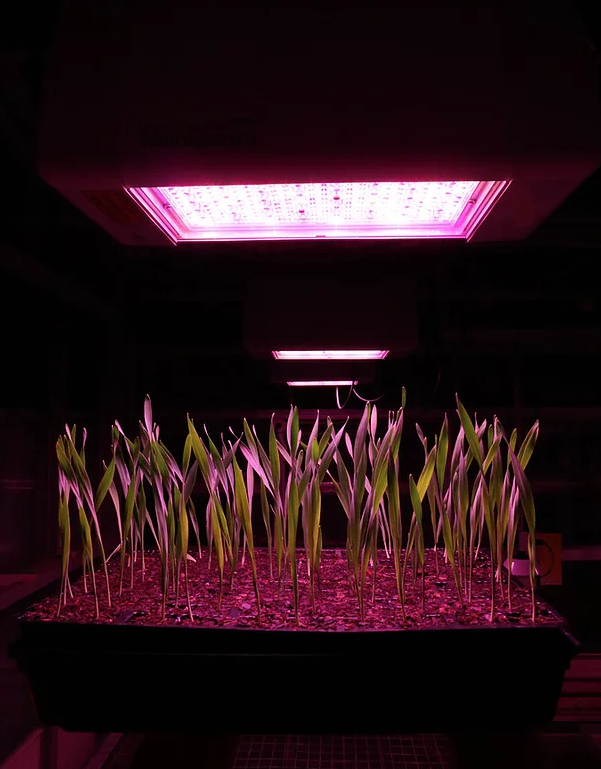
NFT (Nutrient Film Technique) Hydroponic Vertical Farm
As consumers grow tired of contamination risk, and their tastes broaden to include fresher produce, the opportunity exists for startups to disrupt their local food supply chain.
The age-old job of the farmer has been replaced by a new wave of local small footprint farmers. These farmers are able to grow and deliver to market high-quality food with very little waste. These farmers sell directly to restaurants, grocery stores, or at farmers markets around the world.
Most small footprint growers use a form of hydroponics to grow their product. Hydroponics is simply growing plants in water rather than soil, allowing the farmer to give the plant the perfect conditions for growth.
The return on investment for a crop of herbs can be quite high. For leafy greens like lettuce, it's entirely possible to keep your cost at around $1 while selling retail for $4. Big restaurants and hotels can do 10,000 plates a night or more, supply deals with companies of this size will net a lower price but provide a higher volume. If space is a concern, its best to grow out of your local farmers market and have the ability to get more space before taking on high volume.
There are a variety of places you can grow — from shipping containers to greenhouses. The darker the place the higher the cost of electricity. Greenhouses use less energy, but if you live in the north you will still have to run supplemental lighting and heat.
Most people believe the future of this industry is vertical.
Vericle gardening is growing plants on top of plants in a warehouse. Some are stacked on verticle walls, but most are horizontal systems stacked on top of each other. Many believe that this is the future of farming, particularly for leafy greens. Most real estate is valued by the square footage, the vertical footage provides “free expansion” to the indoor farm.
The most popular hydroponics system for leafy greens is the NFT system (Nutrient film technique). It is a system of pipes typically made of PVC or metal gutters that continuously flow water over the roots of the plant. The water drains into a reservoir where a pump pushes the water back up into the system in a continuous cycle.
There is a massive opportunity in flowering plants, though the equipment can be very specific. If you are interested in growing Tomatoes , your costs will be significantly higher as light and smell usually need to be contained. You may be able to excel at flowering plants — particularly if they are heritage varieties, but they represent a small section of the industry right now. Lighting, ventilation and nutrient formulas can drive up the price of flowering plants and may be why only specific flowing crops like Tomatoes or Cannabis are grown in significant quantity — and nursery plants are largely ignored.
Lettuce grown in a hydroponic system uses 2% the water it would if grown in a field 3000 miles away. It's a great plant to start out with because almost everyone eats it — and there is constantly outbreaks of food born illness related to Romaine and other leafy lettuce which only helps your marketing. It's also easy to grow.
Romaine Lettuce would take a week or two longer than most varieties that finish in about 30 days. On a perpetual system, you can be delivering fresh produce weekly to the farmers market or restaurant.
Indoor agriculture, particularly urban agriculture, is the future of our civilization. Opportunities rarely exist where it is possible to disrupt an industry with relatively little money.
What many farmers lack are branding and marketing strategies. By catering to local markets it's quite possible to establish strong local ties. Many people are making the switch to plant-based diets and ideas like the 50-mile diet are really starting to take hold.
Our food supply is currently at natures mercy. Climate change, draining aquifers, and man-made dams are devastating water supplies in many cities around the world. Crops are wiped out by weather in dramatic fashion every single year. It seems every week there is some new warning about the food we eat.
Getting started with indoor agriculture is as easy as building your own system and feeding your own needs. For those who fall in love with it — every city in the world needs indoor farms providing nutritious local foods. Someone will become a household name because of this industry — if you start now — it could be you.
WRITTEN BY Ryan Geddes
Entrepreneur, Writer, Digital Strateg

World's Largest Urban Farm To Open – On A Paris Rooftop
The 14,000m² farm is set to open in the south-west of Paris early next year
The 14,000m² Farm Is Set To Open In The
South-West of Paris Early Next Year
The new rooftop farm in Paris will be the largest of its kind in the world. Photograph: Valode & Pistre Architectes Atlav AJN
13 August 2019
It’s a warm afternoon in late spring and before us rows of strawberry plants rustle in the breeze as the scent of fragrant herbs wafts across the air. Nearby, a bee buzzes lazily past. Contrary to appearances, however, we are not in an idyllic corner of the countryside but standing on the top of a six-storey building in the heart of the French capital.
Welcome to the future of farming in Paris – where a whole host of rooftop plantations, such as this one on the edge of the Marais, have been springing up of late. Yet this thriving operation is just a drop in the ocean compared to its new sister site. When that one opens, in the spring of 2020, it will be the largest rooftop farm in the world.
Currently under construction in the south-west of the city, this urban oasis will span approximately 14,000 sq metres (150695 sq feet) – also making it the largest urban farm in Europe. With the plan to grow more than 30 different plant species, the site will produce around 1,000kg of fruit and vegetables every day in high season. Tended by around 20 gardeners, they will also be using entirely organic methods.
The aim is for the farm to be a global model for sustainability. Photograph: Valode & Pistre Architectes Atlav AJN
“The goal is to make the farm a globally-recognised model for sustainable production,” says Pascal Hardy, founder of Agripolis, the urban-farming company at the centre of the project. “We’ll be using quality products, grown in rhythm with nature’s cycles, all in the heart of Paris.”
Located on the top of a major exhibition complex currently under redevelopment in the 15th arrondissement, the Paris Expo Porte de Versailles, the farm will also have its own on-site restaurant and bar with capacity for around 300 people. Run by Paris’s renowned chain of rooftop venues, Le Perchoir, this aerial eatery will offer panoramic views over the capital – and, needless to say, the menu will feature seasonal produce grown on the site.
The Cityscape: get the best of Guardian Cities delivered to you every week, with just-released data, features and on-the-ground reports from all over the world
“Our fresh produce will be used to feed the inhabitants across the south-west of the city – either directly, through veg-box schemes or via shops, hotels and canteens – thereby helping to reduce food miles,” Hardy says. “Furthermore, we won’t be using any pesticides or chemicals, so the farm will be a haven for biodiversity.”
The farm will also offer a range of services related to urban agriculture, including educational tours, team-building workshops and special events. Last but not least, there will be the opportunity for local residents to lease small vegetable plots of their own – in specially-devised wooden crates – helping to reconnect city-dwellers with their food source.
Local residents will also have an opportunity to lease small plots of their own. Photograph: Valode & Pistre Architectes Atlav AJN
“Our guiding principle with all our farms is to help foster environmental and economic resilience in tomorrow’s cities,” says Hardy, who expects the farm to start making a profit within its first year. “If we can create a model that is commercially viable, rather than having to rely on goodwill and subsidies, that will help urban farms to become sustainable in their own right.”
While large-scale urban farming is nothing new in itself, with major sites in The Hague, Detroit and Shanghai, among others, this new flagship farm in Paris will be ground-breaking in several ways. Not only will it be the largest rooftop farm in the world but they will also be pioneering their own technique in aeroponic ‘vertical’ farming.
Apart from not requiring pesticides, this method uses a closed water system and no soil – therefore minimising the risk of any pollutants. Furthermore, by supplying people right on the doorstep, the farm will have an exceptionally low carbon footprint.
Strawberries growing at one of the other rooftop farms in Paris run by Agripolis. Photograph: Agripolis
“Our vision is a city in which flat roofs and abandoned surfaces are covered with these new growing systems,” says Hardy. “Each will contribute directly to feeding urban residents who today represent the bulk of the world’s population.”
For now at least, urban farming seems to be thriving here in all its forms. In fact, the City of Paris has committed to planting 100 hectares of vegetation across the capital by 2020, through its Parisculteurs project, with one third of this devoted to urban agriculture. For example, new for this year, a farming promenade is set to be created beneath the aerial métro line at Barbès.
Among the other imaginative agricultural sites across the city is the eco-farm of La Recyclerie, installed along the old railway line at Porte de Clignancourt, and the organic mushroom operation, La Caverne, located in an underground car park at Porte de La Chapelle. Even the capital’s much-maligned Montparnasse Tower is rumoured to be getting its own growing space.

Tower Farm Training Class: Limited Space Available
You will be walked through every aspect of what is required to successfully start any sized Tower Farm
September 19th and 20th 2019
Don't Miss This Opportunity To Have
Hands On Training Led By Industry Experts!
You will be walked through every aspect of what is required to successfully start any sized Tower Farm. From a rooftop farm, a green house, hoop house, or any unused indoor or outdoor space, we are committed to providing the resources and knowledge that help make starting a farm affordable and accessible. We will be joined by the Tower Farm manufactuers and leaders to share this incredible technology and the many ways to apply them in Urban and Commercial Farming.
Register Today
Get Your Tickets Today!
In this in-depth Vertical Tower Farm Training:
You will be guided through the seeding, transplanting, and harvesting process.
Introduction to what crops you can grow and an overview of how to create and plan your crop schedule.
You will be walked through a business plan template, as well as, receive a spreadsheet of all the consumables based on the size of your farm. When you leave this class, you will be clear on what it costs to run a farm the size you are planning.
You will learn marketing plans and strategies for your produce and urban farm business model to give you an edge and help you succeed.
You will be introduced to resources available to you like the Green Food Solutions Farm Amenities, Farm Service and onsite trainings at your farm, as well as cutting edge automation experts to set your farm apart in a competitive market.
You will be given the free planning, design and layout for your Tower Farm location. (Bring your square footage or square meters)
A catered networking breakfast and seasonal farm fresh lunch will be included both days
Meet other Tower Farmers running successful businesses
Mix, mingle and network each day at breakfast and lunch
Get expert advice about placing farms and gardens on rooftops
Sign Up Now

France: Greenhouses Fitted With Photovoltaic Films
Using the sun to its foremost, that's what three French horticultural partners are trying to do. That's why they've installed ASCA photovoltaic films at a commercial greenhouse nearby France
Using the sun to its foremost, that's what three French horticultural partners are trying to do. That's why they've installed ASCA photovoltaic films at a commercial greenhouse nearby France. Partners in the project are horticultural Eiffage Energie Systèmes, the French growers with Les Maraichers Nantais and Groupe Olivier.
Covering 43m² and incorporated in three different ways, the project aims to demonstrate the merits of the ASCA organic photovoltaic film and its ability to meet the specific needs of producers.
Solarizing agricultural greenhouses with OPV films: what are the benefits?
The desire to install photovoltaic technology on agricultural greenhouses is not a new idea. The experiment was already carried out a number of years ago with 1st and 2nd generation solar panels. Initial results proved inconsistent as growing cycles appeared to be lengthy with later harvesting and lower yields.
Unlike a classic solar panel, however, and due to its current transparency of up to 30%, the ASCA organic photovoltaic film offers the advantage of letting a proportion of the sunlight pass through, thereby enabling photosynthesis to take place.
Another advantage of the OPV technology is its low weight. In contrast to a photovoltaic panel which, once installed, remains fixed and cannot be easily removed, the ASCA film can be easily incorporated in a deployable and retractable system, adapting to the season or the weather conditions.
Solar greenhouses: how and why is the film installed?
With this demonstration, the growers and Eiffage Energie Systèmes are seeking to measure the contribution of organic photovoltaic film as both a low-carbon energy solution and as a regulator of luminosity and thermal conditions.
To meet this need, the ASCA Solutions Lab, dedicated to designing specific integrated applications for OPV film, produced three different modes of installation at the greenhouses of the Olivier Group.
2 horizontal shade sails. Installed inside two different large and plastic-covered greenhouses and one glass greenhouse, they offer the special feature of being easily deployed and retracted.
1 vertical curtain. Installed inside a glass greenhouse, it is also easily deployed and retracted.
Finally, 9 modules have been placed on the vertical exterior side of a glass greenhouse in its upper section. These “ready-to-attach” modules also illustrate their ability to activate all types of surfaces of existing buildings. These ultra-light BAPV (Building Applied Photovoltaics) systems are also currently undergoing certification.
Self-consumption mode
The entire system has been implemented by ARMOR, Groupe Olivier and Eiffage Energie Systèmes. The latter company also made the electrical connections for self-consumption mode.
What can this green electricity be used for?
The 79 ASCA photovoltaic modules installed as part of this demonstration cover a total surface area of 43m². The green electricity produced will be monitored over a period of one year and fed back into the grid, covering a proportion of the greenhouses’ energy costs: lighting, dehumidification, automatic irrigation system, etc.
The objective of the pilot project is therefore to demonstrate the merits of OPV technology and especially of the ASCA photovoltaic film for this type of application. If the test proves to be a success it will be deployed on a larger scale.
For more information:
ASCA
en.asca.com
Publication date: 8/6/2019
With Founder Gone, U. Vertical Farming Project's Main Farm Closes, But Forbes Offshoot Will Remain
After two years of operation, the Princeton Vertical Farming Project (PVFP), which introduced students to sustainable farming practices and provided fertile ground for research, has come to an end
By Katie Tam | August 12, 2019
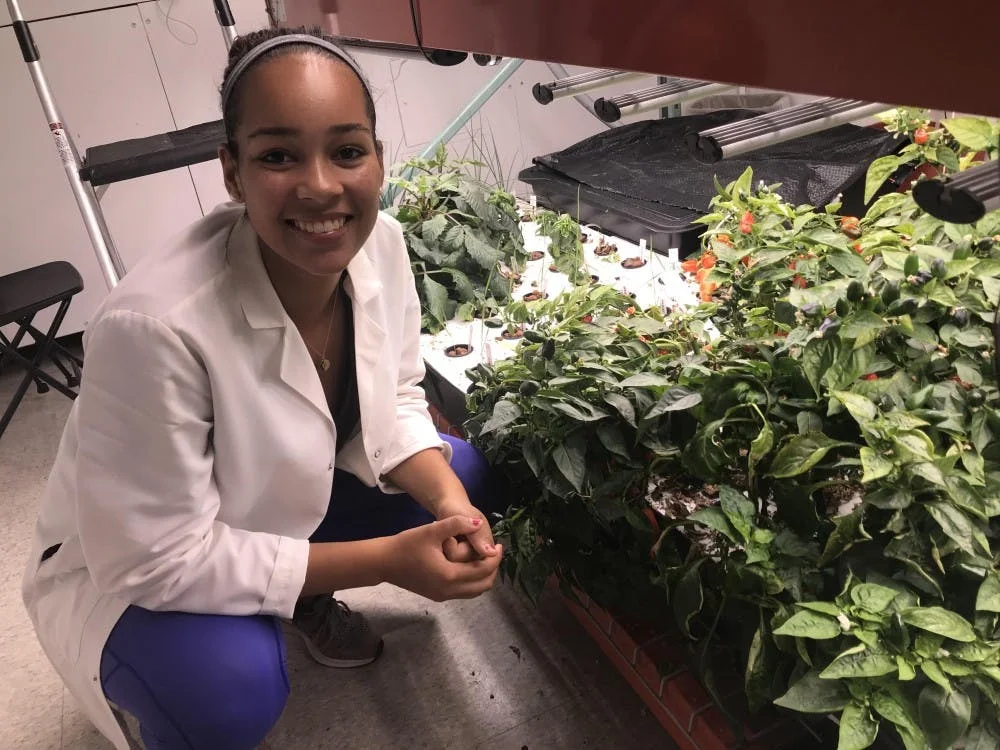
A taste test set up at the Forbes College vertical farm for Akiti's thesis project.
Photo Courtesy of Kor Akiti
After two years of operation, the Princeton Vertical Farming Project (PVFP), which introduced students to sustainable farming practices and provided fertile ground for research, has come to an end.
The PVFP was launched in April of 2017 by Paul Gauthier, who served as an associate research scholar in plant physiology and environmental plant metabolism in the Department of Geosciences beginning in 2012, in a windowless room in Moffett Laboratory. With support from the Office of Sustainability, Gauthier and student collaborators built and maintained the hydroponic vertical farm, where peppers, strawberries, herbs, and other plants were grown only with water and nutrient solutions—no soil.
At the end of June, Gauthier left for Delaware Valley University in Doylestown, PA, where he will start an appointment as Professor of Plant Science. Although an offshoot in Forbes College will remain, the main farm has been shuttered, with equipment in Moffett Laboratory dismantled and placed in storage.
As the global population continues to rise, vertical farming has grown in popularity, as the practice requires less water, space, and energy than traditional farms. Vertical farms can yield several harvests of fresh produce a year, which could help to feed growing urban centers.
According to Gauthier, although many start-ups have tried vertical farming, few have succeeded. Many have been forced to close after a few years due to lack of revenue and funding. In addition, he said, little research has been conducted on best practices, such as how water, nutrients, and the environment influence plant growth.
One of the primary motivations of the PVFP was to identify the problems and challenges associated with the technique and learn how to solve them — much like in traditional agriculture.
“People tend to forget that there is a ‘farming’ in ‘vertical farming,’” Gauthier said. “You are a farmer first.”
To that end, the farm experimented with different techniques, seeking to determine how to feed a family of four by quantifying nutrient usage, testing new technologies, and planting a variety of crops.
Another goal of the project was to create an on-campus “food hub,” where students could gain experience with farming and learn about food sustainability. Gauthier said that he wanted students to understand the commitment and responsibility that vertical farming entails.
“We want to train the next generation of vertical farmers,” he said.
Several students have taken on the burdens of both research and responsibility by conducting senior thesis projects with the PVFP. In the PVFP’s first year, projects ranged from a Department of Ecology and Evolutionary Biology (EEB) thesis comparing environmental impacts of vertical and conventional farming to a Wilson School thesis on the economic costs of running a vertical farm.
In her EEB thesis, Kor Akiti ’19 compared the palatability and nutritional quality of crops grown in the Vertical Farm to organic, soil-grown crops from a local grocer.
Akiti performed several “taste tests” in the Forbes dining hall and Frist Campus Center, asking passersby to taste and rank the produce – kale, peppers, and strawberries – on appearance, taste, and texture. She then asked tasters: which would you buy at the supermarket?
Using a technique called mass spectrometry, she was able to conclude that nutrient profiles of vertical farm and soil-grown crops were similar, but the hydroponic crops lacked visual appeal.
“One of the main takeaways was that the appearance of the hydroponic crops was significantly less satisfying than the appearance of the soil-grown crops across the board,” she said. “If vertical farming is going to be competitive, whether it’s in the context of Princeton, on campus, or in the larger urban market, farmers are going to have to find a way to make their produce more appealing, because appearance is such a critical point of purchase.”
Overall, her findings suggested the complexity of consumer choice and preference, hinting at challenges to come in not only growing crops in vertical farms but also in marketing them.
The impact of the PVFP has been considerable, not only in advancing research but also in contributing to outreach and education.
In September 2018, Gauthier partnered with Hopewell Elementary School in Hopewell, N.J., to develop a farm-to-cafeteria program. The initiative provides students with the opportunity to grow their own fresh produce, almost all of which is then used in school lunches.
Gauthier also co-founded his own indoor farming company, Ker Farms (pronounced “care”), in Hamilton, N.J., which grows and sells a variety of fruits and vegetables. According to Gauthier, the company is also training local educators in the hope of bringing vertical farming to more schools in the area.
“There is no question about it,” Gauthier said. “Vertical farming will be part of our lives.” Thus, Gauthier continued, it is essential that young people know how to grow, interact, and experiment with plants from a young age, so they can be prepared for the future.
Similar concerns motivated the establishment of an offshoot of the PVFP in the lobby of Forbes College in the fall of 2018. This mini-vertical farm was intended as a different kind of experiment – to see how farming could integrate into the daily life of a busy Princeton student, as Gauthier put it.
The conclusion, he said, was that taking care of plants was harder than it seemed.
Kaylin Xu ’22 played a leading role in maintenance of the Forbes College farm, changing the water, checking nutrient levels, and making adjustments to optimize conditions for growth. It was a labor-intensive job, Xu admitted, and although other students cycled in and out to help, she was one of the only people to consistently care for the plants. Xu hopes that the maintenance of the Forbes “farm” will become more communal.
“I want to get more of the Forbes community involved in having a hand in creating this green space, because I feel like that is really unique,” Xu said.
“Unfortunately, students are busy,” Xu continued, making it difficult to find dedicated members to join the team.
Gauthier also emphasized how important it was for future farmers to be dependable. “Plants are like babies,” Gauthier said. Just as a parent cannot ignore the cries of a hungry child, so a plant cannot go without water.
This past year, products from the Forbes offshoot and the main farm were featured in several “Meet What You Eat” dinners in the dining halls, where students could sample fresh produce incorporated into pastas, flatbreads, and more. In the fall, the Forbes farm will continue to grow crops for use in the Forbes kitchen and the Pink House food-share.
“I hope [the vertical farm in] Forbes will continue the spirit of sustainability,” Xu said, as the torch is passed from the original farm.
In his new position at Delaware Valley, Gauthier hopes to continue the work he started at Princeton, reproducing the vertical farm model on a larger scale and developing local projects and collaborations.
Although the Hopewell ES program and the Forbes offshoot will continue, the PVFP in its official capacity has ended – much like the start-ups and companies Gauthier was interested in when he began.
“I would have loved to continue,” Gauthier said of the project. “It’s important to start thinking and finding solutions for the future.” The University was a unique place for such an undertaking, he said, as it allowed for cross-pollination from a variety of fields of study.
“All different departments – computer science, MAE [Mechanical and Aerospace Engineering], EEB, business, architecture – students from all these departments were working on the vertical farm,” Gauthier said. “We can tackle the problem from very different disciplines.”
Gauthier did not rule out the possibility of reviving the PVFP.
“If there is demand, maybe the project will come back,” he said.
Lead Photo: Kor Akiti ’19 poses beside plants at the vertical farm in Moffet Laboratory. Photo Courtesy of Kor Akiti
SINGAPORE: Largest FairPrice Store Opens In VivoCity
The new store includes a small indoor hydroponic farm - where vegetables are grown and harvested - by local urban farming firm ComCrop. Said ComCrop chairman Allan Lim: "When FairPrice approached us and asked if they could have an indoor farm, we thought it was a great idea because we want to educate Singaporeans about hydroponics."
Above: Besides an ice cream truck and a play castle for children, the FairPrice Xtra outlet in VivoCity has an in-house vegetable farm. A special corner has also been set aside for local enterprises to promote their goods.ST PHOTO: MARK CHEONG
August 5, 2019
90,000 sq ft Hypermarket - The Size of Two Football Fields
Carries Over 35,000 Products
FairPrice's newest store is also its largest, with features such as an in-house vegetable farm, an ice cream truck, a play castle for children and spaces to repair baggage as well as bicycles.
The 90,000 sq ft FairPrice Xtra hypermarket and Unity Pharmacy officially opened its doors yesterday. The size of two football fields, it spans two floors of VivoCity mall.
Singapore's largest retailer said the store was designed to better meet customers' changing lifestyles and needs, and provide a unique brick-and-mortar shopping experience amid stiff competition from online grocers.
Above: There is also a section selling and repairing luggage. ST PHOTO: MARK CHEONG
Shoppers at the VivoCity outlet can have their food prepared for them - from cut vegetables to marinated meat and grilled seafood - for them to take home and cook without fuss. There are also dining areas for those who want to eat at the store while grocery shopping.
In addition, shoppers can buy loose quantities of grain, nuts, spices and pasta - instead of those prepacked in larger amounts.
NTUC FairPrice deputy CEO and head of channels Elaine Heng said a customer-centric approach was taken in developing the store: "We first look at our customers, what are their needs, their wants and how they are changing over time.
"Sustainability is a big agenda for us. All these initiatives are part of a wider whole-of-FairPrice push to minimise food waste and be more sustainable in our practices."
The hypermarket's shelves carry more than 35,000 products from around the world, including over 350 local brands. A special corner has also been set aside for local enterprises to promote their goods.
Minister for Trade and Industry Chan Chun Sing, who opened the store, welcomed the innovations and partnership with local firms.
"This is one of the best locations besides Changi Airport for us to promote our local brands and give them a chance to succeed," he said.
Above: Shoppers can buy loose quantities of grain and nuts, instead of those prepacked in larger amounts. They can also make their own nut butter. ST PHOTO: MARK CHEONG
VivoCity is close to Sentosa, as well as the Singapore Cruise Centre at HarbourFront, and the store has a special tourist section selling local delights, souvenirs and luggage.
Mr Chan added that the extensive array of products from around the world available on FairPrice supermarket aisles across the island is part of Singapore's plan to ensure a resilient food supply chain. "This will ensure that if anything happens in any part of the world, our supplies will not be disrupted."
He noted that FairPrice's range of products has also changed to keep pace with Singaporeans' needs and aspirations, enabling the social enterprise started by the labour movement in 1973 to maintain its position as a leading retailer.
The new store includes a small indoor hydroponic farm - where vegetables are grown and harvested - by local urban farming firm ComCrop. Said ComCrop chairman Allan Lim: "When FairPrice approached us and asked if they could have an indoor farm, we thought it was a great idea because we want to educate Singaporeans about hydroponics."
From next month, shoppers can use FairPrice's new "scan and go" mobile app to pay for items through their smartphones. It will also launch a pilot later this year where customers can buy products that are not on its shelves and have them delivered to their home.
Said Ms Heng: "In a fast-evolving retail landscape, FairPrice will continue to strengthen our core while leveraging on our capabilities to adapt and transform in serving our customers' needs."

Netled Oy And Astwood Infrastructure Collaborate To Build Industrial Scale Vertical Farms Worldwide
Netled Oy, Finnish specialists in vertical farming systems and greenhouse lighting solutions, have signed a long term frame
7th August 2019 by johannak
Netled Oy, Finnish specialists in vertical farming systems and greenhouse lighting solutions, have signed a long term framework agreement with Astwood Infrastructure to supply equipment for industrial scale vertical farms.
The agreement covers an initial four such farms, based predominantly in the UK, to be delivered over the next three years and provides a framework for serving global customers. The total value of the agreement, including all project options, reaches over 10 million euros. The rapidly growing vertical farming market has been predicted to grow to 10 billion USD by 2025.
Niko Kivioja, CEO, Netled Oy, confirmed: “We have been developing our technology for vertical farming for several years now. During this time the market for vertical farming has developed very fast. Now the technology and the economic figures are in the point, where industrial scale vertical farms beat the traditional ways to grow leafy greens. Green field projects require quite massive design work for infrastructure. We are more than happy to present our partner, Astwood Infrastructure. Together we have possibility to serve global market with an all-inclusive project offering.”
Netled designs, manufactures and sells world leading technology, equipment and related automation and software for vertical farming, where its vertical farm Vera® is the most advanced vertical farming system in the world.
Astwood Infrastructure is a technology company with a focus on sustainable design and engineering. The company has significant know-how in commercialising technologies. For vertical farming, the company has developed its own brand, Vertivore, based on 3 years’ worth of research into the sector. Astwood will be working with specialist technology providers like Netled to build a position as a market leading operator and supplier of vertical farm solutions.
Photo: Niko Kivioja, CEO of Netled (on the left) and Mike Capewell, CEO of Astwood Infrastructure.
A pilot facility, the first under the framework, is built and is in continuous use in Redditch, UK. The long term focus of Netled and Astwood is on industrial scale growing. The production volumes are planned to be millions of heads of lettuces and herbs annually.
Mike Capewell, CEO for Astwood Infrastructure, added: “We are incredibly excited about our new agreement with Netled Oy and the opportunity we now have in building and scaling a UK wide and potentially global vertical farm operation. Our pilot farm has shown some incredibly exciting results and we feel optimistic that we will be able to replicate this success at scale.”
“As issues like rising import costs and climate change continue to advance, vertical farming systems will become critical to production, where, through the Vertivore brand, we will be able to grow sustainable, local and clean produce without being impacted by any external sources such as weather conditions or pollution.”
Closed vertical farming systems, like the one currently being piloted by Astwood, are protected from extreme weather conditions, pollution and lack of freshwater resources as the growing conditions are created artificially. As a result, vertical farming makes cultivation possible in areas where production of traditional vegetables is impossible, and the freshwater resources are limited, whilst also improving quality, production speed and yield.
For more information, visit:
MEDIA CONTACT:
Netled Oy
Niko Kivioja CEO, Netled Oy
+358 50 3608121
niko.kivioja@netled.fi
Astwood Group
Hannah Haffield
hhaffield@makemorenoise.co.uk
0121 312 1177/ 07939 468 567
Editor’s Notes
Netled Oy
Netled offers vertical farming systems and innovative greenhouse lighting solutions. Netled’s vertical farms are sold under the brand name Vera®. The world leading technology has already been delivered to multiple producers for commercial use. Netled was founded in 2007 in Finland. It employs 10 multidisciplinary experts. For more information, please visit our website www.netled.fi.
Astwood Infrastructure
Astwood Infrastructure Limited is operating at the cutting edge of vertical farming technology. It has, along with specialist technology providers, developed, a sustainable, reliable indoor vertical food production facility that can be located virtually anywhere. For more information please visit our website https://www.vertivore.com/

Autogrow Appoints New Chief Technology Officer
Autogrow has named Jonathan Morgan as its new Chief Technology Officer responsible for continuing development of their innovation utilizing the latest technology, plant biological science and artificial intelligence


August 13, 2019: Autogrow has named Jonathan Morgan as its new Chief Technology Officer responsible for continuing development of their innovation utilizing the latest technology, plant biological science and artificial intelligence.
“We are very pleased to welcome Jonathan to the Autogrow family and look forward to seeing him put his talents to use to deliver world class products and customer experiences,” says CEO Darryn Keiller.
Jonathan brings to the role more than 18 years of commercial expertise in software and integrated technology solutions for customers. Leading teams in product development, continuous improvement and customer experience.
His previous role was as Ventures VP Engineering at EROAD, a global leader in road charging, compliance and telematics services across NZ, Australia and North America.
“I’m excited to join a progressive team like Autogrow who is leading disruptive innovation within the AgTech space and creating new and exciting solutions to help grow food. It’s an area I’m interested in exploring and seeing how we can make positive impacts in the pockets of farmers and on the planet,” explains Jonathan.
Over the past two years Autogrow has doubled their employee number and launched some of the most cutting-edge solutions for indoor growing including the first API (Application Programming Interface), the first SDK (Software Development Kit), the first indoor agtech hackathon – #CropsOnMars, and most recently the integrated farm management platform FarmRoad.
“It’s been a busy two years and we are only set to become bigger with more innovative solutions for farmers. Jonathan’s appointment will ensure that we continue to push forward within CEA (Controlled Environment Agriculture), an industry that is evolving at a rapid pace,” says Darryn.
Jonathan will begin his role 18 September and will be based at the Autogrow Head Office in Auckland, New Zealand.

Juneau Woman Takes Over Indoor Farming Business
The Farm currently supplies microgreens for the Salt & Soil Marketplace. Ruggles hopes to sell her food to other places in the future — particularly schools and hospitals — as she starts growing a wider diversity of plants
“The Farm” owner Duras Ruggles poses next to trays of microgreens in the back of a moving truck she’s outfitting with growing equipment. (Nolin Ainsworth | Juneau Empire)
Saturday, August 10, 2019
The Farm To Sell Microgreens, Herbs
Duras Ruggles purchased a vehicle last month with few intentions of ever driving the thing.
Ruggles, 25, is the new owner of The Farm, an indoor farming business started last year by Bridget and Jake LaPenter out of their house and garden in the Flats neighborhood.
Ruggles farmed for about five years before moving to Juneau last summer and heard about the business opportunity through an acquaintance at the Salt & Soil Marketplace. In addition to the truck, the purchase of The Farm also came with an abundance of soil, seeds, trays, racks and growing lights. The LaPenters had plans to move part of their operation into the truck but didn’t get around to it before the sale.
“I feel really passionate about growing food,” Ruggles said in an interview with the Empire outside her farm near Tee Harbor. “I think it’s the most empowering thing we can do as people, especially in a politically-dangerous space, to have our independence and our freedom.”
Ruggles declined to say exactly how much the business cost, but called it a “significant investment.” She said an angel investor played a big part in the transaction. An angel investor is someone who invests in a start-up in exchange for debt or ownership stakes in the business.
“It’s definitely pertinent information that there was this nice lady who believes in local food and was able to lend me her money so that I could buy this business,” Ruggles said.
Currently there’s over a dozen trays of cilantro, radishes, peas and other microgreens growing. Ruggles said she hopes to cultivate herbs that other local farms, like Juneau Greens, don’t sell.
“My goal is to fill in the gaps and grow whatever people need,” Ruggles said. “I really love growing mushrooms, so that’s also going to happen.”
The Farm currently supplies microgreens for the Salt & Soil Marketplace. Ruggles hopes to sell her food to other places in the future — particularly schools and hospitals — as she starts growing a wider diversity of plants.
“I would really love it if I could sell food to mostly schools as well as hospitals and elderly homes and other facilities where healthy food is really necessary,” she said.
The LaPenters started the business last year in an effort to address Juneau’s food insecurity. They grew microgreens like lettuce year-round inside their house while also cultivating greens and crops outside in the spring, summer and fall. They stopped their indoor growing operation in March, Bridget said, to prepare for the birth of their second child the next month.
“We quickly realized it was just getting way too chaotic for us, so we knew some time off would be a responsible choice on our part to keep the stress levels low,” Bridget said.
Bridget said she’s excited to see where Ruggles takes The Farm.
“We’re really hoping she succeeds,” Bridget said.
Connecting with The Farm
Email: the.farm.ak@gmail.com
Website: thefarmak.com
Purchase: www.saltandsoilmarketplace.com
• Contact sports reporter Nolin Ainsworth at 523-2272 or nainsworth@juneauempire.com.
Blue Sky Science: How Do Plants Grow Without Dirt?
The principal purpose of soil is to provide mineral nutrition for the plant. About 20 elements make up the mineral nutrition requirements for plants, and if you can provide those, you’re providing a lot of what soil is giving to the plant
Aug 7, 2019
Q - How do plants grow without dirt?
— Ruby Taggart, Merrimac, Wis.
A - Simon Gilroy, professor in the department of botany at the University of Wisconsin-Madison:
The principal purpose of soil is to provide mineral nutrition for the plant. About 20 elements make up the mineral nutrition requirements for plants, and if you can provide those, you’re providing a lot of what soil is giving to the plant.
A long time ago, plant researchers found out that you can get plants to grow perfectly fine without soil if you provide water and the mineral nutrition. That’s the idea of hydroponics, where we can grow plants in a soil-less environment. We’re providing what they need: water and the minerals that allow them to grow.
Soil also provides structural support, so to replace soil we have to provide support in some other way. The classic way for hydroponics is to have plants growing in a plug, some inert material that provides the support. The roots grow down into a liquid. The liquid provides the minerals that the plant needs. All you need at that point is to power plant growth by photosynthesis, which is providing it with air and sunlight.
You can take that to the extreme. Some of the research being done at UW-Madison is related to figuring out how plants can be optimized to grow in space. Researchers are interested in growing plants in the space station to perhaps sustain astronauts for incredibly long journeys.
But growing in that weightless environment is not how plants evolved. Think about growing plants off the Earth where there is no soil. Think about growing them, for instance, on Mars or on the moon, where you can grow them in the dust that coats the surface of those bodies.
Providing you can balance the unique environment and added stresses, maybe add a little bit of fertilizer, you can grow plants perfectly happily under those conditions.
With minerals, water, sunlight and air, you can make a plant grow.
Blue Sky Science is a collaboration of the Wisconsin State Journal and the Morgridge Institute for Research.

How Tech Is Helping The Agriculture Sector Curb Carbon Emissions
The term vertical farm is relatively new. It refers to a method of growing crops – in Crop One Holding’s case, leafy greens and lettuce – usually without soil or natural light, in beds stacked vertically inside a controlled-environment building
July 29, 2019 by World Economic Forum
(Xavi Moll, Unsplash)
This article is brought to you thanks to the collaboration of The European Sting with the World Economic Forum.
Author: Alzbeta Klein, Director and Global Head, Climate Business , International Finance Corporation (IFC)
UN Deputy Secretary-General Amina J. Mohammed stated that 2018 was a record-breaking year for climate, but 2019 doesn’t look much better. As the list of extreme weather events and climate shocks grows, so does our shared responsibility to act.
For the agricultural sector, these weather events are particularly devastating, with increased cycles of more frequent floods and drought hitting many farmers. The good news is that, two years ago in Bonn, the world’s governments finally acknowledged for the first time that agriculture has a major role to play in our changing climate. Following a series of intense all-night discussions and years of division and deadlock, governments at COP23 finally agreed on the connection between industrialized farming and our warming climate.
The world’s leading climate scientists have concluded that how we farm and use our land (whether for food production, forestry, or other types of land use) is responsible for about one-quarter of global greenhouse gas emissions. If we include emissions caused by the processing, transport, storage, cooling and disposal of the food that we consume, then that figure rises to more than 40% – an unthinkable price for how we farm and eat.
With the global population set to rise from 7.3 billion to 9.7 billion between now and 2050, world governments are faced with an overwhelming dilemma: how to feed the future without putting irreparable strain on our planet’s already overburdened soils and oceans? I believe that technology can get us there.
Agricultural technology – or agtech – approaches like precision farming, drought- and pest-resistant seeds, mobile phones and digital technology platforms are a solution. They boost farmers’ profits by cutting costs and increasing yields and benefiting customers the world over. But more technological innovation is needed. Fortunately, some of the International Finance Corporation’s partners are at the forefront of innovation when it comes to agtech.
Take Planet Labs, an innovative geospatial start-up that uses 149 earth-observing satellites to generate a daily stream of high-resolution images of the earth’s surface for farmers to understand crop and soil changes from pre-season to harvest.
Planet Lab’s goal is to take images of the Earth’s entire surface every day to make climate change visible, accessible and actionable, according to Tara O’Shea, Planet’s director of forestry. Founded in 2010 by three former NASA scientists, the company visualizes daily changes across the Earth’s surface in real time. Until now, satellite imagery data was not frequent enough to react to crop stress in a timely manner. Planet’s daily imagery has been a game changer in the digital ag space – enabling farmers to manage their precision agriculture at scale and farm more efficiently, profitably, and sustainably.
Agriculture isn’t just a rural concern. As urban density increases around the world, and more and more people move to cities, locally sourced food is taking on greater importance. Crop One Holdings is a “vertical farming” company that is transforming the landscape of indoor farming in urban areas.
The term vertical farm is relatively new. It refers to a method of growing crops – in Crop One Holding’s case, leafy greens and lettuce – usually without soil or natural light, in beds stacked vertically inside a controlled-environment building. One of the company’s 320 sq ft units can substitute up to 19 acres of farmland and use 1/2500th of the water usage of field-based growing. In Boston, a Crop One Holding one-acre farm produces yields equivalent to that of a regular 400-acre farm.
Crop One drastically reduces the length of transportation as well as carbon use, due to the farms’ proximity to consumers. There is no soil used in the growing, nor any chemical intervention or pesticides. Competitive field products are usually 12 to 15 days old by the time they are delivered to a store, resulting in significant losses for the retailer.
Vertical farms that rise to the challenge of climate change are still in the early stages of development, but a recent $40 million joint venture between Crop One and Emirates Flight Catering to build the world’s largest vertical farming facility in Dubai suggests that agtech business models are showing potential to scale across markets.
That’s good news for my climate business team at IFC, who are helping existing and potential agribusiness clients acquire and leverage new agricultural technologies for both large scale and smallholder farms. Our “climate-smart” approach targets animal protein, land and crops, and food losses, yielding $1.3 billion in investments since 2017. Agtech can accelerate these investments and help farmers adopt more sustainable agronomic practices.
At this year’s One Planet Summit, IFC signed two agreements with the Kenya Tea Development Agency Power Company Ltd. (KTDA Power): one that enables carbon credits, and another that will support KTDA with various advisory activities such as financial literacy training for farmers, soil testing for productivity improvement and development of a wood-sourcing strategy.
How we farm matters. In addition to record-breaking temperatures, super typhoons and drought, Deputy Secretary-General Mohammed has also spoken about how 5G technology and AI can build smarter agricultural systems. Feeding our growing population requires revolutionary transformations in farming and land cultivation. Adopting pioneering agricultural technologies with the potential to increase yields while limiting greenhouse gas emissions is an essential step. If agriculture is to continue to feed the world, then we must enable technology to shape the farms of the future.