


Welcome to iGrow News, Your Source for the World of Indoor Vertical Farming

Evesham Vale Growers and R & L Holt Increase Marketable Yield By 25% Using Signify’s Hybrid Lighting System
Signify (Euronext: LIGHT), the world leader in lighting, today announced that Evesham Vale Growers and R & L Holt, premium tomato growers in the UK, have once again chosen Philips LED and HPS lighting for a new greenhouse, based on the 25% increase in crop production that was achieved with its Philips hybrid lighting set-up which was installed by Philips Horti LED partner Certhon in 2015
Hybrid lighting enables year-round production of consistent, high quality tomatoes for supermarkets
Hybrid LED plus HPS toplighting make it possible to precisely control growth throughout the year
R & L Holt and Signify extend their partnership to maximize crop results in new greenhouse
Eindhoven, the Netherlands – Signify (Euronext: LIGHT), the world leader in lighting, today announced that Evesham Vale Growers and R & L Holt, premium tomato growers in the UK, have once again chosen Philips LED and HPS lighting for a new greenhouse, based on the 25% increase in crop production that was achieved with its Philips hybrid lighting set-up which was installed by Philips Horti LED partner Certhon in 2015.
In the new greenhouse, the company will install Philips GreenPower LED toplighting compact and Philips GreenPower LED interlighting, together with HPS lighting installed by the Philips Horti LED partner Certhon. The compact, passively cooled LED toplighting can be easily installed with the HPS lighting on the same trellis. This combination allows the company to use LEDs to extend lighting in the spring when it’s warmer, instead of the HPS lighting which produces more heat.
“I’m delighted to see that our customers are returning to us for new projects”, said Udo van Slooten, Business Leader Horticulture at Signify. “Our long-term partnerships enable us to learn from the improvements they have achieved and help them further improve the consistency and predictability of their crops. This move also confirms that our customers recognize the value that the LED toplighting compact offers in terms of combining LED with HPS lighting on the same trellis construction.”
Evesham Vale Growers and R & L Holt grow cherry, cocktail and large tomatoes on the vine, as well as loose classic tomatoes. All crops are grown for flavor, as supermarket premium ranges. Since all of the crops are grown in heated glasshouses, the season can stretch from February until November, but the company is always looking to further extend its season.
“After our success with our first hybrid HPS and LED interlighting system, we knew we were on the right path,” says Roly Holt, co-owner of R & L Holt. “We did a trial in another greenhouse with LED toplighting, LED interlighting and HPS lighting, and that system allowed us to specifically target different parts of the canopy to control our products. That is why we’ve now chosen this three-component set-up. We think this will give us a really sustainable and consistent product.”
Introduced in June 2019, the Philips GreenPower LED toplighting compact delivers excellent performance. Its high light output of 1,800 µmol/s and efficacy of up to 3.0 µmol/J help growers effectively optimize crop growth, enhance crop quality and cut operational costs. Compared to a 1,000 W HPS fixture, the Philips GreenPower LED toplighting compact produces the same amount of light, has a similar light distribution, while consuming 40% less power and emitting considerably less radiant heat.

The Future of Arctic Farming – Infographic
Despite difficult growing conditions, the number of vegetable farms in Alaska, Norway, Canada and other Arctic regions appears to have increased
Green Iglus, solar retention greenhouses in Nunavut, aim at producing greenery and produce for the community. Photo: Mike Beauregard
Greenhouses and Hydroponic Systems are Becoming Ripe with Possibility
Despite difficult growing conditions, the number of vegetable farms in Alaska, Norway, Canada and other Arctic regions appears to have increased. The hope is that a better, more affordable supply of vegetables in Arctic communities will help battle public health issues, improve food security and decrease the economy’s dependence on oil and imports.
This infographic designed by Jennifer Cook illustrates the challenges of vegetable production in the Arctic as well as possible solutions offered by Arctic farming. Lower temperatures and permafrost result in short growing seasons and slow down the growing process.
A frequent solution, the import of vegetables, is often unreliable and expensive. Combined with other factors, this can affect the food security, health, well-being, and financial situation of communities. In recent years, the number of Arctic farming projects based on greenhouses, hydroponics, or other technologies has developed rapidly, offering the potential for a better, more affordable, and more sustainable supply of fresh vegetables.
DOWNLOAD
The Complete Guide To Building A Rooftop Garden
Gardening can be a great way to relax and free your mind from the numbing pressures of The Screen
You Don't Have To Have A Yard To Get Things Growing.
By Ryan Boysen | August 4, 2019
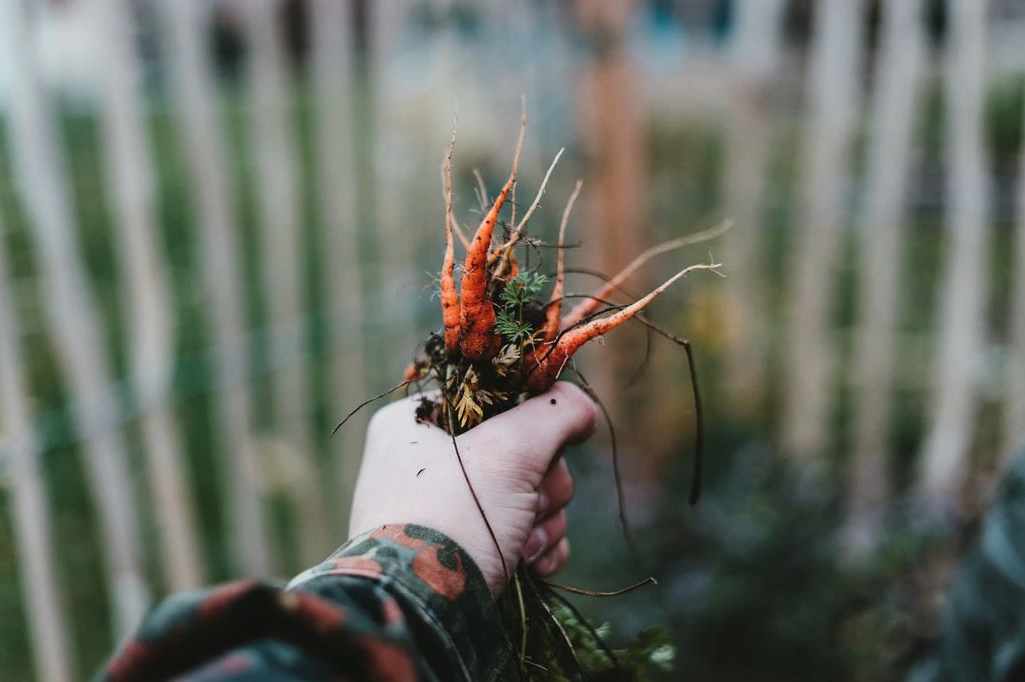
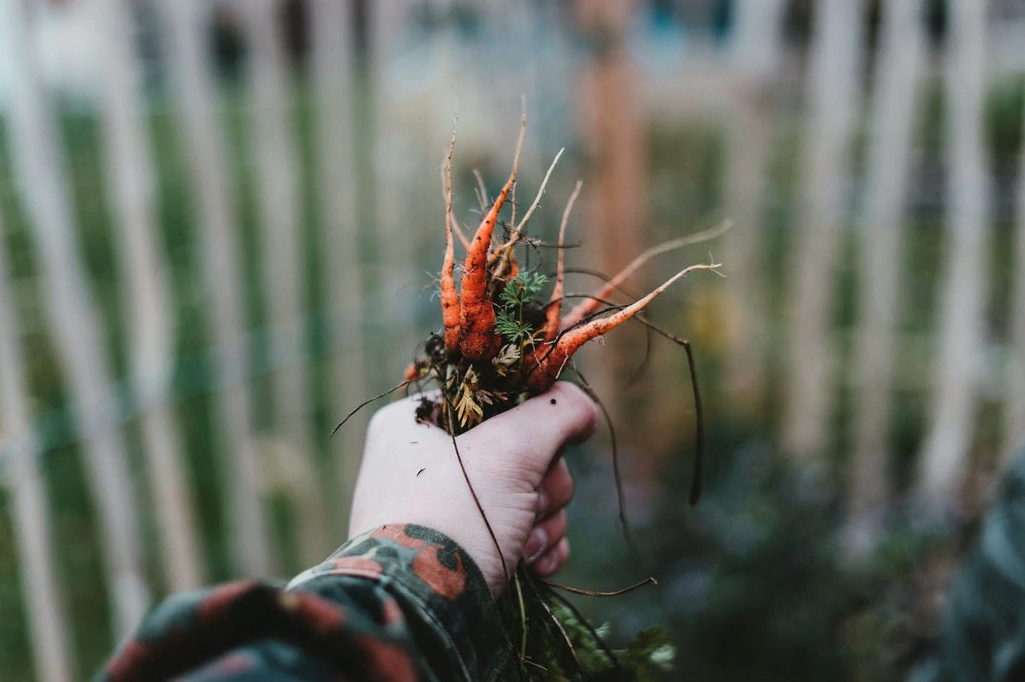
You can get your hands dirty no matter where you live.Julian Hochgesang via Unsplash
Before man was, gardening waited for him. The ultimate trade awaiting its ultimate practitioner.
Ok fine, Cormac McCarthy was actually talking about war when he wrote that, but if you ask me, it still holds true for gardening.
Along with mastering fire, the purposeful cultivation of plants is widely considered to be one of the technological leaps that set humans on the path to complex civilization, for better or for worse. Speaking as a city dweller and inhabitant of the current iteration of said complex civilization, we need gardening now, more than ever, to smooth out some of the rougher edges of this weird world we’ve built for ourselves.
Gardening can be a great way to relax and free your mind from the numbing pressures of The Screen. Futzing around with plants in the sun helps us reconnect with the glories of the natural world that we've become increasingly isolated from. And, as this bizarrely dark listicle puts it, gardening "reminds us of the cycle of life," and thus helps us "come to terms with that most universal of anxieties: death."
But hey, let’s not worry about that just yet. The tall, skinny guy with the scythe and black robes comes for us all, but until he rings the buzzer, let’s squeeze all the joy we can out of the here and now.
Which brings us back to gardening, and how to get into it.
For those of us who live in the suburbs or, even better, the country, the process is easy: go outside and plant some seeds in the ground, then watch them grow. For those of us living in a city, it’s a bit more complicated.
But fear not. I have toiled for countless hours and spent thousands of dollars to thread that needle, so you don’t have to. After four years of banging my head against the wall in an attempt to garden despite living in a tiny apartment in Brooklyn, New York, I have finally figured out a design that is relatively simple, works well, and, most importantly, is extremely low-maintenance once it’s set up.
The author with his completed (and thriving) rooftop garden.Courtesy of Ryan Boysen
As long as you have rooftop access and a relatively chill landlord, there’s an excellent chance you can learn from my mistakes and build yourself a rooftop garden. It should only cost you a few hundred bucks and a weekend or two of your time—even less if you’ve already got spare materials lying around and are capable of getting out of bed before 1 p.m. on the weekend.
It's really just three things
There are an endless variety of ways to garden on a roof, but my setup consists of three components intended to address what I consider to be the three main problems confronting the would-be rooftop gardener.
A PVC structure wrapped in bamboo fencing to protect the plants from wind, which can be brutal on a roof.
Self-watering containers to reduce the amount of time spent lugging water up to the roof and to ensure that, if you don't do so for a few days, the plants won't suffer.
A homemade soil mixture to encourage a bountiful harvest by providing the plants with primo dirt that won't require constant fertilizing.
If you’re just starting out and all that seems overwhelming, you can halve the time required to put this together by foregoing the custom soil mix and simply adding organic fertilizers to store-bought potting soil (only bags marked as “potting soil,” no “in-ground” or “raised bed” stuff, as it’s much heavier and will not distribute water properly). This will work fine, but not as well as mixing it up from scratch.
It should go without saying, but definitely ask your landlord for permission before building a rooftop garden, and make sure the roof in question has the structural integrity necessary to support one. Most apartment building roofs shouldn’t have a problem supporting at least a small garden, but you do need to scope it out first. If in doubt, ask your landlord.
Build the structure
This part can seem intimidating, but it’s actually fairly straightforward, as long as you think ahead.
First, decide where you want your garden to go. Measure the area, and plan the size of your structure accordingly.
Mine, for example, is 12 feet long, 8 feet wide, and 8 feet tall. Your length and width may vary, but I recommend a simple square or rectangle with 8-foot-tall sides to keep the wind from roughing up your plants. You’ll also want to leave an opening on one side so you can get in and out.
Sketch a rudimentary blueprint (no need to get fancy with this), then figure out how much PVC pipe and bamboo fencing you’ll need. Remember that you won’t require horizontal pieces of pipe on the interior—you’ll need space to walk around—and that you’ll keep the entryway clear of fencing.
Seriously, you don't need to be a good artist to sketch a blueprint. Ryan Boysen
What you'll need:
The materials listed below are standardized for one 4-by-4-by-8-foot section of garden space, which is the basic building block of my design. As you add square footage, you’ll need slightly fewer pieces for each additional section, as they will share poles and joints.
Materials (for one 4-by-4-by-8-foot block of garden space)
18 or so 4-foot-long, 3/4-inch-thick PVC poles (about 12 for each additional block)
12 PVC pipe joints (your combination of tee joints, 3-way connectors, 4-way connectors, and 5-way connectors will vary depending on the size of your structure)
12 feet of bamboo fencing (4 feet for each additional edge block)
A can of PVC cement
A roll of string (or about 100 zip ties)
Tools
Hacksaw (or PVC pipe cutter)
Knife (or scissors)
Permanent marker
Once you’ve got your tools and materials, measure the pipe to your desired length, mark it, cut it, and start connecting. It’s OK to be a little confused during this step, but once you put a few pieces together it should begin making sense pretty quickly. When everything looks good, go back and glue all the joints together with the PVC cement.
Once your frame is complete, wrap the bamboo around it and secure the fencing with zip ties or string. This may take an hour or two, but it’s worth going slow and doing a thorough job. Your plants and neighbors will thank you the next time a storm rolls through. Tie the corners to something heavy to prevent your garden from flying away—wooden pallets work well if you’re using those to support your plants, but you can also anchor the structure to the handles of your planters.
Craft the self-watering containers
There are many ways to build self-watering containers, but the basic idea is this: each one has a built-in, refillable water reservoir and a wicking mechanism that brings that water up into the soil.
And while this how-to deals with 5-gallon buckets, it’s easy to extend the underlying principles to larger containers and other types of materials once you get the hang of things.
Self-watering containers, like those seen here, mean that even if you're not always around to take care of your garden, your plants will still have enough to drink. Ryan Boysen
What you'll need:
Materials (for one container)
2 plastic 5-gallon buckets (cheaper in bulk)
2 sponges
3 strips of foot-long cotton material (one t-shirt will make enough for about a dozen containers, but it must be 100% cotton—synthetic material doesn't wick properly)
A 3-foot length of 3/4-inch PVC pipe
A large funnel (you only need one, no matter how many containers you have)
A wooden pallet or something else to elevate the planter (optional)
Tools
1/4-inch drill bit
Permanent marker
Scissors (or a boxcutter)
So, you’ve got two buckets. Put one inside the other and measure where the bottom of the inside bucket reaches on the outside bucket. Mark that spot with your marker, then draw a little circle a half-inch below that. Separate the buckets and drill a 1/4-inch hole within the circle you marked on the outside one, then set that bucket aside.
Now take the other bucket, flip it upside-down and drill a 1-inch hole in the middle of its bottom. Drill another 1-inch hole near the outside of the bottom. Now drill a dozen or so 1/4-inch holes all around.
Now, take two sponges and use a knife or scissors to cut a 2-inch-long gash in the center of each sponge. Take your cotton strips and thread them through one sponge, so about 4 inches of material sticks out the other side.
Stuff that material through the big hole in the center of the inside bucket so the sponge and the majority of the fabric remains within the bucket. Take the other sponge, place it on the outside of the bucket, and thread the dangling strips through it, making sure it’s snug against the bottom of the bucket. These pieces of cloth will wick water from the reservoir into the soil, and the sponges will ensure they stay in place.
How to set up the inside bucket, from left to right: drill holes in the bottom, place a sponge inside and thread the fabric strips through it, and then thread the cloth through a sponge on the outside. Ryan Boysen
Now put the inside bucket back into the outside bucket. Jam the 3-foot length of PVC pipe into the other 1-inch hole. With the aid of the funnel you’ll use this pipe to fill the reservoir.
When you eventually load the inside bucket with soil, try to make sure that the cotton strips extend upward to ensure even water distribution throughout the soil mixture. I’ll usually fill it one-third of the way with dirt, lay one strip across that layer, add the next third and do the same thing with another strip, then try to bury the remaining strip just below the surface.
For you visual learners, this video directly inspired my container design and it's a great way to see the process play out.
When putting the buckets in your garden, it’s best to place them on top of something to keep them from sitting directly on the roofing material. This will ensure proper drainage and prevent roof damage from any water trapped under the containers. I used wooden pallets, but pretty much anything that provides a bit of elevation will work just fine.
You should only need to fill your containers with water once or twice a week, depending on the size of the plants they hold and how much it has rained.
Mix the soil
You want your soil to be equal parts compost, vermiculite, and sphagnum moss—the amounts below are approximate.
Vermiculite and the moss are usually sold in bags of 1-3 cubic feet—more than enough for a single container. To save you the conversion time: one 5-gallon bucket holds about 0.7 cubic feet of material, so you’ll need a little less than 0.25 cubic feet of each (or about 1.5 gallons).
Compost is the most important element, and you can find the good stuff at nearby community gardens or composting operations. You can make your own, too, but it might be hard to produce enough if you're building a large garden. Still, never settle for the store-bought stuff.
For best results, it helps to sift the compost and moss to filter out any large chunks. Doing so helps ensure even water distribution throughout the soil, but if you’re tired and just want to get to the actual gardening, you can skip this step without too much worry.
What you'll need:
Materials (for one container)
1/4 cubic foot of vermiculite
1/4 cubic foot of sphagnum moss
1/4 cubic foot of compost
3 tablespoons of Azomite
3 tablespoons of kelp meal
3 tablespoons of all-purpose fertilizer
3 tablespoons of worm castings (optional)
Tools
If you’re not going to sift, simply dump the proper amount of each material onto your tarp. If you’re mixing soil for multiple containers, simply scale it up—your only limits are tarp size and how hard you want to work. If you’ve got a large container to mix in, that works, too, but a tarp is probably more practical for most apartment-dwellers.
Sprinkle kelp meal, all-purpose fertilizer, worm castings (if available), and Azomite on top. I usually use about 1 cup for six buckets worth.
Now mix it all up. Don’t half-ass it.
If you have a large container to mix the soil in, great! But if not, a tarp works just fine. Ryan Boysen
I had to pick out a bunch of worms during this process, so if your compost is also full of ‘em (which means the compost is healthy), keep them safe. Just put a little bit of compost in a small container, stash the worms in there, and then either release them into soil somewhere, or return them to wherever you got your compost. Unfortunately, the conditions inside your containers will probably not be optimal for worm survival, and a bunch of dead worms in your containers could lead to fungus or disease problems down the line.
When your soil is well-combined, put it in your containers.
If you want to sift the compost and moss, you’ll need to build a sifter.
What you'll need:
Materials (for the sifter)
2 2-foot-long 2-by-4s
2 4-foot-long 2-by-4s
A piece of 1/4-inch mesh (at least 4 feet long and 2 feet wide)
1.5-inch screws
Tools
Make a rectangle with your 2-by-4s and screw the corners together. Cut a length of mesh to fit over it all, letting the edges overlap the wooden frame so you can fasten it in place. Then, staple it tightly to the wood with the staple gun.
Place the sifter above your tarp by putting it on top of two chairs, boxes, tables, or whatever you have that’ll keep it elevated. Dump the compost into the sifter, then rub it around with your gloved hands until most of it has fallen through. Put any large bits into another container and set it aside.
Now do the same with sphagnum moss. You don’t have to sift the vermiculite.
This video is a great way to see what the process looks like.
As you get more into it, I’d recommend experimenting with liquid fertilizers to give your plants some extra oomph, but the nutrients in this mixture should be more than enough to get you, and your plants, started.
Now get out there and get gardening, and remember this: even though a man’s at odds to know his mind because his mind is aught he has to know it with, as long as you’re gardening you won’t need to trouble yourself with all that. Just stand among the screaming leaves and call down the lightning, and know that the time has come for you to reap.

Good Food For Planet And Body
There is mounting evidence that plant-based foods have a positive impact on the planet – and the body
7th August 2019
There is mounting evidence that plant-based foods have a positive impact on the planet – and the body.
Oxford University researchers said in a report last year that going vegan is the biggest action individuals can take to minimise their ecological footprint; and a new paper published in the Journal of the American Heart Association this week says that adopting more of a plant-based diet reduces the risk of a heart attack or stroke
“Our study does suggest that eating a larger proportion of plant-based foods and a smaller proportion of animal-based foods may help reduce your risk of having a heart attack, stroke or other type of cardiovascular disease,” said lead researcher, Casey M. Rebholz, Ph.D., assistant professor of epidemiology at Johns Hopkins Bloomberg School of Public Health, Baltimore, Maryland.
Looking at the data of 10,000 middle-aged Americans between 1987 and 2016, individuals without any cardiovascular issues at the start of the study, the researchers found those who ate the most plant-based foods in their diets were at a 32% lower risk of dying from a cardiovascular disease and were a 16% lower risk of suffering heart attacks, stroke, heart failure and other conditions.
“The American Heart Association recommends eating a mostly plant-based diet, provided the foods you choose are rich in nutrition and low in added sugars, sodium (salt), cholesterol and artery-clogging saturated and trans fats. For example, French fries or cauliflower pizza with cheese are plant based but are low in nutritional value and are loaded with sodium (salt). Unprocessed foods, like fresh fruit, vegetables and grains are good choices,” said Mariell Jessup, M.D., the chief science and medical officer of the American Heart Association.
Lead Photo: Photo by Daniel Hjalmarsson on Unsplash

Is Vertical Growing The Future of Cannabis?
In the food sector, vertical growing companies like Plenty, Aerofarms, Gotham Greens, and many more, are revolutionizing agriculture. But in the cannabis industry, which practically invented sunless growing, there has been notably less activity
(Daniel Berman for Leafly)
August 2, 2019
Indoor cannabis grows are expensive operations. Given the real estate costs, massive energy bills, and significant staffing requirements, it’s crucial to find a way to increase profits. Maximizing your grow space is one way to do this and that could mean vertical growing—the practice of producing plants in vertically stacked layers or vertically inclined surfaces.
In the food sector, vertical growing companies like Plenty, Aerofarms, Gotham Greens, and many more, are revolutionizing agriculture. But in the cannabis industry, which practically invented sunless growing, there has been notably less activity.
This is partly because high-pressure sodium lights (HPS), one of the most common lights used to grow cannabis for decades, run so hot that plants have to be many feet away to stay unharmed.
How to Top Cannabis Plants for Bigger Yields
But LEDs run at much lower temperatures, so you can install them inches from the plant canopy. Their decreasing price and increasing ability to equal or exceed HPS yields are making LEDs the standard, finally opening the door to vertical growing for cannabis.
“The main catalyst behind cannabis cultivation going vertical is the improved performance of LED lighting,” says Thomas Rogers, LED engineer of Exact Lux. “Cannabis growers are approaching us wanting the most powerful multi-tier or ‘vertical farm’ lighting systems possible.”
Two Types of Vertical Farming
Stacked vertical (left) and true vertical (right) cannabis grows with LEDs. (Sean Walling/Leafly)
Stacked Vertical
The most common method of vertical farming is a stacked vertical setup—levels of plant racks with LED lights above each rack. Plants are topped and defoliated to keep them short and bud-heavy.
Growers even stack in the flower stage, despite plants being large and top-heavy.
True Vertical
With true vertical growing, plants grow out the side of a column, and water and nutrients drip down from the top—see these examples from ZipGrowand Tower Garden.
Within the column, a hybrid method combines nutrient film technique (NFT), where nutrient water is passed directly over the roots, and aeroponics, a soilless grow method where roots hang in the air.
How to Prune Cannabis Plants for Maximum Yields
Pros and Cons of Vertical Growing
So why don’t all cannabis operations grow vertically, especially in this competitive new industry? Here we’ll look at some of the benefits and drawbacks.
Environmental Conditions Get Complex
Maintaining optimum temperature, humidity, and air circulation is tough for all cannabis grows. But in vertical growing there is even more variability in macro and micro environmental conditions because there are more plants, making control more difficult.
Because of this atmospheric variability, Hugh Gaasch, engineer at STEM Cultivation, recommends sensors to detect data points like moisture changes. “Shockingly, the majority of commercial growers I’ve seen to date use a single temperature/humidity sensor to monitor a room, even large spaces, over 20,000 feet.”
Grow Room Humidity Control: 5 Tips for Indoor Growers
In contrast, STEM Cultivation uses one temperature sensor per 100 cubic feet. STEM collects data on: temperature, humidity, air pressure, CO2 levels, lighting levels, lighting power (kW) and energy (kWh), system air circulation rates, localized air circulation, VOC (volatile organic compounds), and HVAC power and energy, to name a few.
Mike Zartarian, from Zartarian Engineering, builds circulation systems for vegetable and cannabis growers. To decrease chances of mold and fungi, he says: “I recommend systems that push air right in between the racks above the plants, usually with small ducts that take air from the edges of the room to the center of the racks.”
Expensive to Set Up and Maintain
Although vertical growing of any kind will increase yield by maximizing space, when you add up the increased energy usage from more artificial lighting, an upgraded climate control system, the extra infrastructure required (ladders, racks, sensors, and more), and paying high-skilled agro-technicians, it is very costly for many.
Zartarian says: “It’s by no means impossible, but the jury is very much out on whether it’s cost effective long-term. If veggie growers prove it to be a dominant technique, I would expect to see more experimentation on the cannabis side.”
How to Train Your Cannabis Plants for Better Yields and Potency
As it is, licensed operators he works with are struggling to meet demand and prefer to stick to more traditional techniques they know will produce.
Dangerous Conditions
Vertically grown cannabis needs a lot of hands-on attention during the flowering cycle as compared to, say, vertical lettuce crops which are more set-and-forget. The height of a plant must be closely controlled, which requires grow technicians to get up on step stools or scaffolding to reach into the plant canopy. These high-tier tasks may not be OSHA-compliant.
Certain Cultivars Work Better Than Others
The most successful cultivars for vertical growing are short, have big buds, and fewer leaves, so less defoliation is necessary. But if you’re a confident defoliator, the diversity of cultivars you can grow will broaden.
Arthur Brownsey, cannabis cultivation consultant at Four Trees, thinks most strains can grow vertically. “If you have a tight production schedule, group like-cultivars together, and plan accordingly, there are no restrictions to what you can grow.”
Factors That Impact Your Cannabis Strain: Part 3, Growing Techniques
Agro-engineer Aja Atwood of Trella sees value in vertical growing, but the limited cultivars it serves made her determined to find another option. “There is a wide variety of strains out there that prefer longer vegetation periods and have a taller growth structure. In order to diversify, you need to train or trellis those taller varieties to stay within the space.”
To allow for vertical growing with a diversity of strains, she and her partner Andres Chamorro invented a grow unit, TrellaGro LST, that trains plants to grow horizontally. Each unit is vertically stackable and equipped with LED lights that follow it as it grows sideways, allowing for taller strains and less energy use.
Stay Tuned
In these early days, vertical growing has yet to revolutionize the industry, and some operations, focused on supplying a high-demand market, are sticking with traditional growing methods.
However, most operations already know the price of cannabis will likely drop as competition grows. In that climate, the future of cannabis could move up, not out.
Christine Giraud, a freelance writer in Boston, has been writing about cannabis for publications like The Boston Globe, Overture Global Magazine, Dig Boston, Civilized, Her(b) Life, and Foottraffik.

Artemis Announces Key Hires To Accelerate Growth
Specifically, Artemis named Eric Clark as Vice President of Revenue, Sebastian Delmont as Principal Engineer, and Amanda Carter as Regulatory Compliance Specialist
Artemis announced key additions to its technology and executive teams. Specifically, Artemis named Eric Clark as Vice President of Revenue, Sebastian Delmont as Principal Engineer, and Amanda Carter as Regulatory Compliance Specialist. These hires come on the heels of Artemis’ $8 million Series A funding round and will support the company’s rapid growth and leadership position in the commercial fruit, vegetable, floriculture, cannabis, and hemp industries.
“Eric, Sebastian, and Amanda bring decades of experience and a proven track record in their respective fields. They join us at a time where significant changes are taking place with technology and risk management in commercial horticulture—especially with the exponential rise of the legal cannabis industry,” said Allison Kopf, CEO of Artemis. “Their combined expertise across compliance, growth strategy, and product innovation will be invaluable as we build upon our Cultivation Management Platform and advance our vision for a more efficient, traceable and compliant agricultural economy.”
Eric Clark
Eric joins as Vice President of Revenue at Artemis, focused on creating strategies to drive the sales, marketing and customer success teams to work cohesively, and optimizing all areas of the business to maximize revenue. Eric brings over 10 years of experience scaling early stage startup sales teams by developing go-to-market strategies, building sales processes, training for sustainable growth and organizing channel partnerships. Prior to joining Artemis, Eric was a Senior Consultant for Skaled and served as VP of Sales at Voray, Adiant and other technology companies. He holds a BA in Marketing & Economics from Westfield State University.
Sebastian Delmont
Sebastian joins as Principal Engineer at Artemis, responsible for overseeing the company’s software engineering team and advancing the development of its Cultivation Management Platform. Sebastian is a veteran software engineer and developer with expertise in Ruby on Rails, HTML, CSS and most web development technologies. He was previously webmaster at Aprena Labs and CTO at various technology companies including String and StreetEasy. Sebastian is originally from Venezuela and studied computer science at the Central University of Venezuela.
Amanda Carter
Amanda joins Artemis as Regulatory Compliance Specialist. With more than ten years in high-welfare proteins, humane livestock slaughter, and craft food enterprise development, she has worked with farm operators, product importers, value-added production facilities, and private individuals across multiple states and levels of government to bring safe, wholesome, traceable products to market. Amanda brings a growth mindset and an attitude of radical acceptance to bear on product safety and quality accountability practices for agricultural entrepreneurs. She holds a BS in Agroecology from the Evergreen State College and several credentials in food safety and animal welfare.
For more information:
Artemis
artemisag.com
Publication date: 8/5/2019

Cannabis Sales Could Hit $41B By 2025, Nielsen Predicts
The market for all legalized cannabis, including CBD, is expected to quintuple from $8 billion in 2018 to $41 billion by 2025, according to new data from Nielsen
AUTHOR Jessi Devenyns
July 30, 2019
Dive Brief:
The market for all legalized cannabis, including CBD, is expected to quintuple from $8 billion in 2018 to $41 billion by 2025, according to new data from Nielsen.
Since the Farm Bill legalized hemp last December, Nielsen found interest in alternative forms of ingesting CBD has increased.
In the last four years, the variety of CBD edibles and other products has grown significantly. In 2014, there were only two states where marijuana was legalized and 166 brands of products. By 2018, that number jumped to 2,600 marijuana brands across four legalized states.
Dive Insight:
Despite cannabis remaining illegal at a federal level, the sentiment regarding the substance is changing. Last year, President Trump signed the Farm Bill, which made it legal to cultivate hemp. That move helped consumers and retailers feel more comfortable giving it a try.
Although there are still FDA restrictions on hemp-derived CBD as an additive in food, several retailers are now selling health and beauty products with it, according to Nielsen. A study by A.T. Kearney last year found four in 10 U.S. consumers said they would be willing to try food made with cannabis. This open sentiment has pushed more food and beverage companies to want to introduce cannabis products — a major reason for the high predicted growth rate in the next five years.
Beer companies have already seen success investing in the space. The Nielsen report shows that cannabis-interested adults are 41% more likely to drink beer. Lagunitas Brewing, part of Netherlands-based Heineken, sells its SuperCritical IPA made with aromatic marijuana terpenes in California. Ceria, helmed by former Blue Moon brewmaster Keith Villa, launched THC brew Grainwave in Colorado. Two Roots Brewing unveiled its nonalcoholic "cannabier" in Nevada. Meanwhile, Constellation and Molson Coors are still working on their brews.
Big companies in the food space have been more hesitant. Typically, CPG giants are slow to pick up on trends and introduce popular functional ingredients into their products, and the case is no different in with cannabis.
But companies are starting to promise to put the ingredient in products if the FDA legalizes it. Ben & Jerry’s said it will offer a CBD-infused ice cream to consumers. Bloomberg reported that Coca-Cola was in talks with Aurora Cannabis for a CBD-infused soda, though the soda company demurred and said it doesn't "have any plans at this stage" to enter the market.
Nielsen's numbers account for both marijuana and CBD-infused products. The firm also assumes 75% of the U.S. adult population will have consistent access to legal marijuana by 2025. The full legalization of the ingredient and its $35 billion effect on CPG sales, according to Nielsen, depends on several unknowns. But BDS Analytics is also projecting full U.S. legalization of all forms of cannabis by 2021 — based on public opinion through state legalization issues, federal government sentiment and momentum elsewhere.
Although the FDA held its first public hearing on cannabis and CBD this year, analysts still say it could be years before there is a path for products to get to market. While these big predictions on sales growth could entice more companies to get involved, others might remain cautious and wait before developing products. The increasing confidence and predicted growth from market research firms may inspire companies waiting on the sidelines to get into the market or it may push those companies that are already on the edge to take action.
Lead Photo: (Credit: Jennifer Martin )
Recommended Reading:

Red Sox President & CEO Sam Kennedy And Fenway Sports Group Partner Linda Henry Dish On The Five-Year Anniversary Of Fenway Farms
What started out as a dream of having a spot at Fenway Park to grow sustainable and organic produce has turned into a 10,600-square foot rooftop farm churning out organically grown vegetables and fruit to diners at Fenway Park’s Dell/EMC Club restaurant (as well as throughout the park)
Photo Credit: Billie Weiss/Boston Red Sox
What started out as a dream of having a spot at Fenway Park to grow sustainable and organic produce has turned into a 10,600-square foot rooftop farm churning out organically grown vegetables and fruit to diners at Fenway Park’s Dell/EMC Club restaurant (as well as throughout the park).
Located on the roof of the Front Office on the third base side of the EMC Level, it is here where the team at Green City Growers tends to this sustainable spot at America’s most beloved (and now greenest) ballpark. Celebrating its fifth year, Fenway Farms has produced 21,000 pounds of produce since inception that Aramark Executive Chef Ron Abell uses to prepare dishes from carrot hummus to scallion pancakes.
Photo Credit: Maddie Malhotra/Boston Red Sox
How did Fenway Farms come to be? “About six years ago, Red Sox Chief Operating Officer Jonathan Gilula and I were sitting in a game in the suite about 100 yards from here,” said Red Sox President & CEO Sam Kennedy at the five-year anniversary celebration yesterday. “Linda, who we had worked with for a long time at that point, who is passionate about lots of Fenway sports group issues and Boston and works on a variety of different things, especially sustainability, especially engaging kids and works closely with everyone in the front office, said, ‘Guys, guys, I have an idea.’ She said, ‘Come out, I want to show you something.’ We walked out here and she said, ‘What do you think about Fenway Farms and putting a garden here? Wouldn’t that be incredible?'”
Photo Credit: Maddie Malhotra/Boston Red Sox
And the rest, as they say, is history. “When I was growing up, I remember summer nights of just having our fresh tomatoes,” said Linda Henry, Fenway Sports Group Partner and Red Sox Foundation Board Member. “We had this one problem there. We were at the losing end. We had this epic battle with this gopher in our backyard and I have a brilliant dad and he worked so hard. We put up netting; we put up traps and we were not winning. In fact, my dad found the spiciest hot peppers he could find and planted them just for the gophers. The gophers left us the hot peppers, but took everything else. I never lost my passion for gardening and the appreciation for what real fresh vegetables are.
I was captivated by what Green City Growers was doing because they were finding a way to bring rooftop gardens in an inexpensive and accessible way. This is something very attainable. We wanted to show this was something incredibly productive without a huge investment. What better way to show the potential for sustainable living than growing organic produce right here. If it can work in a place where hot dogs, peanuts and Cracker Jacks are considered three square meals, then we felt others would join us and that’s really what happened, which has really been amazing. Fenway Farms for me represents a daily miracle. Whoever imagined a working vegetable garden on the roof of the oldest ballpark in Major League Baseball?”

INDIA: Urban Kisaan Brings Commercial Hydroponic Farming To Visakhapatnam
The Hyderabad-based startup, Urban Kisaan, specialises in soil-less gardening also known as hydroponics that is particularly popular in urban centres as it allows people to grow fresh vegetables even if they don’t have a garden

AUGUST 02, 2019
With Hydroponic Farming, Even Those
Without Gardens Can Grow Their Own Greens
As soon as you enter the office of Urban Kisaan in MVP Colony, you are swamped by the greenery and the sound of flowing water. The Hyderabad-based startup, Urban Kisaan, specialises in soil-less gardening also known as hydroponics that is particularly popular in urban centres as it allows people to grow fresh vegetables even if they don’t have a garden.
The fresh palak, methi and gongura shrubs at their office make a compelling case of why one should consider trying farming at home. The objective of hydroponic farming is to cultivate vegetables with minimal use of soil and water.
Urban Kisaan has come lately to Visakhapatnam. It provides the infrastructure to grow plants at home. The base model has three hydroponic channels in tiers on a metal stand. Above them, there are six plants growing in plastic nets that allows the roots to reach to the water in the channels below them. The water is circulated into in the channels through a 20 litre-reservoir tank. The water is mixed with a nutrient solution for maintaining its acidic content. (see infobox)
Set up the plants and channels in an area that gets eight to 10 hours of sunlight
Check pH/EC values once in three days
Ensure that reservoir tank is sealed; flush the tank every three months
Top up the tank with water and add nutrient each week
The kit needs to be placed where plants get eight to 10 hours of sunlight. Depending on the plant and climatic conditions, you get the yield once in two weeks. For instance each plant of palak gives a yield of 250 grams once in two weeks. They are also prototyping a set-up where plants can be grown in artificial light. Any numner of leafy vegetables can be cultivated. Basil, Bok choy , lettuce , parsley, kale, spinach, sorrel leaves, coriander, mint, and fenugreek are some that have done well with hydroponics.
The kit comprises two bottles of nutrient solution, a digital pH scale (to determine the pH balance of the water-based solution) and an electrical conductivity metre. There are instructions on how to set up and dismantle the structure. The smallest set-up which can hold 18 plants costs around ₹10,000.
Urban Kisaan has managed to sell about 10 kits in July. Says its CEO Vihari Kanukollu, “In coming months, we plan to set up a farm in Visakhapatnam where people can harvest vegetables before purchasing them.” Urban Kisaan has expanded its operations to Bengaluru as well.
Saras Chandra, learnt about hydroponics after a YouTube algorithm guided him towards hydroponic videos while he was searching for gardening tips. He is now growing 24 varieties of plants using this technique in his balcony. “I was fascinated with the technology. I now grow palak, methi and gongura. Over the last two weeks, he has harvested palak twice. So taken is Saras with his success in growing his own food that he has left his full time job at a bank to explore business opportunities in hydroponic farming.
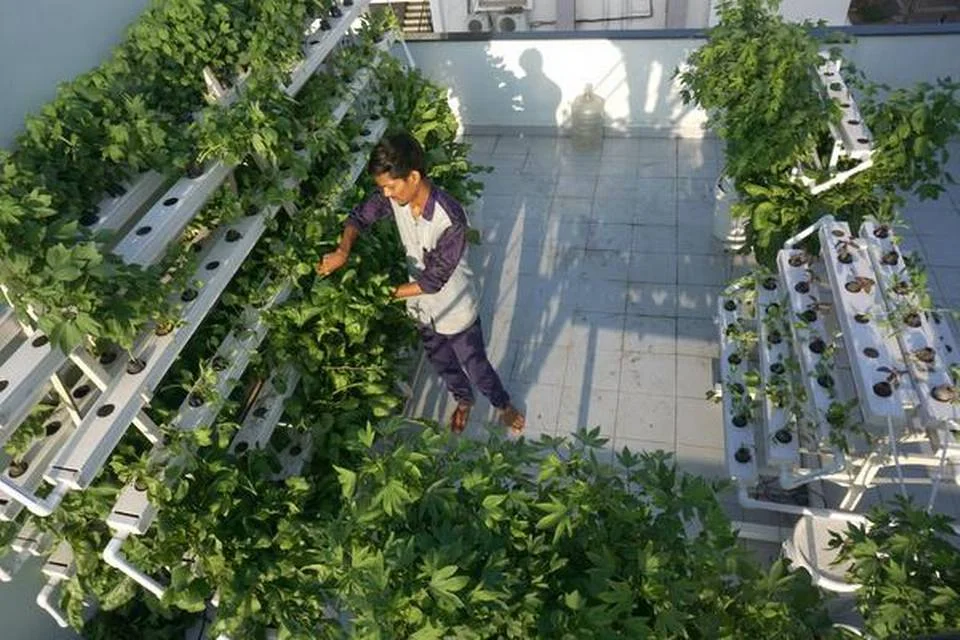
The Urban Kisaan technology also flourishes on the rooftop of Karuna Shree, a city based lawyer. She says, “My terrace not only looks green but also gives me fresh vegetables.” According to her, the set up is sturdy and can easily endure few days of heavy rainfall.
Each drop counts
Vertical farming uses 70-95 percent less water as compared to traditional cultivation method.

Her Farm’s Mission: Empowering People With Disabilities
Nona Yehia is CEO and Co-founder of Vertical Harvest, a company in Jackson, Wyoming, that cranks out roughly 100,000 pounds of produce each year in a three-story, state-of-the-art, hydroponic greenhouse.
By Claire Elise Thompson on July 27, 2019
Nona Yehia is CEO and Co-founder of Vertical Harvest, a company in Jackson, Wyoming, that cranks out roughly 100,000 pounds of produce each year in a three-story, state-of-the-art, hydroponic greenhouse. Bumble Bee tomatoes, rainbow chard, butterhead lettuce — the company’s 34 employees generate as much bounty as a 10-acre traditional farm while using only one tenth of an acre of land.
And there’s something else: Many of those employees have developmental disabilities. Including this underserved population in such an innovative endeavor “is about empowerment,” Yehia says. “It’s about exposing ability.”
We caught up with Yehia, (who, along with Co-founder Penny McBride, was featured on Grist’s annual list of “Fixers” in 2016) to talk about a new documentary that follows the “tumultuous” first 15 months of Vertical Harvest’s endeavor, and the company’s journey in the years since it was filmed.
Here are some snippets from our conversation.
Yehia on reliving the early days of Vertical Harvest:
I like to call it adventures in sleep deprivation and weight gain. Anyone in the startup world can understand. [The film is] actually very hard for us to watch. But at the same time, it’s great to recognize how hard we’ve worked and how far we’ve come. Where it really shines is in telling the stories of our employees and their role in the startup.
On the origins of the company, and its employment model:
It was three women — myself, Penny McBride, and Caroline Croft Estay. I’m an architect. Penny McBride was a sustainability consultant, and Caroline Croft Estay was working as an employment facilitator, trying to find meaningful work for her clients with disabilities. The project was born out of those interests meeting.
I have a brother with different abilities. This country has come a long way in education, providing an inclusive and supportive environment for people with disabilities in the classroom, but when it comes to employment, the opportunities are few and far between.
On befriending a member of the Tea Party who wanted to kill the project:
This guy had seen our business plan, and he basically said, “You’re using public funding. You’re designed like a nonprofit but you’re not a nonprofit. I’m going to kill your project.” And we said, “Hey, let’s talk.”
We started going to lunch with him every month, and he actually became one of our biggest advocates. He spoke on our behalf many times, and I believe he was really pivotal to our success. I learned from that process to embrace your detractors as much as your supporters, because you’ve got a lot to learn from them.
On being pioneers in vertical farming:
When we started, the Dutch were the only people doing hydroponic farming. We had consultants who were heavily involved in choreographing the building — and we love our Dutch counterparts, but it was really difficult not having domestic support. Our building is a very complex ecosystem. Every part affects a whole. You don’t know what you don’t know, and you have to move forward despite that fact. There were many places where we kind of looked at each other and said, maybe this isn’t going to work.
On the greenhouse design:
We stacked three greenhouses on top of each other, so that each level has a different microclimate. The middle level has a lot of airflow, so it stays cool. Lettuces like a cool environment. The third level gets much hotter, which is a perfect climate for viney crops.
It’s hard to develop multiple microclimates to grow different crops — [that’s why] so much of the [vertical farming] industry is growing microgreens. But we are very invested in growing a diversity of crops. You can’t feed a community on lettuce alone.
On fighting the bad bugs:
We have an integrated pest management system — bug-on-bug warfare. We have parasitic wasps that are right now patrolling to take care of white flies and aphids.
On the future of Vertical Harvest:
This week we received eight requests for facilities in cities around the world, and that’s a pretty common week for us. We are in the midst of developing a plan to own, operate, and develop seven greenhouses in different communities over the next several years. We have also gotten a contract from Fannie Mae to look at the feasibility of including a vertical farm in an affordable housing plan.
On the power of the work they’re doing:
One of our employees, who was washing dishes all her life, is now in charge of creating 200 pounds of lettuce a week, and has learned a vital skill in a new industry. Another employee can now create and repair vertical farming equipment, which is a totally rare and important skill. He will be a teacher in tomorrow’s farms. We’ve been able to expand what their future would look like, by lightyears.
Hearts of Glass has made the festival route, and had its premiere in Jackson at the start of June. It’s not available to the public yet, but you can catch a free screening in Chicago or Wyoming in the coming months.

AUDIO: Mounting Investor Interest In Agricultural Technology
As the earth warms and the world’s population grows, more and more companies are growing food indoors in greenhouses and vertical farms
Carole Zimmer
JulY 31, 2019
Investors are paying close attention to the rapidly growing sector that is agricultural technology, or ag-tech.
As the earth warms and the world’s population grows, more and more companies are growing food indoors in greenhouses and vertical farms.
Although demand is increasing, this segment of the agricultural industry faces high costs of both labor, energy costs and equipment, for things like lighting.
Lead image: Angela Weiss/AFP/Getty Images

Workshop To Feature Hydroponic Technology - September 5, 2019
The workshop, which is sponsored by Purdue Extension, Purdue’s Department of Horticulture and Landscape Architecture and the Indiana State Department of Agriculture, will focus on teaching attendees about hydroponic production technology
Ashley Langreck | AgriNews Publications
July 31, 2019
Krishna Nemali examines hydroponically grown lettuce in the horticulture and landscape architecture greenhouse at Purdue University. Provided photo/Purdue University
WEST LAFAYETTE, Ind. — The fourth annual Greenhouse and Indoor Hydroponics Workshop will be from 8 a.m. to 3 p.m. Sept. 5 on the Purdue University campus.
The workshop, which is sponsored by Purdue Extension, Purdue’s Department of Horticulture and Landscape Architecture and the Indiana State Department of Agriculture, will focus on teaching attendees about hydroponic production technology.
Lori Jolly-Brown, who is serves as the Extension events and communications coordinator for the horticulture and landscape architecture department, said the morning session of the workshop will focus on how to get started in hydroponics, where to purchase and find materials, how to fertilize plants, ways to keep bugs away and a wide variety of other topics.
After lunch, Jolly-Brown said, attendees will have the chance to tour one of Purdue’s state-of-the-art greenhouses and indoor hydroponic facilities, while also having the opportunity to participate in hands-on activities.
Jolly-Brown said individuals will be able to interact with workshop organizer Krishna Nemali, a Purdue assistant professor and a controlled environment agriculture Extension specialist.
“They will get to see Nemali’s hydroponic research and vertical farming displays,” Jolly-Brown said.
Jolly-Brown said the workshop is geared toward commercial producers and growers, those just getting started in hydroponics, as well as those who are involved in hydroponics production technology as a hobby.
To register for the workshop, visit https://bit.ly/2OjqTBn.
Ashley Langreck can be reached at 800-426-9438, ext. 192, or alangreck@agrinews-pubs.com. Follow her on Twitter at: @AgNews_Langreck.
Tags Lori Jolly-brown Agriculture Economics Department Of Agriculture Indiana
New York: An Aerial Farm Sprouts In Manhattan At Essex Crossing
Something’s taking root on a Manhattan terrace — namely, carrots, turnips, radishes and all kinds of leafy greens.The garden with a view is the latest addition to Essex Crossing, the $1 billion mega-development project that will eventually cover nine city blocks around the intersection of Delancey and Essex Streets
By CARLA ROMAN
NEW YORK DAILY NEWS | JUL 30, 2019
(L-R) Linda Bryant, president of Project EATS, Rick Smith, Project EATS Director of Farm Operations, and L+M Vice Chair, Debbie Kenyon, pose in the quarter-acre Essex Crossing Farm on top of the Essex Market on Monday in Manhattan, New York. (Barry Williams/for New York Daily News)
Something’s taking root on a Manhattan terrace — namely, carrots, turnips, radishes and all kinds of leafy greens.
The garden with a view is the latest addition to Essex Crossing, the $1 billion mega-development project that will eventually cover nine city blocks around the intersection of Delancey and Essex Sts.
The airy green space is perched atop the 6th floor deck of The Essex, one of the nine developments that will populate the Lower East Side when the project is finished in 2020.
The quarter-acre plot ― already resplendent with organic arugula and kale, and soon to welcome tat-soi and bok choy — is being farmed by Project Eats, which runs a network of 10 urban farms around the city with an eye toward feeding and involving surrounding communities.
Although not very large, the Essex Crossing’s farm is the second biggest in Manhattan, second only to another green garden on Randall’s Island. Essex Crossing’s first ready-to-eat crop — arugula —will go on sale this Saturday at its farm stand in Essex Crossing Park.
Katie Archer, director of Community Relations for Delancey Street Associates, a conglomerate of developers building Essex Crossing, said a big goal of the garden is to connect with seniors and local youth groups.
Astro Arugula plants grow in the raised bed in the quarter-acre Essex Crossing Farm on top of the Essex Market Monday in Manhattan. (Barry Williams/for New York Daily News)
Despite the farm being in early stages, PE had over 40 applications for its spring after-school PEAS (Project Eats After School) program, with many kids coming from the 5 city high schools located on a campus right across the street.
The program teaches and develops farming skills and health awareness. From the 40 applications, 28 students were selected and three are now full time summer employees at the farm stand.
Other students from the program now serve as community health educators, trying to teach residents about the different types of vegetables available to eat.
The produce is also available at a “Farmacy” stand in the Essex Crossing Park near its farm stand. Working in partnership with nearby Gouverneur Hospital and other local medical providers, patients will get a dietary prescription detailing which veggies would be most beneficial for them to eat. These prescriptions are then filled at the “Farmacy” at a subsidized cost via Health Bucks, a SNAP benefit program.
Project EATS Director of Farm Operations, Rick Smith, picks some Astro Arugula from the garden Monday morning. (Barry Williams/for New York Daily News)
Essex Farm will also provide free breakfast on Saturdays using the produce on the farm – hoping to spark an appetite for green-eating while demonstrating to the community how to use the crops in their cooking. The first community breakfast will be on the Essex Farm roof in late August when the vegetation is ready to harvest.
For now, the breakfast program is for seniors. But by 2020 families with children will also be included.
The farm and roof will also host other community programs like farm yoga, cooking demonstrations, and “Up On the Roof” a commissioned public art project featuring local artists, according to Linda Bryant, president and founder of PE.
Rover radish plants grow in the raised bed in the quarter-acre Essex Crossing Farm Monday morning. (Barry Williams/for New York Daily News)

3 Ways Technology Is Changing The Food-Growing Industry
It's happening right before our eyes -- robots have submitted their resumes and are taking over human jobs. Robotics is certainly the change that we can neither deny nor refuse, the very next thing in technology
The Phenomenon of Uncontrollable
Weather And Farming Conditions Demand A Solution.
CONTRIBUTOR
Consumer Goods Entrepreneur, Freelance Writer
August 2, 2019
Opinions expressed by Entrepreneur contributors are their own.
It's happening right before our eyes -- robots have submitted their resumes and are taking over human jobs. Robotics is certainly the change that we can neither deny nor refuse, the very next thing in technology.
The effect of this "next level" is not limited to any industry. Apart from the threat it poses to human labor, which might imply job loss for many, these machines serve to ensure efficiency and effectiveness of processes and products, reduce lag time and increase output.
Related: How Visionary Tech Can Help Prevent Climate Change
This is particularly true for the agricultural industry. With vertical farming came the use of controlled-environment area (CEA) technology for growing food. The phenomenon of uncontrollable weather and farming conditions received a solution with this technology-powered innovation. Skyscrapers, hitherto used or abandoned warehouses, and shipping containers were transformed into farmlands.
Within this farmland, the environment is controlled and techniques similar to greenhouses adopted. The augmenting of natural light with artificial lighting is not uncommon here. Most recently, LED lights are made to mimic sunlight for the purpose of growing foods. Call it a sneak peek into the future; below are three ways technology is changing food growing today.
1. Surprise technological advancements
We live in the computer age, and computer-powered machines are the new labor force. Tasks that depend solely on human labor are reducing by the day. We're looking at times when tractors and other farm machines drive themselves, and nothing is done the same way anymore. Over the last twenty years, the agricultural industry has experienced tremendous changes; you would be surprised to learn shocking ways AI is shaping the food growing industry.
This is good news, as machine intelligence is sure to condense the inefficiencies related to human labor. It's amazing how these technological advancements are running on auto-update even in the agricultural sector.
Related: No One Knows It But These 3 Industries Now Depend on AI
With vertical farming, urban areas don’t have to depend on rural farmers for their entire food consumption. While the former lacks the large expanse of land for farming, they can utilize the spaces in her high-rise building, abandoned containers or simply create some, to grow her food.
The lag time wasted on irrigation and fertilization at different times has been collapsed into fertigation, which is a process that combines fertilization and irrigation. Fertilizer is added into an irrigation system, and is most commonly used by commercial growers.
2. Weed control made easy
For small farms, human effort is effective for weed control. This is because of the time given to "seeing" and eliminating weeds across the farmland. Large scale food growing cannot afford the time and resources needed to pull it off. Hence, the use of herbicides and the devising of machines to aid in spraying.
Regular spraying leaves a lot of unnecessary herbicides lying around on the farm, which is both a waste of resources and labor effort squandered. The solution would be a weed-control process that targets the weeds alone, is fast, efficient, and has no effect on the farm yield.
Related: How has Technology Sown the Seeds for Advancements in Agriculture
With the advent of the seed and spray machines, computer vision and machine learning are combined to redefine weed control. The see and spray smart machine is the new way to control weed, as it jettisons 90% of the herbicide used while making sure weeds are eliminated. It comes with a "sense and a decide" function that sees every plant and decides the appropriate treatment for them, while the robotic nozzles target unwanted weeds in real-time as the machine drives through.
3. Robotic plant grafting and agricultural drones
Artificial Intelligence is all about speed, efficacy and convenience. With AI, once-stressful tasks are handled by robots. According to this report, vegetable expert Richard Hassell led a team of scientists at Clemson University's Coastal Research and Education Center who unveiled a robotic system that grafts disease-resistant roots to robust plant tops as quickly as you can say chop-chop.
On the other hand, agricultural drones allow farmers and the drone pilots that operate them to increase efficiency in certain aspects of the farming process, from crop monitoring to planting, livestock management, crop spraying, irrigation mapping and more. These drones are useful for land scouting, spot treating of plants and general farm management.
Related: What Is AI, and Will It Take Over Your Service-Based Business Job?
Precision agriculture seeks to use new technologies to increase crop yields and profitability while lowering the levels of traditional inputs needed to grow crops (land, water, fertilizer, herbicides and insecticides).
In conclusion, we can choose to either focus on the potential human job loss that this future implies, or we can embrace the change. The fact is, this is the future of food growing, and artificial intelligence is driving it.
Lead Image Credit: Sompong Sriphet | EyeEm | Getty Images

A REIT's New Amenity: A CSA Program From A Rooftop Farm
Perhaps most interesting is one of the amenities the REIT is offering: namely an opportunity to join a CSA (community-supported agriculture) program at the largest soil-based rooftop farm in the Mid-Atlantic region
The office space has been designed by Wingate Hughes Architects.
By Erika Morphy | July 29, 2019
BETHESDA, MD—Federal Realty Investment Trust has unveiled renderings of its new headquarters at 909 Rose, an office building located in its Pike & Rose mixed-use project. The office space was designed by Wingate Hughes Architects.
The locally-based REIT’s new office include an abundance of natural light from floor to ceiling windows, authentic materials and integration within the 24-acre Pike & Rose neighborhood.
Perhaps most interesting is one of the amenities the REIT is offering: namely an opportunity to join a CSA (community-supported agriculture) program at the largest soil-based rooftop farm in the Mid-Atlantic region. These programs, found across the country, are usually subscription-based, allowing members to receive fresh produce on the regular from local farms.
Other touches: There is an interconnecting staircase between Federal’s two floors, a raised lounge featuring living room seating, strong acoustic privacy and natural “bump into” space, according to Gavin Daniels, principal of Wingate Hughes.
The second office building in the LEED ND neighborhood, 909 Rose will be 11-stories and offer Class A, LEED Silver designated space, which is being designed by Hickok Cole Architects.
Erika Morphy
Erika Morphy has been writing about commercial real estate at GlobeSt.com for more than ten years, covering the capital markets, the Mid-Atlantic region and national topics. She's a nerd so favorite examples of the former include accounting standards, Basel III and what Congress is brewing.

OD Greens Helps Vets Re-Assimilate Through Farming
Don Tobul started OD Greens in 2018 to combine hydroponic gardening with his experience as a mental health professional. As a veteran himself, Don saw the opportunity to use container farming as a platform for a business that helps fellow vets gain meaningful work experience and re-assimilate into civilian life through therapeutic farm work
March 12, 2019 Rebecca Shamritsky
11 Questions with Don Tobul of OD Greens
Don Tobul started OD Greens in 2018 to combine hydroponic gardening with his experience as a mental health professional. As a veteran himself, Don saw the opportunity to use container farming as a platform for a business that helps fellow vets gain meaningful work experience and re-assimilate into civilian life through therapeutic farm work.
We caught up with Don to learn more about his mission and big plans for OD Greens.
Freight Farms: Can you tell our readers a little bit about yourself?
Don Tobul: Sure–I grew up on a small farm in Ohio, and always had an affinity for science, education, and agriculture, which were the driving forces behind my early career path as a chemistry and physics teacher. I joined the Ohio Army National Guard in January of 2001 as a way of paying my college tuition. Three years later, I found myself on active duty in Iraq, providing security for convoys as they traveled throughout that country. Upon returning home and finishing my teaching degree in 2006, I found that I had another calling. I wanted to work in the mental health field to specifically address PTSD in combat veterans. I obtained my masters degree in Clinical Mental Health Counseling in 2013 and have been practicing ever since.
I approached Freight Farming with the Army mentality of 'Adapt and Overcome'. If the client doesn’t have a garden, provide one for them. If the area you live in gets a total of 15 days of sunshine annually, create an artificial sun.
Don Tobul, OD Greens
FF: How did your counseling career lead you to start a farm?
DT: I became interested in hydroponics and aquaponics as a hobby and built a home system in my basement in 2013. It was while I was working on the system–under the lights with the plants and the fish–that I would catch myself smiling. I decided to explore this phenomenon more deeply; In talking with several of my clients I learned that many of them experienced the same type of mood shift while gardening. That was the lightbulb moment. There were a couple overarching problems though. Primarily, not everyone has access to land or a garden, which limited their ability to farm. Secondly, I live in Cleveland, Ohio–not exactly a sunny destination spot.
I chose to approach these limitations with the Army mentality of “Adapt and Overcome”; If the client doesn’t have a garden, provide one for them. If the area you live in gets a total of 15 days of sunshine annually, create an artificial sun. This led me to find Freight Farms and the Leafy Green Machine, and OD Greens was created.
FF: Can you explain what OD Green’s mission is?
DT: My mission is to blend my life experiences in teaching, combat, and mental health to help others. OD Greens provides workplace occupational development and training to veterans with service-connected disabilities with the goal of assisting them in their successful transition to civilian life.
FF: Where does the LGM fit in?
DT: I currently work with people who have physical, mental, and emotional disabilities. The motivation to adopt an LGM was primarily the positive effects that farming can have on mental health, but also the adaptability to be able to provide reasonable accommodations for individuals who have physical limitations.
Photo: OD Greens on Facebook
FF: And what are you growing in your farm?
DT: Currently we grow 10 different types of lettuce, and we’re still experimenting with the ones we feel are the best, and which ones are in the highest demand with our clients. We’re also growing Italian large leaf basil, Thai basil, and lemon basil. We had great success with these three types during our pilot, so we thought it would be a good starting place.
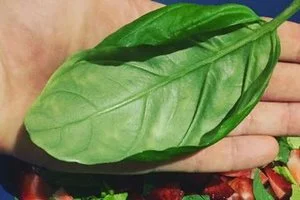
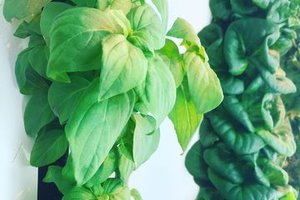

Thai Basil Lemon Basil Italian Large Leaf Basil
FF: By becoming a Freight Farmer, you’ve become part of the local food movement. What does local food mean to you?
DT: Local agriculture not only offers a chance to grow local economies, but it also strengthens the bonds between people within communities. I believe that knowing the person who grows your food and where your food comes from should be an important part of the American lifestyle. By shopping local, its easier to relate a story to the food that consumers eat. We begin to understand that food does not come from a store. Food comes from someone’s hard work, tedious and meticulous care, and overall ingenuity. This is the foundation of the American spirit.
I believe that knowing the person who grows your food and where your food comes from should be an important part of the American lifestyle.
FF: Seems like you have some really big plans for OD Greens. Where do you see the business in the future?
DT: Phase 1 is to demonstrate market feasibility and the viability of the growing component as a standalone operation. Phase 2 incorporates workplace training for disabled military veterans using hydroponics as a platform. The observable and measurable tasks associated with the general operation of the LGM creates a perfect environment to assess an individual’s stamina and productivity throughout a work day. Furthermore, individuals who participate may not have any civilian work history. OD Greens will serve as a workplace environment where veterans can strengthen their resumes and develop strong references for when they apply for civilian jobs.
FF: As you grow, what’s one thing you want your customers to know about you and your business?
DT: I want my customers to know that by purchasing produce from OD Greens theyare helping to provide workplace training for disabled military veterans. I emphasize to my customers that, while my prices might be slightly higher, they are helping to support our mission and disabled veterans with each purchase. I try to maintain competitive pricing whenever possible, in order to make sure that produce is going out to the community. The growing component of OD Greens will serve to support the counseling and workplace training components of the business in the future, and vice versa.
I overcame my fears by running a small pilot system out of my home and establishing a small network of followers including restaurants and a few individual clients. Don Tobul
FF: What was the most challenging part of becoming a Freight Farmer and how were you able to overcome it?
DT: As with anything, the fear of the unknown and taking the leap of faith was the most challenging part for me. I’ve never owned a business before, and while I think I have the entrepreneurial spirit, I have no business education or experience. I’ve never worked in sales, and I continue to maintain my day job during the startup phases of OD Greens.
Don with family in the farm
Photo: OD Greens on Instagram
FF: That’s a challenge a lot of prospective farmers face. How were you able to overcome it?
DT: Luckily, I have supportive family and friends who have helped me at every step along the way. I overcame my fears by running a small pilot system out of my home and establishing a small network of followers including restaurants and a few individual clients. During this pilot I grew as many different crops as I could, logged my measurements daily, and sampled out my product to gain rapport with potential clients. The pilot went very well and it was an invaluable learning experience. It gave me the confidence necessary purchase a Leafy Green Machine.
Dont try to do it alone. There are so many people out there with knowledge, experiences, and insights that can help you succeed.
Don Tobul
FF: And finally, what’s the best piece of advice you can give to people interested in becoming Freight Farmers?
DT: I think the best advice I can give is “Dont try to do it alone.” There are so many people out there with knowledge, experiences, and insights that can help you succeed. Alone, we can get caught up in a process that can seem overwhelming and daunting at times, which is why most ideas don’t manifest into true action.
With that being said, my second piece of advice is don’t fully rely on others to provide you with the best information or insights to your business. Take calculated risks. Do what works for you and your business and maintain your sights on your mission.
Get to know OD Greens by following them on Facebook and Instagram!
Learn more about our farmers through our Case Studies.
See this gallery in the original post
Discover more from Freight Farms
Manila's Urban Greens Plans To Bring The Airbnb Model To Urban Farming
Urban Greens is the brainchild of Luxembourg-born entrepreneur Ralph Becker. The man behind the plan went to university in the UK, Paris and Singapore, before taking on a corporate job with Sony Electronics
AUGUST 5, 2019
KYLE BALDOCK
Ralph Becker’s struggle to modernise agriculture in the Philippines
Introducing Ralph Becker of Urban Greens
Urban Greens is the brainchild of Luxembourg-born entrepreneur Ralph Becker. The man behind the plan went to university in the UK, Paris and Singapore, before taking on a corporate job with Sony Electronics. During his 10-year tenure working in business and product development, he crossed the world, working everywhere from Berlin to Barcelona, from San Francisco to Tokyo.
Through all this experience, Becker always had in mind that he wanted to do something more impactful. In March, 2016, he quit Sony Mobile and moved to the Philippines, the birthplace of his mother. There was no concrete plan- he just wanted to get involved in something exciting and meaningful, and Manila’s start-up scene beckoned.
The Struggle to Modernise Agriculture in the Philippines
The Philippines, with a lush tropical climate and soil capable of growing a vast array of crops, has a rich agricultural tradition. But pressures on this tradition are growing: outdated food production methods are failing to keep pace with explosive population growth; climate change is impacting the variability of monsoon rainfall and increasing the severity of droughts; rapid industrialisation is shifting employment to the urban centres; and some within the country are worried that agriculture is being left behind.
Cursory online research alludes to a stagnant industry, struggling with such factors as an ageing workforce; lack of effective training and education; dependency on imported fertilisers and seeds that carry high prices; and poorly developed infrastructure including irrigation, transport and processing centres. The sum result is an overall agricultural system that leaves farmers unsupported, underfunded and de-incentivised.
Becker told me: ‘Other countries in Southeast Asia, especially Thailand, Indonesia and Vietnam, have found success modernising their agricultural systems, but the Philippines has lagged behind.’ There is no doubt that this situation hurts society as a whole: fresh produce is more expensive in the Philippines than in the U.S. or Europe, even compared to the relative dollar or euro price.
This Isolated Island Population Imports as much as 50% of its Fresh Food.
The Philippines has an abundance of fresh fruit but most vegetables are shipped in from afar, including the U.S., Europe, New Zealand and China to reach the commercial centre of Manila. The carbon footprint from transport, warehousing and refrigeration is huge, and the associated costs are passed on to the consumer. It is clear that this island nation, like many others across the world, needs to restore a sustainable system of food production based on local needs. Becker, ever the optimist, looks at these problems and sees opportunities.
Agriculture as a Tool for Urban Transformation
While working in Japan and the U.S., Becker was exposed to hydroponics and the concepts of urban farming. This interest grew into a hobby and he began growing fresh vegetables in his apartment in central Manila, using a custom-built hydroponic system. When he posted his experiments on social media, he noticed there was a lot of interest and friends encouraged him to do it full time.
He started speaking to friends in the Food & Beverage Industry, who told him of their troubles securing high-quality produce throughout the year. He then looked around at Manila’s urban sprawl- it is one of the most densely populated cities in the world- and noticed all the idle space on rooftops and in basements; entire empty buildings seemed to be calling out for utilisation. Becker wondered: what if we could reclaim all those underutilised, un-monetised spaces and turn them into profitable urban farms- a sort of Airbnb of Urban Farming.
The Perfect Island-Based Food Production System
Thus Urban Greens was founded in October 2016 with the mission of revolutionising the Philippines’ food production mentality. They design closed-environment growing systems that are modular and scalable, adapting to the space required. All systems are run with IoT sensor technology, allowing the team to remotely monitor crop growth within each setup, providing maintenance and service only when necessary. They have so far built several growing systems in private buildings including schools and the national science museum; at the time of writing, projects with several major hotel chains in Manila are lined up. They are also in partnership with property developers working on large-scale projects that integrate AgriTech food production from the start.
Outside of Manila, the opportunities are endless. Many of the Philippines’ islands have resorts and hotels that struggle to source their food; produce usually calls in at Manila first, before being shipped to these remote destinations, adding yet another link in the transport chain. Ralph sees the Urban Greens model of modular, scalable systems as being the perfect island-based food production system. Resorts could ideally cut out the middle men by growing a proportion of their food onsite, thus commanding a higher price premium because of the quality and freshness. But before every resort in the Philippines is equipped with its own vertical farm, a systemic change is needed, starting with the way people think about the entire concept of food.
A Culture in Transition
The Filipino diet is traditionally meat-centric, with lower rates of fruit and vegetable consumption than other countries in the region. Partly due to its heritage of American influence, the Philippines have the highest number of fast food chains per square mile in the region; accordingly, it also suffers from high rates of childhood obesity and type-2 diabetes.
But young Filipinos are socially aware and active- they absorb everything on social media, including the current trend of vegan/vegetarianism and healthier lifestyles. As Ralph puts it: ‘there was no questioning before; now the younger generation is questioning everything.’ There is growing demand for fresher food from this younger demographic, but where will this fresh produce come from?
Becker believes that the answer lies in unlocking the potential of urban farming. He and his team are slowly but surely introducing the concepts of cleaner, fresher greens grown locally, with the use of hydroponics. He runs a series of workshops, seminars and programmes to introduce these concepts and get people growing on a small scale in their own homes.
What’s next for Urban Greens?
These are still early days for Urban Greens, as they look to turn their start-up vitality into the bedrock concept for a modern, Filipino agriculture. As they validate this business model, they are actively seeking partnerships and investment to realise their dream.
Read more about Urban Greens: https://www.eaturbangreens.com/
You can contact Ralph Becker by email: ralph@eaturbangreens.com
Support Urban Greens by following them on Facebook: @EatUrbanGreens
EMAIL US AT INFO@VERTICAL-FARMING.NET
TAGS: AVF MEMBERS, VF INDUSTRY

Webinar Recording | Hammock Greens
Freight Farms team member Rebecca Shamritsky talks with Thomas Smitherman and Aaron Dreilinger of Hammock Greens
About The Webinar
Freight Farms team member Rebecca Shamritsky talks with Thomas Smitherman and Aaron Dreilinger of Hammock Greens about how two restaurant industry veterans found themselves running a six-unit urban farming operation in Miami.
They discuss everything: how they determined their 15-variety Growhouse Mix, how they use farming to bolster underserved Miami communities, and how they were able to grow quickly in just two years.
JUMP RIGHT IN!
5m10s - Hammock Greens Overview
9m20s - Aaron and Thomas’ background
14m10s - Restaurant Customers
24m40s - Community Development in Miami
32m08s - Staffing Strategy
36m52s - Crops and Mix Development
46m13s - Scaling Quickly
57m33s - Live Q&A
Plus, check out our comprehensive re-cap!
WEBINAR RECAP BLOG
Hexagro Urban Farming Biomimicry Insight
Following the biomimicry guiding principles, our Living Farming Tree is the first modular indoor garden that is completely developed for providing everyone their own customized solution for growing what they want, how much they want
When we first started to develop our products we asked ourselves how could we design a system that was not just another farming machine. We didn't want an ugly but functional PVC hydroponic system. One of those that are very complex to install, require above-average DIY skills but produce large quantities of produce. However, we didn't want one of those very beautiful small and unproductive gadgets that we now see in many homes either.
We did want to develop a system that could have the best of both products and then go even beyond.
Nature came to help and we started learning more and more about a new design approach called biomimicry. Through the study of natural patterns and existing well performing structures created by different billions of living creatures on Earth, we were able to get the right inspiration for the development of a product that was as compact as possible, had the right technical requirement for growing healthy and high-quality herbs and, at the same time, was modular and scalable.
B
eing able to leverage this knowledge of space optimization and adaptability, we then adopted different cutting-edge technologies for manufacturing and IoT to create a system that was not only able to adapt to any indoor environment, in terms of space and products farmed. But that could also start sensing what's around it and react and adjust cultivation cycles depending on the different environmental conditions where it was installed.

Following the biomimicry guiding principles, our Living Farming Tree is the first modular indoor garden that is completely developed for providing everyone their own customized solution for growing what they want, how much they want. Thanks to the different modules indeed, you can upgrade and downgrade your production based on your own taste and will. Different modules will be also available depending on the type of crop you want to produce. What basil needs for growing efficiently, is very different from what arugula does, and our agronomists know it. This is why for each type of crop, you will be able to set up different lighting conditions, irrigation cycles, and nutrient contents. And no worries! Everything will be fully automated and easy to monitor through our App and guiding tools!
If you want to know even more about the Living Farming Tree, you can also visit our FAQ page where we keep posting detailed techs&specs about our products.
Hexagro Team
One more time!
If you share our vision and you want to help us spread the voice around even further, here are some quick links to tell your friends online what we are doing.
They might like it as well!
And remember! Thousands of single voices are way more powerful than just a big one!
Tell a Friend!

US: Las Vegas, NV - Local Hydroponic Farm Now Offering Items To The Public
Forget what you thought you knew about farming. Quality produce can now be grown anywhere, including the desert
by Gerard Ramalho
July 31st 2019
LAS VEGAS (KSNV) — Forget what you thought you knew about farming. Quality produce can now be grown anywhere, including the desert.
"Primarily in our systems, the leafy greens, microgreens and herbs are what we're focusing on now," said Michell Howell of Oasis Biotech on Annie Oakley Road in Las Vegas.
For the past year, the company has been perfecting their crops and growing methods, to offer the best quality produce available.
A combination of innovation meets necessity. "I'm just going to lift this up here so that you can see that the roots hang down, nutrients are added to the water so that each plant gets exactly what it needs to be able to grow and thrive," said Howell.
From lighting to climate control to, yes, specialized water, the result they say, is the most nutritious, flavorful product you can buy.
"The edible part of the plant never touches soil, the water or the nutrients. So, almost we like to say, if you wash it, you're going to be contaminating it," said Howell.
Altogether there are five large growing rooms at Oasis Biotech. Each can produce approximately ten times that of a traditional acre, partly because they grow and harvest 365 days a year.
While you won't find every vegetable imaginable here yet, offerings are expanding all the time, and just like their product, they say, business is growing.