

Welcome to iGrow News, Your Source for the World of Indoor Vertical Farming

“Autonomy Will Not Happen Until We Start Sharing Data”
In an emerging industry with companies eager to prove their technologies’ worth, Sensei Ag remains form-factor agnostic, meaning that the agtech company remains unbiased towards different farm hardware solutions – focusing more on software and plant biology. Sensei Ag is a market-changing agtech company that develops agile growing solutions through a highly iterative approach to farming, focused on improving the nutritional quality of fruits and vegetables while also reducing production costs. The company combines plant science, computer vision, machine learning, automation and artificial intelligence into its growing systems
In an emerging industry with companies eager to prove their technologies’ worth, Sensei Ag remains form-factor agnostic, meaning that the agtech company remains unbiased towards different farm hardware solutions – focusing more on software and plant biology.
Sensei Ag is a market-changing agtech company that develops agile growing solutions through a highly iterative approach to farming, focused on improving the nutritional quality of fruits and vegetables while also reducing production costs. The company combines plant science, computer vision, machine learning, automation and artificial intelligence into its growing systems.
According to Sensei Ag CEO Sonia Lo, remaining form factor agnostic is key to the company’s mission of providing hyper-nutritious food to as large a consumer base as possible, which it achieves through both vertical farms and greenhouses.

Image from: Sensei Ag
“We believe that the most robust data comes from operating farms of multiple types. So, not just vertical farms, but also low-tech and high-tech greenhouses. And with vertical farms, we are looking at a number of form factors. Our end goal is to be a grower’s resource and know more about growing at scale with different form factors than anyone else.”
The company is also a strong advocate for open data in the vertical farming industry, which is currently lacking, as evidenced by the siloed development of multiple systems and products, some of which cannot be easily integrated into third-party systems.
“There are lots of data flows and increasingly inexpensive farm management systems. The question, then, is the organization of data into intelligence. Intelligence facilitates autonomy, and as we manage data flows, more farms can become autonomous. But I don’t think autonomy will happen until we start sharing data. For example, we saw an automation supplier with a great robot.
The problem was the robot only works in their ecosystem, so you have to buy the whole farming solution in order for the one robot to work. Ideally, that robot would be plug and play and be able to work in greenhouses and vertical farms,” says Sonia.

Image from: Sensei Ag
According to Sonia, open data in the vertical farming industry may currently be restricted by the dominance of venture financing, which has its own return mandates to fulfill and sometimes wants a “winner takes it all” mentality for the ventures it chooses to back. While such financing has allowed the vertical farming industry to emerge, it may ultimately hinder the industry’s scalability and information sharing.
“There is definitely a capital model in Silicon Valley and in venture capital world in general which is not focused on profitability but is focused on technological achievement and market penetration. We saw this in solar and in the renewables industry when multiple venture capital funds invested in solar assets. Then, the bottom fell out because government subsidies fell away in certain jurisdictions.
I hope that agricultural infrastructure currently financed by venture capital will not necessarily follow the same pathway as solar, but will instead find a public-private partnership model. At some point, these farms need to demonstrate a profit for the debt capital markets to allow scale to occur.”
Image from: Sensei Ag
By embracing open data and transparency, Sonia explains that the vertical farming industry can further mature and iterate with technology to continue lowering costs. By continuously collecting and sharing data from different farm forms, the vertical farming industry would have better insights into the true costs which, according to Sonia, “helps drive scale because it enables the finance community to understand how the farms can be risk assessed and financed.”
Looking ahead, Sensei Ag hopes to form partnerships around the world to bring its innovative, data-driven growing systems across the globe. Taking the Middle East, China and Japan as examples, Sonia explained that the goal would be to choose strategic partners in each region whose local knowledge and business prowess would allow Sensei Ag to iterate its technologies appropriately and serve local markets, bringing cost-competitive farming techniques and nutritious, local produce around the world.

Warehouse Becoming Vertical Farms — And They’re Feeding New Jersey
New Jersey's vertical farms are transforming agriculture by helping farmers meet growing food demand. New Jersey Agriculture Secretary Doug Fisher said that while conventional farming in outdoor fields remains critical, vertical farming has its advantages because of its efficiency and resistance to pests and thus less need for chemicals

Image from: New Jersey 101.5
New Jersey's vertical farms are transforming agriculture by helping farmers meet growing food demand.
New Jersey Agriculture Secretary Doug Fisher said that while conventional farming in outdoor fields remains critical, vertical farming has its advantages because of its efficiency and resistance to pests and thus less need for chemicals.
Vertical farming is the process of growing food vertically in stacked layers indoors under artificial light and temperature, mainly in buildings. These plants receive the same nutrients and all the elements needed to grow plants for food.
Vertical farms are also versatile. Plants may be growing in containers, in old warehouses, in shipping containers, in abandoned buildings.
"That's one of the great advantages — that we can put agriculture in the midst of many landscapes that have lost their vitality," said Fisher.
ResearchandMarkets.com says the U.S. vertical farming market is projected to reach values of around $3 billion by the year 2024.
The one drawback is that its operational and labor costs make it expensive to get up and running.

Image from: AeroFarms
In the past decade, however, vertical farming has become more popular, creating significant crop yields all over the state.
AeroFarms in Newark is the world's largest indoor vertical farm. The farm converted a 75-year-old 70,000-square-foot steel mill into a vertical farming operation. AeroFarms' key products include Dream Greens, its retail brand of baby and micro-greens, available year-round in several ShopRite supermarkets.
Kula Urban Farm in Asbury Park opened in 2014. Vacant lots are transformed into urban farms and there's a hydroponic greenhouse on site. That produce is sold to local restaurants.
Beyond Organic Growers in Freehold uses no pesticides and all seeds and nutrients are organic. There's a minimum of 12,000 plants growing on 144 vertical towers. On its website, it says the greenhouse utilizes a new growing technique called aeroponics, which involves vertical towers where the plant roots hang in the air while a nutrient solution is delivered with a fine mist. It also boasts that by using this method, plants can grow with less land and water while yielding up to 30% more three times faster than traditional soil farming.
Vertical farms in New Jersey help feed local communities. Many are in urban areas and are a form of urban farming.
Fisher predicts that vertical farms will be operational in stores and supermarkets around the state.
"It's continued to expand. There's going to be many, many ways and almost any area in the state has the opportunity to have a vertical farm," Fisher said.

Is AppHarvest the Future of Farming?
In this video from Motley Fool Live, recorded on Jan. 28, Industry Focus host Nick Sciple and Motley Fool contributor Lou Whiteman discuss AppHarvest, one such SPAC that is looking to disrupt the agriculture industry. Here are the details on what AppHarvest wants to do, and a look at whether the company represents the future of farming.
Special purpose acquisition companies, or SPACs, are red-hot right now, with investors clamoring to get into promising young companies.
In this video from Motley Fool Live, recorded on Jan. 28, Industry Focus host Nick Sciple and Motley Fool contributor Lou Whiteman discuss AppHarvest, one such SPAC that is looking to disrupt the agriculture industry. Here are the details on what AppHarvest wants to do, and a look at whether the company represents the future of farming.
Nick Sciple: One last company I wanted to talk about, Lou, and this is one I think it's -- you pay attention to, but not one I'm super excited to run in and buy. It was a company called AppHarvest. It's coming public via a [SPAC] this year. This vertical farming space. We talked about Gladstone Land buying traditional farmland. AppHarvest is taking a very different approach, trying to lean into some of the ESG-type movements.
Lou Whiteman: Yeah. Let's look at this. It probably wouldn't surprise you that the U.S. is the biggest global farm exporter as we said, but it might surprise you that the Netherlands, the tiny little country, is No. 2. The way they do that is tech: Greenhouse farm structure. AppHarvest has taken that model and brought it to the U.S. They have, I believe, three farms in Appalachia. The pitches can produce 30x the yields using 90% less water. Right now, it's mostly tomatoes and it is early-stage. I don't own this stock either. I love this idea. There's some reasons that I'm not buying in right now that we can get into. But this is fascinating to me. We talked about making the world a better place. This is the company that we need to be successful to make the world a better place. The warning on it is that it is a SPAC. So it's not public yet. Right now, I believe N-O-V-S. That deal should close soon. [Editor's note: The deal has since closed.] I'm not the only one excited about it. I tend not to like to buy IPOs and new companies anyway. I think the caution around buying into the excitement applies here. There is a Martha Stewart video on their website talking up the company, which I love Martha Stewart, but that's a hype level that makes me want to just watch and see what they produce. This is just three little farms in Appalachia right now and a great idea. This was all over my watchlist. I would imagine I would love to hold it at some point, but just be careful because this is, as we saw SPACs last year in other areas, people are very excited about this.
Sciple: Yeah. I think, like we've said, for a lot of these companies, the prospects are great. I think when you look at the reduced water usage, better, environmentally friendly, all those sorts of things. I like that they are in Appalachia. As someone who is from the South, I like it when more rural areas get some people actually investing money there. But again, there's a lot of execution between now and really getting to a place where this is the future of farming and they're going to reach scale and all those sorts of things. But this is a company I'm definitely going to have my radar on and pay attention to as they continue to report earnings. Because you can tell yourself a story about how this type of vertical farming, indoor farming disrupts this traditional model, can be more efficient, cleaner, etc. Something to continue paying attention to as we have more information, because this company, like you said, Lou, isn't all the way public yet. We still got to have this SPAC deal finalized and then we get all our fun SEC filings and quarterly calls and all those sorts of things. Once we have that, I will be very much looking forward to seeing what the company has to say.
Whiteman: Right. Just to finish up along too, the interesting thing here is that it is a proven concept because it has worked elsewhere. The downside of that is that it needed to work there. Netherlands just doesn't have -- and this is an expensive proposition to get started, to get going. There's potential there, but in a country blessed with almost seemingly unlimited farmland for now, for long term it makes sense. But in the short term, it could be a hard thing to really get up and running. I think you're right, just one to watch.

Advice For New Vertical Farmers: Grower Spotlight on Andrew Worrall
Andrew is LettUs Grow’s Farm Manager, he manages two of our sites across Bristol and has brought a wealth of knowledge into the company through his previous experience in indoor farming roles across the UK including at Grow Up, Raynor Foods & RootLabs. In this three part interview, we explore what it’s been like to move from animal husbandry to indoor farming, the lessons he’s learned along the way, what it’s like working at LettUs Grow and his advice for those new to indoor growing.

Last week we spoke about running a farm at LettUs Grow. What excites you about vertical farming?
It’s the future of the industry. Also, the amount of salad that these farms can produce for their local community. We want to be able to eat salad all year round and we import to make that happen. However, just a small farm can easily provide for its local community, very efficiently and all year round. The sustainability element is also exciting: with our salad there’s no food miles, it’s very minimalistic. You could use an electric van or bike to distribute this crop if you wanted to. It’s a step forward in terms of what we need to do to take care of our planet.
What do you think are the biggest downsides to vertical farming?
It’s still a new technology and it can be expensive. The biggest roadblock facing the industry is that we need more people and companies to collaborate together to make sure we can build these farms at a sensible rate, so we can provide farms to anyone. We want to be able to provide farms to people, communities and countries that don’t have a lot of money, so that they can provide affordable fresh produce to local people.
How has vertical farming impacted your life?
Massively! I wanted to find my passion, a job that I loved - that was very important to me. It’s satisfying to be in a position now where I’m very happy to be doing what I do and I look forward to going into work. I was happy to make the move from London to Bristol. I would have moved even further if it meant being able to continue working within this industry.

Image from: LettUs Grow
How do you see vertical farming playing a part in the future?
When indoor farming first came about, it had a reputation of being competition for outdoor farming, which just isn’t the case. There’s so much we can’t grow that outdoor farming can provide, such as cereal crops. I’m glad we’re at a stage where indoor and outdoor farms can start to work together to optimise both methods. With these new relationships, there should be a good increase in the amount of indoor farms you’ll be seeing. What LettUs Grow offers with DROP & GROW™ is an exciting project because that’s a 40ft shipping container which can be placed pretty much anywhere. It’s not that big - it could go in a car park or behind a restaurant, but actually provide quite a lot of salad to that area.
How much of our food should be grown this way?
Good question. If you had asked me a while back I would have just said salad, but now I’ve changed my mind. Indoor farming can have a massive impact on propagation, especially aeroponics, because of how we aerate and nourish our roots. We could start lettuce for greenhouse projects and we can also propagate tomatoes, strawberries and tree whips. Propagating trees in this way could potentially be hugely beneficial and it’s something we want to do more of.
We can also quickly grow large amounts of microgreens, baby leafs, herbs and we can grow fruiting crops like strawberries. We are slowly chipping away and it’s really exciting. I’m waiting to see if I can ever say I’ve grown or propagated every crop that can be grown in these farms!
What do you think are the biggest benefits of vertical farming?
How fast these crops can grow! The turnover can be as short as 5 days from seed, depending on the crop. Also how clean it can be - I’m very dedicated to making sure these farms are built to ensure they are easy to be maintained and clean. The most exciting part is the crop growth rate though - it’s incredible how fast our crop grows from seed to plate. In a very well maintained growing calendar, which Ostara® is great for supporting, you can optimise your beds so that the day you harvest can also be the day you germinate onto that same bed. Your farms can be forever providing salad at very fast rates.

Image from: LettUs Grow
What was the biggest change you encountered during your years indoor farming?
Moving from being a production grower to an R&D grower. It has been a great change! As a production grower I knew what I needed to know about growing the plant safely and getting it onto a plate so it was good for the consumer. Now I’m fully optimising, learning and understanding the plants completely, so that I can help the grower that I used to be. We spend a lot of time on crop recipes to make sure that whoever we sell our farms to can start up very quickly and they won’t have to spend months developing their crops. If they have the customers and clients behind them, they can buy DROP & GROW and start producing salad as soon as it's been commissioned.
What was the biggest change you encountered in the industry?
More and more people are speaking about what’s going on in the industry and getting involved. I get so many messages on LinkedIn with people who want to get into this career. It’s exciting to see that indoor growing is a career people can access now. When I was developing my skills I didn’t know I would end up in indoor farming. There are more opportunities than ever before. For example, our Crop Technician is doing a placement here for 2 years. The aim is that they can gain the skill sets and knowledge they need to then go off and do the same practice in any farm they want.
What advice do you have for people who are looking to start a career in growing?
Reach out to companies who are already out there. You could start off part-time or as an assistant. If you are patient and dedicated then it’s a journey I promise you won’t regret. It takes a lot of work, but the outcome is amazing - you’ll be learning so much about this new technology. You’ll also build great relationships: there are so many amazing people in this industry who are so interesting, with different backgrounds, who are willing to share their knowledge. You can always learn more and other people are a great source of that.
What about for those looking to start a vertical farming business?
Do your homework. There are people out there who you can reach out to and it’s very easy to get information. It’s very easy to get excited about the idea and jump straight into it, because it is exciting and can be very rewarding, but it’s really important to do it step by step. Know how to scale properly, learning the differences between a small and larger farm. Understand how many people you’ll need and the logistics. I’d also advise people to get some practical work experience before you buy. You want to start the company knowing the tricks of the trade.

Image from: LettUs Grow
LettUs Grow Blog: www.lettusgrow.com/blog/advice-for-vertical-farmers

US - NEW MEXICO: ‘Farm in a Box’ Coming To Grants
The Farm in a Box operates inside a 40-foot shipping container, shown here in Moffat County, Colo. A similar one will be set up at New Mexico State University branch campus in Grants. (Courtesy of Tri-State Generation and Transmission)
ALBUQUERQUE, N.M. — Fresh, locally produced vegetables will soon sprout from hydroponic beds in an enclosed, converted shipping container parked at New Mexico State University’s branch campus in Grants.
The 40-foot “Farm in a Box” will provide hands-on education and workforce training for local students and others interested in studying the emerging science of “indoor agriculture” as a new, potentially sustainable, enterprise that could offer fresh economic development opportunities and job creation in an area hard hit by the transition from fossil fuels to renewable energy.
NMSU, the Tri-State Generation and Transmission Association, and the National Electric Power Research Institute (EPRI) are collaborating on the project.
It’s one of several initiatives under development with local, state, and federal backing to diversify economic activity in Cibola, McKinley, and San Juan counties, where coal-fired power plants and associated mining have provided a financial mainstay for workers and communities for decades.
Both Cibola and McKinley counties are reeling from last year’s shutdown of the coal-fired Escalante Generating Station near Grants, plus the closure of Marathon Petroleum’s oil refinery in Gallup, which together eliminated hundreds of stable, high-paying jobs in those northwestern communities.
Unemployment hit 10.8% in Cibola County in December and 10.2% in McKinley County, according to the state Department of Workforce Solutions. That compares to an 8.2% average statewide unemployment rate.
To ease the impact of Escalante’s closure and assist in transitioning local communities, Tri-State provided $5 million in grants in January to four local economic development organizations. It is also now sponsoring the Farm in a Box initiative, providing $250,000 to set up and equip the high-tech container unit that houses the indoor agricultural operation, with forthcoming grants for NMSU faculty and student assistants to work on the project.
“We realize that closing such coal facilities as the Escalante plant that have traditionally employed significant workforces creates very difficult challenges for local communities to replace those jobs,” Tri-State spokesman Mark Stutz said. “Our goal is to find opportunities in support of economic development with new technologies when we can.”
Tri-State permanently closed the 253-megawatt Escalante power plant in Pruitt last summer as part of the association’s long-term plan to completely withdraw from coal generation over the next decade. It laid off about two-thirds of the plant’s 107 employees, Stutz said.
TriState also plans to close a much larger, 1.3-gigawatt coal facility in Craig, a municipality in Moffat County, Colorado, where the company sponsored another Farm in a Box project that EPRI set up last November.
“We don’t want to just walk away from these communities that we’ve been a part of for decades,” Stutz said.
High tech
EPRI has set up similar Farm in a Box projects in 13 states, said its principal technical leader Frank Sharp, project manager for the institute’s indoor agriculture-and-lighting research efforts.
It’s part of an emerging concept of indoor farming for urban areas and isolated rural communities where food could be grown year-round right where it’s consumed. It could lead to huge energy and water savings through efficient, high-tech growing processes, contributing to carbon reduction by using electricity rather than fossil fuels in agricultural operations and by eliminating long-haul transport of produce to market.
For economically stressed communities such as Cibola and McKinley counties, it could be scaled beyond shipping containers to retrofit under-used or abandoned buildings and to construct new facilities, such as greenhouses, on empty plots, Sharp said.
“It all translates into community impact, job creation, and beneficial use of electricity,” Sharp told the Journal. “Vacated buildings with the infrastructure already in place can be retrofitted, with opportunities to also build new facilities.”
Electric Power Research Institute principal technical leader Frank Sharp, left, with Tri-State Generation and Transmission Association CEO Duane Highley, inside the Farm in a Box agricultural container that was set up in Moffat County, Colo., last November. (Courtesy of Tri-State Generation and Transmission)
Research needed
Research is still needed to maximize efficiency and production, measure benefits, make contained farming systems profitable, and train the workforce. That’s where NMSU comes in, said Jay Lillywhite, agricultural economics professor and co-director of NMSU’s center of Excellence in Sustainable Food and Agricultural Systems.
NMSU faculty and students will study the entire container system, which includes vertical, hanging plastic enclosures to grow crops connected to a closed-loop plumbing system to recycle all water. Researchers will monitor all energy and water use, plant productivity, the impact of red and blue LED lighting spectrums on plant growth, and the economics of the whole operation, Lillywhite said.
“We’ll record everything and transmit all the data wirelessly to EPRI,” Lillywhite said. “It needs to be profitable. Indoor agriculture has had mixed reviews in terms of profitability, so we’ll look at a model that makes sense for New Mexico and the Southwest.”
Other applications
Opportunities extend into many disciplines beyond agriculture, including electrical engineering focused on energy efficiency and renewable generation as alternative systems, such as solar panels, are added to indoor operations, said Rolando A. Flores, dean of NMSU’s College of Agriculture, Consumer, and Environmental Sciences.
“The project has excellent potential to address social, environmental, and economic facets of sustainability, and become a resource-efficiency model for urban agriculture, provided that renewable energy can be incorporated from the beginning,” he said.
State Rep. Patricia Lundstrom, D-Grants, said indoor agriculture can offer significant opportunities alongside other initiatives to diversify the local economy.
Lundstrom sponsored legislation last year that now allows counties with coal plants that are closing to set up special economic districts with bonding and taxing authorities to invest in infrastructure, business recruitment, and retention to create jobs and promote economic development.
That led to the launch in December of the McKinley County Electric Generating Facility Economic District, which is focused on converting the Escalante site in Pruitt into a new industrial zone to recruit more businesses to the area.
“Value-added agriculture is one of the opportunities we can work to develop there with help from the partners on this project,” Lundstrom said. “It can have a significant impact as we work to recruit new, sustainable industry to the local community.”

President Biden & The Future of Regenerative Agriculture In The US
With a new administration in Washington, the next few years could be interesting for efforts to improve agriculture production while addressing environmental issues at the same time
February 5, 2021
Editor’s note: Steve Groff is a farmer, a regenerative agriculture consultant, and the founder of Cover Crop Coaching, which educates farmers and farm advisors about effective cover crop use. The views expressed in this guest article are the author’s own and do not necessarily represent those of AFN.
With a new administration in Washington, the next few years could be interesting for efforts to improve agriculture production while addressing environmental issues at the same time.
President Joe Biden has expressed support for climate-friendly farming practices, but there are questions about what that ultimately will mean. Will helping American farms be a high priority for the new president or will it get lost amid other pressing concerns, including the Covid-19 pandemic? And just how open is a good portion of the agriculture community to the government getting involved in what they do?
Among other proposals, Biden has vowed to pursue policies that would expand and fortify the federal Conservation Stewardship Program. One desired result of this effort would be to make more money available for payments to farmers who reduce their carbon footprint through a variety of methods, including the use of cover crops.
While the big-business side of agriculture has been more willing to use government programs, grassroots farmers involved in regenerative agriculture tend to be leery of government programs and handouts. Most of them, in fact, suggest getting out of government-related programs – particularly the use of crop insurance.
Invest with Impact. Click here.
Those in the regenerative agriculture movement come from the perspective that we have ruined the resiliency of our soils and if we ‘regenerate’ them, they can better handle weather extremes brought on by climate change.
But one challenge for the regenerative agriculture movement is getting farmers educated on how to use these practices. That is a huge reason why I wrote my book, The Future Proof Farm. I wanted not only to educate but to inspire farmers to take their first step in that direction.
I firmly believe regenerative agriculture is scalable, as we now have large farms with thousands of acres that are successfully using these practices with little to no inputs such as fertilizers and pesticides.
And yes, most of those farms are doing it with no government help.
But on the other side are farmers drooling over the potential to get paid to use cover crops, no-till, and other soil health practices that can sequester carbon. Farmers are primed like never before to try those practices due to rising awareness over the past 20 years or so. In any business, it’s ‘all about the money’ – so if a farmer can get paid to engage in a good practice, it’s a favorable thing in their minds.
How do farmers feel about cover crops? We asked a cover crop coach – read more here
I am biased toward letting the market work, as we know there is a demand for food and fiber grown using regenerative agriculture – and we can accomplish what we need to without government help. With regenerative agriculture, we can lower our costs of production.
That being said, there are not enough resources to help farmers learn these methods. I believe we have an education hurdle – not a need for another handout. I also believe we need to take a deeper look at how regenerative agriculture actually leads to a more nutritious or nutrient-dense food product, whether it is fed to livestock or ends up on the kitchen table.
I do see some merit in the government helping farmers for a few years to get started in these carbon-sequestering practices, but more important are educational efforts to help farmers be effective in using those practices. The old adage applies: give a person a fish and you will be giving them fish for a lifetime; teach each person to fish, and they will meet their own needs for a lifetime.
If the Biden administration can somehow capture a holistic approach by supporting the education necessary for farmers to grow healthy food, it will be a win for producers, a win for the people, and a win for the planet.

Does Vertical Farming Actually Work?
Essentially, Bowery grows greens and other veggies in a nutrient-rich tray of water, which is consistently recycled in a closed-loop system
Feb. 03, 2021
In the outskirts of Newark, New Jersey, tucked between a packaging manufacturer and an aquatics center lies a farm. Except, if you're driving down the nearby highway you probably wouldn't be able to tell that this particular farm is churning out thousands of pounds of greens each year. In fact, all you'll see is a bunch of buildings, because this is a vertical farming operation called AeroFarms, which grows all their food in a warehouse. Like the owners of AeroFarms, tech enthusiasts across the world have embraced the dream of vertical farming, exclaiming that their operations are the answer to feeding a growing global population, combating climate change, and eradicating food deserts.
The many-shelved farming operation that is AeroFarms is just one of many companies that use vertical space to grow vegetables. What sets AeroFarms apart, however, is that it grows in a fine mist filled with nutrients instead of a typical growing environment like Rockwool and nutrient-rich water. But AeroFarms is an outlier in the vertical farming space. The typical vertical farm looks a lot more like that at Bowery, a company that uses a more traditional hydroponics system to grow their produce.
Essentially, Bowery grows greens and other veggies in a nutrient-rich tray of water, which is consistently recycled in a closed-loop system. This system is then replicated en masse and expanded not horizontally, but vertically to maximize space. But because all these plants are stacked on top of each other, access to light becomes a big obstacle, which means that each shelf is equipped with LED lights to act as artificial sunlight. Some operations like Plenty go even further by shining only the beneficial colors in the light spectrum for growth. While some of these large-scale vertical farms can quickly become laden with advanced technologies like robotic arms and AI monitoring systems, at their most basic, vertical farms use a combination of artificial sunlight and vertical space to maximize the amount of yield per acre. These food factories seem promising, but they also seem like a lot of work. So why are people so excited about them? For that answer and a deeper behind-the-scenes look at vertical farming, make sure to check out the video above.
Our Changing Climate is an environmental YouTube channel that explores the intersections of social, political, climatic, and food-based issues. The channel dives into topics like zero waste and nuclear energy in order to understand how to effectively tackle climate change and environmental destruction.
Vertical Farming’s Sky-High Ambitions Cut Short By EU
Startups argue tough rules are blocking innovation in a sector that shares Brussels’ green goals
01-02-2021 | Politico
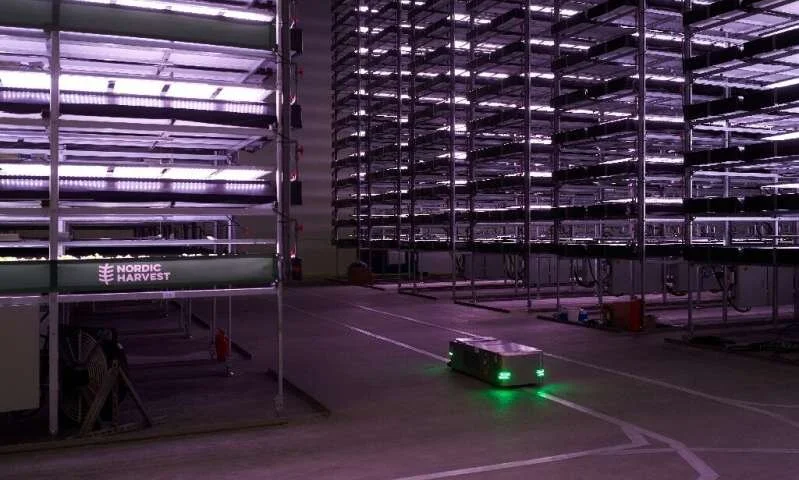
Startups argue tough rules are blocking innovation in a sector that shares Brussels’ green goals. Anders Riemann's indoor farm in the suburbs of Copenhagen is pesticide-free, chemical fertilizer-free, and promises not to emit any greenhouse gases into the environment. Indeed, his type of vertical farm — with greens stacked 14 levels deep — is often hailed as the future of food production in parts of the world where affordable farmland is scarce.
But under the EU’s strict rules, his company Nordic Harvest won’t be able to label its products as organic, which is precisely the premium market that eco-friendly vertical farmers want to sell into.
Supporters of more sustainable agriculture have high hopes of vertical farms not only because they save space but also because they often incorporate technology to save water and energy.
Vertical farms also work with hydroponic planting, which uses mineral nutrient solutions instead of soil. And it's the soil that's the problem, when it comes to being organic. EU regulation demands soil — which hydroponic production lacks by definition — as a feature of organic farming, meaning Nordic Harvest won't be able to use the term on labels when it begins deliveries of its produce next month.
“It’s ridiculous," said Riemann, the chief executive of Nordic Harvest, which is Europe’s largest vertical farm operation and recently raised 62 million Danish Kroner (€8.3 million) in its first investment round. "The EU regulation [has] slightly blocked our innovation by defining organic as being only produced in soil.”
That could make it harder for Nordic Harvest and a growing number of similar vertical farm startups to signal to shoppers their sustainable philosophy at a time when the EU is aiming to promote such green principles under its Farm to Fork food strategy.
Nordic Harvest plans to grow 1,000 metric tons of spinach, rucola, basil, mint, and coriander each year, powered by 100 percent certified wind energy. Riemann said that growing the same amount of produce using traditional farm practices would entail 467 hectares of land — land which Riemann said could be better put toward removing and storing carbon from the atmosphere.
Moreover, the former investment banker claims that vertical farming's potential is so great that it could cover all of Denmark’s salad and herb needs with just 20 urban farms.
An EU official said “organic plant production is based on nourishing the plants primarily through the soil ecosystem,” which means “plants should be produced on and in living soil in connection with the subsoil and bedrock. This is a fundamental principle of organic production.”
Consequently, “vertical farming based on hydroponic production does not comply with the rules on organic production,” the official added.
The EU isn't alone in its strict definition of tying organic labels to soil requirements, and the U.S. is one of the few outlier countries where hydroponic production can be considered organic if producers comply with other criteria. Some in the traditional organic industry, which is already struggling to carve out a niche for its own more established and often costlier green practices, argue hydroponics don't capture the spirit of the movement as it's not directly rooted in the ecosystem.
Eric Gall, deputy director of the organic farm trade association IFOAM Organics Europe, said that calling something organic obliges the producer to follow certain rules regarding soil.
“It doesn’t mean vertical farming is not good — it’s probably great — but it can’t be called organic,” Gall said. “It’s not a matter of discrimination but of having clear principles to decide what is and what is not organic.”
Nordic Harvest now plans to use its own labels with phrases like “Where are my pesticides?” But when a nominally organic apple can be flown from New Zealand to Denmark and receive an instantly recognizable eco-label, Riemann says the EU’s organic rules are “cheating the consumer.”
Despite such limitations, Nordic Harvest aims to push ahead with plans for expansion across Scandinavia and to start growing strawberries and blueberries in Denmark by 2024.
Still, new EU public procurement rules that are supposed to bolster demand for organic foods as part of the Farm to Fork strategy may further dent the upstart sector's share in the eco-conscious market.
“It definitely discriminates against vertical farming,” Riemann said. “But nobody thought about it before vertical farming was established.”
Photo: A robot, used to plant seeds and check the plants while growing, moves past vertical racks at the vertical plant farm 'Nordic Harvest'. Credit: AFP
Source: Politico

Women In Agribusiness Announces WIA Europe, New Career Board And Meet Ups
Building off its successful 2020 virtual Women in Agribusiness (WIA) events, U.S.-based HighQuest Group has announced the lineup of events for 2021, starting with the Women in Agribusiness Summit Europe virtual conference on 8-10 March 2021
BOSTON, 2021 – Building off its successful 2020 virtual Women in Agribusiness (WIA) events, U.S.-based HighQuest Group has announced the lineup of events for 2021, starting with the Women in Agribusiness Summit Europe virtual conference on 8-10 March 2021.
The three-day virtual event, with live content from exceptional speakers, will continue the year-round agribusiness conversation among the Women in Agribusiness (WIA) community, which is thousands strong and growing each day. The Summit will include two virtual tours, an integrated platform that is the portal to knowledge and networking, and the promise of connecting with speakers and attendees from several countries.
The agenda includes discussions on how upstream agriculture in the EU can be made more sustainable, opportunities in plant-based foods, supply chain challenges and possibilities, and a special two-hour strategic networking workshop. Speakers include Jaine Chisholm Caunt, director general of GAFTA; Geraldine Kutas, director general, European Crop Protection Association; and Dorothy Dalton, CEO of 3Plus International Ltd. Registration is now open, along with the chance to take a peek at the 2020 U.S. event to learn more about the conference.
“If the last year has shown anything, it is that staying connected is imperative to advancing your business,” said Joy O’Shaughnessy, event director and chief operating officer of HighQuest Group, the parent company of Women in Agribusiness. “Our commitment in providing networking opportunities to nurture and expand, as well as the knowledge and know-how to stay relevant, has not waivered during a year of unknowns, and we are grateful to continue to service the WIA community.”
Along those lines, WIA announced the start of its European WIA Meet Up dates for 2021. WIA Meet Ups are a night of networking from the comfort of one’s own home, while making new contacts and building new business relationships.
Admission is free to WIA members (US$10 for non-members), and one can join and register here: womeninag.com/membership.
2021 Virtual WIA Meet Up – Europe
· Thursday, 14 January – 6 p.m. CET
· Thursday, 11 February – 6 p.m. CET
Connect With Opportunity
In keeping with opening new doors within the ag sector, Women in Agribusiness has introduced the WIA Career Connector. The multi-tiered website offers opportunities for both employers and job seekers in its goal to connect talent with opportunity. Visitors to the site – careers.womeninag.com – can post new jobs, examine featured jobs, search by candidate, and get assistance with resume creation, job interview skills and much more. The world’s largest food and ag companies are already using the WIA Career Connector, and its contents will be freely shared with the WIA community of over 10,000.
Visit womeninag.com to make plans now to join the burgeoning WIA community in 2021. Also visit us @Womeninagri, on Facebook and LinkedIn.
# # #
About Women in Agribusiness
The annual Women in Agribusiness Summit in the U.S., which started in 2012, is renowned for annually convening close to 1,000 of the country’s female agribusiness decision-makers, with 30 percent at the CEO/executive level and another 25 percent at department management level. Women in Agribusiness Summit Europe debuted in Barcelona, Spain, in February 2015, which was praised by an executive in attendance for being “a solutions-oriented event that also brought up current trends in the market” and “a uniquely-focused agricultural event for women”.
WIA initiatives have grown to include the WIA Membership, WIA Demeter Award of Excellence, Scholarships, and the WIA Today blog. Learn more at womeninag.com.

Lumileds Addresses Industry Growth With LUXEON 3030 HE Plus Horticulture
The new LEDs are engineered for robust sulfur protection – critical for long and stable lifetime in warm and humid environments
Broad spectrum white LEDs are widely available
San Jose, CA – February 2, 2021 – Lumileds today announced immediate high quantity availability of its LUXEON 3030 HE Plus Horticulture LEDs. Based on the company’s leading 3030 LED portfolio and characterized for horticulture, the new options offer high PPF/W, broad-spectrum white light that enables grow lights that are productive and economical.
“In horticulture applications growers are looking for time tested, top performance and reliability, the LUXEON 3030 HE Plus Horticulture delivers the photons that enable consistent and high growth output with the highest of efficiencies,” said Mei Yi, Product Manager.
The new LEDs are engineered for robust sulfur protection – critical for long and stable lifetime in warm and humid environments – and are specified for horticulture at 65mA and Tj= 25°C with CCTs from 2200K to 6500K and CRI of 70, 80 or 90. When matched with LUXEON Deep Red and Far Red options a complete horticulture illumination solution is at hand.
LUXEON 3030 HE Plus Horticulture is available in manufacturing quantities today. It offers a 0.1V forward voltage bin, quadrant color bin inside 3SDCM, and a maximum drive current of 480mA. Detailed product information can be found at https://lumileds.com/3030Horticulture.
About Lumileds
For automotive, mobile, IoT, and illumination companies that require innovative lighting solutions, Lumileds is a global leader employing more than 7,000 team members operating in over 30 countries. Lumileds partners with its customers to push the boundaries of light.
To learn more about our portfolio of lighting solutions, visit lumileds.com.
For further information, please contact:
Steve Landau, Director Marketing Communications
+1 408 710 4090

AppHarvest Makes Initial Donation of 2,500 Pounds of Tomatoes To God’s Pantry Food Bank
AgTech leader AppHarvest today announced it has delivered 2,500 pounds of Beefsteak tomatoes from its first harvest this week to God's Pantry Food Bank, which will distribute them to those in need
Company designated portion of the first harvest of fresh, sustainably grown tomatoes to feed Kentuckians in need
JANUARY 22, 2021 — MOREHEAD, KY — AgTech leader AppHarvest today announced it has delivered 2,500 pounds of Beefsteak tomatoes from its first harvest this week to God's Pantry Food Bank, which will distribute them to those in need.
Through its 400-plus distribution partners, God’s Pantry Food Bank provides food to residents of 50 Kentucky counties, focused on Eastern and Central Kentucky. The organization, which operates a distribution center in Morehead — the home of AppHarvest’s 60-acre indoor farm — distributed nearly 14 million pounds of fresh fruits and veggies and more than 41 million pounds of food overall during its most recent fiscal year.
“The faith and grit of Eastern Kentuckians has built one of the world’s largest high-tech greenhouses, and we appreciate the opportunity to share what we’re growing with those in need as we all work to create a resilient food system,” said AppHarvest Founder & CEO Jonathan Webb in delivering the donated tomatoes on Friday. “We’re working to create America’s AgTech capital here in Appalachia to provide affordable, nutritious, and delicious fruits and veggies that will help reduce hunger and food deserts.”
“God’s Pantry Food Bank is thrilled to engage with AppHarvest to nourish more lives through sustainable agriculture,” said CEO Michael Halligan. “There are more than 250,000 kids, adults, and seniors across Central and Eastern Kentucky who are not sure when they might have their next meal. Imagine the impact of now having a sandwich with a fresh, Kentucky-grown slice of tomato on the top.”
The donation is one of many steps AppHarvest is taking to address America’s food crisis. In Kentucky alone, 20 percent of children and nearly 15 percent of adults experience food insecurity.1 Nationally, the U.S. Centers for Disease Control and Prevention has found only one in 10 adults eat enough fruits and veggies.2
By building closer to consumers, AppHarvest provides fresher fruits and vegetables at affordable prices. The company is also focused on helping students grow their own food through its high-tech educational container farm program. Started in 2018 prior to the company’s operations commencing at its indoor farm in Morehead, the program retrofits shipping containers with high-tech farming equipment to teach students to grow healthy leafy greens. The program started at Shelby Valley High School in Pike County and has since expanded to Rowan and Breathitt counties, with additional units planned. AppHarvest also recently partnered with Save the Children to provide more than 1,600 leafy green growing kits to Kentucky kids in need.
1 Feeding America
2 U.S. Centers for Disease Control and Prevention
“AppHarvest was founded as a benefit corporation and has also been certified as a B Corp by the independent non-profit B Lab, because we believe companies should be in the business of doing good,” said Amy Samples, AppHarvest’s Director of Community Outreach and People Programs. “We’re building America’s AgTech capital from within Appalachia and know that education is core to achieving that.”
Shipments from AppHarvest’s first harvest this week are now available at select national retailers such as Kroger, Publix, Walmart, Food City, and Meijer. The company’s Morehead facility alone is expected to produce about 45 million pounds of tomatoes annually from about 720,000 tomato plants, a mix of Beefsteak and “Tomatoes on the Vine.”
AppHarvest has two more facilities under construction—a similar 60-plus acre facility outside Richmond, Ky., and a 15-acre facility to grow leafy greens in Berea, Ky. AppHarvest also is planning for more facilities across Kentucky and Central Appalachia, with the goal of 12 total farms by the end of 2025.
About AppHarvest
AppHarvest is an applied technology company building some of the world’s largest indoor farms in Appalachia. The Company combines conventional agricultural techniques with cutting-edge technology and is addressing key issues including improving access for all to nutritious food, farming more sustainably, building a home-grown food supply, and increasing investment in Appalachia. The Company’s 60-acre Morehead, KY facility is among the largest indoor farms in the U.S. For more information, visit https://www.appharvest.com/.
Forward-Looking Statements
Certain statements included in this press release that are not historical facts are forward-looking statements for purposes of the safe harbor provisions under the United States Private Securities Litigation Reform Act of 1995. Forward-looking statements generally are accompanied by words such as “believe,” “may,” “will,” “estimate,” “continue,” “anticipate,” “intend,” “expect,” “should,” “would,” “plan,” “predict,” “potential,” “seem,” “seek,” “future,” “outlook,” and similar expressions that predict or indicate future events or trends or that are not statements of historical matters. All statements, other than statements of present or historical fact included in this press release, regarding Novus Capital’s proposed acquisition of AppHarvest, Novus Capital’s ability to consummate the transaction, the benefits of the transaction and the combined company’s future financial performance, as well as the combined company’s growth plans and strategy, future operations, estimated financial position, estimated revenues and losses, projected costs, prospects, plans and objectives of management are forward-looking statements. These statements are based on various assumptions, whether or not identified in this press release, and on the current expectations of AppHarvest’s management and are not predictions of actual performance. These forward-looking statements are provided for illustrative purposes only and are not intended to serve as, and must not be relied on as, a guarantee, an assurance, a prediction, or a definitive statement of fact or probability. Actual events and circumstances are difficult or impossible to predict and will differ from assumptions. Many actual events and circumstances are beyond the control of AppHarvest. These forward-looking statements are subject to a number of risks and uncertainties, including those discussed in Novus Capital’s registration statement on Form S-4, filed with the SEC on October 9, 2020 (the “Registration Statement”), under the heading “Risk Factors,” and other documents Novus Capital has filed, or will file, with the SEC. If any of these risks materialize or our assumptions prove incorrect, actual results could differ materially from the results implied by these forward-looking statements. In addition, forward-looking statements reflect AppHarvest’s expectations, plans, or forecasts of future events and views as of the date of this press release. AppHarvest anticipates that subsequent events and developments will cause its assessments to change. However, while AppHarvest may elect to update these forward-looking statements at some point in the future, AppHarvest specifically disclaims any obligation to do so. These forward-looking statements should not be relied upon as representing AppHarvest’s assessments of any date subsequent to the date of this press release. Accordingly, undue reliance should not be placed upon the forward-looking statements.

Emerging Needs In Vertical Farming And Cannabis Cultivation
The development of vertical farming will continue considerably in the coming years, according to Montel Inc.. With the company’s Vertical Farming Systems Montel expects a very high volume of new projects in both food and cannabis. “COVID-19 has only increased the need to grow locally and inside cities”, says Yves Bélanger, VP Sales Vertical Farming Market International
15 January 2021
Jacco Strating
Yves Bélanger of Montel Inc. believes that COVID-19 has only increased the need to grow locally and inside cities. He speaks about why the development of vertical farming will continue considerably in the coming years.
The development of vertical farming will continue considerably in the coming years, according to Montel Inc.. With the company’s Vertical Farming Systems Montel expects a very high volume of new projects in both food and cannabis. “COVID-19 has only increased the need to grow locally and inside cities”, says Yves Bélanger, VP Sales Vertical Farming Market International.
Established in 1924, Montel pioneered high-density mobile storage systems providing cost-efficient storage solutions using less space and established a global network of authorized Montel distributors. Montel's achievements include some of the most prestigious projects in North America and around the world. “Prior to becoming North America's leading manufacturer of mobile systems, we had acquired nearly 40 years' experience in the electrical industry, including extensive involvement in the construction of generating stations and power grids for major world-leading hydroelectricity plants. This explains our expertise and the exceptional quality of our electrical mobile systems”, says Bélanger.
Inventive ways to feed the world
Before the crisis, it was already accepted as a general consensus that we are facing a complex challenge: we will need inventive ways to feed to growing population but the potential and land availability for cultivation has almost reached its maximum capacity. Also rising before the crisis was the global trend of growing locally due to a variety of factors or needs: in regions in which climate is a challenge, in remote areas, where there is water or soil rarity, aiming at lowering the carbon footprint, increasing product short shelf life, cutting down on transportation, etc. “In the long term, we feel that the current crisis will accelerate tremendously and definitely crystallize the need to grow locally and/or inside cities and the need to grow in a controlled cleanroom environment which will result in a higher demand for our product and a growth in our sector”, says Bélanger. “With its mobile carriages, the Greenrak Integrated Vertical Indoor Farming Solution is the ideal response to the current situation allowing both to increase yield while reducing the required surface by eliminating space wasting.
Customers increasingly have groceries delivered directly to their homes seems to be also an underlying trend rising from this crisis and in the long term, this may also play a role in creating a higher demand for our high-density cold storage solutions.”
Montel’s Greenrak and Grow&Roll systems were developed specifically for growing applications. Greenrak mobile system is lightweight, rust-resistant, and simple in design which allows for easy installation, use, and maintenance. Grow&Roll mobile system is the heavy-duty version of Greenrak and can withstand a weight of 3630 kg. Growrak was engineered to free up space between frames at each level providing plenty of clearance for better airflow, ventilation system ducts, lighting fixtures, and enough spacing for oversize trays to pass through between frames.
High yield hydroponic vertical farms
“Given the fact that Montel's Vertical Farming systems have been implemented in numerous indoor high yield hydroponic vertical farms that utilize cleanroom technologies and automation as well as many medical or recreational cannabis facilities around the world, we feel our expertise will benefit this growing sector. We are expecting a very high volume of projects that will require Integrated Vertical Farming Solutions. Our experience and knowledge allows us to rapidly assist the emerging needs in vertical farming and medical or recreational cannabis cultivation. By extension, we also foresee an increasing demand in the Cannabis Dispensaries market for our Light-duty drawer cabinet. We also expect a possible higher demand for our High-Density Cold Storage Solutions for the grocery delivery market and Buy Online, Pickup In-Store (BOPIS) market.”
Tags: Vegetables, Medicinal cannabis

No Dirt? No Farm? No Problem. The Potential For Soil-Less Agriculture Is Huge
It’s a growing industry — $9.5 billion in sales is expected to nearly double in the next five years — that stems, in part, from concerns about growing enough food to feed a worldwide population expected to hit 10 billion in the next 30 years.

At Plenty’s South San Francisco hydroponics growing facility, a million plants produce leafy greens that are sold through area grocery stores. The company plans to open a farm in Compton this year.
(Plenty)
Imagine kale that doesn’t taste like a punishment for something you did in a previous life. Envision leafy greens that aren’t limp from their journey to your plate. Anticipate the intense flavor of just-picked herbs that kick up your latest culinary creation a notch or three.
Then consider the possibility that such advancements will play a role in altering the face of agriculture, becoming sources of flavorful, fresh produce in “food deserts” and making farm-to-table restaurant cuisine possible because produce is grown on the premises, even in urban areas.
This is the potential and the promise of hydroponics (a term that also includes aeroponics and aquaponics systems), the soil-less cultivation of crops in controlled environments. It’s a growing industry — $9.5 billion in sales is expected to nearly double in the next five years — that stems, in part, from concerns about growing enough food to feed a worldwide population expected to hit 10 billion in the next 30 years.
The growing method isn’t new. The Hanging Gardens of Babylon, dating to the 6th century B.C., maybe a precursor to today’s hydroponics, if they existed. (Historians disagree on that as well as where the gardens were.) Then, as now, technology is a key to giving growers, not Mother Nature, more control overproduction.
The size of today’s systems varies. They might be as simple and compact as an in-home system that’s about the size of a couple of loaves of bread stacked on top of each other. Some of the growing popularity of those units may be connected to the pandemic, according to Paul Rabaut, director of marketing for AeroGarden, which produces systems for in-home crop production.
“As soon as the pandemic was declared in mid-March and the quarantine took effect, we saw immediate growth spikes, unlike anything we’d ever seen before,” he said. Those spikes resulted, he said, from the need for entertainment beyond Netflix and jigsaw puzzles, a desire to minimize trips to the grocery store and the promise of teachable moments for kids now schooled at home.
At the other end of the spectrum are large urban farms. Plenty, for instance, has a South San Francisco hydroponics growing facility where a million plant sites produce crops, some of which are sold through area grocery stores. The company hopes to open a farm in Compton this year that’s expected to be about the size of a big-box store and will grow the equivalent of 700 acres of food.

Plenty scientists, engineers and growers at work in their South San Francisco hydroponics growing facility.
(Plenty)
“It’s a super vibrant community with a rich agricultural history,” Nate Storey, a cofounder of the vertical farming company, said of the Compton facility. “It also happens to be a food desert.
“Americans eat only about 30% of what they should be eating as far as fresh foods,” he said. “We started this company because we realized the world needed more fresh fruits and vegetables.”
As different as hydroponics growing systems are, most have this in common: The plants thrive because of the nutrients they receive and the consistency of the environment and can produce crops of fresh leafy greens and other vegetables, various herbs and sometimes fruits.
Such controlled-environment agriculture is part of the larger trend of urban farms, recognized last year by the May opening of the U.S. Department of Agriculture’s Office of Urban Agriculture and Innovative Production. The farms’ proximity to larger markets means produce can be delivered quickly to consumers, whether they’re grocery shoppers, airline passengers, students or communities in need or restaurants, an industry that has been devastated in the last year.
Today’s micro-and mega-farms have taken on increased importance, partly because of world hunger, which will increase as the population grows.
Add increasing urbanization that is gobbling available agricultural land in many countries, mix in climate change and the scramble for water to grow crops — as much as 70% of the world’s water is used for agriculture — and the planet may be at a tipping point.
No single change in the approach to feeding the world will shift the balance by itself.
Hydroponic farming is “a solution,” said Alexander Olesen, a cofounder of Babylon Micro farms in Virginia, which uses its small growing units to help corporate cafeterias, senior living centres, hotels and resorts provide fresh produce, “but they are not the solution.”

Babylon Micro farms in Virginia provides fresh produce for corporate cafeterias, senior living centers, hotels and resorts.
(Babylon Micro-Farms Inc.)
For one thing, not all crops are viable. Nearly everything can be grown using hydroponics but some crops, such as wheat, some root vegetables (including carrots, beets and onions), and melons and vining crops, are impractical. The easiest crops to grow: leafy greens, including spinach and lettuce; microgreens; herbs such as basil, cilantro, oregano and marjoram; some vegetables, such as green peppers and cucumbers; and certain fruits, including tomatoes and strawberries.
Although hydroponic farming means crops grow faster — thus increasing output — the process comes with a significant carbon footprint, according to “The Promise of Urban Agriculture,” a report by the Department of Agriculture/Agricultural Marketing Service and Cornell University Small Farms Program. Lights generate heat, which then must be removed by cooling. Lettuce grown in traditional greenhouses is far cheaper, the report says.
If these crops can be grown traditionally — in a garden or in a commercial field — why bother with growing systems that are less intuitive than planting seeds, watering and harvesting? Among the reasons:
Climate control: Such indoor agriculture generally means consistent light, temperatures, nutrients and moisture for crops no longer held hostage by nature’s cycles of drought, storms and seasons.
Environmental friendliness: Pesticides generally aren’t used and thus create no harmful runoff, unlike field-grown crops.
Productivity: Leafy greens tend to be cool-season crops, but in a controlled environment, it’s an any-time-of-year crop without the worry of depleting the soil because of overuse because, of course, there is no soil.
Use of space: AeroFarms, a former steel mill in Newark, N.J., boasts that it can produce 2 million pounds of food each year in its 70,000 square feet, or about 1.3 acres. California’s Monterey County, by contrast, uses nearly 59,000 acres — out of 24.3 million acres statewide of ranches and farms — to grow its No. 1 crop, which is leaf lettuce valued at $840.6 million, its 2019 crop report showed.

AeroFarms in Newark, N.J. boasts it can produce 2 million pounds of food each year at its 70,000-square-foot facility in Newark, N.J.
(AeroFarms)
Food safety: In E. coli outbreaks in late October and early November of last year, fingers pointed to romaine lettuce that sickened consumers in 19 states, including California. In November and December of 2019, three other outbreaks of the bacterial illness were traced to California’s Salinas Valley. A Food and Drug Administration study, released in May with results from that trio of outbreaks, “suggest(s) that a potential contributing factor has been the proximity of cattle,” whose faeces often contain the bacteria and can find its way into water systems.
That’s less of an issue with crops in controlled-environment agriculture, said Alex Tyink, president of Fork Farms of Green Bay, Wis., which produces growing systems suitable for homes and schools.
“In the field, you can’t control what goes where,” he said, including wildlife, livestock or even birds that may find their way into an open growing area.
And as for workers, “The human safety approaches that we take [with] people in our farm make it hard for them to contaminate even if they wanted to,” he said.
“Before people walk in, they gown up, put their hair in nets, beards in nets, put on eye covering and bootie covers for their shoes, then walk through a water bath.”
None of the statistics matter, though, unless the quality of soil-less crops matches or exceeds that produced traditionally.
Not a contest, new-age growers say. Flavors of leafy greens, for example, tend to be more detectable and, in some cases, more intense.
So much so that when AeroFarms introduced its baby kale in a New York grocery store, Marc Oshima, a cofounder and chief marketing officer, says he saw a woman do what he called a “happy dance” when she sampled this superfood. The version that AeroFarms produces is lighter and has a “sweet finish,” Oshima said, compared with adult kale grown in traditional ways that some say make the superfood fibrous and bitter.
Storey, the cofounder of Plenty, judged his Crispy Lettuce mix successful when his children got into a “rolling-on-the-floor fistfight” over a package of it.
Some credit for that flavor can be attributed to the time from harvest to market. Arizona and California are the top lettuce producers in the U.S., but by the time the greens get to other parts of the country, they have lost some of their oomph. AeroFarms and Plenty, for instance, distribute their commercial products to nearby grocery stores in New York and the Bay Area, respectively, where their time to market is significantly reduced.
And when was the last time you had a salad on an aeroplane flight that didn’t taste like water gone bad? Before the pandemic constricted airline traffic, AeroFarms was growing greens to be served to passengers on Singapore Airlines flights from New York’s JFK. The fresh vegetables travelled just five miles from the warehouse to Singapore’s catering kitchen, a new twist on the farm to (tray) tabletop.
Because the turnaround from harvest to market is shorter, Storey said his products often last several weeks when refrigerated.

Leafy green vegetables are grown by AeroFarms.
(Emily Hawkes)
And perhaps best of all? Growers say that because the greens have a flavorsome peppery, some like mustard — salad dressing may be optional, perhaps dispossessed in favor of the flavor of naked greens.
Getting consumers interested in vegetables and incorporating those foods into their diets is especially important, growers say, because of skyrocketing rates of obesity, diabetes and heart disease, especially for populations in food deserts.
Tyink grew up in rural Wisconsin but moved to New York to pursue a career in opera. By chance, he sampled some produce from a rooftop garden that he called life-altering. “My eating habits changed because [the greens] changed my emotional connection to food,” he said.
His exposure to homelessness and poverty on the streets of New York also focused his attention on what people consume and why. Price and convenience often drive bad food decisions and unhealthy habits.
Young farmers in training can help change those habits; some of Fork Farms’ systems are used in schools and other nonprofit organizations for children. Kids become accidental ambassadors for the nutrient-rich crops, and the fruits of their labors go to school cafeterias or to local food distribution centres in their communities.
“I really think when you lose fresh, locally produced food, you lose something of [the] culture,” said Lee Altier, professor of horticulture at Chico State University, where he has been working with students to develop its aquaponics program. “I think it is so important when communities have an awareness … that this is for their social integrity.”
As for the future, much still needs to be done to put such products in the right hands at the right time. That requires investment, innovation and technology to perfect the systems and keep costs under control, never mind persuading buyers and consumers that food that’s healthy can also be satisfying.
Is it a puzzle worth solving? Storey thinks so. “I want to live in a world where [we create] delicious, amazing things,” he said, “knowing that they are not coming at a cost that we don’t want to pay.”
About Catharine Hamm
Catharine Hamm is the former Travel editor for the Los Angeles Times and became a special contributor in June 2020. She was born in Syracuse, N.Y., to a peripatetic family whose stops included Washington, D.C.; Honolulu; and Manila. Her varied media career has taken her from McPherson, Kan., to Kansas City, Mo., San Bernardino, Salinas and L.A. Hamm has twice received individual Lowell Thomas Awards, and the Travel section has been recognized seven times during her tenure as editor. Her favourite place? Always where she’s going next.

New Technology For Pesticide-Free Crops Launched
Terra Vera introduced its offerings in 2020, working with select clients in California, Arizona, Nevada, New Mexico, and Florida, and has now expanded its capacities to serve the agricultural industry across the United States
Terra Vera has launched solutions to replace conventional pesticides and increase product safety and consumer confidence within the agriculture industry. Using patented technologies compliant with EPA regulations, Terra Vera offers producers a safe, effective, and sustainable approach to rid crops of contaminants while preserving the quality and yield of their products.
"Our mission is to improve the quality, consistency, and yield for any grower interested in more sustainable agricultural practices," said Terra Vera CEO and Co-Founder Carlos Perea, who previously founded MIOX Corporation, a technology company with a proven track record of treating drinking water in over 30 countries.
"Our systems typically pay for themselves in a matter of months by replacing expensive, and often toxic, chemical treatments and by increasing yields. Safe and sustainable practices like Terra Vera also help business leaders create consumer confidence and build brand value."
Unwanted pathogens such as viruses, bacteria, and fungi can cause significant crop loss. The Food and Agriculture Organization of the United Nations (FOA) estimates that each year 20 to 40 percent of global crop production is lost or wasted due to plant diseases, animal pests, and weeds. Today, approximately 5.6 billion pounds of pesticides are used worldwide each year to preserve and protect against crop loss. Most available solutions to control and eliminate pathogens on crops are toxic substances that pose a significant contamination risk to the surrounding soil, water, non-target plants, and animals.
Terra Vera’s proven platform technology, which is modeled after the U.S. military’s approach to treating drinking water to EPA standards, is a safe and compliant alternative that is non-toxic for people and the environment. The technology mimics humans’ natural biological process for fighting infections by converting organic, inert compounds into an antimicrobial solution that is safe on live tissue, yet effective at inactivating pathogens, including viruses, bacteria, and fungi.
Terra Vera introduced its offerings in 2020, working with select clients in California, Arizona, Nevada, New Mexico, and Florida, and has now expanded its capacities to serve the agricultural industry across the United States. Its systems are scalable for both large and small agricultural operations in a variety of grow methods: outdoor, indoor, and greenhouse. In addition, Terra Vera’s experienced team works closely with clients to ensure their agricultural solutions are compliant with federal and state-specific regulations.
For more information:
Terra Vera
info@terravera.com
terravera.com
22 Jan 2021

Elevated Vertical Farming: Vaisala Sensors And The Story of Fifth Season
“When you don’t have to worry about outdoor conditions, you have the benefit of going vertical. We can grow plants year-round in urban areas close to the dense part of a city,” said Fifth Season Cofounder and CTO/COO Brac Webb
Vertical farming is looking up – quite literally. No sun, no soil, no vast expanse of land? No problem. At least not for indoor vertical farming company Fifth Season.
“When you don’t have to worry about outdoor conditions, you have the benefit of going vertical. We can grow plants year-round in urban areas close to the dense part of a city,” said Fifth Season Co-founder and CTO/COO Brac Webb
Every minute, we’re collecting Vaisala sensor data to measure and maintain the conditions most important for plant growth and using that information to build something special.
-Brac Webb, Fifth SeasonUsing a sophisticated mix of artificial intelligence (AI), sensors, data modeling and robotics, Fifth Season’s technology tends to each plant’s individual needs at high levels of efficiency and precision. But sensors and their data play the most pivotal role. “The plants are telling us exactly what they want. We just have to adjust to that,’ said Webb. “Every minute, we’re collecting Vaisala sensor data to measure and maintain the conditions most important for plant growth and using that information to build something special.”
Background
The story of Fifth Season is very much the story of the American Dream.
The startup began with three friends and entrepreneurs: cofounders Brac Webb, Austin Webb, and Austin Lawrence. Originally founded in 2016 as RoBotany Ltd., the company was incubated at Carnegie Mellon University’s (CMU) Swartz Center for Entrepreneurship.
“We really started as a tech company and looked at the vertical farming problem at first and wondered what we can do to help solve some tech problems there,” Webb said. “Much of our evolution is due to the advances of HVAC sensors and LED lights. We already had the programming. So, we said, heck, let’s just do the whole thing.”
Fifth Season is now a 60,000-square-foot, solar-powered vertical farm in the Pittsburgh borough of Braddock, PA. The company’s 25,000 square-foot grow room is equipped with 40 different robots and has 12 levels with more than 125,000 square feet of production capacity. Compared to conventional produce, which can travel thousands of miles by truck or plane, fresh produce grown in local vertical farms need only travel a few miles to reach consumers. The company produces an assortment of leafy greens, arugula, and spinach as well as ready-to-eat salads that are sold to a local clientele including Giant Eagle and numerous other retailers. They have also launched a Direct-To-Consumer model on their website.
The company uses its small army of 40 robots to streamline almost every aspect of the vertical growing operation, including storage, retrieval, harvesting, integrated pest, and disease management, scouting, seeding, media packaging, and more, according to Webb. Humans are minimally involved in the process, mostly to coordinate the robotic army to execute specific growing recipes or other tasks – which also cuts labor costs from 40% in traditional farms to just 20%.
“We have cutting-edge technology - not using traditional methods, using more of a robotics approach - and a ton of data collection with Vaisala sensors, not only for closed-loop control but also for alerting us to changes in plant growth or the environment,” Webb said.
Industry Overview
Total control of the growing environment – 24/7/365 – in small spaces governed by known and emerging technologies are farming’s oft-cited competitive advantages over other types of farming. Vertical farming also is known for efficient resource management. For example, with its hydroponics approach, growing plants in a solution of water and nutrients, Fifth Season uses 97% less land and up to 95% less water than traditional farming.
Vertical farming attempts to take the uncertainties of agriculture – pests, sunlight, soil, etc. – and makes them controllable through various combinations of AI, artificial light, sensor monitoring, climate control systems, etc. Crops are stacked in layers or rows sometimes 20 to 30 feet high. LED lights are used by all vertical farms to create a specific light recipe for each plant, giving the greens the exact spectrum, intensity, and frequency needed for photosynthesis. LEDs offer several benefits, such as: exceptional color range, longevity, low radiated heat, and energy-efficiency. They can also be recycled and don’t contain any toxic compounds or elements like mercury. Different types of crops prefer different types of lighting. For example, leafy greens and vegetative crops prefer light towards the blue side of the spectrum; whereas fruiting and flowering crops may need something more along the red spectrum.
Vaisala Sensors
The peace of mind factor is huge. You get that from Vaisala.... I never once questioned the reading that I’m getting, or that it will be just as consistent tomorrow.
-Brac Webb, Fifth Season
So, why Vaisala? “The peace of mind factor is huge. You get that from Vaisala. If we have issues with our growing environments, all our plants can die. I mean, it could kill our business,” Webb said. “I never once questioned the reading that I’m getting, or that it will be just as consistent tomorrow. But, more than that, it was also the support we received to quickly integrate your technology into our engineering and get everything up and running fast,” Webb added. In fact, tightly controlling and monitoring light, humidity, CO2, and the temperature is critically important to Fifth Season. So, data, data, data….
“We have, gosh, probably 360 of Vaisala’s HMP110 humidity and temperature probes and 36 GMP252 CO2 probes distributed throughout the entire growing environment. It’s not just about gathering data in real-time. With post-analysis of big data, we can review the growth history of those plants and learn something about them. We may learn, for example, what we thought was the best growing environment for those plants to achieve optimal conditions for taste, quality, and yield isn’t the best after all,” Webb said. “And we can course-correct.”
Future
As the world’s population expands, projected to reach 9 billion by 2050, so too does the amount of fruits and vegetables needed to sustain it. There is only so much farmland to accommodate the increase in fresh food required for life. The U.S. Department of Agriculture, investors, and entrepreneurs alike are acknowledging vertical farming as having the potential to strengthen the global food system. And startups like Fifth Season, backed by significant venture capital, are paving the way to deliver new solutions that efficiently deliver fresh and healthy food to people.
“The more we learn, the more we can improve vertical farming,” Webb said, jokingly adding: “If only we can get to the point that the computer could taste the plant.”
The story of Fifth Season is just beginning.
“We’d like to replicate these hyper-local farms. So, it isn’t just about solving the problems of having fresh produce available in Pittsburgh and making sure we can run it here. This farm is a product that we want to be able to deploy in multiple locations all over the United States, all over the world at some point, you know. That’s our grand vision.”
For Fifth Season and Webb, there’s also an underlying humanitarian goal of vertical farming that transcends business.
“As a person and an engineer, I always like reading about how (US President) Thomas Jefferson thought agriculture and engineering are intertwined: that agriculture is humanity’s first and foremost engineering problem to solve. You’re helping create jobs in that local area and we have seen how important that is to the economy. Thanks to the technology from Vaisala, you can create an environment that is perfect for the plants and help people too.”
For more information, please Contact Us.
Download the complete Customer Story below.
Elevated vertical farming: Vaisala sensors and the story of Fifth Season
Spotlight On AgTech - WIA Meet Up
Join us as we break into small networking groups to discuss AgTech, a driving force for more resilient and sustainable food systems
Are you in AgTech development or interested in its future?
Join us as we break into small networking groups to discuss AgTech,
a driving force for more resilient and sustainable food systems.
This topic-driven Meet-Up sponsored by
Sound Agriculture will be held
Tuesday, February 25th, 5:00 PM CST.
Register via our Home Page
Know someone that would benefit from a Meet Up?
Please spread the word.
See you there!
Women in Agribusiness Team
eventinfo@highquestgroup.com

The Philippines: Congress OKs Bill Promoting Urban Agriculture
Benitez headed the technical working group that produced the consolidated bill, which will mainstream vertical farms, indoor farms, and community gardens in cities and urbanizing areas
January 29, 2021
THE House of Representatives approved on second reading, Wednesday, January 27, 2021, House Bill No. 8385, consolidating several bills promoting urban agriculture authored by Third District Representative Francisco Benitez.
Benitez headed the technical working group that produced the consolidated bill, which will mainstream vertical farms, indoor farms, and community gardens in cities and urbanizing areas.
The bill stated that about 2.5-million Filipino families experienced involuntary hunger at least once in the past three months based on the 2019 second-quarter survey of Social Weather Station, of which the higher hunger incidence was recorded in Metro Manila, with 520,000 families experiencing hunger.
According to the Expanded National Nutrition conducted by the Food and Nutrition Research Institute, 53.9 percent of Filipino households are food insecure.
To address this, Benitez said it is imperative to introduce game-changing solutions, increasing production by maximizing available spaces and utilizing emerging agricultural technologies and methods, particularly in urban areas where hunger incidence is prevalent.

Israeli Agritech Company, Vertical Field In UAE Project
Vertical Field develops vertical agricultural farms that enable crops to grow in the city
27 January 2021
Israeli agritech company Vertical Field, which specializes in vertical farming, has signed an agreement with Emirates Smart Solutions & Technologies (ESST) a company that develops innovative agricultural projects in the Persian Gulf, to deploy pilot vertical farms as a first stage to full-scale deployments in the United Arab Emirates.
Vertical Field develops vertical agricultural farms that enable crops to grow in the city. Vertical Field’s technology enables produce to grow on a bed of soil (geoponically) inside repurposed shipping containers. Vertical Field claims that its advanced technologies enable high-quality crops to grow quickly and efficiently in optimum conditions without the use of chemical fertilizers or pesticides. These customizable urban farms can grow a range of fresh crops for supermarkets, restaurants, urban farmer’s markets, and distribution centers. Vertical Field says that its technology is more efficient and less wasteful than conventional agricultural methods, using 90% less water, and growing precise quantities of produce in a controlled environment.
Produce inside Vertical Field’s containers can therefore grow 365 days a year, are not limited to seasonality constraints, weather conditions, extreme climate events, or geographic location. The farms are modular, expandable, and moveable, and can be managed automatically. Produce is grown in a sterile container with minimal human interference. Crops that are currently grown in the farm include: several varieties of lettuce, basil, parsley, kale, mint, and more, which are sold at competitive prices.
Under the UAE agreement, Vertical Field will conduct a pilot project that will ascertain the most suitable crops for the local market. The first stage of the project will be launched in the United Arab Emirates, and is expected to expand into a multimillion-dollar partnership that will include deployments in additional states of the Gulf region. The first farm will be installed in Umm Al Quwain as part of a research, development, and training center, which is expected to support additional projects in the rest of the Gulf states.
According to market research firm Markets and Markets, in 2020, the vertical farming industry reached $2.9 billion, and it is expected to reach $7.3 billion by 2025. Approximately 80% of the agricultural consumption in the Emirates is imported from around the world, equivalent to over $10 billion (2018). The rising costs of shipping food as well as an increased desire for food security and regional independence has played a strong role in the development of the ESST-Vertical Field partnership.
Vertical Field CEO Guy Elitzur said, "This collaborative project is a first-of-its-kind partnership that offers Vertical Field’s innovative agricultural technologies to the Emirates and the Gulf Region. The Makalde Group brings forty years of experience and wide knowledge in the field of agricultural inputs and resources and we bring innovative technology.
"Arid desert regions face many challenges surrounding the production of high-quality agricultural produce at low prices. With the help of various agricultural technologies and new developments we believe that we can successfully align the demands of the market with competitive prices without compromising quality- and most importantly with increased access and availability."
Maher Makalde, CEO and Partner of ESST said, "Our goal is to establish food security that is independent of imports and to develop a high-quality agricultural infrastructure that reaches the retail market."
Published by Globes, Israel business news - en.globes.co.il - on January 27, 2021
© Copyright of Globes Publisher Itonut (1983) Ltd. 2021

$1.8 Million Dollar Alaska Micro-Grant Opportunity
Both individuals and organizations can apply; the definition is very broad: all individuals, Indian Tribes or tribal organizations, non-profit organizations, and federally funded educational facilities in the State of Alaska
State of Alaska, Division of Agriculture
Micro-Grants For Food Security 2021
Important: February 15th Scoping Pre-Application Deadline
There is a two-step process to apply:
1) Submit a simple, two-page application by the February 15th deadline.
2) Applications meeting the criteria, will be notified to submit a full proposal.
More Details and Dates
The Department of Natural Resources Division of Agriculture has complete Micro-Grants for Food Security information.
February 15: The simple two-page Scoping Pre-Application is due.
Grant Award Scoping Applications and Full Applications are to be submitted to dnr.ag.grants@alaska.gov or by mail at Division of Agriculture, Attn: Grants Coordinator, 1801 S. Margaret Drive, Palmer, Alaska 99645.
March 1, 2021: Notification of selection for full proposal submissions. Qualified, unfunded applications will be given priority in 2022.
April (TBD), 2021 - Announcement of final awards
Overview
Alaskans have a huge opportunity to increase their food security and resilience through a $1.8 million dollar mini-grant offered through the State of Alaska Division of Agriculture in 2021.
VH Hydroponics is offering guidance and estimates for interested clients who would like to apply. Email iinfo@vhhydroponics.com or (907) 782-4420.
Who Can Apply?
Both individuals and organizations can apply; the definition is very broad: all individuals, Indian Tribes or tribal organizations, non-profit organizations, and federally funded educational facilities in the State of Alaska. Therefore, everyone in the State of Alaska who has a project which will meet the requirements of the program are eligible to participate.
How much?
$1.8 million dollars for 2021. There will be additional funding in 2022 and 2023.
Individuals
Individuals may apply for up to $5,000 per year for up to 3 years. The maximum of $15,000 over 3 years.
Organizations
Organizations may apply for up to $10,000 per year for up to 3 years. Maximum of $30,000 over 3 years.
Multiple Awards For The Same
Project Are Allowed | 10% Matching
Awards may be granted for two or more eligible entities to carry out the same project. 10% match is required; but for individual grants, a waiver may be requested which will be considered for approval.
Purpose And Use of Grant Funds
To engage in activities that will increase the quantity and quality of locally grown food for food insecure individuals, families, neighborhoods, and communities, including by:
Purchasing tools, equipment, soil, soil amendments, seeds, plants, animals, canning equipment, refrigeration, or other items necessary to grow and store food;
Expanding areas under cultivation to grow food or to qualify for an EQUIP high tunnel to extend the growing season;
Hydroponic and aeroponic farming;
Building, buying, erecting, or repairing fencing for livestock, poultry, or reindeer;
Purchasing and equipping a slaughter and processing facility;
Traveling to participate in agricultural education
Paying for shipping of items related to growing or raising food;
Creating or expanding avenues for the sale of local food, increasing the availability of local nutritious food, and engaging in other activities related to increasing food security (including subsistence)
Scoping Pre-Application Project Scoring
An independent Review Committee will evaluate the scoping pre-applications with the following criteria:
Eligibility of the proposal per the farm bill legislation
The ability of the proposed activity to increase the production and/or storage capacity in the local community
The level of food insecurity in the applicant’s region
Other relevant information as to the capacity and purpose of the applicants
VH Hydroponics is Here to Help
Contact VH Hydroponics to learn more about pricing and possibilities
Email: VH Hydroponics for More Information
VH Hydroponics | (907) 782-4420 | https://vhhydroponics.com

The Capital Expenses For Vertical Farms And Greenhouses
Here at Agritecture, we have performed side-by-side analyses of vertical farms and greenhouses. For most US markets, the greenhouse model comes out ahead on both capital and operational costs
28-01-202 | Agritecture
Written By: Djavid Amidi-Abraham
Breaking down the differences in CapEx between Vertical Farms and Greenhouses. If we peer into the portfolios of some venture capital investors with funds dedicated to agriculture investments, we see a hesitance to invest in vertical farms.
Here at Agritecture, we have performed side-by-side analyses of vertical farms and greenhouses. For most US markets, the greenhouse model comes out ahead on both capital and operational costs.
Let’s look at an example located in a New York Metropolitan market scenario with two similarly sized facilities having similar amounts of bed space (production capacity). The below tables indicate their differing costs per lb of leafy greens grown in the first year.
This analysis focuses on production systems and has thus excluded costs relating to installation and land acquisition, but includes an additional distribution cost for the greenhouse model, as this greenhouse is likely to be located outside of an urban area but still within the “local” range. In the interest of equating production conditions, the greenhouse model also includes additional capital and operational costs for the integration of supplemental lighting in order to bring the daily light integral to equal quantities provided by most vertical farms.
While we may see different scenarios in the future, this assessment draws on current prices and equipment performance.
Greenhouses draw a lot of their value from the fact that the production surfaces are mostly illuminated by the sun, a free resource. Vertical farms, on the other hand, have to pay for the light that their crops see, a significant added cost that often occupies high percentages of operational costs.
In addition, a specialized HVAC system must be designed and implemented to neutralize the heat emitted by the lights. Additional dehumidification capacity is also required with design setpoints relative to the transpiration rate of the crops being grown. HVAC is often the second-highest, non-labor expenditure for VF operations and when dehumidification is added into the mix, overall HVAC operational costs can even exceed lighting electricity costs.
As LEDs become more efficient, less power will be required to cool the space and the economic scenario for VFs becomes more attractive as two of the highest operational costs have been reduced.
To date, the introduction of LEDs to the agriculture industry has made VFs possible. In the future, the continued improvement of LEDs will make VFs more competitive against other modes of controlled environment crop production. It’s hard to say if VFs will outcompete greenhouses on their costs of production as greenhouses similarly benefit from lighting efficiency improvements that will enable them to serve more northern markets at lower operational costs.
While greenhouses outcompete vertical farms today, there may be a future where those tables are turned.
It should be considered that the efficacy of either of these approaches to CEA will be informed by local market conditions. In relation to both the revenue generated and the costs of operation, markets around the world provide differing contexts for the production of crops in protected agriculture scenarios, and these varying costs and opportunities create a unique scenario in every market.
Agritecture’s consultants have a deep understanding of these costs and opportunities and have provided these insights to over 100 clients in more than 20 countries. If any of our readers would like to explore the possibilities in their local region, reach out to Agritecture and we can assess this opportunity through our unique approach and assessment methodology.
This is the second of a two-part series on how vertical farming compares to other farming methods, from our Lead Systems Designer, Djavid Amidi-Abraham. To read Part 1, click here.
Source and Photo Courtesy of Agritecture