Which Hydroponic Fodder Container Should Your Livestock Farm Choose?

Smart Fodder Farms
June 4, 2026
At the end of the post you'll find an infographic with the key information to help you choose. But read it first from here!
For many livestock producers, the debate is no longer whether hydroponic fodder works. The real question is which container model best fits their operation.
The answer depends on factors such as herd size, daily feed requirements, available space and future growth plans. At Smart Fodder Farms, we develop modular hydroponic fodder systems that allow farms to produce fresh feed on-site and scale production as needed.
Why container size matters
A hydroponic fodder container is a controlled growing environment where seeds are transformed into fresh fodder in just a few days under regulated conditions of temperature, humidity, irrigation and lighting.
For livestock farms facing rising feed costs, water constraints or dependence on external suppliers, these systems offer a practical way to strengthen feed security. But not every farm has the same needs, which is why choosing the right model is important.
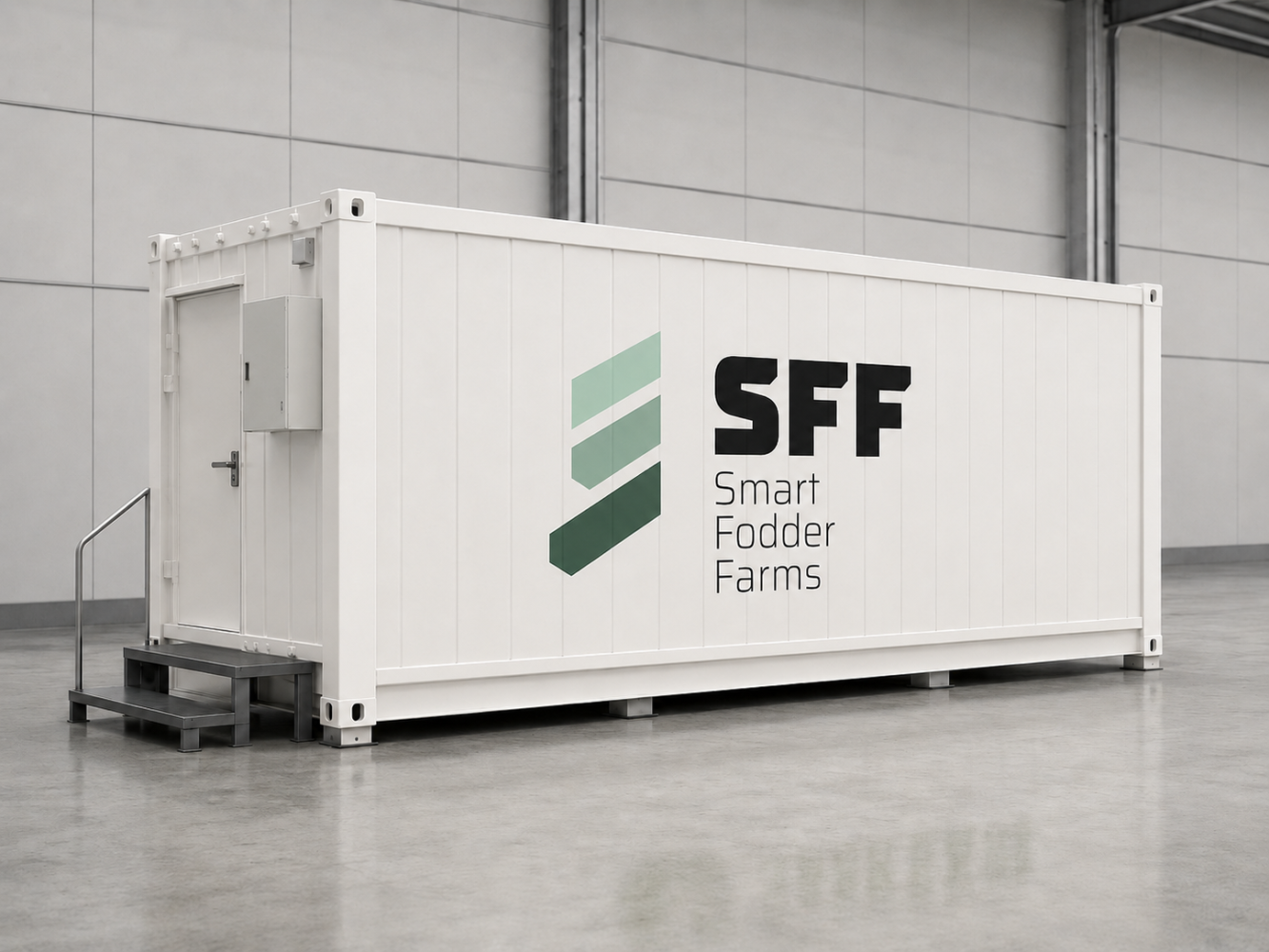
20’ container: a practical starting point
The 20’ container is often the preferred option for farms taking their first steps into hydroponic fodder production.
With an output of around 280 kg of fresh fodder per day in 6-day cycles, it provides enough capacity to test the system, train staff and begin incorporating fresh fodder into the feeding programme without a large initial commitment.
It is particularly suitable for farms looking to:
Introduce hydroponic fodder gradually.
Reduce part of their dependence on purchased forage.
Make efficient use of limited space.
Start small and expand later.
For many producers, this is the first stage of a broader growth strategy.
40’ container: more capacity, same flexibility
The 40’ container is designed for farms that need a higher daily output while maintaining the advantages of a modular system.
It suits operations that already have clear feed requirements and want fresh fodder to play a more significant role in their ration strategy.
Typical reasons to choose this model include:
Increased production capacity.
Greater reduction in external forage purchases.
A scalable solution for cattle, sheep or goat farms.
A balance between output and operational simplicity.
For many farms, it becomes the foundation for future expansion.
40’ High Cube: for larger-scale production
When daily production volume is the priority, the 40’ High Cube is the most powerful option in the range.
According to our technical specifications, it can produce up to 840 kg of fresh hydroponic fodder per day using 440 trays in 6-day growing cycles.
This model is particularly attractive for larger dairy and beef operations seeking to reduce reliance on external feed sources and strengthen control over their feeding programme.
It is best suited to farms looking for:
High daily fodder production.
Greater feed independence.
A scalable platform for future growth.
A more resilient feeding strategy.
The best model depends on your goals
There is no universal solution. A 20’ container may be ideal for a farm starting out, while a 40’ or 40’ High Cube model may be more appropriate for operations with higher feed demands.
Before making a decision, producers should consider:
How much fresh fodder is needed each day?
How many animals will it support?
Is the goal to test the system or significantly reduce supplier dependence?
Is future expansion planned?
How much space is available?
The answers will determine the most suitable configuration.
Start small, grow when needed
One of the main advantages of Smart Fodder Farms systems is their modular design. Farms can begin with a single container, gain experience and expand production over time by adding new units.
This approach reduces investment risk while providing a clear path towards greater feed autonomy. Whether the starting point is a 20’, 40’ or 40’ High Cube container, the objective is the same: producing fresh fodder on-site and building a more resilient livestock operation.