


October 8, 2026
By REBEKAH PIERCE
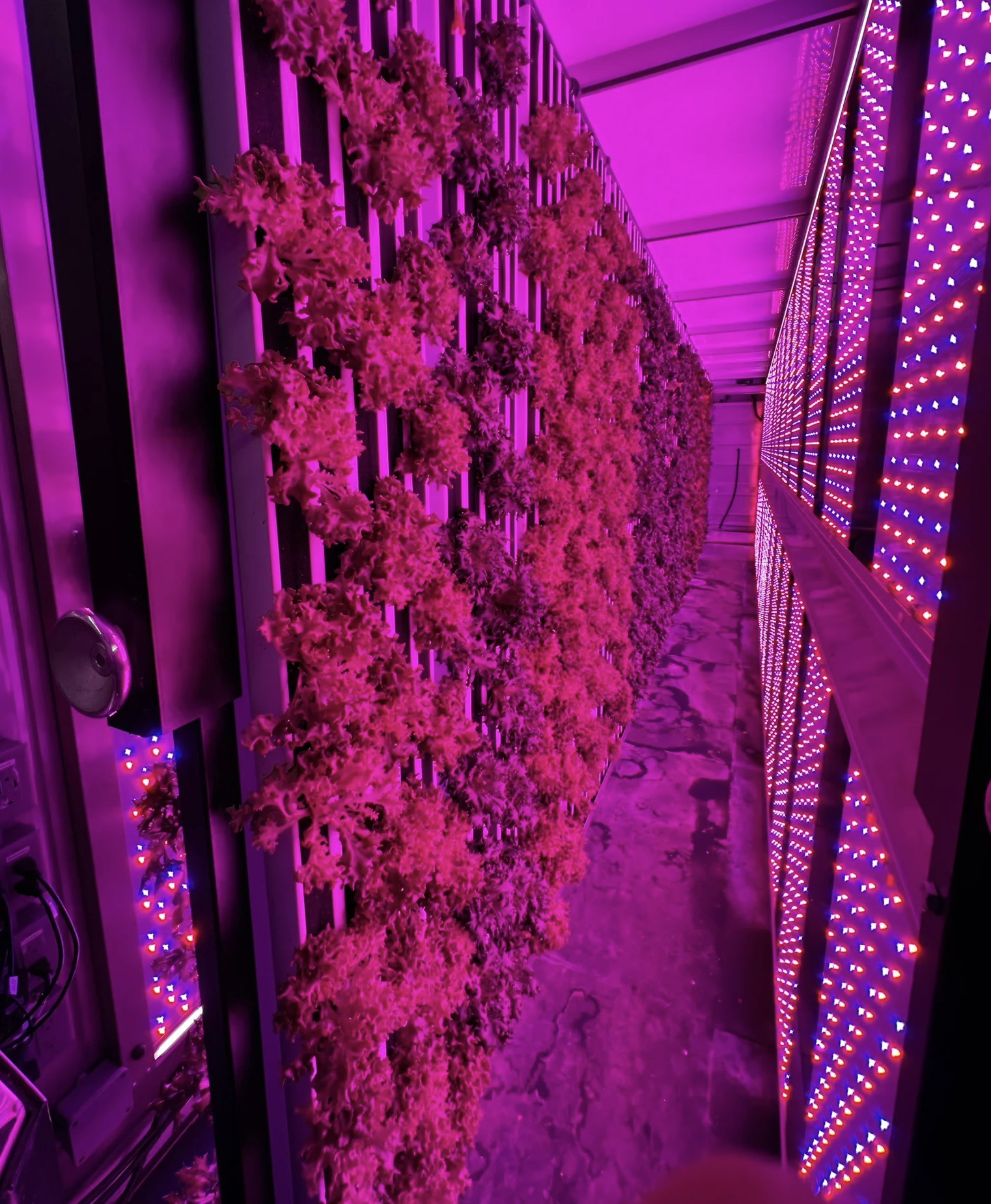
In Palm City, Florida, a 40-foot shipping container is helping House of Hope solve one of the perennial challenges of growing food in the Sunshine State: summer.
Inside the refurbished container, known as a “freight farm,” the temperature stays roughly 74 degrees year-round. Movable walls create growing aisles lined with plants and lights, while hydroponic systems allow House of Hope to produce leafy greens and other crops even when Florida’s heat slows production elsewhere on the farm.
It may not look like much at first glance, but the production capacity packed into that small footprint is enormous. Over the course of a year, the container can produce roughly the equivalent of four acres of conventional in-ground growing. For House of Hope, that consistency has become an important (and necessary) addition to a much larger effort to provide nutritious food throughout Martin County and the surrounding communities.
House of Hope is a nonprofit that has served Martin County for more than four decades. CEO Rob Ranieri says its mission is to help residents overcome hunger and hardship through both basic-needs assistance and programs focused on education and life skills.
Food is a major part of that work, as the organization operates four food pantries across Martin County with a client-choice model. Rather than receiving a prepacked box, clients select foods based on their household’s needs and preferences. More than half of what House of Hope distributes through its pantries is fresh and healthy food, including fruits, vegetables, dairy products, meat and fish.
Using Food for Health
House of Hope also operates as a food bank, supplying more than 30 nonprofit partners, including soup kitchens, shelters and other organizations throughout Martin, St. Lucie and Okeechobee counties and beyond. “We’re different from a typical pantry in that we’re trying to use food to influence health,” Ranieri says. “We’ve been saying healthy kids are better learners, healthy adults are better earners.”
“We’re different from a typical pantry in that we’re trying to use food to influence health. We’ve been saying healthy kids are better learners, healthy adults are better earners.”
Rob Ranieri, House of Hope CEO
To accomplish this goal, growing more of its own food became part of House of Hope’s broader strategy roughly eight years ago. The organization established Growing Hope Farm on property owned by the Dawson family of Palm City Farms Produce and Market. Today, the operation includes nearly 100,000 cubic feet of hydroponic growing space, several large greenhouses, raised beds, in-ground production, an orchard, and a packing house.
The farm grows several varieties of lettuce along with herbs such as basil, rosemary, parsley, thyme, and cilantro. Tomatoes, cucumbers, peppers, and hydroponic carrots are among the other crops produced. House of Hope also grows less common vegetables such as bok choy and provides recipes and taste tests to encourage clients to try unfamiliar foods.
The freight farm joined that operation when a couple leasing space on the property decided to sell the container they had been using as a side business. House of Hope raised the money quickly, with two donors splitting the cost.
The controlled environment has since become particularly valuable during the summer, allowing House of Hope to keep growing lettuce, herbs, collard greens, and other staples when production elsewhere slows.
For context, Growing Hope Farm produces roughly 1,600 to 2,000 packages of produce per week during its peak season, generally from fall through late spring. Summer production can fall by nearly half as heat limits production, and sections of the farm are taken offline for cleaning and maintenance. Because of these seasonal challenges (and the sheer success of the first freight farm), House of Hope already has a second freight farm in the works.
Rather than purchase another finished unit, the organization plans to convert a shipping container itself. A grant is funding the project, which Ranieri hopes can come online in 2027. The new unit will focus heavily on microgreens, and House of Hope expects it could increase farm production by another 15% to 20%.
From Learning to Leading
The operation has taken years of experimentation. Dave Lee, House of Hope’s director of food procurement and distribution, brought an agricultural background to the project, and an early hydroponics supplier helped teach the team how to use its systems. Still, Ranieri says there was plenty to learn.
“Our first summer, in our first several months, we grew as much as we killed out there, getting the hang of things and figuring out how much water they need, how much nutrients they need, what can handle the heat and what can’t,” he says.
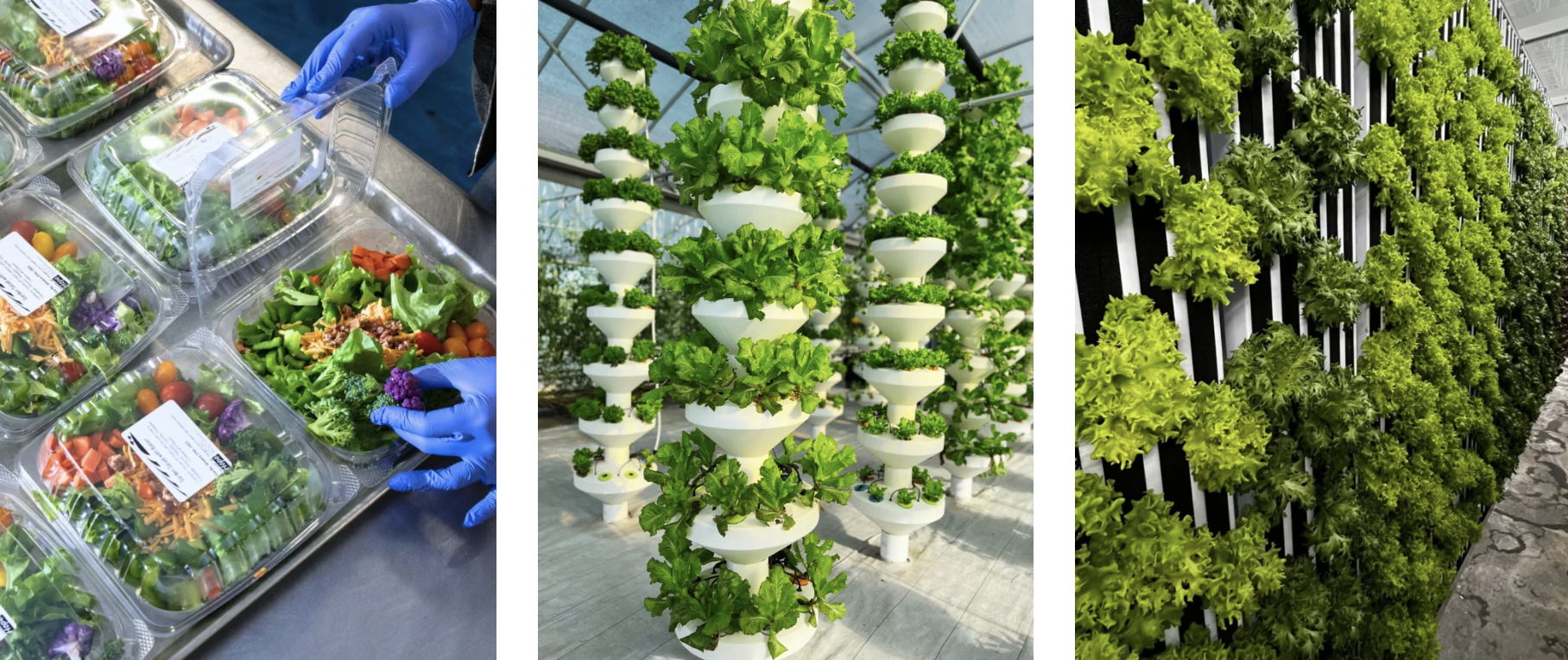
Years later, House of Hope has gone from learning through trial and error to helping other organizations shorten their own learning curves. Nonprofits have traveled to Palm City from elsewhere in Florida, across the Southeast, and as far away as Connecticut to see the operation and learn from the team’s experience.
House of Hope’s own reach is expanding, too. The organization recently received donated land in western Palm City where it plans to build a 15,000-square-foot food hub, roughly four times the size of its existing food warehouse. The added capacity will help House of Hope distribute more food farther west, including into communities beyond Okeechobee as demand for assistance continues to grow.
“The face of who needs support from us is very different than it was four years ago, five years ago,” Ranieri says.
Meeting that changing need will require more food, more capacity and more ways to keep producing despite Florida’s climate. In that effort, a 40-foot shipping container is proving that a relatively small space can make an outsized contribution.