

Controlled Farming May Help Crops Survive Climate Swings, University of Georgia Says

Erica Van Buren, Athens Banner-Herald
June 21, 2026
University of Georgia researchers are studying controlled environment agriculture to help growers combat the effects of climate change, such as extended periods of drought.
Ruchika Kashyap, an urban and controlled environment plant pathologist at the University of Georgia, said controlled environment agriculture can range from growing crops in a hoop house to a high-tech greenhouse.
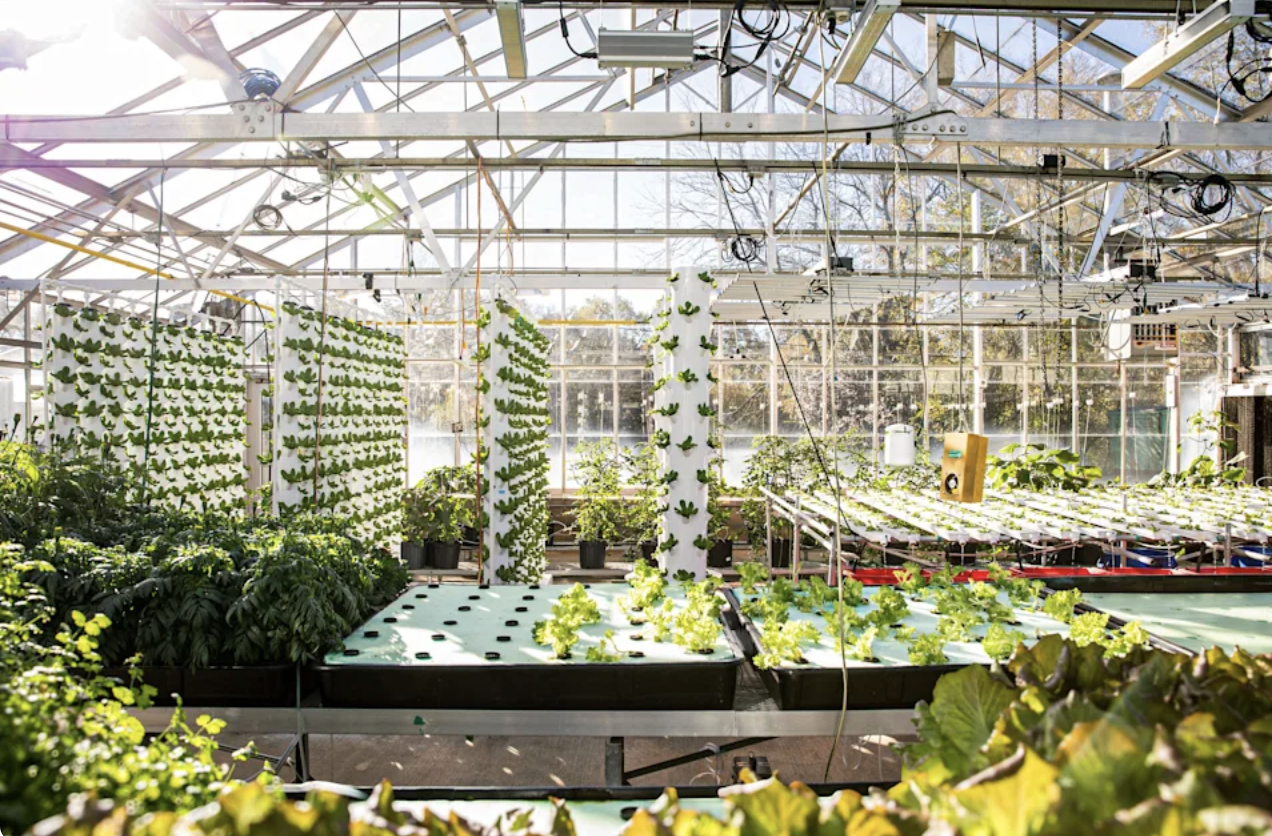
Lettuce and ornamental plants grow in the Athens Riverbend Greenhouse complex on Nov. 17, 2025.
"Producing crops in controlled environments can vary," Kashyap said. "Water-based production is hydroponics — growing plants in water. Controlled environments can also be simpler, like blocking rain, regulating temperature, or installing artificial lights, humidity controls, or airflow systems. You can go really deep in controlling different parameters. That's why it's called controlled environment agriculture."
The UGA team of experts dedicated to advancing crop resilience and innovation in controlled environment agriculture also includes Zhihang Song, assistant professor of horticulture; Erich Schoeller, assistant professor of entomology; and Rhuanito Ferrarezi, professor of horticulture.
Kashyap said it's important to note that controlled environment agriculture is not intended to replace traditional farming.
"On a broader scale, controlled environment agriculture is mostly used for specialty crops like vegetables and ornamentals," she said. "The most dominant crops are leafy greens, followed by tomatoes. Growers are also trying to produce strawberries in high-tech hydroponic systems."
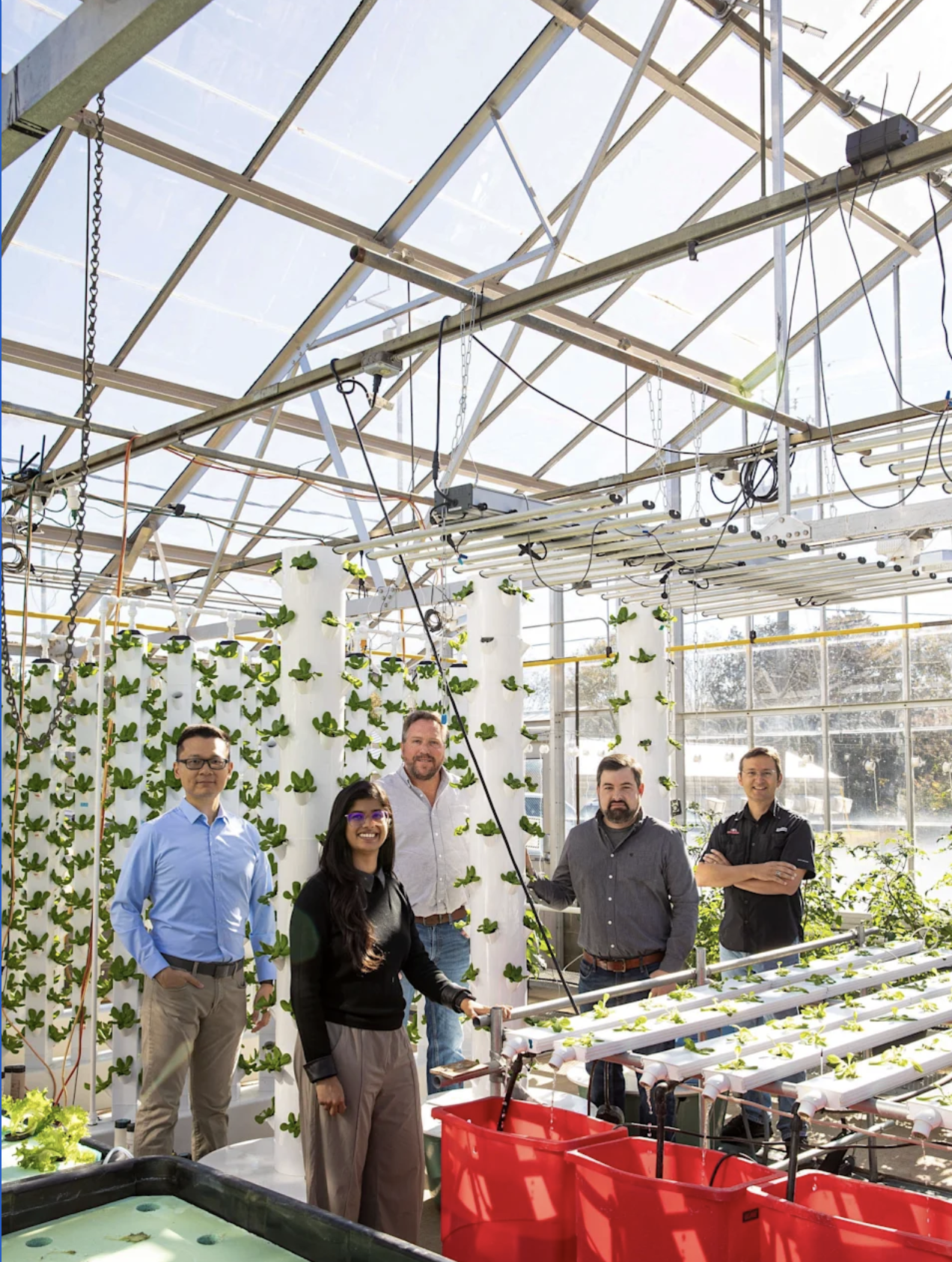
UGA experts collaborate to advance plant growth, crop resilience, and innovation in controlled environment agriculture. From left to right: Zhihang Song, assistant professor of horticulture specializing in CEA phenomics; Ruchika Kashyap, assistant professor of plant pathology and UGA Cooperative Extension specialist; Andrew Ogden, assistant professor of horticulture, Erich Schoeller, assistant professor of entomology and Rhuanito Ferrarezi, associate professor of horticulture. Photo taken Nov. 17, 2025.
"Field production still remains essential — especially for global food systems," she added. "Controlled environment agriculture should be viewed as a complementary approach that helps expand how and where food can be produced, particularly as climate change brings extreme weather events like drought and heat that limit production."
Kashyap noted that while controlled environment agriculture can reduce some climate-related risks, it also has limitations. Certain pathogens can still spread and cause crop loss.
"I think the most common misconception is that controlled environments eliminate plant diseases," she said. "In reality, they can sometimes intensify disease risk. Once a pathogen enters an indoor setting, it may have ideal conditions to survive and spread."
Andrew Ogden, an assistant professor of plant breeding in UGA's horticulture department, agreed that climate instability is affecting growers.
"Growers don't experience the same weather year to year anymore," Ogden said. "Increased instability and more dramatic weather events can certainly impact vegetable production."
Ogden said several research projects are underway, including work in a fully climate-controlled greenhouse.
"We also have four converted shipping container farms at a neighboring research site," he said. "Later this year, we'll be able to conduct indoor growing trials and study how different light types and wavelengths affect crop production and quality."
This reporting content is supported by a partnership with Journalism Funding Partners.
Erica Van Buren is the climate change reporter for the USA TODAY Network. Connect with her at EVanBuren@usatodayco.comor on X: @EricaVanBuren32.
This article originally appeared on Athens Banner-Herald: UGA controlled environment farming helps growers face drought