


Welcome to iGrow News, Your Source for the World of Indoor Vertical Farming

PAKISTAN: Responding Creatively To Crisis With Non-Traditional Farming
Vertical gardens and microgardens have enjoyed new popularity in recent years, which the COVID-19 pandemic may catalyze further
27/05/2020
Rehman produces okra, gourds, melons, and tomatoes in the two tunnel garden units he built in the back yard of his home in Aka Khel, a town in one of Pakistan’s most food-insecure regions. Each less than a meter wide, these creative and economical structures are a type of low-technology greenhouse, consisting of steel tubes clad with a plastic covering and lined with irrigation hoses.
FAO helped him install these earlier this year and now “it’s a relief at a time when markets and transports are closed due to the pandemic,” he says. He is one of the millions of people around the world responding creatively to mitigate the pandemic’s disruptions to the food supply chain, which risk making food less available where it is needed most due both to logistical bottlenecks and declining incomes triggered by the health emergency. In this scenario, solutions that shorten the food supply chain, including vertical and urban farming have taken on new importance.
Despite the fact that prices for wheat and rice, staple foods for Pakistani families, rose sharply in Khyber Pakhtunkhwa province due to COVID-19 restrictions on movement, Rehman was still able to feed his family. With the produce from his garden, they also have a more diversified diet. FAO, working with the United States Agency for International Development (USAID), also helped 75 of Rehman’s neighbors build tunnel farms, which help lengthen cropping seasons, intensify yields and boost local availability of fresh nutritious produce. Rehman says his tomato plants are producing five to ten times as much as they would in an open field.
Farming vertically
Vertical gardens and microgardens have enjoyed new popularity in recent years, which the COVID-19 pandemic may catalyze further. The former are often high-tech urban facilities allowing vegetables to grow indoors or outdoors using hydroponics while the latter are tiny farming plots that fit in urban settings. Both can offer high-yield opportunities to grow leafy green vegetables and other high-value food crops. Restaurants are even engaging in a type of microgarden, also called “precision indoor farming”, thanks to a company in Budapest, Tungsram, that was the first to patent the modern light bulb. Today it produces a closet-sized cabinet with computer-controlled lighting and temperatures and an integrated hydroponics system that allows businesses to create their own indoor gardens with minimal labor. Vertical farms, on the other hand, are often large urban operations, housed in old warehouses or basements. Some practitioners can even duplicate conditions needed to grow the world-famous basil from Italy or the prized Omakase strawberry from Japan.
But vertical farming isn’t just a trend in developed countries. In Kibera, a densely populated part of Nairobi, households use sack gardens made from local sisal fibers to grow onions and spinach without blocking alleyways. In Kampala, locals stack wooden crates around a central composting chamber and use old plastic water bottles for a precision-drop irrigation system to grow kale.
In Dakar, FAO helped galvanize microgardens as a food and nutrition strategy for poor households vulnerable to malnutrition. Today the city, with the participation of thousands of middle-class families, runs that program, which relies on one square meter structures made of coconut fibers to facilitate soil-less cultivation. “It’s ideal for short-cycle, high-value horticultural crops, including mushrooms and spices,” says Rémi Nono Womdim, Deputy Director of FAO’s Plant Production and Protection Division.
There are a host of extra benefits compared to open-field farming, including the possibility to reduce water use, limit pesticide applications and produce year-round, garnering additional income and insurance against temporary interruptions of normal access to food, he says. In Cairo, elaborate rooftop gardens can reduce ambient temperatures by as much as seven degrees Celsius.
Urban farming & greener cities
A longtime advocate of engineering greener cities and a lead author of FAO’s landmark report on efforts to do so in lower-income cities, Nono Womdim estimates that more than 360 million urban residents in Africa and Latin America alone already engage in some form of urban or peri-urban horticulture. The trick is to recognize their efforts with policy frameworks that ensure they have access to necessary inputs – including some form of land tenure as well as access to water and energy. Urban gardens and shorter food supply chains also underscore how food security depends on access to nutritious food, Nono Womdim says. “Additional benefits include reducing food waste and minimizing packaging,” he adds.
Producing locally may not always be the answer, but as the COVID-19 emergency has highlighted, in times of crisis, every little bit helps in reducing food insecurity. By the same logic, rudimentary vertical farming makes a lot of sense in extreme and remote conditions. The case is even stronger for ensuring that food systems can innovatively respond to natural disasters, conflict, or the chronic stresses expected to intensify with climate change.
That is why FAO is urging policymakers to facilitate shorter supply chains as a complement that can add sustainability, inclusion, and nutritional value to the world’s remarkably efficient production systems for staple carbohydrates. In the Khyber highlands, Rehman agrees. He’s already installed an additional tunnel unit at his own expense and enjoys his transformation from someone who always had to look for extra income to support his family to someone keen to keep his children in school and who people in the region seek out for advice. “I am very motivated now,” he says.
Tags: COVID-19, FOOD CRISIS, FOOD INSECURITY, FOOD SECURITY, VULNERABLE COMMUNITIES, FOOD CHAIN, AGRICULTURE, FARMERS, CLIMATE CHANGE, CLIMATE-SMART AGRICULTURE,
Video: Interview with Christina Johnson from NASA Postdoctoral Program
Microgreens in Space
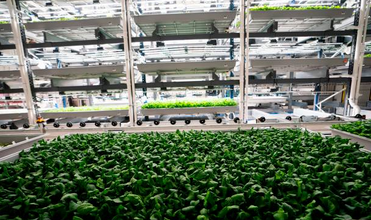
VIDEO: Can Vertical Farms Fix The Future of Food?
VICE visits the sustainable start-up to understand the future of food
May 25, 2020
Singapore has only 1% of its land available for agriculture, so it imports 90% of its food requirements. The government is looking to curb this dependence on outside food sources under a program titled ‘30 by 30,’ which aims to allow Singapore to grow 30% of its produce by the year 2030. Local vertical farms like Sustenir are at the forefront of bringing about this change. VICE visits the sustainable start-up to understand the future of food.

VIDEO: VeggiTech - Vegetation Technology Redefined
VeggiTech is an Agro technology start up with the sole aim of disrupting the agriculture industry
VeggiTech is an Agro technology start up with the sole aim of disrupting the agriculture industry. VeggiTech obsesses on addressing the key challenges of traditional farming – soil, temperature and water through its design of protected Hydroponics and Grow Lights assisted Hydroponics.
VeggiTech stands for Vegetation technology redefined and has currently chosen the harsh conditions of UAE to demonstrate these technologies in farms that are open for Investors, Students and Consumers to experience. The Leadership team firmly believes in moving beyond presentations and demonstrating technology that provides the Return on Investment in a live functional environment.
Lead Image Credit: Supplied



Growing Quality Food and Meeting Nutritional Requirements
Can climate-controlled freight containers help in farming or can plants grow without any soil?
By Murali | May 23, 2020 | City Today
Can climate-controlled freight containers help in farming or can plants grow without any soil? The answers to these questions can be found in Urban farming. It involves indoor cultivation under controlled conditions with up to eight (8) harvests in a year. It offers an ideal solution for regional or community-specific food needs, for local crops that would not be economically viable for full-scale cultivation. It can also help cities become sufficient in their produce demand while getting fresh food year-round. Vertical urban farming whether with soil or hydroponics-based increases the space utilization by 3-4 fold with lower water and nutrient usage.
Therefore, it allows the farmer to have a 3-4 fold higher area with a 20 percent faster growth rate, leading to 3-4 fold higher harvests. Multiple harvests in a year would lead to higher profits compared to traditional farming. Indoor farms may use drip-irrigated pots, hydroponics, aeroponics, or hydrogel-based polymers for growing vegetables depending on the growth requirements of the plant.
To View the Full Article, please Click Here


VIDEO: The Future of Farming & Investing in Land - w/ Cubic Farms CEO Dave Dinesen
CubicFarms has developed and patented some of the most advanced automated growing machines for Fresh Vegetables and Nutritious Animal Feed that enable commercial-scale indoor farming, anywhere on earth
May 28, 2020
The Covid-19 pandemic exposed fragility in supply chains, such as labour shortages, disruptions in the packing and transportation sectors, and increasing uncertainty in the domestic and international markets. CubicFarms’ automated growing systems have emerged as a key solution to overcoming these challenges by allowing growers to localize food production and provide their markets with fresh produce and nutritious livestock feed reliably and consistently. What does this do to opportunities for land investment?
Speaker Bio:
Dave is the CEO of CubicFarms, one of the world’s leading Ag Tech companies that develops “Technology to Feed a Changing World”. CubicFarms has developed and patented some of the most advanced automated growing machines for Fresh Vegetables and Nutritious Animal Feed that enable commercial-scale indoor farming, anywhere on earth. Dave leads growth at CubicFarms and since inception, has raised over $23MM in capital.
Dave is the former CEO and founder of BackCheck, which became one of the world’s top ten largest background screening companies, where he advanced the company from a start-up to an industry-leading company operating on three continents with over 500 employees.
Recorded: Thursday, May 28, 2020,
**The information provided in this webinar and accompanying material is for informational purposes only. It should not be considered financial or professional advice.
You should consult with a professional to determine what may be best for your individual needs. http://addyinvest.com/

Show Gives Grower a Chance to Show Off its Uniqueness
We want to be able to talk to a wider span of people with this show,” says Don Helms of Rockingham, VA-based That’s Tasty. “It’s new territory so we’re looking at interesting and unique ways to interact with people.”
For one vertical indoor organic grower, this year’s United Fresh LIVE! is a chance to potentially reach a broader audience.
“We want to be able to talk to a wider span of people with this show,” says Don Helms of Rockingham, VA-based That’s Tasty. “It’s new territory so we’re looking at interesting and unique ways to interact with people.”
The show, taking place this year June 15-19, gives That’s Tasty a chance to share with participants how it differs from others in the marketplace. “We call our facilities BioFarms because unlike other indoor growers, we are USDA Certified Organic and grow in a soil medium” says Helms. “It’s vertically growing in soil and it’s different in that regard. It makes the plants heartier with better flavors and colors and shelf life is also improved.”
Leafy options
That’s Tasty will be part of the Controlled Environment Pavilion where it hopes to display its line of culinary herbs that are living plants and fresh-cut as well as its leafy greens including large-leaf lettuce filets, cut-leaf iceberg, a red and green lettuce mix and more. The show is timed well in that these leafy greens, which are in limited distribution currently and grown in That’s Tasty’s Elkwood, VA BioFarm will be moving into the next phase of distribution.
Helms says that while demand recently for herbs and leafy greens had been erratic due to the pandemic-related shift in the way consumers were buying food, it’s more recently leveled out. “Overall, business is back on a similar track to where we were,” he says.
In fact, the recent spike in home cooking that North Americans have taken to during the pandemic may be something for That’s Tasty to tap into. “We think a lot of those behaviors are going to continue as people are more into cooking at home and being more adventurous with culinary creations involving fresh herbs and greens,” says Helms.
For more information:
Don Helms
That’s Tasty
Tel: +1 (540) 896-6939 ext. 2130
dhelms@thatstasty.com
www.thatstasty.com
Publication date: Tue 26 May 2020
Author: Astrid Van Den Broek
© HortiDaily.com

Pros and Cons of Vertical Farming Systems: What You Need to Know
When you live in the city, there isn’t room for fields and fields of farmland. So, vertical farming systems allow for urban areas to organically grow their own food without taking up too much space
As urban areas become more populated, cities need to turn to vertical farming methods as the primary way of growing food. Vertical farming systems allow cities to grow microgreens, vegetables, and fruits in small contained spaces.
When you live in the city, there isn’t room for fields and fields of farmland. So, vertical farming systems allow for urban areas to organically grow their own food without taking up too much space.
But, what are the pros and cons of vertical farming? We’ll cover everything you need to know in this article.
What are the advantages of vertical farming systems?
There are plenty of advantages to vertical farming. Some of the main advantages include:
Year-Round Yields: When you grow crops with vertical farming methods, you will have year-round grows. Since the crops are grown in a controlled environment, they are able to keep growing throughout every season.
Weather Resistant: Crops grown indoors aren’t susceptible to damage by flooding, droughts, or pests! One of the main reasons as to why vertical farming works is that farmers can have full control of the environment.
Produces Organic Foods: Vertical farming systems promote the growth of organic, healthy foods. You don’t have to use pesticides, herbicides, or fertilizers to grow plants.
Leaves a Smaller Footprint: Vertical farming uses upward growth methods to harvest crops in small settings. These methods use less land to grow foods, which allows farmlands to their natural habitat.
What are the disadvantages of vertical farming?
While there are many advantages to vertical farming, we still have to understand the disadvantages. There are a few cons that come with these intricate systems.
They're Pricey: To start, vertical farming can be expensive in urban areas because of the construction and technology costs. This is why developers are reluctant to invest in vertical farming.
Requires Large Amounts of Electricity: In order to grow foods like grains, vegetables, or fruits, a lot of electricity is needed. We’ll have to rely on artificial lights to encourage growth, which can be expensive.
Can Lead to Potential Job Loss: As a new agricultural industry, vertical farming could replace a lot of traditional farming jobs. Food demands will be met by urban vertical farming, and the demand for traditional farmers could go down. This can result in a loss of jobs. But, it will also create new jobs within the city.
The Importance of Vertical Farming Systems
Vertical farming is a sustainable solution to growing foods within urban areas. As populations increase, food demands will rise. To meet these needs, we have to start implementing vertical farming systems to meet demands.
We at the Nick Greens Grow Team understand the importance of vertical farming, which is why we teach our followers how to successfully grow microgreens at home.
To stay on top of advancements in sustainable food growing, you should read our new blog posts every Thursday. Wanna learn how to grow your own microgreens at home?
Watch our new YouTube videos every Friday on our personal channel!
#verticalgrowing #verticalfarming #verticalfarmingsystems #urbanfarming #urbanfarm #indoorgrowing #indoorgrow #growfoodindoors

Aquaponics AI, A US-Based Aquaponic Technology Research Company, Just Unleashed Their Software Into The Wild
In addition to being the forerunner in Aquaponic technology, they also have invaluable libraries for fish, plants, and diseases, as well as calculators for managing your system
Aquaponics AI, a US-based aquaponic technology research company, just unleashed its software into the wild. It’s the system every aquaponic grower has been waiting for. It has traditionally been difficult to get started in Aquaponics because of the steep learning curve but they are making it easy to get started and maintain a system with features like a project template that gets your system running with recommended maintenance schedules by big players in Aquaponics.
They’re bringing innovative usage of artificial intelligence and big data to Aquaponics for the betterment of the global aquaponics community. Their vision is to unleash your Aquaponic growing powers. You’re the beneficiary of high-quality produce and revenue streams created from your system.
In addition to being the forerunner in Aquaponic technology, they also have invaluable libraries for fish, plants, and diseases, as well as calculators for managing your system.
“We’re about empowering people to be the best aquaponic growers possible. Tech is what gives people the tools to do awesome things.” - Jonathan Reyes, CEO, and Co-founder of Aquaponics AI
You can see the latest developments on their website https://aquaponics.ai alongside invaluable resources and calculators that are available for free.
Tags: Aquaponics, Dashboard, IoT, Sensors, Cloud
Farmers Markets Across the US Face Potential Economic Crisis from COVID-19
“We are imploring state and federal governments to keep farmers markets in their mind as they develop relief packages,” said Feldman. “Please help markets keep their communities safe and thriving.”

Across the US, farmers markets operators–the organizations and individuals who plan, coordinate, and run America’s farmers markets, are engaging in herculean efforts to protect their communities from COVID-19. But even as interest in local foods spikes nationwide, many market operators face the double threat of increased costs to operate during a pandemic, in addition to declining income. To make matters worse, many aren’t eligible for current federal relief efforts.
Farmers markets have always been a hub for innovation. When farmers have opted or been forced out of the traditional supply chain, farmers markets have served as a lifeline to their business, filling a vital role to move their goods from field to plate. Now, in this time of crisis, farmers markets are at the forefront of adapting rapid solutions and innovation to protect staff, customers, and community. Apart from these efforts, emerging research suggests sunlight effectively kills COVID-19, adding more support to the idea that farmers markets may be the safest place to shop for groceries during the pandemic:
“There are benefits to visiting a farmers market in light of coronavirus in terms of the fact that you’re outside, there’s fresh air moving and the supply chain is shorter,” said Yvonne Michael, an epidemiologist at Drexel University School of Public Health. “…so I would definitely encourage people during the coronavirus to visit a farmers market.”
But changes come with both increased costs and decreased revenue for organizations that run farmers markets. According to a Farmers Market Coalition member survey, 74% of respondents reported decreased income, while 93% report added costs, including the purchase of PPE for market staff, rental of more handwashing stations, new software or services, and additional staff to rearrange market layouts and monitor customer traffic. The need to reduce the number of vendors to enforce physical distance requirements, while other vendors are unable to attend markets due to health concerns, age, and labor shortages, points to a steep decline in revenue for market organizations. In a similar survey by the California Alliance of Farmers Markets, nearly 20% of respondents reported concern that they may not survive the economic impacts of COVID-19.
“We expect to lose almost $200,000 by the end of the year” said Kate Creps, Executive Director of the Heart of the City Farmers Market, in San Francisco, an organization that distributes $1.5 million in food assistance through its markets each year. “Only 50% of our vendors are able to continue selling during this crisis. At the same time, we anticipate over $60,000 in additional expenses to maintain strict social distancing protocol to protect customers, vendors, and staff.”
To make matters worse, farmers markets operators have largely been left out of relief efforts, both public and private. “Farmers markets are probably the safest place to shop now, but that hasn’t happened by accident. It’s thanks to the committed efforts of the community based farmers market operators who deliver for their communities,” said Ben Feldman, Executive Director of the Farmers Market Coalition, a nonprofit representing 4,500 farmers markets across the country. “These are very lean organizations and we are close to a breaking point for many of them, especially if they continue to be shut out of support other sectors of the economy are receiving.”
The impact of losing farmers markets would be massive. Farmers markets facilitate an estimated $2.4 billion dollars in sales for farmers each year. “Without direct assistance for our state’s farmers markets, many of which already operate on a shoestring budget and an all-volunteer staff, we risk losing this vital outlet, drastically affecting the livelihoods of farmers,” according to Robbi Mixon, a farmers market manager and Director of the Alaska Farmers Market Association. “Small to medium scale farmers are the cornerstone of local food systems. If farmers markets disappear, these farmers lose market access and economic stability”
“We are imploring state and federal governments to keep farmers markets in their mind as they develop relief packages,” said Feldman. “Please help markets keep their communities safe and thriving.”
For more information:
Farmers Market Coalition
farmersmarketcoalition.org
Monday, May 11, 2020

Vertical Farming Is The Future of The Agriculture Industry
Vertical farming is a simple practice of producing food crops on vertically inclined surfaces, unlike the traditional farming method of single-level like in fields or greenhouses
26 May 2020
World population is said to grow by another 2 billion by the year 2050, feeding humans adequately will become a huge challenge until then. Due to rising industrialization and urbanization, humans are clearing arable land and forests. According to scientists, our planet lost a third of its arable land in just 40 years. Many believe that Vertical farming is the solution for sustainable living soon.
As countries are getting rich demand for food is increasing which is pressuring the planet for more cultivation and aggressive use of resources. Due to globalization and the growing population, it is not clear how much more of arable land we will lose. Developed countries are now investing in Vertical farming heavily.
What is Vertical Farming?
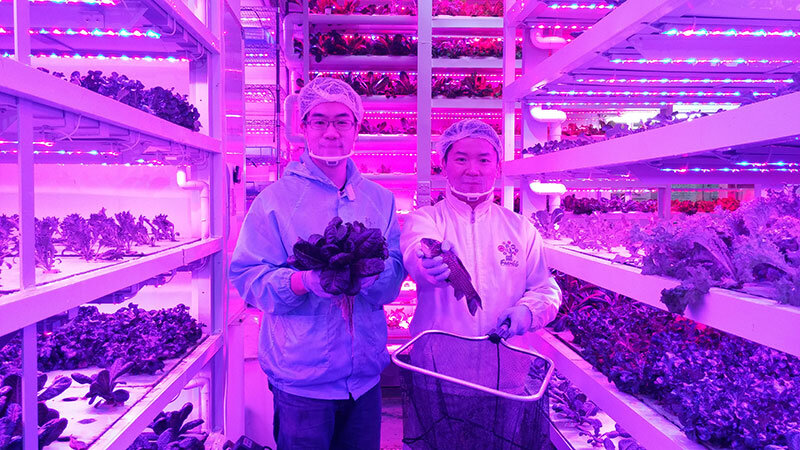
Vertical farming is a simple practice of producing food crops on vertically inclined surfaces, unlike the traditional farming method of single-level like in fields or greenhouses. In this method, food is produced in vertically stacked layers which are integrated into structures like skyscraper or shipping containers.
Using Controlled Environment Agriculture (CEA) technology, vertical farming uses indoor farming techniques. This indoor technique uses artificial control of temperature, light, gases, and humidity for food. This farming is mainly used to maximize crop output in a limited area.
This farming has four important parts 1) Physical layout 2) Lighting 3) Growing Medium and 4) Sustainability Features.
At first, the crops are cultivated in a stacked-layer in a tower-like structure. Then a combination of natural and artificial lights is used to maintain the perfect light in the room, technologies such as rotating beds are often used to improve light efficiency.
Thirdly, in place of soil aeroponic, aquaponic or hydroponic are used as growing mediums, coconut husks and other non-soil mediums are often used. Finally, various sustainability features to reduce the energy costs of farming is used. Vertical farming use water at a minimal level.
Developed countries like Singapore, Hong Kong who depend on imports for food products are now investing in Vertical Farming. Sky Greens, first commercial vertical farm and worlds first low carbon vertical farm. This farm produces up to 1,000 kg of vegetables a day. Next year it will reach its full capacity then it can produce 5,000 to 10,00 kg a day.
In Hong Kong, a Vertical farming venture called Farm66 uses modern LED lights and aquaponics in a fully air-conditioned vertical farm of size 20,000 sq ft. This farm produces four tons of lettuce, endive, and cabbage very month.
In the next two decades, 80 percent of people live in urban cities, increasing the demand for food. Vertical farming offers a solution to such problems. One acre of indoor vertical farming equals 4-6 acres of outdoor farming. This farming use 75-95 percent less water compared to normal cultivation. As vertical farming is based on the technology of using proper lightning crops can be developed without pesticides.
Related Links:

UAE Farm Tech To The Fore
New technologies are helping the country make more of its own produce
New technologies are helping the country make more of its own produce
Over a span of just six months, Covid-19 has not only changed the way we work, celebrate occasions and stay healthy but also forced countries to take a hard look at how they feed their residents. “I believe the current pandemic has provided us the opportunity to completely reimagine the global food system,” says Tony Hunter, a global food futurist.
Going urban
One of the factors pushing the global agri-tech agenda is the growth and increasing density of cities. “By 2050, more than two thirds of the world’s population is forecasted to live in cities,” explains Smitha Paresh, Executive Director of Greenoponics, a UAE-based retailer of commercial and consumer hydroponics systems, adding that urban agriculture will be crucial for feeding burgeoning urban populations.
“On a macro level, we will see a rise in urban farming, mostly using high-tech farming methods such as hydroponics, aeroponics or aquaponics.” Paresh cites Singapore’s conversion of car parks into urban farm centres as an example. “In the UAE, as per the national food security strategy for 2017-2021, we have already witnessed a huge increase in climate-controlled greenhouses all over the country.”

Arable environments
For Hunter, who spoke about potential silver linings of Covid-19 at a recent Gulfood webinar, new technologies present the best means of achieving domestic self-sufficiency. “They can release countries from the tyrannies of arable land and water stress.” He singles out algal products that rely on low rainfall and can use seawater; cultivated meat and biomass products; cell-based products such as milk proteins; and synthetic biology that can manufacture a range of food products.
Over the long term, Ravindra Shirotriya, CEO, VeggiTech, believes there are three critical areas for sustainable farming in the UAE. The first is precision agriculture, which focuses on growing conditions for plants using hyperbaric chambers and nanotechnology-based organic nutrition. Photo bio-reactors, meanwhile, can cultivate food-grade algae such as spirulina. Finally, Shirotriya cites smart farms, which work with smart cities to create harvest plans based on real-time data on food demand and consumption within communities. “This will address our current broken food ecosystem, where we waste 35 percent of food while 15 percent of the world population goes to sleep hungry.”

VeggiTech’s primary focus is on setting up LED-assisted hydroponics for indoor vertical farms and protected hydroponics for sustainable farming in the UAE.

In terms of crop production, Avinash Vora, Co-founder of Aranya Farms, says new technologies aim to boost yields, reduce waste and grow produce entirely. “Technology is being applied at every stage, whether for plant seeding, monitoring growth, managing water, energy conservation, harvesting and packaging. “We are making huge strides adapting all of them here in the UAE; the interest and investments in agriculture prove that.”
For Philippe Peguilhan, Country Manager of Carrefour UAE at Majid Al Futtaim Retail, the UAE had already been seeking self-reliance in food production, but coronavirus amped up its importance. “The disruption that Covid-19 caused to the supply chain highlighted the importance of local produce and presented an excellent opportunity for local farmers to grab a greater share of the market.” Majid Al Futtaim recently made headlines for opening the UAE’s third, and Dubai’s first, in-store hydroponics farm.

Hydroponic hope
Hydroponics is one agri-tech that’s attracting keen investor interest. “As an indicator, Madar Farms’ 7,000-sq-m factory will produce 365 tons of tomatoes a year, and about 14,000 tons of cherry vine tomatoes were consumed in the UAE in 2019,” says Hunter. “There’s therefore the market opportunity for 38 Madar farms in the UAE for tomatoes alone. Add in other nutrient-dense crops such as cucumbers, peppers and leafy greens. Depending upon their size, we could be looking at several hundred businesses.”
On an individual level, more people are leaning towards home farming, especially towards soil-less cultivation since it is simple and easy, according to Paresh. “It guarantees a certain amount of yield. Home farming will be on the rise, considering the disruption we may face in trying times like this.”
As with most technologies, Hunter says the biggest challenge of hydroponics is profitability. “Fortunately, the costs of technology inputs required to optimise hydroponic production efficiencies are falling rapidly. This drop, together with simultaneous increases in performance, is driving down the costs of hydroponics, making acceptable ROIs much easier to achieve.” He adds that economies of scale can help achieve good ROIs. “Currently most farms are in the 1-2 ton per day range but farms of 50 tons per day are being projected by as early as 2025.”
Sustainability challenges
“Challenges in building our own farm were access to sufficient and cost-effective electricity; renewable sources of water; and the availability of locally made raw materials, specifically growing media, nutrients and seeds. With seeds we are adapting — we have been growing our own seeds but having a library of seeds to choose from that are suitable for our climate and environment would be a huge boon to all farmers.”
— Avinash Vora, Co-founder of Aranya Farms

By Riaz Naqvi, Staff Writer | Gulf News | May 28, 2020



Aquaponics Firm Eyes A Green Future, With Water Lentils In A Starring Role
After a year of research and development on Vancouver Island, and a crowdfunding campaign that reached $750,000, a new agri-tech company is preparing to significantly expand its footprint and hit the market with a plant protein
Andrew Duffy / Times Colonist
MAY 30, 2020
Steve McArthur, CEO of Pontus Water Lentils, at the company's research and development site.
Photograph By ADRIAN LAM, TIMES COLONIST
After a year of research and development on Vancouver Island, and a crowdfunding campaign that reached $750,000, a new agri-tech company is preparing to significantly expand its footprint and hit the market with a plant protein.
Pontus Water Lentils, which has been doing research and development at a test farm run by Victoria’s Garden City Aquaponics, has developed an aquaponics system — a hybrid of aquaculture and hydroponics — to produce water lentils. It says those lentils pack an unrivaled protein punch.
Chief technology officer and co-founder Steve McArthur said Pontus has developed a grow and harvest system which, when installed in a new facility, will be capable of producing 100 metric tonnes of water lentils.
McArthur, who also founded Garden City Aquaponics, said the plan is to build a new 10,000 square foot facility for the closed-cycle system. It will also grow and nurture rainbow trout — the fish waste is converted by microbes into fertilizer for water plants, which in turn filter the water for the fish.“
It’s a grown-in-Victoria business,” said McArthur. They are considering sites for the facility in Langford or on the Lower Mainland.
He said the water lentils grown in the facility would be dried and turned into about 6.4 metric tonnes of protein powder that can be used as a supplement for protein shakes, a partial ingredient replacement in foods such as pasta, or to be used in manufacturing food such as protein bars and beverages.
The company intends to package the powder for sale to grocery stores and find partners to produce a line of products packed with the protein-rich powder, while the fish will be sold to local grocery stores and restaurants.
McArthur noted they have already had some success in producing fish and leafy greens at Garden City, as they sold fish to local restaurants and small-scale production of leafy greens to Red Barn Market and other grocers as well as local chefs.
Currently, Garden City, which produces two types of tilapia and the water lentils, is being used entirely for research and development for Pontus, but it may revert to producing small-scale food for local stores and restaurants when Pontus opens its facility.
McArthur said the high-protein water lentils add a protein boost to various products.“The final product is 42.1 percent protein by weight, that’s pretty significant,” he said, noting that is higher than both pea and pumpkin protein. “In terms of plant-based protein that’s one of the highest and we would be growing it aquaponically on a commercial scale.”
The next step for Pontus is the larger facility, which McArthur said they now have the money to build.
Pontus started a crowdfunding campaign on Frontfundr.com. It had hoped to raise at least $750,000 and as much as $1.25 million to build its first production farm. To date, it has raised just over $766,000; they are also raising private capital.
When built, the facility will be capable of producing 6.4 metric tonnes of dried and powdered lentils and about 11,000 trout every year.
McArthur said the market opportunity is big as the product ticks a lot of boxes in terms of its sustainable production, the massive demand for plant-based protein, and food security.
The facility is scalable, moveable could be built almost anywhere, and has a small environmental footprint, he said.
The company says the farm uses less than five percent of the water used in field farming and has none of the carbon footprint.

WEBINAR - JUNE 3: USDA $3M In Grant Money Available For Urban Agriculture, Innovative Production Projects
A webinar, which will be held on June 3, from 2 to 4 p.m. Eastern Daylight Time, will provide an overview of the grants’ purpose, project types, eligibility and basic requirements for submitting an application.
Planning Projects:
USDA is making available $1 million for Planning Projects that initiate or expand efforts of farmers, gardeners, citizens, government officials, schools and other stakeholders in urban areas and suburbs. Projects may target areas of food access, education, business and start-up costs for new farmers and development of policies related to zoning and other needs of urban production.
Implementation Projects:
USDA is making available $2 million for Implementation Projects that accelerate existing and emerging models of urban, indoor and other agricultural practices that serve multiple farmers. Projects will improve local food access and collaborate with partner organizations and may support infrastructure needs, emerging technologies, educational endeavors and urban farming policy implementation.
Webinar:
A webinar, which will be held on June 3, from 2 to 4 p.m. Eastern Daylight Time, will provide an overview of the grants’ purpose, project types, eligibility and basic requirements for submitting an application. Information on how to register for and participate in the webinar, or listen to the recording, will be posted at farmers.gov/urban.
More Information:
The Office of Urban Agriculture and Innovative Production was established through the 2018 Farm Bill. It includes representatives from many USDA agencies, including Farm Service Agency and Agricultural Marketing Service, and is led by the Natural Resources Conservation Service. More information is available at farmers.gov/urban.
Additional resources that may be of interest to urban agriculture entities include AMS grants to improve domestic and international opportunities for U.S. growers and producers and FSA loans.

TODAY AT 4 pm EST - Join Indoor Ag-Conversations - United Fresh - Webinar Panel
Verlage Joins Top Execs from United Fresh, DNO Produce, BrightFarms For Virtual Panel On Produce Trends, Business Growth Opportunities For Indoor Growers Emerging From Covid-19 Pandemic
LAS VEGAS (May 27, 2020) – Victor Verlage, Senior Director of Agriculture Strategy Development, Walmart, will join the panel line-up for the debut session of the new Indoor Ag-Conversations webinar series announced last week.
Scheduled for Wednesday, June 3 at 4 pm EST, the program, “United Fresh Produce Association Panel: Produce Trends & Business Opportunities For Indoor Growers Emerging From Covid-19 Pandemic, ” will be moderated by United Fresh President & CEO Tom Stenzel, and also include panelists Alex DiNovo, President and COO, DNO Produce and Paul Lightfoot, President and Founder, BrightFarms.
Leading Strategic Food Sourcing at Walmart Inc, Verlage joined the company in 2010. In 2014 he relocated to Bentonville, Arkansas to spearhead the development of next-generation products and is responsible for securing the long term food supply for Walmart’s growth demand plans.
Indoor Ag-Con LLC, producers of the premier event for the indoor|vertical farming industry, created the new Indoor Ag-Conversations series to share content originally planned for its May 2020 in-person annual conference that has been postponed due to the Covid-19 pandemic.
During the 60-minute webinar, Verlage and the other members of the executive panel will explore the unprecedented challenges and opportunities industry members face today. Participants will learn: key produce trends to watch; tips for building mutually beneficial relationships with produce distributors; how Covid-19 is accelerating demand for locally grown food; what indoor growers are doing now to adjust to a changing market and more.
Attendees will also get a sneak preview of United Fresh 2020 Live, the Association’s new virtual event coming the week of June 15.
Indoor Ag-Conversation webinars are free to industry members. To register for the upcoming June 3, 2020 session, visit www.indoor.ag/webinar
In addition to Verlage, the June 3, 2020, Indoor Ag-Conversations | United Fresh program will share insights from:
Moderator Tom Stenzel, the President, and CEO of the United Fresh Produce Association is a frequent speaker on industry issues and has been recognized for his leadership frequently throughout his career. Tom has testified numerous times before Congress and works closely with leaders at the White House, USDA, FDA, and other U.S. regulatory agencies.
Paul Lightfoot, President, and Founder of BrightFarms, is creating the first national brand of locally grown produce. In four years, Lightfoot has led the company from a proof-of-concept to operating four greenhouses in key markets like Washington, D.C., Chicago, Cincinnati, and Philadelphia.
Alex DiNovo is President and COO of DNO Produce Group of Companies, a rapidly growing family-owned group of businesses located in Columbus, Ohio. DNO is a fresh fruit and vegetable processor, as well as a distributor, with a distribution network throughout the Midwest, Great Lakes, and the southeastern United States.
ABOUT INDOOR AG-CON LLC
Founded in 2013, Indoor Ag-Con touches all sectors of the business, covering produce, legal cannabis, hemp, alternate protein, and non-food crops. In December 2018, three event industry professionals – Nancy Hallberg, Kris Sieradzki, and Brian Sullivan – purchased Indoor Ag-Con LLC, setting the stage for further expansion of the events globally.
For more information, visit: https://indoor.ag
ABOUT UNITED FRESH PRODUCE ASSOCIATION
United Fresh brings together members across every segment of the supply chain to build relationships that are as solid with a handshake as with a contract. We empower industry leaders to join forces to shape sound government policy. We deliver the resources and expertise companies need to succeed in managing complex business and technical issues.
For more information, visit: https://www.unitedfresh.org and to learn more about United Fresh LIVE! Visit www.unitedfreshlive.org
Indoor Ag-Con, 950 Scales Road, Building #200, Suwanee, GA 30024, United States
Herbs, Sold Entirely in Paper Instead of Plastic
REWE and ECF Farmsystems are testing new forms of product packaging
Hauptstadt Basil Now Only in Recycled Paper
REWE and ECF Farmsystems are testing new forms of product packaging. The capital city basil produced in Berlin is now packed 100% plastic-free. Both the funnel-shaped plastic bag (sleeve) and the plastic pot are dispensed with. Instead, their Hauptstadt Basil will be packed exclusively in recycled paper. The customer can cut the bag along the dotted lines and the paper recycling bag becomes a substitute pot. The substitution of plastic bags saves approximately 2.1 tons of plastic per year.
In addition, the elimination of the pots saves about 5.1 tons of plastic per year. The innovation has a pilot function: If the new packaging method is accepted by the customers and proves itself in practice, its use can also be expected for other herb pots and nationwide.
Herbs in sustainable paper packaging / Picture: Rewe
As early as 2017, REWE and ECF Farmsystems tested new ways in transport packaging. By dispensing with plastic irrigation trays for the capital's basil, six tons of plastic waste were saved annually. Building on this experience, REWE also dispensed with transport irrigation trays for other products available nationwide, thus saving 90 tonnes of plastic per year for potted herbs alone.
Raising perch and growing herbs under one roof
Since the beginning of 2017 REWE and the Berlin start-up, ECF Farmsystems have been committed to a holistic and environmentally friendly process for the production of perch and basil: Aquaponics. The breeding of cichlids in the middle of Berlin is combined with the cultivation of herbs - because these are optimally fertilized by the nutrient-rich water from the fish farm. From fish food to plant fertilizer to basil and perch in the supermarket, there is a complete production cycle in the heart of the capital. At the same time, local cultivation shortens transport routes and cold chains for greater sustainability and freshness.
The capital city perch and capital city basil are available at 280 REWE stores in Berlin, Brandenburg and Mecklenburg-Western Pomerania.
Source: REWE
Publication date: Mon 25 May 2020
VIDEO: Local Hydroponic Farm Continues Pop-Up Produce Markets Through Pandemic
The farm is a mostly wholesale produce operation, selling their vegetables in bulk to be distributed around the region, but they say they felt a need to keep local produce flowing into the community, while many chain grocery store shelves were running low
By Rachael Penton and Ben Gauthier
May 21, 2020
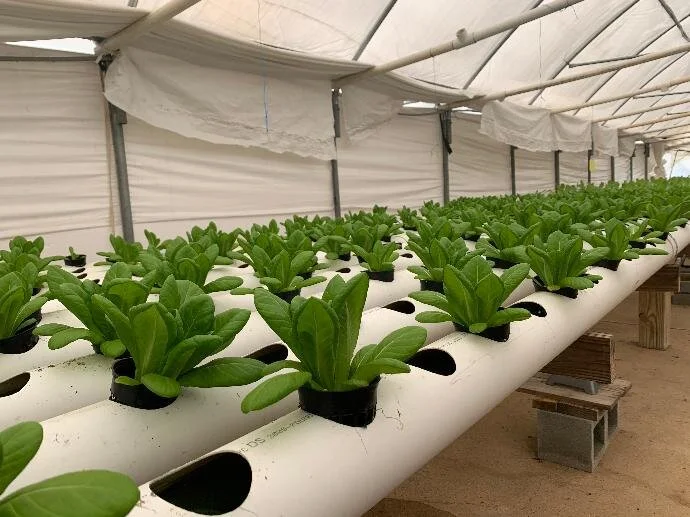
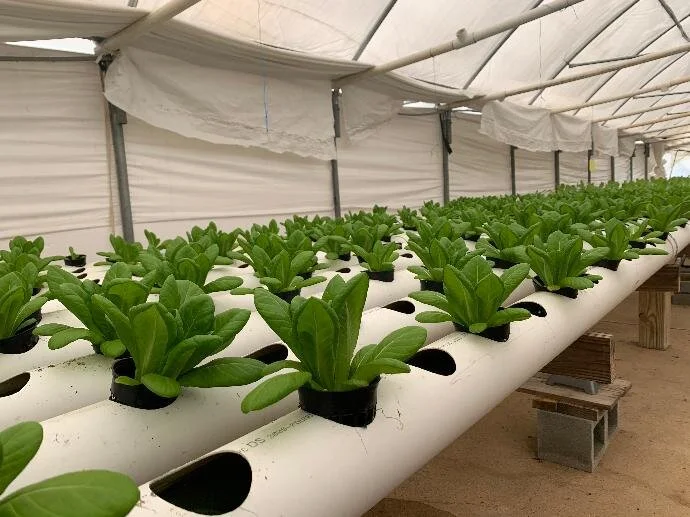
ALEXANDRIA, La. (KALB) - The hydroponic tubes at GrayWalk Farms in Alexandria are full of fresh heads of butter and romaine lettuce, mustard greens, and herbs like basil.'
Source: KALB
Lately, all that home-grown goodness has been making it onto dinner plates more often here in Cenla.
Since the coronavirus pandemic began, GrayWalk Farms has been selling their produce at pop-up markets at places like Little Cakes with Big Attitude and Beans N Cream Coffee, while the Alexandria Farmer's Market has been closed."
We've been doing it for about six weeks now and it's really worked out well. The community seems to really embrace it,” said owner Jay Pearson.
The farm is a mostly wholesale produce operation, selling their vegetables in bulk to be distributed around the region, but they say they felt a need to keep local produce flowing into the community, while many chain grocery store shelves were running low."
Since the pandemic we've seen that there is a big need since they've shut down the farmer's markets, to be able to go out and open ourselves to the community and give them some fresh produce,” added Pearson.
According to a new report from the U.S. Bureau of Labor Statistics, food prices in America during the month of April saw the biggest one month increase since 1974, increasing by 2.6 percent.
While the prices of many grocery items continue rising in the U.S. because of supply chain disruptions and a larger demand for groceries with many people staying home more often, GrayWalk said they expect to produce prices to remain steady. Especially on produce here at home, where it's harvested on a weekly basis in a sterile environment, with no travel time to your table."People really appreciate that and there's a big difference in taste too,” says Pearson. "There's nothing like supporting your local businesses. There's going to be a big shift in this community going local and trying to seek out that fresh produce. Whatever may be in season, they're going to be looking for it because they've gotten a taste."
To find out where the next pop-up produce market is, follow GrayWalk Farms on Facebook.

IDTechEx: How to Succeed in Vertical Farming
Vertical farming is an emerging technique within agriculture that involves growing crops indoors under controlled environmental conditions
NEWS PROVIDED BY IDTechEx
May 26, 2020
BOSTON, May 26, 2020,/PRNewswire/ -- Vertical farming is an emerging technique within agriculture that involves growing crops indoors under controlled environmental conditions. By carefully tailoring the environment to the exact requirements of the crop, such as through using LED lighting to produce the exact light spectrum needed for optimal photosynthesis, it is possible to obtain yields hundreds of times higher than traditional agriculture.
Vertical farms can be set up almost anywhere, making it possible to grow crops in the middle of populous urban centers, meaning that it is possible for crops to reach consumers within minutes of harvest. This contrasts with traditional agriculture, where fresh produce can take weeks to reach consumers, losing the freshness, and increasing contamination risk along the way. The recent IDTechEx report, "Vertical Farming: 2020-2030" explores the technologies and markets around the fast-growing vertical farming industry.
Vertical farms use artificial lighting and carefully controlled climates to grow crops at far higher yields than conventional agriculture. Source: Intelligent Growth Solutions (PRNewsfoto/IDTechEx)
Vertical farming has been the subject of a lot of hype in recent years, with supporters claiming it could revolutionize food production. Industry advocates, such as Columbia University Professor Dickson Despommier, have presented visions of a future world where fresh food is grown inside skyscrapers to feed giant, high-tech metropolises (for further visions of the cities of the future, see the IDTechEx report, "Smart City Opportunities: Infrastructure, Systems, Materials 2019-2029"). Investors are also feeling the hype, with vertical farming start-ups raising over a billion dollars in investment in the last five years alone.
However, despite this optimism, the industry does face some major challenges and the sector has more than its fair share of bankruptcies. PodPonics, once the most well-funded vertical farming company in the world, and FarmedHere, which once operated what remains the largest vertical farm ever built, both went bankrupt. David Rosenberg, Chief Executive of New Jersey-based vertical farming outfit AeroFarms, recently said he wouldn't be surprised if 90% of the players in the industry went out of business within the next three years.
Broadly, many vertical farms struggle for the same reasons. As well as costing a lot of money to set up, vertical farms can be very expensive to run, largely because they require continuously running artificial lighting and climate controls. This is compounded by high labor costs and logistical difficulties that often get more difficult as the vertical farm gets larger. This all makes it very difficult to compete on price with produce grown on conventional farms, which typically have razor-thin profit margins.
Because of these challenges, vertical farmers generally only grow crops where the whole of the plant can be consumed, in order to maximize space efficiency and avoid wasting energy on growing inedible stems and leaves. Therefore, almost all vertical farmers are restricted to growing herbs and leafy greens. These are still a large market but fall somewhere short of the lofty claims made by some supporters of the industry.
It is certainly possible to run a successful vertical farming business, as fast-growing players such as Bowery Farming and InFarm will attest to, however, it requires a carefully planned out strategy and consideration of all the variables and trade-offs involved in vertical farming, in addition to a fair amount of investor capital.
The keys to success in vertical farming are outlined in the recent IDTechEx report, "Vertical Farming: 2020-2030". The report discusses several factors that can contribute to the success or failure of a vertical farm, including:
Whether or not to automate. Automation can significantly reduce labor costs while streamlining the logistical processes. However, investing in advanced automation equipment can lead to extremely high start-up costs.
Choice of crops. Should vertical farming try to branch out beyond leafy greens, or should it corner the market it has? What about higher-value crops inaccessible to conventional agriculture?
How large is too large? Larger centralized facilities could lead to economies of scale but could also face spiraling logistical difficulties. However, smaller localized facilities may face much higher start-up costs relative to the output capacity.
The importance of location: is a city center location really the best place to set up a vertical farm?
The need for experience in the food industry. Crops are living organisms and are not always predictable. Despite this, there is a relative lack of food and agriculture experience in the vertical farming sector.
For more information on this report, please visit www.IDTechEx.com/vertfarm or for the full portfolio of Food & AgTech research available from IDTechEx please visit www.IDTechEx.com/research/agtech.
IDTechEx guides your strategic business decisions through its Research, Consultancy and Event products, helping you profit from emerging technologies. For more information on IDTechEx Research and Consultancy, contact research@IDTechEx.com or visit www.IDTechEx.com.
Media Contact:
Jessica Abineri
Marketing Coordinator
press@IDTechEx.com
+44-(0)-1223-812300
SOURCE IDTechEx

Grow Your Own Food At Home
Launched in 2017, Dubai-based Greenoponics Agricultural Services, which focuses on soil-less cultivation methodologies, is a trendsetter in sustainable farming practices, helping UAE residents to start their own vegetable patches at homes, offices, and commercial spaces.“
Greenoponics Can Provide Solutions Through Hydroponics and
Aquaponics Techniques
May 28, 2020
Hanging hydroponic system from GreenoponicsImage Credit: Supplied
Growing food sustainably in the UAE is no easy feat. However, new technologies and innovative farming practices are pushing more city dwellers to grow vegetables, greens, and herbs in their homes.
Launched in 2017, Dubai-based Greenoponics Agricultural Services, which focuses on soil-less cultivation methodologies, is a trendsetter in sustainable farming practices, helping UAE residents to start their own vegetable patches at homes, offices, and commercial spaces.“
Urban farming can improve the UAE’s food security, reducing dependence on imports,” says Smitha Paresh, Executive Director, Greenoponics.“We can provide solutions through hydroponics and aquaponics techniques, along with greenhouses and net houses for commercial, residential, and institutional purposes.”
Greenoponics, which is part of the Happy Holdings group, has installed several systems on rooftops of building and in kitchen gardens at homes, at camp accommodation facilities, schools, and restaurants and institutional premises.“Our systems have been able to yield six kgs of tomatoes per plant in three months and 20kgs of leafy greens per square metre in one month,” she says.“
Hydroponics-based techniques such as nutrient film technique (NFT) and Dutch bucket system (DBS), can be easily installed on rooftops and even on balconies, thus having many benefits,” Smitha says.“
These include 70–80 percent less consumption of water, automated controls, lower pest attacks, the guaranteed yield from less space, and highly nutritious vegetables, fruits, and greens.“
Furthermore, hydroponics-based farming contributes to sustainability, food safety and security, water conservation, and resource optimization,” Smitha explains.
Greenoponics has also developed and marketed unique mini-hydroponic systems for growing various fruiting vegetables such as okra, aubergine, capsicum, and gourds. Using these systems, people can grow more than 20 plants in just one square metre area.“We have installed greenhouses and net houses, with Dronii-DBS and Eva-NFT systems, at various public schools run by the Ministry of Education, several schools of GEMS Group, Sheikh Mohammad Bin Rashid School for Girls, Sheikh Hamdan Innovation Center for Youth and Al Ghurair farms. We will be part of Dubai EXPO at the sustainability pavilion for hydroponic systems,” she says, adding, “Greenoponics was selected by DEWA for the Innovation Week in 2018 to showcase its innovative technology. We have also bagged the Ajman University Innovation Center Award for our products and services.”
For more information on the company, visit Greenoponics.com

Hydroponic Microgreens 2: Marketing Microgreens Feat. Nick Greens
A big thank you to Nick Greens for all the helpful insights he shared with us! Learn more about Nick by visiting Nick Greens Grow Team.
A big thank you to Nick Greens for all the helpful insights he shared with us!
Learn more about Nick by visiting Nick Greens Grow Team.
If you're ready to get started growing, check out some of our favorite systems for microgreens!