

Welcome to iGrow News, Your Source for the World of Indoor Vertical Farming

VIDEO: National Geographic - Earth Day - Jane Goodall
The sweeping documentary special highlights Dr. Goodall’s vast legacy of four decades transforming environmentalism, nonhuman animal welfare and conservation through her innovative approaches, becoming a worldwide icon.
“You cannot get through a single day without having an impact on the world around you. What you do makes a difference, and you have to decide what kind of difference you want to make.” —Jane Goodall
Join Jane Goodall as she travels the world, calling us all to activism on behalf of wildlife and the planet.



50th Anniversary of Earth Day - 25 Earth Day Facts - Plus, How To Help The Planet Even While 'Social Distancing'
This year marks the 50th anniversary of Earth Day! Every year on April 22, people around the world mobilize to address some of the most urgent threats facing our environment, from climate change to deforestation to plastic pollution. We’re taking a look at what you need to know about this year’s Earth Day events, as well as looking at some fascinating Earth Day facts.
This year marks the 50th anniversary of Earth Day! Every year on April 22, people around the world mobilize to address some of the most urgent threats facing our environment, from climate change to deforestation to plastic pollution. We’re taking a look at what you need to know about this year’s Earth Day events, as well as looking at some fascinating Earth Day facts. In light of the coronavirus crisis limiting large, in-person gatherings, Earth Day celebrations will be going digital this year, according to the Earth Day Network, the organization that coordinates official Earth Day events around the world.
“At Earth Day Network, the health and safety of volunteers and participants in Earth Day events is our top concern. Amid the recent outbreak, we encourage people to rise up but to do so safely and responsibly—in many cases, that means using our voices to drive action online rather than in person,” Kathleen Rogers, president of Earth Day Network
“Whether it be coronavirus or our global climate crisis, we cannot shut down,” she added. “Instead, we must shift our energies and efforts to new ways to mobilize the world to action.”
Related: Inspiring Quotes for Earth Day
In honor of Earth Day’s milestone anniversary, here are 25 facts about the history of Earth Day, as well as facts about the environment that may serve as a wake-up call for action.25 facts about Earth Day
1. Gaylord Nelson, a senator from Wisconsin, founded Earth Day in 1970 to raise public consciousness about environmental concerns such as pollution, oil spills and vanishing wildlife. He tapped into the energy of the anti-war movement, framing Earth Day as a “national teach-in on the environment.”
2. April 22 was chosen as the date for Earth Day because it fell between Spring Break and final exams, and organizers wanted to maximize student involvement.
3. Twenty million Americans, or about 10 percent of the country’s population at the time, took part in events and demonstrations on the first Earth Day.
4. The first Earth Day pushed environmental concerns onto the national agenda. That same year, Congress authorized the creation of the U.S. Environmental Protection Agency.
5. The first Earth Day in 1970 inspired the passage of the Clean Air, Clean Water and Endangered Species Acts, according to the EPA.
6. The theme for Earth Day 2020 is Climate Action.
7. Around 1 billion people take part in Earth Day activities around the world every year.
8. In the lead-up to Earth Day this year, millions of people worldwide will participate in Earth Hour on March 28. At 8:30 p.m. local time, people will participate in events and demonstrate their commitment to the planet. In past years, Earth Hour gatherings have contributed to real policy changes, including the creation of a marine protected area in Argentina and environmental protection legislation in Russia.WWF’s Earth Hour is the world’s largest grassroots movement for the planet that gives us an opportunity to demonstrate our commitment to the planet. In light of the coronavirus crisis, Earth Hour will be celebrated digitally this year.
9. On Earth Day in 2011, people planted 28 million trees in Afghanistan as part of a “Plant Trees Not Bombs” campaign.
10. Since the first Earth Day, average annual temperatures in the contiguous United States have been warming at a rate of 0.45°F per decade.
11. Humans today use about 50 percent more natural resources than we did 30 years ago, according to a report from Friends of the Earth.
12. Animal species populations saw an overall decline of 60 percent worldwide between 1970 and 2014, due to habitat loss, pollution, climate change and other factors, according to the WWF.
13. 2019 was the second-hottest year on record worldwide, just behind 2016, according to the National Oceanic and Atmospheric Administration.
14. Twenty of the warmest years on record worldwide have occurred in the past 22 years, according to Climate Central.
15. Scientists estimate that dozens of plants and animal species go extinct each day due to human activity.
16. Rising global temperatures are leading to more extreme weather events, including more intense wildfires and more frequent, high-intensity hurricanes, according to the Earth Day Network.
17. The world’s population is expected to increase from 7 billion today to 9 billion in 2020, which will only increase the impact of human activity on the environment, according to the Organisation for Economic Cooperation and Development.
18. Today’s average American generates about 4.5 pounds of trash per day, compared to 2.68 pounds in 1960, according to the EPA.
19. Food accounts for 10 to 30 percent of a household’s carbon footprint, due to the emissions involved in food production and transportation, according to the Center for Sustainable Systems.
20. U.S. automobile fuel economy increased 24 percent between 2004 and 2017.
21. You can improve your car’s fuel economy by 7 to 14 percent simply by obeying the speed limit.
22. Electronic devices plugged in on “standby” mode can account for 5 to 10 percent of a household’s energy use.
23. Using a dishwasher is more eco-friendly than hand-washing dishes, according to a recent study from the University of Michigan.
24. Nearly 80 percent of all plastic waste ever created by humans is still in the environment, according to Recycle Now.
25. More than 30 countries and regions have introduced bans on disposable plastic bags to fight plastic waste, according to Greenpeace.
Parade | By Lindsay Lowe | April 19, 2020


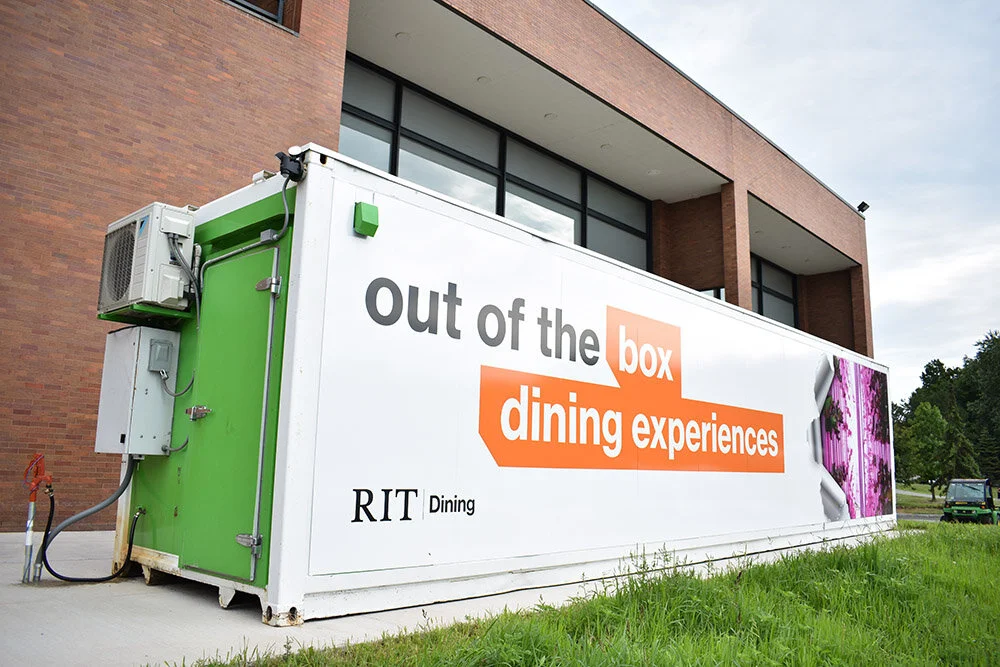
The Global Food Revolution Is Vertical
OVER $1 BILLION in investments into vertical farming worldwide have been raised in the last five years
17th April 2020
Vertical farming supporters believe this method of indoor growing could revolutionize global food production
OVER $1 BILLION in investments into vertical farming worldwide have been raised in the last five years.
Growing plants indoors is by no means a new concept; however, vertical farming allows operators to stack plants in layers to reduce space, practice soil-free growing techniques and to exert absolute control of the environmental growing conditions – using artificial lighting instead of relying on the sun.
With more and more people concerned about reducing their carbon footprint, supporters of vertical farming believe this method could revolutionize global food production by eliminating food miles, enabling crop growth next door to urban centers and achieve yields hundreds of times higher than conventional agriculture without requiring pesticides.
At the moment, fruit and vegetables often travel thousands of miles to reach consumers, losing freshness and quality along the way and increasing the risk of contamination.
Investors are responding enthusiastically to the development of this concept, with the sector raising over $1 billion in funding since 2015. High profile investments include New Jersey-based start-up ‘AeroFarms’ raising $100 million in 2019 to expand its aeroponic growing facilities, and Californian start-up ‘Plenty’ raising $200 million in 2017 in a funding round led by SoftBank Vision Fund, along with backers including Amazon founder Jeff Bezos and Alphabet chairman Eric Schmidt.
Across the Pacific, the industry is already well-established – in Japan, there are over 200 vertical farms currently operating, with industry leader Spread Co. Ltd. producing 30,000 heads of lettuce every day in its highly automated 'techno farm' Keihanna plant.
However, despite this optimistic picture, the industry is facing challenges. The sector is littered with bankruptcies as companies struggle with the power costs of maintaining a controlled environment 24/7 and the difficulties of coordinating the labor-intensive process of running a vertical farm. Nevertheless, companies remain optimistic, with advances in lighting and automation technology helping to shape the future of indoor growing.
Political Affairs Editor

Valoya Announces Addition of A Former Conviron VP To Its Board of Directors
Its Board of Directors will now be strengthened with the addition of Mr. Bill Mukanik, former VP Client Services at Conviron, one of the world’s leading growth chamber manufacturers and also Valoya’s long term partner
Valoya, the Finnish LED grow lights manufacturer has been steadily growing since its founding 11 years ago. Its Board of Directors will now be strengthened with the addition of Mr. Bill Mukanik, former VP Client Services at Conviron, one of the world’s leading growth chamber manufacturers and also Valoya’s long term partner. Mr. Mukanik brings to Valoya’s Board of Directors team over 40 years of experience in the crop science market.

I look forward to working with Valoya to expand their presence and market share in North America. Having successfully integrated their LEDs for many years, I witnessed firsthand their ability to understand a client’s needs and then provide proven research-driven solutions. I am confident that this capability, along with their desire to provide exceptional value, will lead to even greater success. – Bill Mukanik
Mr. Mukanik’s longlasting experience in the crop science market will help Valoya solidify its position as the global leader of horticultural LED lighting solutions for this segment. As a highly respected and seasoned executive with a valuable understanding of the needs of the crop science customers, Mr. Mukanik will help Valoya serve this market even better. This addition to the Board of Directors comes at the stage of the company’s rapid development.
“I am very pleased and honored, that Bill joins our Board of Directors. He brings very valuable and relevant knowledge and vision to Valoya. He has an extensive global network and unsurpassed insight into the North American indoor growing and plant research markets. I have had the pleasure of working with him already many years in another capacity and now I am happy to continue working with him in his role as a Valoya board member” comments Lars Aikala, the CEO and Co-Founder of Valoya.
About Valoya
Valoya is a provider of high end, energy-efficient LED grow lights for use in crop science, vertical farming, and medicinal plants cultivation. Valoya LED grow lights have been developed using Valoya's proprietary LED technology and extensive plant photobiology research. Valoya's customer base includes numerous vertical farms, greenhouses and research institutions all over the world (including 8 out of 10 world’s largest agricultural companies).
Additional information:
Valoya Oy, Finland
Tel: +358 10 2350300
Email: sales@valoya.com
Web: www.valoya.com
Facebook: https://www.facebook.com/valoyafi/
Twitter: https://twitter.com/valoya
The Microgreens Show Episode 17 - Urban Farm $6000/wk To $250/wk
He will explain how the urban farm went from making $6000/wk to $250/wk
Visiting Vertical Farm On The West Side Of Chicago to interview CEO Mark Thomas.
He will explain how the urban farm went from making $6000/wk to $250/wk.

COVID-19 Pandemic Highlights Importance of Strengthening Singapore's Food Security, Say Experts
SINGAPORE: From growing rice at sea to turning to microalgae as an alternative protein source - these are some of the ways Singapore could boost its homegrown food production in the future as it looks to improve its food security
SINGAPORE: From growing rice at sea to turning to microalgae as an alternative protein source - these are some of the ways Singapore could boost its homegrown food production in the future as it looks to improve its food security.
The COVID-19 pandemic has proven to be a wake-up call for Singapore on the issue of food security, say experts.
“The crisis could be a timely reminder of how fragile food security can be,” said Professor William Chen, director of the Nanyang Technological University’s Food Science and Technology programme.
While there are other factors such as climate change which pose a threat to food security, these are relatively far off, he noted.
The coronavirus outbreak, as well as resulting lockdowns to stop its spread, has helped put a spotlight on the issue, said Prof Chen, who is also Michael Fam chair professor at NTU.
In March, Malaysia announced its movement control order, with measures including barring citizens from leaving and foreigners from entering the country. This sparked a round of panic buying in Singapore, with long queues of people at supermarkets stocking up on items such as eggs and meat.
Prime Minister Lee Hsien Loong later announced that his Malaysian counterpart Muhyiddin Yassin had assured him that the flow of goods and cargo - including food supplies - between the two countries would continue despite the travel restrictions.
At the time, Trade and Industry Minister Chan Chun Sing noted that Singapore had contingency plans for a disruption of supplies from Malaysia, which included national stockpiles, building up its own capabilities and diversification of its sources. However, speaking in Parliament earlier this month, Mr Chan said the country would have to be ready for more disruptions to its supply of food and other essentials as lockdowns in various countries “severely diminished global production capacities and disrupted global supply chains”.
About 90 per cent of Singapore’s food currently comes from overseas.
Last month Singapore and six other countries - namely Australia, Brunei, Canada, Chile, Myanmar and New Zealand - issued a joint ministerial statement highlighting a commitment to maintaining open supply chains amid the ongoing pandemic.
“One of the ways to go forward is to have more of these supply chain connectivity agreements,” said food security expert Paul Teng. However, Prof Teng - an adjunct senior fellow at the Centre for Non-Traditional Security Studies under the S. Rajaratnam School of International Studies - said it was unclear how binding such agreements were.
During times of crisis, countries may understandably seek to protect their own interests, said Prof Chen.
“It would be very difficult to impose (on other countries) that you promised this and that,” he noted.
Prof Teng pointed to Vietnam’s move last month to suspend exports of rice to ensure its own national food security amid the COVID-19 outbreak - which it has since reversed - as well as other factors beyond the control of governments, such as the droughts in Thailand that had affected rice production there. Prof Chen also highlighted how governments may choose to keep supply chains open, as exports of food and other essential items are a significant source of revenue for these countries.
URBAN FARMING IN SINGAPORE
While only 10 per cent of Singapore’s food is produced locally, it aims to become less dependent on other countries over the course of the next decade.
Last year, the Singapore Food Agency announced plans to have 30 per cent of the country’s food produced locally by 2030. It aimsto achieve this in land-scarce Singapore by four means - harnessing technology, increasing the amount of space dedicated to farming, as well as supporting local agriculture and encouraging consumers to buy local produce.
In April, a S$30 million grant was announced to help boost local food production.
And with the opening of an 18ha Agri-Food Innovation Park in Sungei Kadut next year - dedicated to high-tech farming as well as research and development in the sector - Singapore aims to stake its own claim in the S$5 trillion agri-tech industry.
Even so, the price sensitivity of Singapore consumers means they tend to shy away from local produce, which is generally more expensive than imports from elsewhere in the region, Prof Teng noted.
“There are also some who believe that imported is better, particularly from countries like Japan, Australia or USA,” said Bjorn Low, co-founder and executive director of urban farming social enterprise Edible Garden City.
Prof Chen said his research in microalgae - an alternative protein food source - showed it could be done inexpensively and without sunlight.
Still, Mr Low noted there are other hurdles in urban farming in Singapore.
“One of the biggest challenges we face is a talent crunch. Not only is it difficult to hire Singaporeans to become farmers, it is also difficult to train our staff locally, as there are little to no accredited farming programmes,” he added, noting that there is also a lack of space and resources, with the resulting lack of economies of scale leading to higher costs.
“Thankfully, all of these issues are changing for the better, as the Government is extending more help to local farmers, and as people are becoming more aware of the quality of local produce, as well as the national and nutritional benefits of buying local.”
Technology could also expand the scope of what can be grown locally, said Prof Teng.
He pointed to British startup Agrisea, which claims to have developed a variety of rice that can be grown in the ocean, noting it is in early discussions to test it in Southeast Asia. "This could be a real game-changer," he said. "We might see big circular platforms growing rice (in the sea) around Singapore."
BACK TO BASICS FARMING
Even as Singapore moves to adopt tech to boost its local produce, Prof Teng - who himself ran a fish farm until two years ago - believes there is still a place for smaller, more conventional farming methods.
“It’s not proven to us yet - or to me anyway - that a few large farms can feed everybody,” he said.
Community gardens could serve this purpose of growing vegetables for residents, he noted, adding that the authorities could allow for excess vegetables from such gardens to be sold off.
While noting Edible Garden City uses agritech to overcome limitations such as space or climate - allowing it to grow kale and specialty Japanese vegetables like komatsuna in indoor climate controlled environments - there must be a balance with “natural farming methods”, Mr Low said.
“At Edible Garden City, we grow what we can outdoors using natural farming permaculture methods. This has the least impact on the environment and is the most sustainable way of farming, keeping our soil healthy and productive for future generations,” he said.
“Additionally, there's also a wide variety of veggies that grow well in our climate, many of which are not only tasty but that are incredibly nutritious.”
Prof Chen also noted that as part of food security, Singaporeans should reduce their level of consumption as well as the amount of food waste produced here. Any waste produced should be composted, he said.
He pointed to figures released by the National Environment Agency on Wednesday that showed that food waste made up 20 per cent - or 600,000 tonnes - of the three million tonnes of waste generated here last year.
Beyond that, he said there could be greater decentralisation of food production here, noting this would lighten the burden of ensuring food security on the Government.
While fish farming may be too difficult to do at a community level, there are other options, said Prof Chen.
“If we talk about community gardens, why not community chicken farms?” he asked, noting this could provide both poultry and eggs to residents.
Source: CNA/az

By Zhaki Abdullah
April 19, 2020

Organic Hydroponics vs. Soil And The USDA Lawsuit
The organic hydroponic vs. soil lawsuit claims that hydroponic operations violate the 1990 Organic Foods Production Act that mandates the need for organic crop production in order to build healthy soils
April 15, 2020
Tags: organic certification, organic hydroponics, organic hydroponics vs soil, soil, soilless systems
Co-authored by Tinia Pina and Riyana Razalee
BackgroundThe contentious issue of organic hydroponics vs soil certification remains at the forefront of the agriculture industry. In 2017, the National Organic Standards Board voted in favor of hydroponics being certified organic. However, just a few months ago, a lawsuit was filed by a group of organic farmers and advocates against the US Department of Agriculture (USDA) over this decision. Although a number of the organic farmers had positive thoughts on the hydroponic industry, as a whole there was consensus that hydroponics should not fall under the organic category.
Pro-Lawsuit Perspective
The organic hydroponic vs. soil lawsuit claims that hydroponic operations violate the 1990 Organic Foods Production Act that mandates the need for organic crop production in order to build healthy soils. Since hydroponic farming is soilless, the argument is that these standards cannot ever be met. Therefore, organic certification should not be allowed. Organic farmers also highlight increased competition in an unfair manner. Larger hydroponic farms usually incur lower costs to grow the same food, thereby capturing even higher margins through their produce sales, while offering more value to the consumers for the same products. From a consumer and market perspective, claims have also been made that this certification weakens the integrity of the term “organic”, creates a lot of confusion, and opens up loopholes for inconsistent organic certifications.
"[The lawsuit] claims that hydroponic operations violate the 1990 Organic Foods Production Act that mandates the need for organic crop production in order to build healthy soils."
Anti-Lawsuit Perspective
For proponents of hydroponic organic certification, they stress that irrespective of whether food is grown in soil or not, it does not necessarily fully indicate whether the food is organic or not. The National Organic Program (NOP) also disagrees with the plaintiffs, stating that the 1990 statutory and regulatory provisions which require soil cultivation applies specifically to systems that use soil. In other words, the regulation was not created to exclude soilless (“hydroponic”) systems. Instead, its purpose was to ensure best practices within soil-based farming, first and foremost. If food is grown in other sustainable, certified organic growing media, they should still be eligible for organic certification. Anti-lawsuit proponents also pressed on the issue of limitation of fair competition by organic farmers, claiming that this exclusion is being done in order to monopolize the premium organic market, thus driving prices up further.
"[I]rrespective of whether food is grown in soil or not, it does necessarily fully indicate whether the food is organic or not."
Organic Hydroponics vs. Soil: Finding Common Ground
Ecologically speaking, it cannot be denied that fertile soil promotes healthy interaction between beneficial microorganisms. These microorganisms are incredibly important for crop production as well as the environment, and ultimately, this enhances the land's ability to sequester carbon and retain nutrients and water. However, do we limit ourselves by saying that this is the only input that necessitates an environment for organic production? Interestingly enough, a 2017 poll by the health food store chain, Natural Grocers, found that over 90 percent of respondents cited pesticide avoidance as their key reason for purchasing organic products. Yet, we fail to acknowledge that the organic hydroponics vs. soil debate should be more multi-faceted than just focusing on one key factor such as “pesticide-free” or soil-only growth.
To do this, we need to look even bigger – How is every step of the food production process using inputs which come from an organic source and /or growing method? There are plans by the NOP to integrate new provisions from the 2018 Farm Bill related to oversight, enforcement, data reporting, and technology into the USDA organic regulations. In addition, the NOP will prioritize farm-to-market traceability for the global organic supply chain, ensuring an even more holistic view of what the organic term should constitute, which undoubtedly should include soil, but in reality also includes various inputs along the supply chain. In soil, compost and other organic fertilizers are typically added directly to this media during cultivation. The organic fertilizer is subsequently degraded by soil microorganisms, which make organic compounds readily available for absorption by the plant.
"[W]e need to look even bigger – How is every step of the food production process using inputs which come from an organic source and /or growing method? "
Re-Nuble’s mindset has always been about how we can bring back closed-loop food again, realizing that nobody has been able to efficiently take organic nutrients and turn it into a viable nutrient solution at a scale that makes it competitive with commercial grade synthetic fertilizers for soilless farms. However, if the microbial community that degrades organic fertilizer can be cultured in a soilless system, it should be possible to meet the organic growing standards that those representing the pro-lawsuit perspective are seeking.
This is something we have not only spent the last 5 years researching but have also been very intentional about. Using our approach of organic cycling, and having developed a nutrient delivery system, we can achieve what we recognize as missing in this lawsuit within the soilless community, by employing a myriad of methods, including composting technology, which is essentially decomposed organic matter. Every stage of our production is viewed as circular, ensuring that we are not only carbon neutral, but also relieving our land (and soil) of further environmental stress.
So really, could the solution be as simple as asking ourselves, “Is the organic hydroponic vs soil conversation really just about soil, or should we hold ourselves to higher standards and, instead, focus on optimizing for efficient food production systems, especially as providers of nutrition to entire communities?”
Photo source

Can Vertical Farming Help In The Battle Against COVID-19?
For vertical farming companies, the increasingly-evident pressures facing the world’s food supply chains are confirmation of what they were already saying: resilient supply chains are hyper-local supply chains, especially when it comes to fresh produce
April 17, 2020
Companies of all stripes are rushing to respond to the threats (or opportunities) posed by the widening coronavirus pandemic. For vertical farming companies, the increasingly-evident pressures facing the world’s food supply chains are confirmation of what they were already saying: resilient supply chains are hyper-local supply chains, especially when it comes to fresh produce.
But there is also a more direct way vertical farmers want to confront the virus; they could be crucial in developing and manufacturing rapid testing kits, vaccines, or even a cure, according to pharmaceutical companies.
Inno-3B, a Quebec-based vertical farming equipment design company that has over the last year been developing a turnkey solution for plant-based pharmaceutical companies, is claiming to have diverted its focus onto confronting Covid-19 head-on. To do this, the firm has teamed up with biopharmaceutical businesses PlantForm Corporation, Cape Bio Pharms and Biopterre.
Growing monoclonal antibody treatments in vertical farms
Inno-3B plans to build and operate a pilot molecular farm at its 35,000 sq. ft facility located in St-Pacôme, QC. This facility will be the site where these firms develop what they call “a monoclonal antibody treatment” for COVID-19 patients. They will also develop “prophylactic applications” for first responders and other health-care personnel who require immediate protection.
“Speed and efficiency are of the essence right now,” Inno-3B CEO Martin Brault tells AFN. Intriguingly, the idea owes much to tobacco. The tailored solution Inno-3B has been developing for plant-based pharmaceutical companies in recent years uses strains of the tobacco plant. Even before Covid-19, plant-based molecular farming for protein production offered advantages over traditional fermentation systems to produce drugs using animal or bacterial cells. These advantages include lower costs, improved scalability and faster turnaround times.
“The science behind it is called Transient Gene Expression,” says Brault. “It is a real game-changer for the pharma industry. This is what we are embedding into our vertical farming equipment. If I had to explain it in its simplest form, here is how I’d do it: This science is based on using a characteristic of a very specific bacteria called agrobacterium. This bacteria has the ability to transfer some genetic material to a plant cell reproduction component in order to survive and reproduce itself. It is basically using the plant-growing mechanism to live… a parasite. The technology consists of tricking the bacteria by replacing a gene sequence inside its own RNA. Once the bacteria is “reprogrammed” it will enter the plant’s cell to transfer its gene but the result will be the expression of a targeted molecule for which it was programmed. In our case: antibodies for COVID-19 that will produce detection kits, treatment, and prophylactics.”
Time saver
Brault and his collaborators hope Inno-3B’s closed environment production platform and PlantForm’s proprietary biopharmaceutical manufacturing platform will reduce the time it takes to produce the drugs. According to Brault, the initiative will also allow the scientific community to accelerate the time to market of other plant-based solutions as a response to current and future pandemics. Production dedicated to initial clinical trials will begin in July 2020.
This joint effort will allow the production of approximately 4,000 doses per week of the target therapeutic antibodies for COVID-19. The facility, Brault says, will have the capacity to produce up to 400,000 doses per week for other pharmaceuticals. The pharmaceutical industry is already considered a potential saviour of vertical farming solutions, as competing on growing lettuce with outdoor farms is hard unless vertical farms get better at growing high-value produce that can only be grown in other parts of the world, like strawberries in Singapore, or tomatoes in Abu Dhabi. Indoors it is easier to ensure standards for consistency, repeatability, traceability and full scalability throughout the growth and materials handling cycles.
Lead photo: Concept of SARS-CoV-2, from iStock
Is your vertical farm working on a cure for COVID-19 or other diseases? Let us know. Drop an email to richard@agfunder.com
Shop Local: Sustenir Agriculture Is Now Growing Low-Carbon Fresh Kale In Hong Kong
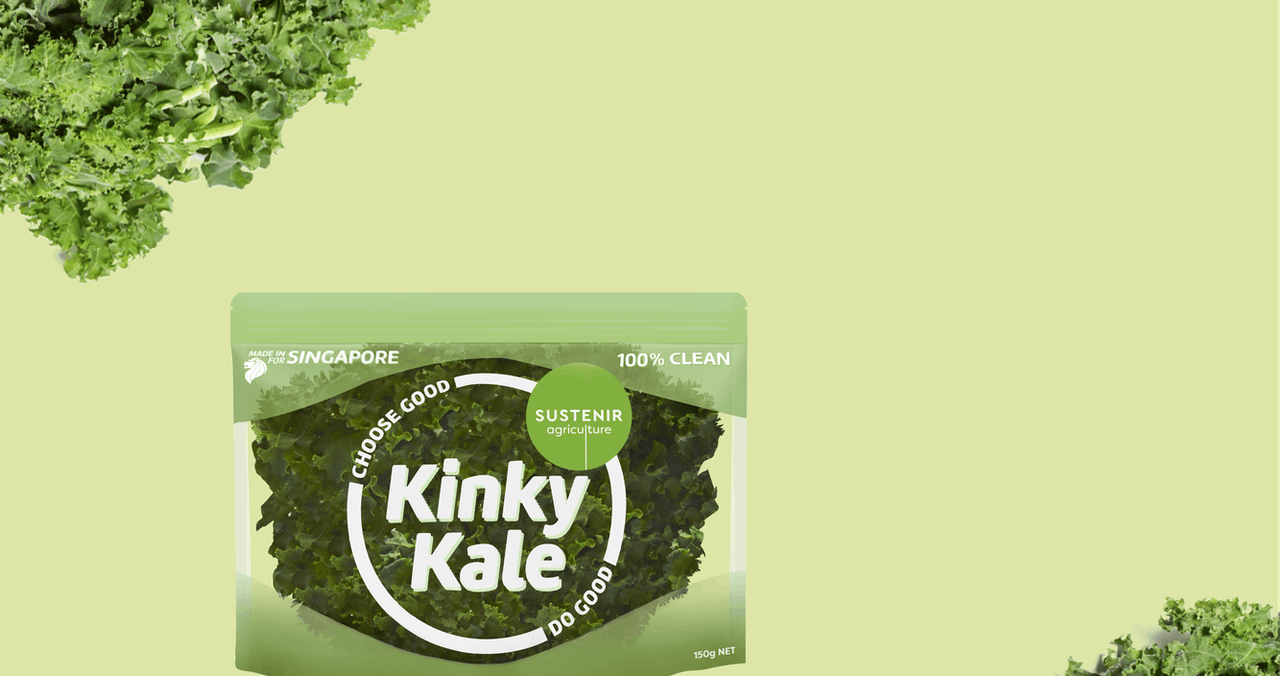
Singaporean agri-tech startup Sustenir Agriculture has recently expanded to Hong Kong with a new hydroponic farming facility in Tuen Mun to offer two kinds of healthy iron-rich kale greens

By Sally Ho April 15, 2020
Singaporean agri-tech startup Sustenir Agriculture has recently expanded to Hong Kong with a new hydroponic farming facility in Tuen Mun to offer two kinds of healthy iron-rich kale greens. Their hydroponic farming technology means that non-native crops can be grown locally, reducing Hong Kong’s dependence on high-carbon foreign food imports and its resultant food waste. Sustenir’s farming solution comes at a time when the world is beginning to wake up to the vulnerability of the current food supply system due to COVID-19, offering the city a chance to improve local production of safe, healthy and traceable produce.
Already one of the biggest indoor farms in Southeast Asia, Sustenir Agriculture has recently entered into the Hong Kong market with a new 25,000 square foot farm in Tuen Mun from where they freshly harvest two types of kale every day, Curly Kale and Toscano Kale. Both kale varieties have grown in popularity in recent years due to their impressive nutritional profile, containing high levels of fiber, calcium, vitamin C and K, iron, and antioxidants.

Founded in Singapore in 2013 by two plant-loving friends Benjamin Swan and Martin Lavoo, Sustenir Agriculture produces non-native crops that are in local demand using high-tech vertical farming methods, which is far more eco-friendly than produce imported from foreign countries and grown using traditional agricultural processes.
Their Controlled Environment Agriculture (CEA) technology is powered by artificial intelligence and LED lighting, which helps the process of photosynthesis in plants, allowing non-native crops that would otherwise be challenging to grow in hot and humid conditions to flourish in their pollution-free hydroponic facilities – without the use of any pesticides and genetically modified organisms (GMOs), using 95% less water and 85% less fertilizer than traditional farming methods.
Every day, Curly Kale and Toscano Kale are harvested fresh in Sustenir’s Tuen Mun facility to be delivered to stores. Sustenir does this each day to ensure that produce stays fresh and nutritious for longer. Only requiring delivery within the city, Sustenir’s produce does not require any air-freighting or shipping, reducing the carbon footprint that non-native fresh produce generates in the transportation process. And because they are grown in pollution-free hydroponic farms, Sustenir’s kale is 100% clean and does not need to be washed before eating.
In addition to reducing carbon emissions, resource usage and providing clean, pesticide-free produce, Sustenir’s local operations also ensure less food wastage. With Asia already responsible for 50% of the world’s food waste – much of it coming from food import-dependent cities like Hong Kong – buying produce that has been grown locally means a longer shelf-life, and also eliminates the food waste that often results in the logistical process of transporting fresh foods over long distances.
Boasting the advantages of food safety, traceability and local food self-sufficiency, Sustenir’s farm in Hong Kong represents a solution to one of the biggest emerging issues that the city is facing due to the Covid-19 pandemic. From travel bans to export and import restrictions, the global food supply chain has undergone massive disruption as a result of measures to contain the pandemic, and as a city dependent on foreign food imports, the need to build on a reliable locally-based food production system has never been more paramount.
The COVID-19 pandemic has awakened consumers to the safety of the existing food system. With the public now more attuned to the health and hygiene of products, Sustenir’s hydroponic technology provides shoppers with a local, traceable and safe option for their produce.

Sustenir Agriculture HK’s fresh produce can be found at over 32 retail locations, including the key partners:
Innovation Consulting Community Team Proposes Sustainable Farming Container At ISU
In just a few months, a team of motivated students put together a proposal to implement a shipping container farm on Illinois State’s campus
Evan Linden April 15, 2020
NOTE: The photos in this story were taken before travel restrictions from coronavirus (COVID-19) were in place.
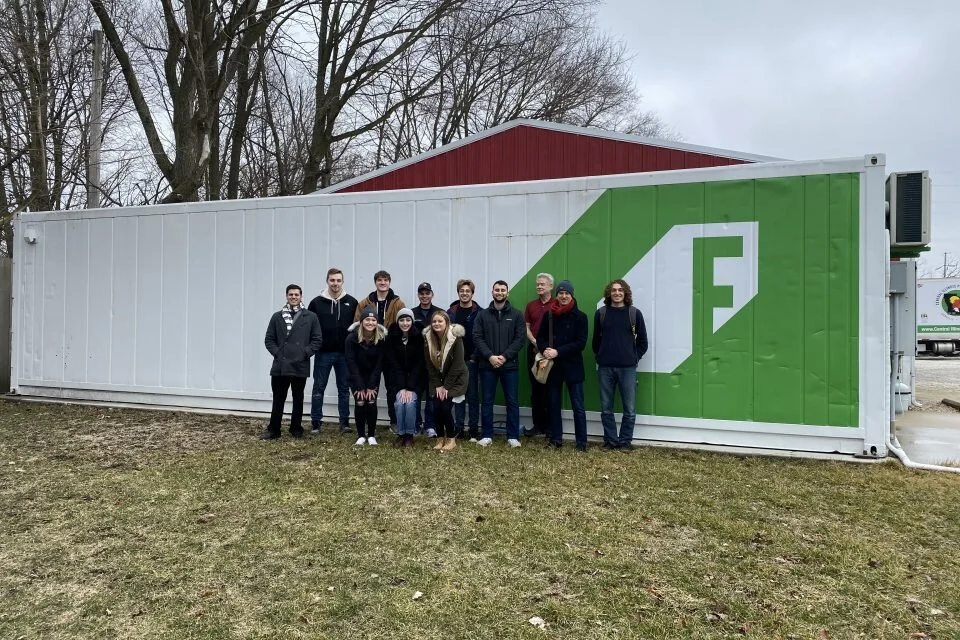
In just a few months, a team of motivated students put together a proposal to implement a shipping container farm on Illinois State’s campus.
“Self-motivation is impressive to employers,” said Marketing Professor Dr. Peter Kaufman, one of the founders of the Innovation Consulting Community (ICC). “Most students are taught one discipline in school, but world problems are interdisciplinary.”
Kaufman and others founded the ICC in 2016 to provide students with hands-on experiences outside their classes. Each year, teams of students are matched with clients at companies and nonprofit organizations to help solve a current issue they are facing. “It’s a unique experience to tackle both profit and nonprofit projects,” said Kaufman. “This experience helps students enhance their skills all around and helps our clients find solutions.”
This year, the ICC assigned 14 projects to 90 students representing 24 majors. One group of four students tackled an increasingly pressing issue: sustainable farming.
The students assembled in late October, mentored by Elisabeth Reed, director of the Office of Sustainability, and Dr. David Kopsell, assistant chair of and professor in the Department of Agriculture. Ryan Strange, a senior from Bloomington double majoring in business administration and small business management, led the team and collaborated with fellow students Joe Kennedy, Madison Steines, and Joe Quigley.
The project was inspired by the Boston company Freight Farms, urban agriculture innovators who create farms in shipping containers. Kopsell, who is familiar with growing systems, was brought in by Kaufman to be a horticulture mentor.
“I shared some of the ideas that I’d always wanted to investigate, and one that he really liked was the idea of writing a grant for a containerized growing system,” said Kopsell.
From there, the team focused on analyzing the benefits of a containerized growing system on campus.
“Our project was a feasibility study of the purchase of one of these units,” said Strange. “The unit itself is the technology necessary for hydroponic farming, and all of that goes inside an old freight container.”
The inside of a shipping container farm located in Champaign.
To see one of these units in action, the group visited a current model located at the University of Illinois at Urbana-Champaign. “The director there was a tremendous help,” said Strange. “He gave us many details about operations and risk management.”
The team spent weeks finding the right contacts and establishing relationships in order to gather information for the project. “We built this huge network of different partnerships that helped us find out how we would finance this unit,” said Strange.
According to Strange, the purchase of one of these units would cost $120,000, with recurring costs adding up to around $40,000 a year.
“I think the cost is within the reach of a grant program,” said Kopsell. “These containers can operate year-round and provide great teaching and learning tools.”
Most importantly, the containers are both efficient and sustainable. Each container system can produce as much as one acre of field production —up to 13,000 plants depending on the crop. The efficient drip irrigation system uses five gallons of water per day, which is marginally less than a field.
“This is really the forefront of innovation in terms of agricultural production,” said Strange. “It’s going to cut back on a lot of the carbon emissions from transporting the food. It’s really going to cut back on costs also because most of the costs for food come from transportation.”
If installed on campus, the container system could be located next to the South University Street Garage.
Strange’s team presented its project at ICC’s annual symposium. In adherence with social distancing requirements, the symposium took place via Zoom on April 10.
Strange and his team noted that the ICC experience greatly benefited them as professionals. “It opens up a lot of doors and you have to teach yourself a lot,” said Strange. “Our mentors were definitely there for help, but it was mostly our group that set up all of the meetings and held ourselves to the deadlines. All of those things are fundamental skills that you’ll need when you move on to the professional workforce.”
Reed and Kopsell were impressed by the group’s work ethic and commitment.
“This student group was very well organized and stayed on task throughout the entire semester,” said Reed. “They communicated well with each other.”
“For me, this project represents the best of Illinois State University,” said Kopsell. “It allows students to find their passion and provides them an avenue to learn how to overcome challenges, solve problems, and make a difference.”
Students interested in participating in the Innovation Consulting Community for the next academic year can email innovationconsulting@IllinoisState.edu for more information.
Lead Photo: The ICC team visits a shipping container farm in Champaign. Pictured from left to right: Ryan Strange, Joe Quigley, Madison Steines, James Smith, Phoebe Naylon, Brennan Douglas, Alicia Chiakas, Aviv Zelniker, Max Snyderman, Bill Bagby with Central Illinois Produce, Dr. Eric Godoy, and Joe Kennedy
Filed Under Agriculture Center for Community Engagement and Service Learning College of Business Office of Sustainability
Madar Farms To Sell It's UAE-Grown Vegetables Online Directly To Consumers For The First Time
Madar Farms is a local company providing a holistic approach to sustainability to help tackle food and water security challenges in the region
Seven varieties of microgreens are now available to purchase through FreshOnTable, Narinport and Barakat platforms.
Abu Dhabi, 8 April 2020: As part of its commitment to support the UAE communities during the current situation, Madar Farms’ locally grown produce can now be purchased online for the first time through three online platforms.
Madar Farms, a UAE-based AgTech company, has partnered with FreshOnTable, Narinport, and Barakat to deliver its high-quality microgreens directly to consumers across the country.
The announcement comes at a significant time with Madar Farms using innovative and safe ways to cope with the high demands of local food given the present global health challenges. Madar Farms also plans to launch more of its products online in the coming weeks.
The seven varieties that can be ordered include Pea Shoots (which pairs well with fish and chicken), Arugula (ideal for salads and sandwiches) and Bull’s Blood, which is tender, crunchy and sweet with a beet-like flavour. Also available are Tendril Peas – a versatile ingredient that can be added to salads, sandwiches, soups and summer fruits - and Daikon Radish that can be used in Asian cuisine dishes, salads, soups and with many sandwich varieties.

Customers can also try Amaranth (which is mild in flavour, similar to spinach) as well as Shiso Britton (a delicious, mild, mint-basil aroma microgreen that adds flavour to salads, Asian dishes, and fish).
By working with FreshOnTable, Narinport, and Barakat, it gives the people the opportunity to try Madar Farms produce in the comfort of their own home and support local suppliers in the UAE.
Now in its third year of operation, Madar Farms has been leading an agricultural revolution in the region by using Controlled Environment Agriculture methods to produce a wide variety of fresh produce. As well as growing local produce, part of Madar Farms’ mission is to help solve food and water security challenges in the region.
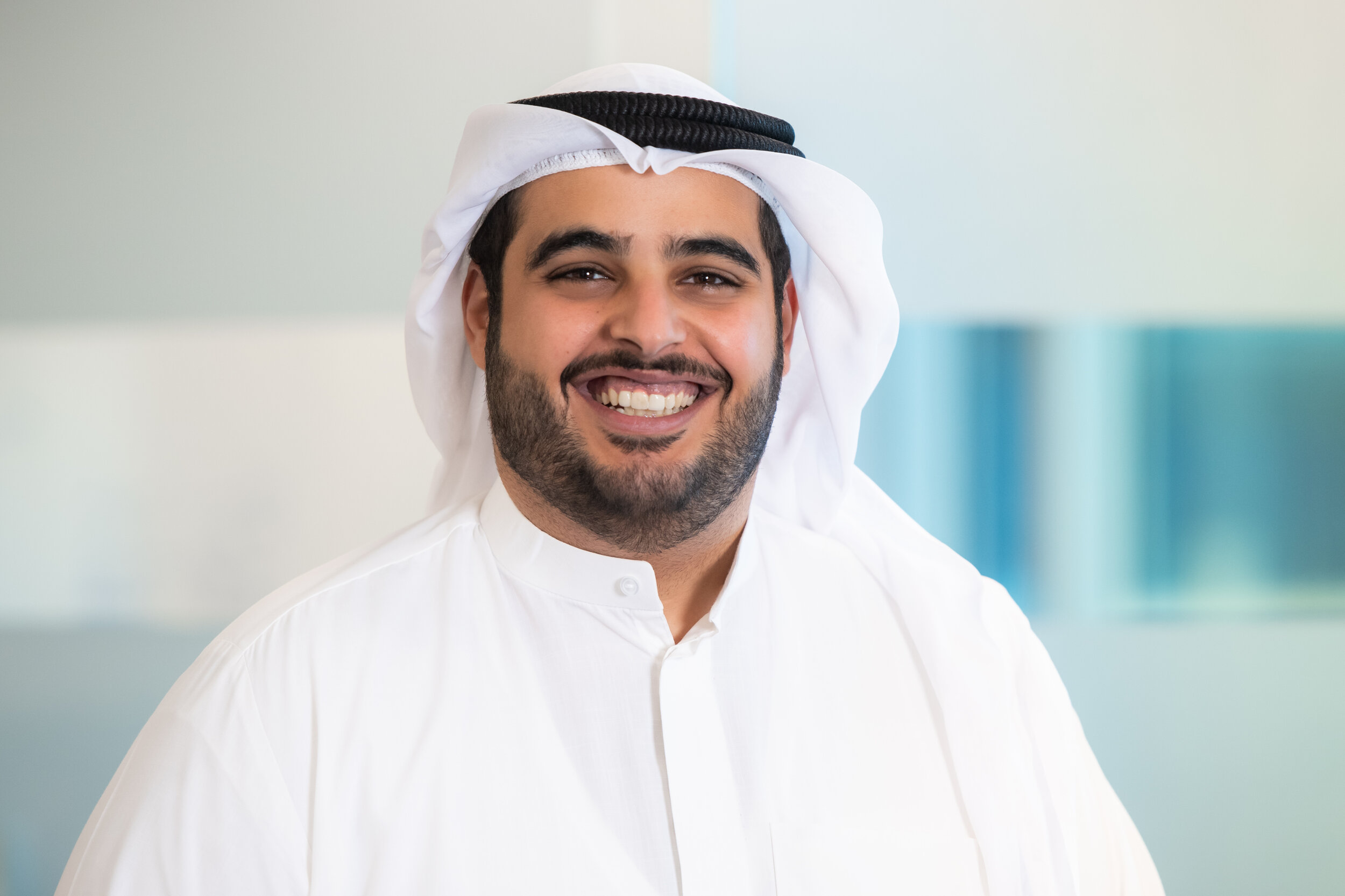
Abdulaziz AlMulla, CEO and co-founder of Madar Farms, said: “In these challenging times, it is more important than ever to eat and shop local - and across the UAE we are seeing an increasing move towards this. By working with FreshOnTable, Narinport, and Barakat, we will be able to make our produce available directly to consumers for the first time and reach out to even more people across the UAE.
“We are responding to this current demand that we’re facing today, partnering with our online ordering and delivery partners to service people across the Emirates. When our customers receive their produce, it will be clean, safe and fresh as all our products are delivered within 24 hours of harvesting.
“This is just the beginning of offering directly to consumers as we plan to launch more products in the coming weeks.
“We look forward to hearing about some of the delicious recipes people are cooking up at home using our microgreens!”
Madar Farms recently announced the company will quadruple the quantity of its microgreens when its new facility begins operating at Khalifa Industrial Abu Dhabi Zone (KIZAD) by the end of this year. The facility will also include the world’s first commercial indoor tomato farm using LED lights.
Madar Farms’ microgreens can be ordered by visiting FreshOnTable (www.freshontable.ae), Barakat (www.barakatfresh.ae) and Narinport (www.narinport.com).
ENDS
About Madar Farms
Madar Farms is a local company providing a holistic approach to sustainability to help tackle food and water security challenges in the region.
With offices in Dubai and a research and development centre in Abu Dhabi, Madar Farms offers products and services that help drive responsible sourcing, environmental ownership, and social impact. This purpose-driven offering is underpinned by the application of innovative AgTech.
Madar Farms also operates the Sustainable Futures program, a hands-on, localised, easy-to-integrate sustainability curriculum that uses food to explore a wide range of topics across the sustainability agenda. This school program is designed to empower the next generation with the awareness, knowledge, skills, and behaviors to create a sustainable future for us all.
Keep up to date with the latest news and events from Madar Farms on LinkedIn, Instagram and Facebook.
Contacts:
Seven Media
Denzil Pinto
050 564 8424

Indian Engineer Grows Crops 'Out of Thin Air'
Although aeroponics may have caught on in the West, in India, it is still in a nascent stage. However, a Coimbatore-based agriculture engineer has mastered the technique after over 10 years of research and development
Although aeroponics may have caught on in the West, in India, it is still in a nascent stage. However, a Coimbatore-based agriculture engineer has mastered the technique after over 10 years of research and development.
Meet Prabhu Shankar, who has grown over 18 types of different vegetables using aeroponics. Additionally, by following his version of aeroponics, one can achieve a level of productivity that is 15 times more than conventional agriculture. Also, as for water, his aeroponic setup uses only 10 percent of what is used in traditional farming methods.
“Small farmers do all their work on their own. But, in the case of farmers who are into commercial agriculture, farm size is a problem. Managing different aspects of agriculture in big farms like crop selection, irrigation, applying fertilizers can be a difficult task. Also, these farms need large amounts of water when we are already facing water shortage,” states the 47-year-old.
To make this technique more accessible to commercial farmers, Prabhu launched his startup ‘Neoponics’, under his company Neoponics Projects India Pvt. Ltd, in January 2019. Neoponics provides the services of setting up customized aeroponic farms, known as ‘neo farms’, to commercial farmers.
Read more at The Better India (Angarika Gogoi)
Publication date: Tue 14 Apr 2020

Urban Farms Are Thriving Amid The Pandemic
"More people are thinking about where their food comes from, how easily it can be disrupted, and how to reduce disruptions," Kotchakorn Voraakhom, the architect who designed Asia's largest urban rooftop farm in Bangkok, tells Reuters
April 13, 2020
With much of the world locked down to prevent the spread of coronavirus, most of us are looking for any good news we can get.
Global air pollution has plummeted. Even wildlife seems to be bouncing back.
But let's face it, these developments likely won't last long once humans venture outside again.
We may, however, be able to take lasting comfort from one trend emerging from these viral times: The number of people growing their own food at home or forging a direct relationship with local farmers has surged in recent weeks.
"More people are thinking about where their food comes from, how easily it can be disrupted, and how to reduce disruptions," Kotchakorn Voraakhom, the architect who designed Asia's largest urban rooftop farm in Bangkok, tells Reuters.
"People, planners, and governments should all be rethinking how land is used in cities. Urban farming can improve food security and nutrition, reduce climate change impacts, and lower stress."
To be clear, the coronavirus isn't likely to have an impact on grocery shelves. Lockdowns in both Canada and the U.S. don't include food transportation. And while there may be concerns about some harvests falling short due to a lack of labor, there's still plenty to go around. If store shelves appear empty at a given moment, don't blame the supply chain. Blame the guy who loaded up three carts of produce because he figured the world was about to end. Indeed, in times like these, panic buyers are the real threat to food security.
The rise of urban farming
Urban farming is pretty much what it sounds like: a farm in an urban setting. That setting could be as modest as a window sill or even a rooftop. Some urban farmers even sell their wares to people in their community.
And backyards aren't off-limits either. Why waste all that sunlight on grass when you can have gourds and green peppers and golden potatoes?
In healthier times, community farms — urban spaces shared and tilled by neighbors — would also fit the bill. There's also an even bigger kind of urban farm that has long been building momentum. Community Supported Agriculture operations, known simply as CSAs, are flourishing amid the pandemic, Civil Eats reports.
The definition of a CSA can be broad, but essentially it's a network that connects a community more closely with farmers. That more direct relationship often results in boxes of in-season produce being delivered directly to your doorstep.
As Davida Lederle, a blogger and podcaster for the Healthy Maven describes it, "Each CSA looks a little bit different. Some don't deliver right to your door but you have to pick them up. Others feed 2 people, while some are built to feed a full family. Some pick all of the fruits and veggies for you, while others allow you to pick and choose options."
It should come as little surprise that the number of people relying on CSAs has tripled in parts of America in recent days, as The New York Times reports. After all, who wants to compete with the panic-shopping thongs, risking not-so-sanitary shopping carts and humans in the check-out line? Urban farms all but eliminate fear and loathing at the grocery store.

Even a few tomato-bearing plants can offset what you need to purchase at the store. (Photo: ChiccoDodiFC/Shutterstock)
The thing about urban farming, whether you grow your own food or have a local farmer on speed dial, is that it's always a good thing — even when we're not living in pandemic times.
"Having some extra food coming in this summer sounds like a pretty good idea, rather than having to worry about paying for our next meal," an urban farmer in Ontario, Canada tells Maclean's magazine.
It's the same steady refrain heard across this quarantined continent.
"I decided that I would grow a garden because we're finding in my work-related job that there's going to be some food shortages, so I wanted to prepare for my family," Michelle Casias of Fargo, North Dakota tells KVRR News.
Of course, this wouldn't be the first time a nation has turned to hyper-local farming in times of crisis. During the lean years of World War II, so-called "victory gardens" emerged in yards across the U.S. By the end of the war, America boasted nearly 20 million victory gardens, generating enough fruit and vegetables to feed 40 percent of the population.
If we had built on that homegrown momentum — rather than letting large-scale rural operations almost entirely take over food production — fewer neighborhoods would have become food deserts.
This victory garden was grown in a London bomb crater close to Westminster Cathedral during WWII. (Photo: Office of War Information [public domain]/U.S. Library of Congress)
Urban farms won't feed entire cities. Large-scale operations still do a pretty good job of that. Nor are they necessarily better for the environment. Urban growers probably don't use pesticides and fertilizer as carefully or as efficiently as their big-scale brethren.
In an essay for Gastronomica, Jason Mark sums up the real value of the urban farm:
"Spend a few months taking broccoli from seed to harvest, and you'll soon have a much deeper appreciation for the natural systems on which we depend. Our connection to the earth becomes gobsmackingly obvious when you watch the crops grow (or fail). The garden produces a harvest of teachable moments about what it means to live in an environment."
Lead Photo: Spanning about an acre, New York City's Battery Urban Farm gardening project is the largest educational farm in Manhattan. (Photo: littlenySTOCK/Shutterstock.com)

VIDEO: April Indoor Science Cafe Recording Is Now Available! Photons = Flavor The Case Study of Basil
This presentation 'Photons = Flavor, The case study of basil' was given by Dr. Roberto Lopez and Kellie Walters (Michigan State University) during our 18th cafe forum on April 14th, 2020
This presentation 'Photons = Flavor, The case study of basil' was given by Dr. Roberto Lopez and Kellie Walters (Michigan State University) during our 18th cafe forum on April 14th, 2020. Indoor Ag Science Cafe is organized by the OptimIA project team funded by USDA SCRI grant program.
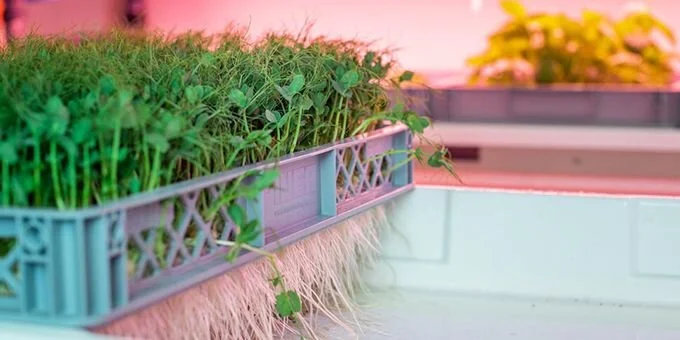
Is Indoor Farming Sustainable?
Voices all over the world are telling us that we urgently need to transform food production to make it more sustainable. But what is sustainability? What does it mean?
Voices all over the world are telling us that we urgently need to transform food production to make it more sustainable. But what is sustainability? What does it mean?
Natasha George | LettUs Grow
04/07/20
Voices all over the world are telling us that we urgently need to transform food production to make it more sustainable. But what is sustainability? What does it mean? The idea has been thrown around to such an extent this past year, that it sometimes seems more of a buzzword than an achievable goal.
Sustainability is defined as ‘the ability to be maintained at a certain rate or level’. In terms of food production, this means that we need to grow and produce food in a way that does not exhaust our resources, but also provides enough food for our growing population.
Our current food production system is, quite simply, not sustainable. We are growing food on deforested land, smothering our crops in toxic pesticides, killing wildlife, and then flying that produce halfway around the world. Government statistics tell us that last year, the UK produced only 53% of the food that it consumed - the rest coming from overseas.
So how do we produce food in a way that is sustainable? We need to achieve sustainability for ourselves and for the sake of our environment - for our land, wildlife, and soils. Importantly though, we must also protect the welfare and financial security of our farmers - ensuring that their industry is also able to thrive. Indoor farming can achieve both. Here are just some of the ways indoor farming can address sustainability concerns:
Saving resources
The fewer resources we use to grow food, the more likely it is we can sustain that production. We use aeroponic systems in our indoor farms. This means that we require no soil. Instead, we use a nutrient-dense mist to grow crops - using 95% less water than traditional farming. This is a huge breakthrough, as freshwater shortage on Earth is a huge problem - only 1% of the world’s water is accessible drinking water, and water scarcity is only going to worsen.
Another resource that is currently at risk is our land. Despite the fact that we only produce around half of the food we consume, agriculture accounts for 63.1% of land use in the UK. Growing indoors and vertically will allow us to grow more efficiently, and free up space which could be used for forestry or rewilding projects.
Shorter supply chains
Indoor growing systems can ensure that farmers are able to grow crops all year round, which means that we do not have to rely on buying in produce from overseas. Buying local means you are supporting the local economy, and food does not need to travel as far to reach our plates, which lowers its carbon footprint. It is estimated that 30% of food waste is produce lost in the supply chain, so less travel time means less waste.
Sadly, agricultural industries abroad often provide food to countries like the UK at the expense of their own market. This means their farms are not always feeding the people growing the food. Scholar and environmental activist, Dr. Vandana Shiva calls this a ‘stolen harvest.’ Being able to grow more of our own food in the UK means that our growing demand is not exploiting markets overseas. Importantly, this means that we can maintain fair trade relationships with other countries that are fruitful for all parties.
Pesticides and fertilizers
In order to meet the high demand for food and protect their livelihoods, many traditional farms use pesticides to protect their crops from pests, weeds or diseases. However, we now know that the decline of insects and wildlife is a serious threat to our environment and there is a push towards organic farming methods. Indoor farms create a controlled environment, removing the need for toxic pesticides.
Fertilizers are also used in traditional farming to ensure that plants get enough nutrients - our closed system ensures that these fertilizers do not leak into waterways and corrupt ecosystems.
Climate control
Controlled environment agriculture provides farmers protection from worsening weather patterns due to climate change. Providing this food security would mean that we could consistently maintain our food production rates in the UK through the winter months and provide job security for farmers. Whilst artificial lighting consumes more energy than using natural sunlight, we can also make use of renewable energies, which are only going to become more energy and cost-efficient in the future.
Lead photograph was taken by Jack Wiseall
The content & opinions in this article are the author’s and do not necessarily represent the views of AgriTechTomorrow
Indoor & Vertical Farming, Processing & Supply Chain | government policy, sustainable

Are Container Farms The Solution To The Coronavirus Food Supply Problem?
As people run to grocery stores to stock up on food and supplies during a time of quarantine, the $899 billion restaurant industry is collapsing, raising questions about the economic security of the nation’s food supply industry in the time of COVID-19
April 13, 2020
As people run to grocery stores to stock up on food and supplies during a time of quarantine, the $899 billion restaurant industry is collapsing, raising questions about the economic security of the nation’s food supply industry in the time of COVID-19.
Dairy farms are already seeing the effects of nationwide school and restaurant closures in the wake of the coronavirus.
About one half of the normal demand for dairy has disappeared since the start of the United States’ social isolation period.
As a result, dairy farmers have had to throw out thousands of pounds of excess milk.
The agricultural side of the farming industry faces similar threats.
Food distributors and wholesalers are scrambling to redirect products from restaurants and other affected businesses to grocery stores.
But grocery stores desire different things than restaurants and schools, making it difficult to fully solve the problem.
Meanwhile, farm suppliers are racing to ship out fertilizers, seeds, and chemicals before the deadly virus disrupts the truck delivery industry.
Without these essential supplies, agriculture farmers won’t be able to produce enough food to meet demand in the States, especially as trade with other countries decreases.
The result could be a wide-scale food shortage.
Labor is also threatening agriculture as many field workers cannot afford to take time off, increasing potential for rapid spread throughout farms.
It’s a problem threatening to cause a significant labor shortage, lowering production and contributing to a potential food shortage.
Experts predict that our food security this fall and next year will be determined by how well these next harvests go.
With shortages in the food supply comes price gouging, leaving the world’s most vulnerable even more so.
The price of global food staples such as wheat and rice are already rising worldwide. Meanwhile, egg prices reached a record high in the US, as grocery stores reported a demand of six times the normal amount.
With more and more people facing unemployment and economic insecurity due to the effects of the global pandemic, increased food prices can make food insecurity worse.
Food security refers to the ability to obtain affordable, nutritious food.
In 2018, 5.6 million households in the US had very low food security.
Plus, as safety concerns skyrocket, consumers are becoming more conscious of how many hands have touched the food they’re about to take home and eat.
As a result, at-home solutions are seeming more appealing.
Since the beginning of March, Google searches for words related to “gardening” and “hydroponics” have increased.
In this time of uncertainty, small-scale indoor farming, like container farms, could prove to be an emergency solution.
Container farms are small indoor farms built inside of repurposed shipping containers.
They have the potential to easily provide food to urban areas, which tend to have the highest populations of food-insecure households, as they don’t require any farmland, only electricity, water, and internet connections.
Container farms also won’t be too affected by labor problems, as they’re fairly self-sufficient, meaning it doesn’t require too many laborers to ensure a bountiful harvest.
Higher tech containers, like our Pure Greens Container Farms, use controlled environment agriculture technology that’s automated and controllable through a smartphone app.
This allows for a more hands-off approach than traditional agriculture.
It also means the growing environment simulates perfect conditions for crops, resulting in more consistent and reliable yields.
Container farms are also able to yield quite a lot while being compact in size, which could help ease some of the burden of a global food shortage.
We’ll have to wait to see how well the agriculture industry adjusts to the pandemic, but it’s worth it to be proactive by looking into possible solutions as soon as possible.
If you’re interested in learning more about starting your own container farm, visit our website or call us at 602–753–3469 to get started!
WRITTEN BY Pure Greens Arizona LLC
Pure Greens’ container-based grow systems offer a variety of interior layouts, sizes, and options so customers can create a farm that meets their needs.
Tags: Container Farming Farming Covid 19

Abu Dhabi Invests $100 Million In A Plant-Based Indoor Farm
UAE capital Abu Dhabi has put $100 million into agtech companies looking to revolutionize the future of food with techniques like indoor vertical farming

Kat Smith SENIOR EDITOR | NEW YORK CITY, NY | CONTACTABLE VIA: KAT@LIVEKINDLY.COM
Kat has been writing about veganism, environment, and sustainability for five years. Their interests include over-analyzing the various socioeconomic forms of oppression, how that overlaps with veganism, and how the media in all of its forms reflects the current culture.
Due to a lack of arable land, high temperatures, and increasing water scarcity, the government of Abu Dhabi—the capital and second-most populous city in the United Arab Emirates (UAE)—is investing $100 million in indoor farming.
The Abu Dhabi Investment Office is backing four agtech companies.
Vertical farming startup Madar Farms will construct a tomato farm. New Jersey-based company Aerofarms will build an R&D center. Florida’s Responsive Drip Irrigation (RDI) is developing a new irrigation system for growing plants in sandy soil. Abu Dhabi-based startup RNZ is creating more potent fertilizers, reducing the need for resources in farming.
The investment is part of a larger $272 million program supporting the development of agtech projects, such as indoor farming. The government believes that vertical farming will help the UAE—which imports 80 percent of its food—become more self-sufficient.
Vertical farming can provide food in areas with few resources. | Oasis Biotech
The Future Of Farming?
“Agtech will be part of the solution to how we can better utilize water, how we can be more efficient, and how we can drive yield in farms,” Tariq Bin Hendi, the director-general of the Abu Dhabi Investment Office, told Fast Company. “We’re embracing technology because we know it’s the future.”
Abdulaziz Al Mulla, CEO of Madar Farms, explained that traditional farming “draws far too much on our precious water reserves. At the rate we’re going, we might run out of water within the next 50 years.”
A team of more than 60 scientists will study plant science at Aerofarms’ RDI center. According to CEO David Rosenberg, the company will work to develop plants with better yield, flavor, and nutrition.
“We want to grow more plants, know how to grow better, know how to grow with lower capital cost and operating costs,” said Rosenberg “That all stems from an ability to understand plants.”
Hydroponic farms use significantly less land and water than traditional farming techniques. Madar Farms’ system can recycle up to 95 percent of the water it uses. Growing Underground—a company growing greens in an old World War II bunker beneath London—uses 75 percent less water than traditional farming.
Elsewhere in the UAE, Crop One is building a 130,000 square foot facility in Dubai. It will use 320 gallons of water and 100 square feet of land in its hydroponic farm to grow the same amount of leafy greens that 827,640 square feet of land and 250,000 gallons of water would produce on a traditional farm.

The Scalability of Urban Farming
Harvester City: Interview with David Proenza, Founder of Urban Farms Global. David is the founder of Urban Farms Global a company dedicated to developing indoor farms around the world. He is also the president of the “Foundation for the Development of Controlled Environment Agriculture.”
Harvester City: Interview with David Proenza, Founder of Urban Farms Global.
When I first got into Urban Farming, I dreamt of meeting people like David Proenza. David is the founder of Urban Farms Global a company dedicated to developing indoor farms around the world. He is also the president of the “Foundation for the Development of Controlled Environment Agriculture.” A non-profit dedicated to promoting knowledge of Controlled Environment Agriculture (CEA) based on science and research. David has spent over 35 years in the food industry; he is indeed someone who has embraced the future of food while still understanding the importance of a human-centered approach. Technology has continued to redefine all aspects of our everyday life. I wonder what does the role of technology mean for the future of food? Will traditional farmers be a thing of the past? I had the pleasure of asking David all these questions and more in our interview below.
What sparked your interest in the food space?
“I got into this industry by accident; it wasn’t planned. I’ve been in the food business now for over 33 years. It started when a friend of mine asked for some help with a new company that he started that involved marketing for the food business. The job then began to take a life of its own, and it ended up becoming a full-time thing. At the time I was also working at AT&T.
In 3 decades, I have done pretty much everything in food. I have a packaging company and a processing company and a production company. I always wanted to have a restaurant, but I haven’t gotten there just yet.
Around five years ago my company started to experience a lot of different issues due to climate change.
We started having water problems, labor issues and this need to add more pesticides to our food continually. We weren’t happy about this, and it didn’t feel right. Over time the problem just kept getting worse.
I read an article by Dr.Toyoki Kozai in the newspaper. towoki kozi is one of the founding fathers of urban farming. After reading this article, a few of us jumped onto a plane and visited Chiba University to gather some ideas and knowledge. The first thing we did when we got back was to establish our research center and buy some LED lights. We were like little kids in a candy shop when we saw the first batch of lettuce growing.
Urban Farms Global — Growing Facility
We had spent years in the business growing food the traditional way and were amazed that food could grow just from LED lights alone.
We were very systematic from there on and started going step by step. We grew strawberries, watermelons, cucumbers you name it.
We started testing different nutrition and LED lights and other elements. We then thought how are we going to package this food and distribute it, so we started getting involved in those processes. We then thought about how we could compete with traditional farms and greenhouse farms. We didn’t need to worry about competing with urban farms since there were so few. So then we started developing our business model, and all of this came out of research and development. Now we have a pipeline of 10 different food products that we are trying out. Not all of them will be available for the market, but we are getting them ready for a few years down the road.”
What are your views on climate change and sustainability?
“When I grew up food, and social consciousness wasn’t there. That has been introduced through my kids. They were doing projects at school, and this green movement started. So I realized yes I do need to improve on this and we do need to change. Even my 9-year-old and most people here in Panama are becoming super conscious about recycling and saving the planet.
We need to make sure that young people have a healthy world to live on.
The thing about being in farming is that we live through all kinds of change. We see all the chemical runoff that is going into the lakes. It is so much more than just talking points for us. As farmers, we live through all these changes, and we have to be more conscious. I think people do not give enough credit to farmers. However, I ask the question about what happens if we don’t farm? The answer is that nobody eats. Most farmers try to do the best they can.
Soon we will start packaging our food in a material that is made from cassava. So going forward we will be a lot more sustainable. Our packaging will be biodegradable, and therefore it will be a bit more expensive. We will fit this into the production cost and will not raise the price for consumers.
If we are going to develop a better food system, we need to do it in every aspect.
If you are producing healthy produce why would you want to then put it in plastic that harms the planet?”
You don’t see a lot of traditional farmers getting into urban farming. How did you make the switch successfully?
“At that point in the first year, we did nothing in hydroponics. We needed to train people and send them off to be trained over at The University of Arizona. We needed to send people off to learn about controlled environment agriculture. We sent our people out to all different parts of the world to get trained.
We had to go through a learning curve ourselves despite having had this vast experience in the food business.
Growing food indoors and using this type of technology is very different. There are a couple of other things that differentiate us from other indoor farms. One we don’t go public. The second would focus on our work and not the work of others.
There is this quote that I love by Chris Higgens — “When a farmer buys a new tractor he doesn’t go out and post it on social media.”
This can be good or bad because we are not as well known as other indoor farms. However, it is also the attitude we have when we look at indoor farming. Some people think its all about technology. We on the other hand focus on being a food company that uses technology to produce food. You have to grow food, you have to know how to grow food, and you have to have that first-hand experience. If you set a culture in the company, you need to decide what that culture will look like if we are focused on producing high-quality food that is where the focus is.
The other thing is that we are continually training our people because there is always something new to learn.
Four years ago we worked out an agreement between The University of Panama and The University of Chiba and The Technology University of Panama. We negotiated to send three students and one professor from each of the two Panamanian university to train at Chiba University for 30 days or more. Then Chiba sends a group of 8 –10 of their students to Panama. The Japanese students spend some time at our R&D and get to visit several other farms in Panama. While the Panamanian students that return from Chiba continue their development with us at our R&D.
Urban Farms Global — Growing Facility
We need to start training more people in this field because the number of people who are knowledgable in this industry is very few.
We are now negotiating with other universities in The United States and Europe to do the same with us. These initiatives help us to grow a larger pool of people to come and work as we expand the industry. It may be a lot of costs, but it is well worth it.”
What role do you think technology should play in the future of food?
“I believe it should always be a bit human-centric. Many people today think that the algorithms and devices will be the solution to tell you how much nutrients a plant needs. I cannot entirely agree with this; a person needs to be able to understand plants as living things. The plants can tell you more than any algorithm. It is essential to know how to grow food. I believe that human reaction is so important when it comes to growing food. Even if a sensor tells you this is wrong, you have to understand how to correct it.
Although we apply a lot of technology, we will always need a farmer.
It is going back to this statement of companies worrying about indoor farms taking over. A few years ago this was going around peoples minds. This idea is impossible the demands for food are so significant. Indoor farms will not be able to grow apples, mangos, avocados and more. It is just not economically feasible.
One day I was doing a talk, and someone said to me “you are going to be putting farmers out of business.” I said “no way” this is a compliment to traditional farming just like how greenhouses compliment traditional farming. It is not going to take over. Our population is going to grow to over 10 billion in the next few years, and there is no more land to grow food. Wouldnt it be better if we have another system like indoor farming that would be a lot more healthier to help? I think people are begining to wiser up and realize that some farms are going out of business. However, when I hear of new indoor farms, I wish them complete and utter success. Because when an indoor farm goes out of business, it gives all of us a black eye.”
Urban Farms Global — Growing Facility
What would you say to those who doubt the profitability of indoor farming?
“We believe indoor farming is profitable if you do it right. A lot of the doubt has to come from problems with management and the fact that you have to look long term at these business models. Everything for us is about our consumers and intending to create consumer loyalty. It is no different from any other business.
You see a lot of indoor farming companies generating millions of dollars in funds. I know what it cost to start an urban/indoor farm. I know what the cost is and what they are not. I then have to ask “Where exactly are these companies putting these funds?”
What are the three things you advise an urban farming business to watch out for?
“You need to keep your cost low.
You have to keep your yields high.
It would be best if you remembered this is not a dollar business; it’s a penny business.”
What is your favorite food at the moment?
“I am eating a lot of salad, but then again I am eating my product, so that helps.”
Call to Action?
“The world is enormous, and the food industry is massive. I encourage young people to look into the food industry seriously.
Someone very wise once said “you may need a doctor once a year and an attorney once a year, but you need a farmer three times a day”
I encourage all young people to get in and learn.”
If you or someone you know would be interested in connecting, collaborating or supporting David and his mission, please share this article or reach out using the information below:
david@urban.farm
If you enjoyed this piece, you might also like…”The Truth About Packaging When It Comes to Sustainability.”
For more information on Harvester City click here.
WRITTEN BY Alex Welch
Startup Enthusiast: Passionate about all things Plants + Tech + Social Impact related 🌱www.harvestercity.com
Clawson Greens Supplies This Snowy Tourist Town With Local Produce, Year-Round
Dave Ridill of Clawson Greens shares his farming unique experiences farming in snowy Tetonia, Idaho.
March 17, 2020
Dave Ridill of Clawson Greens shares his farming unique experiences farming in snowy Tetonia, Idaho.
Dave Ridill from Clawson Greens has made the impossible possible: in an area with a growing season that lasts less than three months (and is known for avalanches!), he has created a thriving year-round farming business that keeps surrounding restaurants flush with fresh greens even in the snowiest weather.
Download our interview with Dave to hear about his experiences!
CLAWSON GREENS WEBINAR
Or, keep reading to a re-cap of the webinar and Q&A with Dave.
Photo by Camrin Dengel, Teton Valley Magazine
Freight Farms: What’s the story behind your Freight Farms project?
Photo by Camrin Dengel, Teton Valley Magazine
Dave Ridill: Long story, short–my neighbors discovered Freight Farms while doing consulting work for Yosemite National Park. They were putting together a proposal for Yosemite to cut down on transportation costs and offer a new plan for food options inside the park. Yosemite didn’t end up going with their bid, so they approached me about starting a hydroponic farm business together. At the time, I was in the process of moving to Boston to go to paramedic school. However, after visiting Freight Farms, I decided to leave the Fire Department, where I was working at the time, and become a lettuce farmer.
FF: Who do you sell to and how do you do it?
DR: Our business model was focused on the restaurants in both Teton Valley and Jackson Hole, Idaho. The restaurant industry in our tourist town is booming. Despite highs and lows with seasonality, restaurants were the main focus in the inception of Clawson Greens.
We also tried a direct to consumer route (CSA) and the local natural food store. Due to time and labor increase, the CSA was not as profitable. We also have a very strong farmers market in both Teton Valley and Jackson so there was never a plan to try and compete with our local farmers. With an 85 day growing season, the local organic farmers already have a very short growing/selling season so adding another vendor to that market would just dilute an already competitive and small market. Our focus was on a market that no other local grower could tap into, year-round tourism.
“Our focus was on a market that no other local grower could tap into, year-round tourism.”
— Dave Ridill
FF: Do you find that customers are willing to pay more for your premium product?
DR: This question reminds me of a meeting with the restaurant manager of our local pub. We sat down and looked over a year’s worth of invoices from his distributors and the price fluctuation that the seasons had. We also looked at his total costs after he factored in waste due to buying in bulk to get the best pricing. With price changes and waste, my higher-priced product that I guarantee was not much more expensive than Sysco.
What I’m trying to say, is chefs will choose fresh local ingredients any day over large scale commercial produce. For them, it’s a selling opportunity: They market it by advertising the local farms/producers on their menus and have servers talk about the local products which are used in the specials. Consumers are willing to pay more for quality and to support local businesses.
“Chefs will choose fresh and local ingredients over large scale commercial produce any day. ”
Photo by Camrin Dengel, Teton Valley Magazine
— Dave Ridill
FF: How do you package your crops?
DR: From the start, Clawson Greens has made a point to not use single-use plastic clamshells or plastic bags. We use compostable corn-based bags for all our deliveries. On average, I put about 30 mini heads into 23-gallon compostable bags.
FF: What was the most challenging part of becoming a Freight Farmer and how were you able to overcome it?
DR: Becoming a Freight Farmer has many challenges much like starting any new business. There’s a steep learning curve but I enjoyed that process. The hardest part for me was understanding when to expand and how to grow with the business as it expanded. It was easy to transition from a full-time ski patroller to a part-time patrol/part-time farmer. However, as I added farms to grow the business, I found it hard to dive in and become a full-time farmer and business owner.
Being thrown into the deep end of the pool overnight was the hardest and easiest way to become a business owner. When your only option is to sink or swim, you do everything you can to make it work. Failure was never an option so by taking that off the table, you’ve got one direction, forward!
Implementing the ‘Profit First’ system is what really changed Clawson Greens. I went from a business that had money in the business account and was blindly throwing money around to pay bills, payroll and occasionally paying myself, to a business that knows exactly how much money to put towards operational expenses, taxes, owners’ compensation and most importantly, profit!
Photo by Camrin Dengel, Teton Valley Magazine
FF: What’s the best piece of advice you can give to people interested in becoming Freight Farmers?
DR: My advice is to hire the right people and acknowledge that you (the owner and operator) deserve to be paid accordingly.
“You are the one who puts in the most time, works late, lays awake at night thinking about the business.”
— Dave Ridill
This is where the profit-first system comes into play again. Being a farmer is hard, being a business owner is even harder. Being the owner and operator of a Freight Farm is very challenging and making a living at it can be a huge challenge. You can hire great employees but they will never go the extra mile that you the owner does. Over the past few years as an employer I’ve learned that you can teach people skills and procedures, but you can’t teach someone to care about your business. Only you can do that: you are the one who puts in the most time, works late, lays awake at night thinking about the business and at the end of the day, is the one who answers to whether the business is a success or failure. You need to pay yourself accordingly. Don’t start a business to make a living for someone else until you can make a living for yourself. When you are ready to start hiring, find an employee that’s financially invested in the business. Their effort and quality of work has a direct impact on their income
Interested in learning more about Clawson Greens?
Hear how Dave created his thriving farming business in some of the harshest conditions in the U.S. when you sign up for our upcoming webinar!
SIGN UP

Webinar: Developing A Light Spectrum – A Balancing Act
The webinar is free-of-charge and will be held on May 27th at 15.00 EET. It will be presented by Ms. Stefanie Linzer, Plant R&D Director and Mr. Harri Ekdahl, Product Manager at Valoya
In an ocean of LED companies with conflicting claims, which one can be trusted for their horticultural lighting expertise? How can a grower understand which spectrum his/her plants would mostly benefit from? In this free webinar, we will breakdown the spectrum development process so as to enable growers and researchers to better understand what kind of light is best for them.
Valoya, the research-driven LED manufacturer from Finland, has conducted over 600 plant trials in the past decade in search for the highest quality light for cultivation and research purposes. In this process, it has amassed over 100 patents and developed over 60 spectra of which only 5 were commercialized.
Choosing wavelengths such as blue, red, far-red, UV and manipulating ratios such as red:far-red and blue: green are some of the factors that go into account in the spectrum development process. In the plant trials conducted we observe parameters that are of importance to growers such as plant biomass and morphology, secondary metabolite accumulation, etc. Additionally, growers need lights that achieve their cultivation targets efficiently, so spectrum development always includes economic considerations so that the minimal amount of Watts gets the desired output.
The webinar is free-of-charge and will be held on May 27th at 15.00 EET. It will be presented by Ms. Stefanie Linzer, Plant R&D Director and Mr. Harri Ekdahl, Product Manager at Valoya.
To learn more about the webinar and register for it, please click here.
About Valoya
Valoya is a provider of high end, energy-efficient LED grow lights for use in crop science, vertical farming, and medicinal plants cultivation. Valoya LED grow lights have been developed using Valoya's proprietary LED technology and extensive plant photobiology research. Valoya's customer base includes numerous vertical farms, greenhouses and research institutions all over the world (including 8 out of 10 world’s largest agricultural companies).
Additional information:
Valoya Oy, Finland
Tel: +358 10 2350300
Email: sales@valoya.com
Web: www.valoya.com
Facebook: https://www.facebook.com/valoyafi/
Twitter: https://twitter.com/valoya