


Welcome to iGrow News, Your Source for the World of Indoor Vertical Farming

Indoor Ag-Con Announces Marketing Alliance With Produce Marketing Association
The three-day conference program will offer insight from keynote speakers and 50-plus subject matter experts in four tracks focused on Business, Science & Technology, Alternative Crops and Greenhouses & Precision Ag
Conference Pass Discount, Expanded Educational Offerings, Cross-Over Business Growth Opportunities Among Promotional Partnership Offerings
LAS VEGAS, NV, February 25, 2020 - Indoor Ag-Con, the premier indoor agriculture conference and trade show, has announced a marketing partnership with the Produce Marketing Association (PMA) for the 8th annual conference taking place May 18-20, 2020 at the Wynn Las Vegas.
The three-day conference program will offer insight from keynote speakers and 50-plus subject matter experts in four tracks focused on Business, Science & Technology, Alternative Crops and Greenhouses & Precision Ag.
Designed to showcase the business growth opportunities both organizations offer to association members and event attendees alike, the alliance will give PMA members access to all of the education sessions and exhibit hall for a 20% discount, among other promotional features.
"We are thrilled to be partnering with the Produce Marketing Association and invite their members to our event to learn from the experts on vertical farming, indoor agriculture, the practice of growing crops in indoor systems, using hydroponic, aquaponic and aeroponic techniques," said Brian Sullivan, co-owner of Indoor Ag-Con, LLC.
"We will also feature an idea-packed panel discussion with PMA's Vonnie Estes and some of the association's members detailing business opportunities they see for indoor growers." Indoor Ag-Con is owned by event industry veterans Nancy Hallberg, Kris Sieradzki and Brian Sullivan.
A highlight of the Indoor Ag-Con Business Track line-up, the PMA-sponsored session entitled "Growing Relationships: Selling Your Indoor Crops to Grocery Chains," will be held on Tuesday, May 18 from 11 - 11:45 am. Look for more details coming soon.
"Indoor Farming is an exciting, growing new part of our industry and we look forward to bringing our members access to this industry leading event," said Vonnie Estes, Vice President of Technology for PMA. "Prior to the event, our members will have access to a PMA Webinar on modern agriculture, which will spotlight Indoor Ag-Con, as well as a 20% discount off the registration for the event. We look forward to this gathering in May 2020 in Las Vegas to explore all new options together."
Register Now & Save, Use code IGROW520 ›
Indoor Ag-Con is the gathering place for the indoor/vertical farming industry. From starting or sustainably scaling up to buying from or selling to indoor/vertical farms producing a growing variety of crops, the tech-focused event offers new opportunities to connect all agriculture supply chain stakeholders. A robust exhibit hall will offer a showplace for robotics, automation, AI, breaking technology trends and product innovation.
Indoor Ag-Con offers an unrivaled education program with sessions focused on How to Get an Indoor Farm Up & Running Fast; The Latest Developments in Aquaponics; Disaster Proofing Your Greenhouse; The Next Technical Frontier for LED Lighting; Financing Alternative Crops; Where to Site Your Indoor Farm; Global Trends & Alternative Crop Markets; AI & Robotics: What's Economically Viable & Usable for Indoor Farms Today; Tackling the Challenges of Scaling an Indoor Farm; Growing in Space with Help from Government, Industry & Academia; and How to Build a Shipping Container Farm, to name a few.
For access to an up-to-date conference agenda, click here.
ABOUT INDOOR AG-CON LLC
Founded in 2013, Indoor Ag-Con touches all sectors of the business, covering produce, legal cannabis, hemp, alternate protein and non-food crops. In December 2018, three event industry professionals - Nancy Hallberg, Kris Sieradzki and Brian Sullivan - purchased Indoor Ag-Con LLC from Newbean Capital, setting the stage for further expansion of the events globally.
For more information, visit: https://indoor.ag
About Produce Marketing Association
Produce Marketing Association (PMA) is the leading trade association representing companies from every segment of the global produce and floral supply chain. PMA helps members grow by providing connections that expand business opportunities and increase sales and consumption.
For more information, visit https://www.pma.com.
SPECIAL THANKS TO OUR GROWING ROSTER OF
SPONSORS, MEDIA ALLIES & INDUSTRY PARTNERS

Survey Shows Influence of Outbreaks, Recalls On Consumers
Fifty-six percent of U.S. shoppers are more concerned about food safety than they were a year ago, according to a survey from British consulting firm Lloyd’s Register
February 27, 2020
Fifty-six percent of U.S. shoppers are more concerned about food safety than they were a year ago, according to a survey from British consulting firm Lloyd’s Register.
According to a report on the survey, 46% of respondents said they have changed their food shopping or consumption habits in the last 12 months due to a food safety scare.
Lloyd’s Register conducted a survey of more than 1,000 U.S. consumers in November. Survey questions did not mention fresh produce or outbreaks tied to romaine lettuce but referenced food safety overall.
Media coverage of various incidents as a key factor.
The extent to which this kind of coverage damages consumer confidence seems clear,” Lloyd’s Register wrote. “ ... Interestingly, just under half of the men polled said they were more concerned, while over 60% of women said the same. Those polled in younger age groups also tended to express greater concern than older generations, who were more evenly split.”
The report suggested that the food industry figure out how to minimize the fallout from outbreaks and other food safety incidents.“
It is therefore within suppliers’ interests to alleviate concerns and question how to better manage food scares that are reported in the media,” Lloyd’s Register wrote.
The report delved into U.S. consumer attitudes toward food waste, plastic, meat alternatives, and other topics.
Related stories:Year in Produce No. 2 — Food Safety
Dr. Oz features industry input on romaine outbreak
Related Topics: Food safety Recall Produce Retail

Containerized Vertical Farming Company Freight Farms Secures $15 Million
Freight Farms — a global innovation leader of containerized vertical farming — announced that it has raised $15 million in Series B funding
By Noah Long ● February 15, 2020
Freight Farms — a global innovation leader of containerized vertical farming — announced that it has raised $15 million in Series B funding
Freight Farms — a global innovation leader of containerized vertical farming — announced that it has raised $15 million in Series B funding led by Ospraie Ag Science. Spark Capital also participated in the round. Including this funding round, the company has raised over $28 million.
“It’s a big step forward for the industry when financial markets recognize and champion the value of creating a distributed food system,” said Freight Farms CEO Brad McNamara. “Aligned on mission-driven growth as a team, there is a massive opportunity before us to scale across global markets, propelling meaningful technology that’s already doing good.”
Freight Farms’ Greenery is able to produce over 500 varieties of crops like calendula at commercial scale year-round using 99.8% less water than traditional agriculture. Four rows of the company’s panels on a flexible moving rack system are able to house more than 8,000 living plants at once thus creating a dense canopy of fresh crops.
This round of funding will be used for advancing the Freight Farms’ platform through continued innovation with new services designed to benefit its growing global network of farmers and corporate partners. And this investment follows the announcement of Freight Farms’ strategic national partnership with Sodexo to grow food onsite at educational and corporate campuses nationwide and will support ongoing contributions to collaborative research projects and partnerships.
“Freight Farms has redefined vertical farming and made decentralizing the food system something that’s possible and meaningful right now, not in the ‘future of food,'” added Jason Mraz, President of Ospraie Ag Science. “Full traceability, high nutrition without herbicides and pesticides, year-round availability – these are elements that should be inherent to food sourcing. Freight Farms’ Greenery makes it possible to meet this burgeoning global demand from campuses, hospitals, municipal institutions and corporate businesses, while also enabling small business farmers to meet these needs for their customers.”
Launched in 2010 by McNamara and COO Jon Friedman, Freight Farms debuted the first vertical hydroponic farm built inside an intermodal shipping container called the Leafy Green Machine with the mission of democratizing and decentralizing the local production of fresh, healthy food. And this innovation, with integral IoT data platform farmhand, launched a new category of indoor farming and propelled Freight Farms into the largest network of IoT-connected farms in the world.
Freight Farm’s 2019 launch of the Greenery raised the industry bar, advancing the limits of containerized vertical farming to put the most progressive, accessible, and scalable vertical farming technology into the hands of people of diverse industry, age, and mission.
“With the Greenery and farmhand, we’ve created an infrastructure that lowers the barrier of entry into food production, an industry that’s historically been difficult to get into,” explained Friedman. “With this platform, we’re also able to harness and build upon a wider set of technologies including cloud IoT, automation, and machine learning, while enabling new developments in plant science for future generations.”
Freight Farms has been an integral part of scientific and academic research studies in collaboration with industry-leading organizations, including NASA (exploring self-sustaining crop production) and Cold Spring Harbor Laboratory (exploring the integration of CRISPR seed genetics and vertical farming to create commercial opportunity).
The company’s customers hail from education, hospitality, retail, corporate, and nonprofit sectors across 44 states and 25 countries, and include independent small business farmers — who distribute to restaurants, farmers’ markets, and businesses such as Central Market, Meijer, and Wendy’s

Locally Grown Salad Supplier Expands Distribution In The Mid-Atlantic
The expansion will include over 330 Food Lion stores throughout the state of Virginia that will be serviced from BrightFarms’ Culpeper, Virginia greenhouse
Including All 330 Virginia Food Lion stores
BrightFarms, a supplier of locally grown salads for supermarkets, is expanding distribution in the Mid-Atlantic with retail partner, Ahold-Delhaize USA. The expansion will include over 330 Food Lion stores throughout the state of Virginia that will be serviced from BrightFarms’ Culpeper, Virginia greenhouse.
Since 2016, BrightFarms locally grown salads have been sold throughout the Mid-Atlantic in more than 160 Giant Landover stores. The new Food Lion stores will expand BrightFarms’ reach into Virginia Beach, Williamsburg, and communities in western Virginia. It will also strengthen BrightFarms’ presence in Charlottesville, Richmond, and Norfolk, growing the company’s customer base and making its local, pesticide-free produce accessible to more consumers. The Food Lion portfolio will include popular BrightFarms’ varieties like Sunny Crunch, Baby Spinach, Spring Mix, Baby Arugula and Mixed Greens.
BrightFarms’ Culpeper greenhouse has also supplied GIANT Food Stores in Pennsylvania since 2017. Increasing consumer demand from those stores led BrightFarms to open its newest greenhouse in Selinsgrove, Pennsylvania earlier this year. GIANT began sourcing product from the 280,000 sq. ft. Selinsgrove greenhouse earlier this month, enabling the Culpeper greenhouse to begin supplying all Food Lion stores in Virginia.
“Ahold-Delhaize USA is a leader in local produce. Since launching with Giant Landover in 2016, we’ve been fortunate to partner with several of their brands,” said Steve Platt, CEO of BrightFarms. “With our increased capacity on the East Coast, we're thrilled that we now have the opportunity to supply Food Lion’s Virginia stores with our fresh, delicious and pesticide-free greens.”
“Food Lion is committed to providing locally sourced, fresh, healthy and affordable produce for our customers across the towns and cities we serve. We’re excited about this expanded partnership with BrightFarms, which will expand our ability to deliver to our Virginia customers the high-quality, locally grown salad greens they expect from Food Lion,” said Chris Dove, Food Lion’s vice president of Produce Category and Merchandising.
For more information:
Amanda Mantiply
BrightFarms
Tel: 443.961.2418
Email: amanda@abelcommunications.com
www.brightfarms.com
Publication date: Fri 28 Feb 2020
Safety Aspects of Indoor Farming Signal A Change In Agriculture
An indoor agricultural evolution is in the making. That’s how some people see the surge of interest in growing leafy greens in greenhouses. No doubt about it, this approach
February 24, 2020
An indoor agricultural evolution is in the making. That’s how some people see the surge of interest in growing leafy greens in greenhouses. No doubt about it, this approach to farming has increased dramatically in every corner of the country, even the South.
Not surprisingly, food safety has been one of the driving forces pushing indoor farming forward. Repeated recalls over the past several years of romaine lettuce contaminated by the potentially deadly E. coli O157:H7 pathogen grown in the Yuma, AZ, and Salinas, Calif., regions have been enough to have consumers shying away from the popular lettuce and often other leafy greens.
The most recent romaine outbreak just before Thanksgiving 2019, originating in Salinas, CA, growing area triggered yet more apprehensions about the lettuce.
Advice to consumers from the CDC just after Thanksgiving solidified those fears. The Centers for Disease Control and Prevention advised consumers not to eat any romaine at all from the Salinas growing area until the outbreak was over — unless it was grown indoors. That outbreak has since been declared over.
In effect, the CDC was giving greenhouse-grown romaine a food safety thumbs up.
“Hydroponically and greenhouse-grown romaine from any region does not appear to be related to the current outbreak,” said the agency on its December 2019 update about the outbreak in the Salinas growing area. It also noted that the lettuce might be labeled as “indoor grown.”
That came as welcome news to greenhouse growers — and also to buyers such as restaurants and other foodservice establishments that wanted to keep offering romaine to their customers. In many cases, demand outstripped supply.
“The more outbreaks we have, the more this trend will probably grow,” said Kirk Smith, director of the Minnesota Integrated Food Safety Center of Excellence, one of six centers around the U.S. designated by the CDC to strengthen the safety of the nation’s food system.
“There’s an upswing in interest in a big, big way,” said John Bonner, co-owner of Great Lake Growers. “I’ve seen consumers’ knowledge base about this increase. They like that it’s safer, fresher and lasts longer. It’s almost like ‘why wouldn’t you buy greenhouse salad greens.’ It’s a catalyst for change.”
Looking ahead, he believes indoor growing will happen on a bigger scale yet, although, as he quickly concedes: “It might take 20 years. “But it’s coming,” he said.
Ryan Oates, founder and owner of Tyger River Smart Farm in South Carolina, sees hydroponics as “the future of farming” because there are so many advantages to it, among them conserving water and nutrients. Also, you can do it year-round.
“We’ll see more and more of it,” he says in a video on Tyger River’s website. “You’ll see a lot of crops moving in that direction.”
As for food safety, Oates said the biggest advantage is that you’re growing inside greenhouses, which allows me to keep things really clean. “It’s a lot easier to do that than growing outdoors.”
Because indoor growing is a controlled environment, the farmers don’t have to deal with wildlife, domestic animals, and birds flying overhead — all of which can contaminate the crops.
Bendon Kreieg, a partner and sales manager at Revol Greens said that the government’s advice on this is definitely helping.
“We are seeing an uptick in demand from retailers and restaurants because it has such a major impact on their business when they suddenly can’t serve salads,” Kreieg said.
A spokesperson for Gotham Greens, a New York-based operation with three locations in New York City, two in Chicago, one under construction in Baltimore, and more underway in other states, told a reporter that the farm has been selling out of its greenhouse-grown leafy greens every day.
Janeen Wright, the editor for Greenhouse Grower magazine, said that although the publication has always covered greenhouse cultivation of vegetables — as well as ornamental and nursery plants — it has been covering the vegetable side of the industry a lot more recently.
Referring to the romaine recalls in 2018 and 2019, Wright said growers have told her that the recalls have really helped them “get a name for themselves.”
“Unfortunately, all of these recalls will be a concern for consumers,” said Scott Horsfall, CEO of the California Leafy Greens Marketing Agreement. “The plantings (for romaine lettuce) are down but there’s still demand for it.”
As for whether greenhouse lettuces and greens will overtake field-grown lettuces and greens, Horsfall doesn’t think that will ever happen especially considering the vast quantity of the crops that are field-grown.
“I certainly haven’t seen concerns about this on the production side of the industry,” he said.
Even so, greenhouse farming is making important strides. During the 52 weeks ending Sept. 29, 2019, sales of produce marked as greenhouse-grown increased 7.6 percent and sales of produce described as locally grown increased 23.2 percent, according to the latest Fresh Facts on Retail report from United Fresh Produce Association, a trade organization.
The “local” aspect is important because greenhouses are located in many regions of the country and therefore lettuces grown in them don’t have to be shipped across the country from Yuma and Salinas during the winter months. Because the lettuces and greens can be grown year-round they have an extra “local” advantage.
In the winter, more than 90 percent of the lettuces and greens in the United States are grown in the Yuma, AZ, and Salinas, CA, growing regions. Salinas is often referred to as America’s “Salad Bowl,” and Yuma, the “Lettuce Capital of the World.”
Yuma is home to nine factories that produce bagged lettuce and salad mixes. Each of these plants processes more than 2 million pounds of lettuce per day during Yuma’s peak production months, November through March.
“It’s a long way from Yuma to Cleveland,” said John Bonner, co-owner of Great Lake Growers based in Ohio. He pointed out that the difference in distance between the two is part of why the lettuces and greens don’t arrive in stores and restaurants as fresh as they do when they arrive in establishments that are near his greenhouses.
In addition, consumers’ interest in locally grown food has risen dramatically. Some are even referring to the lettuces from the Yuma and Salinas growing regions as “corporate lettuce.”
Controlled-environment agriculture, another way to describe greenhouse cultivation when done according to certain standards, is helping grow the local food market. The USDA estimated they would reach $20 billion in sales by 2019, up from $12 billion in 2014.
Peace of mind about food safety is another important part of the puzzle when it comes to increased demand for greenhouse produce. A spokesperson for Gotham Greens agrees that the food safety scares originating from large-scale farms have buyers looking for lettuces and greens grown on a smaller scale and closer to home.
For the most part, greenhouse growers don’t use pesticides or other harmful-to-humans chemicals on their crops, and many follow strict organic standards.
Greenhouses: The indoor option
When you think of farming, you think of soil.
In contrast, most indoor farming — or greenhouse growing — does away with soil. Instead, crops are grown hydroponically in controlled sterile environments.
In most hydroponic systems, plants are grown in nutrient-rich water, instead of in soil. The water is rich in phosphorus, nitrogen, and calcium.
At the top of the list when it comes to the advantages of hydroponics is that it requires only 10 percent to 16 percent of the same amount of water to produce vegetables as conventional irrigation systems in outdoor farming. That’s because the water in a hydroponic system is captured and reused, rather than allowed to run off and drain into the environment, according to indoor growers.
That’s especially important in areas where water is scarce. In California, for example, conventional outdoor agriculture accounts for 80 percent of total water use.
The Food and Agriculture Organization of the United Nations has been implementing hydroponic farming in areas of the world beset with food shortages. There are currently ongoing projects to establish large hydroponic farms in Latin American and African countries.
NASA has even gotten into the act. In the late 20th century, physicists and biologists put their heads together to come up with a way to grow food in space. They began by growing plants on the International Space Station, opting for hydroponics because it needs less space and fewer resources — and produces vastly higher yields — than growing in soil.
In 2015, astronauts actually dined on the first space-grown vegetables.
Although there hasn’t been much government funding for research on greenhouse agriculture, the U.S. Department of Agriculture (USDA) recently gave Michigan State University $2.7 million for research into indoor growing techniques. In addition to that, the researchers have won industry grants bringing the project total to $5.4 million.
A focus of the research will be gathering information on the economically viability of greenhouse growing.
Food safety and hydroponics
Food-safety scientist Kirk Smith, who has been leading investigations into food safety outbreaks for many years, said one thing that has emerged in outbreak investigations is that E. coli contamination in produce almost always comes from irrigation water used on fields.
Making things more complicated, the Food Safety Modernization Act, signed into law by President Obama in 2011, has yet to establish definitive standards for agriculture water quality.
Leafy greens, including romaine lettuce, are chopped and washed in huge volumes as part of the bagged salad production process. This allows bacteria on one head of lettuce to be spread to hundreds or thousands of bags. Photo illustration
Another challenge beyond irrigation is washing the field-grown produce after it’s been harvested. That step is when using clean water is especially critical, otherwise, contamination from one head of lettuce can spread to the rest of the produce in the factory.
Food safety scientists warn that even though a package of bagged salad greens that have been field grown says the greens have been triple washed, that doesn’t mean there’s no chance of some of the greens being contaminated. In the case of E. coli, for example, the pathogen can hold on tight and resist being washed away.
In contrast, most greenhouses use municipal water and many wash their greens with running water instead of dunking them into a tank. Some don’t even need to wash them since they never come into contact with any water simply because it’s the roots that are being watered, not the leaves.
Bonner said that his farm makes sure the water it uses is clean and tested.
“We have extensive testing for E. coli,” he said. “We’re monitoring it every second.”
As for farmworkers, Bonner said one part of the audit his company goes through is dedicated strictly to food safety and farmworkers.
“We’re in a building, and the bathrooms are right there,” he said. “And we have handwashing sinks all over the place.”
Because most greenhouse farms grow food year-round, there’s no need to rely on a seasonal workforce. In Bonner’s case, the company works with a local Amish community whose young people are eager to work for his company.
In other cases where greenhouses are located in cities, farmworkers live in city apartments. This stability in housing and location gives greenhouse farms a stable workforce.
Nothing’s perfect
Of course, there’s no guarantee that a foodborne pathogens will never occur in greenhouse settings.
And because most lettuces and greens are eaten raw, they don’t go through a “kill step” to kill pathogens that might be on them.
Many of the foods popular with indoor growers — lettuces, sprouts, fresh herbs, microgreens, and wheatgrass — carry the highest risk of outdoor produce, some of that because it grows so close to the ground.
That’s why prevention is so important, the greenhouse growers say. This would include paying attention to how water, tools, animal intrusions, pests, and human handling plays a role in preventing food from being contaminated.
What is it about romaine?
Romaine lettuce is “particularly susceptible” to E. coli, said Keith Warriner a University of Guelph (Canada) professor, in an interview with City News.
During the research, Warriner said, scientists discovered that out of all the lettuces, E. coli likes romaine the best.
A study the food safety scientist conducted showed that extracts of romaine lettuce actually brought E. coli out of a dormant state when it’s in the soil. Once out of its dormant state, which can last up to a year, it can flourish.
The FDA included this Google Earth view in its memorandum on the environmental assessment related to the E. coli outbreak. It shows a section of the Wellton canal that is adjacent to a 100,000-head feedlot. Portions of this image (in gray) were redacted by the government. However, the FDA report says the image shows the locations of the feedlot, sites where E. coli-positive water samples were collected, unlined sections of the irrigation canal, and a retention pond at the feedlot. The water in the canal flows from west to east.
Warriner describes several reasons why romaine is particularly susceptible. To begin with, the crop is mostly grown in Arizona and California. That’s cattle country, and irrigation water used on the romaine fields can become contaminated with bacteria from animal feces via water runoff and dust in the air.
Added to that, because both states have hot weather, the lettuce needs an abundance of water.
Warriner pointed out that even though other leafy greens like spinach and kale are also grown in the same areas, and under similar conditions, their leaves are, as he described them, “as tough as nails.”
Romaine is considered the most nutritious lettuce when compared to red leaf, green leaf, butterhead, and iceberg.
Although it’s low in fiber, it’s high in minerals, such as calcium, phosphorus, magnesium, and potassium. It’s also naturally low in sodium. Another plus is that romaine lettuce is packed with Vitamin C, Vitamin K, and folate. And it’s a good source of beta carotene, which converts into Vitamin A in the body.
(To sign up for a free subscription to Food Safety News, click here.)
Tags: California Leafy Greens Marketing Agreement, CDC, FDA, Food Safety Modernization Act, FSMA, Gotham Greens, Great Lake Growers, greenhouse vegetables, greenhouses, Revol Greens, Tyger River Smart Farm, USDA
MEXICO: Grow Food Anywhere! The Mexican Startup That Innovates In Agriculture
A Mexican startup is offering the possibility of growing vegetables within the city in a healthy enclosed space and harvesting up to 100 times more than normal.
A Mexican startup is offering the possibility of growing vegetables within the city in a healthy enclosed space and harvesting up to 100 times more than normal.
Juan Succar and Jorge Lizardi, graduates of the Tec de Monterrey Leon campus, created the Verde Compacto company, which follows the new global trend of urban and vertical agriculture. This type of agriculture is ideal for supermarkets, restaurants, hotels and real estate developments.
Verde Compact obtained third place in the Heineken Green Challenge at the entrepreneurship festival, INCmty, as one of the ventures to follow in 2020, according to Entrepreneur in Spanish.
Mexican technology for a worldwide trend
Urban agriculture is growing in the world and already accounts for 15% of all agriculture, according to UN data. The UN Food and Agricultural Organization (FAO) itself is promoting this alternative, although there were not so many options in Mexico.
Verde Compacto ensures that, unlike other similar foreign companies, they are the first to use only Mexican technology, which makes them pioneers in Latin America.
Growing food in enclosed spaces
Urban agriculture goes hand in hand with vertical agriculture, which allows sowing in enclosed spaces and at various height levels, thus maximizing space.
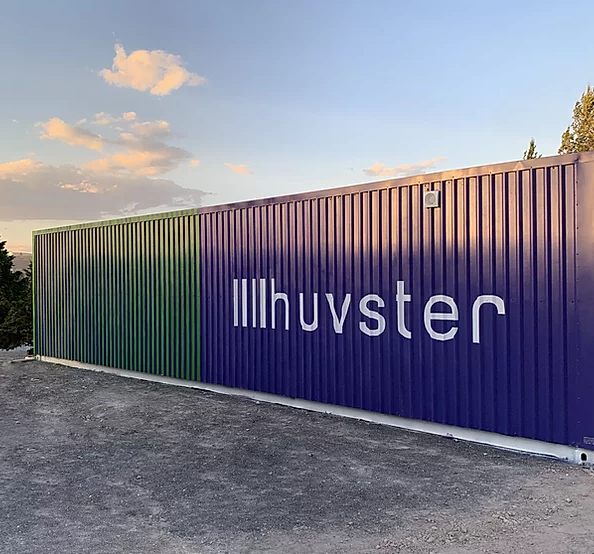
Verde Compacto launched Huvster, an intelligent vegetable growing system in a recycled trailer container. The system allows growing up to 200 times more vegetables per square meter with less water.
Fully Automated
The container has a system that circulates the water and an LED-lights system in the germination zone that simulates the conditions needed by the seeds to grow.
The plants are located in vertical towers and are watered via drip irrigation. Here, they grow until they are harvested. "The system has sensors that measure CO2 levels, ambient humidity, and temperature," Juan stated.
Characteristics
According to the company founders, this option also has these advantages:
It has an intelligent system for measuring and controlling temperature, humidity, irrigation, and other aspects of vegetable cultivation via hydroponics.
It allows having savings of 90% in water, and 80% in fertilizers when compared to a traditional method.
The system measures the plants' nutrition levels and regulates them so that they all grow at the same speed.
It decreases the risks of having pests.
It can produce, for example, an average of 730 lettuces per month, or 20 kilos of oregano, coriander, or other herbs per month, as well as 30 to 35 kilos of vegetables.
It can also impact agribusiness in several ways, avoiding distribution costs if installed near consumers.
In addition, the vegetables can be grown at any time of the year.
The company stood out in INCmty
Verde Compacto became one of the leading startups at INCmty, Tec de Monterrey's entrepreneurship festival.
This venture was also part of the Heineken Green Challenge, an initiative that recognizes companies that innovatively solve problems in Mexico, where it achieved third place in the 2019 edition.
Source: tec.mx
Publication date: Tue 7 Jan 2020
Shipshape Urban Farms $1 Million Financing, K Dale Speetjens Submitted Nov 29 D Filing
Shipshape Urban Farms is based in Alabama. The firm’s business is Agriculture. The form D was signed by K Dale Speetjens President and CEO. The company was incorporated in 2019
Posted by Jean Kramer on November 29, 2019
Shipshape Urban Farms Financing
Shipshape Urban Farms, Inc., Corporation just had published form D announcing $1 million equity financing. This is a new filing. Shipshape Urban Farms was able to sell $150,000 so far. That is 15.00 % of the round of financing. The total offering amount was $1 million. The offering form was filed on 2019-11-29. The reason for the financing was: unspecified. The fundraising still has about $850,000 more and is not closed yet. We have to wait more to see if the offering will be fully taken.
Shipshape Urban Farms is based in Alabama. The firm’s business is Agriculture. The form D was signed by K Dale Speetjens President and CEO. The company was incorporated in 2019. The filler’s address is: 600 Clinic Drive, Mobile, Al, Alabama, 36688. Kenneth Dale Speetjens is the related person in the form and it has the address: 600 Clinic Drive, Mobile, Al, Alabama, 36688. Link to Shipshape Urban Farms Filing: 000179551019000001.
Analysis of Shipshape Urban Farms Offering
On average, firms in the Agriculture sector, sell 63.30 % of the total offering amount. Shipshape Urban Farms sold 15.00 % of the offering. The financing is still open. The average fundraising size for companies in the Agriculture industry is $287,000. The offering was 47.74 % smaller than the average of $287,000. Of course, this should not be seen as negative. Firms raise funds for a variety of reasons and needs. The minimum investment for this financing is set at $1. If you know more about the reasons for the fundraising, please comment below.
What is Form D? What It Is Used For
Form D disclosures could be used to track and understand better your competitors. The information in Form D is usually highly confidential for ventures and startups and they don’t like revealing it. This is because it reveals the amount raised or planned to be raised as well as reasons for the financing. This could help competitors. Entrepreneurs usually want to keep their financing a ‘secret’ so they can stay in stealth mode for longer.
Why Fundraising Reporting Is Good For Shipshape Urban Farms Also
The Form D signed by K Dale Speetjens might help Shipshape Urban Farms, Inc.’s sector. First, it helps potential customers feel safer to deal with a firm that is well-financed. The odds are higher that it will stay in the business. Second, this could attract other investors such as venture-capital firms, funds, and angels. Third, positive PR effects could even bring leasing firms and venture lenders.
Market Data by TradingView

UK’s Urban Agritech Sector Welcomes Announcement of Official Representative Collective
UKUAT brings together the UK’s key players in modern agricultural technologies
UKUAT Formalized As A Membership
Organization For Urban Agriculture
06 February 2020
The UK’s evolving agritech sector today welcomes the formation of a new membership group – the UK Urban AgriTech Collective (UKUAT).
UKUAT brings together the UK’s key players in modern agricultural technologies. It is a cross-industry group devoted to promoting the application of high-tech food production in urban areas to improve both local and wider food security by relieving dependence on resource-intensive supply chains. It will also be exploring the social, operational and metabolic synergies urban agritech can exploit through its integrations with the built environment which are conducive to more dynamic local economies and richer placemaking.
UKUAT’s 25-strong membership includes commercial urban farmers, multinational technology companies, renewable energy companies, architects, built environment professionals, academics, research-based organizations and more. It hopes to grow this number to 75 over the next two years and operates with a common representative voice to share information, educate and advocate for further adoption of urban agriculture in the UK. It will influence policy and help shape the debate around how high-tech food production in urban and peri-urban areas addresses increasing demands for a more transparent, sustainable and resilient UK food system.
Founder and Director Mark Horler commented: "We founded UKUAT to amplify the collective voice and activities of the agritech industry in the UK. As it continues to grow rapidly, and with that rate of expansion accelerating, the UK is positioned to be an international leader, both in the development of agricultural technology and its implications for more sustainable and resilient food systems"
Oscar Rodriguez, Director of design consultancy Architecture & food and UKUAT member said: “The UKUAT community is coming together at a very interesting time. Concerns over UK food security have emerged following Brexit and UKUAT believes leveraging agricultural technology and expanding our indigenous food production capacity while engaging urbanites to be more conscientious about their eating patterns are crucial ends of a worthy proposition.”
UKUAT was founded in 2017 by Mark Horler and formalized in January 2020. It continues to grow its presence in the UK and is collaborating with numerous international organizations to advance agritech solutions in urban and peri-urban environments across the world.
- ENDS -
Sent on behalf of UKUAT. For more information please contact: Mark Horler, UKUAT - email: info@ukuat.org

Urban Farming: Technology And Tradition
As we enter a new decade, the human race finds itself faced with worldwide political turmoil, economic injustice, dizzying technological achievements, and an existential threat in the form of a spiraling climate crisis
By HARRY MENEAR
February 13, 2020
As we enter a new decade, the human race finds itself faced with worldwide political turmoil, economic injustice, dizzying technological achievements, and an existential threat in the form of a spiraling climate crisis. In order to rise to and overcome these challenges, humanity is going to need to drastically reevaluate the way it caters to some of its basic needs.
The global urban population has grown rapidly, from 751mn people in 1950 to 4.2bn today. Almost 70% of the world’s population is predicted to live in urban areas by 2050, according to a report by the United Nations (UN) released last year. At the start of the 1800s, more than 90% of the population (in the US) lived on farms and, on average, a farmer grew enough each year to feed between three and five people. Throughout the subsequent centuries, advances in agricultural technology and technique meant that farms produced more food using less labor. In 1900, an acre of land used to grow corn only produced 18% of the yield achieved on the same piece of land in 2014.
Today, farmers represent a mere 1.4% of the US population, and the average size of farms has grown dramatically. The ratio of people in cities to the farmers that feed them is already at a huge disparity and, as that relationship becomes more and more imbalanced, the strain put upon the agricultural industry has the potential to spell disaster for a global food supply - to say nothing of biodiversity, quality of diet and cultural connections to cuisine itself.
Massive demand for year-round, mass-produced, cheap produce today is already causing problems, from the incipient extinction of the honey bee to the wildfires and droughts exacerbated by overfarming water-wasteful crops like almonds and avocados. One of the most prominent issues, however, is the fact that as more people move into cities, the supply chains required to feed these swelling urban populations get longer and less sustainable. Food grown and produced to last for long periods of time contains more indigestible fats and sugars.
“Diets are changing with rising incomes and urbanization— people are consuming more animal-source foods, sugar, fats and oils, refined grains, and processed foods. This ‘nutrition transition’ is causing increases in overweight and obesity and diet-related diseases such as diabetes and heart disease,” noted a report on Changing diets: Urbanization and the nutrition transition by researchers at the International Food Policy Research Institute.
In the UK, despite all the advances of modern medicine, life expectancy for lower-middle-class and working-class males is - when adjusted for infant mortality - three years lower than it was in the mid-Victorian era. “The implications of a better understanding of mid-Victorian health are profound. It becomes clear that, with the exception of family planning, the vast edifice of post-1948 healthcare has not so much enabled us to live longer but has merely supplied methods of controlling the symptoms of non-communicable degenerative diseases, which have become prevalent due to our failure to maintain mid-Victorian nutritional standards,” write Dr. Paul Clayton, a Fellow at the Institute of Food, Brain, and Behaviour, Oxford; and Judith Rowbotham, a Visiting Research Fellow at Plymouth University.
The mid-Victorian diet that Clayton and Rowbotham espouse the values of was fairly one-note, but had spectacular benefits. “The Victorian urban poor consumed diets which were limited, but contained extremely high nutrient density,” write Clayton and Rowbotham. “Bread could be expensive but onions, watercress, cabbage, and fruit like apples and cherries were all cheap and did not need to be carefully budgeted for. Beetroot was eaten all year round; Jerusalem artichokes were often home-grown. Fish such as herrings and meat in some form (scraps, chops and even joints) were common too. All in all, a reversion to mid-Victorian nutritional values would significantly improve health expectancy today… the current pandemics of obesity and diabetes represent in many ways an acceleration of the aging process. We need to go back to the future.”
The population of the UK in the mid-Victorian era was about 30mn and, despite being at the height of the Industrial Revolution - was a lot less urbanized than it is today. In 2019, more than 83% of the UK’s population live in cities and towns, the country employs fewer than half a million farmers and produces less than 60% of the food it consumes.
How do we fix it?
The key to improving nutrition and shortening the supply chains between rural farms and urban consumers may be deceptively simple. While, “just grow the food in the cities,” might seem like a somewhat glib response to a nuanced issue, there are compelling cases around the world for doing just that.
In an unassuming warehouse in New Jersey, serried rows of kale, lettuce and other leafy greens are stacked in shelving units and trays that reach up into the air. The climate - light intensity, humidity, nutrient balance in the soil - is meticulously tracked by a network of sensors and cameras that feed oceans of data into a proprietary operating system that allows the facility’s operators to grow food 24 hours a day, 365 days a year in conditions that are as close to perfect as can be found anywhere. This is Bowery Farming, an urban agriculture startup founded in 2015 by Irving Fain, David Golden and Brian Falther, backed by Google Ventures. In an interview in 2018, Fain - who is also Bowery’s CEO - claimed that his company’s urban farming techniques use no pesticides and "95% less water than traditional agriculture, all while remaining 100-plus times more productive on the same footprint of land.”
Urban and vertical farming techniques are growing (sorry) in popularity across the world as a potential way to solve a number of the challenges posed by increasing populations, climate instability and food deserts (areas of rural, suburban or urban land without farms or grocery stores, making it next to impossible to obtain quality, fresh food in an affordable way and offering only convenience food chains in their place - food deserts are playing a major role in the deterioration of urban population health).
The practice has its roots (again, sorry) in times of economic scarcity and turmoil - the Great Depression and the Second World War both saw a huge increase in the number of urban farms - and can be as low-tech as growing a head of lettuce on your bathroom windowsill, or as futuristic as a fully-automated, end-to-end hydroponic facility operated by artificial intelligence (but more about Stacked in a minute). At the moment, urban farming operations are turning to vertical farming, the practice of using (typically) climate-controlled environments to grow plants across multiple levels - a practice that can turn a 3,000 sq ft allotment in a city center into effectively a 9,000 sq ft agricultural facility.
Regardless of the level of technology employed across their operations, there are a few key vertical farming techniques that are being adopted in an effort to solve one of the key problems facing modern agriculture: water wastage.
Hydroponics
The practice of growing plants without soil. Hydroponics uses a nutrient-rich liquid solution to submerge the roots of plants, which are placed in an inert medium (gravel, sand, clay pellets) for support. The method can drastically reduce water usage and increase yield.
Aquaponics
Adding an additional layer of sustainability to the hydroponic technique, aquaponics uses fish as the generators for the nitrate-rich plant food. Fish create ammonia-rich waste in their tank, the water from which is then pumped into an inert medium that contains plants. Bacteria in the bed turns ammonia into nitrates which the plants use for food, cleaning the water in the process. Then, the clean water is cycled back into the fish tank for the symbiotic process to begin again. Fish like perch or catfish can also ensure that the method provides two sources of food.
Aeroponics
Invented by NASA in the 1990s as a way of potentially raising crops in space (where tiny soil particles can be a nightmare for delicate instruments and electronics), aeroponics doesn’t use a liquid or solid medium to cultivate crops, instead using a nutrient-rich mist. It uses 90% less water than conventional hydroponic techniques.
Feeding plants using closed systems like these gives farmers an enviable amount of control over the condition of their crops. In Bowery’s system, a simple tweak of the lighting and nitrate levels in the soil can deliver a crop of kale that’s less chalky. As with any industry undergoing a digital transformation - and the data-driven, high-tech operations at Bowery’s three farms are certainly indicative of that - old roles and new roles are being constantly combined. Katie Morich, a Bowery farmer explained in an interview with Food & Wine that her job has become half farmer and half data scientist.
The combination of traditional and tech has been yielding promising results at Bowery, which is scheduled to open its third farm (an operation some 90 times larger than the company’s first operation in New Jersey, situated in Baltimore) in 2020.
However, despite the success of startups like Bowery, and the promise of urban and vertical farming techniques, the industry isn’t immune to teething troubles. While environmentally sustainable (although a number of urban farms still use pesticides), vertical farms have been struggling to compete financially as a combination of electricity costs, small scale operations and higher rent in urban areas conspire to make profitability a challenge. According to a report by Emerald Insight, less than a third of urban farmers in the US are making a living from their operations. There are, it would seem, two solutions to this problem:
It’s not about the money
One of the major benefits of vertical farming systems is that thanks to a technique like aquaponics, and increasingly cheap IoT technology, urban farming doesn’t need to be a full-time job. A majority of urban farms in the US are registered non-profits or community projects. Dividing the work among a neighborhood or even a block of flats could make for self-contained farming communities in the city that are free from depending on imported, expensive produce.
Founded in 2009, Colorado-based company The Aquaponics Source specializes in providing small scale aquaponics systems for schools, institutes, and household use. Startup AquaSprouts sells self-contained home units with a focus on education and home use that cost under US$200, although the internet assures me you can build an industrial-scale system to grow edible fish and leafy greens for significantly less (assuming you know a guy who’s looking to get rid of a giant rainwater barrel). Going small and cooperative may provide a look into the way urban farming can help support the global food supply. After all, it’s how the practice began.
Go big or go home
Operations like Bowery and Brooklyn Grange (a 44,000 sq ft rooftop farm in Long Island) are significant scale operations and some of the few for-profit urban farms to have shown serious longevity in the fledgling industry.
Capitalizing on the idea that bigger is better and makes more money is French urban farming startup Agripolis. In collaboration with Cultures en Ville, the company is set to open the world’s largest urban farm in Paris early this year.
“The goal is to make this urban farm a globally-recognized model for responsible production, with nutrients used in organic farming and quality products grown in rhythm with nature's cycles, all in the heart of Paris,” the company said in a statement. The farm will grow more than 1,000 fruits and vegetables a day when in season.
Whatever shape the future of urban agriculture takes, it may be one of humanity’s best shots at overcoming the challenges of the coming decades.

Food Safety At Plenty
Our crops are grown in a hermetically sealed environment that sits within a highly controlled space designed with the highest possible food safety in mind
READING TIME | 10 MINUTES
February 26th, 2020
By Plenty Farms
At Plenty, health is our number one priority. We grow healthy food to nourish healthy people, and foster a healthier planet. As a vertical farming company that functions as both a grower and a manufacturer of food, Plenty cannot seek to restore human health without also seeking to improve and advance food safety in the agricultural industry. That means growing the tastiest and safest produce by monitoring exactly what and who goes into Plenty plants — and just as importantly, by controlling what we keep out of them.
Plenty produce doesn’t have to be washed before eating because our crops are already clean when they’re harvested. So they are ready to eat as soon as you purchase them from your local grocery store. Plenty crops are grown clean: no pests, no pesticides, no chemical sprays, no exposure to potential sources of contaminants like contaminated water or debris, and therefore, no need to wash them at home. We don’t have to spray any pesticides or other chemicals on our crops because Plenty’s high level of control over everything coming in and out of our vertical farms means there’s minimal risk of pests getting to our produce in the first place. Not to mention, the fact that we grow indoors means our plants aren’t impacted by Mother Nature.
Our crops are grown in a hermetically sealed environment that sits within a highly controlled space designed with the highest possible food safety in mind. Though Plenty produce is already at a very low risk for encountering pests, we operate an extensive integrated pest monitoring program that includes ultraviolet lights outside of our farms, air curtains on every door to control the air that enters and leaves our growing rooms, filters on all of our HVAC systems, as well as extensive pest monitoring performed on a regular basis.
And because Plenty plants aren’t exposed to pests, there’s no reason for us to ever spray them with pesticides. Which means those non-existent pesticides never need to be washed off — not by you nor by us.
Leafy greens have long been considered a high-risk crop because they’re usually eaten raw. Typically, after a bunch of kale, or a head of lettuce is bought from the grocery store, it’s taken home, given a quick rinse, and put on a plate to be eaten. And while rinsing produce is a habit that’s likely been ingrained in most consumers since they were old enough to reach the sink, it is not, in fact, a particularly effective habit. At best, washing produce with water simply knocks down the population of any existing pathogen, but to truly clean something harmful like E. coli off of a plant, you would need a chemical to interfere.
As that’s not likely a science experiment you’d like to perform every time you make a salad; leafy greens should be arriving to your kitchen ready-to-eat, free of all pests, pathogens and pesticides. Traditionally, the way to mitigate the risk of contamination in leafy greens has been by performing a triple-wash on them between harvest and sale. Triple-washing involves a pre-wash, a saline wash, and bathing the greens in a sanitizing solution like chlorine. Not only do leafy greens lose flavor and texture, but in the effort to reduce pathogens, bathing greens also runs the simultaneous risk of spreading any existing pathogens even further if performed incorrectly.
The more a crop is handled after harvesting it, especially by humans, the more likely cross-contamination is to occur. The triple-wash process means that after harvest, an outdoor-grown leafy green is: transported to a processing facility, sorted, rinsed, put in a spinner, given a second rinse, spinner again, third rinse, sorted again, packed, and finally transported to your grocery shelves. Further, during all of this, it must be considered that water is a vector if the process isn’t performed perfectly; it spreads pre-existing pathogens far faster than human hands or surfaces can.
When you shop at the grocery store, you see a lot of packages claim that their greens are “triple-washed” or “pre-washed”. Sanitizing solutions can kill pathogens in theory, but the introduction of water could potentially introduce pathogens. If one leaf of lettuce is contaminated with E. coli and then put into a package to be delivered to the grocery store, only that one package of lettuce is contaminated. But if that lettuce is first put into a water bath where it transfers its contamination to other lettuce, and then put into another bath, and then another…like wildfire, that pathogen could spread rapidly. As the numerous recent instances of leafy greens recalls demonstration, triple-washing is clearly not a foolproof process.
It’s time to change the way we grow leafy greens.
Plenty eliminates the need for triple washing by dramatically reducing the risk of contamination. Outdoor water sources can pose a high risk of contamination due to everything from livestock proximity to seasonal shifts. Contaminated agricultural water can pool inside every nook and cranny of a plant, creating a tiny ecosystem that is difficult to clean and where microorganisms thrive; threats rise further in the rainy season when higher temperatures and humidity encourage bacteria’s survival.
On a Plenty farm, there are no seasons — no rises in humidity or fluctuations in temperature – nor long gaps between harvesting and packaging . For every potential contamination variable that outdoor farms must attempt to mitigate after harvest, Plenty has a system in place to dramatically reduce from the ground up, before our crops are even planted.
Plenty’s irrigation water is drawn from filtered, potable water, and each crop’s container is designed so that no irrigation water ever touches the part of the plant we feed to customers. In addition, our growing and processing rooms are hermetically sealed, meaning our produce can’t be exposed to outside elements.
We also perform extensive sterilization and supplier control to make sure that the inputs to our farm, such as seeds and nutrients, are clean and safe. Because we can control the safety and cleanliness of the materials that enter our farms, we can even further control the safety and cleanliness of the fresh produce that exits them.
Every decision we make at Plenty, every plan we put in place, every control, variable, and measure is designed to improve the health of people, plants and planet, and that means prioritizing food safety in any and every way possible. We feel lucky to be at the forefront of a new industry that is not only restoring consumer confidence in leafy greens, but setting a new standard for how safely fresh foods can be produced.
It is not easy to make leafy greens 100% safe — but it is possible to dramatically lower the risk. Eliminating the need for pesticides and controlling variables like water and weather mean that produce can enter your home clean and ready to eat. Consumers shouldn’t have to clean their produce with chemicals or risk their health in order to eat well, and it is our mission to make sure they never have to. Plenty is growing clean, safe produce to fuel healthier lives for people, plants, and the planet.

FDA Warns Jimmy John's And Sprouts Unlimited After Outbreak
The warning letter lays out evidence from five outbreaks, including the most recent outbreak in the state of Iowa during November and December 2019, of human infections with Escherichia coli O103, a Shiga toxin-producing Escherichia coli (STEC)
The U.S. Food and Drug Administration posted a warning letter issued to Jimmy John’s Franchise LLC for engaging in a pattern of receiving and offering for sale adulterated fresh produce, specifically clover sprouts and cucumbers. The FDA also posted a warning letter to Sprouts Unlimited Wholesale Foods for supplying sprouts to Jimmy John’s which sickened 22 people in November and December 2019.
The FDA, along with the Centers for Disease Control and Prevention and state and local partners, have collaboratively investigated several outbreaks linked to Jimmy John’s restaurants. The warning letter lays out evidence from five outbreaks, including the most recent outbreak in the state of Iowa during November and December 2019, of human infections with Escherichia coli O103, a Shiga toxin-producing Escherichia coli (STEC).
The pathogens associated with these outbreaks are STECs and Salmonella enterica. STECs can cause serious illness in humans, including diarrhea, often with bloody stools. Although most healthy adults can recover completely within a week, some people can develop a form of kidney failure called hemolytic uremic syndrome (HUS). HUS is most likely to occur in young children and the elderly. This condition can lead to serious kidney damage and death. Salmonella is a pathogenic bacterium that can cause serious, sometimes fatal, infections. These infections can be especially serious in young children.
The FDA is currently developing a Strategic Blueprint that will outline how the agency plans to leverage technology and other tools, to create a more digital, traceable and safer food system. This work will build on the advances that have been and are being made in the FDA’s implementation of the Food Safety Modernization Act to further strengthen prevention of foodborne illnesses.
To read the warning letter, click here.
For more information:
FDA
Tel: +1 (888) 463-6332
www.fda.gov
Publication date: Wed 26 Feb 2020
Zimbabwe: A Backyard Hydroponic Farm Beats Drought To Grow Vegetables
Hydroponically grown plants require no pesticides because there are no soil-borne diseases
Hydroponically grown plants require no pesticides because there are no soil-borne diseases.
BY: BY MACDONALD DZIRUTWE
21 JAN 2020
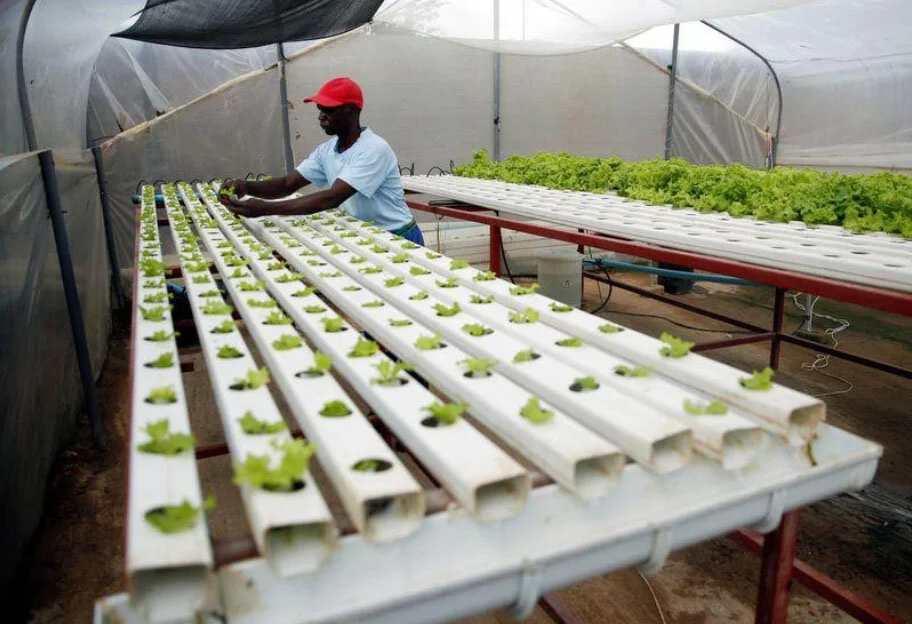
Innovation ... Venensia Mukarati, whose day job is an accountant, always had a passion for farming, but no land on which to plant (REUTERS / Philimon Bulawayo)
In a backyard in Zimbabwe’s capital, a 50-year-old mother of two is using hydroponics to grow vegetables for some of Harare’s top restaurants, defying drought and an economic crisis that have left millions needing food aid.
Venensia Mukarati, whose day job is an accountant, always had a passion for farming, but no land on which to plant.
Just over two years ago she did a web search on how to grow vegetables on the deck of her Harare house, importing a small hydroponics system from Cape Town for US$900 that enables plants to draw soluble nutrients from water.“
The good thing about hydroponics is that it saves water by 90 percent,” Mukarati said in a 46 square-meter greenhouse where water flowed in a maze of pipes decked with plants.“
I buy water because I don’t have a borehole so I cannot do conventional farming,” she told Reuters.
Her immediate desire was for fresh vegetables for the family as the country’s economic fortunes deteriorated and grocery store prices spiraled. But she quickly realized her pastime could be a profitable venture. It now makes US$1,100 a month – in a country where some government workers get just US$76.In hydroponic farming, water is conserved because it is reused multiple times. Hydroponically grown plants also require no pesticides because there are no soil-borne diseases.
Much of southern Africa is in its worst drought in more than a century, with crops failing and some 45 million people in need of food aid. The region’s temperatures are rising at twice the global average, says the International Panel on Climate Change, spurring the need for innovative ideas to get food on tables.
Harare also faces chronic water shortages due to aging pipes and a shortage of dollars to import treatment chemicals.
It takes six weeks for Mukarati to harvest vegetables such as lettuce compared to 10 weeks if the crop is grown in the soil.
She initially grew 140 plants per cycle – now she produces 2,600, including lettuce, cucumbers, spinach, and herbs in two greenhouses fed by a makeshift system using gutter pipes from the roof.
Lesley Lang, a restaurant owner who buys Mukarati’s produce twice a week, said she had “the best lettuce I have ever had the pleasure of buying in Zimbabwe”.
Mukarati hopes to quadruple production from June by constructing bigger greenhouses on 2,600 square meters of land on the outskirts of Harare.
Last year, she began training others to do the same, designing a hydroponic “starter pack” which she sells for US$200. – Reuters
Lead Photo: New ways … A worker tends to plants at Venensia Mukarati’s hydroponic garden in Harare (REUTERS/Philimon Bulawayo)

FOR SALE - 2018 Freight Farm Computer Controlled Hydroponic Grow System - Atlanta, Georgia
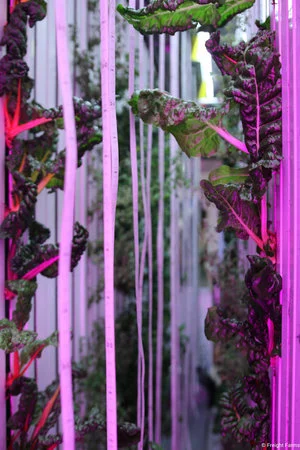
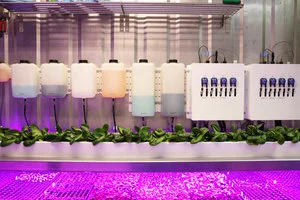
The Leafy Green Machine is a complete hydroponic growing system built entirely inside a shipping container with all the components needed for commercial food production. The system is designed and engineered for easy operation, allowing users of all backgrounds to immediately start growing.


Make & Model - 2018 Freight Farm Computer Controlled Hydroponic Grow System
Manufacturer - Freight Farms
Location - Atlanta, Georgia
Price - $75,000
Description
Well maintained 2018 LGM purchased from Freight Farms.
This LGM has been a reliable producer of healthy produce.
The Leafy Green Machine is a complete hydroponic growing system built entirely inside a shipping container with all the components needed for commercial food production. The system is designed and engineered for easy operation, allowing users of all backgrounds to immediately start growing.
Current Uses
• Perfect for starting a small produce business, growing for restaurants or supplementing existing produce production.
• Restauranter who wants to grow custom greens for rotating menus 365 days a year. Farm to Table? How about Parking Lot to Table!
• Universities and schools have created programs for students to learn to grow while supplementing dining facilities with fresh greens.
The Highest Standard in Controlled Environment Agriculture
• Pre-built system designed to maximize operational efficiency and streamline workflow
• Perfect environment is achievable 365 days a year, regardless of geographic location
• Automated scheduling reduces the amount of labor required to operate
• Remote monitoring & control capabilities through the Farmhand AppTM
Operation Requirements
Space- The LGM dimensions are 40’ x 8’ x 9.5’. We suggest putting the farm on either trap rock or a concrete pad.
Electrical- 60 amp, 120/240-volt single phase or 120/208V three phase connection.
Water- A designated water source is suggested such as a garden hose or hardline water plumbing.
Labor- 15 to 20 hours a week for farming and upkeep.
It is recommended growing smaller compact crops with a high turnover rate, like head and loose leaf lettuces, herbs and heartier greens like kale and swiss chard.
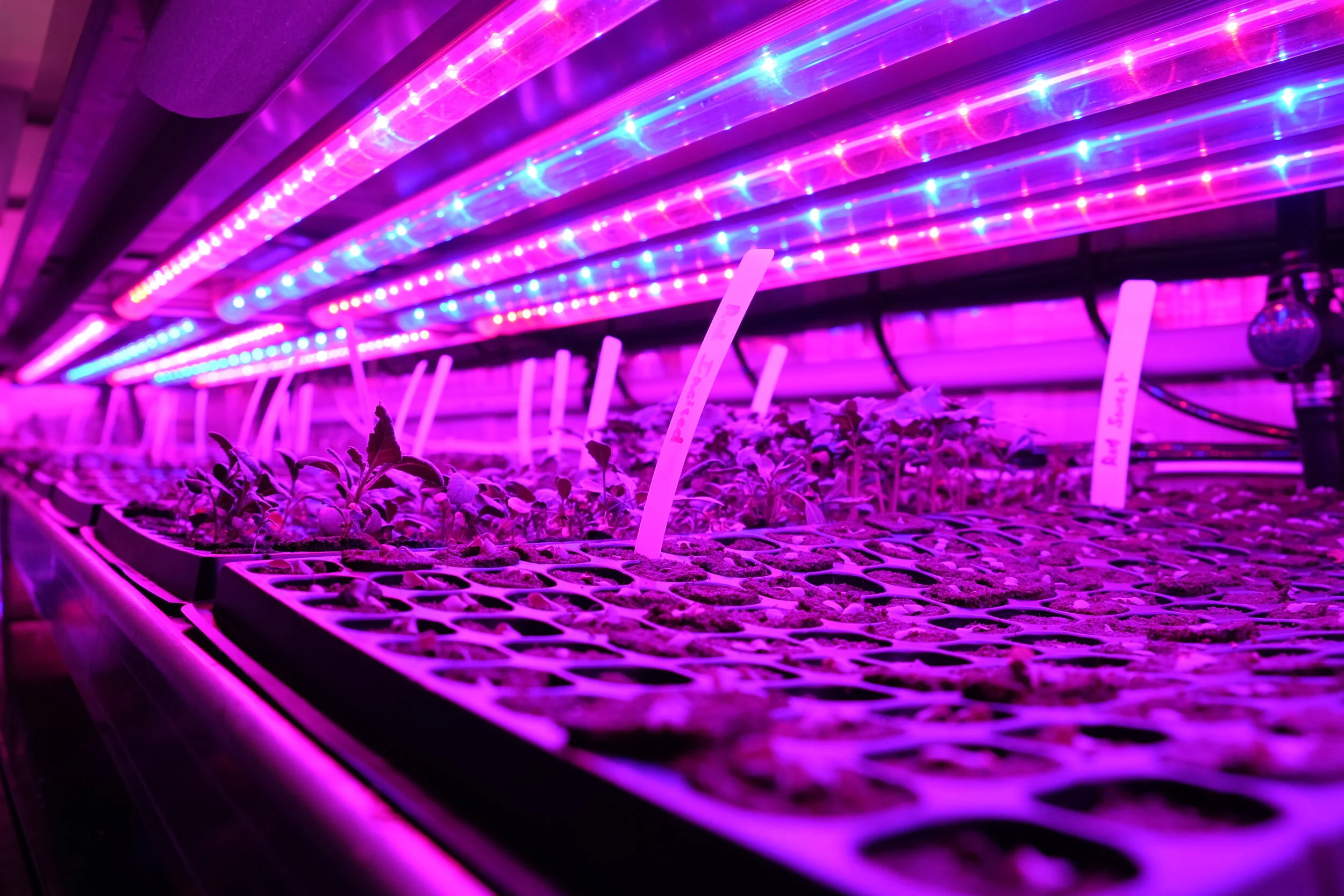

LGM Accessories
Replaced sink with a 4 row, direct lighting microgreen station.
Website of previous owner being sold at additional cost. The website is currently set up for the business of this local farmer, and upon purchase can be changed to the meet the purchaser’s new brand.
Crop Examples
Butterhead lettuce, Oakleaf lettuce, Swiss Chard, Mustard Greens, Cabbage Leaves, Arugula, Cilantro, Mint, Dill, Oregano, Kale, Endive, Basil, Chives and Thyme
Yields
800+ heads of lettuce weekly
12 heads per tower (256 vertical towers)
1 LGM= 1.8 acres
Numerous additional extras included.
Numerous warranties still in effect
Training, website and ongoing support available through Freight Farms.
Visit Freight Farms (Website) for more information.
2018 - Freight Farms LGM Information Booklet
For Additional Information And To Arrange A Viewing:
(909) 942-9594
Spencer.Hoff@iGrow.News
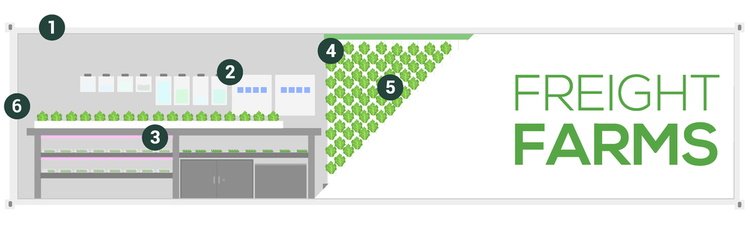
1. ALL-WEATHER CONSTRUCTION
Steel frame with stainless interior, 40' x 8' x 9.6' overall footprint.
2. AUTOMATIC DOSING
Programmable nutrient & pH dosing for perfect growing conditions.
3. CUSTOM WORKBENCH
TIG-welded stainless workbench with integrated seedling growth stage.
4. COMMERCIAL VOLUME
Thousands of growing sites across 256 irrigated vertical towers.
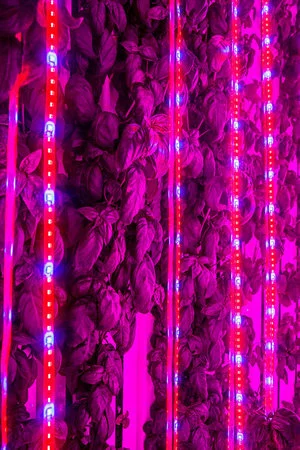
5. HIGH-EFFICIENCY LED ARRAY
5:1 red / blue LED lighting optimized for green leafy growth.
6. INSULATED ENTRY
Padlock-proof safety door with controlled-environment insulation.
All information is from sources deemed reliable but is subject to errors, omissions, changes in price, prior sale or withdrawal without notice.
No representation is made as to the accuracy of any description.
All measurements, yields and square footages are approximate and all information should be confirmed by the customer.

Farms Inside Shipping Containers Could Grow More Local Produce
Instead of trucking vegetables across the country, one company wants to help food service providers grow food right where they are, no matter how little experience or land they have
The Crops Grow Vertically Under LED Lights
Tuesday, February 18, 2020
Four rows of panels on a flexible moving rack system house more than 8,000 living plants at once, creating a dense canopy of fresh crops. (Photo: Courtesy of Freight Farms)
Instead of trucking vegetables across the country, one company wants to help food service providers grow food right where they are, no matter how little experience or land they have.
“That’s at corporate campuses, university campuses, health care facilities,” says Brad McNamara, CEO of Freight Farms. The company sells what it calls the Greenery.
“It’s a 320-square-foot shipping container like you would see on a boat, a train, a truck, outfitted with an automated growing system,” he says, “to grow about 3.5 acres worth of produce with no pesticides, no herbicides, and about 98.5% less water.”
Inside the Greenery, plants grow vertically, with their roots in a nutrient solution instead of soil. Sensors, pumps, and LED lights automatically maintain ideal growing conditions, so you don’t have to be an expert to start farming.
“You plug it in and you’re growing the same day,” McNamara says.
As the climate changes and the world’s population grows, McNamara says it makes sense to farm in a way that produces more food with fewer resources and less transportation.
“Instead of making more bigger farms,” he says, “We make hundreds, then thousands, then millions of people into independent successful farmers where they live and work.”
Reporting credit: Stephanie Manuzak/ChavoBart Digital Media.

Irma To Introduce Vertical Farming In 35 Stores In Denmark
Coop Denmark has announced plans to introduce vertical farming in some 35 Irma outlets, in collaboration with Germany's infarm
February 18, 2020
Coop Denmark has announced plans to introduce vertical farming in some 35 Irma outlets, in collaboration with Germany's infarm.
The retailer plans to roll out the technology in its stores over the next two months, after a successful pilot project in its Østerport store last year.
'An Innovative Concept'
Infarm has devised an innovative concept that allows retailers to grow herbs and certain leafy vegetables in stores, using vertical farming units.
The cultivation of the herbs and vegetables require very little water and no synthetic pesticides.
The process also minimizes the requirement of transportation from farms to store shelves.
Commenting on the initiative, Irma director Søren Steffensen described vertical farming as the "way of the future to grow vegetables. With this collaboration, we unite Irma's goal of promoting the most sustainable forms of production and the best possible quality of taste."
Read More: Financial Cost Of 'Vertical Farming' An Impediment To Sector's Expansion
Founded in Berlin in 2013, infarm is now present in France, Luxembourg, Switzerland.
In September 2019, it partnered with Marks & Spencer to introduce the technology in its Clapham Junction store in South West London.
Two months later, US retailer Kroger announced plans to launch the concept in its outlets across North America.
Fresh Produce tagged: Trending Posts / Sustainability / Denmark / Copenhagen / Irma / Vertical Farming / infarm
© 2020 European Supermarket Magazine – your source for the latest retail news. Article by Dayeeta Das. Click subscribe to sign up to ESM: European Supermarket Magazine.

What Are The Challenges To Running A Successful Indoor Farm?
The amount of investments made in the vertical farming and controlled environment agriculture industries has been well documented. Those companies that successfully raise capital are seen as industry heroes and it’s quickly assumed that they must have all the answers. But, the big question is…do they?
October 3, 2019
(I had the opportunity to host the Great Lakes Ag-Tech Summit in Cleveland on Sept. 23, 2019.)
The amount of investments made in the vertical farming and controlled environment agriculture industries has been well documented. Those companies that successfully raise capital are seen as industry heroes and it’s quickly assumed that they must have all the answers. But, the big question is…do they?
In order to answer that question, it is important to be specific about the questions we are asking, the assumptions we are making and to understand that the answers will come from a wide variety of different perspectives.
List of questions
Examples of questions I am receiving and ones that we might want to ask include:
Can a farm using controlled environment agriculture techniques be profitable?
What crops have proven to be profitable in a greenhouse?
What crops have proven to be profitable in a warehouse?
What crops have proven to be profitable in a shipping container?
What segment of the produce industry are these farms capable of serving?
What defines a vertical farm?
What is the difference between a greenhouse and an indoor ag facility?
What makes controlled environment agriculture techniques and innovations unique?
Does geographic location play a role in designing a controlled environment agriculture facility?
Why invest in controlled environment agriculture?
What problems are we solving?
Is controlled environment agriculture environmentally sustainable?
The answers to all these questions are extremely important. The answers provide important insight on whether there are existing examples of multiple successful projects in a given region for a given set of crops to be produced in a controlled environment agriculture facility.
An example of how this plays out can be seen when looking at the greenhouse-grown vegetable industry. There are a number of Dutch greenhouse experts for those climates and crops that companies have proven successful over the past decades. But this does not mean that their expertise necessarily transfers to every situation. Any time ag technology and “experience” are taken to a new climate and introduced to a new market and crop there will be problems, mistakes, and failures. This has been proven time and time again.
Successful business models
It is also important to realize that it is highly likely that there are many different business models that can be successful as we look at innovation to solve growing problems within horticulture and agriculture. This can easily be seen in existing greenhouse industries.
For those of us close to the industry, we can acknowledge the fact that there are low-, medium- and high-tech greenhouse facilities that are capable of producing good quality crops consistently and profitably. The reason for this is that depending on where the greenhouse is built and the crops that are grown, the greenhouse and the technology within it are designed to serve different purposes based on labor and access to natural resources. It is likely that as the indoor ag industry matures, we will find similar models.
Hurdles to overcome
So, what are the hurdles the indoor ag industry needs to overcome in order to be successful? And how are we as an industry going to achieve this success?
Based on my conversations with many industry leaders, these are the top 11 topics we need to address:
Finally, how are we as an industry going to provide solutions to these challenges or other larger problems?
First, we need to agree on which challenges we should address first and which ones we have the best chance of overcoming. Second, we need to be self-critical. We need to determine if these challenges are caused by problems we created and determine if they really need to be solved?
We then need to learn from other industries that have come before us. This means we need some level of open collaboration. We will need some form of standardization. We will need to focus on education. And finally, we will need some luck.
“Alone we can do so little, together we can do so much.” – Helen Keller
If you are interested in taking this conversation to the next level, I encourage you to join me on social media, at one of the many upcoming events I will be participating in or through collaboration.
Written by Chris Higgins – Urban Ag News and Hort Americas.
How To Start A Container Farm Business
Using stacked farming to produce food in vertical spaces, vertical farming is an attractive option to traditional methods of farming, opening more opportunities for year-round freshly grown and locally accessed food
Have You Ever Wondered How To Start A Container Farm Business?
You’re not alone.
Global population growth concerns about food production, increasing interest in green infrastructure, and technological advancements in aeroponics, hydroponics, and aquaponics have amplified the interest and practice of vertical farming.
Using stacked farming to produce food in vertical spaces, vertical farming is an attractive option to traditional methods of farming, opening more opportunities for year-round freshly grown and locally accessed food.
While the idea of vertical farming may be a striking consideration, the business side is often complex and confusing.
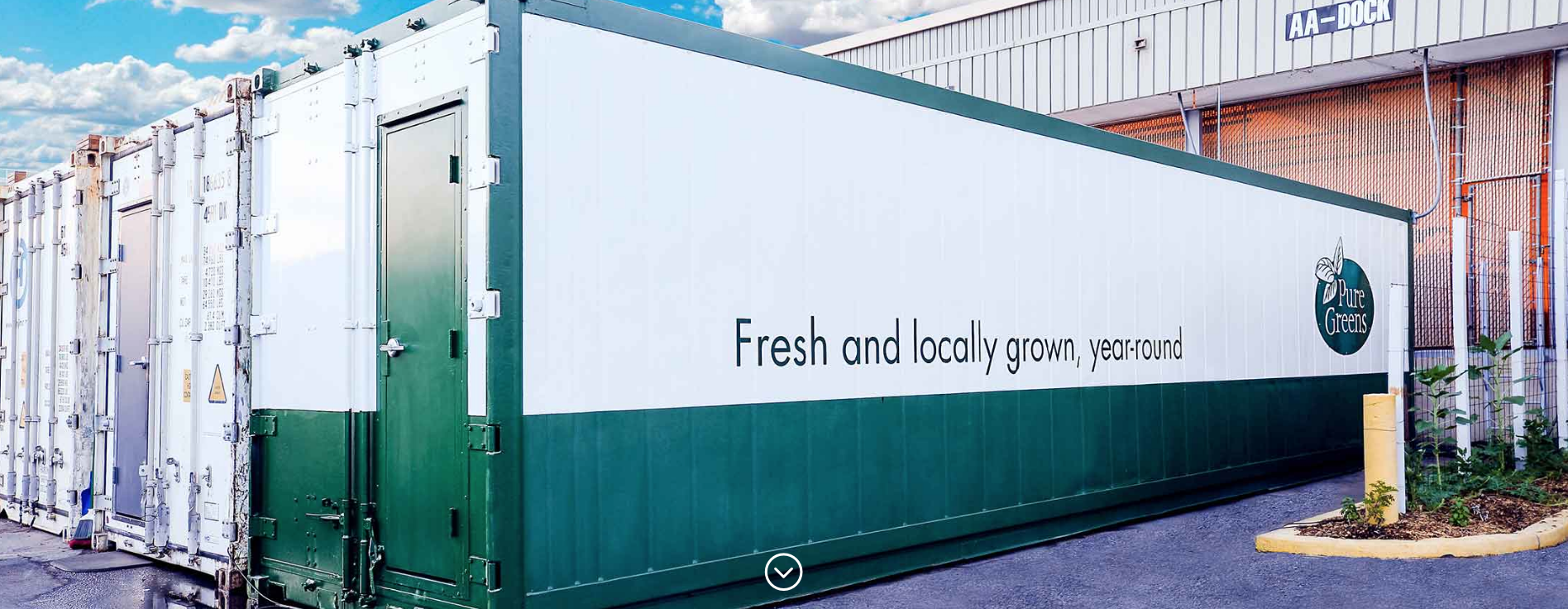
Pure Greens have written a guide, as an informative piece to help navigate new and even current container farm owners on how to start a container farm business.
In this guide, they’ll look at a few things to help you get started, including:
Types of customers
Investment planning
Container location and design
Helpful training
Growing and harvesting
Selling and branding
Check out the guide here.
Publication date: Mon 24 Feb 2020

How Much Does Vertical Farming Cost?
Indoor food production has long been cited as the ideal way to help feed an ever-growing population
Indoor food production has long-been cited as the ideal way to help feed an ever-growing population.
Currently, vertical farming is increasingly being seen as the way forward to produce higher volumes of better-quality crops all year round, bring food production closer to customers, and into urban areas.
For leafy produce growers, a move to vertical farming can massively reduce the reliance on conventional farming methods – which are affected by the weather – and ensure consistent, quality crops to keep customers happy.
The key, of course, is to ensure the vertical farming costs and business case stacks up. In recent years, this is why people have increasingly sought out the expertise of the team at CambridgeHOK.
In an in-depth article, they try to explain how and why they help – including detailed insights into:
Vertical farming start-up costs
Why indoor farming is taking off
The realistic profits achievable
Why the industry’s future is bright
Read more at the CambridgeHOK website.

Publication date: Mon 17 Feb 2020
US: South Carolina - Vertical Roots Hits The Road In Their Lettuce Localmotive, Spreading The Good Word of Hydroponics
The hydroponic growing system is simple - nutrient-filled water replaces traditional soil in order to grow the plant, and for the first time since we started tilling land farmers can grow crops without the soil beneath their feet
The technology of planting crops has revolutionized over the years.
The hydroponic growing system is simple — nutrient-filled water replaces traditional soil in order to grow the plant, and for the first time since we started tilling land, farmers can grow crops without the soil beneath their feet.
Hydroponic container grower Vertical Roots is taking one of their shipping container farms on the road — they're hitting the streets with the Lettuce Localmotive, teaching people about the process of growing lettuce. They'll be making stops at Publix and Greenwise Markets across the country.
RELATED Tiger Corner Farms produces full-scale, aeroponic crops in recycled shipping containers: The Future of Farming
Unlike traditional farms, the Vertical Roots' containers grow plants vertically indoors without soil, with the plants obtaining all their nutrition from water and their light energy from powerful LED lights.
During tour stops, guests will get a hands-on experience with seeding lettuce, learn how technology manages the growing process, and get schooled about all the benefits of this alternative way of farming.
The first stop of the tour is at Vertical Root's home base — Charleston. Check them out at the Daniel Island Publix this Sat. Feb. 15 from 10 a.m.-4p.m.

Fresh Microgreens, Off The Wall And Onto Your Plate
To get started with the system, restaurant owners need "just 28” of wall space and a dream to grow their own produce", as Andrew puts it
Picture the scene. You're in a restaurant, a delicious plate of food is sitting before you on the table. Then the chef shows up. "Just one minute, please", he says, walking over to the wall and harvesting some fresh microgreens from it. He sprinkles the finishing touch onto the dish. "Voilà!"
If it sounds like fiction, think again, because in several restaurants across the U.S., this scene may well occur, thanks to the in-restaurant cultivation systems from inHouse Produce. One of the restaurants that uses the cultivation racks is Scratch Bar & Kitchen in Los Angeles.
"At Scratch|Bar, we have always prided ourselves on being as 'from Scratch' as possible, making our own butter, vinegar, bread and even charcuterie," says Gavin Humes, executive chef at the restaurant. "Working with inHouse Produce was a way for us to get even the production of microgreens inhouse. It also gave us the ability to work on growing specific microgreens that were not always available from our traditional suppliers, which has been fantastic."
Local cultivation, remote management
So, how do these indoor cultivation systems work? Andrew Blume, co-founder of inHouse Produce, explains that most of the functionality on the gardens is automated. Farm technicians are tasked with the once-monthly deep sanitation of the system, which currently takes a team of two approximately one hour. "We have some design improvements coming up that should reduce the labor requirement", Andrew says.
To get started with the system, restaurant owners need "just 28” of wall space and a dream to grow their own produce", as Andrew puts it. "A big advantage of the service model is that the farm technician can also be the account manager and delivery person. When they do the clean, they replenish supplies and speak with the client about how the garden is performing. This is a great time to get feedback and to make micro-adjustments that will improve our offering."
In addition to the monthly visits, each farm has multiple cameras that take images at regular intervals. These images are uploaded into a database and inform computer vision and machine learning algorithms. "Soon we will be rolling out automated text message reminders to the restaurant staff for when to do basic tasks like moving trays or harvesting."
It sounds straightforward, and according to Gavin, it is. "It's pretty simple. We trained one of our cooks, and of course management to be familiar with it, and the team at inHouse Produce has always been very helpful in resolving any issues that we do have."
Microgreens à la carte
The inHouse Produce gardens are capable of growing over 100 different microgreen varieties. "During the sales process, we meet with the chef to hone in on what crops will be great for their menu. This is our favorite part of the job because we love the creativity of our chef partners; food will always benefit from a strong chef-farmer relationship", Andrew says.
Gavin agrees that getting to pick and choose what microgreens to grow is one of the main advantages of the system. "Really there are two main advantages. First, it allows us to have more control over the microgreens that we work with. If we order from a vendor, they come in whatever size they come in, and in the varieties they choose to grow. With inHouse Produce, we're able to customize our offerings, and also harvest them when they're precisely the size and maturity level that we prefer. Second, it provides a focal point in the dining room that starts lots of conversations and gets people excited about what we have."
Spicing up the dining experience
Gavin goes on to say that at Scratch, they already frequently used microgreens before. "We still use them now, but since they're of a wider range of styles and varietals, we're able to use them in more creative and interesting ways, as opposed to solely as garnish to look nice. They're able to be more integral to the dish."
Asked about his favorite dish that incorporates the greens from the inHouse Produce system, Gavin says: "Probably the most interesting is our leek dish. Specifically, we take a full-grown leek, slice it into medallions, and sear it hard in a pan. Then we punch the center our of the leek, slice the interiors and cream them. We fold those creamed leeks back into the 'shell' of the leek, top it with a mustard made in house from leeks, and then top the whole thing with crispy leeks to give it texture. We incorporate the philosophy of 'root to stem' cooking with leeks in using the inHouse Produce system to produce microleeks to garnish the dish. So it's leeks, stuffed with leeks, topped with leeks and garnished with microleeks."
And the effect of the inHouse Produce gardens goes beyond the plate. According to Gavin, responses from patrons have been overwhelmingly positive. "Guests have commented frequently on how unique and cool the system looks, and we are regularly asked questions about how it works, and what uses we get out of it. When we're not too busy we encourage our guests to even go over to the system so they can get an up close look at it, and how we use all the cool products we can grow!"
For more information:
inHouse Produce
310-853-0617
info@inhouseproduce.com
inhouseproduce.com

Publication date: Tue 18 Feb 2020
Author: Jan Jacob Mekes
© HortiDaily.com