


Welcome to iGrow News, Your Source for the World of Indoor Vertical Farming

US - Massachusetts: Hydroponic Farm Grows At Framingham High School
Via a mobile app, staff can monitor the crops, adjust the pink ultraviolet light, and prompt a light rain without setting foot inside the farm. A webcam even snaps a photo every three minutes, so they can see changes as they happen. If any crop’s reading falls outside of the target range, the app will send a notification

By Zane Razzaq
Daily News staff
October 11, 2019
Via a mobile app, staff can monitor the crops, adjust the pink ultraviolet light, and prompt a light rain without setting foot inside the farm. A webcam even snaps a photo every three minutes, so they can see changes as they happen. If any crop’s reading falls outside of the target range, the app will send a notification.
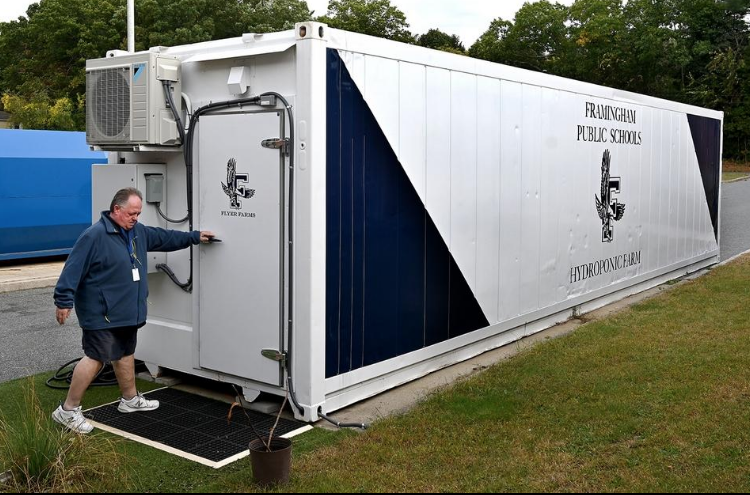
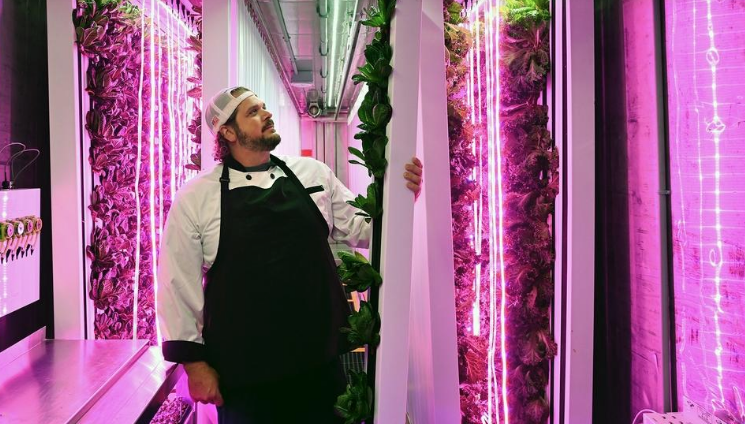
FRAMINGHAM – In an old shipping container behind the high school, towers of lettuce enjoy springtime.
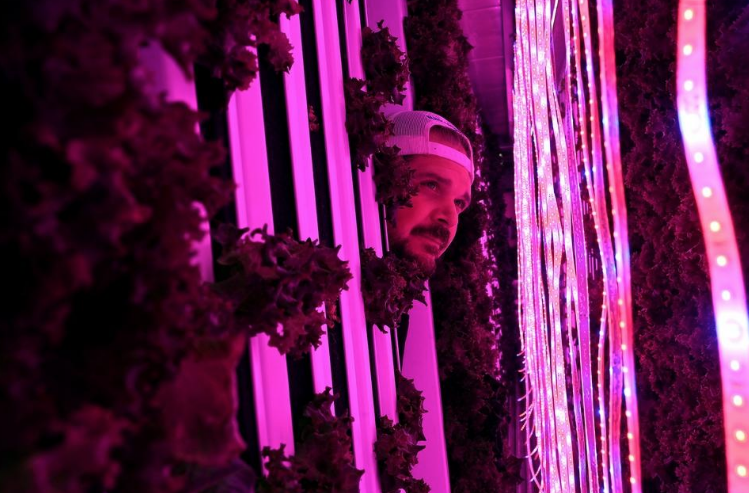
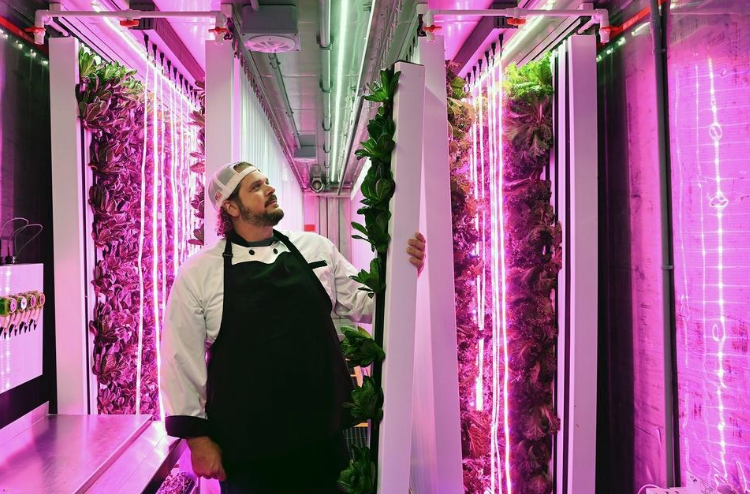
Walls of kale and other greens stretch down an aisle the length of the trailer, fed by ropes of LED lights that mimic sunlight. A wall-mounted keyboard that serves as the 320-square-foot hydroponic farm’s brain keeps the temperature at a steady 70 degrees. Every hour, a fan clicks on to distribute a spurt of carbon dioxide for a minute, helping the plants grow.
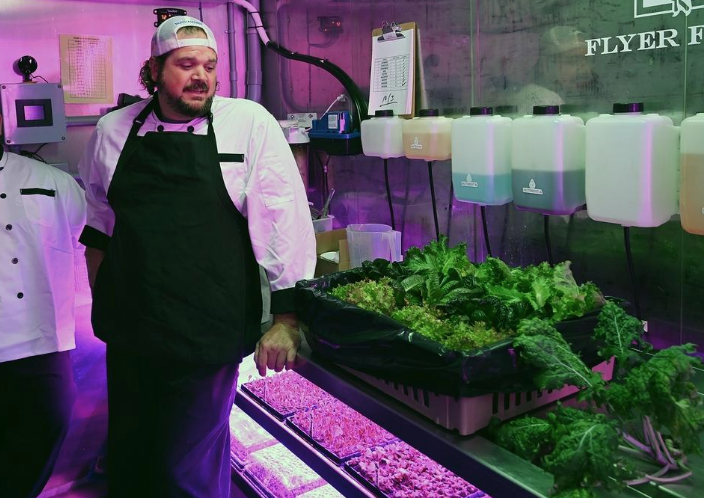
Later in the day, members of the Food Service Department will pluck leafy greens such as red romaine or wasabi arugula from about 35 grow towers. Then, produce is packed in crates and distributed to city schools to feed thousands of students.
“They might never see lettuce like this in their lifetime,” said Brendan Ryan, the foodservice department administrator for Framingham schools, holding up a particularly delicate lettuce. “You would be hard-pressed to buy this lettuce on the open market because it’s so hard to maintain.”
This will be the department’s first full year using the $104,000 product, which was first installed in April. It can grow the equivalent of two acres worth of vegetables inside without soil year-round.
Purchased from Boston-based Freight Farms with money from the department, it’s an example of the urban farming trend that the schools are now embracing. The indoor farm uses the technology of hydroponics: a technique where plants are grown with a nutrient solution and the same water recirculates repeatedly. Soil is not used.
For Ryan and his staff, it’s the latest “marketing tool” to promote the department, which previously started an outdoor garden to grow sunflowers, potatoes, corn and more.
“We’re trying to be as cutting-edge as we can and make sure that we’re serving these kids the best freshest product possible,” said Ryan. “This is one way for parents to see we’re making the lettuce right outside.”
Via a mobile app, staff can monitor the crops, adjust the pink ultraviolet light, and prompt a light rain without setting foot inside the farm. A webcam even snaps a photo every three minutes, so they can see changes as they happen. If any crop’s reading falls outside of the target range, the app will send a notification.
Containers of nutrient-infused water – chock-full of minerals found in healthy soil such as nitrogen, potassium, phosphorous – pump through tubes to the crops growing in polymer mesh.
Getting the hang of the technology posed some learning curves, said Raquel Vazquez, director of foodservice operations. For example, it takes more than an hour to calibrate the water tank filters to make sure every nutrient is properly dispensed into seedlings.
“If we don’t, then it improperly imbalanced and then our crops won’t yield as well,” said Vazquez.
The inside of the freight container also needs to be kept extremely clean to avoid problems like algae growth.
Ryan likened the “new endeavor” to going from “being a butcher to a brain surgeon.”
A head of lettuce that would normally take 14 to 16 weeks to grow in a field takes about eight weeks inside the trailer, 365 days a year. Another advantage: Crops are not exposed to any contaminants and are “beyond 100% organic,” said Ryan.
And it produces lettuce and other vegetables that would be too expensive for the district to buy from vendors, like the delicate lettuce that outside vendors would likely not risk shipping.
“They’re not going to be taking packed very well, they don’t take the exposure to extreme temperatures very well,” said Ryan, of the fine leaves. “You pack these in a shipping truck, stacked 30, 40 cases high – they flatten. Here, this crate goes right to the school.”
Vazquez said it also poses a learning opportunity for students, saying some have already toured the unit. Eventually, the biology department hopes to incorporate it into the curriculum.
“While our staff serves pizza on Fridays, they’re really teaching them about what hydroponic greens are, where this came from, all the way down to kindergarten. They’re starting to eat it and try it and taste it,” said Vazquez.
Ryan and Vasquez hope the high-tech aspect of the farm will get teens interested in farming as a career.
“A lot of kids think of agriculture as some lone farmer covered in mud in the middle of a field with a tractor. And it’s not anymore,” said Ryan.
Zane Razzaq writes about education. Reach her at 508-626-3919 or zrazzaq@wickedlocal.com. Follow her on Twitter @zanerazz.
Grow A Farm Right Inside Your Kitchen In UAE
For those who have dreamt of growing their own vegetables and herbs - but are limited by the fact that they don't have a garden - a solution is being presented at Gitex Technology Week in Dubai. And it's aptly called 'Kitchen Garden'
Rohma Sadaqat /Dubai
(KT/ M sajjad)
October 10, 2019
Seeds come in a 'seedpod' and are all non-GMO and certified organic.
For those who have dreamt of growing their own vegetables and herbs - but are limited by the fact that they don't have a garden - a solution is being presented at Gitex Technology Week in Dubai. And it's aptly called 'Kitchen Garden'.
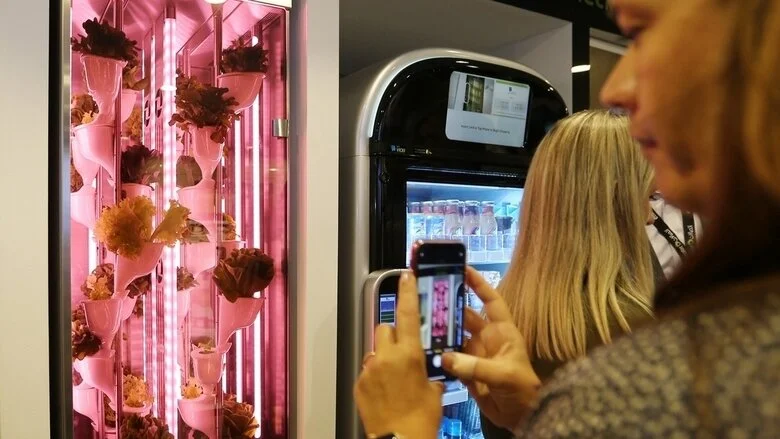
Kitchen Garden, developed by Natufia Labs, is a fully automated indoor garden system, which allows chefs to grow anything from basil to lemongrass or a seed packet of nutrient-rich microgreens.
Seeds come in a 'seedpod' and are all non-GMO and certified organic.
Speaking to Khaleej Times, Lauri Kapp, co-founder of Natufia Labs, shared details on the technology and how it is relevant to a region such as the UAE.
"This indoor growing technology gives the power back to the consumer. Restaurants and households can now grow fresh products without worrying about seasons or pesticides and chemicals in their greens.
"This is critical for countries like the UAE that rely mostly on imports," he said.
Kitchen Garden is equipped with 32 ceramic pots, a number that can be increased to 64.
Alternatively, it can be easily fitted with 128 microgreen plates.
It was designed to allow for the full flexibility of a mix between ceramic pots and microgreen plates to suit the user's preferences.
Currently, over 100 seeds of different herbs and plants have been tested and can be grown in the indoor garden.
The technology builds upon the use of hydroponics, but requires less maintenance and less space and offers much more variety in the plants that can be grown.
This garden is just a little bigger than the average single-door fridge and can easily be installed in a home kitchen or a small professional one.
Selma Abualia, project manager at Madar Farms, the local distributor for Natufia in the UAE, revealed that the technology has already found a home in the country, with many different parties expressing their interest.
Currently, one Kitchen Garden is already installed and operational at Radisson Blu Dubai Deira Creek Hotel.
HOW IT WORKS
. Get your seeds that come in 'seedpods'
. Place your seeds into a 'nursery tray', which provides the necessary light for the plants to grow
. Transfer your seedlings into cups. The system's two pull-out racks hold 32 handmade ceramic cups and a total of 165 microgreen plates, or a combination of both
. Don't worry about watering them - it's fully automated
. Monitor your plants' growth and adjust the controls via an app
. Harvest for mealtime
rohma@khaleejtimes.com
Rohma Sadaqat
I am a reporter and sub-editor on the Business desk at Khaleej Times. I mainly cover and write articles on the UAE's retail, hospitality, travel, and tourism sectors. Originally from Lahore, I have been living in the UAE for more than 20 years. I graduated with a BA in Mass Communication, with a concentration in Journalism, and a double minor in History and International Studies from the American University of Sharjah. If you see me out and about on assignment in Dubai, feel free to stop me, say hello, and we can chat about the latest kitten videos on YouTube.

Pure Flavor® To Launch RedRoyals™ At PMA Fresh Summit
“We are excited to be bringing a new variety to market that we believe will be a game-changer”, said Jamie Moracci, President. After researching consumer trends, trialing dozens of varieties and conducting community sensory testing, the team selected a fantastic variety with a unique burst of sweet and unmistakable flavor
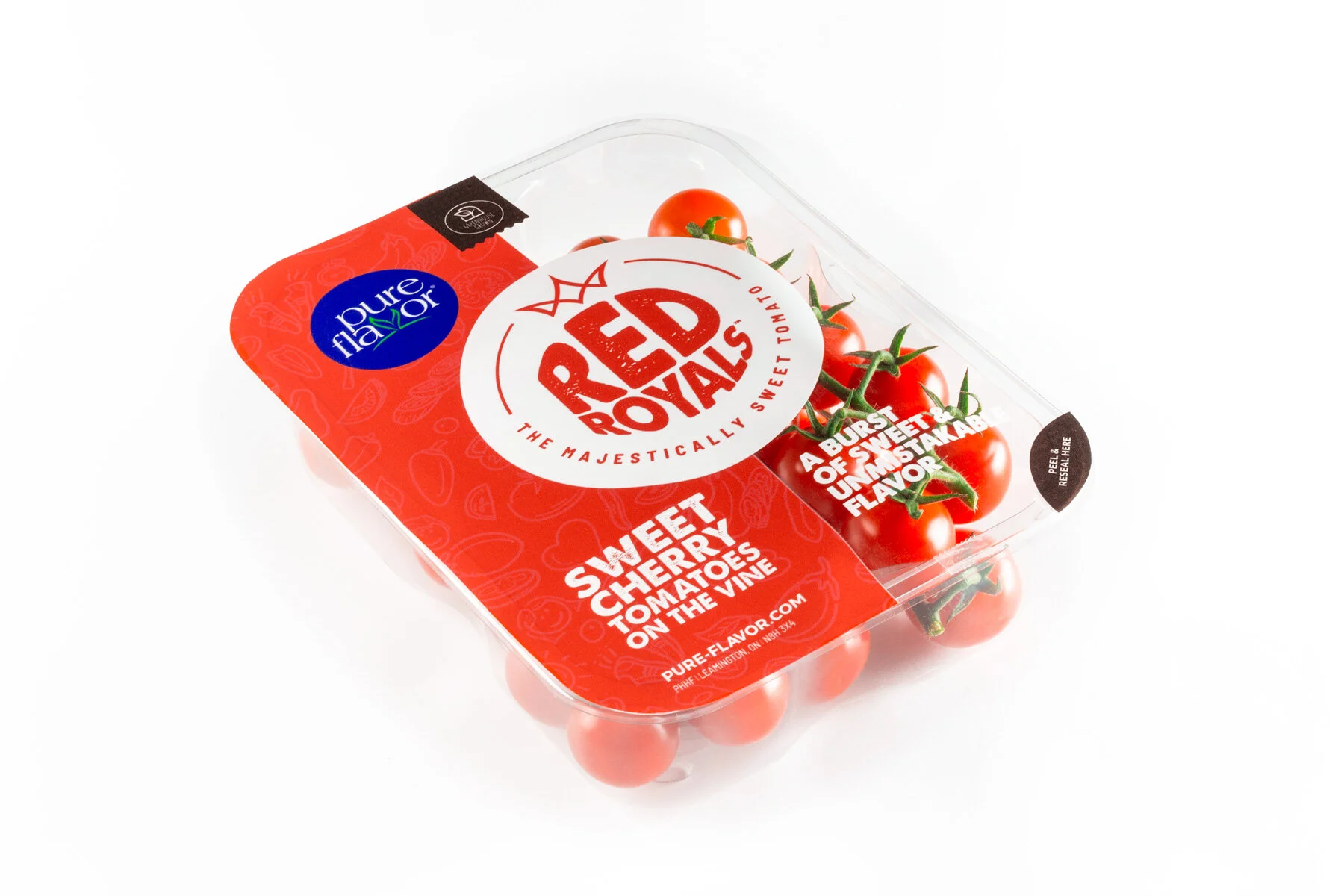
Leamington, ON (October 10th, 2019) While increasing its acreage of traditional greenhouse commodities of Tomatoes, Peppers, Cucumbers, and Eggplants season after season, Pure Flavor® continues to focus its strategic growth efforts on bringing new specialty items to market to meet retail, foodservice, and consumer demand. After years of research & development, the company will be unveiling its new RedRoyals™ Cherry Tomatoes on the Vine at the PMA Fresh Summit in Anaheim, CA October 18-19.
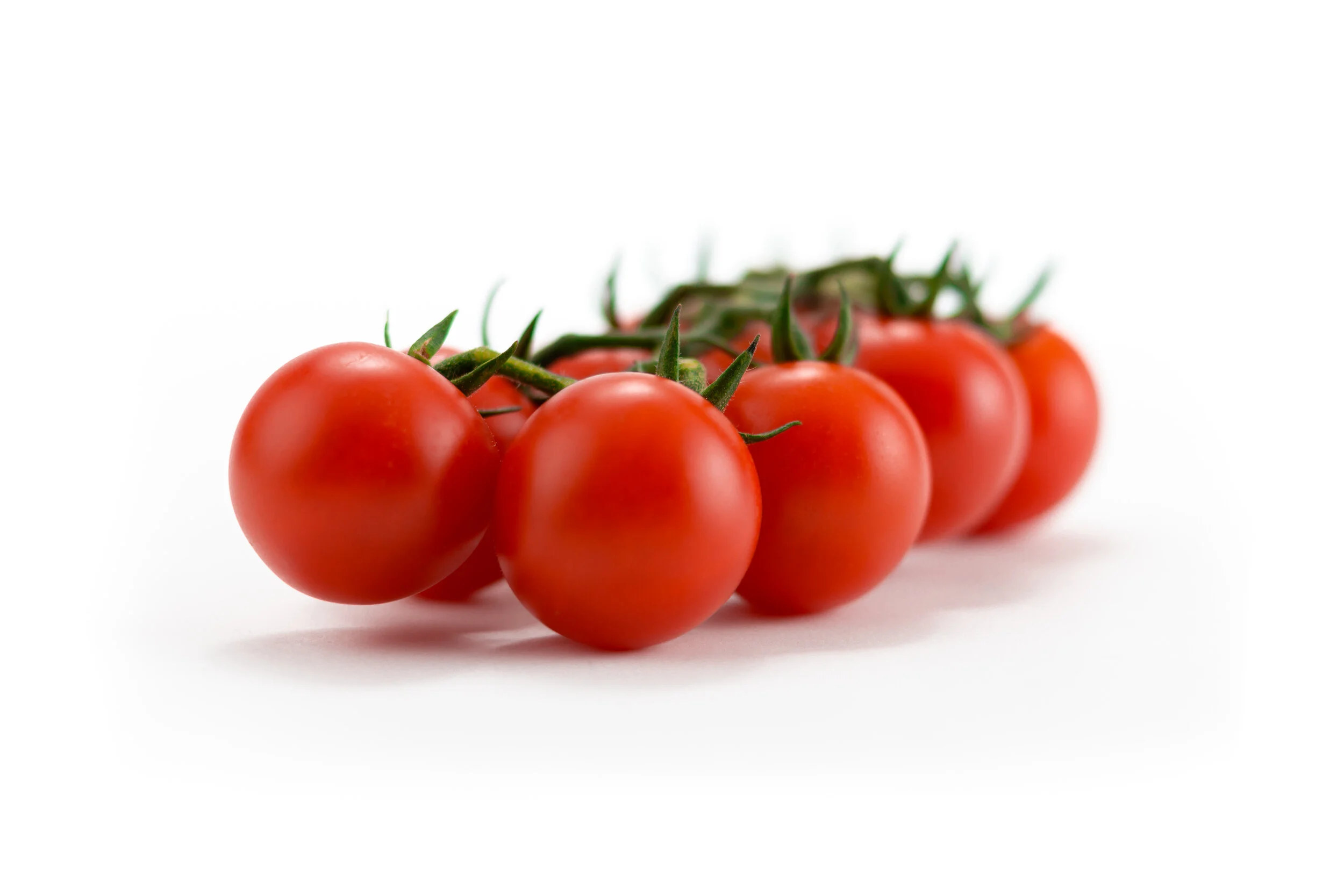
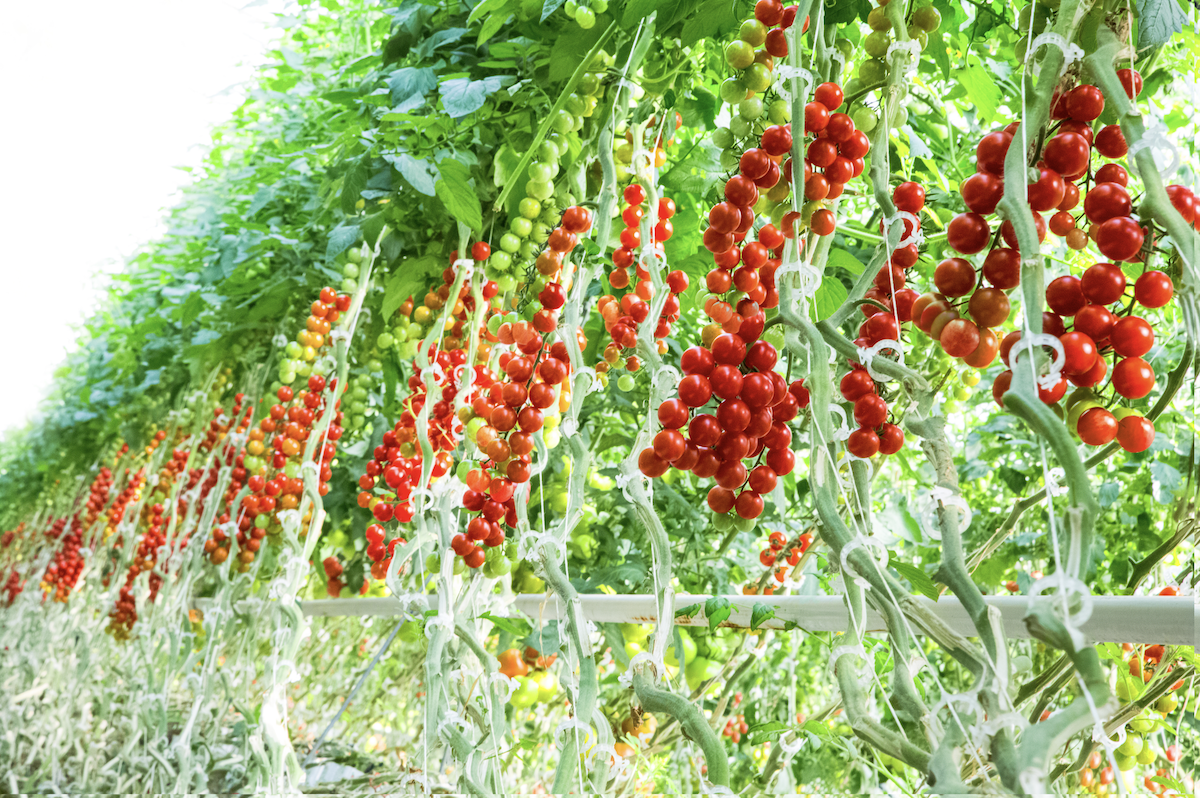
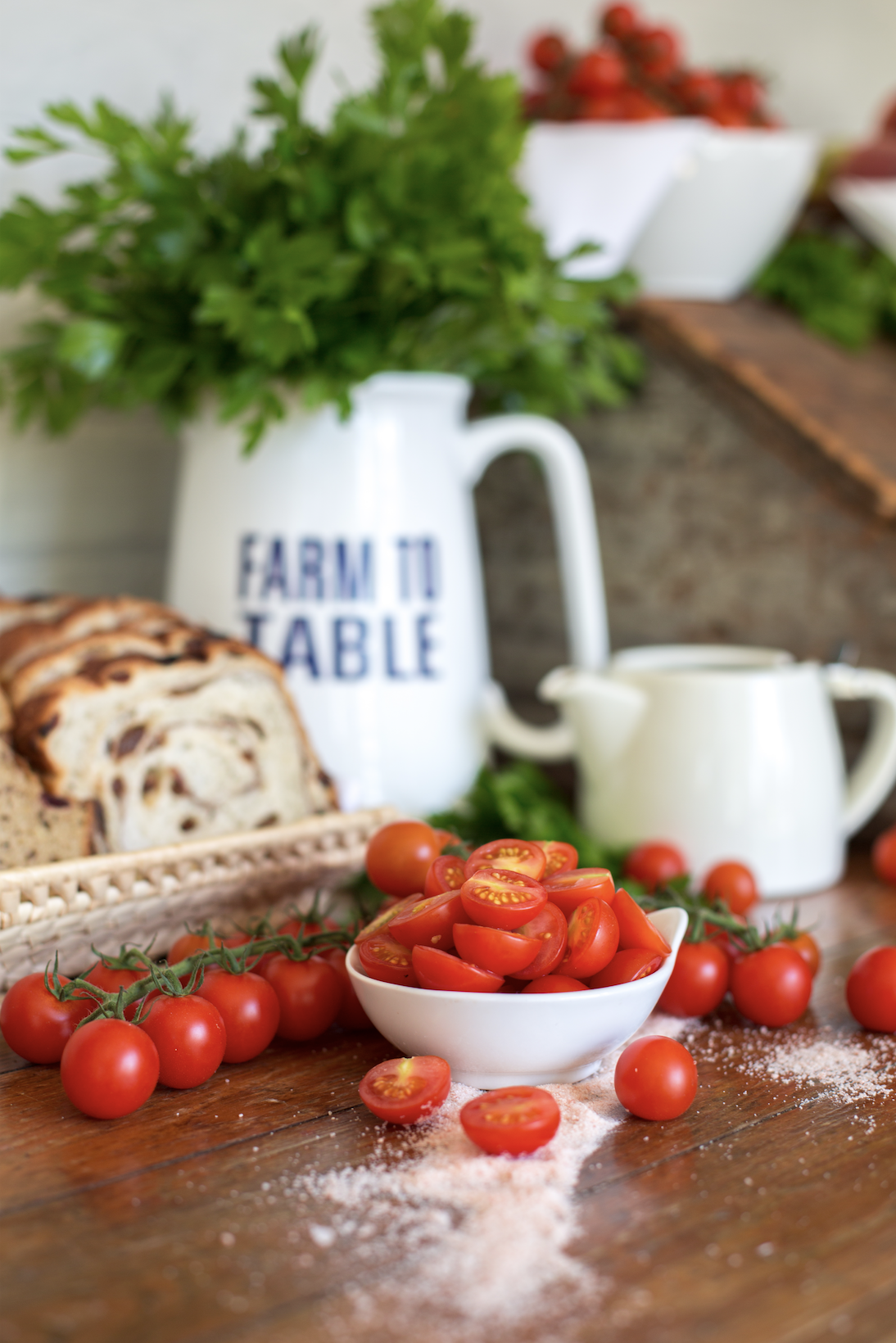
“We are excited to be bringing a new variety to market that we believe will be a game-changer”, said Jamie Moracci, President. After researching consumer trends, trialing dozens of varieties and conducting community sensory testing, the team selected a fantastic variety with a unique burst of sweet and unmistakable flavor.
RedRoyals™ Cherry on the Vine are flavor-rich with a vibrant sweet crunch, these royal wonders are the perfect accent to any eating occasion. Hand-picked with the utmost care, their majestic sweet flavor is nurtured on the vine by our family of growers who carefully select the perfect tomatoes for your delight. As the king of the tomato crop, RedRoyals™ deserves a crown.
Read more about RedRoyals™: https://www.pure-flavor.com/redroyals/
Watch the RedRoyals™ Promotional Video: https://youtu.be/OubFFSCOKi4
Pure Flavor® has been busy developing additional products to strengthen the brand’s product offering in the marketplace this year. The company has been working with their growers, seed companies, and retail partners to bring new items to market. The following items will be on display at Fresh Summit:
“It’s been a great year for launching new products & brands, we look forward to showcasing them all at Fresh Summit in Anaheim at Booth 4451 and in the New Product Showcases”, said Chris Veillon, Chief Marketing Officer.
To learn more about Pure Flavor® and what the company is promoting at the upcoming PMA Fresh Summit Trade Show (Booth 4451), please visit Pure-Flavor.com/PMA2019
-30-
About Pure Flavor® -
Pure Flavor® is a family of greenhouse vegetable growers who share a commitment to bringing A Life of Pure Flavor™ to communities everywhere. Our passion for sustainable greenhouse growing, strong support for our retail & foodservice customers, and focus on engaging consumers is built on a foundation drawn from generations of growing expertise.
We are the next generation of vegetable growers, inspired to put quality, flavor, and customers first by providing greenhouse-grown vegetables from our farms that are strategically located throughout North America.
SOURCE: Chris Veillon | chris@pure-flavor.com
Chief Marketing Officer | Pure Flavor®
T: 519 326 8444 | Twitter: @PureFlavor
WEBSITE: https://www.pure-flavor.com/redroyals/
VIDEO: https://youtu.be/OubFFSCOKi4
Photo Credit: Pure Flavor® © 2019

Farmshelf CEO Counts On Manufacturing Scale To Become Big Hydroponic Feeder
And already Farmshelf has experienced the backing of another manufacturer based an ocean away and in an entirely different industry: Mini, the BMW-owned car brand, took Farmshelf under its wings as part of its Urban-X startup-incubator program and then invested in the company, along with angel investors including a handful of Fortune 500 CEOs and celebrity chefs
By Dale Buss
October 2, 2019

These days, Farmshelf basically is only helping grow basil in the back rooms of some of America’s best restaurants. But Founder and CEO Andrew Shearer is pursuing a vision of using manufacturing scale to bring down the cost of his hydroponic horticultural systems to transform his Brooklyn-based startup into a primary engine of the global food system.
And already Farmshelf has experienced the backing of another manufacturer based an ocean away and in an entirely different industry: Mini, the BMW-owned car brand, took Farmshelf under its wings as part of its Urban-X startup-incubator program and then invested in the company, along with angel investors including a handful of Fortune 500 CEOs and celebrity chefs.
Farmshelf sells internet-connected hydroponic systems that come complete with everything needed to grow herbs and vegetables indoors. For $8,250 apiece, customers can purchase Farmshelf’s bookshelf-sized units – there are more than 75 in the market already – and grow food in a “cost-effective, sustainable and easy way,” as Shearer tells Chief Executive.
The systems come with plant pods, nutrients, and the Farmshelf operating system. “You get the pods in the mail and put them into the system, plug it into the wall and add water once a week,” Shearer explains.
So far, restaurateurs and other low-volume customers mainly are growing herbs and leafy greens on Farmshelf. “Herbs is the largest focus because it is the most valuable crop, and it drives a bigger impact on dishes from a flavor and freshness perspective,” Shearer says.
But Shearer’s ambitions are carrying him far beyond. Actually, Farmshelf’s system already can grow about 50 crops, also including strawberries, peppers, tomatoes, radishes and “microgreens,” he says. “We can also grow potatoes and carrots and other things, but we’re focusing on highly nutritious foods that don’t transport well. That makes the most sense. It’s not a zero-sum game; we need to feed a growing population.”
And in that regard, he’s thinking much bigger for Farmshelf as a future food-supply solution. So far, for instance, Farmshelf has been a business-to-business proposition, but Shearer wants “to enable consumers to grow their own food where they are.”
“Today, we’re shipping food 1,500 miles to get to the end-user,” He says. “And urban agriculture struggles with logistics problems. In megacities, the last mile is the biggest problem, with highly perishable goods that don’t transport well. So our solution is internet-connected hydroponic farms that provide plants exactly what they need when they need it.”
Prototyped systems will boost Farmshelf yields by at least half, Shearer predicts, while scaling manufacturing will bring the cost of the system down drastically. “That’s how we can create a solution that will work in Abu Dhabi, Los Angeles, New York or Antarctica,” he says. “It’s not just urban agriculture but distributed agriculture.”
Dale Buss is a long-time contributor to Chief Executive, Forbes, The Wall Street Journal and other business publications. He lives in Michigan.

Freight Farms Welcomes Sam White As New Chief Innovation Officer
Freight Farms has expanded its executive team as it looks to expand globally. The company has appointed Sam White as Chief Innovation Officer. White was the co-founder of Boston-based Greentown Labs and Promethean Power
Freight Farms has expanded its executive team as it looks to expand globally. The company has appointed Sam White as Chief Innovation Officer. White was the co-founder of Boston-based Greentown Labs and Promethean Power.
In addition to his continued involvement with both organizations, White will now be collaborating with Freight Farms to guide corporate partnerships and strategic investment – his first major initiative upon moving back to Boston from India working with Promethean Power.
“Sam has a deep understanding of how sustainable technologies can scale to create meaningful and monetary impact for entire industries,” said Jon Friedman, Freight Farms COO. “His experience with modernizing a distributed farming system across India will contribute to our collective goal of enabling impactful, sustainable farming across the globe.”
According to the company, the move is an extension of White’s past focus on driving change in sustainable agriculture for Promethean Power, where today more than 50,000 farmers in India access its cold-storage technology.
“Freight Farms is truly making a global impact on sustainable farming, and supporting the team and its remarkable technology in the AgTech space felt like a natural next step for me. They’ve laid the groundwork to massively scale worldwide, and I’m excited to join the team in support of its momentum,” said Sam White, Freight Farms Chief Innovation Officer.
“Sam was able to instantly internalize Freight Farms’ mission, and we’re confident in his ability to recognize like-minded partners and creative opportunities to add value as we continue to grow,” said Brad McNamara, Freight Farms CEO. “It’s rare to find someone with experience scaling businesses across hardware, material science and infrastructure in multiple markets globally, and we’re happy to have him on the team.”
For more information:
www.freightfarms.com
Publication date: Mon, 07 Oct 2019

Scottish Start-Up Looking To Build Dozens of Vertical Farms Across UK
A Scots start-up plans to build dozens of indoor vertical farms across the UK. Edinburgh-based Shockingly Fresh is currently developing five sites countrywide to introduce low cost naturally-lit vertical farms using special hydroponic towers to grow multiple crop cycles of leafy veg such as salads and herbs
A Scots start-up plans to build dozens of indoor vertical farms across the UK. Edinburgh-based Shockingly Fresh is currently developing five sites countrywide to introduce low cost naturally-lit vertical farms using special hydroponic towers to grow multiple crop cycles of leafy veg such as salads and herbs.
They believe the increased yields from their farms will help British growers boost crop production and reduce the UK’s reliance on costly off-season imports from the EU. Plus the enclosed environment will mean less pesticides and cleaner crops, they say.
They’ve already secured rights to one site in Scotland and four in England – covering a total of 50 hectares – with their site in Worcestershire awaiting full planning consent.
Now they’ve launched an investor seed round to kick start their expansion to more than 40 sites countrywide over the next five years.
Shockingly Fresh has teamed up with technology providers Saturn Bioponics and specialist salad growers ValeFresco to roll out their plans.
Pak choi, lettuce, herbs
Over the last three years, ValeFresco and Birmingham-based Saturn have grown vertical crops of pak choi, lettuce, and herbs for a range of customers – with positive results.
“With pak choi we saw a three to four-fold increase in yields per crop cycle, with a third more cycle per year, giving an overall five-fold increase in annual yield,” says Saturn Bioponics founder and CEO Alex Fisher.
“The crops are cleaner, the season is longer, there is less disease and pest risk and they are easy to harvest.
“Consumers are well-accustomed to strawberries grown under cover and this is a natural next step,” Fisher adds.
Natural light
Unlike the majority of vertical farms, which use fully enclosed systems with heating and artificial light, Shockingly Fresh is promoting Saturn’s lower input, naturally lit approach which they say achieves most of the results at a fraction of the cost.
“We selected Saturn’s technology because their set-up requires far less up-front capital than a fully-enclosed vertical farm, yet delivers most of the benefits which are already driving the high demand for hydroponically-produced crops” says Garth Bryans, COO at Shockingly Fresh.
“This makes it much easier to get projects off the ground.
“A fully enclosed farm can achieve a higher annual yield, but when you add in additional lighting and heating costs as well as the high capex, their typical costs per kg are higher than a naturally lit set up can achieve,” Bryans continues.
“We have identified a significant market – particularly around the early and late season ‘shoulder months’ – which is currently filled by imported crops from Europe. We believe our sites will enable British growers to compete on a level field,” Bryans says.
50 hectares across four sites
Shockingly Fresh has already submitted a planning application for a 1.2ha site at Offenham in Worcestershire and has land agreed under heads of terms for a further 50 hectares across four sites countrywide.
They are now actively seeking more sites in the UK – to be funded by new investors – and are also advancing with a major project in Oman.
“Our funding round will enable us to secure and develop more than 40 sites in the UK – and we are keen to speak to brownfield site owners as well as traditional agricultural land holders,” Bryans says.
“The hydroponics market is set for significant expansion in the years ahead, so there is plenty of room for a number of players to grow.
“With our system we can significantly extend the shoulder months and offset the need for early and late season imports – plus we can bring in heating to extend the season further if the market is there,” Bryans concludes.
For more information:
Shockingly Fresh
www.shockinglyfresh.com
Saturn Bioponics
www.saturnbioponics.com
Publication date: Tue, 08 Oct 2019

Adapter To Fool-Proof Irrigation In Vertical Farming System
Aponix’ Vertical Barrel systems have been on the market for a while now, and since their conception, they have offered an alternative to rack systems as a way of making use of three-dimensional growing spaces. Aponix is releasing some new additions to make the system even more easy to use
Marco Tidona from Aponix talks about new accessories for the Aponix vertical barrels
Aponix’ Vertical Barrel systems have been on the market for a while now, and since their conception, they have offered an alternative to rack systems as a way of making use of three-dimensional growing spaces. Aponix is releasing some new additions to make the system even more easy to use. A new adapter to simplify irrigation with the Barrel, and a new larger and soil-based XL Vertical Barrel. Marco Tidona with Aponix: “We wanted to come with a solution that would make irrigation foolproof, so we built an adapter.”
Water Adapter
Irrigation in the cylinders requires a different approach than growers are used to. “To irrigate with the barrel all you have to do is put liquid on the inside surface at the highest point, gravity will pull it down and the wing system inside will make sure is an even spread,” says Marco. “We have been testing with different kinds of irrigation methods. One simple method is to just attach an inverted sprinkler, but these additions and sprinklers needed to be used with caution, but some users didn’t. Most of the users had irrigation cycles that lasted for too long and so there was too much liquid and they drowned their plants.”
In order to come up with a solution “We wanted to come with a solution that would make irrigation foolproof, so we built an adapter. The adapter can be integrated with all Netafim spraying mechanisms. It allows us to fix the drip stop to the lid of the barrel, and then the grower can define the flowrate using the Netafim equipment.”
Lego pieces
The Vertical Barrel system is a cylindrical alternative to the typical vertical farming solution of racks. “The Barrel is constructed of individual pieces, each ring consists of 6 pieces that click into each other like Lego pieces,” says Marco, emphasizing the ease of use of the system. “The rings can be stacked on top of each other to create the barrel, this way you can define the height of the barrel yourself. We have several different pieces that are suited for different types of produce so you can configure for different types of plants to optimize the cultivation area. The cultivation area is the outside of the cylinders, and with the variable height and the possibility to chain multiple of these units, the idea is to have an alternative for a rack system in vertical farming.”
So what are the benefits of growing with the cylindrical surface of the Barrel? “When you build racks, you cannot use natural sunlight,” says Marco. “On top of that you also get microclimate issues – plus when you go very high you need these scissor lifts or climbing equipment. The Barrel is an alternative that allows you to grow vertically in a greenhouse and use natural light.”
Though the system is already quite complete, a lot of additions are being planned in order to get it technologically up to par with other vertical farming solutions. “We are also expanding the system to have plant trellis holders left and right of the grow spaces,” says Marco. “Also we are working on ways to manage the microclimate, there will be an area where you can attach an airhole next to the grow spaces which can finetune the humidity and could also fertigate CO2. These things are necessary to compete with all the high-tech solutions that are already out there.”
Credibility
It can be quite difficult to get your foot in the door with a new product in the horticultural industry. “It took a lot of time to get slight credibility,” says Marco. “I remember the first year I was presenting this new technique at GreenTech, people thought it was just a gadget for your living room – they didn’t take it seriously. They didn’t see it as serious growing equipment, because it wasn’t what they knew – it wasn’t gutters and tables. So I am now trying to get this credibility by integrating and getting a lot of help from Gakon.”
According to Marco, Gakon are a very important partner for Aponix. “Gakon are helping me to add all these gadgets and functions that they know from the standard equipment they are using for large scale production. We are collecting ideas from them for the practical side, and we are translating them for vertical barrels. Gakon have been a major help for getting taken seriously. They have their partner companies, with whom they discuss our products. One such partner company is Hortilux, for lighting. With the help of Gakon, Hortilux are creating lighting plans for use with our barrels.”
The future
Marco believes that there is still a lot of future potential for the Vertical Barrels, and these new accessories are a step forward. “All the processes that are normally part of larger commercial operations are missing,” he says. “This product has the potential, but I need to find strategic partners who actually have the experience in the market and want to have a future alternative to racks. More and more big players in the industry are understanding the value of my product and inviting me to talk to them.”
Marco continues: “I had an interesting conversation with a company from the UK. They are building this robot that you can put over your raised beds and it functions like an agricultural printer: it irrigates, plants seeds, it takes care of your plants, and it’s fully automatic. This company is thinking about putting one of these robots, but with a circular arm, on top of my barrels. So it’s not using a flat surface like you have in a raised bed, but the round surface coming from the top and circling around. The future is looking exciting, but I am still looking for more people that believe in my product and want to support it in ways that I alone cannot.”
For more information:
Marco Tidona
Aponix
Publication date: Tue, 08 Oct 2019
Author: Brian de Lint
© HortiDaily.com

Video: A Look Inside The Vertical Farming Industry In Paris
Paris is not a place where you'd expect to find rows of neatly planted fruit and vegetables, but urban farming is flourishing in the French capital. The Down to Earth team takes a closer look in this video
Paris is not a place where you'd expect to find rows of neatly planted fruit and vegetables, but urban farming is flourishing in the French capital. The Down to Earth team takes a closer look in this video.
Publication date: Tue, 08 Oct 2019

UK: 29 Hectares of New Tomato Greenhouses To Use Waste Heat
A £120m project to construct two of the UK’s largest greenhouses at two farmland sites near Norwich and Bury St Edmunds has been announced. The advanced greenhouses will be warmed by residual heat from nearby water recycling centres owned by Anglian Water
A £120m project to construct two of the UK’s largest greenhouses at two farmland sites near Norwich and Bury St Edmunds has been announced. The advanced greenhouses will be warmed by residual heat from nearby water recycling centers owned by Anglian Water. The construction phase of the project will begin immediately, with completion expected in autumn 2020. Commercial-scale growers from the UK and the Netherlands have already committed to leasing the space.
Closed-loop heat pumps
Closed-loop heat pumps will be used to transfer the heat from the water recycling centers to the greenhouses, and will have the additional benefit of cooling the facility’s treated water outflow before it is returned to the environment.
Electricity for the greenhouse’s heat pumps will be provided by a Combined Heat and Power plant, with waste heat from the CHP providing further warmth for the greenhouses. The gas-fired CHP plant’s carbon emissions will be transferred into the greenhouses, raising the CO2 levels and further accelerating the growth of the plants, and capturing the majority of the carbon.
"The greenhouses will provide growing conditions for a range of plants and vegetables requiring a high-heat, and relatively low-light environments such as tomatoes, cucumbers, and peppers. Once operational, the greenhouses will be capable of producing more than 1 in 10 of the country’s tomatoes, and will create 360 permanent new jobs", the initiators say.
Greenhouses
The complete facility will be realized by Bom Group greenhouses are among the largest ever constructed in the UK with each covering more than 13 hectares. Standing around 7m tall the large glass structures allow crops to grow vertically along guidewires, and do not require any soil, instead of being grown hydroponically from nutrient-rich water solutions. Once in full production, they will be capable of growing more than 20 tonnes of tomatoes every day – 12% of the tomatoes grown in the UK.
Renewable heat
"In Europe, solar radiation alone cannot provide sufficient energy to reach optimal growing temperatures throughout the day, even in the summer. Most commercial greenhouses overcome this problem by using another heat source to increase temperature", they say.
The majority of greenhouses use gas-fired boilers for this additional energy. Greencoat Capital’s approach largely displaces these fossil fuel emissions by using waste heat from Anglian Water’s nearby water recycling centers.
Jobs
Once operating, the two greenhouses will create 360 permanent jobs in the local area, rising to 480 during high season.
James Samworth, Partner at Greencoat Capital, said: “We’re very pleased to have achieved another innovative first in the UK renewable energy sector. Technology and cross-sector co-operation is continuing to unlock some amazing possibilities in energy and agriculture. We see considerable opportunity to invest in renewable heat in the UK, providing pensions investors with the predictable returns they require to pay beneficiaries, meanwhile reducing our carbon emissions as an economy.”
Duncan Hale, Portfolio Manager at Willis Towers Watson said: “We are delighted to be partnering with Greencoat Capital on this project, particularly as we are making best efforts to invest in the low carbon economy while still delivering the strong risk-adjusted cashflows our investors are after. This marks a step-change in the decarbonization of agri-business and heating, and we are proud to be supporting UK infrastructure with the assets we manage.”
Dr. Lu Gilfoyle, Head of Environmental Quality at Anglian Water said: “It has been great to be involved in such an innovative project, helping to solve a number of challenges for Anglian. Removing excess heat from the river systems is a priority for DEFRA and ourselves, and it is fantastic to be able to put that heat energy to good use.”
Andy Allen, Director at Oasthouse Ventures, said: “Delivering a world-first low carbon greenhouse system is hugely exciting for the small team who took this from conception, design and planning, to contracting and now construction. The environmental, social and political benefits of these systems are significant, and we look forward to further disrupting the traditional carbon heavy models of agriculture.”
Pension investment
The capital for the project comes from a number of public and private pension funds in the UK, reflecting the growing trend of pensions managers seeking returns through direct investment into renewable infrastructure. Greencoat Capital now manages almost £2bn of private market pension fund capital through its various renewable infrastructure funds.
For more information:
Greencoat Capital
www.greencoat-capital.com
For more information:
Martin van Zeijl
Bom Group
Kulkweg 60
3151 XE Hoek van Holland
Tel: +31(0)174 725 160
www.bomgroup.nl
Publication date: Thu, 03 Oct 2019

The Inside Scoop On How Growers Can Up Their Funding Odds
Funding is a constant headache for many getting started, or even just keeping on, in the indoor ag world. We chatted with Contain’s VP of Business Development, Doug Harding, to get the inside story on what lenders are looking for, and the best ways to up your odds of getting funded
Image courtesy of CropKing
Funding is a constant headache for many getting started, or even just keeping on, in the indoor ag world. We chatted with Contain’s VP of Business Development, Doug Harding, to get the inside story on what lenders are looking for, and the best ways to up your odds of getting funded.
What main things are funders looking for?
Startups are going to be construed as riskier by any lender. They really don’t have a track record. In some cases, they don’t have the experience.
They have to have a thoughtful business plan. They’ve got to figure to commit some capital. We have a lot of people that come in and think that they can do it with no commitment on their own and hope that it works. Really, if you think that through, all the risk then lies with the lender, and that’s probably not going to work.
Image courtesy of Doug Harding
How much capital should growers expect to put in upfront?
It really depends on the size of the deal. Focusing on startups, 20%. In some cases more.
If they have more it can help get them more favorable terms on financing. If the lender requires an absolute minimum of 20%, and the customer has a pretty well thought-out business plan, is dealing with a reputable vendor, and maybe even has an offtake agreement, where they know they’re already going to sell their product, and maybe they’re going to come up with 40% down, they’re going to get a better offer.
It could be a longer-term. It could be because of that additional down they can help shorten their term, and that’s what a customer should always try to do. When you’re borrowing money for the first time for a startup business, keep the term as short as possible. You’ve got to afford the payment, but you’ve also got to assume your cost of capital after you prove yourself can be dramatically lower than when you first start out.
What are some other ways to bump up your funding odds?
Be reasonable with your size. When you’re first starting out, make sure, even though you think you have everything thought out in your business plan, start off smaller. We have some first-time growers that want to start off with a $5 million project with limited capital and no experience, and it’s just not going to work. Even if we could get that funding, why would you want to gamble that much before you really know what you’re doing? So start off small, get a feel for it, make sure that it’s something you have passion, ability, and time for.
What’s a common misconception that lenders have about indoor ag, compared to something like financing cars or houses?
A common misconception would be that even some of the experienced lenders in the industry really still are very uncertain on what the equipment’s worth. When that happens, they’re going to tend to be more conservative. They’re going to focus much more on the grower, and it may manifest in the form of insisting on more money down, just trying to dot their i’s and cross their t’s.
How can growers get around that reluctance?
It’s somewhat static. What they can do is stick to their business plan. If they’re successful in obtaining their funding, I’d tell them to work hard, and prove themselves, and show a track record and help prove the industry right.
We all know that everything about this industry makes sense. You can spend a whole lot less money. You can hedge your bets with climate conditions. You can grow year-round. There’s a growing need for food, as our population will increase for the next 30 years. Prove yourself. There’s not much they can do upfront other than making sure that they have things well thought out.
What are some common funding mistakes first-time growers make?
I think sometimes growers place too much emphasis on some of the initial conversations they have as far as where they can sell their product. It’s a long road to actually start growing and have the quality of product and still have that relationship intact, so I think one common mistake is that although it’s very prudent for potential growers to have a source of where they’re going to sell their product, it shouldn’t be the basis of their decision to start growing.
My advice is to not put all your eggs in one basket. If you get that kind of response, go talk to five others, and figure on not having just one source to sell your product to. Things could change.
What do the next five years in funding indoor agriculture look like?
That’s a real positive thing in the industry. Lenders are in business to generate a profit. In the next five years, as more and more lenders jump in—and it’s always a slower process at the beginning—other lenders are going to see the opportunity. People are going to understand what things are worth that they don’t know now, and it’s just going to be an evolution as it always is in a new industry.
That’s one of the really optimistic things about where Contain has positioned itself. We’re at the forefront of that. There’s only an upside ahead. Lenders are always looking for an opportunity, and there’s a giant opportunity in indoor ag.
Any final pieces of advice?
No one likes applying for financing. It can be a very frustrating process. If you’re trying to do it through traditional sources, it can almost lead to insanity. I mean, most people just don’t have the patience for it. It leaves you second-guessing your decisions.
We think that we can help dramatically speed up that process and take that frustration out for many customers by being aligned with the right lenders. Customers still need to be patient, but they need to understand that working with the right company can make their life a whole lot easier.
This conversation transcript has been lightly edited for length and clarity.
Learn more about Contain and funding your indoor ag business at our website, and subscribe to Inside The Box, our weekly newsletter.
WRITTEN BY
Nicola Kerslake
We’re Contain Inc. We use data to improve access to capital for indoor growers, those farming in warehouses, containers & greenhouses. https://www.contain.ag/

A Software Update Will Instruct Space Tomatoes To Sprout
t’s hard enough to grow tomatoes from seeds out in a sunny garden patch. To do it in sun-synchronous orbit—that is to say, in outer space—would seem that much harder. But is it?
For Humans, A Trip To The Red Planet Would Be Much
Improved With A Certain Red Fruit
Photo: DLR
This is a testbed for the Eu:CROPIS greenhouse assembly, shown here boasting a good-size plant with several substrates. The surroundings are for an earthbound test, and the plant is a dwarf “Micro-Tina” early-flowering tomato that is genetically engineered to grow in space.
It’s hard enough to grow tomatoes from seeds out in a sunny garden patch. To do it in sun-synchronous orbit—that is to say, in outer space—would seem that much harder. But is it?
That’s what plant biologists and aerospace engineers in Cologne and Bremen, Germany, are set to find out. Researchers are preparing in the next couple of weeks to send a software upload to a satellite orbiting at 575 kilometers (357 miles) above Earth. Onboard the satellite are two small greenhouses, each one bearing six tiny tomato seeds and a gardener’s measure of hope. The upload is going to tell these seeds to go ahead and try to sprout.
The experiment aims to not only grow tomatoes in space but to examine the workings of combined biological life-support systems under specific gravitational conditions, namely, those on the moon and on Mars. Eu:CROPIS, which is the name of the satellite as well as the orbital tomato-growing program, is right now spinning at a rate that generates a force equal to that of gravity on the surface of the moon.
The environment is designed to work as a closed-loop: The idea is to employ algae, lava filters, plants, and recycled human urine to create the cycle by which plants absorb nitrates and produce oxygen. Being able to accomplish all these tasks will be crucial to any long-term stay in space, be it on a moon base or a year-long flight to Mars. Any humans along for that kind of ride will be glad to get away from tinned applesauce and surely welcome fresh greens or, say, a tomato.
The German space agency DLR greenlighted Eu:CROPIS seven years ago as part of its compact satellite development program, says Hartmut Müller, a systems engineer and, until recently, project manager for Eu:CROPIS (he’s since moved on to new projects). The completed Eu:CROPIS launched nearly a year ago on top of a SpaceX rocket from Vandenberg AFB in California.
This photo was taken during the construction of the Eu:CROPIS satellite. The wiring shown here is used to control subsystems and sensors on the shell.
Photo: DLR
The satellite itself is about the size and shape of an overlarge oil drum. There are four experiments in total onboard Eu:CROPIS. There are two tomato greenhouses: one to simulate the moon, the other for Mars. The lunar experiment happens first; then the satellite will change its rotation speed for the Mars trial.
Alongside the greenhouses, each the size of a large breadbox is a small NASA experiment called PowerCell, which is a bacteria colony fed by photosynthetic microbes; the setup is examining cell transformation and protein production in bacteria naturally found in the gut and soil. There is also an experiment measuring long-term exposure to cosmic radiation.
Plant physiologist and Eu:CROPIS primary investigator Jens Hauslage is busying himself these days managing the pending software upload for the greenhouses, which he says will control the valves, pumps, heater, and lighting for irrigation and growth of the tomato plants. Before last year’s launch, the DLR sent him out into a pasture to explain on camera that when cows pee in the field, they are introducing ammonia to bacteria in the soil, which is converted to the nitrates, which feed plants. This nitrogen cycle, properly balanced, is fundamental to life.
The DLR looks to replicate this process in the little orbiting greenhouses in the spinning satellite and to do so with tomatoes, which are complex flowering fruits, in a closed-loop system. The experiment is meant to work quite simply—or as simply as any biological process can be in space.
When the software tells the greenhouse valves to open, a precious and small amount of water will dampen a substrate under the tomato seeds. The water rinses algae known as Euglena gracilis, which can grow into a photosynthetically active culture. The algae supplies oxygen into a trickle filter, which is made from porous lava rock. The filter is meant to convert urine/urea into nitrate. In this case, a synthetic urine will be used, simulating the human urine from a long-term space residency.
The system introduces urine into the filter, which converts it to nitrate until the photosynthetic oxygen production kicks in from the (hopefully, growing) tomatoes. This is the beneficial cycle by which plants ultimately absorb the nitrates they need: The algae prefer ammonia over nitrate, and so should protect the seedlings from potentially toxic ammonia levels, filtering the synthetic urine and putting this waste material to use as a nitrogen source for the plants.
Mustard greens grow in the vegetable plant chamber on the International Space Station.
Photo: NASA
Space farming has a robust history, and, experts say, a demanding future.
Soviet cosmonauts grew the first plants in space in 1982 on board the Salyut 7, nurturing a member of the mustard family. Three-plus decades on, NASA astronauts aboard the International Space Station (ISS) are set, in November, to grow spicy Espanola chili peppers, says Raymond Wheeler, a longtime NASA plant physiologist at the Kennedy Space Center, in Florida. The peppers would be the first edible fruit grown in space by U.S. astronauts, though joint U.S.-Russian efforts have been successful in raising greens, soybeans, and wheat. Pepper plants were launched into a two-day orbit onboard a U.S. satellite in 1967, but they were pregrown and are a whole other story.
“We’re still trying to figure out the best way to water plants in space.”—Gioia Massa, NASA
It took a long time to get even there. Raising flowering plants, like tomatoes or strawberries, is more complicated than greens. Gary Stutte, a horticulturist and space agriculture consultant—and a former NASA colleague of Wheeler’s who was principal investigator on four spaceflight experiments—worked for years during the ’90s on an ingenious earthbound program called The Breadboard Project. Researchers developed a 156-cubic-meter testbed which had a 20-square-meter area to grow plants in the simulated environment of a space colony.
Stutte says there’s much left to figure out, including how plants respond to partial gravity and how best to use new LED technologies to manage and optimize the 400- to 700-spectra wavelengths best suited for space-borne plant photosynthesis. “These different colors of light change the way the plant grows and decide whether pigments are produced, whether it’s purple or green, whether the stem is tall or short, whether the leaves are upright or not,” Stutte says.
Photo: NASA
NASA astronaut Christina Koch initiates a plant growth experiment on the International Space Station within a Veggie unit by filling the upper reservoir.
Gioia Massa, who works on the Veggie plant growth system for the ISS, says research into spectra for space plants has flowered in recent years to the point where horticulturists talk about “light recipes” for custom growth spectra and managing quality, intensity, and duration for different kinds of plants. Indeed, Eu:CROPIS will use the LEDs in the little greenhouses to try to boost the tomato seeds’ chances of success.
The vacuum of space is the harshest imaginable place for living things—the ongoing earthbound large-scale testbed for space farming, EDEN [PDF], operates out of a German station in Antarctica. Massa makes the point that it would be a pretty sad experience for a space traveler to have a plant failure on, say, day 70, and have to resort to warming up packs of processed food while they begin to plant all over again.
By learning more about plants, NASA hopes to advance long-duration space exploration, first to the moon and eventually to Mars. “We really need to learn a lot,” Massa says. “The behavior of water and gas flow changes so much in microgravity, and fluid physics is one of the most important things to test. We’re still trying to figure out the best way to water plants in space.”
They’ll want to sort that out before we get to our moon base.
This post was updated on 25 September 2019.

Lighting Control Platform Enables Dimming on Demand
Based on research conducted at the University of Georgia, Candidus has developed an adaptive lighting control system that assures that supplemental light is provided when the crop can best use that light and only in the amount that can be effectively used by the crop
Candidus is a startup company in Athens, GA, USA, that focuses on smart lighting control systems for the greenhouse industry. Their mission is to reduce the cost of supplemental lighting for greenhouse growers by implementing an adaptive lighting control system.
Candidus was co-founded by Drs. Erico Mattos and Marc van Iersel in 2017. Dr. Mattos studied photosynthesis optimization using LED lighting at the University of Georgia and previously founded a LED lighting company. Dr. van Iersel is a professor of horticulture at the University of Georgia, with a background in plant physiology and environmental measurement and control. His research focus is the optimization of the cost-effectiveness of LED lighting in horticulture.
Integration with third-party lighting
Candidus was awarded a US Department of Agriculture grant to develop an innovative adaptive lighting control system. Based on research conducted at the University of Georgia, Candidus has developed an adaptive lighting control system that assures that supplemental light is provided when the crop can best use that light and only in the amount that can be effectively used by the crop. The system will not change the basic lighting settings. "Because growers, not us, should decide how to grow their crop", Marc van Iersel clarifies. "But growers can very easily change the photoperiod and daily light integral, after which the controller will implement it."
Using instantaneous light measurements and a proprietary algorithm, Candidus’ control system determines exactly how much supplemental light to provide and when. Using an industrial microcomputer, the control system monitors the ambient sunlight and sends a dimming signal to third-party lights. Candidus’ supplemental lighting control system technology is particularly well-suited for use with dimmable LED fixtures, but can also be used with non-dimmable LED or HPS lights.
The Candidus controller
Candidus does not make light fixtures. Instead, the focus is on the development of optimal control systems for third party lights. The company is already working with several light manufacturers. "So far we have worked with Fluence BioEngineering and our first round of grower trials used their VYPRx Plus lights. We are also working with Illumitex and Osram", Marc says. "Most dimmable LED fixtures take a 0 – 10 VDC signal to control light output and our technology is fully compatible with such lights, regardless of brand. Osram uses a proprietary protocol for dimming, so that requires coordination between Osram and Candidus. But our hardware is fully capable of dimming those lights as well."
"Adjusting the lighting is simple and there really are no big challenges on that end of things as long as lighting manufacturers use dimmable drivers", Marc continues. "Some companies, like Signify, use non-dimmable drivers and those lights can only be turned on and off. The bigger challenge is with lighting systems that may not be designed in a way that allows growers to actually achieve their goals. For example, the overall lighting capacity may not be enough to allow growers to actually achieve the daily light integral when needed."
Web-based interface
Greenhouse growers use the control system through a web-based interface, entering only a few simple settings: the daily light integral target value, the time the lights should come on, and when the light should go off. If needed, growers can also program in low-intensity night interruption lighting for control of flowering of photoperiodic crops.
A sample of the monthly report growers get. Click here for a bigger version.
While the crop growth isn't monitored directly, Marc says they can make recommendations for a wide range of crops. "If growers are willing to share information on crop growth, we can make refinements in the lighting strategy."
At the moment, the Candidus platform doesn't tie in with existing cultivation software, but the company is interested in doing this in the future. "Hopefully, our software can be an integral component of control systems made by companies like Priva and Hoogendoorn", Marc says.
For more information
Candidus
info@candidus.us
www.candidus.us
Publication date: 9/16/2019
Author: Jan Jacob Mekes
© HortiDaily.com
Revolution Farms Hires Head Grower
Tammam Serage to Lead Hydroponic Growing at Grand Rapids’ Sustainable Lettuce Farm
GRAND RAPIDS, Mich., October 9, 2019 – Revolution Farms, a leading indoor hydroponics farm in Caledonia, announced today that Tammam (Tam) Serage has taken over as head grower at the farm. Serage came to Revolution Farms from Shenandoah Growers in Harrisonburg, Va., where he most recently served as the farm’s corporate grower. Tam has more than 25 years of practical experience in the efficient and sustainable production of organic herbs, microgreens and decorative plants.
“As we continue to scale the farm, Tam’s experience and knowledge will ensure we can grow the very best salad greens possible, while simultaneously improving our sustainability initiatives,” said John Green, CEO of Revolution Farms. “His extensive hydroponics expertise will help us continue to make our product better and more nutritious, ensuring it’s the best salad option for Michigan and Midwest consumers.”
Serage previously worked as head grower at farms in Maryland and Delaware, as well as serving in multiple growing roles at farms in Alabama and Saudi Arabia. He holds Bachelor of Science and Master of Science degrees in Horticulture from Virginia Polytechnic Institute and State University, as well as an Associate of Science from Virginia Western Community College.
Revolution Farms’ 85,000 sq.ft. indoor farm, located on 76th St in Caledonia, has the capacity to produce more than 500,000 pounds of fresh lettuce and salad greens for Michigan and the Midwest region every year. Its leafy greens go from farm to store in as few as 1-2 days, less than half the time it takes for lettuce grown and shipped from California, Arizona and Mexico to make it to Michigan store shelves.
“Revolution Farms has the momentum and the people behind it to innovate hydroponic farming, and expand growing operations on a large scale for Michigan and beyond,” said Serage. “My passion is identifying and incorporating new technologies and sustainable growing techniques that will produce healthier greens at greater yields. I am thrilled to join John and the Revolution Farms team to be part of this fast-growing farm.”
Revolution Farms is built on a mission to disrupt the fresh produce industry by growing and harvesting hyper-local salad greens for consumers year-round, using advanced indoor farming methods and technologies. Its lettuce is currently available at more than 100 SpartanNash stores across Michigan – including Forest Hills Foods, D&W Fresh Market, VG’s and Family Fare stores, as well as through Doorganics for direct consumer delivery and VanEerden for use in restaurants and foodservice.
About Revolution Farms
Revolution Farms is leading the hydroponics revolution in Michigan with one of the largest and most advanced indoor hydroponic farms in the United States. Located in Caledonia, Mich., its 85,000 sq.ft. greenhouse produces fresh, local lettuce and salad greens for consumers across the Midwest. Revolution Farms was founded to leverage the social, economic, and environmental benefits of hydroponics in a state-of-the-art facility. More info at www.revolutionfarms.com.
# # #

Farming Food In A Freight Container
An old shipping container arrived on campus last fall. From the outside, it was an innocuous-looking, beige structure that might have fallen out of the sky. The inside, however, contains one of the most innovative farming systems in the world
An old shipping container arrived on campus last fall. From the outside, it was an innocuous-looking, beige structure that might have fallen out of the sky. The inside, however, contains one of the most innovative farming systems in the world.
The shipping container is what is called a freight farm. Produced by Freight Farms, a company founded in 2010 and headquartered in Boston, the container is 320 square feet and contains an advanced hydroponic growing system, meaning that its plants are grown in a mineral nutrient mix instead of soil. The King’s freight farm was installed behind Atair House in November and subsequently painted by students from the Middle School.
The goal of the freight farm is to maximize food production while minimizing water use and the distance between the farm and the site of consumption. At capacity, the freight farm can grow 3,000-5,000 maturing plants simultaneously — the same amount of food that could be grown on two acres of farmland. Yet the farm uses fewer than 10 gallons of water per day, a reduction of about 90 percent, according to Freight Farms Client Services Director David Harris.
Called the Leafy Green Machine by Freight Farms, the unit produces greens for the Dining Hall. “Right now, it’s producing spinach, kale, chard, and romaine,” says Director of Operations Ola Bseiso. While capable of growing other types of vegetables, the Leafy Green Machine is designed specifically to produce greens. And thanks to a staggered schedule, the farm will yield fresh greens every day.
Seeds are first placed under light for two weeks until they become sprouts. Then, during the seedling stage, the plants grow deep roots and begin to show leaves, taking three weeks to fully mature.
When mature, the vegetables are harvested in the morning and placed in the Dining Hall for consumption in the afternoon.
The freight farm’s lettuce will pair nicely with the surrounding crops. “On one side of the freight farm, there is a large fruit tree section — apples, peaches, and other fruits,” says Bseiso. “And to the left are around 25 soil beds with various plants. And the best part is: it’s all organic!”
Beyond its beneficial nutritional and environmental effects, the freight farm offers ample opportunities for learning.
“You can see the entire process of plant growth happening, from the seedling all the way to harvest,” says Harris.
Dima Kayed, head of the Physical and Life Sciences, says that teachers of chemistry and biology intend to incorporate the freight farm into their classes, including looking at the dynamics of plant growth, types of plants, lighting, testing water quality, and other elements.
In addition, the trajectory of Freight Farms offers a case study for entrepreneurial students: eight years ago, the freight farm was only an idea, and now it is a full-fledged, successful product with a presence in nearly 20 countries.
Harris is hopeful that King’s students will gravitate to the freight farm. “You should care where your food comes from, as it doesn’t just appear on your table or plate,” he says. “There’s an entire industry built around it. Students can now understand the food system from a sheltered, air-conditioned box.”
But it’s not just about looking at the food; it’s about eating it. So if you find yourself in the Dining Hall, grab some lettuce from the salad bar, because odds are it’s the freshest salad you will ever eat.
CubicFarm(R) Systems Corp Is Pleased To Announce Our Largest Sale of A Commercial-Scale System In the US
CubicFarms is pleased to announce the sale of its second commercial-scale farm in the US, in the State of Montana. The system's plan includes 18 CubicFarms patented growing machines, 2 patented germination machines, along with Cubic's proprietary supporting irrigation system. At approximately $3 million USD, this represents the second-largest sale to date
Tuesday, October 8, 2019
VANCOUVER, BC / ACCESSWIRE / October 8, 2019 / CubicFarm® Systems Corp. (TSXV:CUB) ("CubicFarms" or the "Company") announces that on October 7, 2019, the Company finalized an agreement for the sale of a large scale commercial CubicFarm system in Montana, USA and received the initial deposit from the customer.
CubicFarms is pleased to announce the sale of its second commercial-scale farm in the US, in the State of Montana. The system's plan includes 18 CubicFarms patented growing machines, 2 patented germination machines, along with Cubic's proprietary supporting irrigation system. At approximately $3 million USD, this represents the second-largest sale to date.* The customer’s purpose-built facility is designed and constructed to accommodate the possibility of doubling future production quickly and efficiently.
"We are very excited to be installing a large CubicFarm System in Montana," said Dave Dinesen, CEO of CubicFarm Systems Corp. "The location of this installation is quite strategic and will allow our customers to access several markets and leverage logistic resources to further enhance their commercial-scale growing operation. As our customer is already in the farming and produce space, they will be able to expand and diversify quickly and leverage their current infrastructure. CubicFarms will also be installing its latest generation of machine, which provides greater capacity and flexibility to grow more varieties and increase yield".
*The largest system sale to date was Calgary, Alberta for 23 growing machines, announced on July 11, 2019.
Neither the TSX Venture Exchange nor it’s Regulation Services Provider (as that term is defined in the policies of the TSX Venture Exchange) accepts responsibility for the adequacy or accuracy of this release.
About CubicFarm® Systems Corp.
CubicFarm® Systems Corp. is an Ag-Tech and Vertical Farming company that utilizes patented technology to cultivate high-quality produce. The Company believes that it can provide a benefit to the world by significantly reducing the physical footprint of farming, shipping costs, and associated greenhouse gasses, while significantly decreasing the use of freshwater and eliminating the need for harmful pesticides.
Founded in 2015, the Company's mission is to provide farmers around the world with an efficient growing system capable of producing predictable yields with superior taste. Using its unique, undulating growing system, the Company addresses the main challenges within the indoor farming industry by significantly reducing the need for physical labour, by reducing energy, and by maximizing yield per cubic foot. The Company has sold and installed systems in Canada and the US and is currently negotiating with a global pipeline of prospective customers. It also operates one wholly-owned facility in Pitt Meadows BC and sells its produce in British Columbia to retail customers under the brand name Thriiv Local Garden™ and to wholesale customers as well.
CubicFarm® Systems Corp's. patented growing system provides customers with a turnkey, commercial scale, hydroponic, automated vertical farm growing systems that can grow predictably and sustainably for 12 months of the year virtually anywhere on earth. CubicFarm® enables its customers to grow locally and to provide their markets with produce that is consistent in colour, size, taste, nutrition and allows for a longer shelf life. CubicFarms is focused on providing its technology to farmers to grow safe, sustainable, secure, fresh produce, nutraceutical ingredients, and animal feed. Further support and value is provided to our clients through our patent-pending germination technology and proprietary auto harvesting and processing methods.
CubicFarm® Systems Corp.
For further information contact:
Ross Rayment, VP - Corporate Development
ross@cubicfarms.com work: 1-403-616-0312
Cautionary Notice Concerning Forward-Looking Statements
This news release includes certain "forward-looking statements" under applicable Canadian securities legislation. Forward-looking statements include, but are not limited to, anticipated sale of this CubicFarm system to this customer. Forward-looking statements are necessarily based upon a number of estimates, and assumptions (including the receipt of regulatory approvals) that, while considered reasonable, are subject to known and unknown risks, uncertainties and other factors which may cause the actual results and future events to differ materially from those expressed or implied by such forward-looking statements. There can be no assurance that the sale of this CubicFarm system will be completed as currently planned or at all. Accordingly, readers should not place undue reliance on forward-looking statements. The Company disclaims any intention or obligation to update or revise any forward-looking statements, whether as a result of new information, future events or otherwise, except as required by law.
SOURCE: CubicFarm® Systems Corp.

US: OHIO: Global Indoor Farming Venture Deal Features Company With Hamilton Ties
Infinite Acres’ mission is to use technology and expertise to grow quality produce near urban population centers worldwide. The partner companies push to expand vertical indoor farming when consumers are seeking locally grown produce
Published: Wednesday, September 25, 2019
By: Eric Schwartzberg - Staff Writer
80 Acres Farms is taking steps to broaden the reach of the state-of-the-art vertical farming operation it already employs in Cincinnati and Hamilton.
— Ocado Group, the world’s largest dedicated online grocer, completed a deal to partner and invest in Infinite Acres, a full-service global solutions provider to the indoor horticulture and agriculture industries.
Headquartered in Delft, Netherlands, Infinite Acres is a partnership of three companies:
• Hamilton-based 80 Acres farms, a leader in technology-assisted indoor growing and a multi-farm operator marketing a wide variety of freshly harvested vegetables and fruits;
• UK-based Ocado; and
• Netherlands-based Priva Holding BV, a leading provider of technology solutions, services and automation systems to horticultural and other industries.
FIRST REPORT: Hamilton’s large indoor growing operation is so advanced they want it around the world
As Infinite Acres, the three companies work together to scale indoor food production through vertical farming done in environmentally controlled, pesticide-free facilities.
The joint venture was announced in June, and since has been engaged in several international projects.
Infinite Acres’ mission is to use technology and expertise to grow quality produce near urban population centers worldwide. The partner companies push to expand vertical indoor farming when consumers are seeking locally grown produce.
MORE: ‘The perfect home’: Why 80 Acres chose Hamilton to move its headquarters and create 125 jobs
“Infinite Acres is the only full-service solution available today addressing the difficult challenges of season-limiting produce production and the long-distance travel from field to the consumer,” said Tisha Livingston, chief executive officer of Infinite Acres. “In our experience, consumers prefer their produce to be grown nearby and freshly harvested when they purchase it.
“That’s something we can now provide year-round. We welcome Ocado’s innovative technology and customer-centric software systems, robotics, automation, and market intelligence as we revolutionize food production together with Priva and 80 Acres Farms.”
Stewart McGuire, Ocado Group head of corporate development, said the company is “delighted” to be part of the Infinite Acres joint venture, which will bring together “unprecedented and complementary expertise” in vertical farming.
“The future is about great tasting food, sustainably produced. Infinite Acres, supported by Ocado’s technology, will be an important catalyst in making this happen,” McGuire said.
MORE: Dilapidated Hamilton building transforms into an industry-changing grow facility

Indoor Farm Started In A Shipping Container
The Gruger Family Fungi farm has come a long way since its beginning in a metal shipping container. Today the mushroom farm is in a warehouse in an oilfield industrial park
September 26, 2019
Rachel Yadlowski shows some of the mushrooms grown in her family’s indoor farm. | Mary MacArthur photo
An Alberta family’s mushroom operation sells its produce to wholesale markets, restaurants, hotels and specialty stores
NISKU, Alta. — The Gruger Family Fungi farm has come a long way since its beginning in a metal shipping container. Today the mushroom farm is in a warehouse in an oilfield industrial park.
There may not be soil, gravel roads and quarter sections of land, but Rachel Yadlowski believes their warehouse bay is a new kind of farming.
“We are farming in a warehouse. It’s an indoor farm,” said Yadlowski, who operates the farm along with her husband, Carleton Gruger, and other family members.
“It’s a different kind of farming. It’s a different way of producing nutrition all year around.”
This farm doesn’t grow just one crop, it grows a colorful collection of tree-loving mushrooms few people have heard of, seen, or eaten.
The pink oyster mushroom has a subtle bacon flavor, while the blue oyster becomes soft and velvety when cooked. The gold oyster has “fruity notes” and the king oyster is nutty and cashew-like. The lion’s mane mushroom looks like cauliflower and tastes like lobster.
And those are just the eating mushrooms. The family grows reishi and codyceps for tinctures and creams sold for their health benefits.
For hundreds of years, mushrooms have been an important part of people’s diet as a source of protein and healing powers. Yadlowski wants to bring mushrooms back as an important part of our diet.
“We’ve lost our mushroom knowledge.”
Yadlowski has been making converts from her farmers market table and now from the grocery store promotion booth since the family fungi business started in 2015. When customers look at the strangely shaped fungi, they’re worried the mushrooms she sells are not safe to eat, or are just too strange to eat.
Almost half of their customers are vegan, buying mushrooms for their high level of protein. A growing number of chefs and home cooks want to incorporate the unique flavoured mushroom into foods. The mushrooms are now sold through wholesale markets, restaurants, hotels and specialty stores.
The process of raising mushrooms begins in the laboratory with spores grown in a petri dish.
“This is where we’re cultivating the seed for our fungi farm.”
The spores are added to jars of sugar water and then splashed into a bag of warm wheat grain to grow and expand. That bag is added to a mixture of hemp herd, hemp heart screens and mash from the nearby Rig Hand Distillery.
“It’s all nutrition for our mushrooms.”
The mycelium-rich mixture is mixed together in the mushroom mash mixing machine before it’s heated, cooled and squished into long, plastic-shaped logs and hung in one of 13 climate-controlled growing rooms.
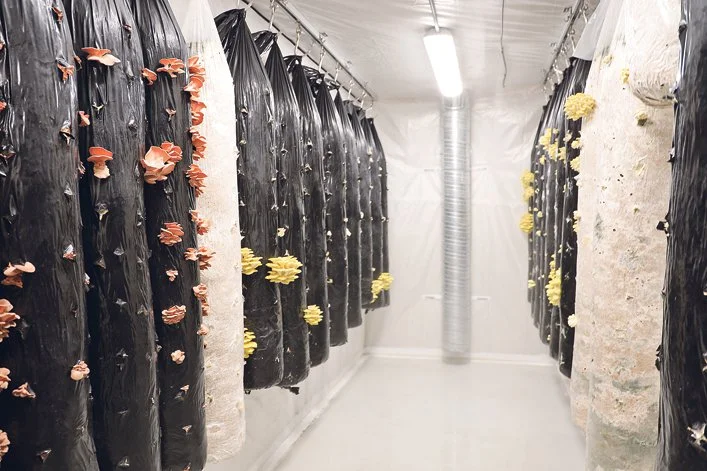
Pink, blue and gold oyster mushrooms grow on artificial logs in special climate controlled rooms. | Mary MacArthur photo
“We are creating artificial logs.”
In two weeks the pink, gold and blue mushrooms are poking out of the bags and picking begins. It takes about three weeks before the king oyster mushrooms can be harvested.
“Keeping the rhythm on our farm is important. We always have to make sure there is good rotation.”
In 2017, growing mushrooms was still a hobby, but the demand by restaurants for a more regular supply of unique mushrooms pushed the family to jump into mushroom production on a larger scale. The first harvest at their Nisku farm was March 2018 and with more demand and improved processes, they can double production on their farm at the same location.
When the mushroom growth in the rooms slows down, the logs still filled with thousands of mycelium are sold to home gardeners, spread onto soil and the mushroom growing continues in the backyard.
“Mushrooms give back that life and invite more micro-organisms back to the soil.”
ABOUT THE AUTHOR
Mary MacArthur's recent articles
Farm puts out welcome mat for trees September 19, 2019
Alberta greenhouse closure sign of a tough business September 12, 2019
Bowery Farming's Irving Fain Pens Essay On Need For 'Scalable Solutions' In Food Production
"When I founded Bowery Farming in 2015, vertical farming certainly wasn’t new. But to many, the concept as an answer to feeding a hungry planet was far more a dream than a reality
Bowery Farming's Irving Fain | Photo courtesy of Bowery Farming
Fain, the company's founder, says Bowery and other indoor farmers have to improve but are taking the right steps, in helping to combat climate change.
In an essay posted by Bowery Farming's Medium page, company founder and CEO wrote about climate change during 2019's 'Climate Week' and noted indoor farming's role in combating climate change.
"When I founded Bowery Farming in 2015, vertical farming certainly wasn’t new. But to many, the concept as an answer to feeding a hungry planet was far more a dream than a reality. However, here we are, just four years later, and Bowery has two fully operational farms and more in development," Fain wrote. "Our controlled indoor growing environment enables us to use zero pesticides and 95% less water to grow fresh produce — all of which make it on local store shelves within just a few days of harvest, minimizing food miles and extending shelf life to reduce food waste."
Related story: Bowery Farming's Irving Fain on technology, food safety, and new products.
"However, on the first day of Climate Week, I acknowledge that indoor vertical farming still has a way to go. Our sector is in its infancy, and we too have work to do in curbing our own emissions, investing in alternative energy sources, moving away from plastic packaging, and selling beyond just leafy greens. Fortunately, these are all areas that we’re aggressively making progress toward at Bowery. We have seen meaningful gains on many of these fronts already, and I am not dissuaded by the work ahead; in fact, I’m energized by the opportunities that are still in front of us. Today, our effort is now recognized as a scalable solution tailored to our most pressing problems."
You can read Fain's full post by clicking here.
Vertical farms Urban agriculture Technology

Indoor Ag Seen As Key To Feeding Planet
Sponsored by the Department of Agriculture; its subsidiary NIFA (National Institute of Food and Agriculture), and the University of Arizona Controlled Environment Agriculture Center, over 100 attendees of all stripes --- from growers and governmental entities to students and researchers --- met for 4 days to come up with a master plan designed to help in the goal of feeding a hungry planet
A prototype greenhouse for use on lunar or Mars missions is displayed at a recent conference on food production at Southern Arizona’s famous Biosphere2 research laboratory.
Open-field production faces limitations in land, labor, and resources
Lee Allen | Sep 25, 2019
It’s been said that a camel is really a horse that has been assembled by a committee after much discussion and lots of diverse input.
But sometimes great minds do think alike as in the case of the recent Controlled Environment Indoor and Vertical Food Production Coordinated Research Conference held at Southern Arizona’s world-famous Biosphere2 research laboratory.
Sponsored by the Department of Agriculture; its subsidiary NIFA (National Institute of Food and Agriculture), and the University of Arizona Controlled Environment Agriculture Center, over 100 attendees of all stripes --- from growers and governmental entities to students and researchers --- met for 4 days to come up with a master plan designed to help in the goal of feeding a hungry planet.
“Open field agriculture in the U.S. is the largest in the world aimed at feeding the largest number of people, but there are limitations in land, labor, and resources,” said co-coordinator Gene Giacomelli, estimating that the current greenhouse-grown vegetable effort represents slightly more than 1.3 million acres under glass.
“We want to compliment that food production capability by solving some of the problems of indoor growing to produce greater yield and enhanced nutrition.”
Plenty Inc. of San Francisco was one example in the form of keynote speaker Nate Story, Chief Science Officer and co-founder of the 2013 start-up funded in part by $200 million in backing from investors like Amazon’s Jeff Bezos.
EMERGING INDUSTRY
Already touting that Plenty is “Where Nature Meets Nurture” and promising to close the global nutrition gap, Story said his indoor grow efforts represented “an emerging industry trying to control costs while bringing high-quality product to market --- a difficult thing to do. We need to focus on research in order to help the industry drive value up and cost down by being both systems- and crop-specific.”
Story called plants “the smartest creatures on the planet because they have figured out how to make humans their slaves by domesticating them and spreading them all over the world. Once we understand the economics of indoor agriculture, this industry is going to be a boon for humanity.”
Over the course of the conference, 33 speakers told of their research successes and remaining problems in trying to grow things better, faster, and cheaper with discussions ranging from nutrition and post-harvest concerns to production systems and pest and disease management.
Audience interest was piqued with presentations on new technologies in plant breeding and how feeding folks in outer space may provide some suggestions on how to better accomplish that mission on the ground.
Noting that plant breeding has been around since the early days of crop domestication, Gail Taylor, Plant Sciences Chair at the University of California, Davis campus said the process took a quantum leap once DNA was explained.
“Today, generally involving big crops in outdoor environments and refinements in programs involving disease, pest management, stress tolerance, and increased yield, there’s a lot going on there, and by snipping away at plant DNA, adding to or taking away from, we can make new products that both outdoor field and indoor vertical farming can take advantage of.”
BREEDING SUCCESSES
Citing breeding program research successes like uncovering a gene that allows peppers to be more easily harvested mechanically to extending the shelf life and increasing the antioxidant properties of lettuce, Taylor said that modern breeding techniques allowed a new start to improving nutrition, flavor, and yield.
While some breeding successes have been noted in dwarf or super-dwarf crops as well as those that are more robotics-ready for mechanical management, the search continues for more vigorous, rapid, high-yielding traits that are faster flowering with a shorter life cycle and more efficient use of nutrients and depleted carbon dioxide.
Genetics research is on-going to produce plants with more appropriate architectures that will lend themselves to more efficient mechanical supervision and harvesting, produce that will maintain a longer shelf life, as well as crops that are cleaner because of less chemicals and healthier because of secondary phytochemicals.
“We struggle with the same issues that greenhouse growers and indoor vertical farms do in looking at food security, keeping astronauts operating at peak performance on long-duration missions,” said Ralph Fritsche, Senior Crop Project Manager in NASA’s Life Sciences Office.
Earlier space missions where crews were kept busy at work stations on their way to the moon didn’t have much time to plant something and grow it to harvest, but longer duration flights like those to Mars will allow the growing of plants, much of it done by automation as is happening in today’s terrestrial indoor and vertical grow efforts.
“Right now, NASA is taking from current CEA knowledge and technology with a pay-if-forward mentality. Once we find solutions to similar problems in space, light bulbs will light up in the CEA industry on how these answers can be applied on earth.”
HURDLES FOR FRUIT
Based on the presentations, nearly half of the attendees contributed concepts to a grant application workshop involving funding opportunities to support further research.
“Most of the currently-funded projects deal with leafy greens, but there are still major hurdles for profitable production of fruiting crops,” said Dr. Kai-Shu Ling of the USDA Vegetable Laboratory.
“We will work together to prepare, hopefully before the end of the year, a proposal for submittal to the USDA/NIFA Specialty Crop Initiative Research program to establish a coordinated agricultural project for controlled environment agriculture research, a roadmap for indoor food production agriculture in the United States,” said Ling.
To which Giacomelli added: “This report, interfacing all seven themes of the conference, will not be a report that gathers dust.”

How This Aquaponic Farm Is Transforming Rome’s Dining Scene
A short drive southeast of Rome, four young entrepreneurs are paving the way to a greener dining scene in the Italian capital – with the help of 400 koi fish
September 30, 2019
Livia Hengel Contributor
Travel share stories about travel, culture, food & wine.
The Circle's founders from left: Simone Cofini, Valerio Ciotola, Thomas Marino and Lorenzo Garreffa.
COURTESY OF THE CIRCLE
A short drive southeast of Rome, four young entrepreneurs are paving the way to a greener dining scene in the Italian capital – with the help of 400 koi fish. That’s because the group of friends-turned-business owners are the founders of The Circle Food & Energy Solutions, a farm designed to produce food and energy in the most sustainable and competitive way: through aquaponics.
The Circle grows in a vertical system so plants and aromatic herbs thrive year-round.
COURTESY OF THE CIRCLE
“We began with the idea to resolve concrete problems of scarcity like the lack of land, water and food,” says Thomas Marino, co-founder and director of marketing for The Circle. The farm, in fact, strives to create a positive impact through innovation. “We wanted to use any waste to fuel our production,” he adds.
Aquaponic farming is a circular system of agriculture that uses fish to naturally fertilize the crops, and in turn uses the plants themselves to purify the water, creating a virtuous cycle of growth with little to no waste. This system saves more than 90% of water compared to traditional farming methods, making it an excellent solution in environments with scarce resources like water or arable land. And because crops are grown vertically in greenhouses, the team is able to grow plants and aromatic herbs year-round – without the use of chemicals or pesticides.
The Circle has 400 Japanese koi fish that provide natural fertilizers for the farm's plants.
The four founders of The Circle – Valerio Ciotola, Simone Cofini, Lorenzo Garreffa and Thomas Marino – graduated with degrees in biotechnology, political science and marketing, making them perfectly poised to develop a sustainable agricultural business and communicate its advantages. And at only 27-years-old, they’ve managed to do what many Italians can’t: thrive in an environment notoriously difficult for entrepreneurs.
The Circle has plans to expand its team as it becomes a leader in sustainable food production.
Since it was established in 2017, The Circle has created partnerships with a hundred restaurants in Rome and throughout Italy, providing fresh crops and herbs to celebrated names like Il Pagliaccio (two-Michelin stars), Marco Martini Restaurant (one-Michelin star), Roscioli, Zia and Marzapane. The company’s sustainable ethos and technical expertise undoubtedly first generated interest in The Circle but it’s the farm’s quality products that have helped grow their loyal clientele.
The Circle grows hundreds of micro herbs including baby salad, wild strawberries, stevia and mustard ... [+]
BLIND EYE FACTORY
“The restaurants we work with appreciate the variety and quality of our products,” says Mr. Marino, “And we pride ourselves on customization.” The Circle grows hundreds of plants, vegetables and aromatic herbs and works closely with chefs to create bespoke varieties destined to dress and enhance the plates of their guests. Mustard leaves, red basil, lemon thyme, and edible flowers are just some of the varieties grown in the greenhouse.
The Circle provides kitchen plants and micro herbs for celebrated restaurants like Il Pagliaccio in ... [+]
COURTESY OF IL PAGLIACCIO
The future looks bright for The Circle, which began with just a 1000-square meter greenhouse and recently inaugurated a second structure to meet rising demand. This additional space will allow the farm to triple its production and help reach €500,000 in revenue by the end of the year, establishing it as a leader in the production of sustainable food. The Circle has also been selected as a partner for Innesto, the first carbon-neutral “social housing” project in Italy which will be developed in the coming years along the Scalo Greco Breda railway in Milan.
The Circle recently inaugurated a second greenhouse to meet rising demand.
COURTESY OF THE CIRCLE
“We want to create the first hectare of aquaponics farm in Europe by the end of 2020, championing the most sustainable food production plant on the continent", says Mr. Marino. The company also has plans to expand its technology outside of Europe and work with partners across Africa, South America and Asia.
Follow me on Twitter. Check out my website.Livia Hengel
I'm an Italian-American writer, photographer and culture enthusiast with a penchant for la dolce vita and a severe case of wanderlust. Originally born in Rome, I grew up moving around the world from a young age, fueling my curiosity and igniting my passion for travel. I lived in Washington DC, Peru, the Czech Republic, Slovakia and Turkey before returning to Italy in 2010. Today, I strive to offer a fresh perspective on Italy - one that goes beyond the stereotypes and main attractions and provides insight into the cultural nuances of the country. My writing and photography have been published in The Independent, Telegraph Travel, Fodor’s, Time Out and USA Today.