


Welcome to iGrow News, Your Source for the World of Indoor Vertical Farming

Ahold Delhaize's 150-Square-Foot Store Packed With Big Tech
Ahold Delhaize is piloting a fully digital, 150-square-foot AH to go store, packed with technological innovations that make it possible for customers to buy something as if they were taking it out of their refrigerators, with no checkout or self-scan
September 05, 2019
Ahold Delhaize is piloting a fully digital, 150-square-foot AH to go store, packed with technological innovations that make it possible for customers to buy something as if they were taking it out of their refrigerators, with no checkout or self-scan. The store is located in front of a support office and will be tested with associates in the coming two months.
Under the roof of the small AH to go is an enormous amount of technology. This is how it works: the door opens automatically with a debit or credit card. In the store, customers grab the products they want. Cameras determine the position of customers (without facial recognition) and associate product items to their virtual baskets.
In addition, in-store sensors keep track of products that are taken off or put back on the shelves. When the shopping is done, customers walk to the exit where the payment takes place automatically and the door opens. Customers do not have to register in advance or download an app, which makes the payment system innovative and very accessible.
The store has been developed together with AiFi, a U.S.-based start-up. Dutch bank ING has developed the payment solution and takes care of payment processing.
Marit van Egmond, brand president of Albert Heijn, said, “This latest concept not only makes shopping very easy; due to its autonomous nature, this ‘plug and play’ store can be placed at locations where there is a (temporary) need for a small store, from offices or university campuses to residential areas under construction that do not yet have shopping facilities. A second advantage is that the store can always be open, which is useful for people who are on the road very early or very late.”
This initiative is the latest example of how Ahold Delhaize brands are experimenting with new payment solutions to help customers save time at the checkout. Albert Heijn last year opened its first checkout-free stores, where customers can pay right at the shelf with a “tap to go” card or using a mobile app. Delhaize Belgium earlier this year launched a mobile payment application, called YesWeScan, which allows customers to scan product barcodes with their smartphone, add the items to an electronic shopping basket, and then pay. And in the U.S., Stop & Shop is offering frictionless checkout using the SCAN IT! mobile app.
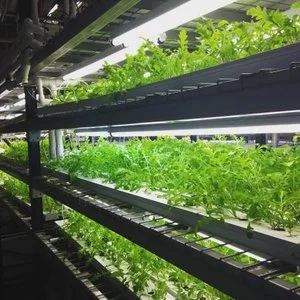
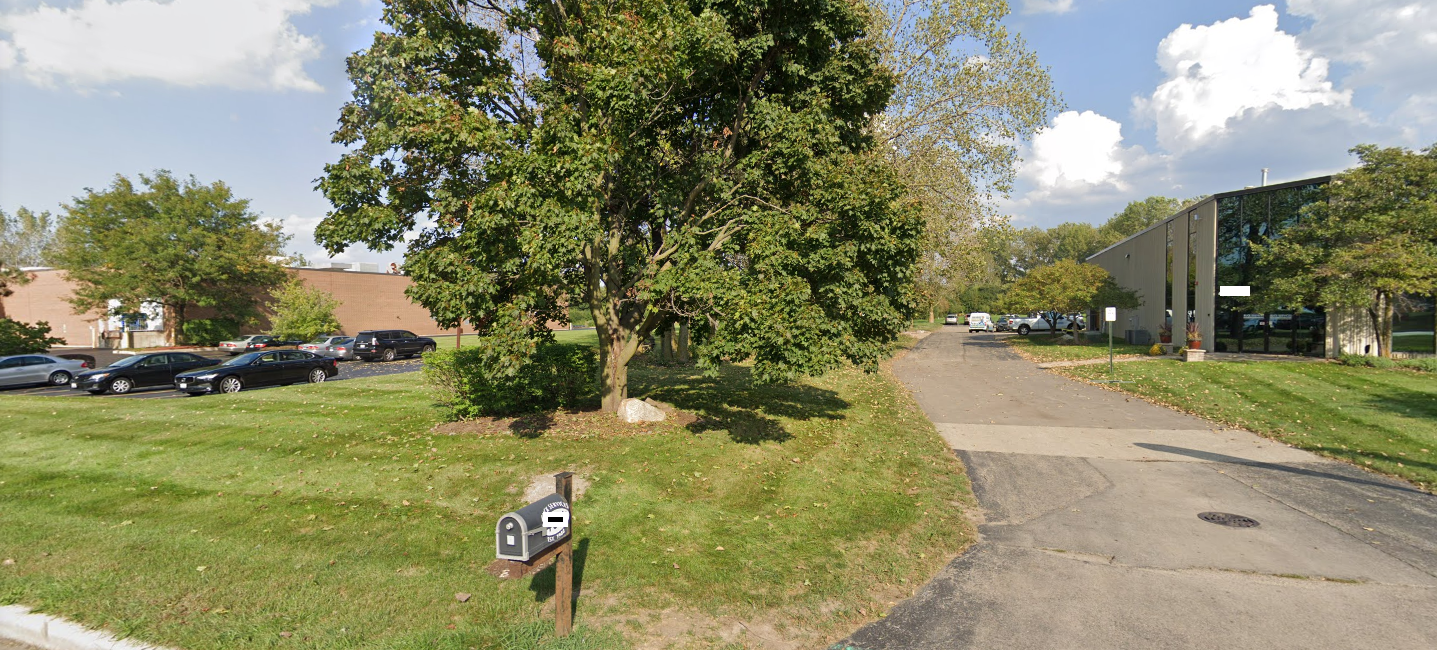
US: West Chicago - FOR SALE or RENT: Turn Key Vertical Hydroponic Indoor Urban Farm
The farm and its brand has been successful for over 4 years, the owner is moving on and has taken a managerial position with a large Indoor Vertical Farming company
This is an Indoor Urban Vertical Hydroponic Farm that was built and engineered in 2015
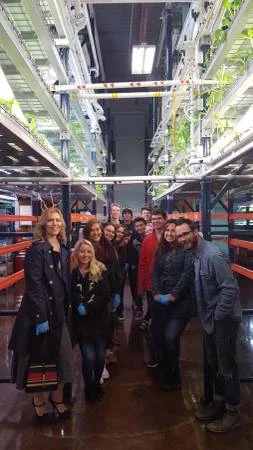
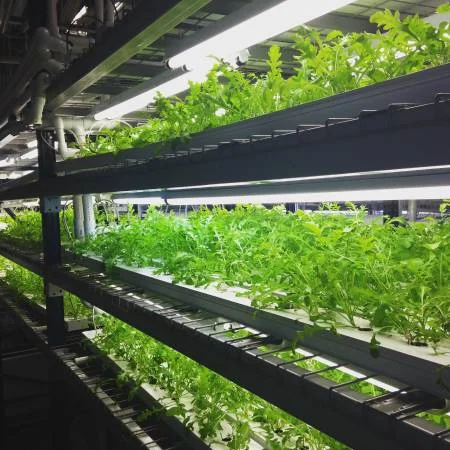
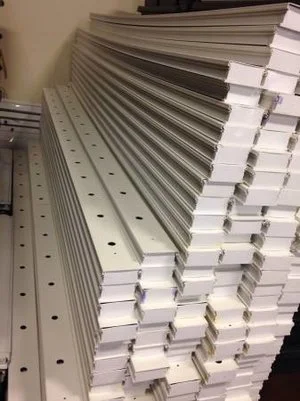
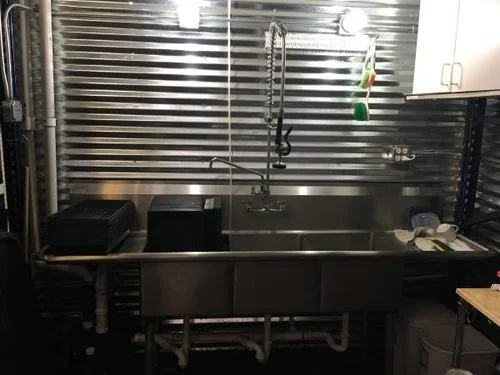
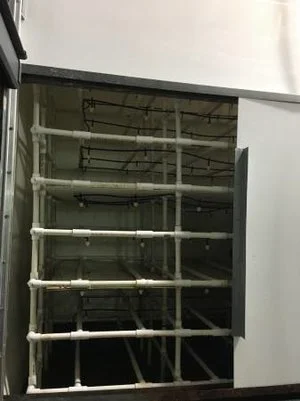
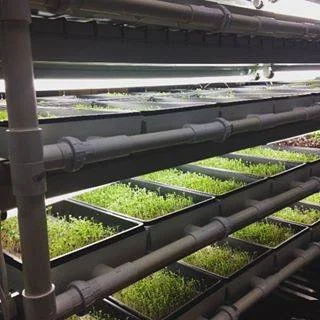
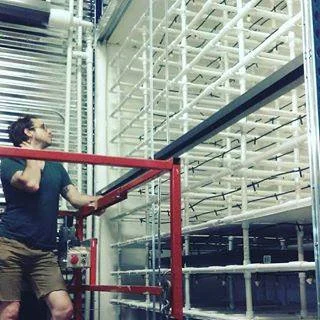
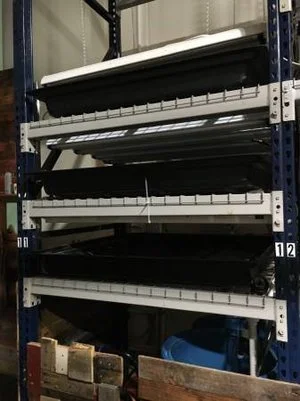
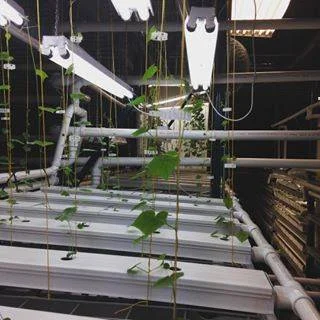
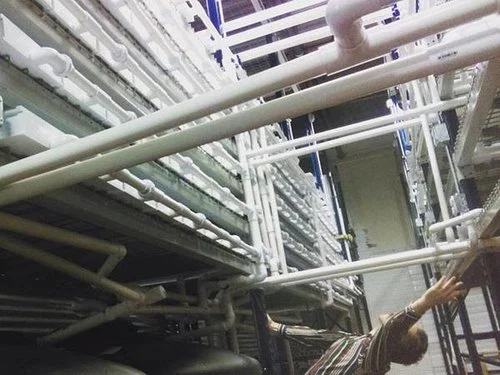
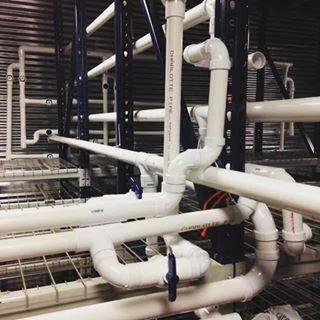
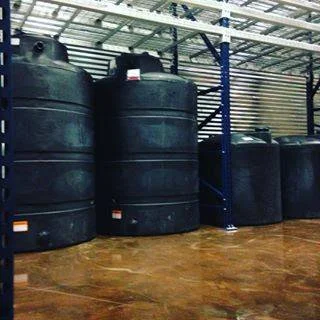
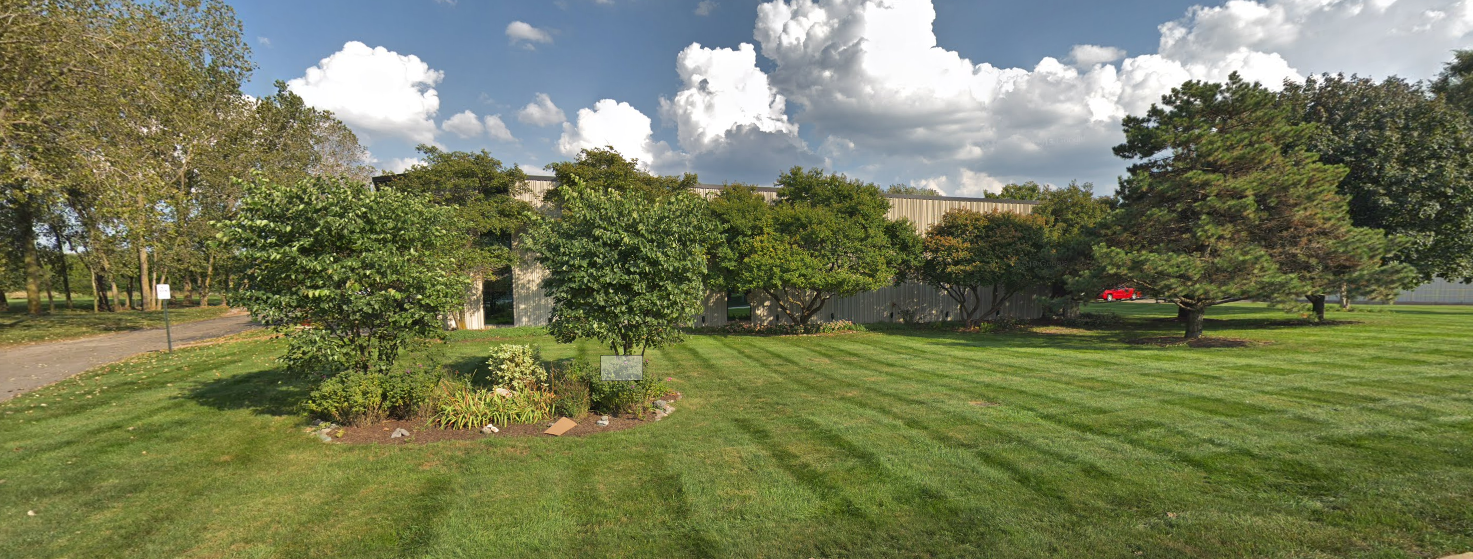
The farm and its brand has been successful for over 4 years, the owner is moving on and has taken a managerial position with a large Indoor Vertical Farming company.
This is an extremely functional hydroponic vertical farm. 1800 Sq ft with 18 foot ceilings.
This facility is able to produce 8 acres worth of food in just 4% of 1 acre (That’s 200x).
The present owner has grown 70+ varieties of microgreens, countless greens, herbs, and edible flowers, and small vining fruits.
The facility was built in collaboration with the DuPage County Public Health Department, and has been certified by the USDA and Third Party Certifiers like Primus, etc.
Everything in the space is food grade, and the facilities walls were built with the finest grade vapor/ particulate barriers inside the walls.
The lights are 60% fluorescent and 40% LED.
You will have access to all lights, but I would encourage you to invest in more LEDS.
This is a turn key facility ready to operate efficiently and at full capacity.
Greens / Herbs / Edible Flowers
33 shelves - 8’x3.5’
6 8’ NFT channels per shelf - 10 plant sites per channel
198 Total NFT Rails with 1,980 plant sites
1980 sites divided by 4 week grow > 495 grow sites/week X $2.5 = $1237/week
*NFT Channels are by Farmtek - size: 4”x2”x8’
Microgreens
27 shelves - 8’x 3.5’
8 Microgreen Specific NFT Channels - 2 10”x 20” trays per channel
432 Total spaces for 10”x 20” flats
432 flats X $13/4oz(very conservative) = $5616/week
*Cropking NFT channels specifically for 10 x 20 flats
Vining Fruits / Herbs
15 shelves - 8’x 3.5’
6 - 3.5’ NFT Channels per shelf - 3 sites per channel
90 - Total NFT Channels with 270 plant sites
Depending on what you grow $1000-3000/week
Also features:
Germination Chamber
Custom built to be an automated baker’s rack style setup to germinate microgreens, lettuces, and herbs in 10”x 20” flats. Capability of holding 144 10x20 trays. 4 sliding doors make it easy to open and close.
All materials are food grade safe and USDA/third party compliant.
Misters run on a very user friendly IPAD app that can be programmed down to the minute.
Separate Harvest Room
2 food grade tables and 3 food grade stainless steel shelves can hold your packaging and accompany 2-3 harvesters. There is a small walk in cooler in the room - 5’x5’x 6’ Tall.
There is also a small hand washing sink.
5 - Reservoirs
3 - 200 gal, 2 500 gallon
1 - 500 gal for microgreen system
1 - 500 gal for greens/herbs/edible flowers system
2 - 200 gal for vining fruits - grow / fruit cycles
1 - 200 gal for cleaning
The system is plumbed so that there are 5 water lines (one for each reservoir) that run parallel, and the cleaning water (generally bleach, etc) can be run through the system while the rest of the shelves are still running their proper water solutions.
For each reservoir there is a powerful pump that goes to the system, but also a seperate pump with separate water lines that go through a filter, then a water chiller, then through a dosing system, then back in the reservoir. So the water is constantly being purified and regulated for the system.
There are also Air pumps and lines for each reservoir.
*The current dosing systems are slowly but surely breaking down - I would strongly recommend purchasing new dosing systems for each reservoir you plan on operating.
3 - 48” x 48” Nurseries on one reservoir
Seeding Station with food grade shelves and stainless steel tables
3 - compartment sink
2 - 4’ x 4’ ventilation fans that sync up with 3 large evaporative cooling walls to ventilate and cool the space by 10-15 degrees F. This system is ran by an Autopilot Digital Environmental Controller.
354 Total Light fixtures capable of accepting 2 48” flourescent or LED bulbs
Plenty of Storage
Room to double the Greens/Herbs/Edible Flowers/Microgreens section
Employee Fridge and File cabinets (2 large, 1 small)
Rolling Stairs
Monthly Rent: $1250 - The space, Utilities (electric, water), Use of a scissor lift.
Sale Price: $115,000
Rental Price:
$3,200 Rent: All Equipment
$4,450 Total Monthly Rent
All information is from sources deemed reliable but is subject to errors, omissions, changes in price, prior sale or withdrawal without notice.
No representation is made as to the accuracy of any description.
All measurements, yields and square footages are approximate and all information should be confirmed by the customer.
Disclaimer of Warranty - The 2016 Freight Farms LGM hydroponic farming container is being sold “as is” and the Seller disclaims all warranties of quality, whether express or implied, including the warranties of merchantability and fitness for a particular purpose.
US , New York - Green City Growers Will Be Maintaining An On-Site Rooftop Garden For The Rainbow Room
The garden’s location on the 11th floor of 30 Rockefeller Center in hashtag#nyc is part of a revitalization of what was previously the “International Garden,” which was part of a collection of rooftop gardens installed throughout Rockefeller Center in 1935. We can’t wait to bring this historic garden back to life at 30 Rock!
Green City Growers is excited to announce that we will be maintaining an on-site rooftop garden for the iconic Rainbow Room at Rockefeller Center starting this fall!
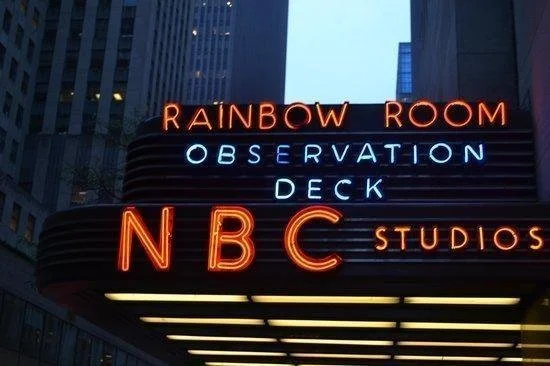
This organic vegetable and herb garden will provide fresh ingredients to be used in the Rainbow Room’s culinary program.
The garden’s location on the 11th floor of 30 Rockefeller Center in hashtag#nyc is part of a revitalization of what was previously the “International Garden,” which was part of a collection of rooftop gardens installed throughout Rockefeller Center in 1935. We can’t wait to bring this historic garden back to life at 30 Rock!
Fish Poop Keeps Family Farming Together
As he tossed freeze-dried crickets into a pool of eager bluegill, Andrew Mueth explained this was how he and his five brothers could farm together and preserve the 160-year-old Illinois family farm legacy. The family raises a wide variety of lettuce using an aquaponic system that was erected in a decades-old straw storage shed
September 20, 2019
Andrew Mueth and his five brothers use aquaponics to produce lettuce that is sold at farmers markets in the St. Louis, Mo. area.( Sonja Begemann )
As he tossed freeze-dried crickets into a pool of eager bluegill, Andrew Mueth explained this was how he and his five brothers could farm together and preserve the 160-year-old Illinois family farm legacy. The family raises a wide variety of lettuce using an aquaponic system that was erected in decades-old straw storage shed.
“It’s a way we could work together on a family farm and it’s a lot cheaper than getting into row crops,” Mueth says. His family still owns 300 row-crop acres, but they’re rented to other farmers.
From fish poop to food
Because each of the six brothers has a full-time job, they endured late nights and long weekends to convert their shed into a working aquaponics system. One half of the shed serves as a home for the fish, currently, bluegill caught on their farm pond, and the other half a greenhouse.
Each fish "tank" holds 3,500 gallons of water. C: Sonja Begemann
Aquaponics is a combination of fish and plant production using aquaculture and hydroponic systems, according to USDA. The Mueths run fish waste through a multi-part filtration system to save water, extract as much nutrient-filled waste as possible, and convert it into a form that is safe to apply to plants. Too much ammonia, for example, will damage and even kill the plant.
This filtration system processes about 1,000 gallons of fish waste per hour. C: Sonja Begemann
In about three hours the biofiltration system can completely filter the 3,500-gallon fish tank, extracting valuable nutrients along the way. After filtering the waste in its ammonia-rich form, it’s converted to nitrites and then nitrates. Once filtered, the nutrients are added to water that is piped into vertical towers at a rate of 30 gallons per hour.
The brothers harvest two towers each week, or about 900 heads of lettuce. C: Sonja Begemann
After about eight weeks the lettuce is ready to harvest, Mueth says. The family harvests around 900 heads weekly that are sold to local restaurants or at farmer’s markets. The lettuce is sold in pre-mixed bags with multiple varieties to enhance taste and texture.
The concept is simple, but the carryout is tedious. The family put in about 5,000 hours of labor to convert the shed and set up the fish tanks, Mueth says. Altogether it cost less than $100,000, but he admits that the number would be higher if they paid themselves for the labor.
After just one year, so in a few months, the family will be back in the green from their startup costs. “But, we don’t pay ourselves for our work,” he says.
Statista: Global value of Aquaponics
C: Statista
Because they were fished out of a family pond, the only costs associated with the fish is their food. However, they plan to switch fish with the seasons and will soon pay for their newest breed, tilapia.
As for the bluegill?
“I think we’ll have a fish fry,” Mueth says.

MIT Built A Theranos For Plants
The prestigious multidisciplinary MIT Media Lab built a “personal food computer” that worked so poorly that demos had to be faked Theranos-style, per a weekend report in Business Insider
September 8, 2019
The MIT Media Lab’s failed “personal food computer.” Screenshot: Seeker (YouTube)
The prestigious multidisciplinary MIT Media Lab built a “personal food computer” that worked so poorly that demos had to be faked Theranos-style, per a weekend report in Business Insider. Word of the project’s troubles comes as the Media Lab’s attempts to cover up its extensive financial ties to late financier and alleged sex trafficker Jeffrey Epstein have seriously damaged its credibility and led to resignation of its director, Joichi Ito.
According to Business Insider, the project—a plastic hydroponic grow box filled with “advanced sensors and LED lights” that would supposedly make it possible to replicate crop conditions from any part of the global—was a sham, with MIT’s Open Agriculture Initiative director Caleb Harper resorting to faking demos:
Ahead of big demonstrations of the devices with MIT Media Lab funders, staff were told to place plants grown elsewhere into the devices, the employees told Business Insider.
In another instance, one employee was asked to purchase herbs at a nearby flower market, dust off the dirt in which they were grown, and place them in the boxes for a photoshoot, she said... The aim was to make it look like the devices lived up to Harper’s claims, the employees said. Those claims, which included assertions that the devices could grow foods like broccoli four times faster than traditional methods, landed Harper and his team articles in outlets ranging from the Wall Street Journal to Wired and National Geographic.
All told, Business Insider’s sources said, the “personal food computers” amounted to hydroponic boxes that don’t work. Dietitian and former Open Agriculture Initiative project manager Paula Cerqueira told the site that the devices she worked on were “glorified grow boxes... with some sensors for collecting data,” and that on multiple occasions staff filled them with store-bought plants that had to be washed of dirt before presentations with funders. The boxes also weren’t air-tight, Cerqueira added, meaning that users couldn’t control for things like carbon dioxide levels or temperature and humidity.
Cerqueira told Business Insider that out of dozens of units sent to schools in the Boston region, only a handful ever worked. On one occasion, the Media Lab sent 30 of them to schools, and “It’s fair to say that of the 30-ish food computers we sent out, at most two grew a plant,” Cerqueira told the site. On another, the Media Lab couldn’t make the boxes work in time for a demo with a representative from the Bezos Family Foundation, something Cerqueira told Business Insider was “super embarrassing.”
In other words, this sounds a hell of a lot like Theranos, the disastrously failed startup that also promised a magical technology box (though in their case, it was fake blood-testing technology that helped the company achieve a valuation of $9 billion.) The food computer certainly doesn’t come anywhere the scale of Theranos, but Harper touted it with similarly grandiose claims: In a March 2019 video by Seeker, Harper stated that “You think Star Trek or Willy Wonka, that’s exactly what we’re going for.”
According to Business Insider, Harper directed an email requesting comment to an MIT spokesperson, who “didn’t provide a comment.”

America’s Great Climate Exodus Is Starting In The Florida Keys
Lori Rittel is stuck in her Florida Keys home, living in the wreckage left by Hurricane Irma two years ago, unable to rebuild or repair. Now her best hope for escape is to sell the little white bungalow to the government to knockdown
Lori Rittel’s home in Marathon Keys, on Sept. 16 . Photographer: Jayme Gershen/Bloomberg
Mass migration begins as coastal homes are bulldozed in the state facing the biggest threat from climate-driven inundation.
By Prashant Gopal September 20, 2019
Lori Rittel is stuck in her Florida Keys home, living in the wreckage left by Hurricane Irma two years ago, unable to rebuild or repair. Now her best hope for escape is to sell the little white bungalow to the government to knockdown.
Her bedroom is still a no-go zone so she sleeps in the living room with her cat and three dogs. She just installed a sink in the bathroom, which is missing a wall, so she can wash her dishes inside the house now. Weather reports make her nervous. “I just want to sell this piece of junk and get the hell out,” she said. “I don’t want to start over. But this will happen again.”
Lori Rittel . Photographer: Jayme Gershen/Bloomberg
The Great Climate Retreat is beginning with tiny steps, like taxpayer buyouts for homeowners in flood-prone areas from Staten Island, New York, to Houston and New Orleans — and now Rittel’s Marathon Key. Florida, the state with the most people and real estate at risk, is just starting to buy homes, wrecked or not, and bulldoze them to clear a path for swelling seas before whole neighborhoods get wiped off the map.
By the end of the century, 13 million Americans will need to move just because of rising sea levels, at a cost of $1 million each, according to Florida State University demographer Mathew Haeur, who studies climate migration. Even in a “managed retreat,” coordinated and funded at the federal level, the economic disruption could resemble the housing crash of 2008.
The U.S. government’s philosophy has been that local officials are in the best position to decide what needs to be done. Consequently, the effort has so far been ad hoc, with local and state governments using federal grants from the last disaster to pay for buyouts designed to reduce the damage from the next one.
“The scale of this is almost unfathomable,” said Billy Fleming, a landscape architecture professor at the University of Pennsylvania. “If we take any of the climate science seriously, we’re down to the last 10 to 12 years to mobilize the full force of the government and move on managed retreat. If we don’t, it won’t matter, because much of America will be underwater or on fire.”
If not for the $174,000 that Rittel, 60, owes on her mortgage, the Montana transplant would have left long ago. Insurance money is insufficient to rebuild, so she applied for one of the buyouts, administered by the state with $75 million of Irma-relief cash from the U.S. Department of Housing and Urban Development, as long as it lasts.
The inside of Lori Rittel’s home. Photographer: Jayme Gershen/Bloomberg
Florida accounts for 40% of the riskiest coastal land in the U.S., according to the Union of Concerned Scientists, but it’s done little so far to pull people back from the coasts and lags behind states such as New Jersey, North Carolina, and Texas. Across the country, the effort is still more theory than practice, even as a consensus among planners grows that “managed retreat” may be the best of bad options.
This year, HUD made available $16 billion for climate resilience, its first dedicated fund to fortify for future storms. Nine states, plus Puerto Rico and the Virgin Islands, will decide how to use it, whether to build sea walls, put houses on stilts or move people out of the way. The money is a fraction of what’s needed, and the process is moving at the speed of government.
A study by the Natural Resources Defense Council this month found that buyouts by the Federal Emergency Management Agency, which responds to disasters, take five years on average to be completed. By that time, many homeowners have rebuilt or moved. Similar data isn’t available on the grants from HUD, which also provides money to demolish homes.
“It’s a slow-motion emergency,” said Rob Moore, director of NRDC’s water and climate team. “But it’s happening right now. These last three hurricane seasons show us what it kind of looks like.”
A FEMA spokesman said the agency supports the voluntary acquisition of flood-prone structures and provides the grant funding, but the prioritization of projects happens at the local level first and then by the state acting as the recipient. The agency believes each county floodplain manager and local official knows the needs of their communities best and are responsible for land usage and permitting.
About 6 million Floridians will need to move inland by century’s end to avoid inundation, according to Hauer, the demographer, in a 2016 paper. By then, about 80% of the nearby Keys, the archipelago that includes the tourist mecca of Key West, will be underwater. About 3.5 million people would be flooded in South Florida’s Miami-Dade and Broward, the two counties with America’s biggest exposed populations.
“Florida’s doing it at a really small scale,” said A.R. Siders, an assistant professor at the University of Delaware who studies climate adaptation. “Compared with the new housing units going up in South Florida, I don’t know if that would even cancel out.”
Here Comes the Flood
Number of people at risk by county from a sea-level rise of 1.8 meters
Florida State University demographer Matt Hauer
But Florida runs on tourism and real estate revenue, and managed retreat is a phrase that makes real estate listing agents nervous. But there’s another Florida housing bubble waiting to pop. The Union of Concerned Scientists warns of a coming housing crash — from Miami to San Mateo, California — on a scale worse than last decade’s foreclosure crisis, caused by climate change — from flooding to heatwaves and wildfires.
Cities are only starting to grapple with where to resettle residents, and how to transport communities and hometown identities. And homes on higher ground will also demand higher prices, worsening an affordability crisis.
Fifteen years after Hurricane Katrina, Louisiana is trying to relocate the Native American settlement of about 100 people on the Isle de Jean Charles, a narrow island that lost 98% of its land over the past six decades to climate change. It’s working with a $48 million grant from HUD for buyouts and to help them start anew on a 500-acre sugar cane field 40 miles north that the government will populate with homes and businesses. Importantly, it will be 9 feet above sea level. All but three of about 40 households have signed on.
``They’re starting to scale this up,’’ said Jesse Keenan, a social scientist at Harvard University who also specializes in climate adaptation. ``This is about building up institutional knowledge on how to do this.’’
New Jersey has a $300 million fund for buyouts and has purchased hundreds of houses since Superstorm Sandy in 2012, though like Florida, even more, homes have been built on the coast in the meantime. Harris County, Texas — which includes Houston, ravaged by a series of storms including 2017’s Harvey — has done more than 3,000 FEMA buyouts, more than any other county in the U.S., according to NRDC.
In Monroe County, Florida, where Rittel lives, the planning is just beginning. The county has applied for $5 million of the HUD money — the state maximum. Already, about 60 local homeowners have applied, so it will require triage. Senior citizens, families and residents in the riskiest flood zone would get priority, said Assistant County Administrator Christine Hurley.
Rittel isn’t sure how long she can hang on.
Her insurance payout of about $100,000 would cover repairs to the 640-square-foot house. But the county requires that when more than 50% of a home is damaged, that it be completely rebuilt to meet modern storm-resiliency codes and — in her flood zone — on stilts. That would cost at least $200,000, money she doesn’t have.
She dreams of resettling in Key West or Homestead, a safer spot on the Florida mainland.
“I’d like to take the money and run,” Rittel said. “But I’ll have to buy something on stilts. I’m not buying anything on the ground down here ever again.”
This story is part of Covering Climate Now, a global collaboration of more than 220 news outlets to highlight climate change.
How Does Tilapia Help Produce Organic Vege? This Ampang Aquaponic Farm Blooms Because of It
The growing demand for clean eating eventually led to the birth of Urban Greenlife farm, run by Chin and six other shareholders including the farm’s co-director Shum Chong Bon and Aquaponics Hardware Asia business development manager Yoon Wong
20 September 2019
BY TAN MEI ZI
(From left) Shum Chong Bon, Yoon Wong, and Chin Kwe Fok began cultivating the farm last year. — Pictures by Firdaus Latif
KUALA LUMPUR, Sept 20 — For Chin Kwe Fok, the motivation behind setting up an aquaponic farm was simple: A desire to eat healthily.
After speaking with friends at church, he soon realized he wasn’t the only one on the lookout for organic, pesticide-free produce.
The growing demand for clean eating eventually led to the birth of Urban Greenlife farm, run by Chin and six other shareholders including the farm’s co-director Shum Chong Bon and Aquaponics Hardware Asia business development manager Yoon Wong.
Tucked away in a quiet street in Ampang, the farm spans over 3,000 square feet and currently houses a variety of greens including basil, kale, watercress, Japanese cucumber, and Brazilian spinach.
It runs on an aquaponic system where nutrient-rich water produced by tilapia is fed to the plants before being recirculated back into the fish tanks.
Crops from ancient civilizations as early as the Aztec Empire are said to have flourished thanks to this method, now used by Chin to grow vegetables without the need for pesticides or chemical fertilisers.
The farm’s success is a result of the mutual health between the plants and the aquatic animals.
As consumer awareness about organic produce improves, Chin and his co-directors hope to establish working relationships with nearby restaurants and supply fresh vegetables straight to their kitchens.
“When we talk to people, we see that there is a market out there for organic food.
“People from the church I attend have expressed interest when I told them about the farm and asked if they could buy directly from us.
“Now we are trying to make the system stable so we can maintain supply to keep up with the demand,” Chin told Malay Mail.
It’s been an uphill battle working on the farm as the balance is of utmost importance; if one element falters, the rest of the operation soon follows.
The farm has a strict rule on avoiding chemicals as they can seep into the water and pose a fatal risk to the fish once the fluid recirculates back into their tanks.
Similarly, the tilapia need to be fed and monitored with meticulous care to ensure the health of the plants is not compromised.
The roots of the plant are immersed in nutrient-rich water that gets fed to them from the tilapia tank.
It currently costs around RM4,000 per month to maintain the farm, a bargain considering its proximity to the city center.
Aquaponic farming also saves water and produces minimal waste, making it cost-efficient in the long run.
By chance, the landowner happened to be a fish lover, making it easier for the Urban Greenlife team to get a headstart when with rearing tilapia.
“We were lucky because the owner of the lot likes to keep fish, so the place came with a pond already built inside.
“He did all the renovations and didn’t charge anything,” said Chin.
As Urban Greenlife continues to sprout new opportunities for its owners, Chin hopes to inspire Malaysians to move towards healthier eating by making aquaponic produce more accessible and affordable.
To find out more about Urban Greenlife, surf over to their Facebook page.
US (CO): Podcast About The Park County Farm To School Aquaponics Program
With a USDA Farm to School grant, Rachel turned one of the school’s greenhouses into an aquaponics laboratory
In this podcast, Al Kurki, an agriculture specialist at NCAT’s Rocky Mountain West Regional Office in Butte, Montana, has a conversation with Rachel Jones, Executive Director of Farm to School of Park County.
With a USDA Farm to School grant, Rachel turned one of the school’s greenhouses into an aquaponics laboratory.
Middle- and high-school students of Park County now raise trout and vegetables for food for their schools. In this episode, you’ll hear about the challenges and triumphs using an aquaponics system in a school setting.
Listen To The Podcast Here

Agriscience Program Teaches Urban Farming, Plant Biotechnology To High Schoolers
Agriscience is a new addition this year. The program, housed in a former manufacturing plant on Portland Road, doesn’t have garden beds or outdoor space. Instead, Valenzuela plans to teach students how to use aeroponic systems, growing everything from lettuce to herbs in a tower where plants get water and LED light
By Rachel Alexander – Salem Reporter September 6, 2019
Agriscience teacher Luis Valenzuela shows the aeroponic towers where students will grow plants at Salem-Keizer's Career Technical Education Center. (Rachel Alexander/Salem Reporter)
Salem-Keizer's new program has aeroponic towers and a tissue culture lab. Now, they're looking for a few more students.
Running an agriculture program with no soil is a challenge, but Luis Valenzuela is up to the task.
Valenzuela teaches agriscience at Salem-Keizer’s Career Technical Education Center, a hub where juniors and seniors from across the district take in-depth classes on careers from cosmetology to video game design.
Agriscience is a new addition this year. The program, housed in a former manufacturing plant on Portland Road, doesn’t have garden beds or outdoor space. Instead, Valenzuela plans to teach students how to use aeroponic systems, growing everything from lettuce to herbs in a tower where plants get water and LED light.
“We can grow almost any type of plant,” he said.
The career center started in 2015 as a partnership between the district and Mountain West Investment Corporation, which bought the building and worked with staff to develop programs.
The first offerings were residential construction and commercial manufacturing, and district staff rolled out two new programs each year. With the new agriscience and culinary arts programs, there are a total of 10.
Only 14 Salem-Keizer students had enrolled in the program by the first day of school, and Valenzuela wants more. Most other programs are near their capacity of 60 to 70 students.
That’s in part due to the program’s newness, but staff think it’s also because prospective students and their parents may not realize what’s being taught.
“When you hear ag science — our community doesn’t know what that is,” said James Weber, assistant principal at the career technical education center.
Valenzuela said his curriculum is inspired by urban agriculture and the role plants increasingly play in urban design. As more people look to grow food inside cities, using rooftop gardens or empty buildings, he wanted to focus on the possibilities of indoor agriculture.
“I think there is a stigma with agriculture,” he said. Many people perceive it as only running or working on farms, Valenzuela said, but with his background in horticulture, he’s interested in expanding that view.
Dakota Poehler, a junior at McKay High School, was among the students to sign up. After just one day of class, he proclaimed the program “definitely better than regular school” because of the hands-on aspect and chance to socialize with students with similar interests.
Poehler said he loves nature and wanted to learn more about it. He grew up on his grandparents’ farm in Newberg, where they raise sheep and chickens, and is interested in going into the environmental industry.
In the program, students will work in a tissue culture lab to propagate plants, grow food for a cafe operated by culinary students and have opportunities to partner with manufacturing students to design things like wall hangings with living plants.
First-year students will take courses in ecology, food safety and science, and sustainable plant propagation. Second-year students will study plant biotechnology, learning about genetics to breed and engineer plants.
“The sky’s the limit,” Valenzuela said.
Reporter Rachel Alexander: 503-575-1241, rachel@salemreporter.com

MIT Media Lab Kept Regulators in the Dark, Dumped Chemicals in Excess of Legal Limit
Researchers at the Massachusetts Institute of Technology’s Media Lab have dumped wastewater underground in apparent violation of a state environmental regulation, according to documents and interviews, potentially endangering local waterways in and near the town of Middleton
Documents and interviews show the Media Lab, already under fire for accepting contributions from Jeffrey Epstein, is being investigated for an apparent violation of state environmental regulations. They paused operations after we asked questions.
by Lisa Song, ProPublica, and Max Larkin, WBUR-FM
September 20, 2019

Caleb Harper, in front of food computers, boxes that could supposedly be programmed to grow crops, leads the Open Agriculture Initiative at the MIT Media Lab. The project is being investigated for possibly violating state environmental regulations. (Robin Lubbock/WBUR)
This story was published in collaboration with WBUR in Boston.
CAMBRIDGE, Mass. — Researchers at the Massachusetts Institute of Technology’s Media Lab have dumped wastewater underground in apparent violation of a state environmental regulation, according to documents and interviews, potentially endangering local waterways in and near the town of Middleton.
Nitrogen levels from the lab’s wastewater registered more than 20 times above the legal limit, according to documents provided by a former Media Lab employee. When water contains large amounts of nitrogen, it can kill fish and deprive infants of oxygen.
Nine months ago, the Massachusetts Department of Environmental Protection began asking questions, but MIT’s health and safety office failed to provide the required water quality reports, according to documents obtained by ProPublica and WBUR. This triggered an ongoing state investigation.
After ProPublica and WBUR contacted MIT for comment, an institute official said the lab in question was pausing its operations while the university and regulators worked on a solution. Tony Sharon, an MIT deputy vice president who oversees the health and safety office, didn’t comment on the specific events described in the documents.
The state’s investigation adds to recent scrutiny of the Media Lab for accepting donations from Jeffrey Epstein, a convicted sex offender who was charged with trafficking minors before he died in jail last month. Joichi Ito, the director of the Media Lab, has resigned, and students have called for the resignation of MIT President L. Rafael Reif, who signed off on at least one of Epstein’s gifts.
The lab responsible for the dumping is the Open Agriculture Initiative, one of many research projects at the Media Lab. Led by principal research scientist Caleb Harper, who was trained as an architect, the initiative has been under fire for overhyping its “food computers”: boxes that could supposedly be programmed to grow crops, but allegedly didn’t work as promised.
Throughout early 2018, the lab’s research site in Middleton, about 20 miles north of the main MIT campus in Cambridge, routinely drained hundreds of gallons of water with nitrogen into an underground disposal well, at concentrations much higher than the lab’s permit allowed, according to documents and interviews. The nitrogen came from a fertilizer mix used to grow plants hydroponically.
The information comes from dozens of emails and lab results shared by Babak Babakinejad, a former researcher in Harper’s lab. Babakinejad said he decided to speak out because he’s worried about the health and environmental impacts of the dumping. Babakinejad’s account of the lab’s actions was confirmed by two other sources with knowledge of the experiments, who asked for anonymity.
Babakinejad told ProPublica and WBUR that he warned Harper and MIT’s Environment, Health and Safety Office (EHS) about the situation after he realized their hydroponic solution exceeded their environmental permit, which limited the wastewater to concentrations of 10 parts per million (ppm) for nitrogen.
EHS is responsible for health and safety throughout the institute, from environmental sustainability to the proper handling of toxic chemicals in research labs.
Water drains from tanks at the project’s lab in Middleton in January 2018. (Courtesy of Babak Babakinejad)
“Our base fertilizer regiment is at 150 ppm Nitrogen… way above the required limit,” Babakinejad wrote in an April 2018 email to Harper, other Media Lab employees and senior staffers at EHS. “I am looking forward to discuss available options such as diluting our wastewater… or apply for an appropriate license.”
Harper responded to Babakinejad within the hour, scolding him for emailing health and safety officials: “Writing emails directly to Senior EHS / Facilities teams at MIT, especially those that effect [sic] our groups ability to do research, without asking [the project’s assistant director] or I to review, comment and approve is inappropriate… If emails are directed to you regarding our teams [sic] EHS responsibilities please redirect them to me until further notice.”
This followed prior emails when Babakinejad had questioned Harper about whether the lab’s food computers could really do what Harper claimed. In news reports about this question, Harper did not address allegations about the project’s shortcomings.
Babakinejad said he later spoke to the Massachusetts Department of Environmental Protection (MassDEP) in the fall of 2018, prompting the agency to take a closer look at the lab’s wastewater disposal permit.
For more than five months, a MassDEP scientist tried to get basic information from MIT’s EHS office about how the lab disposed of its wastewater. This June, the scientist expressed frustration in an email to a senior EHS official:
“MassDEP is concerned about the time that it is taking to provide what should be easy to obtain information regarding the (disposal well) discharges and other on-site discharges,” he wrote. “MassDEP is concerned that MIT still hasn’t indicated to MassDEP its long term solution to the management of spent growing solution wastewater containing unacceptably high concentrations of total nitrogen.”
In a statement, MassDEP spokesman Edmund Coletta stated the agency was “concerned about the wastewater discharge issue connected to the Open Agriculture Initiative’s facility in Middleton (MA) and we are investigating the issue further. However, as this is a potential enforcement matter, I cannot offer any other comments.”
Harper provided a statement through his lawyer, David Siegal: “Mr. Harper and his lab are, and have always been, deeply committed to protecting the environment. He has been and will continue to be fully cooperative with and responsive to MIT’s Department of Environmental Health and Safety and the Massachusetts Department of Environmental Protection in their efforts to make sure the lab conforms to all environmental laws and regulations,” Siegal said.
At this point there is no evidence that the discharge from Harper’s lab has reached local drinking water or the nearby Ipswich River.
Excess nitrogen, when ingested by infants under four months old, can prevent blood from carrying oxygen, which can be fatal if left untreated. Municipal water systems routinely check for contaminants, but homes and businesses that use private drinking water wells are responsible for monitoring their own water. ProPublica and WBUR did not obtain any of those testing results.
Pamela Templer, a Boston University professor who studies biogeochemistry, said nitrogen is an essential component of all living things.
“But at high concentrations, it can become what we consider too much of a good thing,” she said. “In waterways, it can lead to phenomena like harmful algal blooms, which can be toxic to people and pets.”
The type of disposal well used by MIT is part of an Environmental Protection Agency program that handles industrial and municipal waste, said Carl Reeverts, former deputy director of the EPA’s Drinking Water Protection Division. There are more than 650,000 of these “Class V” wells across the country. They are designed to protect underground sources of drinking water, but only if the well is properly built, maintained and regularly inspected.
The wells are considered a lower priority for enforcement than others that store hazardous waste from mining, oil and gas, Reeverts said. In general, Class V wells are “most likely to be mismanaged… It’s the one that may be monitored least of all.”
Wastewater was less of a concern when the initiative was launched in 2015 on MIT’s Cambridge campus, which is connected to a municipal sewer system with a wastewater treatment plant that could handle some nitrogen. But with plans to expand to the school’s more rural Middleton facility, which lacks a public sewer system, questions arose about how to dispose of the water.
In August 2016, a consultant emailed the Media Lab’s director of facilities to explain that the best option was a disposal well if the nitrogen in the lab’s hydroponic water stayed below 10 ppm.
The setup would be easy, requiring just a one-time registration to install it with the EPA’s Underground Injection Control (UIC) program, he wrote.
But if the water showed higher nitrogen concentrations, regulations would be more stringent. “The water will need to be treated as sanitary waste (piped to municipal sewer, a septic system/field, or use a holding tank for monthly pickup by a waste management company),” the consultant wrote.
Samples from the months before and after that email showed a huge range of concentrations, as high as 276 ppm, according to documents provided, indicating that some staff knew they could exceed the nitrogen limits if they built a well.
The lab had a well-installed, and in December 2017, Massachusetts regulators granted a permit with restrictions. The permit lists Harper as the well operator and the head of MIT’s EHS Office as the well owner. As part of the permit, MIT can only accept about 1,300 gallons of water per month and must notify regulators within 10 days if it exceeded the 10 ppm nitrogen limit. Finally, the lab was required to provide monthly reports throughout 2018 showing the nitrogen content of the water discharged into the well.
Babakinejad said he joined Harper’s lab about half a year before it got the permit. He had a Ph.D. in neuroscience and nanotechnology from London’s Imperial College and saw the Open Agriculture Initiative as a chance to work on food science projects that could improve health care.
Babak Babakinejad said he warned Harper and MIT that the concentration of nitrogen in the lab’s hydroponic solution exceeded the environmental permit. (Robin Lubbock/WBUR)
He began spending time at the Middleton site, called Bates, in October 2017, overseeing research on cotton and basil. The plants were set up in two shipping containers, each filled with 10 to 12 racks of plants floating in pools of water enriched with fertilizer. Altogether, the experiments could hold more than 500 gallons of the nitrogen-water mix at a time.
The water had to be changed regularly, both to run new experiments and to prevent the tanks from filling with algae, Babakinejad said. A valve on the bottom of each tank allowed scientists to drain the solution into the well, before replacing it with a new fertilizer mix. Lab workers took regular water samples to track the experiments’ progress. The samples were sent to an outside lab, which analyzed the water for nitrogen and other compounds.
Emails and lab notes from early 2018 show the experiments were in full swing. They were changing the water every two weeks, including on March 23, draining it to “flush” the crops. Documents show samples taken that day had nitrogen levels reaching 222 ppm, which is 22 times the allowable concentration.
Babakinejad said the water, once drained, had to go into the well, because there was no other approved disposal method and nowhere to store hundreds of gallons of wastewater.
He first emailed Harper about his environmental concerns in April 2018: “Our license only allows for 10 ppm [of nitrogen] to be discharged as waste however the nitrogen concentration in fertilizers and sanitation materials is significantly higher than what our registration notice allows.”
Babakinejad repeated the warning in an April 16 email to Harper and EHS officials, prompting Harper’s reply that any emails to EHS should go through him first.
The next day, Phyllis Carter, senior program manager at the EHS office, emailed Harper, Babakinejad and other lab employees, explaining that a sample from the previous week had registered 140 ppm nitrogen. “You are correct in that discharge at these levels is not allowed,” she wrote.
Babakinejad said lab officials met to discuss the problem, but never resolved it. He left in mid-2018, disillusioned both by the nitrogen pollution and concerns that Harper had oversold the lab’s capabilities to funders, when it was struggling with a basic ability to grow plants. He said he felt pushed out, and that Harper retaliated against him for expressing concerns by giving him a work improvement plan that required him to document, in 30-minute increments, how he was using his time. Harper did not comment on the allegations of retaliation or circumstances of Babakinejad’s departure.
Babakinejad said he was particularly disappointed by what he saw as the health and safety department’s failure to enforce the permit.
“This is not about Open Agriculture, per se, or Caleb Harper,” he said. “This is a bigger issue… I took every action I could, to go through the right channels to address it. I came to a point that I realized that the institution, apparently, has made a decision not to address this.”
Basil plants grow in one of the lab’s facilities in February 2019. (Robin Lubbock/WBUR)
In January 2019, Joseph Cerutti, a DEP employee who handles its disposal well program, emailed Carter, the EHS officer, asking for the monthly reports her office was required to send to his agency the previous year. Carter had told him the lab hadn’t discharged anything into the well from April through June of 2018, but there were still nine months of missing reports.
After a month without a response, Cerutti wrote back with a terse reminder, adding Harper to the email. If Cerutti didn’t get answers within the next two weeks, he would issue a notice of noncompliance, followed by possible fines and revocation of the permit.
Harper responded quickly, writing, “We have been following the protocol agreed with EHS which was for any agricultural effluent was to be spread in the open field and NOT put into the UIC system.”
Cerutti seemed unaware of this. The lab’s permit only allowed MIT researchers to use the well. “When was the protocol to exclusively discharge the hydroponic growing solution to the open field rather than to the UIC well implemented?” he wrote back.
After a phone call with Carter in April, Cerutti was still left with basic questions. In June, he asked for copies of all nitrogen water sample results since January 2018. Carter responded in early July, attaching results since July 2018, but not the samples from March that frequently showed concentrations more than 10 times the limit.
State regulators did an on-site inspection of the facility in July. The investigation is ongoing.
Sharon, the MIT deputy vice president, issued a statement, saying EHS is “committed to working constructively with MassDEP to find a solution that enables OpenAg’s research at Bates to continue and meets their requirements.”
ProPublica reporter Talia Buford contributed to this report.
We’re going to keep looking into this. If you have any information about MIT’s Media Lab or its Health and Safety Office, we would love to hear it. Please contact lisa.song@propublica.org. If you’d like to send something more sensitive, here is our advice.
Lisa Song
Lisa Song reports on the environment, energy and climate change for ProPublica.

Intelligent Growth Solutions Attracts Further US AgriTech Investment To Scotland
Intelligent Growth Solutions Ltd (IGS), the Scottish-based indoor AgriTech and Commercial Lighting business, announced today a further raise of £1.6 million in the second and final close of its Series A funding
Edinburgh, Scotland – 26 September 2019 - Intelligent Growth Solutions Ltd (IGS), the Scottish-based indoor AgriTech and Commercial Lighting business, announced today a further raise of £1.6 million in the second and final close of its Series A funding. The £1.5 million received from globally established agri-investor Ospraie Ag Science (OAS), coupled with an additional £100k from Agfunder, brings IGS’ total Series A fundraise to £7 million.
Ospraie Ag Science (New York City) joins existing Series A investors S2G Ventures (Chicago), the most active agri-foodtech investor globally in 2018; online venture capital firm AgFunder (San Francisco); and the Scottish Investment Bank in the investment round.


Ospraie brings 25 years of agriculture investing experience to IGS, and its investment in the company is its first step towards building a global platform in the indoor AgriTech market.
Dwight Anderson, Chief Investment Officer at Ospraie Ag Science commented: “IGS has tremendous potential to transform the way food is produced and supplied, and our investment – Ospraie’s first in the indoor agriculture market and in Scotland – is a testament to our strong belief in the success of IGS’ technology. The benefits of IGS’s Vertical Farming align well with our mission of helping farmers do more with less. We look forward to leveraging our significant agriculture network to help IGS grow its business to meet the market’s demand for sustainable solutions.”
This latest raise allows IGS to further expand its market presence through global sales operations for both AgriTech and Commercial Lighting. Demands for its systems are high with the first deployments expected in early 2020.
IGS Chief Executive Officer David Farquhar said: “The further investment of £1.6 million is a hugely exciting one, not only for our business but also for the Scottish economy. Ospraie has chosen IGS as its initial investment target in the indoor agriculture market, and also as its first investment in Scotland, which is a substantial endorsement of our technology and approach to date. Working alongside our other investors in this Series A funding we are in a really strong position to take our offering to a global market and meet the demand that is growing almost daily.
“The pressures of climate change are real and clear and our technology and systems have the ability to play a part in addressing how we produce and supply food sustainably and productively all over the world. Our customers in the commercial property world are equally keen to adopt IOT-enabled smart lighting to create better indoor climates for their tenants and visitors alike.”
IGS has designed all its products to be highly pragmatic, flexible, modular and scalable in line with market expectations.
Sanjeev Krishnan, Managing Director of S2G Ventures said: “We are excited to partner again with Dwight and the Ospraie team. IGS will benefit greatly from the Ospraie insights, networks and entrepreneurial vision in building scaled businesses in the outdoor sector. Indoor Ag is set up to grow considerably and we are excited about IGS’ role in that effort.”
Michael Dean, founding partner at AgFunder commented: “We are delighted to see our friends at Ospraie join us as investors in IGS. We look forward to working with the Ospraie team to ensure that the game-changing IGS technology is rolled out to Controlled Environment Agriculture project developers globally.”
Kerry Sharp, Director, Scottish Investment Bank, said: “Intelligent Growth Solutions has made good progress recently. This latest investment is a testament to the hard work and vision of the management team and will help the company as it takes its technology to the global marketplace. A company like IGS securing three international investors in Ospraie, S2G, and AgFunder goes a long way to highlight the strength of opportunities available for Investors outside Scotland looking to invest in innovative Scottish companies. We look forward to continuing the journey with the company through our investment and our Scottish Enterprise account management service.”
The Scottish-led R&D team at IGS has developed, patented and productised a breakthrough, IoT-enabled power and communications platform consisting of patented electrical, electronic and mechanical technologies as well as the world’s most sophisticated ventilation system. All this is managed by a SaaS and data platform using AI to deliver economic and operational benefits to indoor environments across the globe.
About IGS:
IGS was formed in 2013. Its purpose was to bring indoor horticulture to commercial reality by combining efficient internet-enabled smart lighting with automation and power management. The founders’ experience combined extensive knowledge of horticulture, industrial automation, and big data.
IGS launched its first vertical demonstration facility in August 2018 and is now selling a revolutionary controlled-environment growth system. The location of IGS’ facility at the James Hutton Institute, a world-leading crop research facility, was deliberately chosen to enhance collaboration opportunities for the benefit of customers. Scientists and researchers at the Institute are working with the team at IGS to better understand how growing indoors can impact different varieties of crop growth, as well as driving increased productivity.
For more information visit www.intelligentgrowthsolutions.com or connect with us on Twitter and LinkedIn.
About Ospraie Ag Science:
Ospraie Ag Science LLC (OAS) identifies solutions to help farmers "Do More With Less". By increasing profitability, improving quality-adjusted yield, and reducing environmental impact, OAS’s companies not only benefit producers, but generate smarter, healthier, and more efficient food for consumers globally. Utilizing its extensive network and 25 years of experience investing in agriculture, OAS is positioned to help farmers achieve a sustainable future.
About S2G Ventures:
S2G Ventures (Seed to Growth) is a multi-stage venture fund investing in food and agriculture. The fund’s mission is to catalyze innovation to meet consumer demands for healthy and sustainable food. S2G has identified sectors across the food system that are ripe for change and is building a multi-stage portfolio including seed, venture, and growth-stage investments. Core areas of interest for S2G are agriculture, ingredients, infrastructure and logistics, IT and hardware, food safety and technology, retail and restaurants, and consumer brands. For more information about S2G, visit www.s2gventures.com or connect with us on Twitter and LinkedIn.
About AgFunder
AgFunder is an online Venture Capital Platform investing in the bold and exceptional entrepreneurs transforming our food and agriculture system. Our in-house technology enables us to invest globally and at scale, make better investment decisions, and support our portfolio companies. Through media and research, AgFunder has built a community of over 60,000 members and subscribers, giving us the largest and most powerful network in the industry.
Stay up-to-date with Food Tech and AgTech startup news, and other reports, by signing up to our newsletter here.
About the Scottish Investment Bank
The Scottish Investment Bank (SIB) is the investment arm of Scotland’s national economic development agency, Scottish Enterprise, operating Scotland-wide in partnership with Highlands and Islands Enterprise (HIE). SIB’s activities support Scotland’s SME funding market to ensure businesses with growth and export potential have adequate access to growth capital and loan funding.
SIB manages a suite of co-investment funds including the Scottish Co-investment Fund, the Scottish Venture Fund and the Energy Investment Fund on behalf of the Scottish Government. SIB is also an investor in Epidarex Capital’s Life Sciences Fund and is a participant in the Scottish-European Growth Co-Investment Programme with funding secured from the Scottish Government’s Scottish Growth Scheme alongside the European Investment Fund.
SIB also provides funding into LendingCrowd, Scotland’s marketplace lender providing loans to SMEs, and Maven's UK Regional Buy-Out Fund (MBO) that offers financial support for management buyouts (MBOs) and helps existing management teams acquire their businesses from their owners so they can continue to flourish. SIB’s team of financial readiness specialists help companies to prepare for new investment and access appropriate finance.

Why Technology May Make Animals Obsolete
The world is about to change very quickly. As venture capitalists, our job is to identify technologies that will be embraced by the future and then bet on that future
Published on September 24, 2019
Rob Leclerc, PhD
Founding Partner at AgFunder, Forbes Contributor
Cars replaced horses, petroleum replaced whales, tractors replaced oxen, telecommunications replaced carrier pigeons, fermentation replaced cows and pigs for insulin production. And despite its many shortcomings, plastic continues to take market share from leather. Wherever we look, humans have consistently built technologies that surpass their animal predecessors. Food may be next.
The world is about to change very quickly. As venture capitalists, our job is to identify technologies that will be embraced by the future and then bet on that future.
All over the world, entrepreneurs are reinventing how we make products we’ve traditionally derived from animals. Applying the latest technologies from biotech, tissue engineering, artificial intelligence, and food science, entrepreneurs are trying to create new animal-free products that are cheaper, healthier, tastier, and more sustainable. Even if they’re moderately successful, they’ll have an opportunity to capture a meaningful portion of the $1.5 trillion dollar animal protein market [1]. Opportunities don’t come much bigger than that. As venture capitalists, this is hard to ignore.
The world is about to change very quickly. As venture capitalists, our job is to identify technologies that will be embraced by the future and then bet on that future.
Today we’re announcing AgFunder’s upcoming alternative protein fund. This fund will invest in animal protein alternatives, including plant-based alternatives, cellular agriculture, and the picks and shovels technologies required to enable this emerging industry.
The key insight driving our investment thesis is that for thousands of years animals have been employed as a technology to provide valuable products and services including transportation, communications, energy, labor, clothing, medicine, and of course food. But history has shown animals are not necessarily the best means for these end products and services. The market demands them, but it shows little allegiance to their mode of production. And so when new technologies come along that are better and cheaper, markets tend to switch. And switch fast. Just as chicken replaced beef as a staple protein because it was cheaper and perceived as a healthier alternative, large swaths of the commodity meat industry are similarly at risk of substitution. The history of technology teaches us that this outcome is rarely escapable.
We anticipate that many consumers will shift to animal-free food products if those products begin to meet or exceed their animal-based alternatives on key areas like cost, taste, functionality, convenience, and health. Factor in a more conscious consumer concerned about the impact of animal agriculture on our environment and sustainability and that switch may happen even faster.
Why now?
Plant-based products have been around for a long time, so why is this happening now? We believe it traces back to four key trends.
First is the emergence of social media, which led to the formation of new food tribes and trends including organic, gluten-free, vegan, keto, flexitarian and reducetarian. These new digital distribution channels are permissionless and they allow indie brands to take their message directly to customers long underserved by large food companies focused on the mass market. These customers embrace brands that reflect their own values.
Second is the emergence of a more conscious consumer concerned about health, climate change, the environment, and animal welfare. Particularly among millennials, Gen Z, and parents.
We anticipate that many consumers will shift to animal-free food products if those products begin to meet or exceed their animal-based alternatives on key areas like cost, taste, functionality, convenience, and health.
Third is the emergence of new technologies such as gene editing, recombinant proteins, and artificial intelligence as well as major advances in tissue engineering, DNA sequencing, and mass spectrometry. Not only can food companies now create new products like never before, but these new technologies can be protected with intellectual property, which ultimately makes these opportunities venture-backable.
Fourth is the recent emergence of a small group of passionate and mission-driven entrepreneurs who want to effect change in our food system. They recognize that to achieve their goals, they need to create products that taste as good as products derived from animals; products that even a carnivore would love.
Importantly, many of these early pioneers didn’t choose to become mere protein ingredient companies. Rather, they chose to be consumer-facing companies that could control their narrative and they took their message directly to the market. With savvy PR and the help of social media, a single article in the Wall Street Journal could launch dozens of blog posts and make the internet buzz. This early success has subsequently attracted a whole new generation of entrepreneurs and venture capitalists who can more rapidly execute on these successful playbooks. This is the beginning of the second wave.
Disruption can happen fast
In 2008, Blockbuster’s CEO declared that ‘Netflix wasn’t even on the radar’ in terms of competition. Eighteen months later they declared bankruptcy. The paradox of disruption is the proverbial frog in boiling water; not much happens from one moment to the next. You acclimate to the new environment without realizing you’re sealing your fate by not reacting.
Once alternative protein companies get the taste, texture and cost right, how fast do they need to scale to see a complete flip in the market? Let’s unpack this by using plant-based meat company Impossible Foods as an example and start with the assumption that they’re able to migrate to alternative pork, poultry, and fish products.
Technologies are emerging that are poised to capture large portions of the traditional animal ag market, not because they are being forced on the market but because consumers are making the switch.
To supply the world population with alternative meat at current animal-meat consumption levels (94 pounds/person), Impossible Foods would need to achieve a global annual production of 700 billion pounds. Today, they reportedly have an annual production capacity of just 24 million pounds from a single facility in Oakland; just 0.003% of their total addressable market. They’re not even making a dent. But what if they could double their production capacity every year? In just 15 years and with 30,000 production plants, they could match the global demand for meat.
Assuming a capital cost of $50m/plant, this would bring total CAPEX to $1.5 trillion. While we know of facilities producing eight million pounds monthly with similar CAPEX, this should serve as a high watermark. As a sanity check, Samsung spent $41 billion on CAPEX in 2017 and 2018 [2] so while CAPEX and scaleup challenges make it unlikely that any one company could corner the market, the sheer size of the opportunity suggests that there could be dozens of multi-billion dollar companies globally.
But what about the inputs? Given that one pound of soybeans has roughly 35% more protein than beef, we will make the conservative assumption that each pound of soy–or another equivalent protein-rich plant–could produce one pound of plant-based meat with equivalent protein content. At current average production of 50 bushels/acre, this would require 235 million acres of farmland to produce 700 billion pounds of protein-rich plants. On a land-equivalent basis, this could already be met with acreage from today’s global soy production alone.
However, if these products become better and cheaper, we’ll need to account for the ensuing rapid increase in global per capita consumption. Revising our calculation above, we can ask what would it take to supply the world at US consumption levels of 222lbs/year? As it turns out, we’d only need two years of doubling annual production to meet that additional demand and 550 million acres of soybean-equivalent acres. To put this in context, that would require about a third of the world’s arable land, which is the amount currently used to grow feed for livestock [3].
Here there be Dragons
Whether or not you support animal agriculture, there are major scale-up challenges in meeting the protein demands of another 2.5 billion consumers by 2050. This will require new ideas, not higher density animal confinement, deforestation, and further strip-mining of our oceans. Our thesis is that new technologies are emerging that are poised to capture large portions of the traditional animal agriculture market and advance pieces of the protein puzzle. Not because these technologies are forced on the market, but because consumers are making the switch.
Still, there are many questions that need to be answered around scalability, health, nutrition, price, regulations, and, of course, public acceptance. And so despite the size of the opportunity, investment in this sector comes with significant risks and challenges.
Health: Many consumers are growing increasingly wary of processed foods, and just because something is plant-based doesn’t necessarily mean it’s healthier. Margarine was invented in 1869 in France as a butter substitute made from rendered beef fat for the armed forces and lower class. Shortages in beef fat combined with advances in hydrogenation of plant materials eventually led to the production of pure plant-based margarine by the end of World War II [4]. At its peak, margarine captured nearly 75% of the butter market, but with growing health concerns around trans fats, margarine ceded its market dominance and today holds about 40% market share [5]. As highly processed foods, plant-based products are going to have to place a major focus on health as well as taste and cost to displace meat or compete against cellular agriculture. Furthermore, cellular agriculture and animal-based products may have other factors that contribute to nutrition that plant-based products need to contend with.
Environmental: Plant-based products are also going to have trouble escaping problems and criticism faced by conventional agriculture, which include monocropping, chemical and fertilizer use, and top-soil depletion. And if these products require ingredients like palm oil, critics will readily point out the hypocrisy given that industry’s record on human rights and sustainability. If startups choose to take a moral high ground, they’re also going to be held to a higher standard.
Cost: Fermentation-based startups like Perfect Day, Clara Foods, and New Culture, which brew genetically-modified microbes that express animal proteins, will also have their challenges. These techniques have been used successfully in the biopharma industry, but these tend to be extremely high-value proteins and it remains to be seen whether these companies can produce their proteins economically and at-scale to compete with commodity ingredients.
Scale: Cellular agriculture, which may be the holy grail, also has many challenges. Well known names in the space in different categories include Memphis Meats (Beef), Finless Foods (Fish), SuperMeat (Chicken), and Shiok Meats (Shrimp). A few years ago, critics pointed out that cellular agriculture relied on the blood of fetal calves (Fetal Bovine Serum), but that’s generally a thing of the past and several biotech companies are now offering plant-based, serum-free media. However, cell culture media still costs about $500/L and today you need between 10L – 40L of growth media to produce just 1kg of meat. These costs will need to come down significantly to compete with both conventional meat products and even plant-based alternatives. But costs are coming down quickly, and we’ve seen companies claiming media costs as low as $40/L on top of using dialysis technologies to recycle their media. In fact, what amazes us most about the cell-ag industry is just how fast it is moving.
Plant-based products will have trouble escaping problems and criticism faced by conventional agriculture, which include monocropping, chemical and fertilizer use, and top-soil depletion.
Capex: At scale, the cell-ag industry will also have to come up with bioreactor technologies that are more robust than food-grade fermentation equipment, but which are far less costly than pharmaceutical-grade bioreactors. Lessons from cleantech remind us that CAPEX can kill businesses producing commodity products. However, the first versions of these products will likely not be complex meat products. Instead, they will likely be high-value ingredients that improve the taste and texture of plant-based products, even at low quantities.
Consumer acceptance: But the ultimate test for cell-ag will be customer acceptance. To get taste and texture just right, startups may need to incorporate additional constituents like fats, myoglobin, and vasculature, making the process more complex. Even then, the thought of eating cultured meat may be off-putting to many consumers and it’ll be a challenge to create a product that can compete with a whole muscle bone-in ribeye steak. Still, there seem to be many opportunities in food ingredients and processed products like dumplings, meatballs, hotdogs and hybrid plant/cell ag burgers. This may not be the meat our fathers will eat, but with no antibiotics, chemicals, or ethical objections, it may be the meat our children will eat.
Social: And let’s not forget the farmers in this equation. Many farming families have been proudly operating for six or more generations. Row crop farmers may see a welcome boom from plant and cell-ag based protein, especially if this demands higher grade–less commoditized crops–but farmers whose livelihood depends on animal farming will naturally feel threatened. Look no further than Missouri, which recently became the first State to prohibit the use of the word “meat” to refer to anything other than animal flesh [6]. However, since protein alternatives will likely compete with commodity meat, there should still be a long-lasting market for producers focused on high-quality, more sustainable meat production.
Competition: On the business front, startups will face fierce competition from the incumbents. On the plant-based meat front, Tyson recently announced their Raised & Rooted plant-based meat brand, Nestlé announced their Incredible Burger, Kellogg’s announced Incogmeato, Kroger’s announced Simple Foods. As they say, if you can’t beat them, join them. And you can bet companies like this are willing to spend billions of dollars on R&D to defend billions of dollars of market share. Plant-based protein companies will need to find defensible strategies beyond brand to remain durable but they are disadvantaged because Big Food is unable to take the same risks of the younger and more agile startups with much less to lose.
AgFunder’s Alt Protein Fund
The world is about to change very quickly. As venture capitalists, our job is to identify technologies that will be embraced by the future and then bet on that future. These bets are informed by consumer demands that drive markets and technology triggers that suddenly make the impossible possible.
All over the world, entrepreneurs are working to create new technologies to replace the need for animal farming. These are PhDs and food scientists from leading research labs around the world who are bringing the latest science and engineering to bear on this problem. With two biology PhDs from Yale and Stanford on our investment team, this is a language we also know how to speak. The passion and talent we see in this industry is second to none and it makes innovation in this space move so much faster. These are mission-driven founders who are out to make a big dent in the universe, and we’ve been inspired to join them on their journey.
The passion and talent we see in this industry is second to none and it makes innovation in this space move so much faster.
We believe this is an important mission, and that this is one of those rare moments in history where a technology comes along that could genuinely make the world a better place. In the short-term, we recognize that new technologies often lead to new problems. The invention of the car came with urban sprawl, pollution, and over 1.25 million fatalities each year. But cars are also getting cleaner, safer, and more efficient and few of us are willing to go back to the horse carriage. Disruption doesn’t occur because a technology is pushed on unwelcoming consumers. Instead, disruption occurs when it suddenly fills a vacuum in consumer demand. The arrow of technological progress always points toward a better future and we trust in the wisdom of the markets to get us there.
Over the next few weeks, we will be releasing a white paper followed by an announcement of the new fund with a tentative target size of $20 million. The fund will invest globally and will seek to invest in the best of breed companies from pre-seed to pre-IPO in addition to some secondary transactions.
The fund will be open to both individual accredited investors and institutional investors. Investors investing less than $1 million will have an opportunity to participate in the first close period ending on December 15. If you would like to get notifications and early access to the fund, you can signup here.
For others who are interested in getting involved, we’re also doing a call for mentors. We’re particularly looking for individuals who have distinguished careers or unique talents that will be relevant to the founders of these companies. If you’d like to be considered for a mentorship role you can apply here.
Questions or comments, email us at funds@agfunder.com
References
[1] Dr. Carsten Gerhardt, Gerrit Suhlmann, Fabio Ziemßen, Dave Donnan, Dr. Mirko Warschun, and Dr. Hans-Jochen Kühnle, How Will Cultured Meat and Meat Alternatives Disrupt the Agricultural and Food Industry? AT Kearney (URL)
[2] David Manners, Samsung Spends $46.8 Billion On Capex In 2017 and 2018, ElectronicsWeekly.com, 2018
[3] FAO
[4] Margarine, Wikipedia
[5] David McCowan, I can believe it’s not butter: The rise and fall of margarine, The Takeout, 2018
[6] Zlati Meyer, Missouri becomes first state to regulate use of the word ‘meat’, USA Today, 2018
Published by Rob Leclerc, Ph.D. Founding Partner at AgFunder, Forbes Contributor
Wherever we look, humans have consistently built technologies that surpass their animal predecessors. Food may be next.
hashtag#AlternativeProtein hashtag#VentureCapital hashtag#CellularAgriculture hashtag#PlantBasedProtein

New Web Service For The Indoor Farming Industry - IndoorFarming-Jobs.eu
For the first time, in the Indoor Vertical Farming Industry, this job board offers you the opportunity to apply for jobs with indoor farming companies in Europe. IndoorFarming-Jobs.eu provides a much-needed service.
Recently, An innovative Web Service Was Launched
IndoorFarming-Jobs.eu
For the first time, in the Indoor Vertical Farming Industry, this job board offers you the opportunity to apply for jobs with indoor farming companies in Europe.
For candidates and job seekers this service is free of charge.
It is streamlined:
Create an account, create your resume, upload your CV and apply by clicking on job applications from companies in Europe.
We work with the Association for Vertical Farming, an International organization dedicated to advancing the Indoor Vertical Farming, we offer their members a 20% discount on first-time use and a permanent 10% discount as long as they are members of the Association for Vertical Farming.
Benefits For The Employee:
Jobseekers can view their application documents on their dashboard, and see all of the companies that they have applied to, in addition, job alerts can be activated if you want to be informed about a specific job when it appears.
Benefits For The Employer:
Job vacancies can be posted quickly, via the employer dashboard, applications can be viewed and direct contact made with applicants. If the company does not have the time or the employee to post the job vacancy, IndoorFarming-Jobs can do it for you.
Companies can choose whether they are looking for suitable candidates as Startup, Small Business or Enterprise, depending on their payment plan.
Job applications can be placed online for as little as 8 cents per day.
Take a moment of your precious time and
Check Out Our Website.
CubicFarm® Systems Corp. Announces The Appointment of Interim CFO
CubicFarm® Systems Corp. CEO, Dave Dinesen commented, "I look forward to working closely with Rodrigo as interim CFO as we move the business forward and execute on CubicFarms growth plan."
Vancouver, BC--(AccessWire – Sept 24, 2019) – CubicFarm® Systems Corp. (TSXV: CUB) (“CubicFarms” or the “Company”) welcomes Rodrigo Santana as the Company’s interim Chief Financial Officer.
CubicFarms is pleased to welcome Rodrigo Santana as its interim CFO. Supported by the rest of the CubicFarms finance team, Rodrigo will continue his role as Chief Operating Officer. Rodrigo is very experienced in the dual role of COO and CFO where he held both positions in his previous employment at Sacre-Davey Engineering, helping the company grow and attain their strategic objectives.
CubicFarm® Systems Corp. CEO, Dave Dinesen commented, "I look forward to working closely with Rodrigo as interim CFO as we move the business forward and execute on CubicFarms growth plan."
CubicFarms greatly appreciates the work provided by their previous CFO, Dani Palahanova, who was instrumental in assisting the company with their public listing efforts and wishes her every success in her future endeavors.
Neither the TSX Venture Exchange nor it’s Regulation Services Provider (as that term is defined in the policies of the TSX Venture Exchange) accepts responsibility for the adequacy or accuracy of this release.
VIEDO: Interview With Two Partners At True Leaf Market
For almost forty years, True Leaf Market Seed Company has proudly offered the best non-GMO seeds on the market
Wheat Grass Business Turns Into A Seed Company
Interview with two partners at True Leaf Market, and a behind the scenes of a live photoshoot with Jordan.
About True Leaf Market:
Website: https://www.trueleafmarket.com/
Instagram: https://www.instagram.com/trueleafmar...
YouTube Channel: https://www.youtube.com/trueleafmarket
Twitter: https://twitter.com/trueleafmarket
For almost forty years, True Leaf Market Seed Company has proudly offered the best non-GMO seeds on the market. All seeds are not equal and you can count on us for super-premium quality. We love hearing from our customers that report improved vigor and health from growing their own sprouts, wheatgrass, microgreens, and fruits and vegetables.

Scaling Indoor Farming At Speed: Square Roots' New Michigan Farm Campus
On September 30, Square Roots will cut the ribbon and officially open our newest indoor farm on the Gordon Food Service headquarters in Wyoming, Michigan
Square Roots | 09.18.19
Company / Updates
On September 30, Square Roots will cut the ribbon and officially open our newest indoor farm on the Gordon Food Service headquarters in Wyoming, Michigan. This is the beginning of a strategic partnership that will see Square Roots’ high-tech farms built on or near Gordon Food Service locations across the continent, bringing high-quality, hyper-local produce to customers all year round.
The Michigan Farm Campus is the beginning of Square Roots and Gordon Food Service’s partnership to bring local food to people in cities across the continent, all year round.
Scalable Urban Farming at Speed
Square Roots’ partnership with Gordon Food Service was announced at the end of March, and our first co-located farm is opening just six months later. This speed is possible thanks to our modular, scalable farm-tech platform. We can bring our model—perfected in a Brooklyn parking lot—to any city in the world, and we can do it fast.
Link To Facebook Video - Opening of Square Roots New Michigan Farm Campus
As our network of farms gets larger, it also gets smarter. Cloud-connected farms and data-empowered farmers learn from each other, enabling Square Roots to replicate success from one location to another, seamlessly. Opening the Michigan farm brings us closer to the vision of a distributed network of indoor farms, bringing local, real food to people in cities across the world—while empowering thousands of next-gen leaders in urban farming through our unique training program.
Data-empowered farmer checking their Square Roots app in a farm.
Love is the Magic Ingredient in Great Tasting Food
Of course, at the center of the Square Roots model are the farmers themselves. It’s their love for the plants that makes our food taste so good! With the food system rapidly changing all around us, there’s never been a more exciting time to forge a new career in farming and contribute to the real food revolution. The Square Roots Next-Gen Farmer Training Program is an incredible opportunity for young, diverse change-makers to learn and take their place at the forefront of urban agriculture.
Thousands of people have applied to our Next-Gen Farmer Training Program, and the demand to join our Michigan farm has been no different. We saw an incredibly diverse group of applicants, with about half local to the Michigan area, and others from as far away as Singapore and Nigeria. (Sadly, we’re only open to U.S. residents right now.) Diversity in perspective is essential for the agriculture industry to build a more complete and sustainable food system—one that can feed 10 billion people by 2050. For example, one of our new farmers, Winn Hermanski, is moving from Texas where he is leaving a career in software sales to join the real food revolution. His understanding of various business models comes with a personal passion for creating solutions for growing urban centers.
Meanwhile, Savevone Sonsyanth, a pre-med graduate from Ferris State University, is bringing her love for real food with practical biology experience and an interest in human wellness to a new career in agriculture. It feels like a natural next step. However, the reality is that there are very few opportunities across the world for young people to make this leap. We’re humbled by these stories as it becomes clear that the Next-Gen Farmer Training Program is captivating the minds of so many young people from across the globe and that so many people are eager to help us figure out a new, sustainable food system. One that is ultimately better for people, the planet, and the economy. We’ll be featuring all of our Next-Gen Farmers on the blog over the course of their year with Square Roots, so keep an eye out for their stories.
The Inaugural cohort of Next-Gen Farmers at our Michigan Farm Campus
We’ve also been fortunate to attract exceptional talent to the management team in Michigan. Brian Mitchell, our new Farm Manager, is coming to us from an 87,000 sq. ft. indoor aquaponics facility in Minnesota. And joining us as Assistant Farm Managers are Lauren Niergarth, a horticulture major from Michigan State University, and Eli Zimmer, a former Next-Gen Farmer from our Brooklyn Farm Campus. Eli’s advancement to farm management is just one example of the Next-Gen Farmer Training Program creating pathways to leadership roles for young farmers.
We are thrilled to be working with Gordon Food Service to bring this farm to life and empower so many young people to become leaders in urban farming while supplying local buyers with delicious food, year-round. “Customers want fresh, locally grown food all year round,” says CEO of Gordon Food Service, Rich Wolowski “We’re now on a path to do that at scale with Square Roots.”
Meet the Michigan Next-Gen Farmers
Katie LaRue, Montague, MI
Former teacher and recent Master’s graduate in environmental protection & agricultural food production
Joshua Van Kleeck, Fenwick, MI
Former retail operations manager
Rebekah Box, Muncie, IN
Recent Ball State University graduate in natural resources & environmental management
Amal C. Jennings, Oklahoma City, OK
Former soil farmer
Savevone Sonsynath, Grand Rapids, MI
Recent Ferris State University graduate in biology
Jacob Smaby, Grand Rapids, MI
Former teacher
Alyssa Patton, Grand Rapids, MI
Recent Kuyper College graduate in intercultural studies & theology
Winn Hermanski, Dallas, TX
Former tech account manager
Jarad Jaent, Grand Rapids, MI
Recent Hope College graduate in business
For more information, tune into Gordon Food Service’s Facebook on September 30 at 2:30 pm to view the live stream of the grand opening. Plus, subscribe to the Square Roots newsletter and follow @squarerootsgrow for updates

Farmshelf Continues Expansion In Foodservice Channel, Signs Agreements To Bring Vertical Farming To Primary Schools And Universities
Farmshelf, an indoor farming company, today announced continued success in its foodservice channel with the addition of ten primary school system partnerships, and multiple university agreements including University of Illinois at Chicago, which will anchor Farmshelf’s launch in the Midwest next month
BROOKLYN, N.Y.- Farmshelf, an indoor farming company, today announced continued success in its foodservice channel with the addition of ten primary school system partnerships, and multiple university agreements including University of Illinois at Chicago, which will anchor Farmshelf’s launch in the Midwest next month.
Through these partnerships, Farmshelf will provide its proprietary hardware and hydroponic technology that makes growing more than 50 types of leafy greens, herbs and edible flowers easy for foodservice providers, restaurants and hotels. Farmshelf is currently operational in New York, Washington, D.C. and Houston metros with 100 units in operation.
“Schools and universities are on the cutting edge of finding new ways to feed students in a healthful, responsible and cost-effective way, while also educating them on opportunities to reduce waste and grow produce on site,” said Andrew Shearer, founder and CEO of Farmshelf. “Working with foodservice providers in an academic setting is the perfect engagement for us as it helps educate the next generation about healthy eating and responsible, sustainable farming.”
“Farmshelf is ushering in a new way for us to provide fresh produce to students and staff who dine on campus by bringing the farm right to our facility,” said Laura Lapp, Vice President of Sustainability and Culinary Services for Chartwells Higher Ed. “Providing our chefs direct access to a variety of greens and herbs allows them to elevate their dish offerings with fresh, flavorful and healthy ingredients – all at their fingertips. We can utilize Farmshelf as a teaching tool in our educational programming to show students not only how easy it is to grow fresh produce, but to also highlight the wellness attributes and flavor that fresh herbs and vegetables add to a dish.”
Farmshelf’s product is a smart, efficient and visually stunning growing system that brings fresh produce to the consumer, no matter the location. The company uses the latest technology in vertical farming, computer vision and machine learning to grow food to optimize flavor, yield and quality.
“Our mission at Farmshelf is to bring indoor farming to as many establishments as we can, including academic settings, foodservices and restaurants – essentially wherever fresh produce is used,” said Shearer. “We are pleased with the adoption we’ve seen to date in the food community with leading chefs Marcus Samuelsson and José Andrés being passionate users of Farmshelf and supporters of our mission. We are excited to help familiarize and get people excited about this type of food procurement.”
Farmshelf operates on a monthly subscription model with an upfront fee for the unit, as well as options to lease the hardware. Subscription services include monthly seedpod delivery and Farmshelf remote monitoring.
About Farmshelf
Founded in 2016, Farmshelf is an indoor vertical farming company that makes it easy for foodservice providers, restaurants, hotels and schools to grow their own leafy greens and herbs in an attention-grabbing, compact, on-site installation. For additional information, visit: http://www.farmshelf.com.

No Soil? No Problem. H2Grow Can Cultivate Crops Practically Anywhere
The project is part of H2Grow, an initiative that aims to solve hunger in arid regions and help vulnerable communities become more self-reliant by securing food resources. H2Grow currently sponsors seven projects around the globe, from refugee camps in Chad to desert slums in Peru
By Dyllan Furness September 23, 2019
Will Hawkins/Digital Trends
This article is part of The Food Fight: a series that explores how the UN World Food Programme is using technology to battle food scarcity and put an end to hunger by 2030.
Check out the rest of the articles here.
A lush, green mat of fresh animal fodder is an unlikely sight in the harsh Sahara Desert, but a project from the United Nations World Food Programme (WFP) is helping crops flourish in unexpected places. Using purpose-built hydroponic systems, Sahrawi refugees in Western Algeria have been able to grow barley grass to feed their livestock, in turn increasing milk production and meat quality. By selling surplus fodder, the refugees have been able to earn additional income and buy goods once beyond their means. Some 150 units have been installed in the past few years, producing nearly 4,500 pounds of fodder per day.
The project is part of H2Grow, an initiative that aims to solve hunger in arid regions and help vulnerable communities become more self-reliant by securing food resources. H2Grow currently sponsors seven projects around the globe, from refugee camps in Chad to desert slums in Peru. With the help of agritech systems, the hope is that desert-dwelling communities may overcome food scarcity and gain resilience against some of the most immediate impacts of climate change.
Leaving dirt in the dust
The secret to H2Grow is hydroponics, a soil-free cultivation technique that uses up to 90% less water than traditional agriculture, according to Nina Schroeder, head of scale-up enablement at the WFP Innovation Accelerator. Better still, hydroponic agriculture doesn’t require lots of land or depend on seasons. As long as you have the right basic ingredients (seeds, water, light, and nutrients), crops can grow year-round.
Hydroponics is by no means a new concept, but most people are familiar with the technique in urban settings, as a way of growing crops indoors, with an eye toward large-scale cultivation in a limited space. These ventures tend to be high-tech and business-minded.
“What’s different about the way we do hydroponics is we take the technique and adapt it to the challenging conditions we work in
“What’s different about the way we do hydroponics is we take the technique and adapt it to the challenging conditions we work in,” Schroeder said. “We turn it into a localized, affordable, and simplified solution designed for people with no particular background [in agriculture], using only locally available materials.”
WFP
That poses a challenge for the H2Grow team. What’s local and affordable in Peru might not be local and affordable in Sudan, so WFP works with community partners to pinpoint and understand some of their most urgent problems.
H2Grow uses a common base system for each region and adapts the system from there. The result is a tailor-made hydroponic system that’s customized for the community it’s designed to serve. “There is no one size fits all,” said Schroeder.
Different strokes for different folks
In Chad, residents wanted to grow fodder to feed their livestock. Seeds for fodder such as barley grass contain sufficient nutrients to grow using only water and light. “Users just need to soak the seeds, add them to the hydroponic containers, make sure they receive adequate sunlight, and on day seven, it’s ready for harvest,” Schroeder said.
World Food Program
In Lima, Peru, however, residents wanted to grow produce, such as leafy greens, which require nutrient solutions to be added during the growing process. With the help of community partners, WFP launched a pilot program in three districts across the capital, reaching more than 200 vulnerable women and their families. The group is now looking into ways to scale-up the system in a bid to provide these residents with business opportunities.
The most high-tech H2Grow units are the Food Computers developed for Syrian refugees in the Azraq refugee camp east of Amman, Jordan. The Food Computer uses sensors to monitor climate, energy, and plant growth inside a specialized grow chamber. Powered by a Raspberry Pi, the system tracks things like temperature, humidity, dissolved oxygen, and mineral consumption to achieve optimum growth potential. WFP was helped by researchers at the Massachusetts Institute for Technology and the Agency for Technical Cooperation and Development in developing the Food Computers.
It takes a village
In each case, H2Grow aims to keep the initial investment below $100,000, while providing a few community partners with the resources needed to motivate neighbors into following in their footsteps.
“We start with champions who are most motivated in the community,” Schroeder said. “They start to cultivate their own fodder, we give them a bit of extra training, and have them go out with that training material in hand to train others in the community.”
H2Grow systems boast benefits beyond solving food scarcity — they’re designed to ensure financial and physical security as well. During the dry months at the Belail refugee camp in Sudan, women often search for fodder outside the safety of the camp, Schroeder said, which exposes them to risks of theft, violence, and abduction. Through the hydroponic pilot program, WFP hopes to foster food security and, in turn, physical security for the residents.
There are inherent challenges to delivering these solutions. Some of the cultures WFP aims to serve are traditionally pastoral, meaning agricultural production is new and unfamiliar to them. But the hope is that by learning to use these systems, vulnerable communities will be better equipped to withstand existential threats at their doorsteps.
One of those threats is climate change, which is causing conflict around the globe as people fight for access to shrinking water and food sources. Equipped with hydroponic systems, “people wouldn’t have to migrate and ‘share’ the fewer grazing lands that are available,” Schroeder said. “If they can grow crops in harsh conditions and save a lot of resources, this will be a game-changer. Now, the trick is to spread the knowledge and increase access to the tools for more people to start growing.”

Statements On The IPCC’s New Special Report - The Pressure To take Action Is Enormous
Statements on the IPCC’s new Special Report “The Ocean and Cryosphere in a Changing Climate” from Hans-Otto Pörtner and AWI Director Antje Boetius
Statements on the IPCC’s new Special Report “The Ocean and Cryosphere in a Changing Climate” from Hans-Otto Pörtner and AWI Director Antje Boetius
Bremerhaven/Germany, 25 September 2019.
Today, in Monaco, the IPCC will present its new Special Report on the ocean and the Earth’s frozen regions. The report summarises observations of and projections on climate-based changes to ecosystems in the ocean, coastal, polar and alpine regions, describes the likely impacts of these changes for society and presents a range of options for adaptation. Over the past three years, 104 researchers from 36 countries have contributed to the report.
In the statements below, Prof Hans-Otto Pörtner, Co-Chair of the IPCC’s Working Group II, and AWI Director Prof Antje Boetius share their thoughts on its significance.
Drastic emissions reductions and an ambitious adaptation strategy could reduce risks
"The ocean and the cryosphere – the frozen regions of our planet – play an important part in the Earth system, and in all our lives. Though they may seem very distant to some people, in fact we all directly or indirectly depend on the functions provided by the ocean and cryosphere. The effects of climate change, which we can already see first-hand in our own country, reflect how our actions are reshaping the environment: temperatures are rising, both on land and at sea. The ocean is losing oxygen and becoming more acidic, with serious consequences for fragile ecosystems like coral reefs, and for our ability to feed the global population through fishing and aquaculture. Glaciers and ice sheets around the planet are melting, causing the sea level to rise. Low-lying coastal regions and islands are increasingly being flooded. At the same time, alpine regions now face growing risks, e.g. of landslides and avalanches, not to mention changes in precipitation, which also affect many regions downstream from them. The effects of these changes often hit people who are least responsible for them, and who hardly have the resources to respond to them.
Because the ocean and cryosphere are already reacting to the current carbon dioxide emissions, and these changes are both long-term and irreversible, far-reaching risks (e.g. extreme weather events and sea-level rise) can no longer be avoided – but their effects can be mitigated. We have the ability to assess these threats and technologies that can be used to dramatically reduce emissions and to support ambitious adaptation strategies. Yet the key is to create suitable framework conditions that will allow us to limit the changes in the ocean and cryosphere. In this way, we can preserve the vital ecosystems that provide the basis for all life.
The IPCC’s recently released Special Report “The Ocean and Cryosphere in a Changing Climate” summarises observations of and projections on essential changes – from the snow-capped alpine peaks to the coastal regions and the ocean’s depths, from the polar regions to the tropics. It describes the consequences for ecosystems and for us humans, as well as adaptation strategies and paths to a climate-friendly, sustainable and secure future. In addition, the report highlights the benefits of limiting global warming to 2 degrees compared to the mean temperature prior to industrialization (the goal set by the governments in the Paris Agreement), or even to 1.5 degrees.
Accordingly, the Special Report on the Ocean and Cryosphere represents a further valuable resource for the decision-makers attending the General Assembly of the United Nations, the Secretary-General’s Climate Action Summit, and the Climate Week in New York, as well as the upcoming UN Climate Change Conference in Chile this December (COP25)."
Professor Hans-Otto Pörtner, AWI marine biologist and Co-Chair of Working Group II (Impacts, Adaptation, and Vulnerability), Intergovernmental Panel on Climate Change (IPCC)
The Arctic as an early-warning system
“Our researchers’ observations and projections regarding changes in the ocean and cryosphere confirm what the report summarises: carbon dioxide emissions, which have continued to rise steadily around the globe, are producing concrete consequences for all life on Earth, including humankind. The fact that all of these trends have intensified is troubling and constitutes a call to take action more quickly and invest in adaptation strategies. In this regard, the Arctic region serves as an early-warning system – although regional changes can also shape global processes.”
Professor Antje Boetius, marine biologist and Director of the Alfred Wegener Institute, Helmholtz Centre for Polar and Marine Research (AWI)
The Alfred Wegener Institute, Helmholtz Centre for Polar and Marine Research (AWI) conducts research in the Arctic, Antarctic and oceans of the high and mid-latitudes. It coordinates polar research in Germany and provides major infrastructure to the international scientific community, such as the research icebreaker Polarstern and stations in the Arctic and Antarctica. The Alfred Wegener Institute is one of the 19 research centers of the Helmholtz Association, the largest scientific organization in Germany.

The Pinke Post: Vertical Farms Have Nowhere To Go But Up
There are empty buildings and warehouses everywhere that could become home to vertical farming, bringing fresh produce to areas often labeled as food deserts — areas where it is difficult to access fresh, quality food
Written By: Katie Pinke | Sep 16th 2019
Lettuce Abound Farms grows seven varieties of lettuce and basil at their indoor vertical farming facility in New London, Minn. Katie Pinke / Forum News Service
What is vertical farming? It is an agricultural practice of vertically growing food on an inclined surface. I have heard the term and considered vertical farming to be more for urban populations and city centers, but to get a look at vertical farming I didn’t travel to a city. Instead, my AgweekTV colleague and I went to New London, Minn., pulled off a rural road and, in between corn and soybean fields, walked into what was once an empty building.
Today the building is home to 180 acres of vertical lettuce farming and headquarters of Lettuce Abound.
Lettuce Abound Farms grows seven varieties of lettuce and basil. They produce inside, using no natural sunlight and just 4% of the water typically used in lettuce farming, according to Lettuce Abound founder and CEO Kevin Ortenblad.
Ortenblad gave a tour to a group of Minnesota Farm Service Agency managers and I was able to join. “This is a great way to grow food, and I think this is the farm of the future,” Ortenblad said.
After seeing Lettuce Abound’s facility I have a clearer vision of how it can grow and supplement established farms and create opportunities for a vertical farm to pop up anywhere globally. Ortenblad once was a corn and soybean farmer, but no more, “we are the only aeroponic organic facility, so we did the trial and error method, which is very painful and it takes a long time,” he said
I also appreciate the ingenuity and vision many farmers have to step out and find a new way — a different path in agriculture. I think Ortenblad and his family are those types of farmers.
Lettuce Abound Farms is harvesting 2,000 heads of lettuce a week and distributing across Minnesota and now into Hornbacher’s grocery stores in North Dakota. It’s better than any lettuce I’ve grown or purchased recently.
There are empty buildings and warehouses everywhere that could become home to vertical farming, bringing fresh produce to areas often labeled as food deserts — areas where it is difficult to access fresh, quality food. “It’s something that can be taken anywhere that it wants to go to. Instead of I don't have any land here, I can’t farm. Well, you can build a building.” Ortenblad said.
Of course, it takes capital to make it happen.
I learned on the tour that vertical farms like Lettuce Abound are not classified as a farm because they are not farming 10 or more acres of tillable land, limiting the farm programs or loans they could qualify for. Can this change? I hope so.
We need all kinds of farms to feed a booming global population. With more people, there is less land to farm. Vertical farms are a part of a bigger solution for agriculture. I am grateful for farmers in Mexico, South America, California, Arizona, New Mexico, Texas, and Florida, who provide fresh produce when it can’t be grown in the Upper Midwest.
But Lettuce Abound Farms is changing that. Fresh lettuce from central Minnesota in the dead of winter is a reality.
I hope to see more vertical farms get established and grow from our rural areas to urban centers.
Pinke is the publisher and general manager of Agweek. She can be reached at kpinke@agweek.com, or connect with her on Twitter @katpinke.