


Welcome to iGrow News, Your Source for the World of Indoor Vertical Farming
![[INTERVIEW] For Indoor Farming, Why Are Cargo Containers More Optimal Than Warehouses?](https://images.squarespace-cdn.com/content/v1/57c8695d5016e11e71be1d83/1566843927606-7W4035C5DCFA0BX7LPGN/Screen+Shot+2019-08-26+at+1.22.17+PM.png)
[INTERVIEW] For Indoor Farming, Why Are Cargo Containers More Optimal Than Warehouses?
Indoor farming projects have been touted for their environmental benefits, but a lack of scalability and profitability have caused smart farm startups to fail all over the world. However, Seoul-based automatic indoor farming startup n.thing is betting on a modular approach for success. The company found that shipping containers are appealing as scalable indoor vertical farming units, especially in countries that are short of fertile land.
The key to its flagship Planty Cube farming facility is a cluster of multiple 12-meter cargo containers, Kim Hye-yeon, CEO and co-founder of n.thing, said in an interview with The Investor.
August 23, 2019
Indoor farming projects have been touted for their environmental benefits, but a lack of scalability and profitability have caused smart farm startups to fail all over the world.
However, Seoul-based automatic indoor farming startup n.thing is betting on a modular approach for success. The company found that shipping containers are appealing as scalable indoor vertical farming units, especially in countries that are short of fertile land.
The key to its flagship Planty Cube farming facility is a cluster of multiple 12-meter cargo containers, Kim Hye-yeon, CEO and co-founder of n.thing, said in an interview with The Investor.
n.thing CEO and co-founder Kim Hye-yeon
Son Ji-hyoung / The Investor
“A stand-alone, single-unit shipping container is not suitable for farmers to do business,” the 34-year-old said. “The scheme to allow multiple shipping containers to be connected appealed to clients when they wanted to see how much space to use for indoor farming before their decision to buy.”
Farm owners may customize production volume and optimize green-growing environments simply by adding or removing cargo containers, making it easier to reflect the needs of farm owners with high flexibility.
Moreover, shipping containers are easy to find anywhere in the world, and they conform to international standards in size and quality, allowing the quality of produce to be consistent regardless of location.
“Such features make it much easier for us to export our indoor farming solution,” Kim said.
The startup’s effort may present a challenge to giant players, such as AeroFarms and Plenty. Their products -- indoor farms the size of a warehouse -- have limitations in exporting to foreign countries, Kim argued.
“Warehouses have higher ceilings, so there are differences in temperatures of warehouse indoor farms between higher places and lower ones. It can cause inefficiency in human effort for harvesting,” he said. “Also, a pest attack is likely to affect the whole of a warehouse farming area.”
A promotional image of modular indoor farm made up of cargo containers.
n.thing
In contrast, each Planty Cube unit is broken into 3-meter-high modules. Plants are sent to each module by stages of growth. Each module is assigned a role: loss control, seeding, sprouting, harvesting and pretreatment. The facility can grow leafy plants such as lettuce, as well as microgreens like herbs and sprouts. Each unit produces 300 kilograms of lettuce every four weeks at a default setting, except for the first seven weeks after the installation.
N.thing is inching closer to becoming the first indoor farming startup in Korea to win foreign customers. In Abu Dhabi, the United Arab Emirates, n.thing has embarked on a proof of concept with undisclosed partners in Korea and the UAE. It is considering expanding the smart horticulture business to other cities such as Dubai and Al Ain, as well as nations such as Singapore and Hong Kong.
“If we came up with warehouse-style indoor farming facilities, it wouldn’t have been attractive to clients in the Middle East,” he said.
Kim founded n.thing in January 2014. He was previously involved in a joint venture for an indoor agricultural facility in Uzbekistan. He studied electrical, electronic and communications engineering technology at Hanyang University.
The most crucial aspect to surviving in the automatic farming industry is a company’s ability to integrate diverse technologies into a solution -- from hardware like facilities and light-emitting diodes to software like internet-of-things sensors and farmer database.
“Technology companies with integrated farming solutions do not come overnight,” said Kim.
N.thing raised a combined 2.6 billion won ($2.1 million) in series A funding in December last year from investors including Naver-affiliated early-stage venture capital firm SpringCamp.
By Son Ji-hyoung (consnow@heraldcorp.com)

"Shorter Growing Period And Higher Production With Multi-Layer Cultivation", Mitchell Prins, Cresco
They tell about their company and their first experience with the test setup for multi-layer cultivation, which Codema developed and installed together with Signify
On a road in a horticultural area in Honselersdijk, we find the family-run company Cresco. The Prins family has been growing cresses for wholesale and retail for four generations. Cresses are freshly germinated plants, such as garden cress and watercress. We are talking to two generations from the Prins family. They tell about their company and their first experience with the test setup for multi-layer cultivation, which Codema developed and installed together with Signify.
Mitchell Prins
Growing cress is precision growing
Rita Prins tells: “Growing cresses is something totally different to growing tomatoes. With vegetables it is about kilograms, this is about grams. We call that precision growing. We export our cresses via wholesalers to the retail sector and restaurants throughout the whole world. Over time, we have seen eating habits changing. The cresses are used by restaurants as a garnish, but nowadays we also see more and more garden cresses in the supermarkets. In England, our cresses are often eaten as a snack in the pub. Our products have even been in the Hellofresh boxes. So they end up everywhere.”
Continuing to grow vertically
Last January, Cresco began with a test setup for multi-layer cultivation. They sought a partner for this with knowledge and experience in multi-layer cultivation and thus encountered Codema. Mitchell Prins explains why Cresco wants to grow vertically. “Unfortunately, we cannot grow further in width here in Honselersdijk. We are not a hectare grower, but do want to continue to grow. For this reason, we are now researching how attractive it is to start growing vertically. Growing vertically is not new to us. The 2nd generation of Prins already began in 1958 with growing vertically, but that was up to body height. In the future, we want to stack to a height of as much as 12 metres.”
Sales market wants cresses with a long shelf life
The test setup contains two illuminated growing layers and one non-illuminated growing layer. The non-illuminated growing layer (the 0 layer) is used for germinating the seed. Co-owner Mitchell has high expectations for growing in layers: “We have several varieties of cresses in the test setup and it will not be long before the first cresses are produced. With multi-layer cultivation, we expect to be able to grow more efficiently and save on energy. It is not just about efficiency and saving on costs, but we also want to meet the higher demands of the sales market, by supplying cresses which can be kept for longer. We are noticing that the sales market finds this increasingly important.
'With multi-layer cultivation, we can also shorten the growing period and achieve a higher production. I, therefore, see many advantages and if the test turns out positive, in the future we may switch completely to multi-layer cultivation. Multi-layer cultivation also means a different method of growing for us. We are actually an artisanal growing company. We always manually responded to changing weather influences, but now for the first time, we will combine our knowledge with technology. For us, it is a case of waiting to see how it will work, but the first impressions are positive.”
Fast and equal growth
Tom Könisser is involved in this project as Business Development Manager City Farming at Signify. He explains: “In a multi-layer system, LED light is used in combination with ebb and flow systems or hydroponics technology. The light spectrum can be altered per cultivation layer, which results in a fast and equal growth of the cresses. We use a light recipe, based on uniformity and a particular light intensity. In addition, light, energy and water are used in an efficient way, so the ecological footprint is very small. Furthermore, by growing vertically, efficient use is made of the growing space available. This can be well applied in particular for a low crop, such as cresses.”
Expansion of test setup
Cresco will soon expand the number of growing layers vertically. The test setup will also be expanded with dynamic lighting. The lights can be dimmed and the light colour can be adapted. A specific light recipe influences the taste of the cresses.
“The relation with Codema goes back a number of years”, explains Mitchell. “In 2011, we bought new growing tables from Codema.
At that time Codema was still called Wevab. That was a well-known name in the Westland. The experiences with Wevab were good; they always delivered quickly and according to the agreements. When we discovered that Codema was also active in multi-layer cultivation, we approached them with our issue. We are now looking forward to the first results and the further development of the tests.”
For more information:
Codema Systems Group
Oosteindsepad 8
2661 EP Bergschenhoek
The Netherlands
+31105212755
info@codemasystemsgroup.com
www.codemasystemsgroup.com
Publication date: 8/28/2019

"Geothermal Energy Will Become Commonplace Sooner Than We Think"
Although geothermal energy, biomass power plants and other alternative energy sources have received a lot of attention since the recently concluded Climate Agreement, it has been the focus of attention within the horticultural sector for much longer
Léon Lankester, AAB:
Although geothermal energy, biomass power plants and other alternative energy sources have received a lot of attention since the recently concluded Climate Agreement, it has been the focus of attention within the horticultural sector for much longer. "Actually, for years growers have kept innovating for a license to produce and energy cost reduction," says Léon Lankester of AAB. "Geothermal energy, in particular, has been increasing greatly in the last ten years and that will only further increase in the coming years."
700 doublets
The national ambitions are considerable. In 2050, according to the Geothermal Energy Master Plan in the Netherlands, 700 doublets must provide nearly 4 million households with geothermal energy and a total of 6 million homes with heat (now there are only 375,000). In the year 2019, there are 20 doublets in the Netherlands, most of which can be found in greenhouse horticulture areas. "The use of geothermal energy started 12 years ago," says Léon. “Far more than the industry and the consumer, in the greenhouse horticulture sector they are looking for alternatives to fossil energy. That is also not surprising, since energy accounts for around a third of the total cost. This shows again that greenhouse horticulture is a creative sector. If you always think about the costs and continuity of your company, you will automatically innovate. That the sector can work together well, also helps. Cooperation is essential for the construction of heat networks."
Process guidance
AAB has been advising on sustainable energy options for more than 15 years. The company guides a grower through the entire process, from idea to realization. "Growers often already have an idea, but they come to us to work it out," Léon explains. “First we discuss why the grower wants to make a sustainability step. Then we look at who will join. Can he do it alone or can he collaborate with neighbors? It is a project that involves a lot of money, so it is important to form a team that is decisive enough to make choices together. Then the next step follows: what exactly are we going to do? Will it be geothermal energy, a biomass boiler/wood boiler or residual heat? A combination is also possible, as we see in Vierpolders. There are plans are ready to expand a geothermal heat project with a biomass installation. In response to the ‘where?’ a good location must be found. Increasingly it concerns combination solutions between the built environment and horticulture. The geothermal sources and the quality of that heat fit very well with the demand of a home when it comes to heat and tap water."
Paperwork
When the plan has been outlined, it is time for the ‘paperwork’. Applying for permits, describing environmental effects and possibly the request to change the zoning plan. Growers like to make considerations in the process, Léon notes. “One grower has more time available to sort things out than the other, so our advice differs per project. The calculation of the plan, the engineering and the construction supervision is almost always awarded to us. We make a business case with a financial plan. With this we try to make banks enthusiastic. In addition, subsidies are used to cover the unprofitable top."
Suitable in the surroundings
The plans regularly encounter resistance from the surrounding area. “Sometimes we have to deal with action groups. It is important to inform the local residents. We do this, for example, by organizing evening meetings for the neighborhood. Furthermore, we always take into account that the design fits in with the surroundings and meets the requirements from legislation and regulations, such as the PAS.”
For more information:
AAB
www.aabint.com
Publication date: 8/23/2019
© HortiDaily.com

Special Focus: How The UAE Is Leading The Charge In Food Security
That accolade goes to Badia Farms – a privately owned company located deep in Dubai’s industrial district of Al Quoz. The ‘farm’ looks like a nondescript warehouse, but inside the vacuum-sealed door, far away from the searing desert sun, delicate leafy greens are growing under artificial LEDs

There’s something remarkable growing in the desert – it’s a brand new style of farming
Scottish salmon traditionally thrive in chilly waters. If you eat the Highland delicacy in a restaurant in Dubai, it has probably been farmed, frozen and flown nearly 6,000km. Or at least, it was – until a few months ago. Now, you can buy fresh salmon farmed in Jebel Ali.
“When people hear about it, they think we are bluffing,” says Bader Mubarak, the CEO of Fish Farm LLC who comes from a line of Emirati fishermen that stretches back several generations.
“The best thing is when they see the fish, and you see their faces.” Bader’s story sounds just as improbable as the plot of Salmon Fishing in the Yemen, an award-winning novel by Paul Torday which inspired a movie by the same name, starring Ewan McGregor and Emily Blunt. In that story, an Arab sheikh dreams about introducing the sport of fly fishing to the Yemeni desert. And while Fish Farm does have a rather important backer – Dubai Crown Prince Sheikh Hamdan bin Mohammed bin Rashid Al Maktoum – that is where the similarities end.
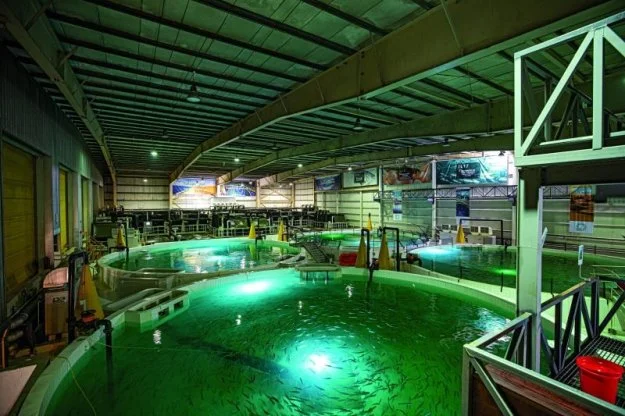
To start with, no one is going fishing. The salmon are farmed indoors, in massive circular pools, controlled by computers. This Recirculating Aquaculture System (RAS) enables the company to control every element of the watery habitat – from the temperature, to the food supply, the ph and salinity. It’s a closed system, so there are no nasties like microplastics, or pests like sea-lice, so when marketed, the fish are considered ‘better’ than organic.
“It’s pretty unique,” explains Nigel Lewis, the aquaculture and technical manager at Fish Farm. “Salmon have never been grown to market size in a RAS system outside their normal cold water habitat. We can grow anything you like, anywhere you like, as long as you have a modest amount of water – 97 per cent [of it] is being recirculated.”
The company already successfully farms sea-bream, sea-bass, shrimp, hamour and sashimi-grade yellow tail kingfish, and they’re looking for funding to expand. This is a capital intensive style of farming. The outlay at first is huge compared to outdoor cages, and Bader says they could not have done it without Sheikh Hamdan.
“If we would have presented [this] to any normal investor, he definitely would have refused the project, but the courage His Highness had, and the encouragement – it motivated us and alhammdulillah, we reached what no one expected – salmon in the desert,” he says.
Now the company has turned a corner, and the farm is proving itself to be commercially viable. After a several years of growing the fish, they are now selling for a high price in supermarkets and restaurants. The UAE’s chefs are happy to pay top dirham for a tasty, traceable, fresh product, and transport costs are, for obvious reasons, very low. However this is not just about making money. Fish Farm plans to revolutionise fish consumption in the UAE.
“Food security is our first priority after being profitable” Bader explains, “The strategy of His Highness is to replace the need for imported fish.” If you consider that the UAE currently imports 92 per cent of its fish, this sounds impossible in the near-term, but Nigel insists the “blue revolution” is well underway.
“The financial world is embracing RAS systems. Just to keep ahead of population growth – aquaculture has to double, because there’s less fish in the wild. In arid countries like this where it’s difficult to produce food – it ticks boxes, it doesn’t use fresh water, it has a low carbon footprint, and fish are an efficient producer of protein – they grow fast.”
Public sector push
Food security is a relatively new preoccupation in the UAE – the Ministry for Future Food Security was only set up two years ago. The country actually ranks reasonably highly in the Global Food Security Index – it’s stands at number 31, but the government wants to be in the top 10 by 2021.
It is not going to be easy. Currently, 90 per cent of all the food in the country is imported, and the UAE is located in a volatile part of the world, meaning supply chains though numerous, are vulnerable. The population is expected to increase from 9 million now, to 11.5 million by 2025, and fresh fruit and vegetables are already much more expensive than in Europe or the US.
The Ministry is determined to improve food production, but arable land is scarce, and water supplies are dwindling. Clearly the desert is not an easy place to farm, so high tech agriculture is being singled out as one of the solutions.
“There are lots of facilities now and they’re all adopting technology to grow food,” explains Mariam bint Mohammed Saeed Hareb Al Mehairi, the Minister of State for Future Food Security.
“If we as a government can enable the eco-system for the private sector to invest their money and grow food then that’s the way to go. We want to become a hub for technology when it comes to hot arid regions – [and for] things like biotechnology, seed technologies and gene editing.”
Last summer, the ministry ran a 100 day AGcelerator, designed to resolve the challenges facing the sector. Entrepreneurs, financiers, and farmers brainstormed the problems and come up with pragmatic solutions.
The Ministry acted quickly on the recommendations, creating new agtech zones, bank codes and permits. Then in March this year, Sheikh Mohamed bin Zayed Al Nahyan, Crown Prince of Abu Dhabi and Deputy Supreme Commander of the UAE Armed Forces announced Dhs1bn in agtech incentives. These government initiatives are already attracting international investors, many of whom are eyeing up home-grown success stories.
For example last year, the US company Crop One signed a $40m deal with Emirates Flight Catering to build the biggest vertical farm in the world. Once it is built, it might be the largest, but it will not be the first in the UAE.
That accolade goes to Badia Farms – a privately owned company located deep in Dubai’s industrial district of Al Quoz. The ‘farm’ looks like a nondescript warehouse, but inside the vacuum-sealed door, far away from the searing desert sun, delicate leafy greens are growing under artificial LEDs. There’s no soil – the plants are growing hydroponically in a mixture of nutrients dissolved in water. The exact feed recipe is a closely-kept secret, as is the design of the lights, which glow pink in the gloom.
The CEO is Omar Al Jundi, a Saudi Arabian entrepreneur who started Badia Farms with private money only three years ago. Now they’re making $55,000 a month supplying dozens of Dubai’s top restaurants, along with several upmarket supermarkets. The produce is delicious – crisp and crunchy salad leaves, tasty micro-greens and fragrant herbs, all grown and harvested minutes away from where they’ll be eaten.
Demand for Badia Farms’ produce currently outstrips supply. “We’ve created a market,” Al Jundi explains, “It’s like the iPhone – people didn’t know what they wanted until we gave it to them.”
Costs are kept low, thanks to automated sowing, growing and watering systems. The LED lighting systems does not draw much power, and during the summer, when the humidity is high, the farm is water positive, as it draws more from the air, than the plants need to grow. The farm never uses pesticides.
“I tell chefs not to bother washing the leaves,” insists Grahame Dunling, the COO and horticultural brains behind Badia Farms. “There’s no soil, no pathogens, no nematodes, no weed seeds. It’s cleaner than organic.”
Expansion plans loom large on the horizon – both in the UAE and abroad. The company is currently in talks with a strategic partner for Series A funding of $10m to build a new farm 30 times the size of their current grow area. They are also planning to grow other crops vertically under LEDS – something that has never been done before commercially. For professional grower Dunling, this facility proves that vertical farming is not just sustainable, but scalable: “We can put our farms anywhere in the world. This is just the beginning of a food revolution in the GCC.”
POWERED NATURALLY
One hundred kilometres away, in the middle of the desert, another ambitious project is bearing fruit. Pure Harvest Smart Farms was founded in October 2016 and is backed by a government fund, technology partners and angel investors including Careem founder Magnus Olsson. It is also a hydroponic facility, but instead of using artificial lights, their international team of farmers is harnessing the power of the sun to grow tomatoes all year round.
Outside their 7,000 square metre greenhouse, the mercury is climbing to 43 degrees, and the humidity is hovering around 80 per cent. Indoors it feels like a summer day in northern Europe. Bees buzz noisily as they drift from plant to plant. Bundles of tomatoes hang heavily from thick vines – ripening in the sunlight.
The facility is incredibly sophisticated, and completely sealed from the outside world. No pesticides are used – instead a type of ladybird called a macrolophus is introduced to naturally control white fly, and thousands of bumble-bees are imported from Holland to pollinate the flowers.
Visitors have to go through an air-shower, disinfect their shoes and put on protective clothing before they are allowed to enter.
Every element of the climate is carefully controlled by artificial intelligence to encourage optimum growing conditions. Carbon dioxide is dosed into the air, the temperature and humidity is adjusted, even the glass is specially designed to optimise the light, and every tomato vine is fed the perfect amount of nutrient rich solution each day. As a consequence, the yields are incredibly high.
The CEO of Pure Harvest Smart Farms is Sky Kurtz, a technologist and venture capitalist from Arizona in the USA. He’s convinced the UAE is a great place to farm – despite the inhospitable climate.
“Think about what you need to farm profitably; sunlight, CO2, power, land, labour, water and taxation. Sun – we have an abundance of light. CO2 – we’re the hydrocarbon capital of the planet.
“Energy – we have an abundance of cheap sustainable energy from solar power, let alone other forms of energy. Land is cheap and abundant, labour is cheap and fluid, and Abu Dhabi has a 0 per cent corporate tax rate for 50 years. So when you go down that cost structure, very counter-intuitively [the UAE] is one of the best places in the world to farm.”
The futuristic greenhouse was expensive to build, and in the summer it has to be cooled – but Kurtz still insists this style of farming is sustainable.
“We’re doing 10 to 15 times the production of a traditional farm, and we consume less than 30 litres of water per kg of production. A traditional farm here in the UAE consumes over 260 litres of water per kg of production. The government allows these farms free access to water. That is not sustainable. And now with our ground water level depleting it’s a national security concern. So expense is relative. This is a commercial-scale proof of concept. The economics of producing this farm at scale are far, far better.”
Pure Harvest’s high quality organic tomatoes sell for much more than locally-grown produce, and they can grow all year round. As with Badia Farms’ leafy greens, demand is outstripping supply. Customers in the UAE prefer to buy local fruit and veg – partly because it costs less than imported food from Europe or the US, but also because it is more sustainable.
So far the Pure Harvest has raised $5.5m, but the company is ripe for expansion.
“This is just a pilot,” explains Majed Halawi, the company’s chief of staff. “The whole idea was to build a small facility and to learn from it. We now want a much bigger footprint in the UAE, so we can diversify into leafy greens and strawberries.”
Halawi says they are close to finalising another round of funding of between $40m and $50m, and are shovel ready, with plans for farms in the UAE and Saudi Arabia. By Q1 of 2020, they hope to harvest their first crop from the new greenhouse.
Pure Harvest is not the only player in this market – two years ago, German company BayWa teamed up with Abu Dhabi’s Al Dahra in a $45m joint venture. They are also growing tomatoes hydroponically in two climate controlled greenhouses, each covering five acres, in Al Ain.
Christiane Bell, Head of BayWa’s Global Produce Business Unit, describes the Emirates as an “extremely attractive” market, due to growing consumer enthusiasm for sustainably grown, local produce. There are constant rumours of new companies looking to establish facilities here.
CAMELS, CAMELS EVERYWHERE
This entrepreneurial enthusiasm for using climate controlled environments to grow food is not the only element in the agricultural revolution taking place in the UAE. The other ingredient is research into which crops and livestock can survive in the desert heat.
Located on a nondescript stretch of the Al Ain Road, just outside Academic City, the International Centre for Biosaline Agriculture (ICBA) has been carrying out research into crops that can grow in arid, salty conditions for the last two decades.
It is an internationally funded, not-for profit organisation with a mandate to improve food security and nutrition around the world. The UAE is a major contributor, along with the US and Sweden.
Dr Ismahane Elouafi is the Director General of ICBA, and is not convinced that high-tech climate controlled farming is the answer – particularly in the developing world. She notes, “In the reality of things, hydroponic [farming] right now produces less than 8 per cent of the food produced worldwide.”
Instead the Centre focuses on making scientific advances in the development of drought-resistant crops which are also high in nutrition, like quinoa and pearl millet. Several local UAE farmers are already acting as pilot projects, growing a special variety of quinoa and using sophisticated sensors to reduce their water usage.
ICBA’s researchers are also excited about another plant, namely salicornia or samphire. This has potential as a desert crop thanks to its tolerance of very salty water. ICBA has commissioned chefs to develop a salicornia sports drink, citing its high electrolyte and protein content, but due to its strong, salty taste, it’s more likely to be used as animal feed or even as a biofuel.
In January Etihad Airways flew a commercial flight to Amsterdam using jet fuel blended with the fleshy plant. The Ministry for Future Food Security wants to encourage the use of this innovative crop, and in February hosted 100 local farmers at the Centre to showcase new growing-techniques and technology. One option is for regional farmers to combine aquaculture with growing the succulent flowering plant, so the crop can be fertilised with the effluent-rich waste water from the fish. ICBA has developed a successful pilot project, and Dr Elouafi says traditional farmers need to make the change.
“I always say [one needs to pair] the right crop with the right agricultural system. They have to move to other crops that are more adaptable to the region. The data shows that if they don’t [change crops], if they keep the same rate of subtraction of water, they’re going to finish their groundwater within 60 or 70 years.”
One type of farming entirely suited to the UAE is camel herding. The so-called ships of the desert were first domesticated in 3000 BC, and thanks to their unique physiognomy, they have become ubiquitous across the region. Just 10 minutes down the road from ICBA is the biggest camel farm in the world. Camelicious is owned by Sheikh Mohammed bin Rashid Al Maktoum, Vice President and Prime Minister of the UAE and Ruler of Dubai, and it is home to over 5,000 of the traditional Bedouin animals.
It is both the biggest camel farm in the world and a state-of-the-art research centre. Chief Vet, Dr Judith Juhass has been studying the animals since 2003. Prior to this no one had considered milking them commercially, despite their popularity among Bedouin communities. She believes camels could help solve the UAE’s food security concerns.
“With the proper breeding, this species is the species of the future, as a food producing animal. They survive in such a harsh environment,” she says. Camels are harder to milk than cows, but they can live outdoors in the summer heat, and continue to produce milk year-round.
In fact, their supply peaks in July and August. Unlike cows, they do not need air conditioned sheds or large amounts of water to drink – instead they live out in the open in sandy, shaded pens. This makes farming the animals highly sustainable.
Dr Juhass advocates a high standard of animal welfare, and speaks fondly of how the livestock recognise the staff. “They are very clever, they are as intelligent as horses. The [milking] parlour is a restricted area, so this is new for camels. But if you respectfully train them, they will cooperate.”
Researchers at Camelicious have discovered that the dromedaries need to be walked for an hour a day for optimum milk production, and the calves need to stay with their mothers for a year after birth. Certain camels produce more milk, and the farm has a careful breeding programme, to achieve higher yields.
Camel milk represents 3 per cent of the $360bn global dairy market, but is expanding fast – at a rate of 6.8 per cent a year, according to market research company, Technavio. Celebrity Kim Kardashian is apparently a fan, and it is considered a good alternative for people who are allergic to cow’s milk because it is low in lactose. It is also 50 per cent lower in fat, and rich in natural vitamin C and iron.
Camelicious creates an array of products, from fresh milk, to baby milk powder, ice-cream and energy drinks. Their biggest market is the Middle East, but they are making strides in Europe. The company does not yet make a profit – its focus is on proving the benefits of the Bedouin staple, and introducing it to a wider market.
Dr Juhass believes both science and tradition should work hand-in-hand, “We shouldn’t forget the camel belongs to these people, to the Arabic people and many African people. It would really be a waste to just forget about these animals as a food producing mammal.”
FUNDING ON THE RISE
Seen together these high-tech farms, pilot schemes and research projects demonstrate a paradigm shift in the UAE’s approach to farming. They are currently in the development phase, and have so far have relied on wealthy backers to get off the ground, but their track record is attracting interest from around the world.
Sky Kurtz, the CEO of Pure Harvest Smart Farms is a fervent believer: “This is the future of farming. There’s a huge boom in agricultural technology and investment. We are attracting interest from regional private equity investors, global sovereign wealth funds, and international REITS (real estate investment trusts).”
The farms have undoubtably created a market for premium, locally-grown produce in the UAE. The companies profiled here insists that millions of dollars of seed funding is set to flood into UAE agriculture before the end of this year, and with on-going government support, agtech in this desert land has the potential to bloom. Once scaled up, climate controlled farming should bring bigger profits.
Rising populations, dwindling fresh water supplies and the continued threat of global warming mean food security is pushing itself onto the agenda of desert countries and developing nations.
Questions remain as to whether high tech farming can deliver solutions and feed the masses, but soon it might not seem such a strange idea to farm fish on land, or grow tomatoes in the desert.

Webinar: Vertical Farming Across The Pond - An Overview of The UK Indoor Farming Market
During this presentation you will learn more about the UK vertical farming industry and the role it is playing in the European market
GLASE Webinar
Vertical Farming Across the Pond
an overview of the UK indoor farming market
Date: September 18, 2019
Time: 11 a.m. - 12 p.m. EDT
Presented by: Jonny Reader
Register Here
Jonny Reader, research associate at the University of Nottingham and design engineer at V-Farm will talk about the current fruit and vegetable market in the UK and insecurities surrounding Brexit. During this presentation you will learn more about the UK vertical farming industry and the role it is playing in the European market.
Special thanks to our Industry partners
Join Today
If you have any questions or would like to know more about GLASE, please contact its
executive director Erico Mattos at em796@cornell.edu
CO2 Enrichment, Acclimation, And Efficiency In Hydroponic Growing
Carbon dioxide (CO2) is an essential requirement for photosynthesis and can be somewhat overlooked by newer growers. Being odorless, invisible, and only a small fraction of our atmosphere, CO2 often doesn’t get the same attention as nutrients, lights, and other plant-growth factors
Lynette Morgan | August 23, 2019
Takeaway: While many commercial growers use carbon dioxide to boost crop quality, yield, and growth rates, Lynette Morgan explains how home hydroponic horticulturists can also take advantage of CO2 enrichment.
Carbon dioxide (CO2) is an essential requirement for photosynthesis and can be somewhat overlooked by newer growers. Being odorless, invisible, and only a small fraction of our atmosphere, CO2 often doesn’t get the same attention as nutrients, lights, and other plant-growth factors.
The use of CO2 enrichment to boost yields, quality, and growth rates under hydroponic production is, however, widely used in commercial greenhouse horticulture and has an even greater potential in enclosed growing spaces. While simply pumping in some additional CO2 may seem like a straightforward option, the use of this technology is a little more complex if its potential is to be maximized and problems minimized.
CO2 Enrichment
Ambient CO2 levels in air are a little more than 400 ppm (or 0.04 per cent by volume), however, plant tissue contains an average of 45 per cent carbon that comes entirely from CO2. By boosting CO2 levels surrounding the leaf surface, above ambient levels, the rate of photosynthesis increases up until the point where some other factor, such as the speed at which plant enzymes will work, is reached.
Email Newsletter
Join thousands of other growers who are already receiving our monthly newsletter.
Essentially, the transfer of CO2 from the surrounding air to the reaction centers in the leaf chloroplasts depends both on the concentration difference between the air and these sites, and the intervening biochemical resistance in various leaf tissues. This means that while CO2 enrichment will boost photosynthesis, there comes a point were further increases will not occur and plant damage becomes a possibility. Determining this optimal level of CO2 enrichment for a particular plant or stage of growth is where the application of CO2 needs some careful thought.
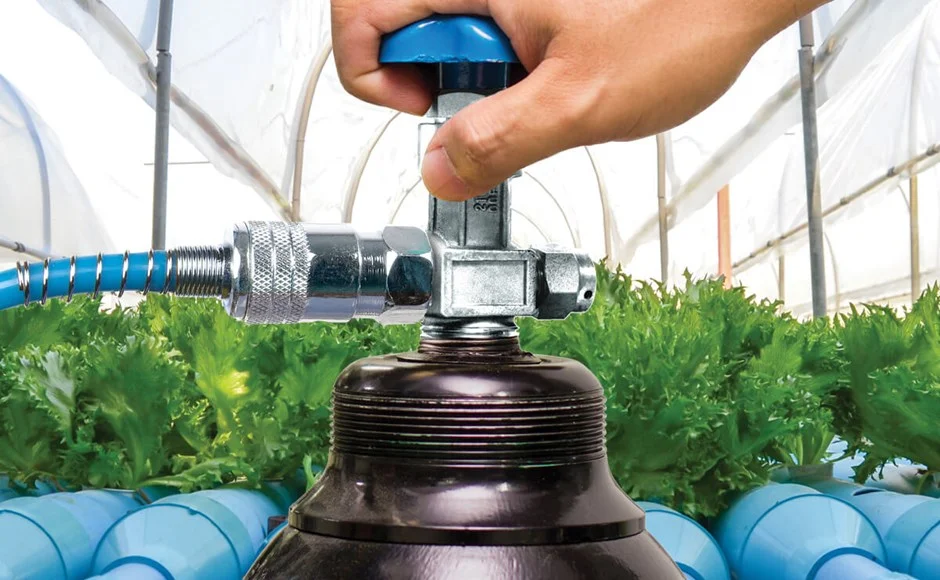
Carbon dioxide enrichment has become more popular in recent times with hydroponic growers using a range of low- and high-tech options to boost CO2 levels. The most common methods of generating CO2 include burning hydrocarbon fuels and the use of compressed, bottled CO2. Smaller growers with a very limited growing space may use dry ice (solid, very cold CO2) which releases CO2 as it “melts” under warm conditions.
Fermentation or the decomposition of organic matter (composting and fungi) are still effective but less accurate ways of boosting CO2 levels through natural processes. Whichever method is used to generate CO2, levels should be regularly monitored, either with a hand-held CO2 meter or as part of the environmental control system in the growing area.
Read also: The Benefits of Adding CO2 During the Cloning Stage
Enrichment levels
If CO2 enrichment is to be applied, then determining the correct level is as important with this gaseous element as it is with nutrient levels. The benefits and levels of CO2enrichment is crop dependent, but most plants respond well to levels in the range of 500–1,500ppm. Below 200ppm, CO2 begins to severely limit plant growth, but more than 2,000ppm of CO2 becomes toxic to many plants.
More than 4,000ppm is a risk to humans. An excess of CO2 will cause crop damage in the form of CO2 toxicity, which is often misdiagnosed as mineral deficiencies or disease symptoms. Mild CO2 toxicity can cause stunting of growth, or leaf-aging type symptoms, while excessive levels may cause leaf damage such as chlorosis (yellowing), necrosis (death of leaf tissue), curling and/or thickening of the leaves.
There is much debate over which level of enrichment is ideal for each crop, under various different growing conditions, however, the most economic use of CO2 is in enriching crops to above ambient levels, but not more than 1,200ppm. Most commercial growers enrich to within the range of 600-800ppm where an increase in growth and yields of between 20-30 per cent are common.
While CO2 enrichment is largely used on fruiting crops such as tomatoes, capsicum, and cucumber, it can benefit a wide range of plant species. Indoor gardens with ornamental, potted, and flowering plants also respond to CO2 enrichment with increased rates of growth and leaf area, increased rates of flowering, more lateral breaks, earlier flowering, greater flower number, reduced flower drop, and increased flower diameter as well as improved leaf color and reduced time to maturity. Carbon dioxide also assists with root development on cuttings and clones in many species and may be applied via enrichment of the air or through the use of carbonated mist.
CO2 Efficiency
To make the most of CO2 enrichment, other growth factors need to be considered and manipulated. Carbon dioxide enrichment will produce the best results in terms of plant growth, yield increases, and shortening the time to maturity where there is high light to power rapid levels of photosynthesis.
If light is insufficient or below the light saturation point for the crop, then boosted CO2levels cannot be fully utilized by the plants. Temperature also plays a role in the efficient use of CO2. Under conditions of high light and CO2 enrichment, temperatures can be run higher than they would normally, and this maximizes the effect of additional CO2.
Studies have shown that for tomato plants, a threefold level of CO2 enrichment will increase net photosynthesis by about 50 per cent in both dull and bright light, but if leaf temperature is also raised (to 86°F), the increase in net CO2 fixation can be as high as 100 per cent in bright light. This means that while boosting CO2 in an indoor hydroponic system will boost growth rates, consideration should be given at the same time to manipulation of the other environmental factors of light and temperature if the valuable CO2 is to be used with the highest degree of efficiency.
Another often overlooked factor is CO2 distribution around the plants. Simply releasing or generating CO2 for enrichment into the growing area is often not sufficient to get the maximum rate of photosynthesis unless this is directed and circulated over leaf surfaces. A stale boundary layer of moist air, depleted in CO2 due to photosynthesis, can form directly around the leaf surface and this needs frequent removal and replenishment.
Whatever source of CO2 generation is being used, it is vital that the enriched atmosphere is thoroughly mixed so the valuable CO2 is delivered to plant surfaces for uptake and assimilation. Small mixer fans can be used to gently circulate the air away from the source of CO2 generation and toward the crop.
To monitor this process, hand-held CO2 meters are useful to check levels in and around the canopy rather than just at the point of CO2 release. Keeping a check on CO2 levels inside a small growing area is vitally important, no matter what the source of CO2 used. It can be difficult to judge how much CO2 the plants are taking up and in tightly sealed growing environments, CO2 accumulation can occur and cause plant damage.
Read also: The Symbiotic Relationship Between CO2 and Ventilation
CO2 Acclimation
CO2 enrichment is undoubtedly a great growth-promoting tool for hydroponic growers, however, it has its limitations and risks.
Plants have the ability to adjust and adapt to increasing CO2 levels, so that over time, acclimation occurs. When CO2 enrichment is first introduced to a crop, there is a rapid increase in photosynthesis and growth, but as plant growth continues, the effect of the increased CO2 levels becomes less and less so that by the time the crop is completed, overall yields were not as high as the increase in early yield.
Numerous studies have reported this effect with plants grown continuously at high CO2 levels having a photosynthetic rate that tends to decrease with time. If a crop grown at elevated CO2 levels is suddenly given only ambient CO2, it will recover back to normal rates of photosynthesis within five days.
Some growers have attempted to prevent this acclimation of crops to high CO2 levels by only supplying CO2 intermittently, or avoiding the use of CO2 enrichment until a vital stage of development, such as flowering or fruit set, has been reached when the boost in photoassimilate is most valuable to yields. Studies have shown the problem of CO2 acclimation can be reduced or eliminated if the plant has strong “sinks” for the assimilate produced in the leaves.
These sinks for assimilate include rapidly developing tissues such as buds, flowers, and fruits. Plants with a low sink strength often end up with carbohydrate accumulating in the leaves under CO2 enrichment, which in turn triggers acclimation and a reduction in photosynthesis. Despite the issue of plant acclimation to high CO2levels limiting the overall potential boost to growth, CO2-enriched plants still produce photosynthetic rates higher than those grown at ambient CO2 levels.
Carbon dioxide enrichment is a worthwhile tool for indoor and greenhouse growers which is well proven in a wide range of crop species to increase growth rates and yields. However, as with most high-tech techniques, it requires monitoring, attention to detail, and careful consideration of the effect on biochemical processes. If CO2 is to be used at maximum efficiency, correct rates of application, adjustments to light and temperature, timing of enrichment, and consequences of CO2 acclimation all need consideration.
Written by Lynette Morgan
Dr. Lynette Morgan holds a B. Hort. Tech. degree and a PhD in hydroponic greenhouse production from Massey University, New Zealand. Lynette is a partner with Suntec International Hydroponic Consultants and has authored several hydroponic technical books. Visit suntec.co.nz for more information. Full Bio

Bowery Adds Associates to Marketing and Sales Operations
Bowery, the modern farming company, has made two key executive hires to oversee the company’s marketing and sales operations. Katie Seawell (formerly of Starbucks) and Carmela Cugini (formerly of Walmart) have joined Bowery as the company’s Chief Marketing Officer and EVP of Sales, respectively
Bowery, the modern farming company, has made two key executive hires to oversee the company’s marketing and sales operations. Katie Seawell (formerly of Starbucks) and Carmela Cugini (formerly of Walmart) have joined Bowery as the company’s Chief Marketing Officer and EVP of Sales, respectively.
The hires are in support of broadening consumer awareness for the brand and increasing retail distribution.
Katie Seawell spent more than a decade at Starbucks Coffee Company, where she held a variety of leadership roles within the marketing and product organizations including driving brand campaigns, developing go-to-market strategies & integrated marketing campaigns and product innovation. Most recently, Katie was SVP of Siren Retail Operations, leading the launches of the Starbucks Reserve Global Roasteries including Starbucks market entry into Italy.
In her new role as Chief Marketing Officer, Katie will lead the company’s marketing team, spearheading initiatives to build Bowery’s brand and consumer reach in existing and new markets. Katie will also partner with the agriculture science team to lead Bowery’s innovation strategy, providing insights on consumer produce trends to make sure the company is fulfilling the wants and needs of its consumers.
Carmela Cugini joins Bowery with experience across e-commerce retail, consumer packaged goods, financial planning and sales with organizations including Walmart, Jet.com, PepsiCo and Merrill Lynch. Over the last three years, Carmela was Vice President and General Manager of Walmart’s US e-commerce team, leading online grocery and focusing on accelerating growth strategies across Walmart’s e-commerce and Jet.com.
Prior, Carmela spent 13+ years at PepsiCo and four years at Merrill Lynch, holding key leadership positions across various functions including sales management, sales operations, key account sales, business development, revenue management strategy, marketing and brand development. As EVP of Sales at Bowery, Carmela will take the lead on growing its network of retail partners and distribution channels as Bowery expands into new markets, while educating grocers on the benefits of indoor-grown, pesticide-free produce.
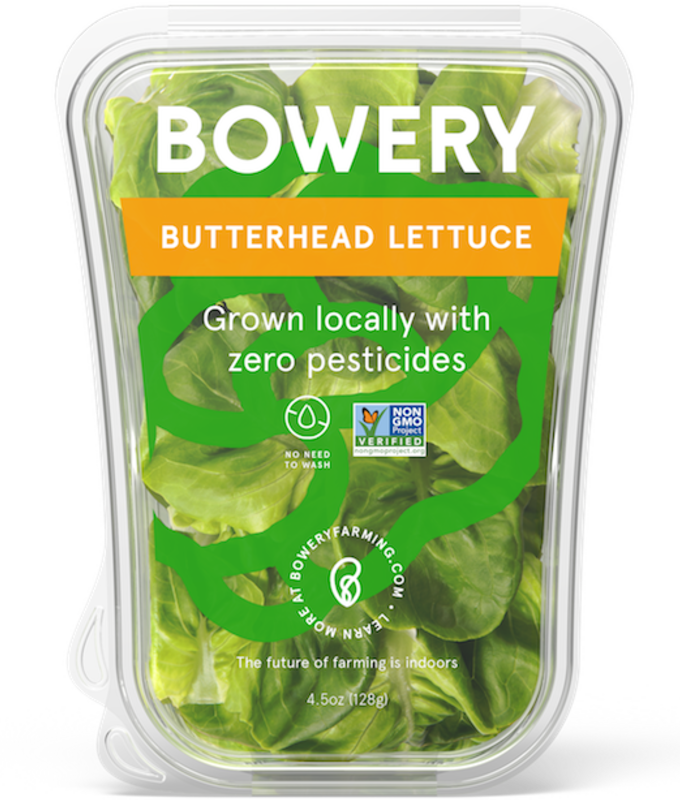
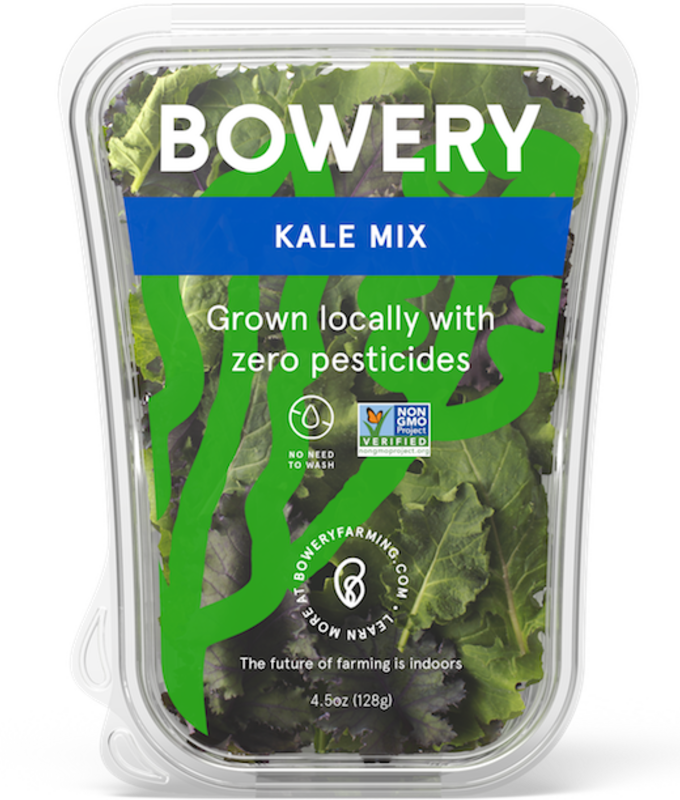
Bowery is the modern farming company growing food for a better future by revolutionizing agriculture. By combining the benefits of the best local farms with advances made possible by technology, Bowery’s indoor farms create the ideal conditions to grow the purest produce imaginable. BoweryOS, the company’s proprietary software system, uses vision systems, automation technology, and machine learning to monitor plants and all the variables that drive their growth 24/7.
Bowery controls the entire process from seed to store, and Bowery farms use zero pesticides, 95% less water, and are 100+ times more productive on the same footprint of land than traditional agriculture. Bowery produce is currently available at select Whole Foods and Stop & Shop stores in the Tri-state area; Brooklyn Fare, Westside Market and Foragers Market in NYC; and online through Peapod, AmazonFresh and Jet.com. Additionally, Bowery is featured at sweetgreen, and on the menus of Tom Colicchio’s New York restaurants Craft and Temple Court.
In December 2018, Bowery announced a Series B fundaise of $95 million led by GV (formerly Google Ventures), bringing Bowery’s total funding to $122.5 million. Notable investors in this round include Temasek (the global investment company backing companies leading change for the future of agriculture), Dara Khosrowshahi (CEO of Uber), Almanac (the fund of David Barber, co-founder of Blue Hill), Jeff Wilke (CEO of Amazon Worldwide Consumer), Henry Kravis (Co-founder of Kohlberg Kravis Roberts & Co.), First Round Capital, GGV Capital and General Catalyst.

Video: Interview - Sharing Advice About Being A Microgreens Grower
Microgreens Video Interview
The Microgreens Show
An interview with a young inspiring reporter, Nick Greens shares some expert advice about being a microgreens grower.
THE NICK GREENS GROW TEAM CAN HELP YOU
ANSWER THESE TOUGH QUESTIONS:
Do you have an efficient and dependable grow room and system?
Are your crops food safe?
Do you have a sustainable farm and a proven business model?
Can you determine crop yield, cost $/lb, and labor costs on a daily basis?
Is your crop mix optimized for production and profitability?
Vertical Farming Is The New Frontier In Delivering Freshness With Sustainability
GoodLeaf Farms is revolutionizing farming in Canada. A state-of-the-art, fully automated 45,000 sq. ft. vertical farm is now operational in Guelph, ON., promising Ontarians a safe and steady supply of local, pesticide-free greens year-round
NEWS PROVIDED BY GoodLeaf Farms
September 10, 2019
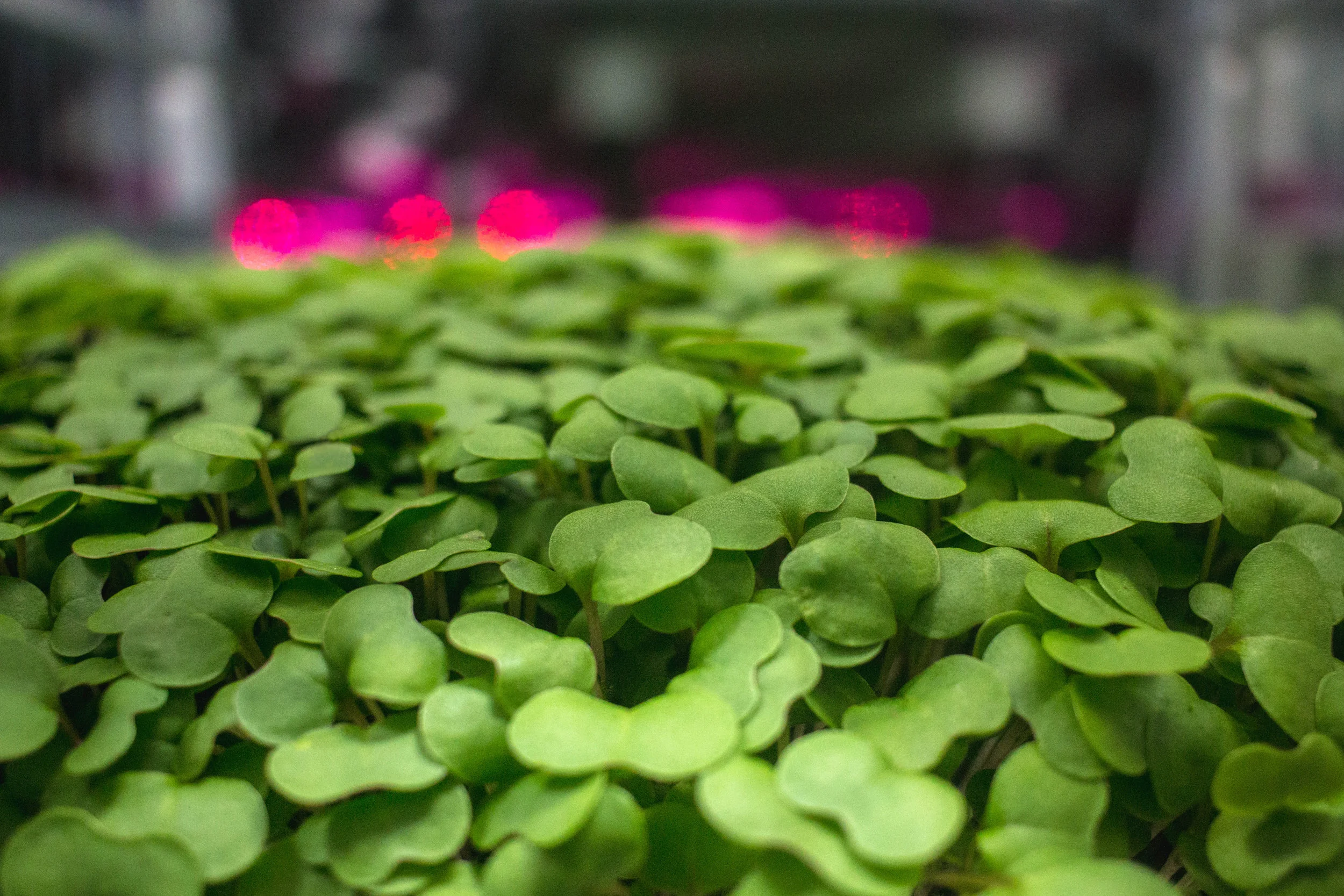
GoodLeaf Farms launches fresh and delicious vertically farmed, local, pesticide-free microgreens and baby greens throughout Ontario retail stores and restaurants.
GUELPH, ON, Sept. 10, 2019 /CNW/ - GoodLeaf Farms is revolutionizing farming in Canada. A state-of-the-art, fully automated 45,000 sq. ft. vertical farm is now operational in Guelph, ON., promising Ontarians a safe and steady supply of local, pesticide-free greens year-round.
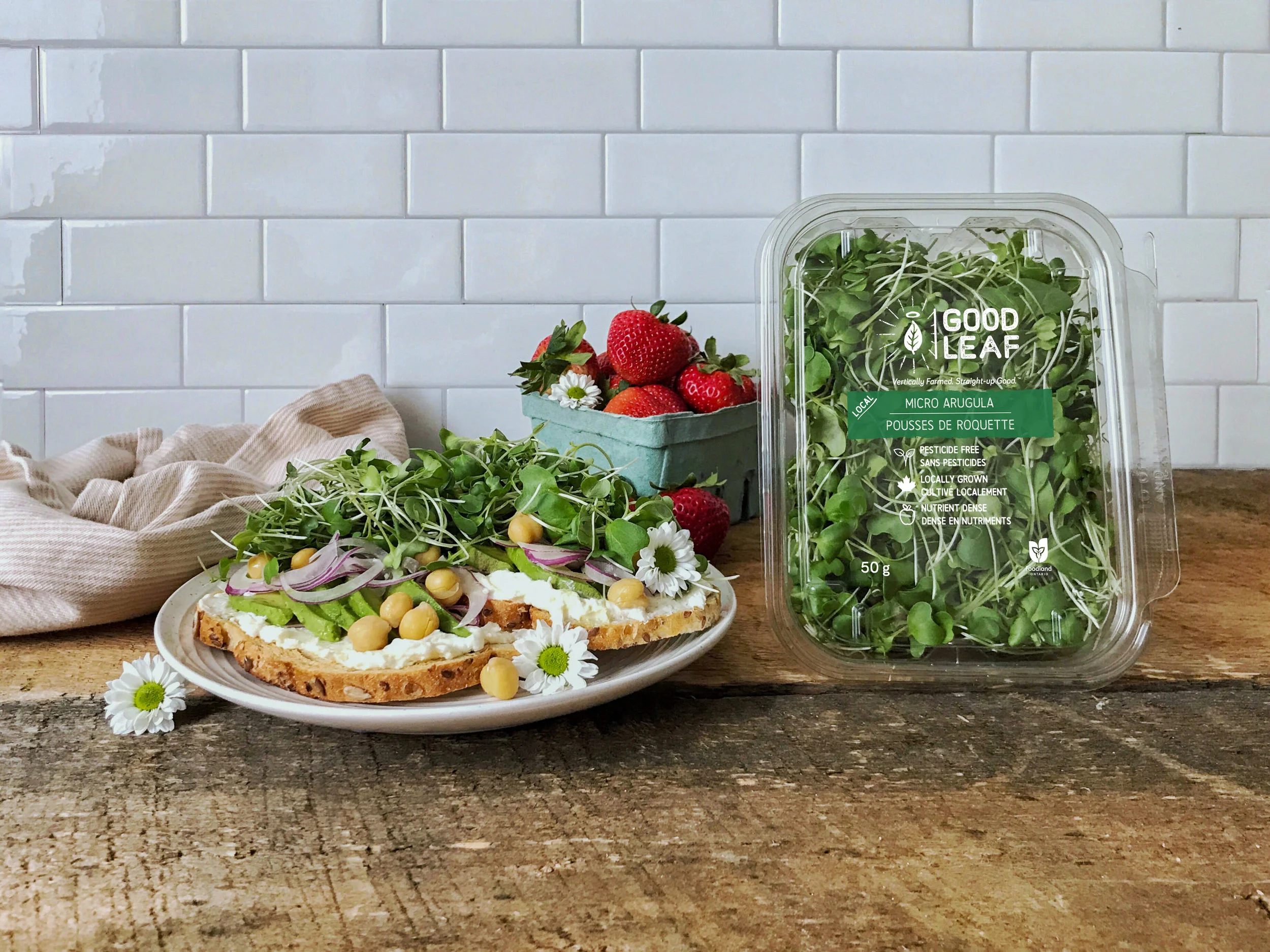
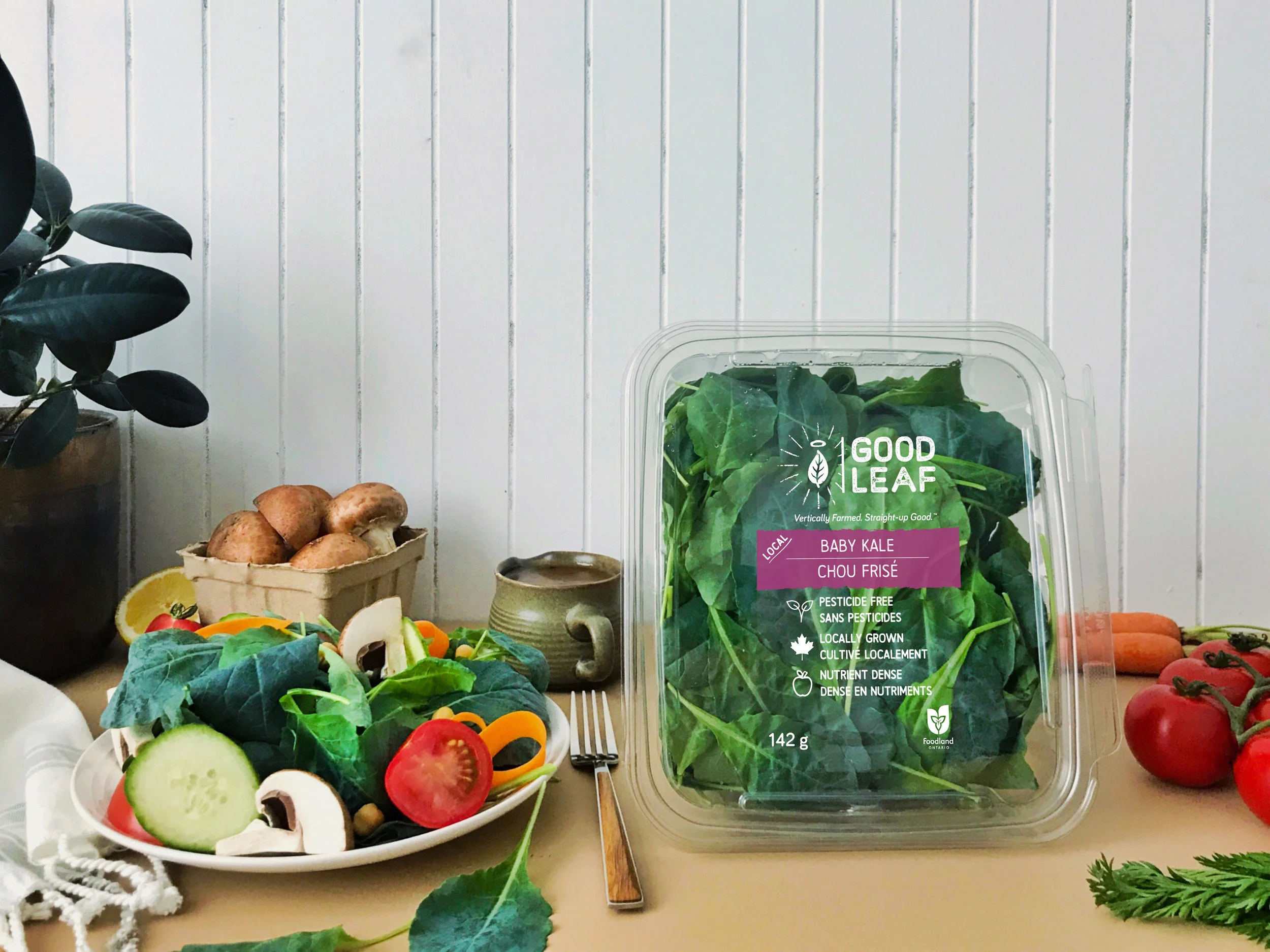
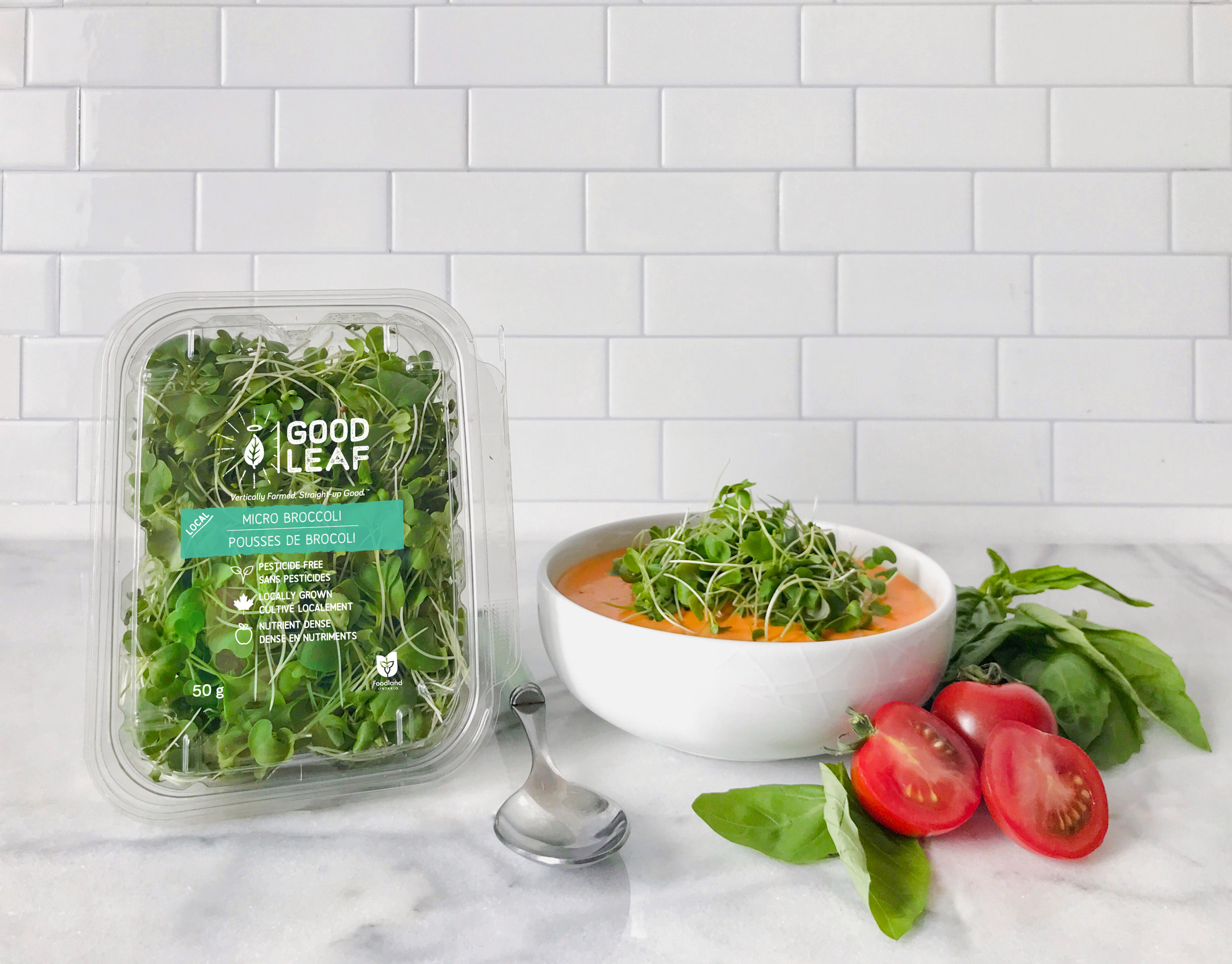
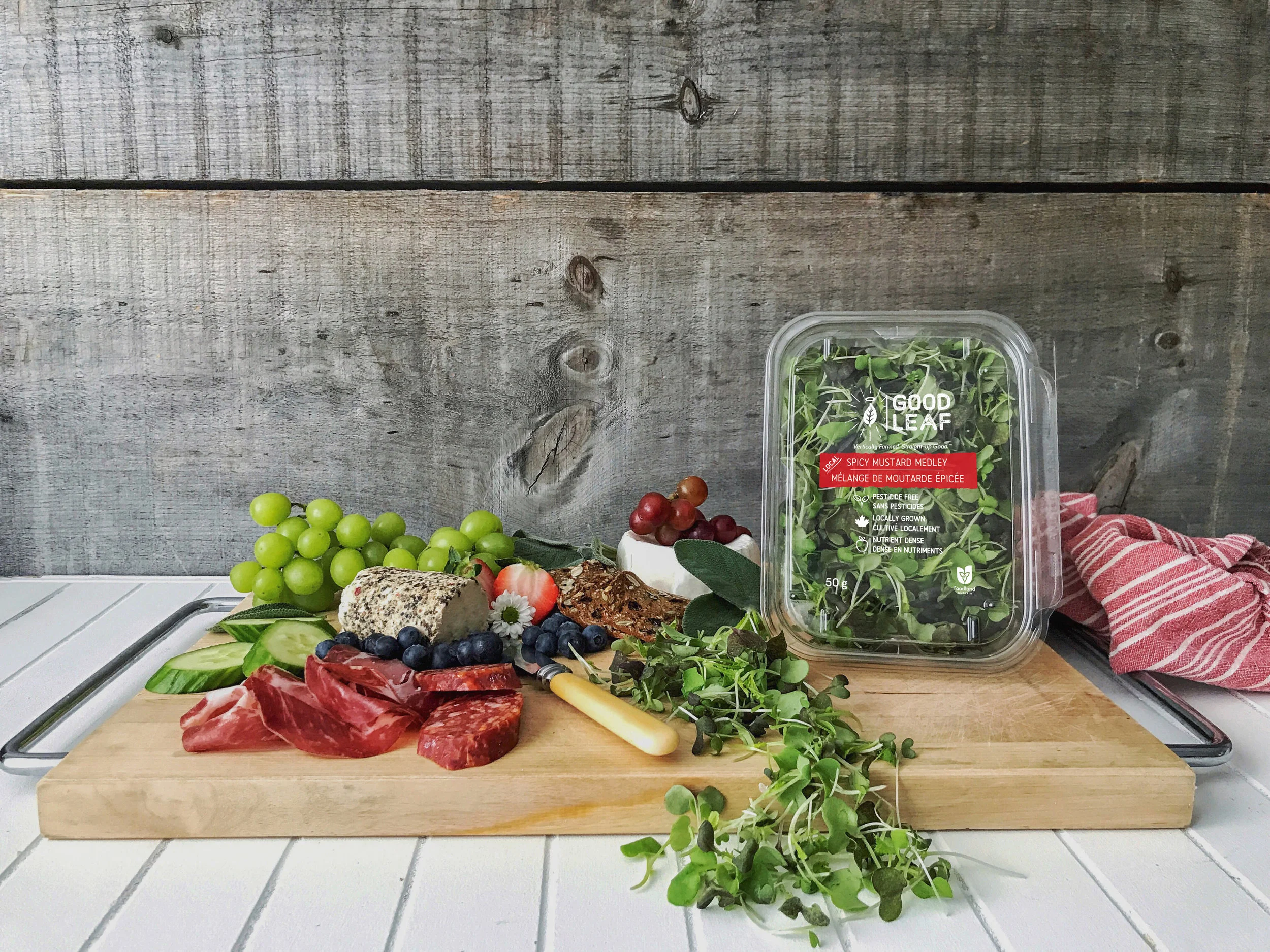
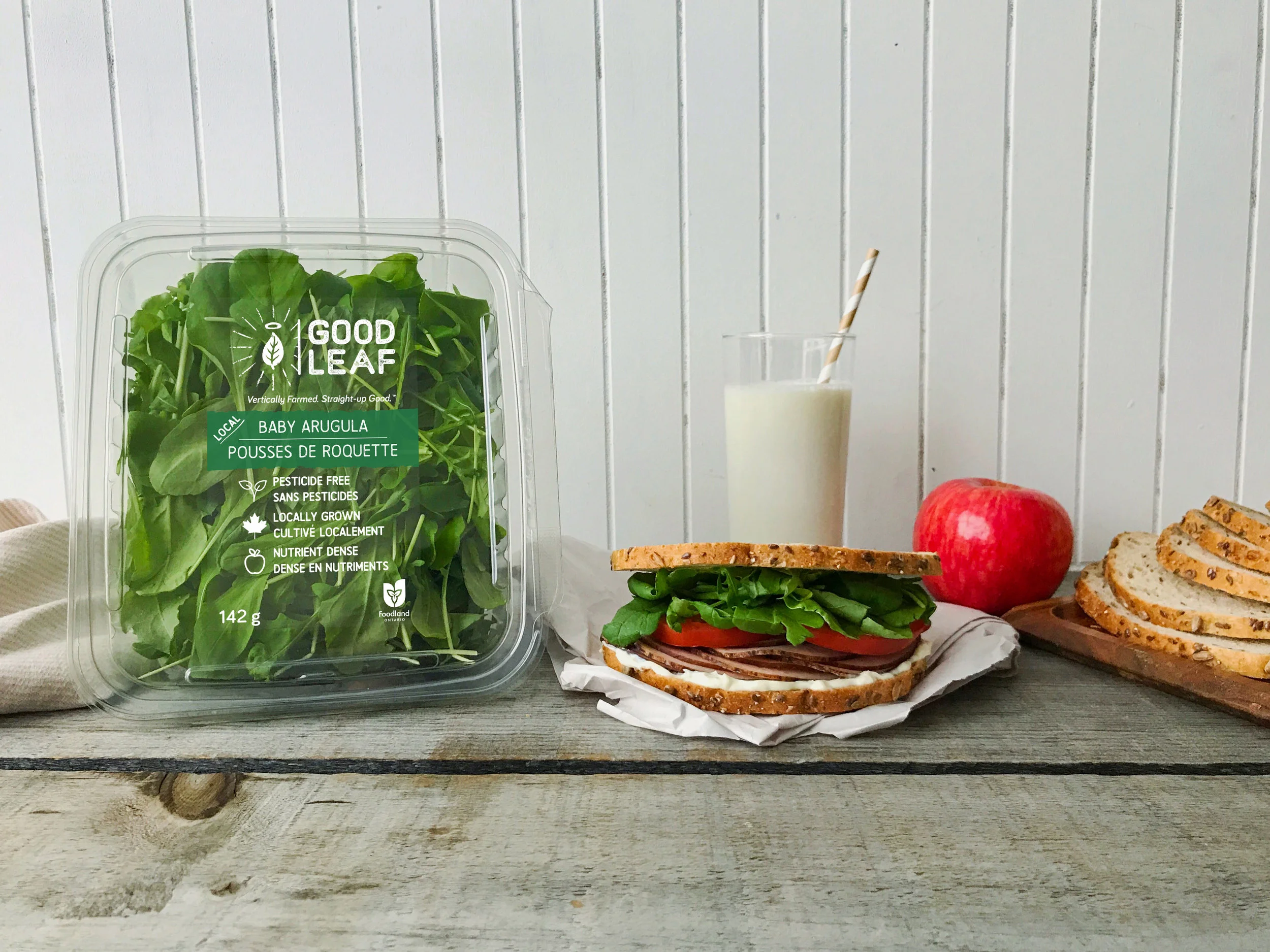
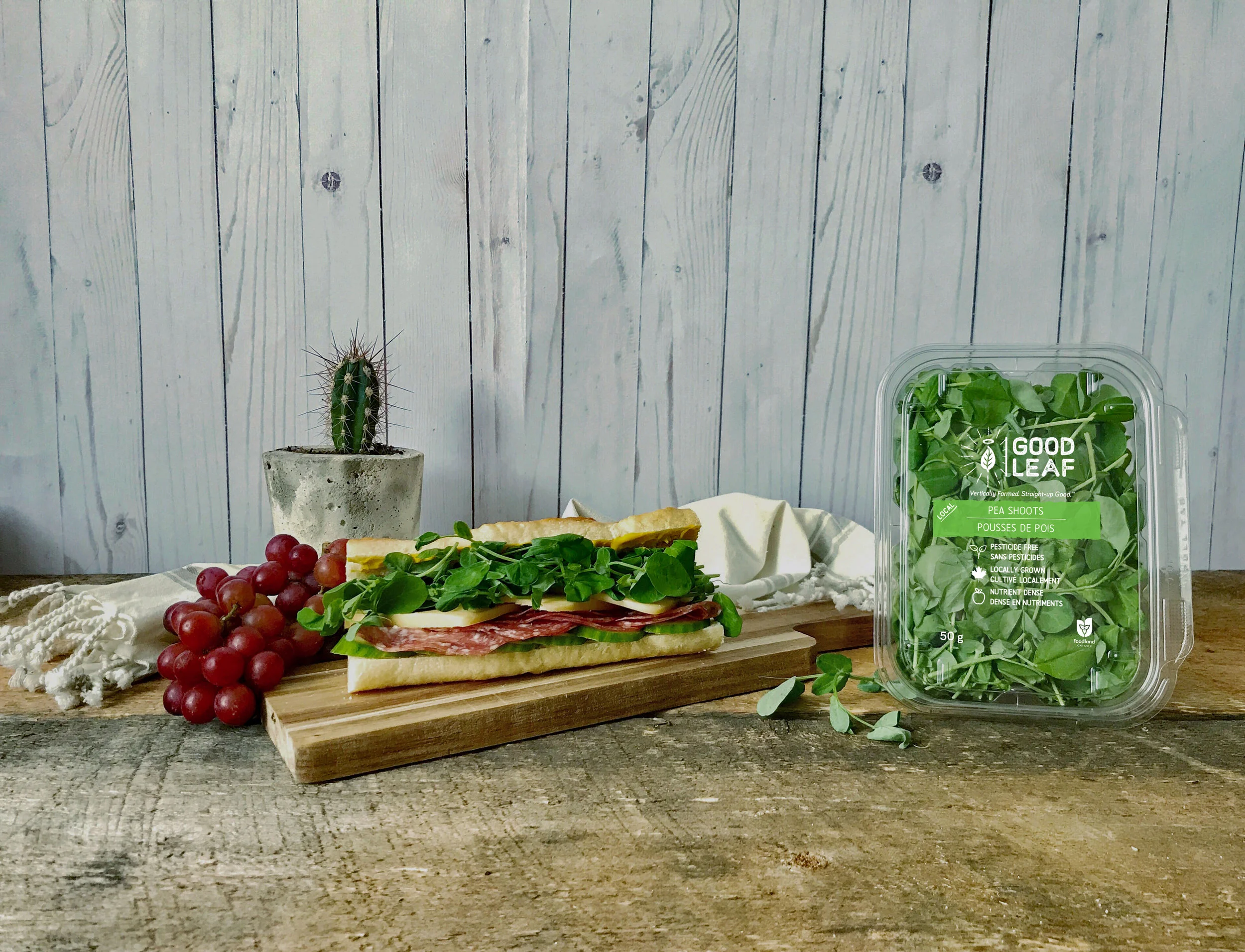
"Canadians are demanding better, safer, healthier food and are getting behind their local farmers," says Juanita Moore, Executive Director of Operations. "We know GoodLeaf's greens represent a bright light in a mostly imported produce aisle because Ontarians want fresh, tasty, local greens grown responsibly."
In addition to efficient land use, GoodLeaf employs numerous sustainable farming practices (e.g., cleaning and reusing about 95% of water; recycling the plant growing medium for second-life use in landscaping). "Our mission at GoodLeaf is to have a positive effect on the environment and human health," Ms. Moore says.
With food safety and security concerns at the forefront, effects of climate change stressing supply chains, and increasingly popular plant-based diets further promoted through Canada's Food Guide, vertical farming brings Canadians a local source of safe and reliable leafy greens.
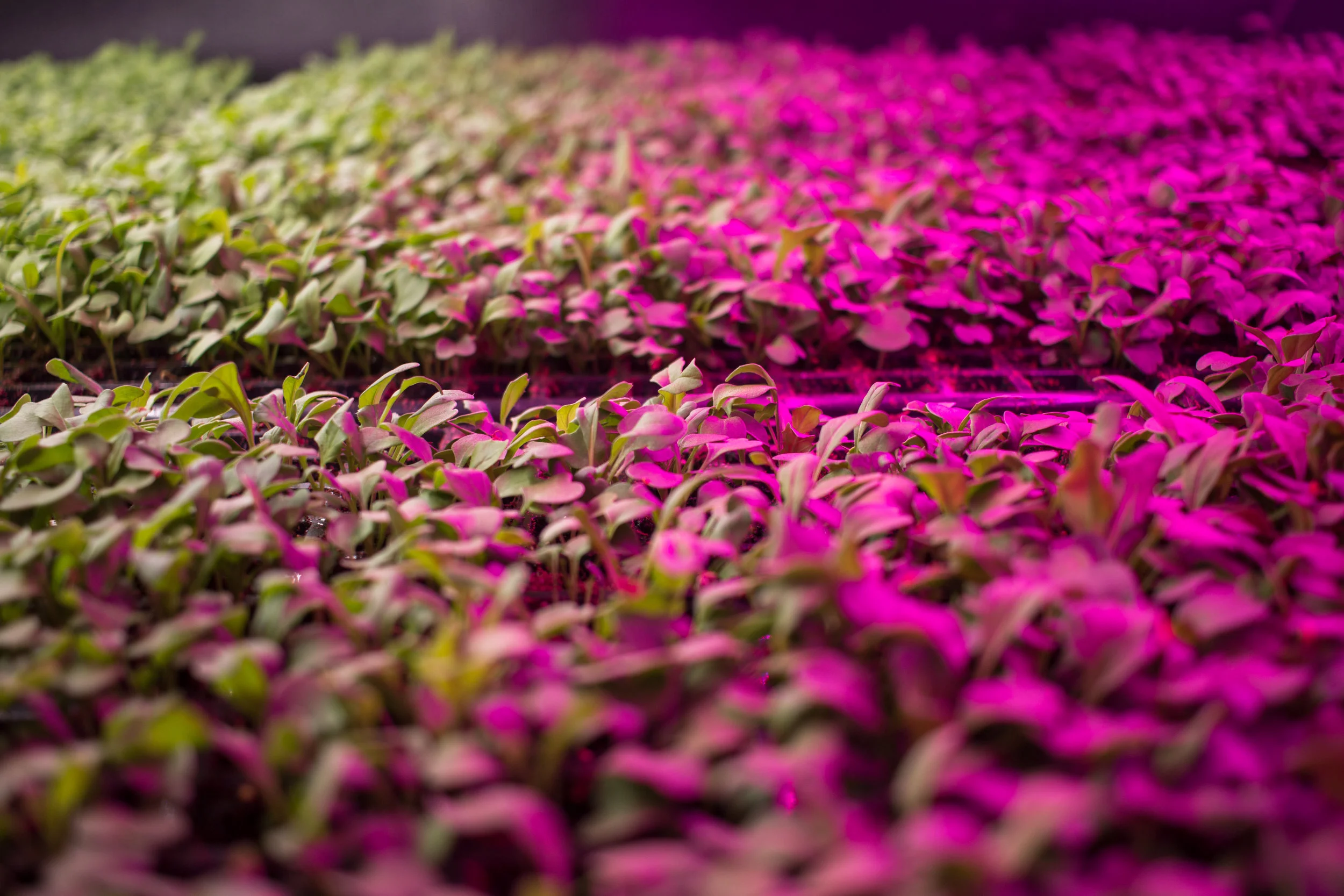
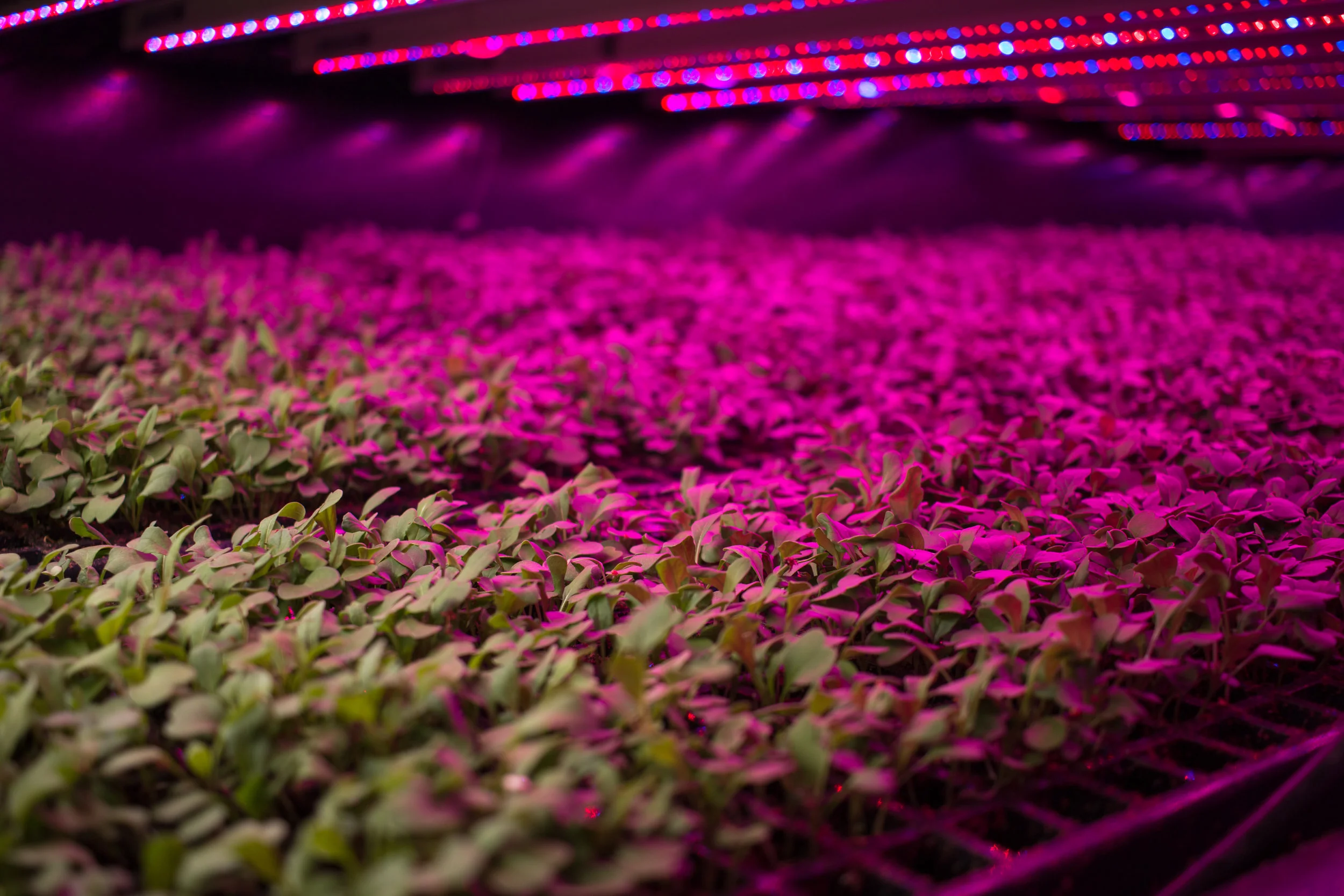
Vertical farming is a method where growing levels are stacked in layers. Temperature and humidity conditions are controlled, and light provided by high-efficiency LEDs. Irrigation systems deliver water and nutrients as needed for optimal growth. Continuous grow cycles combined with a controlled environment allow for systematic testing and learning for rapid improvement in nutrient density, flavor, and other key attributes.
Growing UP: Beyond Organic
According to Jeff Huber, GoodLeaf's Master Grower and Visiting Researcher at University of Guelph, "Unlike organics farming, which allow organic and some synthetic pesticides, our design considerations and our attention to strict bio-security protocols allow for a pest-free environment eliminating the need for pesticides. We feed our plants the precise nutrients and optimal light to grow the most nutritious and delicious greens. Our QA Department's robust Positive Release Program tests samples of our greens ensuring they're safe to eat prior to release to our customers. In fact, with GoodLeaf's automated process the first person to touch a leaf is the consumer upon opening the package. We're truly passionate about safety, quality, and giving Ontario families local greens they can enjoy year-round."
About GoodLeaf
GoodLeaf's vision is to enable every community to grow the world's healthiest food locally and sustainably.
With passion for delicious, nutrient-rich greens, GoodLeaf was founded in 2011 in Halifax, Canada. GoodLeaf uses innovative technologies leveraging multi-level vertical farming to create a controlled and efficient indoor farm, which grows fresh produce anywhere in the world, 365 days a year. The system combines innovations in LED lighting with leading edge hydroponic techniques to produce sustainable, safe, pesticide free, nutrient-dense leafy greens. GoodLeaf has ongoing R&D programs in collaboration with the University of Guelph, Dalhousie University, and Acadia University.
Please visit us at www.goodleaffarms.com.
For media inquiries, please contact Juanita Moore at jmoore@goodleaffarms.com.
SOURCE GoodLeaf Farms

VIDEO: Indoor Vertical Farming Praised As Future Source of Produce
With drought gripping much of the country, there are calls for the government to support new and emerging methods of agriculture
July 9, 2019
With drought gripping much of the country, there are calls for the government to support new and emerging methods of agriculture. Indoor vertical farming is being touted as a future source of fresh produce, but fledgling companies in Australia are struggling to move beyond the startup phase.

Atlanta Suburb Working With Organizations, Government To Build Up Urban Agriculture
Atlanta nonprofit Food Well Alliance is a collaborative network of local food leaders heading up a new program it believes will be a game-changer for urban agriculture in cities across metro Atlanta
City of East Point Mayor Deana Holiday Ingraham signs the City Agriculture Plan MOU with Allison Duncan, Atlanta Regional Commission Principal Planner (left) and Food Well Alliance’s Kim Karris, Executive Director; Will Sellers, Deputy Director and Sarah Benedict, Operations Coordinator.
Photo © Caleb Jones
The City of East Point has been selected to pilot a new City Agriculture Plan in partnership with the Atlanta Regional Commission
August 28, 2019
Posted by Patrick Williams
Atlanta, GA — Atlanta nonprofit Food Well Alliance is a collaborative network of local food leaders heading up a new program it believes will be a game-changer for urban agriculture in cities across metro Atlanta. According to a press release, the City Agriculture Plan will do exactly what its name says: bring growers, community leaders, and city officials together — guided by the planning expertise of the Atlanta Regional Commission (ARC) — to develop city-wide plans that prioritize urban agriculture. The end goal? Thriving community gardens and urban farms providing greater access to locally grown food across the metro Atlanta region, which translates to healthier people, environments, and communities.
After a thorough exploration process with seven metro cities earlier this year, Food Well Alliance has announced the City of East Point has been selected to pilot the new City Agriculture Plan. The plan will begin with a community engagement and asset-mapping phase led by Food Well Alliance, followed by a six-month planning process undertaken with support from ARC. Once the plan is developed, Food Well Alliance will guide the implementation of the plan and provide a minimum of $75,000 in funding to help the community bring it to life.
“We are thrilled the City of East Point will be joining us in this exciting new endeavor,” said Food Well Alliance Executive Director Kim Karris. “We believe that East Point is uniquely poised to take bold steps and become a national model for urban agriculture. The work begins today, and it couldn’t come at a more crucial time. Metro Atlanta is one of the fastest growing regions in the country, and our cities are rapidly becoming more developed. This threatens the long-term viability of community gardens and farms. The City Agriculture Plan paves a way for city officials to work directly with growers and community leaders to determine the policies, ordinances, and programs that will move the needle most effectively.”
As the City Agriculture Planning process gets underway in East Point, six other metro Atlanta cities that rallied to pilot the program will receive funding support to catalyze their own urban agriculture initiatives: Alpharetta, Clarkston, Hapeville, Lawrenceville, Lovejoy, and Pine Lake. “The level of enthusiasm demonstrated in all seven cities shows us that we are onto something - that people want community spaces to reconnect to where their food comes from - so we are going to keep building on the momentum,” Karris said.
Nearly 500 people attended Community Food Forums held in the seven cities this February and March to learn more about City Agriculture Planning and share their ideas. Over time, Food Well Alliance aims to help develop City Agriculture Plans in all 54 cities in its five-county region serving Clayton, Cobb, DeKalb, Fulton, and Gwinnett counties.
Funding for the City Agriculture Plan pilot has been made possible by The Zeist Foundation and Food Well Alliance founding benefactor, the James M. Cox Foundation.
“We are truly humbled and honored by being selected to create and implement the first City Agriculture Plan in the region,” said City of East Point Mayor Deana Holiday Ingraham. “This amazing partnership with Food Well Alliance and the Atlanta Regional Commission will be impactful and transform our City. The intense focus on community engagement and leadership throughout our City Agriculture Planning process will help ensure sustainability of the projects implemented to systemically address our food access challenges.”
“The City of East Point is extremely excited about its partnership with Food Well Alliance,” said Maceo Rogers, CEcD, director, Department of Economic Development for the City of East Point.
“It marks the beginning of a new collaboration between the City, residents, businesses and metro area organizations all uniting together to take a holistic approach to transforming the overall health of the community through access to local food production, community gardens, and farms.”
“Local agriculture is a key part of developing healthy communities,” said Sam Shenbaga, manager of ARC’s Community Development Group. “ARC is proud to support community agriculture and put our resources behind initiatives that improve our region starting at the local level."

Can Vertical Farms Be Profitable?
“There are both small and large leafy greens vertical farms,” Hernandez said. “Some of them are going out of business and some new ones are opening up. All of them have similar challenges
By David Kuack, UrbanAgNews.com
March 15, 2019
Although vertical farms producing leafy greens are receiving most of the press coverage, there are a variety of other crops being being grown and innovative growers are finding these crops to be profitable.
When you think about a vertical farm what picture comes to mind? Ricardo Hernandez, horticulture professor at North Carolina State University, said most people think of vertical farms as indoor growing operations that produce leafy greens, primarily lettuce.
“There are both small and large leafy greens vertical farms,” Hernandez said. “Some of them are going out of business and some new ones are opening up. All of them have similar challenges.
“The main challenge is that even though they can produce a lot of leafy greens because they are able to stack the plants, there is a bottleneck in terms of how fast they can produce the crops. The bottleneck is tied to the plant genetics. With the current plant genetics and cultivars that most vertical farm entrepreneurs are using, it is very hard to outperform the lettuce crops coming out of the field. This is especially the case if the field conditions are suitable to grow lettuce such as in California and the southern part of Arizona during the winter.”
For many of the cultivars being grown in the field, including butterhead, red leaf lettuce and baby greens, the same seed is being used in vertical farms.
“In order for the leafy greens produced in vertical farms to actually gain significant market share, the genetics have to be changed in those plants,” Hernandez said. “This can come through conventional breeding or gene editing or through targeted breeding using molecular tools. A new set of cultivars is needed, a new set of genetics that are specific for indoor farms. Right now we are using the genetics that are good for field production. These field cultivars have high plant uniformity in terms of growth under a large variability of environmental conditions. The field genetics enable plants to look the same even if there is a lot of variability in the environment.”
Ricardo Hernandez, horticulture professor at North Carolina State University, said one of the biggest challenges facing vertical farms growing leafy greens is the lack of cultivars bred specifically for these production facilities. Photos courtesy of Ricardo Hernandez, N.C. St. Univ.
Because vertical farms provide a stable environment, Hernandez said the types of genetics that are needed are specifically for an environment that can be controlled. The genetics for field crops of maintaining high uniformity and minimizing large variability are not a concern with vertical farms.
“Unfortunately, the market for breeding companies to develop varieties specifically for vertical farms is small,” Hernandez said. “There is not an established market for vertical farm growers. There hasn’t been a significant effort by established breeding companies to start developing cultivars specifically for vertical farms. Maybe some startups will be able to develop new cultivars or university researchers may be able to give those efforts a boost.”
Cost of production
One of the major hurdles with vertical farms is cost of production.
“There is a lot of technology and utilities associated with producing leafy greens in vertical farms,” Hernandez said. “That cost of production is very high compared to the leafy greens grown on the West Coast even when the shipping costs are added on.
“There actually are some vertical farms making money. Some of those are in boutique markets. These growers are able to get more money for a head of lettuce than the competing product that comes from the field. However, it is going to be difficult for growers who are selling to boutique markets and who receive a premium price for a head of lettuce to break into the mass market. Most consumers are not willing to pay the higher boutique prices.”
Hernandez said in order for vertical farms to acquire a significant share of the market, they are going to have to bring down the price of lettuce so more people will be willing to pay for the product.
Making money with transplants
One area of vertical farm production that Hernandez said growers can be profitable is producing transplants or starter plants.
“I’m convinced based on economic studies that we have done in my lab, using vertical farms or indoor growing is economically viable for growing transplants or starter plants,” he said. “Growing transplants is a very economical way to successfully adopt vertical farm production. These starter plants are a high value product and they can be grown under very high density in vertical farms, even higher than they can be grown in a greenhouse. These transplants are inserted into the current supply chain and will be sold to greenhouse and field growers who will produce the end products.”
Hernandez has started a transplant vertical farm, Grafted Growers, with his business partner John Jackson. Hernandez said growers looking to produce transplants in vertical farms should choose crops considered to have the highest value.
“These would be transplants that benefit the most from being grown indoors,” he said. “The clean controlled environment of a vertical farm can ensure a very high germination rate and a lot of plants can be produced in a small area. The controlled environment of vertical farms also provides a desirable outcome including finished plants that flower sooner or plants that have more dry mass.”
The controlled environment of a vertical farm used to produce transplants can ensure a high germination rate and can produce a lot of transplants in a small area.
Hernandez said the uniformity and quality of transplants grown in a greenhouse may not always match transplants grown in vertical farms.
“If there is good solar radiation levels, greenhouse growers can produce very good transplants,” he said. “If growers are trying to produce those transplants in greenhouses during the fall or winter, they may have to supplement the natural light levels or the quality of the transplants may not be as good. There may be a difference in quality and uniformity between seasons.
“Growing transplants in a vertical farm the quality of the transplants is consistent no matter what the outdoor conditions are. Comparing transplants grown in a vertical farm with transplants grown in a greenhouse during the winter, which is when many transplants are grown, the vertical farm transplants usually have a higher dry mass and are more uniform.”
Hernandez said a grower producing transplants during the winter may be able to match the quality of vertical farm transplants if a lot of supplemental light is used.
“It’s not only the amount of light that is important, but also the quality of light,” he said. “Even though transplants grown in a greenhouse may be receiving enough light with the use of supplemental light, depending on the light spectrum the transplants could end up stretching because they are planted at a high density.
“In a vertical farm the transplants can be kept from stretching by controlling the light spectrum so that they can be grown compact in a very high density. By taking the sun out of the equation and controlling the plant growth with artificial light eliminates the potential for stretching.”
Having the right vertical farm setup
Hernandez is quick to caution growers considering starting a vertical farm that different crops require different production setups.
Different crops require different vertical farm setups. The production setup that is optimum for for transplants may not work for leafy greens.
“Growers can create a lot of microclimates and have poor uniformity when they have the wrong vertical farm setup,” he said. “The vertical farm that works for leafy greens may not work for transplants because the requirements for transplants uniformity are different from those for leafy greens. If growers don’t have the right vertical farm to grow transplants, it’s not going to be easy and it could become a bigger problem.
“Growers need to listen to the plants and know what the plants need. Growers can incorporate a lot of technology, including robotics and sensor control, but if they are not listening to what the plants need, the technology will only deliver marginal improvements. The most important thing in a vertical farm is the plants. Everything else is just details.”
For more: Ricardo Hernandez, North Carolina State University, Department of Horticultural Science, Raleigh, NC 27695-7609; rhernan4@ncsu.edu; https://hortenergy.cals.ncsu.edu.
This article is property of Urban Ag News and was written by David Kuack, a freelance technical writer from Fort Worth, TX.

COLORADO: Precision Farming With The Help of Technology - By The Numbers
Steve and Soozie Arnold used to run cattle on 30,000 acres in the San Juans. Now, they grow butter lettuce and other delicious greens on three acres just north of Spring Creek Road near Montrose
By Michael Cox Special to the Montrose Daily Press
August 22, 2019
Soozie and Steve Arnold pose with part of their hydroponic Garden at the Eatin’ Greens farm. The system they use is considered precision farming. (Michael Cox/ Special to the Montrose Daily Press)
Steve and Soozie Arnold used to run cattle on 30,000 acres in the San Juans. Now, they grow butter lettuce and other delicious greens on three acres just north of Spring Creek Road near Montrose.
They do it hydroponically. Steve can irrigate his crops from his smart phone. Soozie sells greens and things at the farmers' markets, Gold's Gym, several restaurants, and to other customers, taking plastic payment and processing it with The Square on her phone. She counts the beans on QuickBooks. Steve reads the Wall Street Journal online, which is where he found out about the growing system they use.
Without the internet, broadband or otherwise, life would not be the same for small and large ag operations alike. The Arnolds are part of the precision farming movement. It’s farming and ranching with much less guess work and fewer surprises. Growers with a few acres, like the Arnolds, and cattle outfits, like the one Steve used to run, are getting more yield, using less water and taking fewer chances because they have the internet and tools like phoning in your irrigation.
Soozie Arnold helps a Farmers Market customer “pick” her own greens from their hydroponic “farm field.”
(Michael Cox/ Special to the montrose Daily Press)
No more root cellars
When the refrigerator replaced the root cellar and the icebox back in the 1930s, everything from the way farmers finished crops to the way consumers bought them changed for the better. That came about when the Rural Electrification Act set the stage for energy being delivered to rural farms and ranches.
“A similar shift is upon us with the advent of digital technology and next generation precision agriculture, resulting in increasing productivity with fewer inputs, better market access and healthier rural communities,” said Megan Nelson of the American Farm Bureau Federation.
Nelson is all about pushing the idea of broadband for everybody. But what is broadband?
The dictionary definition is, “A high-capacity transmission technique using a wide range of frequencies, which enables a large number of messages to be communicated simultaneously.” In terms more of us can understand, it's like having a digital party line where everyone can talk at once and still get the message straight. In the unseen operations, the data — words, pictures, numbers, etc. — move at light speed in computer-assigned packets. The problem is the network that does this magic is not in place everywhere.
“Just recently the Federal Communications Commission admitted that the maps they have are wrong,” Nelson said, “We really donít know who has broadband available and who doesn’t.”
The FCC has promised to get the maps up-to-date as quickly as possible. In bureau speak that could be next year or the third June of 2021.
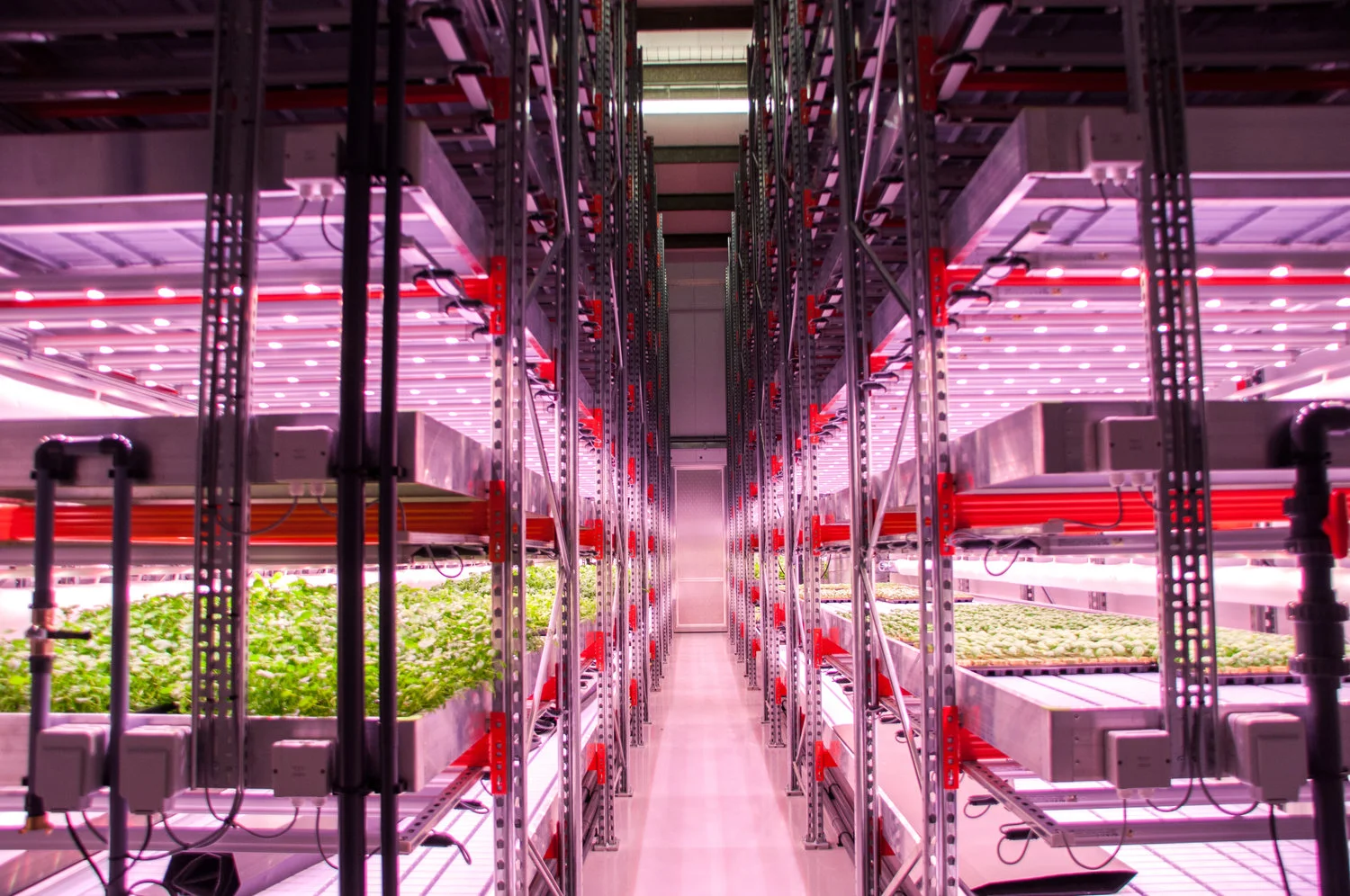
Are Vertical Farms Ready For Prime Time?
Plenty, Bowery, Aerofarms and 80 Acres Farms are among young companies that see a future in salad greens and other produce grown in what are called vertical farms that rely on robotics and artificial intelligence, along with LED lights
Indoor Farm Companies Say They're Scaling Up,
But Many Question Their Business Model
August 27, 2019
Plenty CEO and co-founder Matt Barnard (right) says his company is now competitive with organic competitors but critics say vertical farms are simply too expensive to run. Photo: Reuters/Jane Lanhee Lee
Indoor Farm Companies Say They’re Scaling Up,
But Many Question Their Business Model
Reuters — Leafy salad greens grown under banks of LED lights, with mist or drips of water are having their day in the sun.
Several top U.S. indoor farms say they are boosting production to a level where they can now supply hundreds of grocery stores.
Plenty, Bowery, Aerofarms and 80 Acres Farms are among young companies that see a future in salad greens and other produce grown in what are called vertical farms that rely on robotics and artificial intelligence, along with LED lights.
While the first versions of modern vertical farms sprouted about a decade ago, in recent years the introduction of automation and the tracking of data to regulate light and water has allowed them to get out of lab mode and into stores. Now they are trying to scale up.
Plenty and others say their customized, controlled lighting — some more blue light here, some more red light there — makes for tastier plants compared to sun-grown leaves and that they use 95 per cent less water than conventional farms, require very little land, and use no pesticides, making them competitive with organic farms.
And because vertical farms exist in windowless buildings that can be located in the heart of urban areas, produce does not have to travel far by fossil fuel-guzzling trucks to reach stores.
The companies’ expansion comes as plant-based burger makers Beyond Meat Inc. and Impossible Foods captivate investors and make inroads in high-end restaurants and fast-food chains.
But whether the sunless farms can compete financially with their field-grown brethren, given big upfront investments and electric bills, remains a question.
“We’re competitive with organic today and we’re working very hard to continue to make more and more crops grocery store competitive,” said Matt Barnard, chief executive and co-founder of Plenty, which is based in Silicon Valley.
Plenty’s salads sell on organic grocery delivery site Good Eggs for 99 cents an ounce, while a leading brand, Organic Girl, on grocery chain Safeway’s online site was priced at 80 cents an ounce.
Plenty said its new farm, dubbed “Tigris,” can produce enough leafy greens to supply over 100 stores, compared with its previous farm that could only supply three stores and some restaurants.
Bowery said its third farm coming online soon will help it supply hundreds of stores from dozens today, and Aerofarms, in New Jersey, said it is doubling its space to meet demand.
None of the three companies would give details about costs.
Former Vertical Farm CEO Matt Matros is skeptical that sunless farms can make economic sense. He invested in and ran Chicago-based FarmedHere in 2015, but changed its business into food processing.
“The issue with indoor farming was that you could really only grow a couple of things efficiently — namely basil and microgreens” Matros said. “But the problem is the world just doesn’t need that much basil and microgreens.”
80 Acres Farms in Cincinnati says it already grows and sells tomatoes and cucumbers, and Plenty is testing cherry tomatoes and strawberries in the lab.
Agriculture technology investor Michael Rose says vertical sunless farms are more expensive to run than modern greenhouses that rely on sunlight, supplemented by LED lights. He sees limited areas where it makes sense, such as the Middle East, where much of the food is imported, or China’s mega-cities where pollution and urban sprawl limit the availability of premium fresh food.
At Plenty’s new farm, robots put seedlings in tall, vertically hung planters. The planters move along a wall of LED lights for 10 days, and are then put through a harvesting machine that shaves off the leafy greens.
The machines minimize labour needs, and Plenty says the speed of production also helps control pests.
“We use no pesticides,” said Nate Storey, co-founder and chief scientist at Plenty. “We don’t even have to use things like ladybugs, because we go so fast in our production that we out-race the pests themselves.”
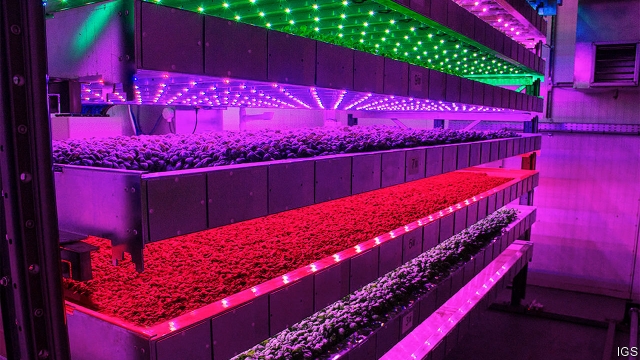
The Foody Benefits of Farming Vertically
The answer, foodies say, is to go back to a better, gentler age, when farmers worked with nature and did not try to dominate it
More Variety, New And Old Tastes
August 31, 2019
Many foodies pin the blame for farming’s ills on “unnatural” industrial agriculture. Agribusinesses create monocultures that destroy habitat and eliminate historic varieties. Farmers douse their crops with fertiliser and insecticide, which poison streams and rivers—and possibly human beings. Intensive farms soak up scarce water and fly their produce around the world in aeroplanes that spew out carbon dioxide. The answer, foodies say, is to go back to a better, gentler age, when farmers worked with nature and did not try to dominate it.
However, for those who fancy some purple-ruffles basil and mizuna with their lamb’s leaf lettuce, there is an alternative to nostalgia. And it involves more intensive agriculture, not less.
A vast selection of fresh salads, vegetables and fruit is on the way, courtesy of a technology called vertical farming. Instead of growing crops in a field or a greenhouse, a vertical farm creates an artificial indoor environment in which crops are cultivated on trays stacked on top of each other (see article). From inside shipping containers in Brooklyn, New York, to a disused air-raid shelter under London’s streets and an innocuous warehouse on a Dubai industrial estate, vertical farms are sprouting up in all sorts of places, nourished by investment in the business from the likes of Japan’s SoftBank and Amazon’s founder, Jeff Bezos.
This should cheer anyone who wants organic produce that has been grown without pesticides and other chemicals, and which has not been driven hundreds of miles in refrigerated lorries or flown thousands of miles in the belly of a plane. Such farms can greatly reduce the space needed for cultivation, which is useful in urban areas where land is in short supply and expensive. Inside, climatic conditions are carefully controlled with hydroponic systems supplying all the nutrients a plant needs to grow and recycling all but 5% of their water—which is incorporated in the crop itself. Specially tuned led lighting generates only the wavelengths that the plants require to prosper, saving energy. Bugs are kept out, so pesticides are not needed. Foliage and fruit can be turned out in immaculate condition. And the harvests last all year round.
There is more. As they will remain safe and snug inside a vertical farm, long-forgotten varieties of fruit and vegetables can stage a comeback. Most of these old-timers have been passed over by varieties bred to withstand the rigours of intensive farming systems. A cornucopia of unfamiliar shapes, colours and flavours could arrive on the dinner table.
This glimpse of Eden is still some way off. The electricity bill remains high, principally because of the cost of powering the huge number of leds required to simulate sunlight. That means vertical farming can, for the time being, be profitable only for high-value, perishable produce, such as salad leaves and fancy herbs. But research is set to bring the bill down and the costs of renewable energy are falling, too. In a hot climate such as Dubai’s extensive solar power could make vertical farms a valuable food resource, particularly where water is scarce. In a cold climate thermal, wind or hydroelectric power could play a similar role.
Some field crops, including staples such as rice and wheat, are unlikely ever to be suitable for growing in vast stacks. But as its costs fall thanks to further research, vertical farming will compete more keenly with old-fashioned greenhouses and conventional, horizontal farms where crops grow in the earth. As an extra form of food production, vertical farming deserves to be welcomed, especially by the people whose impulse is to turn their back on the future. ■
This article appeared in the Leaders section of the print edition under the headline "Plant power"
Australia: This Car Park Turned Urban Farm Has Grown 300 kg of Produce For People In Need
Forget the assumption that cities have a lack of space available to grow fresh produce. This experimental urban farm proves that it's possible to grow masses of vegetables in a space as small as a car park
Produce grown in the urban farm in Port Melbourne. (William Hamilton-Coates)
28 August 2019
Forget the assumption that cities have a lack of space available to grow fresh produce. This experimental urban farm proves that it's possible to grow masses of vegetables in a space as small as a car park.
By Yasmin Noone
An urban farm project in Melbourne, powered by coffee compost and food waste that would otherwise go to the landfill, has successfully reached its target and grown around 300 kilograms of vegetables and herbs for people in need.
The farm, spread across two empty car spaces in Port Melbourne industrial parking lot, was originally intended to be a 12-month experimental project run by Cirrus Fine Coffee, Biofilta and Australian Ecosystems.
But having already generated 360 kilograms of produce in under eight months and donated more than 90 per cent of food grown to OzHarvest, the farm will now remain functioning on-site indefinitely.
"So an urban farm like this aims to tackle the existence of food deserts in cities like Melbourne, and improve the nutrition of people in need.”
“In our cities, we have food deserts – areas where there are high concentrations of fast food outlets,” says Brendan Condon, director of the three sustainability companies involved in the collaboration.
“But many people can’t get access to nutrient-dense, high-quality food. So an urban farm like this aims to tackle the existence of food deserts in cities like Melbourne, and improve the nutrition of people in need.”
OzHarvest collects the produce grown at the urban farm in Port Melbourne. (Image: William Hamilton-Coates)
The small farm will now be used as a test case for a much bigger scale rooftop farm, Melbourne Skyfarm, to be built on a larger parking lot in the heart of the city in 2020.
“We tend to think that cities are congested places with no space, but in Melbourne, we have huge amounts of spare, under-utilised space to be growing food,” explains Condon.
“On top of that, we have huge streams of organic waste streams that come out of our cities, as well as massive amounts of water running off our rooftops. We could be using the water and organic waste and putting it back into urban farming.
“This small project proves that cities can be really food abundant and we can grow huge amounts of food in small spaces.”
How coffee compost and food waste is charging this urban farm
The farm's recipe for success is multifactorial. Firstly, it uses water-efficient wicking beds. But the real secret seems to lie in the soil, featuring composted coffee grounds and coffee chaff from the company’s roaster, as well as composted organic waste from South Melbourne Market.
Composted coffee grounds contain a large amount of minerals such as potassium, magnesium and phosphorus, calcium and iron, making them a good additive into compost. They are also a valuable source of nitrogen.
The organic waste from the markets includes fish residues. “That’s fish guts, heads, bones and innards,” he says. “Fish residues turbocharges your garden, as it’s high in nitrogen.”
Off-cuts from produce stalls at South Melbourne Market also make it into the farm’s compost heap.
“Fish residues turbocharges your garden, as it’s high in nitrogen.”
South Melbourne Market stall-holder, Alan Li from Fruits on Coventry, tells SBS he contributes masses fruit and vegetable waste to the farm.
“We sell around 45-50 tonnes of fresh food a week,” says Li. “So we fill around three green bins a day of green waste, plus two extra bins of green waste from the oranges we juice for our customers. In total, that’s about 5 big bins of green waste a day. That’s a lot of green waste that we produce, which doesn’t end up in landfill.”
Li explains leaves, off-cuts and leftover produce from the stall goes into green waste bins, before being hot composted and then donated to the urban farm for fertiliser.
“We are using our green waste to create a benefit for the community as most of the food grown at the urban farm goes towards feeding the homeless and people in need. I’m really happy with the outcome.”

Volunteers work on the urban farm, spread across two car spaces in the Cirrus Fine Coffee parking lot in Melbourne. (Image: William Hamilton-Coates)
Since the project started in January this year, the double car-park garden has grown heritage varieties of tomatoes, corn, zucchini, pumpkin, spring onion, beetroot, rainbow chard, spinach, silverbeet, flowers to attract beneficial insects and also a range of herbs like chives, basil, oregano and coriander.
Although winter has been slow, Condon believes that spring will reap a plentiful harvest.
“We can’t grow all of the diverse food plants that comprise the entire modern diet,” says Condon.
“But by volume, weight and value, we can punch a big hole in city food demands within city limits by using readily available organics that we currently treat as waste.”

Green Thumbs
For the past two years classes and interns have operated the Mountain Vista Farm, which utilizes a hydroponic growing system called the Leafy Green Machine
By James Conlan La Junta Tribune-D
September 1, 2019

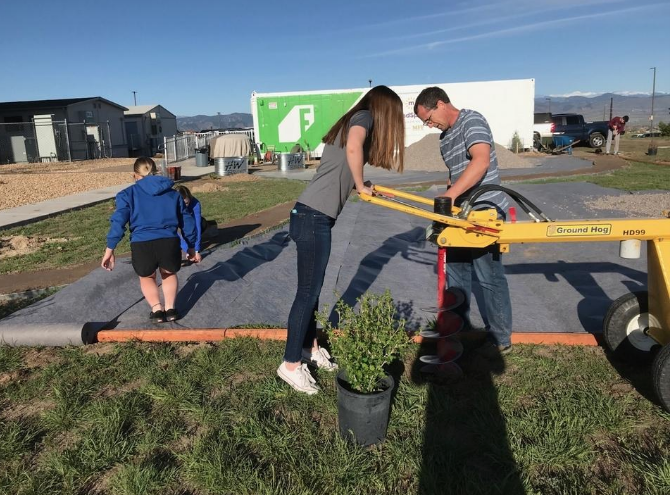
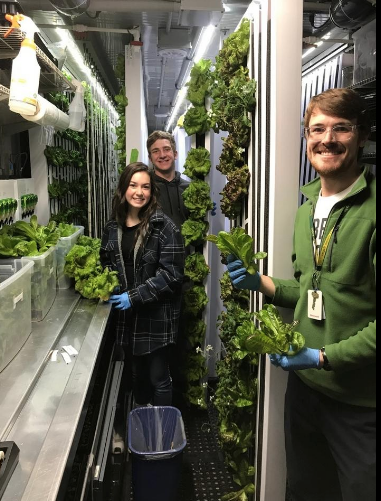
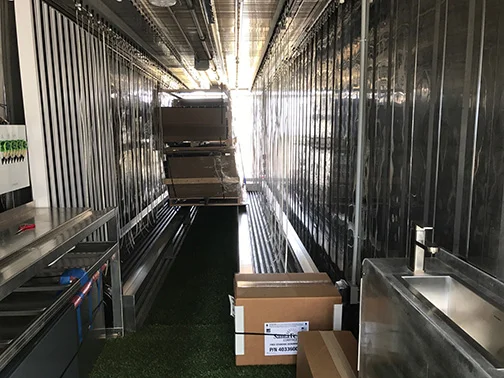

Students at Mountain Vista High School are getting their hands dirty to start the year via the Agricultural Business course taught by David Larsen.
“As part of the program, students are responsible for all aspects of the Mountain View Farms business,” Larsen said.
After being introduced to the different business principles, students are tasked with integrating them into running a successful business. Some of these tasks include marketing, social media/website, communications, graphic design, printed literature, handling of money/accounting, customer service, food safety and business plan development.
“Agriculturally, they have to figure out all of the elements including environment, nutrient, tech, engineering and automation to keep the plants alive and healthy for sale,” he said.
For the past two years classes and interns have operated the Mountain Vista Farm, which utilizes a hydroponic growing system called the Leafy Green Machine.
“I think hydroponics is far more sustainable and reliable than traditional farming for the crops we can grow,” he added. “This technology produces absolutely delicious products that are fresh and last multiple times longer than what is sold in stores.”
He said utilizing this machine involves more people in the local production of food, potentially builds community and is a great educational tool for life skills. For students of his Agricultural Business class he said they gain soft skills in terms of being a good employee including punctuality, engagement, responsibility, as well as a good representation of the business to the public.
Another added element to the Leafy Green Machine is the ability of students to use the app Farmhand App.
“When we first started Freight Farms, we considered ourselves a hardware platform – but our views quickly expanded for two reasons,” Freight Farms CEO, Brad McNamara said.
The first reason was when he and co-founder Jon Freidman realized their clients needed a way to stay in contact with their farms remotely. The second reason was that they wanted to address a historical challenge in the farming world. Which they said was the lack of reliable and transferable data between farms to increase overall agricultural efficiencies.
“At the time, there wasn’t a turnkey hub for industrial-scale IoT, few if any climate-control apps for hydroponic indoor growers, nor a sophisticated way to bridge the gap between emerging IoT technology and old programming control language,” he said.
So building from the ground up, he said that they developed an integrated software platform called Farmhand. Which would enable its users to monitor and manage farm components remotely, automate tasks and analyze growing data.
“As IoT technology has evolved over the years, we’ve continuously integrated new updates and advancements to help our customers operate increasingly efficient farms with the touch of a button,” he said.
Consumers of Freight Farms products don’t just include schools, according to McNamara their tech has been used at restaurants, nonprofits, retail establishments, hospitality organizations and corporate employee benefit programs.
“We’ve been focused on taking the most advanced hydroponic technology and making it approachable. Enabling people of varying ages, experience levels, and industries to become successful food growers,” he said.

New Ways To Make Vertical Farming Stack Up
From the outside it looks like a tall, metal-clad barn. But step in, through a large airlock designed to keep out the bugs, and a kaleidoscopic scene emerges
Cultivating Fresh Produce In An Artificial Environment
Is Getting Cheaper
August 31, 2019 | INVERGOWRIE
From the outside it looks like a tall, metal-clad barn. But step in, through a large airlock designed to keep out the bugs, and a kaleidoscopic scene emerges. A central aisle is flanked by two pairs of towers. Each tower is stacked with a dozen or so trays on which are growing strawberries, kale, red lettuce and coriander. And each tray is bathed in vibrant light of different colours, mostly hues of blue and magenta. Douglas Elder, who is in charge of this artificial Eden, taps some instructions into an app on his mobile phone and, with a short whirr of machinery, a tray of lush, green basil slides out for his inspection.
Mr Elder is product manager for Intelligent Growth Solutions (igs), a “vertical farming” company based at Invergowrie, near Dundee, in Scotland. Each of the nine-metre-high towers in the demonstration unit that he runs occupies barely 40 square metres. But by stacking the trays one on top of another an individual tower provides up to 350 square metres of growing area. Using his phone again, Mr Elder changes the colours and brightness of the 1,000 light-emitting diodes (leds) strung out above each tray. The app can also control the temperature, humidity and ventilation, and the hydroponic system that supplies the plants, growing on various non-soil substrates, with water and nutrients. Armed with his trusty phone, Mr Elder says he can run the farm almost single-handedly.
Plant power
Vertical farming of this sort is not, of itself, a new idea. The term goes back to 1915, though it took a century for the first commercial vertical farms to be built. But the business is now taking off. SoftBank, a Japanese firm, Google’s former boss Eric Schmidt and Amazon’s founder Jeff Bezos have between them ploughed more than $200m into Plenty, a vertical-farming company based in San Francisco. And in June Ocado, a British online grocery, splashed out £17m ($21.3m) on vertical-farming businesses to grow fresh produce within its automated distribution depots.
The interest of investors is growing just as technology promises to turn vertical-farming operations into efficient “plant factories”. The high-tech leds in igs’s demonstration unit are optimised so that nary a photon is wasted. The hydroponics, and the recycling that supports them, mean the only water lost from the system is that which ends up as part of one of the plants themselves. And towers mean the system is modular, and so can be scaled up. Most of the systems which igs hopes to start delivering to customers early next year will consist of ten or more towers.
Some people, however, remain sceptical about how much vertical farms have to offer that good-old-fashioned greenhouses do not. Vertical farms are certainly more compact—a bonus in places like cities where land is expensive. Since sales of fresh produce to the urban masses are often touted as one of vertical farming’s biggest opportunities, that is important. But a greenhouse gets its light, and much of its heat, free, courtesy of the sun. And modern greenhouses can also use solar-powered supplementary led lighting to extend their growing seasons and hydroponic systems to save water, says Viraji Puri, co-founder of Gotham Greens, an urban-farming company that operates greenhouses on the roofs of buildings in New York and Chicago. As for food miles, they could not get any shorter for Gotham Greens’s rooftop greenhouse in Brooklyn, which supplies the Whole Foods Market located downstairs.
The biggest drawback of vertical farming is the high cost of the electricity required to run the large number of leds. This has meant that production has been commercially viable for high-value, perishable produce only, such as salad leaves and herbs. That, nevertheless, is a market not to be sniffed at. But for a broader range of produce, it can prove too expensive. In 2014 Louis Albright, an emeritus professor of biological and environmental engineering at Cornell University in America, calculated that a loaf of bread made from wheat grown in a vertical farm would be priced at about $23.
Blue is the colour
One way of saving electricity is to use leds that generate only the colours that plants require, instead of the full spectrum of plain white light. Plants are green because their leaves contain chlorophyll, a pigment that reflects the green light in the middle of the spectrum while absorbing and using for photosynthesis the blue and red wavelengths at either end of it.
The vertical farm at Invergowrie takes this idea further. It uses leds that are highly tuneable. Although the lights produce mostly blue and red wavelengths, researchers now know that other colours play an important role at various stages of a plant’s development, says David Farquhar, igs’s chief executive. A dose of green at an appropriate moment produces a higher yield. A timely spot of infrared can improve the quality of foliage. The lights can also produce various blue/red mixes.
To operate these leds efficiently, the company has developed a low-voltage power-distribution system. This, says Mr Farquhar, can cut energy costs to about half of those incurred by existing vertical farms. As a result, all four towers can produce 15-25 tonnes a year of herbs, salad leaves, fruit and vegetables. This, the company claims, is between two and three times more than a conventional greenhouse with an equivalent but horizontal growing area, and equipped with supplementary lighting and heating, could manage. And the system can grow all this produce at a similar cost-per-kilogram.
One of the jobs of the Invergowrie unit is to develop lighting regimes tailored to individual crops. Another is to develop algorithms to control, in an equally bespoke way, the climatic conditions preferred by different crops. The idea is to design crop-specific weather “recipes” in order to boost the yield and quality of whatever varieties are grown in the vertical farm. All the processes involved are engineered to be efficient. Irrigation, for instance, relies on captured rainwater. This is cleaned and recycled, but only 5% gets used up by each harvest—and most of that as the water-content in the plants themselves. Ventilation is also a closed loop, harvesting surplus heat from the leds while managing humidity and oxygen levels.
By reducing running costs, the system should make it profitable to grow a wider variety of produce vertically. The firm has already succeeded with some root vegetables, such as radishes and baby turnips. Bulk field crops, such as wheat and rice, may never make sense for a vertical farm, and larger, heavier vegetables would be tricky to raise. This means full-grown potatoes are probably off the menu, at least with existing technology.
Seed potatoes, though, are a good candidate, says Colin Campbell, head of the James Hutton Institute, a plant-science research centre backed by the Scottish government. It is based next door to igs and works with the company. Many fields around the world, Dr Campbell observes, are suffering a growing burden of pests and disease, such as potato-cyst nematode. In the controlled environment of a vertical farm, from which both pests and diseases can be excluded, seed potatoes could be propagated more efficiently than in the big, bad outdoor world. This would give them a head start when they were planted out in fields.
The institute’s researchers are also looking at plant varieties that might do particularly well indoors, including old varieties passed over in the search for crops which can withstand the rigours of intensive farming systems. By dipping into the institute’s gene banks, Dr Campbell thinks it may find some long-forgotten fruits and vegetables that would thrive in the security of a vertical farm.
All this could go down well with foodies, and unlock new and forgotten flavours. Shoppers might even find some exotic varieties growing in supermarket aisles. In Berlin a company called Infarm provides remotely controlled shelved growing cabinets for shops, warehouses and restaurants. Herbs and salad leaves, including exotics such as Genovese basil and Peruvian mint, are resupplied with seedlings from the company’s nursery as the mature plants are picked.
Vertical farming then will not feed the world, but it will help provide more fresh produce to more people. It may even be that, as vertical-farming systems improve further, miniature versions will be designed for people to put in their kitchens—thus proving that there is nothing new under either the sun or the led. Such things used once to be called window boxes.■
This article appeared in the Science and technology section of the print edition under the headline"Growing brighter"

Testing The Waters - Is Public Drinking Water Safe For Hydroponic Production?
The quality of the irrigation water with respect to chemical, microbial and physical properties affects crop quality and health. No matter what, test the chemical parameters of your irrigation water!
Fig. 1. Sensitivity of Petunia x hybrida to free chlorine in irrigation water. Plants were irrigated with 0, 2 and 4 ppm free chlorine with every irrigation. Chlorosis was observed at 4 ppm or greater.Photos courtesy of Rosa E. Raudales, Cora McGehee and Juan Cabrera
The quality of the irrigation water with respect to chemical, microbial and physical properties affects crop quality and health. Growers producing edibles are also concerned about the risk of spreading waterborne human pathogens during production and postharvest. Many growers resolve to use water from public water systems to lower the risk of foodborne illnesses and avoid the hassle of testing and treating water. However, growers must always monitor the chemical parameters of irrigation water to grow high-quality crops. This article explains why growers should test “clean” water.
Public drinking water must meet the Environmental Protection Agency (EPA) drinking water standards established in the Safe Drinking Water Act. EPA sets regulatory limits for microbial contaminants, among others. The Food and Drug Administration (FDA) indicates that “water that meets the microbial standards for drinking water is considered safe and sanitary” and is recommended in the Good Agricultural Practices (GAP) and Good Handling Practices (GHP) certification guidelines. The Food Safety Modernization Act (FSMA) waives microbial testing of water if the source comes from a public water system and has a certification of treatment and sampling. Hence, many growers adopt public drinking water for irrigation and postharvest. However, public water facilities inject chlorine, also an EPA-regulated contaminant, to control microbes in drinking water. Chlorine in irrigation water can be toxic to crops.
Chlorine chemistry
Chlorine is an effective germicidal agent for removing pathogens from water. Chlorine is added to water as a gas, liquid (e.g. sodium hypochlorite, AKA bleach) or solid (e.g. calcium hypochlorite), or generated via membrane electrolysis. All chlorine sources react with water and form hypochlorous acid (HOCl). Further dissociation of HOCl will result in hypochlorite (OCl-) and hydrogen (H+) ions. The sum of HOCl and OCl- is known as free chlorine; both are sanitizing agents. Hypochlorous acid is the strongest form of chlorine sanitizer.
Hypochlorous acid reacts with nitrogen-containing compounds, both organic and inorganic, to form chloramines. Chloramines are a combined chlorine form. Chloramines have a lower disinfection efficacy and longer residual effect than free chlorine.
The sum of free and combined chlorine is total chlorine. Growers can measure all forms of chlorine with colorimetric kits.
Fig. 2. Sensitivity of lettuce to free chlorine in irrigation water. Plants were irrigated with 0, 0.5 and 1 ppm free chlorine with every irrigation.Photo courtesy of Rosa E. Raudales, Cora McGehee and Juan Cabrera
Phytotoxicity
In separate experiments, our team from the University of Connecticut and researchers at the University of Guelph and the University of Florida, have established that most container-grown crops can be irrigated with up to 2 ppm (or mg/L) free chlorine without causing phytotoxicity (Fig. 1). Target doses to control plant pathogens and phytotoxicity thresholds vary by crop-pathogen combination.
Chlorine demand is the difference between the initial (applied) and residual (measured after a given contact time) concentration. The organic matter in the substrate reacts with chlorine and exerts chlorine demand. Hence the recommendations for container-soilless media cannot be directly applied to hydroponically grown crops.
We tested the sensitivity of lettuce to chlorine in hydroponic production. We observed reduction in plant weight when the concentration was as low as 0.5 ppm free chlorine (Fig. 2).
The phytotoxicity symptoms caused by chlorine on hydroponically grown young lettuce plants can be confused with root rot or nutrient deficiencies (Fig. 3). In contrast, the symptoms in mature plants are not very distinctive (Fig. 2). For this reason, sending symptomatic (and healthy) plants to a diagnostic clinic and monitoring the chemistry of nutrient solutions is an important part of the diagnosis.
Fig. 3. Lettuce seedling with phytotoxicity caused by chlorinePhoto courtesy of Rosa E. Raudales, Cora McGehee and Juan Cabrera
Testing and treating the waters
The maximum chlorine level allowed in drinking water is 4 ppm. Public water treatment facilities can change chlorine residual levels, reaching up to 4 ppm combined or free chlorine, without notifying the end-user. Therefore, growers using public drinking water must include chlorine in their standard water-testing practice.
Hanna Instruments, Hach and similar companies have developed kits that can be used to measure chlorine in-house.
For more information
Good Agricultural Practices and Good Handling Practices
We do not know yet the phytotoxicity thresholds of free or combined chlorine for most hydroponically grown crops. For this reason, we recommend that growers measure total chlorine.
Growers using public water should have a water treatment option to remove chlorine from the water. The options include activated carbon filters, sodium thiosulfate and aeration.
Take-home message: No matter what, test the chemical parameters of your irrigation water!
Rosa (rosa.raudales@uconn.edu) is an assistant professor at the University of Connecticut and Cora and Juan are Ph.D. students at the University of Connecticut.
Disclaimer: Trade names are included in this publication as a convenience to readers and to illustrate examples of technologies. The use of brand names and any mention or listing of commercial products or services does not imply endorsement by the University of Connecticut, nor discrimination against similar products or services not mentioned.

Our Food Is Killing Too Many of Us
And Americans are sick — much sicker than many realize. More than 100 million adults — almost half the entire adult population — have pre-diabetes or diabetes. Cardiovascular disease afflicts about 122 million people and causes roughly 840,000 deaths each year, or about 2,300 deaths each day. Three in four adults are overweight or obese. More Americans are sick, in other words, than are healthy
Improving American Nutrition Would
Make The Biggest Impact On Our Health Care
By Dariush Mozaffarian and Dan Glickman
Mr. Mozaffarian is dean of the Tufts Friedman School of Nutrition Science and Policy. Mr. Glickman was the secretary of agriculture from 1995 to 2001.
August 26, 2019
The Democratic debate on health care has to date centered around who should be covered and who should pay the bill. That debate, which has been going on for decades, has no clear answers and cannot be easily resolved because of two fundamental realities: Health care is expensive, and Americans are sick.
Americans benefit from highly trained personnel, remarkable facilities and access to the newest drugs and technologies. Unless we eliminate some of these benefits, our health care will remain costly. We can trim around the edges — for example, with changes in drug pricing, lower administrative costs, reductions in payments to hospitals and providers, and fewer defensive and unnecessary procedures. These actions may slow the rise in health care spending, but costs will keep rising as the population ages and technology advances.
And Americans are sick — much sicker than many realize. More than 100 million adults — almost half the entire adult population — have pre-diabetes or diabetes. Cardiovascular disease afflicts about 122 million people and causes roughly 840,000 deaths each year, or about 2,300 deaths each day. Three in four adults are overweight or obese. More Americans are sick, in other words, than are healthy.
Instead of debating who should pay for all this, no one is asking the far more simple and imperative question: What is making us so sick, and how can we reverse this so we need less health care? The answer is staring us in the face, on average three times a day: our food.
Poor diet is the leading cause of mortality in the United States, causing more than half a million deaths per year. Just 10 dietary factors are estimated to cause nearly 1,000 deaths every day from heart disease, stroke and diabetes alone. These conditions are dizzyingly expensive. Cardiovascular disease costs $351 billion annually in health care spending and lost productivity, while diabetes costs $327 billion annually. The total economic cost of obesity is estimated at $1.72 trillion per year, or 9.3 percent of gross domestic product.
These human and economic costs are leading drivers of ever-rising health care spending, strangled government budgets, diminished competitiveness of American business and reduced military readiness.
Fortunately, advances in nutrition science and policy now provide a road map for addressing this national nutrition crisis. The “Food Is Medicine” solutions are win-win, promoting better well-being, lower health care costs, greater sustainability, reduced disparities among population groups, improved economic competitiveness and greater national security.
Some simple, measurable improvements can be made in several health and related areas. For example, Medicare, Medicaid, private insurers and hospitals should include nutrition in any electronic health record; update medical training, licensing and continuing education guidelines to put an emphasis on nutrition; offer patient prescription programs for healthy produce; and, for the sickest patients, cover home-delivered, medically tailored meals. Just the last action, for example, can save a net $9,000 in health care costs per patient per year.
Taxes on sugary beverages and junk food would help lower health care costs. Credit: Jenny Kane/Associated Press
Taxes on sugary beverages and junk food can be paired with subsidies on protective foods like fruits, nuts, vegetables, beans, plant oils, whole grains, yogurt and fish. Emphasizing protective foods represents an important positive message for the public and food industry that celebrates and rewards good nutrition. Levels of harmful additives like sodium, added sugar and trans fat can be lowered through voluntary industry targets or regulatory safety standards.
Nutrition standards in schools, which have improved the quality of school meals by 41 percent, should be strengthened; the national Fresh Fruit and Vegetable Program should be extended beyond elementary schools to middle and high schools; and school garden programs should be expanded. And the Supplemental Nutrition Assistance Program, which supports grocery purchases for nearly one in eight Americans, should be leveraged to help improve diet quality and health.
The private sector can also play a key role. Changes in shareholder criteria (e.g., B-Corps, in which a corporation can balance profit versus purpose with high social and environmental standards) and new investor coalitions should financially reward companies for tackling obesity, diabetes and other diet-related illness. Public-private partnerships should emphasize research and development on best agricultural and food-processing practices. All work sites should demand healthy food when negotiating with cafeteria vendors and include incentives for healthy eating in their wellness benefits.
Coordinated federal leadership and funding for research is also essential. This could include, for example, a new National Institute of Nutrition at the National Institutes of Health. Without such an effort, it could take many decades to understand and utilize exciting new areas, including related to food processing, the gut microbiome, allergies and autoimmune disorders, cancer, brain health, treatment of battlefield injuries and effects of nonnutritive sweeteners and personalized nutrition.
Government plays a crucial role. The significant impacts of the food system on well-being, health care spending, the economy and the environment — together with mounting public and industry awareness of these issues — have created an opportunity for government leaders to champion real solutions.
Yet with rare exceptions, the current presidential candidates are not being asked about these critical national issues. Every candidate should have a food platform, and every debate should explore these positions. A new emphasis on the problems and promise of nutrition to improve health and lower health care costs is long overdue for the presidential primary debates and should be prominent in the 2020 general election and the next administration.
Lead Image: Cheeseburgers at a White House picnic in 2018. Credit Alex Edelman/Getty Images