


Welcome to iGrow News, Your Source for the World of Indoor Vertical Farming

Who Wants To Buy The Dutch Rooftop Greenhouse? And The Building Below
More than a year ago, the city nursery on top of the building De Schilde in The Hague went bankrupt. Since the bankruptcy of the nursery Urban Farmers in July 2018, the greenhouse has been empty
More than a year ago, the city nursery on top of the building De Schilde in The Hague went bankrupt. Since the bankruptcy of the nursery Urban Farmers in July 2018, the greenhouse has been empty. "It turned out that (vertical) city farming does not have a future in the building on Televisiestraat 2", is the conclusion of the Municipal Executive of The Hague. A replacement of the alderman should speed up the sale. "A substantive transfer of Sustainability to Economy is desired for the process of selling the building De Schilde."
The largest commercial city facility for food production in Europe. In this way, the rooftop greenhouse on De Schilde was announced in 2015. 2.7 million euro was invested in the 1,200 m2 facility. That should have resulted in a production of 45 tons of vegetables and 19 tons of tilapia per year, coming from the 6th floor of the former Philips building in The Hague.
Bankruptcy
This was not a success. In 2018, Urban Farmers was declared bankrupt. "The activities of the company have been losing revenue since the beginning. The costs were high and the turnover lagged. The stakeholders subsequently could not agree about the course and strategy to follow", the curator wrote in the bankruptcy report. After the bankruptcy of the mother company in Switzerland and the departure of various involved persons, bankruptcy was requested by the Fonds Ruimte en Economie in The Hague.
The Fonds Ruimte en Economie Den Haag is an initiative of the municipality The Hague and provides loans for investment in company spaces. European funds were used for this. With such a loan, the rooftop greenhouse was ultimately realized. This gives the Fund the first right of lien to the facilities. The building is owned by Starterspanden Den Haag CV/BV. This company was founded to offer accommodation for starting entrepreneurs. Stakeholders in the company are the municipality The Hague and the Fonds Ruimte en Economie Den Haag. Both have a say of 49%, and 2% for the company itself.
The building
The intended purpose of the building on the Televisiestraat was a multi-tenant building for city farming, sustainability and innovation. This has been set up under the title The New Farm, but it turned out to be difficult - and has become even more difficult when Urban Farmers went bankrupt. "After the reconstruction of the building in 2016 and 2017, the occupancy rate was low and dropped even lower when Urban Farmers went bankrupt in 2018", the municipality The Hague wrote last month. "It turned out that (vertical) city farming does not have a future in the building on the Televisiestraat 2. The concept did not prove to be a success here. The advice is to let go of the concept."
Within the municipality, the building is now transferred from the alderman for Sustainability and Energy Transition to the alderman for Economy, Sport, and Outdoor.
"The current rental income is insufficient to meet the fixed costs of managing the building. The economic new start/reorientation is becoming increasingly urgent. Selling/renting out of the building could partially compensate the investments/loans of the stakeholders FRED and the municipality. A substantive transfer of Sustainability to Economy is desired for the sale of the building De Schilde."

Can Vertical Farming Feed The World And Change The Agriculture Industry?
Can Vertical Farming Feed The World And Change The Agriculture Industry?
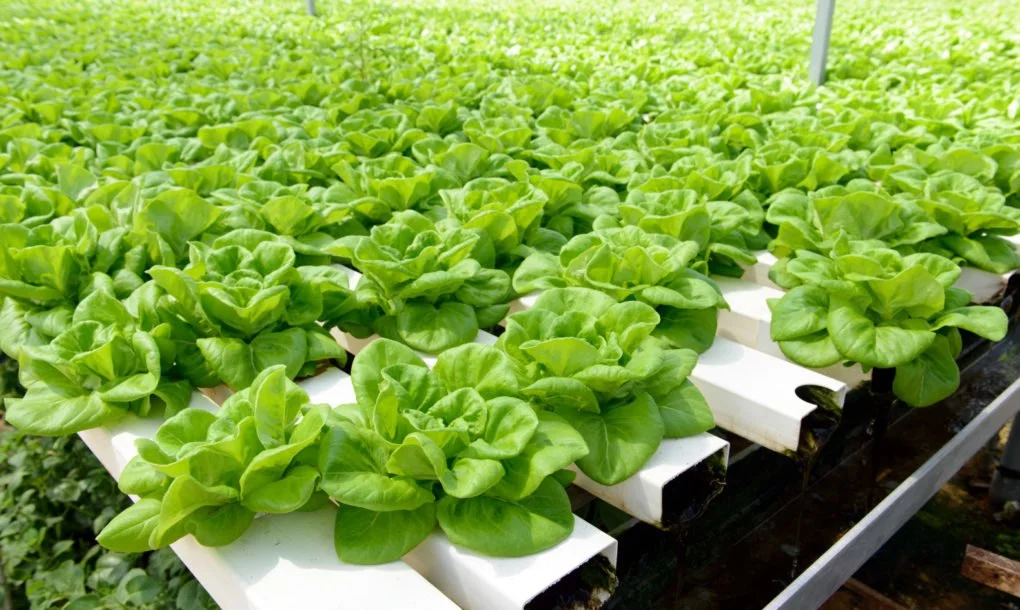
Year after year, cities expand and pristine natural habitats are turned into farms and pastures to support the world’s growing population. But despite our encroachment into the environment, we still struggle to feed everyone. Vertical farms could offer a solution by producing higher crop yields year-round in less space than conventional agriculture.

What Is Vertical Farming?
With land for crops and pastures growing scarce — plus the threat of pesticides and herbicides taking a toll on our health and the environment — people are exploring new ways to grow food, such as urban agriculture. In general, this is the process of growing food within city limits – whether on rooftops, in backyards or on balconies. The goal is to provide families with fresh, healthy food that isn’t laced with chemicals — and when you grow your own crops, you can control these elements.
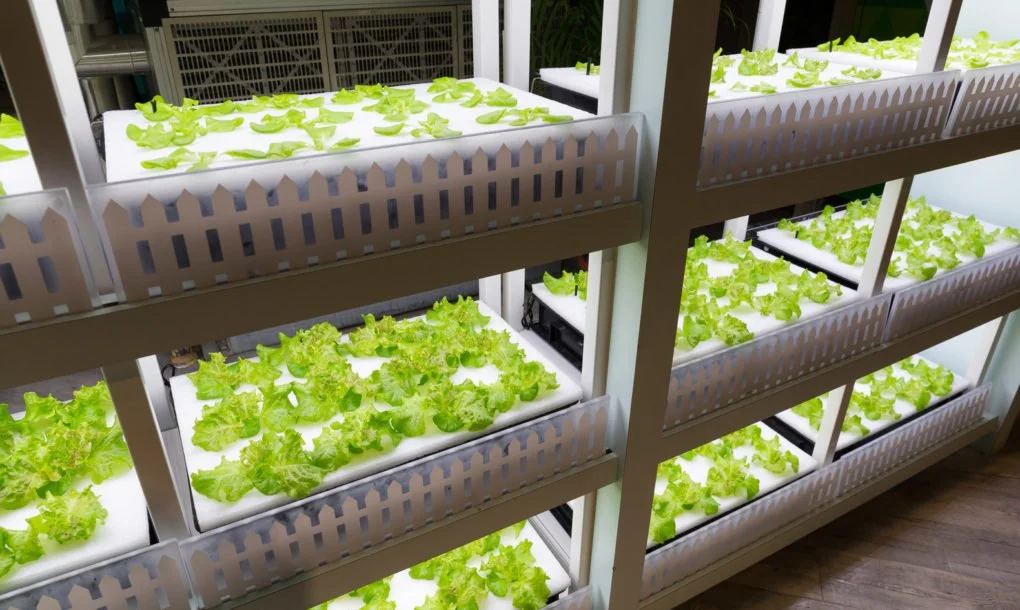
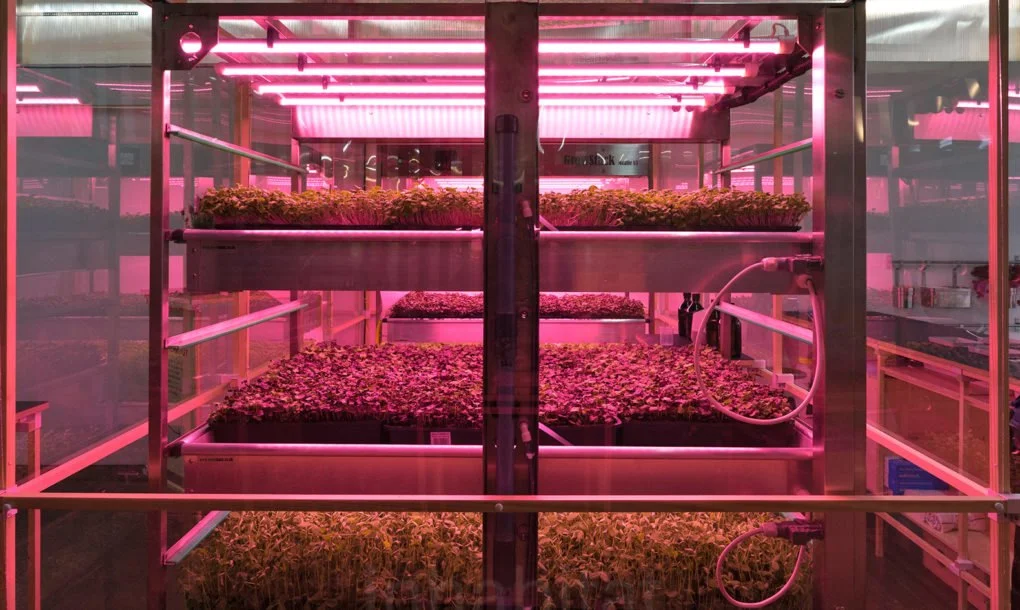
Vertical farming is a type of urban agriculture – but vertical farms are often constructed indoors in extremely controlled environments. Crops are grown on shelves that extend upward instead of outward, and the environment is carefully monitored, so crops grow year-round.
In addition to growing crops, some vertical farmers have developed ways to grow fish in a self-sustaining system. Water from the plants is recycled into fish tanks, and the waste from the fish becomes fertilizer for the plants. Then, both the plants and fish can be harvested for food.
The benefits of vertical farming
The benefits of vertical farming are numerous. Farmers can control the crops’ environment in vertical farms, so the plants aren’t subjected to nasty weather conditions or droughts. Humidity, nutrients and water are administered to growing plants to achieve optimum growing conditions. Because of the controlled environment, crops can be harvested more than once a year, resulting in higher yields than traditional farming.
Related: The GCC’s first commercial vertical farm launches in Dubai
Vertical farms are more sustainable than conventional farms because they use less water (which is often recycled through the system), they take up less space and they use less fossil fuels because they don’t rely on heavy machinery such as tractors and harvesters.
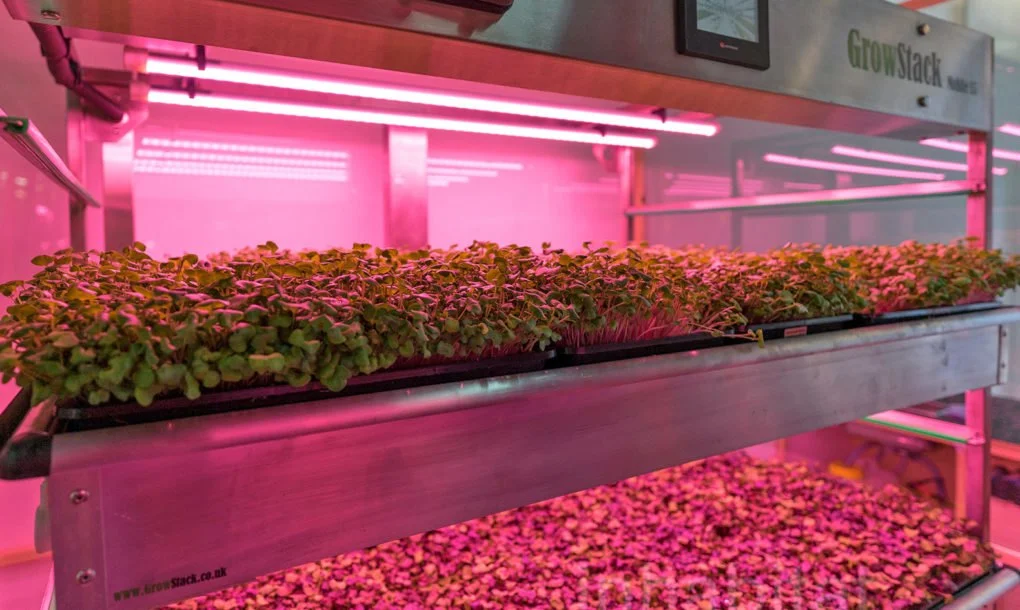
Technology helps vertical farmers get the best output from the farm. Tailored lamps help plants get more light exposure, which encourages them to grow faster than crops that rely on the sun. Vertical farms also provide greater protection from insects, thus decreasing the need for harmful chemical products.
Downsides to vertical farming
While vertical farms can help with local hunger issues and sustainability, there are some barriers that may keep them from gaining worldwide traction. The cost of setting up a vertical farm can be prohibitive. Conservative estimates put the initial start-up cost at around $110,000, but there are estimates upward of millions of dollars.
Finding an abandoned warehouse or building in an urban setting for a reasonable price might be difficult. Since vertical farms rely on electricity for growing lamps and strict environmental controls, the location has to have reliable power — not just any old abandoned building will do. Vertical farms also depend heavily on technology, which can be costly. Keeping the lights on and the environmental controls running will impact energy use — and your budget.
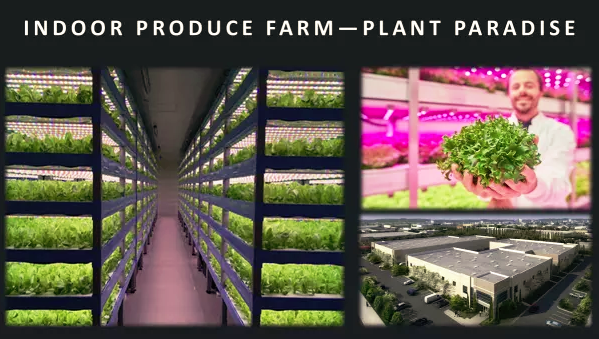
Not every crop that is grown traditionally can be raised successfully in a vertical farm. Leafy greens and herbs do the best in an indoor environment, while staple crops like wheat and potatoes are difficult to grow indoors, as are some fruits and vegetables. The crops that can be harvested from a vertical garden are limited.
Growing food to feed the hungry is a noble gesture, but it also has to be profitable, especially when the initial cost to set up a vertical farm is so high. If there isn’t a market in your area, it’s a waste of time to grow large amounts of food that you won’t be able to sell.
The Verdict
Despite the downsides, the positives are plentiful. In addition to embracing sustainability and helping combat hunger, vertical farms can also encourage support for local economies. These farms can create jobs, turn a profit and provide a healthy source of food for locals.
As technology continues to advance, new approaches will improve the efficiency and productivity of vertical farms. If nothing else, the idea sparks the conversation about changing the agricultural industry and gives us a place to start for finding better, more sustainable ways to grow food.
Images via Depositphotos, Aqua Mechanical and Mike Chino for Inhabitat
under Agriculture, Features, Innovation, Sustainable Food, Urban Farming

Artemis, Publisher of State of Indoor Farming Report, Launches First Annual Global Ag Report Survey
Today we work with large international specialty crop farms that face a different set of challenges and opportunities than smaller, local operations. This report will dig into their pain points and market potential, to produce a comprehensive look into the global specialty crop industry
Data and insights on emerging trends, challenges, and opportunities for enterprise specialty crop farmers to be included in new generation of State of Indoor Farming Report, now Artemis Global Ag Report
Today we work with large international specialty crop farms that face a different set of challenges and opportunities than smaller, local operations. This report will dig into their pain points and market potential, to produce a comprehensive look into the global specialty crop industry.
NEW YORK (PRWEB) AUGUST 21, 2019
Artemis, the leading enterprise Cultivation Management Platform (CMP), today announced the launch of its first Global Ag Report survey to capture the latest trends, biggest challenges, and opportunities for global enterprise farmers growing fruits, vegetables, cannabis, hemp, and other specialty crops. The survey will inform the newest iteration of the State of Indoor Farming Report, released in previous years by Artemis under the company’s former name—Agrilyst.
The survey is open to all speciality crop growers and operators of enterprise farms, including operators of greenhouses, high tunnel farms, indoor facilities, and field growers, and will close for responses on October 15, 2019.
The purpose of the new and improved survey is to give enterprise specialty crop farmers an industry voice around the most significant issues they are facing today. Artemis plans to use the survey responses to inform its first Global Ag Report. The report will provide an overview of the global specialty crop industry, as well as a deep dive into key topics such as production & operations, technology, and market outlook.
“Today we work with large international specialty crop farms that face a different set of challenges and opportunities than smaller, local operations,” said Allison Kopf, CEO of Artemis. “This report will dig into their pain points and market potential, to produce a comprehensive look into the global specialty crop industry. That is our priority in constructing our new survey for the Artemis Global Ag Report.”
Data from the survey will be supplemented with additional research from Artemis, and growers can use these shared insights as a resource for industry awareness, strategic planning and implementation of best practices in coming years.
Artemis is a trusted partner to some of the world’s largest farming companies. Since launching in 2015, it has seen strong customer growth with companies worth a collective $5 billion using the platform daily. Artemis has attracted a wide range of users that are foremost interested in the security, compliance, profitability, and potential to expand their operations. The company has also partnered with others in the agtech ecosystem, enabling users to further reduce risk across all areas of their business.
About Artemis
Founded in 2015, Artemis provides a world-class Cultivation Management Platform that enables owners and managers of enterprise horticulture facilities to drive efficiency, profits, and growth while ensuring security and regulatory compliance. With Artemis, users can manage workflow and daily tasks, register crop batches, trace food safety issues, manage workers, and leverage data insights to increase workforce efficiency and crop productivity.
The platform integrates easily with other software for climate control, shipping/logistics, accounting, ERP/MRP, CRM, and Point of Sale Commerce.
The company is headquartered in Brooklyn, NY. For more information visit Artemis

Podcast / Video: The Microgreens Show - Episode 6
This podcast is a basic introduction to microgreens
The Microgreens Show - Episode 6
August 24, 2019
The Grow Team was asked to be on Rock 107 WIRX Podcast #19 last week. This podcast is a basic introduction to microgreens.
Nick Greens

US: How LED Lights Help Grow The Microgreens In Philadelphia
Adam Green was pursuing a career in filmmaking when he realized his real passion was raising the finest microgreens for the world’s top chefs. Now, the 25-year-old directs AGreen Farms, an indoor hydroponic farm in Philadelphia that specializes in selling garnishes to restaurants and hospitality establishments
Adam Green was pursuing a career in filmmaking when he realized his real passion was raising the finest microgreens for the world’s top chefs. Now, the 25-year-old directs AGreen Farms, an indoor hydroponic farm in Philadelphia that specializes in selling garnishes to restaurants and hospitality establishments. Of course, it’s not easy to make a mint while growing mint in the city, and that’s why Green is investing in LED horticulture lighting from Current, powered by GE, to produce herbs and edible flowers that make culinary pros go wild.
Seeds of Inspiration
At Drexel University, Green dabbled in business, cinema and screenwriting before finding that his true calling was not behind a camera but in a kitchen, sharing locally grown food with those who can appreciate the finer points of pea shoots.
“I realized the thing that made me happiest was food―eating the highest-quality food, stopping at farmers markets, making connections with the farmers―it was really exciting to me,” he says. “Growing my own food and knowing where it came from attracted me to agriculture, and I felt I could put a sound business case behind it.”
Green soon found himself in New York City, working as a sales intern for Farm.One. The technology-powered urban vertical farm grows a diversity of special crops for local chefs and gave Green the confidence he needed to step out on his own.
“My job was to find customers and sell them the best products,” he recalls. “I developed a rapport with chefs, and it was incredible to see the emotional impact when you bring them an excellent product they can’t get elsewhere. It’s about more than garnishing a plate; these ingredients are what make a great pesto or add layers of flavor to a dish. That’s when I knew I wanted to bring the same experience to chefs in Philadelphia.”
Sprouting Upward
Green launched AGreen Farms in 2018 in a mixed-use building in Philadelphia’s Germantown neighborhood. The 5,000-square-foot operation includes 3,500 square feet of grow space dedicated to microgreens and edible flowers of all kinds, many of them rare to the region. Helping Green get his indoor farm off the ground was Hort Americas, a leading horticulture supply company. As the operation came together, the conversation turned to lighting arrangements that could allow the fledgling farm to flourish.
“Hort Americas and specifically our rep Kyle Barnett were just very passionate about what we were doing and helped us source all the equipment we needed,” says Green. “Not only selling us the right products but educating us on making the best decisions is what Kyle and his team brought to the table, and that made it easy for us to work with them.”
After hearing Green’s goals for the farm, Barnett created unique light plans for the operation and found that the Arize™ Lynk light was the perfect fit. The system provides different light spectrums to promote all stages of plant growth. Importantly, Current’s varied light recipes offer the ideal spectrum for the unique needs of AGreen’s crops.
“Most of our farm is growing microgreens under pink light that helps them thrive, and then we have flowers that respond well to a reproductive purple light,” Green says. “We are currently in the middle of testing our first round of crops, and I will definitely say that the lighting is my last concern right now. I recently delivered some product to a very discerning chef, and he looked at the clamshells and said, ‘These are beautiful.’ Our opinion is that LED was the right answer, absolutely.”
More than 1,400 Arize Lynk LED lamps were installed at AGreen Farms to cultivate everything from Swiss chard to celosia to cilantro. As Green explains, microgreens demand more care than most crops to produce consistently amazing results.
“When you’re growing garnishes, it’s all about the taste, texture and aesthetics to produce the high-quality products that these incredible chefs deserve. The lights have a positive impact on making things crunch more or turn a darker green, for instance, and that’s what you need to walk into a kitchen with confidence and show someone something they haven’t seen before.”
Sage Advice
Bill Green, a self-admitted serial entrepreneur, is Adam’s father and author of the book All In. In it, he offers practical advice for cracking the code of success in the business world, including to approach every challenge with genuine enthusiasm.
“Adam enjoys talking to chefs, and sales is clearly his sweet spot,” says Bill Green, who brings 40 years of executive counsel and guidance to AGreen Farms. “I thought the plan he set forth really made sense, because he’s not trying to build a giant to compete against the biggest names―he knows his niche and what certain chefs are looking for, and his passion to customize that experience is what will shape his business.”
For Adam Green, perfect pentas blooms are a mark he will never stop aiming for, but with help from Current and Hort Americas, this young grower has already hit the mark with LED lighting for his budding operation. Beyond vibrant, leafy crops, AGreen Farms will also benefit from the significant energy savings LED can deliver compared to conventional light sources. It all adds up to a tasty finishing touch at the finest restaurants in Philadelphia.
“Giving chefs the best tools in their arsenal is what we’re all about,” he says. “Based on our first year in business, I don’t expect a shortage of customers anytime soon.”
For more information:
Current by GE
Publication date: 8/6/2019

The African Association For Vertical Farming Joins The EBAFOSA
Established in mid-2015 and endorsed at the highest continental environment policy forum – the African Ministerial Conference on the Environment (AMCEN), EBAFOSA focus is on climate proofing and maximising productivity of Africa’s agro-value chains
The African Association for Vertical Farming (AAVF) has announced that it is joining the Ecosystem Based Adaptation for Food Security Assembly (EBAFOSA).
To expand the beneficial impacts of vertical farming, going beyond on-farm production to also integrate value addition is paramount. This is necessitated by the need to eliminate rising postharvest losses (PHLs) and leverage the process to unlock multiple enterprise opportunities along entire value chains. It is for this reason, and the urgent need to maximise agro-productivity while taking care of the environment that AAVF has joined the EBAFOSA.
Facilitated by the UN Environment, EBAFOSA is a countries-driven inclusive policy and implementation action framework that convenes multiple actors – state and non-state, individual and institutional – to forge complementary and mutually beneficial partnerships that connect the dots towards scaling climate action. But doing so from an enterprise paradigm that ensures market longevity.
Established in mid-2015 and endorsed at the highest continental environment policy forum – the African Ministerial Conference on the Environment (AMCEN), EBAFOSA focus is on climate proofing and maximising productivity of Africa’s agro-value chains. The end being to convert inefficiencies along Africa’s agro-systems that cost over $48 billion each year, into food secure homes, income and enterprise opportunities and macroeconomic expansion. The core strategy applied is enterprise partnerships that decentralise appropriate clean energy – a climate solution - to power value addition of produce sourced from ecological production – a climate solution as well. This as the core, is combined with innovative financing, market incentives and policy feedback to catalyse growth of diverse enterprises with climate action co-benefits along entire value chains.
Youth being the majority in the continent and hence the most significant nonstate actor constituency are key in driving this “connecting the dots” approach. They are structurally guided and inspired to leverage their skills, ongoing work and existing enabling policies, and work collaboratively with their peers of complementary skilling towards undertaking climate action enterprises. Such voluntary mutual & complementary collaborations to drive climate enterprise actions are the EBAFOSA modus operandi called Innovative Volunteerism.
In all these, the EBAFOSA logic is that challenges for actors along Africa’s agro-value chains present opportunities for complementary actors with solutions having climate co-benefits. But that these two polar opposites need to be brought together. EBAFOSA provides the inclusive framework where these two polar opposites are brought together for collaborative solutions and unlocking enterprises.
To date, EBAFOSA innovative volunteerism actions are ongoing in over 40 counties across Africa.
AAVF looks forward to working with EBAFOSA and the mentioned stakeholders towards ensuring vertical farming catalyses growth of multiple climate action enterprises in areas of AAVF operations through innovative volunteerism.
Publication date: 8/8/2019
Want To Grow Food On Your Terrace? This Startup Has Helped Over 400 Homes Do So!
Archana Mishra, 65, was first inspired to grow her own food when her friend from Germany spoke to her about it. The former school teacher wanted to eat healthy but organic produce in the market was considerably expensive
Turning your terrace into a thriving farm doesn’t just help your family eat healthy food, it also helps save the planet. And this Jaipur man can help you do this, one step at a time! #LiveGreen #GrowOrganic
August 16, 2019,
Archana Mishra, 65, was first inspired to grow her own food when her friend from Germany spoke to her about it. The former school teacher wanted to eat healthy but organic produce in the market was considerably expensive.
Want to try your hand at farming? Check out these gardening accessories and start your own vegetable patch at home now!
When she visited her daughter in the US, she was amazed by the concept of a farmer’s market where her daughter would frequently go to buy fresh produce.
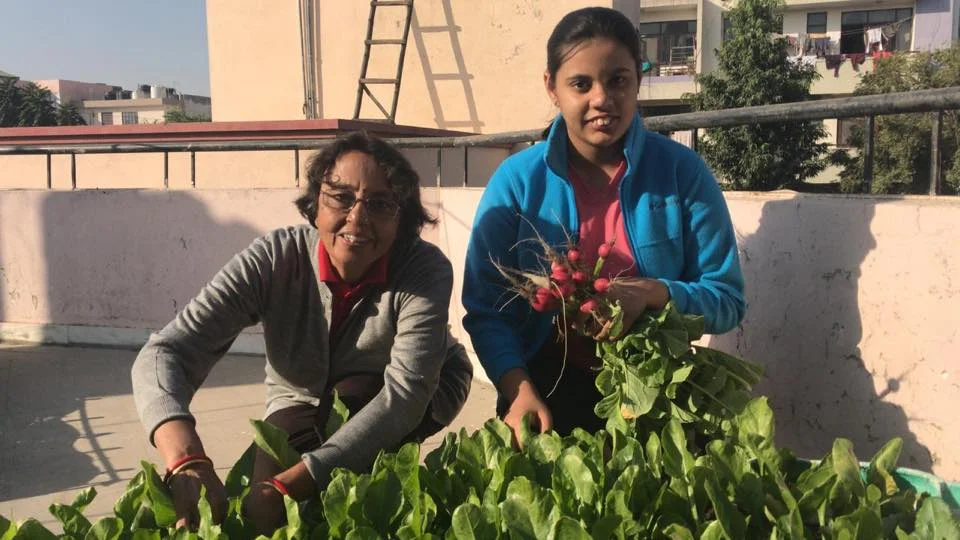
Archana Mishra gardening with her granddaughter
She came across Living Greens, a company which provides portable farming systems to customers living in urban spaces. In addition to working with individuals, they also work with corporates in developing green walls (vertical green spaces) in office spaces.
It has been six years since, and now, Mishra grows her vegetables at her home terrace in Jaipur.
Speaking to The Better India, the delighted septuagenarian says, “My entire family is now involved in this process of growing food and it makes me so happy. Even my granddaughters join me while I am tending to my garden.”
In the backdrop of widespread land clearing for agriculture leading to at least 22 per cent of the overall greenhouse gas emissions, it has become imperative that we make efficient use of space. Living Greens was founded by Prateek Tiwari in 2013 with seed-funding from NRI investors living in the Silicon Valley.
Prateek is an Agricultural Engineer and an alumnus of the prestigious Indian Institute of Foreign Trade (IIFT), New Delhi. After serving in blue-chip companies like M&M, Reliance Fresh, ITC (Agri Business Division) and Walmart India, he decided to take the plunge to revolutionise urban farming. He resigned from Walmart in May 2011 but had to put in two arduous years of experimentation to create a do-it-yourself portable farming system.
How it began
Although the Living Greens was officially founded in 2013, it had its modest beginnings in July 2012.
Prateek Tiwari with his team receiving a leadership award for his services
“We launched our concept not as a product but as a service i.e. anybody interested in experimenting with this idea could take our Portable Farming Systems on rent. This attracted many people to experiment. As most of them subsequently decided to purchase the equipment, we scrapped the rental scheme,” says Prateek.
He had a deep and strong conviction that cities must grow their own food. “There is a strong sense of fear that we are eating a bit of cancer everyday in our vegetables, which have been grown using lethal pesticides and effluent water containing carcinogenic heavy metals,” he says.
He discusses several benefits of developing a rooftop farming system. “Covering the rooftops with lush green organic farms not only cools the building but also generates tonnes of fresh oxygen in cities suffocating in their own pollution besides making use of under-utilised urban spaces,” says Prateek.
Along with a profound sense of responsibility to utilise his agricultural education and knowledge, he had a strong desire to convert under-utilised urban spaces like rooftops, plots, gardens, and farmhouses into food-growing urban spaces.
After the idea gained traction, the team of Living Greens focused on offering an A-Plus service experience to clients. “As they [customers] enjoyed growing their vegetables on their rooftops, we encouraged them to spread their ‘joy of farming’ among their friends and on social media. We thus expanded our client base through referrals from happy customers,” says the founder.
Since then, over 400 houses have become organic homes where people grow fresh vegetables on their rooftops. Mishra was one of their first ten customers and she still gets in touch with them when she needs help with anything related to her garden. For this, she pays a nominal fee.
How it works
The Living Greens has a range of services. The portable farming system (PFS) service is available for Rs 14,500 for two units. The prices go down per unit when purchased in bulk. The installation takes between 48 to 72 hours.
A terrace garden belonging to a client
They also provide a set of organic sprays for pest, disease and nutrient management of plants being grown in the PFS. One organic inputs kit can be applied to two PFSs for four months.
There are also four kinds of root fertilisers that must be used regularly by the client.
Prateek points out that the pesticides for an organic garden also need to be free of chemicals.
He believes that a focus on a prophylactic approach instead of a symptomatic one is better for the overall health of plants. For this, they developed seven sprays for seven days which must be applied on the plants for four months. These bio-pesticides are made of organic materials like neem oil which reduces the egg-laying capacity of pests.
Another example is a liquid fungus called Beauveria bassiana which is used to control pests like whiteflies among other insects in agriculture.
Onsite support system is another service they offer. This comprises of weekly and monthly visits once the unit is installed. After the 4-month support period, customers can pay per visit for additional guidance.
They also provide the services of an online support system.
“Our team of agri experts can receive the problem-pics from the client, identify the pest/disease/nutrient issue and give precise recommendations from within the organic inputs kit, for solving the problem,” says Prateek. This facility is free.
“After offering a basic training to the client at the time of installation, we continue to support them online, by sending all required information in the form of charts/diagrams/videos/video-chats,” he adds.
Expansion and challenges
The Living Greens helps transform terraces into urban farms
The road to success was not easy. When Living Greens first began, a lot of people did not know much about urban farming and believed that it was practiced by farmers on open lands in rural areas. There was also a dearth of quality and well-tested organic inputs, says Prateek.
He also started with a very small team who did not have much knowledge of organic farming. There was a need for a collaborative effort between the client and employees on site, with a constant exchange of expertise.
Now, the company tries to employ people who have some background in agriculture. Hardayal Shefma, 24, is one such employee who has a diploma in agriculture from the Krishi Vigyan Kendra.
“I have learnt so much about organic farming and its health benefits. I help in installation, provide support, and expertise for the maintenance of these gardens,” says the employee who has been working in the company for over three years now.
The Living Greens has also expanded its operations from Jaipur to New Delhi, Punjab, Uttar Pradesh, Maharashtra, Tamil Nadu, Madhya Pradesh and West Bengal. They transport their PFSs with one person from their installation team who then arranges for local labour for installation on site.
The Living Greens also has its franchisees in Lucknow, Bhopal, and Pune.
So, what is on the cards for the Living Greens now? “We want to become the largest urban organic farming company in the world, apart from creating greener and more breathable cities for future generations,” says Prateek as he signs off.
Also Read: 42-YO Breathes Life Into Ghost Villages With Natural Farming, Rural Tourism!
Picture Courtesy: The Living Greens
(Edited by Shruti Singhal)
Like this story? Or have something to share?
Write to us: contact@thebetterindia.com
Connect with us on Facebook and Twitter.

NASA: First Fruit Grown In Space To Spice-Up Astronauts' Menu
Researchers at NASA are planning on sending a version of chile peppers in space to be grown and harvested at the International Space Station
Researchers at NASA are planning on sending a version of chile peppers in space to be grown and harvested at the International Space Station. The peppers, from Española in New Mexico, would be the first fruiting plant to be grown in space once it is sent to the ISS for testing in March 2020. The tests are a part of NASA's major plan to produce food outside Earth's atmosphere.
NASA researcher Jacob Torres, has stated that the point of the mission is to see if NASA's Advanced Plant Habitat-a bioscience research facility at ISS that recreates a plant's environmental needs (CO2, humidity, etc.) can grow fruiting crops. NASA has already successfully grown leafy crops at ISS.
Why a pepper?
The obvious question is, if you're sending a fruiting plant, why not send something more appetizing than a pepper? The answer is that not every crop can successfully grow in space and the Española Chile Pepper could just help pave the way for interstellar farming. The plant has already met NASA's needs for easily pollination and the ability to survive in high CO2 environments.
Urban or Rural: Where To Build A Greenhouse
Drawing from experience, Lefsrud points out that governments across the world, not just in Quebec, have largely been slow to consider using urban greenhouses as a legitimate food generator
‘You need political will, and it takes time’ – urban greenhouses could benefit from more direct support from governments, experts say.
August 20, 2019
Written by Doug Johnson
Montreal’s Lufa Farms now has three locations and around 17,000 customers.IMAGES: Lufa Farms
The first two floors of 1400 Rue Antonio Barbeau in Montreal look like they belong on any other low-density commercial building – blocky, covered in mottled brown brick and windows gazing into a beige interior. Just over the lip of its roof, though, peeks long walls made of glass and metal, and inside them, rows of vegetables.
Around a decade ago, the building was a full floor shorter. That was before Lufa Farms – a Montreal-based urban farm and food delivery service – began. It touts itself as the world’s first commercial greenhouse located on a rooftop.
Now, Lufa Farms has three locations spread across Montreal – others are in the Laval and Anjou neighbourhoods – and around 17,000 customers that the company has dubbed ‘Lufavores.’
But back when it first started, urban agriculture, in- or outside of a greenhouse, was something new and untested. Even Lufa Farms – which is now often pointed to as a model of what urban agriculture could be – had a rough time finding a home and traversing the untested waters of starting a farm of its size in a city.
“The biggest thing [was], there was no proof of concept ... Everything from finding a suitable building – because it was something that hadn’t been done – to an open building owner to city and zoning. It was very out-of-the-box,” says Lauren Rathmell, Lufa Farms’ co-founder and greenhouse director.
Quebec’s agriculture department, Ministre de l’Agriculture, des Pêcheries et de l’Alimentation (MAPAQ), recently released a report on the state of greenhouse-grown produce in the province. The report noted that only 31 per cent of greenhouse vegetables consumed in Quebec were grown in the province – Rathmell, and other urban agriculture dignitaries, say there’s potential here. The report also notes that the increased demand for organic foods presents Quebec with another area due for growth, and that Ontario has not actively pursued it.
While many of Montreal’s neighbourhoods now vie for a Lufa Farms location, its growing pains are familiar to many sizeable urban agriculture efforts.
Mark Lefsrud has studied different ways of growing food for more than 20 years. He is an associate professor at McGill University’s Macdonald Campus where he is a leader of the Biomass Production Laboratory and worked on the design of the Advanced Plant Habitat on the International Space Station.
Drawing from experience, Lefsrud points out that governments across the world, not just in Quebec, have largely been slow to consider using urban greenhouses as a legitimate food generator.
“It was an unknown – that’s the best way to describe it. They’re used to external, outside-of-the-city food production systems and field conditions. The idea of [using] full, controlled environments wasn’t in their comfort [zone],” he says.
However, the idea of turning unused space in urban centres into something that could aid food security is not an old one. It’s been around for maybe a decade, and agricultural ministries around the world are increasingly eyeing it as a path to feed and employ people – particularly in food deserts.
Lufa Farms’ earlier struggles were largely logistical ones, and the Gouvernement du Québec hasn’t particularly helped or hindered the business’ growth, Rathmell says. While the situation has improved in recent years, there are still challenges that face the industry as a whole.
Cost is a big issue – perhaps more so than other more traditional businesses. Besides the normal run of fees paid by every business, urban agricultural operations above a certain size need to pay to construct a specialized facility. However Rathmell notes that it has become cheaper as acceptance has grown.
Rooftop greenhouses are a bit of a different beast. There’s also the added difficulty of physically moving the building materials onto the roof. And, as much as they encourage people to give a useful purpose to a previously unused space, they come with a dossier of regulations. Functionally, they’re treated like an entirely new floor of a building.
The facility on this new floor needs a sprinkler system, and it needs to be sturdy enough to bear a lot of snow during the winter – [all] in all, it’s a hefty structure, Rathmell says.
Many places are not zoned for greenhouses or other agricultural activities like aquaponics, according to Rathmell. Historically, most urban planning in cities rarely took urban agriculture into consideration.
The land itself is also more expensive in urban areas than it is in rural ones. Lefsrud has a rough calculation for this. In rural operations, a plant usually costs between $0.05 and $0.10 to grow, compared to urban greenhouses, where the cost per plant can be as high as $0.45, depending on the season.
Vertical farming somewhat offsets this. Though there is a larger initial price tag to get started, after a while the density of plants – three dimensions as opposed to two – pays for the added costs. Traditionally, the companies that lend credit to agriculture ventures, like Farm Credit Canada and more recently Desjardins, have been wary of providing credit to urban agriculture efforts, but according to Lefsrud they are beginning to catch on.
Some costs can be offset in a city, though. It’s easier to find labour in high population centres, and the ambient warmth lowers the price of heating somewhat – either from the urban heat island effect or, more directly and in the case of rooftop greenhouses, the floors in the building below.
Regionally-based energy company Énergir – formerly Gaz Métro – offers grants for natural gas boilers, something which Lufa has taken advantage of to generate further warmth for its operations.
MAPAQ notes that Hydro Québec offers an incentive for growers with supplemental lighting. Designed for greenhouse operators who use all or part of their electricity supplied by Hydro Québec for photosynthetic lighting, this rate option is ideal for customers who can adjust their production to help manage their electricity consumption. According to the report, around 40 per cent of the greenhouse vegetable area in Quebec uses supplemental lighting, a tool that can help extend the growing season and, in turn, help growers take advantage of better market prices.
According to MAPAQ, the department has also established a network to aid urban agriculture across Quebec. As the province only obtains 31 per cent of its greenhouse produce from local sources, the remaining 69 per cent that is imported could potentially be met by local production.
However, according to Olivier Demers-Dubé, founder and CEO of Écosystèmes Alimentaires Urbains (ÉAU), around 80 per cent of greenhouses in Quebec grow for only three out of four seasons every year, limiting the sector’s potential.
“I think we’re producing a very low percentage of what we’re actually eating, even more so in [the] winter. These numbers ... that’s year-round,” he says of the information provided by MAPAQ.
Since it began five years ago, ÉAU has helped 10 communities in Quebec design aquaponic systems. This includes an Indigenous community in the north of the province, Whapmagoostui. ÉAU also works with private investors and pre-established food producers looking to attach a fish farm to their greenhouse or vice versa.
“We have this goal to bring back food production to where humans live, and humans live mainly in cities,” Demers-Dubé says.” We have this strong belief that food production need[s] to be close to where we live. We need to have contact, we need to interact with it. Eating is what we do most in our lives, minus breathing.”
According to Demers-Dubé, there are facets of starting an urban greenhouse that are becoming easier, but at a basic level, it’s still more difficult to set up a sizeable facility in the city than it is elsewhere. Further, he says, though many governments offer programs and funding that coincide with urban agriculture, there are still precious few initiatives that specifically seek to aid those operations.
“You need political will, and it takes time,” he says.
Going forward, one of the biggest challenges to urban agriculture comes in a fairly innocuous form. Now that Canada has legalized recreational cannabis, most of the thought and attention paid to greenhouses in general, by both businesses and governments, is dedicated to this relatively new industry.
“Right now, one of our biggest challenges is cannabis taking all the air out of the room,” Lefsrud says.

The Future of Food: Why Farming Is Moving Indoors
A car park opposite the infamous New York City housing estate where rapper Jay-Z grew up seems an unlikely place for an agricultural revolution. Ten shipping containers dominate a corner of the Brooklyn parking area, each full of climate control tech, growing herbs that are distributed to local stores on bicycles. This is urban farming at its most literal
By Russell Hotten BBC News, New York
August 22, 2019
Tobias Peggs says the fledgling industry is still developing the right business models. SQUARE ROOTS
A car park opposite the infamous New York City housing estate where rapper Jay-Z grew up seems an unlikely place for an agricultural revolution.
Ten shipping containers dominate a corner of the Brooklyn parking area, each full of climate control tech, growing herbs that are distributed to local stores on bicycles. This is urban farming at its most literal.
The containers are owned by Square Roots, part of America's fast-expanding vertical farming industry, a sector run by many tech entrepreneurs who believe food production is ripe for disruption.
The world's best basil reputedly comes from Genoa, Italy. Square Roots grows Genovese seeds in a container that recreates the city's daylight hours, humidity, Co2 levels - and all fed hydroponically in nutrient-rich water.
"Rather than ship food across the world, we ship the climate data and feed it into our operating system," says co-founder Tobias Peggs.
High costs
An artificial intelligence expert, Mr Peggs founded Square Roots with investor Kimball Musk (Elon's brother) two years ago. They've signed a deal with one of America's big distribution companies, Gordon Food Service, to locate herb-growing containers at some its 200 warehouses.
He says the deal represents everything about indoor farming's potential: locally grown, quick-to-market, fresh produce that can be harvested year-round and is free of pesticides and harsh weather.
Bowery is set to open its third industrial-sized indoor farm. BOWERY FARMING
"Indoor farming can answer many of the questions being asked by today's consumers about the provenance, sustainability and health of the food they eat," he says.
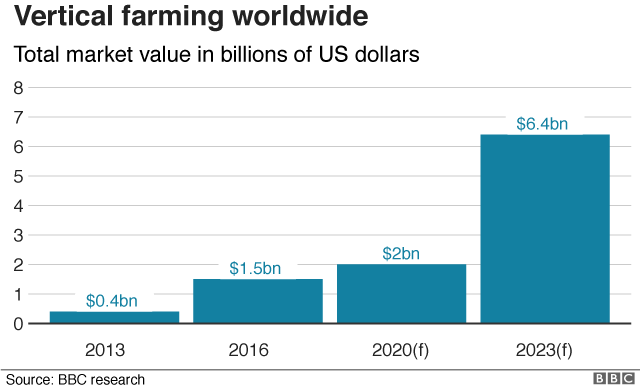
Jeffery Landau, director of business development at Agritecture Consulting estimates the global value of the vertical farming market will rise to about $6.4bn by 2023, from $403m in 2013, with almost half that attributed to growth in the US.
Despite the sector's high costs and limited food range, the potential is not lost on investors. Recently, AeroFarms, a producer of lettuce and other leafy greens, raised $100m, including from Ingka Group, Ikea's parent company. Bowery Farming raised $90m in a funding round backed by Google Ventures and Uber boss Dara Khosrowshahi.
Plenty, another major US player, raised funds from Softbank chief executive Masayoshi Son and former Google head Eric Schmidt. The company has ambitions to build hundreds of vertical farms in China. In the UK, food delivery and robotics company Ocado is investing in indoor farming.
But there have also been failures. "Vertical farms are a highly intensive capital expenditure," says Mr Landau. "Your lighting system will be one of your highest capital costs." And then there's ventilation, air conditioning, irrigation and harvesting. "Make a mistake and you will have one costly upgrade on the horizon," he adds.
Mr Peggs chose a modular system based around shipping containers because he says it is quickly scalable according to demand. "We can put a herb farm in new city for less than $500,000 and be growing within two months. We just press the 'basil button' - or mint, or tarragon - and the box configures itself to grow in optimum climate conditions."
In neighbouring New Jersey, however, Bowery Farming, takes a different approach. The five-year-old company runs industrial-sized farms. Outside one huge, grey windowless warehouse a heat haze shimmers off the concrete. It's a sharp contrast to the chilly interior where an aroma of fresh farm produce hits you immediately.
Robots
Produce is grown on trays stacked ceiling-high to maximise acreage. Everything from the automatic seeding machine to harvesting is run by Bowery's proprietary operating system (OS) which controls light, adjusts water nutrients and takes camera images of each plant to monitor its health.
"The OS is our central nervous system. There are millions of data points," says founder Irving Fain. "The artificial intelligence is constantly learning and predicting how to produce the best quality product."
Irving Fain hopes to soon start producing radishes and turnips commercially. Michael BACA Image
Running the farm manually would be difficult, he says. Staff operate things from computer screens and iPads. In the cavernous farm room itself, the only sound is robots moving the shelves.
Growing food indoors has been around for decades, but the industry got a kick-start from advances in the performance of lower cost LED lighting. Combine that with robotics, innovations and AI, and you have an industry that Mr Fain says is both viable and scalable.
"The big question was, how can we grow in large volumes at a consistently high quality? Suddenly, the economics changed," he says. "We can grow 365 days a year - a major departure from thousands of years of agriculture. Unlike outdoor farming, our yield is virtually 100% guaranteed."
Vertical farmers talk with a zeal you'd expect of entrepreneurs with tech world backgrounds. With population growth and climate change putting pressure on food production, they think they may have answers.
Square Roots' herbs are delivered to customers by bike. SQUARE ROOTS
But this highlights one of the industry's limitations. You can't feed the world on leafy greens. That said, for Mr Fain, if Bowery only ever grew lettuce or kale, "it's still a win". But his ambitions are greater. Bowery is growing radishes and turnips that he expects to come to market with two years.
Square Roots hopes to soon start commercial production of beetroots and strawberries, and is experimenting with so-called heirloom produce from rare and long-forgotten seeds.
Carbon footprint
Mr Peggs says: "It makes sense to grow perishable produce in the same neighbourhood as the consumer - stuff that doesn't travel well. A lot of produce - tomatoes, strawberries - are grown for travel, not for taste. It doesn't make sense to vertically farm food with a long shelf life."
But different produce presents different challenges, says Mr Landau. Where plants are concerned, not all light is created equal. Fruiting and flowering crops such as tomatoes, strawberries and peppers have different needs.
QR codes on the food packaging can tell customers the history of the produce. SQUARE ROOTS
"Lights for these types of crops will generally be more expensive, require more electricity, and produce more heat, meaning additional cooling," says Mr Landau. "Harvesting these crops can be a significant operational cost."
But it is being done. In the US, Oishii vertically farms the much-prized Japanese Omakase strawberry year-round. And Farm One produces more than 200 products, including 34 edible flowers. Plenty is experimenting with watermelons. As technology costs fall and R&D intensifies, the crop variety will expand.
That may also ease criticism of the industry's carbon footprint. In the artificial light versus sunlight debate, the latter often has the upper hand. But, then, indoor farmers point to the transportation costs and waste in traditional agriculture.
For the moment, Mr Landau says, the carbon footprint concerns are valid, although he expects indoor farms to increasingly draw on renewable energy.
"And when you look at markets located in extreme climate environments or island nations where they import a majority of food, indoor farming could be a viable option," he says.
Mr Peggs stresses that industry is still young are trying to work out the right business models and direction. The entrepreneurs don't agree on everything, though they certainly agree on this: vertical farming has the potential to transform global food production as we know it.

CIT Gap Funds Invests In On-Demand Farming
The Center for Innovative Technology (CIT) announced that its CIT GAP Funds has made an undisclosed investment in Babylon Micro-Farms, a provider of on-demand indoor farming services
August 20, 2019
By Lynda Kiernan
The Center for Innovative Technology (CIT) announced that its CIT GAP Funds has made an undisclosed investment in Babylon Micro-Farms, a provider of on-demand indoor farming services.
Founded in 1985, CIT focuses on the seed funding and early commercialization of innovation, and provides support to tech entrepreneurs growing new companies that will foster economic growth and create jobs throughout the state of Virginia. CIT GAP Funds is a venture capital vehicle through which to make seed stage equity investments in these technologies.
The latest venture to join the CIT GAP Funds portfolio is Charlottesville, Virginia-based Babylon Micro-Farms. Founded in 2017 by a pair of students at the University of Virginia, Babylon Micro-Farms enables small growers and businesses to gain greater control of their supply of fresh organic produce by making indoor farming more accessible through a range of scalable indoor farming modules.
“The idea for Babylon Micro-Farms was born in a social entrepreneurship class at UVA, when a professor asked my co-founder Graham and I to develop a high impact, low cost product that could help refugees. I quickly discovered and became interested in hydroponics, a way to grow plants without soil, use less water, and grow crops faster,” said Alexander Olesen, co-founder and CEO, Babylon Micro-Farms.
Sales of organic fresh produce increased by 8.6 percent in 2018 to reach $5.6 billion, according to the Organic Produce Network, and increasingly, vertical and indoor farming are stepping in to meet this demand. In just the U.S., the vertical farming market is expected to reach a value of $3 billion by 2024, and on a global scale, the market is forecast to see a CAGR of 24 percent to reach a value of $6.4 billion by 2023.
A relatively new category in agricultural production and agtech, the production of food utilizing highly controlled, closed, and modular hydroponic systems has seen startups evolve on multiple continents and is beginning to gain investor attention.
Boston-based Freight Farms, Paris-based Agricool, and Canada’s TruLeaf are a select few raising capital to bring modular, containerized farming to urban areas that often lack affordable, organic, fresh produce because of long and expensive supply lines.
Babylon’s modular indoor farms are powered by a patented IoT platform that remotely controls each farm’s custom tailored ecosystem, depending on each customer’s needs. The startup’s easy-to-use application guides farmers through each step: when to plant, watering and harvesting schedules, and includes live data and farm health alerts. This system allows for the growth of produce twice as fast as traditional farming, while requiring 90 percent less water, and no pesticides or chemicals.
“The mission to offer more accessible, affordable produce to a wider range of communities across the U.S. is one that CIT is excited to stand behind. Responses from existing Babylon Micro-Farms users, including a UVA dining hall, The Boar’s Head’s Resort, Corner Juice and others have been very positive and showcase the wide use cases for this solution,” said Thomas Weithman, managing director of CIT GAP Funds, and president and CIO of MACH37.
“Being able to grow any kind of produce year round within our communities, such as for local food service industries, education and assisted living, or community farms to name a few, is a game changer for the state of sustainable urban agriculture,” continued Weithman. “CIT is very confident in Babylon’s future success, and we look forward to being part of their journey.”
Supplies are delivered to Babylon customers ready-to-grow, and Babylon provides 24/7 farming support, drastically reducing the upfront costs associated with indoor farming, while also providing the expertise needed for successful harvests.
“Our mission is to develop technology that will inspire a new generation of urban farmers to grow their own fresh, affordable, sustainable produce at the push of a button,” said Olesen. “We are grateful for the support of CIT GAP funds at this stage of our development.”
– Lynda Kiernan is Editor with GAI Media and daily contributor to GAI News. If you would like to submit a contribution for consideration, please contact Ms. Kiernan at lkiernan@globalaginvesting.com.

VIDEO: Head To Our Website To Check Out Kate's Chat With Food Safety Certifier Juli Ogden
In this video, Aquaponics Association Senior Adviser Kate Wildrick and Food Safety Trainer Juli Ogden discuss food safety on the farm, and Juli’s upcoming pre-conference seminar “GLOBAL G.A.P. Made Simple”
In this video, Aquaponics Association Senior Adviser Kate Wildrick and Food Safety Trainer Juli Ogden discuss food safety on the farm, and Juli’s upcoming pre-conference seminar “GLOBAL G.A.P. Made Simple”.
GLOBAL G.A.P. is a food safety certification that applies to all farming and works great for aquaponics. Farms that sell produce to retailers need food safety certification.
Please Click Here to: Watch Food Safety Chat
It’s great to hear Juli’s inspirational message about aquaponic farmers overcoming their food safety hurdles without the headaches! Check out the video, above. And if you plan on coming to the Putting Out Fruits Conference, consider the food safety certification seminar:
Grow Your Farm: Global G.A.P. Pre Conference Event Kate and Juli discuss food safety on the farm and Juli's upcoming pre-conference seminar “GLOBAL G.A.P. Made Simple”. GLOBAL G.A.P. is a food safety certification that applies to all farming and works great for aquaponics. Farms that sell produce to retailers need food safety certification.
It’s great to hear Juli’s inspirational message about aquaponic farmers overcoming their food safety hurdles without the headaches!
Seeya soon!
Brian Filipowich, Chairman
What Are Cruciferous Vegetables And Their Health Benefits?
Vegetables are an important part of a healthy diet, but not all veggies pack the same nutritional punch. Cruciferous vegetables such as broccoli, cabbage and kale, tend to stand out among edible plants because they are linked to several health benefits — most notably a reduced risk of cancer
KAY PECK UPDATED ON JULY 17, 2019
Vegetables are an important part of a healthy diet, but not all veggies pack the same nutritional punch. Cruciferous vegetables such as broccoli, cabbage and kale, tend to stand out among edible plants because they are linked to several health benefits — most notably a reduced risk of cancer.
Cruciferous vegetables in a basket at market. (Image: kosobu/iStock/GettyImages)
What Are Cruciferous Vegetables?
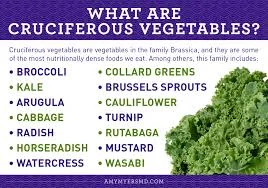
Cruciferous vegetables are part of the greater Brassicaceae, or mustard family, and are alternatively referred to as Brassica vegetables. Common types include:
Arugula
Bok choy
Broccoli
Brussels sprouts
Cabbage
Cauliflower
Collard greens
Horseradish
Kale
Kohlrabi
Mustard greens
Radishes
Rutabaga
Turnips
Wasabi
Watercress
Cruciferous vegetables, or crucifers, are known for their distinctive odor and somewhat bitter flavor — two factors that make these veggies unappealing to some people. This pungency is related to their high content of sulfur-containing glucosinolates, according to the Linus Pauline Institute at Oregon State University. Ironically, these sulfur compounds are responsible for several of this vegetable group's awesome health benefits.
In fact, crucifers provide the richest sources of glucosinolates in the human diet, according to an October 2012 review in Food and Nutrition Sciences. When a cruciferous vegetable is cut, chopped or chewed, the plant enzyme myrosinase is released, which transforms the glucosinolates into other health-promoting compounds. And whenever you fork into a cooked cruciferous veggie, your intestinal bacteria help metabolize the glucosinolates.
The benefits? The breakdown products of glucosinolates, most notably indoles and isothiocyanates, may have powerful anticancer, antioxidant and anti-inflammatory properties, according to the National Cancer Institute (NCI). In fact, sulforaphane (an isothiocyanate) and indole-3-carbinol (an indole) have been widely studied for their anticancer properties.
The nutritional benefits of cruciferous vegetables extend beyond their glucosinolate content. Cruciferous vegetables are wonderful additions to your diet because they're high in fiber and are solid sources of beta-carotene (the precursor to vitamin A), B vitamins and vitamin C, says Isabel Smith, RD and founder of Isabel Smith Nutrition.
Also, cruciferous vegetables are great sources of vitamin E, vitamin K and calcium, the October 2012 review states. Another benefit: These veggies are naturally low in calories, so feel free to load up your plate!
Cruciferous Vegetables Hold Promising Anti-Cancer Benefits
When it comes to health benefits, cruciferous vegetables may be best known for their role in reducing cancer risk. According to the Linus Pauline Institute, case-control studies (which compare historical information in study participants with a health condition to study subjects without that same diagnosis) have linked high intakes of cruciferous vegetables to a lower risk of cancer of the colon, rectum, bladder, kidney, lung, breast, ovaries, stomach, pancreas, prostate and endometrium.
Because case-control studies rely on the recollection of food intake, this research method is subject to inaccuracy and bias. This may explain why most cohort studies, where participants are followed over time with their diet routinely assessed by researchers, have found little to no association between cruciferous vegetable consumption and cancer, according to the NCI.
To better understand the link between crucifers and cancer, high quality cohort studies or randomized trials are still needed. And until more is research is conducted, it's important to note that the anticancer activity of cruciferous vegetables holds significant promise.
According to the NCI, compounds produced from glucosinolates, particularly indole-3-carbinol and sulforaphane, have the potential to prevent the mutation of healthy cells into cancer cells, and can also kill or inhibit the growth of cancer cells. Indole-3-carbinol may detoxify cancer-causing substances that enter the body, according to Smith, and substances from cruciferous vegetables can provide anti-inflammatory, antibacterial and antiviral effects — all mechanisms that may reduce cancer risk.
Cruciferous Vegetables' Heart Health Benefits
In addition to their potential role in cancer risk reduction, research is still trying to clarify how cruciferous vegetables impact heart and blood vessel disease. While eating more fruits and vegetables is known to reduce the risk of heart disease, there is very limited and sometimes conflicting observational data specific to crucifers, according to Moe Schlachter, RDN, a spokesperson for the Texas Academy of Nutrition and Dietetics and president of Houston Family Nutrition.
For example, consuming high amounts of cruciferous veggies has been shown to reduce the risk of heart disease, a June 2017 research analysis published in the International Journal of Epidemiology concluded. Meanwhile, a study of older Australian women published in the April 2018 issue of Journal of the American Heart Association linked a higher intake of cruciferous vegetables to a reduced thickness of the carotid artery wall — suggesting that crucifers may protect the blood vessels. What's more, the sulforaphane in these veggies has been linked to a reduced risk of heart disease, a January 2015 study in Oxidative Medicine and Cellular Longevity found.
In contrast, crucifers were not found to be protective against heart disease in the Nurses' Health Study and the Health Professionals Follow-Up Study, according to a report in the June 2018 issue of Clinical Epidemiology.
Crucifers appear to have the right mix of components to promote heart health since they are rich in substances that may decrease the risk of heart attack and stroke. According to Schlachter, preliminary studies have associated high amounts of glucosinolate from broccoli with lower LDL cholesterol levels while sulforaphane has been shown to reduce oxidative stress — which plays a large role in the development of many cardiac-related dysfunctions. But additional studies are needed to better understand the role of crucifers in cardiovascular health.
Other Health Benefits of Cruciferous Vegetables
In addition to their potential anticancer and heart-protective properties, cruciferous vegetables may provide additional health benefits, according to a 2018 review in the Journal of Human Health Research.
Compounds found in these vegetables have the potential to improve blood sugar and treat type 2 diabetes as well as treat H. pylori infections, a bacteria that leads to stomach ulcers. However, as you've likely guessed, the research is preliminary and more quality studies are needed to clarify these benefits.
One of the compounds formed from glucosinolates — 3,3′-diindolylmethane (DIM) — is recognized for its hormone-balancing benefits in addition to its more established anticancer, antioxidant and detoxification properties. DIM is touted to prevent problems related to excess estrogen (such as hormone-fueled breast cancer) or excess testosterone (including hormonal acne).
However, because the transformation of glucosinolates to DIM in the body can be unpredictable, research of this compound is limited to supplements, not cruciferous vegetables. Plus, there aren't many human studies on this compound.
Warning
Since DIM may not be appropriate for everyone to take, you should note that supplements should not be taken without a doctor's assessment and approval, the National Institutes of Health recommends.
Are There Any Risks Associated With Eating Cruciferous Vegetables?
Now that you know about the plethora of potential health benefits crucifers are linked to, it's time to brush up on the possible risks of eating too much of these.
Very high intake of cruciferous vegetables has caused hypothyroidism in animal research. A plausible explanation is that some of the compounds created from crucifers can interfere with thyroid hormone production, and others may compete with the thyroid gland's uptake of iodine, a nutrient important for thyroid health. Although eating cruciferous vegetables consumption isn't directly linked to thyroid problems in humans, more research is needed on this issue as well.
How to Eat Cruciferous Veggies
Cruciferous vegetables slices of pizza with broccoli and cheese (Image: Seva_blsv/iStock/GettyImages)
Although it's good to emphasize cruciferous vegetables in your diet, you may not need to eat large, daily portions to reap the health benefits. The U.S. Dietary Guidelines recommend at least 2.5 cups of vegetables daily, with this same amount weekly from dark green and cruciferous choices. So, aiming to eat at least a half cup of cruciferous veggies most days of the week is a good place to start!
What's more, it's important to understand how different types of cooking methods affect your veggies' health benefits. Bioavailability of glucosinolates and their breakdown products is impacted by your cooking temperature and method, and more research is needed to understand ways to optimize the availability of these health-promoting substances, a report in the August 2016 issue of Frontiers in Nutrition found.
"Boiling is not the best option for cooking cruciferous vegetables because glucosinolates are water-soluble and may be lost in the cooking water," Schlachter tells us. Additionally, high heat may deactivate myrosinase and decrease the bioavailability of sulforaphane.
So how should you cook your crucifers? "Our best cooking methods generally involve using less water and low heat," Schlachter says. "So that means steaming, stir-frying or even microwaving."
Read more: Healthy Cooking Tips for Beginners and Experts Alike
If you find crucifers unappealing, the variety of choices along with creative preparation strategies may eventually win you over. Here are some tips to make cruciferous vegetables tasty and appealing:
Add mustard greens, arugula, radishes, cabbage or kale to your usual lettuce salads.
Use bok choy, broccoli or cabbage in your favorite stir-fry.
Roast broccoli, cauliflower, kohlrabi, turnips or Brussels sprouts by drizzling with olive oil, seasoning as desired, and placing in an oven set to 400° Fahrenheit for about 25 minutes, tossing halfway through. Roasting crucifers helps bring out their natural sweetness!
Add chopped kale to smoothies.
Finely dice cauliflower and use as an alternative to rice.
Use cauliflower crust in homemade pizza.
Serve broccoli, cauliflower, radishes and kohlrabi raw as appetizers or snacks.
Warning
If you have special dietary needs and have been told to limit cruciferous vegetables because of their fiber or vitamin K content, speak with your doctor or dietitian before adding them to your diet. Also, if you have hypothyroidism or are concerned they may worsen your Irritable Bowel Syndrome (IBS) symptoms, consult your doctor.
REFERENCES & RESOURCES
Oregon State University: Linus Pauline Institute: "Cruciferous Vegetables"
Food and Nutrition Sciences: "Nutritional Quality and Health Benefits of Vegetables: A Review"
National Cancer Institute: "Cruciferous Vegetables and Cancer Prevention"
International Journal of Epidemiology: "Fruit and Vegetable Intake and the Risk of Cardiovascular Disease, Total Cancer and All-Cause Mortality—A Systematic Review and Dose-Response Meta-Analysis of Prospective Studies"
Clinical Epidemiology: "Intake of Glucosinolates and Risk of Coronary Heart Disease in Three Large Prospective Cohorts of US Men and Women"
Journal of the American Heart Association: "Cruciferous and Total Vegetable Intakes Are Inversely Associated With Subclinical Atherosclerosis in Older Adult Women"
Oxidative Medicine and Cellular Longevity: "Sulforaphane Protects against Cardiovascular Disease via Nrf2 Activation"
Molecular Nutrition and Food Research: "Diet Rich in High Glucoraphanin Broccoli Reduces Plasma LDL Cholesterol: Evidence From Randomised Controlled Trials"
Frontiers in Nutrition: "Bioavailability of Glucosinolates and Their Breakdown Products: Impact of Processing"
Journal of Human Health Research: "The Benefits of Brassica Vegetables on Human Health"
National Institutes of Health: "Dietary Supplements: What You Need to Know"

US: Bronx, New York - Video - Green Bronx Machine Presents The Blooming Bloomberg Salad
Green Bronx Machine builds healthy, equitable, and resilient communities through inspired education, local food systems, and 21st Century workforce development
Green Bronx Machine
July 31, 2019
Visit https://greenbronxmachine.org
WE GROW VEGETABLES... AND STUDENTS! One student at a time, one classroom at a time, one school at a time.
DONATE: https://greenbronxmachine.org/donate
Green Bronx Machine builds healthy, equitable, and resilient communities through inspired education, local food systems, and 21st Century workforce development. Dedicated to cultivating minds and harvesting hope, our school-based model using urban agriculture aligned to key school performance indicators grows healthy students and healthy schools to transform communities that are fragmented and marginalized into neighborhoods that are inclusive and thriving.
Like us on Facebook: https://www.facebook.com/green.BX.mac...
Follow us on Twitter: https://twitter.com/greenBXmachine/
Like us on Instagram: https://instagram.com/greenbronxmachine/
Donation FAQ: https://support.google.com/youtube/?p...
Category Education

Bees Are Dropping Dead In Brazil And Sending A Message To Humans
Death came swiftly for Aldo Machado’s honey bees. Less than 48 hours after the first apis mellifera showed signs of sickness, tens of thousands lay dead, their bodies piled in mounds
Pesticide Use In Brazil Sparks Concern Among Environmentalists
By Bruce Douglas and Tatiana Freitas
August 19, 2019
Death came swiftly for Aldo Machado’s honey bees. Less than 48 hours after the first apis mellifera showed signs of sickness, tens of thousands lay dead, their bodies piled in mounds.
“As soon as the healthy bees began clearing the dying bees out of the hives, they became contaminated,” said Machado, vice president of Brazil’s Rio Grande do Sul beekeeping association. “They started dying en masse.”
Around half a billion bees died in four of Brazil’s southern states in the year’s first months. The die-off highlighted questions about the ocean of pesticides used in the country’s agriculture and whether chemicals are washing through the human food supply — even as the government considers permitting more. Most dead bees showed traces of Fipronil, a insecticide proscribed in the European Union and classified as a possible human carcinogen by the U.S. Environmental Protection Agency.
European honey bees sit on hives in Sao Roque | Photographer: Patricia Monteiro/Bloomberg
Since President Jair Bolsonaro took office in January, Brazil has permitted sales of a record 290 pesticides, up 27% over the same period last year, and a bill in Congress would relax standards even further.
Manufacturers of newly permitted substances include Brazilian companies such as Cropchem and Ouro Fino, as well as global players including Arysta Lifescience Ltd., Nufarm Ltd. and Adama Agricultural Solutions Ltd. Giants such as Syngenta, Monsanto, BASF and Sumitomo also won new registrations.
The fertile nation is awash in chemicals. Brazil’s pesticide use increased 770% from 1990 to 2016, according to the Food and Agriculture Organization of the United Nations. The Agriculture Ministry says that Brazil ranks 44th in the world in the use of pesticides per hectare and that, as a tropical country, it is “incorrect” to compare its practices with those of temperate regions.
Still, in its latest food-safety report, Brazil’s health watchdog Anvisa found that 20% of samples contained pesticide residues above permitted levels or contained unauthorized pesticides. It didn’t even test for glyphosate, Brazil’s best-selling pesticide, which is banned in most countries.
The silent hives, critics say, are a warning.
“The death of all these bees is a sign that we’re being poisoned,” said Carlos Alberto Bastos, president of the Apiculturist Association of Brazil’s Federal District.
A beekeeper handles a swarm of European bees | Photographer: Patricia Monteiro/Bloomberg
Agriculture is the biggest contributor to Brazil’s growth, composing around 18% of the economy. Its power — from pop culture to politics — is unmatched. Major producers sponsor samba groups, as well as a nationwide “little Ag” school program and arguably, the most influential grouping in congress.
Like U.S. President Donald Trump, Bolsonaro was elected with strong support from agribusiness and has expressed disdain for environmental concerns. “This is your government,” Bolsonaro promised lawmakers from the agriculture caucus, and his administration has allowed the industry wide leeway to use whatever chemicals it likes.
About 40% of Brazil’s pesticides are “highly or extremely toxic,” according to Greenpeace, and 32% aren’t allowed in the European Union. Meanwhile, approvals are being expedited without the government hiring enough people to evaluate them, said Marina Lacorte, a coordinator at Greenpeace Brazil.
Brazil Pesticides
Government approved a record number of products this year
“There isn’t another explanation for it, other than politics.” she said.
Easing pesticide approvals was a campaign commitment for Bolsonaro. The agriculture sector has complained for years about slowness.
“Registrations are the biggest barrier,” said Flavio Hirata, an agrochemical specialist at Allier Brasil consultancy. “The world’s largest pesticide market can’t be limited to a few companies.”
Roughly half of the approvals are ingredients, not final products, said Andreza Martinez, manager for regulation at Sindiveg, a group representing pesticide producers. Varying chemicals is important as pests develop resistance to formulas, she said.
“It brings more tools to farmers, but that doesn’t mean an increase in the use of products in the field,” she said.
The variety, however, alarms toxicologists. “The higher the number of products, the lower our chances of safety, because you can’t control them all,” said Silvia Cazenave, a professor of toxicology at the Catholic Pontifical University of Campinas.
Brazil’s health ministry reported 15,018 cases of agricultural pesticide poisoning in 2018, but acknowledged that this is likely an underestimate.
A vehicle sprays a soybean field near Campo Verde, Mato Grosso state, Brazil | . Photographer: Yasuyoshi Chiba/AFP via Getty Images
One victim was Andresa Batista, a 30-year-old mother of three. In March 2018, she went to work picking soybeans on one of the plantations on the plains surrounding the capital, Brasilia. Soon, she started feeling dizzy and nauseated — and then she passed out.
More than 40 farmhands fell ill that day, according to Batista, so many that they were divided into three groups and taken to different hospitals. The first medical team to attend Batista also became unwell, prompting the hospital to destroy her clothes, including her underwear. Still, Batista and most of the others were cleared to work again two days later. Almost as soon as they started, they collapsed.
Over a year later, Batista still can’t work. She has difficulty eating without vomiting, can’t go to the toilet without medicine, can’t go in the sun without her skin swelling and she’s lost around 30% of her vision. Doctors can’t give her a prognosis due to uncertainty about the type of pesticide that poisoned her.
“That day, our lives ended,” she said. “We’re not the same people we were before.”
Court documents show that Dupont do Brasil S.A., the company that managed the field, agreed to pay damages of 50,000 reais ($13,000) to one of Batista’s coworkers that day. Batista said the company paid her 40,000 reais in an out-of-court settlement. Dupont’s press office said it could not comment on the case due to legal restrictions.
The government said all cases of poisoning must be investigated, and it would introduce a decree to strengthen the oversight and training process for pesticide handling.
A pesticide vehicle on a soybean farm in Mato Grosso state | Photographer: Paulo Fridman/Corbis via Getty Images
Despite stories such as Batista’s, Congress may accelerate approvals yet further, rebranding pesticides as “agricultural defenses” and substituting the requirement to identify potential harm with a simple risk analysis.
Brazil’s National Cancer Institute argued the measure would allow pesticides with “carcinogenic characteristics, endangering the population.” But Alceu Moreira, head of the lower house’s agriculture caucus, is certain it will become law.
“There’s this need to create this international narrative that harms the image of Brazilian agriculture, as if we were using excessive levels of pesticides,” he said. “We’re not.”
Brazilians may disagree. Carrefour Brasil, a supermarket chain, plans to increase its offering of organic products by 85% in 2019. Tatiana Carvalho, a 31-year old who runs a small organic delivery service in Brasilia, says sales have increased constantly since she started four years ago, despite the country’s sharp recession.
She attributes her success to two things: greater consumer awareness and the government’s decision to authorize ever more pesticides.
— With assistance by Simone Preissler Iglesias, and Rachel Gamarski
Lead Photo: A beekeeper inspects his newborn European bees in Sao Roque, Sao Paulo state, Brazil.
Photographer: Patricia Monteiro/Bloomberg

Welcome To The 4th Annual NYC AgTech Week, Organized By The Members And Partner Organizations of The NYC Ag Collective
The NYC Ag Collective - a consortium of 15+ commercial urban farms, tech companies, and non-profits - is pleased to announce the 4th annual NYC AgTech Week, the only AgTech conference on the East Coast run by the leaders of the industry themselves
The NYC Ag Collective - a consortium of 15+ commercial urban farms, tech companies, and non-profits - is pleased to announce the 4th annual NYC AgTech Week, the only AgTech conference on the East Coast run by the leaders of the industry themselves.
This six-day conference features exclusive farm tours, panels, workshops, and networking events focused on the fast growing and innovative AgTech sector, and promises unprecedented access to industry founders, investors, startups, and thought leaders.
About this Event
The NYC Ag Collective - a consortium of 15+ commercial urban farms, tech companies, and non-profits - is pleased to announce the 4th annual NYC AgTech Week, the only AgTech conference on the East Coast run by the leaders of the industry themselves.
For The Readers of iGrow News there is a 10% discount code
"NYCAGVIP10"
This six-day conference features exclusive farm tours, panels,workshops, and networking events focused on the fast growing and innovative AgTech sector, and promises unprecedented access to industry founders, investors, startups, and thought leaders.
FEATURED SPEAKERS
Alexander Olesen | Co-Founder & CEO, Bablyon Micro-Farms
Alina Zolotareva | Marketing Director, AeroFarms
Andrew Carter | Co-Founder & CEO, Smallhold
Christine Rico | Board Co-Chair, Slow Money NYC
Dermot O'Regan | Co-Founder & Managing Director, Grow Bristol
Henry Gordon-Smith | Founder & Managing Director, Agritecture
Jenny Osman | Senior Project Manager, NYC Economic Development Corporation
Jonas Günther | Co-Founder & CEO, We Are The New Farmers
Louisa Burwood-Taylor | Head of Media & Research, AgFunder
Montique Willis | Head of Software, GrowComputer
Rachel Klepner | Director of Farming and Operations, Edenworks
Rob Laing | Founder & CEO, Farm.One
Tessa Price | Labs Manager, WeWork Food Labs
Tinia Pina | Founder & CEO, Re-Nuble
Tobias Peggs | Co-Founder & CEO, Square Roots
...plus many more
CONFERENCE SCHEDULE
SATURDAY 9/21
5-8pm: Welcome Happy Hour [All Access Pass Holders Only]
Start the Conference with an intimate happy hour to network with fellow attendees, conference speakers and industry representatives. Sample drinks and bites made from hyper local produce and get to know your hosts at the NYC Ag Collective.
SUNDAY 9/22
8:30-11:30 am: Manhattan Urban Farm Tours (limited availability)
Contrary to what it may seem, the steel beams and girders of Manhattan are home to small but thriving pockets or urban agriculture. Choose one of three tours to see a unique perspective on farming in the city.
Option 1: Farm One
Option 2: East Village community gardens
Option 3: Governors Island
3-5 pm: Deepening Skills to Successfully Manage an Urban Farm: A Workshop with Cornell | @ Prime Produce
Join a special workshop led by Cornell on urban farm management to learn about new research in farm management skills related to the controlled environment agriculture industry. Then, enjoy one-on-one conversation and mentorship with urban farm managers.
*This event will be free of charge for all farm managers!* A separate registration form will be linked to from here before the end of August.
6-9 pm: Restaurant Partner Night
Discounts to restaurants committed to local & sustainable sourcing, including: Lighthouse (Williamsburg, Brooklyn), Maison Yaki (Prospect Heights, Brooklyn), Bunker Vietnamese (Bowery, Manhattan)
MONDAY 9/23
8:30-10:30 am: North Brooklyn Urban Agriculture Tour
Gain a wide perspective for the various forms of urban agriculture on this walking tour of farming-related sites in Williamsburg & Bushwick.
3-5pm: Show Me The (non-VC) Money: Alternative Capital Sources for Urban Agriculture
AgTech founders and funders discuss the various resources within the funding landscape for AgTech ventures.
6:30-8:30 pm: Chef x Farmer Mixer + Grazing Table | @ Project Farmhouse
Enjoy an evening connecting with New York's urban and local farmers, chefs and entrepreneurs while partaking in drinks and eats made from a diverse range of hyper-local produce. Sponsored by Urban Farm Academy. Partner farms and distributors will include the likes of Farm.One, Smallhold, Brooklyn Grange, Local Roots NYC.
> You can also purchase tickets to this event separately.
TUESDAY 9/24
8:30-10:30 am: Alternative Urban Farming Products: Algae, Insects, Mushrooms, Fish, Plant Proteins
Urban and indoor farming can support many different agricultural products. Leaders in aquaculture, aquaponics, fungiculture, and alternative proteins will discuss the obstacles and opportunities in meeting the growing demand for sustainable seafood, produce and plant-based proteins.
3:00-5:30pm: Brooklyn Navy Yard Corridor Innovation Tour
In and around what was once the hub of Brooklyn's maritime operations and industrial past are some of the most innovative and fast-growing Urban Ag companies in New York. You'll tour hydroponic container farms at Square Roots, plus visit the largest soil rooftop farm in the world at Brooklyn Grange.
6:30-8:30 pm: AgTech x UrbanTech Mixer
Networking event bridging the AgTech and UrbanTech innovation worlds, co-organized with NYC EDC and CIV:LAB’s The Grid. As cities become “smarter” through new technology in mobility, co-working/co-living, clean energy, and more, this event seeks to bring local food & agriculture into the conversation.
> You can also purchase tickets to this event separately.
For The Readers of iGrow News there is a 10% discount code
"NYCAGVIP10"
WEDNESDAY 9/25
8:30-10:30 am: The Future of Green Urban Development: Opportunity Zones, Green Roofs, & Creative Mixed Use Projects
Hear from industry experts in real estate, urban agriculture policy, green energy, and city planning on the new policies, pathways, and opportunities currently under development and available to various Urban Ag stakeholders to promote the scaling of this movement.
3-5 pm: Food Safety & Transparent Sourcing Enabled by Controlled Environment Agriculture
Discussion on CEA's ability to mitigate and prevent common food safety hazards inherent in traditional agriculture through rigorous testing and safety control. Will the rise of controlled forms of agriculture contribute to a more secure and resilient food system in the face of increasing environmental shifts?
6-8 pm: Make It In Brooklyn: Future of Farming Pitch Competition
Hear some of the most innovative and rising startups in the AgTech industry pitch their company to a room of industry leaders, mentors, investors, and entrepreneurs. Refreshments and networking will follow. Co-hosted with Downtown Brooklyn Partnership. Sponsored by OCP North America.
Applications to pitch are now open through August 30th! Five startups will be selected and informed by Sept 4th. Apply here.
THURSDAY 9/26
8:30-10:30 am: Global View: Opportunities & Challenges Accelerating AgTech around the World | @ Company (Grand Central Tech)
The AgTech industry is expanding on a global scale - but unique challenges exist in each region of the world. AgTech founders and experts will weigh in on the factors influencing the global market for sustainable food production as well as discuss the projected growth path of the AgTech industry around the world.
2-4 pm: AgTech as Consumer Education | @ WeWork Food Labs
Marketers, Founders and Industry Leaders discuss the role that marketing and consumer education play in creating, developing and retaining market demand for AgTech products.
6-8 pm: Vineyard in the City: Networking Finale | @ Rooftop Reds
Our final event! Enjoy a glass of wine overlooking the NYC skyline, made from grapes grown on the Rooftop Reds urban vineyard. Share takeaways from the week with your fellow conference-goers (and by this point, BFFs).
You can also purchase tickets to this event separately.
PARTNER EVENTS
The Ag Collective is also promoting a select number of partner events that coincide with NYC AgTech Week. Those include:
Climate Week NYC (Sept 23-29). More information can be found here.
Women in AgTech Roundtable with Amy Wu (Sept 21). More information can be found here.
--Events, speakers and locations subject to change. Some farm tours require registration post ticket purchase, on a first come first served basis--
Tags: United States Events New York Events Things To Do In New York, NYNew York Conferences New York Business Conferences

3D Printed Homes To Vertical Farms: Sharjah's New $150m Futuristic Tech Hub
The park already has plans to unveil the first 3D printed house by the end of September, a new futuristic train to accelerate transport and logistics, and advanced hydroponics, aquaponics, and vertical farming projects
05 August 2019
The Sharjah Research, Technology and Innovation Park is due to open in Q1, 2020
Sharjah Research, Technology and Innovation Park already has plans to unveil the first 3D printed house by the end of September, a new futuristic train to accelerate transport and logistics, and advanced hydroponics, aquaponics, and vertical farming projects.
Sharjah Research, Technology and Innovation Park (SRTI), the emirate’s new futuristic educational facility set to open in Q1 next year, has managed to attract more than $100 million worth of investment in the last six months, according to a senior official.
“We are proud to say that we have already attracted more than $100 million worth of investment in new technology in this park in a span of six months. So far the project has been allocated $150 million for the 1st phase, which includes the main building of the project in addition to the infrastructure, which we are due to inaugurate in Q1 of next year,” Hussain Al Mahmoudi, the park’s CEO, told Arabian Business.
The park already has plans to unveil the first 3D printed house by the end of September, a new futuristic train to accelerate transport and logistics, and advanced hydroponics, aquaponics, and vertical farming projects.
Sharjah already spends $1bn annually on education and this project is an extension to Sharjah government’s work in developing itself as a knowledge economy base, according to Al Mahmoudi.
“There are studies that suggest that cities with education institutions like universities and technology parks around perform better in terms of GDP than cities without. So we believe that this project will really bring an economic impact to the emirates of Sharjah and the UAE,” he said.
For all the latest tech news from the UAE and Gulf countries, follow us on Twitter and Linkedin, like us on Facebook and subscribe to our YouTube page, which is updated daily.
Tags: SHARJAH RESEARCH TECHNOLOGY AND INNOVATION PARK SRTI PARK HUSSAIN AL MAHMOUDI . 3D PRINTED HOUSE IN SHARJAH

FARMPRO: Fully Automated And Climate Controlled 40' Container Farming
The Urban Crop Solutions FarmPro is a 40 ft fully automated freight container with a state-of-the-art leafy green growing system. This system gives you a fully automated 4-layer growing solution
FARMPRO by Urban Crop Solutions

A FULLY AUTOMATED AND
CLIMATE CONTROLLED 40' FREIGHT CONTAINER
The Urban Crop Solutions FarmPro is a 40 ft fully automated freight container with a state-of-the-art leafy green growing system. This system gives you a fully automated 4-layer growing solution.
HYDROPONICS AND OWN GROWTH RECIPES FOR 200+ CROPS
To deliver healthy crops, our closed-loop irrigation system:
Minimizes the use of fresh water
Increases plant nutrient uptake and can work with up to 70 organic nutrients and minerals
Provides optimal root growth, aeriation and nutrient delivery
Allows to grow microgreens and super-large crops
CLIMATE CONTROLLED ENVIRONMENT
In/outflow of air is controlled to limit unwanted elements while optimizing climate conditions.
Closed production plants have minimal external elements influencing the indoor climate
Monitoring the in- and outflow of air allows for the best possible crops
Flavour can be tailored to market demand by influencing climate, light and nutrients
CUSTOM-MADE LED TECHNOLOGY
Our own LED lights provide the optimal spectrum for your plants, using limited energy.
The photosynthetic active radiation (PAR) range, enables photosynthesis in the 400-700nm range
Using energy-efficient LEDs, our crops receive just the right light spectrum to grow efficiently
ROBOTIZED AND CONTROLLED PROCESS
Our top-notch industrial standards allow full control over monitoring and automation.
Minimize human intervention to achieve higher levels of pro
STANDARD FUNCTIONS
40 ft insulated container
Climate control
SIZE: 40” - LAYERS: 4
1 irrigation system
Continuous monitoring
Custom-made LEDs
4 cultivation layers
Handling area and technical room
Fully automated growing process
Online crop and process management
OPTIONS
Custom outside colour
Personalized logo on container
Up to 2 different water systems
1 or multiple windows
1 or multiple webcams
Back-up power system
WHAT YOU GET
80 M² GROWING SURFACE
1.6K- 3.6K CROPS PER GROWING CYCLE
24K - 54K CROPS PER YEAR
To View Our Videos, Please Click Here
ARE YOU INTERESTED IN A FARMPRO?
Would You Like To Receive Additional Information?

'Groundbreaking' New Venture To Create 'World's Most Advanced Indoor Farming Project'
Mastronardi Produce and visionary John Paul DeJoria say they will develop 'the world's large and most advanced indoor farming project’. North American greenhouse grower Mastronardi said they've selected the Middle East as the first market for the new venture
August 19 , 2019
Mastronardi Produce and visionary John Paul DeJoria say they will develop 'the world's large and most advanced indoor farming project'.
North American greenhouse grower Mastronardi said they've selected the Middle East as the first market for the new venture.
The newly formed company, Green International Ventures LLC (GIVE), will use its proprietary Advanced High-Density Farming System.
This will be the first project for the "groundbreaking" venture, Mastronardi said.
The company said the project will reduce the Middle East’s dependence on imported food, create a sustainable source of local employment, and significantly increase the region’s non-petroleum-based exports.
Green International Ventures poised for international expansion
Paul Mastronardi, president, and CEO said the company is eager to increase access to local and sustainably-grown produce.
“Our first location in the Middle East will allow us to reach over half the world’s population in less than 8 hours, and this is just the start," he said.
"[We will] look for more global locations as we continue to scale to meet the growing need for food security, safety, and sustainability.”
GIVE will also support the integration of modern AgTech initiatives into the local farming community, the company said. In addition, it will expand knowledge of sustainable agricultural techniques by establishing a Research and Development facility in the region.
“It has long been my passion to help feed the world’s population,” says John Paul DeJoria. “The introduction of this revolutionary model in the Middle East is the first step of many towards increasing global access to sustainably grown fruits and vegetables.”
Furthermore, all GIVE projects use innovative Advanced High-Density Farming Systems that incorporate a multitude of cutting-edge growing systems. These include water-saving irrigation and energy-efficient lighting. It also takes advantage of advanced automation, AI processes for predictive analysis, and real-time crop and soil monitoring.
GIVE will market all produce it produces with the innovation systems under the SUNSET brand.

Report Finds Agriculture A Leading Cause of Climate Change
If we want to combat our changing climate, we need to rethink the way we produce food, says new report by the United Nations
by Rodale Institute
August 9, 2019
If we want to combat our changing climate, we need to rethink the way we produce food, says new report by the United Nations.
The Problem
A new report released by the United Nations Intergovernmental Panel on Climate Change, which examines how land use changes have contributed to the warming of Earth’s atmosphere, has concluded that agriculture and forestry have contributed nearly a quarter of global greenhouse gas emissions.
While fossil fuel usage is still identified as the largest driver of climate change, emissions from livestock, nitrogen fertilizers, and deforestation have significant effects on the warming of the atmosphere.
The only way to keep global warming below the 2-degree Celsius threshold is to drastically reduce greenhouse gas emissions, partly by changing the way we use land and produce food.
The report underscores the urgency of adopting regenerative and holistic farming techniques that are able to sequester carbon, increase soil health, and reduce fossil fuel use.
Climate change can also negatively affect agriculture, states the report. As the Earth experiences more extreme weather events, agricultural systems must be resilient to flooding, droughts, and other meteorological anomalies in order to continue feeding the population.
READ THE REPORT EXECUTIVE SUMMARY
The Solution
Regenerative organic farming prioritizes working with natural systems to produce food, instead of relying on synthetic inputs, which can help mitigate climate change.
Rodale Institute’s Farming Systems Trial has found that organic systems use 45% less energy, release 40% fewer carbon emissions, and have the potential to produce yields up to 40% higher in times of drought over conventional systems.
Utilizing methods like organic no-till allows the soil to remain undisturbed, capitalizing on its potential to sequester carbon in the ground and return nutrients to our food.
As illustrated by the IPCC’s report, changing our land use practices while maintaining food security is critical for the future of our society. Regenerative organic agriculture is one solution for the problem of continuing to feed the world while healing our planet.