


Welcome to iGrow News, Your Source for the World of Indoor Vertical Farming

World’s Largest Vertical Farm To Service Expo 2020 Dubai
Currently under construction, the 130,000 square foot vertical farm will product 2,700 kilos of herbicide- and pesticide-free leafy green every day, using 99% less water than outdoor fields
Will Deliver Fresh Produce For Millions of Meals
Aug 01, 2019
Expo 2020 Dubai has partnered with Emirates Flight Catering to provide fresh produce from the world’s largest vertical farm for the showpiece occasion beginning in October 2020.
Currently under construction, the 130,000 square foot vertical farm will product 2,700 kilos of herbicide- and pesticide-free leafy green every day, using 99% less water than outdoor fields.
Related
Emirates Flight Catering to build vertical farming facility in Dubai
Vertical farming is already underway in Dubai, with Caterer Middle East last year visiting Badia Farms in the Al Quoz area who are currently supplying to F&B establishments in the city.
Gillian Hamburger, senior vice president – programming at Expo 2020 Dubai, said: “With 50 million meals expected to be served during Expo 2020, both quality and sustainability are crucial to our aim of creating an exceptional – and delicious – World Expo, while also contributing to a more sustainable future for us all. Expo 2020 and Emirates Flight Catering share this strong commitment, and we look forward to exchanging knowledge and ideas.”
Emirates Flight Catering is set to launch a series of F&B locations across the Expo site’s three Thematic Districts. Its fine dining restaurants will feature rotating menus and a monthly star chef from its extensive network, while Grains and Greens will offer gourmet sandwiches, bowl creations, and sharing platters. Meanwhile, La Patisserie will provide sweet treats and coffee in an elegant atmosphere, and Deli2Go will serve simple and fresh bites that can be enjoyed on the move.
Saeed Mohammed, chief executive officer of Emirates Flight Catering, said: “At Emirates Flight Catering we are constantly looking at innovation and ways to improve our productivity, product, and service quality. We are committed to bringing our customers the freshest and highest quality food possible by adopting the latest technology into our operations. Our ‘farm to fork’ concept not only secures our own supply chain of locally-sourced, fresh vegetables, but it significantly reduces our environmental footprint as well. We are delighted to collaborate with Expo 2020 to provide millions of visitors with a truly memorable gastronomical experience.”
Expo 2020 will house over 200 food and beverage outlets from around the world, with 50 million meals expected to be served across the 173 days.
Dave Riddell Grows Greens In A Storage Container
Riddell grew up in Needham, Massachusetts outside Boston. Both his mom and his aunt were passionate gardeners. His fascination began early with the plant world. He graduated from the University of Maine after a course of study that included communications and forest recreation management
August 7, 2019
Owner Dave Ridill holds a tower of growing lettuce inside his hydroponic farm, housed in an upcycled, 40-foot shipping container in Tetonia, Idaho. Riddell has been in business for three years and grows a variety of hardy greens like lettuce, Swiss chard, arugula and others. It happens 365 days a year.
Greens sprout from towers in Riddell’s hydroponic farm at Clawson Greens.
REBECCA NOBLE / NEWS&GUIDE photos
It was quite a while back, actually, that my dear friend Ken retired from Grand Targhee Resort’s ski patrol and moved to Salt Lake City. It was then that he told me it would be a good idea for me to become acquainted with his fellow patroller, Dave Riddell. Ridill had started a new business, Clawson Greens, growing greens inside shipping containers in Tetonia, Idaho. Now just how unlikely is that scenario?
Ridill and I spoke on the phone a few times before I met him, with me repeatedly promising it would be soon that I would come check out his scene. Around Christmas time of 2017 we met while he was delivering his beautiful produce to Hand Fire Pizza as I was interviewing the chef and manager for a column. Hand Fire serves one simple and delicious salad. It is made of Clawson Greens.
Ridill grew up in Needham, Massachusetts outside Boston. Both his mom and his aunt were passionate gardeners. His fascination began early with the plant world. He graduated from the University of Maine after a course of study that included communications and forest recreation management.
One college spring break Riddell accompanied his brother and some friends to Jackson Hole to ski. While in the neighborhood he applied for a summer job at Grand Targhee on the wilderness crew of the U.S. Forest Service in the Jedediah Smith Forest. That continued until 2018, when Clawson Greens began consuming more of his time.
That winter of 2007 Ridill started a winter job of as ski patroller at Grand Targhee that he still enjoys. He was later a bike patrolman for six years but, after breaking his back in four places, he decided that job was not for him. He also worked as part of Teton County, Idaho’s fire department.
In 2016 he was about to attend paramedic school in Boston when his neighbors approached him with an outlandish proposal. They had discovered a company that used shipping containers to grow food in a controlled environment. They loved the idea and yet believed it more appropriate for someone much younger than they were to embark on such project of that scope. Thus they shared the idea with their favorite neighbor.
Ridill became more intrigued and educated about the possibilities. There are countless shipping containers all over the planet. Many are abandoned or fallen into disuse. Why not repurpose, up-cycle these already existing units in a productive manner?
Ridill connected with Freight Farms. As fate would have it, the founder of the company grew up a couple miles from Ridill’s family home. They went to the same high school although five years apart. It was as if it was meant to be.
After he returned from training with Freight Farms the first shipping container grow room arrived at its final home in Tetonia, Idaho. In the winter of 2017 Ridill had his first restaurant customer.
It’s simple to check out Freight Farms’ website online. It is amazing to look at the possibilities of the future of farming and food, though it’s much more impressive in person.
The system uses a fraction of the water used in most agriculture. The drip irrigation waters the vertical tube, and it all recycles. The environment is temperature and humidity controlled for a growing season of 52 weeks a year. Beautiful organic produce is available mud- and insect-free using no pesticides.
It is an eight-week process from planting the seeds in tiny plugs to harvesting the heads of greens with their root ball attached. The variety of plants ranges from red-veined sorrel and wasabi arugula to rainbow chards and many lettuce varieties. All are vibrantly alive and remain in excellent condition for use for a couple weeks. As chefs plan their seasonal menus, Ridill provides specialty greens in a timely fashion.
There are now three grow room containers that supply 10 local restaurants. Last winter the customers at Phoenix and Dragon were impressed enough that they requested greens for home use. Eric and Zarina Sakai, who own Phoenix and Dragon, put together a little CSA. Ridill brought greens and everyone was happy. I hope they do it again next winter. It is true that the salads at the restaurant are particularly tasty. The small plate of summer rolls and their KFC, or Korean Fried Chicken, sent me into a dreamy state the other evening. Their summer schedule serves lunch Monday through Friday and dinner Tuesday through Saturday.
Ridill has not become a paramedic and yet he is caring for our health in a different way. It’s pretty exciting. 
Where to find Clawson Greens
The Phoenix and the Dragon
Hand Fire Pizza
Forage Bistro & Lounge (Driggs, Idaho)
Butter Cafe (Victor, Idaho)
Citizen 33 Brewery (Driggs)
Warbirds Cafe (Driggs)
Huntsman Springs (Driggs)
Royal Wolf (Driggs)
Branding Iron Cafe (Bondurant)
Visit ClawsonGreens.com or FreightFarms.com for more information.
Bru, who cooks for private clients, writes about the valley’s talented chefs.

Scottish Innovation Provides Vision of Future Farming
The young researchers were exposed to innovation from research facilities and growers using a range of crop systems
BY FRED SEARLE
31st July 2019, London
AHDB PhD students visit range of fresh produce firms in Scotland to inspire research projects
The students visited Angus Soft Fruits' East Seaton Farm in Arbroath
Students from AHDB’s £1.4 million PhD programme witnessed how the farming sector is tackling challenges such as labour and pest management on a recent visit to Scotland.
The young researchers were exposed to innovation from research facilities and growers using a range of crop systems.
There were six stops on the trip, including Scotland’s first vertical indoor farm at the James Hutton Institute; major vegetable producer Kettle Produce; one of Scotland’s leading soft fruit growers, East Seaton Farm; and Britain’s largest potato breeder, Cygnet PB.
PhD student Aaron Hoyle said: “The visit was like stepping into the future. The science in Scotland has massive economic potential for British farming and agriculture, with the added benefits of energy, water, and nutrient use efficiency; it’s going to be a very exciting time for the industry.
“The trip has motivated me to continue pursuing my passion for the industry and contribute to a revolution in crop science.”
AHDB senior crop scientist Joe Martin, who manages the studentship programme, added: “Industry depends on innovation by the best and brightest minds advancing crop science and its applications
“This annual event, taking place in different regions of the UK each year, allows students to see the impact scientific innovation has on advancing the industry, and inspire and motivate them to continue their valued research”
To continue to develop expertise, AHDB has committed £750,000 funding for academic institutions to support up to 10 new PhD studentships. Starting in 2020 these studentships will deliver new experts and science with practical benefits across agriculture and horticulture.
Click here for more information on AHDB’s PhD studentships.

Korean Ag-Tech Company Exports Smart Farming Solution To UAE
According to the source, n.thing will grow and sell Romaine lettuce in Abu Dhabi with Planty Cube
31 July 2019
The n.thing will grow and sell Romaine lettuce in Abu Dhabi with Planty Cube. (Image source: Elsemargriet /Pixabay)
South Korea’s Agricultural Technology Startup n.thing Has Started Exporting Indoor Farming Solution Planty Cube To The UAE
As reported in The Investor, the autopilot farm system is expected to allow farmers to grow greens in fully insulated indoor operations in areas with high aridity.
According to the source, n.thing will grow and sell Romaine lettuce in Abu Dhabi with Planty Cube.
Seeing the local market response, the types of greens will be diversified and production volume will rise, stated the company.
A number of smart farming companies in the Middle East is adopting smart methods to grow vegetables as the same in traditional method is very difficult due to hot arid climate, shortage of farmland and shortage of water.

Seedo Issues Letter to Shareholders
Together, we are delivering the future of automated plant growing technologies, from seed to harvest, for both consumer and commercial use
TEL AVIV, Israel, July 29, 2019 /PRNewswire/ -- Seedo Corp. - "Seedo" (OTCQB: SEDO) - an agritech company providing the world's first fully automated and controlled indoor growing technologies for the "at-home" and commercial agriculture markets, today issued a letter to shareholders.
Dear Fellow Shareholders,
Zohar Levy, CEO & Chairman Seedo Corp.
Together, we are delivering the future of automated plant growing technologies, from seed to harvest, for both consumer and commercial use. By integrating artificial intelligence (AI), big data, robotics, and remote grow technologies, we are delivering on our vision and mission to improve agriculture for a growing world population. We thank our shareholders for being our partners in this mission.
Consumer side of the business:
We are continuing to deliver the Seedo fully automated home grow device to customers in North America and Europe. We are satisfied to share that consumer response has been overwhelmingly positive, with customers sharing their satisfaction on social media platforms, further driving consumer enthusiasm and demand. Seedo has also recently garnered highly favorable coverage in key media outlets including Forbes, Vice, Maxim, Herb, Green Entrepreneur, Business Insider, Bloomberg, and The Guardian.
In addition to selling the Seedo direct-to-consumer through our website, we are currently ramping up our marketing and distribution efforts in North America and Europe in order to further increase device sales. Specialty retailers are very interested in selling the Seedo both through their physical and online stores that serve the medical cannabis grow market. Additionally, we are progressing with a number of strategic big-box retailers in North America for more meaningful sales exposure.
We are currently evaluating the option to offer a leasing model for our future customers with a third-party who will provide a credit line. We believe that providing customers the choice to own or lease the product will significantly increase future sales. In order to meet higher sales volume, we have begun to ramp up monthly manufacturing of the device.
Commercial side of the business:
We have begun to manufacture our B2B Seedo Farm containers. We have developed two lines of containers, one specialized for medical cannabis and a new line uniquely designed for vegetables and herbs.
Seedo's technology enables licensed medical cannabis producers full control and automation of all plant growth parameters, thus allowing for more precise unified standardized yields suitable for the food, beverage and pharma industries. The containers provide a full turn-key solution and we are in the process of securing EU-GAP and EU-GMP certification to meet international standards. Seedo has already signed two agreements to establish medical cannabis farms at Kibbutz Dan and Moshav Brosh.
Seedo's new vegetable and herb commercial containers provides an incredible solution for industrial agriculture farmers in a variety of "at-risk" markets. Stackable containers afford dramatic savings in land-use, water consumption and human labor needs. Seedo Farm units can be installed anywhere, from rooftops in densely populated cities, to open space in deserts, growing a variety of organic vegetables and herbs, 24/7, independent of climate conditions. We were very pleased to qualify as a registered vendor for the United Nations Global Marketplace, and are working to establish a pilot program in countries suffering from extreme climates and pollution, thereby serving the growing global population with fresh produce all year round. Seedo's solution can be a market leader in vertical urban farming, enabling cost effective growth without harmful chemicals, with an extended shelf life, and with reduced logistics costs.
In our view, both the medical cannabis and the conventional agriculture sectors are primed for substantial transformations in the coming years due to a variety of environmental and logistical challenges worldwide. Because these two sectors are characterized by different commercial markets, as well as different investor profiles in the capital markets, Seedo is evaluating the opportunity to split its business into two separate units, one that exclusively serves the medical cannabis market, and another focused solely on vegetable and herb agriculture. We will keep our shareholders informed about these developments.
As the world becomes increasingly more challenging to feed, we are going to change the way people grow and consume fresh produce. We will keep you updated on our progress.
Yours Sincerely,
Zohar Levy
CEO & Chairman
Seedo Corp.
About Seedo
Seedo is a market leading high-tech company providing the medical cannabis and agriculture industries with the world's first fully automated and controlled indoor growing machine. Seedo provides growers with the freedom to cut costs while generating high yields of lab-grade, pesticide-free herbs and vegetables. Seedo's AI-powered, turnkey systems enable anyone from average consumers to large-scale producers the ability to grow without prior experience or ample space. Seedo is a publicly traded company backed by a group of international investors including Cannabics Pharmaceuticals and is headquartered in Israel. For more information, visit http://www.seedo.com
Disclaimer:
Certain statements contained in this release may constitute forward-looking statements within the meaning of the Private Securities Litigation Reform Act of 1995. Such statements include, but are not limited to statements identified by words such as "believes," "expects," "anticipates," "estimates," "intends," "plans," "targets," "projects" and similar expressions. The statements in this release are based upon the current beliefs and expectations of our company's management and are subject to significant risks and uncertainties. Actual results may differ from those set forth in the forward-looking statements. Numerous factors could cause or contribute to such differences, including, but not limited to, results of clinical trials and/or other studies, the challenges inherent in new product development initiatives, the effect of any competitive products, our ability to license and protect our intellectual property, our ability to raise additional capital in the future that is necessary to maintain our business, changes in government policy and/or regulation, potential litigation by or against us, any governmental review of our products or practices, as well as other risks discussed from time to time in our filings with the Securities and Exchange Commission, including, without limitation, our latest Form 10-Q Report filed on May 15th, 2019. We undertake no duty to update any forward-looking statement or any information contained in this press release or in other public disclosures at any time. Finally, the investing public is reminded that the only announcements or information about Seedo Corp. which are condoned by the Company must emanate from the Company itself and bear our name as its source.
Contacts:
Seedo Corp.
+972-77-6149333
info@seedolab.com
http://www.seedolab.com

Start-Up of The Day: Food Made From Air
At Solar Foods, we have developed a carbon neutral and climate-independent way to produce a fully natural protein source without wasting land or water. We call it Solein. Cost-effective and suitable for all consumer diets, we can offer a full-range Solein solution with unlimited scalability for all food products and types. With a pilot already underway, we have a solid roadmap for a global commercial launch in 2021
Posted by Giacinto Bottone | Jul 25, 2019 | Tags: Solar Foods, Start-up of the day
About Solar Foods
A world in which we won’t have to use land or water in order to produce food is closer thanks to the work of Solar Foods. The Finnish start-up aims to make food without the use of agriculture. They have created Solein, a revolutionary natural single-cell protein resulting from an all- natural fermentation process involving C02, water, and electricity. The end product looks and tastes like wheat flour and it contains 50% protein, 5-10% fat and 20-25% carbohydrate.
Another great advantage of the Solar Foods’ product is that it will not run out. It is not affected by weather, irrigation or soil. Consequently, it is possible to imagine that as the supply of this environmentally-friendly protein is increased, the world’s food carbon footprint will go down.
Solar Foods’ Solein’s original concept originated from a NASA space program and it was developed by the Technical Research Centre of Finland Ltd and the Lappeenranta University of Technology (LUT). As of 2018, Solar Foods is participating in the ESA Business Incubation Centre in Finland.
Innovation Origins had a short interview with Dr. Pasi Vainikka, CEO and Co-Founder of Solar Foods
®Solar Foods
What was the motivation behind the creation of Solar Foods?
About one-quarter of greenhouse gas emissions which are caused by human action is due to what we eat. We need major changes there in order to become sustainable on this planet.
What makes Solar Foods stand out from the pack?
We are not connected to agriculture and are still able to produce the world’s most environmentally friendly protein. A disconnect from agriculture provides interesting opportunities for scaling. Aside from that, we are able to play a part in many future foods instead of just one category.
Do you think that there are many start-ups tackling the same issue?
No. Those that exist are aiming at fodder, not food.
What has been the biggest obstacle that you have had to overcome during the whole Solar Foods process?
There have been so many critical moments along the way, I cannot name one. Maybe the biggest hurdle was having to deal with all of them.
Was there a moment in where you thought of giving up?
Solar Foods’ Reactor. ®Solar Foods
No.
What has been the most gratifying moment in the whole process?
The moment we saw the real product/protein for the first time.
What can we expect from the coming years?
We are aiming to introduce it to the market in 2021. Which will mark the beginning of a global shift towards scaling.
What is your ultimate goal?
We would like to produce food in a very environmentally friendly way so that the planet is able to cope with it. We want to present a totally new, natural food which is viable and scalable. “Science is like magic but it is real.”
WAY OF THE FUTURE.
At Solar Foods, we have developed a carbon neutral and climate-independent way to produce a fully natural protein source without wasting land or water. We call it Solein. Cost-effective and suitable for all consumer diets, we can offer a full-range Solein solution with unlimited scalability for all food products and types. With a pilot already underway, we have a solid roadmap for a global commercial launch in 2021.

This Startup Wants To Revolutionize 'Farming' In The Arab World
The Middle East is a region of disparity; huge socio-economic gaps within communities have always existed. For years, the region's chasms were overlooked or deemed impossible to improve
Its vision? To empower local economies, families, and inherently improve their quality of life.

2019-07-28
Source: Tulua.io
The Middle East is a region of disparity; huge socio-economic gaps within communities have always existed. For years, the region's chasms were overlooked or deemed impossible to improve. However, things seem to be changing as a tech-driven startup scene focused on creating a better future for upcoming generations emerges.
One of these businesses is Tulua - the Arabic word for "rise" - a startup invested in technologies to help anyone become a micro-farmer. The initiative aims at decentralizing farming in Middle Eastern countries, helping people and communities generate income through the industry.
Tulua's CEO and co-founder Jonathan Reyes has had a diverse career spanning different industries. His background in tech and interest in artificial intelligence (AI), combined with years of experience in Los Angeles, U.S., pushed him to start his current company.
Reyes moved to the Middle East in 2012 — eager to immerse himself in the region's culture. Shortly after his move, Reyes took a role at STEP Group, the parent company of StepFeed, and explained that he "was very passionate about seeing this new voice emerge giving shape to the modern Arab that loves tech, culture, and change."

US: Applications Open For Brooklyn’s Next-Gen Farmer Training Program
Square Roots is an urban farming company with a mission to bring local, real food to people in cities around the world by empowering next-gen leaders in urban farming
Square Roots | 08.05.19
The fourth season of the Square Roots Next-Gen Farmer Training Program at our Brooklyn farm campus starts October 2019. Applications will be open August 5 through August 23 at 11:59 pm EST. Apply now.
This year’s cohort of Square Roots Next-Gen Farmers harvesting hyper-local basil in the climate-controlled farms on our Brooklyn farm campus
Shaping a New Food System
The food system is changing rapidly all around us. People are increasingly demanding healthy, locally-sourced food. At the same time, technology is enabling entirely new systems to grow delicious food in the middle of cities, all year long. And young, diverse change-makers are now finding their place in an ever-evolving agriculture industry. There’s never been a more exciting time to forge a new career in farming. The opportunities to contribute to the real food revolution are endless. The big question is: how do you get started?
The Square Roots Next-Gen Farmer Training Program
Square Roots is an urban farming company with a mission to bring local, real food to people in cities around the world by empowering next-gen leaders in urban farming. Our Next-Gen Farmer Training Program is at the heart of what we do—providing an accessible pathway to the forefront of urban agriculture for more young farmers. Our farmers grow a variety of fresh and flavorful greens and herbs in indoor, vertical farms, right in the heart of cities. Our produce is non-GMO, pesticide-free, and hand-harvested.
Square Roots Next-Gen Farmers harvesting, packing, and sharing hyper-local herbs in Brooklyn, New York
This October, Square Roots launches the fourth season of our Next-Gen Farmer Training Program at our Bed-Stuy farm campus in Brooklyn, New York. We’re looking for passionate and dedicated future farmers to join our team. No farming experience is necessary—just the dedication and excitement to jump in and start learning.
Similar to traditional farmer apprenticeships, the Next-Gen Farmer Training Program is a full-time job, in which farm skills are learned through hands-on training and application of skills in a production environment. This is complemented by curriculum focusing on plant science, controlled-environment agriculture, and leadership in farming. Skill-building related to successful farm management is emphasized throughout the program, including but not limited to observation, problem solving, troubleshooting, interpersonal communications, management skills, and cultivating trust. After initial training in our modular, hydroponic growing systems, farmers are responsible for growing quality food on a consistent basis to meet customer demand—with the guidance of our expert Farm Management Team. Farmers are also integral to customer-focused marketing and community events, as we bring local, real food to local customers, all year round.
The experience gained in one year with the Next-Gen Farmer Training Program might take several years to develop in a traditional farmer apprenticeship. And while many people enroll in degree programs to study agriculture, plant science, or related fields, there are only a handful of places to study emerging and innovative types of agriculture, such as urban or controlled-environment agriculture. Our program provides an accelerated pathway into the sector and prepares farmers for roles as leaders in urban farming—without having to pay tuition. Over the past three years, alumnae/i have gone on to start their own urban farms, join forwarding-thinking agriculture companies and organizations, and move into permanent positions on the Square Roots Team.
The Future of Food
The future of our food system is in the hands of our farmers. Through collaboration, open minds, and full transparency, Square Roots believes that we can shift to a system that brings value to people, the planet, and the economy. This shared value system drives our Next-Gen Farmer Program: and now we want you to join us as we play our part in the real-food revolution.
The fourth season of the Next-Gen Farmer Training Program at our Brooklyn farm campus in New York starts in October 2019. Applications will be open from August 5 through 23, and more information can be found on the Square Roots website via www.squarerootsgrow.com/program.
Learn more about our Next-Gen Farmer Training Program.

Illumitex, The Digital Horticulture Company, Announces Dennis Riling As New Head of Sales
“Dennis’s depth in horticultural knowledge combined with over a decade’s worth of business and leadership experience makes him the ideal individual to lead our commercial efforts.” said Jeff Bisberg, Illumitex CEO. “
Dennis Riling rises to top commercial role as LED and Digital Horticulture hit the tipping point in the horticulture adoption curve.
AUSTIN, TX August 1, 2019 – Illumitex, a leader in Digital Horticulture and LED lighting announced today that Dennis Riling has been promoted to Head of Sales and VP of Business Development.
“Dennis’s depth in horticultural knowledge combined with over a decade’s worth of business and leadership experience makes him the ideal individual to lead our commercial efforts.” said Jeff Bisberg, Illumitex CEO. “LED is at the tipping point for adoption and Dennis’ team is aligned to support this accelerating growth. It’s Exciting.”
“Helping farmers more profitably grow crops at scale is our continued focus.” said Dennis. “We are innovating to deliver value way beyond LED lighting with our services and integrated FarmVisionAI platform. FarmVisionAI uses cameras integrated into our lighting, powered by horticulturist guided AI to detect anomalies near real time, at scale. I am proud to step into this leadership role and to do nothing less than help transform agriculture with new powerful digital solutions.”
About Illumitex, Inc:
Founded in 2005 in Austin, Texas, Illumitex is the Digital Horticulture company. Illumitex leverages the granular position of LED lighting in the CEA farm to deploy digital cameras to collect and analyze imagery of every plant, in every corner, at every moment. We go beyond lighting to deliver greater value to help digitally transform indoor farming. Illumitex LED lighting systems are based on decades of technology and help the farmer by reducing energy costs, maintenance costs, and increase plant yield, taste, color, and smell. We believe the combination of digital and lighting will open up a new age of highly productive and profitable farming. Learn more at www.illumitex.com
###
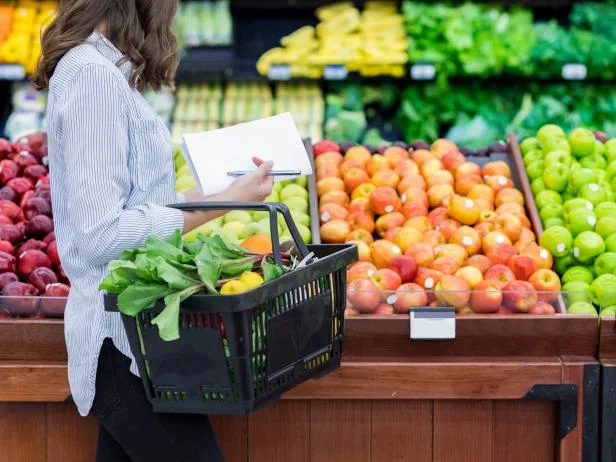
Organic vs. Non-Organic: Does It Make A Difference?
Organic isn’t as black and white as it seems. Eating plentiful amounts of fruits and veggies will benefit you no matter how they are grown and organic junk food is still junk!
We Investigate If Buying Organic Foods
Really Makes A Difference For Your Health
By: Dana Angelo White, M.S., R.D., A.T.C.
Steve Debenport
Are you breaking the bank on organic produce and other organic foods? The word “organic” has become synonymous with all kinds of nutrition superlatives, but healthy is not a mandatory part of the definition. We are setting the record straight and giving you the facts so you can make the most of your next shopping trip.
What Are Organic Foods?
The USDA defines organic foods as those items grown and produced without the use of chemical pesticides, herbicides and other prohibited substances. This process is strictly policed by the USDA in efforts to protect the foodstuffs and the land it’s grown on. Their website reads:
“Produce can be called organic if it’s certified to have grown on soil that had no prohibited substances applied for three years prior to harvest.”
All the government oversight, certification expenses and other financial issues associated with growing organic produce (such as lower yields and alternative pest control practices) means organic foods come at a higher price point. Despite these remarkable differences, there is not much solid science to support that organic produce is any more nutritious than conventionally grown items – an organic apple has the same nutrients as a non-organic one. Confused yet? Understandable. Food labeling can also get tricky. Only foods that contain nothing but organic ingredients can be labeled “100% organic,” while foods deemed “organic” only need to be 95 to 99 percent organic. And yes, there’s more: Foods made with 70 to 94 percent organic ingredients can flash the title “made with organic ingredients."
What About Dirty and Clean Food?
Some folks may look to other organizations for guidance to help make sense of organic dos and don’ts. The Environmental Working Group’s Shopper’s Guide to Pesticides in Produce sets out to rank traces of non organic residues found on regularly consumed produce items. They review available data each year to create the trendy “Dirty Dozen” and “Clean Fifteen” lists indicating which 12 produce items carry the highest amount of pesticide residues and which 15 carry the lowest. According to the EWG: “People can lower their pesticide exposure by almost 80 percent by avoiding the top 12 most contaminated fruits and vegetables and eating the least contaminated instead.” But these “dirty" and "clean” labels should not deter you from eating fresh fruits and vegetables whether they are grown organic or conventionally. When you take a closer look at the research even the highest loads of deductible pesticides found in the dirty dozen do not appear to pose imminent harm to those that eat them. For example, kale ranked high on the pesticide residue list this year, but the amount it contains is still pretty negligible – meaning it would be impossible to eat enough of the leafy green for it to be harmful.
What About Packaged Organic Foods?
Organic foods come in all shapes and sizes and you can easily find organically-produced junk food. Organic cookies, fried snack foods and other less-than-healthy foods are little or no better for you than their conventionally grown counterparts. Treat these highly processed foods with the same caution and moderation you would any other highly processed junk food.
How About Local Organic Food?
Locally grown produce often comes from smaller farms that don’t have to use the same types or amounts pesticides as large farms that service grocery stores. Talk to your local farmer about their use of pesticides and decide if going local seems like a better fit than organic for your home.
Bottom Line: Organic isn’t as black and white as it seems. Eating plentiful amounts of fruits and veggies will benefit you no matter how they are grown and organic junk food is still junk!

Micro Lab Farms New California Cultivation Complex Approved by City of Needles
The unique facility features Gen3 GrowPods, designed to outperform other methods of cultivation, and provide rapid growth in a multi-billion dollar market
July 29, 2019
The unique facility features Gen3 GrowPods, designed to outperform other methods of cultivation, and provide rapid growth in a multi-billion dollar market
CORONA, Calif., July 29, 2019 /PRNewswire/ -- Micro Lab Farms, a premier provider of automated indoor micro-farms for rapid production of legal cannabis, announced that it has been granted a Conditional Use Permit for a two phase cultivation facility in the city of Needles, California.
The resolution was passed by the Needles City Council, and allows Micro Lab Farms to develop its California Cannabis Cultivation Complex, which will feature over 100 state-of-the-art GrowPods.
The pods, designed by GP Solutions GWPD, +0.00%, are automated, transportable, scalable micro farms that have been shown to grow cannabis at a faster rate than conventional means of agriculture.
GrowPods allow cultivation to take place year-round, and eliminate pathogens, contaminants, pesticides and chemicals, to produce clean and robust crops. The Pods also provide a sealed environment for excellent isolation of specific strains and clones.
The GrowPods will also utilize GP Solutions proprietary soil mixture, which contains no animal products. This is critical in the cannabis industry because many other soils and additives can contain harmful pathogens and bacteria that have the potential to contaminate crops and cause testing failures.
The California Cannabis Cultivation Complex also provides investment opportunities to experienced growers, entrepreneurs, and qualified individuals seeking to add the cannabis sector to their portfolios. This passive investment allows stakeholders to participate in the rapid growth of the cannabis sector, with mitigated risk.
The Conditional Use Permit allows Micro Lab Farms to develop over 35,000 square feet of cultivation space.
For more information on Micro Lab Farms, or for information on GrowPods, or for details on investing in the California Cannabis Cultivation Complex, contact Micro Lab Farms at: (951) 266-6096, or visit: www.microlabfarms.com
About Micro Lab Farms
Micro Lab Farms has made it possible to rapidly and affordably enter or expand in the legal cannabis industry with its "GrowPod" cultivation systems.
GrowPods are modular, indoor micro-farms that feature a controlled environment, state-of-the-art air and water filtration, proprietary pathogen-free living soils, and automation systems that far outperform other methods of cultivation, and produce clean, robust crops without pathogens, contaminants, pesticides or chemicals.
For information on Micro Lab Farms, call: (951) 266-6096, or visit: www.microlabfarms.com
Connect:
Website: www.microlabfarms.com
Facebook: facebook.com/MicroLabFarms
Twitter: @MicroLabFarms
View original content:http://www.prnewswire.com/news-releases/micro-lab-farms-new-california-cultivation-complex-approved-by-city-of-needles-300892124.html
SOURCE Micro Lab Farms
Copyright (C) 2019 PR Newswire. All rights reserved

Long Island Hospital Creates Unique ‘Farm to Bedside’ Concept With Rooftop Farm
Stony Brook University Hospital has a rooftop farm. It's also used to teach local children about nutrition and gardening
JULY 24, 2019, BY KEITH LOPEZ
PIX11 video journalist Keith Lopez has the story.
STONY BROOK, NY — A Long Island hospital has created a unique "farm to bedside" concept promoting healthy eating for patients.
Stony Brook University Hospital has a rooftop farm. It's also used to teach local children about nutrition and gardening. A dozen kids were at the farm Wednesday for a program to learn about healthy eating.
Follow this story to get email or text alerts from PIX11 when there is a future article following this storyline.
US: Idaho - Family Farm Serves Mushrooms To Treasure Valley
Mason and Tia Groves built the entire farm from three shipping containers and now have their mushrooms shipped to five restaurants in the Treasure Valley, to Cliff’s Country Market in Caldwell and to the Nampa Farmers Market
By RACHEL SPACEK rspacek@idahopress.com
July 29, 2019
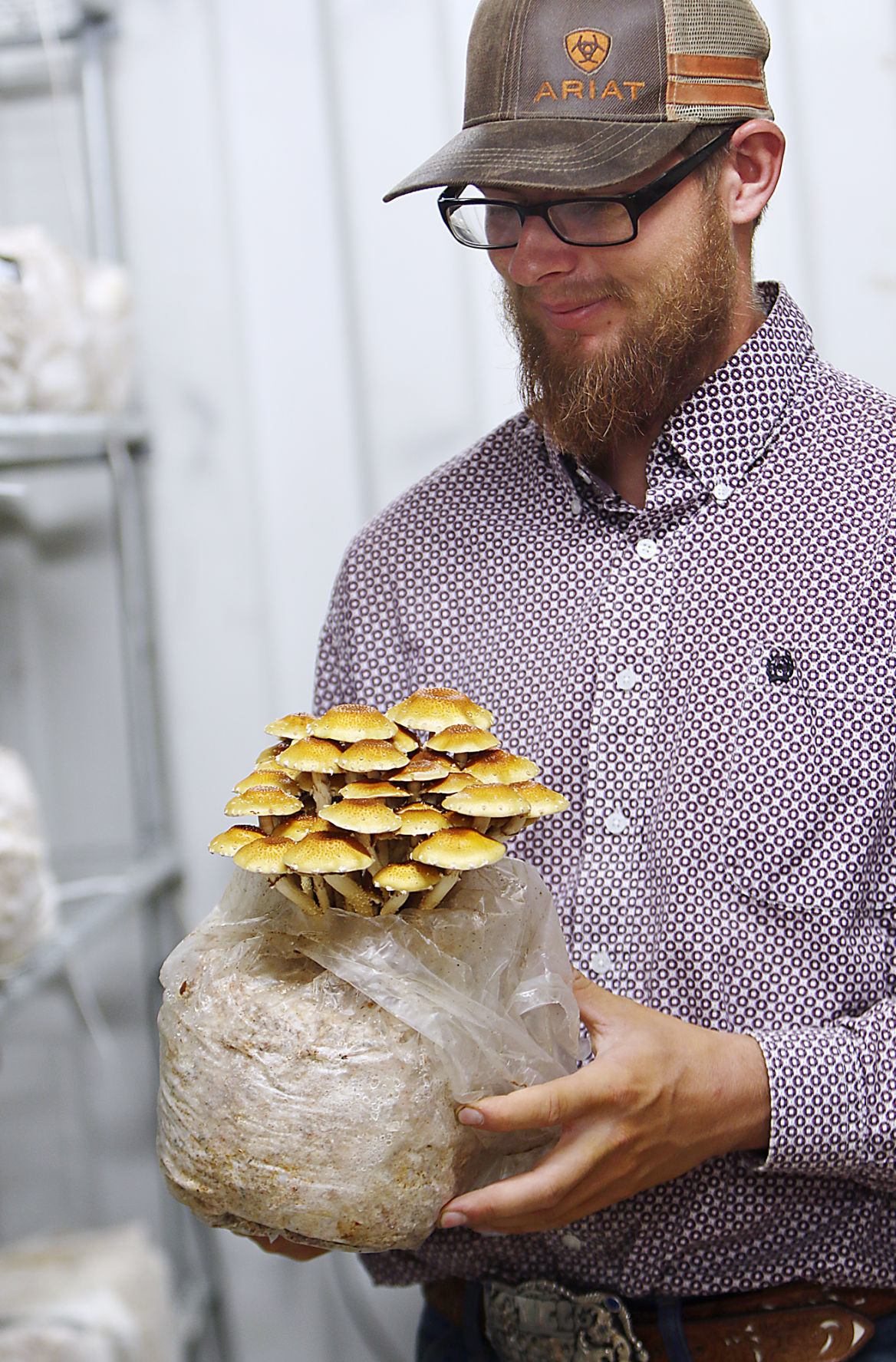
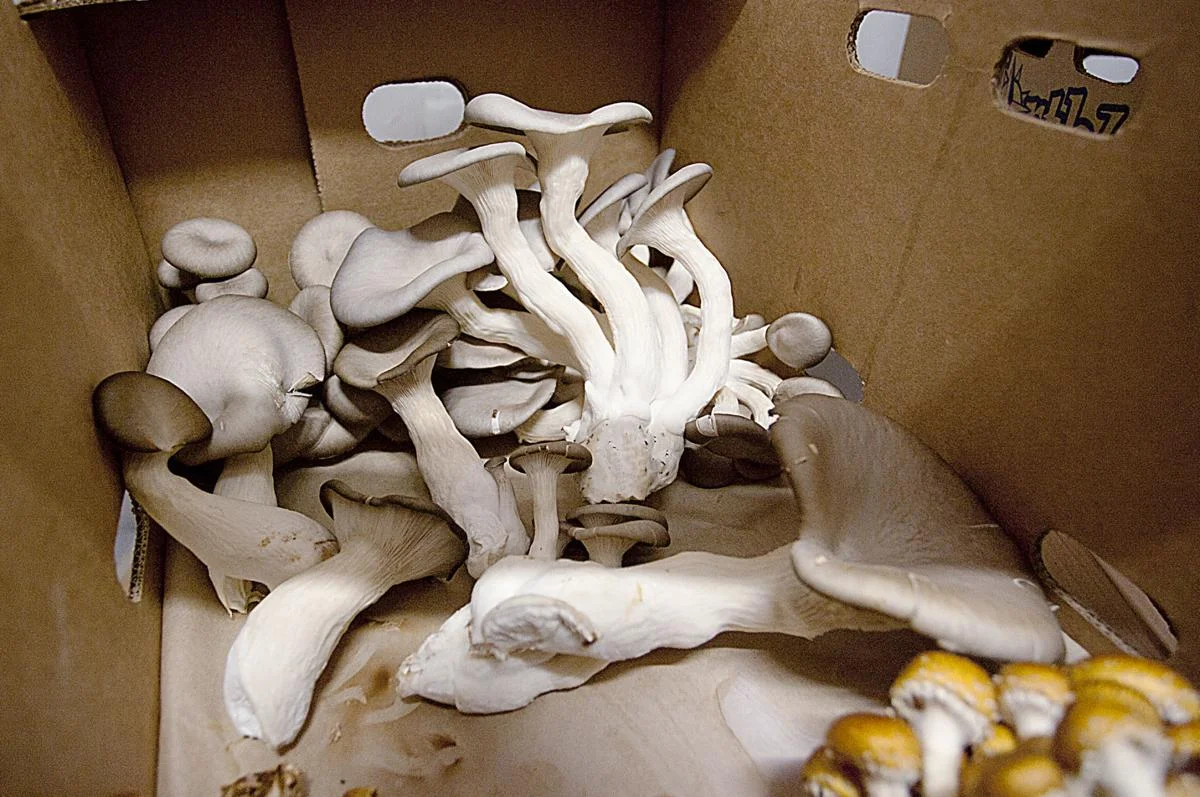
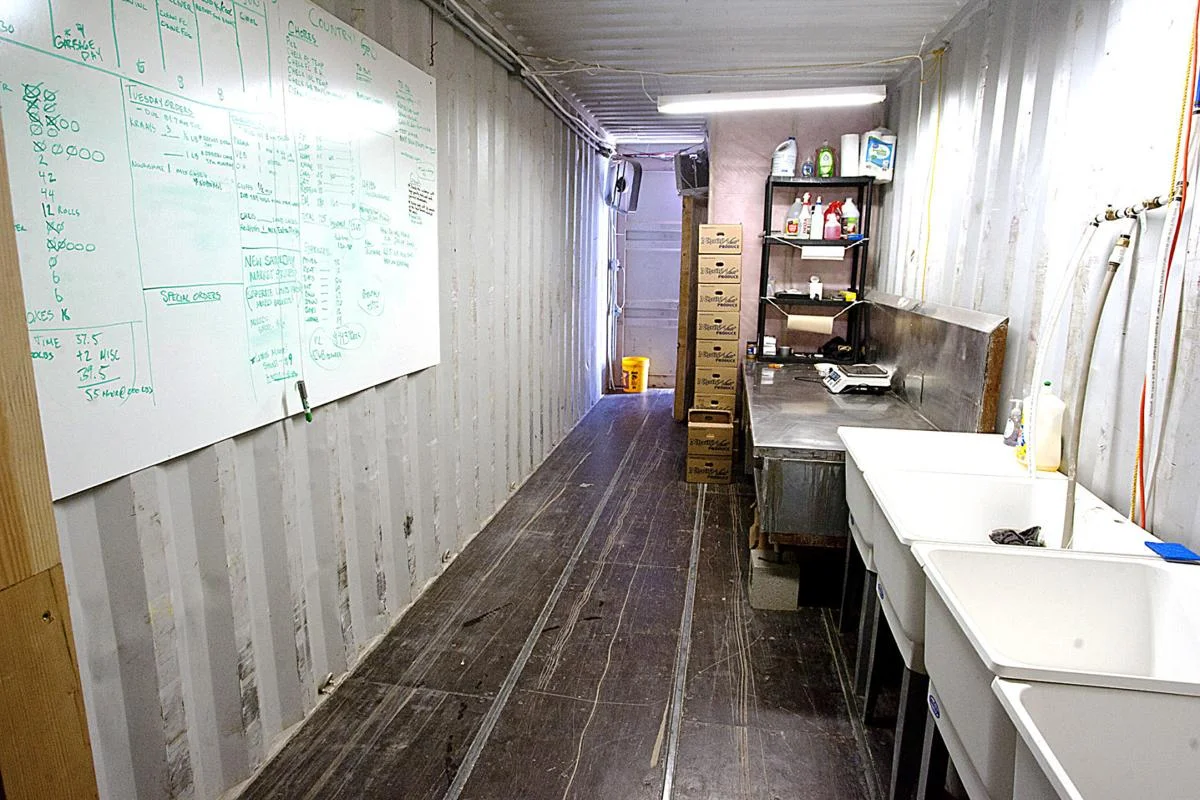
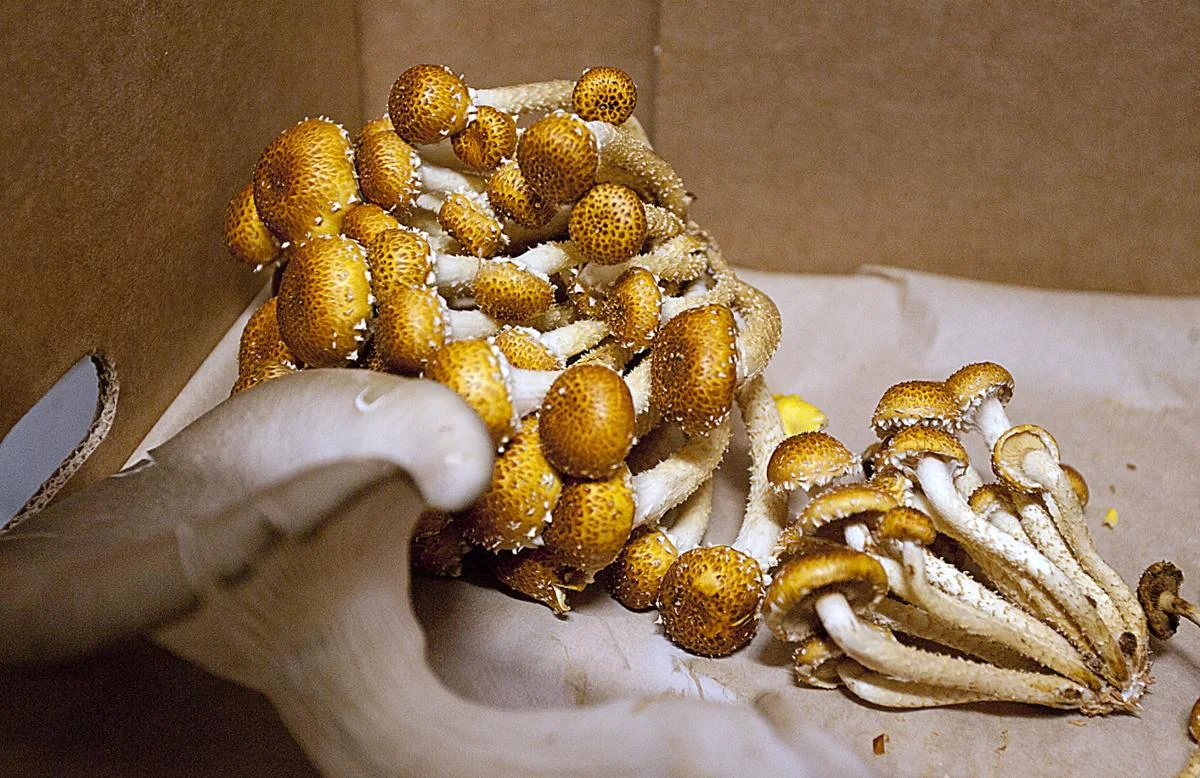

PARMA — Tia Groves described her husband, Mason Groves, as an “entrepreneurial person with passion oozing out of his pores.” Last fall, that passion took the form of a hand-built, family-run mushroom farm in Parma.
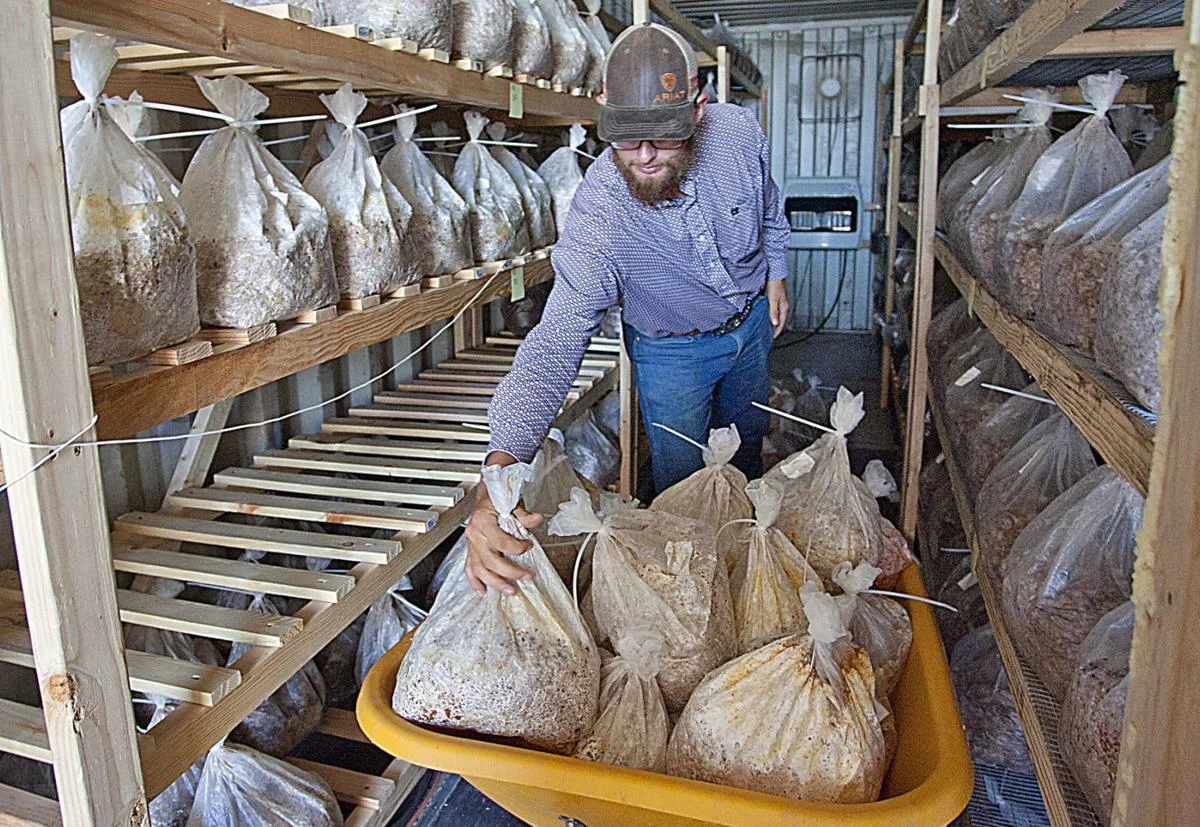
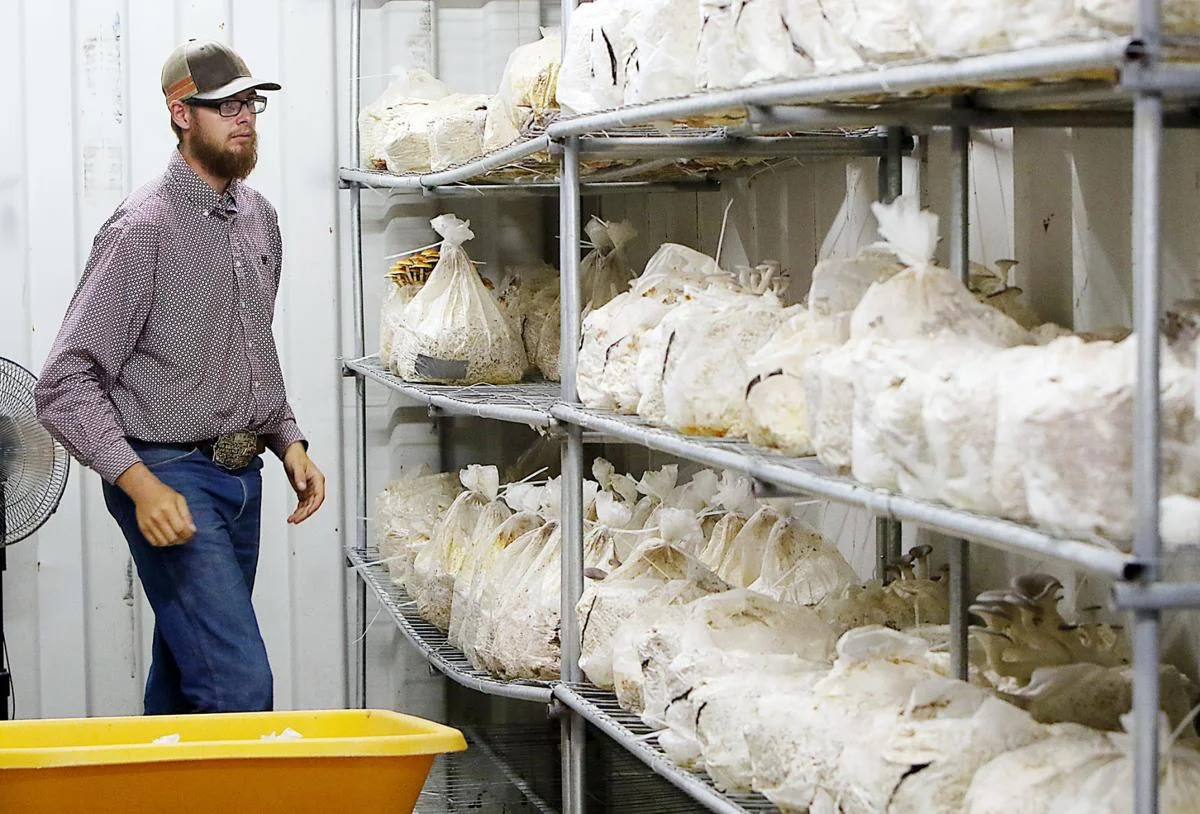
On Wednesday morning, Tia Groves walked in and out of the three shipping containers-turned-mushroom farms with baby Abel on her hip. Groves Country Mushroom Farm had its first full month of operation in November and plans to continue growing mushrooms year-round to keep up with the demand.
Mason and Tia Groves built the entire farm from three shipping containers and now have their mushrooms shipped to five restaurants in the Treasure Valley, to Cliff’s Country Market in Caldwell and to the Nampa Farmers Market. They are also in a number of community supported agriculture bundles, a service in which people can get local produce delivered to them on a regular basis.
Tia Groves said she believes there are at least two other mushroom farmers in the Treasure Valley. She said that the competition among the three is minimal since they see a demand for mushrooms in the valley.
The couple met at Vallivue High School in 2009. The couple spent a few years apart when Mason Groves spent time on a fishing boat in Alaska and Tia Groves went to school and worked in Chicago. They rekindled their relationship in 2014 back in the Treasure Valley.
After having their first child, Jett, the two realized they couldn’t raise a family on an Alaskan fishing boat and decided to move back to the valley.
When searching for a way to make a living in the valley, Mason Groves, who said he has always been fascinated by agriculture, came up with the idea of growing mushrooms after talking with his grandfather, a longtime crop farmer in Parma.
“After that I dove right in,” he said.
Mason Groves said he started reading books on how to grow mushrooms and starting small growing facilities to work it out in trial and error.
Still, to make a living, Mason Groves continues to work on a fishing boat in Alaska, away from his family. He said growing mushrooms started as a way to make money while also being with his family. He is trying to get out of the commercial fishing business.
While Mason Groves is away fishing, Tia Groves and Justis Kelly, the farm’s only other employee, work on harvesting and moving the mushrooms between shipping containers.
Kelly is living near the farm for the summer and helps harvest the mushrooms twice a day.
One of the greatest challenges, Mason Groves said, was the consistency involved in growing a product.
“This is a weekly crop — you are on a schedule, doing the same thing every week, and any hiccup that shows up impacts the clients that are expecting mushrooms every week,” he said.
THE PROCESS
Mushrooms, Tia Groves explained, typically thrive in the Pacific Northwest, where it is cold and moist nearly year-round.
“In order to grow them in a climate like this, we try to mimic the way they would grow there,” she said.
Groves Country Mushrooms are grown indoors, in three shipping containers, so the farmers can regulate the temperatures of the containers to keep them cool and moist despite the weather outdoors.
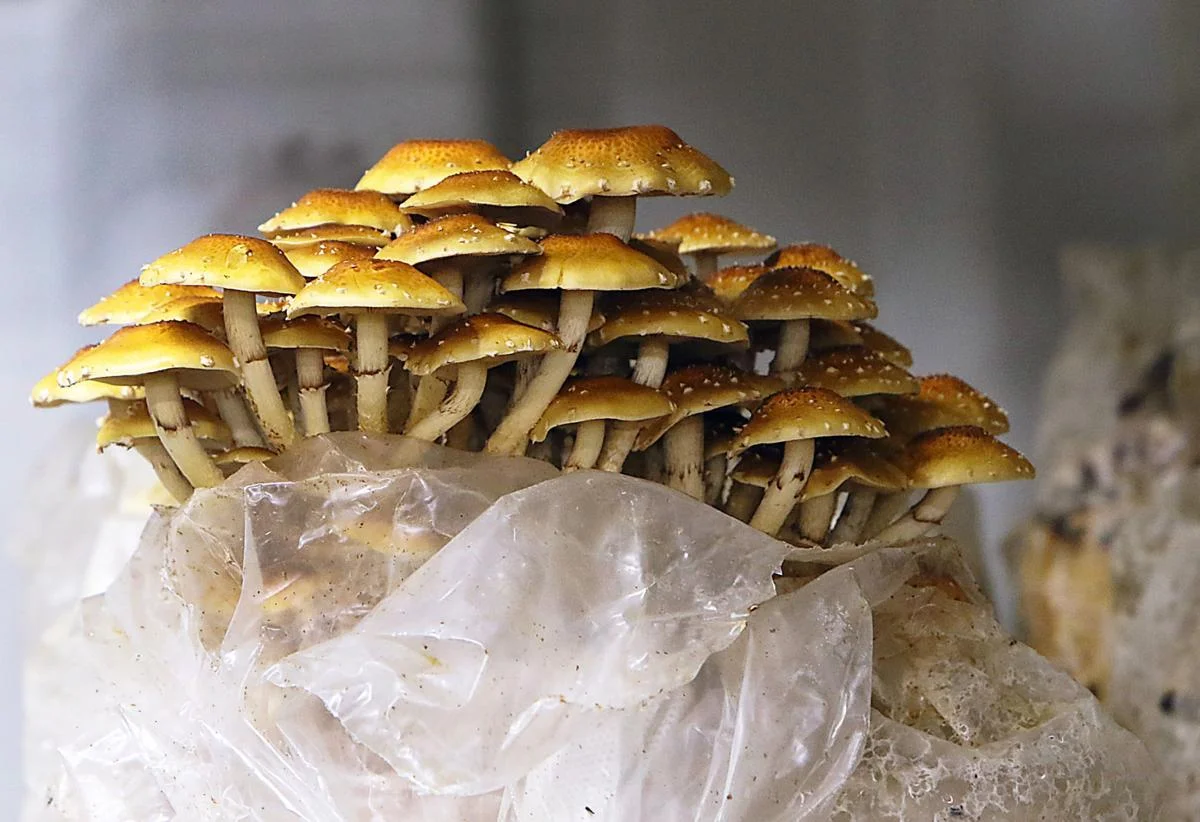
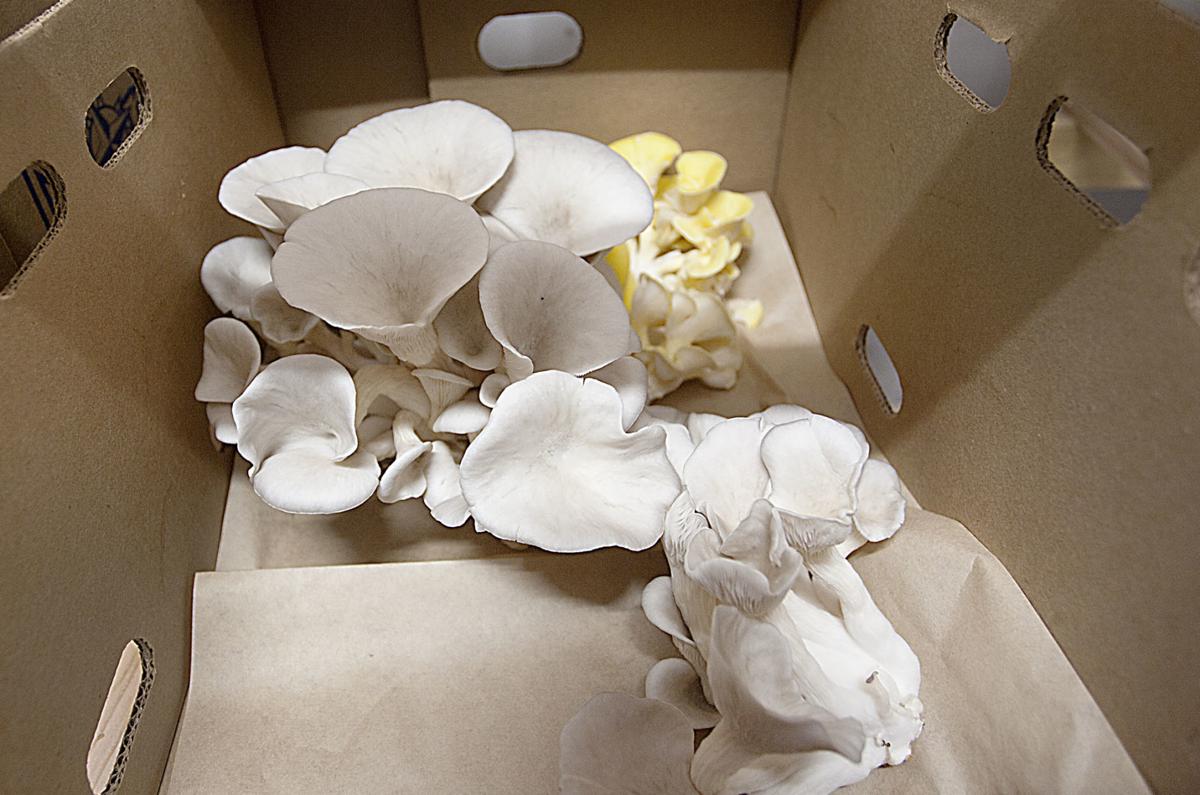
Currently, the farm is growing three different colors of oyster mushrooms, chestnut mushrooms and lion’s mane. Tia Groves said in the fall the farm can grow as many as 11 different types.
The first shipping container on the farm has a refrigerator where the harvested mushrooms are preserved and where they await being shipped to consumers.
The second shipping container contains bags of wood chips and the mushroom spawn, what the mushroom grows from. This shipping container acts as the incubation chamber for the bags of wood chips and spawn to form mycelium, the vegetative part of a fungus or fungus-like bacterial colony.
After the bags fill with mycelium, they go into the last shipping container, or the fruiting chamber, where the mushrooms eventually sprout. The fruiting chamber is the foggiest and most humid of the containers. Once in the fruiting chamber, a slit is made in the bags of mycelium, allowing oxygen and light in so the mushrooms can grow.
The mushrooms start sprouting as pin sets, miniature mushrooms, and then grow into full clusters.
Once the mushrooms are in full clusters, they are harvested and put in the refrigerator in the first shipping container.
The excess wood chips and used mycelium from the plastic bags gets composted onto a pile on the farm. The compost is used on other parts of the Groveses’ property, like vegetable and flower beds. Mason Groves said they would eventually like to use the compost to grow other vegetables.
Water is used throughout the shipping containers to clean the space and regulate the environments inside. Once the water is used, it drains into a settling tank and is used on the compost pile.
Mason Groves said what little water is used in the process doesn’t go to waste.
Tia Groves said the family hopes to introduce new types of mushrooms to their farm in the fall and spring. She said the small farm is still in a trial-and-error period.
According to a ResearchAndMarkets.com report, the global mushroom market accounted for $38 billion in 2017. In the United States, the value of mushroom production was $1.22 billion in 2017, an 8 percent increase in value since 2007, according to a report commissioned by the American Mushroom Institute. The total crop in the United States was 929 million pounds of mushrooms.
Groves Country Mushrooms is expecting to triple in size by the first of the year after they move into a new building and keep the three shipping containers.
Mason Groves said the Treasure Valley community has been helpful and nice as the couple’s mushroom operation has gone through some ups and downs. He said their customers are countable on one hand, and he has personal relationships with all of them.
Rachel Spacek is the Latino Affairs reporter for the Idaho Press. You can reach her at rspacek@idahopress.com. Follow her on twitter @RachelSpacek.
All Photos: Brian Myrick / Idaho Press

Disruption In The U.S. Fast Food Sector Creates Prospects For A New (And Lucrative) Market Opening For The Vertical Farming Industry
Plant-based alternative meats are gaining increased traction with customers owing to their smaller environmental footprint compared with traditional meat production
AUGUST 2, 2019
KYLE BALDOCK
By Joel L. Cuello, Ph.D.
U.S. fast food customers’ growing expectations for healthier, ethical and more environmentally sustainable options directly correspond with the values and produce that the Vertical Farming industry provides.
As the vertical farming industry in the United States grows, its market segments correspondingly diversify and widen.
Aerofarms, Gotham Greens and Square Roots, for instance, all deliver their produce to local grocers as well as to Whole Foods Market.
Plenty sells its leafy greens through the online retailer Good Eggs, San Francisco’s Faletti Foods as well as to fine-dining restaurants, including Atelier Crenn and the Michelin-starred Protege in Palo Alto, among others.
New-Jersey-based Greens Do Good, whose entire profits go to helping people with autism through an innovative and socially-responsible business model, delivers the bulk of its produce to a partner golf country club.
Meanwhile, Crop One Holdings has recently and emphatically helped push the market frontiers for vertical farming by forming a joint venture with Dubai’s Emirates Flight Catering to supply 105 airlines and 25 airport lounges at Dubai International Airport with a full array of greens for catering services.
A Great Convergence
In a parallel industry universe, the U.S. fast food sector is in the midst of experiencing arguably its biggest disruption in decades caused by the tectonic shifts in customers’ preferences and expectations. With customers’ growing demand for healthier, ethical and more environmentally sustainable options, the industry’s major players from McDonald’s to Burger King to Carl’s Jr., among others, have taken notice and are promptly strategizing and responding.
McDonald’s, the largest fast food chain in the United States, now exclusively offers antibiotics-free chicken, cage-free eggs, cow milk unadulterated with artificial growth hormones, and buns devoid of high fructose corn syrup, among others.
And in direct response to mounting customer discomfort with the health, environmental and ethical costs of meat, Burger King has introduced its vegetarian burger Impossible Whopper using the plant-protein-based meat supplied by Impossible Foods.
Plant-based alternative meats are gaining increased traction with customers owing to their smaller environmental footprint compared with traditional meat production. It is well known, for instance, that livestock production for meat and dairy accounts for close to 15 percent of the global greenhouse gas emissions annually. That animal ranching also consumes exorbitant amounts of water, feed, land and energy further exacerbates the sustainability deficits of traditional meat production.
Burger King currently sells its Impossible Whopper to 59 restaurants in the St. Louis area, and plans to swiftly make it available in all of its 7,200 locations nationwide.
Carl’s Jr. now also offers a vegetarian burger by the alternative-meat maker Beyond Meat at over a thousand of Carls’ Jr. restaurants, while White Castle has been selling a Slider version of the Impossible burger since last year in its over 380 stores.
Earlier this month, Dunkin’ began serving its meatless Beyond Sausage Breakfast Sandwich in some of its restaurants in New York City with plans to sell it eventually nationwide.
Even KFC is currently exploring adding plant-based fried chicken as part of its standard offerings.
And McDonald’s, while still currently weighing whether to add a meatless burger on its menu in the United States, has now added a vegan burger — called the Big Vegan TS — as part of its permanent offerings in Germany. Nestle sources the meatless burger to McDonald’s restaurants in the country, one of the company’s top five international markets.
For true meat lovers who prefer their burger to be actually animal-derived and non-vegan — but ethical and environmentally sustainable just the same — Memphis Meats is currently at work in perfecting its lab-grown meat constituted from actual beef cells. This innovation is still very much in development, however, that the meat product is not expected to be made available in the market any time soon.
It’s One Small Step for Wendy’s
The rising convergence of AgTech innovations in the U.S. fast food industry — a direct result of the aforementioned customers’ evolving and more enlightened expectations and preferences — certainly received a recent big boost when Wendy’s finally decided to source all of its tomatoes from indoor hydroponic greenhouses located in the U.S. and Canada for all of its 6,000 restaurants in the United States.

In keeping with Wendy’s motto of Always Fresh, the decision ensures superior quality as well as enhanced food safety, predictability, reliability and product traceability for the American international fast food’s fresh tomato supply.
Wendy’s, the second largest burger fast food chain in the U.S., also has plans over time to source its other fresh vegetable ingredients from similar indoor crop production systems.
One Giant Leap for U.S. Vertical Farms?
Could Wendy’s one small step translate into one giant leap for both the U.S. fast food industry and vertical farming industry?
The likelihood is real in part given their now shared product values and since the economy of scale involved helps provide impetus and cushion to both industries
For U.S. fast food, partnerships with vertical farms would help meet the former’s customer expectations on the health, ethical and sustainability fronts, while also ensuring produce quality, nutrient value, consistency and supply reliability even as they help reinforce local jobs creation.
For U.S. vertical farms, partnerships with U.S. fast food would help effectively reduce their price of produce through the expanded economy of scale even as they also help strengthen local jobs creation.
The size, of course, of the U.S. fast food industry is gargantuan, with approximately 500 million Americans eating at fast food restaurants every day, generating annual sales of about $200 billion at 200,000 fast food locations across the country. Indeed, just the top 10 U.S. burger and chicken fast food chains — namely, McDonald’s, Wendy’s, Burger King, Chick-fil-A, Sonic, KFC, Carl’s Jr./Hardee’s, Jack in the Box, Popeyes Louisiana Chicken, and Whataburger — post a combined annual sales of over $84 billion (2016).
The entry of U.S. vertical farms into the U.S. fast food industry would certainly provide the former a momentous and immense market opportunity that it seeks.
One hopes that the continuing convergence of AgTech innovations in the U.S. fast food industry would help launch both the U.S. fast food and vertical farming industries into a jointly reinvigorated sustainability trajectory for people, planet and proft.
*****
Dr. Joel L. Cuello is Vice Chair of the Association for Vertical Farming (AVF) and Professor of Biosystems Engineering at The University of Arizona. In addition to conducting design and research on vertical farming and cell-based bioreactors, he teaches “Globalization, Sustainability & Innovation” and “Integrated Engineered Solutions in the Food-Water-Energy Nexus”. Email cuelloj@email.arizona.edu.

Should GMOs Be Allowed In Organic Food? USDA Sparks Debate
USDA Undersecretary of Agriculture Greg Ibach testified before the House Agriculture Subcommittee this month that plants grown with the aid of genetically modified organisms and gene editing could be allowed to be certified organic in the future.
AUTHOR Jessi Devenyns
July 29, 2019
Dive Brief:
USDA Undersecretary of Agriculture Greg Ibach testified before the House Agriculture Subcommittee this month that plants grown with the aid of genetically modified organisms and gene editing could be allowed to be certified organic in the future.
"I think there is the opportunity to open the discussion to consider whether it is appropriate for some of these new technologies that include gene-editing to be eligible to be used to enhance organic production and to have drought and disease-resistant varieties, as well as higher-yield varieties available," he said.
Currently, organic standards prohibit genetic engineering and GMOs to be certified under that label. In June, President Donald Trump signed an executive order that instructed federal agencies to be more lenient on the approvals for genetic crop modifications and other forms of agricultural biotech.
Our free newsletter will bring you the latest food industry news & trends. From R&D and manufacturing to marketing and packaging, we'll deliver the industry intel you need to know.
Dive Insight:
The current organic certification requires that products with the organic label lack antibiotics, artificial colors, genetically modified ingredients and synthetic pesticides. GMOs made the list because they are not naturally occurring, a value which is at the root of the organic movement. However, Ibach's comments show that policymakers are considering GMO as a possible addition to the list of acceptable practices for organic farming.
GMOs have been a touchy subject in recent years. A 2018 study by the Hartman Group found that nearly half the respondents would avoid purchasing products with GMOs. At that same time, 60% of consumers in one study admitted they don't know much about GMOs, according to a presentation at the IFT19 conference by Intertek. Still, with widespread skepticism of so-called "frankenfoods," companies are voluntarily acknowledging or removing GMO ingredients from their products.
While these genetically altered foods are often seen in an unfavorable light by consumers, about 12% of global agricultural land is still planted each year with genetically modified crops. In the U.S., those numbers are even higher for certain crops. The Grocery Manufacturers Association said about 90% of the nation's corn, soybean and sugar beet crops are genetically modified, which translates to up to 75% of the products in a grocery store that are made with ingredients derived from crops that were genetically modified.
The reason for the prevalence of GMOs boils down to practicality. A World Resources Institute report published this month said urgent changes in the global food system are needed to make sure there is enough food for an estimated 10 billion people by 2050. One of the primary solutions the report named was increasing the number of bioengineered crops in both quantity and variety of species. Feeding the planet in the future is a concern for the organic farming community, but there is still hesitation given that consumers have an aversion to GMOs.
Despite the predominant scientific consensus that GMO food is safe and items made with these ingredients are just as nutritious as their counterparts, many still don't trust them. As consumers increasingly value transparency, changing the acceptability of GMO ingredients in organic food production could result in backlash. Although a 2018 study in Agriculture and Human Values showed about two-thirds of consumers didn't notice a GMO label on a product, of those who did, more than half of the consumers said the label influenced them not to buy the product. It may also be difficult for the USDA to keep track of since there are different GE methods.
"The allowance of any GE techniques under the organic label raises legitimate 'slippery slope; concerns," Cornucopia's Director of Domestic Policy Marie Burcham said in a statement. "The USDA would be hard-pressed to find the resources to track allowed GE technologies and products in the organic sector, assuming they could summon the will."
Even if GMOs are allowed in organics, it organic producers may still want to consider keeping GMOs out of their farming practices. While organic food sales increased by an average of 10% per year between 2010 and 2016, that pace has cooled to 6% for the past two years, according to a report from Rabobank. While the growth of the industry is slowing, prices for organic products are also dropping, which could encourage organic shoppers to buy more products. But they might not do so if there are GMOs included in those foods.
The importance of having a guarantee that organic means non-GMO may become even more important when the new labeling laws go into effect next year since not all products containing GMO ingredients fall under the labeling requirements. Having the organic label be synonymous with GMO-free could be one way for some producers to present added value to those consumers who care about keeping modification out of their foods.
Lead Photo: (Credit: U.S. Department of Agriculture )
Recommended Reading:

CO2 GRO Inc. Is Pleased To Present An Interview With John Archibald, President And CEO Conducted At The Recent TSX Venture 50 Conference
John discusses the 2019 outlook and CO2 GRO's significant innovations in the agtech industry
Dear Shareholders, Stakeholders
And Interested Parties
CO2 GRO Inc. is pleased to present an interview with John Archibald, President and CEO conducted at the recent TSX Venture 50 Conference. John discusses the 2019 outlook and CO2 GRO's significant innovations in the agtech industry.
To view the interview please click here www.co2gro.ca/pages/investors.
For more information please contact Sam Kanes, VP Communications at 1-416-315-7477 or sam.kanes@co2gro.ca
©2019 CO2 GRO Inc. | Suite 5800 40 King Street W Box 1011 Toronto Ontario M5H 3S1

Veggies Grown In Nevada's Massive Indoor Farm Are Now On Sale To Las Vegas Locals
Nevada does not have particularly fertile lands, but that didn't stop Oasis Biotech when they opened a 215,000-square-foot indoor farm to the public last July
by Phillip Moyer
July 30th 2019
The facility uses hydroponics and environmental control to reduce environmental impact. (PHOTO: Nathan O'Neal)
Nevada does not have particularly fertile lands, but that didn't stop Oasis Biotech when they opened a 215,000-square-foot indoor farm to the public last July.
Designed to be sustainable and environmentally-friendly, the facility uses hydroponics to use 90 percent less water than traditional farming, and have a completely controlled environment to eliminate the need for pesticides.
Guests had the chance to sample the vegetables after its openings, but until now, the food was only widely available to high-end restaurants in the Las Vegas Valley.
Today, the farm announced that they'll be selling eight-ounce bags of its baby leaf Spring Mix and Romaine Mix blends to consumers under its "Evercress" brand name.
“Over the last year, we have been working hard to perfect our crops and growing methods to bring the community and our customers the freshest salad greens in Las Vegas,” says Michelle Howell, Sales & Marketing Manager at Oasis Biotech. “We had over 1,000 people attend last year’s grand opening and the big question everyone asked us was “When can we buy it?” so we are thrilled to now offer the Evercress salad greens to Las Vegas locals."
The blends can beat Oasis Biotech's farming facility, located at at 6225 Annie Oakley Drive in Las Vegas.
In an effort to stay true to its mission to “Feed the World, Better.,” any product not sold to current customers or purchased by the public will be donated to local charities.

Massive Waves of Toxic Seaweed Inundate Yucatan Shorelines
It is the biggest algae bloom in the world: Massive waves of seaweed called sargassum washing up on shore day after day
CBS NEWS July 27, 2019, 9:24 AM

It is the biggest algae bloom in the world: Massive waves of seaweed called sargassum washing up on shore day after day.
Jose Escalante, who has owned a small hotel in Tulum, Mexico, for eight years, said seaweed, which had been cleaned from the beach that day, will again cover the shoreline in a couple of hours.
Every day workers here in Tulum, and up and down the Yucatan Peninsula, remove tons and tons of decomposing sargassum from beaches. And every night it comes back.
The Caribbean's pristine beaches and crystal-clear waters are under threat from the newest manifestation of a changing planet: Waves of toxic seaweed, sargassum, which are washing ashore on the Yucatan Peninsula. CBS NEWS
Rosa Rodríguez-Martínez, from Mexico's National University, is trying to figure out why. She said sargassum used to wash ashore for two or three weeks during the summer. Now? "We are getting sargassum almost from March to October," she told "CBS This Morning" co-host Jeff Glor. "So basically, more than half of the year we are receiving massive amounts."
"That's a huge difference," said Glor.
"It's impressive," she said. "It's a problem. Economical problem, ecological, and probably a human health problem also."
Since 2011 the amount of sargassum in the Atlantic has increased dramatically. It currently forms a 5,000-mile mass from Africa to the Caribbean. It is estimated to weigh 22 million tons.
Why is it so bad right now? "I think it's because we have polluted the sea too much," said Rodríguez-Martínez. "So, now we have a lot of nutrients [in the ocean], and the algae are taking advantage of it."
Fertilizer run-off from Brazil, increased by deforestation, is believed to be the largest fuel source for the sargassum. That, combined with warming ocean water and changing ocean currents, has put the Yucatan squarely in the crosshairs.
It has gotten so bad the Mexican navy has just been put in charge of dealing with it.
They took Glor up in a reconnaissance mission to locate the largest sargassum waves.
An aerial view of the masses of sargassum inundating Mexico's shorelines. CBS NEWS
"We are fully aware that we are only addressing the effects of sargassum," said Rear Admiral Enrique Flores Morado, who said the navy will build new sargassum-busting ships to reel in as much as they can. "But that does not solve any problem. In reality the causes have to be addressed. But given the lack of research, we are now implementing immediate actions."
Right now, many towns, and resort owners, are using floating barriers to corral and collect sargassum, including in Puerto Morelos, half an hour south of Cancun.
Corralling the algae bloom. CBS NEWS
"We can say for sure that we are the first destination in the whole Mexican Caribbean with already a control about the sargassum," said Héctor Tamayo, director of tourism for Puerto Morelos.
"There's a lot of it, though. It doesn't look controlled," said Glor.
Tamayo said there are more than 50 trucks every day carting out sargassum.
And some are developing novel ways to use sargassum, including Omar Vasquez, who is building homes with it. Vasquez mixes with sargassum with clay and compost, which is then compressed into bricks.
"They're better than the other bricks," he said. "It does not have even a gram of cement. Everything is organic.
"I mean, it's ironic because I grew up without a house, without a home. We crossed the border to the States when I was eight years old. I came back to live my Mexican dream!"
Omar Vasquez shows Jeff Glor the bricks he makes by mixing sargassum with clay and compost. CBS NEWS
Even though Vasquez says his homes are 100-percent organic, there may be an issue with what accumulates in the sargassum at sea.
Rosa Rodríguez-Martínez's latest research shows sargassum is high in heavy metals, like lead and arsenic. And disposal is a major issue.
Sargassum is either being dumped inland, or buried under the beach, which is illegal.
One dump site where the sargassum is taken is in the jungle, miles away from the ocean. It's unclear if the sargassum left there seeps into the ground, goes up into the air, or will just sit there forever.
It is a crisis stretching across the Caribbean, with no end in sight.
Glor asked Escalante, "For folks watching this who may not be familiar with this problem or what's happening here, what do you say?"
"It's something that is happening to the world, not just to the region," he replied. "This is just a consequence of the entire planet being in trouble."
See also:
Scientists Play With Light And Water To Speed Up Crop Breeding
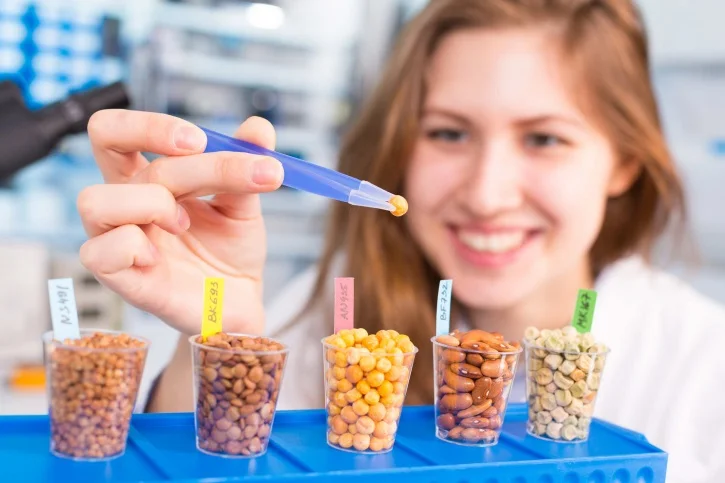
A number of challenges face crop production around the world, including drought, diseases, pests and limited land. Scientists are tasked with breeding varieties that will produce higher yields but use less land and fewer resources
BY DTN Grains - Loren Lindler | July 27, 2019
OMAHA (DTN) — This twice-monthly column condenses the latest news in the field of crop technology, research and products. Researchers say that by 2050, there could be 10 billion people in the world. A number of challenges face crop production around the world, including drought, diseases, pests and limited land. Scientists are tasked with breeding varieties that will produce higher yields but use less land and fewer resources. To aid in this, some international researchers are experimenting with two new techniques to speed up the breeding process: LED technology and hydroponics.
PLEASE, SIR, CAN I HAVE SOME MORE LIGHT?
Lee Hickey, a plant geneticist at the University of Queensland in Australia, is combining breeding and light-emitting diode (LED) technology to produce a form of “speed breeding.”
Plant breeding can often take years. With speed breeding, researchers are able to use LED lights that are ideal for photosynthesis, which allows researchers to grow crops three times faster, creating more generations in a single year.
Botanists started growing plants under artificial light over 150 years ago. As the years passed, LED technology has vastly advanced, allowing scientists to be more precise by customizing light settings to individual crop species. The Australian researchers exposed their crops to 22 hours of continuous blue and red LED lights, under ideal temperatures, which essentially convinced the plants to flower early. A generation of crops can take months, or even a year, to breed with traditional methods. However, with the use of LED lights and speed breeding, scientists were able to grow six generations of wheat, barley, chickpeas and canola in a year.
A WATERY WONDER
To obtain the fastest breeding results in their greenhouses, scientists at the John Innes Centre in the U.K. are using hydroponics, the practice of growing crops without soil, usually with the use of a water-nutrient solution. Hydroponic techniques allow nutrients and oxygen to reach plant roots quicker.
Many researchers have found that hydroponic plants grow 30% to 50% faster than a plant grown in soil. The ample amount of oxygen in a hydroponics system allows the roots to absorb nutrients much faster, stimulating root growth. The U.K. researchers are taking advantage of this faster-growing time to speed up their evaluation of the genomes of wild relatives of modern crops, which can hold valuable disease-resistance genes.
You can learn more about the LED technology and plant breeding with hydroponics: https://www.nowscience.co.uk/…

U.S. Truck Driver Shortage Is On Course To Double In A Decade
The driver deficit swelled by more than 10,000 to 60,800 in 2018 from a year earlier, according to a study by the American Trucking Associations
By Thomas Black
July 23, 2019
The U.S. trucker shortage is expected to more than double over the next decade as the industry struggles to replace aging drivers and recruit more women.
The driver deficit swelled by more than 10,000 to 60,800 in 2018 from a year earlier, according to a study by the American Trucking Associations. The shortage is expected to ease slightly this year as U.S.-China trade friction slows freight demand and after trucking companies boosted pay to attract recruits.
The relief won’t last as replacing an aging pool of drivers gets harder in a tight labor market, said Bob Costello, chief economist for the trade group. The shortage is most acute for long-haul drivers, where the average age is 46, and workers are on the road for weeks at a time.
The ATA estimates that 160,000 driver positions will go unfilled in a decade.
“If things do not change, that’s where we will end up,” he said. “At some point, you go from being an operational pain-in-the-neck for the supply chain to real issues for all of us as consumers.”
In addition to increasing pay, trucking companies are trying to recruit more women, young people and former military personnel. Women make up less than 7% of drivers, and the industry is pushing to entice more with technology that makes trucks easier to drive and more comfortable.
The Arlington, Virginia-based ATA also wants regulators to lower the age for commercial drivers who can cross state lines by three years to 18. Its proposal would increase training and supervision. Cutting the age increases the recruiting pool and enables people to drive straight out of high school instead of choosing another industry, such as construction, Costello said.
Lead photo: An instructor, right, speaks with a student after practicing parallel parking with a truck at Iowa Central Community College in Fort Dodge.
Photographer: Sergio Flores/Bloomberg