


Welcome to iGrow News, Your Source for the World of Indoor Vertical Farming
Biomimicry Helps Urban Farmers Scale Up
The Biomimicry Institute sat down virtually with Felipe Hernandez Villa-Roel, CEO and founder of Hexagro Urban Farming, to ask him about his experience as an entrepreneur and Biomimicry Launchpad participant
The Biomimicry Institute sat down virtually with Felipe Hernandez Villa-Roel, CEO and founder of Hexagro Urban Farming, to ask him about his experience as an entrepreneur and Biomimicry Launchpad participant.
What motivated you to start HEXAGRO?
Hexagro started as a bachelor’s thesis in Product Design when I started to analyze the problems that organic farmers in Costa Rica are facing in terms of productivity, sustainability, and health. These challenges are related to the high amounts of pesticides used by adjacent traditional farms, soil degradation, and climate change, so I began researching methods that didn’t use soil as a growing medium.
I analyzed the latest trends on soilless food production, starting from the indoor farming sector and through vertical farming, which proposes a more efficient way to grow food with less effort through new technologies like LED lighting and hydroponics in vertical configurations. I concluded that the main issue with these solutions was their scalability, since they followed a centralized model which is capital-intensive, requires infrastructure and expert personnel, and is difficult to set up and launch. The thesis made an analysis of nature’s strategies to reduce space while maximizing productivity with a modular structure that was then translated into the first version of Hexagro’s Living Farming Tree.
What was your experience in the Biomimicry Launchpad? What did you learn and how did you apply that to your business?
This project became a team and then a finalist in the Biomimicry Global Design Challenge, thanks to the inspiration taken from nature to develop the first product iteration. After that, we were invited to participate in the Launchpad program. From 2015-2016, we participated in many training sessions and had access to expert mentoring. This gave the team the tools to define a clear business model, which changed the approach of the first design iteration and led to a second design iteration that gave the basis for the current pre-industrial product. Today, the team continues to take inspiration from Nature’s Unifying Patterns to create solutions that follow the principles of biomimicry for every aspect, from product development to marketing and business development. Hexagro Urban Farming was incorporated as a for-benefit company in Milan, Italy, after the participation in the finals of the Launchpad in late 2016.
The Hexagro team
Tell us about your work to incorporate the Living Farming Tree in hotels and workplaces. What are you hoping to accomplish?
Our vision for Hexagro is a future in which anybody, anywhere, can access healthy food through urban farming. In order to get there, the team has determined a strategy to enter the market and launch its first product, the Living Farming Tree (LFT). Urbanization is booming, and at the same time we are spending around 90% of our time indoors where the conditions are not always meant for people’s well-being. This disconnection from nature within working spaces has direct consequences in employees’ health and psychology and can lead to lack of productivity and engagement, which could have direct consequences for companies. We are reconnecting employees to nature and their work through a “gamified” urban farming experience in which users follow the instructions from a digital interface to perform various maintenance tasks during the cultivation process, aiming to achieve a successful harvest of medicinal herbs for fresh infusions to improve well-being and productivity. Our LFT educates and increases the awareness of indoor farming technologies, while reducing the costs of office greenery maintenance. It engages people with their company and becomes a “gravitational center” for social gathering and relaxation.
The Living Farming Tree (LFT) utilizes a “gamification” strategy to engage employees in offices to become active participants in their own health.
What are the benefits to a modular, decentralized system?
Our team took inspiration from nature to create a system that could adapt to any space available and provide the maximum diversity with the lowest inventory. The Living Farming Tree has a standard configuration, but our plug-and-play components, along with our 3D-printed node and IoT automation systems, allow our system to adapt to any space available indoors (horizontally or vertically) to make it productive.
What is your ultimate hope for Hexagro?
We envision a new and regenerative food system based on the circular and sharing economy, helping people to grow plants and make a profit through a Smart Urban Farming Network. This nature-inspired model can increase accessibility to healthy food, decentralize indoor farming production, create new economic opportunities, and reconnect people to people through food.
For more information:
Biomimicry Institute
info@biomimicry.org
biomimicry.org
Publication date: 7/5/2019
From ‘Micro-Factories’ To Urban Farming: These Innovative Firms Are Shaping The Future
The World Economic Forum today unveils its 2019 Technology Pioneers: tech firms from around the world, shaping their industry and their region in new and exciting way
July 4, 2019
By Newsroom
The World Economic Forum today unveils its 2019 Technology Pioneers: tech firms from around the world, shaping their industry and their region in new and exciting ways. The 2019 cohort was selected by a committee of 59 leading technology experts, investors and entrepreneurs.
“Our new tech pioneers are at the cutting edge of many industries, using their innovations to address serious issues around the world,” says Fulvia Montresor, Head of Technology Pioneers at the Forum. “This year’s pioneers know that technology is about more than innovation – it is also about application. This is why we believe they’ll shape the future.”
As part of their selection, all Technology Pioneers can participate in a two-year programme with the Forum, when they have the opportunity to collaborate with their emerging tech peers, engage with industry leaders and work with public and private experts around the world. The 2019 cohort is invited to participate at the Forum’s upcoming meeting, the 13th Annual Meeting of the New Champions, Dalian, People’s Republic of China, 1-3 July.
Of the 56 firms selected, 25% of them are female-led and they are drawn from a pool that stretches beyond the traditional tech hubs like Silicon Valley. This year’s group includes, among others: healthcare app DabaDoc from Morocco; Via Verde from Mexico facilitating vertical gardening; manufacturing-focused DataProphet from South Africa; and the first Technology Pioneer from Saudi Arabia, trucking and logistics innovator Homoola.
Countries represented are: China, Finland, Germany, Israel, Mexico, Morocco, the Netherlands, Republic of Korea, Saudi Arabia, South Africa, Singapore, Switzerland, the United Kingdom and the United States.
The Technology Pioneers are at the cutting edge of a wide range of industries that span agtech, smart cities, cleantech, supply chain, manufacturing, cybersecurity, autonomous vehicles, drones and others.
China’s Dorabot uses robots to create seamless delivery and logistics services. Also based in China, Alesca Life creates cloud-connected farms and farm digitization software to improve the efficiency of food production so that hotels, restaurants or even private homes can produce food in automated “cabinet farms” that use up to 25 times less water and land than traditional methods.
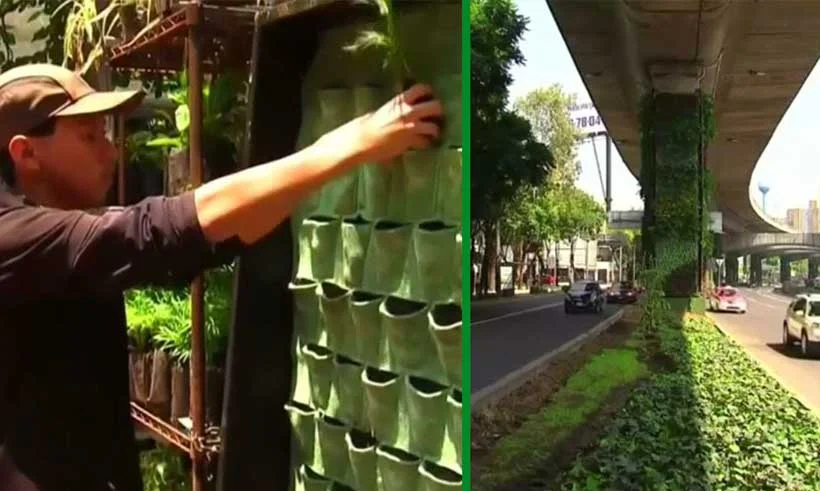
Another Technology Pioneer aiming to address food shortages, US-based Inari Agriculture,uses CRISPR gene-editing technology to produce healthier crops that require much less land and have a significantly lower impact on the environment. Using green technology in another way is Mexico’s Via Verde. This pioneer creates, installs and maintains vertical gardens to transform urban infrastructure into green spaces that generate oxygen, improve air quality, reduce urban heat islands and provide other social and psychological benefits to highly populated cities.
Leading the way in autonomous vehicles is the US company Perceptive Automata. They are combining behavioural science, neuroscience and computer vision for autonomous vehicles to understand how pedestrians, bikes and drivers communicate on the road beyond codified traffic laws. At the cutting edge of manufacturing, DataProphet in South Africauses AI to improve quality and yield.
Other Technology Pioneers are leveraging technology to address social issues. One example is Israeli TIPA,a clean-tech innovator addressing the global plastics crisis with compostable plastics packaging. US-established Marinus Analytics addresses human trafficking by leveraging machine learning and artificial intelligence to empower law enforcement and government agencies to protect vulnerable communities.
The 2019 cohort of Technology Pioneers:
Africa
DataProphet (South Africa) – artificial intelligence for manufacturing
Asia
Alesca Life (China) – data-driven, indoor vertical farming and crop management solutions
Coeo Labs (India) – meeting clinical needs in critical care
Dorabot (China) – artificial intelligence-powered robotic solutions for logistics and beyond
Eureka (Singapore) – an artificial intelligence platform for mobile operator and enterprise partnerships
Guangzhishu Technology (China) – providing blockchain-based privacy-preserving computation solutions
Holmusk (Singapore) – leveraging real-world data to address mental health issues globally
Sky Labs (Korea) – developing a cardio tracker to identify arrhythmia, which is difficult to diagnose
Tookitaki (Singapore) – artificial intelligence-powered regulatory compliance solutions for financial institutions
Europe
Bitfury (the Netherlands) – developing and delivering cutting-edge blockchain hardware and software solutions
Black Bear Carbon (the Netherlands) – bringing the circular economy to tires
Callsign (UK) – revolutionizing how people digitally identify themselves
Garrison (UK) – a unique technology providing secure internet access
ICEYE (Finland) – satellite imaging for every square metre on Earth, every hour
Luminance Technologies (UK) – an artificial intelligence platform for lawyers
Open Mineral (Switzerland) – disrupting how base metal commodities are traded
Photanol (the Netherlands) – making biodegradable plastic from CO2, which is only the beginning
Volocopter (Germany) – certified multicopter offering urban air mobility services
Latin America
Via Verde (Mexico) – creating resilient urban environments using vertical green gardens
MENA
DabaDoc (Morocco) – transforming the patient-doctor relationship through networked care
Homoola (Saudi Arabia) – bringing rideshare to the trucking industry
MeMed Diagnostics (Israel) – translating immune system signals into simple diagnostic insights
QED-it (Israel) – enterprise solutions for data privacy using zero-knowledge proofs
TIPA (Israel) – developing and producing compostable flexible packaging
North America
7 Cups (USA) – technology to scale compassion, solving mental health challenges
Airobotics (USA) – pioneers in autonomous robotics with aerial insights and analytics
Airtable (USA) – empowering human creativity by democratizing software creation
Arcadia Power (USA) – making clean energy an easy choice, for everyone
BigID (USA) – helping organizations know their customers by knowing their data
Bright Machines (USA) – bringing intelligence and automation to manufacturing
CyberCube (USA) – cyber-risk analytics to grow insurance in a connected world
Descartes Labs (USA) – building a cloud-based platform to digitize the physical world
Drishti (USA) – extending human potential in increasingly automated factories
Full Harvest (USA) – the first B2B marketplace for imperfect and surplus produce
GHGSat (Canada) – satellite monitoring of emissions from industrial facilities
goTenna (USA) – a leading mobile mesh networking platform
ImpactVision (USA) – real-time food quality and safety decisions
Inari Agriculture (USA) – from nature’s diversity to better seeds
LunaPBC (USA) – people-driven health discovery platform
Marinus Analytics (USA) – artificial intelligence-based tools to help the vulnerable in the digital world
Microvi (USA) – safe water, sustainable chemicals and a clean environment for all
One Concern (USA) – artificial intelligence for natural disaster resilience
Onshape (USA) – a cloud design platform that speeds up product development
Openwater (USA) – changing the way people read and write their bodies and brains
Perceptive Automata (USA) – human intuition for machines
Quantela (USA) – providing a digital platform for smarter urban infrastructure decisions
Relativity Space (USA) – 3D-printed rockets to build the future of humanity in space
Remitly (USA) – digital remittance services helping immigrants send money overseas
Rigetti Computing (USA) – on a mission to build the world’s most powerful computers
Shape Security (USA) – protecting the Global 2000 from bot attacks
Skuchain (USA) – empowering enterprises to grow their global trade with blockchain
Spring Health (USA) – a comprehensive mental health solution for employers
Starsky Robotics (USA) – bringing driverless trucks to the market
Trackonomy (USA) – powering end-to-end visibility and control across global supply chains
Truepic (USA) – restoring trust to digital photos and videos
Vineti (USA) – creating essential software for personalized therapies

Increasing Funding Pouring Into Vertical Farming Startups Across The World
Berlin-based vertical farming startup InFarm has raised a US$100 billion fund in its Series B investment led by Atomico with other existing investors including Balderton Capital, Astanor Ventures, Cherry Ventures and TriplePoint Capital joining
July.8, 2019 - Yining Chen
The expanding horticulture LED lighting business marks the development of high-tech farming including vertical farming which has attracted increasing investment recently. Vertical farming companies from Europe and the US have reported funds from worldwide investors.
Berlin-based vertical farming startup InFarm has raised a US$100 mllion fund in its Series B investment led by Atomico with other existing investors including Balderton Capital, Astanor Ventures, Cherry Ventures and TriplePoint Capital joining. Founded in 2013, the Germany company has developed the world’s largest urban farming platform, aiming to create self-sufficient and sustainable food production in worldwide cities. InFarm has partnered with 25 major food retailers in Germany, Switzerland, Austria and France, providing more than 150,000 plants monthly.
(Image: InFarm)
Meanwhile, Scottish vertical farm technology company Intelligent Growth Solutions (IGS) announced a £5.4 million (US$6.76 million) Series A funding led by US-based S2G Ventures. The investment will allow IGS to extend its business in software development, engineering, robotics and automation.
The company develops vertical farming solutions to boost LED grow light efficiency, enhancing plant production. Its R&D team has developed, patented and productized a IoT-enabled power and communications platform consisting of patented electrical, electronic and mechanical technologies. This technical solution enables the potential for reduction of energy usage by up to 50 per cent and labor costs by up to 80 per cent when compared with other indoor growing environments. It also can produce yields of 225 per cent compared to growing under glass.
Furthermore, Ocado, an online grocery company based in the UK, announced that it investing £17 million (US$21.3 million) in high-tech farming. The investment includes forming a joint venture focusing on vertical farming, named Infinite Acres, with Dutch horticulture technology developer Priva and US-based 80 Acres. In addition, Ocado also purchased 58 percent stake in Jones Food, who grows herbs with LED light-based vertical farm.
With the investment, the British on-line supermarket aims to improve food production with its technology expertise in robotics and AI.

U.S. Vertical Farms Are Racing Against The Sun
Leafy salad greens grown under banks of LED lights, with mist or drips of water are having their day in the sun. Several top U.S. indoor farms, stacked with plants from floor to ceiling, tell Reuters they are boosting production to a level where they can now supply hundreds of grocery stores
JULY 5, 2019
(Reuters) - Leafy salad greens grown under banks of LED lights, with mist or drips of water are having their day in the sun. Several top U.S. indoor farms, stacked with plants from floor to ceiling, tell Reuters they are boosting production to a level where they can now supply hundreds of grocery stores.
TO VIEW VIDEO, PLEASE CLICK HERE
Plenty, Bowery, Aerofarms and 80 Acres Farms are among young companies that see a future in salad greens and other produce grown in what are called vertical farms that rely on robotics and artificial intelligence, along with LED lights. While the first versions of modern vertical farms sprouted about a decade ago, in recent years the introduction of automation and the tracking of data to regulate light and water has allowed them to get out of lab mode and into stores. Now they are trying to scale up.
Plenty and others say their customized, controlled lighting - some more blue light here, some more red light there - makes for tastier plants compared to sun-grown leaves and that they use 95% less water than conventional farms, require very little land, and use no pesticides, making them competitive with organic farms. And because vertical farms exist in windowless buildings that can be located in the heart of urban areas, produce does not have to travel far by fossil-fuel-guzzling trucks to reach stores.
The companies’ expansion comes as plant-based burger makers Beyond Meat Inc and Impossible Foods captivate investors and make inroads in high-end restaurants and fast-food chains.
But whether the sunless farms can compete financially with their field-grown brethren, given big upfront investments and electric bills, remains a question.
“We’re competitive with organic today and we’re working very hard to continue to make more and more crops grocery store competitive,” said Matt Barnard, chief executive and co-founder of Plenty, which is based in Silicon Valley.
Chef and Plenty advisory board member Nancy Silverton prepares a salad during a demonstration in San Francisco, California, U.S., June 11, 2019. Picture taken June 11, 2019. REUTERS/Jane Lanhee Lee
Plenty’s salads sell on organic grocery delivery site Good Eggs for 99 cents an ounce, while a leading brand, Organic Girl, on grocery chain Safeway’s online site was priced at 80 cents an ounce.
Plenty said its new farm, dubbed “Tigris,” can produce enough leafy greens to supply over 100 stores, compared with its previous farm that could only supply three stores and some restaurants.
The technology world is paying attention. In its last round in 2017 Plenty raised about $200 million from investors including Japan’s Softbank, Amazon founder and CEO Jeff Bezos and former Alphabet Chairman Eric Schmidt. New York City-based Bowery raised $95 million in a fund-raising round led by Google Ventures and Temasek last year.
Bowery said its third farm coming online soon will help it supply hundreds of stores from dozens today, and Aerofarms, in New Jersey, said it is doubling its space to meet demand.
None of the three companies would give details about costs.
Former Vertical Farm CEO Matt Matros is skeptical that sunless farms can make economic sense. He invested in and ran Chicago-based FarmedHere in 2015, but changed its business into food processing.
“The issue with indoor farming was that you could really only grow a couple things efficiently — namely basil and micro greens. But the problem is the world just doesn’t need that much basil and micro greens,” Matros said.
80 Acres Farms in Cincinnati says it already grows and sells tomatoes and cucumbers, and Plenty is testing cherry tomatoes and strawberries in the lab.
Plenty CEO and co-founder Matt Barnard tastes a salad prepared by chef and Plenty advisory board member Nancy Silverton during a demonstration in San Francisco, California, U.S., June 11, 2019. Picture taken June 11, 2019. REUTERS/Jane Lanhee Lee
Agriculture technology investor Michael Rose says vertical sunless farms are more expensive to run than modern greenhouses that rely on sunlight, supplemented by LED lights. He sees limited areas where it makes sense, such as the Middle East, where much of the food is imported, or China’s mega-cities where pollution and urban sprawl limit the availability of premium fresh food.
At Plenty’s new farm, robots put seedlings in tall, vertically hung planters. The planters move along a wall of LED lights for 10 days, and are then put through a harvesting machine that shaves off the leafy greens.
The machines minimize labor needs, and Plenty says the speed of production also helps control pests.
“We use no pesticides,” said Nate Storey, co-founder and chief scientist at Plenty. “We don’t even have to use things like ladybugs, because we go so fast in our production that we out-race the pests themselves.”
Reporting by Jane Lanhee Lee; editing by Peter Henderson and Leslie Adler
Our Standards:The Thomson Reuters Trust Principles.

BREAKING NEWS - USA: Check Your Pantry: Several Brands of Buns And Are Recalled Because of A Choking Hazard
Flowers Foods is recalling hamburger and hot dog rolls and buns because of a potential choking hazard from small pieces of hard plastic, the Georgia-based company said in a statement
By Alisha Ebrahimji, CNN
Updated 2:08 PM ET, Wed July 10, 2019
Wonder Is One of The Brands Whose Buns Are Subject To Recall
(CNN) Flowers Foods is recalling hamburger and hot dog rolls and buns because of a potential choking hazard from small pieces of hard plastic, the Georgia-based company said in a statement.
The company found small pieces of the hard plastic inside production equipment, though there haven't been any illness or injuries reported.
Some of the products were sold under the brand names of 7-Eleven, Great Value, Food Depot, Market Pantry, Natural Grain, Nature's Own, Publix and Wonder.
The recalled items were distributed in Alabama, Arkansas, Florida, Georgia, Illinois, Indiana, Kansas, Kentucky, Louisiana, Missouri, Mississippi, North Carolina, Ohio, South Carolina, Tennessee, Texas, Virginia and West Virginia.
Flowers Foods says that consumers with any of these products should immediately throw them out or return them to the point of purchase for a full refund.

📣 Last Call For Applications To Become An Urban Farmer in Grand Rapids, MI! 🌱
No farming experience is necessary—just the dedication and excitement to jump in and start learning.
Become a Next-Gen Farmer
This September, Square Roots launches the first season of our Next-Gen Farmer Training Program at our Michigan farm campus in Grand Rapids, and we’re looking for ten passionate future farmers to join the team. No farming experience is necessary—just the dedication and excitement to jump in and start learning.
This is the last call for applications, so if you know someone who would be a perfect fit, forward away!
Applications are open until July 12 at 11:59 pm EST.
Apply Now!

Don't Miss : There Are Only 4 Days Left Until Cultivate19'
Want to meet with the Artemis team? You can register here for the event, and book a meeting: Book A Meeting
Don't miss :
There are only 4 days left until Cultivate19'
July 13 - 16
Columbus Convention Center
Booth 200
Meet with us!
Have questions about our platform? Our team? Our approach to supporting growers? We have answers for you.
New features. New partnerships. New integrations.
Book A Meeting
Don't have a Cultivate19' ticket yet? Register here.
We hope to see you there!

Stop The Trump Administration From Letting Chemical Companies Decide if The GMOs They Sell Are Safe!
The Trump administration just released new rules to change how genetically engineered crops (GE crops or GMOs) are regulated
The Trump administration just released new rules to change how genetically engineered crops (GE crops or GMOs) are regulated. Unfortunately the rules being proposed would make almost every GMO exempt from regulation and instead allow the companies that make GMOs decide the safety of their own products before selling them. If we don’t stop these new rules, the vast majority of GMOs will not be reviewed by the government. Instead chemical and food companies would decide whether or not their own GMOs are harmful. Talk about a conflict of interest!
Stop the Trump Administration from letting chemical companies
decide if the GMOs they sell are safe!
With these new rules, the United States Department of Agriculture (USDA) is proposing a radical voluntary review system for GE crops. These new regulations leave it up to chemical companies—like Monsanto/Bayer and Dow—to “self-determine” review; in other words, these chemical companies would make their own determinations as to whether or not their GE plant experiments should even be reported to USDA at all.
If a chemical company has “self-determined” that its GE plant experiment does not need USDA oversight, it would skip being evaluated under the standards of our federal health and environmental laws. It would go straight to farm fields to be planted or to market to be sold. We at Center for Food Safety (CFS) believe that it should not be up to a chemical company—interested in improving its bottom line—to decide what is safe for our health, endangered species, and the environment.
Tell the Trump administration's USDA: Relying on chemical companies to regulate their
own GE plant experiments is no regulation at all! Do your job.
And even in the rare instances when a company will volunteer to have their GE plant experiment regulated by USDA, the agency is proposing such a narrow scope of its review that it will only have a meaningful review processfor a tiny percentage of GMOs. This allows for the illusion of regulation, while actually letting the companies go scot-free.
One of the big problems with GMOs is their ability to cross-contaminate with conventional and organic crops as well as with plants in wildlife refuges. USDA perversely touts that there will be fewer “unauthorized releases” of GMOs with this new system, but that’s only because the vast majority of GE plant experiments will be totally exempt from any regulation in the first place! It’s like saying the crime rate will go down because the government legalized most forms of robbery. In reality, deregulating nearly all GMOs with no oversight will dramatically increase the frequency of contamination—which has already cost U.S. farmers billions of dollars over the past decade. When you go from bad oversight to no oversight, many more incidents of contamination are sure to follow.
Don’t let USDA fool you; self-regulation is no regulation at all!
Under the new proposal, the vast majority of GE plant experiments would not even have to be reported to USDA, much less grown with measures to prevent escape. So rather than increasing its monitoring of open air GE plant experiments, USDA’s new proposal abdicates the agency’s responsibility entirely, and leaves it solely up to chemical companies to self-police their new experiments. This change would exacerbate harm to farmers and the environment from increased contamination, while leaving the public completely in the dark as to where these new experiments are taking place.
USDA’s proposed GE regulations work very hard to make sure as little as possible is regulated. These proposed regulations rely on chemical companies deciding whether or not their GE plant experiments should be reviewed by a government agency at all. They do not address the massive increase in overall pesticide use that GMOs have caused or the continuing epidemic of increasingly pesticide-resistant “superweeds.” They fail to protect endangered species or farm workers. They even leave dangerous new “biopharm” GMOs completely unregulated, making our food system vulnerable to contamination from experimental pharmaceuticals. These rules leave our public health and environment completely at the mercy of chemical companies. USDA could do so much better, but instead it’s just doing the bidding of Monsanto and other chemical companies.
Tell USDA: These proposed GE regulations would end any oversight of GMOs. Protect our
environment, endangered species, and public health by regulating GE crops responsibly!
Onwards,
George Kimbrell
Legal Director
Center for Food Safety
CubicFarm(R) Systems Corp To Commence Trading On The TSX Venture Exchange
"The public listing of CubicFarm Systems Corp. shares is a significant milestone for our company and for all of our stakeholders," said Dave Dinesen, CEO, CubicFarms
VANCOUVER, BC / ACCESSWIRE / July 8, 2019
CubicFarm® Systems Corp. (TSXV: CUB) ("CubicFarms" or the "Company") has announced that the common shares of the Company are scheduled to commence trading on TSX Venture Exchange as a Tier One Issuer on Tuesday July 9th, 2019 under the symbol "CUB".
"The public listing of CubicFarm Systems Corp. shares is a significant milestone for our company and for all of our stakeholders," said Dave Dinesen, CEO, CubicFarms. "We are tremendously grateful for the support we've received so far, and we're equally excited about the potential growth for the company that we see ahead of us."
For further information regarding the new listing of Cubic please refer to the Listing Application (Form 2B) dated June 25, 2019 of the Company, which is available on SEDAR.
Neither the TSX Venture Exchange nor its Regulation Services Provider (as that term is defined in the policies of the TSX Venture Exchange) accepts responsibility for the adequacy or accuracy of this release.
About CubicFarm® Systems Corp.
CubicFarm® Systems Corp. is an Ag-Tech and Vertical Farming company that utilizes patented technology to cultivate high-quality produce. The Company believes that it can provide a benefit to the world by significantly reducing the physical footprint of farming, shipping costs and associated greenhouse gasses, while significantly decreasing the use of fresh water and eliminating the need for harmful pesticides.
Founded in 2015, the Company's mission is to provide farmers around the world with an efficient growing system capable of producing predictable yields with superior taste. Using its unique, undulating growing system, the Company addresses the main challenges within the indoor farming industry by significantly reducing the need for physical labour, by reducing energy, and by maximizing yield per cubic foot. The Company has sold and installed systems in Canada and the US, and is currently negotiating with a global pipeline of prospective customers. It also operates one wholly owned facility in Pitt Meadows BC, and sells its produce in British Columbia to retail customers under the brand name Thriiv Local Garden™ and to wholesale customers as well.
CubicFarm® Systems Corp's. patented growing system provides customers with a turnkey, commercial scale, hydroponic, automated vertical farm growing systems that can grow predictably and sustainably for 12 months of the year virtually anywhere on earth. CubicFarm® enables its customers to grow locally and to provide their markets with produce that is consistent in colour, size, taste, nutrition and allows for a longer shelf life. CubicFarms is focused on providing its technology to farmers to grow safe, sustainable, secure, fresh produce, nutraceutical ingredients, and animal feed. Further support and value is provided to our clients through our patent pending germination technology and proprietary auto harvesting and processing methods.
CubicFarm® Systems Corp.
www.cubicfarms.com
For further information contact:
Ross Rayment, VP - Corporate Development
ross@cubicfarms.com
Cautionary Notice Concerning Forward-Looking Statements
This news release includes certain "forward-looking statements" under applicable Canadian securities legislation. Forward-looking statements include, but are not limited to, statements with respect to the Company satisfying the conditions required to complete the listing of its common shares on the TSXV as well as statements regarding Company's beliefs regarding the application of its technology. Forward-looking statements are necessarily based upon a number of estimates and assumptions (including the receipt of regulatory approvals) that, while considered reasonable, are subject to known and unknown risks, uncertainties, and other factors which may cause the actual results and future events to differ materially from those expressed or implied by such forward-looking statements. There can be no assurance that the listing will be completed as currently planned or at all. Accordingly, readers should not place undue reliance on forward-looking statements. The Company disclaims any intention or obligation to update or revise any forward-looking statements, whether as a result of new information, future events or otherwise, except as required by law.
SOURCE: CubicFarm® Systems Corp.
View source version on accesswire.com:
https://www.accesswire.com/551027/CubicFarmR-Systems-Corp-to-Commence-Trading-on-the-TSX-Venture-Exchange
Read more:http://www.digitaljournal.com/pr/4372776#ixzz5t79nMa69
Recently, FOX Business Aired A Segment About Full Spectrum LED Grow Lights And Spectrum King LED
Spectrum King LED, the pioneer of full spectrum LED Grow Lights (patent No.10238043), specializes in designing, manufacturing and selling professional-grade LED grow lights for indoor grows and greenhouse applications.
Spectrum King LED, the pioneer of full spectrum LED Grow Lights (patent No.10238043), specializes in designing, manufacturing and selling professional-grade LED grow lights for indoor grows and greenhouse applications.
The company started after the founder Rami Vardi, was looking for a more efficient solution for indoor growing. He wanted a light that would produce high-quality yields like the “old school” lamps, but with a much lower electric bill.
Now, Spectrum King LED has customers and fans all over the world, in both the cannabis and the food production industries.
If you grow indoor, contact Spectrum King LED at +1 (888) 654-0737 or email sales@spectrumkingled

Urban Denver Building By Tres Birds Houses A Japanese Restaurant And Aeroponic Greenhouse
US firm Tres Birds Workshop has topped a Japanese restaurant in Denver, Colorado with a greenhouse featuring soil-free growing towers
Jenna McKnight | July 4, 2019


US firm Tres Birds Workshop has topped a Japanese restaurant in Denver, Colorado with a greenhouse featuring soil-free growing towers.
The building is located within a block-long, mixed-use development called S*Park, short for Sustainability Park.
Local studio Tres Birds Workshop designed the entire development – which encompasses housing, commercial space and urban farming – near the downtown area of the Colorodo city.
For one corner of the site, the team created a two-story building to house a street-level restaurant and an upper-level greenhouse.
Rectangular in plan, the building consists of a relatively solid base made of brick and concrete. Up above, a fully glazed volume is topped with a multi-gable roof, giving the building a distinctive look.
The ground level was designed for Uchi, an award-winning restaurant that serves up a range of Japanese fare, from wagyu beef and oak-grilled fish to sushi and sashimi. Its first location opened in 2003 in Austin, Texas.
"Uchi creates food with fresh ingredients in ways that defy expectations," said the architects. "The design intent was to support this mission through the programme of the building and the sensory experience of the space."
On the exterior, the restaurant is announced via a large, backlit sign. Visitors step into an L-shaped dining area that is organised around a central sushi counter and bar. The dining area features two rooms with different atmospheres – one is light and warm, while the other makes use of darker tones. Wooden screens help delineate specific zones.
Like other parts of the S*Park development, the architects sought to use common materials in an unexpected way. One of the eatery's most distinctive features is its southern wall, which is composed of reclaimed red bricks and custom-made crystal blocks.
"These crystal bricks transfer light and energy, connecting the comfortable interior to the distant cityscape and the eye of the passerby to the warm light within," the studio said.
The area adjacent to the brick wall features a "chaotic" ceiling installation made of raw wooden planks that were remnants of past projects by Tres Birds Workshop. The timber boards help soften noise and add to the room's sense of enclosure. The darker dining room also has a wooden ceiling installation, although here the slats are arranged in a more orderly fashion.
The dining furniture consists of dark wooden chairs and tables, and booths with tan upholstery. Concrete flooring lends an industrial feel that is countered by the ample use of wood throughout the eatery.
Up above, the team created a 7,000-square-foot (650-square-metre) greenhouse that "supplies the kitchen with the freshest organic greens available throughout the year".
Managed by Altius Farms, the growing area features white, aeroponic towers that require no soil. The plants – which include lettuce, herbs and edible flowers – are regularly misted with nutrient-laden water.
The greenhouse conditions are monitored by sensors that help control heating and cooling and cue the opening of roof and side vents, according to Denver's 303 Magazine. In addition to Uchi, the urban farm provides leafy greens for a number of local restaurants and markets.
With an ever-growing population, Denver has seen a construction boom in recent years. Other projects in the Colorado city include The Source Hotel, which is composed of irregularly stacked volumes, and Zeppelin Station, a large metal-clad building that overlooks train tracks. Both projects were designed by US firm Dynia Architects.
Photography is by James Florio.
Read more: Architecture Glass USA Bricks Restaurants Greenhouses Colorado Denver

Growing Plants Without Soil
Have you ever thought of growing plants without soil? Sounds weird? There’s a new technology doing rounds in the agriculture market, which could change both the course and future of farming
Have you ever thought of growing plants without soil? Sounds weird? There’s a new technology doing rounds in the agriculture market, which could change both the course and future of farming
BHUBANESWAR: For millennia, the state of Odisha has been a pioneer in farming. The farmers have cultivated plants, grew various kinds of crops, and developed different farming techniques with the help of advance science and technology.
Now there’s a new method, by which the state farmers can develop a self-sustaining farm even without the need of soil. Through the process of Hydroponics, one can grow plants in water without using soil. The main components used by plants are water and nutrients, which makes it possible to grow a plant without soil.
Once all the essential nutrients which are required by plants are provided through some other source like a water solution (nutrient-rich solution) containing all the necessary nutrients, one can eliminate the use of soil to grow plants.
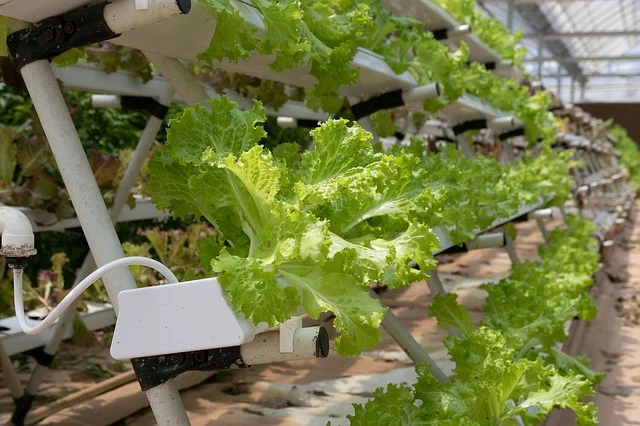
According to latest research, there is advanced agronomy technology with Hydroponics. People all around the world seek healthy food grown in a safe environment, where Hydroponics seems to be fulfilling that need. Orissa Post interacted with agriculturist Ekadasi Nanda who said that Hydroponics is the game changer in the agriculture industry. The main concern is to bring the plant in direct contact with the nutrient-rich water solution.
One can start Hydroponics as a mean of additional income by growing and selling plants without much hassle. This technology is all set for commanding a formidable position in the agriculture industry as it doesn’t demand any particular skill required for growing plants. Also, there’s no prior cost involved. By adopting this technology, you can utilize your space and reduce the use of chemical fertilizers for the growth of plants.
This technology has proven to be one of the best for growing crops in urban areas. With all the advantages of Hydroponics system, there are fair chances that this can change the course of the future by restructuring the cities and making them more environment-friendly. Hydroponics can be a game changer for the agriculture industry.
However, it’s not a cakewalk as it seems like, one needs to have access to the proper guidance of subject matter experts to grow and maintain the plants through Hydroponics. My Urban Greens (an initiative by IFFCO Kisan), for instance, is serving similar kinds of services to the urban population and progressive farmers by providing them a customised solution as per their requirements.
Sandeep Malhotra, MD and CEO, IFFCO Kisan, said, “There has been a great hue and cry about the scarcity of water; Hydroponics is emerging as a boon in the agriculture industry as well as in common households. Through this process, plants consume less amount of water in comparison to the conventional gardening system. It’s not just about saving water, but it is observed that plants grown by hydroponics technique consist of 50% more vitamins and it grows faster than traditionally grown plants. It is more profitable for farmers to grow plants through this technology.”
He further added, “IFFCO Kisan provides experts’ advice and services to urban people, FPO’s and progressive farmers related to the right and best practices of Hydroponics farming. We have initiated crop specific advisory services and support in vernacular languages to make this technology easily understandable to the farmers and urban people. We are encouraging and supporting them to adopt this technology and in alignment with that, several training programs are also lined up across different states of the country.”
Tags: HydroponicsInnovative technology
BREAKING NEWS: AeroFarms Raises $100m As Investors Rush To Indoor Farms
Another multi-million dollar investment in vertical farming. The Financial Times reports that AeroFarms has raised $100m in their Series E fundraiser to further expand its warehouses of stacked growing trays and branch out into different produce
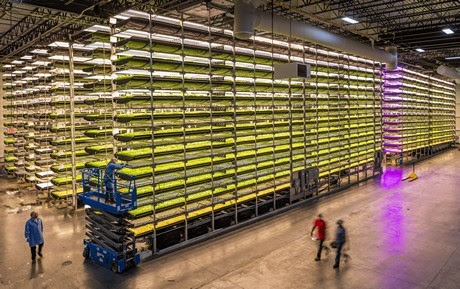
Another multi-million dollar investment in vertical farming. The Financial Times reports that AeroFarms has raised $100m in their Series E fundraiser to further expand its warehouses of stacked growing trays and branch out into different produce. This round again was led by the Ingka Group, known as the parent company of Ikea.
Other than Ingka, existing investors include UK-based Wheatsheaf and ADM Capital, as well as Mission Point Capital, China’s GSR Ventures and AllianceBernstein, which will also participate in the capital round.
Indoor growing through the roof
It's the most recent multi-million dollar investment in vertical farms. Since Plenty raised $200 million from investors, many others followed. Bowery Farming announced a $95 million investment last year, 80 Acres Farms completed their $40 million private equity firming early this year and also InFarm, based in Berlin, closed a $100 million investment round.
Now it's AeroFarms' turn again. Following earlier investments including $40 million in their series D round, they're looking to seriously scale up their business by doubling the money raised so far.
AeroFarms
The company was in the news earlier this year with the revelation of Singapore Airlines being supplied by the Newark farm. AeroFarms will provide a customised blend of fresh produce for SIA’s Newark to Singapore flights from September 2019.
Earlier this year AeroFarms announced its participation in a new high-tech consortium developing crops for indoor agriculture. Working together with Fluence, Priva, and BASF, they want to develop new crops specially intended for indoor agriculture.
Publication date: 7/9/2019
Read more at: Financial Times (Lindsay Fortado)

Controlled Environmental Farming Inc - Provides True Urban Farming In Tucson, AZ
The facility of approximately 40,000 square feet will house a closed loop aquaponic method of production that uses patented technology to provide for vertical cultivation
07/07/19
Controlled Environmental Farming Inc (CEF) has released the initial Site Plan for an urban farm to be located inside the city limits of Tucson, AZ.
The proposed location, 4431 E 22nd Street, has received preliminary approval from the City of Tucson Planning Department. This location in the heart of Tucson will provide locally grown fruits, vegetables, herbs, shrimp and fish at an affordable price.
The facility of approximately 40,000 square feet will house a closed loop aquaponic method of production that uses patented technology to provide for vertical cultivation. This vertical integration allows CEF to reduce land and capital construction costs and provides operation cost reduction through production density. “Our philosophy is to make every cubic inch count in product production,” states Bruce Carman, Director of Technology / Owner of CEF.
CEF intends to use direct distribution to the consumer to ensure product quality, freshness and food safety.
The all-inclusive, highly efficient facility will provide cultivation, processing, packaging and distribution to all clientele which are modeled to be private individuals and restaurants. This model helps to keep consumer costs down.
According to a report released by the U.S. Department of Agriculture's Economic Research Service (ERS), for every consumer dollar spent on food, the farm-share average is approximately $0.15 cents meaning that $0.85 cents is spent toward distribution, marketing and retail of the product. “Our direct-to-consumer model, will allow CEF to maintain and control costs for our customers while also allowing us to provide the freshest quality produce. Consumers increasingly want to know where their food is coming from, how it’s being grown, and who their farmer is. Local urban farming responds to those questions,” said Kristen Osgood, CEF’s CEO.
The facility will provide direct sales through an on-line ordering system that can also arrange delivery if desired. Customers will be able to shop on site at the “Farm Market” or use the drive through to pick-up their orders, including complete meal-kits, salads, whole shrimp, fish and raw veggies.
In each area CEF locates, it intends to create local partnerships with other farmers and producers who share in the same food ethos as CEF. It is through these partnerships CEF hopes to integrate and promote local food economies. This will allow CEF customers to have the very best the local foodshed has to offer.
Indoor Farmers Bet On Robots, AI
While the first versions of modern vertical farms sprouted about a decade ago, in recent years the introduction of automation and the tracking of data to regulating light and water has allowed them to get out of lab mode and into stores. Now they are trying to scale up
Erik Groszyk, 30, used to spend his day as an investment banker working on spreadsheets. Now, he blasts rapper Kendrick Lamar while harvesting crops from his own urban farm out of a shipping container in a parking lot in Brooklyn, New York, US. REUTERS/Mike Segar/Files
Leafy salad greens grown under banks of LED lights, with mist or drips of water are having their day in the sun. Several top US indoor farms, stacked with plants from floor to ceiling, tell Reuters they are boosting production to a level where they can now supply hundreds of grocery stores.
Plenty, Bowery, Aerofarms, and 80 Acres Farms are among young companies that see a future in salad greens and other produce grown in what are called vertical farms that rely on robotics and artificial intelligence, along with LED lights.
While the first versions of modern vertical farms sprouted about a decade ago, in recent years the introduction of automation and the tracking of data to regulating light and water has allowed them to get out of lab mode and into stores. Now they are trying to scale up.
Plenty and others say their customized, controlled lighting — some more blue light here, some more red light there — makes for tastier plants compared to sun-grown leaves and that they use 95 percent less water than conventional farms, require very little land, and use no pesticides, making them competitive with organic farms.
And because vertical farms exist in windowless buildings that can be located in the heart of urban areas, produce does not have to travel far by fossil-fuel-guzzling trucks to reach stores.
The companies’ expansion comes as plant-based burger makers Beyond Meat Inc and Impossible Foods captivate investors and make inroads in high-end restaurants and fast-food chains.
But whether the sunless farms can compete financially with their field-grown brethren, given big upfront investments and electric bills, remains a question.
“We’re competitive with organic today and we’re working very hard to continue to make more and more crops grocery store competitive,” said Matt Barnard, chief executive and co-founder of Plenty, which is based in Silicon Valley.
Plenty’s salads sell on organic grocery delivery site Good Eggs for 99 cents an ounce, while a leading brand, Organic Girl, on grocery chain Safeway’s online site was priced at 80 cents an ounce.
Plenty said its new farm, dubbed “Tigris,” can produce enough leafy greens to supply over 100 stores, compared with its previous farm that could only supply three stores and some restaurants.
The technology world is paying attention. In its last round in 2017 Plenty raised about $200 million from investors including Japan’s Softbank, Amazon founder and CEO Jeff Bezos and former Alphabet Chairman Eric Schmidt. New York City-based Bowery raised $95 million in a fund-raising round led by Google Ventures and Temasek last year.
LED lights glow from a cluster of 10 hydroponic climate-controlled farms housed in repurposed 320-square-foot metal shipping containers where entrepreneur farmers enrolled in the "Square Roots" farming program are growing and selling a variety of organic greens in the parking lot of a former Pfizer factory in Brooklyn, New York, US. REUTERS/Mike Segar/Files
Bowery said its third farm coming online soon will help it supply hundreds of stores from dozens today, and Aerofarms, in New Jersey, said it is doubling its space to meet demand.
None of the three companies would give details about costs.
Former Vertical Farm CEO Matt Matros is sceptical that sunless farms can make economic sense. He invested in and ran Chicago-based FarmedHere in 2015, but changed its business into food processing.
“The issue with indoor farming was that you could really only grow a couple things efficiently — namely basil and micro greens. But the problem is the world just doesn’t need that much basil and micro greens,” Matros said.
80 Acres Farms in Cincinnati says it already grows and sells tomatoes and cucumbers, and Plenty is testing cherry tomatoes and strawberries in the lab.
Agriculture technology investor Michael Rose says vertical sunless farms are more expensive to run than modern greenhouses that rely on sunlight, supplemented by LED lights. He sees limited areas where it makes sense, such as the Middle East, where much of the food is imported, or China’s mega-cities where pollution and urban sprawl limit the availability of premium fresh food.
At Plenty’s new farm, robots put seedlings in tall, vertically hung planters. The planters move along a wall of LED lights for 10 days and are then put through a harvesting machine that shaves off the leafy greens.
The machines minimize labour needs, and Plenty says the speed of production also helps control pests.
“We use no pesticides,” said Nate Storey, co-founder and chief scientist at Plenty. “We don’t even have to use things like ladybugs, because we go so fast in our production that we out-race the pests themselves.”

SDLN: The Leading AgTech Networking Forum | Connecting Global High-Level Value-Chain Leaders in Miami, Oct 22 - 24
7/9/2019
Press Release – Keynote, a global leading event company for emerging technology, announced today the Company’s next strategic decision to expand into the AgriTech industry through a new event: Sustainability and Digitalization Leadership Network (SDLN) - Miami Forum.
The 2019 SDLN Miami Forum connects AgriTech’s investors with innovators and their ideas, moving the most critical conversations forward to improve the planet’s future in sustainable agriculture and emerging tech. SDLN is dedicated to addressing today’s food supply challenges by creating a platform for collaborative, open dialogue and high- level networking between industry experts from across the globe.
The three-day event at the James L Knight Center in downtown Miami will cater to AgTech seniors with an international attendance of company executives, investors and market consultants. Alongside presentations covering current world projects and tech advances, the forum will feature panels focusing on innovation vs implementation, long term sustainability and investment in the food ecosystem. This carefully curated agenda will feature entrepreneurs and established investors alongside agriculture’s international leaders, intended to provide strategic, tactical skills and knowledge for those attending.
As a hub connecting agriculture across the Americas and beyond, Miami sets the stage for the rapidly expanding industry. Attendees will meet with innovators throughout the supply chain at the SDLN Official Launch, Wednesday 22nd October, as well as a second evening of networking on Thursday 23rd. Further opportunities for breakout sessions led by industry heads, facilitated networking and 1:1 business meetings will follow.
The first round of presenters announced last week includes Howard Yana Shapiro, Chief Agricultural Officer at Mars; Claudia Rössler, Agriculture Strategic Partnerships at Microsoft; David Friedman, CEO at VividGro.
A core advisory board will oversee and advise on partnerships to ensure quality of connections and sustainable business strategy. For enquiries please email lyndsey@sdlnetwork.com
About Keynote:
Hosting international events since 2012 across Europe, North America and the Middle East, Keynote has curated forums for emerging technology industries, launching high profile fintech projects and acting as a platform to raise significant funds, connecting and enabling companies to reach their potential.
Event Website: https://sdlnetwork.com/
Early bird tickets available until 1st August at sdlnetwork.com
For media partnership enquiries: amandah@sdlnetwork.com
For partner and sponsorship enquiries: amy@sdlnetwork.com
Farming Smart in Northern Manitoba
Food accessibility has long been an issue in more remote regions of Canada. This northern initiative puts new indoor farming technology to good use in the OCN community.
Food accessibility has long been an issue in more remote regions of Canada. This northern initiative puts new indoor farming technology to good use in the OCN community.
July 02, 2019
Written by Q&A with Joan Niquanicappo and Stephanie Cook of OCN Smart Farm
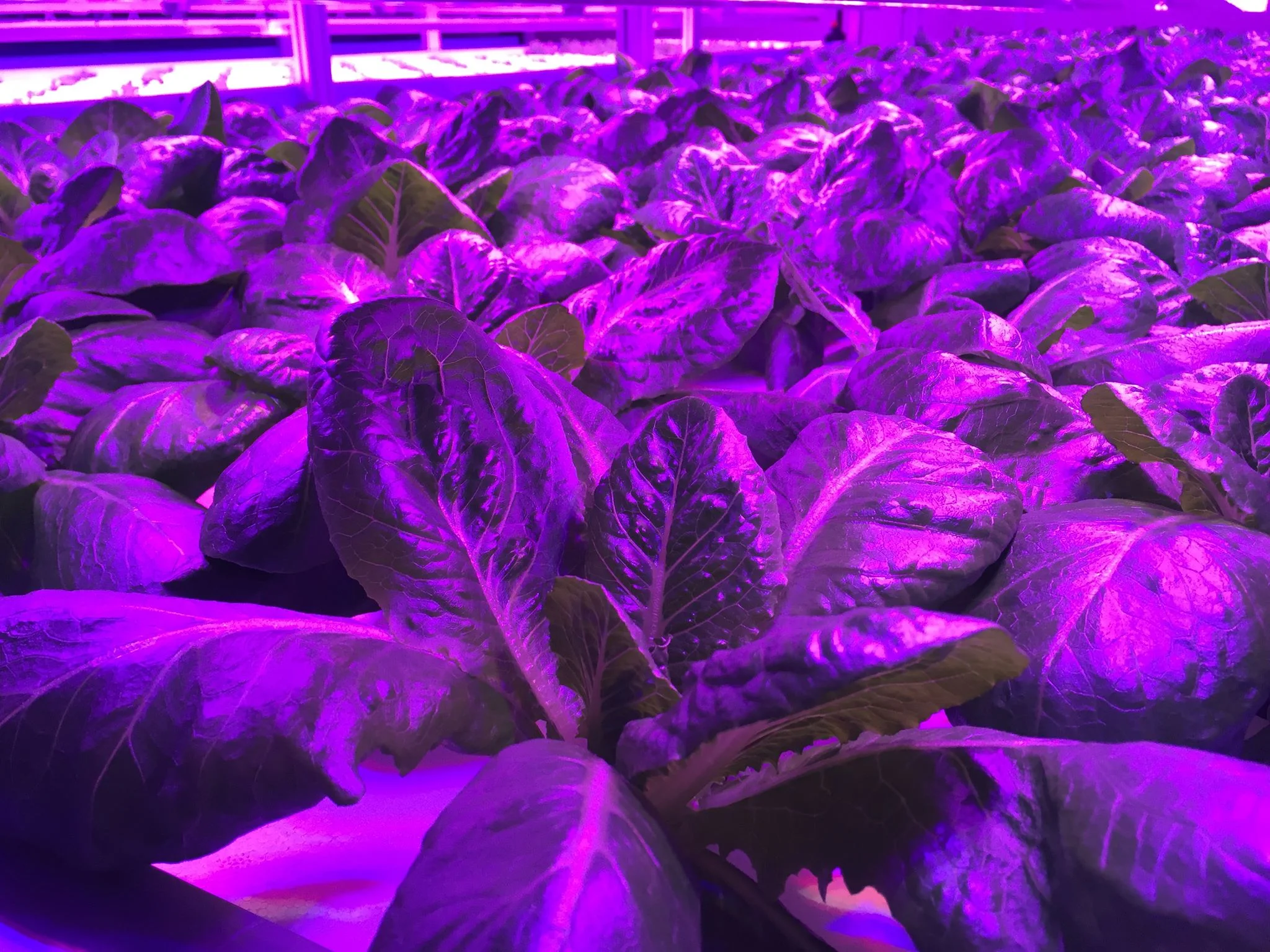
Since the first seeds were planted in 2016, members say the OCN Smart Farm has successfully grown over 70 different varieties of vegetables, flowers and fruits.
For the Opaskwayak Cree Nation (OCN) in northern Manitoba, new smart farming technology is improving their access to fresh, healthy food in a big way.
Presented at the Canadian Greenhouse Conference (CGC) last fall, operations manager Stephanie Cook and general manager Joan Niquanicappo of the OCN have been heading a vertical farming pilot project that offers affordable, fresh produce to those living in remote regions.
According to the presentation, a study by the Opaskwayak Health Authority showed that close to 50 per cent of the OCN community suffered from diabetes – an alarmingly high rate. In partnering with the University of Manitoba, they hoped to conduct a health research study to explore whether functional produce from the smart farm, along with the right educational resources, could help lead to change in the community – all while ensuring that the farm could be a viable business in its own right.
Partnering with technical specialists from Korea Agriculture System & Technology (KAST), the first seeds were planted on the smart farm in February of 2016. Over 70 different varieties of plants have been successfully grown since.
Following their presentation at the CGC, Greenhouse Canada magazine followed up with Cook and Niquanicappo on their smart farming journey.
Q: What prompted you to begin a vertical farming operation?
Niquanicappo: The concept of a year-round produce growing facility was intriguing. For the OCN to initiate a project of this scope, the ability to produce fresh vegetables – and functional vegetables at that – this was exciting. It was astounding to find that vegetables could help combat chronic illnesses, such as diabetes and its complications. A hydroponic system, utilizing recyclable water, no soil, no pesticides/chemicals, independent of weather, and all using smart technology – the opportunities were endless.
Q: What problems did you enounter during the initial set-up?
Niquanicappo: Beside the initial stage fright, the main problem was to have all the equipment CSA approved. There were growing pains in that short period of time from December 2015 to March 2016, but we were able to overcome them. The logistics of preparing the equipment to Canadian standards was time-consuming, and the cost of utilizing tradespeople was very high. The training of local people to assemble, maintain and operate the smart farm was not a problem, but it was still very new, so there was a bit of uncertainty on our part. We have since successfully grown 70 different types of vegetables, flowers and fruits.
Q: How do you control or prevent diseases and insect pests?
Cook: We follow strict sanitation procedures, including Hazard And Critical Control Points (HACCP) developed by KAST and adapted to our Smart Farm for caring for the plants personally and procedurally. We ensure that our Smart Farm is sanitized regularly.
As our Smart Farm operates in our community hall, whenever an event is held, we wait two days before entering the farm. Our pest control consists of natural remedies such as lemon juice with water or vinegar and water to help with arachnids, arthropods, dipterans, aphids and other pests.
Q: How do pricing and freshness compare to imported products?
Cook: When we started selling our produce, it was being distributed to community members who had been coming back for the freshness, so the price remained constant throughout the year. Unlike imported vegetables, our produce is grown locally for freshness, and available all year round.
Q: Since the farm’s inception, how has the community responded?
Cook: The community members cannot wait for each harvest. They welcome the produce with curiosity, both to newly introduced varieties and to common produce such as lettuce and herbs.
Q: What’s next for the smart farm?
Niquanicappo: We will be using the smart farm to combat diabetes. We are going to conduct a research study with community members living with diabetes or pre-existing diabetic conditions. We also want to explore ways in which we can make our operations sustainable through the sale of the smart farm equipment, service and maintenance packages, as well as supply sales.
From members of the OCN Smart Farm: On November 9, 2018, the OCN lost a close and valued colleague, Isaac Jung. Jung was instrumental in forming the relationship between the OCN and KAST, which resulted in the creation of the OCN Smart Farm. Isaac will always be remembered as a true partner of the OCN. He will be missed.
Editor’s note: Responses were edited for length and clarity.
These Mind-Blowing Inventions Will Allow The Earth To Support 10 Billion People
Take a look at these 20 products that are potentially life-changing — and life-saving — and decide which ones you can use in your daily life to help preserve those precious resources
Barri Segal
GOBankingRates July 5, 2019
There are more than 7 billion people on the planet Earth today, according to the website Worldometers. The population in the world has grown from 1.65 billion to 6 billion during the 20th century alone, and right now, the population increase is estimated at 82 million people per year. More frightening is that world population projections indicate that by the year 2055 there will be 10 billion people on the planet and by the year 2088 there will be 11 billion.
Given that our natural resources are limited, that’s a lot of people the planet will somehow need to sustain. Particularly as global warming looms large, humans will be stretching those natural resources to the breaking point, so something needs to be done.
Fortunately, companies are stepping up and inventing things that can help ease the strain on Mother Earth. Take a look at these 20 products that are potentially life-changing — and life-saving — and decide which ones you can use in your daily life to help preserve those precious resources.
A Cloth That Grows Crops Indoors
AeroFarms is a vertical farming startup that uses a proprietary cloth to grow kale and arugula — and mists their roots with nutrients — instead of using soil and lots of water. By growing crops inside, AeroFarms can control the temperature, light and humidity.
According to the company, which was founded in New Jersey in 2011, its farming facilities are “400 times more productive per square foot, by output, than a traditional farm.” It grows its greens in spaces that used to be nightclubs, steel mills, warehouses and paintball centers, and sells them to Whole Foods and FreshDirect, among other grocers.
A Device That Produces Up to 10 Gallons of Drinking Water Per Hour
Access to clean drinking water is a pressing issue now for the human race, and it likely won’t be a problem that solves itself. Enter a group of University of Akron scientists who are diligently working to solve this problem.
The team is using techniques to capture water from the atmosphere in high-altitude locations where it doesn’t frequently rain. They are working on a prototype water harvester that will be able to produce up to 10 gallons of drinkable water per hour — from thin air. The water harvester prototype is designed to work where water resources are limited, and it does it inexpensively and effectively.
A Cooking Method That Will Change Energy Needs
Solar cooking is good for the environment in many ways, including keeping the air cleaner by eliminating black soot and fossil fuel emissions, and saving soil and trees. And Solar Cookers International is making it available. According to the company, one solar cooker preserves more than a ton of wood per year. In addition, it says that three out of seven people lack sustainable fuel to cook meals, and it is helping make that possible with “no-emission, decentralized, free solar energy.” SCI claims that by reducing household air pollution via solar cookers, there is potential to save up to $1.3 billion globally.
A Self-Sustainable Microhome
The Ecocapsule, a compact mobile home, uses solar wind and energy to sustain itself, enabling you to live anywhere off the grid. You don’t need to use traditional power and water supplies because it makes its own from the environment. According to the company, depending on geographic and local conditions, one to two people can use the Ecocapsule for medium-term off-grid living. It can generate power and collect rainwater, and one will cost you 79,900 euros ($90,125), excluding VAT, right now, although the company says the price will go down as production increases.
Agriculture That Combines Fish Farming and Hydroponics
AquaGrow Farms uses aquaponics to grow enough protein and produce to feed thousands every year. At its 800-square-foot farm, it combines fish farming and soil-less agriculture to create a food source — to the tune of 2,500 servings of fish and 28,000 servings of greens annually. The company does it all from six grow beds, three fish tanks and a seedling nursery. It takes 60 days from “seed to table,” and the Canadian company distributes the food it produces to members of the community who have limited access to nutritious food.
A New Waste Recycling System
The HomeBiogas processes food waste that compost traditionally doesn’t, such as fish, meat and fats. From that waste, it produces a “healthy and natural liquid fertilizer which is not made from synthetic chemicals,” which you can use at home instead of store-bought fertilizer that uses harmful chemicals that eventually enter the water supply. In addition, it uses methane gas from the waste as a cooking source, enabling people to not only reduce waste but create sustainable energy for their homes. When you purchase a HomeBiogas system you’ll get a portable biogas stove, and once you get cooking, you’ll be helping to reduce carbon emissions of up to 6 tons a year.
A Plant-Based Material Packaging Solution
Made from brown seaweed and plants, Notpla is a material that naturally biodegrades in just four to six weeks, making it a great replacement for plastic packaging. According to the company, it “doesn’t compete with food crops, doesn’t need fresh water or fertilizer and actively contributes to de-acidifying our oceans.” Ooho is one of Notpla’s products — a flexible packaging material ideal for drinks and sauces — and the packaging is actually edible, making it a perfect replacement for plastic cups and bottles. Just use the sauce or drink that’s in your Ooho, then either eat the “package” itself or throw it in your compost.
A Vegan Burger That Tastes Like the Real McCoy
If you love meat but want to help save the planet, try the Impossible Burger, a plant-based patty that really tastes like meat from cows. The company uses soy and potato proteins to make its products, in addition to coconut and sunflower oils to make it juicy and give it that sizzle everyone loves. In addition, a binder often used in ice cream and jam — methylcellulose — brings it all together. With no cholesterol or trans fats and three grams of fiber, the Impossible Burger might be an entirely possible substitution for the real thing.
Ink Made From Air Pollution
Air pollution is another pressing problem today, and AIR-INK aims to help fix it through repurposing carbon rich pollutants to make ink. It recycles soot from industrial air-polluting sources and turns it into high-quality ink, saving it from being dumped into water sources and polluting the planet. By using KAALINK, a “post tailpipe retrofit that works on diesel generators,” the company captures the pollution through filtration technologies that eventually grinds the soot into ink pigment. Although the product is not yet available to consumers, the company is underway putting certification processes in place.
Edible Beer Packaging Rings
Plastic is terrible for the planet — that much everyone agrees on — and each year it kills a significant amount of ocean life, according to Ocean Crusaders. Saltwater Brewery in Delray Beach, Florida, is doing something to help reduce the use of plastic by using edible six-pack rings for its beer. The rings are completely biodegradable, made from the beer brewing process’ barley and wheat ribbons. If animals encounter the six-pack rings, they can actually eat them. “It’s a big investment for a small brewery created by fisherman, surfers and people that love the sea,” said Saltwater Brewery co-founder Peter Agardy in an interview.
A Targeted Pesticide Spraying System
MagGrow is a spraying system that helps farmers target where they need coverage better than traditional crop-spraying technology. According to the company, MagGrow reduces drift up to 70% and increases crop coverage more than 40%. In addition, the system reduces water usage by 25% to 50%, extends spray windows, complies with all legislative and environmental rules and aides in controlling diseases that can occur from smaller spraying droplets.
Drones That Pollinate Flowers
The bee population decline crisis is at an all-time high, spurring a team of Japanese researchers to invent pocket-sized drones to pollinate flowers. The remote-controlled drone is approximately the size of a power adapter, and it is covered with horsehair bristles coated with a gel that enables the drone to act like a honeybee to gather and distribute pollen. By employing the drones to do honeybee work — pollinating fruits, nuts and vegetables — the team hopes to help farmers who are facing production crises.
A Sieve That Can Filter Salt Out of Seawater
United Kingdom researchers created a graphene-based, rigid sieve that filters salt out of seawater, an invention that has the potential to deliver clean drinking water to millions globally. Although there has been some success using water filtration systems before this sieve, graphene is the first material that researchers have identified that does not swell up in water (thanks to a coating of epoxy resin composite) and allows some particles to pass through. This is one timely discovery as climate change could possibly wreak havoc on urban water supplies.
A Trash Skimmer That Cleans Water
The V5 Seabin is designed to skim trash from calm water bodies, such as marinas, ports, etc. This floating garbage bin skims water surfaces by pumping water into itself and cleaning up plastics, floating trash and contaminated organic materials. The Seabin sucks in water from the surface of the marina and it passes through a bag inside the unit; it pumps the water back into the marina and traps the trash. Oil-absorbent pads further clean the water by absorbing detergent- and petroleum-based oil materials. Power for the Seabin comes via a 110V or 220V outlet, and the unit can pick up about 1.4 tons of trash per year.
A Spa Shower That Saves Water
The Nebia Spa Shower has the potential to save millions of gallons of water globally. According to the company, the first unit it debuted (Nebia Shower 1.0) sold to 55 countries and saved 100 million gallons of water. The Nebia Spa Shower 2.0 has new nozzles and is “perfectly positioned to maximize the water that comes into contact with your skin leaving it more hydrated and refreshed,” while saving 65% of the water that regular showers use. The shower features 45 degrees of movement, which makes it easy to shower without wetting your hair, and it has a 25-inch range of height to customize its spray pattern for short and tall family members.
An Ocean Cleanup Project
The ocean trash tracker is an ocean cleanup project designed to rid the oceans of plastic. So far, the nonprofit environmental group Ocean Voyages Institute has removed 40 tons of plastic from the Pacific Ocean, using GPS to track the trash. In 2020, the company plans on a bigger cleanup using 150 reusable trackers, bowling-ball-size units that map the trash’s location in real time. The trackers cost nearly $1,600 apiece, but they are teaching people how trash gathers and travels.
A Straw That Makes Water Safe To Drink
LifeStraw works with governments, donors and consumers to provide the world with safe drinking water. The product utilizes a hollow fiber membrane with microscopic pores that allow water to pass through but keep bacteria and parasites trapped. LifeStraw products come in many forms other than straws, including a 7-cup glass water filter pitcher, a water bottle filter and a water filtration system with a 1-gallon gravity bag. According to the company, it has provided safe water to more than 1 million children globally.
Fabric Made From Recycled Plastic Bottles
Repreve is a high-performance fiber made from plastic bottles and other recycled materials. Some of the leading brands use the fiber to produce fashion and athletic clothing that is durable and water repellent, and it contains features such as adaptive warming and cooling and wicking. The company that makes the fiber, Unifi, claims it has recycled more than 14 million plastic bottles so far — and it aims to recycle 20 billion by 2020. In addition to helping with finding life for recycled materials, making Repreve fiber conserves water and energy and emits fewer greenhouse gases.
Renewable Energy Air Conditioning
Air conditioning is a massive energy suck, and Blue Frontier wants to do something about it. Mistbox is a product made for air-conditioning systems — it’s a small box that clips onto your unit and works to potentially cut your energy bills by 30%. Mistbox lowers the air temperatures around your air-conditioning unit with its four “Mistbars” that spray water, making the air the unit pulls in cool. This, in turn, enables the unit to use less energy and maximize its efficiency. Mistbox uses a thermal battery to store power for times when there isn’t much wind or sun, and it runs on completely renewable energy.
Products That Reduce Plastic Waste
Using fully compostable, biodegradable, renewable and natural ingredients, Avani makes a full line of sustainable packaging and hospitality products for people around the world. Its products include the Bio-Cassava Bag, Bio-Poncho, polylactic acid (PLA) products, bio-paper products, bio-wooden cutlery and bio-boxes. All of the company’s products aim to replace petroleum-based plastic goods. According to Avani, it has replaced over 3 tons of unsustainable products to date, and it plans on doing much more.
Photo Disclaimer: Please note photos are for illustrative purposes only. As a result, some of the photos might not reflect the actual inventions listed in this article.
This article originally appeared on GOBankingRates.com: These Mind-Blowing Inventions Will Allow the Earth To Support 10 Billion People

Korean Smart Farm Heads For Abu Dhabi
A Korean artificial farming technology developer has sent its first "farm" to the Middle East, boosting the start-up's global competitiveness in the promising industry
2019-07-08
By Ko Dong-hwan
A Korean artificial farming technology developer has sent its first "farm" to the Middle East, boosting the start-up's global competitiveness in the promising industry.
"Planty Cube," a white, 12.2-meter container created by n.thing, was shipped to Abu Dhabi from Busan Port in South Gyeongsang Province, on July 6, the Seoul-based company told The Korea Times.
Inside the module-type smart farm in the shape of a shipping container are multi-stacked rows of water troughs on both sides. Small pots called "Pickcells" can be slotted on each trough where seeds of whatever farmers want can be sown. The plants can then grow without human hands, with a computerized system controlling the environment from temperature to humidity and disease elements.
The maneuver happens in a control room outside the container. The room oversees inside all Planty Cubes, remotely changing the isolated spaces' conditions automatically and manually, based on each plant's "recipe" data.
The latest export to the United Arab Emirates city will first grow romaine lettuce. It will diversify its crops based on distribution data from the city's markets. The cultivated crops, from salads to herbs, will then be distributed to fresh vegetable markets.
Inside Planty Cube, the isolated environment's temperature, humidity and disease elements can be remotely controlled from outside. Courtesy of n.thing
"Those who influence the Middle Eastern smart farm markets quickly will eventually lead the industry on a global scale," said n.thing strategy officer Han Seung-soo.
"No smart farmer has yet stood tall in the region. We will move fast and aggressively to make our name known in the industry."
The Middle East, where many smart farm companies from different countries have ventured, has been supporting the industry because growing vegetables there in traditional methods is difficult because of the hot desert climate and a shortage of farm land and water.
In March this year, n.thing CEO Leo Kim signed a partnership with a major Korean conglomerate and then with an international trader in Abu Dhabi to mass-produce the cubes and auxiliary system parts.
Established in 2014, n.thing's smart farm modules can be linked to each other, making it easy for users to increase or decrease the capacity of their farm businesses. The company said the convenience differentiated the product from factory-type smart farms that could only be vertical.
Lead Photo: n.thing's "Planty Square" was transported to Busan Port on June 20 for export to Abu Dhabi, the United Arab Emirates, the following month. Courtesy of n.thing
aoshima11@koreatimes.co.kr More articles by this reporter

New Raft For Hydroponic Crops Such As Basil
"They are designed to optimize processes, logistics, maintenance, cleaning operations and, most of all, to increase productivity per square meter."
Rosa Plast has introduced a new raft to grow basil hydroponically. Developed in collaboration with Cammelli, the companies claim that the productivity increases by 25%. "They are designed to optimize processes, logistics, maintenance, cleaning operations and, most of all, to increase productivity per square meter."

Using the panel leads to a 25% increase in productivity, 10% less time used for harvesting, a 15% drop in transplant time and a 30% drop in cleaning time. Its long-lastingness was assessed at +400%."
"Thanks to our lengthy experience and our collaboration with Cammelli, we developed a panel for the cultivation of basil. The great performances were confirmed by both agronomists and producers," explains plant manager Attilio Cattaruzza.
"In addition, no sanitation is required and the material used is entirely recyclable. The panel was designed to be used with an automated system and can be stacked."

Rosa Plast was set up in the 1960s and specializes in the construction of plastic component molds and equipment for the processing of plastic materials. A few years ago, it also started focusing on the indoor forming sector, with particular attention to designing rafts for soil-less hydroponic crops.

"Our recent experiences and the collaboration with expert producers of highly-automated systems meant we could develop a few products for hydroponic crops. We registered two patents for salad and basil rafts."
Contacts:
Rosa Plast Srl
Z.I. Nord- Via Valcellina 1,
33097 Spilimbergo (PN) Italy
Tel.: (+39) 0427 595311
E-mail: attilio.cattaruzza@rosagroup.com
Website: www.rosagroup.com
Publication date: 7/1/2019
© HortiDaily.com