


Welcome to iGrow News, Your Source for the World of Indoor Vertical Farming

Gordon Food Service Partners With Indoor Farming Company
Indoor farms will be built on or near Gordon Food distribution centers and retail stores
Food produced in farms will be sold through the food supplier's distribution channels
Trainees will study plant science, entrepreneurship frameworks and more
Square Roots indoor farms will be built on or near Gordon Food Service distribution centers and retail stores across North America.
Photo by Square Roots
Wyoming, Mich.-based Gordon Food Service is teaming with indoor farming company Square Roots to build indoor farms across North America, igniting opportunities to train the next generation of urban farmers.
Through the partnership, Square Roots farms will be built on or near Gordon Food distribution centers and retail stores, enabling year-round growing of herbs, greens and more. The food that is produced will be sold through the food supplier's distribution channels, according to a Wednesday news release.
Terms of the deal were not disclosed.
Brooklyn, N.Y.-based Square Roots will carry out a yearlong program in which trainees study plant science and entrepreneurship frameworks, and learn how to use tech-enabled systems, according to the company's website.
The move also marks Square Roots' first "significant expansion" to new locations, the release says.
"Customers want an assortment of fresh, locally grown food all year round. We are on a path to do that at scale with Square Roots and are excited to be the first in the industry to offer this unique solution to our customers," Rich Wolowski, CEO of Gordon Food Service, said in the release.
Annalise Frank/Crain's Detroit Business
Through the partnership, Square Roots farms will be built on or near Gordon Food Service distribution centers and retail stores. The food supplier opened a store on East Jefferson Avenue, east of downtown Detroit, last year.
Gordon Food Service has more than 20 locations in metro Detroit and 175 locations total in the U.S., according to its website.
It had $13.7 billion in revenue in 2018, according to Forbes, and 19,000 employees. The company ranked 22nd in Forbes' 2018 list of America's largest private companies and second on Crain's 2019 list of the largest privately held companies in greater Michigan by 2017 revenue.

Here’s What’s Driving Energy Storage Markets — And How to Benefit
Energy storage markets are growing quickly, driven by regulations, demand charges, plus utilities’ need to integrate solar into the grid and avoid building new peaking power plants
March 1, 2019
By Lisa Cohn
Energy storage markets are growing quickly, driven by regulations, demand charges, plus utilities’ need to integrate solar into the grid and avoid building new peaking power plants.
By SergeyIT/Shutterstock.com

In fact, innovative utility-scale energy storage projects are popping up across the nation, with utilities and cities using storage to avoid building underground transmission, escape high demand charges from independent system operators and integrate more renewable power into the grid.
What’s more, used electric vehicle (EV) batteries are expected to drive battery prices down in the future, further boosting the market, said Peter Kelly-Detwiler, Northbridge Energy Partners principal. He was summarizing the messages from the Massachusetts Institute of Technology’s (MIT) Enterprise Forum’s event Feb. 27, “Energy Storage: New Business Models Fuel Rapid Growth.”
The forum aimed to advise startups about how best to thrive in the growing markets. One warning, Kelly-Detwiler said: Companies shouldn’t be too enamored of their technologies. They need to find markets for their products and be prepared to flex as markets change.
“They need to focus on where to play, how to work the markets and who wants to buy their products and services,” said Kelly-Detwiler, who moderated the event.
Role of states, FERC
Understanding the bigger picture means keeping up with leading state legislation, including efforts in California, Massachusetts, Maryland and New York.
Massachusetts, for example, recently committed to boosting solar-plus-battery energy storage for the grid in two decisions. The Massachusetts Department of Public Utilities focused on net metering for solar-plus-storage projects and also on the capacity ownership rights of projects.
The Maryland Energy Administration (MEA) is now accepting applications for its 2019 Energy Storage Tax Credit program, which aims to boost the use of storage by homes and businesses in the state. It was the first state to pass a bill allowing taxpayers to claim an income tax credit on energy storage.
Andin an important move, the California Public Utilities Commission on Jan 11 approved proposed rules allowing “stacking” of energy storage — using energy storage to provide multiple benefits and services. Resources can be compensated for their full economic value.
In addition, the Federal Energy Regulatory Commission (FERC), in Order 841 directed all grid operators to propose models for the participation of storage as a wholesale generation asset, said Kelly-Detwiler.
But these regulations — only a few examples of what’s happening across the country — aren’t the only market drivers.
Another opportunity is addressing the “duck curves” created by high solar production — in California, Massachusetts and elsewhere.
Many facility operators need increased resiliency, efficiently, and sustainability. Distributed Energy Resources (DERs) like wind, PV and energy storage can address these needs. Yet also introduce many other challenges. To learn how microgrids can help you optimize the integration of these assets, download this white paper.
“One April in Massachusetts, demand was higher in the night than in the middle of the middle of day,” said Kelly-Detwiler. “There are pretty good opportunities in these cases for storage to mitigate the intermittency of solar.”
In addition, utilities are beginning to embrace storage to help manage their grids, he said.
For example, both the municipal utility in Princeton, Mass. and Vermont’s Green Mountain Power use storage to mitigate demand charges from ISO New England, he said.
Martha’s Vineyard, an island off the coast of Massachusetts, is turning to storage to help reduce carbon emissions and avoid building or upgrading expensive underwater transmission lines, said Kelly-Detwiler. Eversource has proposed an energy storage project on the island that aims to reduce emissions from five diesel generators and help meet demand for electricity.
Energy storage is helping utilities in other areas of the country avoid building expensive peak power plants, Kelly-Detwiler said.
For example, Arizona Public Service has contracted with AES for a 10-MW/40-MWh storage system that will provide peaking capacity. Arizona utilities are grappling with changing peaks due to high solar penetration.
MIT Enterprise Forum Event, Photo Courtesy Chris Carleton, Chen PR
How rates drive energy storage markets
High demand charges are also boosting demand for energy storage.
In California, up to 50 percent of utility bills can come from demand charges, said Kelly-Detwiler.
Storage provider Stem is aggregating behind-the-meter energy storage to lower these charges, he added. Stem says it now has hundreds of systems up and running, many in California, where the high demand charges along with state incentives have created a large market for behind-the-meter storage. Stem is also building a 235-kWh energy storage system for the City of Huntington Beach’s Civic Center to help the city avoid demand charges. The system will work alongside 2 MW of solar.
Changing time-of-use rates are also boosting the market for storage, said Kelly-Detwiler. San Diego Gas & Electric has implemented time-of-use rates with peak prices as high as 50 cents/kWh, he said.
“The prices are so high, people are using storage to shift away from those hours,” he said. As a result, companies like Sunrun are adding storage to their solar offerings. During Sunrun’s third quarter of 2018, the company installed a record number of solar energy and home batteries, the company said.
“Demand charges and time-of-use rates are driving this,” said Kelly-Detwiler.
Used batteries to flood market, drive down prices
Used EV batteries are expected to start playing an important role in energy storage markets, driving down the price of batteries.
In Amsterdam, the Johan Cruijff Arena, a football stadium, employs used and new EV batteries to store up to 3 MW of solar power. The battery system also provides power to the grid.
“Used EV batteries still have 80 percent of their value when they come out of cars,” said Kelly-Detwiler. “Within a few years, we’re going to be flooded with cheap, useful batteries.”
With all these developments in energy storage markets across the country, startups need to keep their eyes open and adapt quickly as new markets open up, Kelly-Detwiler said.
“Startups need to understand the bigger picture, the context,” he said. “They need to pay attention to what’s happening across the country.”

‘Vertical Farms’ Envisioned As Path Out of Recidivism
Alex Vuocolo February 20, 2019 Ajit Mathew George, Second Chances Farm
By Peter Osborne
DBT Editor
Ajit Mathew George sees a future where state or federal inmates from Delaware will have farming jobs — and futures as entrepreneurs — waiting for them when they’re released.
All within the Wilmington city limits.
“On average, about 100 men and women are released from Delaware prisons every month to three Wilmington ZIP codes [19801, 19802 and 19805],” says George, who formed Second Chances Farm to hire and offer turnkey entrepreneurial opportunities to men and women returning from prison.
He plans to open “vertical farms” inside abandoned warehouses and empty office space close to where these former prisoners live. They’ll be growing crops on LED-lit hydroponic towers that do not require soil, pesticides, or even natural sunlight.
George anticipates hiring 10 to 15 workers for every 10,000 square feet of farming space, with farms as large as 100,000 square feet. Each worker will be paid $15 per hour during a six- to 12-month apprenticeship period.
All he wants to do is reduce recidivism in Delaware; develop a new industry; produce local organic food on a year-round basis; and create and nurture a new crop of entrepreneurs within Opportunity Zones. His dream is to add a fourth “C” — Crops — to the “Chemicals, Credit Cards (formerly Cars) and Chickens” for which Delaware has long been known.
Winning recognition
That’s the kind of vision it takes to be named “Best Idea” at the Pete DuPont Freedom Foundation’s Reinventing Delaware 2018 competition in early December.
“Our Reinventing Delaware process seeks to identify bold and innovative ideas that will make Delaware a better place to live, work and raise a family,” said Stephen Sye, the foundation’s executive director. “The 100 business leaders and entrepreneurs who attended our annual dinner on Dec. 5 felt that Second Chances Farm fits that vision and we look forward to seeing how the program evolves.”
Example of vertical farming, via Second Chances Farm
Opportunity Zones are census tracts designated by the governor and approved by the federal government for the purpose of economic development and investment in low-income areas. They were created as part of the Tax Cuts and Jobs Act of 2017 with eight of Delaware’s 25 Opportunity Zones being in Wilmington.
Once George obtains zoning approval and the IRS releases final regulations governing opportunity zones, they’ll be off and running. He hopes to open Second Chances Farm No. 1 in Wilmington by September in a location still to be determined — although he is looking at abandoned industrial warehouses, older office space and shopping centers, and is even considering vacant downtown offices with high ceilings like MBNA/Bank of America’s old Bracebridge complex.
The cost of what George calls “Compassionate Capitalism” — yes, two more C’s — is $1 million to north of $4 million, depending on each farm’s size and location. The Welfare Foundation, which supports nonprofits focused on social-welfare causes in Delaware and southern Chester County, awarded Second Chances Farm No. 1 a startup grant of $175,000 following the Reinventing Delaware event.
In the last five years, $500 million of venture capital has been invested in indoor farming projects in the United States alone, including San Francisco-based Plenty securing $200 million in financing last year from Softbank, the Japanese firm led by billionaire Masayoshi Son, and investment companies associated with former Alphabet chairman Eric Schmidt and Amazon founder Jeff Bezos.
George points out that the Delaware Department of Correction spent $282 million in 2017. The state’s cost to house an inmate works out to $43,882 per year, or more than $120 per day per inmate. As of Jan. 30, Delaware was dealing with 4,517 inmates and 970 accused offenders on pretrial detention, with an additional 13,888 people on probation.
George says incarceration can lead to a “lifetime sentence of unemployment.”
“Barriers to re-entry can be difficult and frustrating,” he said. “Sixty percent of all previous offenders are unemployed. For this reason, 68 percent of all those released from Delaware prisons are re-arrested and reconvicted within three years of release. As a result of this crippling system, Delaware has some of the highest recidivism rates in the country.”
He said “vertical farming allows for up to 100 times more production per square foot than traditional farms. Second Chances Farms will be able to get from harvest to shelves in under 24 hours, compared to the 6-plus days and thousands of miles traveled by field-grown produce.”
Local goods in demand
Delaware Secretary of Agriculture Michael T. Scuse said there’s a need for vertical farming in Delaware due to the high demand from consumers to buy locally year-round.
“Vertical farming allows individuals who want to enter into agriculture, but don’t have access to a large amount of land or machinery to be involved in production agriculture,” said Scuse. “It introduces a new type of agriculture to Delaware that can provide an economic benefit by increasing production of specialty crops that Delawareans want to buy at their local farmers’ markets, grocery stores, and restaurants.”
Scuse added that the team that will be running the operation “has served their time and paid their debts to society and now have a chance to be meaningfully engaged in their community through agriculture. The chance to be able to run a high-tech hydroponic farm is a great way for these individuals to get started in
an agricultural enterprise.”
A further benefit of the Second Chance Farms, said George, will stem from Delaware’s “prime location” in the mid-Atlantic, within easy striking distance of various major cities.
“It reduces the carbon footprint of long-distance transport, but also ensures ultra-freshness while satisfying the desire by many top chefs and restaurants” interested in a short farm-to-market timetable.
Second Chances Farm will be setting up Opportunity Funds that enable investors to participate in vertical farms throughout the mid-Atlantic area. It also hopes to sign five to 10 companies for a Corporate Community Supported Agriculture (CSA) program. Participants will receive weekly packages of fresh vegetables grown within 50 miles of their locations or let Second Chances Farm deliver their “units” to a designated nonprofit for distribution to their constituents.
“By planting these seeds in economically disadvantaged areas designated as Opportunity Zones, we can grow and nurture a new crop of “Compassionate Capitalists” and “Green Collar” jobs,” George said. “The only way to grow is up!”
Any company that is interested in learning about how to be part of the Corporate CSA can contact Evan Bartle, Second Chances Farm’s Chief Growing Officer (evan@secondchancesfarm.org). Potential investors should contact Jon Brilliant, Second Chances Farm Managing Member (jon@secondchancesfarm.org).

"Cheap Lighting Can Become Really Expensive"
"In situations where lack of access to working capital or financing for startup costs exist, it can be very tempting to make a lighting choice that is less expensive initially, but this almost assuredly is going to end up causing you problems and costing you more money in total down the road"
Indoor growing has seen tremendous growth in the past few years, including the addition of new players, particularly in the vertical growing space. However, according to Agrilyst, glass or poly greenhouses still account for 47% of indoor growing facilities. "Regardless of whether a greenhouse or an indoor vertical farm is the right choice for your grow operation, a critical factor to understand is how the right choice in lighting can help address what may otherwise become hindrances to your long-term growth and profitability", the team with LED lighting company Violet Gro says. The company has developed various grow lights.
"In situations where lack of access to working capital or financing for startup costs exist, it can be very tempting to make a lighting choice that is less expensive initially, but this almost assuredly is going to end up causing you problems and costing you more money in total down the road", the team with Violet Gro says. "Lighting is a critical component of indoor farms and seems to be growing in popularity for supplemental use in greenhouses (since mother nature isn’t as consistent and reliable as the electrical grid), though estimates even just a few years ago said only 15-20% of growers used supplemental lighting."
Many growers have historically turned to high-intensity HPS lighting as their supplemental lighting solution. "While HPS lights may appear less expensive upfront, they require extensive amounts of electricity to operate (up to 1000W each), including a large electrical infrastructure to handle such an amp load", Violet Gro explains their choice for LEDs. "HPS lamps run hot and can raise room temperatures 15-30 degrees (which then has to be managed through large and expensive air conditioning infrastructure). And most of them require pretty regular bulb replacement. All of this downstream cost really needs to be part of the decision making, not just the upfront capital cost."

According to Violet Gro, LED lights have recently been growing in popularity due to their potential for lower energy costs. "Many of the early options available suffered from poor design and an LED technology that wasn’t nearly as developed as it today (and it just keeps getting better). As such, most of the early LED solutions did not produce the results that growers wanted and were still at the high end of energy requirements."
The Violet Gro team has developed LED grow lights answering to these problems. "We have demonstrated the ability to grow healthy plants, while keeping energy costs down (100-135W for a 4’ light bar) and producing substantially less heat, often requiring no external cooling infrastructure to keep the grow environment at the right temperature."
The patented technology behind Violet Gro enables direct contact between their specialized lens material and the LED light source. "Thus allowing more photonic energy to transmit to the plants versus being lost as heat. Many of the traditional lenses on the market would actually burn if placed in direct contact with the LED or other light source. Projected cost savings for our lights over traditional lighting can be as high as 70% while still providing the spectrum and intensity of light needed to produce optimal plant growth and vibrancy."
One of the major advantages to indoor growing is to protect your plants from environmental factors such as extreme heat, cold, and rain that could damage or prevent crops from being grown during certain time periods. However, this same protection is also offered to respective plant pests. Relative humidity inside greenhouses can also lead to mold and mildew issues. With limited pesticides available for safe use in greenhouses and increasing fungicidal and herbicidal resistance, it is increasingly difficult to protect plants against these threats. Unfortunately, noticing a problem too late can mean lower yields for your crops, or even complete crop loss to stop the spread.

"UV light, in addition to its proven ability to drive positive benefits like increased production of flavonoids in plants, has also been shown as an effective tool in promoting healthy growing environments", the Violet Gro team continues. "The UV-absorbing compounds produced by plants to protect them from receiving too much UV can aid in defending plants against infection, injury, and certain pests. Research suggests that, in addition to the direct killing power of UV, the increases in these UV-absorbing compounds might actually be able to change the “attractiveness” of the plants to these pests."
While more and more lights on the market are starting to claim that they include UV, most of them are only producing near-UV (400nm) in their spectrum, more akin to the old black lights used for posters.
"However, research suggests that UV-B (280-320 nm) light, which is invisible to the human eye, is the most effective in treating powdery mildew and spider mites. Dosages of UV-C (200-280 nm), which is also invisible, have been proven best for targeting Botrytis cinerea, or gray mold. So if you can see the “UV” light – it is probably not really UV. Violet Gro lights, because of the unique ultraviolet transmissive lens in their patented technology, are able to be configured to specifically deploy any of these targeted wavelengths in their lights. And unlike many of these other lighting solutions, the Violet Gro lights will not be subject to the degradation or destruction that comes with trying to combine UV light with traditional lens material such as acrylics or polycarbonates. Learn more about the benefits of UV in agriculture."
"Ultimately, investing in high-quality energy-efficient lighting can be one of the most important decisions you can make for the long-term success of your operations", the Violet Gro team concludes.
In Q1, Violet Gro will be at the INDO Expo in Denver, January 26-27 and the Michigan Cannabis Business Expo, February 26-27.
For more information:
Violet Gro
407-433-1104
info@violetgro.com
www.violetgro.com
IDEA San Benito, Texas Introduces Hydroponic Farming

By Luis Montoya -
March 5, 2019
SAN BENITO, RGV – To coincide with National Nutrition Month, IDEA Public Schools has introduced what it is called the Leafy Green Machine at its San Benito campus.


IDEA leaders say LGM is an efficient and environmentally conscious way to grow food because of its minimal electricity and water requirements. IDEA San Benito is just one of ten K-12 schools in the U.S. with the LGM on campus and became the second school in the State of Texas to obtain the LGM after IDEA Eastside in San Antonio in 2018.
The Leafy Green Machine has been developed by Freight Farms, a leader in the agriculture technology industry and the first to introduce container farming. A 40’ x 8’ x 9.5’ modified freight shipping container, LGM incorporates hydroponic farming to grow and harvest food for the campus. LGM will serve as a pilot program.
Using just ten gallons of water per day and incorporating a closed loop hydroponic system that delivers nutrient rich water directly to the plants’ roots, LGM is capable of producing 500 heads of lettuce, 40-50 lbs. of hearty greens, and 35-45 pounds of herbs in one week. That is 90 percent less water than traditional farming methods.
Jordon Roney, campus farmer at IDEA San Benito, says the pilot program is part of an effort to support IDEA’s Healthy Kids Here initiative. Roney believes LGM will provide for an engaging space for IDEA students to learn about the future of growing food at the intersection of agriculture, conservation and technology. He pointed out that the technology itself will engage students in combination with classes such as biology, chemistry, math and our Junior Master Gardeners (JMG) curriculum. All harvested items, he said, will be used to supply the campus’ food nutrition program throughout the year.
“IDEA San Benito is excited to become the first campus in South Texas to implement this new and efficient farming method,” says Jordan Roney, campus farmer at IDEA San Benito. “Not only will our students benefit from learning about the technology behind hydroponic farming, but we will also have the ability to support our campus food program while providing students with an abundance of healthy produce year-round.”
Hernan Colmenero, CNP Farm Manager at IDEA’s Valley headquarters, said LGM is an efficient and environmentally conscious way to grow food because of its minimal electricity and water requirements. With little agricultural training, anyone can quickly learn to operate the unit and our students can reap the benefits, Colemenero said.
The internal temperature, carbon dioxide (CO2) levels, and all nutrient needs within the contained are controlled through a software application that can be accessed by any mobile device. This allows the greens, such as a variety of lettuce and herbs, to provide hefty harvests year-round, no matter the outside weather conditions. On average, the LGB has a monthly operational cost of $1975/month.
An IDEA news release stated:
STUDENT LEARNING
The LGM will provide an engaging space for IDEA Students to learn about the future of growing food sustainably. They will be able to touch and taste leafy greens packed with nutrients, building connections with healthy eating choices as well as participate with the market-scale growth of crops, witnessing how technology plays a role in agriculture. The technology itself will engage students, but combined with classes such as biology, chemistry, math or our Junior Master Gardeners (JMG) curriculum, it will support IDEA’s mission to prepare students for college and citizenship.
LGM FEATURES
IDEA students will have access to leafy greens, harvested at the peak of ripeness with the highest potential for nutritional content.
Vertical Crop Columns – 4,500 growing sites throughout 256 lightweight crop columns.
The ability to grow 500 head of lettuce, 40-50 lbs. of hearty greens, and 35-45 pounds of herbs in one week.
Automation System – software that allows farmers to automate functions using real-time data from sensors and in-farm cameras.
LED Array – high efficiency LED lights in the seedling and mature growth areas provide crops with only the optimal wavelengths of light required for photosynthesis
Irrigation System – Uses approximately 10 gallons of water per day, 90% less water than traditional farming methods, in a closed loop hydroponic system that delivers nutrient rich water directly to the plants’ roots
Controlled Environment – Uses approximately 80 kWh per day and is equipped with environmental sensors that monitor water, climate, and lighting conditions within the farm.
Editor’s Note: This is the first of a two-part series on National Nutrition Month. Part Two will be posted on March 6, 2019.

Re-Nuble is 100% Committed to Plant-Based Only Technologies
Re-Nuble is 100% committed to plant-based only technologies that help us meet the growing fertility, and pest and disease suppression challenges in agriculture.
We have a few new tools and solutions underneath our belt that we'll soon be releasing. Most recent is a topical solution that can be directly applied to plants to help mitigate, and, if wildly successful, eradicate the common pest and disease issues that both indoor and outdoor farms currently manage using alternative such as, microbes, genetically modified enzymes, and/or traditional pesticides and herbicides.
If you are a farmer interested in testing a product to help with managing aphids, thrips, powdery mildew and/or fungus gnats, to name a few, email us at wecare@re-nuble.com and drop us an email with the subject line: "We're Interested".
In the next 4 weeks, we plan to engage farmers for feedback on this new product and you may be the first to receive it before its formal public release. Your feedback makes us better.
The Green-Collar Revolution That’s Headed to Wilmington, Delaware
Vertical farming is coming to the city. (Courtesy photo)
By Holly Quinn / REPORTER
02-28-19
First, you need to understand the Opportunity Zone Program, which was enacted as part of the 2017 Tax Cuts and Jobs Act.
It’s an economic development program where census tracts are designated as eligible for tax breaks for private investors through a program called Opportunity Funds. The goal is to help under-resourced communities become more economically stable by creating jobs for the people who live there — or, as the IRS puts it in its FAQ: “Opportunity Zones are designed to spur economic development by providing tax benefits to investors.”
Opportunity Zones are basically an incentive for people to invest in areas that need it — something that, historically, has led to gentrification and displacement of the under-resourced people who were theoretically meant to benefit. (See a map of Delaware’s zones here.)
That’s why Second Chances Farm, an LLC founded by entrepreneur and TEDxWilmington organizer Ajit George, is an interesting concept — one that combines farming, jobs for local returning citizens and ultimately entrepreneurship opportunities that require neither capital nor credit.
“We call them ‘green collar” jobs,” said George in an interview with Technical.ly. “Green because it’s organic, it’s pesticide free, and it’s herbicide free. And it’s about growing food locally. This is not a hobby, this not a corner garden in the summer, it’s about growing food year round, on a production scale.”
So, how did the concept of Opportunity Zones, urban farming and ex-offenders come together? It was the result of two very different 2016 TEDxWilmington talks — one about reentry and recidivism, the other about farming of the future.
Employees — virtually all of whom will be formerly incarcerated — will run the farms with a starting pay of $15 an hour. As the company grows, the plan is for employees to eventually acquire farms of their own and become business owners (or “compassionate capitalists,” as Second Chances Farm calls them).
In contrast to downstate’s traditional outdoor crops, Second Chances Farm will be an indoor, LED-lit, vertical hydroponic farm that will operate year-round; the first farm’s location is yet to be determined.
“There’s no soil, it’s all grown in continuously flowing water,” said George.
The drip system. (Courtesy image)
Vertical hydroponic farming has become increasingly popular over the last few years across the country — even Jeff Bezos has backed a hydroponic farming venture. Second Chances will likely be the first one in Delaware.
The for-profit venture is projected to have its first indoor farm up and running by the fall, pending a final clearance with the IRS. It’s already won a few awards and startup grants.
If placing a farm inside the city seems strange, consider the challenges the average ex-offender faces when trying to get to get a job — and how much easier it would be if $15-an-hour jobs were available right in the neighborhood.
In order to qualify to be placed in a job at Second Chance, inmates heading toward reentry will work with the behavior health and wellness program Dimensions during the final six months of their sentences.
“We are contracting with Dimensions and have an exclusive contract with the Delaware Department of Corrections,” said George. “Issues like anger management are beyond the scope of what we can do. They offer more social work, so it just made sense for us to work with them.”
Dimensions also has a transportation group that can help Second Chances Farm employees get to and from work, an issue for many looking for work after reentry, as drivers licenses are sometimes still suspended and getting car insurance can be a challenge.
The organic, hyperlocal vegetable crops will be sold to restaurants, organic farm stands and to cancer patients avoiding even the minimal amount of pesticides allowed in traditional organic mass farming.
“Delaware used to be known for three things — chicken, credit cards and cars,” said George. “What we’re really talking about is adding a new industry, which is organic hydroponic crops. And with that comes my notion, which is ‘compassionate capitalism,’ which is really providing opportunities for people.”
New City Map Shows Farm-Fresh Produce In Queens, New York
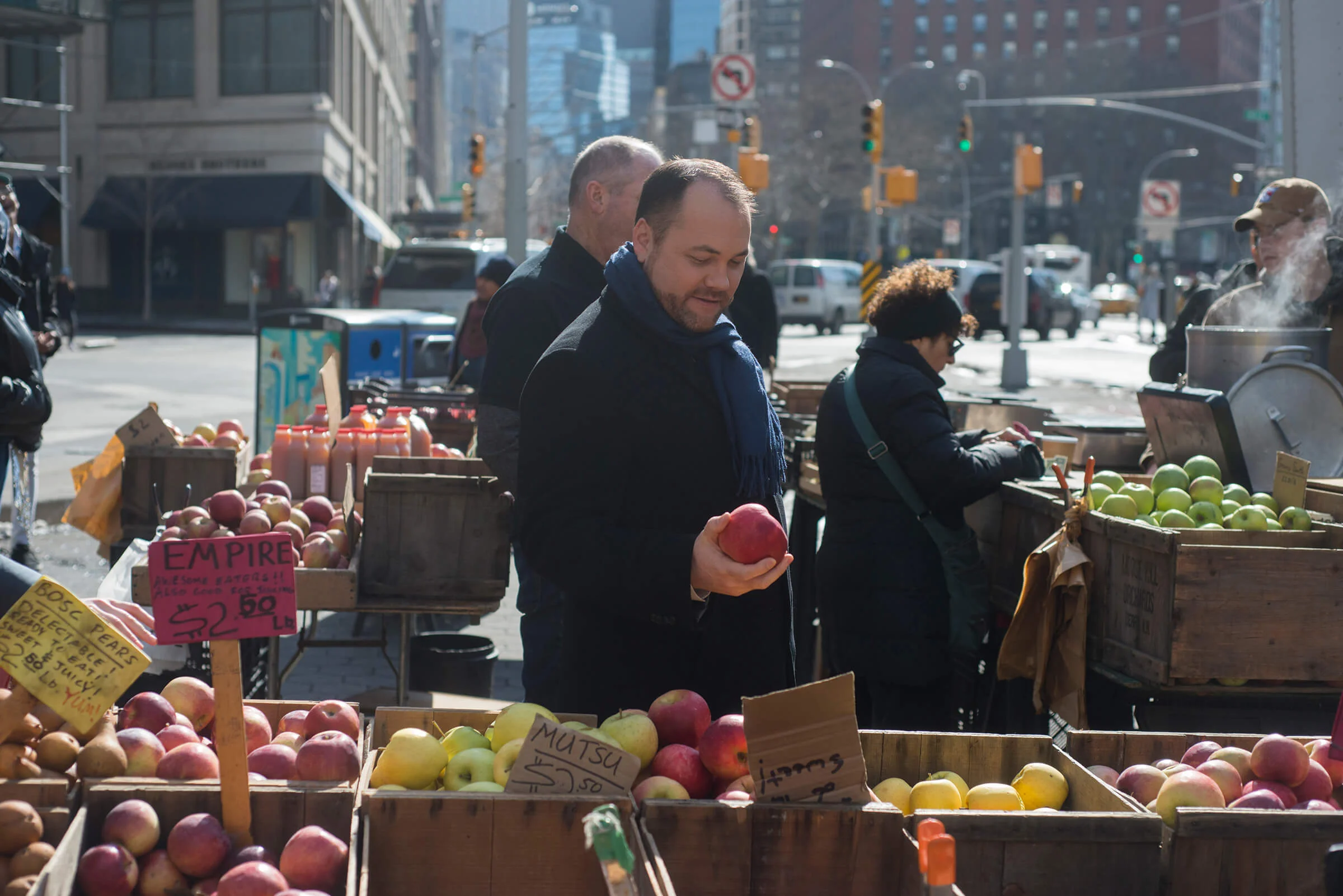
Fresh produce can sometimes be hard to find in many underserved New York City neighborhoods. That is why City Council Speaker Corey Johnson, the acting public advocate, created an interactive Farm-To-City Food map of the five boroughs, highlighting the importance of access to fresh and healthy food for all New Yorkers.
In Queens, the map shows 17 Community Supported Agriculture (CSAs), 20 farmers markets, 2 food boxes and 4 fresh pantry projects.
Source: qns.com
CSAs are partnerships between a farm and a community that allow neighbors to invest in the farm at the beginning of the growing season when farms need support the most, in exchange for weekly distribution of the farms’ produce from June to November. Food Box programs aggregate produce from participating farms and enable under-served communities to purchase a box of fresh, healthy, primarily regionally-grown produce.
Source: qns.com

French Insect Farming Startup Ynsect Raises $125m Series C Breaking European Agtech Record
Ÿnsect, the French insect farming startup, has raised $125 million in Series C funding in the largest early-stage agtech funding deal on record in Europe. This takes the company’s total fundraising to over $160 million since it was founded in 2011.
Ÿnsect farms mealworms to produce ingredients for fish feed, pet food, and crop fertilizers in an effort to capture some of the $500 billion animal feed market. The startup is one of 50 insect farming groups that have collectively raised $480 million to-date, according to the International Platform of Insects for Food and Feed (IPIFF), an EU-based association for the industry. In 2018, members of the association produced 6,000 tonnes of insects in 20 countries.
Insect farming, long an industry in developing nations for human consumption, has picked up pace in developed nations in recent years as a sustainable source of protein, particularly for the livestock industries.
Aquaculture, for example, still relies mostly on fishmeal, which is made up of wild-caught fish representing over 25% of global fishing and contributing to declining wild fish stock globally.
Ÿnsect is also offering a premium product to its customers, providing health benefits that translate into improved animal growth performance and boosted immune systems, according to Antoine Hubert, co-founder and CEO of Ÿnsect.
“Farmers can essentially produce more with less with our premium feed ingredients,” he told AgFunderNews adding that the company’s organic fertilizer product is also yielding great results for plant growth across types from grains to vine crops.
While Ÿnsect’s products will represent a core component animal feed, they are one ingredient and not a complete solution at this point, meaning that existing feed sources will still be used, Hubert added. However, he imagines a future where Ÿnsect’s mealworm products could be combined with other types of insects with other beneficial nutritional profiles and sustainable sourcing methods.
The investment round was led by Astanor Ventures, a new food and agriculture impact investment fund based in London. The majority of Ÿnsect’s existing investors including Bpifrance Ecotechnologies, managed on behalf of the French Strategic Investment Plan, Demeter, Quadia, and Singapore’s Vis Vires New Protein Ventures are participating in this latest round, alongside Bpifrance Large Venture, Talis Capital (UK), Idinvest Partners, Crédit Agricole Brie Picardie, Caisse d’Epargne Hauts-de-France and Picardie Investissement (France), Finasucre and Compagnie du Bois Sauvage (Belgium), Happiness Capital (Hong Kong) and a Singaporean family office as new investors.
World’s Largest Insect Farm
Ÿnsect will use the funding to construct what it says will be the largest insect farm in the world, based in Amiens in northern France with the first phase able to produce 20,000 tonnes of insect protein a year.
The company already has a demo facility producing its three main products — ŸnMeal andŸnOil, feed ingredients for pet food as well as several seafood species including shrimp, salmon, trout, and sea-bass, and ŸnFrass, a premium fertilizer for a variety of crop types.
And the company says it has $70 million of aggregated orders to fulfill, which it will start to fulfill at the pilot facility that has the capacity to produce hundreds of tonnes.
The Amiens factory is expandable beyond the initial 20,000 tonnes, according to Hubert as it is situated on a large reserve area in an industrial park with all the necessary supplies and facilities including energy and wastewater treatment. And Ÿnsect is also surveying options to expand to North America, particularly the Midwest of the US, after partnering with a real estate group JLL that’s currently scouting locations.
What’s the Technology?
After two years of operating the pilot facility, and over five years researching the business before that, Ÿnsect has refined its farming and extraction processes using state of the art technology and resulting in 25 patents. The factory uses a combination of sensor technology, automation, data analysis and predictive modeling to measure and respond to temperature, insects’ growth curve, and weight, and Co2 emissions.
“We are very much like a vertical farming business in how we operate, and we have the same issues around the HVAC systems we use to control the environment,” said Hubert. “We’ve developed a deep knowledge and process in this area that could be useful for other sectors at a high level. We have very complex systems for temperature, moisture control; conveyor systems to feed and harvest the insects as well as collect the frass and mature for our fertilizer product and remove the dead with various separation technologies.”
The extraction technologies are very similar to those used in oilseed crushing with some innovation in how to handle the products and separate out the protein.
Unlike many of the large groups in the vertical produce farming industry, Ÿnsect has partnered with existing tech companies to build its systems, and it has long term contracts with groups such as Total, which is big in HVAC systems.
Why the Tenebrio Molitor Beetle?
Ÿnsect decided to rear the Tenebrio Molitor beetle not only for its premium nutritional value in animal feed compared to other insects but for its potential to achieve industrial-scaled production. As non-flying insects, they are easier to contain, and they consume natural crop-based by-products, free of unpleasant odors or contaminants. It’s also “a gregarious, non-flying, communal insect that prefers to stay close to its colony for added warmth,” and it’s nocturnal, saving on lighting costs, according to Ynsect.
Nutrition-wise, Ÿnsect undertook several research projects to determine the efficacy of its products and discovered increases to the overall body weight of shrimp while being fed Ynsect products and a reduced amount of fishmeal. ŸnMeal also improved the feed efficiency and weight gain in seabass.
Other well-funded insect farming startups are rearing other types of insects such as AgriProtein, the UK-South African venture that’s farming black soldier fly and has raised over $130 million to-date. AgriProtein focuses on using food waste to feed its insects. Canada’s Enterra Feed is also growing black soldier fly for animal feed and says it is building the world’s largest insect farm, while EnviroFlight, the Midwestern company that was acquired by Intrexon, says it has the biggest black soldier fly factory in the US. The race is on!
Affinor Growers Inc. - Corporate Update
February 27, 2019 | Source: Affinor Growers Inc.
VANCOUVER, British Columbia, Feb. 27, 2019 (GLOBE NEWSWIRE)
Affinor Growers Inc. (“AFI” or the “Company”) (CSE:AFI, OTC:RSSFF, Frankfurt:1AF) is pleased to provide an update on its operations.
Over the past four months, the Company has been working on several fronts in order to broaden the Company’s operations and build a strong foundation for future success. In doing so, the Company is extremely pleased to announce the development of three new tower designs, two significant agreements, as well as an invitation to the BC Tech Summit 2019 from the BC Ministry of Agriculture in order to showcase our new towers.
Technology Development
Since October 2018, the Company has been working aggressively with our manufacturing partner, Cobotix Manufacturing Inc. (“Cobotix”), to develop new tower designs and new technologies. The result of this work is three new tower designs. We have a newly designed vertical farming tower for soiled-based growing, a new hydroponic version of the vertical farming tower and a newly designed vertical farming tower that is a hybrid of hydroponic and aeroponic growing.
The new designs allow the Company to increase its footprint in the vertical farming space and gives the Company a product line that, we feel, can compete with other hydroponic and aeroponic growing systems on the market. In addition, the new designs also open up the home and light-duty commercial markets for the Company, markets in which we see great potential for growth.
Randy Minhas, President and CEO commented, “This is a significant step forward for the Company. As a technology company, it is absolutely crucial that we continue to innovate and develop in order to remain competitive. I am extremely pleased with the new tower designs and look forward to introducing the towers to the market.”
Agreement with Fundamental Lighting Solutions Corp. (“Fundamental Lighting”)
The Company is pleased to announce that it has reached a four-year, worldwide exclusive, distribution agreement with Fundamental Lighting. Fundamental Lighting is a corporation out of Monroe, Washington and they have developed high-efficiency, white LED lights and coloured LED growing lights to be used for indoor growing operations, including greenhouses. The Company will have the exclusive right to distribute the lights for Agricultural projects and earn a commission on the sale of the lights.
In addition, the Company is helping Fundamental Lighting develop cannabis specific growing lights (“Cannabis Lights”) to compete with the widely used high-pressure sodium lights. The design work and the research for the Cannabis Lights has been completed and the process is moving to the prototype phase. We expect to have eight Cannabis Lights manufactured and ready for testing in the next 6-8 weeks.
The design team behind the LED lights and the Cannabis Lights is led by Mr. Wayne Bliesner. Mr. Bliesner is the CEO and Head Scientist at Fundamental Lighting. Mr. Bliesner is in charge of the company direction, choosing executives, scientific research, managing the lab team, and new production R&D. He earned a Master’s Degree from the University of Washington in Aeronautical Engineering and spent 20 years at Boeing as a lead engineer, where he has multiple patents there in several technologies.
He also spent 16 years as an independent scientist developing ground breaking technologies. He has raised over $10 million for R&D as an independent scientist and is attached to over 100 patents in the U.S., Canada, Europe, and Australia.
Mr. Minhas commented “This is a very significant agreement for the Company. We are looking forward to working with Mr. Bliesner and his team. The LED growing lights will be a great complement to our new towers. In addition, the development of the Cannabis Lights will be a game changer. Currently, the cannabis market is dominated by high-pressure sodium lights, which emit a significant amount of heat and use a significant amount of electricity. The LED Cannabis Lights will significantly reduce the electricity usage, lower the heat emissions within a grow facility and last considerably longer than the high-pressure sodium lights. We’re very excited to get these lights manufactured and tested in the coming months.”
Agreement with the University of Fraser Valley (“UFV”)
The Company is pleased to announce that we have entered into a two-year agreement with the UFV to complete strawberry grow trials in the newly designed soil-based, vertical growing tower with the use of the LED lights from Fundamental Lighting.
The Company will install a total eight towers at the two Surrey Biopod greenhouses, replacing the two larger, first generation, towers from several years ago. The Surrey Biopod facility is a partnership between the University of the Fraser Valley, the John Volken Academy (“Volken Academy”), and the City of Surrey. The Volken Academy provides life and job skills to addicted youth, and the Biopods offer Volken students the opportunity to learn growing and research skills in an urban greenhouse environment.
The grow trial will consist of four towers in each Biopod greenhouse with half of the towers being used to grow strawberries using conventional substrate and the other half growing in organic substrate. In addition, the Company will install white LED lights in one greenhouse and coloured growing LED lights in the second greenhouse.
The project will be overseen and managed by Dr. Laila Benkrima. Dr. Benkrima is currently a Horticulture Instructor with the UFV and runs the Surrey Biopod program. Dr. Laila Benkrima holds a Ph.D. in Plant Biology and MSc in Plant Physiology from the University of Paris (France). She has over 25 years of experience in research and development within the horticulture and plant biotechnology industries. She has been responsible for the planning, development and creative problem solving of various projects from plant micropropagation and functional/medicinal crop cultivation to hydroponics and laboratory design.
Mr. Minhas commented “We’re very please to be working with the University of Fraser Valley and Dr. Benkrima. This agreement gives us access to fully operational greenhouses and the ability to test our newly designed soil tower with the LED white lights and coloured growing lights. The data received from these grow trials will greatly enhance our ability to market and sell these towers.
This is also a great opportunity for the students at the Volken Academy and at-risk youth to gain hands on experience with vertical farming technology. We are certainly thrilled to be able to participate in the Surrey Biopod project for the next two years and we are pleased to say, we will be donating all eight towers to the Surrey Biopod project at the conclusion of the agreement.”
BC Tech Summit 2019
The Company is excited to announce that we have been invited to the BC Tech Summit, March 12-13, 2019, at the Vancouver Convention Center by the BC Ministry of Agriculture. The Company will use the BC Tech Summit to launch its new hydroponic growing tower and our hybrid hydroponic/aeroponic tower. In addition, we will also be showcasing the LED white lights and the coloured growing lights as part of our exhibit. The Company’s exhibit will be part of the BC Ministry of Agricultures showcase.
Mr. Minhas commented “We are thrilled to be attending the BC Tech Summit with the BC Ministry of Agriculture and very grateful to have been given this opportunity. It is a great honour to be invited to this event. This will be a great platform to launch our new towers and showcase Fundamental Lighting’s LED lights.”
Randy Minhas
President and CEO
About Affinor Growers
Affinor Growers is a publicly traded company on the Canadian Securities Exchange under the symbol ("AFI"). Affinor is focused on developing vertical farming technologies and using those technologies to grow fruits and vegetables in a sustainable manner.
Neither Canadian Securities Exchange nor its Regulation Services Provider (as that term is defined in the policies of the Canadian Securities Exchange) accepts responsibility for the adequacy or accuracy of this release.
This news release may contain assumptions, estimates, and other forward-looking statements regarding future events. Such forward-looking statements involve inherent risks and uncertainties and are subject to factors, many of which are beyond the Company's control that may cause actual results or performance to differ materially from those currently anticipated in such statements.
AFFINOR GROWERS INC.
www.affinorgrowers.com

BIGH, The Biggest Aquaponic Urban Farm in Europe!
BIGH, the biggest aquaponic urban farm in Europe!BIGH won the prize of the year for the people of Brussels in the “economy” category.
27.02.2019
In the heart of Brussels, 4 00m2 is to be used for urban agriculture divided between glasshouses, pisciculture and outside gardens under the roofs of Foodmet.
The universe of aquaponics according to the BIGH (Building Integrated GreenHouses) is quite a programme which links vegetal culture to fish farming and collecting the energy lost from the building.
2.000m2 of horticultural and fish farming greenhouses, 2.000m2 of productive vegetable gardens make up the largest urban farm under the roofs of Europe. An urban aquaponic farm which provides fish farming and the production of fruit, vegetables and herbs, 100% natural and without any chemical product added under one and the same roof !
For some years now, consumers have demanded more healthy food, local and traceable.
BIGH’s aim is to create a network of farms in the heart of the main European cities, making the places in town accessible, inspirational and innovative, so that the consumer will want to find tasty and local products of quality, while improving the environmental performances of their neighbourhood.
Different tours are designed for group, companies, professionals.
An incredible 1 hour tour of Ferme Abattoir including the outdoor garden, the greenhouse, and the fish farm, all with a fantastic view of Brussels is available in English, French, German and Dutch.
BIGH Website

Big Tex Urban Farms is Using Hydroponics to Achieve its Million Servings Mission
Big Tex Urban Farms is Using Hydroponics to Achieve its Million Servings Mission
Big Tex Urban Farms and Hort Americas have partnered together to install, test and demonstrate a variety of hydroponic production systems while at the same time providing Dallas community organizations with locally-grown produce.
What started as an outdoor gardening project by the State Fair of Texas to better serve the local South Dallas community has surpassed what fair officials ever imagined might be accomplished. Jason Hayes, who is the fair’s creative director, and Drew Demler, who is the fair’s director of horticulture, devised a plan to start an outdoor vegetable garden in unused parking space.
“Big Tex Urban Farms started with a small budget in 2016 using 100 mobile planter boxes to grow food outdoors,” Demler said. “During that first year we got some decent yields. The food that we harvested was donated to two local charitable organizations.
“Baylor Scott & White Health and Wellness Institute in Mill City, Texas, is our primary beneficiary. The institute hosts a farmers market for the community on Tuesday and Friday. One of the institute’s main objectives is to get people eating healthy, fresh vegetables. We donate vegetables, including lettuce, collard greens, Swiss chard, basil and chives, and they in turn give the produce away. This is in a community where there really aren’t many other good options for fresh produce.”
Another local beneficiary of the fresh produce grown by Demler and his staff is Cornerstone Baptist Church. The church feeds the homeless six days a week.
“The church is involved with feeding the people who need food more than anyone,” Demler said. “The church had been receiving donated produce that was declined by area grocery stores. The homeless weren’t receiving anything that would be considered fresh and they weren’t receiving any greens or lettuces at all. We have been able to change that. A lot of what we donate to the church are leafy greens.
“We harvest our produce fresh the morning that we donate it. We probably don’t go more than 4 miles from our facility to any one organization. This is about as local as they are going to get unless they are growing it themselves.”
Expanding into hydroponic production
Demler said growing and donating fresh vegetables gave him and his staff an opportunity to develop good relationships with the organizations they were assisting.
“These local organizations were very happy with what we were doing to assist them in their efforts to feed people in the community that really needed help,” Demler said. “We also received some good media coverage which helped generate more interest in what we were doing.”
Because of the positive response from the groups being helped and some good media coverage, the budget for Big Tex Urban Farms was increased considerably in 2017. This enabled Demler to expand outdoor production to 529 outdoor planters.
“Also before the fair started in late September we installed a 30- by 15-foot hydroponic deep water culture tank in one corner of our largest 7,200-square-foot greenhouse,” Demler said. “We also installed six 8-foot tall vertical tower gardens. This was our first venture into hydroponic growing.”
The greenhouse had been used to grow ornamental plants including palm trees and bougainvillea, and to overwinter hanging baskets. It was also used as a plant exhibit room during the fair. Demler worked with the staff at Hort Americas to design and install the hydroponic production systems.
Higher yields with hydroponics
The amount of produce that was harvested from the hydroponic systems immediately got Demler’s attention.
The installation of hydroponic production systems has enabled Big Tex Urban Farms to expand its distribution of produce to more community organizations in South Dallas.
Photos by Jessie Wood, State Fair of Texas staff photographer
“In the short amount of time that we had installed the systems and started growing, we were very impressed with the results,” he said. “Our total production indoors and outdoors in 2017 was around 2,800 pounds of produce. By the end of April 2018 we had exceeded what we produced for all of 2017. This was one of the main reasons that we decided to expand our hydroponic systems. It is such a better and more efficient way to grow.
“Another reason we expanded the hydroponic systems was the overwhelming positive response from the public during the 2017 fair. In 2018 we turned the greenhouse into an indoor growing exhibit. The public had access to the hydroponic systems all 24 days of the fair.”
Achieving the Million Servings Mission
In September 2018 the State Fair of Texas announced it was implementing a Million Servings Mission. The mission was the brainchild of Jason Hayes.
“The main purpose of the mission was to create awareness,” Demler said. “Jason thought the mission was a really good way to raise awareness about the issues facing the residents of South Dallas and what Big Tex Urban Farms is trying to accomplish. Once Big Tex Urban Farms started producing crops hydroponically we were able to greatly expand our distribution. Even in 2019 we have been able to expand even further our food distribution efforts with the addition of the hydroponic production systems we are now using. Working with Hort Americas has enabled us to further our reach in regards to producing more food and assisting additional organizations. One of mission’s points is to give us the impetus to continue to grow figuratively and literally with the produce that we are able to donate.”
To measure achievement of the Million Servings Mission Big Tex Urban Farms calculates all of the produce that it donates.
“I weigh the vegetables and then send the pounds per variety that we donate to Jason. He keeps a spreadsheet and using a formula created by USDA converts pounds of vegetables into servings. We can actually determine relatively accurately how many servings of vegetables we have produced since we geared up our hydroponic production in 2018 and now into 2019.”
Helping Big Tex Urban Farms to be successful
Much of the equipment that has been installed in the Big Tex Urban Farms greenhouse was previously used in Hort Americas’ demonstration and research greenhouse in Dallas.
“Hort Americas has changed its focus from having its own demonstration greenhouse to putting our energy and resources behind making Big Tex Urban Farms successful,” said Chris Higgins, general manager at Hort Americas. “Hort Americas is providing human resources and grower knowledge along with access to innovative technology. The biggest thing that we are doing is teaching the Big Tex Urban Farms employees how to grow hydroponically. Hort Americas is sending staff to the greenhouse weekly to provide oversight, perform actual tasks and to collect data.
“Right now the facility has been equipped with 75-80 percent of the equipment that is needed in order to grow the crops hydroponically that they want to grow. There will be additional equipment installed as the budget allows.”
Big Tex Urban Farms is using LEDs on a number of its hydroponically-grown crops, including lettuce, collards, kale and all seed propagation.
Demler said Big Tex Urban Farms has been receiving hands-on support from Hort Americas tech support staff.
“Matt White helped us build our first deep water culture tank,” Demler said. “Matt also designed all of our lighting systems. He has provided us with technical assistance as we have expanded our hydroponic production systems.
“Diedre Hughes visits us weekly. She helps us log data, organize projects and assists us with whatever we need. This kind of technical support has enabled us to advance our food production at a much faster rate and we are very grateful for it.”
A variety of hydroponic systems, equipment
Big Tex Urban Farms has installed a second larger deep water culture system. It has also added three rows of Dutch buckets that are being used to grow tomatoes and bell peppers.
“We’ve also added a nutrient film technique (NFT) system,” Demler said. “The NFT channels were donated by Hort Americas and I built a simple system based on a couple of designs that I had seen including ones that Hort Americas was using. We are in the process of adding a second larger NFT system, which is going to be bigger and more productive. This second system was being used by Hort Americas in its demo greenhouse.
“We want to see which crops grow best in the NFT system. We will definitely do more lettuce. We will probably grow some herbs. I’m planning to do more of the cut-and-come-again greens, including collards, kale and mustard greens. These are crops that community residents are very familiar with.”
When Big Tex Urban Farms began growing hydroponically it started with one stainless steel GrowRack system for vertical production. It has since added three additional GrowRacks.
“The first GrowRack we installed has always been used for plant propagation to start all our seedling plugs that are transplanted into our hydroponic production systems,” Demler said. “The additional GrowRacks have been used for finishing different crops. The racks are very versatile. Right now we are using them to finish heads of lettuce. We can also grow herbs in them. During the run of last year’s fair we used the racks to produce microgreens and we’re still growing a small amount of microgreens in them.”
Big Tex Urban Farms is using a variety of hydroponic production systems including deep water culture, Dutch buckets and nutrient film technique.
When Big Tex Urban Farms added its second deep water culture system it installed a Moleaer nanobubble generator to deliver a supplementary source of dissolved oxygen.
“The Moleaer generator made a big difference throughout the summer,” Demler said. “We didn’t start producing out of the second pond until the summer. We really needed a system to oxygenate the water during the warm summer temperatures. It made a huge difference in the crops. We were able to do a great comparison in plant growth with and without the Moleaer generator. Our first deep water culture system is oxygenated with a Venturi. It was very difficult for us to harvest a crop out of the first deep water system because the roots of the lettuce would bunch up at the surface of the pond because there is less oxygen in the water. With the Moleaer generator we were consistently able to harvest lettuce.
“This summer we are going to be able to get a really good comparison because we were able to install GE LED top lights over the second pond right before the start of last year’s fair. We are looking forward to seeing the difference in crop production because of the Moleaer generator and the new LEDs.”
Big Tex Urban Farms is currently using LEDs and is looking to add additional lights.
“We are primarily using GE LEDs,” Demler said. “We have a few different versions of the GE Arize LEDs and we really like them. We also have a few OSRAM LED lamps.
“We are also going to be adding some new lighting systems. We may install some high pressure sodium lamps so that we can do trial comparisons with the LEDs. Hort Americas is also looking at a new LED that is nearly a one-to-one LED comparison to a high pressure sodium lamp. If those become available we will probably add those over some of our hydroponic systems and maybe over our existing vine crops which like high light intensities.”
Big Tex Urban Farms has installed 30MHz sensors throughout its greenhouse to ensure it is providing the optimum production conditions for its hydroponic crops.
Demler said he and the Big Tex Urban Farms staff are still trying to figure out the best way to use the hydroponic systems that have been installed.
“I’ve tried to ramp up production on the crops that I know are going to be popular and I know I can get people to start eating like lettuce, collard greens and the bunching greens,” he said. “I love to try new crops. We did bok choy last year in one of the deep water ponds. I even had some peppers growing in the deep water culture. We’ve grown different varieties of kale. I have also been thinking about other crops that we can try in the NFT system. If we add additional production space I’d like to try broccoli and beans.
“Strawberries are on Chris’ list to try. That’s a crop that he has put a lot of time and effort into. If he feels that it could be a viable crop for us, we’ll try growing them. We would like to try growing small fruit too. If we could make that work that would really get people’s attention.”
For more:
This article is property of Hort Americas and was written by David Kuack, a freelance technical writer in Fort Worth, TX.
Video: Why Venture Capital Likes Modular Farming
Mar 07, 2019:
Wharton's Sherryl Kuhlman and Joey Hundert, CEO of Sustainitech, discuss why modular farming has become a hotbed of VC interest.
Modular farming, which is growing crops in self-contained, movable units so they can thrive in difficult climates, is becoming more than just a sustainability goal for social impact organizations. It is also becoming a big business that’s increasingly being backed by venture capitalists and private equity firms. New startups in this market are sometimes models for not only how to make profits while contributing to the social good, but also how such profits can lead to innovation that goes on to create additional social good.
In this podcast interview, Sherryl Kuhlman, managing director of Wharton Social Impact Initiative (WSII), interviews Joey Hundert, founder and CEO of Sustainitech, about these developments and where the whole movement is heading.
An edited transcript of the conversation follows.
Sherryl Kuhlman: Tell us about Sustainitech.
Joey Hundert: Sustainitech produces indoor agriculture facilities in spaces. We build modular indoor farms to produce crops in places where it’s very hard to grow crops. So, think really harsh winters. Dry, arid regions. Really hot places. We build indoor farms, typically inside of shipping containers that can be put anywhere to grow crops successfully where it can be hard to grow them.
Kuhlman: Who are the clients and consumers?
Hundert: In Canada, we grow lettuces and fresh herbs. And the clients are the everyday consumer. We’ve partnered with food companies – and we grow on their behalf. We package up the produce, ship it to them, and they ship it to the consumer. And then one of our customers is actually an ethnic group in Manhattan that requires produce a specific way. And so, we grow the produce and ship it to them. And they ship it to people who eat it.
Kuhlman: What are the latest trends in indoor container farming?
Hundert: What I’m seeing is trends in indoor farming writ large. It has attracted a lot of capital to the space. The idea is unfortunately sexy. The reason I say that is I think it has whipped up a bit of a frenzy of interest in international media and in the capital markets. And it has chased a lot of money into the space. Now, you might say, “well that sounds great.” And I am happy about that. That’s not the part I don’t like.
It’s that there are unrealistic expectations of the companies in this space. I think some of the money is coming in from Silicon Valley, where there’s a belief that industries can be cornered, and that a winner-take-all approach can be had. But when it comes to fresh food and agriculture, it is a hopelessly [fractured] and diverse space for a reason. And so, I think some of the trends that I’m concerned about with the arrival of so much money is companies are trying to scale into the hundreds of millions.
Kuhlman: So that they can drive out the others.
Hundert: Pretty much. Which looks silly. But beyond that, I see core flaws in their technology — in their whole approach. And I just worry what happens when you hit carbon copy 300 million times on something. And I worry about what the failure of some of these larger startups is going to mean for the rest of the market. And so, we’ve been building our company while keeping in mind that this is happening in the market. And we’ve been offered — like most of our competitors — a lot of cash. We’ve been very conservative about what we will receive and what we will do with it, trying to build a more durable company that’s going to last until the market economics are proven. And that’s the real critique.
“I worry about what the failure of some of these larger startups is going to mean for the rest of the market.” –Joey Hundert
Kuhlman: Even here in Philadelphia, there’s a lot of interest in urban farming to adjust the food deserts. And the fresh and healthy food is nice to get from your neighborhood container farm rather than shipped from California.
Hundert: Local food is probably what drove the initial interest in indoor farming. However, the further you get into farming — especially in the most developed nations — if you look past the first few hands into the food system, you find a massive industrial-scale mechanized complex of farms and processors whose unit economics are amazingly low. We’re talking pennies per pound. If you take a New York City — a Manhattan-based urban farm — they need $5 to $10 per pound just to turn the lights on. And so, I’m worried that those farms that need 10 times the amount per unit are going to have trouble.
The industry has chased a few ideas. Firstly, the vertical approach from Japan. We’ve built vertical farms. I’ve built non-vertical farms. The non-vertical farms are much more capital-efficient than the vertical ones. If we were building in Hong Kong, I would totally go vertical. But the places in the world where you need to go vertical are not many.
KNOWLEDGE@WHARTON HIGH SCHOOL
And then the other piece is, everybody chased lettuce because lettuce and leafy greens grow so fast. But it has also created a flood of product, and still competing with the produce from the field and from the greenhouses is incredibly hard. So, I think those two things — vertical growth and chasing greens — have steered indoor agriculture companies after some unattainable goals.
Kuhlman: You’re talking about the financing around this — venture capital chasing this, pushing it. How else can an entrepreneur get the funding to make these ideas happen? For farming and for other kinds of initiatives?
Hundert: Silicon Valley has created the well-paved, smooth-running highway of capital available to technology-based ventures — globally, but certainly in North America. And that is nothing to complain about. It has made it much more affordable for ventures like mine to go after capital. The agreements are standardized. The investment tools are standardized. The lawyers know what they’re doing, and there are many, many investment shops. And that is super cool. So, I think that we’ve benefited from that. We’ll continue to benefit from it, and I’m glad it’s there.
But I also built my company differently. Indoor farming is a very high-capital cost industry. If I was to have sold equity from day one, I would have 3% in the company left. I would have been diluted right out of it. And so, we’ve found other ways of financing the company. The first thing we did was sell an entire indoor farm on contract. We found a buyer of a very specific kind of indoor farm, and we sold that farm. And that injected cash into the company. The first two, two-and-a-half years of the company were built on just that contract. And it did let me get into the game and really see what was going on.
Then we scored a contract to ship produce to a company. And you can finance contracts if you know what your cost of production is — if you know you can make money at it. It may be hard to go find a buyer of this produce, but is it any less hard than going and chasing capital when you have no value? I found it easier to go find a customer for the produce that was willing to pay a really high price for the quality. And we grew for three years on that. And so, we didn’t even open up our cap table until year five. And then we started raising equity capital with a valuation I could stomach. And I want entrepreneurs out there to know there’s other types of capital out there. Sometimes countries will fund technology companies to make sales in other countries.
Countries love export revenue. It’s awesome for GDP. And a lot of countries in the advanced world have a terrible imbalance in imports and exports. And so, there are funds available to assist in export of technology and crops. What I would have done differently — and what I encourage entrepreneurs to do — is to have gone to the major trade shows sooner to find out how specialized a lot of these buyers are and that you can get forward contracts on a lot of this stuff. It’s a different way of going about it, but I would rather build value and ultimately build more equity before approaching a VC, especially in a high-capital expenditure business.
“I would rather build value and ultimately build more equity before approaching VC, especially in a high-capital expenditure business.”–Joey Hundert
Kuhlman: A lot of the student entrepreneurs we’re seeing — and even ones we’re reading about — they’re going after the venture capital right away. They’re thinking it’s a long shot, but if you get that quick hit, you’re set.
Hundert: One of our competitors raised $128 million a month and a half ago in a Series B. There was a competitor last year that raised $200 million in a Series D. What life was like before that round and after that kind of a round — that is a way-different existence. And again, if the unit economics were there, great. But I think entrepreneurs have to ask themselves, what are they in it for? When you become instantly corporate, you’ll have a board filled with very serious people and specific goals and KPIs, that if you don’t hit, you won’t have much time to mess around when there’s a couple hundred million at play.
Whereas, at $20 million to $60 million at play, I think there’s more flexibility to go after more profitable ends and niches in the market. It’s a global market: Agriculture — fresh produce is a massive [market]. And you can even process the produce — making it into essential oil, a tea, a dried herb or a nutraceutical. It opens up global markets. And so, the further I’ve gone, the more happy I am with the choice not to play in the commodities of these farms.
Kuhlman: You’ve been visiting us as the Nazarian Social Innovator in Residence. This year it’s official, but you’ve been with us for seven times, right? … We’ve seen your development along the way. You like to make improvements. I could see why you would say, “I’d rather have the freedom to continue to change, explore and develop rather than get the money that forces me to scale in ways that I’m not comfortable with,” right?
Hundert: Exactly right. If I had an opportunity a year ago to take on lots of capital and scale massively — if I had scaled with those ideas, I’m sure we could have pulled out the win, of some kind. What we broke through to, technically, in the last nine months — even the last six months — is amazing. And I can head after those opportunities now.
We’re already writing contracts on them. The margins eclipse that which we were doing before. It also embeds more of a purpose piece in what we were doing. It has continued to change the nature of the company. And we’re in the millions. It’s not like there are small opportunities. It’s that if I, like some of my competitors, had just scaled what I was doing a year ago, I wouldn’t be anywhere near as confident as I am today that the profitability is really there.
Kuhlman: And that gives you a great deal of flexibility in thinking about what you’re going to do next, who you’re going to approach, and how you’re going to structure your next rounds.
Hundert: Absolutely right. And it changes the type of investors that we’re approaching and making sure that we’re as exciting to those investors as we’ve ever been. But if anything, our investors are feeding back that they get confident the more clarity with which we’re seeing the global market.
Kuhlman: What kinds of trends are you seeing in investors? I know you’ve funded your first initiative — the Sustainival, the carnival — through more traditional nonprofit grants and sponsorships. How are you seeing that transition going? Is there more blended capital? More venture capital?
Hundert: I would say that venture capital is incredibly mature at this point. It’s also a great time to be raising money. A lot of these funds are flush. Sure, there’s concern about a coming recession. However, there are funds that have just closed their rounds. They have three and four and five years of dry powder to spend. So, I’m seeing lots of capital. I’m seeing new private equity shops pop up every day that I didn’t know about. A lot of them are getting even more purpose-built — for food, for robotics, for tech, for pharmaceuticals. Or even the venture arms of big corporations. They’re going at a purpose. And they’ve got these sidecar funds of $50 million or $100 million to go after a purpose.
“I’m seeing new private equity shops pop up every day that I didn’t know about.” –Joey Hundert
The ecosystem is so differentiated and flush. But beyond that, I think that some investors are wary of the companies that say, “we’re going to lose money for 15 years, and you’re going to need to pour in $10 billion, but then, we are going to boil the ocean.” I am seeing some skepticism about that now. There’s no question that some of these unicorns have blitz-scaled to the $50 billion mark. And everybody looks at Uber and looks at Airbnb and looks at Amazon, and says, “See?”
Kuhlman: You can do it.
Hundert: Right. But what about the 30,000 ventures that didn’t get anywhere close to that? What’s wrong with a 10x or a 30x? Why does it have to be a 700x? I’m seeing some skepticism in the capital markets about companies that say, “what we’re tackling is so huge and fundamental for society, someday we’re going to make money. Just bet on us and keep betting on us.” I’m seeing the preference for some investors to see some business savvy along the way. Can you cash-flow the venture? Is it profitable? When are you going to reach profitability? Can you do it a bit sooner? Can you access traditional bank financing? These are questions that we are being asked, and something that I’ve been seriously considering.
Because for a high-capital cost business, if I can get bank financing, that’s the cheapest non-dilutive capital that I could ever hope for. So, I’ve been working with banks to start to line that up because every dollar I borrow for our systems is a dollar I didn’t have to raise through equity capital. So, I think that the height of “We’ll make money someday” is actually behind us. And I’m seeing more value consciousness among certain institutional VC shops.
Kuhlman: I like the point you made about purpose, and more entrepreneurs and investments going towards that. We have a radio show on SiriusXM — Dollars and Change — and we’ve been doing it for about five years. And one of the things that we continue to see — our hypothesis is that the more funding that can go towards these purpose companies, the more likely entrepreneurs are to think about that as an opportunity. It proves the concept that you can have a business that has a purpose — makes a positive social impact — and still make money. And if you show that that’s possible, I think that inspires more entrepreneurs to think about how to make that happen.
Hundert: I would agree.
Kuhlman: It’s more fun to solve problems like that, right?
Hundert: It is. I think it’s in the heart of people. When I come to Wharton, I always like to take to pulse on what I’m hearing around here. What’s clear is that the concept of impact investing itself has matured here. People are looking at Wharton and looking at WSII — they’re coming here for that. I’ve talked with a couple of dozen students that came here because of WSII. I didn’t used to hear that. And they came here to learn about impact investing. I’ve even heard students saying, “I’m going into X big firm — big banking, big consulting firm — and I want to take these methodologies with me. I want to promulgate these ideas inside of large global firms.” That’s exciting. Wharton is one of those schools where that can actually come from. And students can carry it into those industries.
I’m also hearing a lot about the desire to blend purpose into venture – but it’s more sophisticated than in the past. It’s more concrete. In our company, we’ve had purpose on our minds the entire time. And there’s that terrible tension between making the company work and float and staying with the purpose. And one needs the other. Sometimes, you prioritize one or the other. I admit, much of the last six years was just making this thing technically work so that I could, again, point back more directly at [the company’s] purpose — when we could afford it, but most importantly, when the purpose made money to focus more on it. And to me, that’s the most virtuous blend.
If you can get the purpose to make money and actually be inspiring from a profitability standpoint, that’s maximum, when one isn’t taking away from the other [but] I admit, that is very hard. And we’ve done things just for profitability while I’ve had some purpose on my mind. And this year, we’ve begun to redevelop those programs — and they’re global in nature. They’re big. It’s a big lift. But we’ve restarted those programs that have purpose and profitability baked right into them.
Kuhlman: What advice would you give to an entrepreneur in this exciting, innovative, flush time for them to think about how to be most successful?
Hundert: I would actually report on something I’ve seen here at Wharton which I’m inspired by. I’ve been coming for eight years. This year, I’m [finding more people who would] most likely be candidates for success in venture than I’ve heard in years past. Somewhere, somehow, feedback came back to the cohort of students here to “get more specific. Niche out. Pick a niche and pick a product that is specifically built for something.”
I used to come in here [and hear startup pitches like] “It’s the Uber for this,” “it’s the Airbnb for that.” While there was lots of passion and energy, that [lack of focus] would concern me because you cannot boil the ocean and make your way. This year, I’m hearing about B2B plays on the most obscure things: switches and SaaS services for categories I didn’t even know existed. How students are finding this within weeks and months — it tells me something has trained them to look at the problem more carefully, and to look deeper into the market to find real problems instead of reading Fast Companyand being like, “I want to be like that.” I’m heartened to see this shift towards more specific, niche high-growth opportunities.
That’s my advice back to entrepreneurs that might listen to this. Pick a niche. Pick it carefully. You’re not expected to know [it’s the right one for you] right away. Go deeper into the field. Deeper into the market. Meet players at trade shows. Stay curious. Ask tons of questions. Eventually, those apertures of real peer opportunity are going to open up. And they may not have been visible to you in the beginning. They may even be totally uninteresting to the general population. But they could be super profitable — and easier to build a moat around, and easier to capitalize. I like that movement. I like the movement towards specificity — niche-based, high-profit opportunities — instead of trying to boil the ocean.

Belgium Takes First Step Towards Legalization of Medicinal Cannabis Cultivation
Is Belgium next in line to legalise the cultivation of medicinal cannabis? The first step has been taken. On February 26, 2019, the parliamentary committee of health approved a bill for the establishment of a government controlled cannabis agency. This agency is to regulate cultivation and trade in medicinal cannabis.
Currently, the cultivation of cannabis in Belgium is not permitted, even for medical or scientific purposes. The government agency which is to be created, is to control all cultivation and trade of medicinal cannabis.
Government control
The Federal Agency for Medicines and Health Products (FAMHP) announced that, after establishment, the cannabis agency will launch a public tender for the cultivation of medicinal cannabis. Certain growers will be licensed to grow a set amount of cannabis at designated locations. Afterwards the cannabis agency will purchase and distribute the entire production, having a monopoly on the complete trade. The cannabis agency will be part of the FAMHP.
Growing market
"The approval of this bill is an important first step in the right direction. Soon licensed players will be able to grow cannabis in a legal way," says Anton Buntinx of Corbus Advocaten. The Belgian law firm specializes in the growing market for the cultivation and distribution of cannabis intended for medicinal and scientific purposes.
"With the establishment of this cannabis agency, Belgium is following other countries that are already active on the market for the cultivation of cannabis for medicinal use. Belgium jumps on the bandwagon of the ever-growing market for legal cannabis cultivation for medical use." He continues: "The FAMHP can thus organize the cultivation of cannabis in Belgium, without liberalising the market."
In recent years, more and more countries have been legalizing the cultivation of cannabis for medicinal use. In the Belgian horticulture sector too, steps have now been taken to be able to play along in this area. In Kinrooi (Limburg) there is already an ambitious player ready to set up a nursery and research center. The intention is that they will develop and produce new types of cannabis for medicinal use on a large scale.
For more information:
Anton Buntinx
Corbus Advocaten
anton.buntinx@corbus.be
www.corbus.be

Publication date : 2/27/2019
© HortiDaily.com

New Viking Professional Micro Green And Herb Growing Cabinet In Select Markets
Viking Range, LLC, a leader in kitchen technology, is pleased to announce the rollout of a new Viking Professional Micro Green & Herb Growing Cabinet. The 24” under counter unit allows consumers to grow herbs and micro greens 365 days a year.
The unit includes two growing trays, two 4” propagation domes, two hydroponic growing mats, pH and TDS calibration solutions, measuring syringe, sifter, hydrogen peroxide and a 20 gallon tub.
A fully contained ecosystem is ideal for growing herbs and micro greens. The cabinet is equipped with high output T5 growing lights to replicate the sun’s rays and get the best growth possible. The light is distributed evenly with diffuser panels. The system also features a filter with a water pump for irrigation. It can be manually filled or connected with city water and drain.
The digital system is fully automated for light, watering and air circulation for optimal growth. It comes with 39 preprogrammed cycles for the most common greens, plus it is fully programmable for custom cycles.
Each zone in the unit accommodates one 10”x20” growing flat. Users can simply sow their seeds in the flats using traditional soil or hydroponic media. Cover the trays with the unit’s humidity domes and place them in the cabinet. Next, set the growing cycle for your particular plants and when the seeds begin to sprout, the humidity domes should be removed. Grow until the herbs are ready to harvest, depending on the variety of plant, this cycle could be as little as seven days.
The herb grower is compact and installs under countertops in any space. It also features removable growing drawers on easy gliding rollers with drainage holes in the rear for ebb and flow irrigation. The double pane tempered glass allows easy viewing.
The innovative Viking Micro Green & Herb Growing Cabinet is now available at select authorized Viking dealers in the Chicago metro area and the state of California.
Viking Range, LLC originated ultra-premium commercial-type appliances for the home, creating a whole new category of home appliances. Committed to innovative product design, unrivaled performance and peerless quality, Viking is headquartered in Greenwood, Mississippi, and is a subsidiary of The Middleby Corporation, a long-time leader in commercial kitchen technology. Viking appliances are recognized globally as the foremost brand in the high-end appliance industry and are sold through a network of premium appliance distributors and dealers worldwide.
For additional product information, to locate a Viking dealer in your area, or to request a quote, please visit www.vikingrange.com. VIKING is a registered trademark of Viking Range, LLC.
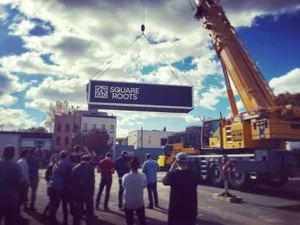
These Shipping Container Farms Will Soon Be In Grocery Store Lots Across The U.S.
03.06.19
Kimbal Musk’s Square Roots’ partnership with Gordon Food Service will bring hundreds of container-style farms directly to distribution centers and stores.
[Photo: Square Roots]
Since 2016, Square Roots–the indoor urban farming startup founded by Kimbal Musk and entrepreneur Tobias Peggs–has been producing a steady output of fresh herbs and greens. In 10 shipping containers in a Brooklyn parking lot, the Square Roots team harvests the produce for local distribution to New York grocery stores, and educates young people interested in learning this new, tech-driven method of agriculture.
Musk and Peggs aren’t the only entrepreneurs growing greens indoors and hydroponically: AeroFarms and Bowery, both based in New Jersey, are just a two of the many other companies using similar tactics to grow kale and basil. It’s an increasingly popular idea: Bowery and AeroFarms have raised $118 and $138 million, respectively. But some more traditional organic agriculture advocates, like Dan Barber, have criticized the method for failing to contribute to the effort to remake farming in a more environmentally healthy way, in favor of leaning on new technology.
[Photo: Square Roots]
But despite that criticism, enthusiasm for a more sci-fi approach to growing greens does not appear to be slowing down. In fact, it will only become more mainstream, and Square Roots’ newest collaboration will play a critical role in that.
The farming tech company (or “accelerator,” as Musk and Peggs call it) is partnering with Gordon Food Service, which manages distribution facilities across North America as well as 175 retail store locations. Through the partnership, Square Roots will set up its shipping container farming systems on or very near GFS’s distribution and retail locations. The idea is to create a very short pipeline for fresh, local greens to reach GFS customers. And through Square Roots’ Next-Gen Farmer Training Program, which will expand along with the growing operations, Peggs says the number of young people the company will be able to train and employ will increase dramatically.
[Photo: Square Roots]
The way the partnership came about, Peggs says, is tied up with another project of Musk’s: his nonprofit Big Green, which educates young kids about food and growing by installing gardens in schools. GFS, which is based in Grand Rapids, Michigan, sponsors Big Green in Detroit. Around nine months ago, GFS’s CEO, Rich Wolowski, traveled to Brooklyn to visit the Square Roots facility to investigate the possibility of a partnership.
“GFS understands that there’s an increasing consumer demand for locally grown food, and changes in climate mean that we need to be thinking about new and innovative forms of agriculture,” Peggs says. “So they came to the farm and literally tasted the basil. It was obvious that the companies were mission-aligned: We both want to bring good quality food to a great number of people.”
[Photo: Square Roots]
The partnership evolved very quickly, and not all of the details are final. Square Roots and GFS, for now, are not announcing which distribution centers and retail stores will be the first to get a farm on their property. But they do have a sense of what the impact could be: Each Square Roots farm “campus” might contain 10 shipping containers, each of which will create one job for a local person interested in the Next-Gen Farmer Training Program. Each container can grow around 50,000 pounds of produce per year, which will feed directly into the local food supply. The farms are all connected, so as more come online, Peggs says the company will receive more data about what conditions lead to the best yields, and will be able to use that knowledge to increase efficiencies and introduce more diverse crops to their operations.
Square Roots and GFS are not placing a ceiling on how many farm containers each property might receive: That, Peggs says, can quickly develop in accordance with customer demand. “We’ll start with putting 10 containers down in a market, and as demand for locally grown produce increases, we can very quickly expand our footprint by adding more modules,” he says.
The greatest potential for the partnership between GFS and Square Roots, perhaps, is that it represents a truly localized supply chain for fresh produce. In the U.S., food travels an average of 1,500 miles to reach people’s plates. Those 1,500 miles represent excess carbon emissions from transport and electricity use from cooling needs along the way. If food, instead, can be grown and distributed in the place it is produced, as the GFS and Square Roots partnership aims to accomplish, we could begin to walk back some of the environmental costs of accessing food. “It’s going to take more than Square Roots and GFS to fix the food system,” Peggs says, but he’s hopeful that the partnership and prospective growth signal a real shift toward more localized food production and distribution.
ABOUT THE AUTHOR
Eillie Anzilotti is an assistant editor for Fast Company's Ideas section, covering sustainability, social good, and alternative economies. Previously, she wrote for CityLab.
You Might Also Like:
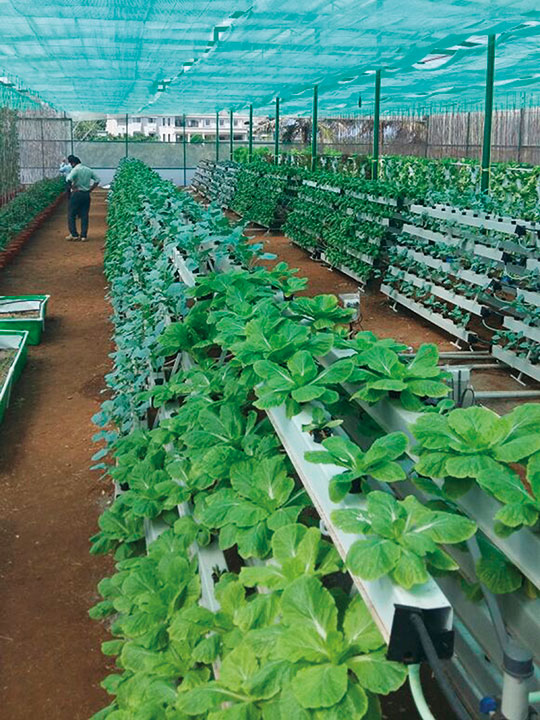
The Science of Growing Plants Without Soil
Why would a 47-year-old alumnus of a prestigious management institute in India quit his full-time job to cultivate plants?
Basil grown inside a hydroponic greenhouse at Archi’s Acres in Escondido, California, Nov. 14, 2016.Image Credit: New York Times
Indian entrepreneur Sunil Jose talks about hydroponic farming
Published: November 21, 2018
Linda Joseph, Special to Weekend Review
Why would a 47-year-old alumnus of a prestigious management institute in India quit his full-time job to cultivate plants?
Sunil Jose explains it in his own words. “After leading a corporate life for 18 years, I went through a period of self realisation when I wanted to do something that would have a wider impact and understanding to oneself and to others. A small academic project and a technology firm led me to study the impact of famine, drought and farmers’ suicide. All the while, I was thinking of a framework to educate and create awareness on how to control finances (micro finance) during difficult times. That is when I stumbled onto hydroponics”.
What a stumble that was! Today, the southern Indian city of Benguluru knows Jose as the man who designed and implemented the vertical gardens on MG Road’s metro pillar to purify the air and nullify the effects of vehicular pollution. He has worked tirelessly to make vertical hydroponic gardens in Bengaluru a reality. He started an initiative which would help farmers plant herbs and vegetables in a vertical fashion — thus helping grow a large number of plants in a relatively smaller space. He discovered that hydroponics can also be used to grow fodder. He has also been actively advocating the use of hydroponics in farming in urban as well as rural areas. He has informed villagers in Karnataka that herbs flourish in the hydroponic machine that he has made available.
So, what exactly is hydroponics? Hydroponics is a revolutionary technique of growing plants without soil, in a water-based, nutrient-rich solution.
The world needs pesticidefree herbs, vegetables and fruits. People should think beyond organics and work towards a total, sustainable ecosystem.
- Sunil Jose
Growing plants without soil? Yes. That’s the most basic concept behind this method. Hoses circulate mineral-rich nutrients to the roots of whatever you’re growing. Hydroponics does not use any soil; the roots of the plants are supported using an inert medium such as clay pellets.
Climate change is a huge a challenge today that is causing a rapid change between seasons. This rapid change places a great deal of stress on trees and shrubs, and also shifts the blooming time of plants, which can put them out of sync with their pollinators. By using hydroponics technology, most herbs, creepers, flowers and other vegetables can be grown.
“It is an alternative to conventional farming — a more organised farm to fork concept with a wider impact on society. It will help to reduce the last food mile in all major towns and cities,” says Jose.
healthy choice
Plants (and you too) grow healthier, according to Jose. As indoor and greenhouse cultures are more protected from plagues, hydroponics gives us pesticide-free produce and creates a long term sustainable ecosystem. A hydroponic culture can grow two to three times faster than a traditional one. You can convert small vertical spaces in your balconies and gardens; the public can be taught to naturally grow medicinal plants at home that can cure 80 per cent of modern day ailments. Hydroponic fodder can be a boon for people living in famine-hit areas where cattle is dying.
The government could prepare a plan on introducing the hydroponics method of cultivation. Training should be provided for officials and interested farmers. Kits and tools will have to be provided to the trainees. They should help popularise this method of cultivation among people who have private gardens as well as those living in apartments.
The compact vertical gardening system can fit into the smallest of balconies or terraces.Image Credit: Supplied
But how would a normal person living in a cramped flat ‘go hydroponic’? Even if he/she got the hang of things, wouldn’t there be the usual worry ‘gosh, I hope I don’t kill these plants?’”
“Private gardens can use hydroponics technology; most herbs, creepers, flowers and other vegetables can be grown,” says Jose. He explains that much less water and space — since plants are grown in racks one on top of the other — is required and they grow a lot faster when compared to traditional methods.
Hydroponics does not use chemicals to grow plants. Plants need minerals, not soil. Often, organic compounds need to be broken down into minerals before the plants can take them in. By using water infused with high quality minerals in hydroponic farming, you are feeding your plants a very clean and natural fertiliser.
“Water is used very carefully and is recycled back into the system when required,” says Jose. Since the method does not make use of soil, the water needs are also minuscule — just 5-10 per cent — as compared to land crops. It also gives a higher yield than the traditional methods while using minimum power and space.
Homes with smaller spaces, too, can have a more sustained home grown produce.
However, it can be expensive to set up on a big scale. In most hydroponics systems, water is recirculated. Every bit of water is reused over and over again so hydroponic systems are more efficient in using water than soil agriculture, where recycling water is impossible. A hydroponic culture can save up to 95 per cent of water over a traditional one. But one will need the required equipment and tools. You need electricity to keep the nutrient solution circulating, as well as to oxygenate it. Indoor gardens also need lighting.
In hydroponics, errors are felt immediately by the plants and can be costly. On the other hand, if you react and correct the problem on time, the plants will also recover faster. That’s the reason hydroponic cultures need close monitoring or even automating it.
A hydroponic culture can grow 2 to 3 times faster than a traditional oneImage Credit: Supplied
Jose is seeking partners to invest in the food tech industry. The entrepreneur, a family man and father of three, is on a mission for evangelising a nationwide awareness programme on hydroponics. “I am keen to inculcate the triple bottom line to all corporate sectors — people, planet and profit,” he says.
Other than farmers, in cities such as Bengaluru, some of the big business houses are using hydroponics for vertical ornamental planting on their campuses. States such as Maharashtra and Andhra Pradesh are making efforts to promote this method.
Jose’s hydroponic machines created a mini revolution in a north Karnataka village. A politician who had lost three elections, helped Jose supply these machines to the drought-affected villagers only to find after a few months that they were left untouched. But a curious boy put some mustard seeds in one and seeing the way the plants grew, the villagers soon followed suit. “They eventually replaced the pictures of deities in their houses with that of the politician,” jokes Jose.
Adapted the tech
Many countries such as the Netherlands, Canada and Australia have already adopted hydroponics farming extensively over the years. “Twenty-one per cent of tomatoes grown in Australia are with hydroponics,” he says. However, in India, farmers largely depend on conventional farming methods.
Jose is optimistic that as information about this method spreads, more and more farmers who don’t have the space to grow plants or those who live in the arid parts of India, will eventually opt for the “soil-less farming” technique.
Recently, Jose went to Kochi to address a Rotary gathering and spread awareness about his passion. “The world needs pesticide-free herbs, vegetables and fruits. People should think beyond organics and work towards a total, sustainable ecosystem,” says the Malayali man raised in Bengaluru.
Does this all still seem undoable? Think of the Hanging Gardens of Babylon to drive home the point.
Linda Joseph is a writer based in Kerala, India.
To contact Sunil Jose: suniljose@hotmail.com
Container In Limassol Is The Future of Farming
FEBRUARY 20, 2019

Remember when you were little, and dreamt of the space age future promised on TV; a bright time in which everything was hip, high-tech, and healthy? In just a few decades, we were told, we’d be making phone calls from our watches (check), travelling in driverless cars (almost check), and eating produce grown in high-tech vertical farms (Hmm.). Well, two out of three isn’t bad. Though, if Herbanleaf Farms have anything to do with it, we’re heading strongly towards three for three…
Located in Parekklisha village, this farm is a one-of-a-kind, growing super fresh, healthy greens with a difference… Everything – all the planting, seeding, growing, tending and harvesting – takes place in an upcycled, 40-foot shipping container. And it’s all thanks to the miracle of hydroponics…
A sustainable indoor hydroponics farming company, Herbanleaf is the brainchild of the Timveos family: dad, mum and daughter all working diligently to provide clean, premium leafy greens and herbs grown inside a controlled environment. “This really is a family affair,” explains Myrianthi, the 32-year-old daughter. “My Mum Maria and I work full-time on the farm, while my dad, Panayiotis, helps out whenever he can. In fact, though we’re all as a family very into healthy eating, this whole venture was originally my Dad’s idea: he’s always been into organic gardening, growing vegetables in the backyard, planting seeds and feeding family and friends.”
Inspired by Panayiotis’ research into alternative methods of farming, this environmentally-conscious family came across the Freight Farms venture in 2016, a company which offers complete hydroponic farming solutions for families and businesses all over the world. “My parents went to the regional Freight Farms outlet in Holland, decided to forge ahead with the idea, and next thing we knew our shipping container and equipment had arrived on the island, along with a couple of trainers to teach us the basics…
“It all arrived in November 2017, and by December of that year we were up and running,” Myrianthi reveals. “Granted, we didn’t originally realise what we were in for,” she laughs, “but now we’ve been at this for a while, we love what we do: it’s a real passion…”
Focusing on providing better quality and healthier leafy greens and herbs using the latest sustainable farming techniques Herbanleaf’s innovative methods include the use of non-GMO seeds, grown without the use of harmful chemicals, pesticides, or fertilisers.
“Because we control the growing conditions so completely, we have an amazing range of products that Cyprus doesn’t usually see,” Myrianthi notes. “Mustard greens such as wasabina, which has a spicy flavour, and adds a wonderfully spicy note to salads and eggs; the electric daisy, an edible flower native to Brazil which has antiseptic, analgesic, anti-bacterial and anti-fungal properties and boasts a delightfully citrus flavour; and both green and purple pak choi! We also grow everything from fresh, crisp lettuce, to four varieties of kale, swiss chard, red-veined sorrel, leaf beet and all sorts of herbs such as dill, wild rocket, and coriander. There are,” she adds, “other hydroponics farms on the island, but they’re using greenhouses rather than a specialised, environmentally controlled farm, and that’s what makes us different…”
Saving more than 90 per cent of the water used in traditional farming, delivering the produce equivalent to that grown on 7,284 square metres of land, and able to grow all year round, the Herbanleaf hydroponics system is a marvel of space-age innovation. The plants are grown vertically, in 256 towers. “It’s very futuristic!” smiles Myrianthi. “It’s almost like a spaceship inside: there’s a constant of purple haze from the red and blue LED lights we use – the optimal wavelengths for photosynthesis. There’s also a lot of agrotech involved: special programming which controls the functioning of the farm, oversees the nutrient, seedling, and main tanks, as well as sensors for everything from pH to water temperature. It’s definitely hard work, but we have a real passion for what we’re doing and it’s good to know we’re helping to promote a healthy, environmentally-friendly island!”
From seeds to harvest, Herbanleaf not only delivers sustainable agriculture, it also offers its clients a transparent overview of where and how their food is grown. “Come summer, much of the produce you buy in supermarkets has been imported,” explains Myrianthi. “Now, that ups your carbon footprint and, at the same time, adds a dimension of uncertainty to the food you’re eating. In fact, even produce grown right here on the island may be covered in harmful chemicals. I think a lot of people are under the impression they’re buying healthy food for their families but, unless you ask the right questions and really do your research, you might be very surprised by what you’re consuming!”
At Herbanleaf, however, customers know exactly what they’re getting and how their food has been grown: there’s complete transparency to the growing process. And, by using non GMO seeds and eschewing the use of harmful chemicals, the venture is able to offer a safer, healthier option to all sectors of the community. “‘Fresher, healthier, and tastier’ is what we do,” Myrianthi adds. “It’s right there in our logo, and we stand by it!”
Not only do the family enjoy these fresher, healthier greens themselves, they also sell to individuals and outlets all over the island. Chefs at various hotels purchase from Herbanleaf on a weekly basis, as does Frutopia in Limassol, and the Alchemy bartending school (apparently the edible flowers are a hit in cocktails!). Then there’s the monthly Peyia Market, at which individuals can get their shot of healthy greens direct from the family, as well as a service which sees the produce delivered all over the island.
“So far,” Myrianthi concludes, “we’ve been very successful. There’s an excellent market out there of health conscious individuals, chefs looking for a premium product, and people who want to know exactly how their food is grown. In fact, if you’d like to see the farm for yourself, we’re always more than happy to show visitors round, give them different flavours to taste and teach them about the wonders of hydroponics. This, I believe, is the future of farming!”
For more information on Herbanleaf Farms,
visit https://www.herbanleaffarms.com
or the Faceook page ‘HerbanLeaf Farms’
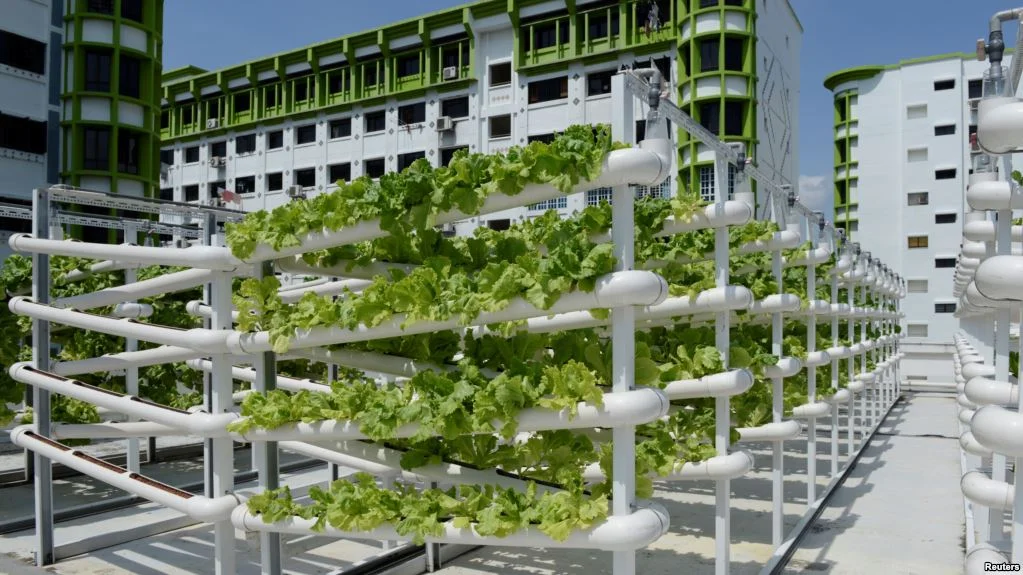
With Farms Atop Malls, Singapore Gets Serious About Food Security
The farm's small size belies its big ambition: to help improve the city's food security.
January 09, 2019 5:11 PM
SINGAPORE —
Visitors to Singapore's Orchard Road, the city's main shopping belt, will find fancy malls, trendy department stores, abundant food courts — and a small farm.
Comcrop's 600-square-meter (6,450-square-foot) farm on the roof of one of the malls uses vertical racks and hydroponics to grow leafy greens and herbs such as basil and peppermint that it sells to nearby bars, restaurants and stores.
The farm's small size belies its big ambition: to help improve the city's food security.
Comcrop's Allan Lim, who set up the rooftop farm five years ago, recently opened a 4,000-square-meter farm with a greenhouse on the edge of the city.
He believes high-tech urban farms are the way ahead for the city, where more land cannot be cultivated.
"Agriculture is not seen as a key sector in Singapore. But we import most of our food, so we are very vulnerable to sudden disruptions in supply," Lim said.
"Land, natural resources and low-cost labor used to be the predominant way that countries achieved food security. But we can use technology to solve any deficiencies," he said.
Singapore last year topped the Economist Intelligence Unit's (EIU) Global Food Security Index of 113 countries for the first time, scoring high on measures such as affordability, availability and safety.
Yet, as the country imports more than 90 percent of its food, its food security is susceptible to climate change and natural resource risks, the EIU noted.
With 5.6 million people in an area three-fifths the size of New York City — and with the population estimated to grow to 6.9 million by 2030 — land is at a premium in Singapore.
The country has long reclaimed land from the sea, and plans to move more of its transport, utilities and storage underground to free up space for housing, offices and greenery.
It has also cleared dozens of cemeteries for homes and highways.
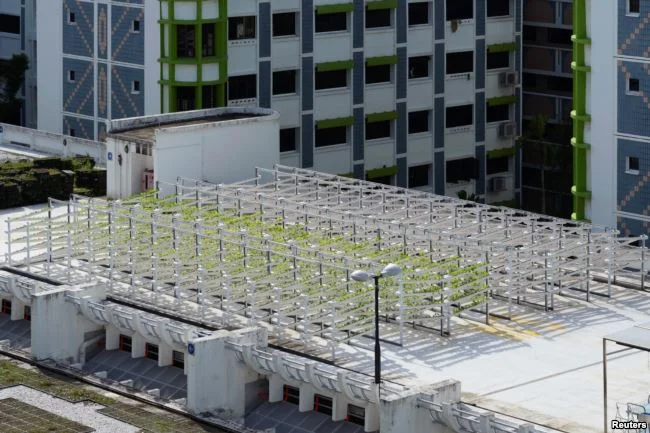
An aerial view shows Citiponics' urban farm located on the rooftop of a multi-story garage in a public housing estate in western Singapore, April 17, 2018.
Agriculture makes up only about 1 percent of its land area, so better use of space is key, said Samina Raja, a professor of urban and regional planning at the University at Buffalo in New York.
"Urban agriculture is increasingly being recognized as a legitimate land use in cities," she said. "It offers a multitude of benefits, from increased food security and improved nutrition to greening of spaces. But food is seldom a part of urban planning."
Supply shocks
Countries across the world are battling the worsening impacts of climate change, water scarcity and population growth to find better ways to feed their people.
Scientists are working on innovations — from gene editing of crops and lab-grown meat to robots and drones — to fundamentally change how food is grown, distributed and eaten.
With more than two-thirds of the world's population forecast to live in cities by 2050, urban agriculture is critical, a study published last year stated.
Urban agriculture currently produces as much as 180 million metric tons of food a year — up to 10 percent of the global output of pulses and vegetables, the study noted.
Additional benefits, such as reduction of the urban heat-island effect, avoided stormwater runoff, nitrogen fixation and energy savings could be worth $160 billion annually, it said.
Countries including China, India, Brazil and Indonesia could benefit significantly from urban agriculture, it said.
"Urban agriculture should not be expected to eliminate food insecurity, but that should not be the only metric," said study co-author Matei Georgescu, a professor of urban planning at Arizona State University.
"It can build social cohesion among residents, improve economic prospects for growers, and have nutritional benefits. In addition, greening cities can help to transition away from traditional concrete jungles," he said.
Singapore was once an agrarian economy that produced nearly all its own food. There were pig farms and durian orchards, and vegetable gardens and chickens in the kampongs, or villages.
But in its push for rapid economic growth after independence in 1965, industrialization took precedence, and most farms were phased out, said Kenny Eng, president of the Kranji Countryside Association, which represents local farmers.

Organic cilantro seedlings sprout from growing towers that are primarily made out of polyvinyl chloride pipes at Citiponics' urban farm on the rooftop of a multi-story garage in a public housing estate in western Singapore, April 17, 2018.
The global food crisis of 2007-08, when prices spiked, causing widespread economic instability and social unrest, may have led the government to rethink its food security strategy to guard against such shocks, Eng said.
"In an age of climate uncertainty and rapid urbanization, there are merits to protecting indigenous agriculture and farmers' livelihoods," he said.
Local production is a core component of the food security road map, according to the Agri-Food and Veterinary Authority (AVA) of Singapore, a state agency that helps farmers upgrade with technical know-how, research and overseas study tours.
Given its land constraints, AVA has also been looking to unlock more spaces, including underutilized or alternative spaces, and harness technological innovations to "grow more with less," a spokeswoman said by email.
Intrinsic value
A visit to the Kranji countryside, just a 45-minute drive from the city's bustling downtown, and where dozens of farms are located, offers a view of the old and the new.
Livestock farms and organic vegetable plots sit alongside vertical farms and climate-controlled greenhouses.
Yet many longtime farmers are fearful of the future, as the government pushes for upgrades and plans to relocate more than 60 farms by 2021 to return land to the military.
Many farms might be forced to shut down, said Chelsea Wan, a second-generation farmer who runs Jurong Frog Farm.
"It's getting tougher because leases are shorter, it's harder to hire workers, and it's expensive to invest in new technologies," she told the Thomson Reuters Foundation.
"We support the government's effort to increase productivity through technology, but we feel sidelined," she said.
Wan is a member of the Kranji Countryside Association, which has tried to spur local interest in farming by welcoming farmers' markets, study tours, homestays and weddings.
Small peri-urban farms at the edge of the city, like those in Kranji, are not just necessary for food security, Eng said.
"The countryside is an inalienable part of our heritage and nation-building, and the farms have an intrinsic value for education, conservation, the community and tourism," he said.
At the rooftop farm on Orchard Road, Lim looks on as brisk, elderly Singaporeans, whom he has hired to get around the worker shortage, harvest, sort and pack the day's output.
"It's not a competition between urban farms and landed farms; it's a question of relevance," he said. "You have to ask: What works best in a city like Singapore?"
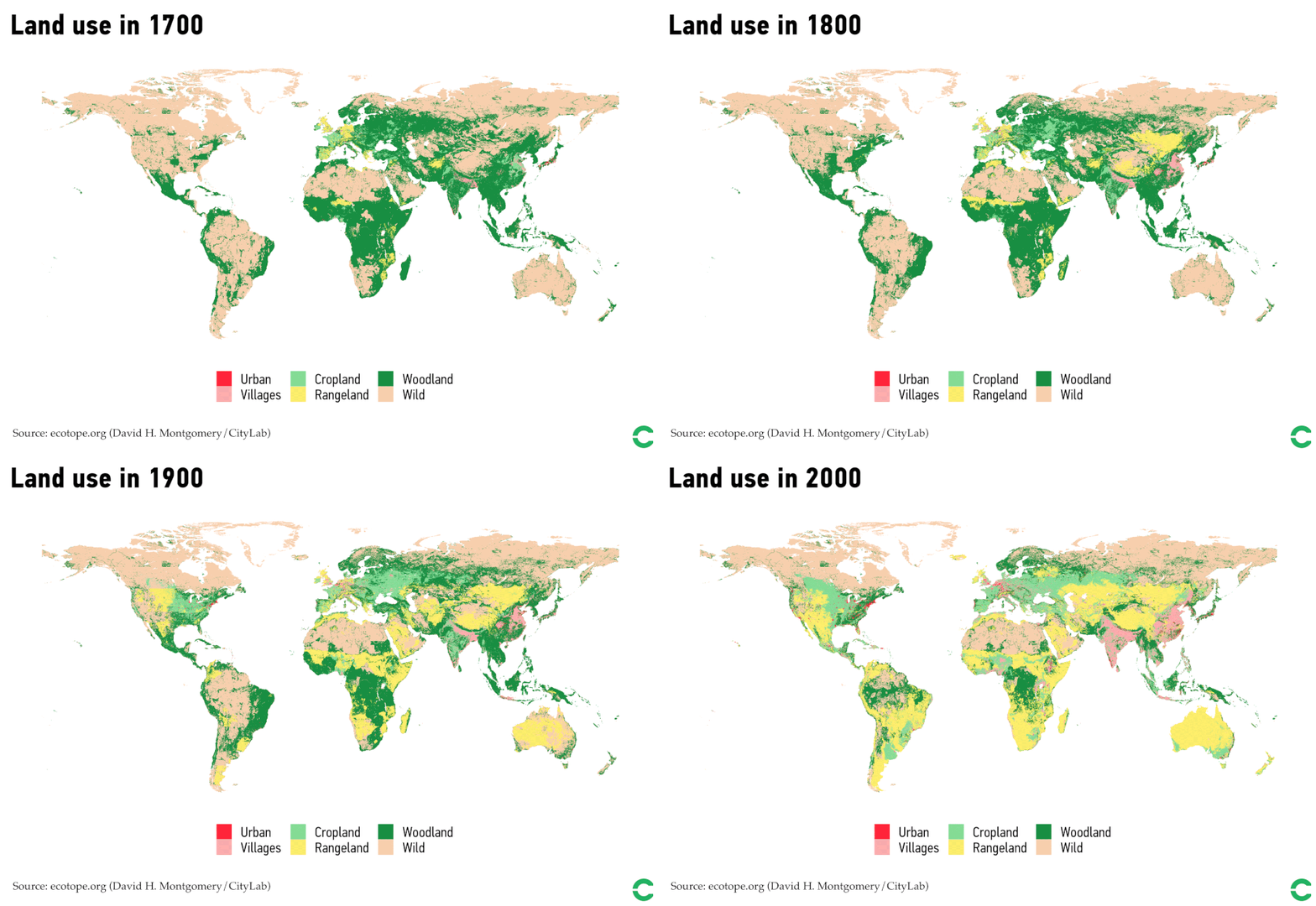
How 300 Years of Urbanization and Farming Transformed the Planet
Three centuries ago, humans were intensely using just around 5 percent of the Earth’s land. Now, it’s almost half.
Humans are transforming the Earth through our carbon emissions. Arctic sea ice is shrinking, seas are rising, and the past four years have been the hottest since record-keeping began. But long before the first cars or coal plants, we were reshaping the planet’s ecosystems through humbler but no less dramatic means: pastures and plows.
Environmental scientist Erle Ellis has studied the impact of humanity on the Earth for decades, with a recent focus on categorizing and mapping how humans use the land—not just now, but in the past. And his team’s results show some startling changes. Three centuries ago, humans were intensely using just around 5 percent of the planet, with nearly half the world’s land effectively wild. Today, more than half of Earth’s land is occupied by agriculture or human settlements.
“Climate change is only recently becoming relevant,” said Ellis, a professor at the University of Maryland, Baltimore County. “If it keeps going how it is, it will become the dominant shaper of ecology in the terrestrial realm, but right now the dominant shaper of ecology is land use.”
In contrast to the typical division of the world into ecological “biomes,” Ellis and his team at the Laboratory for Anthropogenic Landscape Ecology map what they call “anthromes,” or “anthropogenic biomes.” These show the intersection of ecology and human land use.
Using a range of sources, Ellis’s team mapped out that land use, dividing the planet into grids and categorizing each cell based on how many people lived there and how they impacted the land. The densest areas were cities and towns, followed by close-packed farming villages. Less populated areas were categorized by their dominant land use—crops, livestock pasture, or inhabited woodlands—while other areas were marked as largely uninhabited.
Below is an animation using a simplified version of Ellis’s data:
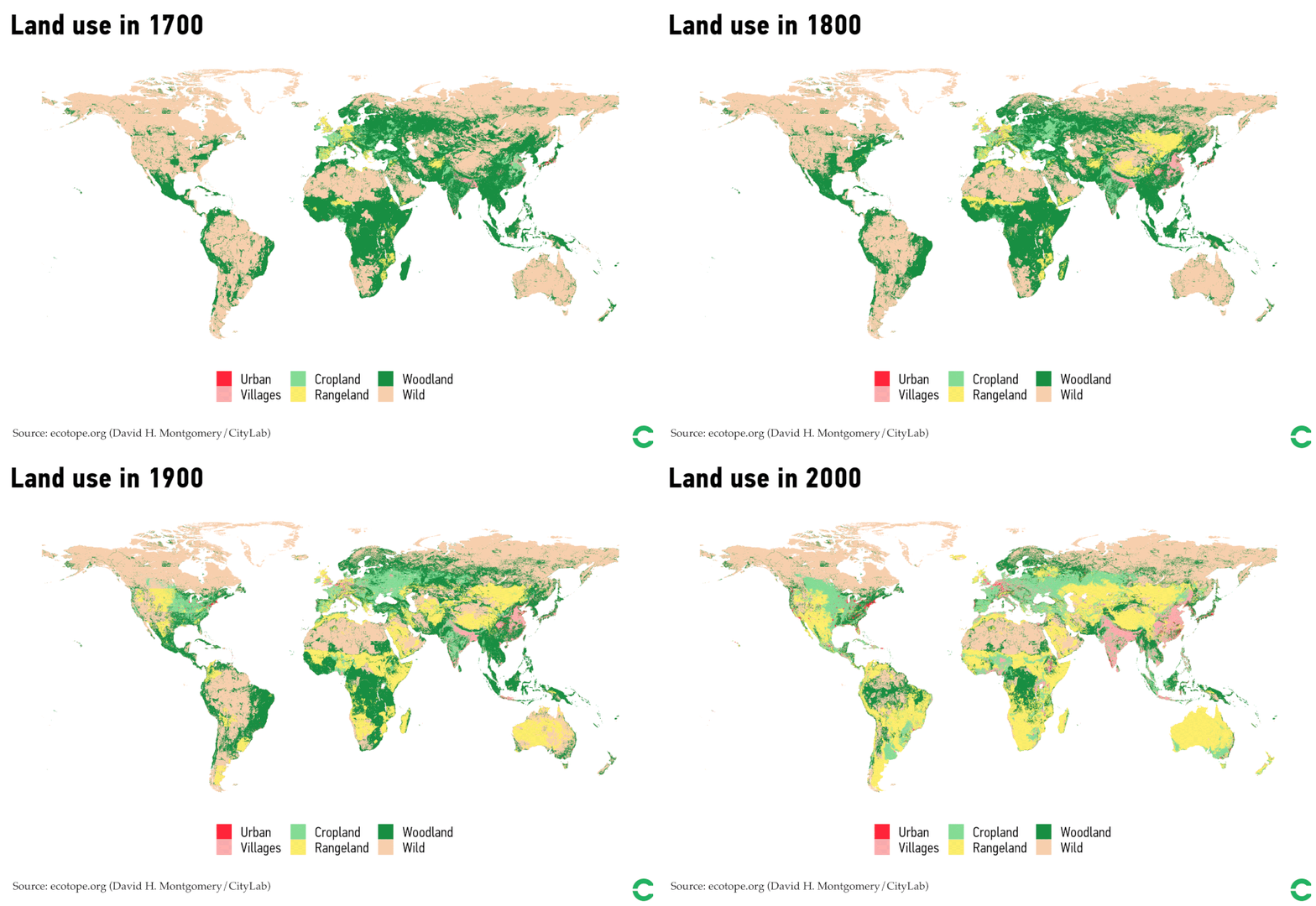
Even with only one snapshot per century, the animation makes some of the trends obvious. Large swaths of Russia and the United States become cropland over the 19th century, while livestock occupies increasing amounts of previously semi-wild land in Africa and Asia.
“Asia is pretty much the dominant transformed area, and transformed the earliest,” Ellis said. “Europe is also pretty dense ... The rest of the world has a different trajectory. Much slower, less dense.”
All of this is a mixture of estimates and approximations. One reason Ellis and his team only looked every hundred years and divided the world into cells that stretch for miles was to avoid giving a false impression of precision.
People ask Ellis, “‘What was my backyard like?’” he said. “Well, we don’t have any solid evidence … The further back in time you go, the more you have to consider [this], in a sense, educated guesswork.”
Even more recent data can have issues, based on political decisions that countries make about how to self-classify their land. Saudi Arabia, for example, reports “almost every part of their country as being rangeland” even though much of that arid land is seldom if ever grazed.
Humans shape even “seminatural” biomes
Significant portions of the world, both now and in the past, have been what Ellis’s team terms “seminatural.” These are areas—frequently forests—with low but real human habitation. This could reflect a large cell of the grid that has a farming village or two but mostly natural forests. But frequently, Ellis says, humans have taken a much bigger role in shaping seemingly natural wilderness than people think.
Take the “pristine myth”—the idea that the Americas before European colonization were dominated by pristine wilderness untouched by human hands. In fact, modern researchers believe that indigenous tribes had actively shaped their landscapes through agriculture and regular burning of American forests.
Because of this, the devastating spread of epidemics among indigenous populations after 1492 also had a huge impact on climate—and not just locally. Some scholars believe disease-ravaged peoples significantly cut back on their management of American forests, which meant far less carbon dioxide put into the atmosphere from fires and far more absorbed into newly grown forests. The combination could have played a significant role in the “Little Ice Age” that lowered global temperatures for several centuries between around 1500 and 1850 C.E.
This kind of active land management was done not just by sedentary populations, but by hunter-gatherers, too. This, Ellis says, is a shortcoming in the data.
“There’s no direct mapping of hunter-gatherers’ land use in these datasets. That’s something we’re trying to rectify now,” he said, noting that evidence suggests even non-agricultural people have major effects on the environment.
The data also shows the massive impact made by cities, the most dramatic way humans transform their environment. In 1700, a negligible portion of the Earth’s surface was covered by cities. Over the three centuries that followed, this boomed by around 40 times. Cities are still just half a percent of the planet’s land area, but they have had the most dramatic increase in impact of any of Ellis’s “anthromes.”
Densely populated farming villages—which often have similar concentrations of people per square mile as American suburbs—are also big, especially in the developing world. (Ellis’s team don’t map any urban areas in the Americas or Australia before 1900, and never apply the “villages” category to those continents, because those areas didn’t have “histories of intensive subsistence agriculture.”)
Huge portions of India and China are occupied by these kind of villages. So, too, were the hinterlands around major European cities before improvements in transportation enabled produce to be brought from farther away. Paris, for example, used to be surrounded by suburban “market gardens” which, historians André Jardin and André-Jean Tudesq note, could produce five or six harvests per year and had a “virtual monopoly of the Parisian market” for food until the second half of the 19th century.
How cities drive land-use changes
That kind of intensive agriculture to feed a demanding urban market is part of the huge impact that cities have on the use of land even well outside their boundaries. Those thousands or millions of urban dwellers aren’t producing their own food, and thus need more food produced elsewhere in order to eat.
Ellis describes two different ways that cities impact far-away anthromes through their demands for food—one of them devastating to natural ecosystems, the other surprisingly beneficial.
The first sees new land being put under the plow, as societies try to produce more food for a growing population. This is often low-productivity agriculture, reflecting the marginal quality of the farmland: If it was good for farming, it would have been farmed already. But later, as populations grow, comes an “intensification” process as technology increases the yields on low-productivity farmland.
Agricultural expansion has a massive impact on natural biomes, and has for millennia. But the second process, intensification, has the potential to restore some of the natural biomes that humans previously plowed under.
“Dense cities actually have the potential to help areas recover, because dense populations in cities often are basically pulling people out of the rural areas where they’re farming low-productivity land,” Ellis said. The increased production on good land means the marginal farmland is no longer needed.
Author Charles Mann described this process taking place in New York’s Hudson River Valley in his 2018 book, The Wizard and the Prophet. In the late 19th century, this region was dominated by “hardscrabble farms and pastures ringed by stone walls.” Now many of those “hardscrabble farms” are gone. Six counties in the lower Hudson Valley had around 350,000 people and 573,000 acres of timberland in 1875; today those same counties have more than 1 million people but three times as much forest.
“Many New England states have as many trees as they had in the days of Paul Revere,” Mann writes. “Nor was this growth restricted to North America: Europe’s forest resources increased by about 40 percent from 1970 to 2015, a time in which its population grew from 462 million to 743 million.”
But while this intensification of agriculture is allowing the return of nature in parts of developed countries, the first phase—expansion—is still playing out in the developing world. Erle’s maps show the expansion of crops and livestock into areas like Africa’s Sahel and South America’s Amazon rainforest over the past century.
“Land transformation is the big story of biosphere transformation so far,” Ellis said. “If you’re trying to understand how we produced the ecology we have now, it’s the story of land-use transformation.”
What’s next for Earth
So what will a future mapmaker show for the world’s land use in 2100? Ellis said he expects urbanization to continue, at least doubling the share of the planet’s land devoted to urban areas over the next century.
Similarly, he expects developed countries to see an intensification of agriculture that enables marginal land to be returned to the wild—a process already under way in newly developed countries like China. Poorer countries, on the other hand, may continue to convert marginal wild land into farmland.
“It’s only poor farmers without much investment that can make that work,” Ellis said. “When you’re investing large amounts of money in farm equipment and fertilizers, you don’t invest that in marginal land.”
Much depends, however, on political, economic, and technological changes that will unfold over the next 80 years. For example, Ellis said, the United States has recently seen “a huge shift from beef to chicken” in consumer demand. “That changes the kind of land that’s in demand, from grassland to production of maize and soy.”
Among the factors that could affect the future of Earth’s land use are political decisions in Brazil, where new President Jair Bolsonaro wants to open up more of the Amazon rainforest to agriculture, and technology, where a potential breakthrough in electrical generation such as fusion power could enable transformative changes such as vertical urban farming. Conservation efforts, or lack thereof, could also impact areas of intensive agriculture in developed countries.
“The future of the biosphere… depends partly on economics, partly on politics, but also partly on vision,” Ellis said. “It depends on what people’s values are.”