


Welcome to iGrow News, Your Source for the World of Indoor Vertical Farming

Key Leadership Additions at Fluence Bioengineering to Accelerate Global Growth
Austin, Texas – March 5, 2019 – To further scale its solutions and services, Fluence Bioengineering announces key hires underscoring the company’s commitment to support the global horticulture industry. These appointments of industry veterans include professionals outside of the horticulture industry, enabling Fluence to expand its portfolio and commit the company to an aggressive growth trajectory.
“Innovations pioneered by Fluence are enabling growers to produce more and virtually eliminate seasonality. These appointments ensure our solutions and support teams are immediately accessible to a global audience,” said Dave Cohen, chief executive officer, Fluence Bioengineering.
Lorrie Schultz, senior vice president of marketing. In this role, Lorrie will lead global marketing efforts across Fluence to elevate the global brand, enhance customer engagement and extend demographic reach. Lorrie was formerly senior vice president of marketing at Q2 Software where she enabled the marketing department to scale and develop their brand. She is a tech veteran from Dell, where she held numerous global marketing roles in consumer, retail, small business, enterprise and customer experience.
“I am keen on collaborating with our growers to discuss the challenges they face today, as I believe communities are built around how they source and consume food and medicine,” said Lorrie Schultz. “Our mission is to enable growers to cultivate better plants and I am deeply interested in conveying this message to the global marketplace and I am excited to be a part of this team.”
Timo Bongartz, general manager, EMEA. Timo has led the development of global horticulture strategy at OSRAM, since 2015. He will be responsible for the expansion of Fluence in Europe, the Middle East and Africa. He will manage leadership as well as sales goals for each country.
Greg Hovagim, global director of controllers, dimmers, and IoT solutions. Greg brings experience encompassing work from across the commercial and defense sectors. Previously, he oversaw rapid prototype development projects as well as large-scale defense projects. At Fluence, he will manage the dimming & controls technologies for Fluence LED lighting solutions and development of innovative customer solutions.
###
About Fluence Bioengineering
Fluence Bioengineering Inc., a wholly-owned subsidiary of OSRAM, creates the most powerful and energy-efficient LED lighting solutions for commercial crop production and research applications. Fluence is the leading LED lighting supplier in the global cannabis market and is committed to solving the looming food crisis by enabling more efficient crop production with the world’s top vertical farms and greenhouse produce growers. All Fluence lighting solutions are designed and built at the company’s
Headquarters in Austin, Texas, U.S.A., with European sales and support based in Amsterdam, Netherlands. https://fluence.science
Pure Flavor®’s New Georgia Greenhouse Growing Results
Leamington, ON (March 6th, 2019) Now almost 3 months since their first picks of fresh greenhouse grown vegetables from their new Fort Valley, GA greenhouse facility, Pure Flavor® has started to change the landscape in the southeast.
“When we put the first shovel in the ground 18 months ago, we knew we had our work cut out for us as a project of this scope had never been built in in the Southeast”, said Jamie Moracci, President. To be built in 3 phases of 25 acres over 5 years, Phase 1 was completed in late Fall 2018 with the first crops of Cucumbers & Tomatoes picked in early December 2018. “We have a strong leadership team in place who have embraced the opportunity to create impact with a great product, the feedback from customers has been fantastic”, said Moracci.
The new greenhouse in Fort Valley, GA is growing the following items:
Tomatoes on The Vine
Sweet Red Cocktail Tomatoes
Long English Cucumbers
Mini Cucumbers
As a vertically integrated vegetable company with a family of growers throughout North America, the Georgia facility has opened new doors with a regionally grown product to service key retail & foodservice partners in the southeast. This has also allowed Pure Flavor® to open other markets with additional product as the company’s family of growers continues to expand season over season.
“Our team has done a great job in Fort Valley getting our first growing season under our belts. Learning how a crop will react to the environment has been a great experience to date and our Growers are adapting it to ensure the plants our producing in an optimal environment”, commented Matt Mastronardi, Executive Vice-President.
“When it comes to bringing new products to market like our new Georgia Tomatoes & Cucumbers, we have embraced the Georgia Grown brand to ensure that our customers know where the product is grown and who grew it”, said Chris Veillon, Chief Marketing Officer. The response to new products has been very positive on all fronts with feedback coming across all social channels and email. The new Tomatoes & Cucumbers were served recently at the Governor of Georgia’s Inaugural Luncheon when he took office.
Pure Flavor® will be exhibiting this weekend at SEPC’s Southern Exposure Trade Show in Orlando where the company’s focus will be on promoting the new Georgia greenhouse.
Construction of a new 60,000 sq. ft. Distribution Center will be wrapping up later this spring, located just off I-75, minutes from the greenhouse facility. The new Distribution Center will serve as a consolidation point which will provide an opportunity for a greater assortment of Pure Flavor® greenhouse grown vegetables to retailers & foodservice partners in the southeastern US region. Pure Flavor® operates distribution centers in Leamington, ON, Romulus, MI, and San Antonio, TX to support its vast network of growers throughout North America.
To learn more about Pure Flavor®, visit Booth 1120 at SEPC’s Southern Exposure in Orlando, FL March 9th or visit Pure-Flavor.com/SouthernExposure2019
-30
About Pure Flavor®
Pure Flavor® is a family of greenhouse vegetable growers who share a commitment to bringing A Life of Pure Flavor™ to communities everywhere. Our passion for sustainable greenhouse growing, strong support for our retail & foodservice customers, and focus on engaging consumers is built on a foundation drawn from generations of growing expertise.
We are the next generation of vegetable growers, inspired to put quality, flavor, and customers first by providing greenhouse-grown vegetables from our farms that are strategically located throughout North America.

Urban Farmer Turns to Crowdfunding to Support Growing Business
A loan would take too long to help, and when someone suggested crowdfunding, the urban farmer saw how much further that small business support could go.
By Sean Evans | January 10, 2019 at 5:04 PM EST - Updated January 10 at 6:50 PM
SAVANNAH, GA (WTOC) - Just blocks from busy Pennsylvania Avenue and not far from the heart of downtown Savannah, there’s a business venture you might not know about, or think could be that close to downtown. In fact, it’s growing so much that its loyal customers and folks who support them are chipping in to help them grow.
“I am the owner and sole employee of Vertu Farm," said Chris Molander.
Molander started Vertu Farm on Savannah’s east side about three years ago after cultivating a passion for farming in high school and college.
“When an opportunity opened up out here at the old dairy farm, I just jumped on it," Molander said, as he picked some of his crops from the ground.
On two acres of leased land, Molander’s farm has grown to provide Savannah’s residents with local greens, on sale at the Forsyth Park Farmer’s Market, as well as at some area restaurants.
“I can’t say enough about our Farmer’s Market. There’s a lot of really dedicated people that come out every single week to support the farmers," Molander said.
About a month ago, Molander realized he had an immediate need for greenhouse space. A loan would take too long to help, and when someone suggested crowdfunding, the urban farmer saw how much further that small business support could go.
“It’s literally past everything that I could have thought would even possibly happen, and all the responses, individual responses, people coming out here to talk to me, they’re just interested in the farm. They want to see it, they want to know more about it, and it’s just awesome," Molander admitted.
With four days left, the Indiegogo campaign goal is more than 90-percent complete.
Funds raised will help this local business owner complete his own greenhouse space, and keep Vertu Farms producing homegrown greens for Savannahians to enjoy.

Cadets Create Indoor Farm Inside Shipping Containers
From the confined space of a shipping container, military college cadets grow and harvest hundreds of heads of lettuce per week for staff and students.
By Jennifer Albert and Dalia Martinez
February/March 2019
The project helps cadets gain hands-on experience in business, chemistry, engineering, and growing food. Photo by The Citadel.
Inside three shipping containers on the campus of The Citadel, a military college in South Carolina, cadets are learning how to grow lettuce crops in a controlled indoor “farm” setting, producing organic produce in an environment that can withstand unpredictable weather conditions and disease. The cadets’ hands-on education comes from The Citadel Sustainability Project, in which the first shipping container functions as a hydroponic cultivation system for lettuce crops, the second container is a testing ground for various growing systems, and the third container will be outfitted by cadets who design and build the growing equipment as part of a corresponding independent study.
The Citadel STEM Center of Excellence initiated the project in 2016 as an interdisciplinary collaboration. Of the 20 or so students who are members of the Sustainability Club, several are STEM Scholars. We also have electrical engineers who are completing a design project on hydroponics. We’ve had students from almost every campus department — engineering, biology, business — who have worked with the project.
Prior to their graduation, Alex Richardson, who studied engineering, and Cameron Brown, who studied business, managed the growing container with the help of other students motivated by a passion for the environment.
“Cadets are excited about The Citadel Sustainability Project because it incorporates biology, chemistry, computer science, business, engineering, and community outreach. It gives us the opportunity to collaborate with students outside of our own programs on a project focused on global population needs,” Richardson says. “And seeing people on campus eat and enjoy our crops is gratifying.”
A Sustainable Food Source
We’re currently growing more than 4,400 plants in the shipping containers, including collards, lettuce, spinach, and herbs. The nutrients used to grow the crops are recycled within the system’s 100-gallon reservoir and are managed through a smartphone application. The app tracks the metallic minerals in the water and sends nutrients to the plants every 10 minutes. It also displays the water’s temperature and the container’s carbon dioxide and pH levels.
More than 4,400 plants, including collards, lettuce, spinach, and herbs, grow in the container. Photo by Stefanie Swackhammer.
The transformation from seed to harvest inside the shipping container farm occurs in five weeks, compared with the 10 weeks the crops would need in an outdoor environment. Thanks to high-density crop production, the cadets harvest more than 800 heads of lettuce per week for the campus restaurant’s salad bar as well as events. Additionally, cadets get to eat the fresh lettuce in the student mess hall. If the growing container is running at full capacity, the 320-square-foot space can yield about 40,000 heads of lettuce per year.
Each container is valued at $115,000 after it’s outfitted. The cadets intend to make the project sustainable by putting profits from the crops toward the purchase of more containers.
“Our self-propagating irrigation system uses up to 98 percent less water than conventional industrial farming does,” says Brown, who wrote the project’s business plan. “We want to expand, grow more, and sustain this Earth-friendly initiative, making our healthy produce available to more members of our community.
In addition to providing a sustainable food source, the goal of the project is to help young entrepreneurs and members of other disciplines gain hands-on experience.
We also try to bring in high school students. Last spring, students from Burke High School, which is next door to our campus, incorporated the indoor farm into one of their projects. Then, a 10th grade economics class wrote business plans for the container with data we provided, and followed up with two field trips to the container.
The container farm is installed in a corner of campus, leaving room for expansion. Photo by The Citadel.
The shipping container farm is located in a back corner of campus near the marsh, with plenty of room for expansion. We’ve submitted a National Science Foundation grant application with The GEL Group, AmplifiedAg, and SuperGreen Solutions to design a system that would filter excess nutrients out of treated wastewater and incorporate sustainable energy so the system could be viable anywhere. Ultimately, we’d like to expand the project to be able to produce more fresh food for the South Carolina Corps of Cadets, which comprises the college’s undergraduate population.
Jennifer Albert is the director of The Citadel STEM Center of Excellence. Dalia Martinez graduated from The Citadel in May 2018, and is now a researcher at The Medical University of South Carolina.

CEA Advisors Announces Formation of New Division Focused on Cannabis Industry
The company has completed the design process for the first shipping container farm specifically designed and built for cloning and young plant production.
March 5, 2019
After nine years of designing and marketing custom-made Growtainers and providing consultant services for commercial clients worldwide, CEA Advisors has announced that it has formed a new division to focus on the cannabis Industry. Recently the company has completed the design process for the first competitively priced shipping container farm specifically designed and built for cloning and young plant production.
“Although I grew indoors many years ago, I spent more than a year discussing today’s technology and the specific requirements of this crop with industry experts and component manufacturers and when I was sure we could execute, we began the design and manufacturing process” said Glenn Behrman, founder of Greentech Agro LLC and CEA Advisors LLC.
Each fully equipped, plug and play 20-foot fully insulated container-based Clone Facility has a separate utility area and provides climate controlled vertical production space for cloning and mother plant storage. Each unit is specially designed for maximum efficiency and workflow. Besides the dedicated technology for the ebb and flow irrigation system installed, a state-of-the-art water monitoring and dosing system and high-pressure fog system, each production area is equipped with energy efficient LED production modules, offering wavelength and intensity specifically designed for cloning and vegetative growth.
The LED environment for cloning provides light levels from 50 to 100 micromoles with an incremental increase as the plant becomes established and the mother plant storage area provides up to 700 micromoles for faster vegetative growth. In addition, each clone factory provides a warm, humid LED lit micro climate for germinating seeds. Based on the current configuration, each unit is capable of producing 1,080 four-inch pots per cycle or substantially more in standard 1020 trays.
CEA Advisors is in the process of finalizing agreements with some of the world’s top cannabis consultants to provide technical support for our clients. The company has already brought on board a container modification expert with over 20 years of hands-on experience to manage its agreement with the world’s largest container manufacturer to provide large quantities of ISO certified 20 foot, 40 foot and 45 foot Container Farms for quick deployment for all stages of growth in the food production, research and international cannabis market.
For more information contact us by email at GB@cea-advisors.com

Vertical Farming Conference Takes Place on June 26, 2019 in Venlo, The Netherlands.
Vertical Farming Conference
Focus topics:
Available technologies
LED lighting, sensors ,AI - Plant condition issues like:
CO2, Nutrients, Irrigation, Climate, Lighting | Food safety / HACCP | Robotics | Improved resource-use efficiency | Sustainable Buildings (design, green roof, energy) | Smart Cities / Architecture / Urban Design | From traditional farmer to vertical farmer
The conference is part of the two-day global Agri Food Innovation Event that includes a two-day expo, four conferences - 3D Food Printing Conference, Healthy Nutrition Conference, Vertical Farming Conference and Smart Farming Conference and more activities such as lab tours, demo corners.
Register Here
The Farmhouse Concept Combines Modular Homes With Vertical Farms
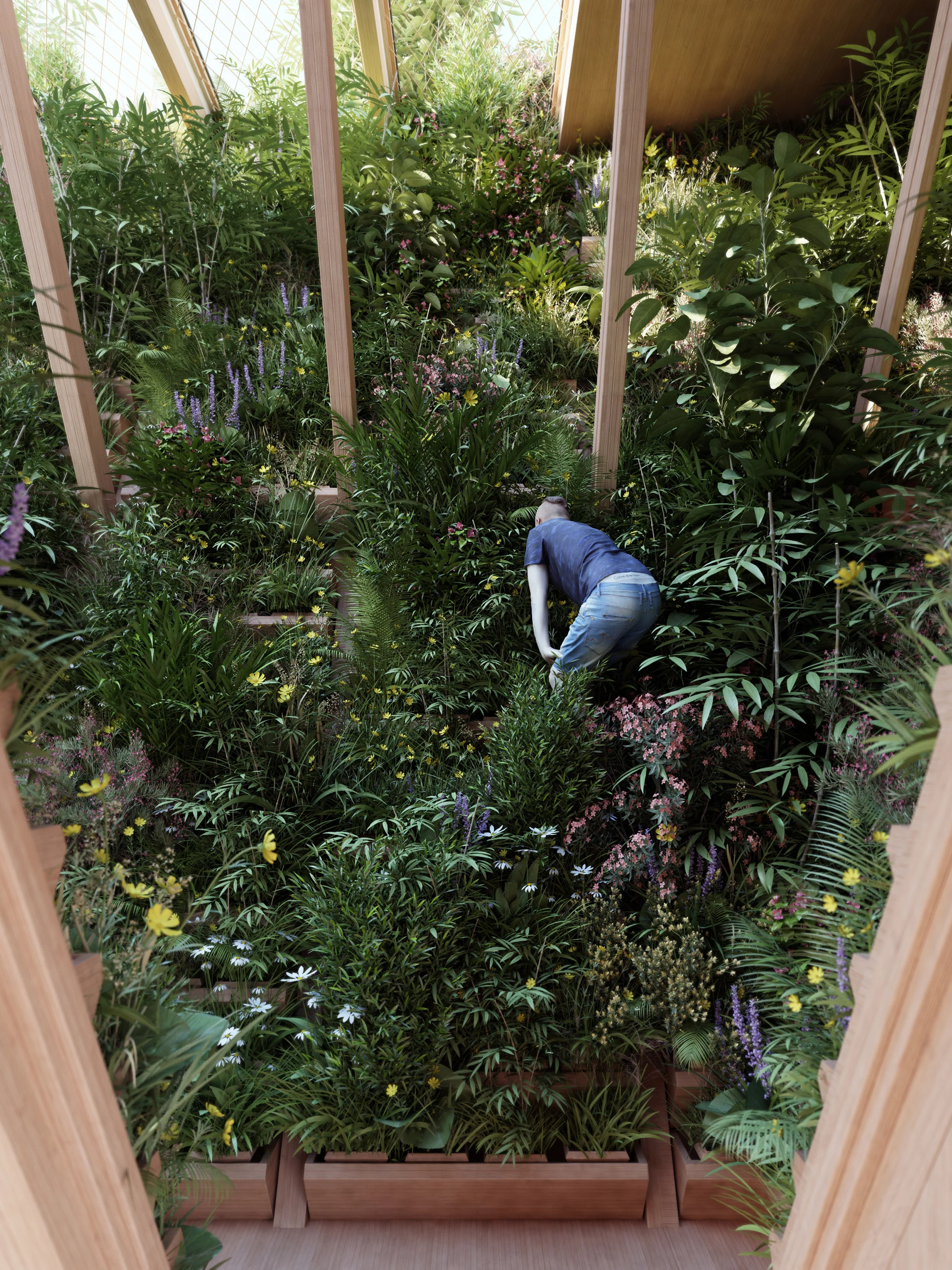
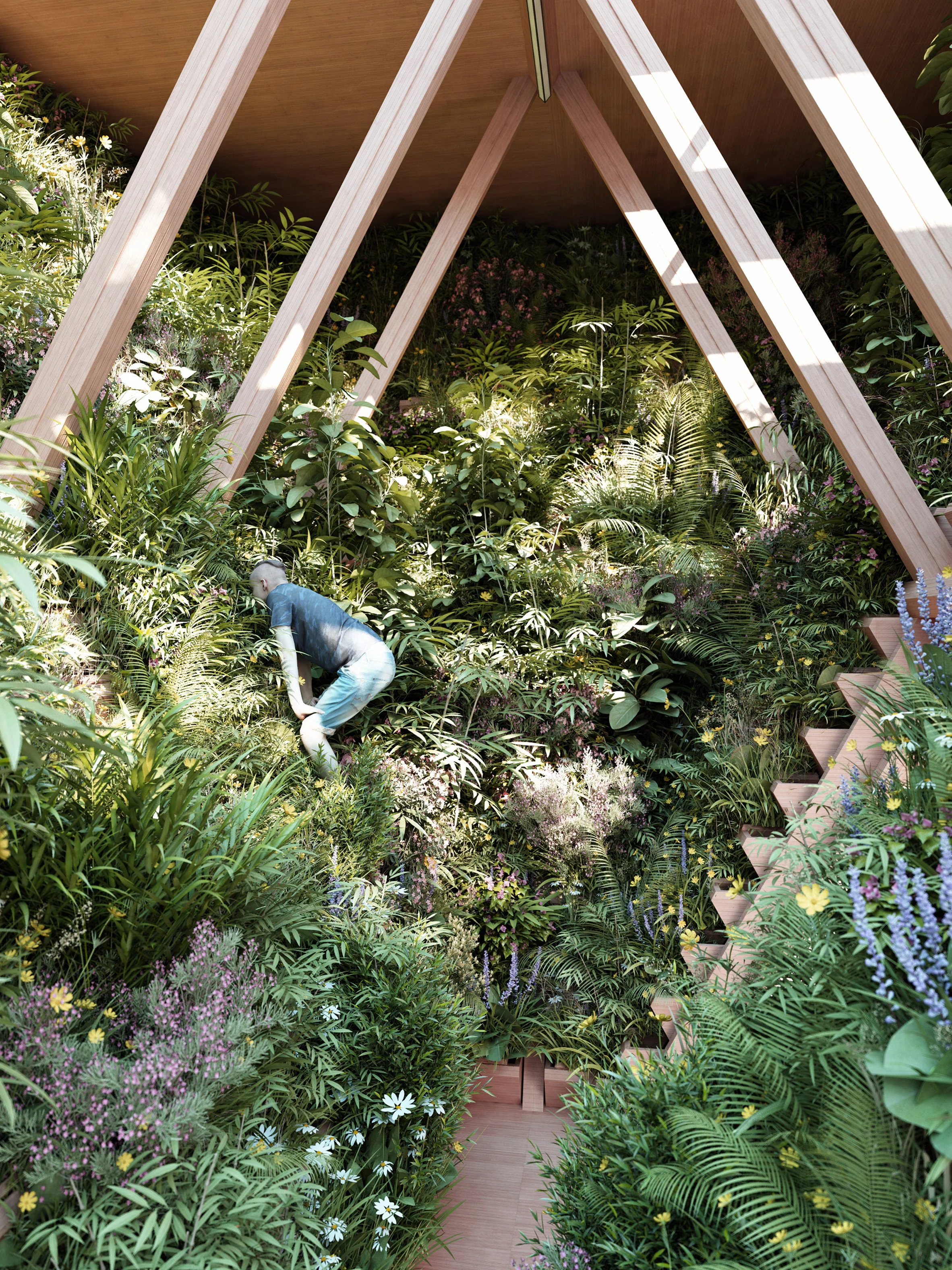
Precht – the architecture studio of Penda co-founder and Chris Precht and his wife Fei – has developed a concept for modular housing where residents would produce their own food in vertical farms
February 22, 2019
Precht – the architecture studio of Penda co-founder and Chris Precht and his wife Fei – has developed a concept for modular housing where residents would produce their own food in vertical farms.
Architects Fei and Chris Precht developed The Farmhouse as a way to reconnect people in cities with agriculture and help them live in a more sustainable way.
Precht designed The Farmhouse as populations around the world are increasingly becoming city dwellers who have lost touch with how their food is produced, while food transportation has an increasingly damaging effect on the environment.
The conceptual modular system would allow people to grow food in residential tower blocks to eat or share with their local community.
"I think we miss this physical and mental connection with nature and this project could be a catalyst to reconnect ourselves with the life-cycle of our environment," said Chris Precht.
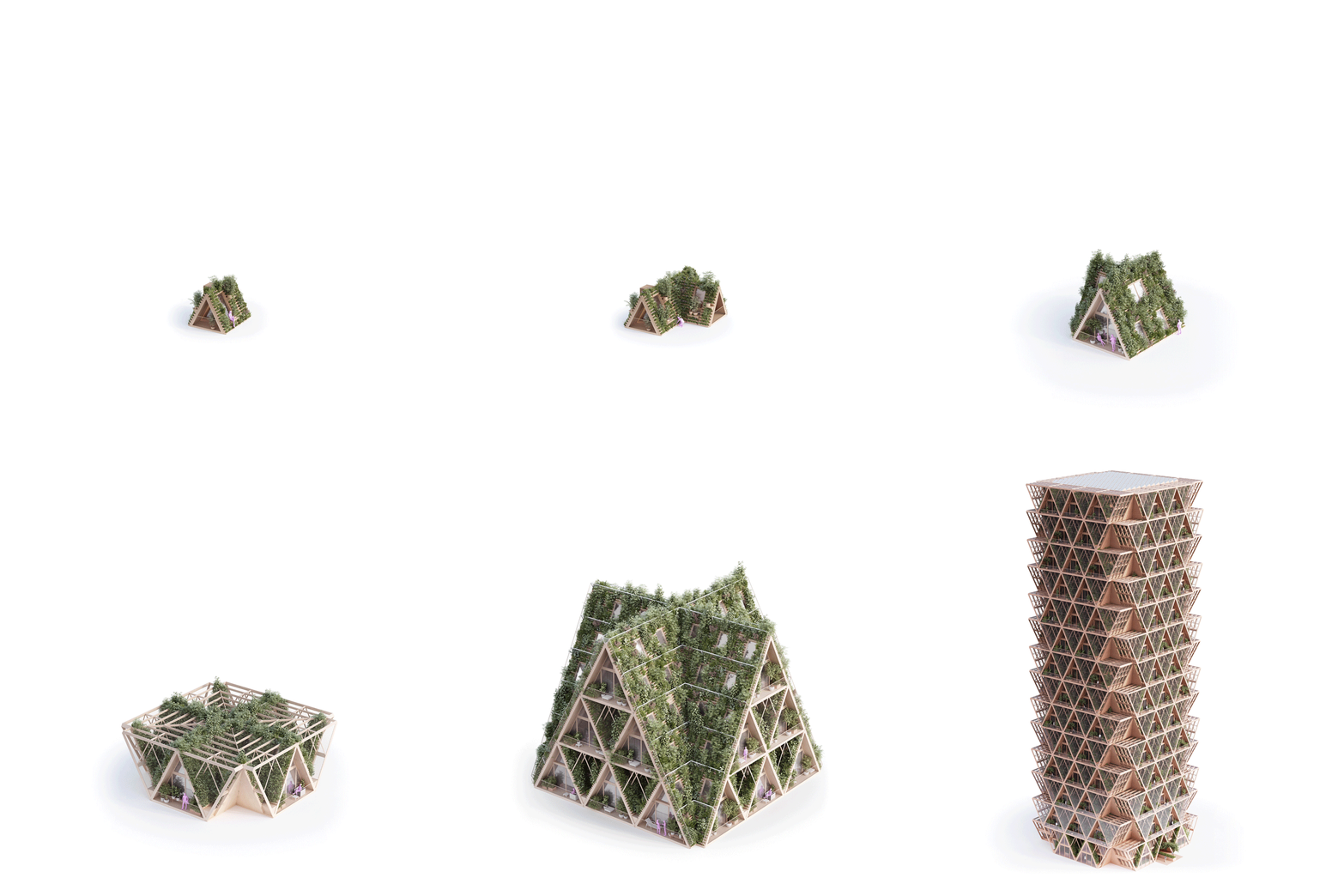
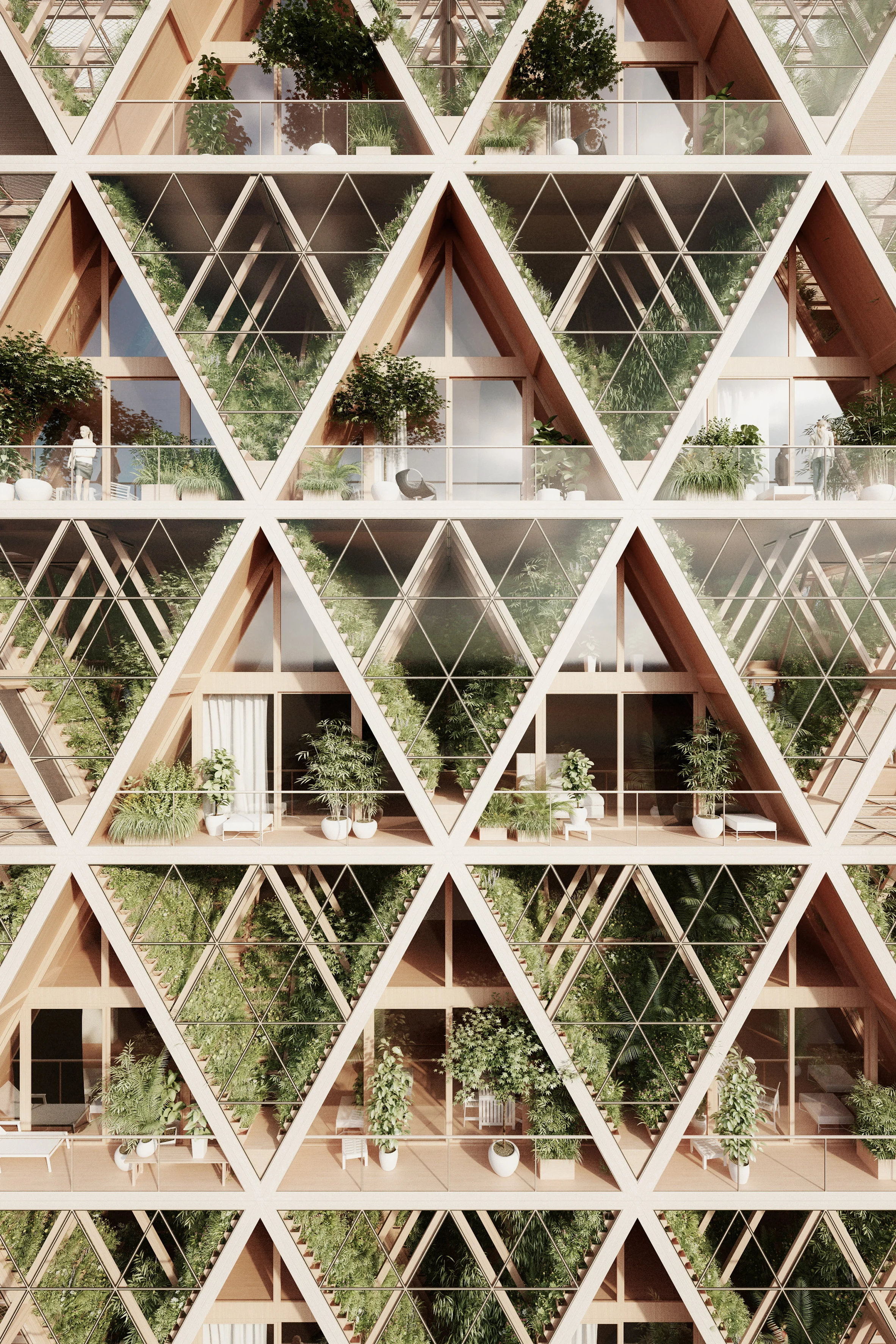
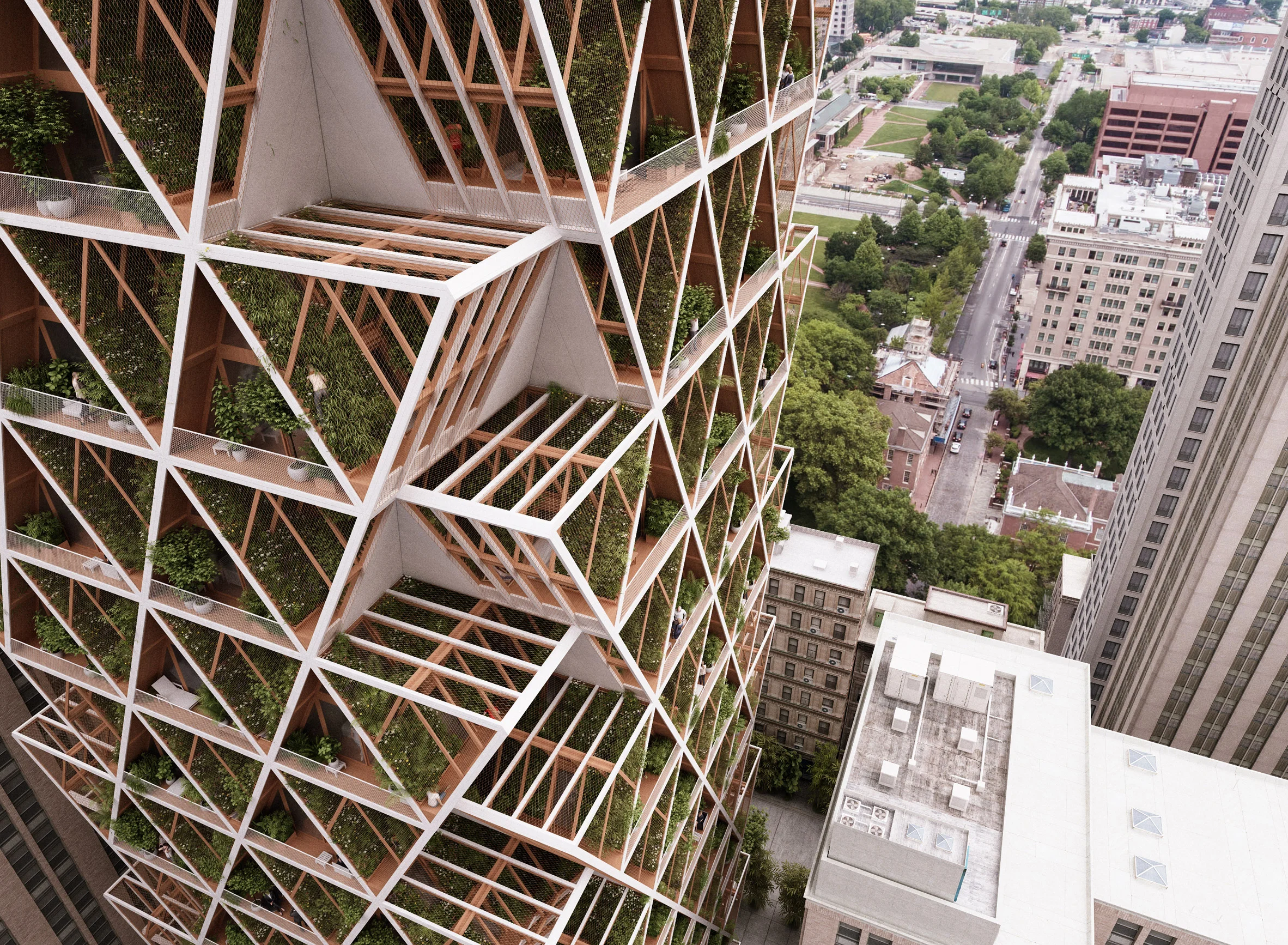
Prefabricated A-frame housing modules made from cross-laminated timber (CLT) would be stacked to provide flexible living spaces.
CLT is more sustainable than other low-cost building materials such as concrete because it locks in the carbon absorbed by the trees that were grown to make it.
Each of the module's wall would be made of three layers. An inner layer, facing the home interior, would hold the electricity and pipes with the surface finishes.
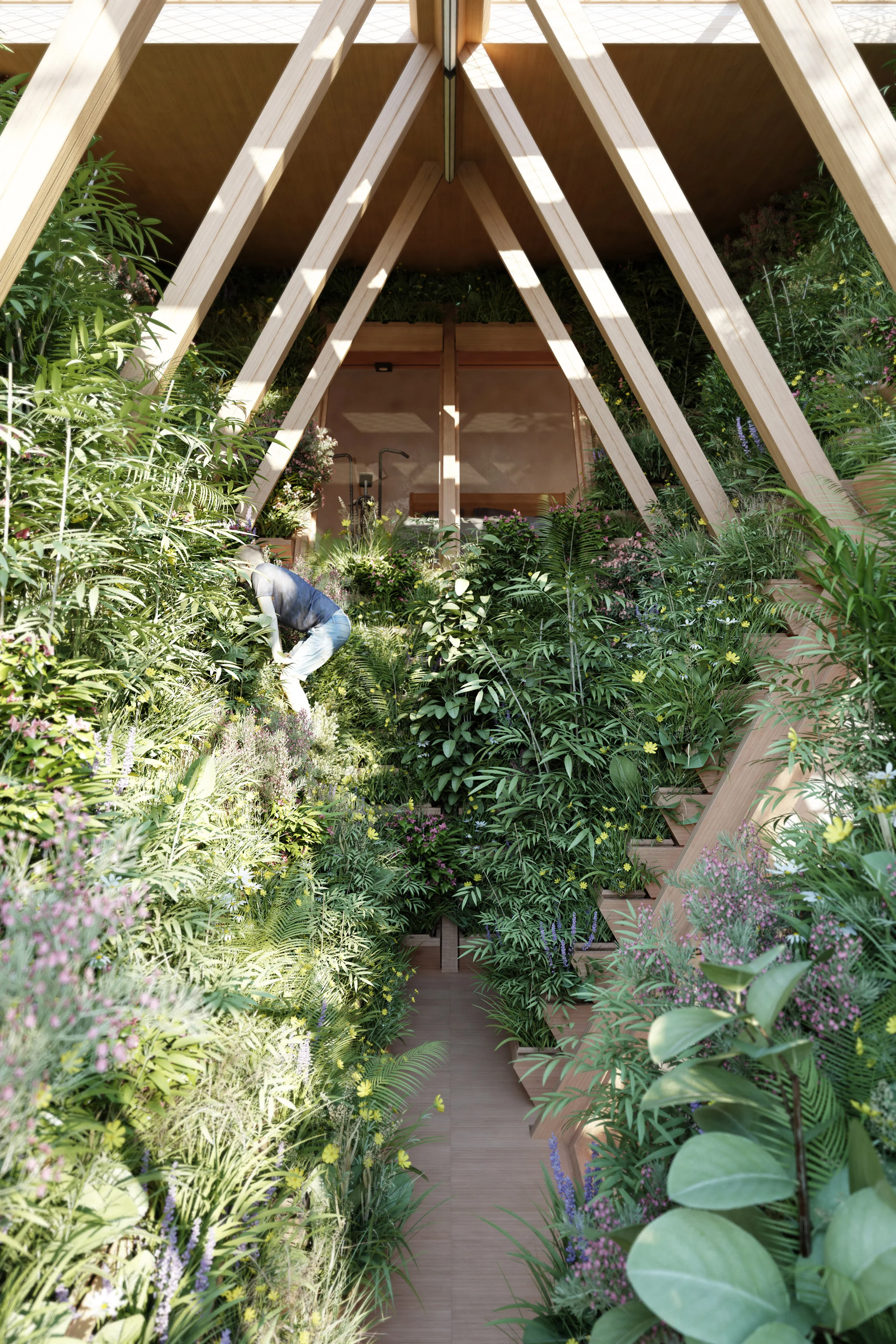
A layer of structure and insulation would form the middle layer, and on the outside layer would hold all the gardening elements and a water supply.
Different modules would have different types of external systems, such as hydroponic units for growing without soil, waste management systems, or solar panels to harness sustainable electricity.
Single-family users would be able to build their own homes using as many modules as they chose, or taller housing blocks could be formed by arranging the A-frames into stacked duplexes.
Each duplex would have an open plan living and kitchen space on the ground floor, with tent-shaped bedrooms on the upper floors. On the outer edges of the tower residences could have balconies.
Growing gardens would be arranged so they are either private or communal, with the inverted gaps left between modules providing V-shaped buffer zones between apartments and giving the plants natural light and ventilation.
The smallest living configuration available is just nine square metres with a 2.5-square-metre balcony. Hypothetically, Precht said, the tower could be built as tall as a city would allow.
"The system doesn't limit the height of the tower, because it is adaptable to a different thickness of structure," Chris Precht told Dezeen.
"But national regulations can limit the use of wood. In some countries like Japan, Canada, Scandinavia, Austria, UK, you can construct 18 to 30 stories and building codes around the globe are adapting fast to the use of CLT."
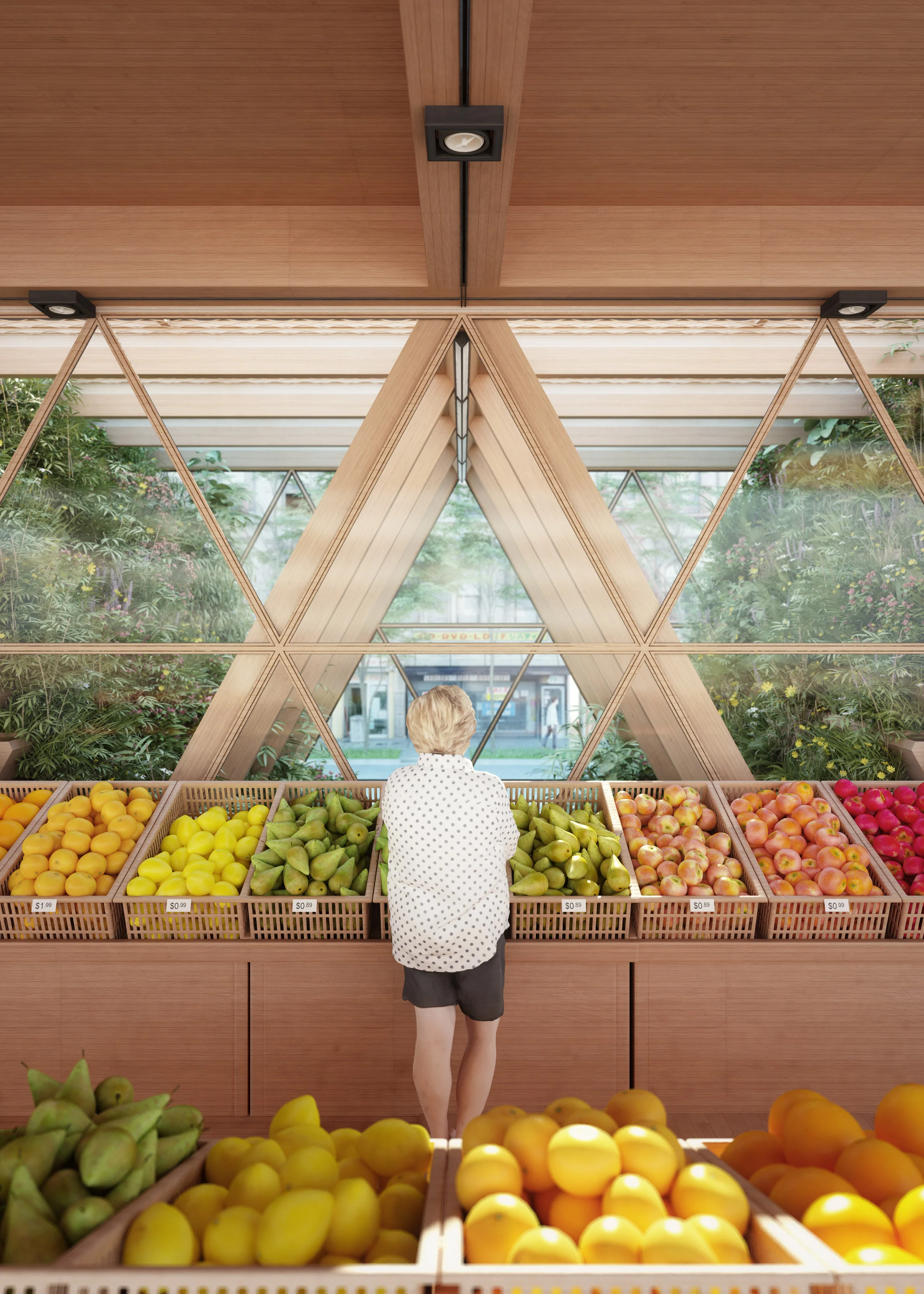
An indoor food market would be located on the ground floor of the tower, along with a root cellar for storing food in winter and composting units for turning food waste back into growing material.
The Prechts were motivated to design The Farmhouse system by their own experience. Two years ago they relocated from central Beijing to the mountains of Austria, where they grow their own food.
"Our motivation for The Farmhouse is personal," said Fei Precht.
"We live and work now off the grid and try to be as self-sufficient as somehow possible. We grow most of the food ourselves and get the rest from neighbouring farmers," she continued.
"We have now a very different relation to food. We are aware that this lifestyle is not an option for everyone, so we try to develop projects, that brings food back to cities."
Working as Penda, Chris Precht worked on the design of a hypothetical CLT tower for Toronto with tree-covered balconies, and a concept for a house in Germany with an interlocking green roof.
Renderings courtesy of Precht.






Growing Microgreens At Home
February 28, 2019
Are you interested in growing microgreens at home for the winter
months? Well this blog will help you make the right decisions while
growing healthy nutritional microgreens.
Microgreens are most
commonly harvested from leafy greens such as kale, arugula,
radish greens and herbs. The taste of microgreens depends on the
original vegetable. Microgreens have a very strong and
concentrated taste of the original vegetable. This means that
cilantro microgreens will still taste of cilantro but in a stronger, more
vegetable and condensed format.
Here are your instructions:
1. Get a 10 x 20 tray or container. 10 x 20 trays are the best, but my personal favorite are those clear plastic salad containers with a lid. It’s a little harder to harvest, and you may not get idea air flow, but the lids are nice for keeping the seeds moist while in germination stage.
2. Get growing medium such as bio-strate, burlap or soil. Pre-moisten your growing medium by soaking in a 5 gallon bucket or a big bowl. Keep the medium soaking for 4-8 hours.
3. Place growing medium in the tray and make sure to flatten the medium with your hands.
4. Sprinkle seeds over the top of the medium. Don’t worry about spacing. You’ll be harvesting so soon that a nice little carpet is what you’re going for. For best results use a spice shaker to spread the seeds evenly.
5. Spray your seeds with a spray bottle or water lightly and then spray the inside of your humidity dome. Cover your tray with the humidity dome and place in a dark location. Covering the tray helps keeps in the moisture, and the darkness helps the seeds to germinate.
6) Remove cover after seeds sprout. After a few days your seeds should have sprouted. Remove the cover and place in front of a sunny window sill or under an artificial light.
7) Carefully water your microgreens. The best option is to bottom water, which is setting your tray with drainage holes in a sink of water and letting the microgreens soak it up. If you top water, be careful not to flatten the tiny greens.
8) Cut your microgreens with a sharp knife or a pair scissors, most are delicious after they develop their second set of leaves, and are about 2 inches tall.
9) Eat your microgreens! You can eat them on sandwiches, in stir fry, on pizza, in green smoothies, in salads, or as a garnish and ingredient.
These are simple and easy instructions. If you have any questions don’t hesitate to reach out.
Tags: ingredientsmatter growingmicrogreens at home microgreens microgreen how to

Local Grown Salads Launches Indoor Vertical Farms In Opportunity Zones
Local Grown Salads launches Indoor Vertical Farms in Opportunity Zones in Washington DC, Baltimore, and Nashville. Farms produce organic Ready-To-Eat Salads.
BALTIMORE, MD, UNITED STATES, January 10, 2019 /EINPresswire.com/ -- Local Grown Salads is opening Indoor Vertical Farms in Opportunity Zones located in Baltimore, Washington DC, and Nashville.
Local Grown Salads will be providing Ready-To-Eat salads, Ready-To-Use Herbs and vegetables that are GMO Free, Organic, Herbicide & Insecticide free, and certified insect free.
Wonderfully Fresh - Harvested and delivered on the same day.
Massive Selection - 25 different salads.
No prep needed - these are ready-to-eat.
No Food Safety concerns - FSMA & SFQ Quality Code level.
Good For The Environment - Reduced Carbon Footprint, No nasty runoff. No killing the bees.
Local Grown Salads is looking to provide LGS First Account status to a small set of restaurants, caterers, or food delivery companies prior to the official launch.
The LGS First Accounts will have special pricing, guaranteed availability, first access to product, and other advantages.
LGS First Accounts are select food service companies that will use Local Grown Salads' Ready-To-Eat Salads to provide extra-ordinary products to consumers.
LGS First Accounts will be located within 2 hours of one our locations and sell at least 5,000 high quality meals a week.
Local Grown Salads has limited the volume available and will be selective about who will receive this market advantage.
About Local Grown Salads Patent Pending Indoor Vertical Farming technology:
• Grows fresh produce year-round in a controlled environment with the highest standards of food quality and food safety
• Creates product that is organic, pesticide free, herbicide free, and GMO free
• Decreases transportation costs, thereby reducing the carbon footprint
• Helps to address the problem of food deserts
• Allows indoor farming that helps save the planet’s arable land
About Local Grown Salads and Opportunity Zones:
Opportunity Zones are a tax incentive established by Congress in the Tax Cuts and Jobs Act of 2017. 8,700 Opportunity Zones have been designated. The Opportunity Zones are low-income and food desserts. Local Grown Salads is expecting to create 20 jobs in its farms and provide fresh healthy food at wholesale prices to the community.
The Local Grown Salads farms can re-purpose older (heritage) buildings which are not challenged for other uses.
Zale Tabakman
Local Grown Salads
+1 416-738-2090
email us here
Visit us on social media:
LinkedIn
Distribution channels: Food & Beverage Industry

Bulgaria is the Largest Producer of Herbs in the European Union
According to Eurostat, in the year 2017, a total of 81,000 tons of aromatic and medicinal plants and spices were grown in the country.
Nieuwsbericht | 08-01-2019 | 14:59
Bulgaria is the largest producer of herbs and spices in the European Union. According to Eurostat, in the year 2017, a total of 81,000 tons of aromatic and medicinal plants and spices were grown in the country. The quantity of Bulgarian herbs is almost double to the second largest producer of herbs in the EU - Poland, where 44,000 tons were harvested. Spain ranks third with 32,000 tons.
Bulgaria is one of the largest producers of sunflower seeds. The country ranks second with close to 2.1 million tonnes and is ahead of Hungary. The first is Romania with 2.9 million tons.
The harvest of 7.5 thousand tons of raspberries in 2017 places Bulgaria fourth in the EU. The largest raspberry production in Poland is 104 thousand tons. Spain and the UK occupy second and third positions respectively by 43.5 thousand tons and 15.5 thousand tons respectively.
Bulgaria ranks fourth in growing sweet cherries. The fruit harvest is 48,000 tons, with Italy, Spain and Greece ahead of the country.
Bulgaria is the fifth largest tobacco producer in 2017. A total of 13,000 tonnes have been grown in the country. Italy and Poland are leaders with 48,000 and 32,000 tons.
In the production of rice, lucerne, watermelons, peaches and apricots, Bulgaria is sixth in the EU, according to the Eurostat study.
Source: Novinite.com
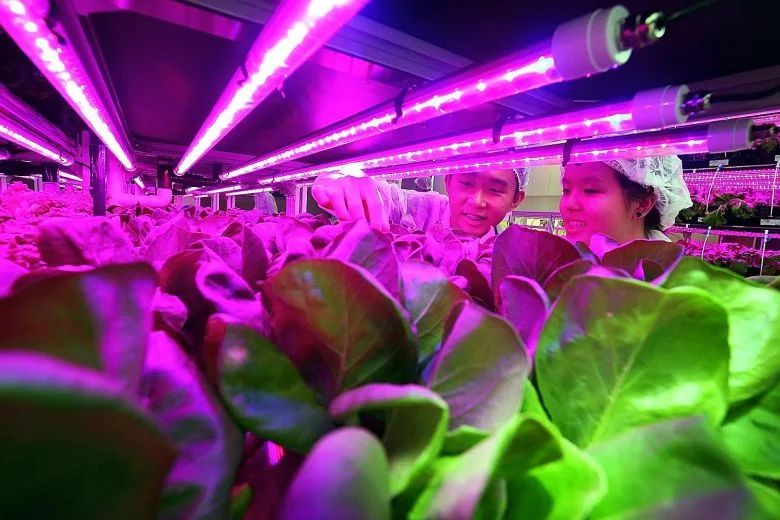
Republic Polytechnic Launches Course to Groom High-Tech Farmers
A new course here aims to train the next generation of high-tech farmers so that Singapore can produce more of its own food.
PUBLISHED
JAN 11, 2019, 5:00 AM SGT
A new course here aims to train the next generation of high-tech farmers so that Singapore can produce more of its own food.
The Diploma in Applied Science in Urban Agricultural Technology, launched by Republic Polytechnic (RP) on Wednesday, is the first full-qualification diploma course in agricultural technology in Singapore.
The course was developed by RP, in consultation with the Agri-Food and Veterinary Authority of Singapore, to develop a local core agriculture workforce with modern agricultural knowledge and techniques to drive the sector's growth and transformation.
Senior Minister of State for Trade and Industry Koh Poh Koon spoke at the launch of the diploma, which was held together with the opening of the polytechnic's Agriculture Technology Laboratory.
Dr Koh highlighted the need for a new generation of talent in agricultural technologies, to turn Singapore into a leading Asia hub for urban agriculture and aquaculture technologies.
The growth of the Republic's urban agriculture and aquaculture sector is also an essential pillar in upholding Singapore's food supply resilience, he added.
"As a small country where land is a scarce resource, Singapore has always had limited land space for domestic food production," said Dr Koh, adding that Singapore might be affected by global food supply developments and disruptions.
He added that Singapore's local farms produce just 10 per cent of food fish, 13 per cent of vegetables and 27 per cent of eggs consumed here. But he is confident that these percentages will continue to grow, with technological developments and more young farmers joining the industry through avenues such as RP's urban agriculture diploma.
The first batch of 25 students will start the part-time diploma course in June. These students will be taught five modules, with a focus on agricultural technologies for food production, farming process and management, urban farming technology and systems, agribusiness, and sustainable farming.
The programme's first run also involves eight local farms: Citizen Farm, ComCrop, Farm 85 Trading, Koh Fah Technology Farm, Liteleaf, Nippon Koi Farm, Sustenir Agriculture, and Vegeponics.
The farms will give students in the course on-the-job training opportunities and internships.
The course comes in two formats - one for fresh Institute of Technical Education graduates to build on what they have learnt in school, and the other for adult learners who want to switch to, or further their careers in, the agro-technology and agri-business sector.
RP's new Agriculture Technology Laboratory will give students in the diploma course in-house, hands-on training. The laboratory will also be used as a platform for workshops, industry-relevant projects and research in agriculture technology to incubate solutions to enhance productivity in farms.
It features technologies used in the farming industry today, including vertical farming towers irrigated by a nutrient tank and a horizontal hydroponic system irrigated by shallow tubes.
The laboratory also displays the hydroponic deep water culture system, where the roots of plants are submerged in a nutrient solution, and an energy-efficient substrate growing system.
A version of this article appeared in the print edition of The Straits Times on January 11, 2019, with the headline 'Republic Poly launches course to groom high-tech farmers'. Print Edition | Subscribe

Glyphosate Found in 19 of 20 Beers and Wines Tested
March 2, 2019
Glyphosate—the active ingredient in Monsanto's Roundup weedkiller that some studies have linked to cancer—is also a secret ingredient in nearly 20 popular beers and wines.
That's the finding of a new study from the education group U.S. PIRG, which found glyphosate in 19 of 20 wine and beer brands tested, including organic labels and brews.
The release of the study coincides with the beginning of the first federal trial against Monsanto and its new parent company Bayer over whether Roundup use caused a plaintiff's cancer, USA Today reported Monday.
"With a federal court looking at the connection between Roundup and cancer today, we believe this is the perfect time to shine a spotlight on glyphosate," study author and U.S. PIRG Toxic's Director Kara Cook-Schultz told USA Today. "This chemical could prove a true risk to so many Americans' health, and they should know that it is everywhere – including in many of their favorite drinks."
The drink with the highest glyphosate concentration was Sutter Home Merlot, at 51.4 parts per billion (ppb). Popular beer brands like Coors Light, Miller Lite and Budweiser all had concentrations above 25 ppb. The full results of the study, from highest to lowest glyphosate concentration in ppb, are listed below.
Wines
Sutter Home Merlot: 51.4 ppb
Beringer Founders Estates Moscato: 42.6 ppb
Barefoot Cabernet Sauvignon: 36.3 ppb
Inkarri Malbec, Certified Organic: 5.3 ppb
Frey Organic Natural White: 4.8 ppb
Beers
Tsingtao Beer: 49.7 ppb
Coors Light: 31.1 ppb
Miller Lite: 29.8 ppb
Budweiser: 27.0 ppb
Corona Extra: 25.1 ppb
Heineken: 20.9 ppb
Guinness Draught: 20.3 ppb
Stella Artois: 18.7 ppb
Ace Perry Hard Cider: 14.5 ppb
Sierra Nevada Pale Ale: 11.8 ppb
New Belgium Fat Tire Amber Ale: 11.2 ppb
Sam Adams New England IPA: 11.0 ppb
Stella Artois Cidre: 9.1 ppb
Samuel Smith's Organic Lager: 5.7 ppb.
The only beverage tested that contained no glyphosate was Peak Beer Organic IPA
The amounts found were far below the safety limits for glyphosate set by the U.S. Environmental Protection Agency (EPA), as Bayer toxicologist William Reeves told CBS News via a spokesperson.
"The U.S. Environmental Protection Agency sets daily exposure limits at least 100 times below levels shown to have no negative effect in safety studies," Reeves said. "Assuming the greatest value reported, 51.4 ppb, is correct, a 125-pound adult would have to consume 308 gallons of wine per day, every day for life to reach the US Environmental Protection Agency's glyphosate exposure limit for humans. To put 308 gallons into context, that would be more than a bottle of wine every minute, for life, without sleeping."
However, the study noted that chemicals aren't necessarily safe just because regulatory bodies say they are.
"While these levels of glyphosate are below EPA risk tolerances for beverages, it is possible that even low levels of glyphosate can be problematic. For example, in one study, scientists found that 1 part per trillion of glyphosate has the potential to stimulate the growth of breast cancer cells and disrupt the endocrine system," the study said.
The EPA has found that glyphosate is not carcinogenic to humans, but the World Health Organization's International Agency for Research on Cancer ruled it was a probable human carcinogen in 2015. More recently, a study released February found that those exposed to glyphosate were 41 percent more likely to develop non-Hodgkin lymphoma.
In the first case to go to trial against Monsanto over Roundup last year, a jury ruled that exposure to glyphosate had caused the non-Hodgkin lymphoma of California groundskeeper Dewayne Johnson. Plaintiff Edwin Hardeman is making a similar claim in the first federal glyphosate trial that started Monday.
"Due to glyphosate's many health risks and its ubiquitous nature in our food, water and alcohol, the use of glyphosate in the U.S. should be banned unless and until it can be proven safe," the U.S. PIRG study advised.
Source: ecowatch.com beer wine Glyphosate monsanto roundup

Vertical Farms Attracting Greater Interest And Investments In The GCC

#UAE | 28 NOVEMBER, 2018
One of the GCC countries leading this change is the UAE
Dubai: A growing importance is being given to vertical farming, among other Controlled Environment Agriculture (CEA) methods across the GCC and is generating interest and increased investments from regional and overseas players. According to Orbis Research, the MEA vertical farming market is expected to reach USD 1.21 billion by 2021 at a CAGR of 26.4% from only USD 0.38 billion in 2016.
One of the GCC countries leading this change is the UAE, which has upcoming projects facilitated by the government as well as private players to help increase food security in the region. These include the UAE Ministry of Climate Change and Environment allotting space for 12 vertical farms to be built by Shalimar Biotech Industries, and the world’s largest vertical farm for Emirates Airlines by Crop One Holdings Inc. With around 90 per cent of food being imported in the UAE, territorial problems of water scarcity and small percentages of arable land, vertical farming is becoming increasingly vital to ensure food security within the region.
H.E. Mariam Al Mehiri, Minister of Future Food Security and a leading campaigner of urban farming plans to create a ‘Food Valley’ or a technology hub, dedicated to the development of food and farming automation. The Food Valley, and other government-led initiatives, are being introduced to attract and enable a new generation of farmers to help build future sustainability.
Commenting in a recent interview with euronews, the Minister said “[The idea] comes from the Silicon Valley in the United States, where you have technologies, or start-ups, sprouting and developing into commercial giants.” explains the Minister. “We want to bring this to the UAE and build a Food Valley that’s all about food technologies.”
The Middle East and Africa: A prime location for CEA to successfully take off.
By capitalizing on vertical space, and controlling the environment for year-round optimal growth, CEA can produce significantly more yields per square foot than traditional agriculture, while using only a fraction of the water.
AgraME 2019 is once again creating a platform for the latest technology to be showcased to the regional agribusiness market, along with promoting knowledge sharing between leaders in the global industry and key local players around urban farming techniques and methods.
Henry Gordon-Smith, Founder and Managing Director of Agritecture and an acknowledged global thought leader in urban agriculture, stated that the Middle East has an unprecedented ability to reshape critical infrastructure that supports modern human life; “The potential is certainly there to transform what has historically been a relatively small traditional farming industry into perhaps the most technologically advanced agriculture industry in the world. This means economic development, increased production of nutritious local produce, and lowered food costs, all with minimal water consumption and increased resilience to climate change and foreign markets” said Gordon-Smith who will be speaking at the AgraME Conference in March.
Commenting on the Middle East market, Bob Hunsche, Sales Manager, Van der Hoeven said; “We are really starting to see the horticulture industry take off in the Middle East. We have just completed the largest greenhouse project in the UAE (11 ha). With the most advanced technology in terms of climate and humidity control, the facility is expected to locally produce 3,000 tonnes of tomatoes year-round with the aim of helping the UAE become more self-sufficient in its food production. AgraME 2018 was a great event and we are really looking forward to connecting with more projects at the 2019 show!”
Samantha Bleasby, Exhibition Director of AgraME said, “With the aim of increasing food security in the Middle East and attaining the UN Sustainable Development Goal (SDG) of zero hunger, we are excited to present the industry with new technologies from around the globe and free-to-attend learning and networking opportunities that will increase productivity in the region with sustainable use of water and land resources”
The show is attracting key players in the CEA industry such as Certhon, Agrotonomy, Veggitech, Wuxi, iGrowths Technology Co. Ltd, Ozorganic Urban Farming LLP and Van der Hoeven.
Taking place from 5 – 7 March 2019 at the Dubai World Trade Centre, AgraME 2019 will bring to Dubai some of the leading innovators and urban farming experts to provide the industry with valuable information and knowledge.


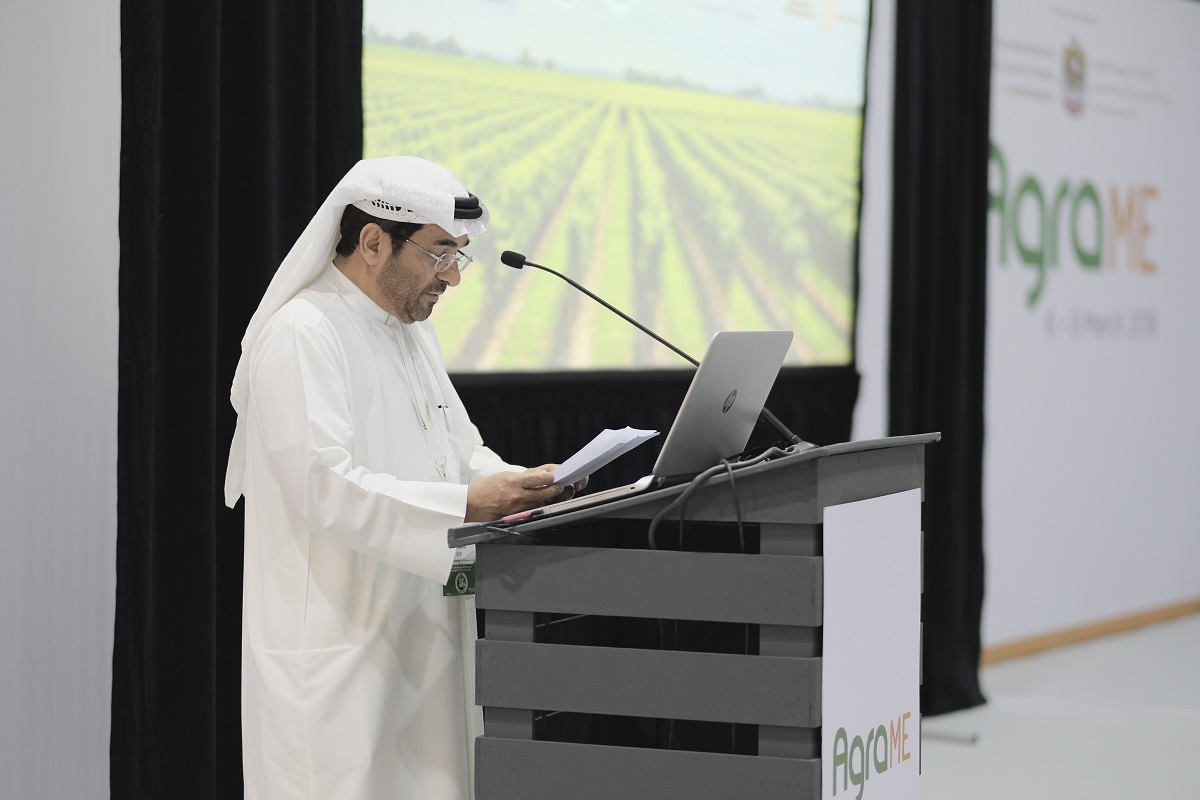





For more information about AgraME, please visit: www.agramiddleeast.com
-Ends-
Media Contact:
Josse Dulka
Group Communications Manager | Global Exhibitions
PO Box 9428, Dubai, United Arab Emirates
Direct line: +971 (0) 4 407 2753
Switchboard: +971 (0) 4 336 5161
Josse.dulka@informa.com
www.informaexhibitions.com
© Press Release 2018
Disclaimer: The contents of this press release was provided from an external third party provider. This website is not responsible for, and does not control, such external content. This content is provided on an “as is” and “as available” basis and has not been edited in any way. Neither this website nor our affiliates guarantee the accuracy of or endorse the views or opinions expressed in this press release.
The press release is provided for informational purposes only. The content does not provide tax, legal or investment advice or opinion regarding the suitability, value or profitability of any particular security, portfolio or investment strategy. Neither this website nor our affiliates shall be liable for any errors or inaccuracies in the content, or for any actions taken by you in reliance thereon. You expressly agree that your use of the information within this article is at your sole risk.
To the fullest extent permitted by applicable law, this website, its parent company, its subsidiaries, its affiliates and the respective shareholders, directors, officers, employees, agents, advertisers, content providers and licensors will not be liable (jointly or severally) to you for any direct, indirect, consequential, special, incidental, punitive or exemplary damages, including without limitation, lost profits, lost savings and lost revenues, whether in negligence, tort, contract or any other theory of liability, even if the parties have been advised of the possibility or could have foreseen any such damages.

Pick-Your-Own Fruit And Veg At A Retail Park?
Source: Holdsworth Associates PR
03/02/19
Is there a business case for widescale commercial vertical farming in the UK or will it remain a niche opportunity for high-end restaurants and retail? This is the challenge to be discussed by early adopters at the Agri-Tech East conference ‘Innovating for Controlled Environment Agriculture’ next month (19 March). Advances in logistics and the falling cost of LED lighting may enable year-round growing of undercover produce in the UK, but will energy costs and technical issues delay scale-up and integration within the food supply chain?
GrowUp Farms' vertical lettuce growing | credit: GrowUp Farms
“We do think there is the potential for indoor farming to be commercially viable and there are some immediate gains for growing crops such as leafy salads in high hygiene environments,” comments Lindsay Hargreaves, MD of Frederick Hiam, a farming and fresh produce business with farms in Suffolk and Cambridgeshire. “Growing indoors provides greater control of quality and quantity and fewer inputs of plant protection products.
“There is also the matter of growing crops closer to the point of consumption. Being able to grow more exotic crops in East Anglia close to distribution centres would reduce the food miles. Additionally, there are opportunities to grow crops for pharmaceuticals, cosmetics and vaccines within a controlled environment.”
There are many approaches to indoor cultivation, such as deep-water hydroponics, vertical soilless cultivation, and aeroponics, where exposed roots are sprayed with nutrients. All of these methods are to be discussed at the conference along with advances in monitoring and robotics.
However, despite the news that Sterling Suffolk, one of the UK’s most technically-advanced glasshouses, is set to produce millions of tomatoes starting in February 2019, the cost (£30M) and the technical challenges mean there are few commercial installations in the UK.
Also, it is proving difficult to demonstrate to retailers that controlled environment agriculture (CEA) can bring tangible benefits to their supply chain.
Kate Hofman, co-founder of GrowUp Farms, which from 2015 to 2017 operated 'Unit 84', a commercial-scale aquaponic urban farm inside an industrial warehouse. The 8,200 square feet of growing space could produce enough for 200,000 salad bags and 4,000 kg of fish each year. It sold directly into restaurants, through a New Covent Garden distributor and also through bricks and mortar supermarkets and Farmdrop, the online supermarket.
Kate comments: “A key learning over the last six years is that we can’t just focus on technology – we have to partner along the supply chain to create a business model that ultimately delivers commercial success for growers and retailers.
“One of the major challenges for CEA is to optimise operations to bring down the cost of production to match existing imported products. Our prototype urban farm showed that it was possible to use CEA commercially, and we were able to demonstrate the demand for the produce we could grow. This ranged from specialist micro-greens and cut herbs through to mixed baby leaf salad.
“We are now working on scaling up our business. This will involve relocating, so that our production is co-located with a renewable energy plant and working in partnership with more traditional farming businesses to integrate their experience and expertise.”
There are also technology challenges to be addressed when trying to meet the highly variable consumer demand for high quality, fresh produce.
G’s Fresh supply baby leaf crops all year round, with much of the winter supply grown in Spain and Italy to ensure security of delivery. In summertime it produces a huge amount of outdoor salad crop, particularly lettuces and celery in the UK. Ben Barnes is investigating how controlled environment agriculture can increase the long-term viability and profitability of both of those parts of the business.
The organisation has a large standard greenhouse facility that is used to propagate seedlings for planting out into the field. It is running two projects: Smart Prop, which is looking at increasing the efficiency of the propagation facility to improve growth and make stronger plants so they transplant better back into the field. And Winter Grow, a pre-commercial trial, to see if it is feasible to produce baby leaf crops during the winter at an affordable price point.
Ben explains: “I'm going to be talking at the Agri-Tech East event about the commercial journey, in terms of the go and no-go decision-making process and what the key things are that we need to learn in order to be able to make those kind of investment decisions.
“One element of this is the development of ‘lighting recipes’ to enhance plant growth characteristics. We've got multi-spectrum LED lights, so we can turn up the different amounts of red, blue, green and white, and even far red light. These are fairly expensive, so once we have worked out what works best we can buy fixed spectrum lights, which are a tenth of the cost.
“You think LEDs are very efficient, but they still generate a heck of a lot of heat when you’ve got them turned up to full. It is more about keeping the space cool, and the plants obviously are transpirating so we've got dehumidifiers in there sucking the moisture out of the air.
“One of the biggest problems with the vertical farming concept is this interaction between moisture and temperature. You’ve got the two factors constantly fighting against each other and that ends up sucking up huge amounts of energy if you're not careful.”
Dr Belinda Clarke is director of Agri-Tech East, an independent membership organisation that is facilitating the growth of the agri-tech sector, comments that the commercial challenges need addressing along with the technical and agronomic aspects: “The promise of CEA is sustainable, intensive production but achieving that may require a different type of value chain.
“It could be that supermarkets of the future allow you to pick your own fruit and baby leaf instore, or we may see large-scale distribution of veg boxes, with produce grown indoors in optimum conditions or perhaps traditional growers would have more flexibility to grow a greater range of produce all year around with less waste.
“These ideas all have potential but also require significant capital investment and creative solutions for energy management. These are some of the themes we will discuss in the conference.”
'Bringing the outside In – Innovating for Controlled Environment Agriculture' taking place on 19 March from 10.00 – 16.00 at Rothamsted Research, Harpenden. It will look at the different growing systems, emerging technologies, the challenges of implementing a system and the logistics involved with integrating a controlled environment agriculture into the food value chain
www.agritech-east.co.uk/upcoming-events/
About Agri-Tech East: www.agritech-east.co.uk
Agri-Tech East is a business-focused membership organisation that is supporting the growth of a vibrant agri-tech cluster of innovative farmers, food producers & processors, scientists, technologists and entrepreneurs.
Agri-Tech East brings together organisations and individuals that share a passion for improving the productivity, profitability and sustainability of agriculture. It aims to help turn challenges into business opportunities and facilitate mutually beneficial collaboration.

CO2 GRO Announces Dramatic Pathogen Reduction Results Using CO2 Foliar Spray on Cannabis
TORONTO, ON – February 25, 2019
Toronto based CO2 GRO Inc. (“GROW”) (TSX-V: GROW, OTCQB: BLONF, Frankfurt: 4021) is pleased to provide further dramatic results from scientific pathogen experiments using CO2 Foliar Spray at two separate U.S. commercial cannabis greenhouses on cannabis sativa plants. These commercial growers financially supported this research.
All experiments were designed and measured consistent with GROW’s Pathogen experiments on peppers that were press released December 6, 2018.
Results:
E. coli – Another excellent result of a two order of magnitude reduction in E.coli bacterial growth (99%) in the CO2 Foliar Sprayed cannabis plant group versus the control cannabis plant group. All plants were exposed to the E.Coli bacteria. Results are consistent with GROW’s pepper results.
Powdery Mildew – All plants were covered with a known dried powdery mildew pathogen and grown for a further 21 days. Results were scored visually at these commercial sites. All six plants in the control group developed powdery mildew disease while none of the CO2 Foliar Sprayed cannabis plants developed powdery mildew.
Grower Implications – CO2 Foliar Spray is gaining traction with commercial agreements and more successful plant science and trial data. Accoding to Global Organics, the fastest growing acreage is organic, up 20% to 70M hectares Y-O-Y. CO2 Foliar Spray is proving to have some natural pathogen resistance that may lead to reduced need for chemical fungicides and pesticides and faster adoption by organic growers that cannot use them.
John Archibald, CEO, commented “we are delighted with the cannabis E. coli and powdery mildew results. Each trial adds to our collective knowledge.These U.S. cannabis results should have significant positive impact on our commercial endeavors.
About CO2 GRO Inc.
GROW's mission is to accelerate all indoor and outdoor value plant growth naturally, safely, and economically using its patent pending CO2 Foliar Spray technology. GROW’s global target retail plant markets are food at $8 trillion per year (Plunkett Mar 2017), non- food at an estimated $1.2 trillion per year with retail tobacco at $760 billion (BA Tobacco 2017), floriculture at $100 billion by 2022 (MarketResearch.Biz estimate). Legal cannabis at $52.5 billion per year by 2023 (Statista) and legal US hemp CBD at $22B per year by 2022 (the Brightfield Group).
GROW's CO2 technologies are commercially proven, scalable and easily adopted into existing irrigation systems.
The CO2 technologies work by transferring CO2 gas into water and foliar spraying water across the entire plant leaf surface which is a semi permeable membrane. The dissolved concentrated CO2 then penetrates a leaf's surface area naturally like nicotine dissolves through human skin from a soluble nicotine patch.
Foliar spraying of water, dissolved nutrients and chemicals on plant leaves has been used for over 60 years by millions of indoor and outdoor growers. To date, outdoor growers have not had any way to enhance plant CO2 gas uptake for faster growth.
Indoor CO2 gassing has enhanced plant yields for over 60 years but 60% of the CO2 gas used is typically lost from ventilation. Current greenhouse CO2 gassing levels of up to 1500 PPM are not ideal for worker health and safety. GROW's safer infused CO2 Foliar Spray can be used by both indoor and outdoor plant growers with minimal dissolved CO2 gas lost and much greater CO2 plant bioavailability resulting in higher plant yields than both CO2 gassing and no gassing plant yields.
Forward-Looking Statements This news release may contain forward-looking statements that are based on CO2GRO's expectations, estimates and projections regarding its business and the economic environment in which it operates. These statements are not guarantees of future performance and involve risks and uncertainties that are difficult to control or predict. Therefore, actual outcomes and results may differ materially from those expressed in these forward-looking statements and readers should not place undue reliance on such statements. Statements speak only as of the date on which they are made, and the Company undertakes no obligation to update them publicly to reflect new information or the occurrence of future events or circumstances, unless otherwise required to do so by law.
Neither the TSX Venture Exchange nor its Regulation Services Provider (as that term is defined in the policies of the TSX Venture Exchange) accepts responsibility for the adequacy or accuracy of this release.
For more information, please visit www.co2gro.ca
Or contact Sam Kanes, VP Business Development at 416-315-7477.

Calling All Microgreen Growers!

By urbanagnews March 2, 2019
Are you a microgreen grower?
University of Arkansas needs your help.
The Gibson Lab in the Department of Food Science is conducting a study to identify factors associated with food safety practices on microgreen farms in the United States. To learn more about this research project and to take the survey, visit the study website. https://sites.uark.edu/gmriggio/


22nd Annual Open House Gives Horticultural Pros An Upfront And Personal Look At All That Is New
(LOUDON, NH) – Building on the success of more than two decades of open house events, Pleasant View Gardens (PVG) and D.S. Cole Growers are at it again – opening their doors to industry professionals from around the world to visit their magnificent greenhouses and gardens on August 2nd.
“It sounds cliché, but after 22 years, we still get excited by all the opportunities this event affords attendees,” smiles Andy Huntington, National Sales Manager of Pleasant View Gardens. “Think about it. Where can you go to learn about all the wonderful introductions from Proven Winners®, pick up new ideas on how to successfully grow and sell these outstanding plants, rub elbows with some of the industry’s top professionals, AND have a little fun? Precious few. Which is what makes this event so popular with growers from all over,” affirms Huntington.
This year, Pleasant View and Cole will be showcasing more breathtaking annuals and recipes than ever before. Plus, they’ll have hundreds of perennials, shrubs, and vegetables on display, including PVG’s own Savor™ Edibles & Fragrants, as well as the new Proven Harvest™ line of herbs, vegetables, and fruit from Proven Winners®.
D.S. Cole owner, Doug Cole, is equally excited. “Getting a chance to show everyone what’s coming next year is always a rush for us. Even more so when we’re featuring plants that many may not have seen at Spring Trials.”
Attendees will also be given the opportunity to help chart the horticultural future by voting on some of the plants and recipes that will be created and trialed in the coming year. And, as always, visitors will learn the importance of how strong genetics deliver greater grower success – something on which Pleasant View, Cole, and Proven Winners® have always prided themselves. Open House guests will also be able to get answers to technical questions from staffers in-the-know, while gaining valuable knowledge networking with other industry pros. Add free refreshments and a tasty catered lunch, and the event’s a hit all around.
The 22nd annual Open House runs from 9 a.m. through 3 p.m. on August 2nd, giving attendees a full day to tour and enjoy the beautiful gardens at Pleasant View and D.S. Cole – both of which are in Loudon, New Hampshire and just a short drive from each other.
Loudon, New Hampshire is around 35 minutes from the Manchester-Boston Regional Airport in Manchester, and 1 hour 20 minutes from the Boston Logan International Airport in Boston, Massachusetts. Located in the south-central area of New Hampshire, Loudon and its surrounding areas provide many recreational opportunities in early August.
Chris Schlegel, Head Grower at D.S. Cole suggests adding a couple side trips for those attending this year’s Open House. “The coast is just a short drive away, and we’re surrounded by gorgeous mountains and lakes. Coming in for our Open House would be the perfect time to explore all that our state has to offer.”
While the Pleasant View and D.S Cole Open House event is free to attend, greenhouse and nursery growers, retailers, landscapers, and brokers are required to register in advance to ensure their spot. For more information, or to register, contact D.S. Cole Growers at 603-783-9561 (office@dscolegrowers.com) or Pleasant View Gardens at 603-435-8361 (shanaf@pwpvg.com, www.pwpvg.com).

Green Roof Ecology Students Design Projects For NYC Urban Rooftops
The fall 2018 Green Roof class projects were especially wide ranging and ambitious-and included two different green wall design proposals, a soil stormwater absorption experiment, a printed guide to common plants found on New York City green roofs, climate data analysis of microsensors installed on green roofs at both Brooklyn Grange and The New School, and a go-to all-purpose website about green roofs in the city.
Student green wall design for Vice Media headquarters in Brooklyn
FEBRUARY 22, 2019
For the last three years. Timon McPhearson, associate professor of urban ecology and director of the Urban Systems Lab, has been teaching a Green Roof Ecology class in which students collaborate to create civic engagement projects and conduct design and ecology research.
To conduct that research the class has partnered with Brooklyn Grange, the operator of the world’s two largest rooftop soil farms-and Vice Media headquarters in New York City. The class-which includes students from and Parsons School of Design and Eugene Lang College and is supported by Lang Civic Liberal Arts program —integrates design and urban ecology to innovate green roofs as spaces for improved social and environmental benefits. This course reflects The New School’s dedication to cross-disciplinary learning, design for social good, and real-world experiences. Among other benefits green roofs have vegetation that absorb storm water, provide insulation of buildings from heat, reduce noise and improve air quality.
The fall 2018 Green Roof class projects were especially wide ranging and ambitious-and included two different green wall design proposals, a soil stormwater absorption experiment, a printed guide to common plants found on New York City green roofs, climate data analysis of microsensors installed on green roofs at both Brooklyn Grange and The New School, and a go-to all-purpose website about green roofs in the city.
Architecture students Ross Myren and Antoine Antoine Vedel created one of those green wall design proposals as a site-specific design intervention for Vice headquarters in the Williamsburg section of Brooklyn.
The duo dubbed their design the “gwaffle,” (Green Waffle) a waffle-shaped structure that they created after visiting the Vice rooftop, discussing with Brooklyn Grange, and studying the essential architecture and ecology issues necessary to build a design model.
“There was a big gap between the artificial controlled environment and the green roof and we wanted to blur the boundaries between those two spaces,” Vedel said. “We wanted to create social interaction in that space while providing environmental benefits and adding more vertical space. Its fluid and organic design brings continuity to the space, also while benefiting the environment.”
Vedel praised Vice as a great space because they already have green roof infrastructure. Although the Gwaffle was developed for Vice, he stressed that it is “a system whose dimensions and modules are adjustable to the customer’s wishes.”
www.greenroofsnyc.com, the website created by several Green Roof Ecology students, details the myriad benefits that green roofs have for city inhabits. The website also provides resources needed for an individual or organization planning to create its own green roof, including types of roof structure, labor commitments, and accessibility and FAQs on how to secure financing by the city.
“When we started the class the website, it was geared to the Vice rooftop and then we expanded it to all of New York City as a resource guide,” said Stephanie Kale, a student involved in the site’s creation. “It can benefit anybody who wants to improve air quality, increase energy efficiency and increase property value.”
McPhearson says that he envisions the website as a broader resource that is now being expanded as a media outlet of the NYC Green Roof Research Alliance.
Another class project was a design for an indirect green wall that would be made of stainless steel and created for the new Brooklyn Grange rooftop farm opening this summer in the Sunset Park section of Brooklyn. Students created a modular bench made of pinewood for the roof’s seating area.
“It was a great assignment,” said New School junior Jasmine Yee, one of the students who designed the indirect green wall. “I would love it if we could implement it.”
McPhearson says that every semester final class project output includes booklets, physical built prototypes, media materials and research reports and analyses.
“It’s exciting to see how this class continues to evolve as unique learning space that continues to expand beyond the university as a resource for design and ecological innovation the larger community of New York,” McPhearson said.
NMSU Helps Bring Hydroponic Gardens into Las Cruces Schools
The initiative involves placing hydroponic plant systems in classrooms, which brings gardens indoors and eliminates the need for soil — the biggest challenge in school gardens.
Carlos Andres López, For the Sun-NewsPublished 11:17 a.m. MT Dec. 28, 2018 | Updated 12:35 p.m. MT Dec. 30, 2018
LAS CRUCES - Even as the days were colder last fall and winter, the tomato garden in Adrian Gaytan’s classroom at Zia Middle School in Las Cruces continued to thrive, a feat that would have been impossible more than a year ago but is now a reality – thanks to an initiative launched by New Mexico State University’s Cooperative Extension Service in Doña Ana County.
The initiative involves placing hydroponic plant systems in classrooms, which brings gardens indoors and eliminates the need for soil — the biggest challenge in school gardens. Hydroponic plant systems use water-based, nutrient-rich solutions to cultivate plants without the use of soil, resulting in better quality plants and higher yields, among other benefits.
In Gaytan’s classroom, the hydroponic plant system, at less than six feet in length, takes up minimal space and has been outfitted with overhead lights and an automatic timer, which enable it to operate on its own, a feature that allows for year-round gardening (even when students are out of school for extended periods of time).
Jeff Anderson, an agent for NMSU’s Cooperative Extension Service in Doña Ana County who specializes in agronomy and horticulture, believes hydroponic plant systems may be the answer in helping schools boost the number of gardens in classrooms.
“It’s hard to send teachers and students outside in the winter to pick weeds and water plants,” Anderson said, noting that conventional outdoor gardens in local schools have declined in recent years. “So, I thought to myself: How are we going to bring agriculture into the school system?”
The answer finally came to Anderson when gardeners began calling the Doña Ana County Extension Master Gardener Program to inquire about starting hydroponic plant systems in the Las Cruces area, he said. As Anderson researched the system, he determined it could a practical solution for school gardens — but only if he could develop a cost-effective system. He then turned his efforts to building an affordable structure.
By sourcing material locally, Anderson was able to build a system for just under $300.
“We were able to figure out the cost and developed the program from there,” he said.
A pilot system underwent testing for about a year at the Cooperative Extension Service office in Las Cruces before similar systems were constructed for five local middle schools — Lynn, Vista, Sierra Vista, Picacho and Zia — which began using the gardens at the start of the 2017-18 school year, with assistance from the Master Gardener Program.
Zia and Vista had very successful first years, Anderson said.
“When I heard there was going to be an opportunity to have a hydroponics system in my classroom, I said, ‘Yes,’” said Gaytan, a Project Lead the Way and Technology, or PLWY, teacher at Zia. “We got it, and I used it for sixth-graders. They were immediately hooked; every day they tended the garden, checking the water and testing the pH levels. They took complete ownership of it.”
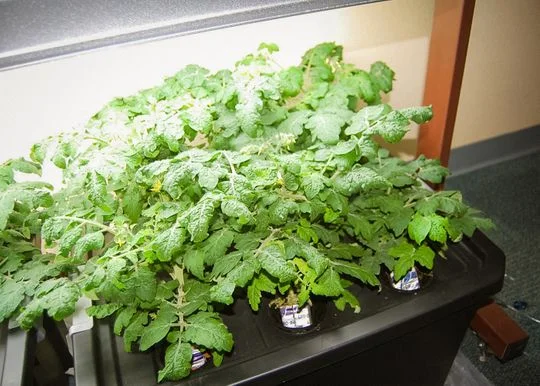
The hydroponics garden in Adrian Gaytan's classroom at Zia Middle School started with assistance from New Mexico State University’s Cooperative Extension Service in Doña Ana County in 2017. (Photo11: Photo courtesy of Adrian Gaytan)
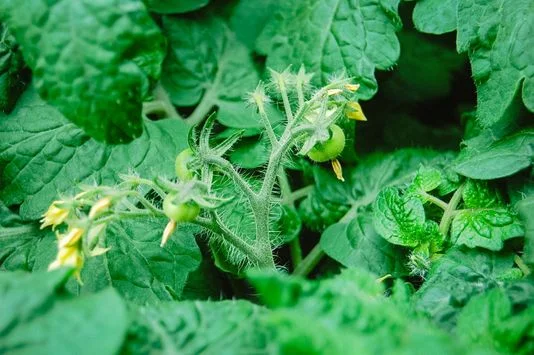
Those students are now seventh-graders, Gaytan said, and continue to maintain the garden. This semester, they’re focused on growing tomatoes — the type that’s used to make ketchup. Last month, their tomato seedlings started to sprout, an indication the students were weeks away from enjoying fresh-from-the-vine tomatoes.
For Anderson, the gardens offer many opportunities for “direct teachable moments.”
“You can bring in science, technology, engineering and math,” he said, “and teach healthy eating, energy efficiency, energy use, water recycling and other life science skills.”
He added: “The schools have had successes and failures, all of which have provided valuable lessons. When you have a failure, the kids have to learn — why did we fail, why did the plants die? The kids have to do research and they have to apply that research to their garden.”
The students also become more caring individuals, Anderson said. “There’s a big thing about caring for a plant and that translates to caring for anything when you’re older,’ he said.
Now, Anderson said he is exploring ways in which to expand the program, not just throughout Las Cruces and Doña Ana County, but also statewide.
“We’re trying to get more of this type of agriculture in schools across the state,” he said.
To learn more about the program, visit https://aces.nmsu.edu/county/donaana/.

In-Store Mini Farms Could Change How We Eat
BY MEGAN CERULLO
FEBRUARY 20, 2019
Andrew Carter and Adam DeMartino want to revolutionize the way we eat by installing compact farms in restaurants and grocery stores across the country. Their goal is to distribute fresh produce on-site and at scale.
Cognizant of the physical limitations of traditional farming, the former college roommates married their backgrounds in indoor agriculture and business to find a way to make farming infinitely scalable, accessible and affordable. The answer? Smallhold, New York City's first and only remotely operated mushroom farm.
Founded in 2017, Smallhold places proprietary mini-farms in restaurants and grocery stores, allowing subscribers to grow fresh produce in their aisles or kitchens and deliver it directly to customers.
No farming knowledge is required -- the company operates the units using remote technology.