

Welcome to iGrow News, Your Source for the World of Indoor Vertical Farming
US: Moroni, Utah Couple Looking To Build Aquaponics Facility
A Moroni couple have received a variance from the state of Utah to grow tilapia, a type of edible fish grown on fish farms. “Other people have called us a ‘fish farm’,” Teri says. “It’s a lot more than that. We actually will be producing from 5,000 to 11,000 heads of vegetables a day.”
By James Tilson
02-21-2019
Cliff and Teri Sackett
MORONI—A Moroni couple have received a variance from the state of Utah to grow tilapia, a type of edible fish grown on fish farms.
But they say their operation will be much more than a fish farm. They plan to use aquaponics, a form of agriculture in which waste from fish is used to fertilize vegetable plants, and in which the vegetables are raised in water rather soil. Such a system, they say, can produce remarkable yields.
Cliff and Teri Sackett, experienced fish farmers, are looking to develop their aquaponics facility just of Moroni. The final facility, they say, will be 1 acre under glass.
“Other people have called us a ‘fish farm’,” Teri says. “It’s a lot more than that. We actually will be producing from 5,000 to 11,000 heads of vegetables a day.”
The Sacketts explain that in an aquaponics facility, fish, plants and microbes work together to achieve high efficiency. The technique uses much less water and much less space than traditional “dirt” farming, without using any chemicals as fertilizers.
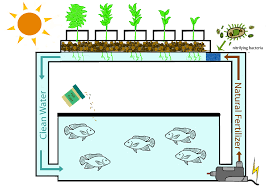
The fish exude waste and ammonia into water. That water from the fish tanks is pumped into the vegetable beds, where naturally occurring microbes break down the ammonia into nitrates. Those nitrates are absorbed by the plants. The water is then filtered and pumped back into the fish ponds.
“The fish provide a constant, organic source of nutrients for the plants,” Cliff says.
An aquaponics operation in which vegetables and fish are grown together in a water environment. The system shown is a little different from the one planned by Cliff and Teri Sackett of Moroni (left). In the example, fish and vegetables share the same space. The Sacketts plan to keep the fish and vegetables separate but to use water from the fish area, which will contain waste from the fish, to fertilize the vegetables.
The Sacketts point out aquaponics is not hydroponics. In hydroponics, plants are growing in water, but chemicals are used to fertilize the plants. The system must be flushed out at least once a year.
An aquaponics operation in which vegetables and fish are grown together in a water environment. The system shown is a little different from the one planned by Cliff and Teri Sackett of Moroni (left). In the example, fish and vegetables share the same space. The Sacketts plan to keep the fish and vegetables separate but to use water from the fish area, which will contain waste from the fish, to fertilize the vegetables.
Teri says, “One of the things I like about aquaponics is it’s self-sustaining. And where we are putting our facility under glass, there will be much less water use than (in) irrigation or hydroponics. This method is much more conducive to a drought-stricken area.”
“With dirt farming,” Cliff says, “you’re constantly having to re-fertilize, constantly watering, yet the farmer will never have it just right. And the plants have to devote significant energy to putting roots into the ground.”
“With aquaponics, the plants never have to grow through the dirt, their nutrients are constant and always correct. The growing time from seed to harvest is 42-52 days, versus 120 days for traditional methods….And with aquaponics, we’ll have a full-year growing season.”
Another advantage, Teri says, is avoidance of problems that are showing up in vegetables grown in California.
In California, farmers don’t allow manure to age. It stays in liquid form and is sprayed over the fields. The result can be e.coli.
“We don’t have that problem, because fish don’t produce e. coli,” Terry says.
Aquaponics is super productive.
“In California, an acre of lettuce would produce 20,000 heads in a season,” Cliff says. “At best, they’ll get three seasons, maybe only two. Our facility will produce 5,000 heads a day. In one week, we would do two-thirds of their season. In two weeks, we’ve produced as much as their entire year. And we can produce 12 months a year.”
At peak production, Cliff says, the Sackett aquaponics operation could conceivably produce 230,000 heads of lettuce per month. At the same time, it could produce 20,000 pounds of tilapia per month.
Right now, the Sacketts are looking for a primary investor to replace the one who dropped out as of January. They will need at least $5 million to fully capitalize their project. But they are not worried anyone else will try to take the project out from under them. “We’r

Black Carrots Could Reduce Risk of Neurological Diseases
New research suggests that eating black carrots on a regular basis could have positive benefits in reducing the risk of neurological diseases such as Alzheimer’s.
Including Alzheimer's Disease
New research suggests that eating black carrots on a regular basis could have positive benefits in reducing the risk of neurological diseases such as Alzheimer’s.
Some components of black carrots -including its anti-inflammatory properties and anthocyanin- can play an important role in treating these conditions. The research is not yet conclusive but it's a big step towards understanding Alzheimer's as well as its potential natural treatments.
Alzheimer's is one of the leading causes of death among seniors around the world. Despite billions of dollars dedicated to research, there hasn't been any definitive step forward yet in understanding what causes the ailment and how to treat it. Alzheimer's is a neurological disease that causes progressive loss of memory and cognitive abilities.
It's not easily detectable since most people suffering from it don't even know they have the symptoms. In most cases, it can take years before symptoms become clear and by then it's often too late. But recent studies suggest that eating black carrots could help reduce the risk and even the severity of Alzheimer.
Source: digitaljournal.com
Publication date : 2/15/2019

Agri-Tech Business Wins Vodafone Funding
15 Feb 2019
Josh Morris Digital Staff Writer
A Bristol-based agricultural technology company has been awarded £45,000 in funding from Vodafone.
LettUs Grow, which is developing aeroponic and vertical farming techniques was awarded £35,000 by the telecommunications giant as part of its Techstarter awards, as well as a further £10,000 Techstarter Champion’s award.
Jack Farmer, co-founder and operational lead at LettUs Grow, said: "We are seriously excited to be working with Vodafone. As much as the funding is incredibly useful, we are particularly keen to collaborate with them from a technical and a commercial standpoint. That mentorship is really going to help us to develop our business.
"We are looking to work with Vodafone and a number of other key partners this year, to implement our hardware and software and deliver profitable pilot farms – both greenhouse and vertical – before then working with these partners to scale nationally and internationally.
"We are very excited technically to work with Vodafone on both our communications platform and also the application of data analysis in large scale farms."
Nick Jeffery, chief executive, Vodafone UK, said: "The range and calibre of the Vodafone Techstarter winners show that the UK is home to a thriving social tech sector.
"We believe some of the biggest challenges in society can be addressed using technology and innovation. These awards are just one way we can recognise, celebrate and support start-ups developing and using technology as a force for good."

Hacking Photosynthesis
Artificial photosynthesis: can we harness the energy of the sun as well as plants?
13 January, 2019
We will all be dead without the Sun. That we all know. But even if the sun shone 24 hours a day, we will all be dead without plants. Really. Plants keep the world going. We eat a lot of plants – and the animals from which we obtain meat for consumption also consume plants. Furthermore, plants inhale Carbon Dioxide and produce healthier air. The process through which plants get the energy for sustenance (and all other stuff) is called Photosynthesis which means something like ‘producing with light’.
This is fundamental to the life cycle on Earth. But how does photosynthesis work? There’s a big molecule, a protein, inside the leaves of most plants. It is called Rubisco. It is probably the most abundant protein in the world. Rubisco has one job.
It picks up carbon dioxide from the air, and it uses the carbon to make sugar molecules. It gets the energy to do this from the Sun. This is photosynthesis, the process by which plants use sunlight to make food, the foundation of life on Earth.
But Rubisco is not perfect. It has one almost fatal flaw. Unfortunately, Rubisco does not know how to grab only Carbon Dioxide from the air. It also picks up oxygen. But this poses a huge problem for the plant as this leads to the formation of a toxic compound in the plant. It has to do extra work and spend extra energy for detoxification, a process called Photorespiration. This has in fact been called ‘one of the biggest mistakes’ of evolution.
Ripe
Plants have a complicated ‘chemical assembly line’ in their cells to carry out this detoxification, but the process uses up a lot of energy. This means the plant has less energy for actually making food. However, some crops including corn and sugar cane have developed a workaround for Rubisco, making them much more productive. Photorespiration is anti-photosynthesis in the sense that it costs the plant precious energy and resources that it could have invested in photosynthesis to produce more growth and yield.
Many scientists around the world have been trying to ‘hack’ photosynthesis for years, but a team from the University of Illinois has emerged first. There, a research program called Realizing Increased Photosynthetic Efficiency (RIPE), has run for the last five years trying to fix Rubisco’s problem.
They first experimented with tobacco plants, because tobacco is easy to work with. The researchers inserted some new genes into these plants, which shut down the existing detoxification assembly line and set up a new one that is much more efficient.
Photorespiration normally takes a complicated route through three compartments in the plant cell. Scientists engineered alternate pathways to reroute the process, drastically shortening the trip and saving enough resources to boost plant growth.
This resulted in super tobacco plants that grow faster and up to 40 percent bigger than normal tobacco plants. And yes, this was not confined to the laboratory.
These measurements were done both in greenhouses and open-air farm plots. Their research has been published in the prestigious Science magazine.
These scientists now are trying to repeat the process with plants that people rely on for food, such as, tomatoes and soybeans.
They will also be working with cowpea, or black-eyed pea, which is a staple food crop for a lot of farmers in sub-Saharan Africa. One can indeed imagine the effects of more efficient photosynthesis in the poorest regions of the world. The funders of this project include the U.S. Department of Agriculture and the Bill and Melinda Gates Foundation.
It will be many years, though, before any farmer anywhere in the world plant crops with this new version of photosynthesis. Researchers will have to find out whether it means that a food crop actually produces a bigger harvest, while convincing Government regulators and consumers that the crops are safe to grow and eat.
There is an irrational fear regarding Genetically Modified Organism (GMO) food, even though there is no conclusive evidence that they cause disease or deformities. The public however should be assured that the plants with the photosynthesis hack pose no danger to people and animals.
Precision Agriculture
In any case, photosynthesis is just one component of a plant’s needs. Plant growth, in man-made fields or in the wild, depends on the availability of water, nitrogen and phosphorus, not on photosynthetic capacity alone. Farmers generally add water and NPK fertiliser to their crops, though wild plants have to find these on their own. And lest someone think that the sun is essential for photosynthesis for all plants, plenty of plants grow well under artificial light. In fact, indoor agriculture has been proposed as one solution to the impending food crisis in some parts of the world. Moreover, soil-less and artificial light plant growth will be essential for future manned space missions being planned for Mars.
Agriculture is ripe for modernisation in many developing parts of the world where crop yields are still low compared to those of the developed world. Boosting crop yields is essential with the world predicted to have 10 billion people by 2050.
That is three billion extra mouths to feed and a possible 70 percent extra demand for food, but arable land is not getting any bigger. The solution is to improve crop yields and also adopt innovative methods of agriculture such as vertical farming, soil-less farming and indoor farming.
And there is a whole new revolution coming to traditional agriculture too – including self-driving tractors and harvesters, crop-spraying drones, robots, Artificial Intelligence and satellite sensing. There is even a name for agriculture that combines the best elements of technology - precision agriculture.
Internet of Things
The goal is to use automated driving technology, computer vision, telematics, and cloud-based mobile applications to help farmers double or triple their yields—a feat that will be key to keeping up with global food demands as the Earth’s population grows over the next 30 years.
The Internet of Things (IOT) will also help agriculture. Some machines are stuffed with sensors and software that gather data, process it with machine learning, and beam it into mobile apps. The sensors are the eyes of the machine. The software and mobile apps bring the data to life.
The other major challenge is Climate Change, which has the potential to cause a severe disruption to our crop cycles. A Recent analysis that looked into the climate impact on crop yields produced sobering results.
The study’s authors said that for each 1° Celsius rise in global mean temperature there would be a 7.4% decrease in yields of corn, a 6% decrease in yields of wheat, and a 3% yield decrease in rice. It is thus vital to keep Climate Change in check as other advances could be nullified if it reaches unmanageable levels.

“Sea Kale - A Fast-Growing Niche"
Hans Elenbaas, Elenbaas Zeegroenten:
Sea kale lives up to its name. It grows as easily as kale. This means the market can grow along with it. It is one of the few vegetables that are freshly available in the Netherlands in winter. In the coming months, this delicate variety of ocean vegetable will be available for a short time. This makes it a real seasonal product.
"It will be available until about May or June," estimates Hans Elenbaas of the Dutch company, Elenbaas Zeegroenten. “This depends on the weather and the influence this past hot, dry summer had on the product."
Grower, Jean-Pierre van Wesemael from the Dutch company, Saeftinghe Zilt, and Elenbaas Zeegroenten's Hans Elenbaas. Here, they are standing at the sea kale's cultivation boxes.
Grower, Jean-Pierre van Wesemael works at Saeftinghe Zilt. In 2006, He was the first to cultivate sea kale in the Dutch province of Zeeland. As this product name indicates, it grows in the Dutch coastal areas. It can also be found in Belgium, France, England, and Denmark.
Sea kale's roots are not permanently in the sea water. It grows in the so-called 'splash water zones'. Nowadays, sea kale can also be found in places along the slopes of the Zeeland sea dikes. Jean-Pierre has managed to establish a commercial crop. He did so by constantly increasing his crop's sparse parent material. He does not need to use any pesticides to grow his sea kale.
At Saeftinghe Zilt, they have managed to start cultivating sea kale.
The supply of sea kale usually starts in December. Demand is at its highest in that month. "However, the dry summer meant cultivation started a little later," says Jean-Pierre. "The product's quality is, however, perfect," The current crop can be compared to chicory or forced rhubarb. In the past, people living in the coastal areas already forced the growth of these wild plants.
Wild sea kale on a pebble beach. Only the young shoots are good to eat.
“Sea kale grows naturally mostly near the flood line on pebble beaches or sea dikes. It grows into a plant during the summer months. The plant's tough leaves are not very good to eat", explains Jean-Pierre.
"The leaves die in the winter, and the roots absorb the valuable nutrients again. During this time, people would cover them up with large stones. They did so to prevent the sea kale from getting any light."
"They could then pick the first, tender, purple shoots. These appear in spring. They then allowed the plant to grow out into a fully-grown plant again. In this way, the cycle could start anew," he says.
A sea kale root, seen after years of propagation from the first sea kale plants obtained in 2006.
Wild sea kale is currently endangered. It may no longer be harvested. Jean-Pierre has, however, managed to cultivate the delicacy. He did this by introducing salt water into outdoor cultivation. He then mastered the art of this sea vegetable's unlit indoor cultivation.
"It is completely different to growing potatoes, which we also do. Potato cultivation is very mechanized. In this type of cultivation, there is far more hands-on work," continues Jean-Pierre.
Through the years, Jean-Pierre has managed to double the number of sea kale plants he has. This sea vegetable's roots can be obtained through outside cultivation. This cultivation area is now 1 hectare in size. The indoor cultivation of these roots takes up about 100m2.
A lot of manual labor is needed for both the cultivation as well as the processing of this product.
Jean-Pierre's raw harvest of seal kale is sorted and trimmed at Elenbaas Zeegroenten. This company also puts the sea kale in protective, yet permeated packaging. The product can then last for between 10 and 14 days.
Hans says, "We are now at a production level of 55 to 60kg per week. A lot of this sea kale is sold to restaurants, and then especially in Belgium. Belgians love this product."
Contrary to what the name suggests, sea kale is not salty. "It has a full, fresh flavor. Some people think it tastes similar to asparagus while others taste a radish-like flavor, without the sharpness," explains Hans.
"The stalks can be eaten raw, cut into thin strips. Or they can be briefly stir-fried in some oil or butter. Blanching is a great way to prepare the larger parts of the stalk. It is important that the stalks be fresh and crunchy. They must also not contain any stringy bits."
"We have a good, mutual partnership with Saeftinghe Zilt. This collaboration has been in place for years. Thanks to this, we can continue providing a good product," Hans concludes.
Workers at Elenbaas Zeegroenten sort and trim the sea kale stalks to size. It can then immediately be processed.
Sea kale can be bought per kg in 100g boxes. Ten of these boxes can be packed with outer packaging. They can also be packed, loose, in a box. This sea vegetable must be kept refrigerated between two and seven degrees Celcius.
This product's ideal storage temperature is at three degrees Celcius. Sea kale should also, preferably, be stored in the dark. If not, it will discolor.
Sea kale is carefully packaged using perforated material.
Hans: "In the near future, sea kale will be available in sufficient quantities."
For more information:
Hans Elenbaas
Elenbaas Zeegroenten B.V.
14 Ampereweg
4338 PT Middelburg
The Netherlands
+31 (0) 118 602 200
+31 (0) 651 122 106
www.zeekraal.nl

Publication date : 2/21/2019
© FreshPlaza.com

What Plantagon’s Bankruptcy Could Tell Us About the Future of Large-Scale Vertical Farming
Via a mix of agriculture, technology, and architecture, the company planned to build farms in office towers, underground parking garages, and on the facades of existing buildings
March 1, 2019
Following last week’s declaration of bankruptcy, Swedish urban agriculture company Plantagon has spoken publicly about what went wrong. In an interview with Swedish website AGFO, Plantagon’s vice president, Owe Pettersson, cited cash flow problems and indicated it had been difficult to attract enough capital to remain financially sustainable.
Its ambition alone made Stockholm-based Plantagon a company to watch in vertical farming, a space predicted to be worth $9.9 billion worldwide by 2025. Plantagon’s aim was to move food production into high-density cities on a large scale by integrating farms into existing city infrastructure. Via a mix of agriculture, technology, and architecture, the company planned to build farms in office towers, underground parking garages, and on the facades of existing buildings.
This rendering of its World Food Building “plantscraper” shows the sheer scale on which Plantagon was thinking:
As of this writing, the company had one facility already open for production, under the famous DN Skrapen tower in Stockholm. Plantagon also intended to roll out 10 more farming locations in the city by 2020, and has 55 approved international patents.
“This will be one of the most advanced food factories located in a city that we have today,” Pettersson said in an interview last year.
Business in real life, however, rarely happens as neatly as a well-executed rendering. Plantagon had raised $4.5 million SEK (a little less than $500,000 USD), but the company was, according to insiders, having trouble selling the produce it grew. Within two months of production starting on the DN Skrapen farm, the CEO left the company. “The company has a clear idea and view, but hasn’t been able to get it into business,” said Henrik Borjesson of Fylgia, the company handling the bankruptcy.
Pettersson said (translated from Swedish) in this most recent interview that outside financial issues, a project of this scale might be a little ahead of its time.
Vertical farming itself is a hot topic, if you go by what the headlines say. Companies large and small are bringing new visions for this indoor farming concept to market. In Europe, Agricool is growing fruit and just raised another round of funding. And German retailer METRO is experimenting with in-store farms via its Farmlab.One initiative.
In the U.S., Crop One Holdings raised $40 million last year to build “the world’s largest vertical farm. Boston, MA-based Freight Farms is architecting proprietary all-in-one farms in shipping containers. AeroFarms has a 70,000-square-foot facility backed by IKEA and Momofuku’s David Chang.
But as Princeton’s Paul P.G. Gauthier, who leads the Princeton Vertical Farming Project, suggested last year, there are dozens of failures out there that get far less attention than the mega success stories. We need to hear about those failures, to see the data behind them, in order to understand what went wrong and avoid making similar mistakes in future — whether those mistakes are in the operating of the farm or, as may be the case with Plantagon, in trying to scale too high too soon instead of starting with something smaller, like a shipping container. Only when we know the facts behind these stories does vertical farming have a chance on a scale as large as the one Plantagon envisioned.
Plantagon may indeed have been ahead of its time in terms of the size of its project, and the speed at which it wanted to get there. The gap between promising innovation and actually delivering on it is something that trips the tech industry up again and again. Plantagon’s past interviews have shown the company had plenty of optimism and vision for the future. What got mentioned less were the complications the vertical farm industry is still grappling with as it tries to scale — business models, energy consumption, the cost of not just building but running a facility that relies on software and machine-generated light to function.
The existing Stockholm farm’s future is currently unclear. Plantagon is currently looking for new owners. Where the company’s massive existing project stands in six months’ time will give us a good indication of whether moving large-scale farms into existing city spaces is a reality we should plan for, or if it’s time to pick up a new playbook and find a different way to spread the benefits of vertical farming.

The Role of Sensors And Data Collection In A Successful Vertical Farm
It’s widely recognized that vertical farming has many advantages over traditional crop-growing methods. Simply put, despite relatively high setup and operational costs, the production per unit of growth area in vertical farms easily exceeds that in the most advanced greenhouses. But to consistently hit this level of production, you need to ensure growth conditions are continuously at their best. This is where sensors and data play a pivotal role, and why they’re ready to transform the future of vertical farming.
What data do you need to capture?
To use sensors and data effectively, you first need to know what kind of data is valuable and why. The most important values to measure are the following conditions for growth:
• Climate (characterized by a combination of air temperature, humidity levels, CO2 levels and air speed)
• Plant temperature
• The nutrient composition of the irrigation water
• The light level and spectrum (as perceived by the plants)
• Plant morphology, deficiencies and growth (phenotyping)
These conditions are significant for different reasons. The difference between plant temperature and air temperature, for example, can tell us whether the leaves’ stomata are open. If they aren’t, the plant cannot absorb CO2 and convert it into biomass. Likewise, we can continually measure the pH (acidity) and EC (electrical conductivity) of the irrigation water to ensure optimal plant growth. We are also cooperating with several companies that are developing sensors to measure other parameters of the irrigation water (such as f.e. iron or magnesium).
You might be surprised to see that we measure the light level and spectrum as perceived by the plants, presuming that we can deduce this already from the type and number of LED lighting modules installed. However, our research has found that the plants’ perceived light level can deviate up to as high as a factor of two from the light level installed depending on the optical properties of the materials used between and above the plants. This value largely depends on the degree to which the plants cover the growth area, and with such a high potential deviation rate, is one we need to measure and track to ensure optimal growth conditions.
The value of monitoring every stage of the growth process
Sensors enable us to monitor these growth conditions, recognize anomalies and identify problems as early as possible. By detecting problems at an early stage, we can respond pro-actively instead of reactively. This holds especially true for system-related problems – such as the temperature deviating from an intended setpoint – which can be rectified almost immediately.
In addition to measuring growth conditions, measuring growth results also provides valuable data – using parameters such as plant size, height, weight and color. We can use cameras to capture images of the plants in the growth layer, for example, following growth development over time and gauging whether growth meets expectations or not by comparing it to data captured in previous growth cycles under similar conditions. Like sensors, cameras can also help to prevent problems early by enabling the detection of early-stage growth deficiencies (such as tip-burn) and diseases.
How our sensor and data platform can help
Our sensor platform allows us to measure the conditions most important for plant growth. These conditions include climate parameters and irrigation parameters (including water supplied/drained in addition to pH and EC). At the GrowWise Center in Eindhoven’s High Tech Campus (HTC), we collect about 1,600 unique setpoint and sensor readings every ten minutes from our eight climate cells – valuable ongoing research that helps us to continuously build on our knowledge base and improve the solutions we can offer.
The sensors can be placed anywhere within a growth layer and wirelessly communicate the data they gather to the system backend. Cloud applications then retrieve this data and visualize the information that is most relevant and useful to plant specialists and growers. The development of the sensor platform is part of Horizon 2020 Internet of Food (H2020 IoF), a European Commission (EC) innovation project, in which we are closely collaborating with Staay Food Group.
The future of vertical farming
The benefits of modern sensor technology and data science are already manifold, but technological advancements in areas such as AI promise to be truly revolutionary. Signify is currently researching AI-based algorithms that can train models to couple realized growth conditions with realized growth results, for example, in a process known as ‘supervised learning’. This will ultimately enable us to predict the precise growth conditions to achieve optimal growth – and meet the most specific grower needs. AI techniques like machine learning can also be used to analyze images of plants’ growth to immediately detect any unexpected deviations or growth deficiencies.
Right now, our sensor and data platform combined with cloud applications adds considerable value for our plant specialists and customers – from monitoring the growth process and detecting problems as early as possible to accelerating the development of new optimized growth recipes. It’s clear that sensors and the data they capture play a pivotal role in the continuing evolution of vertical farms.
Signify and our customers will not just be a part of this revolution – we will drive it.

Whole Foods Grants $500,000 To Provide 150 Salad Bars To Schools
FEBRUARY 21, 2019
Whole Kids Foundation, a nonprofit focused on children’s nutrition and wellness, announced that 150 new salad bars will be provided to schools in the U.S. this year. The $500,000 investment will ensure more than 75,000 students will have access to fresh healthy produce at school.
In partnership with Salad Bars to Schools, Whole Kids Foundation has provided nearly 5,500 school salad bars since 2011. Salad Bars to Schools is a public-private partnership founded by Whole Foods Market, Chef Ann Foundation, National Fruit & Vegetable Alliance and United Fresh Start Foundation. Collectively, more than $14.3 million has been invested across all 50 states providing over 2.7 million children with daily access to fresh fruits and vegetables.
Salad bars at schools are a proven way to encourage kids to eat more fresh vegetables and are a successful strategy to promote healthy eating for students, according to research by The Pew Charitable Trusts. Eating nutritious food is linked to their academic success (Centers for Disease Control & Prevention); specifically, higher grades and standardized test scores, reduced absenteeism and improved cognitive performance. For these reasons, school salad bars are in high demand.
“Every salad bar gives kids access to fresh vegetables and fruit every day, which allows them to make healthy food choices,” said Nona Evans, executive director and president of Whole Kids Foundation. “We are so proud to be a part of the movement working to support a healthier generation of kids.”
According to the U.S. Department of Agriculture, which funds the national school lunch program, more than 31 million kids eat school lunch every day and for many, what they eat at school is more than 80 percent of their daily calories. The Center for Disease Control & Prevention reports that kids with access to a salad bar consume three times more fruits and vegetables, indicating that when kids have healthy options, they make healthy choices.
Not only is having nutritious food accessible to students good for their health and education, it’s also financially smart. The cost for one freestanding, mobile salad bar grant is about $3,000. This includes everything a school needs to get started: the bar, chill pads, pans and tongs. Each salad bar can serve a school for 10 years, which makes it incredibly cost effective with the true cost being about $0.01 per child, per day.
In addition to the salad bar equipment, each school that is awarded a grant also receives training tools provided by thelunchbox.org, including food-safety training, knife skills training and fully tested, nutritionally analyzed and scalable recipes.
Whole Kids Foundation accepts salad bar grant applications year-round from school districts and are submitted by district food service staff. A parent advocate toolkit is available for parents interested in encouraging their school districts to apply for a salad bar grant.

USDA Vertical Ag Workshop Report
On June 27 and 28, 2018 the U.S. Departments of Agriculture and Energy co-hosted a workshop in Washington, D.C.
By urbanagnews
March 1, 2019
On June 27 and 28, 2018 the U.S. Departments of Agriculture and Energy co-hosted a workshop in Washington, D.C. The workshop engaged stakeholders, experts, and researchers from across the United States in interdisciplinary discussions on the potential for indoor agriculture (IA), in the context of sustainable urban ecosystems, to address global environmental challenges. Participants collaborated to identify Research and Development (R&D) challenges, opportunities, and needs relating to six major areas:
Community Services
Economics 5.
Ecosystem Services
Plant Breeding
Pest Management
Systems Engineering
Discussions relating to each of these six major themes are summarized in the body of this report.
USDA Vertical Ag workshop report Download

Pick-Your-Own Fruit And Veg At A Retail Park?
Source: AgriTech East
02/12/19
Is there a business case for widescale commercial vertical farming in the UK or will it remain a niche opportunity for high-end restaurants and retail? This is the challenge to be discussed by early adopters at the Agri-Tech East conference ‘Innovating for Controlled Environment Agriculture’ next month (19 March). Advances in logistics and the falling cost of LED lighting may enable year-round growing of undercover produce in the UK, but will energy costs and technical issues delay scale-up and integration within the food supply chain?
“We do think there is the potential for indoor farming to be commercially viable and there are some immediate gains for growing crops such as leafy salads in high hygiene environments,” comments Lindsay Hargreaves, MD of Frederick Hiam, a farming and fresh produce business with farms in Suffolk and Cambridgeshire. “Growing indoors provides greater control of quality and quantity and fewer inputs of plant protection products.
“There is also the matter of growing crops closer to the point of consumption. Being able to grow more exotic crops in East Anglia close to distribution centres would reduce the food miles. Additionally, there are opportunities to grow crops for pharmaceuticals, cosmetics and vaccines within a controlled environment.”
There are many approaches to indoor cultivation, such as deep-water hydroponics, vertical soilless cultivation, and aeroponics, where exposed roots are sprayed with nutrients. All of these methods are to be discussed at the conference along with advances in monitoring and robotics.
However, despite the news that Sterling Suffolk, one of the UK’s most technically-advanced glasshouses, is set to produce millions of tomatoes starting in February 2019, the cost (£30M) and the technical challenges mean there are few commercial installations in the UK.
Also, it is proving difficult to demonstrate to retailers that controlled environment agriculture (CEA) can bring tangible benefits to their supply chain.
Kate Hofman, co-founder of GrowUp Farms, which from 2015 to 2017 operated 'Unit 84', a commercial-scale aquaponic urban farm inside an industrial warehouse. The 8,200 square feet of growing space could produce enough for 200,000 salad bags and 4,000 kg of fish each year. It sold directly into restaurants, through a New Covent Garden distributor and also through bricks and mortar supermarkets and Farmdrop, the online supermarket.
Kate comments: “A key learning over the last six years is that we can’t just focus on technology – we have to partner along the supply chain to create a business model that ultimately delivers commercial success for growers and retailers.
“One of the major challenges for CEA is to optimise operations to bring down the cost of production to match existing imported products. Our prototype urban farm showed that it was possible to use CEA commercially, and we were able to demonstrate the demand for the produce we could grow. This ranged from specialist micro-greens and cut herbs through to mixed baby leaf salad.
“We are now working on scaling up our business. This will involve relocating, so that our production is co-located with a renewable energy plant and working in partnership with more traditional farming businesses to integrate their experience and expertise.”
There are also technology challenges to be addressed when trying to meet the highly variable consumer demand for high quality, fresh produce.
G’s Fresh supply baby leaf crops all year round, with much of the winter supply grown in Spain and Italy to ensure security of delivery. In summertime it produces a huge amount of outdoor salad crop, particularly lettuces and celery in the UK. Ben Barnes is investigating how controlled environment agriculture can increase the long-term viability and profitability of both of those parts of the business.
The organisation has a large standard greenhouse facility that is used to propagate seedlings for planting out into the field. It is running two projects: Smart Prop, which is looking at increasing the efficiency of the propagation facility to improve growth and make stronger plants so they transplant better back into the field. And Winter Grow, a pre-commercial trial, to see if it is feasible to produce baby leaf crops during the winter at an affordable price point.
Ben explains: “I'm going to be talking at the Agri-Tech East event about the commercial journey, in terms of the go and no-go decision-making process and what the key things are that we need to learn in order to be able to make those kind of investment decisions.
“One element of this is the development of ‘lighting recipes’ to enhance plant growth characteristics. We've got multi-spectrum LED lights, so we can turn up the different amounts of red, blue, green and white, and even far red light. These are fairly expensive, so once we have worked out what works best we can buy fixed spectrum lights, which are a tenth of the cost.
“You think LEDs are very efficient, but they still generate a heck of a lot of heat when you’ve got them turned up to full. It is more about keeping the space cool, and the plants obviously are transpirating so we've got dehumidifiers in there sucking the moisture out of the air.
“One of the biggest problems with the vertical farming concept is this interaction between moisture and temperature. You’ve got the two factors constantly fighting against each other and that ends up sucking up huge amounts of energy if you're not careful.”
Dr Belinda Clarke is director of Agri-Tech East, an independent membership organisation that is facilitating the growth of the agri-tech sector, comments that the commercial challenges need addressing along with the technical and agronomic aspects: “The promise of CEA is sustainable, intensive production but achieving that may require a different type of value chain.
“It could be that supermarkets of the future allow you to pick your own fruit and baby leaf instore, or we may see large-scale distribution of veg boxes, with produce grown indoors in optimum conditions or perhaps traditional growers would have more flexibility to grow a greater range of produce all year around with less waste.
“These ideas all have potential but also require significant capital investment and creative solutions for energy management. These are some of the themes we will discuss in the conference.”
'Bringing the outside In – Innovating for Controlled Environment Agriculture' taking place on 19 March from 10.00 – 16.00 at Rothamsted Research, Harpenden. It will look at the different growing systems, emerging technologies, the challenges of implementing a system and the logistics involved with integrating a controlled environment agriculture into the food value chain
www.agritech-east.co.uk/upcoming-events/
About Agri-Tech East www.agritech-east.co.uk
Agri-Tech East is a business-focused membership organisation that is supporting the growth of a vibrant agri-tech cluster of innovative farmers, food producers & processors, scientists, technologists and entrepreneurs.
Agri-Tech East brings together organisations and individuals that share a passion for improving the productivity, profitability and sustainability of agriculture. It aims to help turn challenges into business opportunities and facilitate mutually beneficial collaboration.
Spain: Edible Micro Vegetables Without Soil or Sun
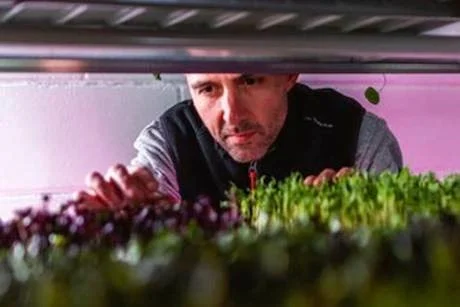
Zgreens, as the company is called, doesn't use soil, nor does its production grow in the heat of the sun. Its crops are grown hydroponically, and they are not in the open ground or inside a greenhouse, but in closed facilities where state-of-the-art LED lighting technology allows the micro-plants to have perfect climatic conditions all year round
One day, Juan Naudín, a native of the Spanish city of Zaragoza, decided to dedicate himself to agriculture. But he did it with a very innovative project: the cultivation of edible micro vegetables, young plants that are born from vegetable seeds and which are picked after only 10-18 days. This product is increasingly demanded by high cuisine chefs willing to introduce unique qualities to their dishes, as these small plants add intense flavors and aromas.
Zgreens, as the company is called, doesn't use soil, nor does its production grow in the heat of the sun. Its crops are grown hydroponically, and they are not in the open ground or inside a greenhouse, but in closed facilities where state-of-the-art LED lighting technology allows the micro-plants to have perfect climatic conditions all year round.
"Hydroponic cultivation allows the plant to receive exactly the nutrients that it needs, so the product improves in terms of flavor," says Naudin, who further explains that with this technique, it isn't necessary to use pesticides and the products thus grow free of genetically modified organisms, pollution or soil contamination. "Since we grow indoors under controlled conditions, our plants are 100% clean from seed to harvest," he says. He adds that with this type of crop, 90% less water is used than in conventional agriculture thanks to its reuse and recirculation.
This project, "which started with a pilot module" of just 8 square meters, will reach 30 square meters in the near future. "I'm already thinking about expanding, but we won't need more acreage for that, because the crops are grown in five levels, thereby boosting the soil's profitability," explains Naudín. Zgreens will also see its product range grow, as there are currently tests underway to produce indoor celery and cilantro.
Source: heraldo.es
Publication date : 2/20/2019
"Vertical Farming Needs A Consumer Label "
Brussels: First Workshop Hosted by FarmTech Society
On February 1st 2019, the FarmTech Society hosted its first workshop in Brussels titled ‘An energy efficient equation for indoor growing’.
FTS is an international non-profit association for the Controlled Environment Agriculture (CEA) industry. CEO, business developers and consultants, in all 15 participants from the CEA industry (from 7 countries) joined. Besides the main topic on energy equations including a plenary session on building typology and energy environment, it also involved initial discussions regarding consumer labelling and defining the ‘indoor farming’ terminology.
Existing buildings can be a good choice for vertical farms
There is a clear synergy potential in energy management in existing or purpose-built structures. Climate capabilities of a building provide a good starting point for crop selection and business models. Based on a lifecycle analysis, it was shown that existing buildings with smart modifications can provide a cost effective and energy efficient solution for indoor farming in metropolitan areas.
Vertical Farming needs a consumer label
The end consumer perception of labels like eco, bio, or organic is emotional to a large extent. A strong case can be made for the advantages of indoor grown produce, and it makes sense to put an effort into this. After health, nutritional value and obviously price point, factors such as pesticides, energy and water consumption are important. A streamlined communication strategy is needed to avoid adding more labels to a heap of existing labels, perhaps new types of certification standards are required.
What is Controlled Environment Agriculture?
A need was identified to better define the term indoor farming or CEA. Outcome of the general discussion and group sessions was that main aspects to be included, were ‘year-round production’ and (no) ‘daylight use’ are major qualifiers. This is obviously not a final outcome; clear terminology is needed to clarify, on industry level and also for the consumer.
Energy: important to look at the broad picture
On a micro scale the energy and mass balance can be modelled at plant level. Improvements may be found via plant specific grow recipes by phenotyping combined with e.g. AI or machine learning. On a macro level the energy and mass balance describe a “plant factory” or a building type as a whole. Knowledge can be applied from the greenhouse industry, but also from very different applications e.g. data centres and district heating.
Recent development in decentralized micro-grid solutions, particularly as we see this recent development in the US, should be understood better. There appears also interesting potential for integrated uses of thermal waste energy into plant production combined with micro-grid solution of energy storage and buffer systems. A small task group from the workshop is going to focus on this area and report on this topic.
These outcomes for the basis for a few more events – the FTS team is looking forward to address these with current and future members. A solid kick-off, with much more in the pipeline.
For more information:
FarmTech Society
Place du Champs de Mars 5, 1050 Ixelles
+32 487 90 79 54
contact@farmtechsociety.org
farmtechsociety.org
Publication date : 2/15/2019

Dr. Jonathan Rich Appointed As Lumileds Chief Executive Officer
SAN JOSE, Calif., February 28, 2019 – Lumileds today announced the appointment of Dr. Jonathan Rich as Chief Executive Officer. Dr. Rich most recently served as Chairman and CEO of Berry Global, Inc., a Fortune 500 specialty materials and consumer packaging company, from 2010 to 2018. Dr. Rich succeeds Mark Adams, who is stepping down as CEO and from the board of directors but will remain in an advisory role to the company.
“I am very pleased to be joining Lumileds and am looking forward to building on the company’s differentiated lighting technology foundation to increase the value we can deliver to customers across a broad set of industries,” said Dr. Rich. “The opportunity for lighting innovation to make a positive impact on safety and sustainability is tremendous.”
Before Dr. Rich held the position of Chairman and CEO of Berry Global, he was president and CEO at Momentive, a specialty chemical company headquartered in Albany, New York. Prior to that, he held positions with Goodyear Tire & Rubber Company, first as President of the Global Chemicals business and subsequently as President of Goodyear’s North American Tire Division.
Dr. Rich spent his formative years at General Electric, first as a research scientist at GE Global Research and then in a series of management positions with GE Plastics. He received a Bachelor of Science degree in chemistry from Iowa State University and a Ph.D. in chemistry from the University of Wisconsin-Madison. He has been a visiting lecturer at Cornell University Johnson School of Business since 2017.
“Mark Adams has made significant contributions to Lumileds during his tenure, leading the transition to an independent company and cultivating a culture of innovation and customer focus,” said Rob Seminara, a senior partner at Apollo and chairman of the board of Lumileds. “On behalf of the Board of Directors of Lumileds, we would like to thank him for his service to the company and wish him the very best in his future endeavors. We are very excited Jon will be joining Lumileds to drive the next phase of innovation and growth and we look forward to working with him again.”
Added Adams: “It has been a great experience leading Lumileds’ transition to an independent company that is focused on delivering lighting solutions that truly make a positive impact in the world. I would like to thank the employees of Lumileds and the Apollo team for their support and wish the company much success in the future.”
About Lumileds:
For automotive, mobile, IoT and illumination companies that require innovative lighting solutions, Lumileds is a global leader, employing more than 9,000 team members operating in over 30 countries.
Lumileds partners with its customers to push the boundaries of light.
To learn more about our portfolio of lighting solutions, visit lumileds.com. About Apollo
Global Management:
Apollo is a leading global alternative investment manager with offices in New York, Los Angeles, San Diego, Houston, Bethesda, London, Frankfurt, Madrid, Luxembourg, Mumbai, Delhi, Singapore, Hong Kong, Shanghai, and Tokyo. Apollo has assets under management of approximately $280 billion as of December 31, 2018 in private equity, credit and real assets funds invested across a core group of nine
industries where Apollo has considerable knowledge and resources. For more information about Apollo, please visit www.apollo.com.

Unlocking The Potential of Indoor Farming in Cities of The Future
22-23 May in Oslo, Norway @ Urban Future Global Conference
We are excited to announce our partnership with Urban Future Global Conference for this year's event in Oslo, the 2019 European Green Capital. We are organising a conference for #IndoorFarming that will include keynote speeches, roundtable discussions and guided workshops.
This is an unparalleled opportunity to network with entrepreneurs, companies, technologists, growers, city planners, research institutions, governmental bodies and enthusiasts from all over the globe.
The AVF programme with speakers and workshop topics will be announced and communicated in the coming weeks. In the meantime, you can purchase early-bird tickets at a discount at our home page here: http://bit.ly/UF_Oslo
What: AVF Indoor Farming Forum entitled: Unlocking the Potential of Indoor Farming in Cities of the Future.
When: 22-23 May, 2019
Where: The Hub, Oslo, Norway
How to buy tickets: http://bit.ly/UF_Oslo
We hope to see you there- should you have any questions, don’t hesitate to contact us at info@vertical-farming.net, or send us a message on our social media channels!
Sincerely,
The AVF Team
Copyright © 2019 Association for Vertical Farming, All rights reserved.
Your are receiving this email because you either signed up for our newsletter online or were added to our mailing list by an employee.
Our mailing address is:
Association for Vertical Farming
Marschnerstraße
Munich, 81245 Germany

Evolution of Commercial Aquaponics in India
Evolution of Commercial Aquaponics in India
Anubhav Das | February 22, 2019
Change is happening, and it’s shaping the new age farming in the country. The Fourth Industrial Revolution is here with an exponential pace of technology. Digital innovation is making its roots in every industry & sector, and not to forget – agriculture industry – the lifeline of the Indian economy. Agritech, urban farming, farm to table – are some of the buzz words that have been around lately.
Change agents have come forward and taken up initiatives to introduce technology & digital devices in farming – to help the farmer keep a track of weather forecasts, plantation & harvesting patterns and to enhance the yield. Initiatives have also been taken up by the government to integrate rural farmers with the wider market and to enhance their access to information, services and trade.
But still, we are left with no answers when questions like these arise – Will farm output keep up with the demands of the growing population? Will farm produce offer the quality that is essential for healthy living? How can we use our scarce & depleting resources efficiently?
What we are missing is the transition in our approach – transition from traditional to modern farming practices & techniques. Existing farming techniques in India follow the traditional route. The only way we know how to grow food is in open fields and we grow what the weather allows us to. Thus the current agricultural scenario in India is season dependent. Because of that, not everything can grow at a place at all times. The hub of production of a particular crop changes every few months. As a result the food has to travel increasing number of miles before it reaches the consumer.
Globally this is changing. How the food is grown, how much time it takes to grow food, what time of the year can the food be grown – it’s all changing. Crops are becoming available throughout the year and slashing the food miles for every customer. With the integration of technology in farming, a shift in the way farming is done is being observed. One such shift is being brought about by Aquaponics. It is a method of food production that combines raising fish (aquaculture) with soil-less growing of plants (hydroponics) by creating a symbiotic ecosystem. Aquaponics works in a re-circulating water system which reduces the water use by over ninety percent as compared to conventional soil-based agriculture. To add to that, it is a chemical-free mode of farming and also allows the possibility of going vertical with minimal effort.
On the internet we see information and videos talking about how people are saving resources and growing high quality produce with aquaponics, globally. They talk about enhancing ‘food security’, reducing the ‘food miles’ and how one can get fresh produce, all the year round. However in our country, we have very limited people who are doing aquaponics and succeeding. When one wants to learn about aquaponics in India, 99% of the case studies are based on international growers.
Their systems cannot easily be replicated in India just yet because they are based on inherent assumptions about availability of resources and infrastructure which does not hold true for our country. So while such farming techniques are spreading rapidly in developed countries, they just beginning to be introduced to developing countries such as India. These technologies are developed in an American or European context need to be adapted to the local context before they can be successful here.
Nevertheless, steps are being taken to ensure sustainable production & consumption patterns. Over the last decade, a few growers have started using novel and innovative farming techniques – growing food inside a greenhouse, on the rooftop, in the basement and inside shipping containers. However, most of these growers practice soil based organic farming and only a selected few have tried their hands on commercial aquaponics. And for these selected few, there is no dearth of growing space options. This is a group of individuals who believe in ‘ditch the dirt’ concept – which is soilless growing of food and without the use of any chemicals/pesticides and contributing to the environment. Red Otter Farms is among the first of them.
Anubhav Das is Founder of Red Otter Farm

Do Plants Have Senses?
Yes, kind of. To make things interesting let us invoke the five traditional senses we normally think about when talking about people: Sight, hearing, taste, smell, and touch. How do plants compare?
The Bowery Source
A destination dedicated to educating and connecting with our community.
Feb 2019
Do plants have senses?
Yes, kind of. To make things interesting let us invoke the five traditional senses we normally think about when talking about people: Sight, hearing, taste, smell, and touch. How do plants compare?
While plants can sense their environment, it is still quite different than how people and animals perceive the world. According to the American Psychology Association, sensation is defined as “The process by which stimulation of a sensory receptor gives rise to neural impulses that result in an experience, or awareness of, conditions inside or outside the body.” Plants do not have neurons and therefore do not experience the world as we and other animals do. Instead, plants have evolved rudimentary sensing mechanisms that in some ways are similar to how animals sense the environment. Here, we will explore some of those similarities.
Sight
We see light in the form of a small portion of the electromagnetic spectrum (image below) as a result of radiation from the sun and space coming in contact to the surface of the earth. The visible spectrum, one tiny portion of the electromagnetic spectrum that our eyes can see, is composed of wavelengths that range from about 400-700 nm (Figure 1). Wavelengths in the visible spectrum range from about 400-700 nm. As it turns out, plants use light in the visible spectrum for photosynthesis and can detect slightly higher wavelengths in the 710-740 nm range.
Humans and other animals can see because of an organ that is sensitive to light. In our case, the eye is incredibly complex and can perceive a multitude of colors. The lens in our eyes focuses light to the back of the eye where the wavelengths of light in the visible spectrum are perceived by specialized cells called rods and cones. These rods and cones contain protein pigments which absorb certain wavelengths (colors) and eventually transmit this information to the brain.
Obviously plants don’t have eyes. However, they are able to “sense” and physiologically respond specifically to the ratio of red light and far-red light, and blue light. Plants can sense these colors because they themselves have protein pigments, called photoreceptors, that are sensitive to the wavelengths that correspond to those colors. These photoreceptors transmit information about the light quality of the environment surrounding the plant and elicit a change in growth habit or development.
Plants can “see” their neighbors because light reflected or transmitted from nearby plants has a lower ratio of red light to far-red light. The ability of plants to detect red light, far-red light, and their changing closeness to their surroundings is probably one of the most important ways in which plants can sense.
Plant can also sense blue light. One of the most commonly studied blue light responses of plants is the directional growth that is seen in response to the direction of a light source.
There are other important blue light responses of plants. For example, circadian rhythms requires both phytochromes and blue light receptors. This means plants can sense day and night cycles. Another critical role of photoreceptors is in the flowering of plants which exhibit photoperiodism. Plants that exhibit photoperiodism are sensitive to the duration of night length and begin flowering when the nighttime is short or when the nighttime is long depending on the species.
Hearing
Have plants evolved tiny ears that allow them to hear you? It was often said that plants grow “better” if you talk or sing to them. Does this mean plants are listening? Should we be concerned they know all our secrets? Well, carbon dioxide is the carbon source plants use to form sugars via photosynthesis. When we talk or sing to plants we are doubling or tripling the concentration of carbon dioxide around the leaves of a plant so in some cases they can grow “better.” Don’t worry, they do not have tiny ears or any sort of auditory sensory mechanism and therefore cannot hear us.
Smell
Nope.
Taste
They cannot.
Feel
Some plants can actually detect when they are being touched. This might be most obvious in the Venus’ flytrap. Hairs on the trap lobes can detect the movement of an insect. When an insect moves within a window of time and activates the trigger hairs, the trap rapidly closes ensnaring the insect.
Sense of Balance
We don’t often think of balance as a sense, but we actually have an entire organ called the vestibular system in the inner ear that helps us stay balanced. Plants don’t necessarily need to balance themselves because they are anchored to the ground by their root system. But how do roots “know” to grow downward into the soil and not up? The tip of roots contains specialized cells with a gravity-sensing mechanism. Amyloplasts, parts of those specialized cells, are organelles which function to synthesize and store starch. When a root is oriented horizontally, the amyloplasts in these cells settle to the bottom of the cells by gravity. A hormonal signal is sent to the growing points of the root where the hormone is asymmetrically distributed causing differential growth resulting in a downward bend.
So while plants aren’t listening in on our private conversations, they are certainly more perceptive beings than previously considered.
This piece was written by Pablo Rosas-Anderson, an agricultural scientist at Bowery Farming.
Sources:
Ballare, C.L., Scopel, A.L. and Sanchez, R.A., 1990. Far-red radiation reflected from adjacent leaves: an early signal of competition in plant canopies. Science, 247(4940), p.329.
Glossary of psychological terms. Retrieved from http://www.apa.org/research/action/glossary.aspx
Kasperbauer, M.J., 1971. Spectral distribution of light in a tobacco canopy and effects of end-of-day light quality on growth and development. Plant physiology, 47(6), pp.775-778.
Simons, P.J., 1981. The role of electricity in plant movements. New Phytologist, 87(1), pp.11-37.
Swarup, R., Kramer, E.M., Perry, P., Knox, K., Leyser, H.O., Haseloff, J., Beemster, G.T., Bhalerao, R. and Bennett, M.J., 2005. Root gravitropism requires lateral root cap and epidermal cells for transport and response to a mobile auxin signal. Nature cell biology, 7(11), pp.1057-1065.
GrowPod Provides Solutions to Help Feed Earth's Growing Population
Modular micro-farms provide additional food production to meet global needs, and bring healthy produce to underserved areas.
NEWS PROVIDED BY Grow Pod Solutions
Feb 20, 2019
CORONA, Calif., Feb. 20, 2019 /PRNewswire/ -- GP Solutions (OTC: GWPD), a leading developer of automated micro-farms, announced its new systems can help meet the food production needs for the future.
Earth's population is 7.68 billion, and is expected to grow to over 9 billion within 30 years.
According to a report from the University of Minnesota, "To feed those who are currently hungry—and the additional 2 billion-plus people who will live on the planet by 2050—our best projections are that crop production will need to increase between 60 and 100 percent."
However, with scarcity of land and resources, this poses immense challenges.
"Further expansion of agriculture is a poor solution to meeting future needs because we're using nearly all of the land that's suitable for agriculture already," the report emphasized. "Relying on increased production will be an important solution, but not a sufficient one."
Additionally, food isn't being grown near where it is needed. According to the United Nations, 815 million people in the world are under-nourished.
GrowPod is part of the solution.
GrowPods are modular, scalable, transportable, indoor "micro-farms" that grow high quality, pathogen-free foods using a fraction of resources required for conventional farming.
The system utilizes both hydroponics and soil-based platforms along with proprietary air and water filtration, to create the perfect environment for growing food virtually anywhere, in any season or climate.
GrowPods can be installed in just hours, so as demand rises or shifts, it is easy to put additional pods into service.
For more information, visit: www.growpodsolutions.com, or call (855) 247-8054.
ABOUT GP SOLUTIONS:
GP Solutions designs "GrowPods" – innovative indoor micro farms that provide optimum conditions for plant cultivation with total environmental control.
Forward-Looking Statements
This release includes predictions or information that might be considered "forward-looking" within securities laws. These statements represent Company's current judgments, but are subject to uncertainties that could cause results to differ. Readers are cautioned to not place undue reliance on these statements, which reflect management's opinions only as of the date of this release. The Company is not obligated to revise any statements in light of new information or events.
Connect:
Email: info@growpodsolutions.com
Website: www.growpodsolutions.com
Facebook: facebook.com/GrowPodTechnology
Twitter: @GrowPodSolution

WUR Hosts International Workshop On Vertical Farming
October 13-15, 2019 | Wageningen
VertiFarm2019, an international workshop on vertical farming, on 13-15 October in Wageningen, the Netherlands, combines a number of oral presentations of world leading horticultural researchers, panel discussions with renowned companies as well as short oral and poster presentations on the latest research results on vertical farming, also called indoor farming or plant factories with artificial light (PFAL).
The workshop welcomes scientific presentations on all aspects of vertical farming, ranging from plant physiology, breeding, climate control, engineering, systems design, urban planning, economics, consumer demands and business development. Although at this moment vertical farming largely deals with vegetables, there are also opportunities for production of ornamental (young) plants. Therefore, the workshop also welcomes presentations on ornamentals in vertical farms.
This workshop is open to everyone who is interested in vertical farming. "We expect that a nice mix of researchers, advisors and private companies will participate and that it will be a good place not only for hearing the latest knowledge on vertical farming, but also for networking", the convenors say.
There are also excellent opportunities for sponsoring the workshop.
Keynote speakers include: Bruce Bugbee, Erik Runkle, Eri Hayashi, Emiel Wubben, Luuk Graamans, Qichang Yang, Marie-Christine van Labeke, Danny Geelen, Francesco Orsini, Murat Kacira.
Panel discussion include persons from Aerofarms, 808Factory, Urban Farms Global, Infarm, Own Greens, Philips Lighting, Heliospectra, Osram, Grodan and more to be announced soon.
For more info see the attached brochure or
visit www.wur.eu/vertifarm2019
Wageningen ranked best agricultural university in the world for fourth consecutive time
Wageningen University & Research has taken the top spot as the world’s best agricultural university for the fourth consecutive time in the influential QS Ranking. As in previous years, WUR secured first place in the “Agriculture and Forestry” category. Wageningen is currently in 125th place in the QS Global World Ranking, which rates institutions based on general characteristics.
Publication date : 2/5/2019

Weed Is Growing Into a Big Market for This Dutch Lighting Firm
Weed Is Growing Into a Big Market for This Dutch Lighting Firm

By Ellen Proper
February 19, 2019
Signify CEO lifts veil on horticultural unit’s pot business
Demand for greenhouses signals boom is feeding supply chain
A boom in the cannabis industry that began a few years ago is now fueling sales of equipment like so-called grow lights. Photographer: Jason Alden/Bloomberg
The world’s biggest lighting company has been selling equipment to the horticultural industry for decades, building up its business outfitting greenhouses to grow plants like tomatoes, lettuce and roses. Lately, demand for a new crop has exploded onto the scene: Pot.
A cannabis boom that began a few years ago in the lead up to legalization in Canada, Uruguay and some U.S. states is now fueling sales of equipment like so-called grow lights. The changes in legislation and surge in consumption have led farmers to seek out more controlled and energy-efficient cultivation in hothouses.
“Where it’s legal, we participate,” said Eric Rondolat, chief executive officer of Signify NV, a spinoff of Amsterdam-based Royal Philips NV. “Worldwide we see an evolution in the thinking of cannabis production.”
Rondolat’s willingness to talk about marijuana and Signify is also a sign of change. The manufacturer gets the bulk of its 6.4 billion euros ($7.2 billion) in annual revenue from more mundane products like home lighting fixtures and street lamps. Until a few years ago, selling specialized gear to grow medicinal pot wasn’t something the company sought to publicize.
“We have seen big growth in cannabis being legalized lately and we see that also through our activity,” Rondolat said in an interview.
Greenhouse Boom
Signify’s brisker business is backed up by forecasts. The horticulture lighting market is set to expand to $6.2 billion by 2023 from $2.1 billion in 2017, partly driven by the legalization of cannabis for medicinal purposes, according to Markets and Markets, a consulting firm.
“We are just at the beginning of the greenhouse boom in Europe, and still at a fairly early stage in North America,” Alex Brooks, analyst at Canaccord Genuity, said by email.
Benefits to companies like Signify are a sign the cannabis rush is feeding into the manufacturing supply chain, with big firms in the drinks and tobacco markets also raising investment. The Dutch firm is not the only light maker wading in.
German rival Osram Licht AG has stakes in several horticultural specialists. In May, the company bought Austin-based startup Fluence, which like Signify sells more energy-efficient LED lighting for greenhouses. One tout on its website is for The Fireweed Factory in Juneau, Alaska, that gets about 1 million visitors a year and caters to local and tourist demand. Osram generally sells to “growers of pharmaceutically usable plants such as cannabis,” a spokeswoman said in an emailed statement.
Projections for overall growth in the pot industry are eye-catching. Industry consultant Prohibition Partners said more than 50 countries have legalized medicinal cannabis, with some 10 more expected to join the list this year. The U.K. recently received its first bulk batch from the Netherlands after it was legalized for prescription last year.
The global legal market will reach $232 billion in 2027 from $9.9 billion in 2017, according to Bryan, Garnier analyst Nikolaas Faes. Growing companies using new greenhouses outfitted with lighting, humidity and temperature controls have an advantage over those relying on retrofitted ones previously used for other crops, he wrote in a report this month.
Signify has a leg up on competitors, Rondolat said, because the company has developed more than 150 types of lighting adapted to individual crops, including tomatoes, cucumbers, tulips and cannabis. Each requires its own light intensity and duration to improve yields, hasten flowering and quicken root growth.
Bright Spot
Rondolat has been at the helm of Signify since before shares were listed in 2016. The company has yet to post revenue growth as it navigates the consumer switch from conventional lighting to light-emitting diodes, or LEDs. With Brexit, rising U.S. inventories, trade tariffs and a slowdown in China also biting, growth in its horticultural business is a bright spot.
Read Giant Russian Greenhouse Shows LEDs Swaying Light Bulb Die-Hards
“This is a substantial market size already, and with a very interesting perspective going forward,” said Rondolat. For investors, it’s hard to figure out how much of a difference this could make. The company doesn’t break out earnings from greenhouse lighting or from selling specialized equipment for cannabis production. The CEO declined to provide details.
Read More
The U.K. Just Got Its First Bulk Medical Cannabis Shipment (1)
Canopy Expected to Capture Biggest Chunk of Canadian Pot Market
Cannabis Lobbying Heats Up As Congress Looks At Pot Banking
Brooklyn Medical Pot Salon Opens to New York Legalization Push
Vertical Farming Could Be About To Transform The Way Our Greens Are Grown
Vertical indoor farming is becoming popular, with an increasing number of businesses using the technique.
One such company is Crop One Holdings, which recently launched a $40 million joint venture with Emirates Flight Catering.

Published 02-22-19 CNBC.com
Vertical farming could be about to transform the way our greens are grown
We all know that a bowl of fresh green salad represents a healthy addition to any meal. And while the benefits of eating your greens are well-known, the way that they're grown is changing.
Vertical indoor farming is becoming popular, with an increasing number of businesses using the technique to grow produce such as salad leaves and micro herbs.
One such company is Crop One Holdings, which is headquartered in San Mateo, California. The business recently launched a $40 million joint venture with Emirates Flight Catering.
The aim is to build the planet's largest "vertical farming facility" in Dubai and produce herbicide and pesticide free greens. That farm, according to the business, will produce three tons of produce per day.
Crop One Holdings' production technique is advantageous for several reasons, according to its CEO.
"Most field grown produce is grown in soil and we don't use any soil, we only use water as our growth medium," Sonia Lo told CNBC's Sustainable Energy. "That means that we can have quite precise control on the nutrients," she added.
The company's chief scientific officer, Deane Falcone, echoed Lo's sentiment. "Being indoors you have the ability to control all the environmental variables, for example temperature, humidity (and) carbon dioxide levels that we feed to the plants."
Having control over those variables meant that producers could control the way plants grow, Falcone added. "The second thing is that you can grow at very high density and… that leads to a very high output for the same amount of growth area."
Indeed, the business says that just one of its 320 square foot "growing units" can act as a substitute for as much as 19 acres of farmland, using less water than "field-based growing."
CEO Sonia Lo added that in terms of productivity, Crop One Holdings' facilities can produce 32 harvests per year, on average, compared to a field-based farmer's "one or two" harvests.
For the University of Cambridge's Steve Evans, changes in the agriculture sector are set to play an important role going forward.
"In a world where there's a large number of people and they're becoming increasingly prosperous and they want to eat more and more rich diets, we have to learn how to grow the food with the land that's available," Evans, who is director of research in industrial sustainability at the university's Institute of Manufacturing, explained to CNBC.
"The world isn't expanding, so we're going to go vertical simply because of that need," he added.
Anmar Frangoul Freelance Digital Reporter, CNBC.com