


Welcome to iGrow News, Your Source for the World of Indoor Vertical Farming
How Vertical Farming Startup Bowery Approaches Biodiversity
06 feb 2019
From January 7 – February 16, Food+Tech Connect and The Future Market are hosting Biodiversity: The Intersection of Taste & Sustainability, an editorial series featuring interviews with over 45 leading food industry CEOs, executives, farmers, investors and researchers on the role of biodiversity in the food industry. Read all of the interviews here.
Bowery is an indoor agriculture company growing leafy greens and herbs in a high-tech warehouses. Utilizing robotics, hydroponics, sensors, machine learning and predictive analytics, the company aims to grow food more efficiently and sustainably than traditional agriculture.
Below, I speak with Susan MacIsaac, head of agricultural sciences at Bowery, about how the vertical farming company is expanding on the traditional definition of biodiversity by utilizing previously unusable industrial space to grow over 100 crop varieties. MacIsaac also explains how Bowery’s farming practices allow it to grow a variety of crops on a smaller footprint of land, and how the company is cultivating crops specifically suited for indoor farming.
_________________________________
Danielle Gould: Is biodiversity a priority for Bowery? If so, how and why?
Susan McIsaac: Yes, at Bowery we believe that indoor farming practices expand on the traditional definition of biodiversity. Right now, there’s not enough arable land in the world to feed a population of this size using today’s conventional practices, and we have already lost more than 30 percent of our arable land in the U.S. as a result of traditional methods. While we believe it’s crucial for outdoor growing to reflect biodiversity, at Bowery we understand there’s a clear need to improve upon the industry at large and think beyond the field. Just like efforts around biodiversity improve longevity and health of an ecosystem, we’re growing food in a more sustainable way. We’re reappropriating previously unusable industrial space to grow over 100 types of crop varieties, and are able to grow reliably, year-round using more than 95 percent less water, regardless of weather or seasonality. Bowery’s farming method is a scalable, sustainable way to grow more kinds of food for a healthier environment, and a better future.
DG: How does Bowery define and think about biodiversity? What role might indoor ag play in promoting biodiversity?
SM: Biodiversity is an essential agricultural practice in order to produce food for the long term, since monocultures strip the land of essential nutrients and create more vulnerabilities for pests and contaminants. Bowery is a more evolved growing approach in line with this thinking. Of course, we don’t use soil, aren’t impacted by seasonality and our closed system dramatically reduces the risk of pests and contaminants. But, Bowery’s impact on resources and support in plant diversity is similar. Our system and proprietary technology allows us to grow a dynamic portfolio of different crops on a smaller footprint of land to feed a growing population in years to come.
DG: What is the business case for biodiverse indoor agriculture?
SM: Agriculture sits at the epicenter of many global issues today. Over 70 percent of our global water supply goes to agriculture, we use over 700 million pounds of pesticides each year in the U.S. alone, contaminating our water and causing serious health risks, and industrial farming practices have caused a loss of over 30 percent of the arable farmland in the last 40 years. Additionally, seasonality and varying weather patterns leave farmers with unpredictable yields; traditional farming methods can also lead to topsoil erosion and create unnecessary monocultures. At Bowery, our farms grow crops twice as fast as traditional farms, year-round. We use more than 95 percent less water than traditional farming methods and completely eliminate the need for pesticides. Bowery farms are 100 times more productive than traditional footprint of land because we grow in vertical stacks, harvest many more crop cycles per year, and achieve a higher yield per crop cycle than the field. We’re also able maintain a high level of genetic diversity and offer a wide range of climates for plants to thrive.
DG: What investments need to be made to create a more biodiverse food system?
SM: We need to think beyond what’s grown in the field and also invest in more advanced growing methods. Right now, we’re looking into cultivating crops that are best suited for indoor agriculture, which will be a huge milestone for the industry. There are certain types of crops that don’t thrive in current climate conditions, and by optimizing their growth indoors, we can maintain a high level of diversity.
DG: How might we get more indoor agriculture farms to invest in biodiverse agriculture?
SM: As a nation, we currently depend on cheap, mass-produced food, sacrificing quality for quantity at the expense of our health and environment. Our global population will grow to 9-10 billion people by 2050, and we need 70 percent more food in order to feed a population of that size. The result is a world in which the current food system must support the needs of an expanded population with a rapidly dwindling set of resources. Biodiversity is crucial in maintaining the quality and quantity of food produced and ecosystem at large, but we also need to invest in alternate methods that support traditional agriculture. It’s the “high tides lift all boats” mentality – indoor farming companies need to keep an open dialogue with traditional growers. By working together to rethink the current agricultural system and address the needs of an ever-increasing population, we all win.
DG: What are some of the most important things food manufacturers, retailers, chefs and other key actors across the food supply chain can do to support biodiverse agriculture?
SM: At a high level, our current food system must support the needs of an expanded population with a rapidly dwindling set of resources. We’re seeing a shift towards more sustainable practices in the food industry as a way to address these issues, but there’s still a lot of work to be done. When it comes to indoor farming, Bowery’s goal is to educate more retailers, chefs and stakeholders in the industry on the crucial benefits of our growing method and offer indoor-grown produce on menus and shelves. We have incredible support from key food industry leaders and retailers like Tom Colicchio, José Andrés, Carla Hall, David Barber, Whole Foods, sweetgreen and Dig Inn, who understand the unique freshness and diversity of Bowery’s crops and the technology that allows us to promote this level of quality.
DG: What is your vision for what a more biodiverse food system looks like in 10-15 years?
SM: Biodiversity is one important part of a larger mission to create a more sustainable food system, and Bowery’s ability to grow a wide array of crops in a more efficient way is a testament to how we can continue to innovate in the next 10-15 years. We’ve intentionally designed our technology and systems to maximize our ability to scale Bowery quickly, profitably, and effectively. Plus, our R&D efforts will allow us promote even more genetic diversity in cities around the world.
Read all of the interviews here and learn more about Biodiversity at The Future Market.
_______________________________
Susan MacIsaac, Head of Agricultural Science at Bowery
Susan MacIsaac is the Head of Agricultural Science at Bowery, overseeing a team that focuses on new growing methods and develops the next generation of products beyond leafy greens. Before joining Bowery, she worked at the Climate Corporation, a leading company in digital agriculture. There, she led a diverse team of scientists and agronomists in the development of new digital tools that help farmers make decisions about how to manage their crops. Prior to Climate Corporation, Susan led a team at Monsanto focused on developing and deploying advanced analytical tools for the development of enhanced flavor and yield in crops. She is a plant scientist by training, and enjoys working on the cutting edge of science and technology.

March 5th thru 7th, 2019 - Dubai World Trade Centre, UAE Learn About Vertical Farming, Greenhouses, Hydroponics And More
March 5th thru 7th, 2019
As an important aspect to increasing food security through the sustainable use of water and land, CEA includes Vertical Farming, Hydroponics, Greenhouses and more.
The CEA Conference will bring together leaders from across the world to discuss best practices, new innovations and increasing food security through entrepreneurship.
Register to visit
Controlled Environment Agriculture Conference
5th March 2019
Ensuring year-round local produce through controlled indoor farming
Damion Schwarzkachel, Consulting Engineer and Architect, Certhon
Food Security Through Entrepreneurship: Pathways towards Agriculture Independence in the GCC
Henry Gordon-Smith, Founder and Managing Director, Agritecture
Introducing the GravityFlow technology: A automated controlled environment plant production system
Per Aage Lysaa, CEO, Intravision Group AS
Digital Transformation challenges in Middle East's Agricultural & Food industry
Sage
Register to visit
AgraME Conference certified by:
Contact us to see how we can help you grow your business in the Middle East & Africa.
+971 4 336 5161 | info@agramiddleeast.com | www.agramiddleeast.com

Join Us for Our Third Annual Fresh in February Event in NYC Tomorrow!
The NYC Agriculture Collective would like to invite you to the third annual Fresh in February event, hosted by us and taking place on Thursday, February 28th, 2019 from 6:00-9:30 pm at Project Farmhouse. Where else can you find fresh, local produce in below freezing weather? Luckily, New York is chock full of urban farms that grow all year round.
Join the NYC Agriculture Collective to celebrate our winter harvest for the third year in a row at Fresh in February and observe why New York strives to become another large agriculture economy, second to California!
Our diverse collection of urban farms, urban agriculture service companies and NYC-based agtech businesses invite you to taste fresh local food as part of a unique food experience at Project Farmhouse in Union Square.
The evening will consist of an exclusive venue where local, year-round farmers will display how they are making agriculture possible in the wintertime in NYC. See the technology in action, meet farmers and indulge on local produce.
Enjoy hyper-local and delicious snacks, as well as locally sourced beers and wines - delicately curated with our Collective's produce, and products from other fine local purveyors.
We're able to give our community 20% discount (Promo Code: "WELOVEOURMEMBERS") on all tickets to the event here.
RE-NUBLE IN THE COMMUNITY
How do we turn plastic into reusable building materials? How do you design products to be infinitely recyclable? How can we turn food waste into a fuel source? Clean Energy Connections presents an introduction to the Circular Economy and the exciting new technologies and businesses that will produce a sustainable future. Speakers include Mayor's Office of Sustainability, Trust of Governors Island, Center for the Circular Economy and Re-Nuble.
Interested in hearing the latest challenges in need of circular business solutions from our perspective? Register for tickets here and use Promo Code: "Friends" for a 25% discount.
INTERESTED IN OUR UPCOMING NEW PRODUCT?
Re-Nuble is 100% committed to plant-based only technologies that help us meet the growing fertility, and pest and disease suppression challenges in agriculture. We have a few new tools and solutions underneath our belt that we'll soon be releasing. Most recent is a topical solution that can be directly applied to plants to help mitigate, and, if wildly successful, eradicate the common pest and disease issues that both indoor and outdoor farms currently manage using alternative such as, microbes, genetically modified enzymes, and/or traditional pesticides and herbicides. If you are a farmer interested in testing a product to help with managing aphids, thrips, powdery mildew and/or fungus gnats, to name a few, email us at wecare@re-nuble.com and drop us an email with the subject line: "We're Interested". In the next 4 weeks, we plan to engage farmers for feedback on this new product and you may be the first to receive it before its formal public release. Your feedback makes us better.

How Freight Farms Plans To Grow Sales (And More Veggies) With Its Next-Gen Farm In A Box
Brad McNamara (left) and Jon Friedman, co-founders of Freight Farms, in front of their new Greenery, a high-tech, hydroponic farm built inside of a shipping container.FREIGHT FARMS
Almost a decade ago, the cofounders of Boston-based Freight Farms pioneered the idea of outfitting used shipping containers with everything a farmer needs to grow greens and herbs in a pesticide-free, climate-controlled environment– without soil. These hydroponic vertical farms, which grow plants in nutrient-enriched water, are turnkey operations that enable a farmer to get up and running in a matter of days. And the whole thing takes up just 320 square feet.
Co-founders Jon Friedman and Brad McNamara formed their company in 2010, raised their first funds on Kickstarter in 2011 and introduced their Leafy Green Machine a year later. Freight Farms has since raised about $12 million from VC firms. To date, it has sold more than 250 of those shipping-container farms, which use off-the shelf parts and their own proprietary software, in more than 15 countries.
"After about four years of working with that model and pushing it as far as we could go, we realized we needed to make a more quantum leap," said Friedman, who is chief operating officer.
Freight Farms says its new LED lighting system produces higher yields and heavier plants FREIGHT FARMS
Today Freight Farms will announce its next-gen product, called the Greenery. Instead of using recycled shipping containers, the units are built from the ground up for Freight Farms with all new components. Growing racks can now be configured to accommodate bigger plants, such as tomatoes. Lighting has improved too. Its energy-efficient LED arrays, with three times the power of the old ones, result in heavier plants and greater yields, according to the company.
Water and energy usage are also more efficient than the old design. The farm's new climate-control system condenses and recycles ambient moisture. The company said it offers 70% more growing space, among other features. Its IoT-connected sensors continuously send the farmer data on temperature, lighting, moisture content, CO2 levels and other environmental variables to allow them to monitor and adjust conditions remotely from a smart phone.
I first wrote about Freight Farms in December 2015, when revenue was about $3 million and the company had about 50 customers. Granted, the business is still small, but it's growing steadily and adapting, much as plants do, to a changing environment. The company declined to disclose its revenue this time around, citing intense industry competition. Indeed, a quick Google search shows they aren't alone anymore in the shipping-container farm business. Competitors include the CropBox and Growtainer. Customers might also opt for other types of vertical, hydroponic systems that don't use a shipping container.
In 2015, Leafy Green Machines had a base price of $76,000. The new Greenery costs $104,000.
Some of the most enthusiastic customers of the freight-container farms are big corporations, who see it as an extension of health and wellness programs or social action initiatives. You can find a Leafy Green Machine on the Google campus in Mountainview, Calif., where it's used to grow greens and edible flowers. In Detroit, Ford Motor Company Fund, the automaker's philanthropic arm, also has a freight farm, that it's operating in partnership with a nonprofit to help supply its community kitchen with fresh produce and provide job training. Everlane, the clothing company, uses its shipping-container farms in Vietnam to provide food for its workers.
Academic institutions find freight farming particularly appealing, said McNamara, who is CEO. "We're seeing more and more of the education segment who want onsite local high quality produce and want to connect students and employees to where their food is coming from."
The University of Georgia has just ordered two Greenery farms to help supply their dining halls with local greens more efficiently and sustainably while educating students about where their food comes from, the school told me in an email.
Of course, not every university or corporation wants to actually do the work of farming, the co-founders realized. So, in late 2018, they launched Grown by Freight Farms, where customers sign up for a service contract. "We provide them with a farm and a farmer," said McNamara, who is CEO.
Small farmers are also an important market for Freight Farms. In Guam, a farmer uses his Leafy Green Machine to supply Wendy's with lettuce. In North Carolina, Heather David and John Peters, who sell pasture-raised meat to chefs from their WhyNot Farms with two locations in North Carolina and a new one in Tennessee, are among the first in line for a Greenery. They expect to receive delivery in May.
"We were looking to diversify our business in a way that would be less labor intensive, and we wanted something that would weigh less than cows or pigs," said Davis. 'We're middle-aged and felt it would be more sustainable for us to be raising vegetables."
Heather Davis and John Peters, owners of Whynot Farms, are buying a Greenery from Freight Farms to diversify from grass-fed animals into vegetables. WHYNOT FARMS
Davis, president and chief investment officer at Nuveen Private Markets in Charlotte, N.C., moonlights as her husband's farmhand on weekends and she happens to have a local vertical, hydroponic farming operation in her portfolio. There were plenty of options for Davis to consider for their own hydroponic system, which they hope to power mostly with solar energy.
"What appealed to me about Freight Farms is that they are very focused on the sustainability aspect and conservation of water," she said. "It's in a compact unit, and they just drop it on your site."
Davis also liked the fact that the company provides intensive farmer support and education.
"It's not clear to me yet the extent of what we'll be able to grow in this," she said. "I'll grow what anybody will buy as long as it's not a total pain in the neck and I can make a profit."
Robin D. Schatz is a New York-based writer focusing on food, nutrition, business and health care. Follow her on Twitter @Robin_Schatz. Read her Forbes stories here.
Robin D. Schatz Contributor
I'm a prize-winning business journalist, most recently working as an assistant managing editor at Crain's New York Business, where I managed health care coverage. I've been a staff writer and editor at Bloomberg News, Businessweek and other publications and a freelance writer for a broad media clientele. I'm also a weekend organic farmer in the Catskill Mountains with a keen interest in sustainable agriculture, plant-based eating and the future of food.
After a long break from blogging about food entrepreneurs, I'm happy to be relaunching on Forbes' food and wine vertical. I'll still be writing about game-changing entrepreneurs, those who are trying to figure out how we'll feed a planet of 9 billion people and others are just trying to make a living producing something healthy and delicious. I'll also be looking at the nexus of nutrition, public health and business.
Read More

Indoor Ag-Con Las Vegas 2019
February 25, 2019
7th Annual Las Vegas Edition Heads To Red Rock Resort With Expanded Educational Conference And Exhibit Floor Offerings
LAS VEGAS, NV (February 24, 2019) – Indoor Ag-Con, the premier event covering the technology of growing crops in indoor systems using hydroponic, aeroponic and aquaponic techniques, heads to Red Rock Resort from May 22-24, 2019 for its 7th annual Las Vegas edition. Themed “Growing the Future,” this year’s event moves to a new location and welcomes a number of new features, including a special hemp spotlight, exclusive white paper release, expanded exhibition floor and conference schedule.
“Our ‘Growing the Future’ theme celebrates the tremendous growth potential we see for indoor agriculture,” says Nancy Hallberg who, along with other event industry veterans Brian Sullivan and Kris Sieradzki, acquired Indoor Ag-Con LLC from founder Newbean Capital in December 2018. “From timely conference tracks to the top names and emerging leaders joining our show floor, this will be the place to get a first-hand look at the industry’s breaking trends and innovations.”
Show highlights for Indoor Ag-Con Las Vegas include:
HEMP SPOTLIGHT JOINS CROP AGNOSTIC, TECH-FOCUSED OFFERINGS – New for 2019, Indoor Ag-Con will put a special spotlight on the hemp sector – from grower through manufacturer – on the show floor and in conference programming. What’s more, Indoor Ag-Con provides a venue for those working with any crop — from leafy greens and mushrooms, to alternate proteins, to medicinal crops — to meet and exchange ideas. At a time of rapid technology-led progress in indoor growing, the event will also showcase the latest innovations in artificial intelligence, LED lighting and control systems.
WHITE PAPER RELEASE: AUTOMATION, AI & THE NEXT GENERATION OF INDOOR AGRICULTURE –Indoor Ag-Con began releasing white papers at its events in 2015, and has provided participants with an exclusive hard copy of the newest white paper every year since. A culmination of months of research by Contain, Inc. and other Indoor Ag-Con team partners, the 2019 white paper, Automation, AI & The Next Generation of Indoor Agriculture, will be released in hard copy to all attendees during the Las Vegas event. To contribute or to receive more information, send a message to hello@indoor.ag
NEW LOCATION: RED ROCK RESORT – As a great trade show city, Las Vegas is hard to beat with its easy access, world class dining, top name entertainment and more. Previously held at the Las Vegas Convention Center, Indoor Ag-Con heads to Red Rock Resort for 2019. Nestled in the amber glow of the beautiful Red Rock Canyon, the new location provides the perfect backdrop for this year’s event and Indoor Ag-Con attendees and exhibitors can take advantage of discounted rates when they book through the event hotel block. Visit the show website for details – www.indoor.ag
FIVE TRACKS, 40+ INDUSTRY LEADING SPEAKERS – The Indoor Ag-Con conference agenda will bring together 40+ industry-leading speakers offering a deep dive into five key tracks: Grow Equipment, Crop Selection, Customers & The Supply Chain; Business; Policy and Societal Impact.
The full conference schedule will be posted on the event website soon – www.indoor.ag
EXPANDED EXHIBIT FLOOR & NETWORKING OPPORTUNITIES – Attendees will have the chance to meet face-to-face with some of the biggest names in the business as well as emerging innovators. From equipment and accessories to vertical farming and greenhouse solutions to technology providers, lighting and climate control systems, the industry gathers here. Indoor Ag-Con also offers a wide range of networking opportunities, including evening drinks receptions on May 22 and 23, continental breakfast and lunch gatherings, as well as extended networking breaks between conference sessions.
QUICK FACTS:
WHEN: Wednesday, May 22 – Friday, May 24, 2019 (Exhibits Open May 22-23)
WHERE: Red Rock Resort, 11011 W. Charleston Blvd, Las Vegas, NV 89132
INFO: For information on exhibiting or attending visit www.indoor.ag or email hello@indoor.ag
ABOUT INDOOR AG-CON LLC
Founded in 2013, Indoor Ag-Con has grown into the premier event in indoor agriculture, the practice of growing crops, raising fish and insects in indoor systems, using hydroponic, aquaponic and aeroponic techniques. Its events are tech-focused and crop-agnostic, covering produce, legal cannabis, alternate protein and non-food crops. It hosts events in Las Vegas, Singapore and the US East coast. In December 2018, three event industry professionals – Nancy Hallberg, Kris Sieradzki and Brian Sullivan – purchased Indoor Ag-Con LLC from Newbean Capital, so setting the stage for further expansion of the events globally. More information: https://indoor.ag

How Convention Centers Around The World Are Getting Greener
Aramis Velazquez - February 19, 2019
Photo: Javits Center
Kelsey Ogletree of Trade Show News Network writes:
Implementing sustainable practices isn’t just good for the environment, it’s also good for business, as many convention centers have discovered. According to the 2017 Green Venue Report (the 2018 report has not yet been released), event venues are saving millions of dollars each year thanks to sustainability upgrades through energy, waste or water conservation programs. Energy tracking for events is also improving, with 88 percent of venues surveyed reporting doing so. Yet technology is constantly changing, and what was good (or good enough) a few years ago is likely behind the times now. With that in mind, here’s a look at new sustainability efforts at some of the biggest convention centers around the country.
Convention Centers are Getting Greener
Below is a list of some the Convention Centers in our Greenroofs.com Projects Database:
The Green Venue Report (GVR) is an industry-wide initiative to provide benchmarking data, catalyze best practice, and stimulate competition around global convention & exhibition center sustainability. The report aims to give insight and content to best practices, with real data showing trends across the facets of event and venue sustainability. You can download the 2017 Green Venue Report for more detailed information.
GREEN INFRASTRUCTURE, GREEN ROOFS, STORMWATER MANAGEMENT, SUSTAINABILITY

Signify Expands GrowWise Control System
Signify expands GrowWise Control System to make it even easier for growers to create customized light recipes
· Expanded GrowWise Control System gives full flexibility and control over lighting
· Different lighting per growth phase to improve results for young and mature plants
· Easily switch to new crops without installing new lights
· Can be seamlessly connected to existing climate computer
Eindhoven, The Netherlands – Signify (Euronext: LIGHT), the world leader in lighting, expanded its GrowWise Control System to fit seamlessly with conventional climate control and greenhouse management systems and make it even easier to operate. The system, which was introduced last year, allows growers and researchers to easily create and run custom LED light recipes to meet the needs of specific crops to improve quality, productivity and efficiency. It works with ’dynamic’ modules in the Philips GreenPower LED range.
Growing demand for lighting flexibility
“Since we introduced the GrowWise Control System a year ago, growers have embraced this solution,” says Udo van Slooten, Business Leader Horticulture at Signify. “It meets the needs of a broad range of growers, from greenhouse growers and vertical farmers to researchers, who are looking for more flexible ways of applying their grow lights to improve crop results and operational efficiency.”
More control over every plant
With the GrowWise Control System, growers can give all the plants in their facility exactly what they need and when they need it, enhancing cultivation with a single LED system. A light recipe provides the settings for the light spectrum, intensity, illumination moment and uniformity. The GrowWise Control System allows growers to create their own time-based recipes. Using a recipe, a grower can steer specific plant characteristics, from compactness, color intensity and branch development to flowering and more to improve results. One light recipe might enhance the red coloration of lettuce, for example, while another might be used to stimulate stretching or compactness.
The GrowWise Control System can mix a variety of colors (deep red, blue, green and far red) as well as the light duration and intensity. The system is designed to work with current and future Philips GreenPower LED lighting modules.
Signify will showed its new products during Fruit Logistica in Berlin, February 6-8 hall 3 booth A-18 and HortiContact in Gorinchem, February 19-21 booth A-107.
--- END ---
About Signify
Signify (Euronext: LIGHT) is the world leader in lighting for professionals and consumers and lighting for the Internet of Things. Our Philips products, Interact connected lighting systems and data-enabled services, deliver business value and transform life in homes, buildings and public spaces. With 2018 sales of EUR 6.4 billion, we have approximately 29,000 employees and are present in over 70 countries. We unlock the extraordinary potential of light for brighter lives and a better world. We have been named Industry Leader in the Dow Jones Sustainability Index for two years in a row. News from Signify is located at the Newsroom, Twitter, LinkedIn and Instagram. Information for investors can be found on the Investor Relations page.

Nigeria: Farming Without Soil
Farmers are growing crops without soil.
They are on a national campaign to promote this type of agriculture, DANIEL ESSIET writes.
In a room in Anifowoshe, Ikeja, Lagos, kale, romaine, lettuce, oregano, thyme, arugula and basil are grown in trays under energy bulbs.
The seeds are cultivated without soil. You are greeted by the pleasant sight of rows of young maize leaves growing out of pipes filled with water and saw dust –no soil.
Though they are growing in a protected environment, the leaves are thick, lush green, and free of dust particles, giving them a clean and healthy look.
BIC Farms Concept Chief Executive, Pastor Debo Onafowora, believes hydroponics – growing plants without soil – is the best way to go.
Hydroponics, he explained, involves growing plants without soil.
An Associate Pastor with Living Faith Church (aka Winners’ Chapel), Ota in Ogun State, Onafowora grows crops hydroponically. The most common are tomatoes, peppers, cucumbers and maize. The seeds are placed in trays and watered several times daily with a nutrient solution.
Onafowora added that hydroponics is better than conventional farming.
He emphasised that a plant only need some nutrients, water, and sunlight to grow.
He listed the advanges of hydroponics as high quality products, less space, and consumes fewer resources.
He harvests his vegetables just after 25 days, half the time needed with regular planting.
Besides farming, he teaches agriculturists how to apply the technology. He helps his customers to set up farms and provides consultation and training.
A small scale vegetable hydroponic farm requires an investment of N500,000. This will give a 10 ft X 20ft greenhouse hydroponics farm with hydroponics with systems for growing 250 kilogrammes ( KG) of tomatoes or 350 kg of cucumber.
One can make net profits of 40 to N50,000 monthly. He has established over 100 farms across the country.
By growing cattle fodder off the fields, he said hydroponics could offer a solution to the frequent violent clashes between farmers and herdsmen over arable farmland that is disappearing due to desertification.
Onafowora advocated the use of hydroponic fodder as the best option for livestock feed, adding that this would help reduce the cost of the product by over 20 per cent.
He said the fodder could be grown within nine days and that it saves about 95 per cent of land.
Onafowora noted that hydroponics fodder production technology is a climate-controlled crop growing system, which guaranteed daily production of highly nutritious livestock feeds.
“It is grown from grains. We convert one kilogramme of grain to 5kg of fodder within nine days. Normally, on the soil, it will take up to 90 days.
“What you need is 100 hectares of land to grow. In terms of fodder quantity, we will do that on one hectare of land and we are doing that saving about 90 per cent of water,” he added.
He is partnering Landmark University, Omu-Aran, Kwara State.
Universities of Lagos, Ibadan, Federal University of Agriculture Abeokuta, Lead City University have also picked the technology.
To boost food production, Samson Ogbole is employing aeroponics- a process of growing plants in the air.
He became involved in soilless farming in 2014. Two years later, he founded PS Nutraceuticals, a firm that applies agricultural technologies to boost food production.
The firm Nutracueuticals deploys various technologies, including hydroponics (plants in water), aquaponics (use of waste produce of fishes to feed plants) and aeroponics (plants grown in air) to grow crops all year round.
To him, aeroponics is a better alternative for growing crops indoors.
Experts say aeroponics is similar to hydroponics and that it uses water. The roots are suspended in a dark chamber and sprayed with nutrient-rich solution.
To Fresh Direct Produce and Agro-Allied Services CEO/founder Angel Adelaja, urban agriculture has brought a new hope. She uses old shipping containers for farming.
A self-taught hydroponics expert, Adelaja appears to be making headway. The entrepreneur, who has a background in biostatistics and epidemiology, learnt hydroponics online.
She created a stackable container farm in Abuja, which is essentially an aggregation of vertical farming and hydroponics.
She is campaigning for the transformation of old shipping containers into miniature hydroponic farms.
The containers are retrofitted with growing platforms where beds of lettuce are grown with their roots in water.
Adelaja and her team grow those vegetables using only nutrient, water and LED light.
The method makes it possible to grow crops all year round.
Adelaja encourages farmers to use abandoned shipping containers in their farms.
Her company, Fresh Direct, has several divisions one of which produces stackable containers.
She is passionate about creating awareness among other farmers.

Does AI Hold the Key To A New And Improved “Green Revolution” In Agriculture?
Producing enough healthy food to feed the world—on a changing planet—is going to be a steep challenge. These researchers are giving farmers AI-driven techniques and tools to find solutions
Producing enough healthy food to feed the world—on a changing planet—is going to be a steep challenge. These researchers are giving farmers AI-driven techniques and tools to find solutions.
BY JACKIE SNOW | FEBRUARY 19, 2019 | NOVA NEXT
Automation in agriculture may soon make robots as common in greenhouses as they are on factory floors. Photo credit: Shutterstock
On a stretch of highway in the Netherlands not far outside of Amsterdam, a row of greenhouses at Wageningen University & Research (WUR) poke up like knuckles along the flat landscape. The Dutch university is known for its cutting-edge agricultural research, but some of these greenhouses recently ran an experiment that’s novel even for them: autonomous growing.
Stepping into a humid box from a brisk autumn day, you hear the noises of machines adjusting themselves mixing with the sounds of leaves rustling. The amount of light, water, fertilizers, and carbon dioxide—along with the temperature of the greenhouse—are all set by deep learning algorithms and executed by machines. Humans are still responsible for moving vines up the lattices as they grow, as well as pruning and harvesting.
But it’s pretty clear who—or rather, what—is calling the shots.
The Future of Farming?
By 2050, we’ll need to feed nine billion people with about a third less arable land than we had in the 1970s, experts estimate. Farmers will need all the help they can get, including insights gleaned from artificial intelligence, or AI. Developed carefully—and with the people who will be using it taken into account—AI can be part of the solution to feeding a growing world, according to the Refresh report, a document put together by researchers from Google, university professors, nonprofits, and farmers. And as an added bonus, some of the unsustainable practices developed over the past 70 years could be reversed with more efficient, AI-driven technology.
The Green Revolution was a set of advances that started in the 1950s in areas like high-yield crops, synthetic fertilizers, and irrigation technology that greatly increased food production, especially in developing countries—saving an estimated one billion people from starvation. But it left in its wake a culture of pesticides, reduced agricultural biodiversity, and overuse of chemical fertilizers that deplete the soil and poison waterways.
“It was never meant to be used in the long term,” says Danielle Nierenberg, the president of Food Tank, a non-profit working to build a better food system that also worked on the Refresh document. Farmers were supposed to transition back to organic, Nierenberg adds: It just never happened because increased yields generated by industrial-scale farming put pressure on smaller farms to follow suit.
One of the main ways AI could help agriculture transition out of practices forged in the Green Revolution and into a more sustainable future is with precision farming. Until now, there hasn’t been an easy way for farmers to learn from historical or real-time data. But AI-powered programs can combine data on weather patterns, crop yields, market prices, and more to guide farmers to planting at the right time, adding the appropriate level of fertilizers, and harvesting at peak ripeness.
In a greenhouse at Wageningen University & Research (WUR) in the Netherlands, cucumbers grow with the help of deep-learning algorithms and machines. Photo credit: Dr. Silke Hemming, WUR
WUR is one of the places where big data approaches to growing food are being tested. Last fall, five teams of AI researchers and biologists from around the world competed in growing cucumbers in separate 96-square-meter greenhouses, with a sixth grown manually as a reference. Each team trained its own algorithm, although the teams had the ability to decide how closely to follow the solutions that their AI models came up with. The teams kept an eye on their crops with sensors and cameras, and could feed the algorithms new data and tweak them as needed. To win, teams had to maximize total yield and net profits while minimizing the use of resources.
The winner was a team called Sonoma, made up of Microsoft Research employees and students from Danish and Dutch universities. According to Silke Hemming, head of the scientific research team for greenhouse technology at WUR, Sonoma’s plan used more artificial light earlier and kept carbon dioxide levels higher than a typical gardener might. But other teams also discovered counterintuitive ways to increase yield, such as pruning smaller cucumbers close to harvest or letting bigger ones have a chance to grow a little more.
Like all problems in AI, growing cucumbers and other crops by algorithm demands a food source of its own: data—and lots of it. The cucumber contest was a start at putting information together that other researchers can build on with future projects.
“You have a dataset you would never have,” Hemming says. “You can learn so much from that.”
The researchers organizing the competition chose cucumbers because they are a fast-growing crop cultivated worldwide, and problems like blight show up in them immediately. But this project could transform how other indoor crops are grown. It’s a first step in finding ways to combine humans and AI technology to produce more food, more efficiently.
“It’s not all about winning.” Hemming says. “It’s also about learning.”
FARMWAVE Founder and CEO Craig Ganssle uses its smartphone app with an automated kernel count feature to assess corn yield. Photo credit: FARMWAVE
AI on the Farm
“Farming is a lot more complicated than other industries,” says Joshua Woodard, an agricultural business and finance professor at Cornell and founder of the farming data company Ag-Analytics. “It’s a really complex system of environment and management practices."
Ag-Analytics’s wants to bridge that gap with easy-to-use data analysis tools to help farmers plan and monitor their fields. Their farm management platform takes data from sensors in John Deere farm equipment and combines it with other datasets, like satellite imagery and weather forecasts, to develop predictions for individual farms.
Algorithms working from afar could make a huge impact for less tech-heavy farms, too. Farmers in the developing world are working with minimal data and stand to make leaps in productivity with algorithms in the cloud instead of expensive machinery in their fields. According to the United Nations, 20 to 40 percent of crop yields are lost each year due to pests and diseases. AI tools like Plant Village and FARMWAVE allow farmers to take photos with their phones of sickly plants, bugs, and weeds, and then have computer vision-powered algorithms diagnose the problem from afar in seconds. FARMWAVE is already working with farmers in countries across the world, who, despite their distance, are all dealing with similar problems that AI can spot.
"Army worm in corn looks the same in Africa versus the U.S.,” says Craig Ganssle, the founder and CEO of FARMWAVE.
In India, a team at the International Crops Research Institute for the Semi-Arid Tropics (ICRISAT) is working on providing real-time pest predictionsto help Indian farmers take specific actions to protect their crops. ICRISAT uses cloud computing, machine learning, and data from IoT (short for the “Internet of Things”) sensors to come up with personalized predictions about pest risks.
Dr Avijit Tarafdar of ICRISAT converses with chickpea farmer Mr Srinivasa Boreddy in Adilabad District, Telangana. Photo credit: D Chobe, ICRISAT
“Whenever [farmers] see the pests in the field, they simply go for pesticides,” says Dr. Mamta Sharma, a principal scientist at ICRISAT. “It will help them reduce the amount of sprays that farmers are applying."
ISCRISAT has offices in Africa that could eventually use the tool, with interest coming from South America as well. As these offices collect more data, Sharma says, it could be used to spot new risks due to climate change.
“It helps us recognize emerging threats,” she says.
Robot Green Thumbs
Indoor farming currently occupies around 2.3 million square feet worldwide. But based on information from growers, the analysis firm Agrilyst predictsthis number will balloon to 22 million square feet over the next five years. Despite the expense of setting up these spaces and the limited types of produce that can currently be profitably grown, much of AI research is being done in greenhouses and other indoor spaces because, with the reduction of arable land, these production methods will become more critical. Indoor farming can also produce up to 20 times as much fruit and vegetables per square foot as outdoor farming, while using up to 92 percent less water, according to one study, with one company claiming it needs 99 percent less water.
In San Carlos, California, two robots cruise within a hydroponic farm developed by the start-up Iron Ox. These robots, which plan, care for, and harvest produce, are overseen by a computer program affectionately nicknamed “the Brain.” Even before the advent of AI, hydroponic systems were known to use less water, need fewer pesticides, grow faster, and produce more plants in less space. However, hydroponics are notoriously labor-intensive, requiring plants to be moved to different vats throughout the growing phase. Training robots for this monotonous task could make razor-thin profit margins a little less tight.
“A lot of things that weren’t feasible outside of a lab five years ago are possible now,” says Brandon Alexander, the CEO of Iron OX.
In the end, improved agricultural processes lead to better food options. And making small indoor farms more efficient could open up the possibilities of food grown closer to city centers. Most produce travels an average of 2,000 miles from farm to shelf in the U.S., which forces farmers to plant fruits and vegetables that can handle being transported—not necessarily those that taste good.
“Fresh produce isn’t that fresh,” Alexander says.
After improving its robotic systems, Alexander says, Iron OX’s long-term plans include breeding plants using data currently being gathered on its farm. Algorithms crunching this data and other local information, like what sells best, could replace tasteless, homogenized tomatoes and lettuce with more varieties suited to different communities’ tastes.
“We could make delicious, extra healthy things that people want to eat,” Alexander says.

Greg Kelly And Jake Isham Farm Greens In A Former Granite Shed
Greg Kelly (left) and Jacob Isham harvesting greens beneath colored LED lights at Ceres Greens | JEB WALLACE-BRODEUR
Greg Kelly and Jake Isham have come a long way together since they met in 2016. At the time, Kelly, 61, was trying to grow lettuce in the basement of a mutual friend of his and Isham's — and it was not going well.
"I was using LED lights, but I didn't realize they wouldn't grow at 50 degrees," Kelly admitted. "I didn't even grow house plants. I knew nothing."
Their mutual friend soon introduced the pair because "neither of us would shut up about vertical farming," Isham, 28, explained recently in the Barre headquarters of their 2-year-old company, Ceres Greens.
While the business partners have moved away from literal "vertical" farming, in which plants sprout out of tall planter walls often called "living walls," their indoor farm still has a vertical, space-saving component and follows the same principles of hydroponic growing, or "controlled-environment agriculture," as they call it.
By the end of this year, their converted 12,500-square-foot granite shed will hold about 100,000 leafy green plants on shelves layered eight high. The top layer will approach the 26-foot ceiling of the cement-floored industrial space, which evokes quite a different feeling than the average Vermont farm.
At Ceres Greens on an icy early February day, production manager Holly St. Jean was placing seeds from Wolcott's High Mowing Organic Seeds into compostable coconut-fiber plugs nestled into plastic trays. A warm, brightly lit germination room coaxes them into sprouting before they head out to the main floor, where orange metal shelves are filled with vibrant green and red lettuces and aromatic basil.
Electronic sensors closely monitor ideal temperature and humidity. Plants are sustained by LED lights and mechanically pumped water and nutrients. Their roots will never search the soil for nourishment and moisture. Their leaves will not be exposed to sunshine or dew; nor will they face hungry pests, flooding or frost.
"We're controlling for a perfect growing environment," Kelly explained.
Just-harvested romaine lettuce at Ceres Greens | JEB WALLACE-BRODEUR
Ceres Greens does not use pesticides or herbicides, and the system sterilizes and recirculates any water not taken up by the plants. Kelly and Isham estimate they're using 85 percent less water than soil-based farms. Electricity is a significant input, but they're working toward being 100 percent solar powered.
To some, this approach to agriculture is yet another sign of humans trying to distance themselves from the natural world and the impacts we have had on it. Others, like Kelly and Isham, believe it's a valuable, environmentally responsible way to help feed Earth's booming population in the face of depleted natural resources and increasingly extreme and unpredictable weather patterns.
Close to home, they want to provide fresh, locally grown greens to Vermonters year-round. "Consumers obviously have their choice. We're just providing a new option," Kelly said. "As humans, we've already divorced ourselves from nature."
Ceres Greens received a noteworthy vote of confidence in December when it was named one of two winners of Accel-VT Ag & Food Tech 2018. The three-month, Vermont-based business accelerator program is open to early-stage ventures throughout North America that address climate change in various ways.
Managed by the Vermont Sustainable Jobs Fund, Accel-VT's annual entrepreneurial boot camp supports startup or seed-stage enterprises in a broadly defined sector each year. Participants are selected through a competitive process, then all receive business-development support, mentorship and potential access to capital. The eight companies in the 2018 boot camp represented six states and a range of technology-based solutions to issues within the agriculture and food system.
At the end of the program, participants vote on two winning ventures, which each receive $25,000. In addition to Ceres Greens, the other 2018 winner was AgHelp, a Michigan-based company that has developed a mobile platform connecting agricultural workers, employers and support agencies. The 2019 Accel-VT program will focus on energy.
While Kelly and Isham were gratified by their win, simply participating in the program helped them build their network and validate their fledgling operation for potential investors. "It helped us clarify our business strategy," Kelly said.
The prize dollars made an appreciated but relatively small contribution to the $1 million budgeted for full build-out. Ceres Greens has raised about a third of that goal so far from a variety of sources, including crowdfunding $69,000 via StartEngine; personal funds from both cofounders; a private placement offering; and loans from Yankee Farm Credit, Community Capital of Vermont and the Central Vermont Economic Development Corporation.
Ceres Greens is part of Yankee Farm Credit's FarmStart program for new agricultural enterprises that lack the track record, capital or collateral required for most business loans, explained Yankee senior vice president Dave Lane. The maximum loan is $75,000 over a five-year term, and participants are assigned a business adviser. "Our goal is to get them ready for a more traditional lending program," Lane said.
Katy Coombs, who has worked closely with Kelly and Isham for the last year as their FarmStart adviser, had previously researched controlled-environment agriculture for another FarmStart loan in New Hampshire. "It's definitely a different way of growing," she acknowledged. "I think we're going to see a lot more of it going forward. It's still very local, and it's grown in a clean way using methods that are socially friendly."
Coombs was initially impressed by Kelly and Isham's thorough business plan and their complementary skill sets. "They don't come at it just from the idealistic standpoint," she said. "They are also driven by the numbers."
The cofounders' different backgrounds and perspectives also contributed to the way each landed on this type of agriculture as both a mission and a business opportunity.
From left: Jacob Isham, Holly St. Jean and Greg Kelly at Ceres Greens
JEB WALLACE-BRODEUR
Kelly is originally from Guam but moved to Vermont 24 years ago from San Francisco. "It was as far from Silicon Valley as I could get," he said with a wry smile. He did continue a career in technology, building a regional fiber-optic network company, TelJet, which he sold in 2013.
After the sale, Kelly started looking into various sectors for his next move. "Food is a business that's never going to go out of fashion. Everybody has to eat," he said, "and I remembered getting fresh, local produce year-round in California."
He dug into the environmental aspects of food production. "I looked at water, the global water crisis. I looked at air quality," Kelly said. "We have too many on the planet to rely on what a variable harvest produces," he concluded. "How do we have a predictable harvest and not be harming our environment? We need to take a technological approach."
Isham, an eighth-generation Vermonter, grew up in Winooski and graduated from Norwich University with a degree in political science. He was commissioned as an infantry officer in 2012 but was medically retired four years later due to a serious health condition.
While working in finance, Isham started an online master's degree in diplomacy and international terrorism. "I was studying how civil unrest and resource scarcities go together," he explained. "Water and food shortages lead to economic instability. Civil unrest and conflict often follow."
Isham looked at projected global population growth and determined, "we need to develop ways to grow more food everywhere. This is a kind of agriculture you can do almost anywhere."
Shortly after the two were introduced, they expanded Kelly's growing experiments into a small warehouse in Colchester. "We killed a lot of plants," Isham said, laughing. Their first big strides came after he participated in a three-month Veterans to Farmers program in Denver on controlled-environment agriculture.
The business partners balance each other: Kelly has focused on the technology, Isham on the business and marketing side. The more seasoned Kelly is happy to let his younger colleague take the lead. "I didn't want to be the boss anymore," he said. "Jake has a lot of energy and drive. He wanted to be the boss."
Isham, in turn, appreciates Kelly's depth of experience. "I needed somebody to show me the ropes," he said. "I needed someone to steer me in the right direction, calm me down sometimes."
Since the Barre space was renovated last spring, Kelly has had his hands full refining and scaling up their proprietary growing method. In the relatively new field, there are few turnkey systems or specialty suppliers. He is often repurposing parts from other industries, such as marine and recreational vehicle water pumps.
It's no small feat to reproduce what Mother Nature can do so well at her best but with a better track record for reliability. "I joke that I understand why religion is popular in farming communities," Kelly said. "We get to play God," his business partner interjected with a laugh.
Ceres Greens has so far sold only limited quantities of its harvest to a few local restaurants but is poised to quadruple production by the end of April. Its business plan is built on selling 80 percent bulk to restaurants and institutions and 20 percent to independent retail stores such as co-ops. Kelly and Isham expect their price point to fall between conventional and organic and will hang their hat on freshness and low environmental impact.
"Some small part of this is educating people," Kelly acknowledged.
In Vermont, they anticipate hiring eight to 10 employees, among whom Isham hopes to include fellow veterans. Longer term, they envision 10 Ceres Greens facilities across the eastern U.S. employing a total of 100.
Kelly and Isham believe that Ceres Greens will be part of a wave and that there's room for everyone in the burgeoning sector. "We're not trying to corner the market," Kelly said.
Isham noted that the 2018 U.S. Farm Bill includes several programs supportive of newer forms of agriculture, including what it calls "high-tech vertical technology farms."
More farmers growing more greens in a variety of ways makes sense to these entrepreneurs. "We should all be eating more greens," said Isham.
The original print version of this article was headlined "Salad Days"
A New Vision On Plant Production
The world population is rapidly growing from about 7 today to 9.5 billion people in 2050 and eating habits are changing.
The demand for high quality fresh vegetables that are safe, healthy, tasty, and sustainably produced within or near urban areas is strongly increasing. This requires a new vision on food production and distribution.
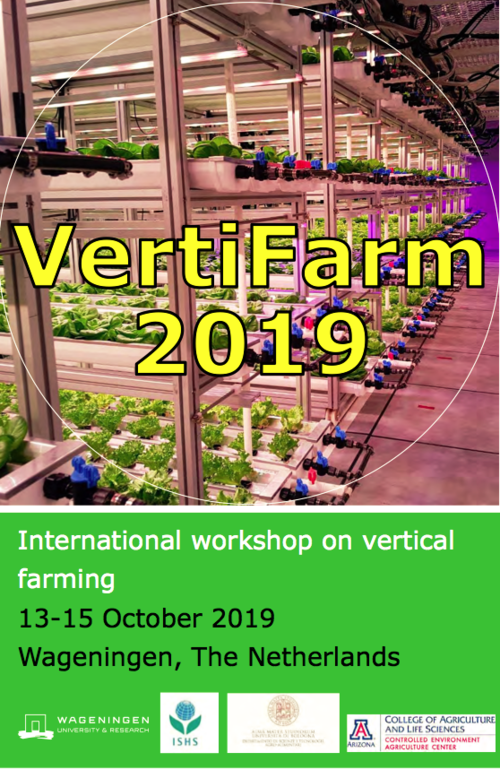
Vertical farming offers a new route that could fit future urban food systems. Vertical farming is a rapidly developing technology where plants are grown under fully controlled conditions in buildings in many stacked layers without solar light. Other terms used for this type of vertical farms are city farms, indoor farms, or plant factory with artificial light (PFAL). Vertical farming is a next level production system, which allows production of plants at any place including the most urbanised regions of the world.
The use of LED light and the full control of both the aboveground and belowground conditions in combination with the right cultivar, enables growers to produce products with extra added value, which appeal to the demand of consumers for safe, reliable, and tasty, nutritious food.
VertiFarm2019 - International Workshop on Vertical Farming Wageningen 13-15 October 2019
Contact
prof.dr.ir. LFM (Leo) Marcelis
Contact form
Registration:
- via this website: Registration VertiFarm2019
- the deadline for registration is 6 October 2019
(early bird until 1 August 2019)
Information about the programme of the workshop & How to travel to Wageningen / Housing / Tourist information:
1-Brochure workshop VertiFarm2019 - including programme.pdf
2-How to travel to Wageningen - housing - tourist information 2019.pdf
Sponsorship opportunities:
VertiFarm2019 Sponsoring packages.pdf
Contact:
Questions about the registration procedure:
Niek Botden (HortiLink)
- mail: niek.botden@hortilink.nl
Other subjects (programme, sponsorship etc.): Leo Marcelis
(Horticulture & Product Physiology group)
- mail: leo.marcelis@wur.nl

Minister Visits Farms In Dubai, Abu Dhabi
Farmers Urged To Embrace Modern Cultivation Practices
February 09, 2019
Dubai: Dr. Thani Ahmad Al Zeyoudi, Minister of Climate Change and Environment, paid a visit to a number of farms, where he urged subsistence farmers to move to commercial agriculture and embrace modern cultivation practices to boost their contributions to local food supply.
Among the farms Al Zeyoudi toured were Madar Farms, an emerging agricultural technology company in Masdar City, Abu Dhabi, where he was shown hydroponics containers that the company designed and installed to produce leafy plants all year round.
Other sites the minister visited included Eco-Villa, a pilot project incorporating water- and energy-saving technologies located in Masdar City, Nabteh Farm in Al Khawaneej and the Abdul Latif Al Banna farm in Al Aweer area in Dubai where he reviewed the farm’s agricultural produce and livestock.
Engineer Saif Al Shara, assistant undersecretary for the sustainable communities sector in the Ministry of Climate Change and Environment (MOCCAE), Sultan Alwan Al Habsi, assistant undersecretary for the regions Sector at MOCCAE and Engineer Mohammad Al Dhahnani, director of health and agricultural development Department at MOCCAE, accompanied Dr. Al Zeyoudi.
They toured the agricultural areas of Madar Farms, an emerging agricultural technology company in Masdar City, Abu Dhabi, to view the hydroponics containers that the company designed and installed to produce leafy plants all year round.
They next went to the Eco-Villa, a pilot project in Masdar City incorporating water- and energy-saving technologies. The prototype uses around 72 per cent less energy and 35 per cent less water than a typical comparably-sized villa in Abu Dhabi, displacing an estimated 63 tonnes of carbon dioxide annually.
Later, the officials toured the Nabteh Farm in Al Khawaneej area in Dubai.
The minister was updated about the greenhouses that the company provides to members of the community to install in their homes and help them grow vegetables.
Their last stop was at the farm of Abdul Latif Al Banna, in the Al Aweer area of Dubai.
They were shown the farm’s agricultural produce and livestock.
At the end of the tour, Dr. Al Zeyoudi pointed out that sustaining food diversity relies heavily on innovation and the employment of cutting-edge technologies.
Hamilton Ohio Facility To Be First of Its Kind In North America
By Eric Schwartzberg - Dayton Daily News (TNS)
HAMILTON — A private investment will enable an indoor farming company to complete its previously announced Hamilton facility, which it says will be the first fully automated indoor farm in North America.
The company 80 Acres Farms received “significant investment” from San Francisco-based private equity firm Virgo Investment Group, which invests in companies transforming and disrupting high-potential industries.
Terms of the financing were not disclosed.
Founded in Cincinnati in 2015 by veteran food industry executives Mike Zelkind and Tisha Livingston, 80 Acres Farms is supported by a board of directors representing executive and leadership experience at leading food, healthcare, and other companies.
80 Acres Farms provides customers with a variety of locally grown, just-picked leafy greens, microgreens and vine crops, including the world’s only tomatoes and cucumbers grown completely indoors using solely LED lighting.
The company has developed its own artificial intelligence-powered growing system, sophisticated data monitoring, and automation technologies to deliver high quality and nutritious products at an affordable price.
By locating its indoor farms close to customers, 80 Acres Farms is able to eliminate the costs, time and environmental impact of cross-country transportation, providing customers with a fresher, longer lasting product while drastically reducing food waste, company officials said.
80 Acres distributes to major national grocers, local retailers, restaurants, and food service companies from its facilities in Ohio, Arkansas, North Carolina and Alabama.
“Virgo Investment Group joins our existing notable and experienced food industry investors in supporting the Company to rapidly commercialize the indoor vertical farming technology we have developed over the past three years,” said Mike Zelkind, co-founder and chief executive officer of 80 Acres Farms. “We are optimizing every aspect of our production processes and driving down costs, which is crucial to scaling an indoor farming business like ours.”
The first phase of the Hamilton project under construction at 7512 Hamilton Enterprise Drive is expected to be operational early this year. It will be automated from seeding to growing to harvesting to produce specialty greens, including leafy greens, culinary herbs and kale.
The Hamilton facility will feature handling robotics, artificial intelligence, data analytics, and around-the-clock monitoring sensors and control systems to optimize every aspect of growing produce indoors.
It will allow 80 Acres Farms to start to service what it said is a “substantial and growing demand” for fresh, locally grown produce year-round from both retailers and restaurants.
“Over the past three years we have provided our customers with fresh, flavorful and nutritious produce grown locally in our facilities with no pesticides and highly efficient usage of water and nutrients,” Zelkind said. “We are rapidly increasing yields for our produce, while advancing each generation of our grow zone designs to lower capital costs, production costs and reduce the use of natural resources.
80 Acres Farms’ Cincinnati location sells to Jungle Jim’s International Market in Fairfield and Eastgate, Dorothy Lane Market’s three Dayton area locations, Clifton Market in Cincinnati and Whole Foods Market locations in Cincinnati, Deerfield Twp. and Dayton. It also distributes to several local restaurants.
The company plans three additional phases at the Hamilton site. When completed, the project will comprise over 150,000 square feet of fully-automated indoor farming. The full-phase expansion will allow 80 Acres Farms to provide more product to serve its existing customers and new ones with just-picked, year-round produce.
Produce grown at the Hamilton site will supply Whole Foods Markets, Dorothy Lane Markets, Jungle Jim’s, U.S. Foods, and other retailers and food service distributors.
Zelkind said 80 Acres Farms’ facilities represent “the realization of the next generation of farming.”
“Our vision is to prove that indoor farming can be fully-automated, commercially scalable, higher-yielding, and profitable,” he said.
Eli Aheto, partner of Virgo Investment Group, said the firm is excited to partner with 80 acres to bring freshly picked produce to local markets year round.
“80 Acres Farms has created a unique and automated growing process and has built great relationships with its retail customers,” Aheto said. “We want to help accelerate the company’s growth in this multi-billion-dollar market.
The 80 Acres investment is an expression of Virgo’s long standing focus on investing in energy efficiency opportunities driven by reduced equipment costs, he said. Virgo has completed investments in utility-scale wind, community solar, electric vehicle charging and now an LED lighting driven business
Would You Pay More For Pesticide-Free Food Grown Indoors Using LED Lighting?
It’s such a hot idea that IKEA and world-famous chef David Chang have invested in it but will Australians embrace this new food trend?
news.com.au FEBRUARY 20, 2019
Inside the world's largest indoor vertical farm
It’s pesticide-free, tastes great and can be grown using 95 per cent less water than conventional farming but will Australians be willing to pay more for food grown indoors?
Homewares giant IKEA and world-renowned Momofuku chef David Chang are betting they will be; they are among a number of investors putting money behind indoor vertical farming company AeroFarms.
The company has built the world’s largest vertical farm — in the US — and is now looking to Australia for possible expansion.
AeroFarms chief executive officer David Rosenberg is in Australia this week for the evokeAG conference, an event held by AgriFutures Australia in Melbourne to highlight new technologies, products and practices in the agriculture sector.
Mr Rosenberg told news.com.au the technology would enable places like Perth, where it’s difficult to buy locally grown food, to cultivate vegetables at scale.
“We can grow plants with a lot less water and arable land,” he said.
AeroFarms’ technology allows plants to be grown indoors without soil and using 95 per cent less water.
Its farm just outside New York City in Newark, New Jersey, has a grow room that is 30,000 square metres (about seven acres) and where salad greens are grown in stacks 12 layers high.
Through optimising temperature, water and nutrient delivery, Mr Rosenberg said they have been able to grow a plant in 14 days instead of the usual 30 days.
They can also turn over 25 crops a year because they are not restricted to growing in seasonal conditions, unlike conventional farmers who can generally only turn over their crops three times a year.
“What we can grow in an acre, they (conventional farmers) would need 130 acres,” Mr Rosenberg said.
The Newark farm covers an area the size of about four soccer fields so in order to produce a similar amount of crops, a conventional farm would need about 910 acres, or about 500 soccer fields.
Leafy greens being grown inside an indoor vertical farm in the US run by AeroFarms. Picture: Casey Higgins/AeroFarms.Source:Supplied
The future of farming? Picture: Casey Higgins/AeroFarms.Source:Supplied
Instead of being exposed to the sun, LED lighting is used to help the plants grow. Fertilisers and soil are replaced by hydroponic and aeroponic techniques that allow plants to get nutrients by sitting their roots in water, or misting them with water rich in elements like zinc. Other essentials are also provided: carbon dioxide gas is dispensed from canisters.
“We give them the right spectrum of light so they are getting the same things,” Mr Rosenberg said. “We break down what the plants want and we give it to them.”
This focus on data analytics to give plants exactly the right conditions to grow also means the taste of the food can be tweaked.
While they are not organic, AeroFarms’ greens are pesticide-free and can compete on taste and texture.
The technology has generated a huge amount of interest with AeroFarms raising $40 million in funding last year from companies like IKEA as well as individuals like David Chang and even former CIA director and retired US General David Petraeus.
Korean-American chef David Chang has invested in AeroFarms.Source:News Limited
Mr Rosenberg said AeroFarms managed to perfect the process for leafy greens about a year ago but they were still developing the model for other vegetables.
Another big challenge was convincing people to pay a premium for these products as the process was very energy intensive and capital expenses were also higher.
“In the US we need a 20 per cent premium to make the economics work,” Mr Rosenberg said.
In Australia, he believes the costs would be similar although this depends on how big the facilities are. Large operations make it more feasible to use automation to run the farms 24 hours a day and make them more economically viable.
However, not everyone is convinced that using huge amounts of energy to create artificial sunlight and control the climate is the best idea.
The indoor vertical farming process. Picture: AeroFarms.Source:Supplied
Each layer has its own LED lighting. Picture: Casey Higgins/AeroFarms.Source:Supplied
“There are questions about the sustainability of growing crops using electricity,” CERES Fair Food program general manager Chris Ennis told news.com.au.
Experts have pointed out that lettuces grown in traditionally heated greenhouses in the UK need an estimated 250 kilowatts per hour of energy a year for every square metre of growing area. A vertical farm needs a staggering 3500kW/h a year.
Mr Ennis said it may not make sense for farms to use huge amounts of coal-fired power to grow vegetables.
“We are asking ourselves, does it add up for the amount of lettuce that you get? We are really struggling with that.”
AeroFarms’ indoor farm is very energy intensive. Picture: Casey Higgins/AeroFarms.Source:Supplied
CERES is a not-for-profit community park in Melbourne that has been selling produce grown from its indoor vertical farm for about three years. It has been stunningly successful.
Mr Ennis said the indoor garden only took up about 100 square metres or less, but generated as much income as the rest of their 10,000sq m market garden.
“It’s incredibly productive,” he said. “We grow sunflower sprouts, pea sprouts and radish sprouts and they’re all certified organic. We supply the CERES shop and health food shops all over Melbourne,” Mr Ennis said
However, CERES’s process is different to AeroFarms’ as it still uses soil and sunlight to grow its plants.
Artificial lights are used in an old shipping container where seeds are germinated but afterwards the plants are moved to a poly tunnel that lets light in. Even in the shipping container there are only lights on the roof, rather than above every layer of plants.
Mr Ennis said the beauty of indoor farms was that you could control every aspect of the growing conditions and it used less water but there were still questions around the energy efficiency of growing that way.
“Does it make sense when we’ve got the sun?”, he said.
An indoor vertical garden located inside a poly tunnel at CERES in Melbourne.Source:Supplied
Continue the conversation @charischang2 | charis.chang@news.com.au

Russia-Based iFarm Secures $1 million To Take Its Urban Farming Solutions To The Next Level
By Natalie Novick, February 12th, 2019.
Moscow-based iFarm Project has raised a $1 million round led by Gagarin Capital in support of their urban farming technologies. The iFarm Project’s fully automated vertical farms and year-round greenhouses enable fresh produce to be grown directly in the city, close to consumers.
iFarm distinguishes itself from other offerings on the market for both their hardware and software that facilitates the cultivation of different crops in entirely closed ecosystems. Rather than integrating existing products, iFarm has developed their own multi-layered horizontal shelf system alongside a digital database of parameters to enable a fully automated microclimate.
These “growing recipes” can be downloaded from the company’s central database, enabling anyone to grow crops without a comprehensive knowledge of agriculture. The iFarm system currently offers cultivation solutions for many different types of produce, among them basil, arugula, spinach, cilantro and strawberries. Alongside their current offerings, the company has plans to apply its technology to the floriculture industry in the near future.
iFarm’s vertical farming system can be scaled to build modular farms of nearly any size. A cloud-based management system optimizes conditions for each farm, letting crops grow successfully in any type of available space, including basements, building roofs or spare rooms.
In addition, their internal closed contour technology has been primarily designed to ensure a sterile growing environment. In fact, the company claims no pesticides are necessary inside their farm modules, and vegetables grown inside their farms do not need to be washed before consumption.
“The investments from this round will be used to develop technology and expand our team, including our engineering, construction and agro projects teams, as well as to pilot the technology on the European market,” explained Alexander Lyskovsky, iFarm founder and CEO. Lyskovsky is one of Russia’s most well-known serial entrepreneurs. He previously co-founded Alawar, one of the country’s largest game development companies, and Welltory, an app used worldwide that allows users to monitor stress levels.
The iFarm Project was established in 2017. Today, iFarm has a team of over 30 people and has built five vertical farms and urban greenhouses in Moscow and Novosibirsk. In 2019, the company plans to open an EU showroom and enter the international market.
Agri-Tech Entrepreneurs Eye The Vertical Landscape For New Growth
Newest city farmers mix soilless mediums with advanced technologies to create commercial farming spaces in the city
Lufa Farms co-founders Mohamed Hage and Lauren Rathmell in one of their greenhouses.Courtesy Lufa Farms

February 20, 2019
Lufa Farms is taking to the rooftops to bring its sustainable urban farming vision to reality. The Montreal-based entrepreneurs have become recognized leaders in indoor farming innovation, steadily expanding and refining their rooftop greenhouse concept.
They’re not alone in exploring the potential of urban commercial farming.
Lufa Farms is part of a growing number of agricultural technology entrepreneurs who are finding innovative ways to combine soilless processes such as hydroponics, aquaponics and/or aeroponics with advanced growing technologies to create commercial farming operations in urban markets.
With three rooftop sites up and running, Lauren Rathmell, greenhouse director and co-founder, says they’ll soon be ready to take their concept on the road to other major cities across Canada. “It’s urban agriculture at its best. Growing in a controlled environment allows us to produce crops all year round, closer to where people live, in a sustainable way. The beauty of moving to rooftops is that no new land is required.”

Urban Neighborhoods, Once Distinct by Race and Class, Are Blurring
Urban fabric: America’s cities and metropolitan areas don’t look like they used to. Since the turn of the century, the back-to-the-city movement has changed the demographic and development patterns in metro areas, and the old model of urban/suburban or poor city/rich suburb have largely broken down. As a result, according to a new study in Urban Science, the lines that have traditionally divided cities by race and class have blurred.
Neighborhood fragmentation of Los Angeles, San Francisco, and Tampa in 2010. (Source: Urban Science, Creative Commons license)
Race and class still underpin a stark divide between the most affluent white neighborhoods and high-poverty black neighborhoods, which haven’t changed as much as other types of neighborhoods. The suburbs, meanwhile, are in the midst of a dramatic change that’s making them more diverse, and more like the old model of the inner city.
Today on CityLab, Richard Florida takes a look at how urban neighborhoods, once distinct by race and class, are blurring.

Here's Why Ultra-Processed Foods Are So Bad For Your Health
Ultra-processed foods have higher amounts of ingredients that are known to be bad for your health. Increasing the amount of ultra-processed foods that you eat also shortens your life, according to a new study
These packaged foods can increase overall risk of death.
By Nicole Wetsman February 15, 2019
Ultra-processed foods have higher amounts of ingredients that are known to be bad for your health.
Increasing the amount of ultra-processed foods that you eat also shortens your life, according to a new study. The research, published in JAMA Internal Medicine, tracked nearly 45,000 French men and women over eight years. It found that for every 10 percent increase in the amount of ultra-processed foods the participates ate, risk of death went up 1 percent.
Ultra-processed foods fall at the far end of the NOVA food classification system, which breaks what you eat down into four categories: unprocessed foods (edible parts of plants and animals); processed ingredients (like oils, flour, or sugar); processed foods (which involve cooking unprocessed foods with processed ingredients to make breads or canned vegetables); and ultra-processed foods (which don’t have any intact, unprocessed parts).
These ultra-processed foods are mostly made from substances derived from other foods, preservatives, and additives—designed to create convenient and long-lasting products. Both processed and ultra-processed foods can add excess sugars, oils, and fats to a diet, notes Claire Berryman, an assistant professor in the department of nutrition, food, and exercise sciences at Florida State University. Ultra-processed foods, though, take the amount to the next level—and also contain additives and other highly manufactured ingredients.
The JAMA Internal Medicine can’t say that these foods caused an earlier death, just that they’re associated with an early death. It’s not possible, therefore, to say what exactly in these foods contributes to the problems. However, the high amounts of bad-for-you ingredients are likely to play a role, Berryman says. “Anytime you’re getting an excess of sugar, fat, or salt, there can be problems.” Here’s what’s hiding in the packaging:
Lots of sugar
Ultra-processed foods have, on average, eight times more added sugars than processed foods. So, as people eat more ultra-processed foods, naturally their added sugar intake goes up along with it—which can have negative effects on health. Reports by the World Health Organization, the American Heart Association, and other groups show that eating more added sugars increases the risk for diabetes, hypertension, cancer, and stroke. Consuming added sugar also increases the risk of dying from cardiovascular disease.
Lots of salt
These foods also have higher amounts of sodium—in the JAMA internal medicine study, people who ate more processed foods also consumed more sodium. “We know that when you over consume salt you can contribute to increases in blood pressure [and] hypertension,” Berryman says. In addition, high salt intake is associated with a higher risk of dying from cardiovascular disease.
Fats and saturated fats
The more ultra-processed foods someone eats, the more likely they are to eat a diet that’s higher in saturated fats. “They’re often added to foods for flavor,” says Cristina Swartz, a clinical oncology dietitian at Northwestern Medicine Delnor Hospital. “Saturated fat is well-known risk factor for increasing LDL cholesterol, which can put you at risk for cardiovascular disease. It’s something that should be limited.”
Crowding out nutrients
Eating a diet high in ultra-processed foods is also associated with eating a diet lower in fiber, which decreases risk of death. The new study found that for every 10 percent increase in the amount of ultra-processed food someone ate, the amount of fiber they consumed dropped off significantly. “Excessive intake of these foods can displace the intake of nutrients like vitamins, minerals, and fiber from whole foods,” Swartz says.
Additives and preservatives
Trans fats, which used to be common in ultra-processed foods, were banned by the Food and Drug Administration because of their clear link to high cholesterol and heart disease. But trans fats are just one of the additives manufacturers add to foods. Some research has raised questions about the health effects of others, like high fructose corn syrup, says Berryman, but there isn’t conclusive evidence available to say for sure what they are.
“Sometimes these additives are derived from natural products, but we don’t know the chemical and physical affects the food has on our bodies,” she says. “There’s lots of research in our future, and some of additives might have a similar fate to trans fats.”
However, just because ultra-processed foods can increase overall risk of death doesn’t mean eating them is going to immediately kill someone—it’s still fine to have some ice cream. Living a healthy life means making sure most of your diet comes from minimally processed foods, Berryman says, but eating something high in sugar isn’t going to send you straight to the grave. “Everything in moderation,” Berryman says. “You don’t want to deprive yourself.”
Photo by: Deposit Photos

Virtual Fences, Robot Workers, Stacked Crops: Farming In 2040
It is 2040 and Britain’s green and pleasant countryside is populated by robots. We have vertical farms of leafy salads, fruit and vegetables, and livestock is protected by virtual fencing
Population growth and climate change mean we need hi-tech to boost crops, says a new report
Jamie Doward
17 Feb 2019
An AI-powered platform called Dick that can spray chemicals and fertilisers exactly where they are needed. Photograph: NFU
It is 2040 and Britain’s green and pleasant countryside is populated by robots. We have vertical farms of leafy salads, fruit and vegetables, and livestock is protected by virtual fencing. Changing diets have seen a decline in meat consumption while new biotech production techniques not only help preserve crops but also make them more nutritious.
This is the picture painted in a report from the National Farmers Union which attempts to sketch out what British food and farming will look like in 20 years’ time.
An AI-powered platform called Dick that can spray chemicals and fertilisers exactly where they are needed. Photograph: NFU
“The Future of Food 2040 report is a catalyst to encourage us all to start the debate about our food and our future so we can plan ahead,” said Andrea Graham, NFU’s head of policy services and author of the report, who interviewed 50 experts across Britain’s food chain to gauge their views. “It is also a reminder for government, at a critical time in British history, to make domestic food production a strategic priority in all policy making.”
Andrea Graham, the report’s author. Photograph: Toby Lea
While some of the predictions may seem a long way off, others are already in their infancy. “Even now, there are technologies being developed that can care for crops on a plant-by-plant basis or control the grazing of cattle without physical fences, and by 2040 this technology will be commonplace in farming,” Graham said.
The British farming sector will need to be more efficient if it is to meet a key NFU goal of producing net zero greenhouse gas emissions by 2040. “Over the next 20 years we will face potentially seismic changes in all aspects of society,” Graham added. “An increase in the global population and the need to mitigate climate change will provide opportunities for British food and farming to increase productivity and reduce its impact on the environment.”
The introduction of vertical stacking and recent advances in LED technology will expand the range of crops that can be grown using hydroponics, aquaponics and other controlled environment systems. Worldwide predictions suggest that the vertical farming industry will grow to be worth billions of pounds over the next few years. Leafy salads, and some vegetables and fruits will be widely grown using the technology. However, its high energy consumption will need to have been overcome, and certain crops will remain difficult to grow, the report acknowledges.
Another key trend will be 3D-printed food, which will produce “intricate sculptures out of everyday foodstuffs that will look good and will also be used to improve the convenience and the nutritional value of meals”. This will enable more food to be produced on demand, reducing wastage.
A robotic strawberry picker, designed by the University of Essex. Photograph: NFU
With the UK on course to be the most obese nation in Europe by 2030, a greater focus on healthy food will emerge. The popularity of flexitarian diets, which are predominantly vegetarian with only occasional meat and fish consumption, is likely to continue to increase. Already 41% of meat-eaters currently classify themselves as flexitarian, and the percentage of meat-free evening meals is on the rise in Britain, according to research from Kantar Worldpanel.
In-vitro meat, cultivated from animal cells rather than from slaughtered animals, and insect protein “may well grow in popularity depending on advances in making these protein sources more palatable, and the ability for them to be produced cost-effectively at scale”, the report says.
On farms, technology will play an increasingly pivotal role. Nano-sensors will be able to collect an array of information, such as soil data and moisture levels, reducing the need to perform daily routine jobs such as checking fuel levels and temperatures.
The use of unmanned aerial vehicles (UAVs), or drones, for sensing and mapping will become widespread, while robots will perform labour-intensive tasks such as fruit picking, milking, livestock feeding and even slaughter.
A growing premium for antibiotic-free meat will see the use of biotechnology in food production become ubiquitous. New breeding technologies, such as genome editing to produce plants and animals with enhanced immune systems and disease resistance, will also become commonplace.
“There’s some great technology out there,” Graham said. “The problem is that much of it is still just prototypes, and small-scale. “The challenge is: can we scale up? How do we go from a few scientists working with just one farmer to a much wider uptake?”
Why Vertical Farming Won’t Grow Without More Data
January 3, 2019
Image courtesy of Princeton University
Vertical farming got a lot of attention at the very end of 2018, from Bowery’s $90 million funding round to news of major corporations starting their own farms.
But amid all those numbers and names, one vital piece of information was (and is) missing: We don’t actually know how well the vertical farming market as a whole is doing — if it’s on track to reach its projected $13 billion marketshare by 2024, and if the concept is even as promising a food source as the headlines would have you believe.
That’s where universities come in to play — Princeton University, to be exact. The Princeton Vertical Farming Project (PVFP) researches what the most optimal growing conditions are for indoor farming and how to produce the best crop yield while using the fewest amount of resources (e.g., water, electricity). Led by Paul P.G. Gauthier, an associate research scholar in plant physiology and environmental plant metabolism, PVFP also wants to provide a model for other initiatives and companies by releasing data on their experiments about what works in vertical farming, and what doesn’t.
“I just wanted to study and provide data,” Gauthier said in a phone interview. “Yes, we’re putting [farms] indoors. We never talk about where the waste water is going, how we get the water. Is it really worth it?”
If you’re a startup operating under the pressure of turning a profit, that’s a scary question. However, Gauthier and his PVFP team are free of that burden, so they can afford to ask questions and conduct more experiments: whether that’s trying to grow wheat or questioning the very value of, say, hydroponics, the current darling of the vertical farming startup scene. “It seems that hydroponic would be more efficient, but that’s never really been proven that that’s true,” says Gauthier. The industry as a whole tends to claim things that aren’t, he says, necessarily backed up by data.
The answer, as he sees it, is open-source vertical farming. That is, turning current data about vertical farming into a framework other projects and startups can use to guide their own efforts in the space. Gauthier would like to see PVFP provide an open-source model for vertical farming so the industry can start to answer some of those tough questions and gain a better understanding of the future.
Tied to that ideal is also the need for data to tell us about the not-so-successful stories. For every AeroFarms out there, there are others who go under for various reasons: operational costs, failure to break even, etc. We know very little, for example, about why Chicago-based startup FarmedHere shuttered in 2017. But the answer could help other vertical farming companies operate more successfully.
Gauthier agrees: “A lot of the small companies have something to tell, and we should hear their story.”
He’s quick to point out, though, that even with more robust data to learn from, vertical farming shouldn’t be treated as a savior come to end world hunger. “There’s really a lot of possibility and a lot of strategy, but it’s important to put everything into a context,” he says. Right now, leafy greens and cannabis are the most successful crops grown in vertical farms; neither make for a meal by themselves, particularly when you look at them in the context of food-insecure populations who need higher-calorie food as fuel.
That said, Gauthier does believe there’s a place in our agricultural future for vertical farming. “It will save us space,” he explains. “And eventually in the future, some of the space we’re using for [traditional] agriculture we can restore to forestry and improve biodiversity.” And initiatives like PVFP can also help train a new generation of labor to understand the science and process behind caring for plants, especially in this indoor context.
Right now, PVFP is working towards realizing that open-source model mentioned above, though no data is currently available publicly as of yet. Currently, the project fuels student theses at Princeton, and the greens produced by their experiments are making their way around campus eating establishments, most notably at the Terrance F. Club, one of Princeton’s dining clubs. PVFP would like to eventually supply all of the school’s dining outposts with vertically farmed greens.
There remains a lot of debate around the merits of vertical farming. I could write a 95-page opus on the complexities of the space, and how it’s neither a worrying distraction nor the robot-manned future of indoor agriculture, and instead lies somewhere in between those two extremes. But I don’t have to: research initiatives like PVFP — not to mention a growing number of others, including University of Arizona and Cornell University — are already delving deep into those complexities as they harness data that gets to the heart of vertical farming’s real value.
Newsletter: The Road to CES and Plant-Based Meat Mania January 4, 2019In "Around The Web"
Future Farming Hub Is Creating a One-Stop-Shop Vertical Farming System for 'Anyone' January 15, 2019In "Ag Tech"
How Cannabis Farmers Helped Create the Indoor Farming Industry November 28, 2017In "Ag Tech"
Jennifer (Jenn) is a writer, editor, and ghostwriter based in NYC. At The Spoon she covers agtech, sustainable food issues, and restaurant tech. She is obsessed with IKEA.