


Welcome to iGrow News, Your Source for the World of Indoor Vertical Farming

"Successful Brand Structure And Promotion Are Key To Market Success"
The two greatest influencing factors in the competitive fruit trade are price and brand
Joy Wing Mau blueberry brand promotion
"The annual import volume of fruit into China has been around 4 million tons in the last 3 years. The average annual fruit import value was around 5.5 billion USD. This volume, however, only accounts for 3%-5% of the volume in China's fruit market.
There is still great potential for imported fruit in the Chinese market, and in high-end markets in particular. There are several reasons for this situation. First, the disposable income of Chinese consumers continues to increase every day, as does their awareness of healthy foods. Second, China takes advantage of great trade relations with numerous countries to open the doors wide to a variety of imported fruits.
Of course, the world economy suffered from fluctuations caused by a number of factors. This could have its short-term effects on the Chinese market, but I think that it will not have any lasting, structural influence." This is according to Li Liang of Joy Wing Mau Group.
"The two greatest influencing factors in the competitive fruit trade are price and brand. The continuous increase in living standards in China mean that some previously high-end, expensive fruits have become relatively common products.
Take for example Red Globe grapes or Royal Gala apples. Some other fruits, however, are new in the market. Their novelty attracts the attention of consumers and wins their praise. These new fruits are in a luxurious position of high-quality, expensive fruits. This is the case, for example, for domestic Shine Muscat green grapes, imported Muscat grapes, and Rockit apples."
"Apart from this, branding has become one of the most important ways for consumers to recognize various fruits in the past few years. Several larger trading companies have recognized this development and stepped up the pace of branding in the fruit industry. Zespri kiwifruit, for example, has become the first choice for many consumers looking for kiwifruit.
Envy established its name as one of the high-quality apple brands. Joyvio has established a similarly effective brand for high-quality blueberries. It is particularly important in the multi-layered fruit market of China to establish a unique brand and carry out effective promotional activities. Joy Wing Mau spent many years of industrious effort in the construction of brand structure and brand promotion. They achieved great results in today's fruit market."
"One expression that vividly describes the Chinese economy is that 'Chinese economy is not a small pond, but an ocean.' Although China's fruit trade has felt the effects of the Sino-US trade war in recent years, the overall fruit consumption in China continues unchanged. Consumers still demand high-quality fruit, especially consumers from the rapidly growing middle-class. People have growing standards for healthy food. We are more than optimistic about the future of the fruit import and export industry in China. Joy Wing Mau Group will continue to work hard for the integration of global fruit production core areas and the vast Chinese consumer market. We will bring high-quality fruit from all over the world, and simultaneously promote great Chinese fruit abroad."
Li Liang
Joy Wing Mau Group
Publication date : 2/18/2019
© FreshPlaza.com

How to Have a Hydroponic Farm In A Closet-Sized Apartment
At one point vertical farming as a solution would have been an outlandish solution, but it’s a growing industry, and more than one company now offers setups that the average person can fit into their home and operate without any assistance from an agriculture expert
I’ve long wanted to grow my own produce, even if it’s just lettuce. But since I live in a third-floor walkup the size of a Macy’s fitting room (and that includes the fire escape), outdoor gardening is out of the question.
At one point vertical farming as a solution would have been an outlandish solution, but it’s a growing industry, and more than one company now offers setups that the average person can fit into their home and operate without any assistance from an agriculture expert. Armed with that encouragement, I’ve been shopping for an indoor farm that will a) fit into my tiny apartment and b) compensate for the fact that I’m such a bad gardener that I once killed a cactus.
Here’s what I found:
CityCrop
CityCrop‘s farm has automated much of the science behind plant care, so that a user just buys the device and downloads an app, drops seeds into the farm’s base, then lets the system do the rest. Via notifications to the app, the software will tell you how to adjust the temperature so it’s ideal for your crops and when to water, and will even give plant care tips based on snapshots of your plants.
The farm is also small, which means it easily fits into tiny living spaces. Predictably, leafy greens are the most common crops, though the UK-based company also says you can grow things like edible flowers and strawberries. If the point is access to fresh greens even when you’re a city dweller with no time to grow, this makes sense as a solution — though it doesn’t come cheap. CityCrop is shipping in Q1 of 2019, for £999 (about $1300 USD) excluding shipping and VAT fees. As with any product that has yet to ship, proceed with a grain of caution as there’s no guarantee as to when it’ll actually hit the market.
Ponix Systems
Ponix promises on its website that “you neither need a balcony nor water to grow your vertical farm at home.” The company’s hydroponic farm, named Herbert, is a wall-like slab with shelves mounted to it where the plants grow accompanied by overhead LEDs.
To use Herbert, you place seeds into the pods, which then fit into the shelves. Add water every one to two weeks, and fertilizer every three to four weeks. The system does the rest of the work in terms of helping you maintain healthy plants, adjust light settings, and perform other maintenance tasks. Herbert can grow up to 15 plants at a time.
Because it lives on a wall-mounted panel, Herbert definitely takes up the least amount of space of any farm on this list. Right now it’s selling for €490.00 (~$553 USD) not including shipping. From a cost-point and a space perspective, I’d say Herbert is probably most appropriate for a dressing-room-sized apartment.
SproutsIO
Smart Kitchen Summit alum SproutsIO has a smart microgarden lets you grow up about 36 servings of leafy greens in the span of one month, and on your coffee table. The actual “farm” is basically a smart device in a potted plant, and at a mere 12 inches wide, is a self-contained farm that would fit on your coffee table with no problems.
The microgarden uses a proprietary combination of wavelength-tuned LEDs, sensors (for light, temperature, etc.), and an onboard camera, and connects to your smartphone via the SproutsIO app. The base of the device, meanwhile, can includes and electronic mister, to circulate water, and can expand as plant roots get larger. And it’s dishwasher safe.
The product is expected to ship in Q3 of 2019, for $799. As of right now, SproutsIO is for U.S. orders only.
Ava Byte
Ava Byte also uses a combination of hardware, software, AI, sensors, and a smartphone app to bring intelligent gardening to your tabletop. One thing about this grow system that’s different from others is that Ava Technologies developed lights that adapt to different types of plants, rather than the standard “on/off” timer used with most systems. A time-lapse camera lets you monitor plant growth remotely, and Ava claims its plants can grow three times faster than those farmed with traditional methods.
Ava Technologies, who raised a $2.6 million seed round last year, is another SKS alumni, and you can see company Valerie Song pitch the product in this video to get a good idea of how it works. Byte is by far the cheapest on this list, at $299. Throw in an extra $99 for a year’s worth of seeds.
Opcom
Opcom’s farm is a little bit bigger but will still fit in larger houses. The five-foot GrowWall2 grows up to 80 plants at once, which means you could supply the family with fresh greens every day and still have enough to moonlight as a farmer’s market retailer if you wanted. Opcom also makes a smaller GrowFrame, which fits on a wall. Its smallest, most affordable offering is the GrowBox.
GrowBox is a tabletop, automated hydroponic system that manages its own lighting and water circulation. Each GrowBox is shipped with seeds, and the device itself is super portable, despite its 50-plant capacity. It’s $599, though Opcom sells a ton of different products, and there are even smaller, cheaper options. But if you’re looking to get familiar with vertical farming or just want better greens in your life, this is a good route to travel.
As of this writing, I’m leaning towards Ponix Systems’ Herbert as the best option for indoor farming in a tiny space, as it only requires a wall, not floor or table space. However, this is not an exhaustive list of at-home vertical farms, so if there are others that merit mention, drop ’em in the comments. And stay tuned for further adventures in urban farming.
Related
Meet Farmlab.One, The Latest Indoor Farming Experiment From Germany's Largest RetailerAugust 14, 2017In "Future of Grocery"
Why Vertical Farming Won't Grow Without More DataJanuary 3, 2019In "Data Insights"
What Bowery's Latest Funding Round Says About Indoor FarmingDecember 13, 2018In "Ag Tech"
TAGS
Jennifer (Jenn) is a writer, editor, and ghostwriter based in NYC. At The Spoon she covers agtech, sustainable food issues, and restaurant tech. She is obsessed with IKEA.

Green Roofs Benefit People, Environment
A team at the University of the District of Columbia in the nation’s capital has created a garden on the top of one school building. The garden holds many kinds of plants to help absorb rainwater… and grow food at the same time.
February 17, 2019
by VOA
Water is a necessity of life. Rain, especially, helps plants grow and stay green. But too much rain -- especially in cities -- can lead to flooding. That can cause waste water systems, like sewers, to overflow and send pollutants into rivers and other waterways. To fight the problem, several cities in the United States are starting programs like rooftop gardens.
A labor of love
A team at the University of the District of Columbia in the nation’s capital has created a garden on the top of one school building. The garden holds many kinds of plants to help absorb rainwater… and grow food at the same time.
Architect David Bell has designed five “green roofs" for the university. He says he is excited about the project because “it meant doing something more than just dealing with storm water management.”
“It took advantage of a resource above the city that you see all over where you have these flat roofs that aren’t doing anything and it really made it something that was about urban agriculture.”
Rainwater is collected in large containers and sent through a system that waters the rooftop garden.
The roof is filled with green life that appeals to insects.
Urban agriculture
In cities, “you don't have that many spaces to choose from and so rooftops are just (unused) space,” says Caitlin Arlotta. She is a student in the school's Urban Agriculture program.
The project is part of a research program to see which plants do well on rooftops. The researchers are looking at plants including strawberries, tomatoes and sweet potatoes.
“We have the same experiment running with tomatoes as we do with strawberries, so we’re doing variety trials and we're trying just to see which variety grows the best in a green roof setting.”
Community involvement
The university also has other green spaces.
“We also have our own farm experiments,” Arlotta said. “Within each of those growing systems, we want to be able to tell people which sorts of these crops grow the best.”
One goal of the program is food justice; or in Arlotta’s words, “bringing fresh food into cities where you wouldn't necessarily have that access.”
And that includes produce that might be more recognizable to immigrant members of the community.
“In the U.S., it may not seem very common to use hibiscus leaves and sweet potato leaves as food, but in many places around the world it is.”
Surprisingly productive
Sandy Farber Bandier helps run UDC’s Master Gardener program. It seeks to improve cities and make them beautiful by training people to become Master Gardeners.
She says she’s been surprised by the garden’s output.
“My biggest surprise was that we produced 4,250 pounds of produce the first year and was able to disseminate that to people in need."
Spreading the wealth
She likes being able to show people who live in D.C. and others beyond the nation's capital what -- and how -- food can be grown on a rooftop.
“This is the future for food. What we have established here at this college is food hub concept of you grow it here, you prepare it in a commercial kitchen, you distributethrough farmers markets, food trucks, and then you recycle.”
I’m Susan Shand.
VOA’s Julie Taboh reported this story. Susan Shand adapted this story for Learning English. Caty Weaver was the editor.
Write to us in the Comments Section or on our Facebook page.
________________________________________________________________
Words in This Story
rooftop – n. the top of a building
absorb – v. to soak up liquid
management - n. the skill of organizing people and events
advantage - n. something (such as a good position or condition) that helps to make someone or something better or more likely to succeed than others
urban – adj. in a city area
access - v. a way of being able to use or get something
disseminate - v. to cause (something, such as information) to go to many people
distribute - v. to give away to people

Vegetables Are Being Grown Underneath London in a WWII Bunker

February 19, 2019
News Editor, LIVEKINDLY | New York City | Contactable via: kat@livekindly.co
There is a thriving subterranean farm powered by renewable energy in an old World War II bunker in South London, 108 feet below the pavement.
The farm is completely temperature-controlled, allowing for Growing Underground to hand-deliver fresh microgreens such as pea shoots, red amaranth, fennel, and mustard leaves to local restaurants and retailers year-round. Seeds are sown on upcycled carpet mats and grow with the help of pink LED lights and a hydroponic system that uses 70 percent less water than traditional farms.
Being based in London allows Growing Underground to reduce the need to import from farms miles away, helping local businesses reduce their carbon footprint.
Are Hydroponic Farms The Future?
Co-founder Richard Ballard believes that the company’s methods could help sustain the future of farming. He spoke on the subject at a TEDx Talk in Clapham last June and regularly co-hosts public tours of the underground farm.
Hydroponic farms are scalable, allowing for versatile use by businesses and institutions. In Bristol, Suncraft, a vegan restaurant from the team behind The Gallimaufry, serves fresh greens from the on-site hydroponic farm.
Last May, an elementary school in New Jersey began Princeton University’s Vertical Farming Project, where students from preschool through fifth grade get hands-on experience. The organic produce is then used for meals in the school’s cafeteria.
On a larger scale, Dubai is building the world’s largest hydroponic farm that will grow the equivalent of produce from 900 acres of farmland in a $40 million 130,000-square foot facility. It’s expected that the farm will be capable of producing 5.3 tons of leafy greens daily upon its completion later this year. The produce will be served on airlines and in airports throughout the city.
Las Vegas-based vertical farming company Oasis Biotech also aims to bring sustainable produce to a desert city. Based in an old industrial property, the hydroponic farm aims to grow one million pounds of produce annually that uses 90 percent less water than field crops.
Growing Underground’s greens are available at London retailers such as Whole Foods Market, Waitrose, Marks & Spencer, Ocado, and Planet Organic. Its vegetables are also served at restaurants throughout the city.

Year-Round Produce Cultivates Employment, Food access, And The Economy In Michigan



BRIAN ALLNUTT | FEBRUARY 19, 2019
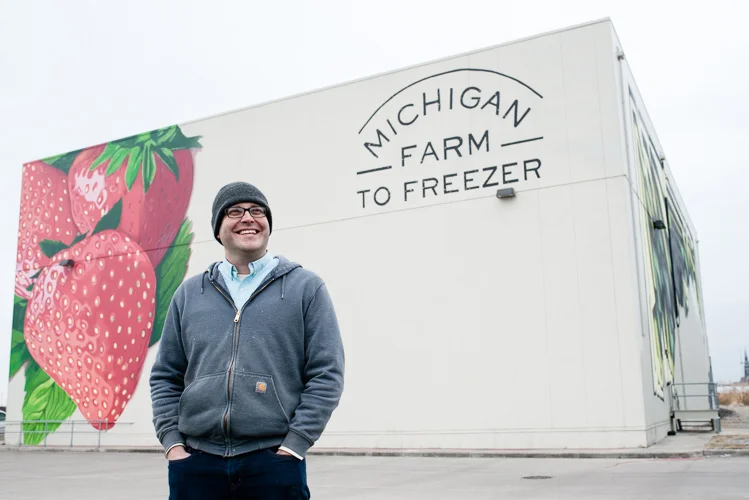
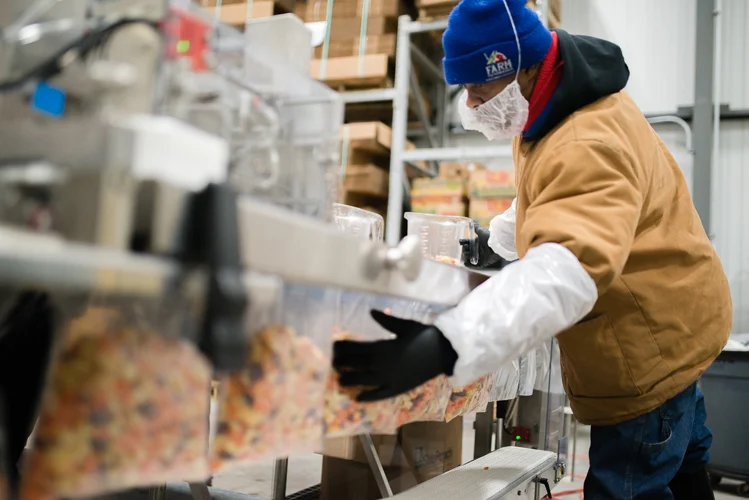
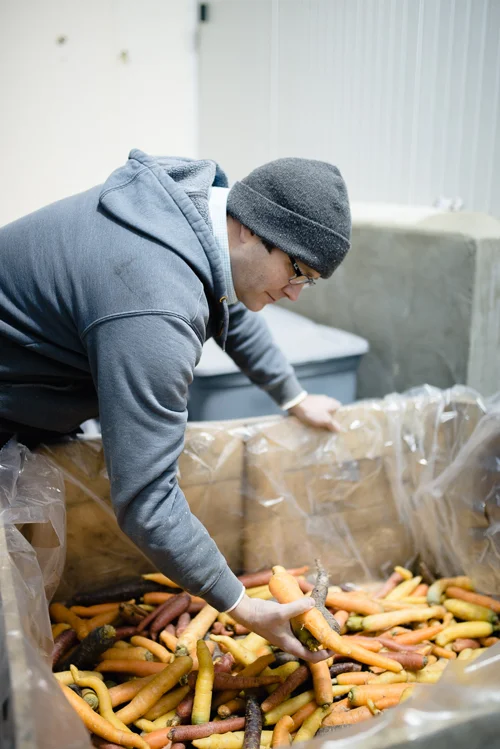
Brandon Seng started his company Michigan Farm to Freezer when he was running a non-profit that managed school lunch programs in northern Michigan. He remembers one time when a 14-year-old student, after going through the lunch line, said he's never
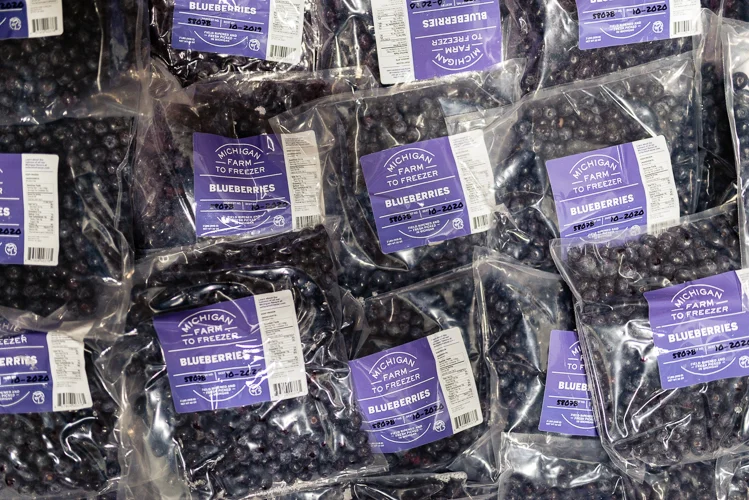
"That's really when I got that gut punch to say we've got to do something bigger, we've got to do something different," Seng says. "And we started buying blueberries the next day."
Along with his business partner Mark Coe, Seng plans to freeze between 1.5 and 2 million pounds of Michigan fruits and vegetables this year with the underlying philosophy that "no one should be raised in this country without knowing what a blueberry tastes like."
He may have picked a good moment to do so. According to the Nielsen Company, frozen foods are surging in popularity after years of decline because customers appreciate the convenience as well as improvements in the products themselves.
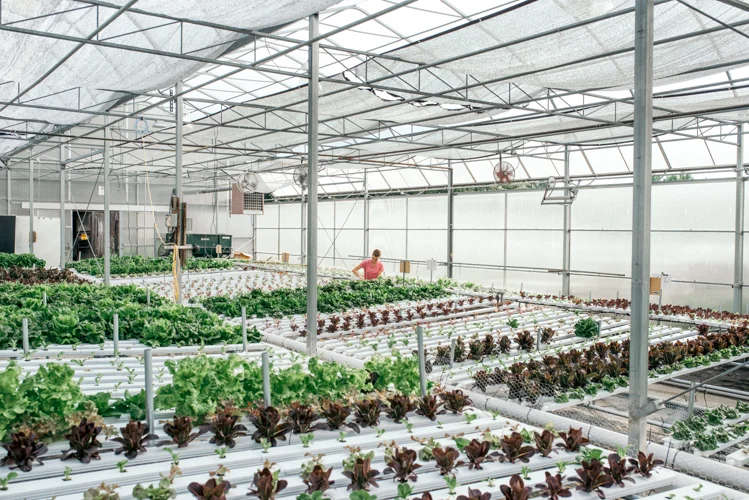
Michigan Farm to Freezer is also capitalizing on consumer demand for locally grown produce, something that it shares with growers who are producing food either under lights or in greenhouses during the winter months, often using hydroponic technology. By either freezing crops at their freshest or delivering them straight from the greenhouse, these businesses are able to compete on quality with winter produce from Mexico, Florida, Arizona or California, which is often harvested under-ripe and spends days in transit.
Together, these developments could be big for Michigan growers who produce the second most diverse array of crops next to California, but were constricted by the short growing season.
"Across the country we're definitely seeing a huge increase in production of food crops in greenhouses as well as indoor vertical farms," says Roberto Lopez, a professor of horticulture at Michigan State University.
And customers are willing to pay more for products that are local and taste better. "The strawberries are really, really good compared to what we get from California and Florida," Lopez says.
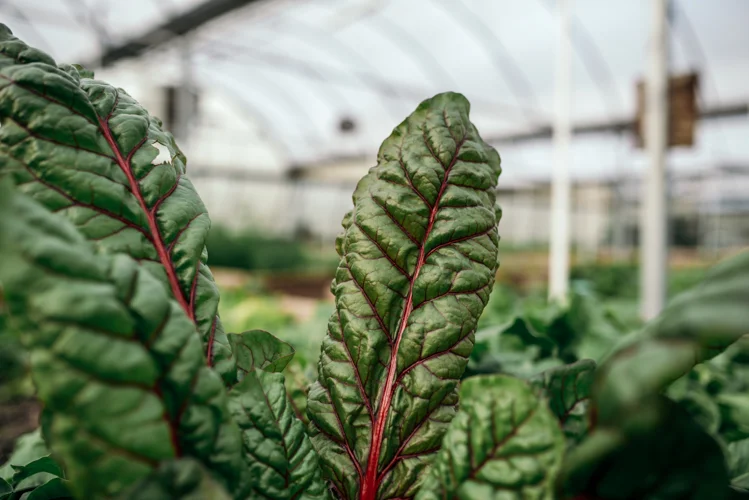
Growers and consumers are also benefiting from recent advances in things like lighting technology as well as the development of cultivars specifically for hydroponic or greenhouse growing. "You can produce pretty much any crop," Lopez says, adding, "of course it comes down to the economics."
Mike Skinner of Oakland Urban Growers is in his second year of trying to figure out the calculus of what to grow and when to grow it on his own indoor farm in Waterford.
"I think it's getting the right product mix and the right customers," he says. "It's sort of like a dating game. You have to get the right people and get them in the right room."
Finding customers who want what he's growing when it's ready is key for ensuring a quality product. "The point is to be ready to harvest right at the peak point," he says.
So far, Oakland Urban Growers has had success selling to restaurants, wholesalers, and country clubs. They've also figured out that lettuce does best in winter, basil in summer, and that tomatoes are a year-round moneymaker as long as they have the heirloom varieties that are unavailable elsewhere. This knowledge has allowed them to grow over their first year and employ several people.
On the frozen food side, Seng is having success selling blueberries, tart cherries, and strawberries. He's also moving a lot of a root vegetable mix, which he suggests sautéing or roasting – rather than steaming – for flavor and texture, but also to retain nutrients.
Michigan Farm to Freezer is moving forward with a "kitted" line of products that includes oil and seasoning in the case of vegetables or pie fillings made with apples, blueberries or cherries. These offer some of the convenience that customers enjoy with meal delivery service, but sourced from local, Michigan farms.
The quality and innovation that Michigan Farm to Freezer offers has allowed them to grow rapidly over their first year in business. They now employ 12 people – many of them joining the workforce after incarceration – at their Detroit facility and are looking to sell $2 million worth of frozen produce this year, sourced from more than 40 growers.
One potential roadblock for this growing market, however, is the farm labor needed to harvest the crops that these companies are selling.
Seng says he's been following proposed changes to the H-2A visa program that allow farm workers to come to the United States. These changes could make it easier for employers to bring in farm workers from outside the country, a perennial issue for Michigan growers.
"It's a big issue in agriculture, not only in Michigan," Lopez says, "but across the country, especially in some of these greenhouses. It gets pretty hot in a tomato or a sweet pepper greenhouse."
He says that certain Michigan growers have tried employing local people to do this work, but, "they just couldn't. They would last a few days or an hour and then they would quit."
And yet, with climate change and water issues influencing winter growing in places like Arizona and California, Michigan has every incentive to find the labor and resources it needs to grow its own production, delivering nutritious hydroponic and frozen food in the process.
Furthermore, the market for Michigan grown crops extends well beyond the state's borders. "We're within a day's drive of more than 50 percent of the U.S. Population," Lopez says, "so that really helps."
This story is part of “Michigan Good Food Stories” a series that explores access, equity, and sustainability in Michigan’s thriving food economy. This work is made possible by Michigan Good Food and is supported by the W.K. Kellogg Foundation.
Read more in the series here.
Photos by Steve Koss.
Read more articles by Brian Allnutt.
Brian Allnutt is a Detroit-based writer and a co-owner of Detroit Farm and Garden.

VIDEO: The Future of Farming May Take Place Indoors
Vertical farms transform conventional agriculture with biotechnology, data science, and engineering. Here’s why the future of farming may be indoors.

Green Life Farms Erects Framing For Flagship Hydroponic Greenhouse
Innovative project prepares to begin commercial operations in the first half of 2019
Boynton Beach, FL (February 15, 2019) – Green Life Farms has begun erecting the steel structure of its state-of-the-art hydroponic greenhouse in Boynton Beach, FL, an important construction milestone as the company prepares to begin commercial operations in the first half of 2019. Once operational, the hydroponic greenhouse, slated to be the largest indoor hydroponic produce grower in the southeast, will offer baby leafy greens to supermarkets, restaurants, cruise ships and other distributors throughout the region year-round.
“Excitement continues to build as we work towards beginning commercial operations in the next few months,” said Mike Ferree, Vice President, Green Life Farms. “Grocery partners, consumers, local officials, and other future clients are impressed with the construction progress. We can’t wait to ‘open our doors’ to this larger community. Demand is very strong for produce that is grown locally using sustainable farming practices and free from pesticides and contaminants.”
Construction of the Green Life Farms’ flagship facility began in 2018; when complete, the greenhouse and packing facility will occupy nearly three acres and produce approximately 750,000 pounds of premium leafy green produce per year.
Green Life Farms’ hydroponic greenhouse will feature innovative Deep-Water Floating Raft Technology (FRT) from Hydronov, an industry leader in the hydroponic space with more than 30 years of experience. FRT helps to conserve water, using the oxygenated clean water in which the plants grow as a conveyer system, eliminating the costs and maintenance associated with mechanical conveyers. The FRT system leads to higher productivity, producing up to 18 crop harvests per year versus the five harvests per year with soil-based greenhouse growers.
In preparation for commercial operations, Green Life Farms recently hired its sales director and head grower. Once operational, the hydroponic greenhouse will employ approximately 16 additional people in the state-of-the-art facility.
Green Life Farms produce will set new standards for cleanliness, freshness, and taste. Grown locally, using sustainable farming practices combined with the most advanced AgTech practices, and kept free from pesticides and contaminants, Green Life Farms baby leafy greens are good for the body, family, community, and planet.
For more information about Green Life Farms, visit GreenLifeFarms.ag. Please contact Elayne Dudley at Elayne@GreenLifeFarms.ag for sales and Raymond John at Ray@GreenLifeFarms.ag for investor relations.
Caption: Green Life Farms has begun erecting the steel structure of its state-of-the-art hydroponic greenhouse in Boynton Beach, FL, an important construction milestone as the company prepares to begin commercial operations in the first half of 2019. Pictured above, an aerial view of the construction site showcases the two greenhouses (top and bottom), which will each total 54,00 square feet, with a packing facility in the middle.
About Green Life Farms
Green Life Farms is constructing a 100,000 square foot state-of-the-art hydroponic greenhouse in Boynton Beach, Florida, with additional expansion planned in Florida and beyond. Commercial operation is expected to begin in the first half of 2019. By incorporating agriculture with technology, Green Life Farms will provide consumers with premium-quality, fresh, local, flavorful and clean baby leafy greens that are good for their bodies, families, communities and planet – year-round.
About Hydronov
Hydronov LLC was purchased by Nick Pranger and Gabe Pranger in 2017. Since its beginnings in the 1980s with founder Luc DeRochers, Hydronov has focused on innovation in the greenhouse industry. The success of a small research project developed into Hydronov’s unique growing system, Deep Water Floating Raft Technology. Today, Hydronov’s technology is a cost-effective, environmentally friendly, and profitable way to grow hydroponic lettuce, herbs, and produce.
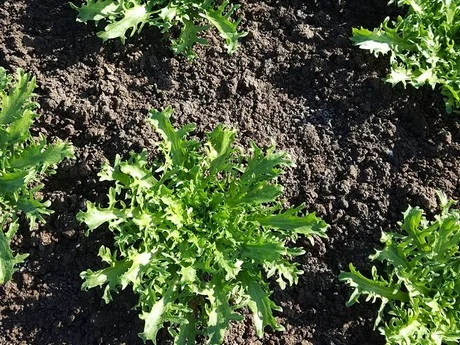
California Rain Affecting Arugula Supplies
Growing conditions for arugula in parts of California have not been ideal after the heavy, consistent rainfall over the last few weeks
Growing conditions for arugula in parts of California have not been ideal after the heavy, consistent rainfall over the last few weeks. Production remains steady though and growers are expecting that the effects from the rain will be short-lived. Moreover, the rainy conditions are something growers say they are accustomed to during winter and therefore plan accordingly.
"We grow both flat leaf and the more popular wild arugula year round," said Mark Lopez of Kenter Canyon Farms in Sun Valley. "At the moment, it has been very difficult because there has been more instances of mildew due to the rainy and humid conditions over the past month. For the most part, supplies have remained consistent. We plant in two-week cycles, so if there are any problems, they never lasts long. As a result, we are hoping the issue with the presence of mildew will disappear very shortly."
Multiple packaging options
Kenter Canyon Farms grows a wide selection of salad greens including Baby Kale, Tatsoi, Mizuno as well as ingredients that make up the spring mix blend. The company supplies a diverse mix of customers from high-end restaurants to retailers, mainly in the Los Angeles area. Consequently, they also have a varied selection of packaging options to suit each market.
"Arugula is always in high demand for salad mixes, gourmet burgers, restaurant menus and for family meals," Lopez shared. "Kenter Canyon Farms has multiple packaging options from as small as a 5oz clamshell for our retail customers, up to a 4lb bulk case for foodservice. We only deliver to the LA produce district, however our products do appear nationally."
"We are a California family farm producing year round crops of certified organic lettuces, herbs and leafy greens," he concluded. "Seasonally, we produce Valencia oranges, navel oranges, Meyer lemons and heirloom avocados. We also grow a selection of heritage tomatoes for our local farmers markets."
For more information:
Mark Lopez
Kenter Canyon Farms
Ph: +1 (818) 768-5545
mark@kentercanyonfarms.com
www.kentercanyonfarms.com
Publication date : 2/19/2019
Author: Dennis Rettke
© FreshPlaza.com
“Access To Equity Capital is a Competitive Advantage”
Equilibrium Capital on Revol Greens & Houwelings investments
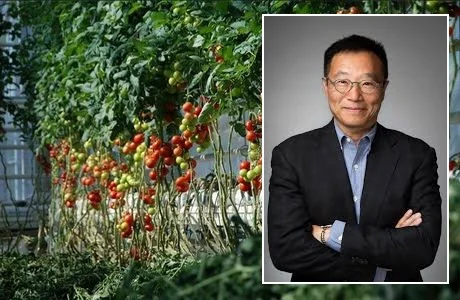
There’s a new kid on the block investing in the greenhouse industry. Early this year, Revol Greens announced a facility equity partnership with Equilibrium Capital - and just two weeks later Houweling’s Group was connected to the same investment company. Then there's a third investment, in a yet to-be-named hydroponic berry producer. Time for a chat with David Chen, CEO with the firm. “We definitely look for more opportunities to expand in the greenhouse industry.”
'Strategic advantage'
"Something that's hard to understand for a lot of farmers is that when an industry starts to accelerate, the access to several forms of capital, especially equity capital, becomes a strategic advantage. Most growers and operators have been used to access to bank debt, and have interpreted that as all they needed. What we see is that the growth has accelerated in the US, following a growing market demand. The expansion is no longer five hectares, ten hectares, the expansion is now twenty, thirty hectares, maybe fifty hectares. In this accelerating industry, growers are discovering that access to all forms of equity capital is a competitive advantage,” David Chen with Equilibrium Capital explains when asked about the growing role of investors and foreign capital in horticulture.
"I think the first wave were a number of large tomato operators that took on some outside investors”, he continues. “But I think the real start of this was when the leader in the greenhouse tomato market started to expand and accelerate the amount of acreage that they partnered with and owned in their corporation. And then when they took on some private equity, I think that that signalled the next chapter of this industry.”
In January Revol Greens, a Minnesota greenhouse farm, announced a facility equity partnership with Equilibrium Capital to drive expansion in 2019.
Landlord
And now Equilibrium Capital has taken its first steps in this business as well. The company has an extensive portfolio in wastewater, energy facilities and permanent crops, and has recently expanded into the horticultural industry. “Investing in agricultural infrastructure”, he calls their strategy, explaining that the company has no ambition to be involved in the day-to-day running of the companies they invest in. Rather than participating in the company, they extend the greenhouse operator’s balance sheet.
To make it concrete: Equilibrium is not investing in greenhouse operating companies, but is buying greenhouses and building out future greenhouses. By now, they've invested over $100 million in three large-scale greenhouse operations in California, Utah, and Minnesota and they plan to commit $2 billion to indoor food production over the next five years.
“Our objective is to acquire or build a set of greenhouses and hold onto them for a long period of time. To growers, we operate like a landlord. We give the grower, the operator of the farm, more options to accelerate and manage their growth.”
For example, in the Revol Greens investment, the company bought the existing greenhouse, making it possible for Revol to lease these premises and free up capital and begin plans for expansion. “We do not own any part of Revol. We own the greenhouse and financed the expansion of the greenhouse itself”, he says, comparing it to when companies like FedEx or DHL expand. “They don’t own their distribution center real estate. They own the business and operate the business inside the real estate. Airlines don’t own their terminals, Microsoft don’t own their data centers buildings.
The main advantage of the Equilibrium business model, David explains, is that a grower remains independent: “We just get him some fuel in the tank – and upgrade his motor at the same time!”
To Equilibrium themselves, it provides a safe solution. “In agriculture, putting too much debt is always dangerous. That's why our strategy has been to stay an equity investor, and to hold to very tight debt equity ratios, where the investment is still dominated by the equity."
Portfolio expansion
Having gotten a taste of the market with their recent acquisitions, Equilibrium is looking to expand their portfolio in the horticultural industry, in both existing greenhouses and expansion. Looking at the industry in general, David sees tremendous growth ahead in the next decade. "I can't emphasize enough what a driver climate is in the development of horticulture in non-Mediterranean growing climates. Even the regions that normally have stable weather have to get used to less table weather. Then there's the desire for regionality and for greater variation in the food that we eat. All together this is pushing and propelling indoor agriculture forward. Over the next decade, we're going to see acquisitions, mergers. You're going to see food companies outside of horticulture begin to invest in this area", he speaks. “We not only want to participate in that movement, but to be a leader and pioneer in the financing of that growth. We're believers that a horizontal high-tech greenhouse is going to become a mainstay of vegetable and fruit growing in this next decade, also outside of northern Europe.”
Like many participants in the industry, David emphasizes the importance of knowledge of farming. “Because greenhouses are hot right now, everybody reads about it and says, 'oh, I can do that'. The only caution that we have is: if you don't have experience, then at least have humility! The common belief seems to be there’s three pipes at one end of the greenhouse – putting in seed, water and fertilizers, and a fourth one on the other side, where the tomatoes come out. Well, we know there’s a lot more going on. That’s why we’re looking for the best, most experienced operators in the category, and like to be partners with them for their growth.”
In this outlook, he’s not afraid to cross the US borders. “If some of the Dutch growers were interested in expansion outside of Northern Europe, we would be a great partner for them to expand into Asia, North America, or even South America. Let’s put it like this: if experienced growers bring their knowledge to the table, Equilibrium provides the necessary capital.”
For more information:
Equilibrium
971-352-8430
info@eq-cap.com
eq-cap.com
Publication date : 2/18/2019
Author: Arlette Sijmonsma
© FreshPlaza.com
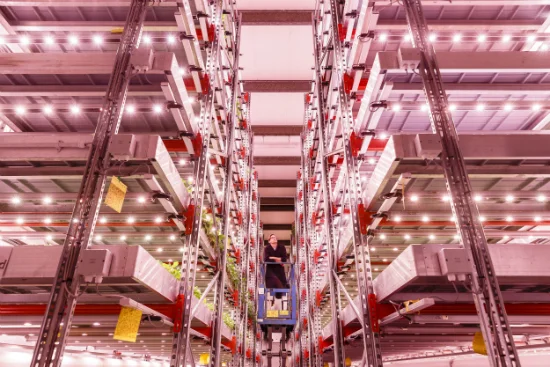
Vertical Farming: Pick-Your-Own Fruit And Veg At Retail Parks?
Is there a business case for wide scale commercial vertical farming in the UK or will it remain a niche opportunity for high-end restaurants and retail? This is the challenge to be discussed by early adopters at the Agri-Tech East conference‘Bringing the outside in - Innovating for Controlled Environment Agriculture’ next month (19 March).
19/02/2019
Advances in technology, from more energy efficient LEDs to better sensors and advances in soilless cultivation, are enabling the expansion of novel farming methods, but how might controlled environment agriculture disrupt the value-chain? Agri-Tech East's 'Bringing the outside in' investigates.
Is there a business case for wide scale commercial vertical farming in the UK or will it remain a niche opportunity for high-end restaurants and retail?
This is the challenge to be discussed by early adopters at the Agri-Tech East conference‘Bringing the outside in - Innovating for Controlled Environment Agriculture’ next month (19 March). Advances in logistics and the falling cost of LED lighting may enable year-round growing of undercover produce in the UK, but will energy costs and technical issues delay scale-up and integration within the food supply chain?
“We do think there is the potential for indoor farming to be commercially viable and there are some immediate gains for growing crops such as leafy salads in high hygiene environments,” comments Lindsay Hargreaves, MD of Frederick Hiam, a farming and fresh produce business with farms in Suffolk and Cambridgeshire. “Growing indoors provides greater control of quality and quantity and fewer inputs of plant protection products.
“There is also the matter of growing crops closer to the point of consumption. Being able to grow more exotic crops in East Anglia close to distribution centres would reduce the food miles. Additionally, there are opportunities to grow crops for pharmaceuticals, cosmetics and vaccines within a controlled environment.”
There are many approaches to indoor cultivation, such as deep-water hydroponics, vertical soilless cultivation, and aeroponics, where exposed roots are sprayed with nutrients. All of these methods are to be discussed at the conference along with advances in monitoring and robotics.
However, despite the news that Sterling Suffolk, one of the UK’s most technically-advanced glasshouses, is set to produce millions of tomatoes starting in February 2019, the cost (£30M) and the technical challenges mean there are few commercial installations in the UK.
Also, it is proving difficult to demonstrate to retailers that controlled environment agriculture (CEA) can bring tangible benefits to their supply chain.
Kate Hofman, co-founder of GrowUp Urban Farms, which from 2015 to 2017 operated 'Unit 84', a commercial-scale aquaponic urban farm inside an industrial warehouse. The 8,200 square feet of growing space could produce enough for 200,000 salad bags and 4,000kg of fish each year. It sold directly into restaurants, through a New Covent Garden distributor and also through bricks and mortar supermarkets and Farmdrop, the online supermarket.
Kate comments: “A key learning over the last six years is that we can’t just focus on technology – we have to partner along the supply chain to create a business model that ultimately delivers commercial success for growers and retailers.
“One of the major challenges for CEA is to optimise operations to bring down the cost of production to match existing imported products. Our prototype urban farm showed that it was possible to use CEA commercially, and we were able to demonstrate the demand for the produce we could grow. This ranged from specialist micro-greens and cut herbs through to mixed baby leaf salad.
“We are now working on scaling up our business. This will involve relocating, so that our production is co-located with a renewable energy plant and working in partnership with more traditional farming businesses to integrate their experience and expertise.”
There are also technology challenges to be addressed when trying to meet the highly variable consumer demand for high quality, fresh produce.
G’s Fresh supplies baby leaf crops all year round, with much of the winter supply grown in Spain and Italy to ensure security of delivery. In summertime it produces a huge amount of outdoor salad crop, particularly lettuces and celery in the UK. Ben Barnes is investigating how controlled environment agriculture can increase the long-term viability and profitability of both of those parts of the business.
The organisation has a large standard greenhouse facility that is used to propagate seedlings for planting out into the field. It is running two projects: Smart Prop, which is looking at increasing the efficiency of the propagation facility to improve growth and make stronger plants so they transplant better back into the field. And Winter Grow, a pre-commercial trial, to see if it is feasible to produce baby leaf crops during the winter at an affordable price point.
Ben explains: “I'm going to be talking at the Agri-Tech East event about the commercial journey, in terms of the go and no-go decision-making process and what the key things are that we need to learn in order to be able to make those kind of investment decisions.
“One element of this is the development of ‘lighting recipes’ to enhance plant growth characteristics. We've got multi-spectrum LED lights, so we can turn up the different amounts of red, blue, green and white, and even far red light. These are fairly expensive, so once we have worked out what works best we can buy fixed spectrum lights, which are a tenth of the cost.
“You think LEDs are very efficient, but they still generate a heck of a lot of heat when you’ve got them turned up to full. It is more about keeping the space cool, and the plants obviously are transpirating so we've got dehumidifiers in there sucking the moisture out of the air.
“One of the biggest problems with the vertical farming concept is this interaction between moisture and temperature. You’ve got the two factors constantly fighting against each other and that ends up sucking up huge amounts of energy if you're not careful.”
Dr Belinda Clarke is director of Agri-Tech East, an independent membership organisation that is facilitating the growth of the agri-tech sector, comments that the commercial challenges need addressing along with the technical and agronomic aspects: “The promise of CEA is sustainable, intensive production but achieving that may require a different type of value chain.
“It could be that supermarkets of the future allow you to pick your own fruit and baby leaf instore, or we may see large-scale distribution of veg boxes, with produce grown indoors in optimum conditions or perhaps traditional growers would have more flexibility to grow a greater range of produce all year around with less waste.
“These ideas all have potential but also require significant capital investment and creative solutions for energy management. These are some of the themes we will discuss in the conference.”
'Bringing the outside In – Innovating for Controlled Environment Agriculture' taking place on 19 March from 10.00 – 16.00 at Rothamsted Research, Harpenden. It will look at the different growing systems, emerging technologies, the challenges of implementing a system and the logistics involved with integrating a controlled environment agriculture into the food value chain.
Agri-Tech East is an independent business-focused cluster organisation for the East of England. It is creating a global innovation hub, to improve the international competitiveness of plant and crop-based agriculture and catalyse economic growth.
Anti-GMO Groups Petition USDA To Exclude Hydroponic Farming From Organic Certification
Cathy Siegner | Food Dive | February 13, 2019
Organic movement schism? Fight over hydroponics puts $50 billion industry in limbo
The Center for Food Safety filed a petition with the Department of Agriculture Jan. 16 urging the agency to exclude hydroponically grown produce from eligibility for the USDA Organic label. The group wants the USDA to make sure “ecologically integrated organic production practices” are required for organic certification and revoke existing organic certifications previously issued to hydroponic operations.
The petition, endorsed by 13 consumer groups, organic growers and an organic retailer, stated growing food without soil doesn’t meet federal organic standards and violates federal law requiring soil improvement and biodiversity conservation….
[T]he National Organic Standards Board recommended in 2010 that hydroponic not be considered a certified organic growing method….However, board members narrowly voted in November 2017 not to exclude hydroponic crops from organic certification.
Hydroponic growers see themselves as responding to the demand for local organic food. Plenty, a San Francisco-based vertical farming company that grows leafy greens and herbs indoors without soil, wrote to the [USDA’s] NOSB [National Organic Standards Board] in 2017 saying all available innovative solutions must be explored, particularly those that can save resources.
“For example, Plenty’s organic growing system yields up to 350 times that of traditional systems and can be located close to consumers, regardless of climate, geography or economic status….” the company’s testimony said.
Read full, original article: Petition asks USDA to exclude hydroponics from organic certification
US: Florida Hydroponics Grower Brings Produce To Lucky’s Markets
Orlando-based Eco Convergence Group (ECG) is bringing three of its HyTaste lettuce varieties to consumers of all 18 Lucky’s Markets in Florida over the next six weeks
Orlando-based Eco Convergence Group (ECG) is bringing three of its HyTaste lettuce varieties to consumers of all 18 Lucky’s Markets in Florida over the next six weeks. The produce is currently available in two Orlando stores. It will be available at an additional five stores in Orlando, Sarasota and Naples on Saturday, Feb. 16.
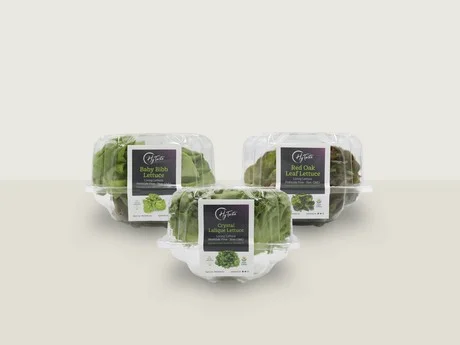
Baby Bibb, Red Oak Leaf, and Crystal Lalique are the three selections of living lettuces to be sold in stores. The hydroponic lettuces are locally-grown, pesticide, fungicide, and insecticide free, as well as non-GMO. To ensure food safety, the production facilities are operated like cleanrooms.
“We’re thrilled to introduce our lettuces to Lucky’s Market shoppers,” said Cristian Toma, Ph.D., Chief Executive Officer of ECG. “We grow our produce in highly controlled environments, providing perfect conditions year-round with no seasonality, so consumers can continually purchase our products at stable prices throughout the year.”
Since its inception in 2010, ECG has focused on providing produce that is nutrient dense and has the best taste through an innovative vertical hydroponic system. The group has supplied HyTaste produce to high-end hotels and restaurants in Orlando since April 2018. This is ECG’s first time going retail, and the team has plans to expand to other retailers in the near future.
For more information:
www.hytastechef.com
www.ecghydro.com
Publication date : 2/18/2019

Controlled-Environment Growers Power Their Operations With Cogeneration Systems
Cogeneration systems can deliver the electricity, heat and supplemental carbon dioxide that controlled-environment growers can use to produce edible, ornamental and medical cannabis crops more efficiently and more profitably.
January 30, 2019
By David Kuack
The highest density of cogeneration systems in greenhouses is in the Netherlands. Cogeneration systems in Dutch greenhouses represent almost 25 percent of the electricity produced in the country.
“Cogeneration is a technology that converts natural gas into useful energy for greenhouses, which includes inside power generation to heat the greenhouses and the production of supplemental carbon dioxide that can be used to increase plant growth,” said Dick Kramp, founder and CEO of AB Greenhouse Power Netherlands. AB GPN is acting as a vertical cultivation center of excellence for the global AB organization. Over the last three decades AB GPN developed a standardized cogeneration solution for greenhouses which is fully integrated with the cultivation system.
“The cogeneration system purifies the exhaust gases to produce carbon dioxide. The carbon dioxide can be used to supplement atmospheric carbon dioxide for the production of vegetables, ornamentals and medical cannabis. For the production of cannabis, cogeneration is being used to generate electricity to operate the grow lights. Also, heat from the cogeneration system can be converted into chilled water to cool the greenhouses.”
The majority of greenhouse operations that have installed cogeneration systems have done so to support the electrical power they cannot get from the grid.
Photo courtesy of AB Greenhouse Power Netherlands
The cogeneration system is based on the burning of natural gas.
“Fortunately natural gas is relatively cheap at this time,” Kramp said. “Right now cogeneration is the most economical way of producing energy. The founders of AB GPN started with this technology in Europe and have done over 1,000 unit installations in greenhouses.
“In greenhouses the two major costs are labor and energy. Cogeneration is an additional income stream by selling electricity to the grid and/or energy savings for growers to reduce their price of growing. To operate grow lights growers have to purchase electrical power from the grid. They have to have boilers to heat the greenhouses. They have to have chillers to cool down/dehumidify the greenhouses. With cogeneration on site growers can produce electricity so that they don’t have to buy it from the grid and they can produce the electricity themselves for a lower price. Growers save on their energy bill thereby lowering their cost of production. This enables growers to be more competitive.”
Greenhouse, indoor farm applications
Cogeneration systems can be used in greenhouses and in indoor farms.
“A cogeneration system is not just an engine and a generator,” Kramp said “It’s a total system that is integrated into a greenhouse or building. Ninety percent or higher of every Btu of natural gas is converted into useful energy. Cogeneration is the most economical way of converting natural gas into energy.
“With an indoor farm, it’s more energy intensive because it is not making use of sunlight. On the other hand, an indoor farm allows for the creation of its own climate because the building is more controlled. But it is more expensive to create that climate because it is not making use of the sunlight and grow lights have to be installed to light the crops.”
Kramp said the majority of greenhouse operations are using cogeneration to support the power that they cannot get from the grid.
“In Canada, we have sold more than 50 megawatts of cogeneration in Ontario,” he said. All of the cogeneration systems there are supplying power back to the grid as intermittent power.
“Cogeneration was driven by the need for flexible power supplied to the grid. There is a lot of wind-generated electricity in Ontario and there was a need for integrated flexible power. Cogeneration systems were installed in greenhouses to supply electricity back to the grid when it was needed when there was no wind.”
The carbon dioxide produced by cogeneration systems can be used to supplement atmospheric carbon dioxide for the production of vegetables, ornamentals and medical cannabis. Photo courtesy of SunSelect Produce
A vegetable greenhouse in California has a contract with its utility company to supply electricity back into the grid. The electricity generated by the company’s cogeneration system produces heat, carbon dioxide and enough electricity to power its 64-acre operation plus an additional 2,300 homes.
“This greenhouse is creating an income stream out of selling power to the grid,” Kramp said. “The cogeneration engines run during the day to produce electricity. The heat that is generated is captured and stored in a heat storage tank. This heat can be extracted from the tank at night when the engines are not operating. The engines also produce carbon dioxide that can be used during the day to increase crop productivity.”
Need for more electricity
Kramp said many medical cannabis growers in the U.S. and Canada are installing cogeneration systems.
“The biggest driver of cogeneration in this industry is the shortage of power,” he said. “Right now in the U.S. and Canada they are installing cogeneration systems because they cannot get the electricity from the grid that they need to light their crops. Many growers are installing cogeneration systems in order to guarantee that they have enough power.”
Kramp said growers who have installed cogeneration systems will see the value of the systems as the price of produce begins to drop.
“Currently growers are not really interested in reducing their energy bills by generating electricity at a cheaper price,” he said. “The value of medical cannabis will eventually decrease and will become a commodity like other crops. When it becomes a commodity, then the growers will have to lower their energy bills by installing cogeneration to stay competitive.”
Financial incentives
Kramp said the amount of money growers can save using cogeneration depends on the price of natural gas and electricity.
“Substantial savings can be achieved by installing cogeneration,” he said. “Depending on the price of gas, a kilowatt of electricity can usually be produced for a lower price than buying it from the grid. It really depends on the price of natural gas. The exact savings will be determined in a feasibility study that is done before a cogeneration system is advised.”
In addition to the savings that growers will realize from generating their own electricity, Kramp said many states offer financial incentives for installing cogeneration systems. Both the U.S. Department of Energy and EPA promote incentive programs related to cogeneration, which is referred to as combined heat and power.
“Each state has its own cogeneration program where there are different rebate programs available,” Kramp said. “The incentive program in Massachusetts is called Mass Save. The Department of Energy is supporting cogeneration. The agency has a special group that is available to do feasibility studies for growers interested in installing cogeneration systems.
“Massachusetts is also offering rebates for the installation of LED lights. To apply for these rebates a feasibility study has to be submitted. This is usually done by an engineering company. The state is only awarding the rebates when it is supported by a feasibility study that shows the savings from installing LED lights. Growers can work with the lighting companies to determine what types of rebates are available with the state. Combining LED lights with cogeneration is a great way to maximize efficiency.”
For more: AB Greenhouse Power Netherlands, (31) 631635065; dick.kramp@gruppoab.com; https://www.gruppoab.com/en/greenhouse.
David Kuack is a freelance technical writer in Fort Worth, Texas; dkuack@gmail.com.

South Africa To Construct Rooftop Gardens In Johannesburg
By njeringar Feb 14, 2019
South Africa is set to construct rooftop gardens up amid the skyline of Johannesburg in bid to increase commercial production of salads and vegetables in the country.
According to Future Farms, the company contracted for the project, The basis of the farms is an A-frame holding 600 plants, grown with nutrient film technique (NFT). The A-frames are supplemented by beds filled with a medium of coconut husk, perlite, vermiculite and probiotic for crops that need to be planted in greater density, like baby spinach, rocket or parsley.
It is estimated that each rooftop garden needs six such frames to produce a minimum of 3,600 plants during each month-long cycle. Due to the LED lighting panel redesigned by Future Farms to bring down costs, as well as the re circulation of water in a hydroponic system, the electricity and water bill for each rooftop garden will come to far below US $72 a month.
No automatic ventilation or fertigation will be needed for the gardens however, there will be an extra steel in the frame to cope with wind sheer up above the city.
“We started with blue and red light but we’ve moved away from that completely to full spectrum lights because we found out that with blue and red that the plants would grow but it was just missing something, it doesn’t round the plant off nicely,” said Jeremy Rich of Future Farms.
Future Farms work primarily on large-scale commercial hydroponic farms, based on their dual system approach using both containers and tunnels, done on a cost basis appropriate for the developing world and beyond. In the containers every aspect of the growing cycle is controlled, allowing a growth cycle from seed to a 250g head of lettuce within 28 days.
The community will be the largest shareholder in the farm, run by local entrepreneurs who have cut their teeth at the school farm, supplying produce to a large retailer.

The Future of Farming Is Up In The Air
David Thorpe | 14 February 2019
Food that’s grown in the air instead of soil could soon appear on plates in Britain and other parts of the world.
A new investment deal worth $1.8 million to build indoor farms uses technologies developed by a company called LettUs Grow, a Bristol, UK-based startup that designs irrigation and control technology for vertical farms.
The startup will partner with ECH Engineering, which manufactures controlled environment technology, traditionally in refrigeration, and urban agriculture experts from Grow Bristol. Bristol has made a name for itself as Britain’s greenest city.
The company is one of a number of startups in the fast-expanding area of indoor growing who are supplying farm management software, crop analysis and testing services, through to full indoor farm design and build.
A glimpse of the pilot aeroponics project in Bristol showing a variety of produce being tested using the system.
Following earlier seed funding, if you’ll pardon the expression, it’s now scaling up operations to produce its aeroponic system, which suspends plants in the air and feeds the roots via a nutrient-dense mist. This technique results in faster growth rates than conventional hydroponics.
“The nutrients we use are made with mineral salts, not chemicals,” co-founder and managing director of LettUs Grow Charlie Guy told The Fifth Estate.
“They’re formulated for the vegetative stage of growth in hydroponics and aeroponic systems and precisely balanced and manufactured for great results.
“In our system we reclaim and recycle most of our water and any nutrients not absorbed by the plants. Due to this recapture and reuse, we use about 95 per cent less water than traditional field-based agriculture and 30 per cent less than typical hydroponics with our unique aeroponic technology.”
Since the plants are indoors, pest control is possible without pesticides and fungicides, making the production process organic. Previous trials have seen crop yield increases of over 70 per cent compared to conventional techniques for leafy greens, salads and herbs.
Yields and crop cycle times vary from crop to crop. The shortest is just five days for certain microgreens, to just over 30 days for head lettuce from seed.
A pilot project involving Grow Bristol involved an indoor hydroponic vertical farm that produced 100 kilograms of nutrient dense leafy greens every month without the use of pesticides and with minimal environmental impact. It tested over 50 crop varieties and sold the products to over 60 customers.
Having tested over 40 different varieties LettUs Grow’s core crops are: coriander (micro), fennel (micro), leek (micro), kale, pea shoots, sunflower shoots, radish, red cabbage, lettuce (many varieties), coriander, watercress, basil, and pak choi. “They’re our main crops, but we’re also growing rooting and fruit crops too (strawberries, spring onions and carrots, for example),” Guy says.
“We are expanding this facility in 2019 by over 10 times, to allow the testing of more and more crops and to expand our work into strawberries and root crops,” he adds.
Government funding
The $718,810 government funding is derived from the UK’s innovation agency, Innovate UK, and will be matched by $157,918 from other sources and research grants.
The grants came hot on the heels of the disruptive startup’s most recent investment round, where they raised $835,179 from ClearlySo, Europe’s leading impact investment bank, which has an extensive network of high-net-worth individual and institutional investors.
“Our investors see the value, both in terms of financial and environmental/social returns from tackling this systemic global problem. That’s why they got involved in LettUs Grow. LettUs Grow provides the technological innovation piece to the vertical smart farming movement that is currently trending rapidly in the urban context,” investment manager at ClearlySo Matias Wibowo says.
The company has ambitions to supply a rapidly growing global market for efficient and sustainable farming technology.
By 2050, humanity has to increase food production by 70 per cent to feed over 9 billion people without breaking the planet’s life-support systems, which would happen if present agricultural and food industry logistics trends continue. Aeroponics can help to address the colossal degree of waste that presently exists throughout the supply chain.
“The global agri-tech industry is very exciting right now, all stemming from the necessity to improve the economic and environmental sustainability of food production. We are fielding enquiries from all around the world from food producers and farmers who want to experience the benefits of our technology across a growing range of crops,” Charlie Guy says.
The environmental footprint
The Fifth Estate asked Charlie Guy about the environmental footprint of the technology and the energy used in a given system, compared to a soil based or hydroponic system.
He says that it depends on a number of factors, including choice of crop, choice of technology, retail route, geography, climate and season. “One of the key benefits of indoor growing, over traditional methods, is the massively reduced supply chain length. This cuts the carbon footprint of produce substantially.”
LettUs Grow are working on integrating indoor and vertical growing with renewable energy technologies to further reduce energy costs and the carbon footprint.
“Indoor, vertical growing generally acts as a substitute for imported produce,” Guy says, quoting studies claiming that CO2 reductions of up to 90 per cent are achievable by growing produce at its point of consumption using hydroponics, compared to the carbon cost of importing the same product from Europe.
He also refers to independent, academic studies into the startup’s technology that have shown that its patent-pending aeroponic technology can reduce the carbon cost of production against traditional hydroponic vertical farms by between 60 and 90 per cent.
But can the operation scale up? “Scale of operation is one of these determining factors and the vertical growing industry is still some way off the scale currently reached in glasshouse growing,” Guy says.
“The productivity increases demonstrated by LettUs Grow’s aeroponic technology represent another step-change in economic viability of farms. This enables smaller farms to deliver a return on investment up to 50 per cent faster than traditional hydroponic indoor farms.
“Energy and labour are two of the greatest operational costs of running an indoor farm and LettUs Grow are working on solutions to bring these two costs down substantially. LED lighting continues to fall in price and increase in efficiency and advanced automation processes are reducing labour costs further still.”
However, Guy says his system is “lighting agnostic”. “Anyone can use our system with any lighting. In fact, you can use our aeroponic technology without any lights, such as in glasshouses.”
To reduce costs, the company is investigating automation, not dissimilar to that found in giant Amazon warehouses. “We have designed our own automated farm management system called Ostara. It is breaking down barriers to entry for indoor farming and aeroponics. Aeroponic technology has historically been seen as complex and difficult to implement. Ostara makes aeroponics easy.”
The company plans to license its technology in the future. Watch out for indoor farms springing up near you in the not too distant future.
David Thorpe is the author of the book The One Planet Life and the forthcoming book One Planet Cities.
Tags: energy, farming, food, technology

Crop One Solidifies Global Presence With Dubai Office
Sonia Lo Speaks on Panel at Agri Tech Conference
San Mateo, Ca., February 19, 2019
Crop One Holdings (“Crop One” or “the Company”), the world’s largest vertical farm operator through its FreshBox Farms brand, today announced the opening of a new regional office in Dubai, United Arab Emirates. The new office is part of Crop One’s plans to strengthen the Company’s global presence and lay the foundations for a long-term expansion strategy.
The opening of Crop One’s Dubai office follows the Company’s June 2018 announcement of a $40 million Joint Venture with Emirates Flight Catering to build the world’s largest vertical farming facility in Dubai. The 130,000 square foot-controlled environment facility will produce three US tons (6,000 pounds or 2,700 kg) of high-quality, herbicide- and pesticide-free leafy greens, harvested daily, using 99 percent less water than outdoor fields. Construction begins in the second quarter 2019 and first products will be delivered to Emirates’ customers, including 105 airlines and 25 airport lounges, in December 2019.
Coinciding with the Dubai office opening, Ming Zhu, Regional Development Manager for Crop One, has relocated from the Company’s headquarters in San Mateo, California to Dubai. His presence will boost Crop One’s ability to conduct business in and expand within the MENA and APAC regions.
“Opening an office in Dubai is the next logical step to expanding our international presence and further solidifying our relationship with Emirates,” said Sonia Lo, Chief Executive Officer of Crop One Holdings. “Ming brings a wealth of global strategy and business development experience to Crop One, and it is great to have him in Dubai full time to manage our day-to-day operations on a real-time basis.”
“Enhancing Dubai’s food safety and security efforts have never been more important than now,” said Ming Zhu, Regional Development Manager for Crop One. “I am very honored to represent Crop One in the region and serve at the forefront of the UAE’s efforts to gain agricultural self-sufficiency through the expansion of vertical farming.”
The UAE imports an estimated 85% of its food needs. Less than five percent of the region’s land is considered arable, costing the UAE upwards of $3 billion per year. Hyper-productive indoor vertical farms built close to the point of consumption, such as the one being constructed by the Emirates Crop One Joint Venture, are a major step forward for the region to secure its own supply of leafy greens, while significantly reducing the UAE’s environmental footprint. The UAE is actively encouraging agricultural innovation as a means to improve the region’s self-sufficiency. In July, the UAE Ministry of Climate Change and Environment agreed to establish 12 vertical farms in the city of Dubai, allocating 7,600 square metres of land to the growing industry.
Crop One is the only vertical farmer with a proven model at-scale. The Company’s brand, FreshBox Farms, has been in commercial production longer than any other vertical farmer in North America. Using advanced, soilless hydroponic growing technology and proprietary plant science, Crop One grows clean, nutritional, tasty and pesticide-free leafy greens in sustainable, modular enclosures. FreshBox Farms’ leafy greens offer unmatched health benefits and freshness year-round, and, as a result of the Company’s superior capital efficiency, Crop One is able to produce the highest quality greens at 25% to 50% of the cost and at 20% to 60% higher yields than any other major vertical farm operator.
About Crop One Holdings
San Mateo, California-based Crop One Holdings is a vertical farming holding company for two subsidiaries – FreshBox Farms, Millis, Mass., and a joint venture with Emirates Flight Catering, Dubai South, United Arab Emirates. Crop One has been in commercial production longer than any other vertical farmer in North America. It produces the highest crop yield per square foot, at 25% to 50% the capital cost of any vertical farm, due to its unique combination of proprietary technology platform and best-in-class plant science. For more information on Crop One or vertical farming, please visit the Company website at croponeholdings.com or follow FreshBox Farms on Facebook, LinkedIn and Instagram for the latest company news.
About Sonia Lo
Sonia Lo is a serial entrepreneur and highly accomplished business executive who has lived in 16 countries, done business in 35 countries, and speaks seven languages fluently.
Ms. Lo is currently the Chief Executive Officer of Crop One Holdings, the largest vertical farmer in the world. Crop One’s brand, FreshBox Farms, is the only vertical farm today operating profitably at scale, and Ms. Lo is the only female CEO of a vertical farming company globally.
Crop One is expanding both domestically and internationally, including most recently in Dubai through a $40 million joint venture with Emirates Flight Catering. Ms. Lo also serves as Founder and Managing Director of Chalsys, LLP an advisory and direct investment firm focusing on business building, restructuring and asset management.
As Managing Director at Chalsys, Sonia has invested in over 15 global growth stage companies, raising more than $120 million. Prior to Chalsys, Ms. Lo was the co-founder and CEO of eZoka Group, a UK based internet startup-company that was sold to private investors in 2002. Ms. Lo is also a former Director of Global Content for Google, Inc.
She was appointed one of the top Global 100 Technology Pioneers at the World Economic Forum in 2000 and 2001 and was named one of Management Today’s leading 35 businesswomen in the UK under the age of 35. Ms. Lo earned her BA in Political Science from Stanford University at age 19 and an MBA from Harvard Business School.
She holds Professional Chef and Pastry Qualifications from the London and City College and completed certifications in Green Supply Chain Management and Zero Energy Architecture.
Where And How Will Farmers Grow Our Food In 2040?
“Adapt or die.” That saying, made famous in the early 1970s by then-Agriculture Secretary Earl Butz as he encouraged farmers to look for ways to be more efficient and responsive to market signals, still rings true for many in agriculture today.
02/11/19
By Jonathan H. Harsch and Sara Wyant
Editor’s note: This is the second in our seven-part in-depth editorial series where we take a long look ahead at “Farm & Food 2040.” We’ll explore the trends shaping not only production agriculture but the supply chain, food companies, exporters, and more. Part two looks at how and why there may be changes to come when it comes to where food is produced.
“Adapt or die.”
That saying, made famous in the early 1970s by then-Agriculture Secretary Earl Butz as he encouraged farmers to look for ways to be more efficient and responsive to market signals, still rings true for many in agriculture today.
Butz, who grew up on a small Indiana farm and graduated from Purdue University during the depths of the Great Depression, understood that farmers would need to change to stay in business. He didn’t advocate for farmers to necessarily get larger but maintained they would need to adopt new business models to be more efficient. During his lifetime (he died in 2008 at the age of 98), Butz witnessed significant advancements in plant and animal breeding, mechanization, specialization, the advent of biofuels and the rise of organic agriculture, as well as increased urbanization and globalization – just to name a few trends.
Indeed, throughout the last century, U.S. farmers have adapted in response to market demands, new technologies, government decisions and the weather.
"Agriculture is getting incredibly more sophisticated," notes Barry Flinchbaugh, Kansas State Professor Emeritus. "You have no choice but to adapt and change with the times if you are going to survive." He also foresees "less and less commodity production" and "more crops grown with specific attributes desired by customers."
Consider just a few key changes in U.S.cropping patterns over the last 100 years:
Oats: One of the first major U.S. crops, oats initially were grown primarily as feed for horses and mules pulling farm equipment. Acreage peaked at 45.5 million and continued in the 35-40 million range until 1955, according to USDA’s National Agricultural Statistics Service. By 2018, growers planted less than 3 million acres.
Soybeans: Soybeans were first planted in the U.S. in the early 1920s and reached 1 million acres by 1930. But as interest grew in the plant’s ability to fix nitrogen in the soil and market demand ramped up, growers again responded. Last year, farmers sowed over 89 million acres with the oilseed. At the same time, new seed varieties have enabled production to move north. North Dakota growers planted almost 7 million acres in 2018, compared to only 44,000 acres in 1950.
Grapes: Before Prohibition made alcohol illegal in 1920, Iowa was the nation’s sixth-largest wine producer. A movement toward the production of more row crops, the development of new herbicides in the mid-1900s, coupled with a severe blizzard in 1940 all knocked down the amount of grapes grown in Iowa, according to the Iowa Wine Growers Association. Now the industry is making a comeback, with about 100 commercial wineries across the state. Still, the majority of U.S. grapes are grown in California, Oregon and Washington.
California changing: Until the 1950s, Los Angeles County was the top agricultural producer in the U.S, with an estimated 10,000 farms raising cattle, wheat and a variety of other crops, according to an oral history of California Agriculture. As the county’s population grew, agriculture moved to other parts of the state. The growth of irrigated farming in the Central Valley and Imperial Valley, watered by the Colorado River, bumped California to first place among all states in value of agricultural products in the 1950s, a position it holds to this day.
Hemp: Used primarily for its fiber and seed oils, hemp was a prominent crop in the early years of the U.S. According to the February 1938 issue of Popular Mechanics magazine, hemp, which is related to marijuana, could be used in 25,000 different products and was on the verge of becoming “the billion-dollar crop.” However, lawmakers proposed prohibitive tax laws in 1937 and hemp production was banned later that year. Lawmakers reversed course in 1942 when they needed hemp for the war effort and released a documentary called Hemp for Victory, encouraging farmers to grow hemp to support the war. This led to over 400,000 acres of hemp being planted during 1942-1945. Last year, hemp production was legalized in all 50 states as part of the 2018 farm bill, and more U.S. growers are expected to enter the market. In 2018, global hemp retail sales reached $3.74 billion, with an annual growth rate of 15 percent, according to New Frontier Data.
These historical trends provide important perspectives on how growers have adapted in the past and will continue to adapt with new crop varieties and production methods as they make room for a new generation in 2040. As the amount of U.S. cropland continues to decline due to urbanization, there will be a focus on growing more on less acreage and doing so in a sustainable fashion.
New technological innovations, like precision breeding, artificial intelligence and robotics offer promise for solving labor and environmental challenges and, increasingly, meeting consumer demands. Public researchers, combined with private investors, seem eager to provide solutions. According to the latest AgFunder annual report, a total of $2.6 billion was invested in agrifood tech startups in 2017.
The need for new research and innovation is a message the current Secretary of Agriculture has also embraced as he looks ahead to the future.
“As a former farmer, agribusinessman, veterinarian, state legislator, and governor – I have always appreciated the value of ag research. Research is an essential tool that allows America’s agriculture and agribusiness sector to create jobs, to produce and sell the foods and fiber that feed and clothe the world, and to reap the earned reward of their labor,” noted Secretary Sonny Perdue.
Of course, making changes in agriculture – whether it’s a move to new types of crops, a transition to organic farming or new alternatives like urban farming – isn’t usually cheap or easy.
But, if Agri-Pulse interviews with six trailblazing farmers in Illinois, Iowa, Kansas, Montana, North Dakota and Washington are any indications, we can expect larger-scale conventional farming by 2040 along with more diversification into new geographic areas along with organic production and more non conventional approaches like soil-less urban farming.
The six farmers – Allen Williams, Bruce Rastetter, Tim Raile, Doug Crabtree, Gregg Halverson and Dan Albert – all have prepared well in their respective ways, so that their operations can prosper in 2040 and beyond.
The conventional farmers, who are focusing on economies of scale, market-driven diversification, and incorporating the latest technology, expect to significantly expand their production, efficiency, yields and profitability by 2040.
The urban growers expect their high-tech rooftop, warehouse, basement, high-rise tower, or soil-less shipping-container farms to profit from rapidly increasing demand for fresh produce often grown within a few city blocks from the end-consumer sitting at home or in a restaurant.
The organic producers expect that their production methods will be key to reducing inputs, limiting market volatility, improving environmental performance and sustainability, and increasing their net profit. They also expect that over the next 20 years, a growing number of farmers will make the shift from lower-margin, chemical-intensive conventional production to organic and other innovative practices.
The six farmers, along with the other stakeholders we interviewed about what’s ahead for agriculture in 2040, converged on a single point – they say the best way to cope with a soaring global population and an increasing demand for better diets and more meat is through diversification.
“Traditional producers need to be merchants who keenly analyze customer demand and develop markets and logistics to satisfy what the customer wants – not what we think they need because we have a huge pile of product to sell,” says Clarkson Grain Company President and COO Ken Dallmier. The 2040 winners, he predicts, will be producers with “a diverse operation encompassing conventional production methods and organic or specialty products to capture market value margin.”
For Dallmier, “Going all-in to organics may be just as bad a business plan as remaining stagnant in the current market. Diversity in response to demand pull will be key to thriving in a 2040 economy.”
So, expect large conventional farming operations to get larger and more productive thanks to breakthroughs in precision ag, robotics, and data-driven decision-making. But also expect organic production and other alternative practices to continue to grow significantly in response to consumer insistence on knowing what’s in their food, how it was raised, and which specific farm, ranch or indoor artificially-lighted repurposed downtown warehouse it comes from. At the same time, smaller niche operations selling directly to consumers will continue to thrive.
Allen Williams – Straddling the production fence
Allen Williams certainly diversifies. He divides his 2,000-acre operation between organic farming on the 500 acres that he owns and conventional farming on 1,500 acres of leased land to respect landowners’ preferences.
The Illinois farmer says his long-time commitment to organic is based on “sound historical growth for organic demand” and because “data suggests the demand for organic is among all economic levels.” He notes that organic production has been around since agriculture began but now is better than ever because “organic can utilize most modern techniques in agriculture . . . other than GM (genetically modified) technology and the use of unapproved pesticides and plant foods.”
Illinois corn, soybean and organic grains farmer Allen Williams
After considering other options, Williams says he transitioned one of his farms to organic in 1994 because, “Organic production was generating much more margin than conventional agriculture. I had barely survived the 1980s and was looking for a sound production technique to avoid any future economic downturn.”
The result, he says, is that “organic not only rewarded me with larger net returns but also reduced my footprint towards agricultural pollution and seemed to keep the funds spent closer to my home base than my conventional production system.” He expects more conventional producers to shift toward organics “with hope of increased profits” and with new organic provisions in the 2018 farm bill.
But Williams is no zealot. He says “there should be no animosity between these different groups. From my standpoint, there is no need to claim superiority between methods, and all involved just want the best for their family and farm.”
For 2040, Williams expects to see “huge commercial agriculture because of the economies of scale” along with the continuing growth of organic production. “I don’t see any reason they can’t both survive together,” he says. “They’re just meeting different goals.” He adds that because organic and conventional largely use the same technologies, both are integrating the latest methods “to control pests and problems without expensive commercial inputs.”
Doug and Anna Crabtree – Putting CRP back into production
Montana farmer Doug Crabtree is especially committed to helping other growers transition to organic because he witnessed his parents lose their family farm in Ohio during the 1980s. He’s determined to build a stable base of profitability for the dryland organic operation – Vilicus Farms – he and his wife Anna launched in 2009, taking the name from the ancient Roman word for farm manager.
Crabtree plans to expand his 7,400 acres in organic production to 9,000 acres this spring as more area landowners let their Conservation Reserve Program contracts expire at a time of less attractive CRP payments. “The majority of what we farm was once enrolled in CRP,” he says. As the program became less attractive, he says, it has allowed the couple “expand our stewardship whenever we can.”
Doug and Anna Crabtree (Photo: Vilicus Farms)
He’s also pleased that the 2018 farm bill’s new “Urban, Indoor, and Other Emerging Agriculture Production” provisions will enable innovative enterprises to put neglected urban resources to work and seize market opportunities in the same way that Vilicus Farms is making former CRP land more productive in environmentally beneficial ways.
Those opportunities spring from the same surge in consumer demand for organic products, whether it’s grain from the Midwest or city-based local produce grown without chemicals. “I think agriculture needs to diversify itself,” Crabtree says, “whether that be more crops on a given farm or more production systems or more locations that can produce food” such as urban vertical farms.
Crabtree predicts that by 2040 “we are going to continue to have large-scale commodity production of corn, soybeans, wheat, cotton – the traditional products – and of the traditional livestock . . . The farms that are now 20,000 acres in our neighborhood are probably going to be 50,000 or 100,000 acres and there are going to be fewer of them.”
But Crabtree adds that simultaneously, “we will continue to see an increasingly differentiated type of production that is first and foremost diverse – farms like ours that grow a dozen or more crops, that respond to market demand . . . where people are able to take underutilized resources, meet local demand, and make a living for themselves.”
Gregg Halverson – Optimizing economies of scale
North Dakota’s Gregg Halverson and his three actively engaged children still farm the 10-acre potato field that Gregg’s grandfather started with in 1928. They’re now farming some 25,000 acres, mostly in potatoes, stretching from their home farm near Forest River, N.D., down to Texas and Florida.
Halverson, having passed the CEO baton to his son Eric while John and Leah respectively head up operations and marketing, tells us he expects fourth-generation, family-owned Black Gold Farms, based in Grand Forks, N.D., to continue its steady growth over the decades ahead.
With Frito-Lay as Black Gold’s top customer and diversification as a key risk-reduction strategy, Black Gold delivers chip, seed and table-stock potatoes from its farming and packing operations in 11 states.
Black Gold Farms CEO Eric Halverson (left) and Board Chair Gregg Halverson (right)
Along with geographical diversification to manage risk so that “we can be wiped out in one area and be OK in another,” Halverson says Black Gold also keeps expanding its customer base, its branding, and introducing new products like individually wrapped sweet potatoes for microwaving.
By growing potatoes in 11 states, Black Gold supplies local supermarkets with the 5-pound bags of fresh, locally grown red potatoes that consumers prefer. Committed to growing food “close to where it needs to be,” Halverson predicts that “large scale conventional farming will continue to be a very powerful force in agriculture.” Stressing the importance of constantly improving efficiency, he says that “in many cases, scale equals efficiency” and that he expects consolidation to continue in pretty much all phases of farming.
“I think that’s been going on for years and will continue,” he says.
By 2040, he says, Black Gold “may not be that many more acres, but I’m certain that in order to be efficient, there’s going to be more production per acre.” He concludes that “being efficient will be what separates the really successful producers from the also-rans.”
Black Gold Farms has production in 11 states.
As part of his drive for greater efficiency, Halverson says Black Gold is “integrating the new technologies,” but, with farming’s tight margins, “we really have to look hard at these new technologies to make certain that there is a positive ROI (return on investment).” He already is using new technology like data acquisition on his tractors and predicts that “there will be more electronics and robotics, more sensor-driven technology, as a result of the high cost of labor.”
Halverson also expects to see more diversification of the entire ag sector, to include increasing roles for “growing crops on the rooftops of some supermarkets,” urban vertical farming, hydroponics, and high-tech greenhouse ag for “certain very high-value crops” like leafy greens, herbs, tomatoes, and berries. “But to me,” he says, “it’s quite limited as to how many people those farms are really going to feed, so I think you’re always going to need traditional agriculture.”
Tim Raile – Having tried it all, going all organic
“We raised our last non-organic crop this last year,” says dryland wheat farmer Tim Raile. His 8,000-acre operation in western Kansas and eastern Colorado has a third of the acres certified organic with the rest in three-year transition, on track for certification by 2020.
A major blow came this year when Raile’s entire certified organic crop was destroyed by hail. “All we had this year was transitional crops to sell, so it was a tough year.” Fortunately, federal crop insurance softened the blow. Other offsets to the high costs of transitioning came from a contract with Kashi, a Kellogg subsidiary, that provided “premiums on some transitional wheat acres,” and from Clarkson Grain, which provided expert advice on making the switch.
Wheat farmer Tim Raile, right, with his son and grandsons
Raile says he is switching his whole farm to organic because previously “we were in a wheat/corn/sunflower very intensive rotation, with chemicals, herbicides, pesticides. We did that for about 15 years. But we could see that it just wasn’t sustainable. It worked really well for the first 10 years, but then the last five, we could see that the weeds were just evolving as quick as our farm was to be resistant to weeds. It just made it where our expenses were getting out of hand trying to control the weeds and it still wasn’t working so we had to look into something different.”
Raile says he’s among the first in his area to go organic but that “I’m seeing more and more interest and more and more large farms switching to organic.” He’s points to the “many hurdles to go into organic” – such as having to increase his bin storage from about 100,000 bushels up to 250,000. Also, he says, “You don’t get paid near as quickly… Where in conventional ag, you can deliver to the local elevator and get a check the same day . . . In the organic world, it seems to be spread out over time, so there is a lot more management that’s involved in the organic world.”
Beside organics’ extra record-keeping requirements, Raile says, “from the standpoint of growing crops, that wasn’t a difficult transition at all.” That’s because after his 38 years in farming, he’s returning to the low-input, high-management practices he used in his early years. He acknowledges, however, that for newcomers or for conventional farmers who’ve always depended on glyphosate and other chemical quick fixes from local input suppliers, they may have a steeper learning curve.
Like Illinois farmer Allen Williams, Raile is confident organics will continue to thrive in 2040 but that “organic and conventional can all work together.” He adds that organics’ growth will benefit conventional producers.
“Right now, I can drive to two or three elevators within 20 miles of here and there’s piles and piles of wheat under tarps. I’m no longer putting wheat into that system. I’m delivering into a different pipeline. Where we’re importing almost 70 percent of our organic grains into this country to supply the organic market, it shows you there’s really a demand for organic. In conventional ag, I think it’s just the opposite. They export 70 percent and only 30 percent is used in this country.” He’s convinced organics will help the conventional market by reducing oversupply going into the conventional pipeline.
Bruce Rastetter – Investing in the Midwest and Brazil
Bruce Rastetter is aggressively investing both in the Midwest and in Brazil as well.
As CEO of Summit Agricultural Group based in Alden, Iowa, Rastetter sees the Midwest’s solid track record of steadily increasing yields and Brazil’s opportunities for double cropping and triple cropping as a joint guarantee that these two powerhouses of world agricultural production will be able to meet surging global demand that he expects to double by 2040.
As a firm believer in diversification, Rastetter has established Summit as a leader in grain, beef and pork production, renewable energy and international agribusiness development. His Midwest operations include a base of Summit Farm’s 14,000 acres in row crops, 350,000 head of contract hogs, and “the capacity to feed about 10,000 head of cattle.”
Seeing U.S. and Brazilian ag production as complementary rather than in competition, Summit also has 20,000 acres on its two farms in Brazil, with 10,000 acres of cropland rented out and the other 10,000 under native forest. As well, Summit is more than doubling capacity to 140 million gallons at its first corn-ethanol plant in Brazil. It also broke ground on its second 140 million-gallon plant in the South American country last fall, and will launch a third plant this summer.
Bruce Rastetter, Summit Agricultural Group
Rastetter also sees “a place for more organic production” and other specialty crop operations to cater to people “in the urban areas on the coasts” who “want more all-natural, all-organic” and “want to know where their food was produced, how it was produced, and how (a food animal) was cared for.”
At the same time, Rastetter says he believes that large-scale modern production using GMOs is sustainable.
“If you are going to be in large-scale production, you have to be a low-cost producer” and “you’ll have to be a good marketer.” Low-cost, he adds, “means you’re utilizing the best technology, proven technology, you’re having maximum yields, and you’re an innovator at pushing forward with proven genetics and modern production technology.”
Rastetter says he’s “made a small investment” in developing driverless tractors, although he’s always concerned about maintaining profitability. He says he’s sticking with “proven technology” in Summit’s own operations because “there just isn’t the profitability to try things, to be a test farm” and because it’s hard to figure out “what technology that we can put to work that actually delivers lower cost or greater production.”
Rastetter also concludes that to succeed in 2040 and beyond, large-scale producers will need to “be involved in protein production in one form or another, to help diversify the operation.”
Dan Albert – Returning to his ag roots
After growing up in an upstate New York farming community, Dan Albert had no intention of pursuing a career in agriculture. He earned a graduate degree in Landscape Architecture and became interested in the field of sustainable design. Shortly after graduating, he worked on a project called the Eco-Laboratory which “brought me back to my ag-roots,” Albert says.
In 2011, he and his wife, Lindsay Sidlauskas, started Farmbox Greens - a small farm in a converted office space which was about 200 square feet. When they bought a house in 2014, they moved the business into the garage with about 400 square feet of growing room. Equipped with LED lights, vertically stacked trays and a hydroponic growing system, they started growing arugula, radishes and other microgreens
“It was super tiny-scale but we were able to build our customer base, process and reinvest in the business to the point where we had a fairly substantial operation at our house. We were serving about 60 customers including restaurants, farmers market and retailers in the Seattle area,” Albert says.
Farmbox Greens General Manager Dan Albert with his wife Lindsay Sidlauskas
“We are super local in that we grow our greens and deliver them to you within hours,” Albert explained in a video. “That means longer shelf life. They are fresh and more flavorful. We can do this because we are in a controlled environment system. That means we provide the perfect nutrition for the plants, we provide the right lighting and we are pesticide and herbicide free.”
Albert initially began growing with an aeroponic production system but transitioned to a self-designed vertical farm with LED lighting and recirculating nutrient film technique (NFT) irrigation.
“We are working on becoming the most sustainable farm we can be by minimizing our carbon footprint, reusing and recycling our nutrients, not having waste products and trying to minimize our overall footprint on the environment as a farm,” Albert adds.
Unlike many vertical farm startups, Albert started small and learned the ropes along the way. But as his company grew, retailers took notice. In 2016, he was approached by Charlie’s Produce, one of the largest independent produce distributors on the west coast with distribution centers in Seattle, Spokane, Portland, Anchorage, Los Angeles, and Boise.
Alberts says he basically faced two future paths: “Be a “farmer” and focus on growing products and developing technology and the process to produce it. Or focus on sales, marketing, and a distribution network (in addition to the “farming”) to move the products we were growing.” He decided to focus on the Farmbox road and let Charlie’s focus on produce sales and logistics.
“I started this business with the idea that we are here to ‘Scale to make a difference.’ We chose to scale by acquisition and doing so with the help of Charlie’s made it faster that I could have done it on my own.”
Albert is still in charge of Farmbox, but as part of the move, Farmbox was housed in a much bigger and better facility on the Charlie’s Produce campus.
“Everything from the lights, to the growing system, to the water treatment system has been improved. Perhaps the biggest improvement was to our food safety plan. When I was on my own, I just didn’t have the scale or resources to implement rigorous GAP (Good Agriculture Practices) and GMP (Good Manufacturing Practices) plans.”
Now he’s able to serve thousands of customers instead of the 50-100 customers he could fulfill from inside the garage.
When asked about his top advice for others interested in urban, vertical farming, he admitted that it was tough to boil it down to a sentence or two.
“There’s a lot of optimism with the ability for technology to solve the challenges of agriculture. In reality, it’s still farming and the most important thing to remember is that you need to sell the product at a price for more than it cost you to make it,” Albert advises. “At any scale in agriculture, you must have a strong process and be mindful of how big the market is and set realistic goals and make realistic assumptions about how you can build a business in the overall produce market.
Just because it's vertically farmed doesn’t mean all the other vendors aren’t in the market competing. So, all the marketing hype around vertical farms isn’t going to make the market, grow the product, or sell the produce. There have already been many failures in this emerging industry and its frustrating to watch these companies miss the boat when it comes to the core business, which is still farming.”
The Promise and Pitfalls of Urban Farming
The promise of soil-less indoor Controlled Environment Agriculture has attracted young people enthused about both high-tech and agriculture to venture into CEA. One ag design, production, and marketing consultant with broad experience in advising entrepreneurs, investors, cities like Atlanta, and even countries like Qatar and Saudi Arabia about CEA is Henry Gordon-Smith, the founder and managing director of Agritecture Consulting.
Agritecture Consulting Managing Director Henry Gordon-Smith
Gordon-Smith is encouraged by his fellow millennials’ interest in agriculture, hoping it will solve the problem of the aging U.S. farmer, with an average age of over 58, too near retirement age for a vibrant industry. But he cautions eager beginners that despite the increasing importance of high-tech precision ag, automation, and data-driven decision-making to agriculture, these new tools “won’t allow a non-farmer to run a farm independent of a true farmer, and I don’t think we’ll be there by 2040.”
Gordon-Smith also warns that despite vertical farming’s success in attracting investment as a rapid growth, high-tech play, vertical farming still faces steep cost hurdles that have caused some major ventures to fail. “Vertical farming is not the solution,” he says. “It is part of a toolbox of solutions” that must be sorted through carefully to pick the combination that’s the right fit for each specific farm venture and each specific market.”
Picking the best new practices is tough, Gordon Smith says, and requires expert coaching. So, he hopes USDA will offer increasing support for beginning farmers including urban farmers. He also predicts that “every farm in 2040 will need a clear automation plan.” With labor costs and availability already major concerns for U.S. agriculture as a whole, he’s advising his clients to “invest in automation now” and finalize plans for where they need to be with automation within the next five and 10 years.
Gordon-Smith adds that the new technology already in place in high-cost urban vertical farms and in high-return marijuana operations has begun to “trickle down to more traditional farmers,” benefiting the ag sector as a whole. That’s great news, he says, because “obviously you can’t grow everything with urban agriculture.”
Gordon-Smith sees “urban agriculture as a gateway to the agricultural system” and says one reason USDA should encourage urban agriculture “is that it can create a new pathway for young farmers to get into traditional agriculture.” He points out that even a small urban farm is an important training ground, teaching basics like food safety, maximizing production, marketing to the customer, and managing waste in innovative ways.
So, he says, urban ag today may create a new generation of ag sector winners by 2040.
For more news go to: www.Agri-Pulse.com
Related Articles
President Trump celebrates National Agriculture Day
USDA sued over organic animal welfare rule delay
Clayton Yeutter: American agriculture loses a champion
Jonathan Harsch
Sara Wyant Editor/Publisher
KEYWORDS ALLEN WILLIAMS ANDY VOLLMAR ANNA CRABTREE BLACK GOLD FARMS BRUCE RASTETTER DOUG CRABTREE FARM & FOOD 2040GREGG HALVERSON HENRY GORDON-SMITH KEN DALLMIER LAURA BATCHA TIM RAILE
CubicFarm® Systems Corp. Provides Update On Corporate Operations
NEWS PROVIDED BY CubicFarm Systems Corp.
February 7, 2019,
CubicFarms has received a $10.0m equity investment, purchase order, and deposit from a strategic investor, increased the deposit at one of its locations, and announces the addition of 12 machines to its total operating network.
VANCOUVER, Feb. 7, 2019 /CNW/ - CubicFarm® Systems Corp. ("CubicFarms") is pleased to announce the following updates regarding the business.
12 Machines Brought Online in Edmonton, Alberta
CubicFarms is glad to announce that the installation of 12 machines at Swiss Leaf Farms in Edmonton, Alberta has begun operation and is currently selling produce. CubicFarms has a 50% equity interest in this operation. This addition results in 23 total CubicFarms machines in operation.
Received $10.0m Investment, Purchase Order, and Deposit from a Strategic Investor
CubicFarms is excited to announce that it has received a $10.0m investment from a strategy venture. As a component of the investment agreement, CubicFarms and the strategic investor will pursue a joint venture to take the CubicFarms Systems technology to China. The strategic investor has also submitted an order for seven CubicFarms machines, one irrigation system, and one 1/8th scale demonstration machine, and has made a deposit in addition to their $10.0m investment.
Increase in Deposit for Richmond, British Columbia CubicFarms System
CubicFarms is pleased to announce that our third-party partner in Richmond, British Columbia has increased their deposit, resulting in an increase in the certainty of shipment. This will be the fifth CubicFarms facility in Canada, adding 12 machines to the operating network once in production. It is expected to be installed in the second calendar quarter.
"The investment of $10.0m from our strategic investor has further energized all of us at CubicFarms and we are excited and eager for the future," said Dave Dinesen, Chief Executive Officer of CubicFarms. "This additional capital combined with a strong pipeline of deposits for system installations shows that the future is bright for our technology to bring fresh, local, sustainably grown product to market and for CubicFarms to continue to be a leader in the controlled environment agriculture space."
The previously announced reverse-take over of Bevo Agro Inc. ("Bevo") by Sun Pharm Investments Ltd. and the distribution of shares of CubicFarms to Bevo shareholders by way of plan of arrangement successfully closed on January 8th, 2019.
About CubicFarms
CubicFarm® Systems Corp. is an Agriculture Tech and Vertical Farming technology company that utilizes revolutionary, patented technology to cultivate high-quality produce. Founded in 2015, the company's mission is to provide farmers around the world with efficient growing systems capable of producing predictable crop yields. Using its unique undulating growing system, CubicFarms® solves the two main challenges within the indoor farming industry: high electricity and labour costs. Currently, CubicFarms® cultivates living lettuce, living basil and microgreens at its own facility in Pitt Meadows, British Columbia and is partnering with other farmers to establish facilities around the world.
Related Links
SOURCE CubicFarm Systems Corp.
For further information: info@cubicfarms.com, 1-888-280-9076.

"Clean Growing Solutions For Hospitals And Research Laboratories"
Seedo, a high-tech company providing fully automated and controlled indoor growing machines for the cannabis and agriculture markets, has signed a memorandum of understanding for mutual research and development with SYS Technologies, a company specializing in the development and manufacture of innovative indoor and portable clean environment technologies, to deploy next-generation containerized clean growing solutions for commercial use. The systems will be applied to technology used in hospitals and research laboratories, resulting in high-quality yield of both medical cannabis and vegetables.
SYS Technologies will provide Seedo's commercial indoor growing machines with positive air pressure clean environment technologies, resulting in pressurized growing containers that have more filtered air then the surrounding space outside the containers. The protected containers will be bacteria-free with zero environmental influence, allowing commercial operators to cost-effectively generate high yields of lab-grade, pesticide-free product. Even in the harshest environments or with limited space, cultivators can use Seedo's intelligent systems and cloud-enabled app for secure remote monitoring and controlling to harvest the leading-edge of precision agriculture.
"We're honored to be working in alignment with Seedo to design the future of commercial indoor growing technologies," said Mr. Yossi Zur, CEO of SYS Technologies. "With quality standards and environmental stressors rising in cannabis and agricultural markets, our mission to provide the cleanest and highest yield of product for commercial growers is well on track in our partnership with Seedo."
SYS Technologies offers a variety of innovative solutions and breakthrough technology in the field of indoor clean environment systems as well as portable solutions. Its clean air environment systems allow the creation of a defined space that is free of contaminants such as particles, bacteria, microbes, and more. These systems have broad applications, both in the medical field such as operating rooms and isolation facilities, and in the high-tech industry such as cleanrooms that have a variety of purposes.
"We are looking forward to the successful development and deployment of our future containerized clean growing solutions for commercial use," said Zohar Levy, CEO of Seedo. "By adopting cutting edge technology that is already in use by governments, non-profits, hospitals and research institutes all over the world, we will meet the highest quality standards and comply with international health regulations."
For more information:
Seedo
+972-546-642-228
info@seedolab.com
www.seedolab.com

Eight Agri-Food Tech Entrepreneurs From Around The World to Compete Tor $250k in Funding From Radicle Growth At World Agri-Tech Pitch Day 2019
The World Agri-Tech Innovation Summit partnered with acceleration fund Radicle Growth on the second annual Radicle Challenge taking place at the upcoming World Agri-Tech Pitch Day on March 18 in San Francisco. Today, eight startups from around the world have been announced as the finalists to compete in the Pitch Day competition: US-based Agrospheres, Aromyx, Napigen, Traive, Brazil-based AgTrace, Australia-based EscaVox, Turkey-based Tarfin and Kenya-based Tulaa. All eight finalists will benefit from pre-pitch coaching ahead of the summit from Radicle Growth, who will invest $250k in the Pitch Day winner.
Hundreds of seed-stage startups representing diverse technology offerings for the agtech and foodtech sectors applied to participate in the Pitch Day. A panel of judges, including Radicle’s Kirk Haney, Arama Kukutai (Finistere Ventures), Geoff Kneen (Bayer, Crop Science), Mai Komatsu (Corteva AgriScience) and Adrian Percy (Independent Advisor), evaluated the submissions and selected the finalists. The Pitch Day winner will be announced on the first day of the World Agri-Tech Innovation Summit (March 19) and will present within the start-up Technology Showcase on March 20 to over 1,200 global agribusinesses and investors, unlocking powerful opportunities for growth.
Commenting on the entries, Kirk Haney, Managing Partner of Radicle Growth, said: “Once again, we saw a fantastic response for participation in the Pitch Day competition, with hundreds of entries from innovators around the world. Now is an exciting time for agtech innovators and investors, and we’re delighted to support their route to market with this platform to showcase their solutions and to benefit from our $250k investment and mentoring. We look forward to the presentations and to working with the selected winner.”
The eight finalists:
Agrospheres (US) has developed a platform technology for encapsulation of biomolecules and synthetic chemicals. It is developing biological-based crop protection products for the control of thrips and fungi, also working with partners to improve the delivery and efficacy of pesticides and the delivery of double-stranded RNA.
AgTrace (Brazil) is a traceability solution that ensures transparency and information reliability, reducing response time to issues within the food value chain. Based on deep knowledge of farming processes and advanced IoT and blockchain technologies, AgTrace guarantees information security about agriculture processes, using sensors and equipment to register information from inside and outside the farm.
Aromyx (US) enables the creation of quantitative digital representations of taste and smell, by isolating natural human olfactory receptors and converting them to a standardized diagnostic format. Its olfactory database provides a basis for machine learning to analyze flavors and fragrances, offering revolutionary precise quality control diagnostics to compare crops from different locations or production times, and to resolve issues of off-flavors or contaminant.
EscaVox (Australia) has the ambition to help transform the food supply chains to allow better decisions to be made, allowing waste to be reduced and food safety increased. It uses cleverly designed software to import and connect various data sets, then analyses and identifies problem areas. It combines this with tracking data to give the full end to end impact on the product – the ‘voice’ of the product.
Napigen (US) offers mitochondrial CRISPR genome editing, with the goal to create a new platform for hybrid wheat seed production by providing elite male sterile and restoration lines that are uniquely produced by our genome editing tools, introducing robust, non-GMO, male sterile and restoration lines. The hybrid wheat platform will stack valuable traits such as herbicide tolerance and biotic/abiotic stress tolerance without losing their value by undesirable self-propagation.
Tarfin (Turkey) provides farmers with instant, competitive point-of-sale credit terms for their farm inputs purchases. Using proprietary algorithms and an expansive retail network, Tarfin’s machine-learning-based credit algorithms instantly assess a farmer’s likelihood of repayment. Transactional as well as farm level data are taken into account, helping the company convert more leads into sales.
Traive (US) is an ag-fintech solution that unlocks credit to farmers by connecting them to lenders and providing ML-based credit risk assessment and monitoring. Traive brings farmers state-of-the-art technology to offer a novel and fair credit risk assessment, opening the door for affordable funding for their businesses. For lenders, Traive provides a differentiated analysis applied over alternative farming and individual data, while allowing access to a much larger and diversified portfolio of borrowers.
Tulaa (Kenya) is a marketplace for smallholder farmers in Africa to access inputs, credit, training and buyers. Using mobile technology and artificial intelligence, Tulaa enables farmers to buy inputs like fertilizer on credit, receive training on good agricultural practices, and to find buyers at harvest time.
For more information on the challenge, finalists and the summit,
Please visit: https://worldagritechusa.com/radicle-challenge/
World Agri-Tech Innovation Summit:
The World Agri-Tech Innovation Series gathers the industry twice a year in London and San Francisco. Taking place March 19-20, 2019 at the Hilton Union Square in the heart of San Francisco’s business district, the 5th US edition of the World Agri-Tech Innovation Summit welcomes 1200+ agribusinesses, entrepreneurs and investors to a two-day conference, networking events, workshops, tours and cocktail receptions. The event is complemented by the Animal AgTech Innovation Summit (March 18) and Future Food-Tech Summit (March 21-22) at the same venue, together making Rethink Agri-Food Innovation Week (RAFI Week).
Radicle Growth:
The Radicle Growth acceleration fund focuses on the areas of Digital Agriculture, Biologicals, New Farm Systems and Seed Technology. Its goal is to transform the speed of innovation in agriculture by ensuring seed stage companies have the right amount of capital and resources, supporting their growth through expert advisory services and introductions to partners, VCs and investors.
Rethink Events
UK-based Rethink Events organizes international, world-renowned business summits for entrepreneurs, businesses and global investors in sustainable food, agriculture, energy and water.
Further contact:
Tate Slyfield, Marketing & PR Executive, Rethink Events tate.slyfield@rethinkevents.com
Rebecca Lincoln, Business Analyst, Radicle Growth rlincoln@radicle.vc