


Welcome to iGrow News, Your Source for the World of Indoor Vertical Farming

Hort Americas And VegBed Team Up To Offer New Microgreen Medium For Farms
Hort Americas partnering with VegBed to offer their sustainable bamboo fiber microgreen mats
NEW YORK, NY [February 12, 2019]
Hort Americas, North America’s top commercial horticultural supplier, and VegBed, the leader of innovative hydroponic growing mediums have announced today an exciting new partnership to offer microgreen farms a sustainable medium to grow with.
The agreement complements the current growing media product lineup at Hort Americas and strengthens the distribution reach of VegBed's sustainable microgreen mats. It will give farmers a new option and allow them to speed up their production process by growing their microgreens efficiently and cleanly.
VegBed Bamboo Fiber Microgreen Mat (Photo: VegBed)
The demand for soil-alternative growing mediums and more efficient growing methods have been increasing over the past few years, with Hort Americas being the premier supplier to many CEA farms.
VegBed’s microgreen mats fit industry standard 10” x 20” trays and leave no residue. The bamboo fiber is highly absorbent and 100% biodegradable, preventing trays from drying out quickly. The mats will be available on Hort Americas website on [date] and farms can take advantage of a bulk discounted rate.
Commenting on the agreement, Albert Lin, founder of VegBed said "We are thrilled to be partnering with Hort Americas to supply the industry’s growing needs for sustainable microgreen mediums. We are set to increase our presence in the growing medium space and plan to expand in 2019 with new materials and designs. The partnership with Hort Americas is a great addition for our distribution channels and will help both of our companies to continue to grow."
Chris Higgins, founder at Hort Americas adds "Hort Americas is always looking for new, innovative and sustainable products for the commercial greenhouse, vertical farm and hydroponic industries. We tested VegBed at the Big Tex Urban Farm and were very happy with the results we achieved with a product that comes from a renewable resource and is easy to dispose of. We are excited to add this to our ever growing portfolio of grower solutions."
For more information on Hort Americas and their full line of products please visit www.hortamericas.com
To learn more about VegBed growing mediums contact Albert Lin at (646)-247-1783 or email, info@vegbed.com, or visit www.vegbed.com.
About Hort Americas
Hort Americas is an innovative leader in North America’s controlled environment agriculture industry (CEA). Hort Americas strives to innovate agriculture via premium technical support, professional salesmanship, unmatched customer service and outstanding products to our customers in the United States, Canada, Mexico and the Caribbean.
About VegBed
VegBed provides the cleanest and easiest to use grow medium for hydroponic farms and other horticultural applications. We currently offer 3 products – foam grow cubes, bamboo fiber microgreen mats and a bamboo fiber microgreens roll.
VegBed can custom size their products for many application types – aeroponics, deep water culture, nutrient film technique, floating raft, vertical, flood & drain and many more. We work with commercial farms, hobby growers and are headquartered in New York,

American Hydroponics Celebrates 35 Years In Business!
We're so proud to celebrate 35 years of hydroponic solutions! We're a family based company helping other families and communities sustainably produce healthy, clean food. Our founder Michael Christian received the Green Entrepreneur of the Year award, from the Governor of California 20 years after the birth of AmHydro.
It was exactly this type of forward thinking that our company was founded on and continues to operate with today. Jenny Harris joined the company in 2011 and soon after became owner and CEO. With the strong momentum already created, we're moving forward to even greater things. Our future looks very bright, and our goals include:
expanding our international reach
supporting our customers even better
creating the largest controlled environment farm in the US
So, please stay tuned for a year of celebration, great deals and next level hydroponics!
We are committed to hydroponic solutions.
Largest manufacturer of rooftop farms in the world
1st Nutrient Film Technique farm in the US
Only FDA approved food grade HDPE growing channels available in US
Farms on 6 continents and over 60 countries worldwide
Hundreds of commercial hydroponic farms across North America
Hydroponic components are made in the USA
When you choose AmHydro, you get proven results with experienced experts by your side.
Over the past 35 years our dedicated employees have helped hundreds of people follow their dreams and become hydroponic farmers in their local communities. Turning 35 makes us proud to have been able to provide real, working solutions to our customers. People know they can count on us for good, honest service and products that really work.
We're celebrating with 35% off our Epic Nutrient Line!
35EPICYEARS
Use Code Above and Buy Now!
Van Gelder Fruits & Vegetables And PlantLab Establish Indoor Farming Collaboration
RIDDERKERK (NL), 31 January 2019
Foodservice supplier Van Gelder and indoor farming specialist PlantLab have entered into a partnership to produce various types of fresh vegetables in PlantLab’s fully controlled Plant Production Units (PPUs).
Within the Experience Center located at Van Gelder’s new facilities which will incorporate aspects of knowledge sharing, innovation and experience, Van Gelder will showcase specialty crops. Cultivation will take place within two Plant Production Units designed and developed specifically for these purposes by PlantLab. Next to this, PlantLab will produce various crops in large volumes at its own production facilities for Van Gelder. These exclusive crops will enable chefs currently working with Van Gelder to provide new and exciting culinary experiences to their guests.
More vegetables on the table
“In today's world everyone is focused on eating healthier, but this has been a primary focus of Van Gelder for many years. Since early 2011 we have been actively promoting a healthy lifestyle which is a fundamental philosophy to our new facilities”, says Managing Director Gerrit van Gelder. “Together with our growers, suppliers and partners, it is our responsibility to ensure the products we deliver are high in quality, healthy and fresh. This also means that we are constantly looking for products with better taste and higher nutritional value.” Gerrit van Gelder continues: “During this search we encountered indoor farming and in PlantLab we have found a highly qualified partner.”
Indoor Farming at PlantLab
Indoor farming is a new cultivation method which allows crops to be grown in a multilayer system within a completely enclosed environment. “At PlantLab we refer to this as Plant Paradise®; the optimum growing conditions for the most flavorful and nutrient rich produce,” according to Ard Reijtenbagh from PlantLab. Our fresh produce is grown close to the consumer year round irrespective of climate or season. Ard Reijtenbagh explains: “This allows us to reduce transport-related CO2 emissions and waste in the supply chain. Furthermore, we only harvest once our crops have reached their peak in flavour. PlantLab’s products are grown pesticide-free and we utilise up to 95% less water during production”. This local and sustainable manner of growing fresh produce is a perfect fit in Van Gelder’s new facilities.
Partnership
The partnership between Van Gelder and PlantLab has a strong emphasis on sustainable production and delivery of fresh, flavourful, nutrient rich (vitamins and minerals) vegetables with a constant focus on food safety. Furthermore, both organisations will focus on innovation of new products at the Experience Center in Ridderkerk (NL). The newly designed and developed Experience Plant Production Units will provide inspiration for indoor farming, new products, new flavours and vegetables that contain higher nutritional values.
Gerrit van Gelder enthusiastically explains, “Together with our clients we will search for new products with exceptional new flavours. By doing this we can distinguish ourselves with exclusive, high-quality products. PlantLab will collaborate with us in the field of production, product innovation, technology, software and cultivation”. PlantLab’s Ard Reijtenbagh explains: “It’s of great importance for us to be in touch with the market, partnerships such as with Van Gelder enable us to do so”.
About Van Gelde
Van Gelder groente & fruit is a vegetable and fruit supplier located in Ridderkerk, the Netherlands. Founded as a family business, Van Gelder has developed into a foodservice wholesaler with national coverage, with its own growing and production facilities. Using this model Van Gelder has seen substantial growth over recent years and all signs point to further expansion in the future. In order to be able to continue practicing all activities, Van Gelder is currently constructing its new hyper modern facilities. The new Van Gelder facilities form the entrance to the new business park, Nieuw-Reijerwaard, the most sustainable business park in Europe. This is on the same location where Leen van Gelder sr. once started growing Brussels sprouts.
The new Van Gelder facilities will be a place for education, innovation, inspiration and experience focused on fresh! Alongside growing, packaging, processing, storing and transporting vegetables and fruit, the family business will also share knowledge on nutrition, health and sustainability in a unique way.
Seeing, tasting, smelling, feeling and hearing: all the senses will be stimulated at the Experience Center; the meeting place for healthy nutrition.
About PlantLab
PlantLab produces fresh vegetables in its indoor farm systems known as Plant Production Units (PPUs). PlantLab’s technology is developed in-house at its R&D center in ’s-Hertogenbosch (NL). PlantLab supplies products to various supermarkets and foodservice companies in Europe and North America from its Plant Production Units on location.
What Is Vertical Farming And Can It Replace Traditional Farming?
Vertical Farming uses horizontal and vertical space to grow plants in multiple layers, or levels. Plants are watered and fertilized with drip irrigation, and are grown in containers in artificial soil mediums.
By Dee Everleigh | January 29, 2019
Vertical Farming uses horizontal and vertical space to grow plants in multiple layers, or levels. Plants are watered and fertilized with drip irrigation, and are grown in containers in artificial soil mediums. It can be used to enhance a landscape, or to feed millions of people! In 2009, Time Magazine awarded Vertical Farming the World's Greatest Invention Award!
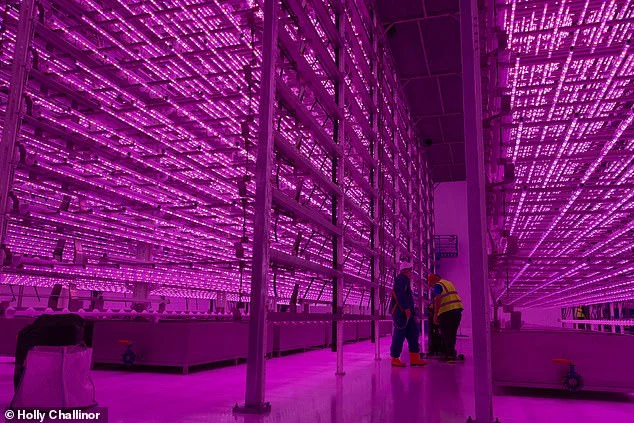
When used on a commercial scale, plants are grown in large buildings, with no windows, under artificial lighting. Some commercial systems have been adapted to utilize natural light, however, most require the use artificial lighting. These indoor growing structures may contain racks up to 80 feet long, stacked one on top of the other, every 3 feet, as high as 12 stories. Plants are grown from floor to ceiling!
A major benefit of Vertical Farming is the reduction of water, and chemical use. Commercial, outdoor agriculture currently consumes 75% of the planet's freshwater, and uses an overabundance of chemicals. Vertical Farming can reduce water use by almost 90% and pesticide and herbicide use can be greatly reduced, or eliminated entirely. More plants can be grown in less space. Plants are grown closer to the point of sale, allowing for fresher produce and reduced transportation costs. Supporters strongly believe that it can reduce the amount of farmland needed, decrease deforestation and pollution, and help make urban areas more self-sufficient.
Unlike traditional agriculture, Vertical Farming requires significant electrical usage. The sun is free for outdoor plants, but not for indoor ones. Electricity is needed for artificial lighting, and for running countless other programs and systems which control moisture, temperature, carbon-dioxide, pH, fertilization and irrigation. In addition, indoor conditions need to be kept sanitary and as sterile as possible to prevent the development of microbial plant diseases. Controlled-environments are driven by automation, therefore, close monitoring and constant adjustment of programs are required.
Despite all these challenges, Vertical Farming has been able to make a profit and succeed. The primary crop grown is baby salad greens and herbs, because customers are willing to pay a premium for them. Baby salad greens and herbs are an $8 billion dollar industry. Currently most of America's baby salad greens are grown in fields in the Salinas Valley, in California. In winter months, a large majority of the production moves to fields in Arizona, or Mexico.
When crops are grown indoors, year-round, there is no need to shift location due to weather changes. Vertical farms can be found in Seattle, Detroit, Las Vegas, Houston, Brooklyn, Queens, and many other locations as well. Henry Gordon-Smith, from the Association for Vertical Farming, there are at least 25 companies the United States that are practicing this type of farming. Outside the US, these innovative farms can be found in England, Holland, Sweden, Japan, Korea, Singapore, and Shanghai.
Vertical Farming will likely never completely replace traditional farming. Both types have their pros and cons, and some plants will never adapt to indoor growing conditions. There is still much to learn because these systems have only been optimized for a relatively small number of plant species. Some companies have mastered the production of baby salad greens, but have not yet attempted to grow soybean, corn, or wheat, the top 3 crops in the United States. Soybean, corn, and wheat make up approximately 90% of harvested acreage.
Currently, Vertical Farming works best for plants that can be grown in low-light-intensities, in high plant densities, and with a short turn over time. All three of these requirements do not meet those of soybean, corn, or wheat. New varieties would need development to find ones suitable for indoor growing conditions. It will take years before these systems are optimized, and farmers are able to profit, growing a variety of plant species. In the meanwhile, Vertical Farming will continue to be a valuable resource for agriculture and will continue to impact our planet, in a very positive way!
D Everleigh is a retired plant biologist who enjoys growing plants, and teaching others about them. She is passionate about encouraging people of all ages to experience gardening, and helps run a website that sells unique small greenhouses .
Photos taken by photographer Holly Challinor, Jones Food Company Ltd.

'Europe's Largest' Vertical Urban Farm Arises In Sweden
The Swedish initiative Grönska Stadsodling focuses on sustainable urban cultivation throughout the year using small surface areas. The crops are grown in a system with high/narrow cabinets that provide LED lighting and nutrients. The project began as a start-up by Petter Olsson, Robin Lee and Natalie de Brun Skantz. They are now opening their second growing location in Huddinge, near Stockholm. This will be one of the largest vertical urban farms in Europe.
Grönska grows and sells varieties of lettuce and cabbage. The new nursery farm in Huddinge has a capacity of 1.3 million plants per year. "We think that vertical cultivation is the future. At the moment, we import large amounts of food in Sweden and that's no longer desirable or feasible, considering the climate," says Natalie de Brun Skantz. Vertical cultivation requires less water and soil. Further, it allows farming in countries with a cold climate, throughout the year.
The company aims at expanding the number of products. For example, Grönska is already experimenting with strawberries, raspberries, peppers, cucumbers, tomatoes and edible flowers. In fiscal year 2017/18, which ended in April last year, Grönska had a turnover of 130,000 euros and an operating result of around 15,000 euros. By 2020, revenues are expected to reach 1.5 million euros. Grönska is a young company that has developed its own technology, instead of relying on external suppliers. This means that their operating costs remain relatively low.
In the future, Grönska wants to continue investing and expanding its activities to other cities in Sweden and even other countries. This could include the Netherlands, Japan and the US.
Source: www.breakit.se
Publication date : 2/5/2019
A New Study Claims Eating Organic Reduces Pesticide Intake. It’s Totally Misleading
The study doesn't test for the kinds of pesticides permitted on organic foods. And that suggests it's more about selling a worldview than good science.
The study doesn't test for the kinds of pesticides permitted on organic foods. And that suggests it's more about selling a worldview than good science.
February 13th, 2019
by Patrick Clinton
Flash! A new study published Tuesday in the journal Environmental Research reveals that people who switched from a conventional to an organic diet reduced their intake of pesticides by 60 percent in just one week.
Well, that’s it. Game over. The evidence is all in, and organic wins.
Yeah, right.
If you’ve been reading about the study (I have, in a mini-explosion of coverage that hews remarkably close to the press release sent out by Friends of the Earth, which sponsored the research and employs one of the authors of the study), you may have formed the opinion that it’s kind of a big deal. Take the word of someone who reads press releases every day and has even written a few: Never trust them. RTFD. Read the document.
So I read the study. (You can, too, here.) Here’s what I got out of it. The researchers wanted to prove that going organic reduces pesticide exposure. That’s something that’s been proven before for certain pesticides, but they wanted to expand the list. So they got together four “racially and geographically diverse” families comprising 16 people and had them eat their regular diet for five days before switching to organic food (which the researchers provided) for six days. They collected lots of urine samples and tested them for the metabolites produced when the body is exposed to 40 of the most commonly used pesticides. The metabolites themselves aren’t toxic. They just tell you how much of the pesticide the subject has been exposed to over the preceding few days.
It’s kind of like taking a bunch of people who’ve been drinking, wresting away their booze, then testing to see if their blood alcohol drops.
Now, roughly half of the food supply contains traces of pesticides, though virtually always at levels the U.S. government deems acceptable. Organic food is permitted to have small traces of conventional pesticides (typically from unintentional cross-contamination), and organic farmers are permitted to use a small number of pesticides, mostly naturally derived. They aren’t allowed to use any of the pesticides tested for in the study. (Organic food, in general, has lower levels of pesticide residue than conventional produce.)
So basically, the Environmental Research study took people who had been eating food that was likely to contain traces of certain common pesticides, then fed them food that by law was supposed to be grown without the use of those particular pesticides. And they discovered that their test subjects were indeed consuming less of those particular pesticides. It’s kind of like taking a bunch of people who’ve been drinking, wresting away their booze, then testing to see if their blood alcohol drops. It might be scientifically useful, but it doesn’t merit the kind of press campaign that Friends of the Earth has been waging for it, complete with 20-page brochure, FAQ, and website. And it certainly doesn’t merit the kind of slavish (and occasionally plagiaristic) coverage I’ve been watching pop up all day online.
You might in fact be persuaded by the study results. That’s fine. But let’s be clear about some of the things the study may seem to prove but doesn’t.
First, it doesn’t prove that organic food is lower in pesticide residues than conventional food. (In any case, we already knew that.) It just shows organic eaters take in fewer of the 40 pesticides measured by the researchers. That’s 40 out of something like 900 pesticides on the market, and includes none of the pesticides that are permissible in organic farming.
Pesticides are not the point. What we want to look at is risk.
And it doesn’t show that organic food is safer, though that is certainly what Friends of the Earth wants you to come away believing. The fact is that there’s no way you can reduce your exposure to toxins to zero. The world’s a messy place. Chemicals drift from field to field, equipment and storage facilities get contaminated, and some people inevitably cheat and use products they’re not supposed to use. And plants themselves produce toxins. The trick is to keep your exposure to a safe level. The conventional food supply overwhelmingly meets the safety standards set by the U.S. government.
And what if the standards are wrong? I have no doubt that some of them are wrong. And there have been and will be battles over how the standards need to change. We’ll never see an end to re-evaluating the evidence and rewriting the regs. But the errors aren’t all going to be on the side of products favored by big agribusiness. Take the case of rotenone, a natural plant derivative that is used for things like controlling (that is, killing) invasive fish populations and as an insecticide. Because it is natural, it was acceptable for use in organic farming.
Take the word of someone who reads press releases every day: Never trust them.
It’s pretty toxic stuff, however, and in 2004 it was banned for use in the U.S. except for killing fish. But it continued to be used abroad, and it remained on the list of acceptable substances for use in organic farming for several more years, which meant that a foreign organic farmer could legally export produce that had been treated with rotenone to the U.S. and still have it meet the standard for certified organic. Several other pesticides that are permitted in organic farming are currently under fire in the EU—notably methyl eugenol in Canada and copper sulfate in Europe.
It may sound like I’m trying to argue that organic food presents just as many dangers as conventionally produced food. I’m not. I don’t know one way or another, and, after experiencing the hype and questionable intellectual honesty of the Friends of the Earth press kit, I’m persuaded they don’t know either, or they wouldn’t have had to oversell their work so much.
But pesticides are not the point. What we want to look at is risk—not just the risk of a specific class of chemicals, but total risk. That necessarily includes more factors than toxins. Some studies suggest that organic produce is more likely to be contaminated with E. coli than conventional produce. How much weight should that carry when we’re choosing between organic and conventional food? How much should access to food or environmental protection weigh compared to incremental individual risk?
Here’s a pretty basic question: What if a relatively poor person becomes persuaded that only organic food will do, but then drops a lot of fresh fruits and vegetables from their diet because organic food is so expensive? What happens to that family’s risk profile? I’m betting that in this circumstance, organic is the worse choice, but I could certainly be wrong.
It would make a great experiment, wouldn’t it? I wonder if Friends of the Earth would like to sponsor it. Do it, guys. I’ll even help write the press release.

European Parliament Passes Medical Marijuana Resolution
The European Parliament is calling for an EU-wide policy for medical cannabis and properly funded scientific research. On 13 February, members of the European Parliament adopted a resolution on the use of cannabis for medicinal purposes.
In a resolution adopted yesterday, members of the European ParlIament called on the Commission and national authorities to draw a clear distinction between medical cannabis and other uses of cannabis.
Several EU countries have legalised the medical use of some form of cannabis or cannabinoids or are considering changes to their legislation.
However, the rules on which products are allowed and how they should be used vary widely, although no EU country authorises the smoking or home-growing of cannabis for medical purposes.
While the World Health Organization has officially recommended that the cannabis compound cannabidiol (CBD) should not be classified as a controlled substance, there are no EU-wide rules at the moment for either the medical or recreational use of cannabis.
Therapeutic effects
Members pointed out that cannabis and cannabinoids may have therapeutic effects in stimulating appetite (for weight loss linked to Aids) and in alleviating the symptoms of, for example, mental disorders or epilepsy, asthma, cancer and Alzheimer’s. However, more research is needed. It could also help to ease menstrual pain and reduce the risks of obesity and diabetes.
The resolution urges the Commission and member states to address regulatory, financial and cultural barriers which burden scientific research and invites them to properly fund research.
MEPs propose ways to address research gaps on medical cannabis and call on member states to seize the potential of cannabis-based medicines.
The EU, too, should embark on more research and stimulate innovation with regard to medicinal cannabis projects.
Let doctors prescribe cannabis-based medicines
MEPs call on member states to allow doctors to use their professional judgement in prescribing cannabis-based medicines. When effective, these medicines are to be covered by health insurance schemes in the same way as other types of medicine, they say.
The regulation of cannabis-based medicines would translate into additional revenue for public authorities, would limit the black market and ensure quality and accurate labelling. It would also limit minors’ access to this substance, they say.
Background
MEPs say that there is evidence that cannabis or cannabinoids may be effective in increasing appetite and decreasing weight loss associated with HIV/AIDS. Medical cannabis may also help to alleviate the symptoms of mental disorders such as psychosis or Tourette syndrome, and to alleviate the symptoms of epilepsy, as well as Alzheimer’s, arthritis, asthma, cancer, Crohn’s disease and glaucoma. They also help to reduce the risk of obesity and diabetes and ease menstrual pain.
Whilst the WHO has officially recommended that the cannabis compound cannabidiol (CBD) should not be classified as a controlled substance, legislation in member states differs widely on the subject of cannabis for medicinal purposes.
Source: europarl.europa.eu
Publication date : 2/14/2019

Franchise Farms: Champion or Disrupter of Grocery Stores?
Coauthor: Jonathan Hua
Over the past few years, we’ve seen e-commerce aggressively challenge brick and mortar stores across industries. Despite this market trend, the food and grocery industries still heavily rely on in-store experiences, led by big box chains such as Walmart, Target and Costco. This is attributed to the high perishability of produce, two-thirds of which are grown in California which requires an extensive supply chain and energy intensive refrigeration sections to constantly account for losses. In the United States and Canada, around 40 percent of wasted food is thrown out by consumers according to United Nations Food and Agriculture Organization.
But is it too far-fetched to imagine a world where next-gen farming solutions could one day replace brick and mortar grocery stores? As it turns out, with rising obesity rates, dwindling natural resources and a lackluster set of options for fresh produce, we may need to consider the efficacy of indoor agriculture solutions to help feed the world’s population sooner rather than later.
To put this concept into perspective, it makes sense to take look closer at one of the causes of the food production problem. Across mid-America, “small-box” retailers such as Dollar General have moved into communities deemed too small to be profitable by large retailers such as Walmart. This is only possible by carrying a limited stock of prepared foods; in fact, Dollar General is now feeding more people than grocery chains like Whole Foods! Dollar General has now become one of the fastest growing franchises in the United States, but has consequently caused these rural communities to see an increase in obesity, as few options for fresh produce remain.
To exacerbate this problem further, seasonal climates simply do not offer the consistent growing seasons needed to grow vegetables throughout the year due to long winters with harsh conditions. This situation may sound bleak, but we may already be well on our way to a viable long-term solution: indoor agriculture. This is a topic that hasn’t drawn as much attention as buzzwords such as “blockchain” or “automation”. However, the case can be made that indoor agriculture is, indeed, the most viable solution to the food production climate because of an ability to provide Controlled Environment Agriculture in a dynamic climate. According to Maximum Yield, indoor agriculture is a method of growing crops or plants, usually on a large scale, entirely indoors. The primary challenge of indoor farming is that many of these facilities require skilled engineers on staff to maintain these complex operations, and plant scientists to ensure the biological needs of the plants are met. Although the massive vertical farms of the world are cautious to not share information about their margins, it can only be assumed they are around 4–5% at best.
Without the agricultural, reduced energy rates, it is unlikely any of these facilities would be profitable at all with the exception of specialty crops. Many US companies have access to state-level agricultural energy pricing which can be as low as $.015 per KWH. Residential americans pay almost 90% higher rates or $0.12 per KWH. They are directly competing with farm gate pricing in order to maintain positive cash flow in a complex supply chain that must account for the margins of growers, processing/packaging facilities, and ultimately the retailers. The digital revolution has provided transparency by immediately tracking outbreaks of foodborne illnesses to the source. This will result in more costly outdoor growing operations, which will be required to be equipped with sensors to monitor environmental conditions and alert the growers when pathogen outbreaks occur. The implementation of sensors and computer controlled apparatuses is tantamount to a controlled environment farming operation.
Therefore, decentralized, indoor agriculture is the most viable solution to bring fresh produce to the masses! Perhaps the best opportunity for vertical agriculture would be a vertically integrated supply chain, as shown by the headlines made by SweetGreen recently.
The Fourth Industrial Revolution is defined by the combination of mechanical systems from the first industrial revolution, powered by electricity from the Second Industrial Revolution, given a rudimentary nervous system of digital sensors in the Third Industrial Revolution, and now a consolidation of complex tasks into a cohesive automation platform that historically required a dedicated team of experts. This is particularly advantageous for indoor agriculture companies that can now eliminate the largest risk factor of any growing operations, which is the human input itself.
The primary value proposition of indoor farming operations is clean produce that does not carry pesticide residues. Despite the benefits of eating clean food, these chemicals are very effective at killing pests. Indoor farmers are required to follow a disciplined pest management protocol with near clean room sanitation standards to prevent a single pest from breaching the operations. Robotics can now eliminate the exposure of the clean plants to the outside world and, more importantly, eliminate the knowledge of operating an indoor farm if coupled with a computer vision system to diagnose nutrient deficiencies or pH imbalances in real-time. Agriculture is now being democratized into a franchise business model.
This is happening now with computer vision companies such as IUNU offering a complete growing platform to provide constant monitoring of plant needs without an extensive background of indoor agriculture required. These machine learning algorithms will only become more efficient as they gather more data to refine the operational output. Another company, 80 Acres, has now secured funding to build what it claims to be the first fully autonomous, indoor farm. The future of agriculture will certainly be less human, and more like kiosk business models. Perhaps there will even be kiosk growing systems that emulate the Redbox business models which can be stationed at these Dollar General store locations or Sweet Green restaurants. History often repeats itself.
Source: Heliponix
Many species of produce will no longer be shipped in its final stage of growth, but instead as a zip file for food or a compostable seed pod like a keurig k cup from an automated production facility that contains all essential macro and micro nutrients with growing media for consistent yields. Our dependence on refrigeration at brick and mortar grocery stores will be greatly reduced by consuming produce directly from the source of a personal farm. They may even have the ability to learn from a user’s feedback to optimize the growing conditions to meet the their taste expectations. Keeping the plants alive until the moment of consumption will maximize the nutritional content and taste for the user which can only be assumed to increase fruit and vegetable consumption for residents across mid-America who were deemed too remote or sparsely populated to keep a constant supply of fresh produce on demand.
Generation Z and Alpha Farmers
The invention of the lightbulb made the need for oil (in the form of kerosene for lanterns) obsolete, but quickly met a new demand for gasoline in automobiles. The internet made paper mail obsolete through email, but revived the need for mail logistical services through e-commerce marketplaces more than ever. For all we know, people may re-adopt the agrarian lifestyles of our ancestors through these automated farming appliances at a consumer level in the new gig economy.
To engage the CoAuthors
What Is Hydroponics - And Is It The Future of Farming?
Hydroponics offers one particular advantage over traditional growing methods. Through careful manipulation and management of the growing environment, including the amount of water, the pH levels and the combination of specific nutrients plants can be encouraged to grow faster
No soil, no waste, no pesticides. So how does it work? Image: REUTERS/Edgar Su
05 Feb 2019
Sean Fleming Senior Writer, Formative Content
While industrialized farming techniques have meant a more plentiful supply of cheaper, fresher food – most notably in the developed world – they can also be a threat to the environment, promoting waste, putting too much strain on resources and causing pollution. That’s one of the findings of a report published by the Ellen MacArthur Foundation at the World Economic Forum Annual Meeting in Davos.
The report highlights the importance of cities in the production and consumption of food: “80% of all food is expected to be consumed in cities by 2050, they have to be central to this story. Today they often act as black holes, sucking in resources but wasting many of them – the final stop in the take-make-waste approach.”
From producer to retailer, vast volumes of food is wasted. Image: UNFAO
Partly, this is due to the need to transport food to urban areas. That’s a process that places great importance on producing a lot of food, then packing and shipping it across sometimes vast distances, before storing and finally selling it to people. From start to finish that requires resources to be deployed at every step of a long chain of events – fuel, people, land, buildings, the list goes on.
One response to this, which is beginning to take shape, is vertical farming. Forecasts from Research & Markets claim the vertical farming industry could be worth as much as $3 billion by 2024. Key to this approach, where food is grown in densely populated towns and cities where land is scarce, is the use of hydroponics.
The plants you don’t actually plant
Essentially, hydroponics is the process of growing plants without using soil, which might sound counterintuitive to anyone unfamiliar with the practice. The word itself is an amalgamation of two Greek words: hydro, meaning water and ponein, meaning to toil. Plants are rooted into a variety of compounds, including vermiculite, rockwool, or clay pellets – inert substances that won’t introduce any elements into the plant’s environment. Nutrient-enriched water then feeds the plant.
Hydroponics offers one particular advantage over traditional growing methods. Through careful manipulation and management of the growing environment, including the amount of water, the pH levels and the combination of specific nutrients plants can be encouraged to grow faster. Air and soil temperatures can also be carefully controlled, as can the prevalence of pests and diseases.
The net effect is an increased yield and improved use of resources. A less wasteful approach to resource consumption means reduced waste, preservation of water stocks and a diminished reliance on pesticides, fertilizers and other potentially harmful materials.
Have you read?
Our food system is no longer fit for the 21st century. Here are three ways to fix it
China has made a shocking food production discovery – electro culture
A holistic view of supply and demand
Around one-third of all the food produced each year ends up being wasted, according to the UN Food and Agriculture Organization. That’s approximately 1.3 billion tonnes, which equates to a loss of almost $1 trillion.
The point in the value chain at which food tends to get wasted most differs between developed and developing countries. In developing countries, losses and waste tend to occur during the earlier stages of the food value chain. Reasons for that include constraints around farming, crop management and harvesting caused by a lack of finances and expertise. Improving the infrastructure and logistics of food in developing nations can help address many of these challenges.
Perhaps less surprisingly, in higher-income countries food is generally wasted later in the process. Often that is driven by consumer behaviour and retailers’ approach to in-store discounting practices; discounts that fail to attract purchases while food approaches the end of its “eat-by” period invariably lead to waste and loss. The situation is further hampered by ineffective strategies for taking unsold food and finding other destinations for it – such as, but not limited to, homeless shelters.
Consumers in rich countries waste almost as much (222 million tonnes) as the entire net food production of sub-Saharan Africa (230 million tonnes). Meanwhile, the UNFAO says the number of malnourished people is on the rise: in 2016, it stood at 804 million but the following year had grown to 821 million.
Written by
Sean Fleming, Senior Writer, Formative Content
The views expressed in this article are those of the author alone and not the World Economic Forum.
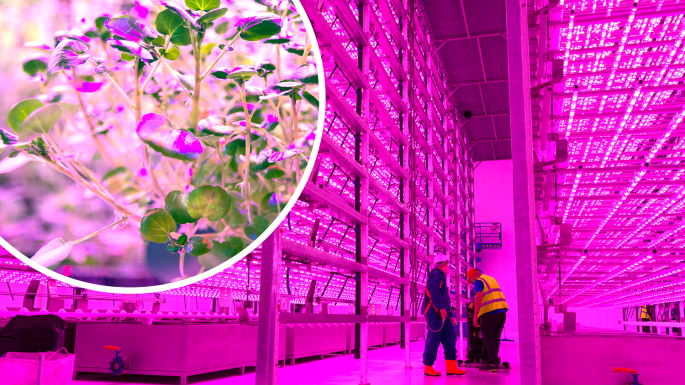
Headline image taken by photographer Holly Challinor, Jones Food Company Ltd.

Tell Kellogg’s To Stop Hiding GMOs!
Big News:
The USDA responded to our lawsuit and has issued the final GMO labeling rules. Unfortunately, the final rules allow for companies like Kellogg’s to label GMOs using QR codes. These codes require consumers to use their smartphones on every coded product to try and find out if they contain GMOs. And even if the Wi-Fi is working in the store, they then often just get a website where they have to search further for this information. Labeling through QR codes adds countless hours to weekly shopping trips and the companies using GMOs are counting on customers not to be able to afford that time, and stay in the dark about their products.
Even worse 1/3rd of Americans do not have smart phones or access to reliable broadband connection. They cannot even use these QR codes to find out if a product is genetically engineered. The population that wouldn’t have access to this information would be disproportionately low-income, rural, minority, and elderly. That’s not transparency that’s discrimination against more than 100 million Americans. Everyone should have access to the truth about their food. Not just those of us who have smart phones. All GMO labeling should be on the package!
We’ll be taking USDA to court about these QR codes and other problems with the GMO labeling regulations that show these rules have been designed to hide and confuse rather than inform. Stay tuned for updates!
In the meantime, you can help recruit companies to stand up for transparency and commit to on package, text or symbol labeling of GMOs. We’ve already gotten commitments for this on package labeling from companies like Campbell’s and Mars. However, the Kellogg Company is still planning to use QR codes for its GMO labeling.
Let’s all take to Twitter to demand that Kellogg’s stop being anti-consumer and discriminatory and label GMOs on package with text or symbol!

Green Roofs Absorb Rainwater, Grow Food
Voice of America
09 Feb 2019
WASHINGTON
Rainwater is essential for life.
It helps plants and food crops flourish, and it keeps grasslands green and lush.
But too much of it, especially in the city, can lead to flooding, causing sewers to overflow and carry pollutants and contaminants to nearby streams and waterways.
To combat the problem in urban areas of the country, a growing number of cities across the U.S. are initiating programs like rooftop gardens.
A labor of love
To help with that initiative in the nations capital, a team at the University of the District of Columbia has created a rooftop garden on campus with a wide variety of vegetation to help absorb excess rainwater and grow food at the same time.
Architect David Bell, who designed five green roofs on the campus, says hes excited about the project because it meant doing something more than just dealing with storm water management.
It took advantage of a resource above the city that you see all over where you have these flat roofs that arent doing anything and really made it into something that was about urban agriculture, he said.
Rainwater is distributed through an irrigation system and collected in cisterns for the rooftop garden. It is also used in other parts of the campus.
The result is a picturesque sea of green vegetation and patches of brightly colored plants and flowers that attract pollinating insects and other wild creatures.
Urban agriculture
In an urban environment, you dont have that many spaces to choose from, and so rooftops are just unutilized space, said Caitlin Arlotta, a graduate student in the schools Urban Agriculture program. So its a really good way to not have to restructure your city necessarily and be able to incorporate green roofs.
The project, she points out, is part of a research initiative to see which plants are best suited for rooftop environments, both for food as well as pollination. They include hibiscus, strawberries, tomatoes and sweet potatoes.
We have the same experiment running with tomatoes as we do with strawberries, so were doing variety trials and were trying to see which variety grows the best in a green roof setting, she said.
A community affair
She pointed out that plants grow in a variety of different systems on campus, not just on the rooftop.
We have a hydroponic experiment, aquaponics experiment, we have a couple of bucket experiments going on with partner rooftops, and then we also have our own farm experiments, Arlotta said. Within each of those growing systems, we want to be able to tell people which varieties of these crops grow the best.
A main goal of the program she explained, is to have food justice.
So bringing fresh food into cities where you wouldnt necessarily have that access, she said.
And that includes produce for immigrant members of the community as well.
In the U.S., it may not seem very common to use hibiscus leaves and sweet potato leaves as food, but in many places around the world it is, Arlotta said.
An excess of riches
Sandy Farber Bandier coordinates UDCs Master Gardener program, which seeks to enhance the ecological health and aesthetics of urban environments by training District of Columbia residents to become Master Gardeners.
She says shes been surprised by the gardens bountiful harvest.
We produced 4,250 pounds (about 1,928 kilos) of produce the first year and were able to disseminate that to people in need, she said.
Grateful recipients included a number of area food banks and charities.
Spreading the wealth
Another benefit, Bandier says, was being able to show D.C. residents and people beyond the nations capital what and how food can be grown on a rooftop.
Its a wonderful feeling, she said. This is the future for food. What we have established here at this college is the food hub concept: you grow it here, you prepare it in a commercial kitchen, you distribute through farmers markets, food trucks, and then you recycle, you recycle, you compost.
While D.C. is home to one of the largest numbers of green roofs in the country, not all of them are designed to grow food. Architect David Bell hopes that over time, that will change.
Id like to see this becoming more of the standard, where people design and build buildings with farming on the roof, with the ability to actually go up there and enjoy it and have a better connection to nature, but also to provide better fresh food to people in urban areas, he said.
September 20-22 @ Kentucky State University!
Hi Everyone!
We have big news: this year's Aquaponics Association Annual Conference will be September 20-22 at Kentucky State University in Frankfort, KY.
Stay tuned for the first round of early bird tickets within a few weeks.
Kentucky State University hosts one of the most advanced aquaculture research programs in the nation, including indoor aquaponics research systems, saltwater aquaponics research, a 30’ x 70’ aquaponics demonstration greenhouse, a 10,000sq foot recirculating aquaculture research building, and 33 research ponds.
The goal of the conference is to unite growers from around the world and advance the practice of aquaponics. The Aquaponics Association looks to build on the momentum of the last annual conferences Putting Down Roots in Portland, Oregon, 2017; and Putting Up Shoots in Hartford, Connecticut, 2018. Each hosted the world’s top aquaponics experts, a vendor showroom of the top aquaponics technology and services, and tours of large-scale aquaponics projects.
Frankfort, Kentucky is a small, quaint town with some of the nation’s top bourbon distilleries, the Keenland Racetrack, and other cultural attractions close by.
Frankfort is reachable from Bluegrass Airport (LEX); Greater Cincinnati – Northern Kentucky Int’l Airport (CVG); and 60 minutes from Louisville Airport (SDF).
We hope to see you in September!
Brian Filipowich, Chairman
Aquaponics Association

'It's A Blizzard Outside And We're Growing Lettuce': Busby Area Farmers Grow Vertical
A unique farm has opened near Busby growing leafy greens in fabricated shipping containers
Travis McEwan · CBC News · Feb 02, 2019
Greens are expected to grow at Swiss Leaf Farms out of 14 different shipping containers. (Trevor Wilson/CBC)
An indoor farm near Busby, Alta. is harvesting leafy greens in the middle of winter using a system called vertical farming and fabricated shipping containers.
David and Alyssa Pfaeffli of Swiss Leaf Farms have been growing lettuce, microgreens, and herbs in a 9,500-square-foot warehouse for the past couple of months. The system they are using will allow them to grow year-round.
The growing machines are developed by a company in Langley, B.C. and an irrigation system waters each tray as it rotates past a water spout. A single row of growing lights sit on the top of the container.
A heating and cooling system ensures the plants grow at the right temperatures.
CBC News Edmonton | A Busby, Alberta farmer uses a vertical farming system to grow leafy produce all year round.
Within the warehouse, there are 14 growing machines that grow different varieties of leafy greens. Each container holds 4,000 heads of lettuce, with each head of lettuce taking a month to grow. The microgreens are harvested every six days.
The farm just had their first harvest last week and have delivered greens to grocery stores in Westlock, Barrhead and Edmonton.
"We can provide the same produce that's fresher, tastes better, it's healthier and there's zero pesticides. It's better for the planet," said David Pfaeffli. "You're not driving a diesel rig all over North America to deliver lettuce."
Alyssa and David Pfaeffli of Swiss Leaf Farms started the vertical farm a few months ago. Their 14 shipping containers have the capacity to grow 4,000 heads of lettuce per container. (Trevor Wilson/CBC)
The couple say they're able to grow a lot within a small space, as a traditional garden will take up a lot more land. Within their building, they can also control the temperatures with a heating and cooling system.
"This system allows us to do that here now, whereas before in Alberta where would you be able to do that? It's a blizzard outside and we're growing lettuce." said Alyssa Pfaeffli.
The cost of vertical farming
Financing the vertical farm was the biggest challenge for the couple, said David Pfaeffi. Without large farming equipment, he didn't have a lot of collateral if things dried up.
"Agricultural lending outfits weren't too eager to lend a large sum of money on equipment like this because they'd have a hard time recouping their costs. It's not a combine," David said.
The Pfaeffli's are excited about their new farming venture, but at the moment they're trying to not get too ahead of themselves.
"We want to grow not only plants but we want to grow the business. We want to keep adding on phases of growing machines. I'd like to see 50 acres of growing containers eventually," David Pfaeffi said.
Their greens are sold in grocery stores like Freson Bros. in Stony Plain. The Swiss Leaf Farms product fills a void of locally-produced lettuce in the winter months.Their latest order sold within 24 hours.
"We try to have an Alberta item everywhere. As soon as we get something like this, there are [consumers] willing to pick it up and try it," said Dan Pazder, Freson Bros. produce director.
Busby is approximately 71 kilometres northwest of Edmonton.
With files from Trevor Wilson

California Rains Continue To Play Havoc On Markets
BY DAVID ROBIDOUX | FEBRUARY 12, 2019
As the rain continues in California the markets also continue their march higher. All commodities currently coming from the coastal regions of California have seen excessive rain over the past month leading to decreased supplies and major issues with quality. Strawberries, broccoli, cauliflower, radishes and celery have all seen prices rise again this past week due to the heavy storms over the weekend — and there is more rain to come this week.
“The biggest impacts from these rains is damage to ripe strawberries, which turn to mush when they get that wet and can’t be sold for fresh fruit," according to John Krist, chief executive officer of the California Farm Bureau. "That damaged fruit ends up getting stripped and sold for juice or jam, which is a money-losing proposition at this time of year, but one that can’t be avoided — if left in the fields that damaged fruit will spread fungus.
“We also had harvest delays in just about everything, including citrus, which can’t be picked when wet. And there’s a heightened risk of fungal disease in vegetables, too, particularly celery," said Krist.
“It’s worth remembering, however, that this is what a normal year used to look like," said Krist. "Our frame of reference has been skewed by nearly seven years of drought or below-average rainfall. Dealing with these issues is par for the course."
This year is more in line with historical norms. The historical average combined rainfall for January and February in Oxnard, CA, is approximate seven inches. Over the last seven years, when California has been in a drought cycle, the average combined rainfall for these two months is less than four inches. This year nine inches of rain have already fallen in Oxnard and we have two more weeks to go in February.
This next shot coming on Wednesday and Thursday will drop another 1.5 inches of rain and bring the total close to 11 inches. It’s no wonder harvests are being delayed.
Santa Maria and Salinas will also see another inch-plus of rain this week.
The National Weather Service issued freeze warnings for yesterday morning and this morning in the San Joaquin Valley as temps dropped below freezing for up to six hours the last two nights. Some locations, such as Visalia, saw temps drop down to 28 Monday morning and 29 this morning.
Rain is coming to all current growing regions in Florida today. From Plant City all the way south to Homestead, all growing locations can expect approximately 0.25 inches of rain today. Behind this storm expect one day of cooler temps on Wednesday. Temperatures will drop by about 10 to 15 degrees across the board tomorrow. On Thursday temperatures will be back to normal in the low 80s during the day and the low 60s at night. There is another opportunity for light rain on Friday and Saturday.
Starting Sunday Florida will be feeling the effects of a heat wave. Up and down the state expect maximum temps close to 90 and minimum temps in the mid- to upper 60s. These temps will last at least through Wednesday of next week. Expect production to heavier as we head into next week.
Tomato supplies out of Mexico have tightened a bit and prices have moved off the minimum where they had been for the past several weeks, which could be a result of bloom drop caused by the cold temps back in the late December.
Temperatures in Culiacan will get progressively hotter throughout the week, peaking this Friday with a max temp of 94 and a minimum temp of 61. On Saturday Culiacan will begin a cooling trend, and by Wednesday, Feb. 20 they will see a minimum temp of 50. This should slow down production somewhat by the end of next week.
The Weathermelon app offers consolidated lists of global growing regions for each commodity; a 10-day detail forecast for each region; current radar maps (U.S. only); estimated harvest start/end dates for each commodity; monthly average high/low temps for each region; and custom daily alerts for temperature, precipitation and severe weather based on 10-day forecasts.
(David Robidoux is a co-founder Weathermelon)

Inside The GMO Law: What Needs To Be Labeled And Why It Matters
The regulations state that manufacturers can voluntarily disclose GMOs if a product contains some of these highly refined ingredients or has a lower concentration of biologically engineered material, which GMO advocates cheer and consumer organizations caution
Highly refined ingredients and the "BE" acronym are out, according to regulations issued in December. The food industry and consumer groups are split on how effective the new measure will be.
AUTHOR Megan Poinski@meganpoinski
Now that the final GMO labeling regulations have been rolled out, what is going to bear the new seal that certifies a product is derived from bioengineering?
The answer: Not as many products as advocates for the labeling might have thought. It's been estimated that up to 75% of the products in a grocery store are made with ingredients derived from crops that were genetically modified. According to the regulations, items that contain highly refined ingredients don't have to be labeled.
Additionally, to require a label, a product needs to have at least 5% bioengineered material, which is a higher concentration amount than most other countries that have GMO labels.
The regulations state that manufacturers can voluntarily disclose GMOs if a product contains some of these highly refined ingredients or has a lower concentration of biologically engineered material, which GMO advocates cheer and consumer organizations caution.
The new labeling requirements, which most manufacturers must implement starting in 2020, were viewed by some analysts as fair.
"They balance consumers' request for more information with a labeling approach that is based on facts, practicality and common sense, rather than politics and fear," Sean McBride of DSM Strategic Communication told Food Dive in an email. "No one side got everything it wanted, and there will be special interest skirmishes in the 116th Congress and beyond over this, but for now, we have a clear flight path to providing consumers with the transparency they want and deserve.”
There are many other aspects of the regulations those in the industry appreciate and despise. But the time for changes has passed. Manufacturers now need to work on ensuring that their labels comply with the new guidelines. According to the regulations, manufacturers may put their labels to the test as soon as this month.
Credit: Okanagan Specialty Fruits
What needs to be labeled?
While the new regulations outlined the symbols and terms that will be used, what needs to be labeled did not change during the rulemaking process. Meat, poultry and egg products by themselves are not included in the disclosure, which is stated clearly in the law. Neither are multi-ingredient products that have these items as their first ingredients, such as a canned stew with beef broth.
The final rule lays out a much more nuanced — and consequential — point. Many crops that become food ingredients are GMO, but they go through a refining process to become useful ingredients. That process often destroys the genetic material in the ingredients. One of the largest questions for the final rulemaking was whether these ingredients needed to be labeled as GMOs.
Companies and trade organizations were split on the issue. In its comments on the rule, the Grocery Manufacturers Association said about 90% of the nation's corn, soybean and sugar beet crops are genetically modified. If the products using refined versions of those crops do not have to be labeled as GMO, it estimated 78% fewer products would have to be disclosed under federal law.
The U.S. Department of Agriculture decided not to require the disclosure because the initial law said GMO food needs to contain modified genetic material. If it cannot be detected, it is not there. And because the initial law also does not say anything about classifying some of these ingredients from GMO crops as "highly refined," the final rule does not take on this classification of definition.
Consumer advocates who oppose GMOs were strident in their disapproval of the ruling.
"The USDA has betrayed the public trust by denying Americans the right to know how their food is produce," Andrew Kimbrell, executive director at Center for Food Safety, said in a written statement. "Instead of providing clarity and transparency, they have created large scale confusion and uncertainty for consumers, food producers, and retailers."
The Consumer Federation of America said in a statement that exempting refined products from disclosure is "inadequate."
However, many major food manufacturers — including Campbell Soup, Mars, Danone, Kellogg, Coca-Cola and Unilever — have been voluntarily disclosing GMOs, heavily refined or not, since the mandatory labeling issue was first debated several years ago.
The USDA also will maintain a list of crops that are definitively GMO that are produced anywhere in the world. This list helps food manufacturers know which ingredients they need to disclose, but it is not exhaustive and will be updated periodically. The regulation gives manufacturers 18 months to update their labels after an ingredient is added to the list.
Currently, the following crops are defined as GMO: alfalfa, Arctic apple, canola, corn, cotton, Bt-Begun eggplant, ringspot virus-resistant varieties of papaya, pink pineapple, potato, AquAdvantage salmon, soybean, summer squash and sugarbeet.
The regulation also indicates where and how on-package disclosure is required. It needs to be seen under ordinary shopping conditions, and must be located near other information on the label that features the manufacturer's name and location. The disclosure can be through text, smartphone-scannable digital links, URLs, a telephone number, text messages or the "BE" symbol. If a digital link is used, it needs to have the words "scan here for more food information" next to it.
While there were several options for the BE symbol in the preliminary framework, the final rules set one that has a round picture of a plant growing in a sunny farm field. A green circle around the picture features the word "BIOENGINEERED" or "DERIVED FROM BIOENGINEERING." There is no BE acronym — the regulations say many consumers did not know what it stood for — and an earlier logo with a smiley face was abandoned.
Credit: Flickr, Dave Herholz
Will it be useful for consumers?
Since it's been known that scientists and food companies were working with ingredients from lab-modified plants, many consumers have wanted to know if they are eating them. While the predominant scientific consensus is GMO food is safe and items made with these ingredients are just as nutritious as their counterparts, consumers value transparency.
Are they getting it from this labeling law? Reactions are mixed.
"No one should be surprised that the most anti-consumer, anti-transparency administration in modern times is denying Americans basic information about what’s in their food and how it’s grown," the Environmental Working Group said in a written statement. The organization takes issue with several aspects of the law, mainly the ruling on not having to label highly refined ingredients as GMOs. EWG has added "Certrified GMO-free" — using verifications from the Non-GMO Project — as a category on its food information website.
The Grocery Manufacturers Association focused on the cohesiveness of the labeling regulations. The federal law requiring labeling was quickly passed — partially to preempt a Vermont state law requiring its own labeling scheme for GMO products sold there. With the regulations in place, consumers are closer to getting the information they seek on food products, the trade group said.
"Disclosure is imperative to increasing transparency, educating consumers and building trust of brands, the food industry and government," Karin Moore, GMA's senior vice president and general counsel, said in a written statement. "We are pleased that the USDA has now provided a structure for our companies to share this information voluntarily, building a foundation for government to more quickly respond to innovation in food and agriculture in the future."
Food Marketing Institute President and CEO Leslie Sarasin agreed, hailing the "more precise vocabulary into the public discourse regarding biotechnology in food production" represented by the new labeling requirements.
While there has been some voluntary disclosure of GMOs — and certification of non-GMO products — Thomas Gremillion, director of the CFA's Food Policy Institute, mentioned the issue of terminology. Consumers have been using "GMO" and "genetically modified" to talk about these food products — not "bioengineered," which will appear on the label. "Bioengineered" is the term in the law — the acronym "GMO" only appears twice in the text, and each time to say certain products cannot be labeled "non-GMO."
Regardless of terminology, some say that having the law in place doesn't correct fearmongering over GMOs. Transparency group Peel Back the Label said it may actually make it worse.
"While the USDA’s new disclosure rule provides additional clarity for consumers regarding what is and what is not a bioengineered food, it does nothing to reign in the growing use of misleading food labels and meaningless absence claims that are designed to capitalize on consumer fears and confusion in order to boost sales," the group said in a statement emailed to Food Dive. "Consumers deserve both truth and transparency in food labeling, and Peel Back the Label urges the USDA and Food and Drug Administration (FDA) to review current voluntary disclosure regulations to ensure food labeling is founded in science, not in fear.”
Follow Megan Poinski on Twitter
Filed Under: Ingredients Packaging / Labeling Policy
Top image credit: U.S. Department of Agriculture

iGrow News Is Proud To Be A Media Partner For World Agri-Tech
Use Our Discount Code
IG400 To Save $400 On A Delegate Pass
Meet The Global Agtech Community At World Agri-Tech
Where else will you have the chance to share ideas and network with the most senior audience of agribusiness leaders, technology innovators and investors, gathered under one roof? They're primed to discuss agtech breakthroughs and opportunities for partnership and collaboration, from genomics to soil health, precision ag to AI.
The event will sell out, as it did last year. So secure your place now for World Agri-Tech Innovation Summit in San Francisco on March 19-20 and take advantage of our discount code IG400 to save $400 on a delegate pass.
Senior leaders from all these companies are confirmed already:
Taking place the day before World Agri-Tech on March 18, the Animal AgTech Innovation Summit explores emerging opportunities in precision nutrition, smart livestock farming, gene editing and disease-prevention, bringing together industry leaders, innovators and investors from around the world.
Find out more >>
Future Food-Tech (March 21-22) connects food brands and their supply chain, entrepreneurs and investors, uncovering topics from personalized nutrition, alternative distribution channels and AI, to plant-based proteins and the role of food in health. They will define the most effective routes to market and the collaborative partnerships needed to scale innovation and deliver the next generation of nutritious, affordable foods to all.
Find out more >>
We look forward to seeing you in San Francisco.
Stephan Groves
Director - Rethink Events
stephan.groves@rethinkevents.com
T: +44 (0)1273 789 989
With thanks to our Partners:
Platinum Partners:
Gold Partners:
Research Partner:

Country Partners:
Networking Partner:
Silver Partners:
Marketing & Media Partners:
Co-located with:
Part of:
Hosted by:
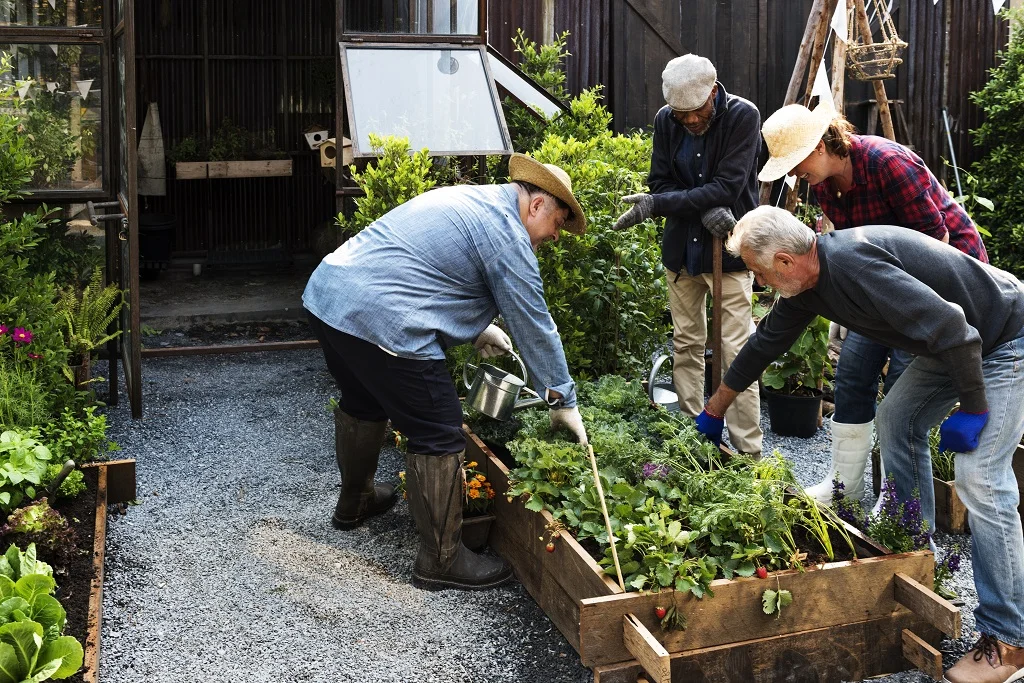
Urban Agriculture Gives Paris Space To Breathe
In the last few decades, manmade surfaces have taken over green space, leading to urban heat islands and more pollution in the air. It’s left Paris, like many other big cities, with higher urban temperatures and a greater risk of flooding as rain can no longer be absorbed into the ground
8 February 2019 — Article by JLL Staff Reporter
Green walls, rooftop gardens and urban farms are aiming to bring nature back into central Paris as the city looks to improve its air quality and create a more sustainable future.
In the last few decades, man made surfaces have taken over green space, leading to urban heat islands and more pollution in the air. It’s left Paris, like many other big cities, with higher urban temperatures and a greater risk of flooding as rain can no longer be absorbed into the ground.
To counter these issues, local authorities are increasingly looking to incorporate more greenery into both old and new buildings as well as developing public parks and gardens.
“Within the framework of the “Objectif 100 hectares” plan signed in 2016, Paris decided to launch the new Parisculteurs initiative to encourage innovative initiatives to cover 100 hectares of buildings in vegetation by 2020, of which a third would be dedicated to urban agriculture,” says Virginie Houzé, research director at JLL.
“Schools, office blocks and residential buildings all got involved. By incorporating vegetation in buildings, particularly on roofs and facades, it has helped to bring natural spaces back to the city without the need for additional land. These allow for temperature regulation while purifying air and water and encouraging biodiversity.”
The new normal?
Growing numbers of buildings are joining the movement. Start-up Sous les Fraises has been creating urban farms across the city growing fruits and herbs while plans are afoot to transform four terraces on the Bastille Opera into a farm for fruit, vegetables and edible flowers.
Other projects, such as La Ferme de la Bourse, aim to create a hydroponic farm to grow produce that can be distributed to nearby residents, tying into the growing consumer appetite for locally sourced food. Elsewhere, Stream Building has a vertical hop garden to provide protection over the summer before the crop is harvested to brew beer on site.
“Today, consumers in developed countries are increasingly conscious of the quality of the food they eat, the use of pesticides and genetic modification as well as thinking of the distance that food must travel to reach their plates,” says Houzé.
“Urban agriculture therefore has a double impact. It both increases the amount of green space in a city, helping people retain a connection with nature while encouraging them to consumer local products and assuage some of the social and ecological concerns that people have.”
The idea is spreading beyond Paris: cities like Toulouse and Lyon are welcoming their own urban farms. And within the wider Paris metropolitan area, it’s helping to bring previously neglected spaces back into productive use. The Urban Agriculture in Morangis project in Essonne has converted 7,780 square metres of wasteland into an urban agriculture site alongside 3,670 square metres for residential development.
A step in the right direction
Even as urban farming becomes more popular, it remains a way to bring nature back into the city and improve the wellbeing of residents rather than revamp local food chains.
“We don’t have sufficient surfaces available in the Ile-de-France areas to grow enough food to feasibly feed people living in and around Paris so it still needs to be brought in from other areas,” says Houzé. “But it’s a nice touch for restaurants and hotels to offer home-grown produce on their menus.”
Not all projects are visible. “Hydroponics or aquaponics projects, for example, grow crops in enclosed spaces and sometimes deprived of natural light such as basements or car parks,” explains Houzé. “These help to meet local production expectations but do not address the issues of air pollution or urban heat that require a much broader approach.”
And while the steadily growing number of rooftop farms and living walls around the city won’t solve the urban heat island effect on their own, they are a step in the right direction at a time when many countries are upping their efforts to tackle global warming and reduce high levels of air pollution.
“More vegetation can only be a positive thing for Paris and the people who live here,” Houzé concludes. “However, it will take time and many more buildings to become visibly greener that environmental progress will

"Labor Is The Number One Topic In All The Conversations We Are Currently Having"
“…Being a wholesaler and being constantly aware of the need to add value to our customers’ businesses, we are focused on finding the winning innovation of tomorrow”
As we begin 2019, the moment is here to take a general look at the industry, and who better to discuss today’s topics with than Chris Higgins? With Hort Americas continually competing to be one of the leading wholesalers in North America, and Chris being a complete horti-geek, he’s on top of the industry’s topics of today and tomorrow. And there’s much to cover at the moment. “For us, Hort Americas, the only constant thing we see is change. Being a wholesaler and being constantly aware of the need to add value to our customers’ businesses, we are focused on finding the winning innovation of tomorrow”, he explains.
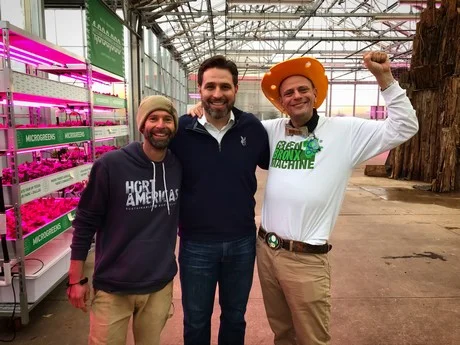
Drew Demler (State Fair of Texas), Chris Higgins and Stephen Ritz (Green Bronx Machine) (photo Hort Americas)
Anniversary
It's been almost a decade since Hort Americas was founded. In April 2009, a group of young American entrepreneurs united with the Dutch suppliers of Horticoop and started bringing horticultural products to the quickly growing horticultural industry of the USA and Canada. Operating as a wholesaler, the company made many products accessible to bigger and smaller companies.
Within their client base you can find vegetable growers, ornamental growers as well as a wide variety of growers implementing a wide variety of innovative techniques used to produce an even wider variety of crops. However, there are various topics that unite them. “Labor is the number one topic in all the conversations we are currently having. It does not seem to matter if we are talking about commercial horticulture, field agriculture or vertical farming. This trend seems constant. In vegetable production as well as in ornamental horticultural production – the quality, availability and cost of labor is the number one topic in North America”, Chris explains. To the company, being on top of these trends and offering solutions to them is key.
“We have a fairly narrow focus on a niche market and we are in contact with our client base daily. This allows us to understand their needs intimately and find and deliver solutions that make our customers more profitable and more successful.” He continues, “This includes new emerging markets as well as established industries that are evolving to meet demand and stay relevant, like indoor farming of medicinal crops and the hydroponic production of soft fruits.”
On a side note he offers, “I do believe that out of these new or evolving grower populations, we are going to see some all stars: people that do things differently - apply new technology, or operate their business in a different way - and become the leaders. But, as common throughout history, it will only be a small percentage of the companies that change the industry. And it is not our desire nor our goal to pick winners. To us, the focus is the complete industry: seeing the similarities between the companies and the way trends and novelties impact their operation. Within these topics, we select products that are winners to us: that can add value to most growers' businesses. That’s how we’re serving the industry and how we are on the look-out for our own product range.”
Role as a wholesaler
The company's vision sounds clear - but there’s challenges in the market. In 2018 Horticoop, the Dutch partner of Hort Americas, announced it would resign their wholesale activities and focus on production only. Whilst this does not affect the Hort Americas business, it did urge the company to rethink their role as a wholesaler. Adding value is key, Chris explains. “Being a distributor is more than just selling or providing products. To us it is offering growers solutions to better their business in both the short and the long term.” To do so, HortAmericas puts a lot of effort in helping growers with their specific challenges and, if needed, educate them about the solutions. “Before, being a supplier meant supplying products. Now it’s about understanding what our growers need and value, then finding ways to fulfill those needs as a service: educating, improving the crop(s) quality, creating a better more efficient work environment, and eventually helping growers find ways to become more profitable.”
Demo Greenhouse
It’s not just a vision to Hort Americas. Besides being active continuously in educating growers and researching a lot, the company (which two years ago started their own demo greenhouse) is focused on creating positive change within their community while at the same time improving the knowledge of the Hort Americas team and their ability to communicate that knowledge with both their vendors and their grower partners.
“Thanks to our relationship with the State Fair of Texas (better known as Big Tex Urban Farms), who’ve continuously supported our business, we’ve been able to combine our efforts, energies and resources to create a demo greenhouse at the fairgrounds based in Dallas, Texas. As long as you have scheduled an appointment, it is open for both the community and growers year round. It is in production year round. It is in a constant state of learning and development. But most importantly it is contributing free, safe and healthy food to members of the south Dallas community in need.”
Night time before the start of the Texas State Fair, where more than 200 thousand people are estimated to visit the greenhouse each year. This pond uses Current, Powered by GE LED Top Lights and the Moleaer Nanobubble Generator. (photo Hort Americas)
Hot summer
When asked why Dallas, Texas, Higgins responds, “We are testing products and trying to prove their value. The hot Texas summers offer a tough and difficult environment to grow in. If we can make it work in Dallas, we are confident in the quality of these products and their abilities to perform in some of the most harsh circumstances.” From their commitment to have a positive social impact to their commitment to playing an important role in both the success of their vendors and their grower partners, Higgins is excited and enthusiastic about the future.Then there’s the social aspect: adding value to the local community.
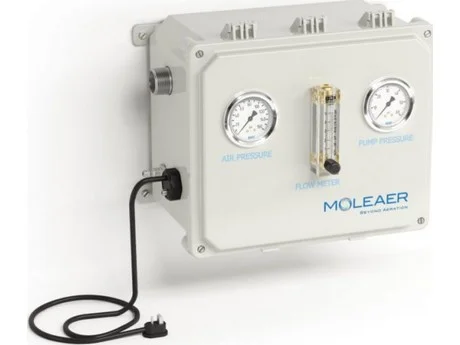
Chilling the rootzone
In the demo greenhouse the Moleaer system is shown - one of Hort Americas' most talked about products at the moment. “We’ve focused on the limiting factors in producing the best possible crops 12 months of the year. One of the biggest issues in Dallas turned out to be controlling temperature of the root-zone. Chilling the rootzone is not cost-effective in most scenarios. Adding dissolved oxygen to it, turned out to do the trick.”
To Chris, the Moleaer product range offered a typical Hort Americas solution. “It can benefit many growers in an affordable, easy way and it is applicable in a wide area of the countries we service”, he explains. “With Hort Americas, we want to be there for a large group of growers. Products that are only accessible to a small part of the market are not a good fit to us. We are looking for the products that help the average grower in their business.”
Add value by specializing
He explains how the North American industry on one hand consists of big companies, in need of tailor-made solutions. “Then there is a large amount of smaller scale customers. These farming operations do not follow the same pattern of upscaling or monocropping. Instead they add value by specializing in specific groups of products, serving local communities with locally grown product or whatever business model proves them to be right. Whilst we are capable of supplying the large customers, we also want to bring suitable products and services to the farms and greenhouses of all shapes and sizes.”
The Sudlac product portfolio is another example of a product line that is effective for large and small greenhouse ranges as well as hydroponic vegetable production and ornamental horticulture. The demand for the various shading solutions has been on the rise. “Creating a better production climate is of course important to growers everywhere in the world. The added value at the moment is in innovative second generation shading products that not only reduce the amount of light in the greenhouse, but can manipulate and improve light in ways that can enhance crop quality.”
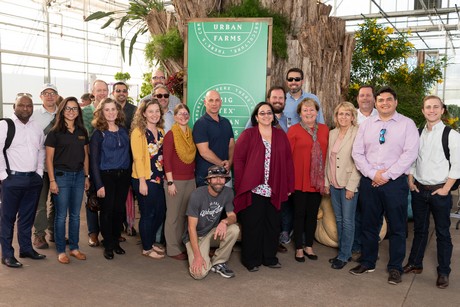
USDA Fresh Herbs Grant Planning Meeting held during the 2018 Texas State Fair. (photo Hort Americas)
Relationships with suppliers
The importance of a good and stable relationship isn’t a one way road. Relationships with suppliers are of high importance to Hort Americas. “Obviously the product itself is important in our selection, but it’s not just that... it cannot be just that. Trust between us and our valued suppliers has continued to evolve into a vital part of our business model. We look for specific relationships with suppliers. We look for companies that we can count on and trust, and vice versa. We ask ourselves, ‘Can the manufacturer add value to the chain? Can we help them market their products in the better ways? Do the manufacturers understand the needs of the market?’ Again we want to create partnerships. Partnerships lead to better business for everyone involved.”
A perfect example of this is Hort Americas' relationship with Current by GE (LED grow light solutions). Adding lighting to the crop is an important topic for many growers wanting to lengthen their season and increase their production. “This goes for vegetables, but for sure is not exclusive to vegetable crops. Managing light intensity, light quality and photoperiod is important in all crop production. LED lighting has helped everyone from tree nurseries (for example) becoming more efficient in growing maple trees to tissue culture facilities producing ornamental and medicinal crops.
"Investing in LED is all about effectiveness and efficiency - making it a perfect Hort Americas product catalog. And the engineering team at Current has helped us to develop a variety of fixtures perfect for many (not all) applications. We are working towards that.” Higgins’ excitement about the GE partnership carries over to other partners that are helping them produce innovative fertilizers and have provided them with opportunities to explore new technologies like 30MHZ (sensor products offering growers a better control and more insights on their crop).
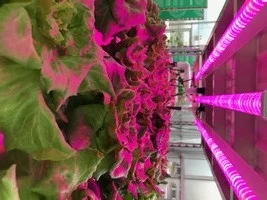
Leafy Greens being grown under Current, Powered by GE LED Grow Lights (Arize Lynk LED Grow Lights) (photo Hort Americas)
Keeping up is a challenge
With the Hort Americas client base being super diverse, staying on top of the various needs in the industry is of vital importance. “Keeping up with all the issues along with the wide range of crops and topics indeed is a challenge”, Chris confirms. “On the other hand, trends are similar across the categories. Labor (again) is something affecting the complete industry: the quality, availability and cost of it is the number one topic in North America at the moment. The biggest difference between the various sub-segments within industries are access finance and the pace of developments and investments - depending on both the maturity of the sectors and what their opportunity for profits look like. But in the end the demand of growers is the same in all crops. It all comes down to the smart use of technology and how that technology lets the grower achieve a sound ROI. That’s the main question we are all trying to answer. This will always be the question we are trying to answer.”
For more information:
Hort Americas
Chris Higgins
chiggins@hortamericas.com
www.hortamericas.com
Publication date : 1/15/2019
Author: Arlette Sijmonsma
© HortiDaily.com

EDEN ISS Antarctic Grower Paul Zabel Returns
365 days on the eternal ice flows.
365 days in the Antarctic, of which 257 days cut off from the outside world. Antarctic grower Paul Zabel from the German Aerospace Center (DLR) has tested vegetable cultivation, suitable for Moon and Mars environments in the EDEN-ISS greenhouse. There, he harvested peppers, tomatoes, cucumbers and various lettuces and herbs, grown with the use of artificial light.
Now Paul Zabel has returned to Germany and, at a press conference at the DLR Bremen site, he spoke for the first time since his arrival of his efforts and deprivations of recent months, as well as the joys of plant breeding in extreme situations and his life on the seventh continent.
"The Antarctic is a fascinating place and I am very happy that I could be one of the few people who had the opportunity to spend the winter there, having experienced many unique impressions and challenges over the past 12 months. Now it is great to be back home, seeing family, friends and colleagues again," said Zabel.
"Antarctic grower" Paul Zabel returned after a stopover at the Antarctic Novo Airbase and a short stay in Cape Town shortly before celebrating Christmas in his home in the Brandenburg Spreewald. "Having spent Christmas 2017 in the Antarctic, it was very special to spend Christmas Eve and New Year's Eve at home." Zabel left for the Antarctic on 16 December 2017, with three other members of the EDEN-ISS team. After a two-month build-up phase, he remained there from February 18, 2018 on German Antarctic station Neumayer III with nine other overwinterers of the AWI.
Working in the Antarctic cold
Day by day, Zabel set off on the commute to the EDEN-ISS greenhouse, about 400 meters from the station. Only during the strongest storms, of which Zabel experienced many during the Antarctic winter, the greenhouse was monitored and controlled automatically by people in the Bremen control center. "From Bremen, we were in daily contact with Paul," reports EDEN-ISS's Daniel Schubert from the DLR Space Systems Institute. "He has done a great job over the past months. Although it has taken up quite a lot of his time, the EDEN-ISS project and he himself will be thanked by future astronauts."
Other members of the AWI hibernation team also helped Paul Zabel with his work. They aided him with the sowing of the plants and supported him with the numerous experiments. "After more than a year in the Antarctic, we can look back on successful overwintering." The work in the greenhouse and the fresh vegetables have enriched our time at the Neumayer Station III," says station manager Bernhard Gropp.
Rich harvest
A detailed evaluation of the studies on plant breeding in Antarctica is currently in full swing. The extensive results, including technical, botanical, microbiological and psychological analysis, are expected in May 2019. It is already clear that Paul Zabel has repeatedly been able to harvest a rich harvest, again supported by the other AWI overwinterers. For example, on Neumayer III over the past year, the crew wwere able to eat 67 kilograms of cucumbers, 46 kilograms of tomatoes, 19 kilograms of kohlrabi, 8 kilograms of radishes, 15 kilograms of herbs and 117 kilograms of lettuce.
The station continues to be open to researchers from all over the world. In the next two years, DLR, AWI and other research partners will further develop the production processes in the EDEN-ISS greenhouse, with the goal to offer future stations on the Moon and Mars an optimized greenhouse concept. The continuation of the project is open to researchers from all over the world. "Soon we will hand over the greenhouse to the new overwinterers who will continue the EDEN-ISS project in the Antarctic and look after the crop," says dr. Daniel Schubert. "We will monitor and control the greenhouse from Bremen." Schubert and his team will again travel to the Antarctic in mid-January 2019 to maintain the EDEN-ISS greenhouse and update it technically for the continuation.
EDEN-ISS: Food supply of the future
World food production is one of the key societal challenges of the 21st century. An increasing world population and simultaneous upheavals caused by climate change call for new ways of cultivating crops, even in climatically unfavorable regions. For deserts and areas with low temperatures, as well as space missions to the Moon and Mars, a greenhouse, closed of from the weather, the sun and the seasons, will allow independent harvests, less water consumption and the abandonment of pesticides and insecticides. With the project EDEN-ISS, such a greenhouse of the future can be tested under Antarctic extreme conditions.
Source: www.gemuese-online.de
Publication date : 1/15/2019

First Wheelchair Accessible Farm At Local Bronx Public School
By urbanagnews
February 8, 2019
Empire BlueCross BlueShield and Green Bronx Machine to Launch First Wheelchair Accessible Farm at Local Bronx Public School
Press Release – NEW YORK – Green Bronx Machine (GBM), a nationally recognized non-profit organization dedicated to helping students live happier and healthier lives, is partnering with Empire BlueCross BlueShield (Empire) to launch the first wheelchair accessible farm and teaching kitchen in America at P.S. 721x, a District 75 school in the Bronx dedicated to educating students living with disabilities.
“Our students and faculty are so excited and so grateful to Empire and Green Bronx Machine for this classroom makeover that inspires healthy living, healthy learning, and creates 21st century career and college readiness.”~ Frank Degennaro, Principal, P.S. 721x
On Wednesday, February 13th, GBM and Empire will host a ribbon-cutting event at the school to unveil the new, in-school farm. In addition to the wheelchair accessible farm and teaching kitchen, P.S. 721x teachers and students will receive GBMs fully integrated health and wellness curriculum, a GBM Mobile Classroom Kitchen—a fully portable “indoor food truck” complete with sink, refrigerator, convection oven and food warmer and a media studio where students can participate in video conferences with other schools and organizations, post updates to social media, live stream educational programming and older students can record practice interview sessions.
“Thanks to this partnership, we’ve been able to develop the first fully accessible piece of hydroponic technology that will create opportunities for untold Americans and farmers around the world. Empire and Green Bronx Machine are growing something greater – for all!”~ Chris Higgins, Founder & CEO, Hort Americas
GBM founder Stephen Ritz has built his program on the belief that healthy students drive healthy schools, which in turn drives healthy communities. To help educate students on the importance of proper nutrition, Stephen developed a fully integrated core curriculum that teaches students how to grow, eat and love their vegetables while also learning about math, science, and English in a fresh and engaging way.
“To see these future chefs and farmers smiling with glee as they cook and farm, three stories up in the middle of winter, makes me proud and excited to be a New York City public school teacher with District 75.” ~ Jeremy Kottkamp, Teacher, P.S. 721x
In addition to forever changing their eating habits and health, these students will be more prepared to enter the workforce in emerging fields that provide living wage opportunities while enhancing quality of life for all.
“Beyond happy healthy students, this partnership proves that every classroom in America can have an affordable, portable, professional, mobile classroom teaching kitchen that is accessible for all.”~ John Stephenson, Founder of Port-Equip/Stephenson Custom Case
Having first launched GBM’s National Health, Wellness and Learning Center in an underutilized 100+ year-old library at C.S. 55 in Claremont Village, students who have participated in this program have experienced health improvements that lower the risk of childhood obesity, diabetes and heart disease while also increasing their performance in school.
“We’re proud to partner with Empire and NYC DOE to create the first wheelchair accessible classroom farm and kitchen in America. Every child deserves a safe, healthy, nurturing environment and we’re so proud – this is Bronx innovation at its best!” ~ Stephen Ritz, Founder, Green Bronx Machine
If you are interested in attending the event, details are included below and interviews are available.
WHO:
Stephen Ritz, Green Bronx Machine
Victor Pupo, Empire
Frank Degennaro, Principal, P.S. 721x
WHEN:
Wednesday, February 13th at 12:00 PM – 1:00 PM
WHERE:
P.S. 721x; Room 319
2697 Westchester Ave.
Bronx, NY 10461
Media Contacts:
James Freeman, Empire Communications
215.756.2495
James.freeman2@anthem.com
Stephen Ritz, Green Bronx Machine
917.873.6449
Stephen.ritz@greenbronxmachine.org