


Welcome to iGrow News, Your Source for the World of Indoor Vertical Farming

Considering Growing Controlled Environment Edible Crops?
By David Kuack, UrbanAgNews.com
January 17, 2019
Regardless of whether specialty crops are grown in hoop houses, greenhouses or indoor vertical farms, growers are incorporating technology to improve production and profitability.
When it comes to technology, most controlled environment growers are looking for ways to produce their crops as efficiently and as economically as possible. Purdue University horticulture and agricultural economics professor Ariana Torres is focused on the marketing and economics of specialty crops, especially those grown in controlled environments.
“Because of my educational background in controlled environment I focus more on that type of production,” Torres said. “I have three appointments at the university. I teach entrepreneurship. I do research on technology adoption for specialty crop operations, including vegetables, ornamentals, herbs and organic agriculture. I also investigate how consumers perceive grower technologies. My extension appointment allows me to bring the findings from my research to growers and other stakeholders.
“I collect information on farmers markets every week. I have an extension program called Horticulture Business with a website that is hosted by Purdue University. I am also working on developing financial tools like online enterprise budgets and financial calculators where growers can learn about risk and the break-even analysis of various crops.”
Purdue University horticulture and agricultural economics professor Ariana Torres tours Big Tex Urban Farms at the State Fair of Texas in Dallas.
Photos courtesy of Ariana Torres, Purdue Univ.
As a graduate student at Purdue, Torres studied controlled environment production learning that light requirements and nutrition not only vary by crop, but also by variety.
“I can transfer those learning skills to other crops,” she said. “Ninety percent of my current research is on edible crops and 10 percent is on ornamentals. This split also reflects what is happening in the industry. Greenhouse growers and ornamental growers are slowly transitioning to edible crops as well. Many hydroponic systems that were developed for greenhouses and poly houses were designed for ornamental production.
“Of the specialty crop growers I’m working with, 50 percent are controlled environment and 50 percent are outdoor field growers. I initially started working with field crop growers and have transitioned more into controlled environment systems.”
Focused on cost-efficient technology
Torres is focusing on how growers can adopt cost-efficient technologies. She is particularly interested in assisting growers in accessing information about the cost efficiency of technologies.
“I am also interested in finding out how these technologies are perceived by consumers,” she said. “I am starting to study consumers’ perceptions and their willingness to pay for specialty crops.
“One project I’m particularly interested in studying is related to value-added technologies. There are specialty crop growers who sell wholesale in bulk while other growers cut, wash, dry and label products. Value-added can be defined as any physical or labeled transformation of a product. I’m evaluating the transformation of the identity of a crop. Anything related to whether a crop is non-GMO, organic, pesticide-free, locally grown or domestically produced.”
Differences in operation size, customer base
Torres said that small and large specialty crop growing operations have very different market channels.
“The goal of most large operations is to produce large volumes,” she said. “That involves a lot of efficiency—producing the highest value crops that can provide the highest profits selling large volumes to one or two customers.
“Small hydroponic growers are not only looking for a higher profit, they are also looking to access different market channels than large operations. They tend to diversify their number of crops and their number of market channels. For example, small operations tend to sell to restaurants, farmers markets, independent grocery stores, community supported agriculture and they may also sell online.”
Torres said once small operations incorporate technology they tend to stick with it for as long as possible to recover their investment.
“At small hydroponic operations there tends to be less technology and lower investments,” she said. “They also tend to grow more edible crops, including tomatoes and other small fruit, and try to capitalize on higher prices for locally-grown hydroponic crops.
“Large operations are aiming to produce fewer crops and larger volumes with potentially smaller profit margins than small operations. These large operations grow fewer crops and their technologies tend to be more expensive. For example, large growers tend to use more expensive sensors, substrates, irrigation systems, lighting fixtures, and they are usually more willing to experiment with newer technologies. These operations also tend to be more efficient as a result of technological efficiencies.”
Automation limitations
Torres said Europe still leads the way in agricultural automation.
“More technology will be coming from Europe, but I’m not sure if it will come from European companies,” she said. “There are more U.S. researchers and companies doing research on automation and its impact on controlled environment agriculture.
“The Dutch have been very innovative on controlled environment technologies for automation. One of the successes for the Dutch growers is that they are very specialized. A grower has one crop, two crops at most. If a grower is producing one crop like tomatoes, then automation makes a lot of sense. In the U.S. it’s more difficult because growers are more likely to produce a larger number of different crops. The challenge is when growers produce multiple crops like baby kale, microgreens and tomatoes. These are crops that have different production requirements, different stages and different pest pressures. In regards to automation, what works in Europe may not necessarily work in the U.S.”
Factors affecting profitability
Torres said the type of structure and facility can also impact investment and profitability.
“With hoop houses there is usually less technology and fewer investments compared to greenhouses,” she said. “There also tends to be less technology and lower investments at small operations. If these small growers capitalize on higher prices for hydroponic crops, they can be profitable relatively quickly.”
Ariana Torres and a visiting scholar collect prices of specialty crops sold at Indiana farmers markets.
Torres said indoor vertical farms tend to take longer to be profitable because of the startup costs. There can be a large investment in technology.
“Even though greenhouse growers typically need more employees than vertical indoor farms because their operations are larger, most vertical farms are dealing with a higher level of technology requiring more qualified labor resulting in higher labor costs,” she said.
“Energy costs are also going to be higher for vertical indoor farms. The reason profitability is harder to reach for large indoor farms in the first and second year is a reflection of the investment and operational costs.
“Customer base also impacts profitability. A bag of lettuce may cost $4 at a farmers market and $5 at Whole Foods. The prices are not that different considering that selling at a farmers market allows a grower to capture a higher share of the consumers’ dollars. Also considering that operational costs for growers selling wholesale are very different, it is evident why profitability is harder to reach for large growers. If growers sell to wholesalers, the price they receive can be considerably lower than the price paid by consumers. In addition, labor costs per square foot tend to be higher for indoor farms and operational costs can be higher. However, these indoor farms can produce a lot of product so that they are able to supply large volumes.”
Vertical farms can be profitable
Torres said she has been able to collect limited information on indoor vertical farms.
“Small vertical farms tend to sell to independent grocery stores and local farmers markets,” she said. “The vertical farms I have seen in the Midwest tend to be small and their level of technology they usually have built themselves and/or recycled a lot of equipment. They can be very profitable because they are small and are able to capitalize on high prices for locally-grown crops like leafy greens and microgreens.
“Even though these vertical farms are producing on a small scale, they can be very profitable because they are rotating crops every four to six weeks. They can have as many as 12 crop cycles, which is a lot of production.”
Ariana Torres is visiting urban hydroponic operations like this one in Indianapolis.
Torres said where these indoor vertical farms start to run into trouble is when they look to scale up production.
“When small operations scale up, they are going to become a full time job and may need to start hiring employees,” she said. “Once they start to scale up because of increased demand for their product or just because they want to expand their business, that’s when they are likely to run into financial stress. They would need to invest in more technology and their customer base is going to change, moving from direct-to-consumer markets to wholesale or retail. When growers move into bigger market channels and start selling to larger retailers and wholesalers, their business model changes and with that their financial performance.
“With indoor vertical farms, scaling up may involve a lot of investment, especially going from a small to large operation. In field agriculture, it is much easier to scale up to increase profit and revenues. For large indoor vertical farms, for the first three to five years depending on how much money is invested, they are going to just break even or maybe generate negative numbers. Those indoor farms that are able to succeed during the first three years usually have investors with deeper pockets who are willing to see the operations through the long term.”
For more: Ariana Torres, Purdue University, Horticulture and Landscape Architecture, West Lafayette, IN 47907; (765) 494-8781; torres2@purdue.edu; https://www.purdue.ag/hortbusiness.
This article is property of Urban Ag News and was written by David Kuack, a freelance technical writer from Fort Worth, TX.
TAGS Education Greenhouse Technology Indoor Ag Technology Plants Purdue University

The Marijuana Billionaire Who Doesn’t Smoke Weed
With the help of Big Beer and Big Pharma, Brendan Kennedy’s Canadian cannabis company Tilray has unexpectedly become America’s gateway to the legal marijuana industry.
By Jen Wieczner
January 16, 2019
It’s just after 6, on a pitch-dark morning in December, and Brendan Kennedy is standing over the stove, wearing shorts and a vest, meditatively melting butter in a pancake pan. It will be nearly two hours before the sun cracks the Seattle sky, and Kennedy, toddler son in tow, already has the pensive look of a man trying hard to keep the creep of the workday ahead from encroaching on a family ritual.
See, morning is a sacred time for the 46-year-old CEO, who has two rules for starting the day: Always eat breakfast. Don’t eat with anybody but your kids. Though abiding by rule No. 2 means eating alone, if he’s on the road—which is a lot these days, particularly since Kennedy’s company, Tilray, went public in July. In a couple of hours he’ll board his 135th flight of the year—a stat he can tell you because his assistant, knowing how he relishes data, sends him monthly analytics on his own travel (in 2018, he flew 23% more miles than he did the year before). At the moment, though, his 4-year-old daughter, in a pink tutu, is stirring the batter skeptically from her perch atop the kitchen island. “Papa, I think you forgot the flour,” she chides. Kennedy’s family moved into the new house a few weeks after Tilray went public, and he still struggles to find things in his own kitchen. He shrugs as he begins scrambling eggs and frying bacon in another pan: “My kids say pancakes are the only thing I’m good at.”
GROWTH INDUSTRY: CEO Brendan Kennedy with marijuana 'tissue culture clones' at Tilray’s Nanaimo headquarters. Photograph by Spencer Lowell for Fortune
Of course, his children are too young to know that what their dad is really good at is—at least for the moment—illegal in much of the U.S. and the world. Tilray sells cannabis, a.k.a. pot, weed, and more than 1,000 other colorful nicknames, for the medical-marijuana market and, more recently, the recreational one. It wears the crown as the hottest IPO of 2018, returning 315% for the year and valuing the Canada-based but American-run company at $9 billion today. The kids don’t know that the IPO—his daughter got to help ring the bell at the Nasdaq—made Kennedy not only a billionaire but the richest man in the legal marijuana business, and maybe the face of its future. Or that after pancakes today, he’ll shake hands with officials at Anheuser-Busch InBev, the behemoth behind Budweiser, to form a $100 million partnership aimed at creating a cannabis-infused substitute for beer.
Tilray’s 50% contribution to that venture exceeds the estimated $45 million in revenue it made in 2018, a year in which its estimated losses hit $47 million. But AB InBev’s desire for a deal is just the latest sign of Big Business’s belief that widespread cannabis legalization is an inevitability, and that Tilray—a global operation founded by finance veterans and data geeks with minimal interest in, um, testing the product themselves—will be uniquely poised to capitalize when Big Cannabis goes mainstream.
Brendan Kennedy and his family, center, ring the Nasdaq bell at Tilray's IPO in July 2018.
Bebeto Matthews—AP/REX/Shutterstock
The day before the predawn pancakes, Kennedy and I had boarded a 10-seat Cessna prop plane at Seattle’s Boeing Field for an hour-long flight to Tilray’s official headquarters, in Nanaimo on Vancouver Island in British Columbia, the lush, rugged province renowned among cannabis connoisseurs for its “BC bud.” It was cold enough to see your breath inside the plane. Preparing for takeoff, the pilot laid out a short list of stipulations: “Stay buckled, no talking on the phone, and no cannabis products on board.” Marijuana became fully legal in Canada on Oct. 17. But flights crossing the border have nonetheless been warning passengers that the U.S. government still prohibits taking the drug with you—even when traveling from Washington State, where recreational cannabis has been legal since 2012. Then again, why push your luck? As a Canadian customs officer once put it nonchalantly to Tilray employees, “It’s just like bringing sand to the beach.”
Flying north from Seattle, the 360-degree view features Mount Rainier behind you, Mount Baker to your right, and Mount Olympus on the left. In the summer, when it’s easier to go via low-flying seaplane, you can often glimpse a pod of orcas swimming just beneath the surface of Puget Sound. On the ground in Nanaimo, Kennedy is something of a local celebrity, having quickly become one of the largest employers in a community of 92,000 people. We clear customs without a word and proceed to Tilray’s 65,000-square-foot cannabis lab and grow facility, where the whiff of freshly cut marijuana floods your nostrils as soon as you open the heavy steel door. The combination of the pharmaceutical-grade warehouse setup and the presence of thousands upon thousands of pot plants gives it the sterile but earthy smell of a Home Depot garden department—you know, if Home Depot sold weed. From here, the product will be shipped to tens of thousands of patients, as well as pharmacies and dispensaries, in 12 countries where medical or recreational pot use is legal.
But we haven’t even made it past the vestibule when a facilities employee named Rudy stops the CEO in his tracks. “I never got to say thank-you for the whole stock thing,” he tells Kennedy, shaking his head reverently. “What a gift. Such a life changer, a game changer. The thought of being a Tilionaire one day.”
RAISING CAPITAL: Light-controlled marijuana grow rooms at Tilray’s headquarters facility in Nanaimo, B.C. Photographs by Spencer Lowell for Fortune
Kennedy swears this wasn’t a scheduled part of the tour. He claims he’s never even heard the expression “Tilionaire,” although his stock—which he’s doled out to all 750 of the firm’s employees, at all levels—has made many people much richer. He has yet to sell any of his own shares (and promises he won’t do so when post-IPO restrictions lift in January), meaning his 10-figure wealth is still only on paper. Kennedy, who previously started and sold two dotcom-era software companies before getting an MBA from Yale, claims he didn’t anticipate the investor frenzy that Tilray ignited as the first cannabis producer to go public on a major U.S. exchange. “We were caught off guard,” he says.
Indeed, virtually the entire business world is grappling with the sudden arrival of cannabis as a force of disruption, even as marijuana teeters on the grayish line of legitimacy. Pot is now legal for either medical or recreational use in some 36 countries and 33 U.S. states plus the District of Columbia. And while its use and sale remain illegal in the U.S. at the federal level, many on Wall Street and beyond see that changing too. The recently passed Farm Bill exempted the hemp plant and its derivative cannabidiol, or CBD, from the federal ban, clearing the way for an anticipated surge in a product category that in some states has already swept across store shelves and café and cocktail menus. A new report from Arcview Market Research and BDS Analytics forecasts that legal pot sales will more than double from $10.5 billion in 2018 to $22.2 billion in the U.S. in 2022, and to $31.6 billion worldwide. By then, Kennedy and others expect the U.S. will have legalized the drug, an issue that could even dictate who wins the 2020 presidential election.
Chasing this buzz, U.S. industries, including Big Beer, Big Tobacco, and Big Pharma, have made bets on cannabis companies, observing that consumers are increasingly turning to the drug as an alternative to booze, cigarettes, and painkillers. That has fueled tie-ups like Tilray’s with AB InBev, as well as a global distribution deal Tilray struck with Sandoz, a division of Swiss drugmaker Novartis, for co-branded cannabis oils and pills to treat ailments such as epilepsy, sleep disorders, and post-traumatic stress—the only partnership to date between a cannabis company and a big drug company. Elsewhere, Constellation Brands, which makes Corona, and Marlboro cigarette purveyor Altria have made multibillion-dollar investments in Canadian cannabis companies.
Tilray’s facility produces cannabis oils (left), a staple of its partnership with a division of Novartis, as well as medical-grade marijuana flower for smoking, worth nearly $10,000 per bag. Photographs by Spencer Lowell for Fortune
Yet for all that interest, most money invested in marijuana is leaving America. Public and private cannabis companies raised $13.9 billion in capital in 2018, quadruple the previous year’s total, according to Viridian Capital Advisors, an investment bank that tracks cannabis deals. Of that sum, however, 69% was invested outside the U.S. As long as cannabis remains federally outlawed, American businesspeople have to reckon with the liability of, technically, aiding and abetting illicit activity, a risk many have decided is not worth taking. “It’s kind of a damn shame that so much capital has escaped the U.S. to go up to Canada,” says Scott Greiper, Viridian’s president and founder. For now, Cowen, the lead U.S. underwriter of Tilray’s IPO, won’t take any U.S.-based cannabis companies public, says CEO Jeffrey Solomon: “Until there’s clarity on federal law broadly, we’re going to continue to focus on the rest of the world.”
That makes Tilray even more of an outlier. It was not only the highest-flying IPO of 2018, according to Renaissance Capital, but also one of the top 10 performers in the U.S. stock market. That ironic result was possible under stock exchange rules because Tilray operated exclusively outside America. The company will only do business in jurisdictions where cannabis is federally legal, and it has had zero U.S. sales to date. As a result, the only Americans who have so far enjoyed the fruits of its economic contributions are stock investors and its U.S.-based employees (including its entire C-suite).
Kennedy, whose predictions about legalization have been profitable so far, believes an end to the U.S. ban is close at hand. But for now, the precarious legal dynamic gnaws at him every time he crosses back from Nanaimo into his native country. “I would not mention what we just did,” the CEO quietly advises as we sit on the tarmac in Seattle again, awaiting a customs officer to clear us to come home. While Kennedy has never been questioned, he has reason to be nervous: A few Canadian cannabis executives and investors have been detained at the border and even barred entry to the U.S. for life; a senior official at the U.S. Customs and Border Protection agency confirms that even American executives operating legally in Canada can face additional inspections upon their return. Adds Kennedy: “We generally don’t talk about what we do when we go back in the U.S.”
Constellation Brands: Jasper Juinen—Bloomberg via Getty Images; Molson Coors: Daniel Acker—Bloomberg via Getty Images; Altria: Jim R. Bounds—Bloomberg via Getty Images; Novartis: RGB Space—Getty images
In 2014, Founders Fund, Peter Thiel’s venture capital outfit, became the first institutional investor to announce a stake in the cannabis industry. Geoff Lewis, the partner who led the investment (and has since started his own fund, Bedrock), had the same experience with a dozen cannabis startups while looking for one to back. The owners would offer him a “product sample” or ask “if I wanted to smoke a joint”—something that was illegal at the time because Lewis didn’t have a medical marijuana prescription. The first entrepreneur who didn’t offer him a taste? Brendan Kennedy. “And that’s what I wanted to invest in—I wanted a team that didn’t use cannabis,” says Lewis. “It was about founders who were living by the line of the law.”
Kennedy can count on his fingers the number of times he tried pot before going into the business. He grew up in San Francisco as the sixth of seven children; his siblings would smoke, but Kennedy shied away. “I’m probably the quietest one of the bunch,” he says. He was born with a cleft lip that required repair surgery when he was 8 days old; his parents, fearful for his welfare, summoned a priest to baptize him before he even left the hospital. During his time at the then all-boys Jesuit prep school St. Ignatius—where his dad was a science teacher—and at UC Berkeley studying architecture, Kennedy worked construction. “If it was summer, I was wearing a tool belt,” he says. He later funneled his thirst for physical exertion into six Ironman triathlons. “We never got into illegal substances. It just wasn’t in our DNA,” says Christian Groh, Kennedy’s high school friend, fellow triathlete, and current partner in the cannabis business.
What Kennedy did have in his DNA was a knack for scanning data for auguries of the future and an uncanny memory for dates and figures. “Brendan thinks in terms of a timeline,” says Michael Blue, one of Kennedy’s Yale MBA classmates and the third cofounder of Tilray. After business school, he landed in 2006 at Silicon Valley Bank, working for an internal analytics startup focused on helping venture capitalists and their portfolio companies value their private stock. During the spring of 2010, the data began telling Kennedy a story about cannabis.
California was planning a ballot question on legalization that fall, and anecdotes about the issue repeatedly crossed Kennedy’s radar. Pulling Gallup poll charts on American attitudes toward controversial issues, he noticed a compelling trend: Support for gay marriage and marijuana legalization seemed to increase in lockstep, and state laws were following suit. The number of doctors willing to prescribe medical pot was steadily increasing. “It was inevitable the U.S. would legalize,” Kennedy says. “The frustrating part was, how did everyone else not see it?”
The doubts that dogged Kennedy the longest stemmed from his own ambivalence about the product. He began personally experimenting with pot after decades of abstinence, but he doesn’t remember any catharsis and didn’t like the unpredictability of the experience. His wife, Maria Chapman, says she’s never seen him high. Kennedy struggled to reconcile the enthusiasm he was hearing for therapeutic use from military vets and cancer patients with his own antidrug upbringing. “That was the hardest part from a D.A.R.E., cracking the egg on the frying pan, ‘This is your brain on drugs’ perspective,” Kennedy says. “How could this thing that Nancy Reagan said was so bad be a medicine that people use?”
At the same time, Kennedy was troubled by the law’s failure to distinguish marijuana from other narcotics like heroin, even as cannabis seemed to truly help people without putting them at risk of an overdose. “You probably will never see it, but he’s a real softie for those types of things, and it really affects his heart,” says Chapman. “It’s not all business.” Kennedy and several of his backers felt they were doing more than starting a company or going public. In some ways, they were building a field of dreams within cannabis—give people a bona fide market, and investors and politicians will come. “Our IPO—I’ve always said this is really an important form of political activism, against prohibition,” says Kennedy. His own non-pothead image makes him an ideal spokesperson to win over minds, says Solomon, the Cowen CEO, who has “a ‘no joke’ rule around cannabis” at his own firm. “If we can distance ourselves from the perception of Cheech and Chong, or two guys and a bong hanging out in the back of a van, then we have made huge strides in establishing this as a legitimate industry,” Solomon says.
Kennedy officially quit his job in the spring of 2011. One morning a few months later, he showed up with a PowerPoint presentation at the home of his old boss, Jim Anderson, the former president of SVB Analytics. The presentation was the genesis of Privateer Holdings, a private equity firm with a mission to acquire and create cannabis companies and brands. Kennedy made a data-driven case for how he expected legalization would unfurl. “He laid out this picture of the next 10 years,” recalls Anderson, now an administrator at the University of San Francisco. “He said, ‘I think there’s a sea change coming in opinion on cannabis.’ ” Anderson invested in Privateer’s first, modest fundraising round—a bet that has yielded a return of more than 100x since Tilray, of which Privateer owns 73%, went public. After the IPO, Anderson wrote to Kennedy: “Almost everything you predicted back in 2011 has come to pass.”
Privately, though, Kennedy and his cofounders often wondered if they were too early. Late in 2011, they spent their pooled savings (they won’t say exactly how much) on their first acquisition: Leafly, a marijuana and dispensary review site. The startup had next to no sales, but it did publish ratings on cannabis strains—sold legally or on the street—from users all over the world, providing a road map to the best pot on the planet. The lack of data in the largely illicit industry “terrified me,” says Kennedy; the Leafly purchase was “a gut decision in order to get data.”
Once they had it, they needed to monetize it. The plan was to sell advertising to dispensaries, turning Leafly into a kind of Yelp for cannabis. But Privateer struggled to attract investors, and revenue was slow to come. Soon Kennedy had drained his 401(k), maxed out his credit cards, and borrowed money from family members to pour into Leafly. He remembers emptying the jug of change next to his washing machine into the Coinstar at Safeway for a grand total of $196. There was a night when he didn’t even have enough money to order a pizza. “That was darkness unlike anything I’d ever faced,” he remembers. More than being broke, Kennedy and his partners feared what flaming out on a Hail Mary bet on pot would do to their career prospects. “We were worried we would always be known as failed pot guys,” Kennedy says.
Finally, the rest of the country started to prove Kennedy’s hypotheses. In 2012, Washington and Colorado became the first states to legalize recreational marijuana, and investors—and Leafly advertisers—wanted in. But perhaps the biggest opportunity came about almost by accident. In 2013, Privateer got a cold call from the health department of Canada, which was phasing in a new medical marijuana licensing process designed to professionalize that country’s industry. Health Canada had dozens of eager applicants who lacked funding to support a commercial marijuana grow operation and wondered if Privateer might invest. Unimpressed with the offerings, Kennedy and his partners had a different idea: Why not become growers themselves?
All they needed was marijuana. That’s where Leafly came in. The Privateer team crunched data from the site to identify the 20 most coveted, high-potency strains across Canada—creating a shopping list for themselves. Actually locating the bud was another story. “We would go and meet people at a Tim Hortons, and we would follow them down a road. Then we’d have to ditch a car,” recalls Groh. “We’d be in rooms with a lot of cash and weapons.” Patrick Moen, who left his job at the U.S. Drug Enforcement Administration to join Privateer in early 2014 and now serves as general counsel, accompanied Groh, typing up contracts on a laptop and handing out checks to backwoods cannabis growers. “It reminds me of my undercover days early on at DEA, you know, except I had backup,” says Moen. “I look back on it, and I’m like, What the hell was I thinking?”
CANNABIS COMMITTEE: From left: Privateer Holdings general counsel Patrick Moen with cofounders Kennedy, Michael Blue, and Christian Groh, at Privateer’s Seattle office.
Photograph by Spencer Lowell for Fortune
Those plants—from Master Kush to Island Sweet Skunk—were transported live to Nanaimo, in refrigerated trucks that rode the ferry to Vancouver Island, where they became the foundation of Tilray and its brand portfolio. Today, the genetic clones of more than 60 different “mother” plants grow in specimen jars in an R&D lab at Tilray’s headquarters. They, in turn, have propagated Tilray’s newer production facilities in Ontario and Portugal from scratch, a strategy the company will continue to employ as it scales up. “When you go to Starbucks—doesn’t matter if you go in Seattle or Iowa—and you order a caramel macchiato, you expect it to be the same everywhere. You can do the same thing for cannabis,” says Cowen’s Solomon. “Brendan and his team understood early on that their success is in their ability to deliver that kind of consistency.” The team has taken other cues from Starbucks too: To come up with the Tilray name (“til” as in tilling land, crossed with a sun ray) and logo, Kennedy hired the design firm of Terry Heckler, who created the iconic Starbucks mermaid emblem.
Tilray’s logo now appears on its dried (smokable) marijuana flowers, ingestible oils, and capsules. Each is packaged like prescription pills in bottles marked with the concentration of THC (the psychoactive ingredient that makes people high) and CBD—and, in Canada, warning labels about adolescent addiction. The company first recorded sales in April 2014 and had $5.4 million in revenue in 2015. This year, Wall Street expects sales to more than quadruple, to around $186 million, from $45 million last year. Tilray should also pass a major milestone in 2019: In January, it unveiled plans to release newly legalized CBD-infused products, from whey protein to sunscreen, in the U.S.—a move intended to give the company U.S. revenue for the first time.
To stay ahead, Kennedy spends a lot of time trying to predict which country will be the next to legalize marijuana, so that Tilray will be there when it does. This summer, he commissioned a model with 99 different inputs, from gay marriage’s legal status to a country’s dominant religion, to predict medical and adult use legalization. So far, it has given him an early heads-up on South Korea, which in late November stunned the world by legalizing medical cannabis.
As we exit Tilray’s Nanaimo warehouse, Kennedy excitedly notices the grass outside the building: “The lawn looks really good!” The last time he was here, he explains, the yard was overgrown with weeds—making a poor first impression on visitors. He let his displeasure be known inside the company. “It kind of drove me nuts,” he says. “We’re supposed to be growing things!”
Tilray workers fill an extractor that turns dried marijuana flowers into oils and capsules at Tilray’s facility in Nanaimo, B.C. Photograph by Spencer Lowell for Fortune
The Tilray brand didn’t really gain recognition in America until July 19, when it became the first cannabis company to have its IPO on a U.S. stock exchange. The offering raised $153 million, with shares priced at $17 apiece. At the stock’s peak in September, it had risen 1,159% in just two months.
Though the debut turned Tilray into a market darling, up until then it had been treated by much of Wall Street as a sort of redheaded stepchild. Kennedy was in a rental car garage in San Diego in mid-April on his wife’s birthday trip when he got the surprise phone call from the first bank that had agreed to underwrite Tilray’s IPO—letting him know they were backing out. (He won’t say which bank.) “I had to get out of my car because I was screaming so loudly, I didn’t want to scare my children,” he recalls. A second bank later had the same change of heart: Its board had nixed the deal for “reputational reasons.” When Cowen and Canada’s BMO eventually took it public, Tilray had to pay up for the privilege. To obtain the directors and officers liability insurance required of all public companies, Tilray had to pay five times as much as the typical rate for less than half the coverage, according to CFO Mark Castaneda.
In fact, while Tilray’s business may be perceived as involving a taboo or a vice, there’s no legal reason for banks or investors to be squeamish about working with it, according to John F. Walsh, the former U.S. attorney for Colorado who is now a partner at WilmerHale. “Under U.S. law, if there is essentially drug activity going on in another country that is entirely legal in that other country, it is not a U.S. federal narcotics crime,” Walsh says. Importantly for investors, he adds, that means Americans who finance such a “foreign legal marijuana business” would not be violating U.S. anti–money laundering laws: “It is pretty clear-cut.”
Yet no one imagined Tilray would soon be worth more than Snapchat. Kyle Lui, a partner at DCM Ventures, strikes a wistful tone when he admits that he passed on investing in Tilray when it raised money privately, balking at its nearly $1 billion valuation, in early 2018. “I don’t think we could have anticipated that the public markets in the U.S. would have received Tilray to the extent that they have,” says Lui.
Even after retreating more than halfway from its peak, Tilray’s stock is the poster child of the so-called marijuana bubble. Valuations like Tilray’s—trading at around 50 times estimated sales—have rarely been seen since the dotcom boom, says Chris Brown, founder of the $111 million hedge fund Aristides Capital. Brown didn’t even bother to model Tilray’s future sales before deciding to short it, a move that so far has earned him nearly $1.5 million: “When the price for something is so high, I think the onus is on Tilray to be the most perfect, magical, wonderful exception in the world.”
That world is a highly fractured one. Tilray has the largest international footprint among legal-weed companies and is cannabis’s second-biggest player (after Canada’s Canopy Growth), but its estimated market share is only 8% in Canada, and less than 1% everywhere else. Still, Moez Kassam, cofounder and principal of Toronto hedge fund Anson Funds, which financed most of Canada’s public cannabis companies, was convinced after visiting Nanaimo that Tilray would eventually take the lead. “You knew this was a best-in-class business,” Kassam says. “I think Tilray will be considered cheap in a few years.”
Kennedy in Tilray's Nanaimo grow facility. “It was inevitable the U.S. would legalize,” Kennedy says. “The frustrating part was, how did everyone else not see it?
Even Kennedy, previously a valuation expert, has trouble putting a number on how big Tilray could be. For the foreseeable future, he notes, his priority is growth, not profit. (“Think Amazon, not Kroger.”) Because black market sales dwarf legal ones globally, it’s impossible to size up true demand for cannabis, or how large it might become. Legalization will enable clinical research that could discover veritable Russian nesting dolls of new uses for cannabis’s hundreds of compounds, but that research could also bring new complications: Initial studies show possible ugly side effects to regular pot use, from dependence to psychosis.
Legalization also means more competition—including from small American operators currently confined to states that have legalized—and the price pressures of what is ultimately a commodity-driven business. Kennedy has already become familiar with the singular joys of agriculture. Before Tilray could open its Ontario marijuana farm, it first had to harvest the red and green peppers that were growing there. Then there’s the matter of the bugs. In lieu of pesticides, Tilray spends about $100,000 a month on insects that eat other pests (they arrive in pouches that look like tea bags).
In five years, Kennedy hopes, 90% of the pot Tilray sells will be cultivated by other companies. “I never thought, ‘In my next business, I want to be a farmer,’ ” he says. Rather, he models himself after Joseph Kennedy (no relation), the patriarch of the political dynasty who, as Prohibition was sunsetting, traveled abroad acquiring import rights to liquor brands like Dewar’s Scotch whisky and Gordon’s gin. And Brendan Kennedy has complete conviction that “the end is near” for U.S. cannabis prohibition. “I don’t know when the Berlin Wall will topple over, but we’re getting closer and closer to that point,” he says.
It may happen sooner than people think, thanks to the drumbeat of next year’s presidential election. More of the public now views marijuana as a salve for confounding problems from the opioid crisis (overdose deaths dropped 21% to 25% in states with medical marijuana laws, a 2018 study by the think tank Rand found) to government deficits. Democratic hopefuls have signaled they will champion the issue. On the other side of the aisle, a recent Gallup poll found 53% of Republicans now support legalizing marijuana. That shift is owing in part to a concerted effort by advocates to reframe the debate in terms of states’ rights.
Among the people persuaded by that argument is President Trump, who has pledged to back legislation that would protect states’ marijuana laws from federal interference. And in a fraught campaign season, legalization could be a winning play. “We could envision a scenario in 2020 where the Trump administration could actually deem it politically advantageous to co-opt the issue from the Democrats and come out the hero,” Vivien Azer, an analyst at Cowen, told reporters in early January.
If Kennedy were setting a line in Vegas, he likes to say, he would pick 2021 as the year the U.S. will legalize cannabis. If he’s wrong, and the U.S. doesn’t budge? Not the end of the world, he says; he expects medical legalization to double to 70 other countries by then. Sure, as an American business leader, he’d feel let down by his government: “They’ll basically be ensuring that the companies that dominate this industry in the next decade are all based outside the U.S.” For the CEO of a Canadian company, though, that’s not really a problem.
A version of this article appears in the February 2019 issue of Fortune with the headline “Wall Street’s Contact High”

Florentaise Presents Its Vertical Farm On France 3
The company Florentaire recently invited the television channel France 3 in order to present its vertical farm.
The company Florentaire recently invited the television channel France 3 in order to present its vertical farm.
After the request for proposals won by the Parisculteurs, the company will install the facility at the Utopi’hall in Angers in March.
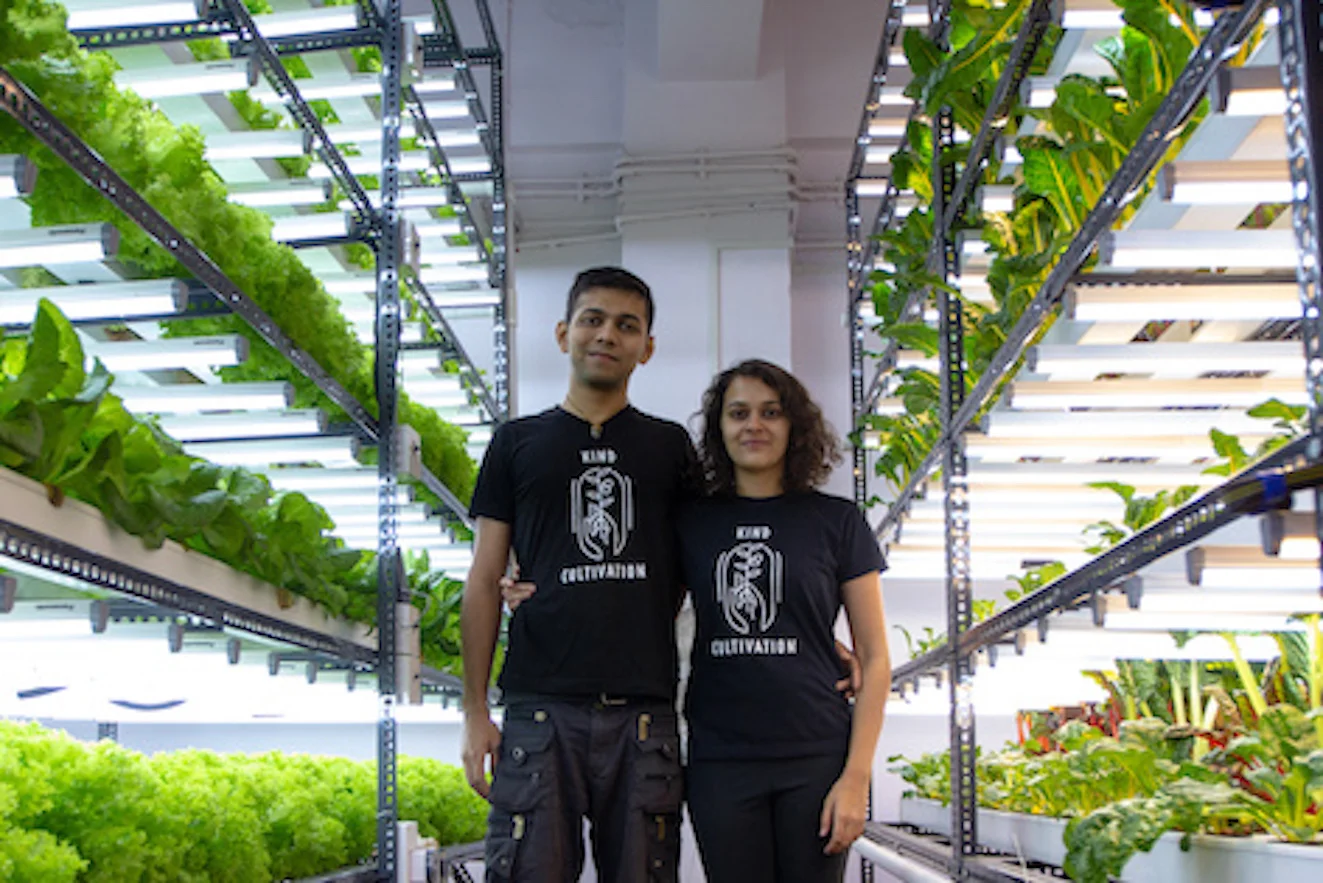
Seeking Fresh Produce, Mumbai Duo Quits Jobs To Grow Over 1,000 Plants Soil-Less!
by Jovita Aranha January 23, 2019
When Joshua and Sakina decided to quit their well-paying jobs and switch to farming, everyone, including their parents, thought they were wasting their time and efforts with a dead project.
“Who in their right frame of mind decides to leave a comfortable job in a city like Mumbai and get their hands dirty with farming?” naysayers asked.
Today, amid the chaos of the city, the duo is successfully running, what they call, Mumbai’s first hyperlocal farm!
Herbivore Farm in Andheri East
In a room less than 1,000 sq ft, with over 1,000 plants, they grow seven varieties of lettuce (lollo rosso, oakleaf, French romaine, summer crisp, butterhead), three varieties of Swiss chard (red, yellow and white), two types of rocket (wild and cultivated) and four varieties of kale.
All using hydroponic farming!
Operating from a warehouse in an old industrial estate that they transformed into an indoor farm in the Andheri suburb of Mumbai, the duo is growing pesticide-free, healthy and flavourful leafy greens, and delivering them at the doorsteps of their customers mere hours after harvest.
The Better India got in touch with the urban farmer duo to document their journey.
This journey towards growing their own food has its roots in a trip they took to Auroville in June 2017.
Joshua Lewis and Sakina Rajkotwala
“Our jobs were good. The money was flowing in, but there was no greater meaning to what we were doing. We wanted to do more with our time. We had goals, but didn’t know what to start with,” confesses Joshua.
He continues, “Besides, it felt like each day was passing by in a monotonous routine. It was a never-ending loop where we were neither living to the fullest nor giving enough. And so, on a whim, we decided to pack our backs and travel to Auroville in Puducherry. We spent three months there working at a natural farm and getting our hands dirty.”
This is the same Solitude Farm run by musician and organic farmer Krishna McKenzie, who moved to Auroville from the UK 25 years ago. Over 140 varieties of plants, ranging from wild greens, flowers, fruits, vegetables, oilseeds, cereals, grains, grams, and pulses, are grown across six acres of land. Read more about it here.
“The farm had a beautiful concept where the lunch for a particular day would be prepared using veggies harvested the same morning and served at the cafe. We would work at the farm in the morning and relish a heavy lunch cooked with the fresh veggies we harvested ourselves,” says Joshua.
Not only were these veggies at their maximum level of nutrition when consumed fresh but they gave them the energy to continue working in the farm without getting tired.
“We realised how food back home in Mumbai was sedative, doused with pesticides. Besides, the vegetables we consumed were off the shelf and at the very least, a week old, considering the harvest-to-transportation time,” says Sakina.
“When I ate lunch at the office, I felt sleepy at my work desk. Back in Auroville, we could work tirelessly even after lunch. This highlighted the crucial need for fresh food,” Joshua agrees.
After their return to Mumbai, the duo could hardly find anyone around them who grew and delivered fresh leafy green veggies.
And so, they decided to start growing their own leafy greens.
Joshua continues, “We are big-time lovers of salads. But we could hardly find any suppliers of clean, pesticide-free, leafy greens which could be consumed raw. Even the ones we consumed lacked flavour, often alternating between bland and bitter. And so, we decided to test hydroponic farming on Sakina’s terrace.”
The idea behind hydroponics was to avoid moving to the outskirts in search of land suitable for organic farming.
The goal was set. They wanted to grow fresh leafy greens in the middle of the chaotic city and consume them fresh.
Varieties of Swiss Chard
The classic trial-and-error method ensued for months. Whoever they sought guidance from had nothing more to share apart from the basic principles of hydroponics.
But the duo did not give up. They conducted extensive researched and kept trying. This was coupled with the pressure from home about trudging down an unconventional road.
Once they succeeded in growing three varieties, they invited their parents for a tasting session. Although their labour was appreciated, the parental units were unsure how the youth would be consistent.
But they decided to support the youngsters and gave them initial capital to kickstart their indoor commercial farm in Andheri East.
“I still remember how we made a 16-slide presentation to convince them to invest in our project. I don’t think they were convinced, but they had no option than to agree,” she laughs.
“With the customer base we have gathered and the farm that we have set up, they are now convinced we did not make the wrong choice,” says Joshua.
Christened Herbivore Farms, the concept behind the initiative is to make freshly harvested leafy greens available to their customers.
You May Also Like: Exclusive: UP’s Award-Winning Banana King Earns Rs 48 Lakh/Year, Becomes Idol For Farmers!
How is it beneficial?
Hydroponic farming is water-efficient
The climate within the greenhouse is artificially controlled, so the crops are protected against the weather outside.
Hydroponics is soil-less farming, where macro and micronutrients dissolved within a water solution directly facilitate plant growth. The system uses 75-85 per cent less water than conventional farming!
Growing plants in a vertical system allows them to grow five times more. The only challenge currently is that since the food is delivered within hours of harvest, the locations they cater to are limited.
When I ask them how their venture stands apart from their competitors, Sakina quips, “We consider our USP to be that our produce is delivered to the customer’s home a few hours post-harvest. So it is always at its peak of freshness, nutrition, and flavour. Our indoor farm enables a clean, sterile environment, which has zero pesticides, so it’s 100 per cent safe. We use 80 per cent less water to grow our produce with a recirculating irrigation system.”
To market their produce, the duo also gave away free samples which received an amazing response.
Every week, they harvest 350 plant heads which cater to 150 customers who have a monthly subscription.
Lettuce
A Herbivore Harvest Box (Monthly Subscription) costs Rs 1,500 (with extra delivery charges for South Mumbai) for one month. The deliveries are staggered over four weeks–one per week on a decided day–depending on the location of the subscriber.
Every week, this subscriber gets one box containing two to three varieties of leafy greens harvested the same morning.
“Most people who tried our produce conveyed how fresh and flavourful the leafy greens were, how different their texture was. Many of them subscribed to us soon after. It helped change their age-old perception of leafy veggies being ‘bitter’ or ‘bland’. And that was certainly morale-boosting for us. To be honest, I myself wasn’t such a big fan of greens until we started growing them ourselves,” signs off Sakina.
Also Read: Heights of Hydroponics: Meet the Chennai Man Who Grows 6,000 Plants in 80 Sq Ft Space!
To all the aspiring urban farmers who want to grow their own food, but often find excuses not to, Joshua has a message.
“Every time you wake up in the morning, you often have things on your bucket-list that you want to achieve before you die. You might often overthink about how much time you’d be wasting in pursuing those goals. In the process, you do not land up doing anything about them. So our message simply is–if you are passionate about what you want to do and know that you will enjoy it, just do it. The universe will conspire to remove all the obstacles in your path and everything will fall in place.”
To know more about Herbivore Farms, contact them on 89280 94239. Check out their Facebook and Instagram accounts. To sign up for a monthly subscription of their produce, click here.
(Edited by Shruti Singhal)
Like this story? Or have something to share?
Write to us: contact@thebetterindia.com
Connect with us on Facebook and Twitter.
Written by Jovita Aranha
A lover of people, cats, food, music, books & films. In that order. Binge-watcher of The Office & several other shows. A storyteller on her journey to document extraordinary stories of ordinary people.

Thorilex, LTD. Wants To Bring Aquaponic Innovations To The World
JANUARY 23, 2019 | KYLE BALDOCK
From Fishermen To Commercial Scale Aquaponic Suppliers And Beyond
THORILEX is a testament to the evolution of food production. With a background in fishing and fish farming, the team came together in 2010 to bring aquaponic farming to the Czech Republic and then the world. Starting out as a consultancy firm, they soon developed into a more full-scale provider of services. By 2015, THORILEX, Ltd. was established as a designer and builder of turnkey fish farms, aquaponic and hydroponic farms.
Having scaled their business from fish farming to aquaponics with a proprietary recirculating aquaculture system, they looked around at the market and saw a big opportunity in vertical farming. I spoke with Marek Hrstka, THORILEX’s Business and Marketing Director to discuss the company’s success and plans for scaling business in the future.
THORILEX Aquaponic Design
THORILEX is making aquaponic innovation more accessible
2018 was a year of progress for THORILEX, as they designed and delivered new patented products. The THORILEX Hydroponic System, a modern vertical farming system that is adjustable and scalable for commercial-scale growing, is now available on their website. They are also offering a long-life hydroponic basket that is compatible with their growing system, as well as a stainless steel, self-cleaning fish tank.
THORILEX designs products with the “IKEA-model”: because they are designed to be highly modular, they can be easily packed, shipped and delivered with minimal costs. In this way, Mr. Hrstka says that THORILEX can bring these modern aquaponics innovations to markets across the world. Since last year, they have been busy implementing their hydroponic system in a pilot project in a 2ha glass greenhouse. This showcase farm allows them to produce food in a highly controlled environment, generating and collecting data to be made available in future case studies.
Aiming for the world
THORILEX thinks in the global scale. Already well-established as leaders in the Czech Republic, they are now anticipating interest from the rest of Europe, China and North America. Yet Mr. Hrstka remains humble: “We are proud of our know how but without our partners, supporters and distributors, we wouldn’t be doing what we are doing now.” That could give a clue to why THORILEX joined the AVF: “We are open to any cooperation or partnership. We are looking for really good partners and distributors; feel free to get in touch.”
Current case studies and a product catalogue can be found on their website here:
Their special product website is here:

How UAE’s Food Security Agenda Will Impact Dubai
Minister reveals key initiatives of National Food Security Strategy
January 26, 2019 Sharmila Dhal, Chief Reporter
Mariam Al Muhairi, Minister of State for Food Security Image Credit: Ahmed Ramzan/Gulf News
Dubai: Soon, your visits to the supermarket will be a different experience. As you browse the shelves for your tomatoes, dates, leafy greens, meat or fish, you will find there will be far more options of premium local produce than currently available.
Reason: The UAE has launched its first-ever Food Basket which has identified 18 different food items (see infographic) whose large-scale local production in some cases is set to make prices more competitive. Not just that, many items will have an all-new ‘Emirates Sustainable Agriculture Label’, which means they are ‘Agriculture-tech’ or ‘Ag-Tech’ products complying to standards of sustainable production, water efficiency, without chemicals and in line with innovative technologies. Basically they will be “clean and traceable foods.”
Food consumption is growing at the rate of 12 per cent a year. Looking at climate change and global food demand, we need to ensure we have different plans in place to secure food for today and the future.
- Mariam Al Muhairi, Minister of State for Food Security
Making these revelations to Gulf News in an exclusive interview at her office, Minister of State for Food Security Mariam Al Muhairi said, “We are looking at a domestic production target of over 100,000 tons by 2021 in line with the National Food Security Strategy 2051 announced in November.”
100000
tons is the target set for domestic production of foods by 2021
She said, “We need to understand what’s in our food basket and say which of these foods makes sense to be grown in the UAE and still have a competitive price, compared to imports. We arrived at the basket based on consumption patterns, local production capacity and nutritional value of foods. The basket is dynamic and could change in a few years depending on these factors.”
Image Credit: ©Gulf News
Image Credit: ©Gulf News
Challenges
UAE’s food imports currently stand at 90 per cent. How will the new thrust on domestic production impact this figure? “It is difficult to put a number on where we want to head in terms of imports,” said Al Muhairi. “We need to factor the many challenges — less than five per cent of our land is arable and water is scarce. Our population is growing rapidly — it is expected to go up from nine million now to 11.5 million by 2025.
11.5 million is the estimated population of the UAE by 2025
A graduate of the Latifa School for Girls, the minister, who has a master’s degree in engineering from Germany, said, “Food consumption is growing at the rate of 12 per cent a year. Looking at climate change and global food demand, we need to ensure we have different plans in place to secure food for today and the future.
“We have to be in a position to absorb food shocks, secure the continuity of food supplies and also enhance the quality of food.”
12 is the percentage rate at which food consumption is growing in the UAE
Another challenge, she said, pertains to the consumption behaviour of the diverse mix of people (UAE is home to people of over 200 nationalities), their eating patterns, and the way we deal with food wastage and loss.
Community’ role
The government is not the only entity that will make the change happen. “Food security is not just the government’s responsibility,” she said. “Individuals, families and communities also have to play their part. When you choose your food, you are taking part in the food security outlook. If we make sure we educate our communities and give them the tools to do that, we could nudge them to go for more sustainable foods and make healthier choices. Also, the community is involved when we talk of consumption habits or reducing food loss and waste.”
Accessibility
Explaining the difference between food security and self-sufficiency, she said, “People tend to relate food security to self-sufficiency, which is not the case. Food security for the UAE means enabling all residents to have access to safe, nutritious, sufficient and affordable food to lead a healthy and active lifestyle at all times.”
90% UAE's current food imports
Taking the example of Singapore, she said, “Singapore is No. 1 in the Global Food Security Index even though it imports 90 per cent of its food. Why? Because it has managed to have access to food at all times.”
Supermarkets will soon have a lot more options of premium local produce than currently available. Many items will also have an all new ‘Emirates Sustainable Agriculture Label’Image Credit: Abdul Rahman/Gulf News
According to her, the UAE, which ranks 31 in the index, aims to make it within the top 10 by 2021 and to the first place by 2051. “To be able to do that, we need to diversify, with some food grown at home, some food grown by our companies abroad and some imported from different sources.”
With land and water being scarce in the UAE, she said local companies can invest abroad to boost supplies. “There are many possibilities they can explore across all continents. Recent investments have been made in Romania, Egypt, Sudan, Serbia, and Cambodia. Lately, Uganda has also allocated 2,500 hectares of land as an agricultural free zone dedicated to the UAE. The government’s role is to facilitate agribusiness to increase food trade of quality products.”
She said the UAE’s food security stems mainly from its economic and political stability. “We have the buying power but we need to be prepared for what lies in the future concerning the global food systems. At the same time we should work on the opportunities of becoming a world leading hub in innovation-driven food security by enhancing facilitation for agribusiness and increasing R&D and place more emphasis on sustainable and efficient ways of food production.”
New economic sector
The Office of Food Security has introduced 10 strategic initiatives as part of a “new economic sector” to encourage the adoption of new technologies in the agricultural sector. “We wanted to develop a new economic sector with food systems that are sustainable and don’t use water excessively. We had to first see what were the barriers.”
So a joint programme between the Future Food Security Office and the Government Accelerators was undertaken. It was attended by over 50 representatives of federal and local government authorities and the private sector.
“The idea of coming together was to see how best we could remove existing barriers companies faced in the sector and come up with solutions in 100 days. The result was the set of 10 initiatives.
“The first — an Emirates Sustainability Agriculture Label — tells the consumer that the product has been grown in a sustainable way, using innovative technologies, without chemicals or soil and in keeping with human and animal rights. This is the first national logo of its kind to be introduced anywhere in the world. Unlike earlier, when investors would require four-five different licences to set up a facility, the new economic sector provides a single unified licence, under which activities have been consolidated and updated, reducing costs by 60 per cent.
“It also offers a hassle-free framework for providing agriculture finance and an Ag-tech loan guarantee and supply chain financing. In other words, cash flows have been streamlined.
“Similarly, a new Ag-tech building code allows for hi-tech greenhouses or closed system fish farms to be built to required specifications while a food security data framework and platform (bayanat.ae) provides easy access to information.
“Investors can also benefit from a new standard for aquaculture in keeping with Good Aquaculture Practice, besides a local aquaculture atlas that shows places in the UAE that are suitable for fish farming and a dedicated fish feed facility.”
The minister said 70-80 per cent of the operational costs of fish farming derives from feed which is currently being imported. So it was important to build a sustainable fish feed facility locally.
What Ag-Tech means
Ag-Tech covers advanced agricultural methods that differ from traditional ways of farming. Among other things, it encourages the use of “controlled-environment agriculture” (CEA) that includes efficient technologies to manage inputs and maximise outputs, aquaculture or farming of fish and other marine life in controlled conditions, vertical farming where plants are grown indoor in vertically stacked layers using artificial light, regulated humidity, temperature and minimal pesticides, thus enabling large-scale production of vegetables in the absence of soil, sunlight and chemicals. It also covers drones to map farming areas and adoption of sensors that can help boost yields.
Hi-Tech Agriculture in the UAE
Badia Farms in Al Quoz, Dubai: Based in Al Quoz, the region’s first vertical farm employs hydroponics technology and uses 90 per cent less water than open field farming and recycles the water it uses. It produces a wide range of lettuces, microgreens and baby leaf herbs among other varieties.Image Credit: Ahmed Ramzan/Gulf News
Masdar City’s eco villa Bustani: A pilot project in Masdar City, this smart showcase has been designed to use 72 per cent less energy and 35 per cent less ater than a typical comparably sized villa in Abu Dhabi.Image Credit: Supplied
Al Dahra BayWa Greenhouse in Al Ain: The facility in Al Ain consumes 67 per cent less water than traditional greenhouses and the cooling technology employed is the first of its kind in the world. It has the capacity to produce 3,000 tons of tomatoes locally.Image Credit: WAM
The UAE can boast of several hi-tech projects:
Al Dahra BayWa Greenhouse in Al Ain
Pure Harvest, Al Ain
Fish Farm LLC, Dubai, Fujairah
Al Qouz-based Badia Farms
Masdar’s eco villas initiative — Bustani with Madar Farms
Upcoming indoor farm by Emirates Flight Catering and Crop One Holdings of the US
Dedicated fish feed facility for which a letter of intent has just been signed
The National Food Security Strategy:
The National Food Security Strategy 2051 was presented by Minister of State for Food Security Mariam Al Muhaiari in November 2018 during the UAE Government’s second Annual Meetings. The meetings were chaired by His Highness Shaikh Mohammad Bin Rashid Al Maktoum, Vice-President and Prime Minister of the UAE and Ruler of Dubai, and His Highness Shaikh Mohammad Bin Zayed Al Nahyan, Abu Dhabi Crown Prince and Deputy Supreme Commander of the UAE Armed Forces.
The food security strategy was among seven national strategies that outlined the early stages of implementing the UAE Centennial 2071 goals in vital sectors.
The strategy, which includes 38 short and long-term key initiatives, seeks to facilitate the global food trade, diversify food import sources and identify alternative supply schemes, covering three to five sources for each major food category.
The strategy aims to:
Make the UAE the world’s best in the Global Food Security Index by 2051 and among the top 10 countries by 2021.
Develop a comprehensive national system based on enabling sustainable food production through the use of modern technologies.
Enhance local production.
Develop international partnerships to diversify food sources.
Activate legislation and policies that contribute to improving nutrition.
Activate legislation and policies to reduce waste.
Westfield Creates Urban Farm On Top Of French Shopping Mall
10th January 2019
Unibail-Rodamco-Westfield has opened the first urban farm on top of a shopping centre in France.
The 270 square metre farm is located on the roof of the So Oeust shopping centre. It produces vegetables and plants through vertical agriculture – free from herbicide, pesticide or fertiliser.
Since the opening in June, over one ton of fruits and vegetables have been harvested including tomatoes, basil, mint, strawberries, bell peppers, chilli peppers, kale and thyme.
The products are sold to customers in a dedicated popup store within the shopping centre.
The farm will be extended to 600m this year.
Jean Collet, Director of URW Link, said: “Overall, the circular and collaborative approach of Sous Les Fraises adds true value to our assets: it exploits unused space and promotes a pragmatic and positive vision of agriculture. This enriches our buildings, making them more sustainable and in tune with their environment. We are accelerating on this topic and look forward to new projects with Sous Les Fraises.”
Last year, Westfield unveiled its vision for a ‘hyper-connected micro-city’ fuelled by social interaction and community. Destination 2028 predicts the key trends in retail.
Michael Mander
I am a journalist from Essex, England. I enjoy travelling, and love exploring attractions around the world. I graduated from Lancaster University in 2018. Twitter @michael_mander.

US: New Modular Indoor Agricultural System Grows Food In Clean, Pure Environment
Grow Pod Solutions announced that its new modular indoor agricultural systems can grow herbs and vegetables without contamination frequently associated with other farming methods.
The modular, stackable pods feature proprietary technology to monitor every detail of plant growth, including light intensity, nutrient delivery, and oxygen levels.
"We are leading the drive to provide consumers with 'Super Foods' that are clean and healthy," said George Natzic, President of Grow Pod Solutions. "Our exclusive high-grade clean agricultural system eliminates harmful pathogens, and grows food with farm-to-table freshness and 100% traceability."
'Know the grow'
GrowPod allows businesses, entrepreneurs, restaurateurs, grocery stores, schools, hotels, neighborhoods and organizations to grow fresh, clean food on-site that is free from disease, pesticides and dangerous chemicals. This allows consumers to "Know the Grow" and have confidence that their food is fresh, clean, and healthy.
The GrowPod agricultural system uses sterile water and purified air in a sealed and filtered environment, thus eliminating the sources of contamination. The company's patented bipolar air ionization reduces airborne pollutants by delivering charged oxygen molecules that neutralize chemical compounds and sterilize pathogens, mold and bacteria, to create the optimum environment for growing.
Grow Pod Solutions also announced that the company is shortening its name to GP Solutions in conjunction with its move from a privately held to a publicly traded company. GP Solutions is traded on the OTC markets under the ticker symbol: GWPD.
For more information:
GP Solutions
(855) 247-8054
info@growpodsolutions.com
www.growpodsolutions.com
Publication date : 1/4/2019

The Number One Reason Why Indoor Vertical Farming Makes Sense?
Contributed Content by: Robert Colangelo, Green Sense Farms Holding’s, Inc.
With a temperature of -23 F and a -53F windchill,
the Green Sense Farms team is still growing strong!

Learn The Branding Secrets And Frameworks Big Brands Don't Want You To Know
iGrow News and brand consultancy, D Branding, have teamed up to support indoor farming businesses by supplying valuable knowledge that will help them grow market share, brand awareness, and engagement.
Learn The Branding Secrets And Frameworks Big Brands Don't Want You To Know
In a series of newsletters over the next few weeks, Chief Strategist & Owner of D Branding, Dino H Carter, will teach you the difference between brand thinking and business thinking, how successful brands use the brand as a management tool, what is your brand strategy and how to create one, why logo design is not branding, and what are the steps you should take to insure your business success.
Dino has over 20 years of experience in many facets of marketing, from PR for Levi's and merchandising for MTV, to marketing, creative and consultancy for Cannabis businesses. He has lived and worked in Europe, The Middle East, and the USA, has a BA in Management & Communications, and a unique and comprehensive approach and in-depth understanding of the interaction between brands, consumer, and commerce.
Learn more about Dino
START BY DOWNLOADING THE BRAND BUILDING WORKSHEET
Download the free worksheet
Davos 2019: The Man Who Thinks He Can Make Us Love Kale
By Katie Hope BBC News, Davos
23 January 2019 Davos
Matt Barnard says food can taste better grown indoors. Image copyright PLENTY
Matt Barnard's favourite memory of the recent Christmas holiday period was receiving a thank you letter from the 10-year-old daughter of a friend who'd been over for a meal. "I'm stunned you got me to like kale. I never knew I could like salad," she wrote.
The products had come directly from Mr Barnard's South San Francisco farm.
It's a nice anecdote. Of course, food you've grown yourself tends to be fresher and taste nicer than the same stuff from the supermarket.
But Mr Barnard's ambitions are a lot bigger than providing friends and their children with nice lunches. He is the chief executive of Plenty, a high-tech, agricultural start-up that he co-founded six years ago.
He may only have two farms currently, with a third due to open later this year, but they are test pads for a much more ambitious global expansion plan. "Plant science artificial intelligence training centres" is how he describes them.
Pole planting
The crops are grown upwards on vertical poles, enabling them to produce higher yields on much smaller areas of ground, and the farms are indoors, meaning the weather has no impact. LED lights provide the equivalent of sunshine.
The plants don't even need soil, instead they are fed by nutrient-rich water and there's no need for pesticides because there are no pests in this carefully controlled environment.
For Mr Barnard, farming is a return to the family business. He grew up on an orchard but says he never expected to work in the industry because he "didn't enjoy growing up without any control over my livelihood".
Plenty's farms grow leafy green plants including kale, sweet lettuces and salad leaves Image copyright PLENTY
On his farms it's now all about control.
The amount of water, ratio of minerals, humidity levels and different types and durations of LED light are all being varied and tested.
"By giving plants different versions of perfect environments, we have the ability to influence the way they taste," he says.
'Bowling balls'
The farms' small size means they can also be close to, or even within, big cities, dramatically reducing the distance produce needs to travel before it is eaten.
He believes that fresh produce "gets a bad rap" because most fruit and veg crops are chosen for their durability, rather than their flavour.
"Look at the iceberg lettuce. It's got no flavour and no nutrition, but it's the largest cash crop in the US because it's like a bowling ball making it resilient in the field and truck. That's what the supply chain dictates," he says.
Local farms like his are able to grow more delicate and varied types of produce because they don't need to be as robust.
"Working to produce food for people not trucks," is how Mr Barnard puts it.
High energy
He is optimistic that people will automatically choose to eat more veg if it tastes better.
Such farms could also be part of the solution to obesity and to feeding a growing global population when we're running out of space to grow crops economically, he believes.
As futuristic as it sounds, this kind of farming isn't new. There are similar companies elsewhere such as Jones Food Company in North Lincolnshire, Intelligent Growth Solutions in Scotland and the Growing Underground business in London. Internationally there are rivals such as Aerofarms in the US.
Plenty of such farms have also failed, with critics saying the high cost of the energy required to run them stops them being commercially viable.
Mr. Barnard says iceberg lettuce is easy to transport but lacks flavour. Image copyright GETTY IMAGES
Mr Barnard says it's an industry that is easy to enter with off-the-shelf systems, but argues that Plenty's use of machine learning and data is what makes it different.
He says external changes, including a sharp drop in the cost of LED lighting, has also helped make it viable, with the farms more reliant on light than heat.
Reconnecting
It's easy to be sceptical, but he's been backed by some serious investors, raising $200m (£154m) from some big names, including Japanese media giant SoftBank, Alphabet's Eric Schmidt and Amazon boss Jeff Bezos in 2017.
Prof Tim Benton, an expert in food systems from the University of Leeds, agrees there is a role for companies like Plenty, but says they are unlikely to replace conventional horticulture.
"On average, if you divide global agricultural land by the number of people on the planet, each person uses a football pitch of land to crop the food we eat. Even if vertical farming stacks space high, it would be difficult to replicate even a big chunk of this space within cities. So, whilst part of the solution, it is not THE solution," he says.
But like Mr Barnard, Prof Benton agrees vertical farming is one way to reconnect people with food, "converting it from a commodity that is plastic wrapped, cheap and 'waste-able', into something real, something local, something nurtured during production".
Mr. Barnard wants to "meaningfully change how people think about fresh produce"
Image copyright PLENTY
Plenty's farms currently grow leafy green plants including kale, sweet lettuces and salad leaves, which require less energy compared to more substantial crops such as potatoes.
The crops are distributed via online retailers, at special events and given to a small number of consumers to trial.
Shelf life
Mr Barnard says Plenty only sells its produce when it can do so at "median organic pricing or better".
Of course, that is still much higher than rival non-organic produce, but Mr Barnard denies that his farms are simply producing tasty food for the middle class.
Lab tests have shown the produce has a longer shelf life and he says that means people will waste less, which makes it more affordable.
"Our mission is pretty ambitious. We've shown that it is possible at large scale relative to efficiency. Now we have to go about the hard work of building a business."
That's why he's here at Davos to spread the word and secure further investment for his plan.
Mr Barnard expects the business to accelerate after 2020, with expansion "likely to be outside the US".
In the end, he will judge his success on whether he manages to "meaningfully change how people think about fresh produce" as something enjoyable to eat.
So has he persuaded his own children, aged 11 and 13, to take an interest in veg?
"More and more so. Both are eating more over time," he says.
Related Topics: Davos Food Agriculture

How Abu Dhabi Found A Way To Grow Vegetables In 40-Degree Heat
January 17, 2019 by World Economic Forum
This article is brought to you thanks to the collaboration of The European Sting with the World Economic Forum.
Author: Emma Charlton, Writer
Could you grow your lunch in an old shipping container? One that’s situated in 40-degree desert heat?
A project underway in Abu Dhabi aims to encourage people to do just that – pairing old shipping containers and high-tech hydroponics to overcome the region’s hostile climate and increase local food production.
(Unsplash, 2019)
A new solution for farming in hostile conditions / Image: CustomWeather
While food security issues are climbing up the agenda globally, they are felt particularly acutely in the United Arab Emirates, where temperatures are high and rain levels low. Creating vertical farms inside shipping containers could help communities grow more of their own produce and cut down on the cost of transporting food to the region.
In Masdar City – an urban development project in Abu Dhabi – Madar Farms are using hydroponic systems that require much less water than traditional farms, to grow lettuce, herbs and brassicas. The project is being showcased at Abu Dhabi Sustainability Week.
Because the plants are growing in a controlled environment inside the container, with nutrients coming from enriched water, pesticides and insecticides are not required. LED lighting with deep red and blue hues mimics sunlight and cycles on and off to simulate periods of day and night for the plants.
LED lighting mimics sunlight and switches off to simulate night. / Image: Madar Farms
According to proponents of the idea, shipping-container-based farming uses 95% less water than traditional farming. The containers, which are 12.2 metres long and 2.4 wide, are stackable, durable and easy to modify. It’s an idea that’s taking hold elsewhere as well, with CropBox offering a similar idea in the United States.
Some people argue that becoming dependent on such methods creates a reliance on a secure energy supply to power the boxes, while others point out it could disrupt ecosystems and harm pollinators.
Despite these reservations, vertical farming systems like this one, where grow towers hang vertically, and others, where crops are stacked, are seen as essential for the future of sustainable farming.
The vertical farming market is forecast by Global Market Insights to grow to $13.9 billion a year in 2024, from $2.5 billion in 2017.
Vertical farming is a key growth area / Image: Global Market Insights
Shaping the Future of Food is one of the World Economic Forum’s key initiatives, since it anticipates the global population will have swelled to 9.8 billion by 2050, resulting in a need for 70% more food than is consumed today. Leadership, innovation and collaborative action are needed to meet the challenge, it says.
“Food systems do not currently provide nutritious food in an environmentally sustainable way,” the initiative says. “At the same time, food production, transportation, processing and waste are putting unsustainable strain on environmental resources.”

Indoor Ag-Con Asia, Enterprise Singapore Announce 2019 Indoor Ag-Ignite Winners
Three Startups Take Top Prizes at Indoor Agriculture Pitch Competition Held During 4th Annual Indoor Ag-Con Asia Event
SINGAPORE, SG (JANUARY 22, 2019) – Indoor agriculture startups Biteback, Farmers Cut and Growers Agritech, LLC won top honors at the Indoor Ag-Ignite competition finals held during Indoor Ag-Con Asia, the premier event covering the technology of growing crops in indoor systems using hydroponic, aeroponic and aquaponic techniques, January 15-16, 2019 at the Marina Bay Sands, Singapore. Designed to support entrepreneurs and find the most innovative new ideas globally in the fast-growing indoor agriculture industry, the competition was co-hosted by Indoor Ag-Con and its lead sponsor, Enterprise Singapore.
Enterprise Singapore awarded a Startup SG Grant of S$50,000 to each winning team, including: (1) S$25,000 non-dilutive cash grant which can be utilized to accelerate commercialization efforts; (2)a further S$25,000 which can be converted into equity shares at the next round of fundraising.
Each winning team will also receive substrates and technical advice from Indoor Ag-Con Asia sponsor and exhibitor, Smithers-Oasis. The company's global expertise of the plant and flower business stretches from propagation to presentation --offering Indoor Ag-Ignite winners the chance to tap into a wealth of industry insight and knowledge.
Pictured (L-R) -Indoor Ag-Ignite Judges Sarai Kemp, Trendlines Agtech; Michael Dean, AgFunder; Isabelle Decitre, ID Capital; Indoor Ag-Ignite Winners Mark Korzilius, Farmers Cut; Ser Yong Quek, Grower Agritech; Daniel Reigler, Biteback; and Edwin Chow, Enterprise Singapore
“New technologies and approaches are transforming indoor agriculture at a rapid clip and we want to do everything we can to help emerging entrepreneurs bring their ideas to market,” said Indoor Ag-Con Founder Nicola Kerslake. “This was our 2nd annual competition and we were especially pleased to see how interest has grown as evidenced by the number of entrants. Most important, we were thrilled to partner once again with Enterprise Singapore to unearth each of these incredibly promising startups."
“The agility and high-risk appetite of agri-food tech startups put them in the driver’s seat of disruptive technologies. Indoor Ag-Con Asia is a great place for these companies to connect with global agriculture experts, researchers and investors – for knowledge exchange and co-innovation opportunities. Enterprise Singapore is pleased to continue our support for Indoor Ag-Con Asia and Indoor Ag-Ignite in building a network of like-minded entrepreneurs who aspire to transform Asia’s agriculture landscape,” added Ms. Kee Ai Nah, Executive Director of Lifestyle & Consumer Cluster, Enterprise Singapore.
The Indoor Ag-Ignite competition was open to any team or company of under 40 employees developing or deploying innovative technologies for the indoor agriculture industry. Applicants were able to make their pitches via video chat for the initial round of the competition. Five finalists -- AlgaHealth, Biteback, Farmers Cut GmbH, Grower Agritech LLP, Growflux --received stipends towards travel to Singapore to participate in the finals. The judging panel included Michael Dean, AgFunder; Isabelle Decitre, ID Capital; Sarai Kemp, Trendlines Agtech and Edwin Chow, Enterprise Singapore
Indoor Ag-Ignite 2019 Competition winners are:
BITEBACK -- Biteback is an Insect Bio-refinery company aiming to meet an increasing global demand for palm oil by creating a healthier and more sustainable alternative with 40 times more yield per ha. Biteback has developed a processing technology that allows extraction of more than 90% of fats from insect body mass which is refined into various functional ingredient like cooking oil, butter, fatty alcohol, and bioenergy.
FARMERS CUT GMBH -- Farmers Cut has started tackling the challenge of year round local food production by designing a sustainable system impervious to outdoor environmental conditions resulting in pesticide free, nutrient rich greens. The Farmers Cut vision is to provide local, healthy, fresh, pesticide-free produce to the urban population all year round
GROWER AGRITECH LLP – Specializing in the cultivation of high-value crops, Grower Agritech is a Singapore incorporated company with its management, agritech science team and executives from Singapore and Thailand. The company’s flagship project – Truffle Vertical Farm (TVF) – is a revolutionary technology to cultivate in- vitro, truffles species, indoors.
Indoor Ag-Con returns to Las Vegas from May 22-23, 2019 for its 7th Annual Indoor Ag-Con. which will be held at the Red Rock Resort & Conference Center. For more information visit www.indoor.ag
ABOUT INDOOR AG-CON
Indoor Ag-Con was founded by Newbean Capital in 2013, and has since grown to the premier event in indoor agriculture, the practice of growing crops, raising fish and insects in indoor systems, using hydroponic, aquaponic and aeroponic techniques. Its events are tech-focused and crop-agnostic, covering produce, legal cannabis, alternate protein and non-food crops. It hosts events in Las Vegas, Singapore and the US East Coast. In December 2018, three event industry professionals – Nancy Hallberg, Kris Sieradzki and Brian Sullivan – purchased Indoor Ag-Con LLC from Newbean Capital, so setting the stage for further expansion of the events globally. More information -- www.indoor.ag
ABOUT ENTERPRISE SINGAPORE
Enterprise Singapore is the government agency championing enterprise development. Its vision for Singapore is a vibrant economy with globally competitive Singapore enterprises. International Enterprise Singapore and SPRING came together on 1 April 2018 as a single agency to form Enterprise Singapore. The mission is to grow stronger Singapore companies by building capabilities and accessing global opportunities, thereby creating good jobs for Singaporeans. Enterprise Singapore works with committed companies to build capabilities, innovate and internationalize. The agency also also supports the growth of Singapore as a hub for global trading and startups. As the national standards and accreditation body Enterprise Singapore continues to build trust in Singapore’s products and services through quality and standards. More information -- www.enterprisesg.gov.sg
Green Life Farms Hires Head Grower
Green Life Farms Hires Head Grower
Industry veteran brings more than 15 years of experience growing produce in indoor hydroponic greenhouses to team
Boynton Beach, FL (January 28, 2019) – Green Life Farms, the state-of-the-art hydroponic produce greenhouse under construction in Boynton Beach, FL, has hired Gregory Graft as its Head Grower. Graft will play a significant role in helping the organization prepare to begin commercial operations in the first half of 2019. Green Life Farms is slated to be the largest indoor hydroponic produce grower in the southeast.
“Gregory is a seasoned expert in all aspects of the hydroponic industry,” said Mike Ferree, Vice President, Green Life Farms. “His 17 years of hands-on experience in managing a hydroponic greenhouse makes him a vital addition to the Green Life Farms team, as we work to establish ourselves as an industry leader in sustainable farming practices.”
After serving in the United States Marine Corp, Graft was the Vice President and General Manager of Grateful Greens Hydroponic Farm in Clarksville, IN. There, he designed, built and maintained the hydroponic farm, managing every aspect from assessing plant health to developing client relationships. Graft also served as a production supervisor at Enjoy Life Foods in Jeffersonville, IN, assuming responsibility for product quality, planned volume and line efficiency.
As Head Grower for Green Life Farms, Graft will oversee the facility and lead the day-to-day operations. He will be directly involved with growing operations and maintaining the greenhouse’s infrastructure and hydroponic equipment. In addition to his immersion in the daily processes, Graft will take a holistic approach to managing the facility, analyzing data to evaluate its performance and recommending adjustments. He will also hire, train and supervise a staff of 16 greenhouse employees. Graft will work closely with the rest of the team to continue to drive sales.
Green Life Farms baby leafy greens will set new standards for cleanliness, freshness, and taste. Grown locally, using sustainable farming practices combined with the most advanced AgTech practices, and kept free from GMOs, pesticides and contaminants, Green Life Farms baby leafy greens are good for your body, family, community, and planet.
For more information about Green Life Farms, visit GreenLifeFarms.ag. Contact Elayne@GreenLifeFarms.ag for sales and Ray@GreenLifeFarms.ag for investor relations.
About Green Life Farms
Green Life Farms is constructing a 100,000 square foot state-of-the-art hydroponic greenhouse in Boynton Beach, Florida, with additional expansion planned in Florida and beyond. Commercial operation is expected to begin in the first half of 2019. By incorporating agriculture with technology, Green Life Farms will provide consumers with premium-quality, fresh, local, flavorful and clean baby leafy greens that are good for their bodies, families, communities and planet – year-round.

Bristol Startup LettUs Grow Attracts £1M Funding To Develop Sustainable Farms For Future
January 11, 2019
The UK agri-tech startup LettUs Grow has obtained £1 million in funding to build commercial indoor farm facilities. The startup designs aeroponic irrigation and control technology for vertical farms. The funding will steer the company to expand globally and develop innovative eco-friendly farming solutions.
Supported by renowned organisations
Innovate UK has endowed LettUs Grow with £399,650 to manoeuvre a £700,000 project enabling food security in the emergent challenge of climate change.
The agri-tech startup will work in collaboration with ECH Engineering and Grow Bristol. Besides, the company has won several research grants including the Green Challenge, amounting €100,000 in total.
Prior to the latest capital ingestion, LettUs Grow raised £460,000 from ClearlySo, Bethnal Green Ventures, and the University of Bristol Enterprise Fund II, managed by Parkwalk Advisors and angel investors.
Matias Wibowo, investment manager at ClearlySo articulated, “Innovation is critical to ensuring long-term food security and sustainability. Our investors see the value, both in terms of financial and environmental/social returns from tackling this systemic global problem. That’s why they got involved in LettUs Grow. LettUs Grow provides the technological innovation piece to the vertical smart farming movement that is currently trending rapidly in the urban context.”
Challenges of rising populace and climate change
With the exponentially growing population, the food production needs to be augmented by many folds. The traditional farming will not be enough to feed this escalating global population facing the menace of climate change, soil degradation and looming farmland. Besides, a significant proportion of crops get damaged due to logistical anomalies.
LettUs Grow – sustainable farming for a better future
LettUs Grow has invented a patent-pending aeroponic technology for growing shrubs and herbs with over 70% higher growth rate compared to existing methods. In this technology, plant roots are suspended in a nutrient-rich mist instead of using soil. This ensures faster, consistent and predictable yields resulting in 95% reduction in water usage against open-field farming. LettUs Grow enables reduction of carbon footprints with 0% use of pesticides and chemicals.
Headquartered in Bristol, LettUs Grow was founded by Ben Crowther, Charlie Guy and Jack Farmer in 2015.
Charlie Guy, co-founder and Managing Director of LettUs Grow stated, “This injection of private and public funding into the company enables us to accelerate our innovative products to market and build one of the most technically advanced facilities for indoor growing in the world. The global agri-tech industry is very exciting right now, all stemming from the necessity to improve the economic and environmental sustainability of food production. We are fielding enquiries from all around the world from food producers and farmers who want to experience the benefits of our technology across a growing range of crops.”
Stay tuned to Silicon Canals for more updates in the tech startup world.


Grow Strong: African Farmers, Entrepreneurs Revamp Agriculture Norms Through Purdue Partnership
Scott Massey, a Purdue University graduate and founder of Heliponix, a company that makes an appliance that fits under a kitchen counter and grows produce year-round, is hoping to change that by bringing sustainable agriculture methods in Cameroon.
January 28, 2019
Scott Massey, founder of hydroponics startup Heliponix, discusses agricultural innovations with Togonese students as a part of his first Mandela Washington Fellowship. In 2019, Massey will workshop at Cameroonian universities, empowering students interested in agricultural innovation and entrepreneurship. (Photo provided) Download image
WEST LAFAYETTE, Ind. – Many farmers in the Republic of Cameroon usually grow just enough food to feed their families due to limited fertilizer and high-yield seeds, coupled with poor soil quality and lack of irrigation.
Scott Massey, a Purdue University graduate and founder of Heliponix, a company that makes an appliance that fits under a kitchen counter and grows produce year-round, is hoping to change that by bringing sustainable agriculture methods in Cameroon.
Massey has been selected for a second Mandela Washington Fellowship to lead educational workshops at Cameroonian universities this month. Approximately 200 million hectares of suitable land remains unfarmed across Africa, causing many observers to wonder how African nations can unlock their full agricultural potential.
The Mandela Washington Fellowship seeks to promote agricultural development through the academic and entrepreneurial empowerment of African peoples.
“African entrepreneurs have immeasurable economic opportunities to market solutions using new agricultural technologies,” Massey said. “Our overall goal is to provide these resilient people the means to their own production and permanently break the cycle of dependency on foreign aid.”
Massey has used his extensive knowledge in hydroponic systems and agricultural engineering to develop GroPod, an in-home appliance that grows produce year-round. His background also gives him the unique expertise to teach innovative and sustainable farming techniques in Cameroon.
“In these workshops, we are implementing a new vertical farming technique that utilizes an adaption of the proprietary vertical farming technology also used in GroPod,” Massey said. “Not only will we be teaching the students about these advanced technologies that they can use to start their own businesses, but we will also be building model farms that they can incorporate into their curriculums to grow clean food.”
On this trip, Massey will travel with Daliwa Joseph Bainamndi, another Mandela Washington fellow, to give Cameroonian farmers vital information on developing and incorporating innovative farming practices into their work. The pair will lead lectures on hydroponic farming, entrepreneurship, 3D printing and computer-assisted design at the University of Ngaoundéré, University of Ngoa-ékélé and the agriculture school of Institut Superieur des Sciences et Techniques de Yaounde.
In general, African farmers struggle against nonexistent agricultural infrastructure and poor farming conditions, making subsistence farming the most advantageous practice. However, Massey and Bainamndi’s work could empower Cameroonian students and farmers to expand operations sustainably and successfully through entrepreneurship and innovation.
Massey’s work aligns with Purdue's Giant Leaps celebration of the university’s global advancements made in health, space, artificial intelligence and sustainability as part of Purdue’s 150th anniversary. Those are the four themes of the yearlong celebration’s Ideas Festival, designed to showcase Purdue as an intellectual center solving real-world issues.
Massey received his first Mandela Washington Fellowship in 2018 when he traveled to Togo, Africa, to teach farmers there about the farming usages of hydroponics systems. Read more about his first trip here.
“This diplomatic humanitarian mission will fight the war against hunger on its front line and expand the addressable technology market to maximize global impact,” he said. “I look forward to the day that Africa becomes an environmentally and economically sustainable farming model.”
About Purdue Foundry
The Purdue Foundry is an entrepreneurship and commercialization accelerator in Discovery Park's Burton D. Morgan Center for Entrepreneurship whose professionals help Purdue innovators create startups. Managed by the Purdue Research Foundation, the Purdue Foundry was co-named a top recipient at the 2016 Innovation and Economic Prosperity Universities Designation and Awards Program by the Association of Public and Land-grant Universities for its work in entrepreneurship. For more information about funding and investment opportunities in startups based on a Purdue innovation, contact the Purdue Foundry at foundry@prf.org.
Writer: Kelsey Henry, 765-588-3342, kehenry@prf.org
Purdue Research Foundation Contact: Tom Coyne, 765-558-1044, tjcoyne@prf.org
Source: Scott Massey, scott@heliponix.com

It's Not Easy Being Green: Romaine Lettuce E. coli Outbreak Rattles Food, Grocery Industries
The FDA's decision to request that the popular green gets pulled from shelves sent "a strong message" to the produce sector while costing supermarkets millions of dollars.
AUTHOR
PUBLISHED
Dec. 10, 2018
When Scott Gottlieb asked retailers, restaurants and other commercial outlets to voluntarily pull from the market and destroy any romaine lettuce just two days before Thanksgiving, it marked an usual and poignant request from the head of the U.S. Food and Drug Administration.
"The quick and aggressive steps we’re taking today are aimed at making sure we get ahead of this emerging outbreak, to reduce risk to consumers, and to help people protect themselves and their families from this foodborne illness outbreak," Gottlieb said in a statement on Nov. 20. "This isn’t the first romaine outbreak we have seen in the recent past, and we will continue to take steps to identify the root causes of these events and take action to prevent future outbreaks."
The leafy green industry has struggled during the past year, with three outbreaks tied to E. coli.
Romaine from Arizona this spring sickened 210 people from 36 states, hospitalized 96 and was tied to five deaths. Contaminated water located near a cattle lot was most likely the source. Another hit the U.S. and Canada in 2017, and while investigators in the United States never identified which vegetable was responsible, Canadian officials said romaine was most often tied to illnesses.
The cause of the current romaine outbreak in California, responsible for sickening 52 people across 15 states, hasn't been identified.
David Acheson, the FDA's former food safety czar who now runs his own firm to help clients reduce the risk of an outbreak, said the agency's withdraw request — the first in produce since spinach in 2006 — was as much about protecting public health as it was "sending a strong message to the produce industry that they need to look at ways to make this better than it already is."
"It's very effective, but talk about taking a sledgehammer to crack a walnut," Acheson told Food Dive. "It's a big deal and that's why I think there is a bit more to this in terms of the political regulatory requirement, in that (these three outbreaks are) not acceptable."
In recent weeks, the FDA has participated in discussions with major producers and distributors of romaine lettuce, as well as trade groups representing the produce industry in an attempt to reduce the impact of future outbreaks.
Gottlieb said last month that major growers agreed to voluntarily label romaine with the growing region and the date of harvest to help with market recalls and traceability. The new labeling could be expanded to other leafy greens and produce going forward, he added.
United Fresh, whose members represent the entire produce industry supply chain, said in a statement the deal was negotiated by "a number of romaine grower-shipper-processors" who agreed to take part. Fresh Express, Taylor Farms, Dole Fresh Vegetables and Earthbound Farm are among the companies who said they would adopt the new labels.
Deverl Maserang, president and CEO of Earthbound Farm, said in an email to Food Dive that while none of the company's products were connected to the outbreak, the government's "broad advisory to avoid romaine is very disruptive."
He was hopeful that the growing region and harvested data could assist investigators in narrowing the scope of any potential future advisories, and that the government would be more specific on what kind of product could be excluded, such as conventional versus organic or exempting baby romaine — which is grown and harvested differently than hearts and heads of romaine tied to the recent outbreak, and on different farms.
Romaine consumption getting sliced and diced
Consumption of fresh lettuce, as part of a broader consumer push to eat healthier and better-for-you foods, has been gradually trending upward. It averaged around 11.5 pounds to 12 pounds per person annually since about 2006, before spiking to 12.7 pounds and 12.5 pounds in 2016 and 2017, respectively, according to Statista.
But the outbreaks have pummeled romaine lettuce sales, according to data from Nielsen. Sales of the vegetable, typically the most widely consumed salad green, slumped 13% during the year ending Nov. 24 to $631 million, the analytics firm estimated. With less romaine lettuce available, USDA said prices of other lettuce varieties have surged, including Boston and iceberg lettuce — which saw a nearly 170% jump.
The removal of romaine lettuce was particularly damaging to the grocery industry because of the timing just before Thanksgiving, the large quantity of the product pulled and the expense to stores — including labor costs, lost sales and time spent dealing with the crisis, according to Hilary Thesmar, senior vice president of food safety for the Food Marketing Institute.
Thesmar said while the group and its 33,000 retail store members supported the removal of romaine lettuce in the interest of public health, the decision by federal regulators to request the voluntary removal of the item created uncertainty, such as what happens to the product next or how stores work with their suppliers — questions that are clearer during a recall.
In addition, she said, grocers were faced with the decision of what to do with products in inventory and whether they should discard them or hold them in the hopes that the FDA and Centers for Disease Control and Prevention would quickly narrow the scope of the outbreak so they could sell products that weren't affected. (Most complied with the government's request and proactively tossed it.) FMI also faced inquiries from retailers over what to do with romaine supplied from local greenhouses or grown using hydroponics; both were included in the initial advisory.
Produce remains a major contributor to foodborne illness, according to a report from the Interagency Food Safety Analytics Collaboration — a collaboration between the CDC, the FDA and the U.S. Agriculture Department.

Credit: Megan Poinski
The report, released last December, found that in 2013, produce accounted for 59% of listeria cases, 51% of E. coli O157 cases, 46% of salmonella cases, and 33% of campylobacter cases. A prominent source of the outbreaks for E. coli came from vegetable row crops, including leafy greens — more than any other food category, IFSAC found.
The Food Safety Modernization Act, signed into law in 2011, called for growers to test their irrigation water and take steps to prevent contaminated sources from being used on produce. But the FDA announced in September 2017 that implementation would be delayed until at least 2022, beginning with the largest farms, in order to allow the agency to “consider how we might further reduce the regulatory burden or increase flexibility.”
An economic analysis by the FDA estimated the delay would save the industry $12 million annually, but lower the annual benefit to consumers by $108 million each year. The Center for Science in the Public Interest and Center for Food Safety said the postponement could lead to more than 730,000 additional cases of foodborne illness and "countless deaths."
Food safety groups have pointed to the recent outbreaks as an impetus to fully implement the 2011 reforms rather than further reducing or delaying the regulatory requirements.
Scott Faber, vice president of governmental affairs at the Environmental Working Group, was hopeful that following the latest outbreak, FDA's Gottlieb would accelerate the implementation timeline for the water testing requirements or Congress would require more stringent testing by big growers — potentially as part of the upcoming spending bill on Capitol Hill.
"That's the tragedy of this. It was almost certain that in the absence of testing the irrigation water that people would get sick," Faber told Food Dive. "We've taken no steps to address the risk. It's not rocket science, it's food science."

Credit: Dan Gold
'We have to do better'
The produce industries in California and Arizona, where 95% of all lettuce is grown, have their own nearly identical food safety frameworks. Each state formed its own Leafy Green Marketing Agreement following a 2006 spinach outbreak that infected 200 people and cost growers millions of dollars. Earthbound Farm launched a test-and-hold program less than two weeks after the September recall, where it started checking all greens for pathogens when they are received and before they are shipped.
"We have to do everything in our power to keep pathogens, which exist in the environment, out of the food supply," Maserang said.
Today, leafy green growers and shippers who are members of the LGMA must have a traceback program showing where every product came from and where it went. They also are audited on average five times each year to make sure they are complying with all required food safety practices, including monthly water testing.
Scott Horsfall, CEO of the California Leafy Green Marketing Association, told Food Dive the water testing requirements in the Food Safety Modernization Act would test for contaminants using the same methodology and microbial standards as the LGMA standards, but conduct the tests less frequently. As a result, they likely wouldn't have made any difference in preventing the latest outbreaks. Still, he acknowledged that "there clearly is something there that we have to do better."
As FDA investigators and researchers look to uncover the cause of the latest outbreak, and determine whether there is something about the romaine plant or the way it grows that makes it more susceptible to contamination, Horsfall remains hopeful the industry will learn more about what happened — and whether there are any changes producers can make to their operations to avoid a future outbreak.
"Obviously, it hurts the reputation, the trust in the industry when you have episodes like this," Horsfall said. "I'm confident we'll rebound. It may take some time, but we'll get there."
Acheson said the food supply chain and the process used by regulators to investigate an outbreak, while generally effective on their own, are not properly linked. This creates problems and inefficiencies that can make it difficult for a foodborne illness outbreak to be stopped or minimized before it gets worse.
He cited the lack of communication between local and state officials and delays on involving CDC that can hinder the ability to quickly link outbreaks over a wider area.
In addition, he said, regulators should be more open with industry when they discover a possible lead during an investigation. This way, growers and shippers can check when and where the batch of lettuce in question was shipped. And growers, processors, distributors, retailers and restaurants generally are hesitant to spend more money beyond what they are required if it doesn't generate an immediate payoff, Acheson noted, even if doing so may prevent a bigger problem like the recent voluntary lettuce withdrawal.
Acheson said while a practice like testing water for contaminants is effective, it's going to take more from everyone with a stake in produce to reduce the likelihood of another outbreak.
"We will never get a leafy green that we can guarantee is 100% free of pathogens 100% of the time," Acheson said. "It will never happen because of the nature of the product, so we need to put in control systems that are as good as we can afford ... and to continue to push the likelihood down."
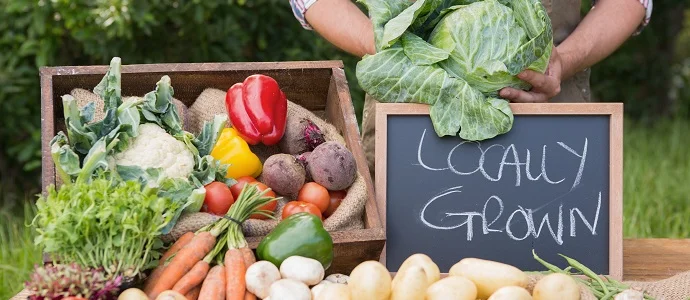
Calgary’s Indoor Urban Farms Breaking Down Barriers, Eye Expansion of Local Food Production
Growers at both NuLeaf farms and Deepwater farms say there’s still hurdles to overcome for Calgary to ramp up the harvest.

Megan Janz with Deepwater Farms looks over some of the greens the Calgary commercial aquaponics company grows. DARREN KRAUSE / LIVEWIRE CALGARY
The seeds of Calgary’s commercial food industry have been planted, but conditions aren’t yet ripe for the city to harvest the full rewards of urban food production, local producers say.
Former oil and gas engineers Paul and Ryan Wright, along with Dan Clayholt, launched NuLeaf farms, a hydroponic agriculture operation in a southeast Calgary garage.
“We really wanted to find something where we had some passion and where we could apply our skills to really solve some problems,” said Paul.
“Agriculture stood out like a sore thumb.”
They saw an opportunity to use high-end tech they’d been exposed to for the development of more sustainable and efficient year-round food production in Calgary.
“That led to the beginning of us not only developing something that was environmentally sustainable, but we wanted something that was economically sustainable,” Paul said.
They have a proprietary software that optimizes climate conditions and nutrient delivery, light conditions and amount of CO2. It’s allowed them to build a vertical growing system that produces 180 plants per square foot annually, enough to allow them to sell to smaller grocery stores and Calgary restaurants.
Now they’re scaling up. They have a module designed – similar to the size of the garage – but they also have plans for a full-sized manufacturing operation.
While headway’s been made in the adoption of land-uses for indoor commercial food growth in Calgary, Paul said accessibility to programs to help them scale up is a challenge.

(From left) Ryan Wright, Paul Wright and Dan Clayholt with NuLeaf Farms, a hydroponic operation based in southeast Calgary that grows basil. DARREN KRAUSE / LIVEWIRE CALGARY
“A lot of (granting) agencies are looking for innovation, but the parameters for grants aren’t tailored to anything like this. They seem pretty closed-minded to anything that far out of the norm,” Paul said.
He added that when setting up operations he’s cognizant of the business tax regime in the city and how it compares with jurisdictions like Rocky View County.
Kristi Peters Snider, sustainability consultant with the City of Calgary’s CalgaryEATS! Food Action Plan, said indoor commercial food operations are new in Calgary, with the city seeing mostly outdoor “spin farms” and other smaller urban farms over the past decade.
Peters Snider said the city’s land use bylaw amendments coupled with Calgary Economic Development’s saying agri-business should be an area of focus has boosted efforts to modernize Calgary’s food rules.
“There’s some work to do, and the role the city can play is in enabling more food distribution pathways to help these growers,” she said.
Paul Shumlich, founder and CEO of Calgary’s Deepwater Farms, an aquaponics operation in southeast Calgary, said it’s early days in all this and any movement forward should be done in consultation with the growers.
“If they go ahead and start implementing things, or drafting policy or bylaws without input from industry, they’ll screw it up. Or they’ll make hurdles that don’t need to exist,” Shumlich said.
“They (the city) need to understand what we need and then reverse engineer as if we’re the customer.”
Shumlich’s operation, which he started a number of years back, grows plants without soil and feeds the plants with water whose nutrients come from the waste of edible sea bass they’re raising in the same operation.
They’re at one-third capacity and will be expanding in their current space through 2019, also with eyes on a new facility. They’ve launched a crowdfunding campaign to push the production forward.
He said it’s been a challenge being a pioneer locally, as they’re paving the way through the civic bureaucracy.
“We’ve definitely been pioneering a lot of it in terms of getting through all the permitting, land use and through all the inspections,” said Shumlich.
“Everybody that we deal with, from a permitting perspective, has no idea what they’re looking at or how to deal with us, so that’s been a bit of a headache.”
Peters Snider said the city’s working on the development of an urban farm that will not only allow them to test a model of city-owned land used for food production, but also to help inform them on best practices for approaching things like permits and approvals.
She said they have a 17-point action plan that will help break down some of the barriers new operations face – including creating new pathways for the sale of urban farm products.
They piloted pop-up LRT markets for the sale of fresh produce and will continue to build out that program. They’re also hoping to open up more markets on city-owned land. More changes to land use are expected in 2019.
“There’s lots more work. I feel that each area of focus helps achieve that goal of producing more local food,” she said.
That’s the goal. Both NuLeaf and Deepwater Farms are committed to the safe, environmentally-friendly and sustainable growth of local food. They both want to scale up and push the boundaries of their business to deliver fresh produce (and in Shumlich’s case, sea bass) to the Calgary and Alberta market.
“We’re trying to supply the big guys,” said Paul from NuLeaf.
“We’re trying to eliminate as much imported product as possible.”
While there are some hiccups, Shumlich said that’s normal when breaking new ground.
“More than anything it’s exciting and fun because there’s no playbook, so what we’re doing is novel,” he said.

Newbean Capital Announces Agreement to Sell Indoor Ag-Con to Event Industry Veterans, Expands to New Locations & Topics
Newbean Capital today announced an agreement to sell its Indoor Ag-Con events to event industry veterans Nancy Hallberg, Kris Sieradzki and Brian Sullivan
ATLANTA, GA, USA, December 10, 2018 /EINPresswire.com/ -- Atlanta, GA (December 9, 2018) – Newbean Capital, a US registered investment adviser, today announced an agreement to sell Indoor Ag-Con LLC to three event industry veterans; Nancy Hallberg, Kris Sieradzki and Brian Sullivan.
Founded by Newbean Capital in 2013, Indoor Ag-Con was one of the first events to recognize the potential in the nascent indoor agriculture industry, the practice of growing crops in containers, greenhouses and warehouses using hydroponic, aeroponic and aquaponic techniques. The tech-focused events have grown rapidly and are now hosted in Las Vegas, the US East coast and Singapore each year. In 2015, the events became crop agnostic, expanding to cover legal cannabis and alternate proteins as well as leafy greens and non-food crops.

The acquisition sets the stage for a significant expansion of Indoor Ag-Con globally, bringing exceptional talent and experience to the events. Nancy and Kris founded leading event housing group Connections Housing over thirty years’ ago; the Company manages over 250 events annually, some with over 100,000 participants. Brian brings a wealth of experience in event planning and trade show management, with more than 20 years’ experience in managing large scale shows for companies such as Reed Exhibition and Clarion Events. Nicola Kerslake, founder of Newbean Capital, will remain involved in Indoor Ag-Con as Chief Curator, creating agendas and curating speakers for each event. She remains deeply involved in the indoor agriculture industry, thanks to her rapidly growing alternate finance business, Contain Inc, which will provide white papers for Indoor Ag-Con events going forward.

“We see great potential for growth in indoor agriculture, and are excited to bring greater resources to Indoor Ag-Con” commented Nancy Hallberg. “We’ll be rolling out new initiatives, partnerships and event locations in short order” says Brian Sullivan, adding “we’ll again be returning to Las Vegas for our flagship event in spring 2019 and will announce the details of our plans before the end of the month.”
Our next event is the 4th Annual Indoor Ag-Con Asia, a two-day event that will be hosted at the Marina Bay Sands, Singapore on January 15-16, 2019. It will include exhibition tables and an exciting lineup of industry-leading speakers, and will be opened by SMS Koh of the Republic of Singapore. We will be covering a broad range of crop types – such as, leafy greens, mushrooms, insects, aquaculture and medicinal crops – as well as technologies ranging from artificial intelligence to LED lighting to control systems. New features for 2019 include a startup alley in the exhibition hall, allowing entrepreneurs to easily showcase their startups, unconferencing sessions, and onsite mini workshops from Singaporean vertical farming equipment company Upgrown Farming.
The event is accompanied by a pitch competition, Indoor Ag-Ignite, whose goal is to find the most innovative new ideas globally in indoor agriculture, and the competition is open to any team or company of under 40 employees developing or deploying technologies for the indoor agriculture industry. Three winning teams will receive prize packages including Startup SG grants of S$50,000 per team thanks to the sponsorship of Enterprise Singapore, as well as substrates and technical advice from Smithers Oasis.

4th Annual Indoor Ag-Con Asia
Date – January 15-16, 2019
Place – Marina Bay Sands, Singapore
Registration – currently open to the general public from US$399
Features – Two-day seminar, with keynote speakers, exhibition hall, after-party, and pitch competition
More Info - please visit www.indoor.ag/asia and www.indoor.ag/pitch, email hello@indoor.ag or call +1.775.623.7116
About Indoor Ag-Con LLC
Indoor Ag-Con was founded by Newbean Capital in 2013, and has since grown to the premier event in indoor agriculture, the practice of growing crops, raising fish and insects in indoor systems, using hydroponic, aquaponic and aeroponic techniques. Its events are tech-focused and crop-agnostic, covering produce, legal cannabis, alternate protein and non-food crops. It hosts events in Las Vegas, Singapore and the US East coast. In December 2018, three event industry professionals – Nancy Hallberg, Kris Sieradzki and Brian Sullivan – purchased Indoor Ag-Con LLC from Newbean Capital, so setting the stage for further expansion of the events globally.
More information: https://indoor.ag
About Newbean Capital
Newbean Capital is a US-based registered investment adviser that manages an early stage venture capital mandate for the US Treasury and has a consulting practice in indoor agriculture that works primarily with multinationals and large institutional investors. Its founder – Nicola Kerslake – has a longstanding interest in agriculture investment, having previously covered agriculture stocks as a highly-rated equity analyst and managed investment portfolios that covered the sector for large institutional investors. In late 2016, she founded an alternate finance business – Contain Inc – that works with indoor farmers and with lenders to provide lease finance and – through a relationship with an independent broker – insurance.
More information: https://newbeancapital.com, https://contain.ag
Nancy Hallberg
Indoor Ag-Con LLC
+1 404-358-7100

UAE Leads In Vertical Agriculture In Region
The National Food Security Strategy in the UAE aims to develop a comprehensive system, which aims to achieve sustainable food production.
Sumaira FH 1 month ago Mon 10th December 2018 | 07:00 PM
ABU DHABI, (UrduPoint / Pakistan Point News / WAM - 10th Dec, 2018) The National Food Security Strategy in the UAE aims to develop a comprehensive system, which aims to achieve sustainable food production.
The system will involve 38 short and long-term initiatives, as per the "2051 Vision" and "2021 Work Agenda."
Many specialist newspapers highlighted the UAE’s plans and projects that aim to attract major investment in vertical or horizontal agriculture, in line with related growth forecasts for the Gulf region, which amounts to US$1.21 billion by 2021, a compound annual growth rate of 26.4 percent.
The Business Standard stated that the UAE leads in this type of investment, and has launched many recent leading projects.
Mariam Hareb Almheiri, Minister of State for Food Security, announced, during the UAE government’s annual meetings in November, the "National Food Security Strategy," which includes many related objectives, such as achieving sustainable local production through the use of technology and smart applications.
The Ministry of Climate Change and Environment approved the launch of 12 vertical farms while Emirates Airline is planning to launch the largest vertical agriculture farm in the world, in partnership with Crop One Holdings.
Food import rates amounting to 90 percent and the issues associated with the scarcity of water and arable land in the region strongly support this trend.
In August, Xinhua signed an agreement with China's Chongqing University related to the use of modern technology, to utilise sand as arable soil, and relevant field tests will be conducted in cooperation with Mawared.
Almheiri raised the idea of establishing a "Food Valley" or a technology centre dedicated to developing food products and automated agriculture, to attract a new generation of farmers who can help achieve future sustainability.
The UAE hosts many specialist forums and exhibitions, which aim to promote the latest technologies and showcase them in the region’s agricultural and business markets.
Henry Gordon Smith, Founder and Managing Director of AgriDetriti, said that the middle East has the ability to reshape its vital infrastructure, which will support modern life.
It also has the potential to transform a relatively small and conventional agricultural industry into the world's most technologically advanced agriculture industry, he added.
Bob Honch, Sales Manager in Van Der Hoven Company, said that the UAE has already started this industry, revealing the completion of the largest glass houses project in the UAE (11 hectares), using advanced technologies allowing climate control and stressed that the project could produce around 3000 tonnes of tomatoes throughout the year.