


Welcome to iGrow News, Your Source for the World of Indoor Vertical Farming

Protected Cropping Heralded As The Ideal System To Help Supercharge Australian Agriculture
‘Sustainable growth’ is the key phrase underpinning the Australian Government’s plans to make the nation’s agricultural industry a $100 billion industry by 2030. Yet with widespread and continued drought conditions challenging these ambitious plans, growers are looking to new solutions to ensure more consistent crops and higher yields – and protected cropping is one increasingly attractive proposition.
There’s no doubt that indoor and controlled environments, speed breeding and hydroponic systems are currently driving food production like never before. The Protected Cropping Industry is the fastest growing food producing sector in Australia, valued at around $1.8 billion per annum. As Vertical Farming Systems Executive Director John Leslie explains, that’s no surprise. “Australian agriculture currently has a return on investment of about 3-5%, and that’s not sufficient to attract investment into the sector,” he says. “Vertical farming removes much of the labour cost, which is the most expensive component of farming, so the ROI can be increased to 20% and upwards – and then agriculture does become an attractive investment proposition.”
With a $3.9 billion fund recently set up to support water infrastructure and drought-related projects, protected cropping has never been more relevant. Controlled environment farming protects the industry from unfavourable weather conditions like drought, contributing to more consistent crops and higher yields. John sees vertical farming as the ideal solution for some parts of the industry, because the process is impervious to climate, and the dehumidification process generates a massive amount of water. “We’re actually producing water out of the air, and that makes vertical farming highly viable, even in places as arid as the Sahara desert. While vertical farming isn’t a fix-all for every drought situation, it’s another tool we can use to combat the effects – and it will certainly support some parts of the food supply chain and help address things like drought.”
Current advancements in the technology mean that protected cropping will soon be applicable on a broader scale. John explains how his company is developing systems that will soon be able to produce animal feed and proteins. “It’s based on the same technology we’re right now using for vegetables, and over time that will begin to address the problem on a wider scale,” he says.
Hydroponics is another production sector currently experiencing rapid growth – and as hydroponic grower and consultant Brian Ellis explains, it’s highly efficient in its use of inputs including water, fertilisers, labour, land and energy. “It’s possible to produce 5-10 times as much per hectare using hydroponic systems compared to growing in soil. There’s no doubt that adverse weather is impacting everyone as the climate continues to change – but with hydroponics you have much more control over your environment. Essentially there’s much more predictability, and less effect from extreme weather.”
Brian explains how hydroponic systems use only minimal water, which contributes further to their viability. “We often only use as little as 5% of the water for re-circulated hydroponic crops, compared to growing the same crop out in the field. That gap may have closed a little with the introduction of new technologies, but it’s still nowhere close to that figure. As drought continues to affect growers, there’s no doubt that hydroponics will become even more important, and more relevant to the success of the industry.”
In the face of food security and global climatic variability concerns, safe, sustainable protected cropping in the form of vertical farming, hydroponics and speed breeding could well be the way of the future. With protected-crop growers at the forefront of highly sustainable, efficient and innovative food production processes, protected cropping will increasingly help to secure a profitable and more sustainable future for Australian agriculture.
The Global Forum for Innovations in Agriculture (GFIA) will present the latest innovations and technologies for the controlled environment and protected cropping sector at Australia’s largest agricultural innovation event, GFIA in Focus, in Brisbane on November 27-28. John and Brian will join a host of guest speakers discussing everything from vertical farms and greenhouses to hydroponic and aquaponic systems and much more.
To register for a free entry badge or to find out more, visit www.gfiaaustralia.com
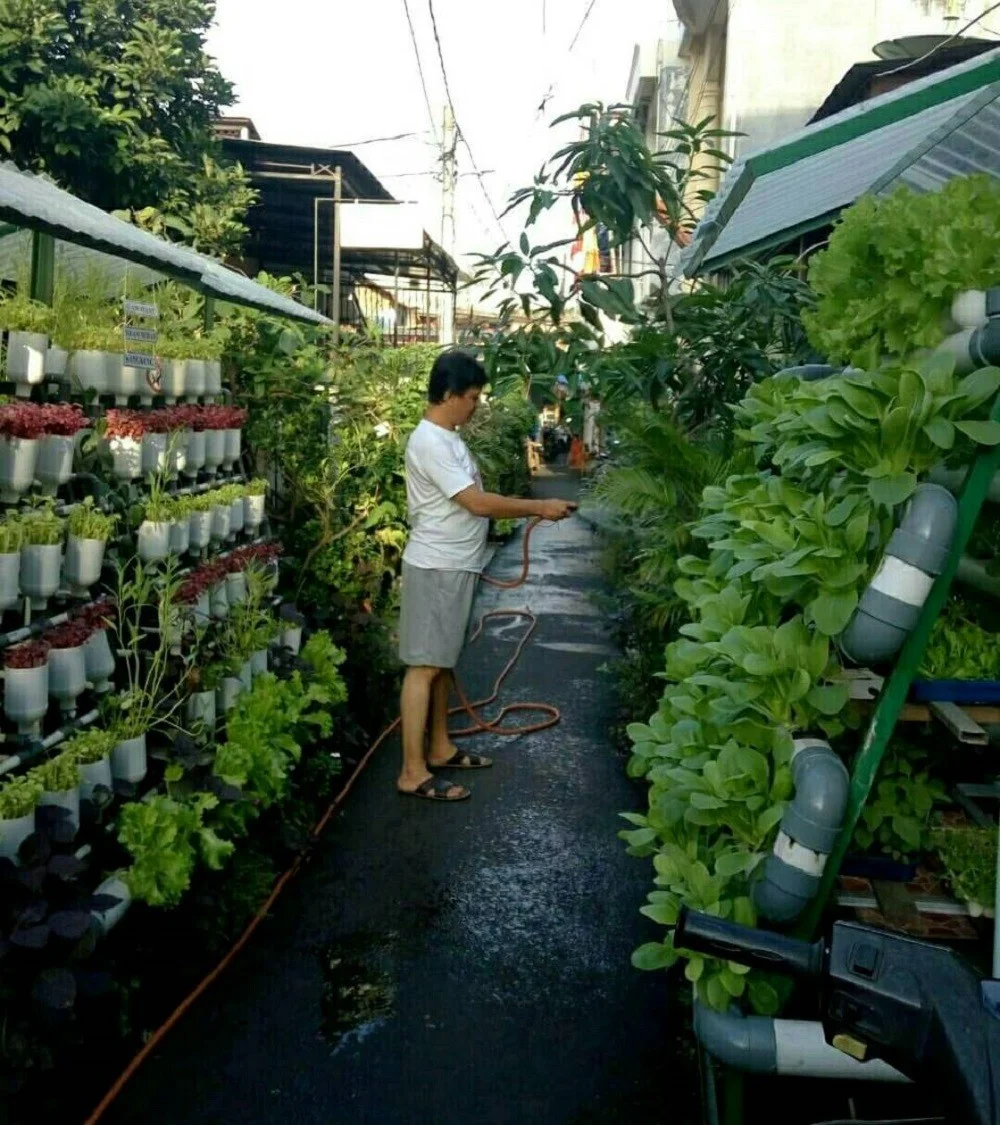
Urban Farming Growing in Popularity
The number of urban farms and farmers is increasing, with many making use of idle garden space.
Posted on September 14, 2018 by korea bizwire
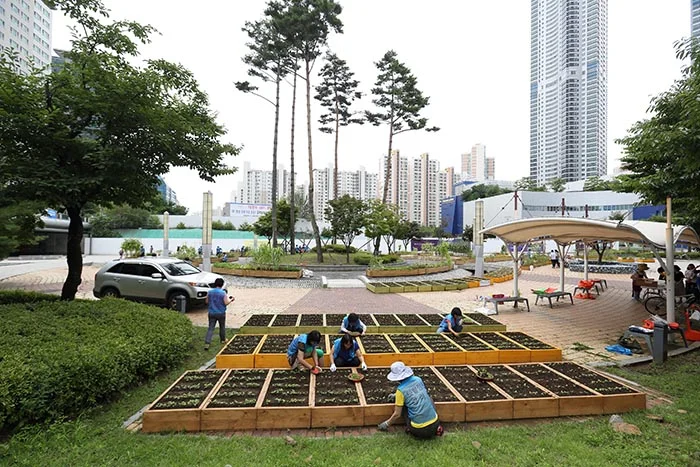
More people are considering urban farming as a leisure pastime activity, as well as a way to harvest safer crops. (image: Yonhap)
SEOUL, Sept. 14 (Korea Bizwire) — The number of urban farms and farmers is increasing, with many making use of idle garden space.
According to Gyeonggi Province and Gyeonggi Agricultural Research and Extension Services, there were 552,000 people engaged in farming over 3.2 square kilometers of land in cities at the end of 2017.
While farm size grew by 27.2 percent compared to three years ago, the number of farmers surged by 83.8 percent.
The majority of urban farming was done in community spaces, such as weekend farms, which accounted for 47.9 percent of urban farms. Farming in parks followed at 33.4 percent, and then school farms at 8.5 percent.
Other farms made up a smaller proportion, such as house gardens at 0.4 percent, tall building rooftops at 0.8 percent, and seniors centers at 5 percent.
Among urban farmers, 41.8 percent took part in community farms, while 20 percent raised crops in parks and 16.1 percent at school farms.
Urban agriculture is increasing in popularity, presumably because city dwellers are looking to harvest safer crops using their small patch of idle land. Some raise crops as part of a yearning for the rural lifestyle from where they come from, or to get a taste of a more pastoral life.
In addition, more people are considering urban farming as a leisure pastime activity. Some local communities want to use farming as a method for citizens to hang out and build friendships.
Central and local governments are also supporting urban agriculture.
Gyeonggi Province aims to list all patches of land in 31 cities and counties in the province that are eligible for farming. The provincial government will also inspect the management of such farms so that it can nurture urban agriculture in a more planned and systematic manner.
Gyeonggi Agricultural Research and Extension Services is developing programs to teach urban farmers about crops suitable for farming in cities as well as farming techniques.
The 7th Korean Urban Agriculture Expo is being held in Hwaseong between September 13 and 20, jointly hosted by Gyeonggi Province, Hwaseong City, the Rural Development Administration and the Korea Forest Service.
Joey Yoo (joeyyoo@koreabizwire.com)

Registration For The 9th International Forum on Food and Nutrition, Which Will Take Place On 27 And 28 November, At Hangar Bicocca In Milan Is Now Open.
Registration for the 9th International Forum on Food and Nutrition , which will take place on 27 and 28 November, at Hangar Bicocca in Milan is now open.
Following the first international forum in Brussels and in New York, the International Forum on Food and Nutrition returns to Italy for a two-day event, to provide substantial food for thought on the delicate issues linked to food sustainability.
ENABLING FOOD SYSTEMS TRANSFORMATION TOWARDS SDGs
World population keeps growing; obesity is rising to the highest level, while food insecurity is forcing people to migrate. Food is wasted instead of feeding the hungry.
We have to tackle such challenges now. It is the only way to ensure a future for humankind, for our Planet, for each of us.
Together we will pave the way for answering concretely the most critical questions for the future of food sustainability.
Food and nutrition are defining features of the 21st century and can contribute to achieving the 2030 Agenda for Sustainable Development.
For this to happen, we need a better understanding of how food systems and nutrition patterns will impact and/or contribute to the achievement of the Sustainable Development Goals (SDGs), and the roles of international organizations, governments, research and academia, civil society and private sector in this process.
The 9th edition of the BCFN International Forum on and Nutrition will be held on November 27-28, 2018. It will provide a unique opportunity to advance food, nutrition and sustainability in this Agenda, and better explore the relationship between food systems, nutrition, sustainable agriculture, development and migration.
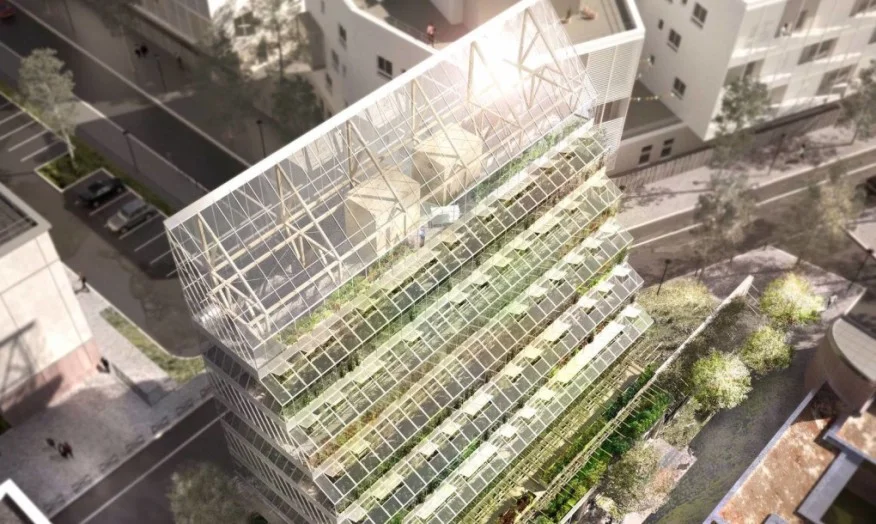
An Urban Farm Tower In France
The Agro-main-ville Food-Farm Tower--is going to be the first of its kind in the entire country.
By DIAN ZHANG
Paris, France-based design firm ABF-lab has designed a highly productive urban farm building that blurs the lines between architecture and nature. Their recently unveiled project--the Agro-main-ville Food-Farm Tower--is going to be the first of its kind in the entire country.
The Food-Farm Tower is expected to break ground this year, and will be located in Romainville, an eastern suburb in Paris. The tower will span over 21,000 square feet, and will take an estimated cost of €3.4 million, or $3.78 million to build.

image via ABF-lab
To maximize agricultural productivity, the ABF-lab decided to eschew artificial light, and let the entire farm be fully immersed in the sun. By making the tower vertical, the designers were able to maximize plant exposure to sunlight, as well as situate the project on a limited plot of land in a dense area.
The Food-Farm Tower will contribute to the local environment by producing hyper-local food, cutting down carbon dioxide emissions, and improving air quality, and will also serve as a public garden for residents in the community,
Emerging as a first in France, a pilot and a conceptual reservoir will propose an infinity of scenarios to be developed with local associations and participate in radiation Romainville city. It will be one of the first neighborhoods to fully integrate the principles of urban agriculture as a catalyst for better living together.
Architects in the ABF-lab hope to raise awareness of urban agriculture with the innovative project, and inspire more people to make eco-friendly contributions.
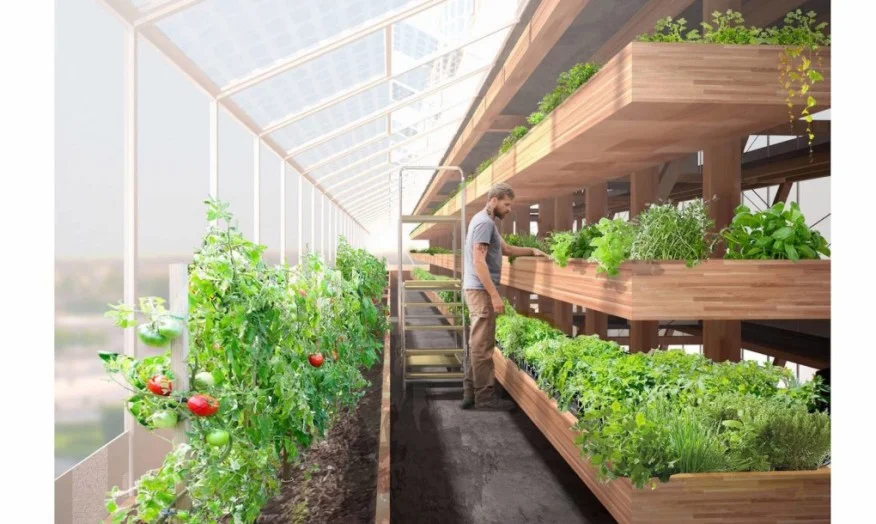
image via ABF-lab
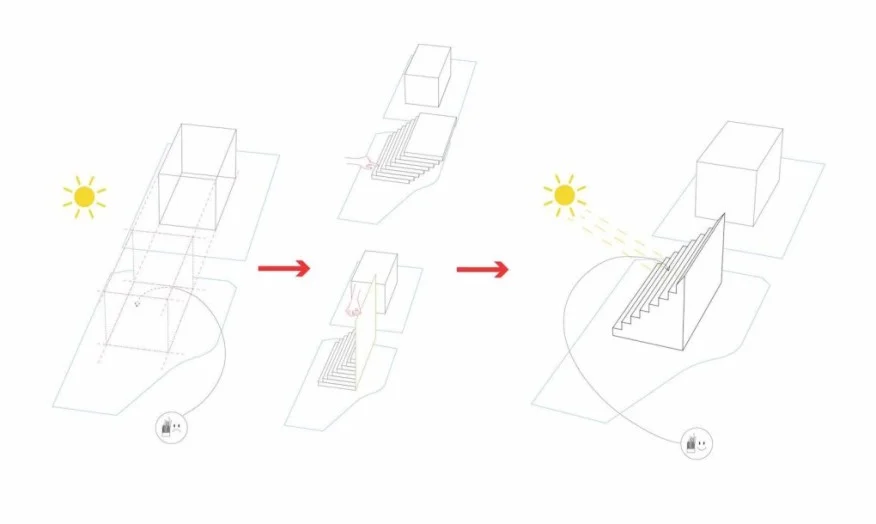
image via ABF-lab
Dian Zhang is a data journalist with Hanley Wood's data studio team.
Follow her on twitter @dianzhang_.
Introduction To Upside Down Gardening
Gardening, with the aim of providing your own food, has experienced a resurgence over the last few years.
More and more of us are looking for ways to reduce our food bills, decrease our carbon footprint, and eat healthier.
Those with gardens or access to an allotment find it easier to grow their own food, but what about those of us who live in apartments?
Apartment dwellers have much less space to work with and this obstacle stops many budding gardeners in their tracks.
That is why we were excited to learn about upside down gardening, it grants everyone the opportunity to grow their own vegetables regardless of available space.
Here’s what the experts at Fantastic Gardeners advise in order to get yourself up to speed with an upside-down garden.
Upside-down gardening - definition
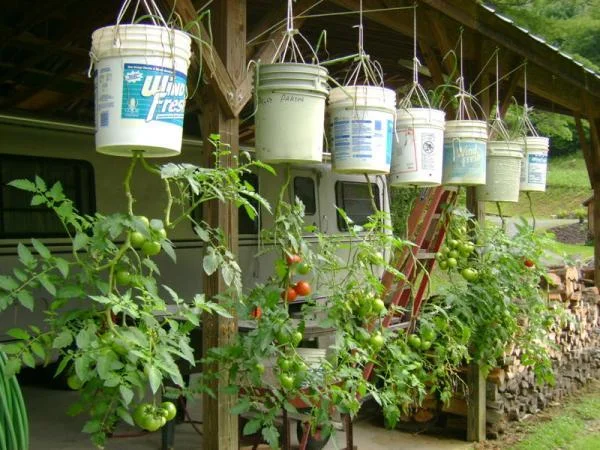
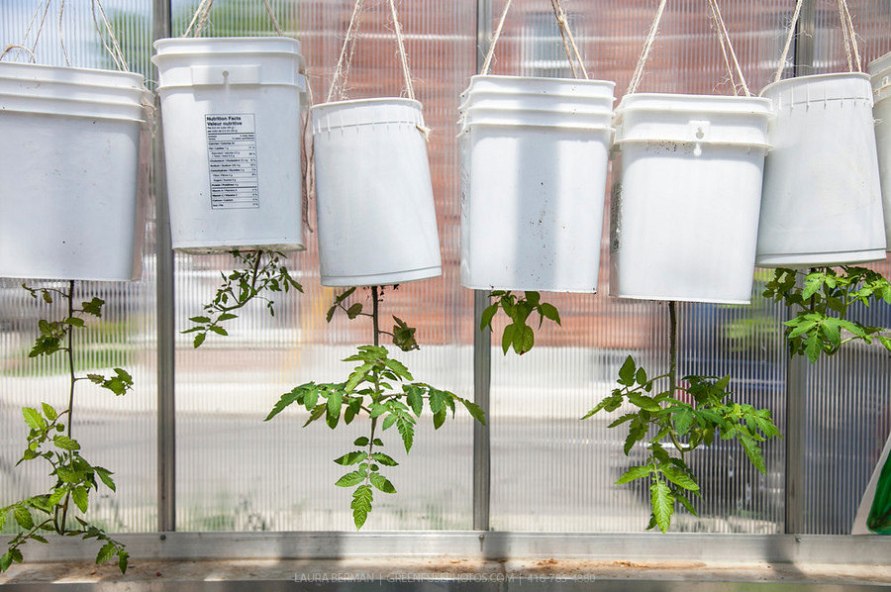
Upside down gardening is growing plants in pots suspended from the ceiling.
This style of gardening started to gain popularity in 1998 when gardener Kathi Lael Morris showed that it is possible to grow tomatoes and peppers in hanging pots.
Many traditional gardeners viewed this style of gardening as a fad with little chance of being widely adopted.
Unsurprisingly, people with no garden space quickly realised the benefits of this method and how they were no longer excluded from being able to grow their own food.
What plants can you grow upside down?
Most plants can be grown upside down, but those which benefit the most include:
Tomatoes;
Peppers;
Eggplants;
Cucumbers;
Squash;
Beans;
Various herbs.
If you want to get the most out of your available space, you can consider planting herbs at the top of the hanging pots instead of planting them separately.
Benefits of upside down gardening
Upside down gardening presents benefits to those with gardens as well as those without, however, the advantages are more apparent in urban environments.
Pests – As the plants don’t come into contact with the ground there is a much, much smaller chance that they will be affected by pests such as aphids.
Space – This is the biggest benefit offered by upside down gardening, you don’t need a garden or a lot of space.
Rot/disease resistance – Another advantage of the plant not touching the ground is that the roots, stems, and fruit are less susceptible to rotting or contracting a disease.
Staking – Since the plants grow downwards you don’t need to stake them to optimise growth.
Weeding – Growing plants traditionally requires a lot of time and attention, most of which is taken up by the need to weed.
What you need to get started?
Upside-down gardening of tomato
Creating your personal hanging garden of Babylon does require some supplies and a little bit of work, but it will be worth it when you can eat hand grown produce.
What you need:
A strong hook
Strong string or metal wire
A 7.5cm (six inch) circle of foam or sponge
Lightweight soil or compost
A marker pen
A tray to catch water
A young plant
When you have collected your supplies simply follow the steps below:
1. Find the sunniest area of your home and mark the ceiling where the pots will be,
2. Install the hook,
3. Now turn your bucket upside down and draw a 5cm (2 inches) circle in the centre,
4. Using the knife, carefully cut around the circle to make a hole,
5. Turn the bucket back around and make three evenly spaced holes roughly 2.5cm (1 inch) down from the lip of the bucket,
6. Tie the string or metal wire through each hole to make three loops that are the same size,
7. Cut a 1.75cm (half an inch) hole in the middle of the sponge (or foam) then cut a line running from the hole to the outside,
8. Place the bucket on its side and carefully thread the roots through the hole in the bottom, make sure the plant is on the outside of the bucket,
9. Secure the plant by placing the sponge (or foam) around the base of the plant inside the bucket,
10. Have someone hold the bucket off of the ground and add soil until it is roughly half full,
11. Water until the soil is moist,
12. Add more soil until the bucket is roughly three quarters full,
13. Hang the bucket,
14. Place the water catcher beneath the bucket,
15. Water the plant again until the new soil is also moist.
The great thing about using buckets instead of large plant pots is that you can decorate the buckets.
Take this opportunity to release your inner artist and introduce some bright colours or funky designs to your home.
Decorating the buckets and creating a hanging kitchen garden is an enjoyable, learning activity for teaching children about where food comes from as well as how to care for plants.
Caring for an upside down garden
Looking after your new hanging garden is quite easy since you don’t have to worry about weeds or pests. All you need to do is:
Remove any dead or dying leaves;
Water the plants daily during hot, dry periods;
Water every other day during the rest of the year;
Harvest any ripe fruit and vegetables.
So there it is your guide on how to grow a hanging kitchen garden. With this style of urban gardening, you’ll be eating home-grown fruit and veg in no time, regardless of whether you have a garden or not.
This is a guest post provided by Fantastic Gardeners, a garden maintenance and landscaping company, based in London and Manchester, United Kingdom.

"Indoor Growers Lacked Important Seed Knowledge, Limiting Their Businesses"
As indoor agriculture matures, many advanced farms are looking to develop seed programs to improve their farm economics and give them an edge over competitors, especially in leafy greens. Given this, former American Seed Trade Association executive and Asia & Pacific Seed Association board member Michelle Klieger of Stratagerm Consulting was asked to join Indoor Ag-Con Asia on January 15-16, 2019 to discuss her views on seeds in indoor systems. Ahead of that, Indoor Ag-Con caught up with her to ask her 5 seed questions.
How did you come to form Stratagem Consulting? What do you do?
I’ve always been interested in wildlife conservation. Many people don’t think of it this way, but the greatest threat to wildlife is agriculture. So, I started working in agriculture to help farmers grow more food on less land. I’ve become increasingly fascinated by the next generation of technology that is transforming agriculture. Many of these changes are helping increase the amount of food farmers grow and reducing the environmental costs associated with producing food.
After engaging with indoor growers, I realized that they lacked important seed knowledge and that not having this information was limiting their businesses. My background as a consultant and working in the seed industry meant that I had the missing puzzle piece and could help growers make the powerful connection between seed selection and their growth potential.
Stratagerm helps indoor growers pick better seeds for their system based on their farm’s technical requirements and their customers’ needs. The goal is to increase profitability by producing more vegetables or growing higher quality vegetables. Once a farmer understands HOW to pick new seeds and integrate them into their farm, we help them better communicate with their seed supplier to reduce business risks, such as a seed shortage.
What are the trends in seed development that are most exciting to you?
Seed companies are increasingly interested in controlled environment agriculture of all kinds and they are starting to invest in this sector. This investment is focused on researching new varieties that will grow well in high tech vertical farms. Also known as plant factories, these farms have LEDs, nutrient baths, and sensors that monitor every aspect of the operation.
Right now, most of the varieties planted in vertical farms were either bred for traditional outdoor agriculture or greenhouses. Outdoor plants need to be ready for droughts, floods, insects, and other adverse conditions. Greenhouses might provide ideal water levels, but they still have insects and diseases inside of them. Surviving these conditions is essential for plants grown outdoors or in greenhouses. But, it is not necessary for your indoor crops. Your plants are grown under controlled and often sterile conditions. Farms like yours need new varieties intended for vertical farms. Ones that will grow quickly and taste amazing, but probably aren’t hearty enough to survive outside.
Which crops do you think we’ll see move indoors next?
I love that indoor growers are being creative with their indoor systems. I’ve seen people try to grow valuable spices like saffron, which is so innovative! Anything is possible for small operations – that’s what I want people to take away from this.
On a larger scale, I think tomatoes are a great option. They are a high-value vegetable. They already grow well in high-tech greenhouses. So farmers have valuable experience growing tomatoes indoors. Plus, they taste amazing the second after they are picked, so the quicker the tomatoes can get from the farm to a dinner plate the better. Indoor growers can sell a better tomato because they grow so close to the consumers who will eat them.
Why has there not been more indoor ag-specific seed development? Do you expect this to change?
There are two reasons that we have not seen more indoor ag-specific seed developments. First, it takes plant breeders seven to ten years to commercialize a new plant variety. As the industry grows and demand for seed increases, more investment has and will be made. But, it will take a while before indoor farmers can purchase these new varieties.
Second, indoor farm growing environments vary dramatically. Successful plant breeding matches the genetics to the environment the plant is growing in. Without standards across the industry, it makes it difficult for plant breeders to know which environments to breed for. Until we know which light, nutrient, and temperature combination will be most popular in the future it’s difficult to pick varieties specifically for indoor agriculture. As farm technology matures and certain practices become the industry standard, we can expect targeted investment by seed companies and plant breeders for these conditions.
How would you recommend a new or small grower in Asia go about setting up their own seed program?
Seeds are a strategic piece of your business and all of the choices you make about seeds should be recorded so you can keep improving your decisions. Before you purchase seeds take time to understand your farm, your customers and your goals. With this preparation work, you will have a more productive conversation with your seed supplier. The supplier will be able to make recommendations or give advice based on the information you shared, instead of recommending a variety that grows well hydroponically.
Remember, your business will ultimately be judged on the vegetables and herbs you sell. If your customers are happy with the produce they will be repeat customers. So, picking seeds that grow into beautiful and tasty vegetables will remain very important to your business.
For more information:
indoor.ag
What’s The Difference: Hydroponics Vs. Aquaponics Vs. Aeroponics
Three distinct systems – all vying for the top spot in the niche of alternative growing systems.
May 9, 2018
By Heather
Three distinct systems – all vying for the top spot in the niche of alternative growing systems.
What differentiates these three systems from one another? What makes them work? These are the areas that we will be tackling today.
Hydroponics vs. aquaponics vs. aeroponics – which one is the superior system?
Hydroponics
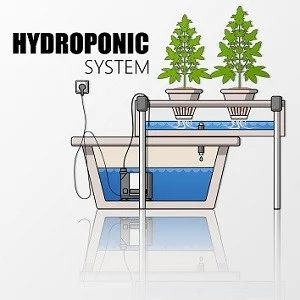
What Is It?
The principle of hydroponics is the oldest among the three because the use of soil-less setups has been around since the age of the Hanging Gardens of Babylon.
A hydroponics system has two main parts: the grow beds and the reservoir.
The reservoir contains the nutrient solution or the water mixed with various nutrients that plants need in order to grow successfully in the media bed. The grow beds, on the other hand, contain the media and the ‘cups’ that will hold the plants in place.
To clarify, growth media will replace soil in a hydroponics setup. There are many kinds of growth media to choose from: coconut coir, perlite, organic-polymer composites, rockwool, etc.
Among the beginning enthusiasts market, the most popular is coconut coir because it’s 100% organic, expands tremendously with water and can accommodate plants easily – with spectacular results.
Perlite, on the other hand, is hailed as a near-perfect medium for growing plants but it is particularly light, which makes it problematic for flood and drain systems as it can easily float away along with the small current of the water in the grow bed.
Organic-polymer combos/composites like Perfect Starts are becoming increasingly popular because they’re easy to use and are not deformed when germinating plants are transferred from the growth trays to the main growing beds.
And finally, we have rockwool. Rockwool is a type of reusable media as it can be sanitized with steam washing after every growing season.
Rockwool is actually melted rock spun into slabs and other shapes/sizes for the purpose of growing plants.
The main point of contention with rockwool is that it’s not very environmentally friendly and thus, it goes against the main principle of switching to a more environmentally friendly method of cultivating plants.
The type of media used in a hydroponic system is so important because it will dictate the efficiency in which plants will be able to absorb the nutrients from the solution.
One of the key problems with hydroponics is that roots sometimes succumb to low oxygen levels, which predisposes crops to premature death.
A solution that growers have found effective in dealing with poor aeration and oxygen zone issues is combining two kinds of media to get the best attributes of each one.
Our personal recommendation would be to combine 50% coconut coir with 50% perlite.
Perlite is amazing when it comes to absorbing and delivering moisture plus it also improves the overall aeration of the plant’s root area. Both are highly regarded in the hydroponics community and both are also widely available to growers everywhere.
Tip: Coconut coir can be made more effective with the addition of perlite.
Hydroponics Pros And Cons
The main advantage of hydroponics is it’s designed for long-term cultivation of almost any kind of crop.
Commercial hydroponic growers harvest hundreds of kilograms of crops easily using large rockwool slabs.
The system simply works and can be easily expanded if you want to make money off your hydroponics system.
The downside is that with the booming interest in hydroponics in recent years, the price of the chemical compounds needed to create a viable nutrient solution has been steadily rising due to the over-mining of these minerals.
Another problem with hydroponics is that it uses relatively more water because after a time the buildup of salts becomes too much for the system and water has to be replaced so as not to kill the plants.
Also, there is a need to check the electrical conductivity of the water every day to make sure that the pH of the water is just right. Fluctuations in the pH level of the water can damage plants and eventually cause a die-off.
Aquaponics
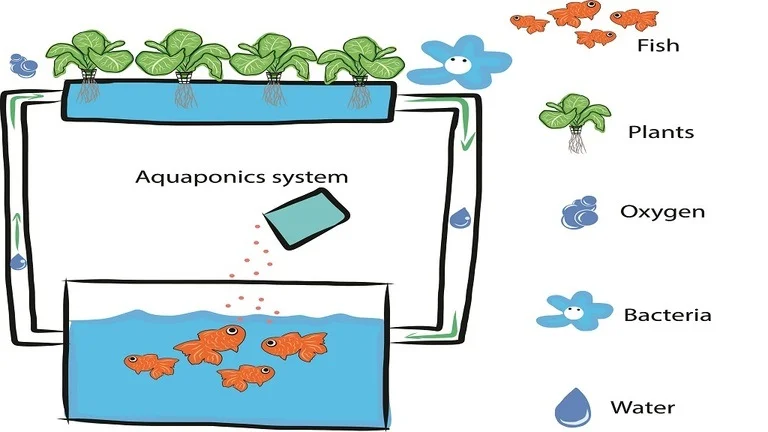
Aquaponics is a hybrid system that combines the best of aquaculture and hydroponics. System-wise, it looks like a hydroponic system, but instead of relying on a main reservoir that contains a nutrient solution, the source of nutrients will be a vat of live, swimming fish.
How does this work? When you feed fish, the fish will naturally excrete waste. The waste mixes with the water, increasing the ammonia levels.
Obviously, this waste has to be mediated and reduced, so as not to kill the fish. Normally, fish tanks are regulated by biological filters and other types of filters that neutralize ammonia and reduce the impact of feces on the fish.
In an aquaponics setup, water from the fish tank is recirculated throughout the system so that it passes through the grow beds, where crops are steadily being cultivated.
The plants absorb dissolved nutrients in the water and process ammonia, which is highly toxic to fish in increased levels.
Bacteria residing the in the roots of plants, as well as good bacteria from the gut of fish work together to establish a balanced ecosystem where both fish and plants will survive.
After about half a year, the mini-ecosystem formed by an aquaponics setup will begin to show signs of high-level, self-regulation.
This will be the time when both fish and plants will begin to truly flourish. There will be great increases in both fish yield and plant yield, and the maintenance of the system will become even easier.
Tip: Be sure to check the roots of plants for signs of rot.
Aquaponics Pros And Cons
The best thing about aquaponics is you will be essentially hitting two birds with one stone – you will be raising fish and growing crops at the same time.
Fish waste, which is something that is regulated in aquaculture, will no longer be considered a problem because it becomes a sought-after source of nutrition for the plants.
Without fish waste, plants wouldn’t have nutrients.
The plants, on the other hand, will serve as a 24/7 ammonia control center for the fish tank, reducing the ammonia load and preventing toxicity in the water.
Fish are sensitive to ammonia and even a small increase in the ammonia content in the water can cause stress, shock, and disease.
Additionally, aquaponics growers now add red worms to the grow beds to increase the efficiency of waste breakdown and subsequently, the distribution of nutrients to plants.
Red worms are first grown on soil and upon adulthood, they are then soaked/washed and then transferred to the growth bed of an aquaponics setup.
The process of breaking down physical waste into smaller particles through the digestive action of red worms is – you got it right, composting!
Yes, it is amazing to imagine that you can actually compost organic material on a grow bed, on stuff that isn’t actually soil.
But there you have it – red worms do the job quite splendidly.
In addition to helping improve the nutrient levels of the water being fed to the plants, there is another big reason why red worms are now being regularly included in aquaponics systems: e. coli.
E. coli is a common pathogen/bacteria found in fish feces. E. coli infections can bring down a full-grown, healthy adult and bring him to the hospital.
Imagine what a widespread e. coli outbreak can do to a tank full of fish, with no other place to hide from the swimming bacteria.
E. coli colonizes fish feces, so these need to be broken down more quickly to prevent an e. coli outbreak from taking over the system.
Red worms can do this perfectly because they need to eat fish feces to survive.
Is there a downside to an almost perfect system? One of the downsides of aquaponics culture is you have to be very specific with the design of the system so you won’t have to shut it down during the winter.
Obviously, you can’t move large equipment and vats indoors, unless you have a really big house (or garage) but all the same, it’s an issue since frozen water can easily kill fish and winter does the same to plants.
Another downside to the system is even if you only want to grow crops for consumption or sale, you still have to tend to your fish well enough so they don’t continually die off.
Fish care can be learned and if you are a natural hobbyist and if you don’t mind looking at another component in a system, then tending to your fish won’t be much of a problem.
Aeroponics
What is It?
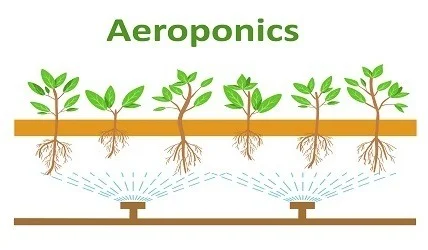
Aeroponics is a variation of hydroponics, but instead of using a grow bed filled with media, the plants are instead suspended, with roots facing a sprinkler system connected to the main nutrient reservoir.
Depending on the plant and the design, aeroponics systems generally use little to no media at all.
Now, you may already be wondering – what is the point of all this?
Why not just use media like everyone else? Why do you have to install a sprinkler system that periodically sprays the roots of plants with the nutrient solution?
It all boils down to oxygen. Believe it or not, even if the roots of the plants are down there in the soil, these still need oxygenation in order to thrive.
One of the limitations of hydroponics is because the roots are also submerged in water and the media, there is often poor oxygenation, which hampers plant growth.
Aeroponics solves this problem by completely liberating the roots of the plants and allowing it to come into contact with pure air.
The results are astounding.
Crops grow two to three times their normal size and yields are simply amazing.
Root formations are also incredible. Normally, the taproot of plants only have a moderate amount of root hairs around them.
In plants grown using the aeroponics method, the roots flourish widely and the root hairs become really thick – a tangle of healthy root hairs just enjoying the exposure to oxygen.
Aeroponics Pros And Cons
As with any system, aeroponics has its own set of ups and downs. The main advantage of this system is crops grow incredibly quickly and the yields are high.
If you are after high yield and shorter growing periods, aeroponics is certainly something to think about, especially if you are already investing in equipment and space for this endeavor.
Aeroponics also uses the least amount of water over time and all excess water that isn’t used by the roots of the plants are simply drained back to the nutrient tank.
Tip: Always have backup power and an extra pump in an aeroponics setup.
The nutrient tank is checked daily, much like a conventional hydroponics system.
The pump and spray system is submerged in the water and through a simple timing mechanism, is able to deliver short mists of water to the roots of the plants.
And now for the downsides. Room air doesn’t store water, even if it’s really humid. Humidity is not enough to sustain the roots of plants at all.
Aeroponics is extremely dependent on the misting system. If something should happen to the misting system, then the plants can die easily as a result of dried up roots.
To avoid this, you have to plan ahead. The misting system needs to have backup power and you need to have a backup misting system too, in case the first one fails for some reason. This usually means having an identical pump waiting in store to replace the main once it breaks down.
The misting heads also need to be checked periodically for clogs. We recommend replacing these misting heads instead of just cleaning them to get optimum results.
Remember – your plants are at the mercy of the misting system. They’re not submerged in water and plants are like fish out of water when there’s periodic misting taking place.
Rooftop Farming: Why Vertical Gardening is Blooming in Kampala
The urban farm is just one of many springing up in and around Kampala, a city of more than 1.5 million people, as residents find creative solutions to the challenges of urbanisation.
Nils Adler in Kampala
Wed 19 Sep 2018 05.28 BSTLast modified on Tue 16 Oct 2018 15.11 BST
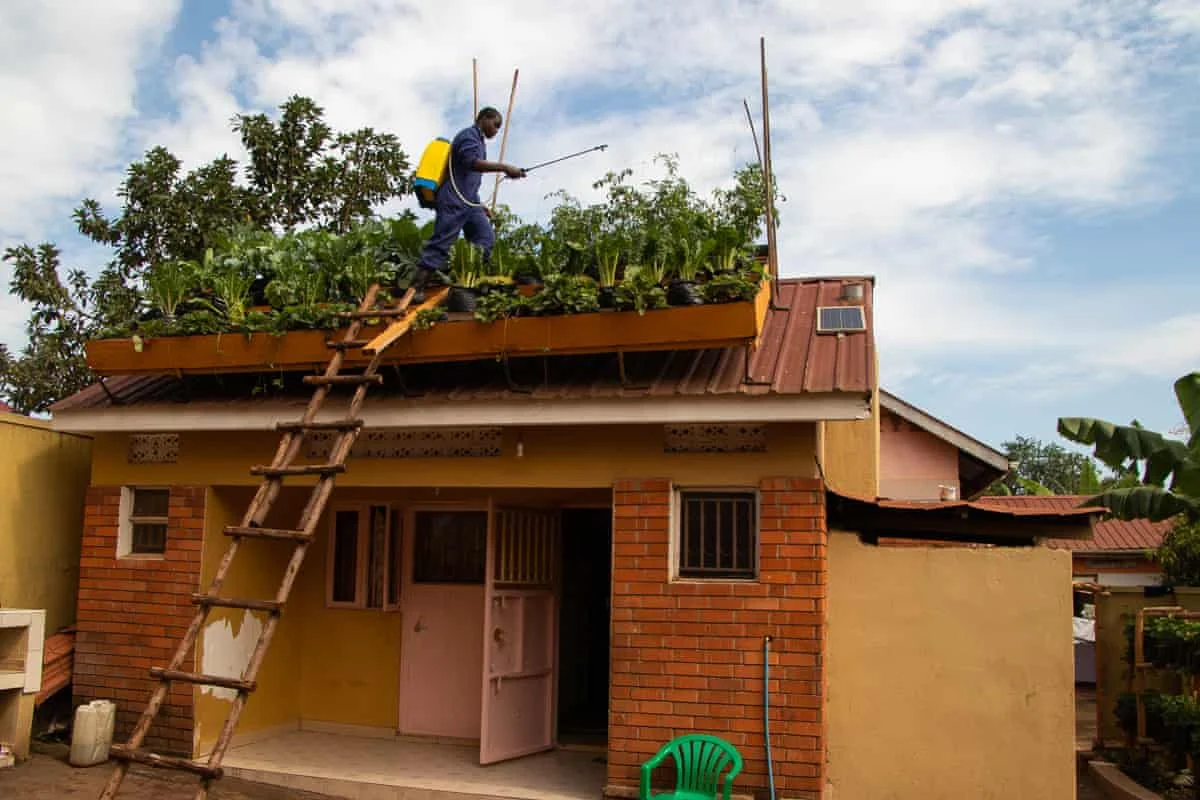
When Martin Agaba realised his urban farm had run out of space, he decided the solution was not to expand outwards but upwards.
“We realised we had to use the roof,” he says. Of all the innovations that have galvanised people in his district in the Ugandan capital Kampala to grow their own food, these vertical box plantations remain his favourite.
Kwagala farm, located on half an acre of land, is the brainchild of Diana Nambatya, a professor in public health, who began growing vegetables to save money on food in 2010.
After receiving two cows as a dowry, she decided to use their dung to generate biogas for her home. Her burgeoning urban farm soon attracted the attention of the neighbours, and in 2012 she started training women at a small demonstration centre.

Growth spurt: a child carries a tray of plants in eggshell flowerpots. Photograph: Nils Adler
The urban farm is just one of many springing up in and around Kampala, a city of more than 1.5 million people, as residents find creative solutions to the challenges of urbanisation. Between 2002 and 2010, Uganda’s urban population grew by 5.6%. This process, Martin Agaba believes, is eroding young people’s interest in Uganda’s agricultural sector, which employs approximately 69% of the population.
Agaba trains children that live around Kwagala farm in how to grow strawberries, yams and spring onions. “We are motivating children to not rely just on boda bodas (motorcycle taxis – a popular form of informal employment) or TV but to do something creative every day.”
Brian Ndyaguma, an entrepreneur and restaurant owner, says: “Somehow the young generation deserted the way our parents’ generation did things, so if you are going to convince young people to jump into agriculture, it has to be made sexy – it has to be made appealing to them”.
It was Kwagala farm’s creative reuse of old tyres that first attracted visitors. Then, as they began to experiment with using other materials, such as disused drainpipes and milk cartons, some of the local children began to create their own designs. “Now the children do not copy what we do,” says Agaba. “They do their own thing.”
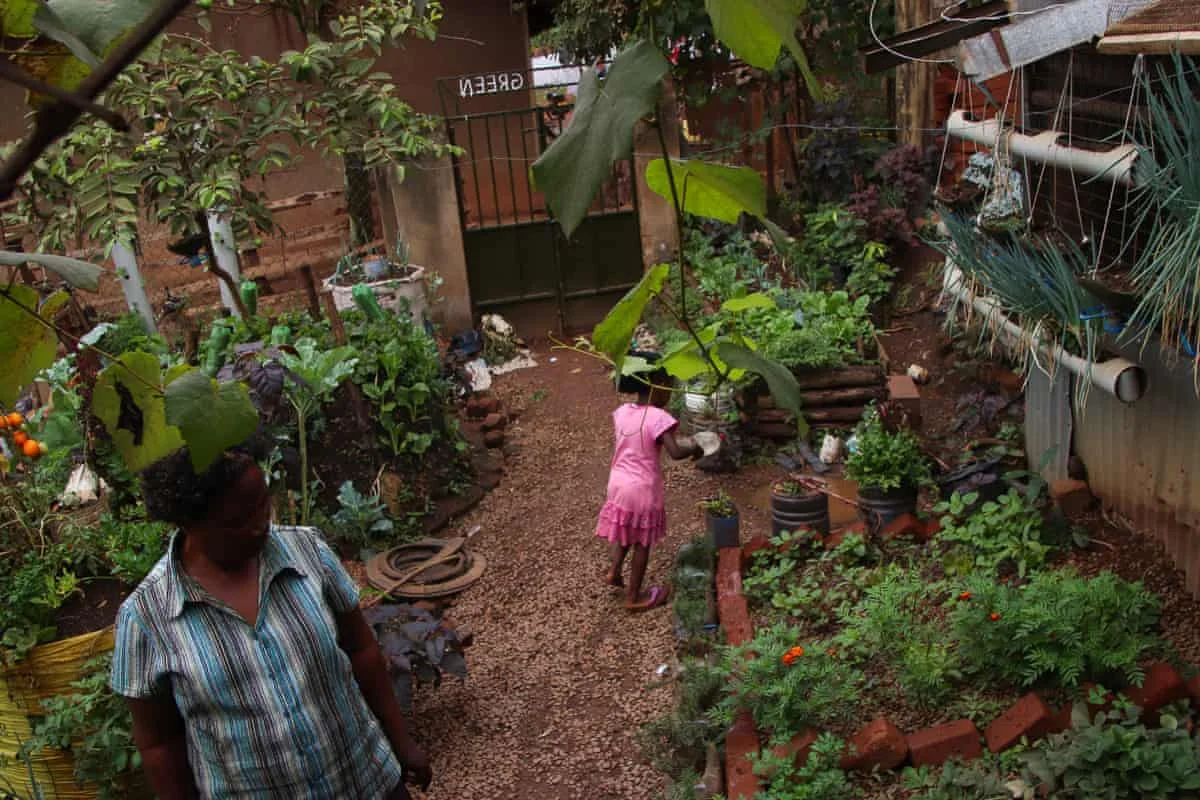
Harriet Nakabaale’s urban farm in the Kawaala district of Kampala is popular among locals who want to learn how to grow crops in their urban spaces. Photograph: Nils Adler
Harriet Nakabaale runs a small farm called Camp Green in the Kawaala area of Kampala. She collects the plastic bottles discarded by her neighbours. By cutting them, she can use them as flowerpots; by perforating them, they can become watering devices. Nothing goes to waste. Even the shells of the eggs produced by her chickens will be used to grow cress.
Kwagala farm has three cows which they feed with banana peel and corn, which is grown using hydroponics, a method of growing plants using a water-based solution instead of soil. Agaba and his colleagues collect the cow dung, which they use to produce fertiliser.
Despite the business potential, there are no plans to expand the farm. “We do not need more than three cows,” says Abaga. “We are teaching people to keep less but to do more with what they have.” An education programme at the farm has trained more than 700 women and young people in urban farming and how to make organic fertiliser and biofuel. Martin Agaba, who works at Kwagala urban farm, says: ‘We don’t keep more than three cows. We teach people to keep fewer and do more with what they have.’

Photograph: Nils Adler
Brian Ndyaguma relies on urban farms in Kampala for a large proportion of his restaurants’ vegetables, herbs and fruits. He sees a business opportunity not just for urban dwellers but rural farmers as well. “We still have a big advantage here in Uganda because we have good soil, so food is largely available. The challenge is the distribution.”
Congestion, lack of refrigerated trucks and long hot days in the markets can make it difficult for the food grown outside of the city to stay fresh. “Urban farming gives rural farmers with more space the opportunity to concentrate on perennial crops, like corn or cereal,” he says.
Agaba is an engineer and, like most of the people working on the farm, he has a day job, choosing to work at the farm as a pastime. Though he doesn’t sell much of what he grows, he still recognises there are financial benefits to his hobby. “Growing your own food makes you money by saving you money.”

Urban farms offer some respite from the hustle and bustle of Kampala. Photograph: Ivoha/Alamy

Local Startup Making High-Tech Gardens Grow
JOSH MANDELL @joshuamandell
November 19, 2018
Babylon Micro-Farms has created an indoor growing system that allows customers to farm organic foods inside their home or business. Credit: Andrew Shurtleff, The Daily Progress
Babylon Micro-Farms has created an indoor growing system that allows customers to farm organic foods inside their home or business. Credit: Andrew Shurtleff, The Daily Progress
When Charlottesville’s Silk Mills building opened in 1895, it brought a new manufacturing business to a local economy that still was based upon agriculture.
Today, the building on Harris Street houses a team of “farmers” who build circuit boards and write code as they tend to their crops.
Another tenant, Babylon Micro-Farms, hopes to bring the technology used by large-scale urban farms to small businesses and individual consumers.
“We want to make advanced, controlled agriculture accessible to more people,” said Alexander Olesen, Babylon Micro-Farms co-founder.
(From left) Babylon Micro-Farms Will Graham, Graham Smith, Alexander Olesen and Sam Korn stand in front of a new indoor growing system. Credit: Andrew Shurtleff, The Daily Progress
Since its creation in 2017, Babylon has installed automated hydroponic systems at several Charlottesville eateries, including Corner Juice and Yoga, Three Notch’d Craft Brewery and Kitchen and the University of Virginia’s Observatory Hill dining hall. The company currently is finishing its most complex project to date inside the Boar’s Head Resort’s Trout House.
Dale Ford, Boar’s Head’s executive chef, said he expects the hydroponic farm to produce 300 heads of lettuce each week — enough for all of the resort’s dining locations.
“Putting together a small urban farm inside what we consider to be a legendary, iconic building for our property was a great combination,” Ford said. “The thought that we could grow produce from an heirloom seed and track the analytics and data from germination to harvest and tell the story of that food to our guest — that is pretty special.”
Olesen and co-founder Graham Smith built their first micro-farm for a social entrepreneurship course at UVa. That wooden, pool table-sized prototype has given rise to tall, transparent setups that can be precisely programmed to provide water and nutrients to multiple crop varieties at once.
Will Graham, Babylon’s director of marketing and sales, said the company ships pre-seeded trays and programs the micro-farms in advance to make indoor farming a “plug-and-play” experience for its clients.
Credit: Andrew Shurtleff, The Daily Progress
Many other companies are trying to capitalize on the efficiency and environmental sustainability of hydroponics. A handful of urban farming startups have attracted enormous investments this year.
BrightFarms, which operates a 250,000-square-foot greenhouse in Culpeper County, raised a $55 million Series D investment round in June. Gotham Greens, based in New York and Chicago, raised $29 million in an investment round this past summer.
Beanstalk, another indoor farming startup founded by UVa graduates, participated in the Y Combinator accelerator program this year.
While Beanstalk hopes to disrupt the wholesale market for produce, Babylon Micro-Farms is targeting individual restaurants and health-conscious consumers. The company is scheduled to unveil a residential model of its micro-farm in December, with an estimated starting cost of $3,500.
“When we looked at the industry, we saw that it was confined to massive commercial industrial operations and small DIY kits,” Olesen said. “That doesn’t make any sense, and it reflects the problems of the larger agricultural system.”
Babylon Micro-Farms soon will sell its own produce at local farmers markets and groceries. It has donated greens to the Blue Ridge Area Food Bank.
“We grow hundreds of crops and experiment with all sorts of rare varieties and herbs that you can’t get in Charlottesville,” Olesen said. “If we say it’s that easy, why wouldn’t we be doing it ourselves?”

BULLETIN: Romaine Lettuce Is Not Safe To Eat, CDC Warns U.S. Consumers
E. coli infections are gross. Here are 5 facts you can't unlearn about them.
An estimated 265,000 people report suffering from E. coli infections each year in the U.S., according to the Centers for Disease Control and Prevention. (Monica Akhtar/The Washington Post)
By Joel Achenbach and Lena H. Sun
November 20, 2018
Romaine lettuce is unsafe to eat in any form, the Centers for Disease Control and Prevention said Tuesday in a broad alert in response to a new outbreak of illnesses caused by a particularly dangerous type of E. coli contamination.
The CDC told consumers to throw away any romaine lettuce they may already have purchased. Restaurants should not serve it, stores should not sell it, and people should not buy it, no matter where or when the lettuce was grown. It doesn’t matter if it is chopped, whole head or part of a mix. All romaine should be avoided.
The CDC alert, issued just two days before Americans sit down for their Thanksgiving dinners, reported that 32 people in 11 states have become sick from eating contaminated romaine. Of those, 13 have been hospitalized, with one patient suffering from a form of kidney failure.
The Public Health Agency of Canada has reported 18 people infected with the same strain of E. coli.
No deaths have been reported.
“Consumers who have any type of romaine lettuce in their home should not eat it and should throw it away, even if some of it was eaten and no one has gotten sick,” the CDC said in the Food Safety Alert issued shortly before 3 p.m.
Romaine lettuce could be contaminated and should be thrown away, CDC advises. (karandaev/iStock)
“This advice includes all types or uses of romaine lettuce, such as whole heads of romaine, hearts of romaine, and bags and boxes of precut lettuce and salad mixes that contain romaine, including baby romaine, spring mix, and Caesar salad,” the CDC said. “If you do not know if the lettuce is romaine or whether a salad mix contains romaine, do not eat it and throw it away.”
The agency also advised consumers to wash and sanitize drawers and shelves where the lettuce was stored. People usually become sick within three or four days of consuming lettuce contaminated with the E. coli, according to the CDC.
The origin of the outbreak is unknown and remains under investigation. The CDC did not limit the warning to romaine from any particular agricultural area. A common strain of E.coli was detected in six of the sickened people.
Five people died in the most recent major outbreak from contaminated romaine, which lasted from March to June of this year and led to 210 cases in 36 states. That outbreak was traced to the Yuma, Ariz. growing region, but investigators never conclusively determined the precise source.
The latest outbreak is from a strain that has the same genetic fingerprint as the one that caused an outbreak of illnesses from leafy greens late last year in both the U.S. and Canada. That outbreak was declared over in January.
All three outbreaks — the current one, the one from Yuma and the one from last year — are caused by contamination of E. coli O157:H7. It produces a Shiga toxin that can cause hemolytic uremic syndrome, a type of kidney failure. Until the 1990s, most E. coli cases in humans came from eating contaminated hamburger. In more recent years, after reforms in the livestock industry, the outbreaks have been most often associated with leafy greens.
This is a developing story.
Read more
Salmonella outbreak in turkey continues as Thanksgiving approaches
Source of E. coli-contaminated romaine lettuce still a mystery
This mock pandemic killed 150 million people. Next time it might not be a drill.

Marijuana Dispensary To Take Space In Meatpacking District
November 20, 2018
California Company MedMen Will Open Second Manhattan Location And Announces CFO Has Quit
Buck Ennis
Marijuana producer and purveyor MedMen is looking to open its second city location, in the Meatpacking District, and has zeroed in on a roughly 4,000-square-foot space at 33 Ninth Ave., sources said.
The brand is in negotiations to take the ground floor, where the asking rent is $500 per square foot.
MedMen opened its first store here last year, on Fifth Avenue near the New York Public Library main branch, and has sought to bring the retail business of selling weed mainstream. In New York, where marijuana is legal medically but not recreationally, the chain, along with other dispensaries, is required to sell only extracts or edibles, not the smokable plant matter that has become legal in California, Colorado and other states.
Medical marijuana is also typically lower in the psychoactive compound THC and higher in CBD, what is considered to be its medicinal component.
A spokesman for MedMen said the company does not comment on pending transactions.
MedMen will be the neighbor of a Dean & DeLuca prepared-food market that is set to open next month on the corner of West 13th Street and Ninth Avenue. Above the space is Soho House, a popular flexible-workspace provider.
According to reports, MedMen recently announced that it would cut a recent fundraising goal from $120 million to $75 million and its chief financial officer had quit. The news sent the company's stock tumbling Monday, and it wasn't immediately clear if the setback could affect its appetite for retail stores.

Calling All Microgreen Growers! We Need Your Help!
Dr. Kristen Gibson and Gina Riggio at the University of Arkansas Department of Food Science kindly request your help with a microgreen research project. We are conducting a study to identify factors associated with food safety practices on microgreen farms that sell in the United States.
To help us out, please fill out our survey that includes questions about your operation and your food safety practices. It should take you approximately 15 minutes to complete. Your response will help us to gain a better understanding of the size and scope of the microgreen industry and its food safety needs.
The survey is linked from this website: https://sites.uark.edu/gmriggio/
Johnny’s Seeds has kindly offered to give a Free Shipping coupon for orders over $50 to all microgreen growers who complete our survey.
The coupon will only be valid until Dec 14, 2018, so act quickly!
Thank you so much for your help and do not hesitate to contact us with any questions you have about our work.
Sincerely,
Gina Riggio
gmriggio@gmail.com

Grocers Are Failing to Meet $20bn Consumer Demand for Local Food
The local food market in the US grew from $5 billion in 2008 to $12BN in 2014, and is expected to rise to $20 billion by next year.
Forager, a local food digital procurement platform, recently conducted a survey of shoppers in New England and upstate New York. Results from the survey lent credence to their hypothesis: while the demand for local food has never been greater, many grocers are ill-equipped to serve customers who are willing to pay more for quality food that supports their local economy.
We asked David Stone, founder and CEO of the startup, to tell us more about the survey.
Unless you’ve been hiding under a very heavy and conventional rock for the last 10 years, it should come as no surprise that local food is on a meteoric rise. The local food market in the US grew from $5 billion in 2008 to $12BN in 2014, and is expected to rise to $20 billion by next year, according to Packaged Facts, the market research firm. The demand is as bright as a glistening fresh strawberry. Data from our survey supported this trend: when asked, 84% of survey respondents reported that they had locally-produced food on their shopping list.
What’s fueling this rise in demand? Some point to the environmental costs of large-scale, industrial farming and the toll of trucking produce thousands of miles across the country. Many believe that local produce tastes better, or has a longer shelf life, due in part to freshness. Yet the overwhelming reason that consumers said they were seeking out local food was to support their local farmers and economy, a rationale chosen by nearly nine out of every 10 survey respondents.
Clearly, consumers want to feel a connection to the land and those working the land to supply them food. Supporting this interest, small and independent farms are on the rise after several decades of decline. According to the USDA Census of Agriculture, in the last three decades the number of farms smaller than 49 acres has increased by 28%, fueled in part by youth and the organic movement, and further bolstered by a 25-year growth in farmland protection programs, which have risen from five in 1980 to 199 in 2015.
While small, independent farmers only supply a small portion of the US food market, this trend represents a significant amount of growth. Demographics are helping to fuel this shift as consumers, especially Millennials and Generation Z, are more interested than prior generations in where their food comes from. Yet most of the current demand cannot be met entirely through direct-to-consumer channels, even as the number of farmers markets in the US has surged to meet this demand, growing nearly 500% in the last decade, according to a 2015 report by American Farmland Trust. As exciting as this is, a 2015 study by the FDA found that only 36% of local food sales occurred through direct-to-consumer channels. Our data supports this: while farmers markets are certainly popular among consumers, 87% of survey respondents reported going to their local grocery store for local food purchases.
While the pressure from multiple directions for the grocer is approaching overwhelming– whether it’s the neighborhood independent, food co-op or the national chain supermarket — the grocer still remains the number one location for fresh and local food shopping needs.
Consumers clearly desire a selection of local products – with everything from veggies (70% of reported local purchases), to fruits (47%), or even flowers (22%), yet among conventional grocery shoppers, 55% of survey respondents reported barriers to buying local products because of limited offerings, versus 35% at independent and natural stores. And then there’s the huge delivery promise perception gap. While 81% of grocers believe they are delivering on the promise of fresh, 67% of consumers are completely dissatisfied with local fresh produce in their grocery store. Many consumers will abandon their carts and change stores if the grocer fails to deliver on the promise of fresh, according to a consumer survey by Blue Yonder.
So, what’s stopping grocers from delivering on this desire for local. With such a high and demonstrated demand for local food, shouldn’t grocers and other wholesalers be capitalizing on this trend?
Well, it turns out that it’s a lot simpler to source from one or two large distributors than from many local, small-scale producers. Furthermore, with an increasing number of local produce varieties, the complexity rises exponentially.
There is plenty of work to be done. Summer is here in the North East and many are reaping the benefits of this magnificent produce. Consumers are asking for it – whether it’s organic strawberries, purple kohlrabi, Skyphos Red Butterhead Lettuce, or Lacinato kale. And unless they’re near an especially robust grocer (such as Lucky’s Market), they’re going to score their seasonal bounty directly from their farmer. For conventional grocers, this is an opportunity that they cannot afford to miss. On average, consumers shop at six different grocery stores, and if these stores want to stay in business, they must be able to offer the fresh, local food that their customers are looking for.
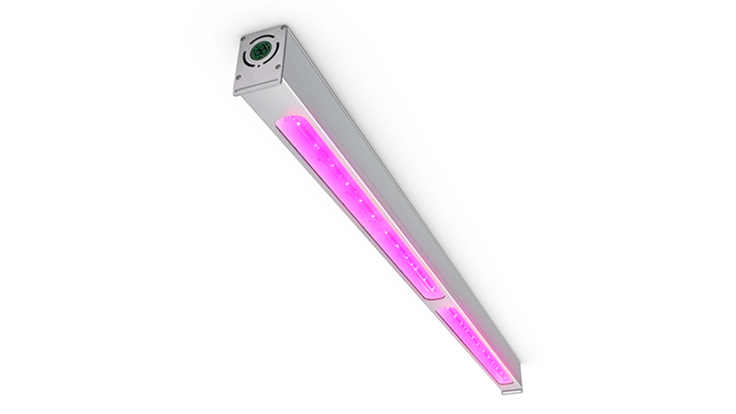
Growing Crops that Demand a Lot of Light?
The new Philips GreenPower LED Toplighting High Output is just what you need.
September 18, 2018
GIE Media Horticulture Group
If you’re growing crops that thrive under high light levels, then it’s time to consider the new Philips GreenPower LED Toplighting High Output. This new LED module offers photosynthetic photon efficacy 2.8 – 3.0 μmol/J-1
The new Philips Toplighting High Output offers unique growth advantages for any crops that need high-intensity lighting either as a direct replacement for traditional lighting systems or as an energy-efficient supplement.
• Improve color, shape and taste with crop-specific light spectrum
• Minimal heat radiation giving you greater control over grow climate
• Accelerates the growth cycle to enable more efficient use of grow space
• Maximize revenue opportunities with year-round growing
• Energy efficient reducing your energy and operational costs
• Lower maintenance costs compared to HPS
• Three spectral options
• UL/CSA approved

TruBioUS Distributes Only The Highest Quality Cleaning And Disinfection Products To Meet The Needs Of Today's Packers And Distributors
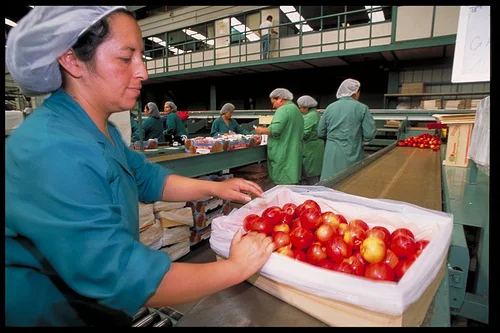
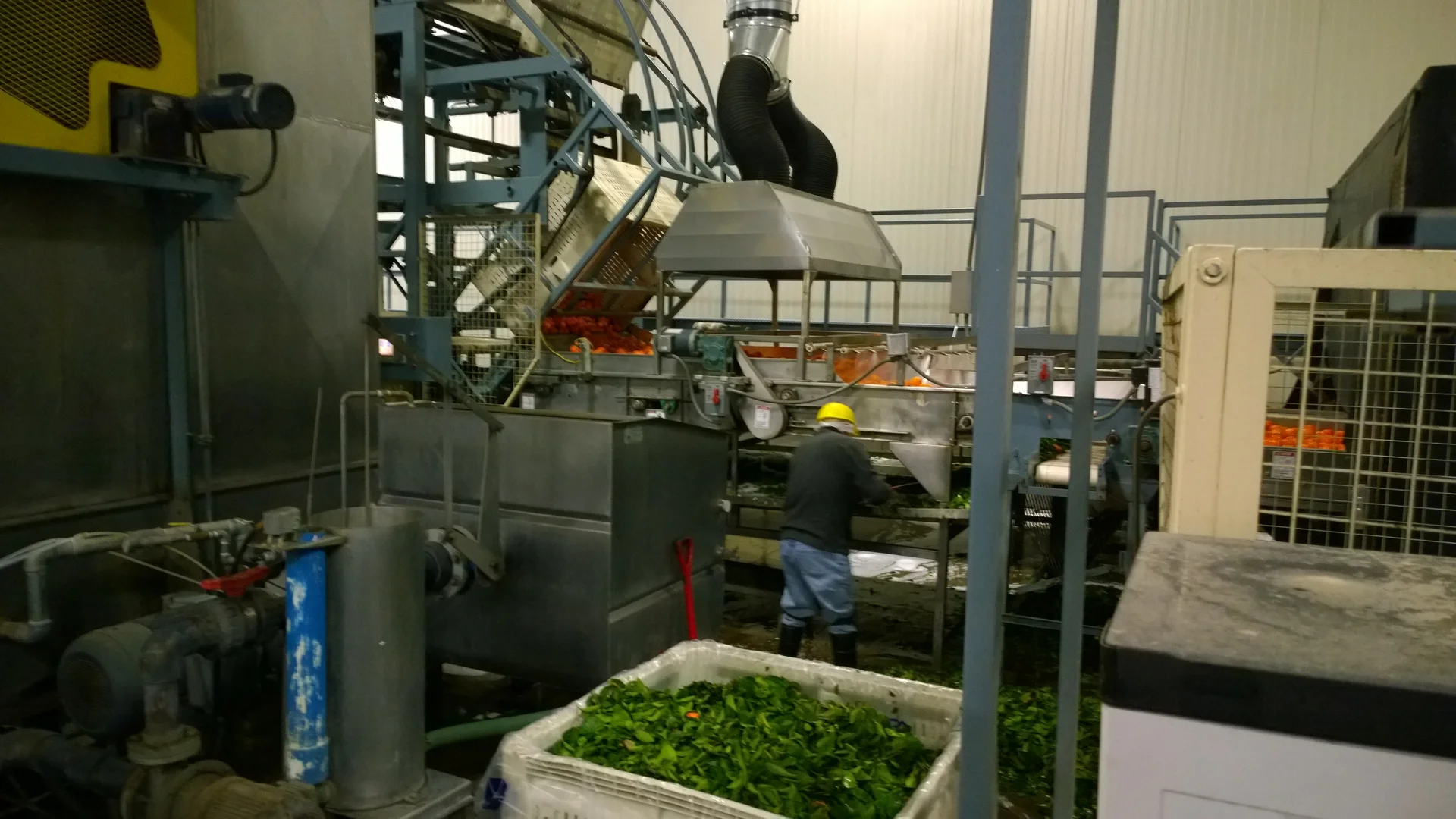
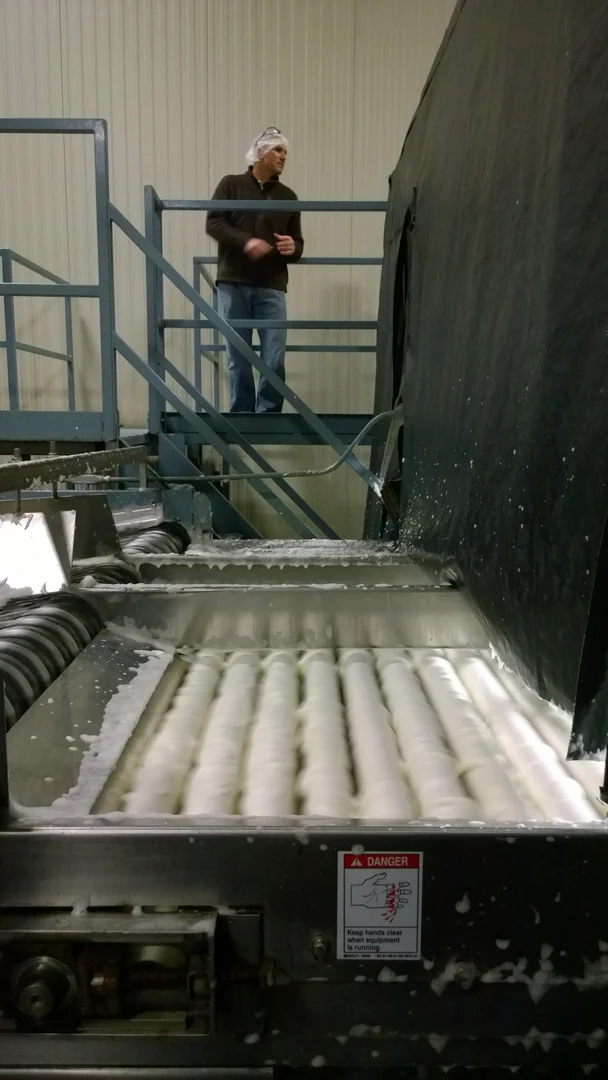
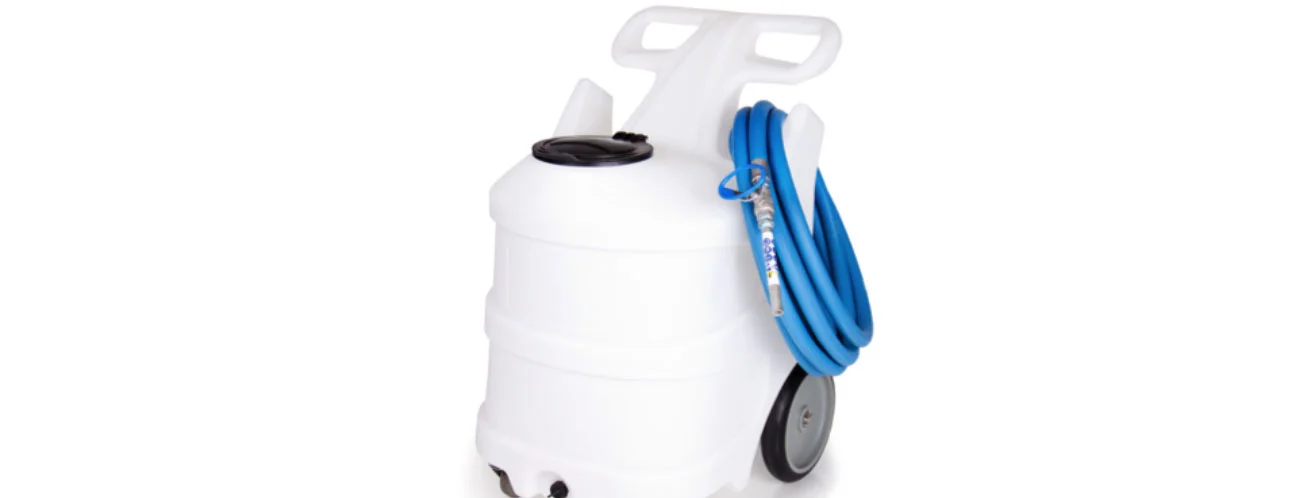
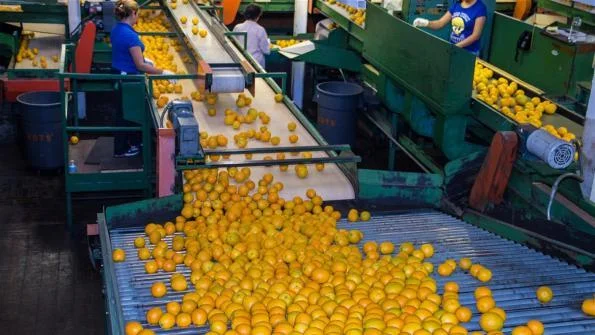

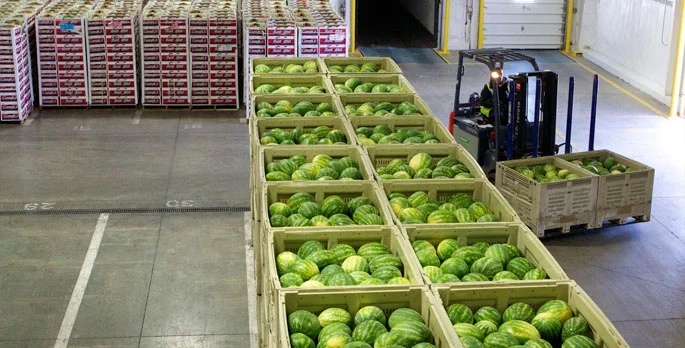

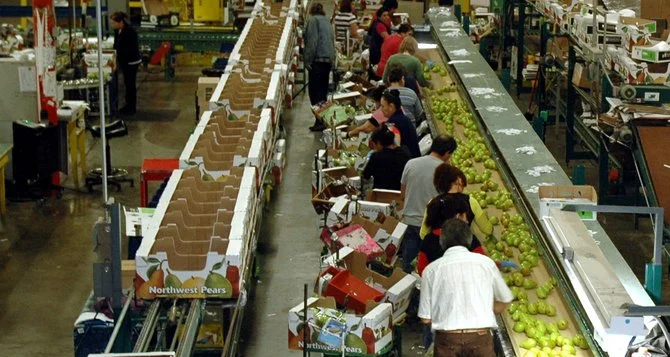

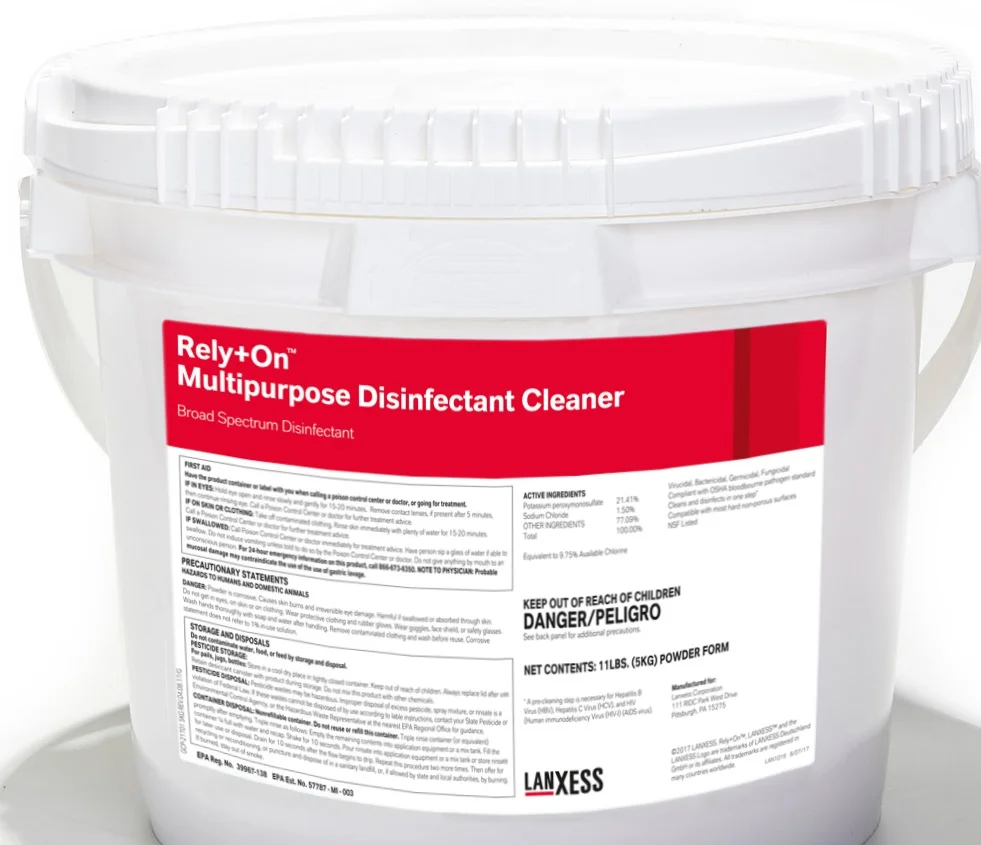
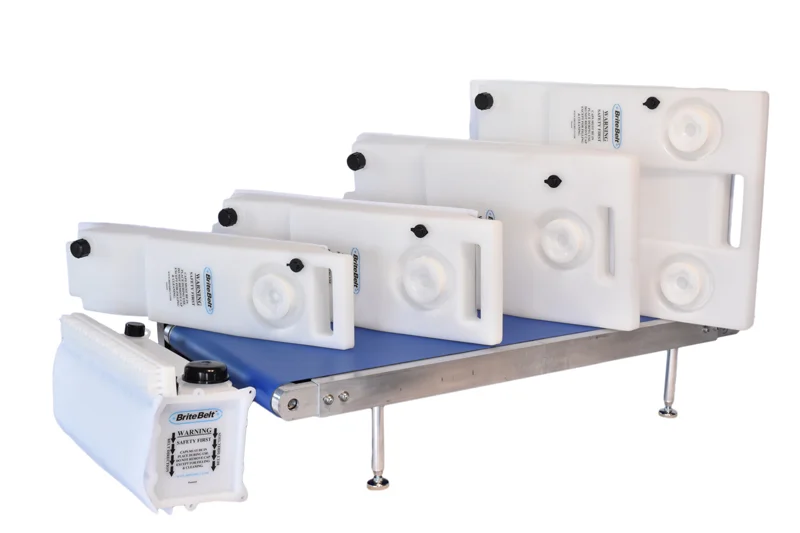


We are the proud provider of Lanxess RelyOn™ MDC - a powerful broadspectrum single step cleaner and disinfectant that is Non-Corrosive in use and EPA registered.
TruBioUS also distributes Brite Belt conveyor solutions and Foam-iT spray foamers.
RelyOn™ SINGLE STEP CLEANING AND DISINFECTING*:
Cleaning and Disinfecting using RelyOn™ is a one step process with specific and separate procedural steps when treating Food Contact and Non-Food Contact surfaces.
FOOD CONTACT SURFACES:
If required, remove gross dirt and debris with brushes or heavy rinse. (i.e. Heavily caked soil and/or large plant debris)
Prepare a 1.0% solution of RelyOn™.
Apply to surface using a sponge, rag, mop, floor scrubber, power washer, brush, foamer, fogger, or spray device, scrubbing as necessary until the surface is visibly clean.
Recommended contact time is 10-30 minutes depending on wax buildup, organic and inorganic load, and mechanical soils.
Rinse or wipe down with at least potable water.
NON-FOOD CONTACT SURFACES:
If required, remove gross dirt and debris with brushes or heavy rinse. (i.e. Heavily caked soil and/or large plant debris)
Prepare a 1.0% solution of RelyOn™.
Apply to surface using a sponge, brush, foamer, fogger, or spray device, scrubbing as necessary until the surface is visibly clean.
Recommended contact time is 10-30 minutes depending on wax buildup, organic and inorganic load, and mechanical soils. Simply allow to air dry or rinse, or wipe down, with potable water.
*Disinfecting vs Sanitizing
Sanitizing only reduces some pathogens to acceptable levels within 30 seconds. Disinfecting, however, kills ALL label listed pathogens (bacteria, viruses, and spores) within 30sec to an acceptable level, but then goes on to provides a total kill within 10 min. RelyOn™ takes disinfection further via a multifaceted mode of antimicrobial disinfectant action. It denatures a microorganism’s proteins and enzymes, increases permeability by disrupting cellular bonds, thus breaking the cell walls, and then exposes the nucleus to allow a complete, irrevocable, kill. There no known biologic mechanisms for developing resistance to the type of attack provided by RelyOn™.
RelyOn™ MDC Cleaner and Broad Spectrum Disinfectant No other disinfectant has the same composition or extensive portfolio of performance and testing data. It has been independently proven highly effective against over 100 strains of virus in 22 viral families, 400 strains of bacteria and over 100 strains of fungi. .
RelyOn™ MDC Overview
De-Waxes, Cleans, & Disinfects in one step / Kills pathogens within 10 minutes
Breaks down waxes and cleans them away in minutes / Removes labels from surfaces, belts, and rollers
100% Non-corrosive in use dilution to most surfaces / Compatible with most hard non-porous surfaces
Will not stain clothing
Non-irritating to eyes and skin in use dilution / No fumes or offensive odor / Has a light citrus scent
Approved by Governments Worldwide to combat major diseases. NSF / EPA / CA Registered / NOP compliant when used as labeled
Degrades into organic salts / 3 Year Shelf life/ Use Life of 1% solution up to 7 days
Can be wiped, mopped, sprayed, foamed, and fogged with no additives.
RelyOn™ MDC Disinfecting vs Sanitizing
Sanitizing reduces some pathogens by 99.9%. Disinfecting, however, kills ALL label listed pathogens (bacteria, viruses, and fungi) by 99.999%, RelyOn™ MDC provides a total kill within 10 min. RelyOn™ takes disinfection further via a multifaceted mode of antimicrobial disinfectant action. It denatures a microorganism’s proteins and enzymes, increases permeability by disrupting cellular bonds, thus breaking the cell walls, and then exposes the nucleus to allow a complete, irrevocable, kill. There no known biologic mechanisms for developing resistance to the type of attack provided by RelyOn™.
TruBioUS
114 W Adams Street
Suite 808
Phoenix, AZ 85003
+1 480 688 2008
sales@TruBioUS.com
Green Life Farms Announces Innovative Partnership with Hydronov for Sustainable Ag-Tech Greenhouse
Flagship hydroponic farm will feature Hydronov’s industry-leading deep-water floating raft technology to grow premium baby greens year-round
Boynton Beach, FL (November 19, 2018) – Green Life Farms has selected Hydronov, a Pranger Company, to design, construct and provide technology for its state-of-the-art hydroponic farm in Boynton Beach, FL. This agreement marks an important milestone as Green Life Farms prepares to begin commercial operation in the first half of 2019. Green Life Farms will grow premium baby leafy greens year-round from its Boynton Beach facility.
Green Life Farms has selected Hydronov, a Pranger Company, to design, construct and provide technology for its state-of-the-art hydroponic farm in Boynton Beach, FL. Green Life Farms will use Hydronov’s pioneering deep-water floating raft technology (pictured above), which is cost effective and environmentally friendly.
Green Life Farms has selected Hydronov, a Pranger Company, to design, construct and provide technology for its state-of-the-art hydroponic farm in Boynton Beach, FL. Green Life Farms will use Hydronov’s pioneering deep-water floating raft technology (pictured above), which is cost effective and environmentally friendly.
Green Life Farms will use Hydronov’s deep-water floating raft technology (FRT) to grow baby leafy greens for supermarkets, restaurants, cruise ships, and other customers from its state-of-the-art hydroponic greenhouse in South Florida. Hydronov is a pioneer in the hydroponic sector, leading the way with this cost-effective and environmentally-friendly method of hydroponic growing.
“Partnering with Hydronov and leveraging the company’s leading technology will help us realize our vision for Green Life Farms – growing sustainable and delicious leafy greens for consumers in South Florida and beyond,” said Mike Ferree, Vice President, Green Life Farms. “Green Life Farms will grow baby leafy greens that are good for your body, family, community, and planet. Creating a sustainable facility by using leading Ag-Tech methodology, along with green energy and other environmentally-friendly practices, brings our mission to life.”
FRT helps to conserve water, allowing a buffer for fertilization and oxygen control, and provides an integrated Harvest Transportation System which uses the water in which the plants grow as a conveyer system, eliminating the costs and maintenance associated with mechanical conveyers. No water is lost through soil or growing media; there is no direct evaporation by the sun, no dumping of growing solution and no dripping gutters. The FRT system leads to higher productivity, producing up to 18 crop harvests per year versus the five harvests per year with soil-based greenhouse growers.
Hydronov is an industry leader in the design and construction of hydroponic growing facilities. With more than 30 years of experience in hydroponics and aquaponics, the company brings industry-leading expertise to the innovative project with Green Life Farms.
“We’re excited to partner with Green Life Farms on this state-of-the-art project,” said Gabe Pranger, owner of Hydronov. “Growing leafy greens in South Florida presents a number of unique challenges, but we’re confident that the combination of Hydronov’s technology and construction management expertise with Green Life Farms’ strategy will result in great success.”
Green Life Farms produce will set new standards for cleanliness, freshness, and taste. Grown locally, using sustainable farming practices combined with the most advanced AgTech practices, and kept free from pesticides and contaminants, Green Life Farms baby leafy greens are good for your body, family, community, and planet.
For more information about Green Life Farms, visit GreenLifeFarms.ag. Please contact Elayne@GreenLifeFarms.ag for sales and Ray@GreenLifeFarms.ag for investor relations.
About Green Life Farms
Green Life Farms is constructing a 100,000 square foot state-of-the-art hydroponic greenhouse in Boynton Beach, Florida, with additional expansion planned in Florida and beyond. Commercial operation is expected to begin in the first half of 2019. By incorporating agriculture with technology, Green Life Farms will provide consumers with premium-quality, fresh, local, flavorful and clean baby leafy greens that are good for their bodies, families, communities and planet – year-round.
About Hydronov
Hydronov LLC was purchased by Nick Pranger and Gabe Pranger in 2017. Since its beginnings in the 1980s with founder Luc DeRochers, Hydronov has focused on innovation in the greenhouse industry. The success of a small research project developed into Hydronov’s unique growing system, Deep Water Floating Raft Technology. Today, Hydronov’s technology is a cost-effective, environmentally friendly, and profitable way to grow hydroponic lettuce, herbs, and produce. Hydronov is headquartered in Ashley, Indiana. Learn more about Hydronov’s floating raft technology at www.hydronov.com.

Propagating Floriculture Crops Under Sole-Source Lighting
This production method allows growers to strictly control the growing climate to best meet the needs of a given plant throughout the day.
September 18, 2018
Leontiene van Genuchten
In the last 10 years, many companies have sprung up to grow herbs and greens in climate-controlled vertical farm or city farm facilities which are daylight-free. As a plant specialist for floriculture with Signify(formerly known as Philips Lighting), I’ve watched these developments with great interest. But I have wondered if a vertical farm can also benefit cultivation of young plants from floriculture crops.
Cultivating floriculture crops without daylight
Growing plants under daylight is the standard practice in conventional greenhouses. But as the popularity of vertical farms has increased, we as plant specialists have been asking ourselves if it is possible to grow floriculture crops without the influence of daylight. Why would growers want to do this? In a greenhouse, the sun affects both the amount of light that the plant receives as well as the temperature and humidity of the growing environment. A controlled environment removes the influence of daylight on the plant’s growth. This would allow growers to strictly control the growing climate to best meet the needs of each plant throughout the day.
Cultivating in a controlled environment also allows growers to optimize other factors, like plant quality and growth speed, and reduce water usage. Since fewer diseases and bacteria come into the controlled environment, vertical farming can also help stop the use of insecticides and fungicides.
Set-up of floriculture trial
These benefits prompted us to conduct a floriculture trial in our climate-controlled test facility at BrightBox in Venlo, The Netherlands. Most of the requests we receive are from growers of young plants, so we ran a trial on the propagation phase of flowers. We chose a wide range of annual and perennial plants, including begonias, petunias, calibrachoas, dianthus, gerberas, celosias, alternatheras and impatiens.
For this trial, we translated the cultivation conditions of a greenhouse to a climate-controlled environment and added the experience of our colleague City Farm plant specialists. Light levels were chosen based on the reference greenhouse environment with daylight, as well as scientific literature and the experience of growers. The light spectra used in the test were aligned with a number of growers to meet their quality standards for the different varieties of flowers. Growth speed is one requirement from growers, but good plant quality is the first priority. In this case, a plant is considered good if it has a compact shape, enough leaves and branches and a good root system. In addition, a good plant should be able to quickly establish roots and bloom as it moves to its next growth phases.
By drawing upon our experiences and the scientific literature we were able to extract enough insights to develop light recipes that would produce these plant characteristics. For example, many plants react to a higher amount of blue light by becoming more compact. The length of the internodes becomes shorter. Some plants benefit from far red light by germinating faster and developing stronger roots, while other react by bolting and drooping.
Read the results of our trial on the Philips horticulture blog
Leontiene van Genuchten is plant specialist at Signify (formerly known as Philips Lighting).
5 Steps For Setting Up A Valuable LED Lighting Trial
2018
Philips Lighting
76% of growers growing under LEDs agree that LEDs have improved the quality of crops at their location
If you’re thinking about taking the first step with LEDs, the process can seem daunting. There are so many claims and so much information being shared that you may find it difficult to wade through the information with confidence and true understanding.
The reality is that LED technology is here, and regardless of the crops you grow, it’s time to begin seriously thinking about and preparing for the eventual transition to LEDs that will take place in your greenhouse operation.
You can begin the transition by starting with a small trial area in your greenhouse operation. As with other processes in the greenhouse, it isn’t quite as intimidating when broken down into smaller, more manageable steps. Follow these five steps to set up this trial area.
Step 1: Identify your challenge.
Some crops have higher values, meaning they generate more revenue or higher margins, than others. It could be that there is a high demand for a specific crop or that a crop brings in higher margins but presents some unique challenges when growing. Consider the following factors when selecting the crop/cultivar for your trial:
Production volume
Economics of production
Propagation challenges
Step 2: Determine a location to set up your trial.
Select a location in your greenhouse, ideally in a typical growing area. To get an appropriate sample size and maintain environmental conditions, it is recommended that the trial area for plug trays be approximately 1,000 to 1,500 square feet. If you’re conducting a lighting trial over potted plants, a larger space may be required.
Step 3. Set up comparative lighting scenarios.
You’ll want to work with a lighting supplier to determine the best way to set up a trial that allows you to compare your current lighting situation to a new lighting scenario.
Start by measuring the inside light levels of your current lighting and compare them to the daily light integral (DLI) for optimal growth of the crop being grown in the trial. This will help you determine if part of the lighting trial is to track the results of delivering increased light levels, or if the trial is to see the results of growing under a different spectrum. You want to see the effect of more light as well as understand the crop response to the focused red and blue spectrum of LEDs.
Step 4. Track the results.
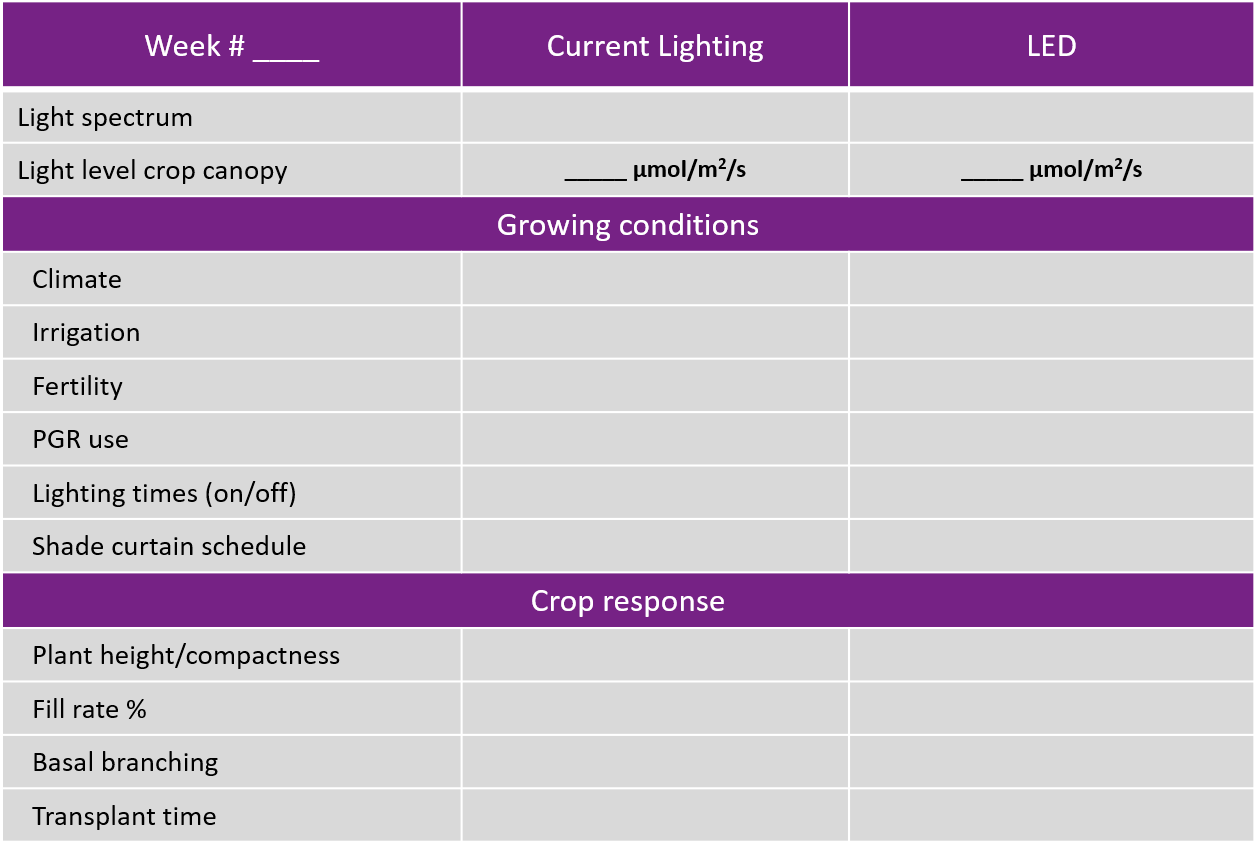
Plan to track the data to not only document the effect on crop growth but also to understand how other crop inputs are affected by the LED lighting. Note adjustments that are made. It is recommended that measurements or data be recorded once a week. (See chart.) Be sure to have the same person measure and record the data at the same time every week during the trial.
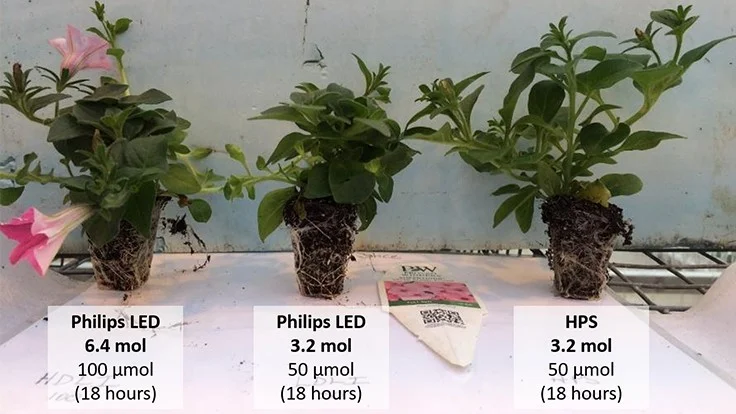
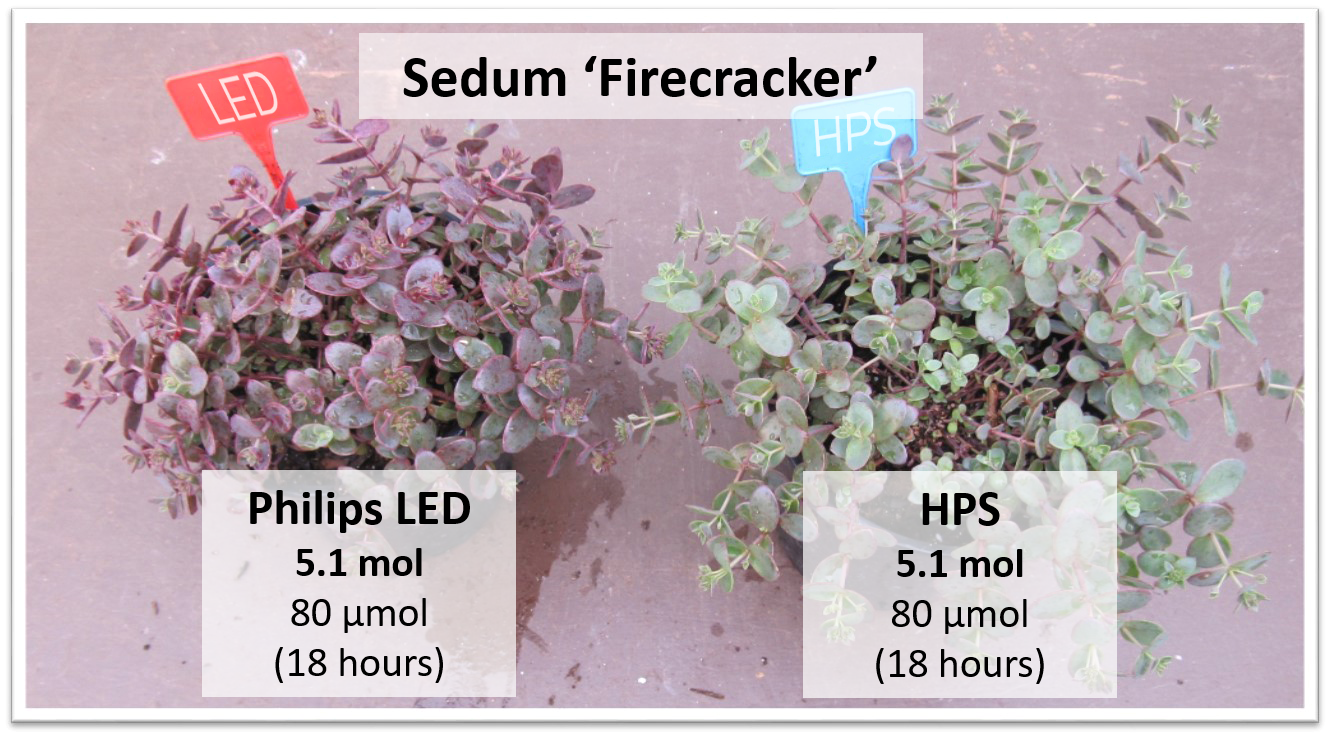
Also, take side-by-side photographs of the crops to capture the difference in rooting, basal branching, coloration, speed of flowering, etc.
Step 5. Review the trial results
Let the results inform your decision. Did you see an uptick in the fill rate? Did you note faster flowering? Were you able to decrease the application of PGRs? Once the improvement in crop growth is translated into quantitative and/or qualitative results, you can then calculate the true ROI of an LED installation. This information will help you develop a plan for converting to energy-efficient LED lighting.
Check out this video of John Bonner, owner of Great Lakes Growers, explaining how he conducted a trial to compare and evaluate growing lettuce under HPS to growing under LEDs.
Ready to give LEDs a try? Contact a certified Philips LED horti partner to get started. Learn more about Philips horticulture products.
Container Farms: A New Type of Agriculture
Innovators within the produce industry are breaking the boundaries of food production
August 20, 2018 6:00 AM, EDT
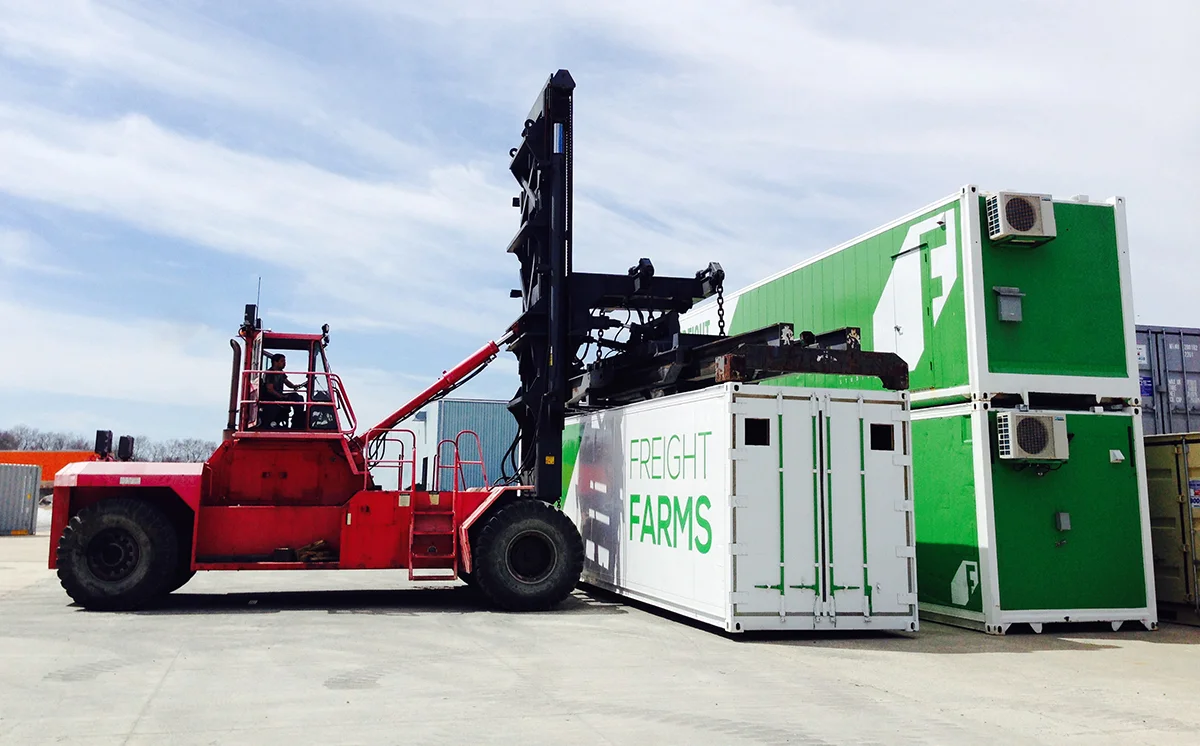
Innovators within the produce industry are breaking the boundaries of food production — by growing crops not in fields, but in recycled shipping containers.
This modern twist on farming is designed to bypass some of the challenges and restrictions that farmers traditionally have faced, such as extreme weather, pests and limited growing seasons.
By overcoming these limitations, farming operations are capable of producing more food and growing certain crops in regions that otherwise would have had to import them.
By growing this food locally, suppliers are able to cut out the long travel distances often necessary to transport these foods to certain markets.
According to Jeff Moore, vice president of sales at produce supplier Tom Lange Co., shorter travel distances provide numerous benefits, such as fresher product, reduced transportation costs, less waste and fewer empty shelves at markets.
The use of innovative farming methods also is being pushed in Canada. Grocery retailer Loblaw Companies Ltd. announced plans to spend $150 million more each year with Canadian farmers by 2025. As part of that effort, the company pledged to help farmers implement growing techniques that will enable them to produce fruits and vegetables in Canada that the country has traditionally imported.
Freight Farms and Tiger Corner Farms are two companies that are growing produce in shipping containers through the use of hydroponics and aeroponics — methods of growing plants without the use of soil.

Freight Farms is working with NASA to find ways to grow produce in space. (Freight Farms)
Both companies use nutrient-rich water as a substitute for soil, but beyond that, their container farms are quite different.
Tiger Corner Farms’ farming units consist of five shipping containers; four are used for farming and the fifth one is used as a working station where the plants germinate and as a post-harvest station.
Tiger Corner Farms, based out of Summerville, S.C., is a family company that began with the combined interest of Stefanie Swackhamer, the general manager, and her dad, Don Taylor.
Through Grow Food Carolina, a nonprofit organization focused on preserving farming in South Carolina, Tiger Corner Farms has partnered with two other companies: Vertical Roots and Boxcar Central. Tiger Corner Farms manufactures farming units from recycled shipping containers, Boxcar Central works on the automation of the hardware and software used for these container farms, and Vertical Roots deals with the production of the produce.
With Tiger Corner Farms’ shipping container farms, Vertical Roots can increase food production. Having 13 farms in total, Vertical Roots is able to produce about 40,000 heads of lettuce in about half the time it would take a traditional farm.
Vertical Roots sells its produce to grocery stores such as Whole Foods and Harris Teeter.
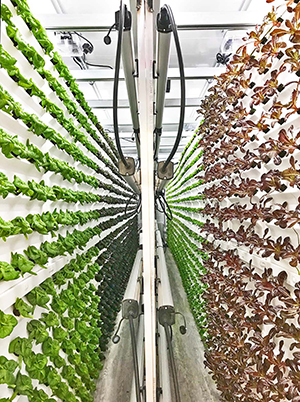
Vertical Roots says it can produce 40,000 heads of lettuce in about half the time of a traditional farm. (Tiger Corner Farms)
For Vertical Roots, founded by Andrew Hare and Matt Daniels, working with Tiger Corner Farms was a no-brainer.
“Providing cleaner, fresher, better access to food was something all four of us were wanting to do. They wanted to provide jobs and educate people on the importance of sustainable agriculture, and we wanted to do the same thing,” said Hare, Vertical Roots’ general manager. “We wanted to bring transparency and education and empowering our community in knowing where their food comes from and how important the freshness and quality is.”
Meanwhile, Boston-based Freight Farms offers a hydroponic “farm in a box,” dubbed the Leafy Green Machine, built entirely inside a single 40-foot shipping container.
The company, founded in 2010 by Brad McNamara and Jon Friedman, also offers a farming service and mobile app, Farmhand, to aid farmers in monitoring their farms.
Freight Farms’ customers range from individual farmers to universities and corporations.
One of those customers is Kim Curren of Shaggy Bear Farm in Bozeman, Mont., which provides local restaurants with leafy greens that aren’t grown in the region.
Someday, hydroponic farming might even play a role in space exploration and colonization.
Freight Farms is working with NASA and Clemson University to improve the efficiency of its farming units in the hopes of eventually using them in space.
Joshua Summers is one of the professors at Clemson that worked on the project. Professors Cameron Turner and John Wagner and students Doug Chickarello, Malena Agyemang and Amaninder Singh Gill also worked on the project.
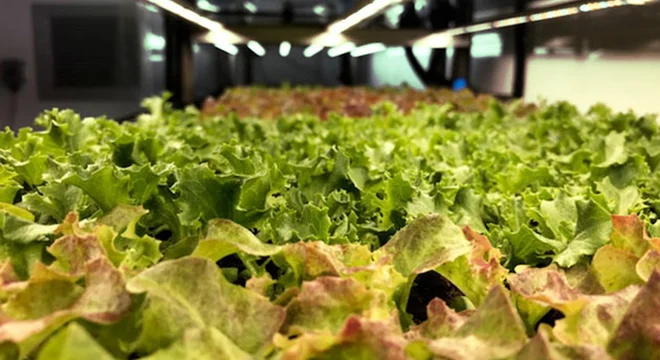
Lettuce grows inside a climate-controlled container farm from Tiger Corner Farms. (Tiger Corner Farms)
In order to enable the farming units to work in space, the Clemson team is focusing on making it a closed-loop system by looking at thermal and electrical loads of the LED lights as well as the heating, ventilation and air conditioning unit.
While working on this project, there is one major issue that Summers said needs to be taken into consideration.
“One of the major issues in moving into space is gravity. As you move away from gravity, a lot of their growing patterns are based on plants growing in a specific way,” Summers said. “Now you don’t know exactly how they are going to grow, so it’s going to be a bit more random, so we have to change some of the geometric layout to make it more efficient in terms of volume.”
Clemson, NASA and Freight Farms are working on a new proposal to continue this project.
Through its work with individual farmers as well as organizations such as NASA, Freight Farms is taking steps toward its goal of empowering anyone to grow food anywhere.

CAN (BC): Bevo Agro Taken Over By Cannabis Grower, Changes Name To Zenabis
Combined entity will have 3.5 million square feet of growing space
CAN (BC): Bevo Agro Taken Over By Cannabis Grower, Changes Name To Zenabis
Bevo Agro has signed an Arrangement Agreement dated October 4, 2018 with Sun Pharm for a reverse take-over of Bevo.
The Transaction involves three main elements:
the amalgamation of Sun Pharm with a wholly-owned subsidiary of Bevo, with Sun Pharm shareholders receiving Bevo shares representing 86% of the outstanding Bevo shares (the expected exchange ratio being one Bevo share for each Sun Pharm share) and the existing Bevo shareholders continuing to hold Bevo shares representing a 14% interest in Bevo.
a plan of arrangement under which Bevo will distribute its interest in Cubic to the shareholders of Bevo, with Bevo shareholders expected to receive one common share of Cubic for every Bevo share held.
Bevo changing its name to Zenabis Global Inc. (“Zenabis,” being one of Sun Pharm’s established brands in the cannabis industry).
The transaction was unanimously approved by the board of directors of Bevo. Shareholders holding approximately 58% of Bevo’s common shares have entered into voting agreements committing to vote their Bevo common shares in favour of the transaction.
Zenabis
Sun Pharm is currently a privately-held cannabis company which has one of the largest, federally licensed indoor medical cultivation footprints in Canada, operating two licensed production facilities in British Columbia and New Brunswick, with a third expected to be coming online shortly in Nova Scotia. These facilities encompass 660,000 square feet of indoor pharmaceutical grade cannabis production space, strategically positioned on Canada’s coasts, facilitating national distribution and access to international markets. Sun Pharm has received purchase agreements for recreational cannabis from each of the British Columbia Liquor Distribution Branch, New Brunswick Liquor Corporation, Nova Scotia Liquor Corporation, and Yukon Liquor Corporation.
Following the completion of the Transaction, Bevo’s greenhouse facilities in Langley are intended to be expanded and retrofitted to integrate advanced propagation technologies and state-of-the-art lighting and ventilation systems. On completion of the expected expansion of these greenhouse facilities, Zenabis will have 660,000 square feet of indoor space and 2.8 million square feet of state-of-the-art greenhouse space in three provinces – British Columbia, New Brunswick and Nova Scotia.
Proposed management team
It is currently anticipated that the management of the resulting issuer will include each of Rick Brar (Chief Executive Officer), Leo Benne (Chief Growing Officer), John Hoekstra (Chief Financial Officer), Mike McGinty (Chief Administrative Officer) and Kevin Coft (Chief Facilities Officer).
Rick Brar – Chief Executive Officer
Mr. Rick Brar is an experienced business leader in the cannabis, nutraceutical, beverage, consumer packaged goods, agriculture, land development and construction sectors. Mr. Brar has international expertise in emerging market sectors, having incubated and grown several companies over his career. He is experienced in sales and marketing, with demonstrated success in corporate sales growth, new market penetration, new product development, and long range planning. Mr. Brar was previously the Chief Executive Officer of International Herbs Limited, where he led one of the largest herb companies in North America for nine years.
Leo Benne – Chief Growing Officer
Mr. Leo Benne is currently Vice President and a Director of Bevo, and the General Manager of Bevo Farms Ltd., the company’s wholly owned subsidiary. Mr. Benne gained advanced knowledge of modern horticultural methods at Rijks Middelbare Tuinbouwschool in Holland. Mr. Benne has overseen every stage of the company’s operations, from planting to shipping. He has been with Bevo for over 25 years.
John Hoekstra – Chief Financial Officer
Mr. John Hoekstra is the Executive Vice President and Chief Financial Officer of Bevo Agro, where he oversees all finance, administration and accounting activities. He joined Bevo in 2004, shortly after the company went public. Prior to joining Bevo, Mr. Hoekstra worked as Supply Chain Manager at Air Liquide Canada, and at Unitor Ships Service as Branch Manager. He is a Chartered Professional Accountant (CPA, CGA) and holds a Business Administration degree from Redeemer University.
Mike McGinty – Chief Administrative Officer
Mr. Mike McGinty has extensive experience in large-scale coordination and planning. Previously, he was a post-graduate tutor in leadership and planning for senior government and military staff from Canada and over 25 allied nations worldwide. Mr. McGinty was a senior officer in the British Army and served widely overseas, including in Iraq and Afghanistan, where he was responsible for more than 1,000 people with $2 billion in capital assets. Mike remains an active member of the Canadian Armed Forces. He also served as the Head of Risk and Security for UBC Okanagan.
Kevin Coft – Chief Facilities Officer
Mr. Kevin Coft is an operational and supply chain professional with over 30 years of Canadian and international procurement, facility operations, and managerial experience. His industrial expertise covers a wide range of functions including navigating Health Canada’s regulatory licensing, team development, facility construction, strategic analysis, import/export operations, logistics, warehousing, customer relationship management, benchmarking, and business systems analysis.
“Our primary goal with this merger is to expand Zenabis’ capacity to supply high-quality cannabis for worldwide distribution. We will achieve this by taking advantage of Bevo’s greenhouse growing expertise to cultivate high-quality cannabis,” said Mr. Brar. “This is a unique partnership that gives Zenabis a significant advantage among Canadian producers as we continue to grow our business to meet Canadian and international demand.”
“This transaction represents a positive growth opportunity for Bevo Agro, as Zenabis intends to invest up to $100 million to expand our greenhouse facility to provide state-of-the-art cannabis production capacity, while maintaining our existing propagation and floral business,” said Mr. Benne. “This partnership will bring new jobs and economic opportunities to the communities in which we operate, while we continue to support the local and international food and floral markets.”
Completion of the transaction is subject to a number of conditions, including but not limited to, TSXV acceptance and if applicable, disinterested shareholder approval. Where applicable, the transaction cannot close until the required shareholder approval is obtained. There can be no assurance that the transaction will be completed as proposed or at all.
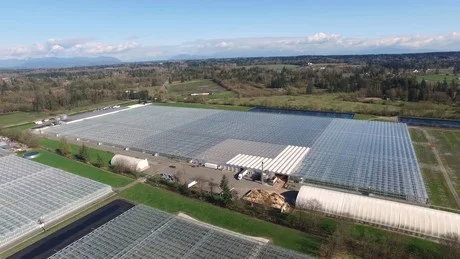
Acquisition of additional greenhouse operations and land
Bevo has also entered into a purchase agreement with an arm’s length third party to acquire 10.4 acres of greenhouse operations on 50 acres of land in Aldergrove, British Columbia. Post-amalgamation, Zenabis intends to use this greenhouse acreage to ensure continuity for existing Bevo propagation customers. The greenhouse acquisition is subject to customary closing conditions and is expected to close prior to December 31, 2018.

For more information:
Zenabis
info@zenabis.com
www.zenabis.com
Bevo Agro
www.bevofarms.com
Publication date : 10/5/2018