


Welcome to iGrow News, Your Source for the World of Indoor Vertical Farming

Mushroom Company Execs Join Crop One Advisory Board
Crop One Holdings, whose vertical farms company FreshBox Farms grows leafy greens, has added executives from The Giorgi Cos. Inc., parent of mushroom grower Giorgio Fresh, to its advisory board.
October 28, 2018
Crop One Holdings, whose vertical farms company FreshBox Farms grows leafy greens, has added executives from The Giorgi Cos. Inc., parent of mushroom grower Giorgio Fresh, to its advisory board.
Joe Caldwell, president of Giorgi Mushroom Co. and Giorgio Fresh, said the company is “very interested in the potential of vertical farming to transform the fresh produce industry,” in a news release.
Caldwell joined Giorgi Mushroom in 2017, after more than three decades at Monterey Mushrooms.

Brian Loiseau, senior vice president of sales, marking and research and development for Giorgio Foods Inc., also has joined Crop One’s advisory board. He has more than two decades of consumer packaged goods marketing experience, and was involved in the recent launch of Giorgio’s Savory Wild Portabella Jerky.
“We look forward to leveraging our own go-to-market experiences to help Crop One bring exceptional quality produce to everyone’s kitchen tables,” Loiseau said in the release.

Crops Take Root In Unlikely City Spaces
Urban Farming Could Produce 180m Tonnes Of Food Globally, According To Researchers
Paris mayor Anne Hidalgo has pledged to turn 30ha of the city into urban farms by 2020
Paris is giving a new meaning to local food as ingredients that usually travel hundreds of miles bloom in the heart of the city. Strawberries sprout inside a shipping container near the finance ministry, endives grow underground in a former parking lot previously plagued by drug dealers and prostitution, and curly kale is being harvested on the rooftops of chic department stores.
These are a few of the dozens of farms opening in improbable places across the French capital, many of them supported by its city hall. The mayor, Anne Hidalgo, is leasing public land at reduced rates to agricultural businesses and has pledged to turn 30ha of the city into urban farms by 2020.
Paris’s agriculturalists are part of a global trend of city farms proliferating in recent years, from the London start-up selling salad leaves grown in a second world war bomb shelter to the New York underground farms producing herbs for luxury restaurants.
But are such efforts merely a fad for the local food movement or, as some advocates hope, could inner city agriculture revolutionise how we feed the world’s metropolises and reduce climate change?
“Growing food without fields is a clear solution to reliably feed the planet of tomorrow,” says Guillaume Fourdinier, who co-founded Agricool, which grows strawberries in shipping containers and opened its first Paris site in 2015.
Mr Fourdinier and his business partner, Gonzague Gru, are both farmers’ sons and wanted the fresh berries they had enjoyed as children in northern France — but in cities and throughout the year. So they refitted steel shipping containers with hydroponics and LED lights to grow fruit without sunlight.
Today they produce strawberries in four containers around Paris. Each yields about seven tonnes of strawberries a year, they say, most of which is sold to Monoprix, a French retail chain.
Mr Fourdinier says urban farms could be particularly useful in places with poor agricultural climates, such as Dubai, where Agricool’s first container outside France opened in June.
“We can grow fruits [in cities] anywhere,” he says. “In China. In the desert.”
A few miles from Agricool’s original site, in Paris’s hip Marais district, another company is going further. On the roof of the BHV department store is a 600 sq m vertical farm, which opened last year and now produces strawberries, tomatoes, wheat, goji berries and sage, among other things.
This is one of 10 farms around the city set up by Sous Les Fraises (Under the Strawberries), since it was founded in 2014, including on top of Galeries Lafayette, the famous Paris department store.
Yohan Hubot, Sous Les Fraises’ founder, aims not just to reduce food miles. He says urban farms will also make cities more attractive and create a clean energy cycle that both recycles food waste and water and absorbs carbon dioxide.
We are at the beginning of a new farming culture Pénélope Komitès, Paris deputy mayor.
Some academics have pointed to urban farms’ potential downfalls, especially indoor farms that use a lot of electricity and artificial light. Louis Albright, an emeritus professor of biological and environmental engineering at Cornell University explained in a 2014 lecture how some “pie in the sky” vertical farms may use more energy and have higher carbon footprints than traditional methods.
Lettuces grown in vertical indoor farms in New York produced more than three times more carbon dioxide than greenhouse farms outside the city because of lighting costs alone, he found, and tomatoes even more. The carbon emissions from growing 4,000 heads of lettuce in an indoor farm in New York would be equivalent to the annual emissions of a passenger car.
Paris’s agricultural entrepreneurs are undeterred, and insist that projects can use renewable electricity to reduce their environmental impact. Some, such as Mr Hubot, say you can’t compare like-for-like energy use because of the social and environmental benefits brought by city farms, such as recycling waste water, educating people on the source of their food and creating urban jobs.
Pénélope Komitès, the city’s deputy mayor, responsible for green spaces, also insists that there are multiple benefits. She says urban farms have never sought to make Paris self-sufficient for food but believes they will be of huge benefit to cities if they expand in the right way.
“We are at the beginning of a new farming culture,” she says. “However, we must not do this to the detriment of traditional farming.” Ms Komitès adds that “urban farms are not gimmicks”, but a “trend that will keep spreading” around the world.
A study this year by researchers at five universities in the US and China, as well as Google, suggests she could be right. One of the first attempts to systematically analyse the global impacts of city farming, using satellite imaging and population and weather data, it estimates the practice could become a $160bn industry if farms expand across the world’s cities. The researchers see particular potential in the growing cities of Africa and Asia.
The possibilities go beyond profits or even reducing food miles. The researchers say urban farming could produce up to 180m tonnes of food each year — about 10 percent of the world’s pulses, roots and vegetables — create new homes for pest-eating predators, reduce flooding and could reduce electricity use by lowering city temperatures during the summer. Soil on rooftops can provide insulation that keeps buildings cooler without the need for air-conditioning.
“Urban agriculture is not going to replace the traditional food system,” says Matei Georgescu, a co-author of the study and professor of geographical sciences at Arizona State University. However, it may well replace part of our food system, he says, and benefit the environment in the process.

Russia: Moscow To Get 10 New Vertical Farms
A Russian start up, Mestnye Korny, which is engaged in the construction of urban vertical farms, will build 10 sites for the cultivation of leafy greens over the next three years, with an overall capacity of 1 thousand tons per year.
The project has attracted investments worth 79 thousand euros from the foundation TealTech Capital, founded by the owner of retail company VkusVill and his partners.
“For the kind of systems produced by Mestnye Korny, it is vitally important to have an efficient logistics scheme as the optimum selling period for lettuce is less than three days”, noted the executive director of the National Fruit and Vegetable Union, Mr. Mikhail Glushkov.
The representatives of Mestnye Korny are planning to have a yearly turnover of about 13 million euros. The overall investments to the project may reach 9.8 million euros. The conditions of franchise development in the regions have not been defined yet. The potential yearly volume of the city-farm greenery market is evaluated by the Mestnye Korny at 140 thousand tons and the turnover at 923 million euros. The first phase of the farm for 8 tons of basil and rucola will be launched in Moscow by the end of the year. By March 2019, the farm should be operating with a productivity of 160 tons.
Source: fruitnews.ru

GFIA Abu Dhabi - Call For Speakers Is Now Open - Applications Close Tomorrow
Applications close tomorrow - Tuesday 30 October 2018.
This is your chance to join the world's largest exhibition and conference dedicated to sustainable agriculture solutions and showcase your company and expertise to thousands of the most accomplished and forward-thinking farmers, food companies, policy makers, NGO's, scientists and investors in the world today.
Deadline: 30 October 2018
Conference Theme: Artificial Intelligence in Agriculture
Please Click Here To Apply To Speak
Can you help food producers in the MENA region improve the sophistication and sustainability of their operations using Artificial Intelligence?
Then apply to speak at the A.I. for Agriculture Summit at the Global Forum for Innovations in Agriculture in Abu Dhabi next April.
How can AI drive progress towards achieving the United Nations Sustainable Development Goal 2 – end hunger, achieve food insecurity, improve nutrition and promote sustainable agriculture?
If your company has a technology or solution that can increase agricultural productivity through Artificial Intelligence, then we want to hear from you. Or perhaps you are a scientist developing a research project in this sector, or a food producer undergoing field trials with a new innovation.
WE HAVE HELPED 25,000 FARMERS IMPROVE PRODUCTIVITY
Since 2014, GFIA has helped over 25,000 farmers, growers and agribusinesses find innovations in sustainable agriculture.
Now in its 6th edition, GFIA is one of the best attended agriculture events in the Middle East and the only one dedicated to sustainable agtech.
Book a stand to showcase your products to 7,000 forward-thinking food producers in the MENA region in May 2019.
2019 | ABU DHABI | UA
1-2 April: Abu Dhabi National Exhibition Centre
Opening Times: Mon 1 Apr: 10.00 – 18.00
Tues 2 Apr: 10.00 – 16.00

California LGMA Adopts Changes After E. coli Outbreak
October 25, 2018
Members of the Leafy Greens Food Safety Task Force convened in late July to review recommendations for updates to the LGMA metrics. ( Marilyn Dolan )
The California Leafy Greens Marketing Agreement has adopted the changes made by its Arizona counterpart in the wake of an E. coli outbreak linked to romaine lettuce grown in Arizona — with one exception.
In Arizona, LGMA members tripled the buffer zone for concentrated animal feeding operations (CAFOs) from 400 feet to 1,200 feet. That’s also the case for California now, unless the CAFOs have 80,000 or more head of cattle. Those operations now trigger a one-mile buffer zone for California LGMA members.
California LGMA CEO Scott Horsfall said the CAFO rule was adopted out of “an abundance of caution,” and that its effect on current members should be minimal.
“We’re still in the process of determining the impact it might have,” Horsfall said in mid-October.
He stressed the importance of the 1,200-foot buffers in both states, and the overall metrics updates in both production areas. The changes were made in late September, and Horsfall said workshops and training seminars will help educate growers on the changes.
Those include:
More rigorous risk assessments on intense weather conditions;
Added measures for leafy greens grown near CAFOs;
More requirements on cleaning/sanitizing harvest equipment; and
Stronger traceback requirements.
The focus on CAFOs comes after the investigation into the cause of the E. coli outbreak this year. Inspections found the same strain of E. coli in the tainted romaine in an irrigation canal used for Yuma crops. That canal passes near a CAFO that has a capacity of at least 100,000 head, according to the Food and Drug Administration.
Related Topics: Lettuce Food safety E. coli

Joburg Food Expo Bring Opportunities To Urban Farmers
It is estimated that 805 million people worldwide live with chronic hunger.
It is estimated that 805 million people worldwide live with chronic hunger.
November 1, 2018
MMC for Health and Social Development, Dr Mpho Phalatse. Photo: Twitter.
With the purpose of decreasing unemployment and poverty, the City of Johannesburg has launched Joburg Food Expo for urban farmers.
The Food Expo is an initiative of the City’s Food Resilience Unit to create a platform for emerging farmers to sell their products directly to clients.
The expo was hosted in conjunction with the United Nations World Food Month celebrations. According to MMC for Health and Social Development, Dr Mpho Phalatse, it is estimated that 805 million people worldwide live with chronic hunger, with almost five million children under the age of five dying from malnutrition-related causes every day.
The event serves as a platform to share ideas and exchange best practices on how to make use of the land they own to be sustainable farmers.
The expo, which was packed to capacity, provided an opportunity to exhibitors, private companies, government departments, and institutions of higher learning and industry suppliers to showcase their offerings.
Phalatse said the expo created a platform for all role-players to showcase their work and interact with one another to achieve the one objective of increasing food production and supply of fresh produce.
She said the event indicates that Johannesburg as a region is extensively involved in urban agriculture as a means to counter sluggish economic growth, bolster employment and make visible progress in eradicating hunger.
The City of Johannesburg’s Social Development department has initiated programmes such as communal gardens, rooftop gardens, aquaphonic projects, food empowerment zones and agri-resource centres with the intention to promote sustainable food production practices.
“It is important that we continue to seek solutions that will help us eradicate poverty among our communities. The statistics of those who go to bed hungry remains a concern. As the City of Joburg we have a dedicated Food Resilience Unit that assists our most indigent communities to grow their own food. The more people we empower to grow their own food in their small back yards and in communal land, we will be able to feed more people and contribute to the economy of the City,” said Phalatse.
Joburg Market CEO, Ayanda Kenana, told those in attendance that they need to organise themselves and begin to sell their produce beyond their communities through the Joburg Market. He shared statistics provided by Joburg Market which revealed an imbalance in the agriculture industry, indicating that Africans shared about 10 per cent of the agriculture sector.
“It is important that we work together to change the face of agriculture in this country and we can only achieve the required results if we understand and commit to what we are doing. Joburg Market has the means to assist and build your capacity to grow your communal farms. Joburg Market trades across our neighbouring countries and its market reach is what you need to make a success of your urban farms,” said Kenana.
Do you perhaps have more information pertaining to this story? Email us at roodepoortrecord@caxton.co.za (remember to include your contact details) or phone us on 011 955 1130.

North Carolina Indoor City Farm Nears Completion of Phase 1
Your Local Greens, an industrial size hydroponic indoor city farm located in Burlington, North Carolina, is nearing the completion of Phase I, and preparing its first crops consisting of a variety of lettuces and microgreens.
Owned and operated by YLG Partners, Inc., the company was founded on the belief that it is possible to hire individuals with disabilities, pay them a living wage with benefits, and seamlessly integrate them into the workforce while, at the same time, creating ideal conditions for growing produce.
Looking at new and disruptive ways of doing things does not stop with the workforce. Your Local Greens said it offers its customers access to fresh locally grown produce 12 months of the year. The company has utilizing LED grow light technology and plant recipes from Philips Horticulture in the Netherlands to construct 60,000 sq. ft. of growing space which is planned to be built in four phases.
"It is a study in the future of self-sustainable agriculture," the company says. "Plants grow in a safe, clean, controlled atmosphere, in water, and without soil using just the right mix of nutrients and light. This increases crop yield and nutritional value with less waste, while using fewer natural resources. The result is outstanding, all-natural disease-free produce without the use of pesticides."
The motto for Your Local Greens is "Live Better Than Organic", which the company says goes beyond the grow-room to include the use of non-petroleum, plant-based packaging for all of its microgreens, and recycled packages for its lettuces. Beginning in 2019, as larger packages become available, Plant Based Packaging will be used for all products. This will also be the case with new biodegradable labeling materials that are now under development and soon to come on-line. Your Local Greens said it supports companies who are working to create compostable products that do no harm to the environment.
Indoor city farming, reportedly uses 90 percent less water than in the field, non-GMO seeds, produces only 2 percent waste. According to Your Local Greens, it also meets 13 of the 17 UN Sustainable Development Goals.
For more information:
Dennis Harrell
Your Local Greens
Tel: +1 (336) 290-7373
info@yourlocalgreens.com
www.yourlocalgreens.com
Publication date : 10/16/2018

Can Cities Produce Enough Food To Feed Their Citizens?
By Dan Nosowitz | October 11, 2018
An urban rooftop garden. YuRi Photolife on Shutterstock
The areas in and around American cities may not scream “farming powerhouse.”
As cries for local food ring louder and louder, many have begun looking to flashy new urban farming missions: rooftop gardens, vertical farms inside abandoned factories or warehouses, that kind of thing. But a new study from the University of Minnesota finds that urban areas already produce a lot of food—the challenge is matching local producers with local consumers.
The study looked at “metropolitan statistical areas,” or MSAs, and compared both their production and their demands for milk, eggs, fruits, and vegetables. MSAs are a sort of confusing metric, but essentially they refer to a county with a population of at least 50,000, plus any surrounding areas that depend in large part or can be considered part of that urban county area. New York City, for example, includes both Newark and Jersey City as part of its MSA. Los Angeles includes Long Beach and Anaheim, and Miami includes Ft. Lauderdale and West Palm Beach.
Food production in these areas is a lot more robust than you might think. Much of the country most associated with farming—the bread basket, for example—is not, primarily, growing crops for direct human consumption. Corn and soy are processed into animal feed or oil or various other products. Near cities, in places without the vast quantities of land required to make a living growing monocrop grain, farmers are more likely to produce eggs, milk, fruits, and vegetables.
From our partners at
The study found that 20 percent of MSAs already produce enough milk and eggs to feed their individual populations. For fruits and vegetables, that number drops to 10 percent, which is still pretty significant, considering that the vast, vast majority of the American population lives within an MSA.
Those findings vary, of course, by location. Upstate New York, the Philadelphia area, and parts of Wisconsin and Michigan are capable of being fully self-sufficient in dairy. South Florida is already self-sufficient in oranges, and the Seattle area is taken care of for apples.
The authors of the study hope that it can be used to more carefully measure what a community needs and what it has, or could easily have, and try to balance those supplies and demands. Understanding the food needs of a given area can help reduce transportation fees and pollution as well as encouraging local farmers to grow what their community really wants.

Meat Plant That Recalled 7 Million Pounds of Ground Beef Has History of “Egregious” Animal Welfare Practices
iStock / gevende
In 2017, regulators warned JBS over its treatment of sick dairy cattle at its Tolleson, Arizona plant. The resulting documents may help clarify the source of this year's Salmonella outbreak.
October 11, 2018
by Joe Fassler
The JBS meatpacking plant at the center of the recent, 6.9-million-pound beef recall has a history of “egregious” animal welfare practices, documents first reported by The Arizona Republic show. The documents suggest that the United States Department of Agriculture’s Food Safety Inspection Service (FSIS) was concerned about livestock protocols at JBS’s Tolleston, Arizona plant in question as far back as July, 2017—and not just that. The agency also seemed concerned that the company’s approach to cattle might cause it to overlook symptoms that could pose a risk to human health.
The documents also establish that sick dairy cows—a common carrier of Salmonella Newport, and likely the source of the current recall—were present at the plant to be processed for meat, and did not receive timely treatment from JBS.
On July 25, 2017, a year and a day before the first lots of recalled beef were processed at Tolleson, FSIS sent an official “Notice of Intended Enforcement” to JBS leadership, threatening to remove its federal inspectors and halt work at the plant.
Related: Why sick dairy cows may be the culprit in last week’s historic Salmonella beef recall
“This action was initiated due to your firm’s failure to maintain or implement required controls to prevent the inhumane handling and slaughtering of livestock at your establishment,” the letter read.
The letter went on to describe an incident involving two sick dairy cows observed by the plant’s Consumer Safety Inspector (CSI) early in the morning of the 25th. (CSIs are government employees stationed in federally inspected meatpacking plants; they work to ensure that facilities follow their written safety and sanitation plans.)
“The CSI observed one cow in Pen 19 lying on her side and unable to rise, mentally incoherent, having difficulty breathing, and repetitively making a kicking motion with its legs while moaning as if in pain,” according to the notice. “The CSI then observed another cow down in Pen 15, also lying on its side, unable to rise, mentally incoherent, and also struggling to breathe while making kicking motions with its legs.” The official determined that both cows were “in significant distress and [were] suffering.”
Ultimately, it took 15 minutes—and the CSI’s direct intervention—to bring an employee on the scene to euthanize the remaining cow.
An FSIS spokesperson confirmed to The New Food Economy that the cows described were “dairy cows sold to the plant for meat.” (As I reported last week, dairy cow meat is commonly used pad out commodity ground beef from beef cattle. The problem is, they’re often sent to slaughter old and sick.)
The CSI felt both cows needed to be euthanized immediately to prevent further suffering, but had trouble getting JBS staff to address the problem urgently, according to the letter. The Yard Supervisor agreed to summon an employee to euthanize the cows, but he did not immediately appear. One cow died on its own before the employee arrived, and the CSI seemed to feel that calls for prompt treatment were not taken seriously.
“The CSI repeated to the Yard Supervisor that the one remaining suffering cow needed to be knocked promptly. The CSI informed her that the second cow had died and emphatically stated that the other distressed cow needed to be knocked as soon as possible,” according to the notice. “She stated ‘I Know, I Know’ but did not do anything further.”
Ultimately, it took 15 minutes—and the CSI’s direct intervention—to bring an employee on the scene to euthanize the remaining cow. Though it’s hard to say whether the event described was an anomaly, the incident was troubling enough that FSIS sent its formal warning letter later that same day. And a follow-up letter published by FSIS suggests there were multiple issues with the animal welfare plan JBS had in place.
In a letter dated October 19, 2017, FSIS acknowledged that JBS immediately moved to appeal the decision, and ultimately asked the agency to rescind its notice. But FSIS denied JBS’s appeal then and on two subsequent occasions. Specifically, the agency cited the fact that JBS’s existing paperwork did not assure the agency that JBS employees could “identify animals in distress and take appropriate actions in a timely manner.” FSIS also noted its belief that standard operating procedures were not “sufficient to prevent the recurrence of inhumane handling due to failure to identify and verify the need for euthanasia without FSIS intervening.”
The revelation of the FSIS letters makes an emerging picture even clearer.
Multiple rounds of negotiation apparently followed. JBS said it had trained employees “to look for and to determine signs of distress” and had committed to performing a “daily animal welfare audit.” After months of negotiation, FSIS finally noted in the October 19 letter that it was satisfied with improvements and would rescind the notice. But the letter ended with words of admonishment that, considering the recent recall, would prove to be prophetic.
“You are reminded that as an operator of a federally inspected facility, you are expected to comply with the Federal Meat Inspection Act (FMIA) and the regulations promulgated thereunder to ensure that livestock at your establishment are handled and slaughtered humanely,” Yudhbir Sharma, the director of FSIS’s Alameda, California office noted.
He went on: “It is also important for you to understand that FSIS has the responsibility to initiate actions if your establishment fails to operate in accordance with FSIS regulations, or conditions occur that may render products unwholesome or adulterated.”
Now, less than a year later, we know that conditions did occur at Tolleson to “render products unwholesome or adulterated.” Almost 7 million pounds of ground beef suspected to be tainted with Salmonella Newport were recalled, meaning that the meat of nearly 13,000 cattle will ultimately end up in landfill. FSIS has not been willing to provide additional details on what led to the outbreak, and JBS has not responded to repeated requests for comment. But the scenario I laid out earlier this week starts to look even more likely.
I’ve already made my speculative case that dairy cows are to blame for JBS’s latest recall, the largest recall of ground beef for Salmonella ever. As I reported previously, we already know that dairy cows, which provide about 20 percent of the nation’s ground beef supply, are the likeliest reservoir of Salmonella Newport. We know that dairy cows usually don’t enter the food supply until they get old, weak, or sick. We know that, in processing plants, dairy cow meat is used as filler in ground beef—a practice that exponentially increases its already significant public health risks, and has the potential to contaminate huge volumes of product.
The revelation of the FSIS letters makes an emerging picture even clearer. We now know that sick dairy cattle, so ill they could barely stand, were present at Tolleson just one year before the recall started. We know, too, that FSIS felt JBS employees were unable to identify excessively suffering animals and disarm problems as they happened.
Now, two other questions remain. When will FSIS provide the public with a full account of what happened at Tolleson? And if dairy cows prove to be the culprit, can we have a conversation about how to treat these animals—often sickened or weakened by the demands of high-volume milk production—as we rethink the role they play in feeding us?
ENVIRONMENT, FARM, HEALTH, HOME FEATURE, ISSUES, SYSTEMS BEEF JBS RECALL SALMONELLA

iGrow News Is Proud To Announce Our New Partnership With Lyle A. Bogorad
Lyle is an attorney from NY with a J.D. and LL.M. in intellectual property. He has recently left the legal arena to enter the cannabis industry.
We are proud to announce our new partnership with Lyle A. Bogorad, the Owner of Cannabis Canopy by Chromatic Clouds and Founder of Chromatic Clouds.
Lyle is an attorney from NY with a J.D. and LL.M. in intellectual property. He has recently left the legal arena to enter the cannabis industry.
We look forward to his contribution to iGrow and welcome him to the Family.
The cannabis revolution is here to stay.
The cannabis industry is expanding rapidly gaining worldwide interest. With growing scientific validation, cannabis is being integrated into the mainstream around the globe as sales for consumer wellness products have continued to grow steadily. Hemp and CBD oil are making headlines. From Pharmaceutical Companies and Big Tobacco to beer, soda and alcohol, Fortune 500 companies are focused on cannabis as it is becoming a billion-dollar industry in the United States.
The folks here at iGrow have recognized the growing interest society has for cannabis. We also acknowledge that much of the early advances in indoor and urban farming were made because of the technology introduced to us by indoor cannabis growers. As a “Wikipedia” for all your indoor vertical and urban farming news, we would be amiss if we didn’t begin to cover cannabis in our reporting,
Many of you probably already noticed the addition of a “New Ag Tech” category. We have linked this new tab to the “Cannabis Canopy by Chromatic Clouds” LinkedIn group. Please check out our new addition and join the group. Also, I would love to hear your thoughts on our plan to include the world of cannabis in our coverage to you. Please reach out to me with any thoughts and suggestions.
The mission of Cannabis Canopy is to provide a “canopy” of sorts for cannabis business enthusiasts to have a dedicated forum to explore the cannabis universe.

New Hydroponics Approach Draws £500k Seed Funding for Welsh Startup Phytoponics
A new deep-water approach to hydroponics has earned Welsh agtech startup, Phytoponics, £500,000 ($650k) of seed funding support over the last two years, lining the company up for major Series A investment push in mid-2019.
The first round in 2017, which closed on £200k, was backed by five new angel investors led by Smart Anchor Capital based in London and Cardiff. This year’s second round, which raised £300k and was also led by Smart Anchor Capital, consisted of follow-on funding by four of the first round investors, alongside eight new people.
The Aberystwyth-based company was co-founded by Adam Dixon and Luke Parkin in October 2016 with the aim of delivering hydroponic systems designed to produce better crop yields than are possible through conventional greenhouse-based methods. The company’s patented Hydrosac technology is now deemed to be ready for high volume commercial output, having proven itself by producing high-quality tomatoes through a pilot project run in conjunction with Aberystwyth University in Wales.
“The primary difference of Hydrosac is its use of more water than existing hydroponic systems, giving plants a wider buffer range of nutrients, temperature and dissolved oxygen,” said Dixon. “This results in less fluctuation in root zone conditions, which makes production more predictable and programmable than has been possible in the past.”
“Our system is particularly designed for large vine crops such as tomatoes, peppers, and cucumbers, as opposed to many others who concentrate more on salad crops.”
For tomato production, the Phytoponics system provides about 10 liters of water per plant, which the company says depletes the available nutrients at a much-reduced rate compared to when less water is used.
“I’ve been with working with hydroponics for more than 10 years, including leading up to starting preparations for the launch of Phytoponics about three years ago,” said Dixon. “Our first two years in business, since our official launch, has been focused on development and initial trials with a little bit of funding being sourced in year one, followed by the £500,000 we’ve raised this year.
“This new money allowed us to progress to the pilot trial at Aberystwyth University and the bringing in of high-level horticulture sector expertise to help us make our system fully commercial and ready to go.
“It was hard finding investors during the period we were developing the technology, especially in a sector like horticulture where trials, which are greenhouse-based, can only be run on an annual basis.
“Our big technology breakthrough came through running the pilot at Aberystwyth University and then winning the United Nation’s Young Champion of the Earth award in 2017. That gave us a major boost of recognition, enabling us to take our plans to a London investor in December last year, which led to our first round of seed funding.”
Despite gaining a $15,000 prize as part of the UN award and a number of other relatively small competition prizes over the last two years, Dixon doesn’t believe start-ups should concentrate too much on competitions and awards.
“It’s important to focus primarily on building the proof points of your business, relating to potential customers and developing the necessary specialist expertise to allow you to progress,” he said. “Awards are good if you can’t get sales, which we couldn’t in the early stage of our development, but not so much after that point.”
The next big change for the business was Smart Anchor Capital’s founder partner, Mark Hindmarsh, recently joining Phytoponics as chairman.
“Mark has really helped us refine and develop our business model, work on our proof points for fundraising and generally commercialize our operation,” said Dixon, whose initial contact with Mark came via a shared LinkedIn friend.
Hindmarsh is also upbeat about the relationship he has with Phytoponics and the company’s potential.
“The team at Phytoponics have achieved an amazing amount in the last 12 months, often with little resource,” said Hindmarsh. “Despite that, they have attracted the attention of potential partners and customers in the US, India, UAE, Africa, Canada, and many other countries.
“As new shareholders ourselves, we are excited to see what the future holds for the company considering the opportunities that lie ahead. As their recently appointed Chairman, I am personally looking forward to playing my part in helping the company achieve its next milestones in advance of a larger fund-raise within the next 12 months.”
Hindmarsh added that with this year’s round ending up 3x over-subscribed, the team is now considering opening up another £400,000 or so for funding early in 2019. This would be done via a convertible loan note instrument to give investors an opportunity to participate prior to the Series A round in late summer 2019.
Funding aside, the next physical step for Phytoponics involves the launch of a farm-scale trial with a major commercial grower (still secret at present) who will use the company’s technology to grow tomatoes for two major UK supermarkets early in 2019.
Beyond that, the company is planning to hire new employees to help with both technical and commercial developments.
“I believe our technology is globally significant,” said Dixon. “Initially, therefore, we’re looking to make a big impact on horticultural production in the UK, with the potential to scale our operation internationally through our own technology platform and business partnerships.”

'The Next Evolution of Farming Has Already Begun'
By Austin Stankus - Wednesday, October 10, 2018
The world population continues to grow with ever-increasing urbanization predicted to reach 80 percent by 2050. The U.N. predicts that human population will reach nearly 10 billion by 2050. This increasing population is also growing richer — and hungrier.
To feed this population using traditional farming practices, much more land would need to be brought under cultivation. But, already much farmland around the world has been degraded from poor management practices, and lands remaining available for food production are decreasing from the effects of erosion, salt buildup and pollution.
As you read this today, tens of millions of children are going to bed hungry, with the Food and Agriculture Organization of the United Nations estimating the number of hungry in 2018 at 812 million or approximately one out of 9 people.
Something needs to change. Food production needs to get more efficient, more equitable and more environmentally minded. Moreover, food production should follow the population to the cities, or as Dickson Despommier, a forerunner of this movement, simply states: “Put the food where the people live.”
Indoor farming through controlled-environment agriculture (CEA) will be an important component towards establishing local food systems that can address this pending crisis in global food insecurity. CEA, simply put, is using smart, sustainable farming practices inside of high-tech greenhouses. This is nothing new, and these modern greenhouses are an established technology and can be found around the world. In fact, much of the lettuce, tomatoes, peppers and cucumbers in the EU come from CEA in the Netherlands and Spain.
These greenhouses have incredible benefits compared to traditional farming: They use less water because they are protected from the sun and wind, they use fewer pesticides because insects and disease can be kept outside, and there is less waste because production can be matched exactly to consumer demands.
If hydroponics or other soil-less practices are used, the farmer does not need to use tractors for tilling, plowing and reaping, so the oil bills and energy consumption are lower. In addition, the fertilizer usage is reduced, and all the fertilizer the farmer uses is consumed by the plants, thereby reducing nutrient-rich runoff that can pollute watersheds.
Known as eutrophication, this nutrient pollution is a huge problem for coastal communities in the Chesapeake Bay and Gulf of Mexico and has impacted fisheries, recreational activities and livelihoods around the world.
However, CEA greenhouses can occupy a lot of space. So, the next logical evolution is stacking these modern greenhouses, one atop the other.
Vertical farming, as greenhouses stacking is called, has additional benefits. Reducing the footprint means that more food can be grown in a smaller area and therefore can be brought closer to the people eating that food. As populations move toward the cities, it makes sense for the food to follow.
Part of the vision of vertical farms is the reconnection of the producer and the consumer plus the restructuring of food value chains to become more transparent and responsive to the needs and wants of the people.
An added benefit of farming inside of skyscrapers is the option of having mixed-use buildings. When combined with a wholesale market, the skyscraper can not only produce the food but get it to the consumer faster. Less time in storage, less transportation and less handling means fresher produce and reduced need for postharvest treatments like irradiation and chemical fumigation.
There are still some daunting challenges as well as some encouraging recent developments.
Unleashing the innovative power of American small businesses has jump-started the transition to modern farming, and the public desire for local, healthy food is an economic engine driving the industry toward change. In fact, there are currently so many vertical farm startups that a shortage of qualified workers is now the main hurdle to accelerating the establishment of new indoor farms. On one hand this is a challenge to the industry, but on the other it presents an enormous opportunity for job creation in urban areas if an inclusive, enabling environment is codeveloped with the vertical farms to provide vocational training and career advancement prospects.
On a technical level, there is a significant energy demand needed for pumping water, maintaining good environmental conditions like temperature and humidity, and powering the grow lights to keep producing year-round. However, with smart buildings wired on intelligent platforms, the energy consumption can be monitored and controlled to maximize efficiency — and by tying into other green enterprises like photovoltaic and biogas generation, this energy demand is decreasing day by day. In fact, with the new innovations in LED lighting technology, the power demand has been reduced tenfold in the last few years.
The next evolution of farming has already begun, and big players are already involved. In fact, the National Grange wrote a letter to Congress with their support to public-private funding mechanisms to accelerate the modernization of agriculture, specifically highlighting the potential of vertical farming.
With this type of buy-in from large agribusinesses, national and international agricultural organizations, funded with innovative financial mechanisms, and driven by the innovative spirit and technological power only found in the U.S., vertical farming will feed tomorrow’s children with healthy, safe food; protect the environment while being resistant to environmental shocks; and spur economic growth in the process.
For a detailed look at one such startup, see the centerfold story on Skyscraper Farm.
• Austin Stankus, an integrated farming specialist, is chief science officer at Skyscraper Farm LLC.

Centers For Disease Control And Prevention Report
Restaurants were linked to outbreaks more often than any other place where food was prepared, as in previous reports
US: New Numbers On Foodborne
Illness Outbreaks
In 2016, 839 foodborne disease outbreaks were reported to CDC, according to a recently released annual summary from the National Outbreak Reporting System (NORS). The data come from reports that state, local, and territorial public health agencies submitted to the Foodborne Disease Outbreak Surveillance System using NORS, and includes single-state and multistate outbreaks.
According to qualityassurancemag.com, the CDC estimates that each year in the United States, about 9.4 million people get ill from 31 known foodborne germs. These illnesses lead to about 56,000 hospitalizations and 1,350 deaths. Although most foodborne illnesses are not part of a recognized outbreak, outbreaks provide important information on the agents (germs, toxins, and chemicals) that cause illness, the foods responsible, and the settings that lead to transmission.
The main findings from the annual summary include:
Reported foodborne disease outbreaks resulted in 14,259 illnesses, 875 hospitalizations, 17 deaths, and recalls of 18 food products.
Norovirus was the most frequently reported cause, with 145 outbreaks and 3,794 outbreak-associated illnesses.
Salmonella was the second most common cause, with 132 outbreaks and 3,047 outbreak-associated illnesses.
Restaurants were linked to outbreaks more often than any other place where food was prepared, as in previous reports. Restaurants were associated with 459 outbreaks, accounting for 61% of outbreaks that reported a single location where food was prepared. Most of these restaurant outbreaks (363) were reported at establishments offering sit-down dining.
Click Here to Read The Full Report.
Publication date : 10/16/2018
China Reaches Top of Global Food Safety List
China moved from fourth place to the top of the list. This announcement explained that this development is due to China being a high-income economy with low custom tariffs for agricultural import products, which helps to reduce the import costs.
The Economist Intelligence Unit recently announced the "Global Food Safety Index". It ranks the food safety level of 113 countries based on an investigation of food origin, product quality, and safety. China moved from fourth place to the top of the list. This announcement explained that this development is due to China being a high-income economy with low custom tariffs for agricultural import products, which helps to reduce the import costs.
However, the announcement also stated that China's food supply is easily disturbed by weather conditions and natural disasters. For example, if weather changes, soil quality, and water supply are included in the investigation, then China drops to number 16 on the list.
Apart from this, China's food supply is also vulnerable because the majority is imported from around 180 countries, so that trade and supply chain problems can easily disturb China's food supply.
Source: News and Current Trends
Publication date : 10/22/2018

Bell Pepper Year Round With LED or Hybrid Lighting
Sander Hogewoning (Plant Lighting) about lighting test Bell peppers are hardly grown year round in The Netherlands. Growing year round has advantages for the market, but also a number of challenges. In the past results of tests with lighted bell pepper growth were mixed, with sometimes difficult fructification and insufficient stretching of the bud. By combining cultivation knowledge (Delphi and growers), plant physiological support (Plant Lighting) and light knowledge (Signify), we hope to realize successful year round cultivation.
The basis of the research is that the quantity of assimilates are being produced by the variety in balance with the demand for assimilates by the developing fruits. In a regular unlighted cultivation, daylight and plant taxation increase simultaneously. In the lighted test the results are exactly reversed: shortly after planting there is lots of daylight and little need for assimilates.
The plant tends to produce lots of fruits. Then the plant taxation will increase, and also the demand for assimilates, but daylight is diminishing. The hypothesis is that a too large plant taxation in the beginning will lead to imbalance-related problems later on.
Tight schedule
That is the reason why plant taxation is built up according to a tight schedule, and any overage of fruits is immediate cut away. The lighting is geared as much as possible to the shortage of daylight to meet the assimilate demand. Aided by photosynthesis measurements and crop models the assimilation of the crop is calculated as precise as possible. Furthermore, part of the crops are being used for experiments with directional light to measure the effect on stretching in the bud.
The crop is looking healthy now, and the first fruits have set. The goal is to end up with around 40 kg production. It will be exciting how the growth will proceed around the shortest day and in the following period.
The program Kas als Energiebron, Signify, and crop cooperation Paprika financed the research.
Source: Kas als Energiebron
Publication date : 10/16/2018

West Warwick, Rhode Island - High School, Sodexo Unveil New Hydroponic Farm
Kendra Port/klolio@ricentral.com
October 15, 2018




Photos by Kendra Port
WEST WARWICK –– West Warwick High School this week officially unveiled its new state of the art hydroponic farm and served up a number of delicious recipes using freshly harvested produce grown right on campus.
The Leafy Green Machine is a turnkey farming system located inside a shipping container that can grow the equivalent of 1.8 acres of farmland in only 320 square feet. West Warwick High School partnered with the district’s food service provider, Sodexo, and a small startup company out of Boston called Freight Farms, to purchase the unit, which now sits in the school’s courtyard.
On Thursday faculty and staff held a Hydroponics Harvest celebration event at the high school where kitchen staff used recently harvested lettuce to demonstrate some of the meals they will eventually be making for students once the machine is fully operational. Right now the school is only growing different types of lettuce as staff learn how to run the machine, but the Sodexo staff proved that you can make a lot of different meals with a simple head of lettuce.
Staff served up vegetable lettuce wraps, spiced lettuce cake bars, lemon pudding wraps, lettuce beef wraps, lettuce soup and leaf lettuce bread, all made with the fresh lettuce grown in The Leafy Green Machine over the last several weeks and harvested that morning.
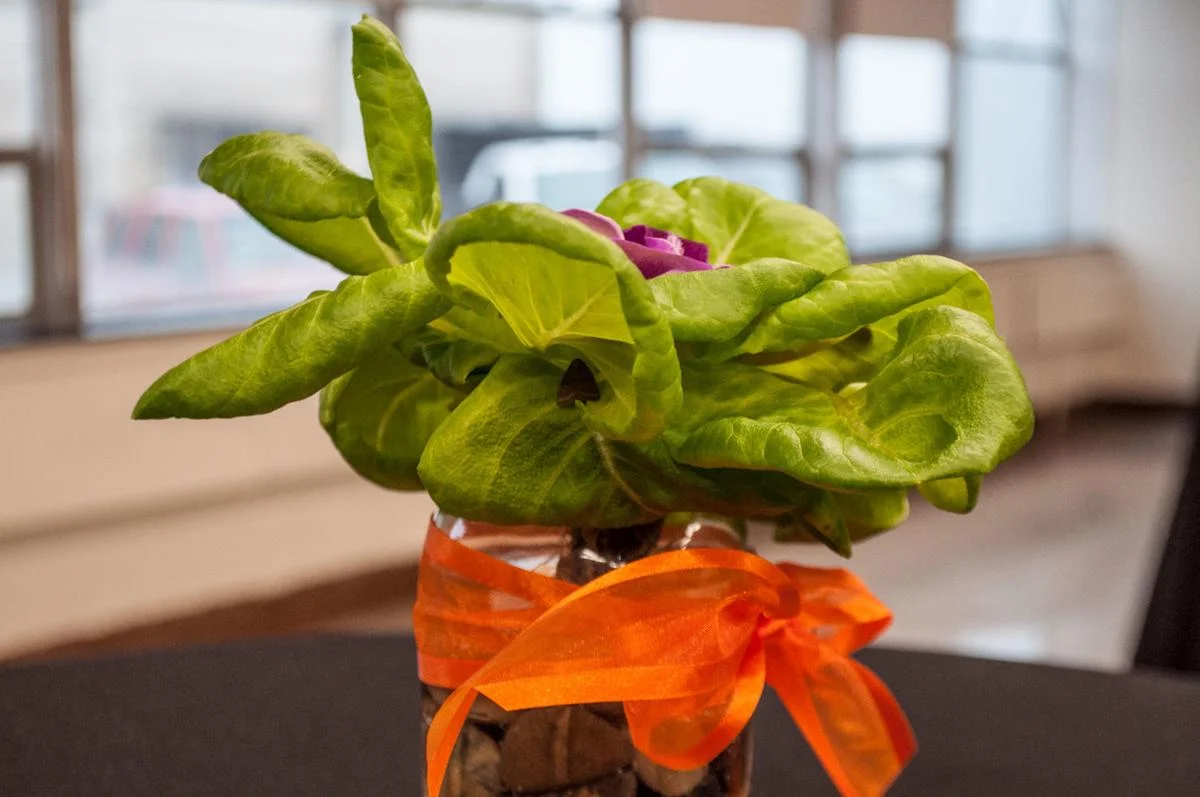
Each table in the high school cafeteria was adorned with a colorful display of fresh lettuce from the farm for the celebration.
It’s only about 20 steps from the farm to the school kitchen, says Sodexo General Manager Donna Walker, and “you can’t get any fresher than that.”
Naturally the school plans to use the farm to produce food for all of its students, but eventually they would like to grow enough to feed the entire district. They also plan on using the farm as a teaching tool, and to start a Leafy Green Machine Club in the future to gather students to help run it on a regular basis.
The plants in the farm start out as seeds that are planted in a special seedling area in the pod for about three weeks. Afterward they are transplanted into vertical racks where they will grow for the next five weeks. In about eight weeks total the plants will go from seed to harvest and eventually onto the plates of students and teachers. They plan on growing things like basil, kale, Swiss chard, spinach, arugula, dill and parsley down the road.
Hydroponics is the practice of growing plants in water with a nutrient solution, according to Freight Farms Representative Dana Lucas, who attended the harvest celebration Thursday afternoon. There’s no dirt involved in the growing or planting process and the farm uses a number of LED lights to act as the sun. The nutrient solution feeds the plants and can adjust the farm’s pH as needed. The temperature levels can also be automatically adjusted based on a plants' needs. There’s even an app for the phone or computer where farmers can view or modify the farm’s settings 24 hours a day, meaning they can grow produce year round without having to worry about the growing season.
“It’s the coolest thing for me to see the farms in action,” said Lucas. “I love seeing them in high schools.”
Freight Farms now has over 200 farms throughout the country.
“This is an exciting joint venture,” said West Warwick Superintendent Karen Tarasevich. “We value our long standing partnership with Sodexo in so many ways.”
She said The Leafy Green Machine is just another way to give students and staff hands-on learning experiences, and she was excited when Sodexo brought the proposal forward to the West Warwick School Committee last year.
“This is one opportunity with one machine that has already served the purpose of expanding the mindset of what we can do,” she added. “This celebration of the first harvest is just the first steps towards feeding the world.”
Sodexo Regional Manager Mark Tucker said the company is always looking to create a partnership with local school departments to provide services beyond the lunchroom.
“We’re really looking to find a way to bring another avenue for students to learn, develop and have access to a machine like this you normally wouldn’t see,” he said. “This is helping us bring nutritional meals to students and redefine local. We all want to do our part and buy local and we’re happy to be able to do that here.”
“Hopefully this is bigger than just growing leafy greens,” he added. “Hopefully it will be an opportunity where we can continue to revitalize students’ minds.”
Lucas was one of the Freight Farms team members assigned to go out and train new users in how to operate the machine.
“Everything is regulated and it takes very little for a farmer to start up their farm,” said Lucas. “Anybody can be a farmer and be successful. It’s totally revolutionary for farming. You don’t need to check if your conditions are good or the nutrients in your soil. Data is being collected by computers and that data will allow us to feed the world. We take pride that students can learn not only about plants but about farming.”
Sodexo’s Hydroponic Consultant Amy Lynn Chauvin has been helping to maintain the farm over the last couple of months, working alongside teachers to get it up and running. Chauvin is a teacher with six years of hydroponic growing experience. Chauvin provided guests with tours of the farm Thursday, fielding question after question about how the whole thing works. Lucas said Chauvin is running the farm like a well-oiled machine and said its one of the most well maintained farms she’s seen in action.
West Warwick High School Science Teacher Haley Winsor has also been a major part of the program.
“Students have been talking a lot about this,” said Winsor. “There’s a lot of interest in getting in there. We’ve had a few students coming in and we need to continue to teach them how to maintain the cleanliness of it.”
Fellow West Warwick High School Science Teacher Gina Poulos said the school is already looking at ways to implement The Leafy Green Machine into the curriculum. The school will even be starting a Freight Farm Committee, which has its first meeting next Wednesday.
“Some faculty have already emailed me sharing ideas and we’ll discuss all this and how to incorporate it into all different parts of school,” she said.
Other administrators of the program include West Warwick Schools Finance Director Joseph Spagna and Director of Facilities Kenneth Townsend.
Follow Kendra Port on Twitter @kendrarport

Fresh Plaza Launches French Edition
For our French-speaking readers, Uitgeverij Boekhout launches www.freshplaza.fr.
In this brand-new edition, the editors will keep readers up to date about the fruit and vegetable news from the French-speaking fresh produce branch with coverage and market reports about French fresh produce companies. Naturally, additional attention will be paid to typically French products like the Charentais melon, the Paris mushroom and the Breton cauliflower.
Overview of the French sector
About 80,000 companies are active in the French fruit and vegetable sector. Every year, these combined are good for 6.3 million tonnes of products and 653,000 jobs, 455,000 of which are seasonal.
Trends
A remarkable feature of the French market is that consumers are very willing to pay more for higher quality products. The French are also buying organic products more and more, so that these products have a chronic shortage. Just like many other places in Europe, the unrelenting heat has had a major impact on the market. A lot of growers are dealing with early-ripening harvests and quality problems.
The products most consumed in France are apples, bananas, tomatoes and carrots. Citrus, stone fruit, melons and chicory also do well.
Do you have any news for the French market? Please feel free to contact us. The best advertising spaces are still available!
You can sign up for the French newsletter via this e-mail.
Uitgeverij Boekhout started with AGF.nl in 1997. In 2005, the English edition, FreshPlaza.com followed. There’s now an Italian (2007), Spanish(2007), German (2015), Chinese (2016) and French(2018) edition. In total, we send more than 180,000 newsletters to these seven editions every day.
Publication date : 10/22/2018
© HortiDaily.com

US (OR): Shining A Light on Sustainable Cannabis Production
Deschutes Growery works diligently to offset the environmental impacts of its cannabis production by closely monitoring all aspects of its operation, from equipment usage to business partnerships. Energy efficiency is at the center of the Bend grower’s efforts to minimize its carbon footprint. By opting for efficient LED lighting and installing a roof-mounted solar system, Deschutes Growery slashed annual energy use by an estimated 2.5 million kilowatt hours and trimmed an estimated $197,000 from its yearly energy operating costs.
“Our original high-pressure sodium lighting wasted an enormous amount of energy,” said Justin Clapick, co-owner. “It also produced way too much heat and waste for the intensive nature of growing indoors.”
Converting to LEDs, which produce minimal heat, allowed Deschutes Growery to put lights very close to the plants throughout its vegetative, flower and clone rooms. Combined with an innovative mobile racking system that has up to four levels of plants growing per room, the LEDs enable a high level of bio-density, while achieving a lighting power density of less than 20 watts per square foot in some areas.
“We’re growing a 10,000-square-foot canopy in an 8,000-square-foot building,” Clapick said. “That 8,000 square feet includes everything from our flower, mother and clone rooms. LEDs not only save us energy, they save on real estate, which is significant.”
Deschutes Growery was also among the first in their industry to use new LED technology that optimizes the wavelength of the light for the different stages of a cannabis plant’s growth cycle. “We use full-spectrum LEDs in the flower stage and a blue spectrum for vegetative and cloning stages. We also installed dimmers that adjust the light level to exactly what the plants need at specific times of growth. It’s all controlled by a computer, making operation simpler.”

The lighting project cost $928,330, and Deschutes Growery received $386,040 in cash incentives from Energy Trust of Oregon based on the energy savings. The company expects to save $192,000 in annual energy cost, so the investment should pay for itself in less than three years. “That doesn’t even count what we’re saving on light bulb replacement costs because LEDs last at least 10 years rather than one year,” said Clapick.
The cannabis producer also boasts a 56.4-kilowatt roof-mounted solar electric system installed by the building owner. “We’re fortunate to have great business partners who believe in our story and are just as committed to sustainability as we are,” said Clapick. Energy Trust provided a $46,500 cash incentive for the solar system, which produces an estimated 64,000 kilowatt hours a year.
For more information:
Energy Trust of Oregon
1.866.368.7878
www.energytrust.org/grow

2018 World Food Prize Laureates: Ending Malnutrition For Mothers And Young Children
By The Washington Times Special Sections Department - Wednesday, October 10, 2018
Alarmed by the vast numbers of malnourished children in the world, two British men have spent their lives working to ensure that mothers and their young children can obtain high-quality foods and vitamins.
This month, the men — economist Dr. Lawrence Haddad and physician Dr. David Nabarro — will be honored with the prestigious 2018 World Food Prize.
The men will split a $250,000 prize as part of an award envisioned decades ago as the “Nobel Prize of Food and Agriculture” by its late founder, legendary agricultural scientist Dr. Norman E. Borlaug.
In a June 25 announcement about the laureates, Ambassador Kenneth M. Quinn, president of the World Food Prize, praised Dr. Haddad and Dr. Nabarro for having brought “extraordinary results at national and international levels.”
“Through their leadership, our laureates have inspired efforts that between 2012 and 2017 reduced the number of stunted children in the world by 10 million,” Ambassador Quinn said at the ceremony at the U.S. Department of Agriculture in Washington, D.C.
Their work also cemented the idea that highly nutritious, healthy foods — not just basic staples — are essential for mothers and their children during the children’s first 1,000 days of life.
“Undernutrition — whether growth failure or micronutrient malnutrition — is falling too slowly,” said Dr. Haddad, a pioneer in food policy research who is now executive director of the Global Alliance for Improved Nutrition (GAIN).
Poor diets are associated with diabetes, hypertension and obesity, and one in three people are malnourished — “with no country exempt,” Dr. Haddad said in June. GAIN’s mission, he added, is to make nutritious, safe food more available, affordable and desirable for all, and especially for babies, toddlers, young children and other vulnerable people.
Dr. Nabarro’s career highlights include his leadership of the U.N. High Level Task Force on Global Food Security from 2008 to 2014. During those years, he successfully brought 54 countries and one Indian state into a new, anti-malnutrition U.N. project called the Scaling Up Nutrition (SUN) Movement. Today, the SUN program involves 60 countries and is working toward ending malnutrition in all its forms by 2030.
There are “thousands of courageous women and men” working in well-functioning, local food systems, said Dr. Nabarro, who is now strategic director of Skills Systems & Synergies for Sustainable Development (4SD). These local leaders “have the wisdom needed to reduce levels of malnutrition or diet-related illness … They are the transformation leaders of the future,” he said.
The Oct. 18 World Food Prize award ceremony is a highlight of this year’s gathering, which is held in Des Moines, Iowa, Oct. 15-19 and features events such as the Iowa Hunger Summit, the Borlaug Dialogue International Symposium and Global Youth Institute.
The theme of this year’s symposium is “Rise to the Challenge” — a reference to “the single greatest challenge in human history,” which is “whether we can sustainably feed the 9 billion people who will be on our planet in the year 2050,” Ambassador Quinn said.
The World Food Prize, which recognizes pivotal achievements in improving the quality, quantity and availability of food, was established in 1986 by Dr. Borlaug, an Iowa-born agricultural scientist who participated in the events until his death in 2009 at age 95.
During the 1940s and 1950s, Dr. Borlaug developed many strains of high-yielding, disease-resistant “miracle wheat” in Mexico. He then got these seeds into countries with severe food shortages — like India and Pakistan in the 1960s — and sparked the “Green Revolution” in food production.
In 1970, Dr. Borlaug became the first person from the world of agriculture to be awarded the Nobel Peace Prize.
The World Food Prize and its $250,000 award are presented by the World Food Prize Foundation with support from dozens of companies, foundations and individuals, including the family of the late Des Moines businessman and philanthropist John Ruan Sr.
To date, the 48 laureates have come from Bangladesh, Belgium, Brazil, Cape Verde, China, Cuba, Denmark, Ethiopia, Ghana, India, Israel, Mexico, Sierra Leone, Switzerland, Uganda, United Kingdom, United States and United Nations.
• Please follow @WorldFoodPrize.