

Welcome to iGrow News, Your Source for the World of Indoor Vertical Farming

Cotton Wool Mats Used To Grow Microgreens
Did you grow cress on cotton wool on your window ledge when you were at school? That is exactly the principle that Simon Macaulay followed when he first talked to Chris Moncrieff of Van Heineken Brothers (VHB) in Angmering, (now a housing development) Sussex in the late 1990s. Chris and Peter Walls, who ran the herbs business at VHB, were innovators. Simon takes up the story:
“I had recently taken over from my dad at Anglo and an old contact at M&S had told me that VHB used felt to grow cress. I took the 6 hour drive down to VHB and the lady I was due to see had forgotten I was coming. Luckily Chris is a very kind man and he took pity on me and had a chat. He was indeed growing cress on a felt but it was made from virgin materials and he liked the idea of maybe using a blend of virgin fibre offcuts - using cotton/wool and polypropylene. Growfelt was born.”
“For the first 6 years we supplied exclusively to VHB. In return they helped us to bring our factory up to food grade standard and to set in place a testing regime for Salmonella E-Coli and Listeria.”
"However in recent years we have broadened out our customer base and now offer a core of three products to meet the different needs of customers across Europe, the Middle East and the Far East for Growfelt, be it for retail presentation and appearance or water holding. We can offer rolls cut to your bench width or small pads to fit your punnet requirement."
"We are the largest manufacturer of mats for microgreens in Europe and we are never standing still."
Over to Managing Director Andy Hall: “As we expand our customer base we are constantly getting sent new challenges. A customer in the Philippines wanted a mat 10mm thick as the ambient temperature demands increased water availability for the herbs. I am regularly talking to my customer in the Middle East as he is expanding rapidly as the demand for fresh salads grown in the area.
Also we are undertaking trials to find a fully biodegradable product that meets micro and growth challenges but allows my customers to reduce their landfill costs. Not an easy one to solve but we are confident we will. We stay close to our customers, developing variants for their bespoke requirements. They are mainly small businesses like us and we try and help each other.”
For more information:
Anglo Recycling Technology
Tong Lane
Whitworth
Rochdale
Lancashire OL12 8BG
U.K.
Sandra Burdekin
+ 44 (0)1706-853513
sandra.burdekin@anglorecycling.com
http://www.growfelt.com/growing-media/
Publication date : 10/16/2018
Author:
© HortiDaily.com

The Case For A National Institute of Nutrition
BY DR. JOON YUN, OPINION CONTRIBUTOR — 10/09/18
THE VIEWS EXPRESSED BY CONTRIBUTORS ARE THEIR OWN AND NOT THE VIEW OF THE HILL
© Getty Images
The time has come for Congress to explore the merits of creating a federal agency solely dedicated to nutritional science — specifically, the establishment of a National Institute of Nutrition (NIN), under the United States Department of Health and Human Services (HHS). Here’s why.
The economic impact of managing diet-related chronic conditions in the United States is estimated at over $1 trillion per year and growing. Yet, the evidence base for making many specific dietary recommendations remains suboptimal and often contradictory. Robust, independent research in nutritional science is an urgent public health priority.
The way federal priorities are currently organized, nutritional science is not the primary focus of any federal agency. None of the 27 institutes and centers that comprise the National Institutes of Health (NIH) focus on nutrition.
The Food and Drug Administration’s (FDA) oversight is largely limited to food labeling and safety. Research funding from United States Department of Agriculture (USDA) is predominantly dedicated to science as applied to farming and food manufacturing, not nutritional science on the effect of food on humans.
The aggregate sum of research funding set aside for nutritional research across these and all other federal agencies is estimated to be only $1.5 billion annually. To put this into perspective, national spending on candy is about $50 billion per year.
Given the modest level of available support from public institutions, food scientists rely to a significant degree on research funding from industry sources. On one hand, the industry funding fills an important gap in food science research and has contributed significantly to the body of knowledge. On the other hand, disproportionate reliance on industry sponsorship for research funding poses its own set of risks to public benefit over the long term.
The NIH recently had to shut down a $100 million trial — one that could have enshrined alcohol as part of a healthy diet — because NIH officials running the trial had violated policy by soliciting funding support from industry. Such solicitations of private interests are in no small part a result of the lack of public funding for nutritional research.
The NIN’s mission would be to seek fundamental knowledge about food and the application of that knowledge to enhance health, lengthen life, and reduce illness, disability, and their associated costs. The establishment of the NIN would provide robust, independent, and much needed new evidence on health effects of foods as well as independence in translation of this evidence-based nutritional science into national dietary guidelines.
Improving the nation’s health through better nutrition will pay enormous dividends. The NIN could more than pay for itself over the long term through scientific advances, food and nutrition innovations, and cost savings for the HHS.
As it stands today, direct and indirect costs of managing diet-related chronic conditions in the United States are estimated at over $1 trillion annually and growing. Private businesses are being crushed by rising healthcare costs. Two-thirds of active duty military personnel are overweight or obese, and obesity is the leading medical reason that otherwise qualified recruits cannot join the military.
Our food system is also a leading cause of environmental impact, for water, land, forests, oceans, and climate. Poor eating also contributes to disparities, especially for children: a vicious cycle of bad health, lost productivity, increased health costs, and poverty. Indeed, given the growing role of diet in human diseases, and the fact that one in four federal dollars is spent on health care, we may not be able to afford not having a National Institute of Nutrition.
Congress launched the National Cancer Institute through the National Cancer Act of 1937 because it recognized that the time had come to seriously address cancer at the national level.
We are at a similar tipping point for nutrition and health.
Dr. Joon Yun is president and managing partner of health care hedge fund Palo Alto Investors. Board certified in radiology, Yun served on the clinical faculty at Stanford from 2000-2006. Yun is a member of the President's Circle of the National Academies of Sciences, Engineering, and Medicine.Yun launched the $1 million Palo Alto Longevity Prize in 2013 to reverse the aging process and recently donated $2 million to launch the National Academy of Medicine Aging and Longevity Grand Challenge.

US: FDA Investigates More Cyclospora Outbreaks
Although Cyclospora outbreaks in the US happen less frequently than those caused by typical pathogens like E. coli, Salmonella and Listeria, the recent salad mix outbreaks occurring in July and August of this year are sadly familiar. Food Engineering already reported on similar events in a news item entitled “Cyclospora outbreak traced to pre-packaged salad mix.” Now, Cyclospora certainly has the FDA’s attention.
Recently, some 630 people from 25 American states were infected, according to the CDC. Officials in Nebraska said the salad mix contained iceberg and romaine lettuce, red cabbage and carrots, and was sold via a national distribution chain. By the time the final tallies were made, the offending salad mixes were out of the supply chain.
An August 23, 2018, FDA update showed that this summer’s Cyclospora infection afflicted people who consumed salads from McDonald’s restaurants. Though the investigation is still ongoing, cases were reported in 15 states and New York City, resulting in 507 illnesses and 24 hospitalizations. Infections were reported in July and August 2018. The FDA has been reviewing distribution and supplier information for romaine and carrots.
But McDonald’s salads weren’t the only product affected. On July 30, 2018, the USDA issued a public health alert on beef, pork and poultry salad wrap products potentially contaminated with Cyclospora that were distributed by Caito Foods LLC, Indianapolis. Caito Foods had received notification from Fresh Express that the chopped romaine in these products was being recalled.
Publication date : 10/16/2018

Metropolitan Areas Are Becoming Significant Sources of Sustainable Produce
One-in-five cities in the United States produce enough eggs and milk to feed their residents; another one-in-ten could completely satisfy local demand for fruit and vegetables using what they grow within their metropolitan boundaries.
by Emma Bryce | Oct 12, 2018
One-in-five cities in the United States produce enough eggs and milk to feed their residents; another one-in-ten could completely satisfy local demand for fruit and vegetables using what they grow within their metropolitan boundaries. These findings, detailed in a new study, reveal that metropolitan areas are a much more significant source of local, sustainable produce than we might realise.
Through an analysis of food production and demand within the boundaries of 377 US metros, the researchers discovered that a surprisingly high proportion were already producing enough of four staple food products–eggs, dairy, vegetables, and fruits–to feed their citizens. In some cases this food provision may be going unrecognised: for instance, backyard gardens and urban farms may be providing unquantified amounts of food to local citizens. In other cases where food is farmed at larger scales on city outskirts, that produce may not actually be reaching local residents, because supply chains are often set up to export food further afield.
But, if these trade networks were formalised and reconfigured to feed local residents, based on current production a striking 21% of metropolitan areas would be self-sufficient for eggs and milk, 12% would supply their residents’ fruit needs, and 16% would be self-sufficient in vegetables, the study found.
Localising production is widely recognised as a way to make food more sustainable, because it reduces the environmental costs and greenhouse gases associated with producing and exporting produce. It could even make cities more climate-smart by using plant cover to reduce the heat-island effect and deflect flooding. Plus, it brings the added benefit of making cities more food secure.
These advantages have encouraged several US cities to commit to boosting local food production. But the researchers on the new Environmental Science & Technology study say this overlooks the fact that so much urban food is alreadybeing produced.
In fact, while rates of production varied by product and region, they noted that almost every metro analysed in the study produced at least some quantity of eggs, fruit, and veg. In many, the production rates were high enough that they could meet not only direct demand–i.e. fresh eggs, fruit, and veg–but also indirect demand for those products, where they’re used as ingredients in other things, like milk being used to make cheese, and apples as the basis for applesauce.
To get their detailed findings, the researchers first modified an existing database that estimates dietary habits and household demand, based on sociodemographic information. Then they paired this with county-level estimates on the farm-production of eggs, milk, fruit, and veg. They also considered more informal food sources, like backyard food growing and community gardens.
Currently, 80% of the US population lives in an urban area, which underscores the need for urban food security. That’s accompanied by the growing global need for food systems that have a lighter environmental footprint. What the study reveals is the surprising fact that metros have latent potential to fulfil both those roles.
Since publishing, the researchers have made their data public: now they hope it will aid individual cities not only in recognising how much food they actually produce, but in revamping the local food system to feed the people that surround it.
Image: Travis Estell via Flickr

Forbes' At The 2018 AgTech Indiana Summit
Forbes' Maggie McGrath moderates a discussion between Robert Colangelo of Green Sense Farms, Sam Schatz of AeroFarms, Chaz Shelton of Merchant’s Garden ArgoTech, and Mark White of Prairie at the 2018 AgTech Indiana Summit.

Company Working To Bring Fresh Produce To U.Va. Dining Halls, Charlottesville Businesses And Homes
Babylon Micro-Farms has developed a system using hydroponic farming to make growing fresh produce more sustainable
By Rupa Nallamothu | 10/10/2018
In hydroponic farming, plants are grown in nutrient-rich, water solvent mineral solutions rather than in soil. Courtesy Babylon Micro-Farms
Babylon Micro-Farms, founded by University alumnus Alexander Olesen during his undergraduate years, has developed a system using hydroponic farming to make growing fresh produce sustainable for the urban consumer. The Babylon team has recently installed more apparatuses in the University dining halls, Charlottesville businesses and consumers’ homes.
Olesen developed Babylon Micro-Farms, a hydroponic farming system, to create an urban farming system easily accessible by consumers. During the spring semester of 2016, in the early stages of the company’s development, Olesen utilized several entrepreneurship resources available through the University.
“We started with the social entrepreneurship class, but then the founders went through the HackCville Alpha program, which was very helpful for them,” said Will Graham, the director of sales and marketing at Babylon. “From there, they went through the Darden iLab.”
In hydroponic farming, plants are grown in nutrient-rich, water solvent mineral solutions rather than in soil. This farming method removes environmental limitations to maximize respiration and absorption of nutrients in plants, which contribute to a greater harvest yield. Genetically modified organisms, pesticides or inorganic fertilizers cannot be used in a hydroponic culture.
Moreover, hydroponic farming can help reduce the distance between where a food item is grown and where it is sold by allowing plants to grow in normally inhospitable environments, such as inside urban buildings. This system could potentially allow restaurants and homes to grow plants inside their own spaces.
Since hydroponic systems are generally used in mass production due to their high cost, they are not readily available for urban consumers performing small-scale farming. Hydroponic systems also usually have restrictions on the types of plants that can grow in them.
However, Babylon Micro-Farms seeks to make hydroponics available for personal use and has developed technology that allows consumers to grow several different types of plants in their systems.
According to Graham, the Babylon team has several types of systems with varying degrees of technology. Some of the systems have two different reservoirs to allow different types of plants that require different types of nutrients or stratified sections of the same crop to grow on the same system.
The farming system has several versions which were developed throughout the growth of the company. Initially, the systems could not monitor the growth of the plants on each rack and were not stratified enough to grow multiple different types of produce on the same apparatus. Now, racks are divided based on the type of plant and can also be scanned into an app, which displays available information and data from the hydroponic system.
“You should able to scan a farm and tell it where you're putting plants, and it can adjust the lights and nutrients to grow something,” Graham said.
The Babylon team began testing prototypes around Grounds in 2017 after building an early model through HackCville, and received funding by winning $6,500 from the Green Initiatives Funding Tomorrow grant. After earning the GIFT grant, the company utilized the resources of Darden’s iLab, or the W.L. Lyons Brown III Innovation Laboratory — which supports the growth and development of business at an early stage by providing them resources, such as funding opportunities, legal services and faculty support.
According to Patrick Mahan, an electrical engineer at Babylon, the resources at the iLab helped the Babylon founders navigate the process of establishing a business.
After obtaining a financial basis for the project, the Babylon team installed their micro-farms in dining halls at the University. At Newcomb and O’Hill, these systems are utilized to grow produce used to prepare meals. On Sept. 12, the Babylon team installed two new systems in O’Hill and Runk.
"We mostly got positive reception,” Mahan said regarding the placement of systems in dining halls. “Part of it was almost confusion because they had never seen anything like it before, so they weren't sure what it was doing. But once they saw the plants start growing and saw the workers harvest the plants, I think they came around to it.”
Although Babylon is still installing systems in O’Hill and Runk, the team is also working on creating new technologies. Currently, they are developing a solar powered farm at the Morven Farm with the Morven Kitchen Garden.
The Morven Kitchen Garden, similar to Babylon Micro-Farms, is part of a student-run undergraduate sustainability initiative, according to Morven Kitchen Garden manager Stephanie Meyers. Students manage a community-supported agriculture program on a one-acre sustainable garden, donated by philanthropist John W. Kluge.
In addition to the project with Morven, the company is expanding their work outside the University. The Babylon team has implemented their hydroponic systems in Boar’s Head Resort and Three Notch'd Craft Kitchen & Brewery, two local businesses a few miles away from Grounds.
Babylon has also provided prototypes for personal use in the home, which are being used to further develop a hydroponics system available for purchase by local consumers.

Future Jobs: Unlocking The Secrets of Urban Farming In A Bristol Shipping Container
Future Jobs - Grow Bristol Urban Farming
19 October 2018
VIDEO: Grow Bristol delivers fresh leafy greens grown in a shipping container to city shops and restaurants by bike
Food often travels long distances to reach shops and restaurants. But demand for ultra-local food is growing.
Using special hydroponic lighting, crops can now be grown indoors without sunlight or soil. Based in city centres, so-called 'urban farms' can reduce water, pesticide, and land use - as well as transport emissions.
Grow Bristol is one such pioneering project and it is already delivering fresh leafy greens to city shops and restaurants by bike - all from a shipping container in the centre of the city.
BusinessGreen went to see how special techniques enable the company to grow 100kg of nutrient-rich leafy greens each month. Could this be the future of farming?
The BusinessGreen Future Jobs Hub is supported by Green GB Week

Vertical Farming And 'Soft Power'
By Edward Timperlake - - Wednesday, October 10, 2018
Whatever one’s religious belief, all can acknowledge that World War II was the closest humanity has come to unleashing what is symbolically known as The Four Horsemen of the Apocalypse: war, famine, pestilence and death.
However, that Hobbesian view of humanity can be offset by walking along a unique “trail” in D.C., called “The Peace Trail,” on our National Mall. https://www.usip.org/peace-trail-national-mall
One of the central points of note on the Peace Trail are four bronze statues. Two are known as “The Arts of War” and flank the entrance leading from the Lincoln Memorial to Memorial Bridge, crossing over the Potomac River to Arlington Cemetery. The second two statues, “The Arts of Peace,” flank the road that runs parallel to the Potomac River.
The Arts of War have one word on each statue: “Valor” on one, “Sacrifice” on the other — appropriately so, given that the Memorial Bridge leads to Arlington Cemetery.
The Arts of Peace have carved in their stone bases “Aspiration and Literature” on one and “Music and Harvest” on the other.
No better connection of words embodies the power of human nature’s resiliency with pure joy as when these words, “Music and Harvest,” are joined together.
Those words take on additional importance when one reads that the stone castings were done in Naples, Italy, and they are a gift from the Italian people to the American people in 1950, just four years after the horrors of World War II.
From Roman engineers building roads and aqueducts to help harvests to the great “Green Revolution” beginning in the 1950s and continuing to this day, some of the best minds in the world have sought to meet the challenge of feeding humanity.
One key leader was Norman Borlaug, an American agronomist who is often called the father of the Green Revolution and who received the Nobel Peace Prize in 1970 for increasing food production. His efforts to develop — and deliver — high-yielding varieties of cereal grains to India and Pakistan are credited with saving as many as a billion people from starvation. Additional elements of the revolution were helping farmers improve their irrigation techniques and get access to man-made fertilizers and pesticides.
Imagine, one brilliant man saving a billion lives! Thus, all people can appreciate that the advances in agriculture are a genuine “soft power” contribution to world peace: Impoverished nations will not have to fight for basic survival if they can simply feed their citizens.
From the great land-grant institutions to scientific research labs and schools such as Cornell’s College of Agriculture and Life Science, research pioneers have played an important dynamic role in advancing knowledge in growing nutritious food.
Now, agriculture in the 21st century is entering the practical and achievable dimension of vertical farming. This phrase — describing growing plants in multistory buildings rather than on a horizontal farm — was actually coined in 1915. But thanks to renewed efforts in development, it is now possible to move from the scientific linear approach of advancing yields from a horizontal farmer’s field to going vertical. This is a true step-function into creating a “fourth Agriculture Revolution.”
There is tremendous promise when the best innovations of the Green Revolution are integrated into vertical farming, especially in urban and suburban settings.
Food insecurity is a concern for anyone living in a city. Poor quality, limited options and a fragile supply line are only some of the challenges in feeding people.
Looking at agriculture more broadly, many practices that have been used for decades — and even thousands of years — are breaking down and are ultimately unsustainable. Fertilizers produce chemical runoff that is polluting the water supply. This, in turn, has led to a number of aquatic “dead zones.” Huge amounts of water and land are needed to keep pace with the population.
Vertical farming can address these concerns in ways that greenhouses and regular urban farming can’t.
Picture several high-tech greenhouses stacked on top of each other. Now add in hydroponics, a fairly familiar growing technique that uses a third the amount of water required by regular agriculture.
Now think about a vertical farm using aeroponics, a technique that needs only a third the water of hydroponics and recycles the water so it can be used over and over.
Moreover, unlike some vertical farms, a new approach is to design the building to fully maximize sunlight to grow plants, with OLEDs (organic light-emitting diodes) as a supplement. OLED is like a protein bar for plants whereas sunlight is like dinner with all the fixings.
With greater use of vertical farming, some of the farmlands that are currently used in agriculture could be returned to a more natural state of better soil through carbon sequestration.
This, plus reduced water needs; multiple annual harvests; recycled waste; crops protected from disease and the elements; and real 21st century jobs, are just some of the benefits that can be brought by vertical farming.
• U.S. Marine Fighter Pilot Edward Timperlake, who owns a farm in Rappahannock County, Virginia, served in the Ronald Reagan and George H.W. Bush administrations and is a former assistant secretary with the Department of Veterans Affairs and former director of technology assessment in the Department of Defense. He has co-authored four books, including “Rebuilding American Military Power in the Pacific: A 21st-Century Showdown” (Praeger, 2013), and currently writes for Defense.info.
From Roof to Table, This Farm is Bringing Organic Vegetables to Brooklyn Residents
Part of the Food Policy Community Spotlight Series
Name: Eagle Street Rooftop Farm
What they do: Eagle Street Rooftop Farm is a 6,000-square-foot organic vegetable farm located on a warehouse rooftop in Greenpoint, Brooklyn. The Farm is a product of the collaborative effort between the green roof design and installation firm Goode Green and the Brooklyn-based sound stage company Broadway Stages, which financed the installation of the Farm.
The Farm realizes the economic, ecological and societal benefits of green roofing while also bringing local produce to the North Brooklyn community. According to Michigan State University, green roofs can “improve stormwater management by reducing runoff and improving water quality.” In addition, they help to “conserve energy, reduce noise and air pollution, sequester carbon, increase urban biodiversity by creating a habitat for wildlife, increase the space available for urban agriculture, provide a more aesthetically pleasing and healthy environment for surrounding residents, and improve return on investment compared to traditional roofs.”
Eagle Street Rooftop Farm operates a weekly farm market and caters to area restaurants. Between 2010-2011, it became the first rooftop farm to host its own site-based Community Supported Agriculture (CSA) program. In 2010, the Farm also launched an Apprenticeship Program, which instructs seasonal apprentices (spring, summer, fall) in organic farming based on the Farm’s planting and growing practices. Additionally, with support from Growing Chefs, a nonprofit field-to-fork education program that is also under the aegis of Annie Novak (the co-founder and farmer of Eagle Street Rooftop Farms), the rooftop farm’s education staff operates a range of other educational programs.
How they do it:
In its first season, the Eagle Street Rooftop Farm grew over thirty types of produce, from watermelon to cabbage, in order to see which would thrive in a green roof growing environment. The most botanically successful crops for health and high yield included hot peppers, cherry tomatoes, and sage.
Since the 2012 growing season, the Farm has focused on a selection of hot peppers to begin development of a Brooklyn-based hot sauce. Currently you can find their hot sauce – “Awesome Sauce” – at Archestratus Books + Food as well as at Littleneck Outpost, both located in Greenpoint.
The Farm sells its harvest through its site-based Sunday farm market and delivers fresh produce by bicycle to local restaurants including Williamsburg’s Marlow & Sons and Greenpoint’s Paulie Gee’s, Brooklyn Brine, Eastern District, Anella’s, Spritzenhaus, Ovenly, Sea Bean Soups, and Champion Coffee.
On Sundays in the growing season, the Farm is open to the public and welcomes volunteers of all skill levels during its market hours, which are listed on the events calendar. Growing Chefs curates the farm’s Free Lecture series, which are held at two o’clock on Sundays and have covered topics ranging from urban chicken-keeping to pickle making.
Mission: to provide fresh, organic, locally produced fruits and vegetables to Brooklyn residents and restaurants
Latest project/campaign: The publication of their book, The Rooftop Growing Guide: How to Transform Your Roof into a Garden or Farm, in February 2016.
Major Funding: Broadway Stages, Gina Argento & family
Profit/nonprofit: Profit
Interesting fact about how it is working to positively affect the food system: The Eagle Street Rooftop Farm’s education staff, working with Growing Chefs’ curriculum, hosts a range of workshops for children and adults. Topics include growing food in New York City, seed-saving, the art of cooking locally, city composting, the benefits of green roofs, beekeeping, and guest lecturers.
FACT SHEET:
Location:
44 Eagle Street
Brooklyn NY 11222
Core Programs:
-Community Supported Agriculture program (CSA)
-Community Outreach/Education (urban farming education, Growing Chefs workshops)
-Farmers’ Markets
-Apprenticeship Program
Number of staff: 4
Areas served: Brooklyn
Year Started: 2009
Director, Manager or CEO: Annie Novak
Contact Information: info@Rooftopfarms.org
Owned by Broadway Stages and built by Goode Green, the farm was made possible by the generous support of Gina Argento and family. Learn more about Broadway Stages’ green work in Greenpoint here!
Tags: Eagle Street Rooftop Farm Farmers markets Garden Education Organic Farming Rooftop Farm Urban agriculture
Gabrielle Khalife

Current, Powered by GE and Stockbridge Technology Centre Partner to Research the Farm of the Future
Stockbridge Technology Centre’s Vertical Farming Development Facility to enable growers to test and model their individual urban farm setup prior to investment
Aims to propel the success of the vertical farming industry, projected to be worth $13.9 billion USD in 20241 and generate more “farmable land” to address future global food production pressures
Current by GE’s Arize LED horticulture solution will help researchers test growth of crops such as leafy greens and herbs in different conditions

Stockbridge Technology Centre's Vertical Farming Development Facility (Photo: Business Wire)
October 16, 2018
LONDON--(BUSINESS WIRE)--Current, powered by GE (NYSE: GE) today celebrated the opening of CHAP’s new Vertical Farming Development Facility, supported by Innovate UK and based at Stockbridge Technology Centre (STC), which leverages the company’s Arize horticultural lighting solution to propel commercial urban farming success in the UK. The state-of-the-art research facility, located in Selby, North Yorkshire, is designed to help entrepreneurs, growers and investors gain deeper insight into the technology and environmental parameters needed to optimise crop yields before breaking ground on their own vertical farming operations.
We can help growers create more farmable space in industrial and urban areas in a way that is commercially and environmentally sustainable - Malcolm Yare, Current by GE
Modelling the Farm of the Future
In its 2017 report, Global Market Insights, Inc. predicted that the vertical farming industry (both indoor and outdoor applications) will grow from revenue of $2.5 billion USD in 2017 to $13.9 billion USD in 20241 and the new facility is designed to support this trend. By testing the latest technology and approaches relevant to this production model, the STC will improve the industry’s understanding of ideal indoor farming crop light requirements and growing conditions.
Potential investors and vertical farmers can work with STC’s plant scientists and vertical farming experts to identify and test the perfect vertical farm setup to maximise their planned harvest’s size, nutritional value and visual appeal. In a controlled environment, they are able to monitor and tweak parameters such as the length of the growing day, C02 concentration, humidity, nutrients and temperature, to ensure that their proposed farm will be commercially sustainable prior to construction. The resulting data supports business planning activity and minimises risks previously associated with vertical farming.
This “farm of the future”, built by systems integrator GrowStack working in conjunction with TCE Electrical Ltd., is the latest research initiative to be led by CHAP and Stockbridge Technology Centre (STC), a pioneer in experimental and applied horticulture research since the 1950s. Since its inception, STC has acted as a bridge between academia and commerce, sharing valuable research and insight that has helped to revolutionise farming practice in the UK.
The installation contains two identical grow rooms - a total growing area of 228m2 - with full climate control and a recirculating hydroponics system as well as futuristic propagation and germination rooms. Four tiers of cropping racks are lit by 780m of Arize LED lighting, delivering a balanced spectrum of red and blue wavelengths that will help boost the development of a broad range of plants.
“As cities’ populations grow at an exponential rate, the demand for fresh produce grows as well,” states Dr Rhydian Beynon-Davies, head of novel growing systems at STC. “We have the potential to grow more produce at an industrial scale within our cities and the focus of this new facility is to support the growers who are taking this bold step into the future of farming. By developing controlled environment grow systems integrated with LED lighting, we can demonstrate how, through technology, urban farming can improve the supply and nutritional value of food in a way that is commercially viable.”
Shining a Light on the Potential of Urban Farming with Arize
“Over the years, Stockbridge Technology Centre has been at the forefront of innovation, devoted to one of the most fundamental industries in the UK – that of feeding the population,” comments Malcolm Yare, Horticulture Business Development Manager for Current by GE. “Light is critical to the success of any crop and by focusing on combining the most effective wavelengths with the optimal environmental conditions, we can help growers outpace traditional methods by creating more “farmable space” in industrial and urban areas, increasing global harvests in a way that is both commercially and environmentally sustainable.”
The Arize range of horticulture solutions has been developed based on Current by GE’s experience in intelligent, connected industrial lighting, combined with extensive research and collaboration with horticulture and agriculture experts. The lights have been designed for easy, plug-and-play installation and are also fully sealed and IP66 UL Wet rated for easy cleaning in high-care, cleanroom environments. Arize lighting is one of the most energy-efficient solutions on the market, using less energy to power the LEDs and generating less heat to tax the facility’s cooling systems. With a 36K-hour lifetime (L90) and five-year warranty, the horticulture lighting solutions allow growers to amortise their capital expenditure over a longer period for greater return on investment.
Notes to editors:
The Vertical Farming Development Facility has been developed in partnership between the Crop Health and Protection Centre (CHAP) and Stockbridge Technology Centre and is supported by Innovate UK.
About Current, powered by GE
Current is the digital engine for intelligent environments. A first-of-its-kind start-up within the walls of GE (NYSE: GE), Current blends advanced LED technology with networked sensors and software to make commercial buildings, retail stores and industrial facilities more energy efficient & digitally productive. Backed by the power of Predix*, GE’s platform for the Industrial Internet, and a broad ecosystem of technology partners, Current is helping businesses and cities unlock hidden value and realize the potential of their environments. www.currentbyge.com
For more information about Stockbridge Technology Centre
www.stockbridgetechnology.co.uk
1 Global Market Insights, Inc. Insights Report 2017, “Vertical Farming Market Size by Product, Fruits, Vegetables & Herbs, Aquatic Species, By Technology, By Application, Industry Analysis Report, Regional Outlook, Growth Potential, Price Trends, Competitive Market Share & Forecast, 2018 – 2024” www.gminsights.com/industry-analysis/vertical-farming-market
Contacts
Current, powered by GE
Karen O’Neil, +1 857-265-9113
karen.oneil@ge.com
or
Racepoint Global
Jenna Keighley, +44 208 811 2151
CurrentEU@racepointglobal.com

AI Does Food - TEDx Talk by Joel Cuello:
AI will help realize Cuello’s Law, which is the projected industry goal that crop productivity per unit resource use in a tech-dense vertical farm must double every 4-5 years.
The Global Marshall Plan for AI-based Food Production is introduced to provide capacity building so that no nation is left behind in AI-based food production, making sure that AI will be used to produce food sustainably, not only for some, but for all of us on the planet.
Joel Cuello is a Professor of Biosystems Engineering and Director of the Global Initiative for Strategic Agriculture in Dry Lands (GISAD) at The University of Arizona. A globally recognized expert in the engineering of sustainable biological and agricultural systems, Joel has designed various engineered systems, including those applied in bioregenerative space life support, industrial mass production of algae cultures, and vertical farming. This talk was given at a TEDx event using the TED conference format but independently organized by a local community.

Hydroponic Organic Produce: Year One
By Lee Allen| October 10, 2018
The final ruling to confirm hydroponic produce is eligibile to apply for organic certification took nearly 15 years.
We’re approaching the first anniversary of last year’s National Organics Standard Board (NOSB)/USDA clarification that cleared up any confusion about whether hydroponically grown produce is eligible for organic certification. It is.
The decision was not made lightly, nor in haste. The final ruling took nearly 15 years and, like the ongoing Hatfield and McCoy feud, verbal shots are still firing from both sides.
Technically, certifying hydroponic production has been allowed since 2002.
“At the Fall 2017 meeting, the NOSB reaffirmed certification for that system,” says a USDA spokesperson.
Actually, in 2010, NOSB recommended against allowing organic certification, writing, “Growing media shall contain sufficient organic matter capable of supporting natural and diverse soil ecology. For this reason, hydroponic and aeroponic systems are prohibited.”
The National Organic Program (NOP), however, determines what is allowed and what is not allowed. It ruled against NOSB’s recommendation.
With the 2017 decision, both bodies are finally in alignment.
Shortly after the decision, protests popped up around the country. The counterview was captured in a National Public Radio report.
“When the founding principles of organic go to soil health and regeneration rather than simply feeding plants nutrients, it goes to the foundation of what organic farming means.”
The Massachusetts chapter of Northeast Organic Farming Association (NOFA) and the National Organic Coalition are advocating for the NOP to halt certifying hydroponic producers until what the groups term, “more clear guidelines for what constitutes organic hydroponics are issued.”
So while the decision is made, some are hoping an appeal will overturn it.
Future Sales Likely to Attract More Organic Growers
We can complain till the cows come home. Now the central question is: Will the ruling have a transformative impact on the organic vegetable industry? Or will it ultimately be labeled as ‘no big deal’?
The number of certified organic hydroponic operations is still limited. Exact numbers are difficult to come by at this point, but the number is likely in the low two digits. Certification takes time and is infamous for its reams of paperwork. Numbers are likely to increase sharply over the next two to three years.
Organic food sales in the U.S. already post ongoing and off-the-chart revenue increases — from about $3 billion in 1997 to nearing the $50 billion mark in 2017. It’s a four-decade jump that represents a bit over 5% of total food sales in America.
“Consumers love organic. And while the market will see a steadier growth pace as it matures, it will continue to surpass the growth rate of the broader food market,” writes Laura Batcha, Executive Director of the Organic Trade Association, in her assessment of Nutrition Business Journal’s 2018 Organic Industry Survey.
That January 2018 Organic Industry Survey showed produce (with fresh produce accounting for 90% of the demonstrated rise) topping the 2017 category at $16.5 billion in sales, a 5.3% growth.
Global Players Will Play Major Role
The U.S. is late in joining the hydroponic and aquaponic game. Greenhouse vegetables are much more common in some countries, including Europe, Canada, and Mexico.
The global hydroponic vegetable market will likely double by 2025, a study by Transparency Market Research shows. It predicts lettuce will be the biggest winner, with a 33% share of the hydroponics market.
The 2017 International Trade Statistics Map (ITSM) shows the value of vegetables imported into the U.S. that year was $73.9 million, with the preponderance coming from North American Free Trade Association partners Mexico ($10 million) and Canada ($6 million).
“Europe is anticipated to dominate the global hydroponic vegetables market with a 41% share overall by the end of 2025,” ITSM writes.
Interestingly enough, two dozen European countries, as well as Mexico, Canada, and Japan, prohibit the selling of hydroponic vegetables as ‘organic,’ meaning that producers there frequently grow for an American market.
A European Parliament-approved resolution will prohibit importing hydroponically produced organic food from non-EU (European Union) nations beginning
January 2021. In essence, U.S. growers will no longer be able to ship hydroponically grown and organically certified food to the EU for sale as organic.
Industry Reactions
When you talk with growers and others invested in the hydroponics ruling, opinions vary on how important the ruling will ultimately be.
Arizona organic growers Wholesum Harvest and California’s Driscoll berries are the two big domestic names in the industry, and both say they are already delivering what consumers expect in an organic label — produce raised affordably, year-round, and without synthetic pesticides.
Theo Crisantes, Chief Operations Officer of Wholesum Harvest, USDA organically certified for the last 30 years, says he hasn’t seen any major shift in the organic vegetable industry as a result of the ruling.
“The status quo was maintained,” he says, “although it did spark some interest from different growers beyond the vegetable industry into a broader spectrum, like the berry industry. But we haven’t seen a real rush from other growers to join the industry because it takes both knowledge about how to grow as well as requiring a heavy capital investment.”
Because of the peak growing season at press time, Driscoll’s, an organic berry grower in 21 countries and a fourth-generation family business that controls roughly a third of the $6 billion U.S. berry market, wasn’t available for comment.
Agricultural/Biosystems Engineer Dr. Stacy Tollefson, University of Arizona’s Controlled Environment Agriculture Center, was part of the NOSB taskforce that made the recommendation to reclassify.
“I haven’t seen any real impact on the organic hydroponic industry since the certification confirmation decision was made,” she says. “It’s basically been business as usual, but with the knowledge that the threat no longer exists of losing that certification.
“I do think a lot of hydro growers who were starting to grow for the organic market slowed down production or put research and expansion on hold, and some new growers thinking of going that route might have held back because they didn’t know how the decision would go. But now they can call their product ‘organic.’ I think this will solidify their expansion plans.”
Francis Thicke, another NOSB member, farms in Iowa and has a different take on the matter. He is also a member of the Organic Farmers Association.
“The official allowance of organic certification of hydroponic production is having, and will continue to have, a big effect on organic vegetable production,” Thicke says.
“Although not labeled as hydroponic, some estimates are that about half of the certified organic tomatoes, peppers, and cucumbers are already hydroponically grown, with many growers wanting to begin or expand organic hydroponic production. With the USDA green light, I expect that soon most of the organic tomatoes, peppers, and cucumbers on the grocery store shelf will be hydroponically grown.”
Vertical Farming As A Local Food Market Innovation
By Dr. Dawn Thilmany
and Elizabeth Thilmany
Wednesday, October 10, 2018
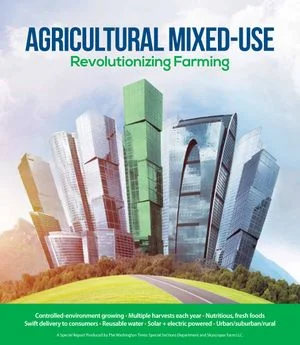
Vertical farming is an emerging niche in the food supply chain, defined as the practice of growing food indoors by controlling all elements of its development.
As vertical farms are stacked, multistory and typically aligned with large skyscrapers in densely populated urban areas, they can prompt mixed feelings about their aesthetics: Some observers believe they make urban areas feel green while others believe the structures will compete with their access to sunlight.
There are additional unique issues related to their role in food markets, the food environment and broader community impacts.
The nature of production
One potential benefit of vertical farming is its role in encouraging cities to become more self-reliant by producing at least some share of their food supplies. This may lead to more resiliency if there are natural or political events that disrupt our food distribution system. Plus, in an era of renewed interest in food-based economic development, a new generation of farmers may be attracted to vertical farming since their operations can be year-round and integrate high-tech solutions.
Still others see vertical farming as a potential innovation in real estate development — operations may be designed to be aesthetically pleasing, or, if rooftop development is used, permit buildings to conserve air-conditioning costs, and more broadly, help mitigate urban heat islands.
However, many potential benefits (eliminating food miles, reducing spoilage and food waste, better management of environmental implications from agricultural inputs) have yet to be evaluated.
Only a few successful vertical farms have been built, and both building and maintenance costs for a vertical farm are expensive, according to a 2014 article in the Journal of Agricultural Studies. In 2011, vertical farming pioneer Dickson Despommier estimated an upfront cost of $80 million to build a commercially viable vertical farm and over $6 million in annual energy expenditures (with other operating and labor costs above that).
One can quickly estimate that such investments are only possible if one is creative about the potential benefits that may accompany a vertical farming development, such as:
— A strong consumer base to create demand to provide a viable market for the local produce offerings as local produce is seen as a premium offering in mainstream food retailers and supply chains.
— The positive “spillovers”of such a real estate amenity, e.g., aesthetic, lifestyle or environmental benefits to the business, government or residential partners who may help offset the original investment of operating costs. For example, a residential building may see vertical farming as an amenity akin to a golf course or fitness center for its tenants.
— The multiple ways vertical farms can benefit communities economically — acting as a food provider to education venue to source of starter plants that expedite production on surrounding farms.
Consumers as a catalyst for change
We can address some of the research that has been done as a starting point to consider these economic tradeoffs.
Consumer research on food buyers is newly focused on where, how and even why people make their food purchase decisions and confirms that local food is a key driver for several food industry changes. For decades, there has been increasing evidence farmers markets were growing as consumers sought to reconnect with their food sources, but increasingly, local foods have been identified as a key market trend by food manufacturers, retailers and chefs as well.
Through farmers markets, community-supported agriculture and farmstands, direct-to-farmer consumer (DTC) engagement is found to be a value to a growing set of consumers — e.g., those who want to re-engage with their food producer, perceive direct purchases as higher quality or believe they can verify that the farms and ranches they purchase from are better environmental stewards or an important part of their local economy.
Direct markets are not always practical for producers (who have too much volume to sell or they live far from consumer markets) or consumers (who perceive barriers to the locations or prices of direct markets). Thus, the majority of consumers experience local food only in the context of intermediated channels, the term used for food hubs or distributors that broker local foods to mainline retailers, restaurants and other large buyers.
Within the U.S. food system, major food retailers see the integration of local foods into their product offerings as one means to compete, but local sourcing by retailers can be challenging as consumers rely on in-store signage, product labelling and/or recognized farm brands to identify local items.
Since retailers entering the local foods space will need to pay particular attention to clearly and credibly communicating their retailer-farmer partnerships, perhaps they will seek nearby sources, such as vertical farms that are visible to urban dwellers. Yet, it may require vertical farms to engage their communities, be transparent with their production processes, and align with other values that local food consumers seek (e.g., environmental benefits, returns to the farmer, healthful offerings and fair treatment of workers).
Since few locally oriented producers have the requisite scale and/or consistent quality to work with medium/large distribution or food retailer networks, vertical farms may be well-suited for intermediated local food sales. If consumers encourage their primary grocer to carry more local food offerings, vertical farms can seize the opportunity to be a key food source for their nearby retailers.
Vertical farming in communities
Urban agriculture, widely upheld as a solution to the food crises facing increasingly metropolitan populations, has seen a resurgence in recent years.
There are, however, potential disadvantages to this increasing drive for urban agriculture including associated urban health risks and threats to already limited water supplies. In response, cities such as Denver, New York City and Baltimore are bringing more permeable land to rooftops to capture and filter water in hopes of lessening the burden to overwhelmed sewage plants.
Clearly, the potential that controlled atmosphere systems, such as vertical agriculture, may have for addressing food security and economic development justifies a closer look, and public institutions are stepping up to that challenge. Expect to see more pilot programs of vertical agriculture aligned with real estate development such as Denver’s Green Roofs initiative (https://www.denvergreenroof.org/the-basics/), or technical assistance from land grants such as University of Maryland’s programs in Baltimore (http://extension.umd.edu/baltimore-city/urban-agriculture).
Still, it is important to realize these new innovations come with questions about best practices for production, and there is a need to develop a policy and regulatory environment that allows for this sector to operate effectively. As a response to new interest in urban farming as a potential food system investment in communities, the U.S. Department of Agriculture has developed toolkits that offer up resources for both urban agriculture producers (http://www.usda.gov/sites/default/files/documents/urban-agriculture-toolkit.pdf ) and the communities that want to assess their potential community and economic impacts (https://localfoodeconomics.com/toolkit/).
Dawn Thilmany McFadden, Ph.D., is a professor at Colorado State University and specializes in economic development related to food supply chains, focusing on market responses to consumer behavior. She has over 90 peer-reviewed publications and has presented to over 400 academic, industry, community and policy audiences. She is co-director for CSU’s Regional Economic Development Institute and worked with the USDA on many projects, most recently a Toolkit on the Economics of Local Foods (localfoodeconomics.com). She has provided leadership to the Colorado Food Systems Advisory Council, Agricultural and Applied Economics Association, the Western Agricultural Economics Association, and the Food Distribution Research Society.
• Elizabeth Thilmany is an undergraduate student at University of Maryland-College Park studying Agriculture and Natural Resource Economics and has conducted research with Colorado State University on adding value along the wheat supply chain for a Foundation for Food and Agriculture Research project. On campus, she is involved with the Food Recovery Network and the Sustainability Department.
For more information on local food consumers and vertical farming, please read:
Banerjee, C. and L. Adenaeuer. 2014. Up, Up and Away! The Economics of Vertical Farming. Journal of Agricultural Studies. 2, 1-21.
Bauman, A., D. Thilmany and B.B.R. Jablonski. 2018. The financial performance implications of differential marketing strategies: Exploring farms that pursue local markets as a core competitive advantage. Agricultural and Resources Economic Review. 1-28.
Bond, C., D. Thilmany, and J. Bond. 2008. “Understanding consumer interest in product and process-based attributes for fresh produce.” Agribusiness 24(2):231-252.
Despommier, D. 2011. The Vertical Farm: Feeding the World in the 21st Century, second ed. St. Martin’s Press, New York.

Ag Software Provider Launches Survey
October 13, 2018
Written by Agrilyst (edited)
Software solutions provider Agrilyst has launched their third annual State of Indoor Farming Survey.
This survey will give Agrilyst and growers insight on emerging trends and challenges in the greenhouse and vertical farming industries.
Last year, Agrilyst received over 150 responses from indoor farmers in the US. The 2017 report shared insight on the benefits and challenges for growers. According to the report, 25 per cent of growers said that their biggest challenge was capital - from access to working capital and expansion capital to cost of production. Even though they faced these challenges, 51 per cent of growers reported operating profitably.
Allison Kopf, CEO of Agrilyst said, "this year we are digging even further into the costs of operating an indoor farm. We hope that the report will give everyone insight on the industry and help new growers get up and running faster." The company aims to expand their survey participants to growers in Canada.
More data collected means better insights for growers. Growers can participate in the 2018 State of Indoor Farming survey here. The survey takes approximately 25 minutes to complete.
Agrilyst provides software solutions to greenhouse and vertical farming operations, enabling them to track and analyze farm data in one place. They have customers in more than 10 countries.
Urban Farming Projects Attracting Greater Interest, Investments
By The Washington Times Special Sections Department - Wednesday, October 10, 2018
International interest in sustainable urban ecosystems — especially vertical farming — is exploding, according to numerous market forecasts.
Valued around $2 billion in 2015, the global vertical farming market is projected to reach anywhere from $6 billion in 2022 to $10 billion by 2025, according to forecasting firms such as Research and Markets and Grand View Research.
The impetus to scale up vertical farming worldwide stems from two U.N. projections on population and urbanization: The world’s population is expected to grow to 9.6 billion people by 2050, and most of these people — 68 percent, according to the U.N.’s revised 2018 urbanization report — will live in cities.
Governments, urban planners and architects, researchers, investors and the entire world of agriculture are now exploring ways to make sure there will be abundant, high-quality, nutritious foods to feed such a growing population — while also conserving energy and water and reducing environmental damage.
To many observers, the future is bright, thanks to advances in greenhouse technologies such as hydroponics, aeroponics and aquaponics.
“These high-tech systems represent a paradigm shift in farming and food products and offer suitable and efficient methods for city farming,” Dr. Kheir Al-Kodmany, an urban planning scholar, wrote in the Buildings journal in February 2018.
Dr. Al-Kodmany and his colleagues at the University of Illinois at Chicago reviewed more than 100 sources about vertical farming research since 2010 and examined 15 vertical farming projects worldwide — including two rooftop farms in New York; four “low rise” farms in Michigan, Illinois and Tennessee; and six proposed “high rise” farms in Sweden, France, Canada and the Philippines.
“Hypothetically”, if vertical farms were integrated in the city, they will be able to supply food for the entire population,” Dr. Al-Kodmany concluded. However, there are many challenges to address, including finding funding to build and sustain such projects; finding less costly ways to power facilities; and quickly assembling interdisciplinary research and collaborations on urban agriculture, he wrote in the Buildings article.
In the U.S., the U.S. Department of Agriculture is already supporting research funding on vertical farming through its National Institute for Food and Agriculture.
Also, on June 27-28, the USDA and the Department of Energy co-hosted a stakeholder workshop on vertical agriculture and sustainable urban ecosystems. A report on the two-day event, which was open to the public, will be issued later this year, a USDA spokesman said.
In its workshop, several USDA officials spoke, including Dr. Dionne Toombs, director of the USDA Office of the Chief Scientist; Dr. Chavonda Jacobs-Young, acting USDA chief scientist and acting deputy under secretary for research, education and economics; Dr. David Babson, senior advisor in the USDA Office of the Chief Scientist; Dr. John Hartung, research plant pathologist at the USDA’s Agricultural Research Center in Beltsville, Maryland; and Dr. Sarah Federman, AAAS Science and Technology Policy Fellow in the USDA Office of the Chief Scientist.
Additional featured speakers at the workshop included:
— Dr. Sabine O’Hara, dean of the College of Agriculture, Urban Sustainability and Environmental Sciences at the University of the District of Columbia, on envisioning ways to incentivize sustainable urban ecosystems.
— Dr. Dickson Despommier, microbiology and public health professor emeritus at Columbia University and author of the 2010 book, “The Vertical Farm: Feeding the World in the 21st Century,” on envisioning vertical agriculture.
— Dr. Nate Storey, co-founder and chief science officer at Plenty, Inc., a San Francisco-based indoor farming startup, on vertical agriculture in practice.
— Dr. Raymond Wheeler, NASA plant physiologist, on expanding applications for controlled agriculture.
— Nick Starling, U.S. Army Ranger and founder of Skyscraper Farm, LLC, on the economics and scalability of vertical farms.
— Dr. Weslynne Ashton, associated professor of environmental management and sustainability at Stuart School of Business at Illinois Institute of Technology, on industrial ecology for sustainable urban ecosystems.
The two-day workshop featured breakout sessions on pest and pathogen management, plant selection and breeding, systems engineering, community services, ecosystems services and economics.

Valoya Canna+, Ultra-Wide LED Spectrum For Superior Chemical Expression in Cannabis
The research into the interaction of the cannabis plant and light is growing but is yet not abundant due to bans which still exist in most places around the world. One thing we do know for sure is that high quality light will result in a high quality plant, one with a good chemical expression.
Valoya, the manufacturer of LED grow lights, known for their research based approach, has been testing and developing a variety of plant spectra over the past ten years. In the last three years, Valoya has conducted research on light interaction on cannabis, independently as well as in collaboration with research institutes and customers. The result is a new line of LED grow lights, designed to help growers achieve high quality cannabis plants, consistently, cycle after cycle. Valoya has placed emphasis on finding the right wavelengths for particular growth phases to achieve optimal growth. After having tested more than 60 LED spectra, Valoya has commercialized 5, earning it customers in 51 countries so far including 8 out of 10 world’s largest agricultural companies. Valoya Canna+TM is Valoya’s latest innovation which is a line of luminaires with a spectrum optimized for professional cannabis cultivation.
The spectrum is a wide (also known as full, broad or continuous) spectrum extending outside the commonly used PAR area. The range encompasses radiation between 380 and 780 nanometers which means the entire PAR area plus the far-red and the UV-A wavelengths. The benefit of these additional wavelengths is that the spectrum that is wider and fuller, contains more information and thus stimulates the plants more than a simpler spectrum would. The far red radiation is important for quick development of healthy plant biomass that can then later support large flower formations where most of the valuable secondary metabolites are. The UV-A creates a small amount of stress for the plant. The plant responds by strengthening its defense mechanisms i.e. creating more secondary metabolites. In addition to that, small pathogens cannot withstand the UV-A radiation thus the growing environment becomes less prone to outbreaks of powdery mildew and other such problems.
Valoya Canna+TM comes in two form factors:
- A 135 W bar LED grow light for indoor (single or multitier) cultivation and
- A 392 W box LED grow light for greenhouse (sea of green) cultivation
Valoya Canna+ 120
Valoya Canna+ 120 is a 4’ (120 cm) long, high intensity bar that reaches 2,4 µmol/W (PPF 320 µmol/m2/s). It is sealed shut, has no deep fins or fans that collect pathogens so it can be easily cleaned even with harsh chemicals. This makes it suitable even for the most demanding, GACP/GMP compliant grows. On both of its ends are pressure and temperature stabilizing vents thanks to which the luminaire will work even longer than the industry standard 50000 hours.
Valoya Canna+ 400
Valoya Canna+ 400 is a 13.7” x 15” (35 cm X 38 cm) high intensity light that reaches 2,3 µmol/m (PPF 880 µmol/m2/s). It is compact and robust thus suitable for greenhouse and sea of green cultivation. With excellent thermal dissipation properties this luminaire will last at least 50000 hours.
Both are dimmable and project light at a 120° angle making it possible to install them close to the canopy (Valoya Canna+ 120 only 4” / 10 cm and Valoya Canna+ 400 only 25” / 50 cm from the canopy). Instead of a silicone coating which expands and contracts in heat and deteriorates quickly, these luminaires’ LED chips are protected by tempered glass. AR (anti-reflection) coated glass is used which increases light transmission efficiency to about 98%.
As this emerging industry is rapidly growing, a need arises for high quality lighting solutions with which growers will be able to create consistent yields and cannabinoid expressions year after year. This is particularly so for the pharmaceutical grade cannabis and all large scale cannabis cultivation operations. Valoya provides a solution to this challenge with its new line of products. Valoya has published a spectrum quality guide which outlines the small permitted variations within the spectrum across production batches and generations of products. For growers this means that when they acquire Valoya luminaires for cannabis they can rest assure that all their future purchases, or replacements of products will be with the same spectrum, thus resulting in consistent yields.
The Valoya Canna+TM is available immediately, globaly. It will be introduced at the upcoming Marijuana Business Conference and Expo in Las Vegas in November (14-16). Valoya will be exhibiting at booth 3468.
For the North American customers, Valoya Canna+TM line is available through Innovative Growers Equipment, Valoya’s distributor
sales@innovativegrowersequipment.com
(815) 991 – 5010
About Valoya Oy
Valoya is a provider of high end, energy efficient LED grow lights for use in crop science, vertical farming and medicinal plants cultivation. Valoya LED grow lights have been developed using Valoya's proprietary LED technology and extensive plant photobiology research. Valoya's customer base includes numerous vertical farms, greenhouses and research institutions all over the world (including 8 out of 10 world’s largest agricultural companies).
Additional information:
Valoya Oy, Finland
Tel: +358 10 2350300
Email: sales@valoya.com
Web: www.valoya.com
Facebook: https://www.facebook.com/valoyafi/
Twitter: https://twitter.com/valoya

Alabama Power Looks Into Economic Feasibility of Indoor Agriculture
October 16, 2018
Alabama Power an electric utility company, has taken on a research project that is virtually unprecedented among utility companies. The power company is looking into the use of LED lighting to grow crops. A refurbished Freight Farm shipping container outside the Technology Applications Center at the General Services Complex in Calera is the location of the project.
Alabama Power engineer Blair Farley and Cheryl McFarland, commercial and industrial marketing support manager
In a specially customized, insulated and climate controlled shipping container, employees grow lettuce and other vegetables, as well as herbs and edible flowers. The goal of the project is to see if the cost of using electricity for indoor agriculture is economically feasible compared to traditional agriculture.
Exploring the container farm concept at Alabama Power originated from an increasing interest in indoor agriculture and the need to fully understand the benefits of using electricity to enhance the process.
Potential Advantages of Indoor Agriculture
It is thought that indoor agriculture could be a revolutionary for farmers, stores, restaurants, consumers. Alabama Power asserts that crop could be grown year-round in a controlled environment with nutrients in circulated water. Soil would not be necessary and few or no pesticides would be needed.
Furthermore, crops could be grown in urban settings and areas categorized as food deserts (locations where fresh food is not easily accessible). Also, transportation costs could be dramatically reduced or eliminated with food possibly grown near consumers and stores.
Alabama Power says for example that indoor farming can produce 12 more lettuce harvests a year, and needs up to 90 percent less water, than a traditional outdoor farm.
One way of saving on electricity, according to the company, is to use energy efficient LED lighting and other components which can be programmed to operate during off-peak hours to take advantage of cheaper electric rates. Alabama Power speculates that with the electricity needed to operate the lighting and climate control systems, indoor farming could present a new range of opportunities for the company.
Indoor Farming Could be Done in Repurposed Buildings and Warehouses
In theory, Repurposed vacant warehouses or buildings, including those with existing utilities, could be utilized for controlled-environment agriculture, providing jobs for Alabamians. Other potential advantages include growing crops during periods ofdrought or excessive rainfall; producing fruits and vegetables not native to a geographic area; and having uninterrupted growing seasons.
“Indoor agriculture can be a great addition to the already thriving agriculture industry in our state,” said Cheryl McFarland, commercial and industrial marketing support manager.
But there are challenges. Like any new, fast-growing concept, scarce data is available to determine long-term pros and cons. High start-up costs and unavailable labor may make it a financial risk. Additionally, vague or unfavorable city laws could pose a barrier to an indoor agriculture operation.
Shipping Container Farming Operation
In January 2017, Alabama Power employees installed a 40-foot hydroponic container and began producing lettuce one month later. The container has a seed germination table and 256 vertical towers holding up to 17 small heads of lettuce each. However, the food production is not limited to lettuce and includes basil, arugula, carrots, dill, and radishes.
With the help of automation, the APC container is relatively self-sufficient. However, one to two employees with other work responsibilities spend a little of their time each week planting, harvesting and performing routine maintenance in the container.Alabama Power plans to assess produce production and water and electricity usage, then compare findings with similar projects.
“We feel the interest in indoor agriculture is continuing to grow as consumers demand more fresh, local and healthy food options in stores and restaurants,” McFarland said.
“Interest in indoor agriculture or controlled environment agriculture is growing either in completely enclosed settings, such as our container, augmented greenhouses or empty buildings, like a vacant mall or Walmart,” McFarland added. “It’s a great way to provide access to fresh foods and jobs in rural communities and urban settings, particularly in areas of food deserts.”

US (HI): Helping Waimānalo Families Use Aquaponics, Improve Health
Researchers Help Waimānalo Families Use Aquaponics, Improve Health
Three researchers at the University of Hawaii at Mānoa have won a national fellowship and will receive $350,000 funding over three years to assist Waimānalo families with backyard aquaponics to sustainably produce healthy food.
The project will connect the modern technology of aquaponics with Native Hawaiian food practices. Aquaponics taps into the power of the natural symbiotic relationship between fish and plants, and combines the raising of plants in water with raising fish in tanks to create a sustainable, contained food production system.
The fellowship was awarded by the Robert Wood Johnson Foundation, a nonprofit organization that works to promote health equity in the U.S.
The research team is comprised of Jane Chung-Do, an associate professor with the UH Mānoa Office of Public Health Studies in the Myron B. Thompson School of Social Work; Ilima Ho-Lastimosa, community coordinator at the Waimānalo Learning Center and an education specialist in the Department of Tropical Plant and Soil Science (TPSS) in the College of Tropical Agriculture and Human Resources; and Ted Radovich, a TPSS associate specialist.
They will expand their work with families in Waimānalo to develop an aquaponics program to grow fresh fruits and vegetables and raise fish that families can use to prepare meals and Hawaiian medicines. This builds on the decade-long work that Ho-Lastimosa has been promoting in her community of Waimānalo.
The researchers will recruit Native Hawaiian families in Waimānalo to participate in aquaponics lessons and will guide the families in building and maintaining backyard systems. The researchers will follow up to see whether the systems are successful in helping the participants increase their intake of and access to fresh fruits, vegetables and fish, as well as promote healthy eating habits. In addition, impacts on participants’ mental wellness, cultural identity, family strength and community connectedness will be measured.
Ilima Ho-Lastimosa feeds fish in an aquaponics set-up, while Jane Chung-Do looks on.
“Our goal is to restore Native Hawaiian practices related to food and community,” said Chung-Do. “The study embraces the perspective that health is holistic and interconnected with our culture, families, communities and the ʻāina.”
As a public health scientist, Chung-Do has worked to enhance the wellness of children and families in Hawaii, especially in rural and minority communities.
Radovich was born and raised in Waimānalo and holds a PhD in horticulture. His expertise is in sustainable and organic farming systems.
Ho-Lastimosa grew up on the Waimānalo Homestead and holds masters degrees in social work and acupuncture; she is also a master gardener. The community leader and cultural practitioner in Waimānalo founded God’s Country Waimānalo, a group that initiated a food sovereignty and sustainability movement in the community.
Source: University of Hawai'i (Theresa Kreif)
Publication date : 10/11/2018

How Britain Produces Nearly Half The World's Medical Marijuana
One day last summer, residents of rural Norfolk began to complain about a strange and pungent smell wafting across the Fens just south of King's Lynn.
Soon, officers were knocking on the door of a massive greenhouse complex covering roughly 18 hectares of farmland (the size of 23 football pitches) next to the River Wissey, on the outskirts of Downham Market.
The facility, owned by British Sugar, had originally been built to cultivate tomatoes. But in recent years, the site had quietly undergone an intriguing transformation.
Today, it happens to be the location of Britain's only legal cannabis farm.
Here, thanks to a special licence quietly granted by the Home Office, a huge crop of marijuana was being cultivated on behalf of a British drug company called GW Pharmaceuticals.
Was this the source of the noxious smell? Opinion was, and still is, divided. Some locals insisted it was. But while Fenland District Council told reporters that the smell did indeed appear to be that of cannabis, they found no evidence the British Sugar plant was responsible.
A month-long investigation was unable to reach any firm conclusion, although it did suggest that nearby waste disposal plants might also be to blame.
Either way, the affair highlighted an intriguing, but little-known fact: that this vast horticultural unit, down a secluded country lane and largely shielded from view by hedgerows, is almost singlehandedly responsible for Britain's status as the world's largest producer of medical cannabis.
Skyscraper Farm Raises Farming To A Higher Level
October 18, 2018
DES MOINES, Iowa -- The future of farming is on the rise. A new type of vertical farming is being introduced to the United States in the form of a skyscraper. Skyscraper Farms are 52 story green houses that produce food in a controlled environment as well as be a space for offices, retail and real estate.
The world's leading vertical farming economist and founder of Skyscraper Farms Nick Starling said the vertical farm will bring farm food to the table even faster.
"Our goal is to have farm to table in less than five hours for anybody living within 75 miles of our full sized skyscraper," Starling said.
Starling also plans to build 40 foot grow-only buildings that, just like the skyscraper, grow food in a controlled environment with zero pesticides and fungicides.
Another problem Starling hopes to help stop with the Skyscraper Farm is wasting water.
"Currently 80% of the world's fresh water is used on agriculture and with a global yield of about 50% that means a full 40% of the world's fresh water is used on agriculture that doesn't even make it to harvest," Starling said.
Starling said Skyscraper Farms use 99% less water than field farming.
"So that means all these developing countries and all these cities will have a lot more water for people to drink, to wash their clothes and other public health necessities, Starling said.
Plans to build the 52 story Skyscraper Farms are in development in several cities across the country but Starling hopes to build the 40 foot grow-only farms in rural areas across America by next summer.
Nick Starling is holding a presentation on the Skyscraper Farm at 7 A.M. on Thursday as a part of the World Food Prize Borlaug Dialogues.
FILED IN: NEWS