


Welcome to iGrow News, Your Source for the World of Indoor Vertical Farming

New Vertical Farming Light Bar/Panel Hybrid Designed To Maximize Yields With Less Space
The team of lighting experts at TotalGrow have announced the launch of the new TotalGrow Stratum. The features and benefits of this new light include:
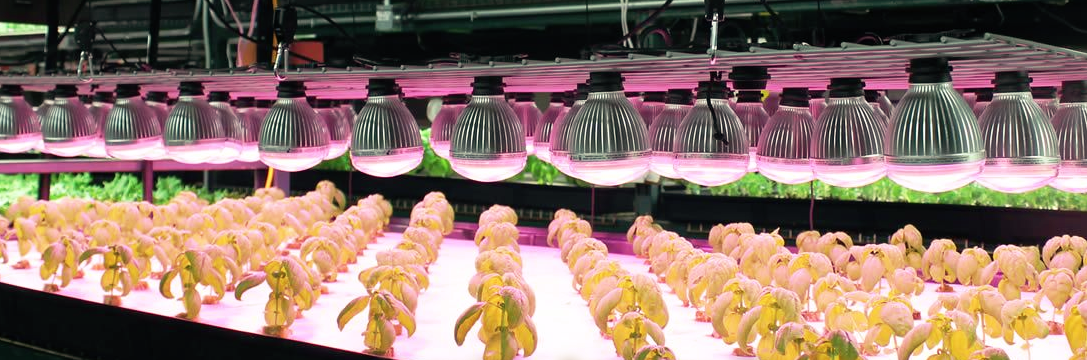
Thin profile to maximize space under 4” from canopy to shelf
Full spectrum and modular design for extra versatility
Broad panel/bar hybrid for improved uniformity and penetration in tight spaces
Simple mounting and electrical installation to save time and costs; up to 80 lights per plug
Cost effectiveness, waterproofing and warranty for economic sustainability
The 40W TotalGrow Stratum is designed and refined to maximize yields, space and versatility while minimizing costs. The spectrum and size are ideal for low/no-sunlight growing in virtually any vertical farm, growth chamber, propagation system, tower garden and more. Exceptional efficiencies and light delivery potential, along with long, low maintenance lifespans provide long-term sustainability.
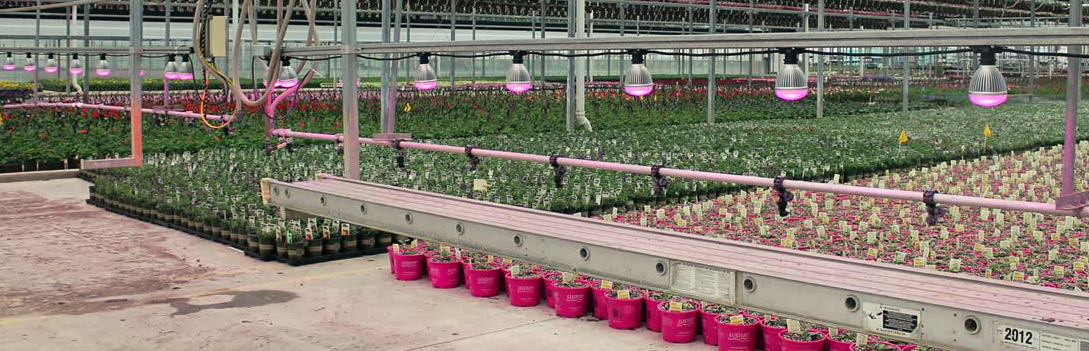
Custom wiring harnesses create the cleanest, simplest power distribution for your operation. An example is shown for a typical 250 µmol*m-2*s-1 setup over several 4’x8’ shelves.

Spectrum customization available
For more information:
TotalGrow
Jeff Mastin – Biologist
315.373.9716
jeffm@venntis.com
totalgrowlight.com
Accelerating Technology And Investment In Southeast Asia’s Agri-Food Supply Chain
Accelerating Technology And Investment In Southeast Asia’s Agri-Food Supply Chain
Rethink Events has announced a major new summit, Rethink Agri-Food Innovation Week in Singapore on November 27-29, 2018.
Secured your place at the Rethink Agri-Food Innovation Week in #Singapore?
Want to know more about the agri-food supply chain in Asia? Join the Rethink Agri-Food Innovation Week in #Singapore and save SGD $500 on a delegate pass.
Your discount code is:
IG500
https://bit.ly/2m9NoI9 @RAFISingapore
The three-day programme will investigate the growing role of technology in building an efficient, resilient and sustainable agri-food supply chain that can deliver fresh, nutritious food to today’s fast-changing consumer market.
The event builds on the pillars of Rethink’s successful global agri-food technology portfolio, the World Agri-Tech, Future Food-Tech and Indoor AgTech Innovation Summits, which take place in London, San Francisco, and New York.
Home to 90% of the world’s farmers, Southeast Asia’s agri-food ecosystem is ripe for technology disruption.
The challenges of climate change, urbanization, and rapidly evolving dietary needs are creating an urgent demand for sustainable solutions to increase resilience and optimize farming processes, minimize waste, achieve supply-chain traceability and develop healthy, exciting new food ingredients and products for the regional market.
Rethink Agri-Food Innovation Week Singapore will connect international agribusinesses, indoor growers, food brands and ingredient developers with equipment manufacturers, entrepreneurs and investors to share innovation and experiences from around the globe, with the objective of targeting the right solutions to the Southeast Asian region’s needs.
Commenting on the launch, Jennie Moss, Founder and Managing Director of Rethink Events, said: “We are delighted to bring this new summit to Singapore, in response to demand from our current global agri-food base and with the valued support of our regional partners.
“Southeast Asia’s agri-food industry faces great challenges but also offers exciting opportunities for companies looking to enter this market and build partnerships with regional operators. We look
forward to providing a highly targeted, timely platform for the region’s agri-food innovation eco-system to meet and flourish, fuelled by high-level market intelligence and a focus on networking.”
The summit’s comprehensive agenda will cover the full spectrum of agri-food production and distribution, with sessions focusing on agriculture, aquaculture, indoor farming and food manufacturing to reflect the learning and networking priorities for delegates.
Topics include:
The power of drones in precision farming of oil palm and rice
Empowering smallholder farmers through data and digitization
Targeting protein innovation to healthy, sustainable aquaculture
Achieving supply chain traceability with big data and blockchain
Advances in plant science, robotics, and lighting for indoor agriculture
Building commercial-scale vertical farming operations
Delivering targeted nutrition through food ingredient innovation
Harnessing the power of biotech in food with gene editing and clean meat.
The summit will explore the latest models for technology investment, incubation, and commercialization, and showcase the most exciting start-ups from around the world. Extensive networking opportunities throughout the event include a full program of 1-1 meetings, networking breaks, roundtable workshops and social events.
Full information on the summit, agenda, opportunities and delegate registration is available at
UK-based Rethink Events organizes international, world-renowned business summits for
entrepreneurs, businesses, and investors in sustainable food, agriculture, energy, and water.
Its acclaimed global agri-food portfolio features the World Agri-Tech Innovation Series, Future Food-
Tech Series and the Indoor AgTech Innovation Summit, held in London, San Francisco, and New York.


As Director of The New School of Plant and Environmental Sciences, Mike Evans Wants to Create an Environment Where Creative Collaborations Lead to Innovative Discoveries
As director of the new School of Plant and Environmental Sciences, Mike Evans wants to create an environment where creative collaborations lead to innovative discoveries.
Mike Evans grew up in rural Pittsylvania County, Virginia, where he spent his summers pulling tobacco and running a soybean drill for his grandparents and neighbors.
He saved enough money during those hot summers to buy his first car — a 1980 Ford Pinto — which he proudly parked in the Cage during his first year at Virginia Tech. He’d been exposed to the university through his high school’s Future Farmers of America program, which brought him to campus to take part in horticultural competitions.
As a student majoring in horticulture, he fell in love with researching the plants he’d been surrounded by his entire life. The intensive laboratory work he did during his undergraduate years at Virginia Tech prepared him well for the rigors of graduate school at the University of Minnesota, where he earned a master’s degree and a Ph.D.
Evans went on to a career in higher education that involved research to help industries thrive, Extension outreach programs that impacted local communities, and academic programs that prepared the next generation of students for the challenges of facing the world.
Now, the Hokie alumnus has returned to Virginia Tech to use all the skills he’s acquired to lead the College of Agriculture and Life Sciences’ latest strategic initiative.
Evans is the director of the newly formed School for Plant and Environmental Sciences, which combines three former departments — horticulture; crop and soil environmental sciences; and plant pathology, physiology, and weed sciences — under one administrative roof.
“When we bring people together you get something new called ‘creative collisions.’ These intersections lead to innovation on a level that changes the paradigm of what is possible,” Evans said. “We want to create an environment in the school where the silos are broken down and people are interacting in unique ways to allow opportunities for more of these creative collisions to occur. This benefits everyone from students and professors to industry leaders and local producers.”
Though faculty and administration have been involved in planning the school via committees, public forms, and other outlets for three years, it becomes officially operational on July 1.
“Mike’s experience makes him the perfect person to lead the school and help our faculty, staff, students, and Extension professionals find new ways to work together to make an even greater impact on our college, the state, and the world” said Alan Grant, dean of the college.
Evans most recently worked at the University of Arkansas, where he was an interim associate dean in the Dale Bumpers College of Agricultural, Food, and Life Sciences. Prior to Arkansas, Evans was a professor at Iowa State University. At both institutions, he was a horticulture faculty member, teacher, and researcher who focused on controlled agricultural environments, such as greenhouses, and how to use hydroponic techniques to increase yields of food crops. He started his career as a researcher at the Gulf Coast Research and Education Center with the University of Florida where he conducted research and Extension programs related to greenhouse crops and ornamental plants.
Evans points to projects he did as a horticultural researcher that show how collaboration can lead to greater impact.
A few years ago, he was researching how lettuce is best grown in a controlled environment using hydroponics. He started to talk with a plant pathologist who was trying to find ways to combat powdery mildew on spinach. The two began to collaborate on ways to grow the spinach in a greenhouse, which allowed for faster growing cycles. This development in the greenhouse helped the plant pathologist do quicker scientific trials than it would have been possible in the field. The teamwork between disciplines was what made the solution possible.
“You never know what innovative, cross-disciplinary solutions are possible until you tear down the walls that exist and build a space where ideas can freely flow — and new ideas can be born,” he said.
Similarly, the school will merge three former departments and bring researchers, faculty, and staff together to use their diverse experiences and skillsets to tackle issues ranging from increased crop production to ways to grow healthier food throughout the world.
None of the majors or degrees offered by the three former departments will change, though Evans said the school will explore creating new majors that build upon the expertise of the faculty and meet the demands of students and industry. All clubs and student organizations will remain as they currently operate. The school also will focus on ways to expand the college’s physical footprint, such as constructing new greenhouses or the future Human and Agricultural Biosciences Building 2.
“I believe that by creating a space where new relationships can form and risk-taking in the name of innovation is encouraged, there is unlimited potential to make a lasting impact in plant and environmental sciences,” he said.
Contact:

Indoor Garden Towers Installed At GBHS
Soon Great Bend High School students will be growing vegetables indoors in a soil-free system called a Garden Tower®, Assistant Principal Randy Wetzel said.
This Tower Garden® growing system in the GBHS Library is one of three purchased to grow plants without soil at Great Bend High School.
Students Will Grow Food Without Dirt
October 13, 2018
Soon Great Bend High School students will be growing vegetables indoors in a soil-free system called a Garden Tower®, Assistant Principal Randy Wetzel said.
The school used funds from the federal Carl D. Perkins Career and Technical Education bill to purchase three of the aeroponic, vertical growing systems to grow plants and vegetables in the classroom without dirt.
“The Tower Gardens were bought for our Family and Consumer Science Cluster (Culinary Pathway),” said Wetzel, who is also director of the Career Technical Education program at GBHS. They were assembled by students who are now learning how to use them.
The towers were suggested by Amber Wolking, the new Family and Consumer Science (FACS) teacher. They are set up in the library, a biology classroom and Wolking’s own classroom, the “foods lab.” Plants should start growing in the next couple of weeks.
“What’s great about the Tower Garden is that it takes up less than 3 square feet of space, indoors or outdoors, and you can grow 20+ fruits, vegetables or flowers using a vertical aeroponic growing system,” she said.
Like hydroponics, aeroponics is an alternative form of gardening. The main difference is that hydroponics uses water instead of soil as a growing medium, but aeroponics uses 90 percent less water than a traditional garden, Wolking said.
“We have two mineral blends that we will add to the (tower’s) green base, which is the water reservoir,” Wolking said. The plants are grown in rock wool.
“We also test the pH of the water and add an acid or base, depending on what is needed. The water and lights will come on in timed intervals to help simulate the outdoors. The water goes up the center and then gently falls on the root system inside the center tube,” Wolking said.
“Research has found aeroponic systems grow plants three times faster and produce 30 percent greater yields on average,” she added.
The students will have the opportunity to grow their own plants from seedlings purchased from a company that specializes in growing starter plants for Tower Gardens.
“I’m excited to have the students take ownership of the gardens and watch them grow. We will be utilizing what we harvest in the classroom to create different recipes, canning, taste testing and comparing to grocery store produce, experimenting with different herbs and offering extra produce to the community. The students will take pride in what they create from ‘Tower to Table’ and will learn that healthy can taste good!” Wolking said.

iGrow News Is the Longest Running International Online News Publication For The Indoor Farming Industry.
The Indoor Farming industry has relied on iGrow News for timely, accurate, unbiased news and insights.
The iGrow News portal covers industry-relevant topics including Indoor Vertical, Hydroponic, Aeroponic, Aquaponic, Greenhouse, Rooftop, Container Farming, Residential Systems, Education, Finance, Innovation, Sustainability and Technology.
We offer free publishing for all companies in our industry.
iGrow News has approximately 6,000 international unique visitors every thirty days.
Companies that cater to the Indoor Farming Business can reach their target audience by sponsoring i Grow News.. IGN readers include: Greenhouse Growers, Container Farmers, Urban farm developers, Rooftop Farmers, Lawyers, small business owners,

Cities Can And Must Work To End Food Deserts Within Their Communities
By Mayor Debra March - - Wednesday, October 10, 2018
Limited access to healthy food continues to affect urban communities across the U.S., including the City of Henderson, Nevada, where I am privileged to serve as mayor.
Nearly all of the food consumed by the 2.1 million residents and 42 million annual visitors to the Las Vegas Valley, where Henderson is located, comes from somewhere else. This is a necessity given the environment of our drought-burdened Mojave Desert home, which makes growing fruits and vegetables for residents and visitors challenging.
In addition, many economically challenged areas across the nation, including our own, lack access to supermarkets with affordable fresh vegetables, fruits and other nourishing foods, so residents rely on neighborhood corner stores and fast-food chains that offer few fresh food options. As a result, despite being a vibrant community with a robust economy, safe neighborhoods and high student achievement, Henderson is not immune to the development of food deserts or food insecurity.
But hope is on the horizon. Among the strategies we are implementing to increase access to healthy food in economically challenged neighborhoods is the incorporation of urban vertical farming. This is an innovative process that sustainably produces exponentially greater numbers of crops while using significantly fewer land and water resources, making it a viable option for our desert home.
Even under normal conditions, our hot and arid climate — which averages less than 4 inches of rain a year — make it very challenging to grow produce. But through hydroponic watering and microclimate controls for crop cultivation, vertical farming can use up to 90 percent less water than traditional farming methods. This is a critically important benefit for a region that finds itself in the 18th year of a serious drought, with no relief in sight.
Vertical farming is an emerging industry, and the private sector is eager to encourage its development as evidenced by an increasing number of vertical farms being built across the country. And just recently, Oasis Biotech opened its doors in Las Vegas, joining Urban Seed Inc., which opened in 2016.
Oasis Biotech, located near Henderson, is producing 9,500 servings of green salads per day from its 200,000 square-foot facility that houses the equivalent of a 34-acre traditional farm. The healthy food produced there supports local resorts, casinos and a national supermarket chain. Before this development, all local produce was usually supplied by distant farms in California and Arizona. In addition to added cost, produce shipped to Southern Nevada often loses vital nutrients and freshness during transport.
Being able to access locally produced and vertically farmed leafy greens and fruits for their restaurant salads allow these resorts to decrease reliance on produce shipped by truck or train. This change helps reduce air pollution and cuts carbon emissions while also promoting increased water conservation and sustainable farming techniques.
In addition, vertical farms like Oasis Biotech and Urban Seed Inc., will be able to tailor their produce to the specific need of its resort and supermarket partners and go from farm to table in 24 hours, which will create more nutritious, better tasting and diverse options for their clientele.
Henderson is taking a multifaceted approach to resolving issues that contribute to the lack of fresh produce experienced by our residents — an issue that can often lead to major health concerns including diabetes, hypertension and low student performance.
We recognized the importance of working with community stakeholders to effectively meet the challenge of providing all residents with access to healthy food. We incorporated this goal into the City’s “Henderson Strong” comprehensive plan and made this healthy food strategy a key component of the revitalization plan for Pittman, one of the City’s oldest underserved neighborhoods.
Part of this approach also includes working to attract new supermarkets and expanding existing stores. We’re also supporting school and community gardens and mobile farmers markets. The City Council also will consider an urban agriculture ordinance to support and facilitate larger scale and more sustainable food production — like vertical farming — in our city.
We have an exciting opportunity that will allow us to address the challenge of food deserts and food insecurity in our urban centers with vertical farming that takes place 365 days a year and produces food closer to where it’s consumed. But we must keep in mind that continued growth of this industry will not be possible without the assistance of public and private funding to support the infrastructure needed to develop it.
While there is no quick and easy panacea for the lack of healthy food options that residents across the nation face on a daily basis, forward-thinking municipalities like Henderson are actively implementing community-supported programs and exploring new technologies like vertical farming that will provide our most vulnerable families with healthier options.
• Henderson Mayor Debra March, a former councilwoman, was elected to Nevada’s second largest city in 2017. Please follow @debra_march and @cityofhenderson.

Idrologica Proposes New Anti-Hail/Anti-Bugs System
V5: Anti-Hail System That Prevents Ice Accumulation
Increasingly devastating weather phenomena are now threatening even the anti-hail/anti-bug nets. Often, heavy hailstorms damage not only the nets but also break the poles. To avoid this, the European patented V5 system is a type of anti-hail cover characterized by an innovative ice discharge method which prevents the formation of dangerous build-ups on the nets.
Looking at the net's profile, you can notice two different slopes: the first one is relatively flat, while the second one has a strong slope so to make a funnel.
The technician continued, “Therefore, the net has great flexibility. In the case of a hailstorm, the slope increases thus immediately discharging the ice. The two net-cloths are tied in two parts: through an elastic between the intermediate supports, and through plaques between the external supports”. Eventually, the net looks like a triangle pointing downwards, where the hail is collected and discharged. It is also possible to close the net so to isolate it from the Asian bug.
“The Idrologica company proposes, develops and installs farming plants and machinery, for private and public gardens and for industries and large sports facilities. We contribute to the improvement of the agricultural and agri-food productions and to the increase of green areas. This is thanks to the experience of our specialised human resources who are capable to constantly support in specific technical matters”.
Info
Idrologica srl
via Soldata, 1
48018 Faenza (RA) - Italy
Mark Servadei
Technical office
Tel.: +39 0545 906274
Tel.: +39 333 9365933
Email: impiantistica@idrologica.it
Web: www.idrologica.it

Study Shows How Badly Smog Can Cripple Solar Farms
New research finds that severe air pollution can eliminate all profits from solar panel installations.
Aug 30, 2018

A lot can keep solar panels from generating electricity, from cloud cover blocking the sun to simply being nighttime. But according to recent research, one of the biggest obstacles facing solar farms is smog and haze from air pollution.
It’s not surprising that air pollution can make solar panels less effective since it can cut down on visibility and reduce the amount of sunlight reaching the ground. In the past, researchers have found that air pollution can lead to dust buildup on solar panels that can dramatically reduce their effectiveness.
This new research, from scientists at MIT and Singapore, calculates how much solar energy is lost due to smog in many of the world’s biggest cities. In the city of Delhi, one of the world’s most polluted cities, electricity generation is reduced by more than 10 percent the study finds, which translates to a cost of more than $20 million.
The problem is more than just inefficiency. A loss of this size could spell doom for many urban solar farms by seriously inhibiting their ability to turn a profit. Pollution can turn a money-making solar farm into a money sink.
Even worse, the lack of a solar alternative naturally just increases reliance on smog-generating fossil fuels and could serve to lock entire regions into a vicious cycle. This gives us another reason to keep our air clean, just in case we didn’t have enough.
Source: Energy and Environmental Science

Dachnik Aquaponics Completes Vertical Aquaponics Renovation of Commercial Facility in Copperton, Utah
Dachnik Aquaponics, an Aquaponics Technology company founded in Utah, spent the entire summer renovating their Vertical Growing Commercial Aquaponics Facility located in Copperton, Utah.
Their previous design, consisting of Bamboo vertical growing towers, created a lot of attention and buzz in the community; including videos by top YouTube Organic Food channel “Growing Your Greens” which has currently received over 273,000 views explaining the system and its unique design in detail.
Video Link
Dachnik Aquaponics was barely able to keep up with email inquiries and phone calls for months when the system went live and was revealed to the world.
However, the bamboo towers while looked gorgeous; were not viable for a large-scale commercial operation. They did not have the durability needed to last long-term and were extremely high maintenance.
With every new system Dachnik Aquaponics builds, new ideas come along that help solve potential problems and how to make it better. Their goal is to never idlily standby any design, but to always keep improving it for maximum efficiency in order to keep raising the bar in Aquaponics.
“Most of the media attention, buzz and money is currently flowing towards Hydroponics. However, we feel like Aquaponics provides the full spectrum needed for sustainable agriculture but has remained quite stagnant over the years without any substantial, disruptive developments in order to solve the problems all commercial Aquaponics farms face that make it unattractive to farmers and investors and hinder profitability. Our next generation design solves the issues plaguing Aquaponics by creating a one-of-a-kind biofilter, massively increased plant yield per SqFt, and effectively eliminating most labor requirements.”
Sean Burrows, Co-Founder, Dachnik Aquaponics
Fast forward to where we are now. We have built a complete proof of concept and working farm about a 1/6th scale of the commercial farms we envision our next projects to be. Our automated vertical Aquaponics systems are simpler to operate and provide the most grow holes per square foot of any other Aquaponics system to date. Thanks to our new patented vertical growing tower consisting of 48 grow holes per tower as well as our “stackable” float bed design.
We can produce as many plants in 10,000 square feet as 36 acres in California. Based on 15,000 plants per acre and 4 harvests per year. Attached to the Aquaponics greenhouse is the fish and production/storage building where we expect the five 18,000-gallon fish tanks to produce up to 100,000lbs of fish per year, as well as Australian Redclaw and other Crayfish. We are forming alliances with state-of-the-art greenhouse designs and solar to create completely off grid systems with a very attractive return on investment.
Our Aquaponics growing system is quite simply the ultimate bio filter. We set out to create a system that works in harmony with nature and yes, we kept the media and worms.
Looking five years down the road, Dachnik Aquaponics sees itself as the leader in Aquaponics technology with large fully automated commercial systems built worldwide. We want to be adding billions of dollars into the economies where our systems are built. Dachnik Aquaponics is also planning on selling smaller “residential” sized systems as well based off their commercial designs.
Here’s the latest video update from Dachnik Aquaponics showing their new and improved design after the renovation of their previous one:
Video Link
Their current model is now selling fresh produce within Salt Lake County to restaurants, markets, caterers along with a monthly membership direct to consumer model.
Dachnik Aquaponics is currently taking orders for commercial sized farms.
Here’s a link to their website to learn more

A New Crop of Benefits: Fresh Produce Grown At The Office
Indoor farming allows organizations to have fresh produce year-round, and one company wants to offer these indoor farms to companies as an employee community-supported agriculture benefit.
by Andie Burjek October 12, 2018
Most employers want their employees to be healthier, and healthy eating is one way to achieve that. One company is taking this idea to the extreme and offering organizations the chance to grow fresh produce on site with their own farm.
Boston-based agriculture technology company Freight Farms builds IoT-connected, vertical farms — literally growing plants on the walls of shipping containers — using hydroponics, a growing method that utilizes 90 percent less water than traditional growing and a mineral nutrient solution in a water solvent without soil. The company sells its farms — called the Leafy Green Machines — to companies that would then be the ones responsible for staffing and upkeeping the farms.
In September, Freight Farms announced a new service called Grown that provides the labor to manage the farm, said Caroline Katsiroubas, director of marketing and one of the founding members of Freight Farms. Previously, some organizations didn’t have the staffing or facilities maintenance capacity to maintain a farm. With the Grown service, organizations pay an average pay $5,000 a month, for custom crop scheduling, maintenance, supply replenishment, 24/7 farm monitoring and all farming operations, such as seeding, transplanting and harvesting.
“We hope to see this huge barrier to entry for these organizations get resolved,” she said.
Indoor farming has come a long way in the past two years and become increasingly mainstream, she said. It’s becoming less of a challenge to convince people that it’s possible to grow food in an indoor shipping container.
The Leafy Green Machine operates by growing in a shipping container, 40′ x 8′ x 9.5′ per unit, in a climate-controlled environment, Katsiroubas said. Air temperature, carbon dioxide levels and watering are managed. LED lights stimulate day and night for the plants to echo a more natural environment. A central brain in the farm knows when to increase or decrease and turn off or on these environmental factors.
LED lights stimulate day and night for the plants.
Freight Farms focuses on leafy greens such lettuce, heartier greens including kale and herbs because this produce uses the space more efficiently and growers get more food per square foot.
This isn’t unlike what many other indoor farms do, according to the “State of Indoor Farming, 2017” by Agrilyst, a management and analytics platform for indoor farms. Agrilyst tracks and analyzes farm data from 150 farmers who participated in this survey. This research found that 57 percent of growers focused on leafy greens, while only 16 percent grew tomatoes and 10 percent flowers.
Dassault Systemès SolidWorks Corp., a company that develops 3D editing software and is based in Waltham, Massachusetts, is using the vertical farm as an employee benefit, Katsiroubas said. “It helps them skip the produce aisle essentially when they’re going grocery shopping,” she added.
By growing its own fresh produce on campus Dassault Systemès was able to set up a community supported agriculture, or CSA, program with weekly deliveries that employees could sign up for, said Jim Wilkinson, former vice president of user experience architecture at Dassault Systemès and leader of the Boston Campus Employee Activities Committee. He recently retired after 22 years at the company.
Dassault Systemès SolidWorks Corporation is using fresh, company-grown produce as an employee benefit.
A CSA is an arrangement in which consumers can subscribe to receive a certain amount of fresh produce from a farmer on a regular basis. For example, by signing up, an employee could receive a couple heads of lettuce, a couple heads of kale and a box of herbs every week.
About 50 employees, or 6 percent of the campus population, signed up for the deliveries, which cost the same or less than other local CSA programs, he said. Also, the produce doesn’t need to be washed, lasts longer in the refrigerator and does not need to be consumed right away.
“Plus, we were able to give input on what type of produce we would prefer which was a big bonus,” Wilkinson said. “Often CSAs deliver types of produce that you don’t even know what to do with.”
Dassault Systemès, whose software Freight Farms uses to design their farms, was interested in having their own farm for a few years, but, before the CSA program was introduced, that was not possible, he said. Now, the software company is participating in the first pilot for Grown.
Another way employers can distribute this company-grown produce is by offering a salad bar to employees, Katsiroubas said.
Freight Farm’s service provides the labor needed to operate and maintain the vertical farm.
Freight Farms is starting out with its new service in the New England area with plans to grow in other geographies next year, according to Katsiroubas. Although she sees this as a benefit for interested employees, what often attracts leadership is how the hyper-local Leafy Green Machine contributes to corporate social responsibility, she added.
Also read:
Workplace CSA Models (Appalachian Sustainable Agricultural Project)
The Promise of Indoor, Hurricane-Proof ‘Vertical’ Farms (The Atlantic)
Green Thumbs and Living Walls in Urban Areas (Workforce)
Welcome to the Era of the Activist CEO (Talent Economy)

Andie Burjek is an associate editor at Human Capital Media. She primarily writes for the wellness and benefits beats for Workforce.
email editors@workforce.com.
Filed under: Benefits
Tagged with: community-supported agriculture, corporate social responsibility, CSA, Freight Farms

Tortilla Trouble
Tests show that samples of both white and yellow Maseca brand flours contain traces of Monsanto’s Roundup weedkiller. Tests also show that most of the flours are made with GMO corn.
Maseca, the leading global brand of Mexican corn flours, plainly states on its website:
“MASECA is made of 100% natural corn and is vital for the good diet, its high nutritional value and is synonym of health and energy.”
And yet, our tests show that samples of both white and yellow Maseca brand flours contain traces of Monsanto’s Roundup weedkiller. Tests also show that most of the flours are made with GMO corn.
That’s bad news for U.S. consumers. It’s even worse news for consumers in Mexico, who might rightly assume that the Mexican brand of corn flour they use to make tortillas wouldn’t be made from GMO corn—because open-field growing of GMO corn is prohibited in Mexico.

Grow & Roll With Vertical Farms
Vertical farming is one of the solutions to the problem of the growing demand for food. A multilayer system uses less surface, energy and water. And production takes place all year round, resulting in a higher yield. At Bosman Van Zaal they create vertical production systems, where sustainability, convenience and a higher yield are paramount.

A multi-layer production system consists of two or more levels with cultivation containers. Bosman Van Zaal's multilayer system uses air and light to optimise conditions. Besides efficient use of space and energy and reduction of labour costs, the system can be fully linked to other installations and can be integrated within total logistical cultivation systems.
As one component of their vertical agricultural and horticultural systems they introduced the Grow & Roll. The mobile container with multilayer carts functions as a closed laboratory for the efficient cultivation of seeds, cuttings and crops.
In the container any desired climate is simulated by means of adjusting temperature, humidity, light, CO2 and irrigation. Each module has its own docking station including water connection and electrical connection for dimmable LED lamps with white supplemental light and UV for disinfection of air and water. Air circulation can be fine-tuned. Moisture and temperature problems are thus reduced to a minimum. Disinfection of the container is made easy by the movable modules. Heat exchangers enable energy recovery.
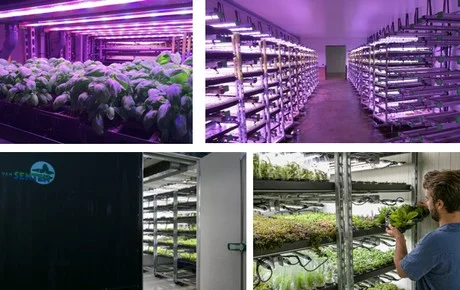
The climate is controlled by the iSii compact climate computer of partner Hoogendoorn, which measures and registers the growing conditions. This makes analyses easily available via the internet.
For more information:
Bosman van Zaal
+31 297 344 344
sales@bosmanvanzaal.com
www.bosmanvanzaal.com

Green Things Are Sprouting High In The Sky In The Joburg Inner City
Green Things Are Sprouting High In The Sky In The Joburg Inner City
Those things are spinach, basil and lettuce, planted in hydroponic farms on skyscraper rooftops in a project called the Urban Agriculture Initiative (UAI).
The UAI has been developed by the Johannesburg Inner City Partnership (JICP) with support from the City of Johannesburg, the Department of Small Business Development, the Small Enterprise Development Agency, and SAB Kickstart.
“The JICP has played a role in incubating, facilitating, and enabling this project. It is this work that has been initiated in the inner city with a view to perfecting it there and then replicating it elsewhere in the city and indeed in the country,” says Anne Steffny, a director at JICP.
Story and picture by Lucille Davie
“I would like to thank you and the members of the JICP, on behalf of the Executive Mayor, for your constructive engagement with the City and their shared commitment to reclaiming the Inner City,” says André Coetzee, the Director: Policy & Research in the Executive Mayor’s office.
The JICP has signed a Memorandum of Understanding with the City’s Department of Social Development. They both have a common purpose, namely, creating jobs, developing youth, ensuring food security and resilience as well as providing access to entrepreneurial opportunities.
One of the initiators of the UAI, Dr Michael Magondo from business incubator Wouldn’t It Be Cool (WIBC) and a director of JICP, believes that the “UAI is not about putting the farm on the roof, it’s about the lives that can be changed.”
Thirty-three year-old Puseletso Mamogale grew 3 600 fledgling spinach seedlings in August - arranged in A-fame racks of 10 shelves – on the rooftop of a building at 1 Fox Street. She harvested them after four weeks, and sold them to a local restaurant. She is now planting basil seedlings, a more lucrative crop.
The plants are grown in a medium that holds them upright while their roots reach through the pot into a tray below, filled with nutrient-rich water. Plastic sheet-roof tunnels keep them warm in winter, and protect them from storms and hail in summer. The sheeting can be rolled back to release heat.
Hydroponic farms of 300m² can produce the equivalent of one hectare of open farm production. Water costs are between R70 to R200 monthly, up to 95% less than conventional farming. This means that the hydroponic farm has 26 annual crop cycles, compared to four to five crop cycles with open-field farms.
Mamogale is a graduate of the WIBC, a programme that seeks to take young people aged 18 to 35 and to turn them into entrepreneurs. So far 13 farm entrepreneurs have been trained, and 25 are about to receive training. It has as its mission to “foster job creation through the creation of an urban agricultural entrepreneurial ecosystem supporting young black, urban farmers”.
It was launched in October 2017 with Nhlanhla Mpati’s farm, bursting with lush basil, on the roof of the Minerals Council South Africa building in Main Street. He started with 300 plants and in just over six months he had 1 000 plants eagerly waiting delivery to nearby restaurants. He calls his enterprise Gegezi Organics, and in just 66m² of rooftop space and 21 days he has produced 110kgs of basil. Another rooftop farmer is Mapaseka Dlamini, whose garden overflows with gourmet lettuce and basil plants. She now employs four people and supplies restaurants in Maboneng.
Other farms are in Hillbrow and Newtown, with rooftops supplied by the Outreach Foundation, the Jozi Housing Company, and the Joburg Land Company. There are two farms on the rooftops of FNB Bank City in the CBD. The training that entrepreneurs undergo is intense. Before they are given their starter packs of seedlings, pots, irrigation systems and pumps, they have to present a business model, including potential customers for their produce. They are given financial support from the WIBC, with an interest-free loan.

The Changing Ways We Might Grow Food
Published by David Dunning
12th October 2018.
Access to safe and affordable food is something we all take for granted.
However, with more mouths to feed now than ever before, achieving this is no easy task.
To meet our increasing demands, with minimal environmental footprints, the way that we grow crops is changing.
To help drive this change, one of the Government’s four agri-tech Centres CHAP (Crop Health and Protection) has invested, with the support of Innovate UK, in two new ventures based at Stockbridge Technology Centre at Cawood, a leading applied R&D facility based in the heart of North Yorkshire.
Selby and Ainsty MP, Nigel Adams, is the guest of honour at the official opening today.
Vertical Farming Development Centre
Across the UK, hydroponic systems, along with the latest LED lighting technology, are beginning to be combined to produce certain crops in ‘urban farms’.
Operating independently of sunlight and seasons, food can be produced in these facilities 12 months a year, under conditions that have been optimised to grow safe and healthy produce in as shorter time as possible – giving a whole new meaning to the term ‘fast food’.
To operate effectively, these urban farms will need to take advantage of the very latest in modern technology, employing sensors to monitor crops and robots to manage operations such as harvesting. CHAP’s new ‘Vertical Farming Development Centre’ will mean that growers, food producers and researchers will be able to determine how these different technologies will impact the economics of LED vertical farming.
The aim is to develop technologies which will reduce production costs whilst maximising profits, potentially on a large scale.
Advanced Glasshouse Facility
CHAP’s Advanced Glasshouse Facility with a flexible design and multiple ‘bolt-ons’ that will allow new approaches to crop production and crop protection strategies to be tested and demonstrated to farmers.
The modern glasshouse recognises that the future of crop production is likely to be less reliant on synthetic inputs of chemicals and more reliant on combining different techniques, such as plant breeding and use of natural products and beneficial insects, to produce healthy and sustainable food.
These more complex crop protection strategies require more detailed and delicate testing procedures to show that they’re effective; this new facility will allow this work to take place across both field and glasshouse crops, including those now being grown in ‘hydroponic systems’, where plants are produced without soil.
About CHAP
CHAP (Crop Health and Protection) is one of the Government’s four agri-tech centres.
Their aim is to increase crop productivity for future generations through the uptake of new technologies. They work with pioneers to translate and promote these solutions for market adoption and improved crop productivity

Roots In Aqua (Farm) And Innovation Oriented Novel Farm Is Born
The new international conference & exhibition will focus on the new cultivation systems, vertical farming and innovative methods of food production and it was presented at Greentech. Pordenone, June 15 - NovelFarm, the international exhibition-conference completely dedicated to innovation in agritech (new cultivation techniques, soilless and vertical farming) will be held on February 13th and 14th 2019 at Pordenone Fiere Exhibition Center (Venice Area).
In 2017 in Italy more than 100 million euros were invested in large-scale hydroponic greenhouses with a production mainly destined to tomato for table consumption. This trend is rapidly growing, motivated by the need to shorten the food supply chain and the increasing attention to high-quality products. A research conducted by the Coop Italia Observatory shows that in 2017, for the first time, ready-to-eat products in Italy reached the top 3 positions regarding the consumption of packaged fresh products sold by the GDO. Italy ranks second in Europe, after England, for the per capita consumption of these products.
The horticulture market will be just one of the topics that will be presented during Novelfarm. A growing interest for medicinal and pharmaceutical plants, whose return allows investments to be made in plants in "useful" times. An example? Cannabis, which is now also legal for personal use (even if with important limits of active ingredients). Technology will be the protagonist showing (by LED) how light can affect the taste and consistency of salads and strawberries.
Novel Farm will, therefore, be the first B2B event in Southern Europe that will offer professional updating and networking on these topics, the possibility of comparison and meeting between supply and demand. The new event dedicated to new production methods was presented last June 12 in an exceptional context: GreenTech, the global meeting in Amsterdam, a reference point for horticulture technology. What is Novel Farm born from? The roots have grown in AquaFarm, the conference & exhibition dedicated to aquaculture, algaculture and sustainable fishing, through conferences and an area dedicated to the techniques of aquaponics and vertical farming.
In the last two years, the collaboration and the guests have been important: the Association for Vertical Farming, the international association that lead the sustainable growth and develop the vertical farming movement; Vertical Farming Italian and ENEA; Dickson Despommier, the creator of the vertical farming concept as keynote speaker and the participation of important companies as Osram, Planthive, Idromeccanica Lucchini, Wasp.
Finally, the fully equipped conference rooms and the success of the exhibiting companies led NovelFarm to be the exclusive event for the most innovative production companies and future soilless cultivation scenarios.
Novelfarm will be held in conjunction with Aquafarm.
More information is available on www.novelfarmexpo.it
PRESS INFORMATION
Novelfarm Sales & Marketing info@fierapordenone.it +39 0434 232111

City Farms To Rise Up In Russia
BY TOM JOYCE @tomfruitnet
10th October 2018 - London
TealTech Capital is investing in a network of vertical city farms in major Russian cities, with the first set to launch in Moscow
The TealTech Capital venture fund is creating a network of city farms in Russia dubbed Local Roots, according to GreenTalk.ru.
In the next three years, ten sites are reportedly planned for Moscow and other major Russian cities, for the cultivation of lettuce and greens.
The total capacity of the ten sites will reach around 1,000 tonnes per year, with an annual turnover of RUB1bn (€13m).
Such vertical farms employ aeroponic technology, where the plant roots are sprayed with a nutrient solution. For TealTech Capital, this will be its first agribusiness-related project.
Local Roots LLC was established in Moscow in August. TealTech has so far invested RUB6m (€78,500), but the project’s total investment has not been disclosed.
By the end of the year, the first phase of the Moscow farm is expected to be launched, with 8 tonnes of basil and rocket cultivated per year. By next March, the farm is expected to reach a capacity of 160 tonnes.
Initially, Local Roots will supply exclusively to food retailer Vkusvill, selling under the brand Local Roots. In the future, around half of the produce will be delivered to other chains and restaurants.
“It is extremely important to have an efficient supply chain, since the optimal sale time for salads does not exceed three days,” explained Mikhail Glushkov, executive director of the National Fruit and Vegetable Union.
In the off-season, he said, imported greens from Israel and Lebanon can take several days to reach the market, leading to losses of up to 60 per cent.
The potential of the Russian market for greens grown on city farms is estimated at 140,000 tonnes annually, with a turnover of around RUB70bn (€0.9bn).

Self-Assembly Greenhouse To Be Launched In USA
“North America is looking for better solutions for local produce, so-called farm to table produce”, says TAP’s CEO, Avner Shohet. “People are looking for fresh products that leave less of a carbon footprint.” He says there is a lot of effort going into urban farming in that country. “The TAPKIT is another solution. It can be used for suburban farming where the land is less expensive, making it a cheaper solution, with the added benefit of less energy consumption.”
The TAPKIT, a self-assembly hydroponic greenhouse, is to be launched in the USA for the first time later this month. This farming solution was developed by the Israeli company, Teshuva Agricultural Projects (TAP). This company builds commercial greenhouse installations throughout the world. The TAPKIT is to be introduced at the PMA fresh summit being held in Orlando on 19 and 20 October.
The TAPKIT is a 500 m2 hydroponic unit, which can produce 6-12 tons of leafy vegetables and fresh herbs per year. “We started with the idea of TAPKIT for small farmers to have their own hydroponic system, but since then the kit has been ordered by resorts for their kitchen supply and retailers for their own shops too”, says Shohet.
Wide range of interested parties
“Other clients have now also shown interest. These include organizational kitchens, retirees, schools and young people who are looking for ecologically-friendly, sustainable business opportunities”, he says. “We are continually surprised to learn from the market about another sector that finds the TAPKIT to be an affordable and efficient solution.”
The TAPKIT greenhouse was first presented at ’Agri-Tech Israel 2018’ in May. “This first unit has reported to us that their produce has been sold out”, reports the CEO. TAP has developed three different types of TAPKIT greenhouses. “For tropical, subtropical and cold weather”, explains Shohet. “The potential is, therefore, almost unlimited.
Growth technique has many advantages
These units can be operated by just two people and uses Nutrition Film Technique (NFT). This is a method of hydroponic growing in which the plant roots are placed in a shallow stream of re-calculating solution that contains all that is needed for maximum productivity. “NFT techniques are on the increase globally due to growing consumption of high-value and exotic crops and the increasing need for global food security by increasing yield in smaller spaces”, Shohet said in an earlier interview.
“Two units have already been shipped to South Korea and one to the Philippines. In two weeks, two units will also be shipped to a resort in Mauritius”, Shohet concludes.
For more information;
Avner Shohet
T.A.P / 2BFresh
Office: +972-9-8940507
Mobile: +972-50-7922579
Email: avner@taprojects.com
www.taprojects.com

Publication date : 10/12/2018
Author: nick@freshplaza.com
© HortiDaily.com

US (NC): Verdesian Opens New Greenhouse At Duke University
Verdesian Life Sciences has expanded its research pipeline by opening a greenhouse facility at Duke University to develop early technology validation screening for agricultural nutrient use efficiency (NUE) technologies.
The new Verdesian greenhouse is part of Verdesian’s Early Technology Validation (ETV) screening to facilitate the Verdesian Technology Advancement (VTA) pipeline. Improved pipeline efficiency through early testing of new concepts under small-scale, controlled conditions will allow Verdesian to better understand capabilities at an early stage, helping to define opportunities while mitigating risks and optimizing time and resources on viable candidates. The 1,000 square feet of greenhouse space at Duke University adds to Verdesian’s existing growth chambers in Research Triangle Park (RTP).
“Our greenhouse at Duke University supports our R&D as a science-backed company,” said Kenny Avery, CEO for Verdesian. “The greenhouse provides the necessary environment to support vetting and evaluating new technologies that meet grower needs.”
New technology opportunities vary drastically, requiring a customized ETV screening method that brings together various growth system components and methods for detecting differences in plant function.
Agricultural field trials are critical to product development but are time consuming and introduce unnecessary risks for untested products. The new Verdesian greenhouses at Duke University will allow Verdesian to efficiently and economically identify and classify new prospects, test viable technologies and prioritize and develop those opportunities into NUE technologies. Prospects passing ETV screening will continue down the VTA pipeline and on to field testing.
The new Verdesian greenhouse at Duke is overseen by the ETV team which is leading the effort to develop these new screening capabilities. The team was formed to build a robust and flexible screening platform in 2018, further expanding those capabilities with additional laboratory methods and instruments into early 2019.
Plant physiologist, Dr. Amy Burton, joined Verdesian in December of 2017 and leads the VTA pipeline. Prior to Verdesian, Dr. Burton was with Bayer CropScience in Research Triangle Park. She completed her post-doctoral work in plant stress physiology with the United States Department of Agriculture.
The Verdesian ETV team was expanded in the first quarter of 2018, with the additions of Biology Laboratory Technician, Sandra Paa, and Greenhouse Technician, Beth Waller.
For more information:
Verdesian
1001 Winstead Drive, Suite 480
Cary, NC 27513
919.825.1901
www.vlsci.com


Publication date : 10/8/2018

Climate Cell On Wheels Helps Dutch Growers With LED Dilemma
"Everybody wants to do 'something' with LED and has the feeling something has to be done with it, but what? There's so much going on and being offered - how to get started and what to do?" That's why the Hortilux & Green Simplicity teams created a research solution for the industry. Currently they're on the road with it: for two weeks, a climate cell on wheels is shown at various companies. This Thursday it will be shown at Hortilux themselves.
The roadshow is fully booked, and every day two or three companies are visited: breeders, seed growers, research institutes and growers of course. For example De Ruiter and Syngenta are being visited. The climate cell on wheels drives there, and the possibilities of LED in horticulture, places without daylight, research and vertical farming are discussed. There's a lot of interest and many colleagues are visiting the climate cell. "We're not getting bored", the Hortilux / Green Simplicity teams agree.
"For example the roadshow offers an insight on the possibilities in research, but also how to translate it to a solution for production: going hybrid with SON-T or LED only, in a greenhouse or a vertical farm. With Hortilux & Green Simplicity we can have a fair amount of knowledge and can help with this."
This Thursday the roadshow will be at Hortilux, (Vlotlaan 412) and their employees can take a peek. Between 10:00 - 13:00 everybody is welcome to enter, also other people / companies with interest. Just send a message to Martin Moes or leave a voicemail (+31(0)6-22981504) in advance.
For more information:
LED'S RESEARCH
www.leds-research.com
Abundant, Nutritious Food, Available Close By And Year-Round
A Q&A with Skyscraper Farm founder Nick Starling
By Nick Starling - Wednesday, October 10, 2018
U.S. Army Ranger, economist and real estate developer Nick Starling is founder and chairman of Skyscraper Farm LLC. Below is a conversation he had with Washington Times Special Sections Manager Cheryl Wetzstein about his company and his vision for worldwide vertical farming that is conducted in very tall buildings — with residential and commercial space as well as dozens of floors for aeroponic and hydroponic crops — and relies primarily on sunlight for the crops. The conversation has been edited for length and clarity.
Q: What attracted you, an economist, to the concept of vertical farming?
I first came up with the idea of Skyscraper Farm during my freshman year taking “Intro to Human Geography” at Hawaii Pacific University. A professor put up a map of America, pointed to the coasts and said, “This is where everybody lives,” and then pointed to the center and said, “And this is where we grow our food.” That’s when I had my light bulb moment, and I made this really crude drawing trying to figure out how to get sunlight into the center of the building.
Q: What kind of innovations distinguish Skyscraper Farm from other types of vertical farming?
You can’t feed 9.6 billion people with field farms. And we, at Skyscraper Farm, are betting that sunlight is better than LED lights. Sunlight is like dinner to the plants, and LED lights are like protein bars.
Also, Skyscraper Farm is the only vertical farming solution that can maintain its “alpha,” which means it will keep a return on investment above the industry standard. The reason why we’re able to do that is due to low cost of goods sold — 90 percent of costs in other vertical farms are their electric bills because they’re running LED lights 24 hours a day. We cut that out completely; we use sunlight. Judging by its track record, we’re pretty confident in betting that sunlight can grow plants.
Q. You have an overarching concept you call HIDDEN WAFER about your project. Can you explain this?
The acronym stands for health, infrastructure, diplomacy, development, energy, national security and water, agriculture, finance, environment and real estate.
With health, the shorter time to table has massive implications for health and nutrition. When you can get a vegetable right from a bush, it’s so much more nutritious and it just tastes better. If you can get food from farm to table in less than an hour — or within an hour to everyone within a 15-mile radius, which is a goal of Skyscraper Farm — then that’s great. And for those who buy our condos, it’s farm to table in less than five minutes.
On infrastructure: There’s a 55,000-trucker shortage so that means it costs even more to get fruits and veggies across the country to your table. With a vertical farm right in the center of the city, you can reduce the number of what’s called “food miles” — and reduce wear and tear on the nation’s highways and byways. There’s also a reduction in the need for water infrastructure or to get water to remote fields where those farmers are farming.
Development refers to the elevation of economic conditions. The global average farm yields are 50 percent; with vertical farming, there’s greater yield of 92 percent or better at a cheaper cost. Engel’s law says that the less money you make, the greater proportion of your income you spend on food, which is why people in Haiti are spending 60 cents on the dollar for food while Americans spend 6.7 cents on the dollar for food. Furthermore, if people can spend less money on high-quality, high-nutrition foods — like kale and other vegetables — it will help fight malnutrition.
Diplomacy means vertical farms will permit diplomats to pull certain levels in their diplomatic relations with countries; no more food or water riots.
Energy: Around 20 percent of U.S. oil demand is for agriculture, and a full 60 percent of that is for production. People may see 16-wheelers hauling produce, but they don’t see the combines and tractors running in the field. Vertical farming can make countries more energy independent.
And national security is critical: Armies march on their stomachs. So having a Skyscraper Farm in the world’s largest Navy base means fresh produce can be delivered from farm to ship almost immediately before departure as well as provide a stable source of fresh crops. Moreover, field farms are absolutely indefensible and subject to constant threat of bio and chemical attacks; a Skyscraper Farm is the only defensible option.
And W-A-F-E-R?
Then with water: We don’t have a water crisis, we have a water allocation crisis. Seventy percent of the world’s freshwater is used on agriculture. With the current 50-percent yield globally, there’s a lot of water wasted on food that doesn’t even make it to harvest. Vertical farming recycles 95 percent of the water it uses. Furthermore, the quality of water is greatly affected: With regular farming, you have agricultural runoff [with pesticides and herbicides] that get into the watersheds and ultimately into the oceans, creating nitrogen hypoxia, algae blooms, ocean acidification and other deleterious effects.
Regarding agriculture, we are able to do 17 to 20 harvests a year with speed breeding or selectively breeding a crop such as wheat that grows shorter and faster, with more wheat and less chaff. You can imagine that one of the things we’re going to be working on with Skyscraper Farm is developing fast-growing lettuces, arugulas and spinaches — with the proteins of lentils and quinoa bred into them and as many vitamins as we can pack in there. Our produce will maintain the highest nutrient content out there. People on diets could eat just one bowl of Skyscraper Farm salad and have everything they need for the day, which is also huge for the developing world where people might only be able to afford one bowl a day. No messing with genetics. Non-GMO. No pesticides. No herbicides. No fungicides. Just fresh, clean food for your family.
For finance, we will be able to finance buildings off of clean, nutritious and safe commodities. For example, there was news in April of soil-based spinach crops being attacked by algae. If this were to try to happen in a Skyscraper Farm, we would clean out the buildings and have new harvests in 18 to 22 days. Also, in times of scarcity of a crop, with enough scale and quantity, we can push the price back down. That way poor people who could barely afford to buy spinach would be able to buy it again.
Another financial impact occurs through the leasing options that can be instituted with American farmers. Hydroponic and aeroponic growing systems will make such large quantities of food that field farmers will not be able to compete. So, if our farmers don’t move inside and start using vertical farming technologies, within 10 years almost all of our produce is going to come from China because they will be able to outprice us. China is watching and learning everything that Singapore, the world capital of vertical farming, is doing and will likely be close behind in vertical farming technology.
Environmental impact: Once Skyscraper Farm is to scale, there will be an elimination of agricultural runoff. There’s a dead zone in the Gulf of Mexico from Houston to Pensacola because of runoff from the Mississippi River. In the Chesapeake Bay, 45 percent of the nitrates, 44 percent of the phosphates and 55 percent of the sediment come from agriculture. That’s why we want to put Skyscraper Farms all around the Bay — to prove the point about agricultural-runoff elimination.
Going into real estate, we need to feed 9.6 billion people in several decades — which could mean needing an extra 8.5 million square kilometers of farmland! That’s the size of Brazil. So, we need to be able to grow up instead of growing out.
Q: What is your vision for Skyscraper Farm in terms of number, timeline, etc., in the next decade?
I would like to see at least 75 52-story Skyscraper Farms built in the United States in 10 years. To maintain energy neutrality, we must have at least 200 sunlight days a year; if there are more sunlight days, we can actually add energy back to the community.
Q: Are there likely to be differences by country? Or is a Skyscraper Farm in Dubai likely to function the same as one in Manila?
No, it’s all the same building. Any differences would relate to height variances that are allowed.
Q: What kinds of jobs — and how many jobs — do you anticipate being associated with a Skyscraper Farm?
Tons of jobs: engineer, mechanical engineers, electrical engineers, software developers, all kinds of jobs. And, of course, training farmers on indoor harvests year-round.
• U.S. Army Ranger Nick Starling is a Harvard-educated economist and Virginia-based real estate developer who has been researching vertical farming since 2011. For more information, please follow @SkyscraperFarm, visit skyscraper.farm or email info@skyscraper.farm.
Copyright © 2018 The Washington Times, LLC. Click here for reprint permission.