

Welcome to iGrow News, Your Source for the World of Indoor Vertical Farming

“I’m Opting For Localized Franchised Farming”
Engineering student wants to start her own farm in New Jersey
“In the States, the food system is so inefficient both in the way it’s produced, at a massive scale and in terms of quality,” says Natalie Radu. "The problem is that consumers are left in the dark. They don’t know what pesticide is used on the food they’re eating. GM foods are not labeled. Let aside the waste this industry has.” Natalie says that many don’t have access to healthy food. When walking around in the Bronx for instance, on the lookout for a grocery store, it’s so much easier to buy a pack of soda for half the price of fresh produce.
‘Localized franchised farming’
“McDonald's is known for real estate. If only we could do a Wholefoods / McDonalds franchise where customers could walk in and snip off lettuce, directly available to consumers. I’m opting for localized franchised farming. I have been trying to figure out a location in terms of real estate, but, from the perspective of a small business, New Jersey and New York prices are very high. I would have to start out in a place that’s cheaper on average. However, I would definitely apply for grants to fund the initial infrastructure for the farms."

Natalie Radu in action on her channel
Natalie has her passion for writing and her engineering study to her advantage when starting a farm. “I think because of this intersection I will be able to work with the science and also have the ability to convey that science. I can make the lettuce we’ll be growing feel personal for someone that’s in their own house, miles away or even across the world. That’s the biggest thing, you have to get people excited about vertical farming, at least as excited as you are. However, when it comes down to engineering I’m going to need some help.”
“My family immigrated from Moldova to the US around the collapse of the Soviet Union,” says Natalie. “My grandparents used to grow several fruits in the backyards and my affection for farming started right about there, it’s in my blood.” Natalie, an 18-year-old engineering student has been determined to run her own farm in the future. It all started with finding a proper research topic, which turned into her biggest passion nowadays.
As Natalie’s based in New Jersey, she is surrounded by several vertical farms. She wanted to pass by some farms near her to visit and stumbled upon Good Feeling Farms. Eventually, Natalie was able to do an internship at Good Feeling Farms to get a better understanding of every aspect of a vertical farm, from seeding to growing to harvesting. Good Feeling Farms is a New Jersey-based wholesale micro greenery that specializes in microgreens and hydro lettuce. The farm is run by a team of three, taking care of the cultivation and harvesting process.

Inside Good Feeling Farms' growing facility
Ever since her internship, Natalie is determined to run her own farm in the future. She currently runs a YouTube channel, where she experiments with indoor hydroponics. She recently spoke at a local TEDx event about the inefficacies in traditional food production and distribution systems.
Natalie says: “I’ve tried many growing conditions for plants and I think you can grow them under many different conditions. You have to work with your circumstances. Ideally, your indoor garden would be sustainable. The growth mediums could be sanitized and reused to lessen waste. Besides being water-efficient, vertical farming really shines in the areas of automation and data science. The ability to collect and analyze plant data constantly and instantly modify environmental factors has massive potential for produce cultivation as we know it.”
For more information:
Natalie Radu
natlydrad@gmail.com
Author: Rebekka Boekhout
© VerticalFarmDaily.com

VIDEO: Indoor Ag Science Cafe Discusses Marketing Vertical Farm Food To Consumers
This presentation given by Dr. Bridget Behe discussed marketing indoor farm produce
‘Considerations for Marketing Vertical Farm Food Products to Consumers’ by Dr. Bridget Behe (Michigan State University)
The Café presentations are available from the YouTube channel.
This presentation given by Dr. Bridget Behe discussed marketing indoor farm produce. Dr. Behe emphasizes that marketing is the communication of the value with consumers and “Why” to sell or buy is the important focus to connect producers and consumers. Dr. Behe also shared her latest research on consumer perceptions on price vs value, and COVID-19 pandemic related ‘shopping anxiety’. Indoor Ag Science Café is an outreach program of a project OptimIA, funded by the USDA SCRI grant program (http://www.scri-optimia.org). The café forums are designed to serve as a precompetitive communication platform among scientists and indoor farming professionals.
Contact Chieri Kubota at the Ohio State University (Kubota.10@osu.edu) to be a Café member to participate.
Offering The Complete Package, Thinking From A Plant Perspective
KG Systems has about any solution to vertical farming that can be thought of
“Nowadays, there’s very little growing space. Many growers have to grow in several places at the same time, moving their products around,” says Floris Berghout, International business development manager at KG Systems. “Therefore, when taking this problem into account, vertical farming is a valuable addition to horticulture. However, I do not think that vertical farming will replace traditional greenhouse growers.”
Over 15 years ago, KG Systems became involved with vertical farming. In 2006, the company constructed its first vertical farm inside a greenhouse, used for Lilly production, soon after that, a propagation cell followed for orchids. KG Systems has about any solution to vertical farming that can be thought of. This thanks to the experience they gained because of their involvement in many diverse projects over the years.

(F.l.t.r.) Matthias Haakman and Floris Berghout
“Many growers are involved with researching the propagation process in vertical farms as this cultivation process delivers stronger plants and better performance in the greenhouse,” Matthias Haakman, Account manager at KG Systems. “We always sit down with the client to analyze what the most appropriate solution would be for them. Here, we’re looking at the plants and what they need. We’re basically building a product around the plant the grower aims to grow. In terms of seeds, the system, etc.”
Floris says that the great thing about KG Systems’ technique is that they’re able to adjust any system to the plants. The team is working closely with flora, tomato, etc. growers. These systems are one big puzzle, but the company can deliver either one piece of it or more. “We’re working with many customers that are either upgrading their systems or wanting to install a complete new farm inside a warehouse, or elsewhere. In all these cases the same knowledge is implemented,” he says.
“The more projects we have done, the more we have been taught about the market. It has enabled us to see what techniques are available and that’s in our benefit. Therefore we can offer the best tailored solutions to our customers nowadays,” says Matthias.

KG Systems' installation at a tulip grower
According to Floris, it’s the trick to outline the situation. Meaning, what does the customer have in mind and then reason back to the plant. The client has its eye on a certain market where the product will be sold at a certain price. Therefore we need to know the following things in order to create the best solution for them. Such as, what does the plant need in order to grow, and how do we fit this into a multiple layer system, using what technique? Then we’ll draw up a balance in terms of budget.
KG’s technology is scalable in complexity. In other words, the company can deliver any system at any price, depending on the growers’ end goal. “We are there to help out with their market, potential buyers, you name it. If clients lack of market-, product- or customer knowledge, etc., the company directs them to a consultancy agency,” says Floris. This agency will educate them in every area needed and guide them into the right direction.
For more information:
KG Systems
Matthias Haakman, Account manager
Floris Berghout, International business development manager
info@kgsystems.nl
www.kgsystems.nl
Author: Rebekka Boekhout
© VerticalFarmDaily.com

Could Controlled Environment Agriculture Change The Face Of American Farming?
One of the projects AppHarvest was involved with was retrofitting a 40-foot shipping container into a hydroponic production system that operates with a 5-gallon closed-loop irrigation system and LED lights for students to grow food
Exclusives From Urban Ag News
January 25, 2021
David Kuack, UrbanAgNews
Ramel Bradley thinks so. The community director at AppHarvest is talking to students and communities across the country about the benefits of locally-grown food and the agtech used to produce it.
[Photo above: Ramel with students and faculty from Breathitt High School in Jackson, Ky. on Jan. 15 at the opening of the school’s new container farm funded by AppHarvest and the U.S. Department of Agriculture.]
Growing up in Brooklyn, N.Y., Ramel “Smooth” Bradley aspired to become a professional basketball player like some of the kids that came before him. NBA Hall of Famers Michael Jordan and Bernhard King were two of his role models.
“These great legends inspired my love for the game of basketball,” Bradley said. “As I got older my talents began to increase and I became one of the top prospects in the city. I attended Manhattan Park West High School in New York City and then transferred to the Pendleton School at IMG Academy in Bradenton, Fla., where I was a member of the first basketball team in school history.”
Ramel Bradley, community director at AppHarvest, said the company has created a platform which has enabled him to become a Black farmer and community and youth leader.
At IMG Bradley was recruited by multiple college coaches including those from the University of Kentucky.
“What brought me to Kentucky was my love for the game of basketball,” he said. “While at UK, I became the starting point guard, captain, and fan favorite of the Wildcats. I earned my degree and then played professional basketball in multiple countries including Croatia, France, Turkey, and Israel.”
More important than basketball
In 2016 while visiting his family in New York, Bradley discovered his grandmother was having some health issues.
“I decided to stop playing the game I love for something that I love much more–my family and my community,” he said. “When I was 10-years old and falling in love with the game of basketball, my grandmother started a mission in Clinton Hill, Brooklyn, focused solely on feeding the hungry. She started the mission in her kitchen out of the need to feed people who were hungry to provide them with some hope and encouragement.”
“I studied in the College of Agriculture, Food and Environment at the University of Kentucky because of the seed that was planted in me by my family. My interest in agriculture came from the leadership that my grandmother and family displayed in serving the community. I could see the difference on people’s faces when they were fed a meal and they received encouraging words regardless of their circumstances or where they came from.”
AppHarvest has opened a 60-acre state-of-the-art greenhouse facility in eastern Kentucky to produce tomatoes. A second tomato facility is under construction with plans to open a third greenhouse operation for producing leafy greens. Photos courtesy of AppHarvest.
Healthy food is a solution
When Bradley stopped playing basketball he became involved again with his grandmother’s mission.
“We restarted the neighborhood pantry and I started to learn a lot more about the community in regards to food deserts, preventable diseases and the number of Americans dying from these diseases,” he said. “My grandmother is blind now and going to dialysis three times a week. It is one of the most devastating things for her to go through and for my family and I to have to witness. I also have friends and family who suffer from obesity. I never realized the level of access I was provided as a professional athlete to not only training and conditioning and living a healthy lifestyle, but also having access to healthy, nutritious food.
“When I came back home and got to see firsthand that family, friends and community members were suffering from preventable diseases, I made the decision to dedicate my life to feeding the people in my community. Healthy food is a solution to a lot of problems.”
While Bradley believes having access to food can have a major impact on improving the lives of Americans, it is the type of food that is even more important.
“One of the things that drives me is the health and nutritional well-being of our urban community members–the longevity of life,” he said. “A lot of the food that we are exposed to in our communities is processed and it’s just not good for us. If we can get people to eat healthier food, how many lives do we prolong and how many family members can lead happier lives?”
The CDC reported that only one in 10 Americans consumes enough fruits and vegetables. Cost has been cited as a possible barrier to higher fruit and vegetable consumption, especially for low-income households.
“There are a lot of people who are hungry in the world and need to receive food,” Bradley said. “The COVID-19 pandemic has amplified the food insecurity issue. If we’re not growing our own food, who is growing our food? Much of the produce consumed in America is imported. The U.S. imported more than 60% of fresh tomatoes in 2019, according to the U.S. Department of Agriculture.
“If the borders are closed where is that food going to come from? It is crucial that we grow our own food, which will help increase food security, whether it is controlled environment agriculture or open-field agriculture. We’re going to need a lot more food production and we’re going to need a lot more local food production.
Bradley said family and friends recently celebrated his grandmother’s mission by supporting New York City’s largest assistance organizations by giving out 1 million food boxes during the COVID-19 pandemic.
From AppHarvest’s tomato greenhouse in Morehead, Ky., the company can reach about 70 percent of the U.S. population in a one-day drive.
“Every week we feed families in the community in cooperation with a number of community organizations, including Change Food, Food Bank NY, City Harvest, and the Campaign for Hunger,” he said. “All of these organizations have really stepped up in Brooklyn and N.Y. City to deliver nutritious food to community members.”
Reaching out to local communities
In 2016 after retiring from professional basketball, Bradley received a phone call from his good friend and University of Kentucky classmate Jonathan Webb.
“We had a real-life conversation about the lack of economic mobility in our communities, me in Brooklyn and Jonathan in Pikeville, Ky.,” Bradley said. “He knew that I was feeding community members trying to help them overcome preventable diseases. Jonathan told me about his vision of growing vegetables using controlled environment agriculture and being able to feed 70 percent of the Eastern seaboard through a central location in eastern Kentucky in Appalachia.
“That was the birth of our partnership and what brought me back to Kentucky, for us to start AppHarvest. We recently opened the doors to a 60-acre state-of-the-art greenhouse facility in Morehead, Ky.”
Bradley, who is community director at AppHarvest, works with both company employees as well as doing community outreach.
“Since I’ve trained extensively in controlled environment agriculture facilities, I’m able to provide a knowledge transfer to those coming into our company learning about this new industry and providing encouragement to our employees,” he said. That is what I do from an internal standpoint.
“Externally, I go out and share the AppHarvest story with students and community groups around the state and across the country to get them excited about agtech programs. When I joined Jonathan’s vision of making Appalachia an agtech hub one of the first things I did was to create an agtech program that we implemented in eastern Kentucky.”
One of the projects AppHarvest was involved with was retrofitting a 40-foot shipping container into a hydroponic production system that operates with a 5-gallon closed-loop irrigation system and LED lights for students to grow food.
One of AppHarvest’s outreach projects was retrofitting a 40-foot shipping container into a hydroponic production system that allows students to grow food.
“I helped develop the curriculum which teaches the students about plant science, the local food system, the food supply chain, how to build their own local food system and entrepreneurship,” Bradley said. “We have engaged hundreds of students from elementary to high school showing them a new way to grow food.
“We recently partnered with the Save the Children organization where we made over 1,600 grow kits for students to take home and learn about hydroponic growing. The students grow their own lettuce and we provide them with recipes that they can use to cook with their parents while they’re home during the pandemic.”
AppHarvest is also partnering with five universities in Kentucky. The goal is to work closely with them to develop programming and research and development with their students.
“What we are doing at AppHarvest is not being taught at most universities or high schools,” Bradley said. “We have been working with the governor of Kentucky who has put together an agtech task force which I am a part of. We want to continue developing partnerships with universities as well as community organizations throughout the state.
“We have broken ground on a second tomato greenhouse facility and a third facility for the production of leafy greens. We are very adamant about redefining agriculture and making the biggest impact we can possibly make.”
Inspiring future ag leaders
Through Bradley’s role as one of the founding members of AppHarvest, he has transitioned from professional athlete to becoming a Black farmer and community and youth leader.
“It is only right that I use this platform and use this responsibility to provide more access and more opportunity to future Black ag leaders,” he said. “Less than 2 percent of American farmers are African-Americans. By doing the work I’m doing I can hopefully inspire folks that look like me to take advantage of the new opportunities in this growing community.”
Bradley has been talking with leading youth agricultural organizations, including 4-H, FFA and Jr. MANRRS, to implement multicultural programs to develop future ag industry leaders.
“I’m also looking to work closely with historically black colleges and universities (HBCU),” he said. “I’ll start in Kentucky and then hopefully be able to provide access and opportunity to students at HBCU schools throughout the nation. That is another way we can make the ag community more diverse.
“Barriers are being broken by the work that I’m doing. I’m looking to inspire the people who I would like to see get involved in this industry. I am the modern farmer and this is how their future could look.”
Ramel Bradley, AppHarvest
For more: AppHarvest, info@appharvest.com; https://www.appharvest.com.
This article is property of Urban Ag News and was written by David Kuack, a freelance technical writer in Fort Worth, Texas.

VIDEO: Which Type of Hydroponic System Is Better?
I am fairly sure that my standard answer of, “it all depends” annoys most of the people I am speaking to. From suppliers to growers and from researchers to hobbyists there is always a desire to know and understand which system is the best
January 21, 2021, | Chris Higgins
Hint: They are all just irrigation systems.
One of the questions that I get most frequently is, “Which hydroponic system is the best?”
I am fairly sure that my standard answer of, “it all depends” annoys most of the people I am speaking to. From suppliers to growers and from researchers to hobbyists there is always a desire to know and understand which system is the best.
So why do I answer, “it all depends”?
Whether we are talking about nutrient film technique (NFT), deep water culture (DWC), drip irrigation systems, aeroponics systems, ebb and flow systems, or any other system we should agree that these are all just variations of irrigation systems.
Buffer capacity means security. Buffer capacity means you can leave for a day without fear of losing the crop.
Next let’s talk about the systems suppliers and their sales representatives. Suppliers of hydroponic systems will all tell you why theirs is better, but the conversation should really revolve around what factors cause their systems to fail. Every system has a weakness. Your crop, your budget, your facility and your geographic location will likely quickly highlight these weaknesses.
A large variety of hydroponic systems all at once – Big Tex Urban Farms
So, how do you determine what system is best for you?
Here are the things you should know, think about and research thoroughly before you invest.
What crop are you going to grow? If you are planning to grow tomatoes, it’s very unlikely that you will want to invest in a nft system or a dwc system. The needs of your crop will help direct you into the right direction. Likewise, a closed loop drip irrigation system is unlikely to be the answer for lettuce production.
Know your budget. Your budget will play a major role in this decision making process. Do not only think about the upfront costs of the system. Make sure to include the operational and labor costs associated with running the system 7 days a week 365 days per year.
Know your environment. Each crop type will respond to these 9 environmental variables (see diagram below) in different ways. As a grower your ability to manage these variables will be a primary indicator of your ability to achieve your target yields. The irrigation systems primary function is to help you control the 4 variables surrounding the root zone (see diagram below and focus on root zone temp, nutrients, water and oxygen.) Your geographic location and crop will determine which of these variables are most important.
Truly understand the design. In the recent Urban Ag News article, “Important Tips For Designing A Hydroponic Production Facility” I discussed the importance of buffer capacity. Buffer capacity in your irrigation system plays some very important roles. First, it will help you manage your nutrients. Second, it will help your crop deal with variations in temperature. Third and most importantly, it will be a primary indicator of how much time you can spend away from your farm.
Figure out your maintenance and spare parts plan. Irrigation systems break. Irrigation systems get clogged. Irrigation systems need to be serviced and fixed. Make sure you understand everything from how to access the most vulnerable and weak parts of the system to how long it will take you to get replacement parts and what parts you should plan to carry in case of an emergency. Think about redundancy!
Labor is KEY! Consider every aspect of labor. From the education requirements of running the labor, to the amount of labor needed to operate and maintain the system to the importance of labor needed on the system on a regular basis.
Budget • Scale • Access
Which brings me back to where we started. Which hydroponic system is the best? It truly all depends. All we know for sure is that if a supplier tells you, “you can grow every crop in our system”, be concerned. It might be true, but I can almost guarantee you that you cannot grow every crop profitably in their system. If a supplier struggles to help you clearly understand and answer the questions posed in this article, look for a new supplier. There are plenty that will.
Finally, focus on building a professional network with experience in the commercial hydroponics industries. Ask lots of questions and understand the full benefits and limitations of any system you choose.
Final hint: Aquaponics growers use one of these systems as well

American Indian Architect Leads Aeroponics Farm Plan For Iron Range To Meda Finals
Pieratos, who is now 62, and three other Chippewa women are co-owners of Harvest Nation, which is leading a promising effort to build an indoor aeroponics farm that would serve hundreds of customers with fresh produce year-round from the reservation, near Tower and Lake Vermilion
JANUARY 24, 2021
“The recruiting sergeant looked at me like, ‘What is this Indian woman doing?’ I scored so highly on the entrance test that he showed me a lot of jobs.” Denise Pieratos, an MIT-trained architect and founder of Harvest Nation, started by four women who are members of the Bois Forte Band of Chippewa in northeastern Minnesota.
Denise Pieratos, who grew up on the Bois Forte Chippewa reservation in northeastern Minnesota, started her career after Tower-Soudan High School as an iron miner.
Recession cost Pieratos her job in 1982 at the former U.S. Steel mine near Virginia. She enlisted in the Army for the G.I. Bill in order to finance the college education that always had seemed a distant dream.
"The recruiting sergeant looked at me like, 'What is this Indian woman doing?' " Pieratos recalled. "I scored so highly on the entrance test that he showed me a lot of jobs."
Pieratos became a Russian-language specialist in Army intelligence and rose to sergeant. And that wasn't the last time Pieratos surprised those who underestimated her.
She was a double-major honors student at the University of Minnesota in the early 1990s, in fine art and graphics design.
Her mentor during an internship at Walt Disney Co. recommended architecture school. Pieratos won a scholarship to MIT in Boston. She earned a master's degree in 1998.
That led to a 12-year design career at architecture firms in Minneapolis and in New York City.
Pieratos, then a divorced mother of two, moved back to the reservation from New York in 2010 to care for her father, who was dying of heart disease and diabetes.
Pieratos attributed that to bad diet.
Pieratos, who is now 62, and three other Chippewa women are co-owners of Harvest Nation, which is leading a promising effort to build an indoor aeroponics farm that would serve hundreds of customers with fresh produce year-round from the reservation, near Tower and Lake Vermilion.
These entrepreneurs also were seeded in 2019 with a $35,000 feasibility grant by Blandin Foundation.
CEO Tuleah Palmer, president of Grand Rapids-based Blandin, praised Pieratos and noted that less than 5% of such investment lands in rural Minnesota and less than 1% with tribes.
"As I admire the work Ms. Pieratos has advanced, her ingenuity and determination, I wonder how many more people like her are out in Minnesota's small towns and villages without access to capital,'' Palmer said.
"Scarcity is a dangerous narrative; it is long overdue that that changes."
Harvest Nation, a semifinalist in the 2019 Minnesota Cup entrepreneur sweepstakes, has been working with a business-development mentor and is one of the 13 finalists this week in the third-annual Meda Million Dollar Challenge for minority-led firms.
The national competition, the largest such entrepreneurs-of-color competition in America, has resulted in $3 million invested in 12 minority businesses since 2019.
Other finalists have attracted post-competition growth capital.
"We're like 'Shark Tank' without the teeth," quipped Meda CEO Alfredo Martel. "2020 has been a tough year for most and to see these exciting companies persist is inspiring. We are excited to see the results of their hard work."
Dani Pieratos, 32, Denise's daughter and the sales and marketing director for Harvest Nation, said the four founders are encouraged by hundreds of reservation, commercial-and-residential Iron Rangers who have expressed interest in becoming fresh-produce customers.
"Our traditional, native-food economy was wrecked and we started eating all those mass-produced processed foods," said Dani Pieratos, who also works full time in food distribution for the Arrowhead Economic Opportunity Agency.
"Investing in healthy bodies and minds is the best 'asset-management' strategy for any community."
Pieratos said Harvest Nation is talking to the Minnesota Department of Natural Resources about siting a demonstration project of around $1 million, of a full-sized production farm inside the old Lake Vermilion-Soudan iron mine that would cost up to $4 million. The mine is managed as a state park by the DNR. The temperature is a near-constant 55 degrees.
Harvest members would pay about $50 per week for a big box of fresh vegetables weekly.
Aeroponics may be best demonstrated in Minnesota by "Living Greens" of Faribault. The company has raised millions of dollars to build a 7,000-square foot building in the middle of farm country. It combines technology, agriculture and science to produce tons of year-round fresh salads, microgreens and herbs on 60,000 square feet of space, mostly elevated.
Aeroponics, a growing trend, uses misting and "dosing" systems to grow year-round crops that need 98% less land and 95% less water than traditional farming with no herbicides or pesticides.
The Harvest Nation founders want to generate green economic growth and better health on the range, to supplant some of what must be trucked in most of the year.
They also are seeking investors for their long-odds aeroponics farm.
Minneapolis-based Meda, a nonprofit adviser, and financier, was founded in 1971 by business leaders to foster minority-business expansion. It has grown in recent years to serve businesses with total revenue of $1 billion and 6,000 employees.
More information is at meda.net and harvestn.ationinc.com

PODCAST: Season 2 Episode 21 - Chief Science Officer (CSO) of AeroFarms, Ed Harwood
In this episode, Harry and Ed share a discussion on the difference between hydroponics and aeroponics, the merits and disadvantages of both, and Ed’s never-ending quest to change the world for the better through education, technology, and science
Join Harry Duran, host of Vertical Farming Podcast, as he welcomes to the show Chief Science Officer (CSO) of AeroFarms, Ed Harwood. It is the mission of AeroFarms to grow the best plants possible for the betterment of humanity. With over forty years of agricultural and engineering experience, Ed founded GreatVeggies before transitioning to AeroFarms.
In this episode, Harry and Ed share a discussion on the difference between hydroponics and aeroponics, the merits and disadvantages of both, and Ed’s never-ending quest to change the world for the better through education, technology, and science.
VERTICAL FARMING PODCAST
Listen & Subscribe

Cultivatd Launches As A New Vertical Farming Technology Brokerage
Co-founded by two former executives at ZipGrow Inc, Cultivatd will represent over 30 different vertical farming and greenhouse growing technologies to better help people select which tools and tech are best suited for their project needs
JANUARY 1st, 2021: Cultivatd Inc, a startup based in Canada, is announcing it has begun operations and launched an indoor farming technology brokerage.
Co-founded by two former executives at ZipGrow Inc, Cultivatd will represent over 30 different vertical farming and greenhouse growing technologies to better help people select which tools and tech are best suited for their project needs.
“We were seeing a lot of people come to us in the past, asking for solutions that required more than one technology, so we decided to launch Cultivatd to fill that gap in the marketplace,” says Eric Bergeron, a serial entrepreneur who is now on his fourth AgTech startup. “We use our expertise as growers, manufacturers, and consultants to make recommendations on the proper setup and agtech solutions.”
Added co-founder Eric Levesque, the former VP of Business Development at ZipGrow, “We work with manufacturers and technology providers to help sell their products to customers that are best suited to their needs. Our brokerage services are free to the end-user as we work on behalf of our partners”.
At current, Cultivatd works with several known AgTech partners including long-time industry companies such as ZipGrow, Cubic Farms, Moleaer, AutoGrow, Ceres Greenhouses, Nelson & Pade Aquaponics, Modular Farms Australia, Growfilm, Iluminar, Hydrogreen, and Intravision Group as well as new technology providers such as GroStack, AmplifiedAg, GROV, Canobi Technologies, Auto Greenhouse, Just Vertical, Grobo and ATOM Controllers,.
Cultivated is also announcing two new service offerings;
Farming As A Service and Cultivatd Consultants.
Farming As A Service (FAAS) is a program where Cultivatd will send a farm manager to operate your indoor farm, removing the difficulties in getting a farm up-and-running and eliminating the barrier-to-entry for most new farmers. The service is contract-based and meant to get your farm to full operational efficiency with an experienced grower by your side. Once the team is trained and using the SOPs put in place, the farmer will move on or remain on as a consultant.
The Cultivatd Consultants service will be a brokerage of experienced master growers looking to share knowledge with indoor farm operators. Cultivatd currently has 6 consultants with expertise in cannabis, vertical farming, greenhouse production, operations, and sales & marketing for vertical farming. “We are always looking to expand our network of consultants as demand for this service is already outweighing our ability to connect experts to projects in need of support..” added Levesque.
“We continue to add new partnerships every day and want to work with the world’s best agtech technology solutions so we can offer our clients a true, unbiased, assessment of the right solution to solve their need”. added Bergeron.
Visit cultivatd.com for more details and to see the growing list of partnerships.
FOR MORE INFORMATION
Eric Levesque
Managing Partner, Cultivatd Inc.
+1 (613) 360-5195

* New Deadlines * Center of Excellence Announces: Indoor Farming "Best in Class" Awards!
Companies that score the highest in each category will be nominated for an “Indoor Ag Center Best in Class Award” (TM)
Center of Excellence Announces
Indoor Farming
"Best in Class" Awards!
Who Can Enter
Indoor Vertical Farms
Plant Factories
Greenhouses
Grow System Solution Manufacturers
Lighting Companies
How to Enter
Go to: https://indooragcenter.org/awards/
New Deadlines for Submissions:
Manufacturers: Feb 1, 2021
Growers: Feb 15, 2021
There Is No Fee To Enter
Companies that score the highest
in each category
will be nominated for an
“Indoor Ag Center Best in Class Award” (TM).
Learn More
Our vision is to accelerate the growth of the indoor farming industry. We believe we can do that by recognizing excellence. Consequently, we have embarked upon an ambitious program to collect bench-marking data on indoor farm operations and equipment used to run vertical farms and greenhouses. Each year we will review the data and publicly recognize key stakeholders for their excellence in several categories.

GROW Impact Accelerator Invites Applications From Startups Fostering Food Sustainability
This is a unique opportunity for startups operating in new frontiers of foodtech and agtech to supercharge their growth by tapping into a global network with GROW as their gateway to Asia and the world
January 19, 2021
GROW is based in Singapore, at the heart of Asia Pacific. Image credit: lena_serditova / iStock
GROW, the impact venture builder backed by AgFunder, is now accepting applications for its 2021 Impact Accelerator program. This is a unique opportunity for startups operating in new frontiers of foodtech and agtech to supercharge their growth by tapping into a global network with GROW as their gateway to Asia and the world.
This program marks the GROW Impact Accelerator’s second cohort, backed by AgFunder’s GROW Impact Fund. It will include bespoke coaching, mentor support, expert sessions, peer learning, and access to AgFunder’s unrivaled industry network to help businesses scale aggressively into new markets around the world. Successful applicants will receive US$200,000 in cash and in-kind investment on founder-friendly terms.
Agrifood is the sector where impact investors expect to increase their allocation the most over the next five years, according to the Global Impact Investing Network’s 2020 investor survey. Startups participating in the GROW Impact Accelerator will be given the tools to implement ESG principles and to track how their technology solutions help bring positive impact to people, place, and planet. We deliver a complete program that will provide access to experts, partners, potential customers, and impact-focused investors.
Last year, GROW ran its Singapore Food Bowl program, focused on accelerating early-stage startups that can contribute to local food security. Find out more here
Established to advance sustainability in the agrifood system through its support of extraordinary founders, GROW has designed the GROW Impact Accelerator program to propel not just commercial growth for participating startups, but personal growth for the entrepreneurs behind them. As venture capital investors we are in pursuit of profit, but GROW will also imbue in its alumni an ethos of doing well by doing good; one that will remain with them long after the program has finished.
The GROW Impact Accelerator is based in Singapore but will be conducted as a fully virtual program until international travel resumes. Applicants should have an MVP, be well on the way to establishing product-market fit, and should be operating in at least one market. Our interests stretch end-to-end across the agrifood value chain with a focus on technologies that allow for scalability while delivering on impact creation.
Invest with Impact. Click here.
Areas of particular interest for our 2021 intake include (but are not limited to):
Biotech and digitalization to advance sustainable agriculture;
Circular economies (eg, sustainable materials and closed-loop production systems);
Climate-smart agriculture and aquaculture (technologies for carbon emissions reduction, regenerative agriculture, water use);
Alternative proteins, innovative foods, and novel ingredients;
Food waste valorization;
Supply chain rationalization;
Technologies to support smallholder farmers (eg, robotics, decision support, chemical reduction, financial inclusion).
To encourage as diverse and representative a cohort as possible, GROW is especially interested in receiving applications from teams with at least one female founder.
You can find more detailed information and apply here.
Applications close on 28 February at 23:59 GMT+8.

“Agriculture Doesn’t Lack For Data – It Needs Better Organisation of Data to Feed 10 Billion”
"At Sensei Ag, we believe that indoor agriculture can transform the way we capture data about edible plants, help transform land and water usage at least tenfold through better use of that data, and be part of the critical new infrastructure of post-pandemic economies
As we look ahead to 2021, the challenge of overcoming Covid-19 still stands before us. The primary focus is on rolling out vaccines, but as worries about new variants come to the fore, we really do need to act at warp speed to get shots in arms and take additional measures if necessary.
To look at some of the challenges we face and some of the solutions we have in place, we asked a number of the world’s leading thinkers what their “moonshots” would be, and what grand visions for society we should pursue today.
Sonia Lo says: "Data is collected in the millions of data points every second around the world, in food and agriculture systems. In lesser developed economies, informational offers abound, to help even the smallest small-hold farmer. However, this is not relevant or helpful in the absence of the attendant ecosystem infrastructure of financing; robust, weather-resistant, and inexpensive physical facilities in which to farm; and real-time feedback for the farmers about their critical inputs. The world today is capable of imaging and analyzing every edible plant on the planet and yet there isn’t an international data infrastructure to be able to do that."
"At Sensei Ag, we believe that indoor agriculture can transform the way we capture data about edible plants, help transform land and water usage at least tenfold through better use of that data, and be part of the critical new infrastructure of post-pandemic economies. Organizing data across countries and providing unified data sets across climates and crops not only helps individual farmers but also enables a new generation of “agricultural fintech” which helps those farmers with much needed, but now, well-informed capital. Our vision is to enable the building of a multitude of indoor farm types – to stabilize food supply around the world but also t

Understanding The Key Tech Required In Vertical Farming
Staff Reporter Jan 25, 2021
Vertical farming involves; growing crops indoors under artificial temperature and lighting conditions. This technology focuses on increasing productivity in small places. It utilizes soil-free methods like aeroponics, aquaponics, and hydroponics. Read on to understand the main tech you need for your vertical farm.

(Photo : Valcenteu Wikimedia Commons)
Lighting systems
Covered agriculture, which is the traditional method of farming uses HPS (High-Pressure Sodium) vapor lamps. These units generate a warm light, which appears as an orange-yellow glow in areas with many glasshouses. LED technologies have evolved, becoming more energy-efficient and cheaper.
LED vertical farming lighting dictates the next generation controlled environment agriculture (CEA). While HPS lamps generate orangey-yellow light, LEDs can be designed to generate light in any color or combination of choice. Today, more LED lights are specially designed for the CEA industry.
Researchers are working with manufacturers to manufacture crop-specific lights to enhance photosynthesis, guarantee crop quality, and boost yield production. When growing crops in an indoor environment without a natural or external light source, the quality and quantity of artificial vertical farming lighting for your crops is critical.
Heating, Ventilation and Air Conditioning (HVAC)
Controlling the heating, ventilation, and air conditioning is crucial in managing a vertical farm. Remember, the HVAC can influence the yield, health, and quality of your crops. Smart regulating systems are crucial for the management and maintenance of ventilation, temperature, and humidity. Installing smart enabled HVAC systems that can be incorporated into a general control system is critical.
Nutrients
Controlled environment agriculture allows farmers to regulate the frequency, levels, and nutrients they use on the crops. Commercial nutrient mixes are not only readily available but are also easy to use for your vertical farm. However, you can improve the quality of your crops and increase production with a crop-specific nutrient mix. Research and knowledge help you produce efficient nutrient mixtures for your vertical farm.
Control Systems
Control systems audit, and manage all elements of a controlled environment. Doing so allows the farmer to make proper decisions for crop-specific growing conditions. Advanced control systems give farmers crucial data on crop health, development, and the environment.
With this data, the farmer can develop different features of the growing conditions. Further, control systems facilitate the implementation of nutrient mixes and light that can change throughout growing, light intensity, and delivery of supplementary C02 (carbon dioxide).
Future vertical farms should come with integrated control systems and inline crop monitoring systems to facilitate disease management. These components will help boost conditions, enhance energy-efficiency, and increase yield.
Growing Systems
Vertical farming involves various hydroponic systems, making soil and other growing media unnecessary. Farmers can use different substrates, as seen below.
NTF (Nutrient Film Technique)
The NTF comprises narrow troughs or channels where flowing small amounts of nutrient and water solution drains to the bottom of the troughs. This process creates a thin film. Plants are hanged over the trough in net containers. They receive small amounts of the nutrient solution often per day.
The fine nutrient film solution facilitates watering of the rear of the roots without getting soaked. The top part of the roots stays dry and consumes oxygen. The nutrient film technique is ideal for baby greens, salads, leaves, strawberries, and herbs.
Flood and Ebb System
The flood and ebb system is also known as drain and flood. It involves the use of trays filled with a nutrient solution for a few minutes before the water drains. The plant roots are swayed around the nutrient solution. Using flood like circumstances allows the plants to consume nutrients and oxygen, making them healthy and strong. The flood and ebb system is ideal for producing microgreens.
Finally
Vertical farming allows farmers to grow crops throughout the year, and this facilitates maximum crop production. This technology does not rely on the weather. You can grow your crops with the help of LED lighting. Apart from being eco-friendly, vertical farming allows you to farm within limited spaces, as is the case in cities.
University of Arizona Announces Greenhouse Engineering Course
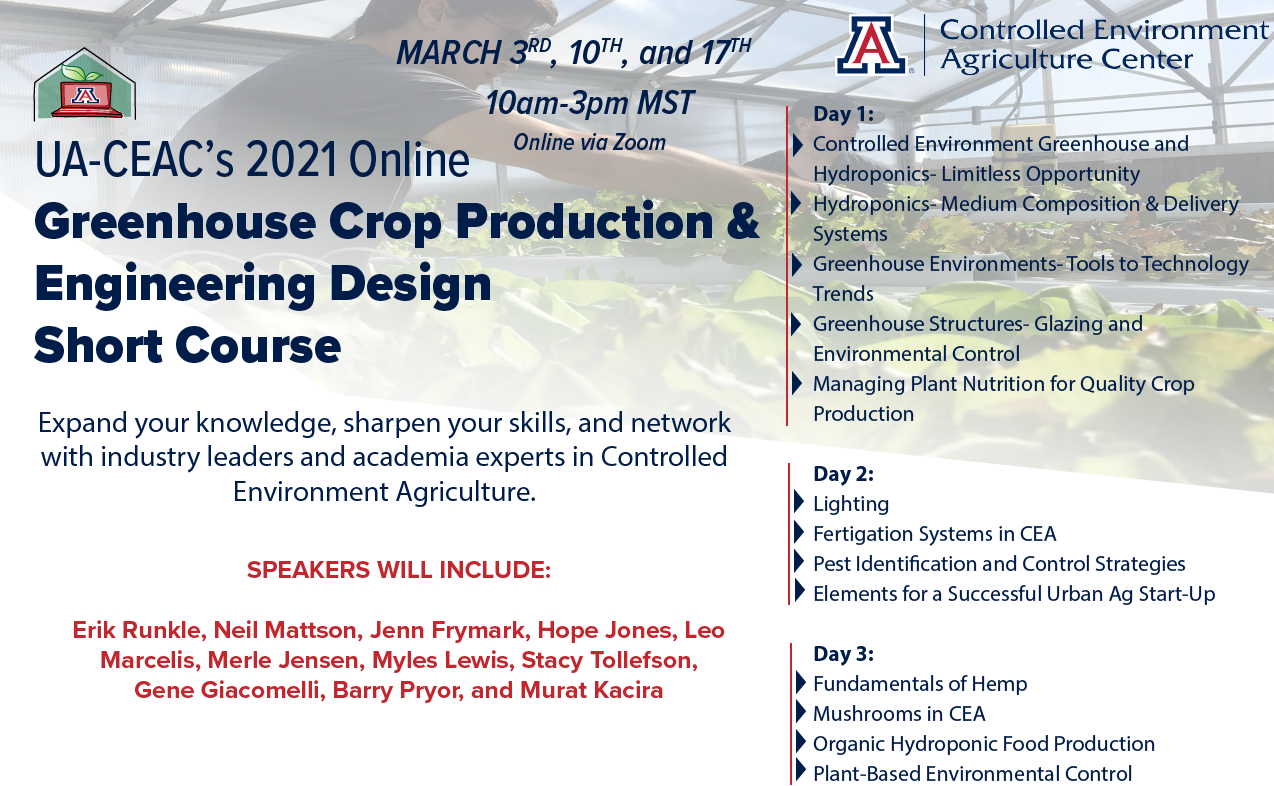
Join the University of Arizona’s Controlled Environment Agriculture Center for their 20th Annual CEAC Greenhouse Crop Production & Engineering Design Short Course on March 3rd, 10th, and 17th via Zoom
Join the University of Arizona’s Controlled Environment Agriculture Center for their 20th Annual CEAC Greenhouse Crop Production & Engineering Design Short Course on March 3rd, 10th, and 17th via Zoom. This virtual conference will increase your knowledge in Controlled Environment Agriculture and hydroponic growing and will allow you to network with industry leaders.
Each day will be jam-packed with incredible presentations given by experts in academia and the CEA industry. Topics will include Greenhouse Structures and Environments, Managing Plant Nutrition, Lighting, Fertigation Systems, Pest Identification, and Control Strategies, Hemp and Mushrooms in CEA, Organic Hydroponic Food Production, and much more! Registration is open until February 26th, 2021.
Click here for the 2021 Online Greenhouse Crop Production & Engineering Design Short Course Schedule
For more information, visit ceac.arizona.edu.

2020 Shone A New Light On The Need For Container Farming
For us here at Freight Farms, the COVID-19 pandemic became a pivotal moment
Even A Pandemic Couldn’t Stop Us!
When the COVID-19 pandemic came to a head in March, we all felt a deep sense of trepidation. At the time, the future looked beyond bleak. We were all at the forefront of a completely new experience and it was up to us to figure out how to stay safe and continue to thrive in the ‘new normal’ world. For us here at Freight Farms, the COVID-19 pandemic became a pivotal moment. Would people still care about their source of food in the midst of a health crisis? Would individuals be looking to shift careers and lifestyles during such uncertainty?
The answer came right away: yes. The pandemic shone a spotlight on the key flaws within our food system and the need for a workplace revolution. We saw a tremendous growth of interest from people looking to make a positive and needed impact on their communities. We reflect on the year with immense gratitude for our community of farmers that continue to help us address pressing issues of sustainability and food security–we can’t wait to see all we can accomplish together in 2021!

IPO Planned To Improve Revenues Indoors
Light Science Technologies has gained the funding from Intuitive Investments Group plc (IIG), ahead of going public on the London Stock Exchange in the next six months.
8-01-2021| Business Live
“We believe that there is no better time to be involved in both agritech and medtech." A company which makes technology to improve indoor crop yields has received a £1 million investment ahead of a planned IPO.
Light Science Technologies has gained the funding from Intuitive Investments Group plc (IIG), ahead of going public on the London Stock Exchange in the next six months.
The business, based on the Hilton Business Park, Derby, provides lighting and plant growing and monitoring technology for agriculture in partnership with university research teams.
Its agricultural tech can be used in three main indoor settings – vertical farming (where crops such as tomatoes are grown in vertically stacked layers), greenhouses and medicinal plants.
Its patent-pending, sustainable light unit combines interchangeable LEDs, power and technology to help reduce costs and generate maximum yields over 25 years.
Its real-time monitoring and control technology can also be used to link technicians, farmers, and facility managers with their crops to provide instant production data.
Management said that with better light quality and energy savings, its light, science and technology products increase cycles.
It also supplies technology to clients in the electronics, audio, automotive, AI technology and pest control sectors.
The move to become a publicly listed company follows significant investment in its team and operations over the past few years which, the business said, has “brought to market a fully updateable, bespoke and intelligent lighting solution that provides optimal yield”.
The company is also due to launch its own in-house growth and laboratory service in the spring, focusing on plant growth and performance to help farmers with their crops.
Chief executive Simon Deacon said: “We believe that there is no better time to be involved in both agritech and medtech as two rapidly expanding sectors which are going to be responsible for spearheading some of the most significant global developments over the coming decade and beyond.
“IIG’s investment is not just a reflection of its commitment to LSTH as a fast-growing business backed by almost 30 years’ expertise in light technology but also of its awareness of the importance in achieving a better, more sustainable approach to agricultural production as well as pioneering potential life-saving solutions in digital health innovation.”
Light Science Technologies is IIG’s first investment following its own successful IPO and admission to AIM in December, as it seeks to attract investors with its life sciences portfolio.
IIG chairman David Evans said: “LSTH has the key ingredients for success; it has an excellent management team, a deep knowledge of the light spectrum and the application of that knowledge to areas where substantial growth can be obtained.
“I am personally excited about the potential diagnostic applications in the digital health sector, such as non-invasive haemoglobin measurement, as well as the developments in vertical farming technology that will underpin the long-term growth of LSTH.”
The investment follows recent funding for Light Science Technologies from Innovate UK which will see it work over the next six months with Nottingham Trent University to develop a growing sensor and transmission node for vertical farms.
Photo: Light Science Technologies designs lighting, science and plant monitoring technology.
Source and Photo Courtesy of BusinessLive
AVF FREE PUBLIC WEBINARS: AVF Annual General Meeting Day
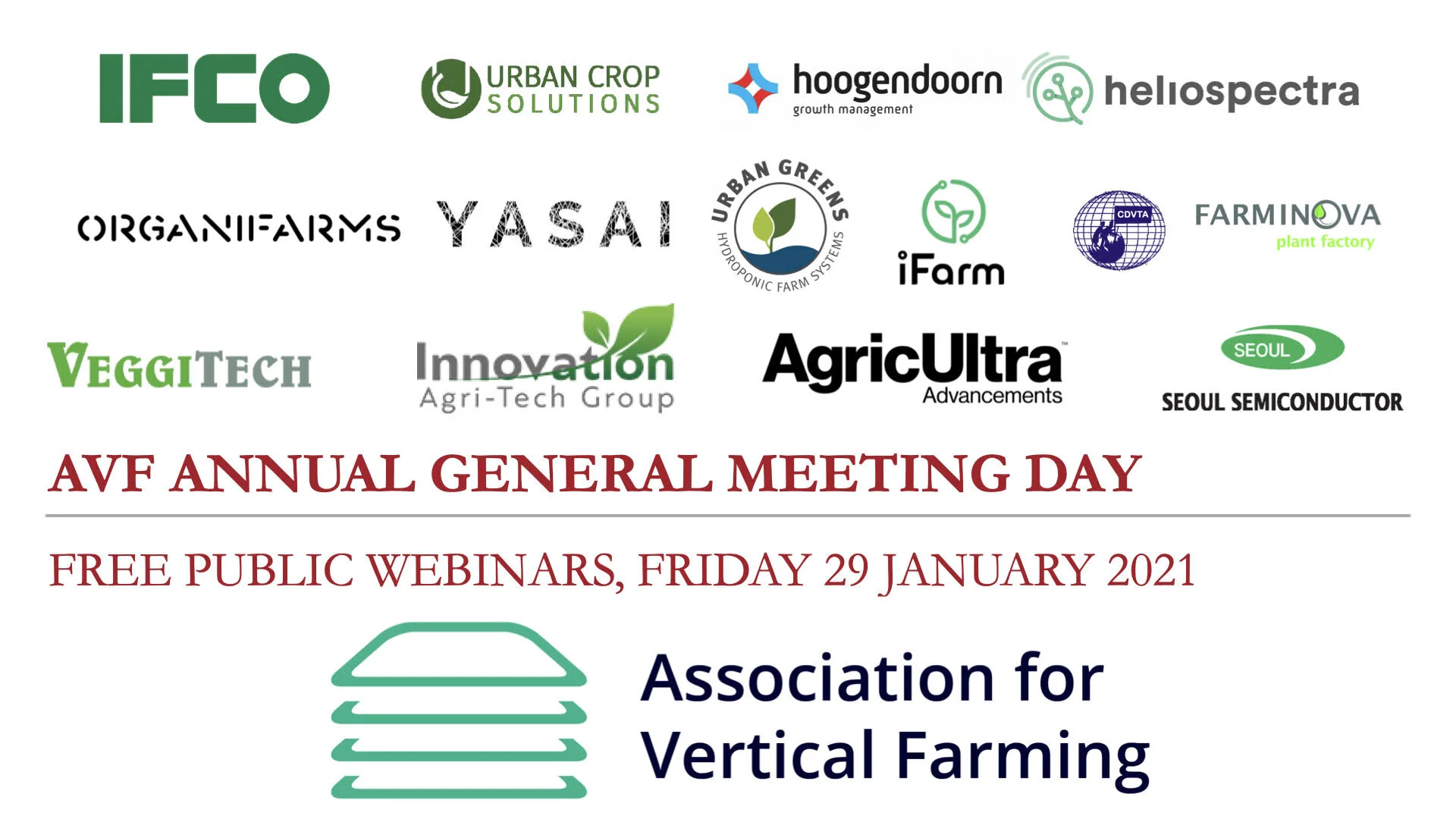
AVF members will convene at the annual general meeting on the 29th of January 2021 at 5 p.m. CET to review 2020 and plan for the new year
AVF members will convene at the annual general meeting on the 29th of January 2021 at 5 p.m. CET to review 2020 and plan for the new year. All members are required to register for this session:
Register For The Meeting (Only for Members)
On the same day, we plan to provide a platform for our members to present their innovations and introduce their companies to a wider audience in the format of roundtable talks and short presentations.
AVF members have time until the 25th of January to either send us a short recording (10-15 minutes) introducing your company’s vision or express their interest in presenting live for the second webinar.
Send Us Your Recordings (Only for Members)
Please bear in mind that if you wish to attend all sessions you need to register for them separately.
Webinars are free and open to the public
There are only a limited number of seats available
Webinar 1
AVF Roundtable: Vertical Farming Startups’ Challenges, Solutions & Opportunities in the Time of COVID-19
Friday, 29 January 2021, 11-12:30 CET
Featuring YASAI, Organifarms, and Urban Greens
Register for Webinar 1
Webinar 2:
AVF Focus on Leading Vertical Farming Innovations
Friday, 29 January 2021, 14-17 CET
Interested members: AgricUltra, IFCO Systems, VeggiTech, Seoul Semiconductor, iFarm, Innovation Agri-Tech Group, Urban Crop Solutions, CDVTA, and maybe your company!
Register for Webinar 2
Contact us for more information: re@vertical-farming.net
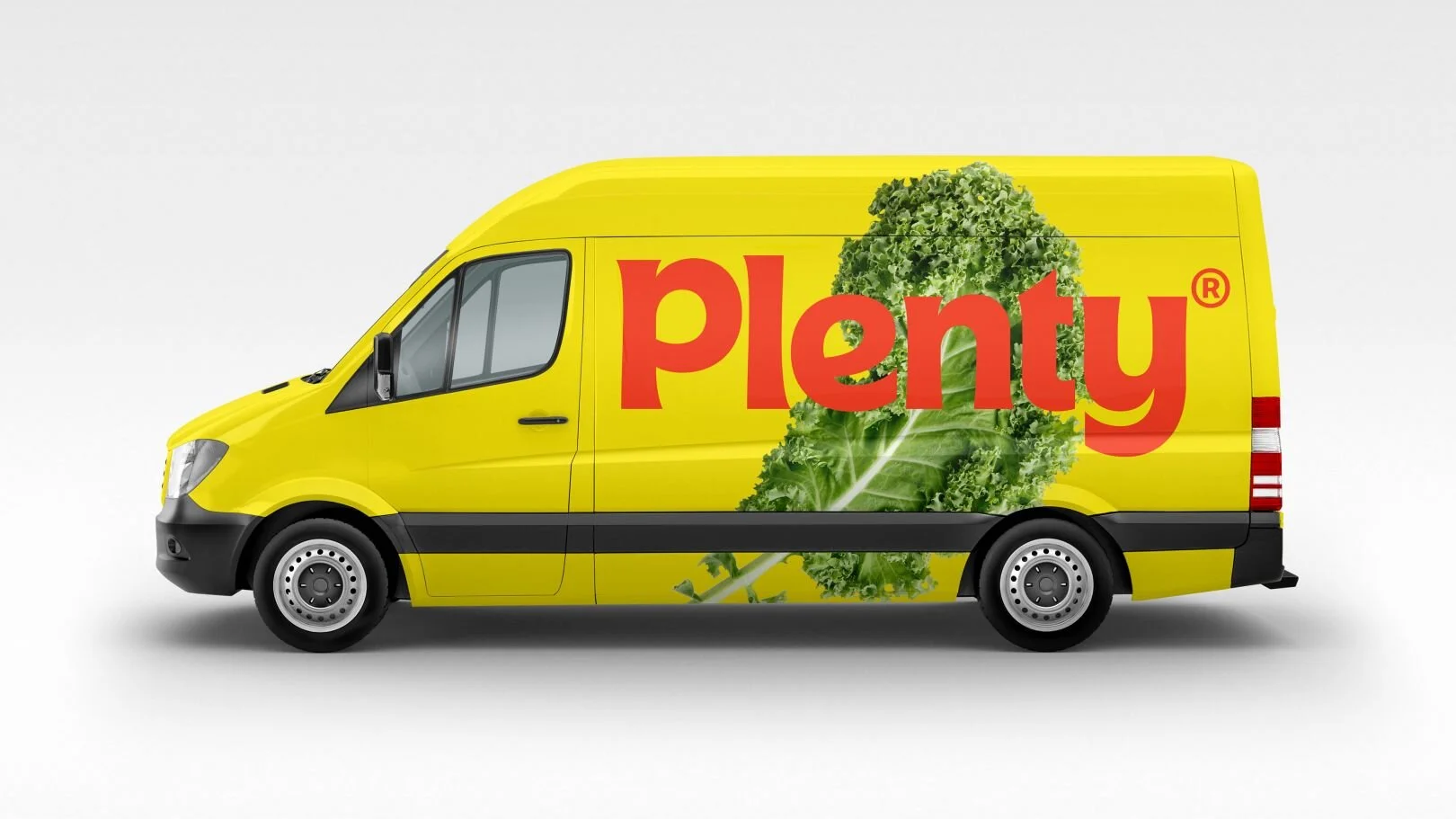
&Walsh Finds Comfort And Warmth In Rebrand For Plenty, A Sustainable IndoorVertical Farming Company
New York creative agency &Walsh is behind the rebrand for sustainable indoor vertical farming company, Plenty, featuring a bold and "approachable" custom font inspired by plants, and an identity and packaging influenced by the flavour of its produce

Written by Katy Cowan
21 January 2021
New York creative agency &Walsh is behind the rebrand for sustainable indoor vertical farming company, Plenty, featuring a bold and "approachable" custom font inspired by plants, and an identity and packaging influenced by the flavour of its produce.
It's a refreshing approach by Jessica Walsh and her team, who have avoided any of the clichéd "healthy green" visual cues like some of Plenty's competitors. With a bright and friendly colour palette and non-fussy, almost retro aesthetic, at its heart lies the crafted font, known as Plenty Custom – a humanist sans serif with leaf-like corners and terminals. "Wherever possible, the font avoids straight lines and is made up of curved and tapered strokes," as &Walsh puts it. "The stroke endings are sharp and the curves are as round as a ripe tomato."
There's a purpose behind Plenty that caught the attention of &Walsh: "What stood out to us was its commitment and desire to make the tastiest, freshest cleanest greens accessible to the masses," Jessica tells Creative Boom.
"Making greens and healthy foods flavorful and accessible to people is very important. Right now, many people turn to unhealthy, processed, and fast foods because of the price and accessibility. In the long term, this causes numerous health problems, which has become a public health issue in America."
In their research, Jessica and her team looked at what would make the brand feel more warm and accessible, while also evoking comfort and tastiness – and that's where nostalgia steps in: "Fast food companies (such as McDonald's and Wendys) often use red and yellow colours in their branding, which have been shown to make people feel hungry. Why not use this technique for healthy foods?" adds Jessica. "With the colours and type choices, we wanted to create a friendly and happy brand that also stood out on the shelf from the competition.
"Almost all greens brands use a similar design aesthetic, so we aimed for the Plenty packaging to pop off of the shelf and pique people's interest. We did extensive target audience testing on the logo and packaging throughout the process to test the new packaging and typeface design, with the final result of our work scoring higher for warmth and accessibility than the previous brand work."
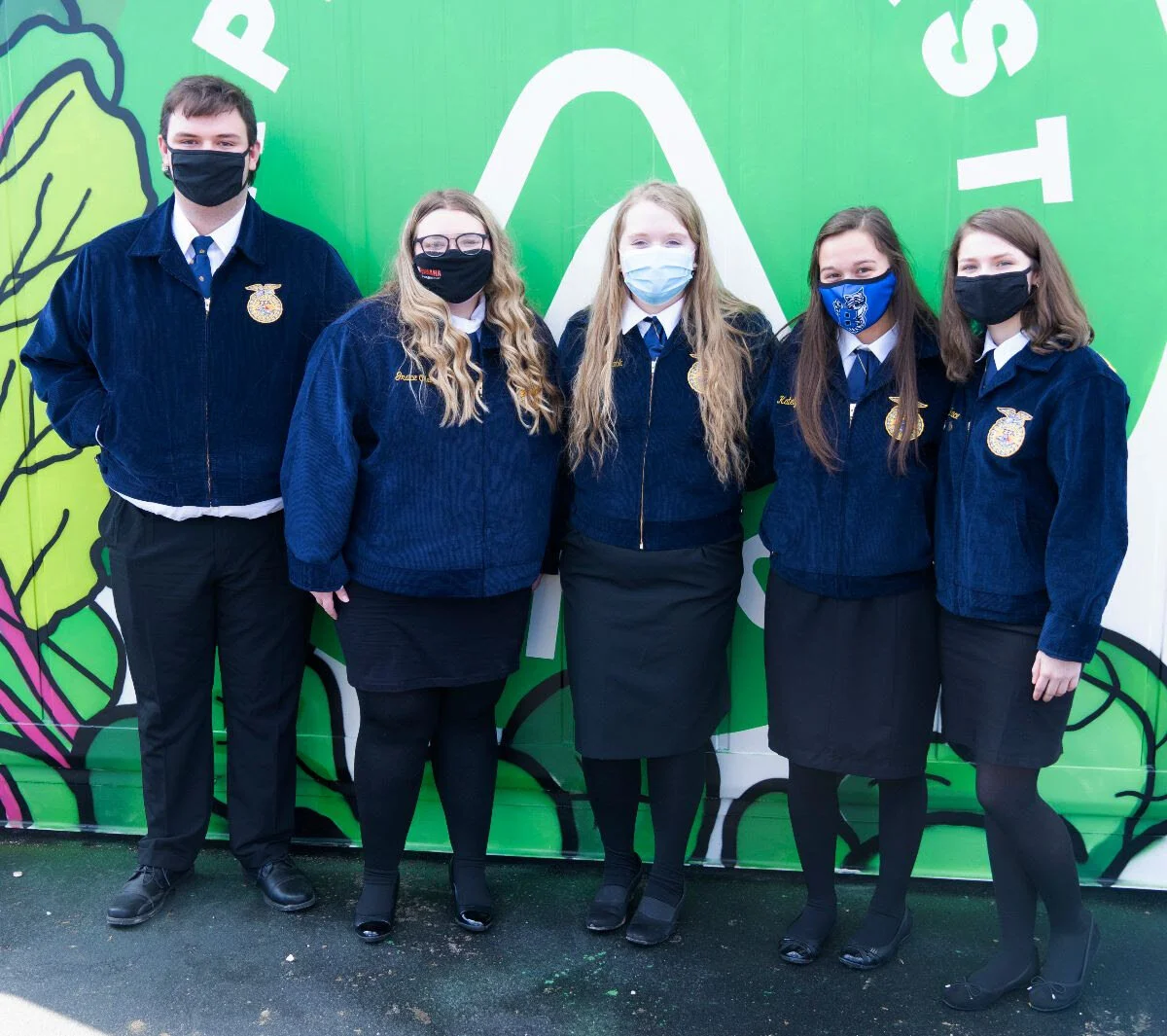
AppHarvest, USDA Partner To Expand Educational Container Farm Program
Located at Breathitt High School in Jackson, Ky., the retrofitted shipping container allows students to grow and provide fresh leafy greens to their classmates and those in need in their community
In partnership with the U.S. Department of Agriculture, we’ve opened a new high-tech educational container farm in Eastern Kentucky to offer students a hands-on AgTech experience.
Located at Breathitt High School in Jackson, Ky., the retrofitted shipping container allows students to grow and provide fresh leafy greens to their classmates and those in need in their community. The U.S. Department of Agriculture provided a majority of funding for the container farm through its Community Facilities grants program.
The Breathitt County container farm is the third in our program, which started in 2018 in Eastern Kentucky to excite students about growing their own food.
“This amazing project will not only put fresh vegetables on the table but, more importantly, it will teach tomorrow’s agribusiness leaders — and do all of that right here in Eastern Kentucky,” said U.S. Department of Agriculture Rural Development State Director Hilda Legg.
Click here to learn more and here for coverage of the container farm’s opening.

The Business Of Vertical Farming: What It Is And What It Isn’t
It’s definitely the future of agriculture but it’s also an opportunity for people to choose where they fit in and where they can make their most meaningful and important contribution
“Vertical farming is a tremendous opportunity,” says Glenn Behrman, founder and President of CEA Advisors, consultants and advisors to the global vertical farming industry and a 50-year veteran of the horticulture industry. It’s definitely the future of agriculture but it’s also an opportunity for people to choose where they fit in and where they can make their most meaningful and important contribution”.
Over the years, CEA Advisors has provided services for the development of indoor farming projects locally and internationally. They’ve worked on projects for growers, investors, universities, schools, food processors, vertical farm developers, pharmaceutical manufacturers and government agencies.
Fundraising business model
According to Glenn, many people enter the market without really doing their homework. They want to be in vertical farming, but they don’t know that there are many different industry entry points that are available that can really satisfy their interests. No questions are asked, no networking is done, and they do not drill down to a deeper level to see where their interest really is.
“Today, I see that many are only motivated with raising money but funding is not a business model. If money is your main motivation, you’re probably going to fail. There’s too much of a focus on raising money and not enough focus on making money. I believe a business should be cash flow positive, but we also need to be innovating and improving, not marketing concept systems to investors. New growers should first consider where they can make a difference in the market," says Glenn.
‘Go out there and start networking’
This highlights another big issue with vertical farming. According to Glenn, people don’t realize the relationship between the start-up vertical farmer and end-user, which is unbelievably important but fragile at the same time. A new farm cannot expect for institutional buyers to place orders just because they exist. When wanting to sell to retailers, Glenn says that it’s very unlikely for them to switch suppliers after being in business with them for many years. “Many growers overestimate their marketing capabilities because they don’t think the whole operational process out. The same problem with receivables, make sure you put away enough money to finance your receivables."

Glenn Behrmann
Glenn advises starting growers to first get involved with vertical farming by doing a lot of research. “Meaning, not only on the internet but go out there and talk to growers, visit farms, talk to produce buyers, restaurants and other end-users and get to know the industry. Get out in the field, visit trade shows, they’re thought-provoking, get active and do some networking. I also advise people to become a part of farming, grow things at home and get a better idea of what it’s all about. Then start focusing on the systems, machinery and equipment. But remember all growers need to look at the end result: the product.
Finding a balance
Every component, says Glenn, from seeds to sales involves many different processes. Every single process, every single link in the chain has room for improvement. “There are discussions about achieving a maximum yield in a sustainable manner. What isn’t realized is that maximum yield doesn’t only mean how much basil is grown in a specific time period, but it also dictates how less input should generate more output. Costs that are not controlled can render the most innovative system completely unsustainable.
It’s like an Excel spreadsheet, says Glenn. “Take every variable that goes into growing a crop, then continue to tweak, improve and change. At some point growers need to come up with the optimum result.” Glenn says that some might have the right component but not be in balance. Therefore, growers need to be always aware of all processes and keep them in balance. Too much light, too little light, wrong PH, bad air circulation, wrong fertilizer mix, high labor costs, wrong crop, humidity too high or too low? All need to be in balance to achieve success.
Don’t be afraid to ask
Glenn has more than 50 years of industry experience with a broad view of the market. “I don’t let myself get stuck in a corner, because I’m not afraid to ask when I don’t know or I’m not sure. During my early career in the foliage business, I asked a million questions, I watched how things were done, I took advice, I was like a sponge soaking up knowledge from those that came before me. Although I’ve been laser-focused on Vertical Farming for the past ten years, my attitude about acquiring knowledge hasn’t changed. Be curious and ask a lot of questions!"
“Nowadays, I see a lack of curiosity and a lot of over-confidence. Vertical farming needs to be taken one step at a time, meaning you cannot graduate college on the first day of high school, it’s a journey. Going into business is a risk and then there are more risks every day. Growers need to evaluate where they want to be in this equation. Nobody today promotes their vertical farming project as an R&D opportunity, but rather as the game-changing food supply of the future. The truth is with a technology that is constantly evolving, every single vertical farm operating today is still a work in progress."

Inside the Growtainer®
In addition to consulting and advising vertical farming CEA Advisors designs and builds custom Growtainers. “Each build is always interesting and challenging as they’re always built for a specific unique use and objective,” Glenn states. “I don’t believe that one size fits all in container farming and I don’t believe that plants were meant to grow sideways.
However, it is obvious that technology is constantly evolving and improving and each Growtainer must always provide what the end-user needs, whether it is for research or food production etc. Every unit must always be optimized. But Growtainers are technology-based and the end-user is always the most important part of the equation. And whether production takes place in a Growtainer or a Vertical Farm, it is always about balance.

For more information:
CEA Advisors LLC
Glenn Behrman, Founder and President
gb@cea-advisors.com
www.cea-advisors.com
Author: Rebekka Boekhout
© VerticalFarmDaily.com
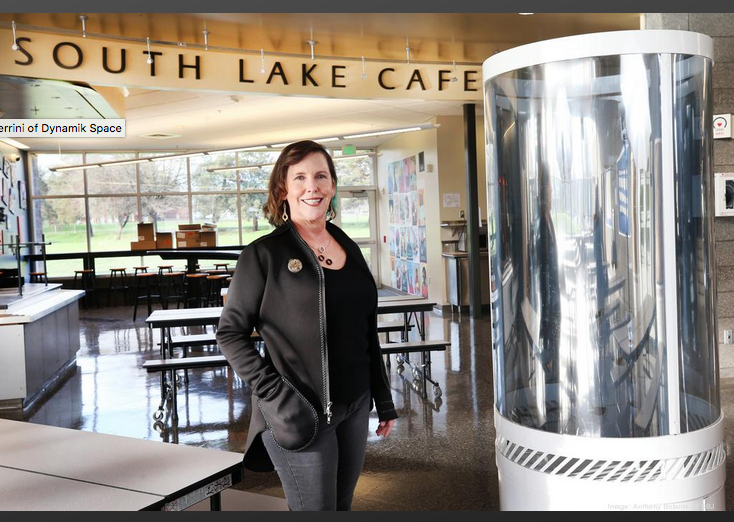
Seattle Architect Is Helping The Fast-Growing Field of Indoor Ag Take Root
Seattle architect Melanie Corey-Ferrini is launching a controlled-environment business with assists from Sabey Corp., and Microsoft. The multifaceted, to-be-named enterprise includes a training program at Alan T. Sugiyama High School at South Lake in Seattle, where she is pictured in the cafeteria with a grow tower. Anthony Bolante | PSBJ
By Marc Stiles – Senior Staff Writer, Puget Sound Business Journal
January 16, 2021
Seattle architect Melanie Corey-Ferrini’s kiosk-style lobby pop-up concept called G2 is the ultimate in farm-to-fork dining. Protein-rich grains and greens are grown on-site in the unmanned, transparent kiosk and combined with other veggies, roots, spices and dairy to make custom bowls ordered on a mobile app. G2 last summer was named best pioneering food service concept in a national contest.
It’s one small example of the possibilities of controlled-environment agriculture (CEA), which is at the heart of Corey-Ferrini’s latest endeavor: a multifaceted, urban ag project largely centered in Tukwila, where Sabey Corp. is providing warehouse space for hydroponic growing equipment that Microsoft donated.
Corey-Ferrini will use space at Sabey’s Intergate East data center campus to build and launch CEA education and business development programs this year.
CEA is a technology-based approach to food production that allows indoor farmers to maximize use of water, energy and labor. Worldwide in the third quarter, venture capitalists invested $1.6 billion in ag tech companies, bringing the 2020 total to $4.2 billion, according to PitchBook. Alexandria Real Estate Equities, a developer of life science office and lab space, offers early-stage companies move-in-ready space at its Center for AgTech in Durham, North Carolina.
The sector has struggled to put down roots in the Seattle region, where there has been one unsuccessful attempt. Now comes not only Corey-Ferrini’s to-be-named enterprise but also Kalera, a Florida-based company that plans to open a facility in 70,000 square feet of leased space in Lacey this year.
Several years ago, Corey-Ferrini consulted with Microsoft on a CEA project in Redmond. Contract farmers used Microsoft’s PowerBI and Azure platforms to grow in hydroponic towers lettuce and micro-greens for company cafeterias.
“I was like, why aren’t more people doing this? It seems like it should be a programmatic feature in all food-related spaces,” said Corey-Ferrini. “I’ve learned it’s really a little bit of robotics, a little bit of AI, a little bit of automation.”
As a member of Soroptimist Seattle, which works to empower women and girls, she is establishing a program at Alan T. Sugiyama at South Lake, an alternative public high school in the Rainier Valley. She is working with other groups like New Roots, an International Rescue Committee program that provides land and other support in South King County to around 150 immigrant and refugee families.
Deepa Iyer, senior program coordinator for New Roots, said a pilot indoor ag tech and business class will be offered at the Sabey building through Corey-Ferrini’s enterprise. She said it will provide pathways not only to a year-round growing platform but training for tech careers.
The experience of a Seattle indoor ag business, UrbanHarvest, shows the challenges of such an endeavor. Six years ago, it worked with Seattle’s Millionair Club Charity (now Uplift Northwest) during its launch, but the program shut down after about a year when it couldn’t raise additional funds, said founder Chris Bajuk.
Corey-Ferrini is approaching it with a long-term view and plans to build a multipronged enterprise with multiple income streams. Kara Anderson, director of architecture at Sabey, said Corey-Ferrini has a good shot at pulling this off.
“She’s got endless energy,” said Anderson, who added that, like Sabey, Corey-Ferrini is known for outside-the-box thinking.
“She’s not afraid to pick up an idea without knowing really how she’s going to pull it together. She just starts marching down the path to get partners and grab people into her extensive network to brainstorm,” said Anderson.
Sabey, a developer and operator of data centers nationwide, sees opportunities in the project for both its business and community.
“We’re interested in what’s going on in our backyard and opportunities to help out and make some lives better if we can,” Anderson said “At some point these indoor facilities will be monitored by computers and that, in turn, ends up feeding into the data center world.”
Melanie Corey-Ferrini
Position: Chief experience architect
Company: Dynamik Space, a design and branding company
Founded: 2000
Career: Also currently CEO of 3.14DC, which programs food and retail spaces
Lessons Learned
Use your sense of humor.
Be curious.
Don’t fear failure.