

USA - ARKANSAS: Fort FireFly Opens in Fort Smith; Teachers Learn About Hydroponic Gardens

Fort FireFly Launch
Camp Alliance and AlliancEdu on Aug. 3 opened Fort FireFly, a play-based early childhood education center designed for service-connected families – to include first responders – whose work, military service, and training schedules extend beyond traditional childcare hours.
The Fort Smith launch is supported by a $750,000 investment from the Town Branch Foundation as part of an approximately $2.3 million startup and operating budget over the center’s first 18 months.
Located at 5400 Euper Lane in Fort Smith, the center serves children ages 6 weeks through 5 years and will offer extended hours and care during military drill weekends as staffing and enrollment expand. The center is licensed to serve 89 children at one time and is expected to support approximately 150 children throughout a full day through extended hours and flexible schedules.
Enrollment is opening in phases as teachers are hired, trained and onboarded. This intentional approach allows Fort FireFly to protect program quality, support educator development and build a strong culture before expanding to full capacity. The center follows the Department of Defense family fee schedule, with family tuition designed not to exceed approximately 7% of household income per child.
Fort FireFly is also collaborating with the University of Arkansas at Fort Smith and T.E.A.C.H. Early Childhood Arkansas to explore opportunities that support early childhood student training, professional development and career pathways. AlliancEdu, the education subsidiary of Camp Alliance, operates Fort FireFly and is developing the model as a blueprint that can be adapted to expand to other communities across Arkansas.
Hydroponics Education
This summer, the Arkansas Colleges of Health Education (ACHE) Research Institute Health & Wellness Center (RIHWC) expanded its hydroponic gardening efforts by equipping area teachers with the tools and knowledge to bring hydroponics directly into their classrooms.
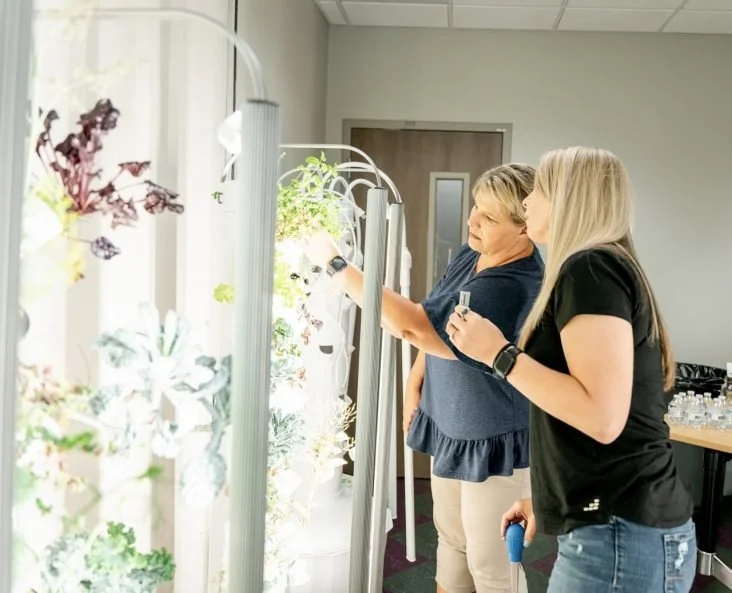
Teachers learn about hydroponic gardens in a class at the Arkansas Colleges of Health Education Research Institute Health & Wellness Center.
Through two professional development sessions, 21 teachers representing 17 schools in the region learned how to operate hydroponic tower gardens and incorporate them into classroom instruction. The 17 gardens distributed this summer join 15 already located in area schools and community organizations, along with 10 housed in the RIHWC Hydroponic Lab, bringing the total number of gardens to 42.
The idea for the professional development grew from an opportunity and a need, according to Angela Tilley, wellness program development and engagement coordinator at ACHE.
“It’s not enough to give a teacher a garden,” Tilley said. “Teachers need to know where to get the materials, how to plant the gardens, lessons you can use, and responsibilities that you can give your students.”
That realization helped shape the summer professional development sessions into what Tilley described as a “turnkey” experience. Teachers left with a tower garden, supplies, educational resources, and lesson ideas, along with a network of fellow educators they can collaborate with throughout the school year.
Beyond classroom instruction, the gardens support RIHWC’s larger commitment to improving health and wellness through research, education, and service. RIHWC plans to continue working with participating teachers during the school year, including offering nutrition lessons that connect what students grow with affordable and easy ways to prepare fresh foods. That education is particularly relevant in Arkansas. According to the U.S. Department of Agriculture’s Economic Research Service, Arkansas has the highest household food insecurity rate in the nation at 19.4%, meaning nearly 1 in 5 households in the state experiences food insecurity.
“If we can help address that nutrition and food insecurity component by knowing that students are gaining the skills, the knowledge, and the self-confidence to grow and prepare their own foods, then we’re helping meet that need,” Tilley said.