

The Hidden Cost of Importing 100% of Your Livestock Feed

Smart Fodder Farms
July 30, 2026
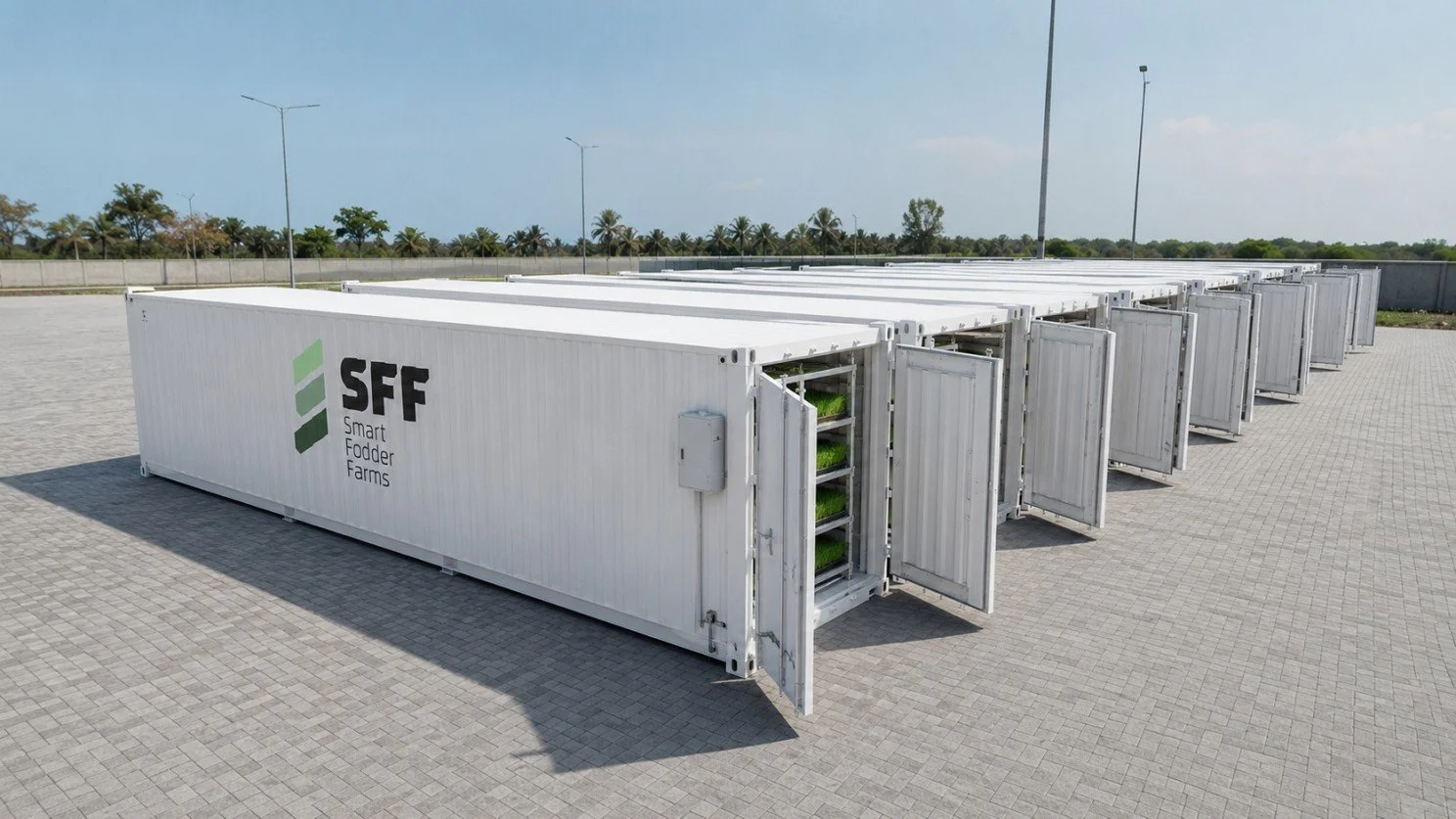
Producing part of your fresh feed on the farm can reduce costs, improve operational autonomy, and introduce a highly palatable ingredient into the ration
Many livestock businesses analyse milk yield, daily weight gain, feed conversion and veterinary costs with great precision, yet continue to accept one of their largest financial dependencies as unavoidable: purchasing almost everything their animals consume from external suppliers.
This dependence means paying for much more than the feed itself. It also includes transport, storage, intermediaries, currency fluctuations, quality losses, working capital tied up in inventory and exposure to markets over which the farm has no control.
When grain prices rise, freight becomes more expensive or a supply route is disrupted, the livestock producer absorbs the impact without being able to influence the source of the problem.
The relevant question is therefore not whether a farm can stop purchasing feed altogether. In most cases, that would be neither realistic nor nutritionally advisable.
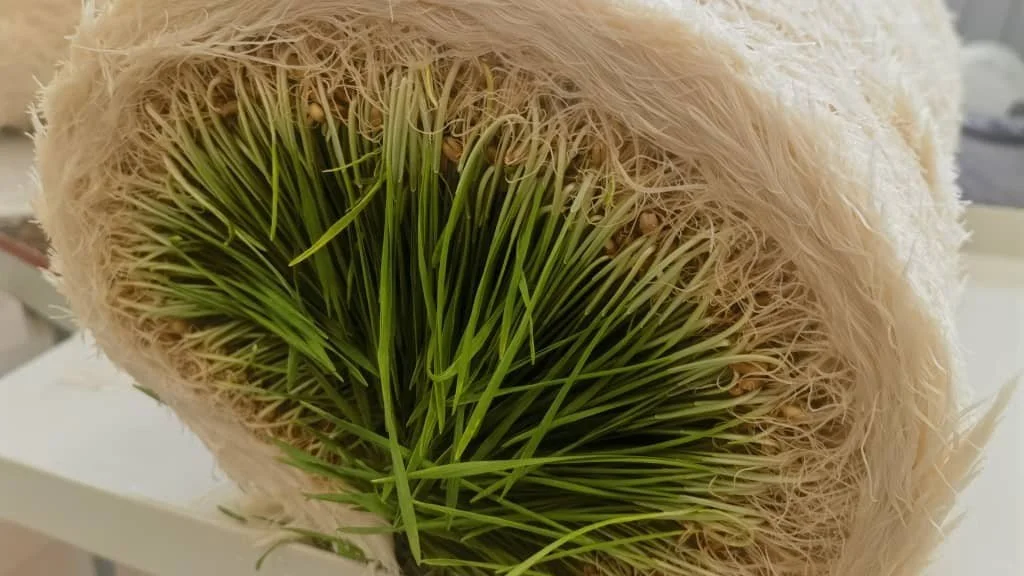
The right question is how much of that recurring external purchase could be converted into predictable, daily production on the farm itself.
This is where hydroponic green fodder deserves serious technical and economic consideration.
Hydroponic fodder does not replace the entire ration, but it does not need to
A dairy cow, beef animal, sheep or goat requires a ration formulated according to its production stage, body weight, physiological condition, performance targets and the raw materials available locally.
Hydroponic fodder should not be presented as a universal replacement for silage, hay, grain, concentrates, minerals or other essential ration components.
Its role is different.
It can be introduced as a fresh and highly palatable ingredient within a balanced diet, allowing the farm to partially replace selected purchased ingredients and reduce its dependence on external suppliers.
Research into sprouted grains and hydroponic fodder generally supports their strategic inclusion in ruminant diets, although it also highlights an important limitation: their high moisture content and relatively low concentration of dry matter mean that they must be incorporated carefully.
This distinction is essential.
The objective is not to feed the entire herd exclusively with hydroponic fodder. The objective is to produce a controlled proportion of the daily ration that would otherwise need to be purchased, transported, stored and financed.
Why lignin matters
Lignin is a structural component of plant cell walls. It gives plants rigidity and strength, but it also limits the ability of rumen microorganisms to access cellulose and hemicellulose.
As plants mature and become increasingly lignified, a greater proportion of their fibre becomes less accessible to microbial fermentation.
Hydroponic fodder is harvested at a very early stage of growth, usually only a few days after germination. At this point, the plant tissue is still young, tender and less lignified than many conventional forages harvested at more advanced stages of maturity.
This provides the animal with fresh, young fibre that can be more accessible to rumen microorganisms.
It does not mean that hydroponic fodder can replace the physically effective fibre required to stimulate chewing, saliva production and rumen stability. Long fibre from hay, silage or other forage sources remains essential in a properly formulated ration.
However, hydroponic fodder can contribute a fresh, moist and highly palatable ingredient with relatively low lignification.
From a behavioural perspective, it also allows ruminants to consume living, fresh plant material, something closer to their natural feeding instinct than a diet composed entirely of dry, processed or long-stored ingredients.
The correct nutritional strategy is therefore to combine both requirements: sufficient effective fibre to protect rumen function, together with a fresh hydroponic component that improves palatability and complements the ration without adding excessive moisture.
The mistake of comparing fresh kilograms
The economic analysis of hydroponic fodder must be carried out carefully.
Directly comparing one kilogram of fresh hydroponic fodder with one kilogram of hay, grain or concentrate can produce misleading conclusions because their moisture contents are very different.
The correct comparison should be based on the cost per kilogram of dry matter supplied and, whenever possible, on the cost per unit of energy, digestible protein or other nutrient actually available to the animal.
The full cost of each alternative must also be considered.
For imported or externally purchased feed, the real cost may include:
The purchase price.
Transport to the farm.
Insurance and customs costs.
Unloading.
Storage infrastructure.
Product losses and deterioration.
Capital tied up in inventory.
Exposure to currency and market volatility.
For hydroponic production, the calculation should include seed, water, electricity, labour, hygiene, maintenance and equipment depreciation.
Only when both systems are compared using the same nutritional unit can the farm determine the real saving.
The economic difference may be especially significant in businesses that depend heavily on imported feed, operate in areas with high logistics costs or have limited access to reliable supplies of fresh forage.
From an exposed buyer to a partially autonomous producer
Producing feed on the farm changes the structure of risk.
Part of the feeding cost is no longer determined exclusively by the international price of finished feed. Instead, it becomes linked to variables that the livestock business can control more directly, such as seed consumption, water, electricity, labour and system productivity.
The production cycle is also short.
Barley seed can be converted into fresh hydroponic fodder in approximately one week, making it possible to plan a daily harvest and adjust production to the actual needs of the herd.
This does not eliminate the need for reserves, nor does it replace a complete nutritional strategy.
What it provides is an additional source of fresh feed, produced under controlled conditions, available throughout the year and less exposed to interruptions in external supply.
The business difference is substantial.
A farm that imports all its feed can only negotiate price, choose suppliers and manage inventory.
A farm that produces part of its feed can decide how much to produce, when to produce it and what percentage of external purchases it wants to replace.
The saving begins before installing the system
The decision should not begin by choosing a container model or a specific production capacity.
It should begin with an analysis of the livestock operation.
How many animals must be fed?
What is their daily dry matter intake?
Which ingredients are currently being purchased?
What is their real delivered cost at the farm?
Which part of the ration could be replaced without affecting nutritional balance?
What are the local costs of water, electricity, seed and labour?
With this information, it is possible to calculate the daily volume of hydroponic fodder required, the production cost per kilogram of dry matter, the potential saving compared with external purchasing and the expected return on investment.
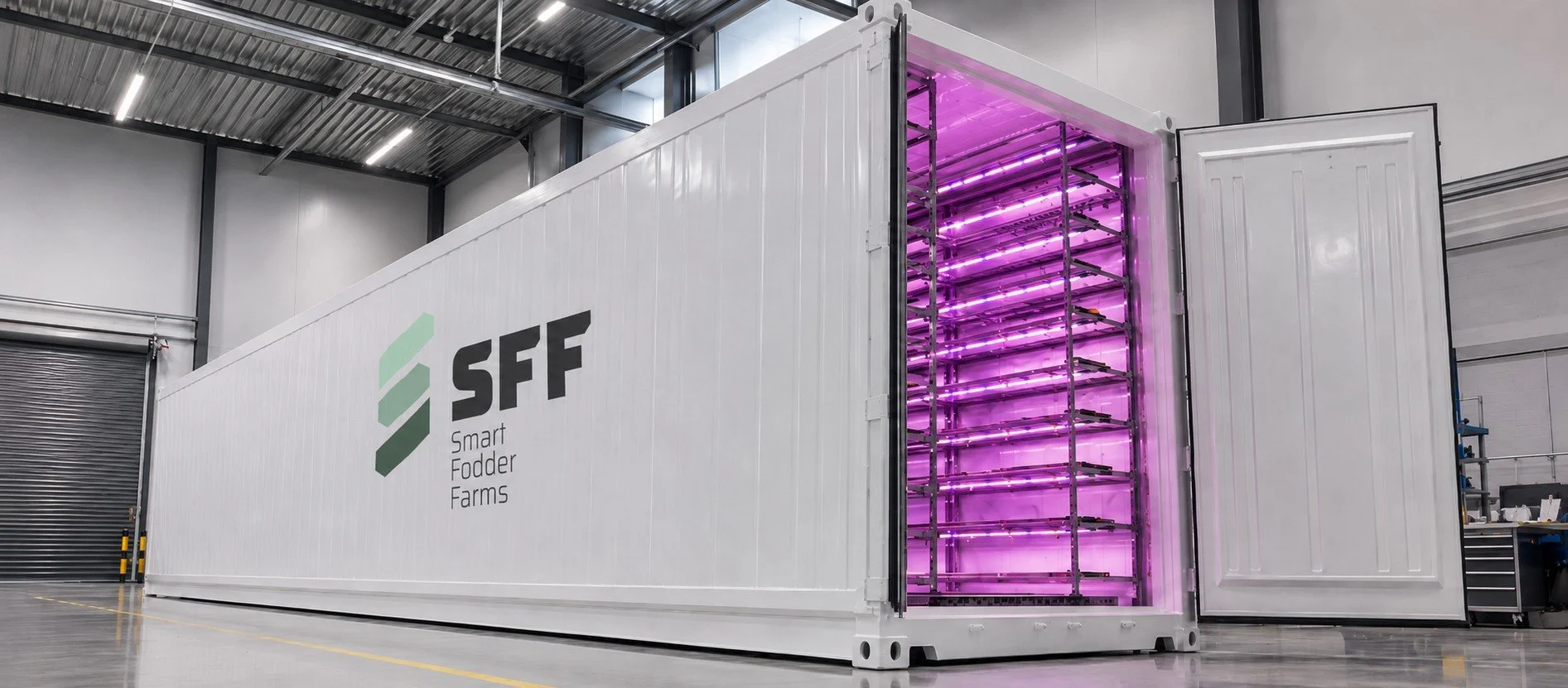
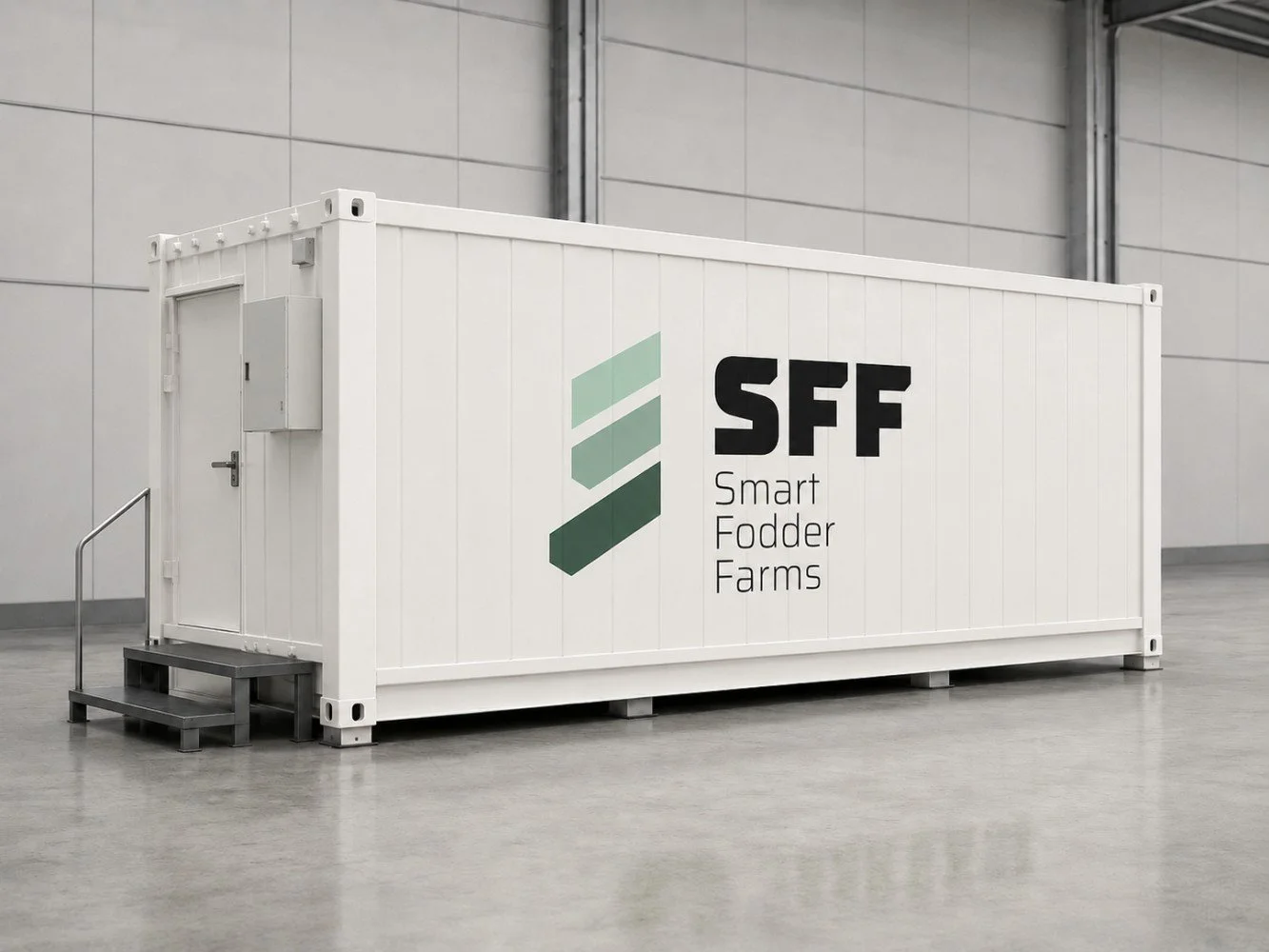
Smart Fodder Farms modular systems are designed to bring this production capacity directly to the livestock operation.
The purpose is not to claim that hydroponic fodder can solve the entire feeding programme by itself. The purpose is to determine what proportion of a recurring feed bill can be converted into controlled, on-farm production.
Perhaps the problem is not how much feed you use, but how you purchase it
A livestock farm will always need different raw materials to build a complete ration.
However, depending on imports or external suppliers for 100% of feed requirements means accepting costs and risks that may be reduced.
Producing part of the daily ration on the farm can introduce a fresh, highly palatable and relatively low-lignification ingredient while reducing exposure to transport costs, market volatility and supplier availability.
The objective is not to replace the entire diet.
It is to identify what percentage can be produced within the farm more predictably and, under the right conditions, more economically.
For a livestock company purchasing hundreds or thousands of tonnes of feed each year, even a partial reduction in external dependence can represent a substantial cumulative saving.
The first step is not purchasing an installation.