How On-Site Micro-Farms Improve Nutrition and Engagement in Senior Living

September 16, 2026
In senior living, food is rarely just about what is on the plate. Meals shape routines. Dining rooms create opportunities for connection. Familiar ingredients can bring back memories. And something as simple as watching fresh herbs grow can give residents a reason to stop, ask questions, and participate. That is what makes on-site micro-farming interesting for senior living communities.
Instead of fresh produce arriving only through the traditional supply chain, communities can grow selected herbs, greens, and other crops right where residents live.
But the value goes beyond the harvest.
Fresh Food Becomes Part of the Resident Experience
When food is grown on-site, residents can see where part of their food comes from. They can watch plants develop, participate in harvesting, talk with dining teams about what is growing, and later see those ingredients incorporated into meals.
That creates a much stronger connection between growing and eating. For dining teams, an indoor micro-farm can provide hyperlocal ingredients that can be incorporated into salads, garnishes, herbs, and other menu applications. For residents, it turns fresh food into something they can experience rather than simply receive.
Growing Creates Natural Opportunities for Engagement
Senior living communities are constantly looking for activities that feel meaningful rather than scheduled simply to fill time. Growing food naturally creates those moments.
Residents can gather around the farm, follow the progress of different plants, participate in harvests, learn about hydroponic growing, or simply enjoy watching something change from week to week.
It can become part of gardening clubs, culinary demonstrations, wellness programming, sustainability initiatives, or intergenerational activities with visiting families and local students. And participation does not have to look the same for everyone. One resident may want to help harvest basil. Another may enjoy discussing a plant they grew at home years ago. Someone else may simply enjoy seeing greenery in a shared space.
The micro-farm creates the opportunity. Residents decide how they want to engage with it.
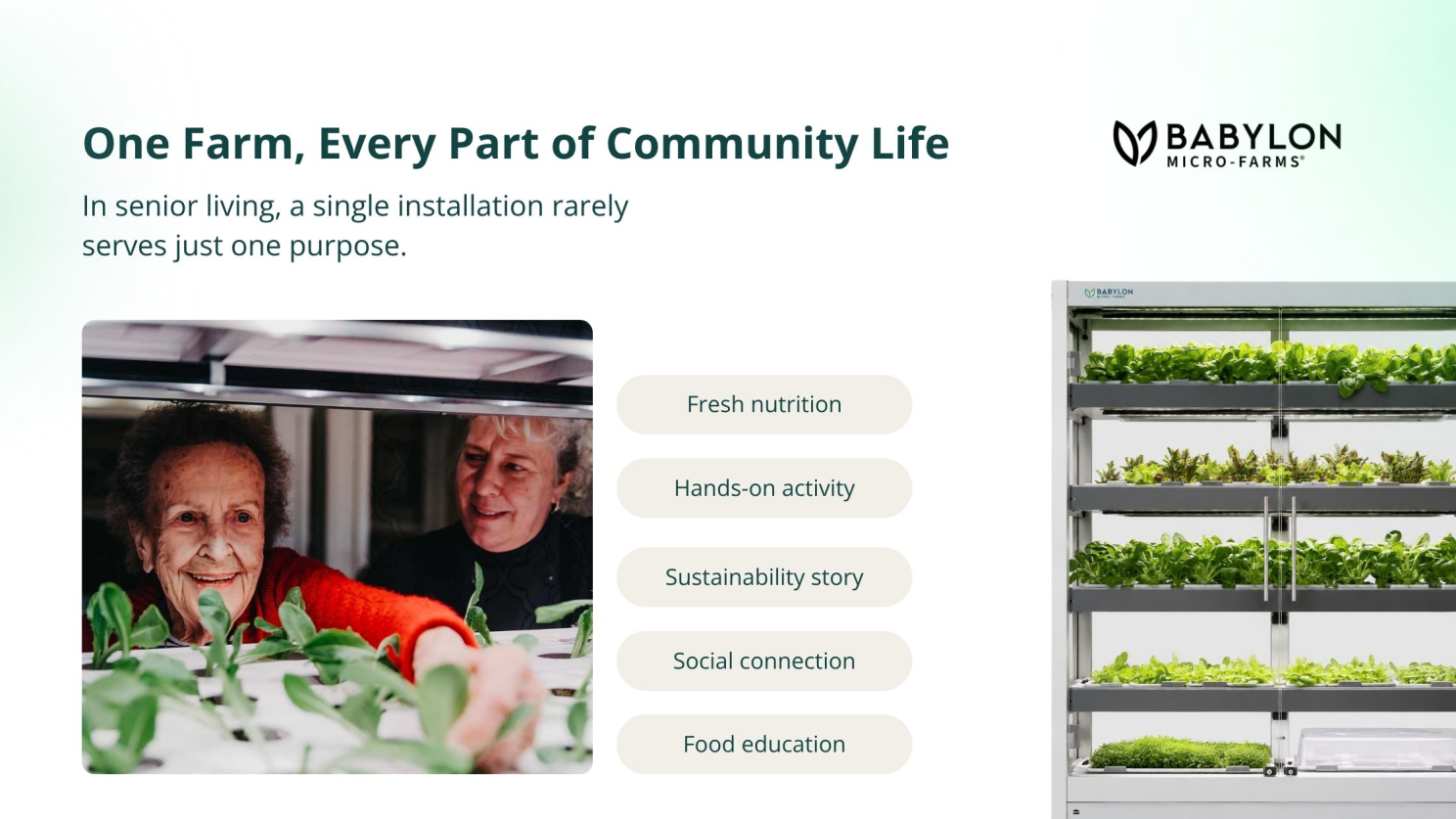
Babylon Micro-Farms’ Galleri is designed to bring year-round indoor growing into senior living and dining environments with guided technology and ongoing support.
Food Can Spark Memory and Conversation
Food has an unusual ability to connect people with memories. The smell of fresh basil, the sight of lettuce growing, or a conversation about a favorite recipe can lead somewhere unexpected. For many older adults who spent years gardening, cooking for families, visiting farmers' markets, or growing herbs at home, seeing food grow can feel familiar.
That familiarity can create conversations between residents, staff, family members, and dining teams. A growing system can therefore become more than a source of ingredients. It can become a shared point of interest within the community.
It Brings Dining and Resident Programming Together
Dining, wellness, and resident engagement are sometimes treated as separate parts of senior living operations. An on-site micro-farm can connect them.
Imagine residents harvesting herbs in the afternoon and seeing the same ingredients incorporated into dinner. Or a chef using a harvest as part of a cooking demonstration. A wellness team could build programming around fresh foods, while sustainability teams could use the farm to start conversations about how food is grown. One system can create touchpoints across multiple parts of the resident experience.
For senior living operators, that matters because the strongest amenities are not always the ones with a single purpose. They are the ones that can become part of everyday community life.
Indoor Growing Makes the Experience Visible Year-Round
Traditional gardens can be valuable additions to senior living communities, but they come with limitations. Weather, seasonality, outdoor accessibility, and available space can all affect how frequently residents can participate. Indoor micro-farms create a different opportunity.
Growing can happen inside the community throughout the year, bringing the experience closer to dining areas and other shared spaces where residents already spend time. The farm itself can become a visible feature of the community rather than something happening somewhere behind the scenes.
Residents can walk past it and notice what has changed. Staff can incorporate it into programming. Visitors can ask about it. Over time, it becomes part of the environment.
A Small Farm Can Have a Much Bigger Role
The most interesting question for senior living communities may not be, "How much food can we grow?" It may be, "How many resident experiences can we create around growing food?"
Fresh ingredients are one outcome. But so are conversations, activities, sensory experiences, educational opportunities, chef interactions, sustainability storytelling, and moments of connection. That is why on-site micro-farming has the potential to play a broader role in senior living. It brings food production into a place where people can actually experience it.
A Different Way to Think About Senior Living Dining
The most interesting opportunity with on-site micro-farms for senior living may not be how much food can be grown. It is how many experiences can begin with that food.
A single crop can become a resident activity, a conversation, an educational moment, an ingredient in dinner, and a visible example of a community’s approach to wellness and sustainability. For senior living operators trying to improve nutrition and engagement at the same time, bringing food production into the community creates an opportunity to connect the two.
Babylon Micro-Farms’ Galleri Micro-Farm is designed to bring year-round indoor growing into senior living and dining environments with guided technology and ongoing support.
Interested in seeing what an on-site micro-farm could look like in your senior living community?
Explore Galleri and schedule a demo with Babylon Micro-Farms.