

Development of a Controlled-Environment Plant Growth Chamber Using a Shipping Container for Industrial Hemp (Cannabis sativa L.) Cultivation

18 Dec 2025
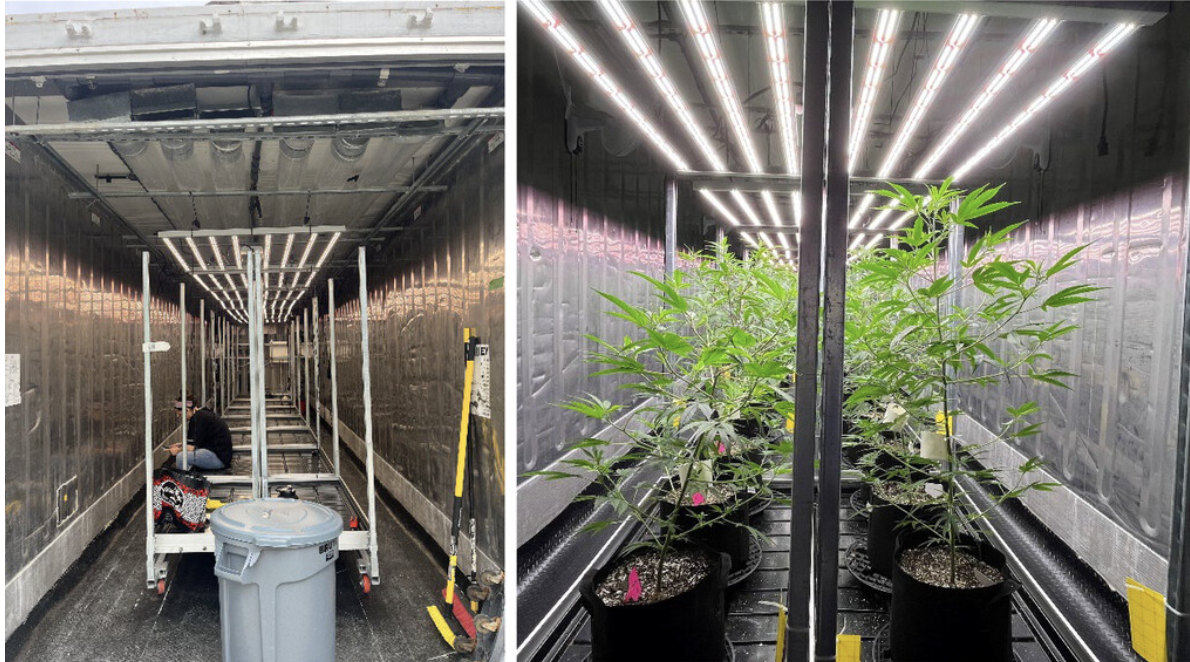
We present the comprehensive design, construction, and implementation of a 12-m shipping container adapted into a plant growth chamber optimized for industrial hemp (Cannabis sativa L.) cultivation. The system integrates appliances such as air conditioners, dehumidifiers, light-emitting diode growth lights, and advanced environmental controllers. Key cultivation parameters were maintained within optimal ranges: temperature, 27 °C; photosynthetic photon flux density, 300 to 850 µmol·m–2·s–1; humidity, 50% to 75%; and vapor pressure deficit, 0.5 to 1.3 kPa. A drip irrigation system delivered water volumes from 500 to 2000 mL, tailored to plant developmental stages.
This modular, scalable design offers a flexible, cost-effective solution for controlled-environment agriculture, applicable across diverse research and crop cultivation.
Industrial hemp (Cannabis sativa L.) is an annual, flowering diecious crop cultivated for its food, fiber, and medicinal properties. In 2018, the US government established the Agriculture Improvement Act, legalizing the production, sale, and research of industrial hemp throughout the country. Industrial hemp is defined as any C. sativa plant with a Δ9-tetrahydrocannabinol percentage less than 0.3%, as stipulated by the Agriculture Improvement Act. This bill has caused a resurgence in the cultivation and production of C. sativa in the United States.
Industrial hemp can be grown in various agricultural systems, including field and indoor production. However, industrial hemp flower and phytochemical yield are highly dependent on environmental conditions. For this reason, many growers have transitioned into controlled-environment agriculture (CEA) systems (Sparks and Stwalley 2018). CEA systems manipulate precisely the key environmental parameters for plant growth, such as light, temperature, humidity, and irrigation, to create an ideal growing space (Mitchell 2022; Sparks and Stwalley 2018). Their ability to minimize pest pressure, reduce environmental variability, and enable year-round cultivation has made CEA an important tool to produce high-value, environmentally sensitive crops such as hemp (Guerrero-Sánchez et al. 2025).