

Welcome to iGrow News, Your Source for the World of Indoor Vertical Farming
Shorten Supply Chains With Urban Farming
While urban indoor agriculture may have seemed a far-fetched dream in the past, developments in city planning and technological innovation are making it into a reality
There are many reasons why a government or international organization may advocate the introduction of urban indoor farming. The association for vertical farming looks at some of the main motivations for bringing agriculture closer to the consumer. While urban indoor agriculture may have seemed a far-fetched dream in the past, developments in city planning and technological innovation are making it into a reality. These developments are helping to alleviate pressure on food supply chains and cultivate food security in a period of mass population expansion.
Urban indoor agriculture is seen as a viable solution to dramatic increases in population. Already fifty-five percent of the world’s population lives in urban areas and this figure is set to increase. Moreover, eighty percent of all food produced globally is destined for consumption in urban spaces to meet this increased demand. By bringing farming closer to the city, agricultural networks have a better chance of meeting this demand sustainably and efficiently by cutting out unnecessary segments of the supply chain. Farmers are also better able to attract young people into the workforce as they can offer new and innovative routes into agriculture which appeal to the urbanized workforce.
Agriculture in urbanized areas also presents an opportunity to establish a more circular economy. Farming can be integrated more holistically into the overall working of urban life by combining its production with other essential services like waste management. Rather than establishing a food network that operates on a ‘cradle-to-grave’ methodology, urbanized farming presents new opportunities to recycle and reuse resources in an integrated bio-economy. The decrease in transportation costs which comes from closer proximity between consumers and producers also helps to reduce emissions. The benefits of urban indoor farming can be seen to not only enhance economic efficiency but also maximize sustainability by cutting down the city’s overall carbon footprint.
Finally, urban indoor agriculture offers an exciting opportunity for communities to reconnect with the process of farming. Shorter supply chains not only increase accessibility to food but can also improve overall public engagement with the food production process. Supply chains can be seen not only as a means to an end but also as an opportunity for social engagement by integrating small producers, farms, and vulnerable groups along the supply chain. Educational opportunities for schools and society as a whole can be brought closer to the urban population which allows a reconnection with the cultivation of fresh produce.
While it is possible that cities never become solely reliant on urban agriculture, it is clear that the integration of agriculture into the urban zone offers several social, economic, and environmental benefits. Food supply chains should therefore actively cultivate urbanized agriculture to help reach increased standards of efficiency and sustainability at this time of rapid population expansion.
For more information:
Association for Vertical Farming
Marschnerstrasse,
81245 Munich,
Germany
info@vertical-farming.net
vertical-farming.net
Publication date: Mon 28 Sep 2020

"Vertical Farming Won’t Replace All Greenhouse Production, But It’s More A Combination of All of Them"
“We have been studying the vertical farming market for a couple of years now. Today, we haven’t seen any new, exciting things I must say, but vertical farms continue to improve
“We have been studying the vertical farming market for a couple of years now. Today, we haven’t seen any new, exciting things I must say, but vertical farms continue to improve. More production systems become high-tech, from greenhouse growers to other farmers. It’s also more about looking at what is applicable per location, whether it’s an indoor farm in an urban area or a high-tech greenhouse more suitable for the area it’s based,” Cindy van Rijswick, Expert Fresh Produce at Rabobank Research Food & Agribusiness, says.
Cindy van Rijswick
Not at its peak yet
Vertical farming in the Netherlands isn’t very thrilling production-wise, but many great techniques are developed here, she notes. “The USA e.g. is not very familiar with glass greenhouses. They switched to vertical farming at some point and often skipped the glasshouse concept. The only disadvantage a greenhouse has, compared to vertical farming, is that it needs more space and it is less easy to control because still sunlight is used.”
In the indoor farming market, there are a lot of small-scale companies. In comparison to the Dutch greenhouses, it’s not as profitable as it could be. When stacking multiple layers vertically it will increase production. “However, it's not large-scale enough. Now there is a limited range of products, such as luxury lettuces and herbs, for which there is only a narrow market.”
Uniformity
“The market is currently in a development phase. Before it will become mature, mistakes are being made. There are still many steps to be taken before we’ll get there. One being, increasing efficiency. In addition to that, there are too many different systems being used and instead, more uniformity is needed.
"All kinds of systems are developed while there are companies that have existing well-working systems. However, large sums of money are put into the sector while very little working proof comes out of it. In the future, there will be more vertical farm suppliers that will operate effectively. The sector needs to collaborate and compare more. In this way, steps can be taken. Although even then, it will not replace all greenhouse production, it’s more a combination of all of them,” Van Rijswick explains.
Costs per m2
The investment costs for a vertical farm are more or less starting at € 2000 per m2 in comparison to a greenhouse which is about € 200-500 per m2. There is a huge difference between investment costs which is a major disadvantage for farmers looking for funding. Efficient herb plant factories could possibly compete with a greenhouse at the same cost price. Unfortunately, there’s so little transparency in the industry that not much is known about it.
Suitable location?
Van Rijswick affirmed that in some cases it’s better to be located inside the city. However, there are also many disadvantages to it. The land price is very high-priced in large cities, which causes it to be competing with for example office space. “There are many logistic problems as it's very complicated to get around within the city. The location has to be looked at in a more efficient way. As a large-scale farm, when being located next to a distribution center it’s much easier to distribute products to retail stores.”
Vacant buildings are hardly suitable for a vertical farm because of the following:
Often the floors aren’t able to carry heavy racks and installations
There are risks involved using a lot of electricity and water and it is sometimes difficult to insure these
The building will have a different use which is not always accepted by the municipality
Van Rijswick adds: “In most cases, it is better to acquire a new building where a new farm can be built rather than in existing offices. People think about it too easily. The most commonly used argument is that the building is then utilized beneficially, but this is not always the case.”
‘Japan as a frontrunner’
The country that has been out there the longest is Japan. Although the cost price is higher than in the Netherlands, people are willing to pay more for their greens. Van Rijswick continues: “Many young people would like to start their own farm, having great technique and a proper business plan. However, they can't put into words what their market is. China has had many food scandals, so there’s more demand for fresh produce with guaranteed safety. They’d rather pay more for clean food, produced in a safe growing environment. In Europe, this is less of an issue and competition is high, which makes it difficult to sell produce at a premium.”
‘More suitable for leafy greens’
“In the end, I think that indoor farming is most suitable for leafy greens, such as lettuce and herbs. Young plants and starting materials are also very suitable for this kind of growing environment. These greens are well suited for this type of cultivation, in terms of hygiene requirements and product quality. The crops can easily be stacked in multiple layers. This results in a higher value per kilogram, which is great looking at the cost price of these farming techniques.”
Large farms can process this type of production better than a small farm growing plants. These farms can pack and deliver the products immediately because only then it becomes logistically efficient. “For ‘fresh-cut companies’ it could be useful if they could grow some of their raw materials within their factory, such as expensive types of lettuce. In small businesses, I see more potential for local markets and the hospitality industry. But in the future, there certainly will be more large professional farms that will be growing large scale,” Van Rijswick explains.
For more information:
Rabobank
Cindy Rijswick, Expert Fresh Produce at Rabobank Research Food & Agribusiness
Cindy.Rijswick@rabobank.com
www.rabobank.com
Publication date: Tue 22 Sep 2020
Author: Rebekka Boekhout
© HortiDaily.com

RSVP - Indoor Ag Science Cafe October 20th 11 AM Eastern Time
Learning critical control point for hydroponic food safety
October Indoor Science Cafe
October 20th Tuesday 11 AM Eastern
Please Sign Up!
Learning critical control point
for hydroponic food safety
"Hydroponic Crops --
How can you produce safe vegetables?"
By
Dr. Sanja Ilic (The Ohio State University)
Please sign up so that you will receive Zoom link info.
Indoor Ag Science Cafe is an open discussion forum, organized by Chieri Kubota (OSU), Erik Runkle (MSU), and Cary Mitchell (Purdue U.) supported by USDA SCRI grants.
Sign up here

USDA Encourages Ag Producers, Residents To Prepare For Hurricane Delta
The U.S. Department of Agriculture (USDA) is reminding communities, farmers, ranchers and small businesses in the path of Hurricane Delta that USDA has programs that provide assistance in the wake of disasters. USDA staff in the regional, state, and county offices stand ready and are eager to help.
USDA has partnered with FEMA and other disaster-focused organizations to create the Disaster Resource Center, a searchable knowledgebase of disaster-related resources powered by subject matter experts. The Disaster Resource Center website and web tool now provide an easy access point to find USDA disaster information and assistance.
Click Here For More Information.

Publication date: Fri 9 Oct 2020
USA - MARYLAND - Father, Daughter Launch Hydroponic Farming Operation In Montgomery County
With lettuce regularly being in the news related to an outbreak of disease, father and daughter Rod Kelly and Alex Armstrong concluded that there has to be a better way to purchase fresh produce
By Sondra Hernandez, Staff writer
September. 28, 2020
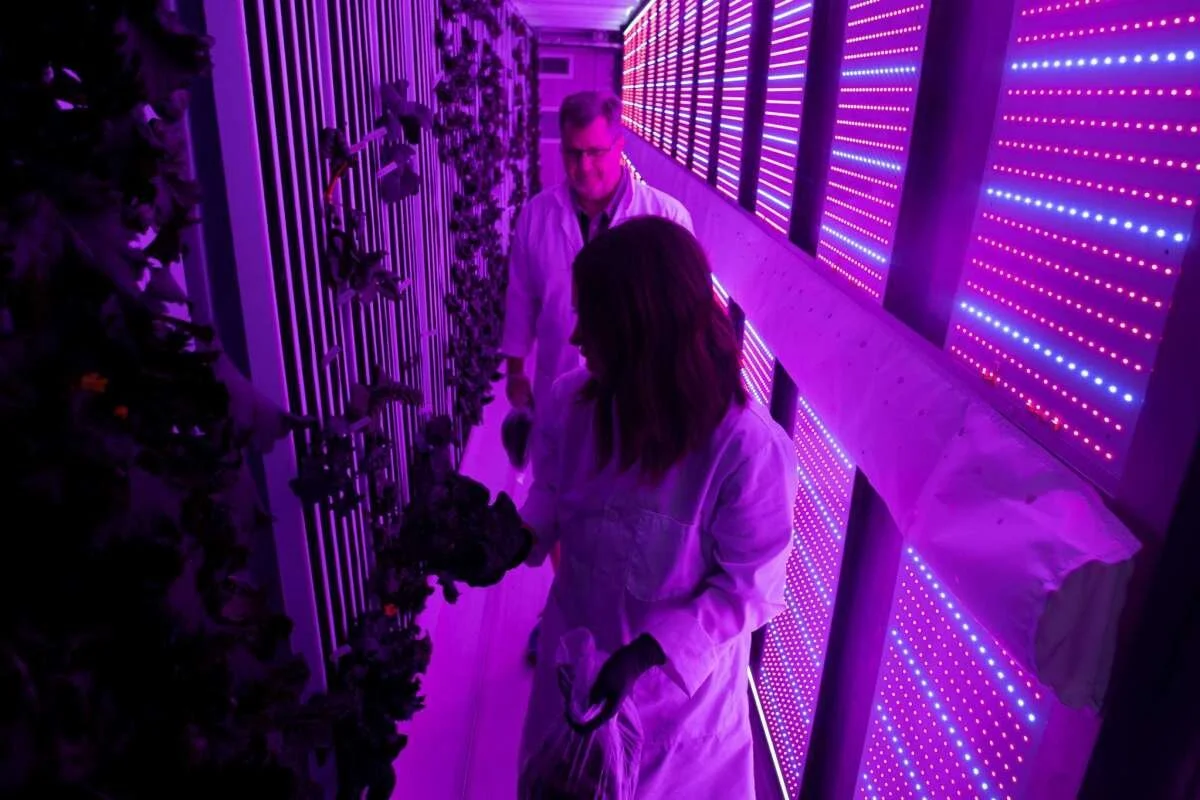

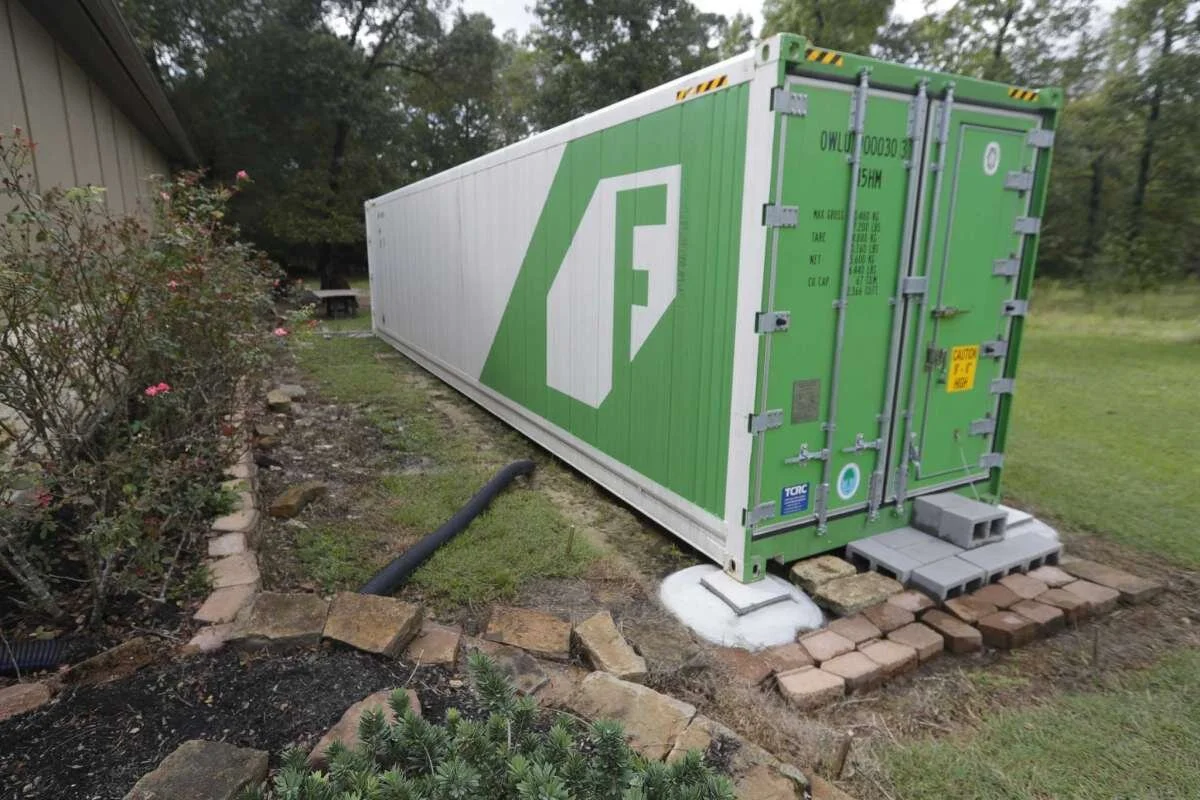
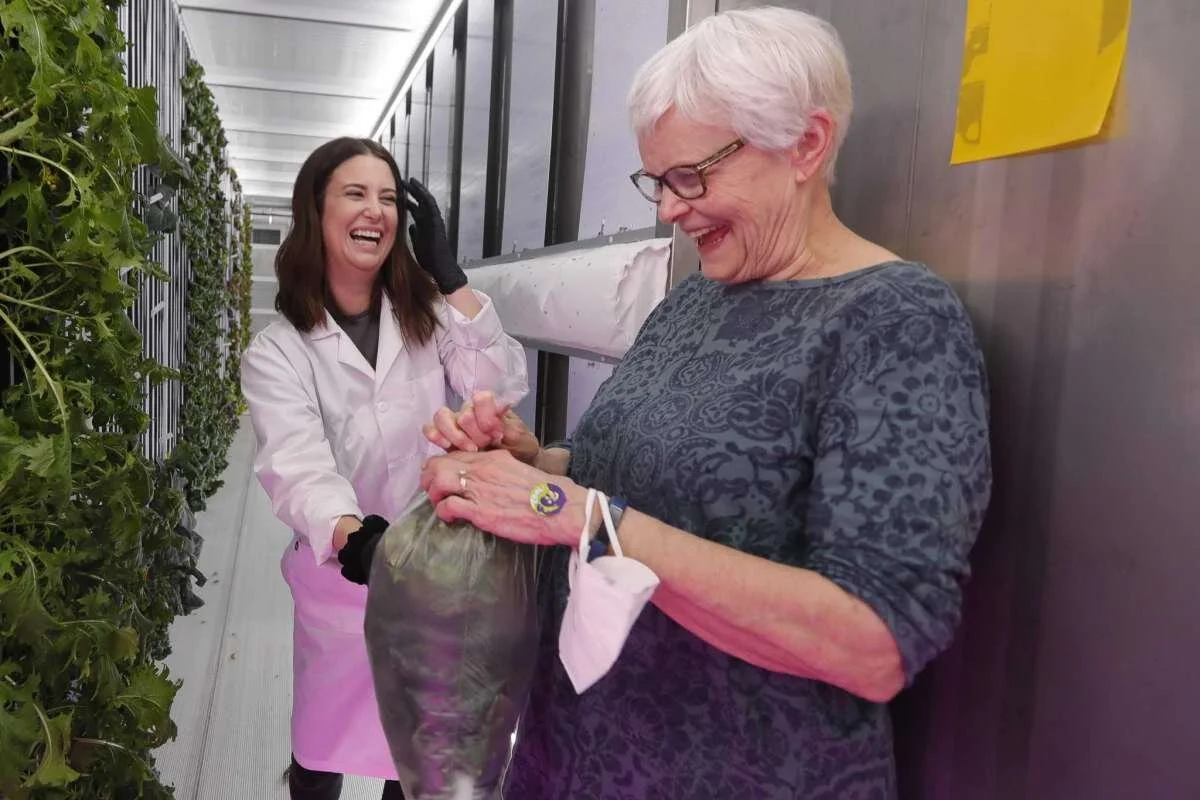

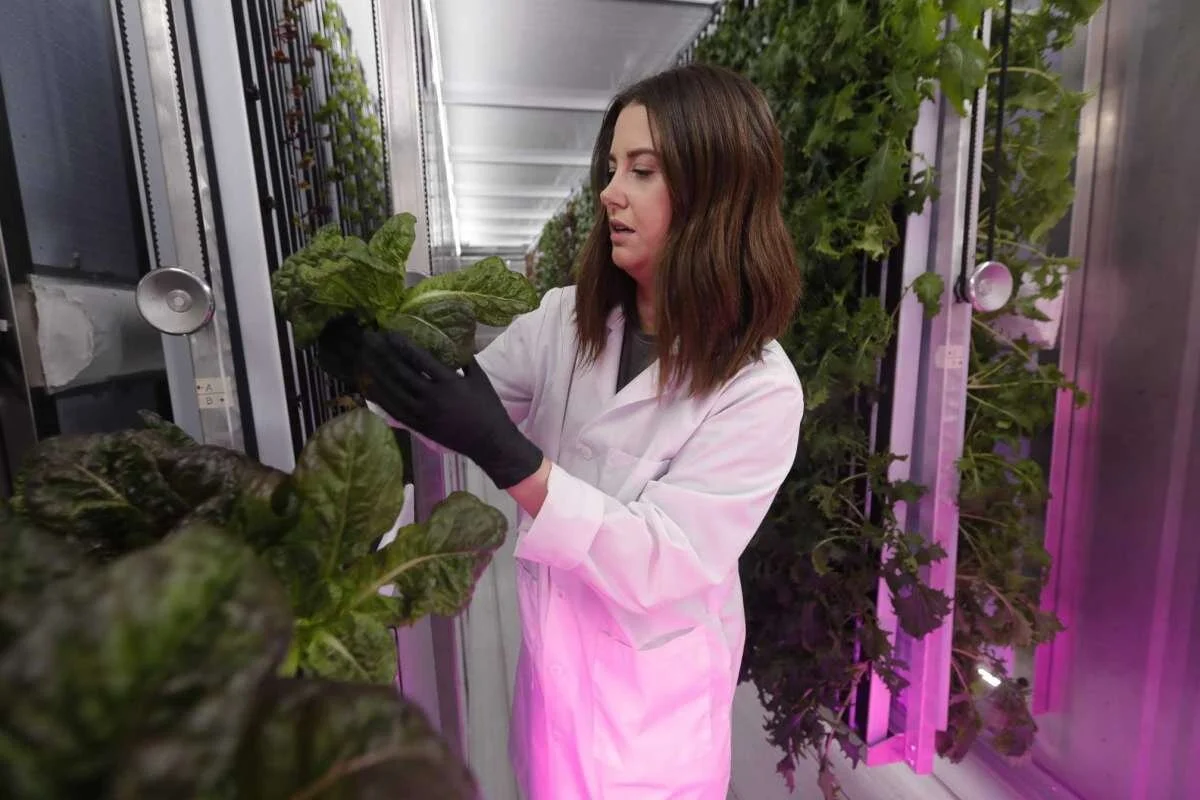
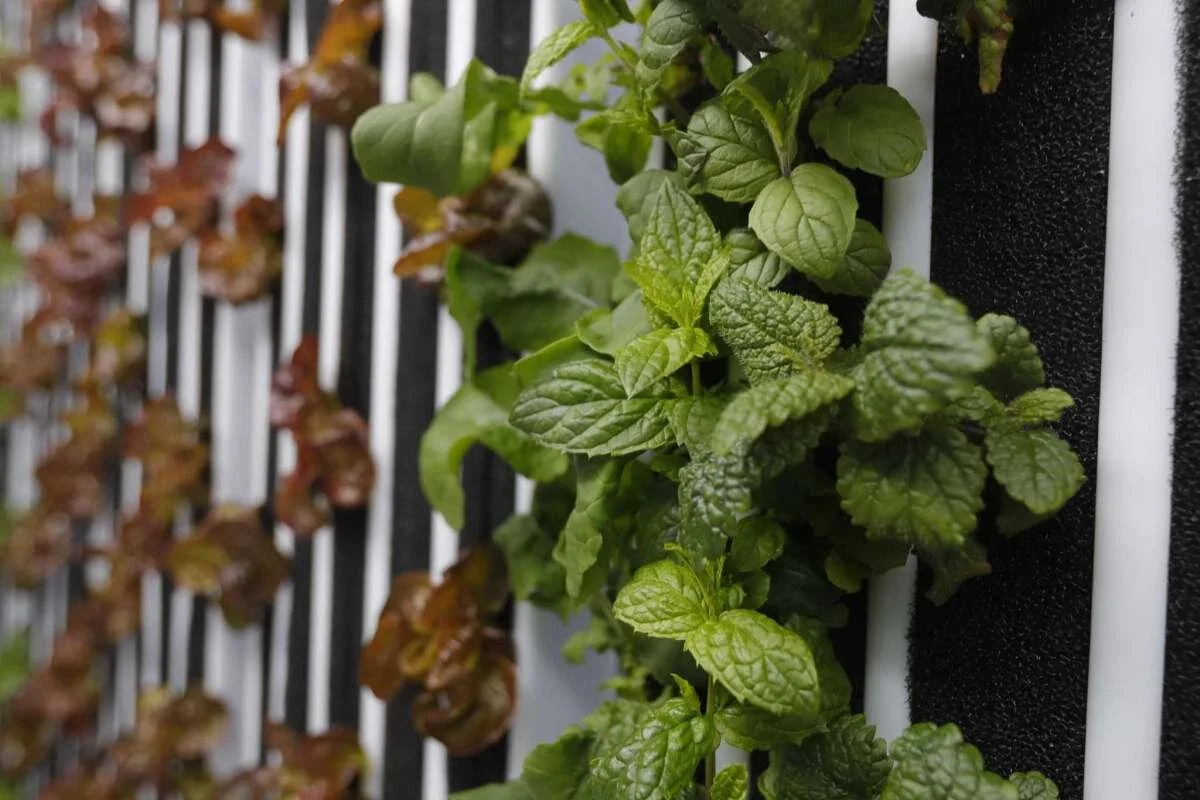
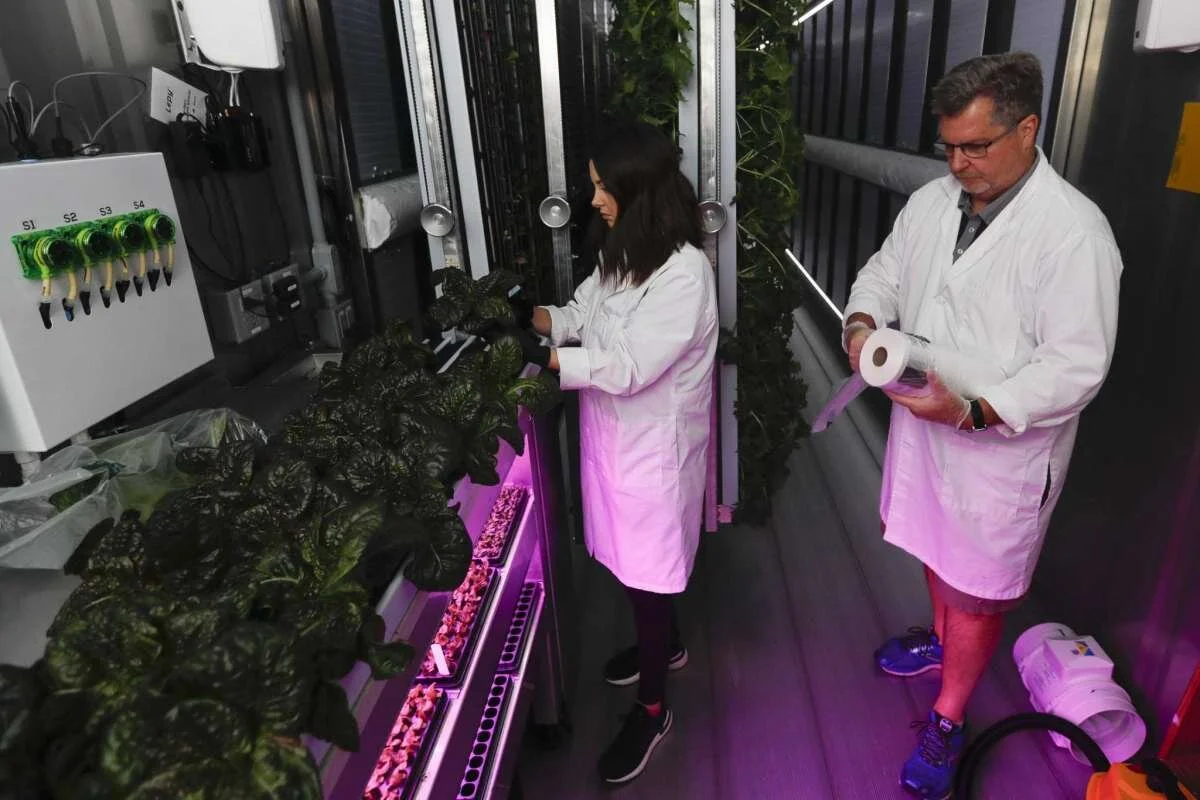
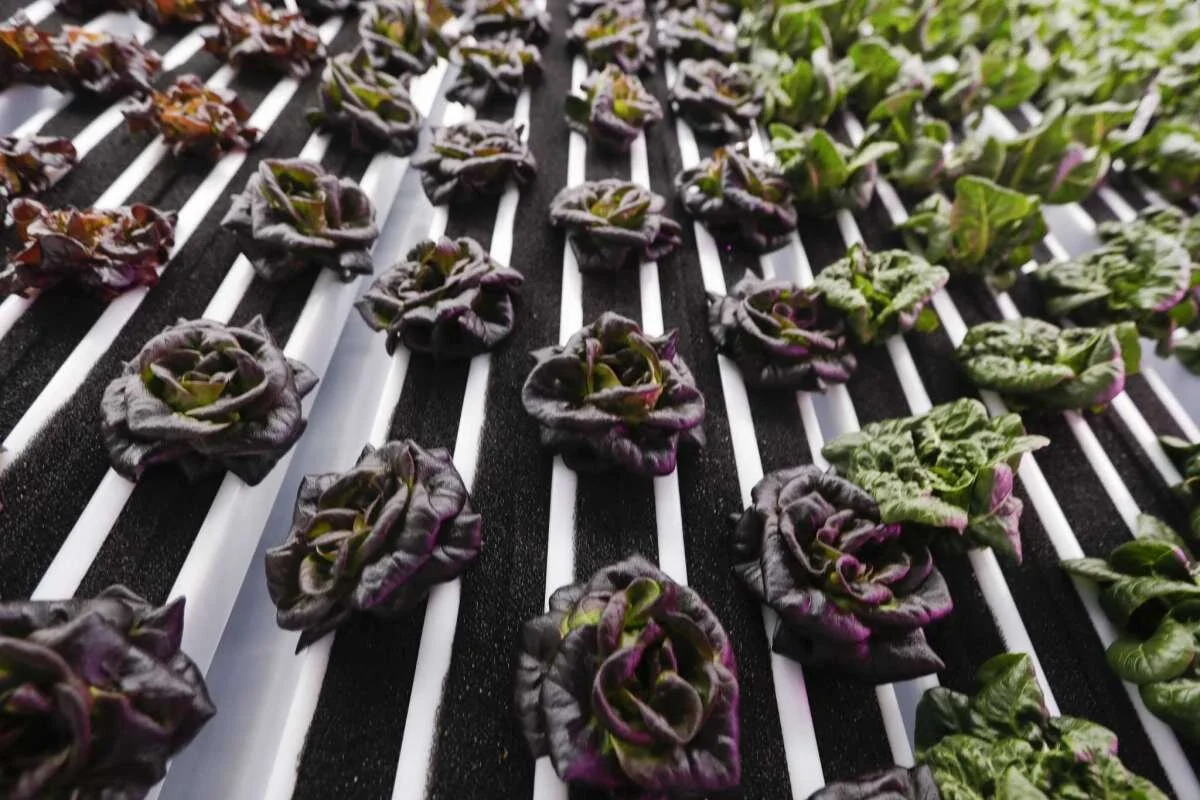

With lettuce regularly being in the news related to an outbreak of disease, father and daughter Rod Kelly and Alex Armstrong concluded that there has to be a better way to purchase fresh produce.
“It’s really hard to get fresh produce,” Armstrong said. “About 80 percent of lettuce comes from California. It’s hard to find locally grown produce.”
It was also concerning to her that consumers don’t quite know what they are getting with lettuce brought in from another area. Is it pesticide-free? Was there any contamination from livestock waste runoff?
“People are more aware of what’s in their food and they are more concerned about it,” she said.
To offer a fresh, locally grown option, the two have turned to a climate-controlled, vertical, hydroponic farming operation set up in a shipping container on property in South Montgomery County.“It’s an amazing technology,” Kelly said. “It’s a perfect climate-controlled environment for growing leafy greens.”
Kelly is a petroleum engineer and Armstrong has a marketing background. Kelly also owns several businesses and was looking for a project that he and his daughter could work on together.
They found the technology behind hydroponic farming fascinating.
The farm is contained in a custom-built, insulated shipping container. Kelly and Armstrong worked with Freight Farms in Boston for their operation.
The shipping container came from Boston by 18-wheeler and was delivered in late June. They planted their first crop in late July.
The message of Freight Farms is that fresh produce can be grown anywhere regardless of the climate.
Seedlings begin growth in trays under red and blue LED lights. Once the seedling grows larger, it’s transferred to a vertical tower for growing until its ready to harvest.
Water flows from the top of the container down through the roots and is collected at the bottom of the tower before being recycled to use again. These methods use about 90 percent less water than conventional farming. A panel of red and blue LED lights help the plants to grow into nutrient-rich food.“It’s cool technology and as an engineer, I appreciate that” Kelly said.
Fare House Farms grows a variety of lettuce and herbs.
They offer a wide array of lettuce like butterhead, bibb, romaine, Summer Crisp, and Oakleaf just to name a few. They offer leafy vegetables like arugula, cabbage, collards, kale, mustard greens, spinach, and chard. They also offer a variety of herbs like basil, cilantro, chives, dill, and more.
See their website at farehousefarms.com for a full menu.
Before this experience, Armstrong said she never knew what truly fresh lettuce and herbs tasted like.
She said the hydroponically grown lettuce was sweeter and crunchier. Kelly added the lettuce was prettier too.
The lettuce is sold with the peat moss plug still on so it will stay fresh for longer.
Kelly said they will spend the rest of 2020 experimenting with what grows best and studying the produce preferences of local buyers.
They plan to participate in local farmer’s markets to get their start.
They harvest on Fridays before the Saturday farmer’s markets.“You’re getting the freshest crop that you can get,” Kelly said.
Visit the Fare House Farms page on Facebook for more information and to see the farmer’s markets that they’ll be at.shernandez@hcnonline.com
Photos:
Alex Armstrong left, shares a laugh with Jane Pope after handing her a bag of freshly harvested lettuce at Fare House Farms, a hydroponic farming operation, Wednesday, Sept. 23, 2020, in Oak Ridge. Hydroponic farming is a type of horticulture where indoor crops are grown without soil by using a nutrient-rich and climate-controlled
Photo: Jason Fochtman, Houston Chronicle / Staff photographer
Rod Kelly and Alex Armstrong run Fare House Farms, a hydroponic farming operation in Oak Ridge. Hydroponic farming is a type of horticulture where indoor crops are grown without soil by using a nutrient-rich and climate-controlled environment.
Photo: Jason Fochtman, Houston Chronicle / Staff photographer9of10Alex Armstrong, and Rod Kelly are lit with panels of red and blue lights Alex Armstrong and Rod Kelly at Fare House Farms, a hydroponic farming operation, Wednesday, Sept. 23, 2020, in Oak Ridge. Hydroponic farming is a type of horticulture where indoor crops are grown without soil by using a nutrient-rich and climate-controlled environment.
Alex Armstrong and Rod Kelly make their way past pannels of red and blue lights, which encourage strong plant health and production, at Fare House Farms, a hydroponic farming operation, Wednesday, Sept. 23, 2020, in Oak Ridge. Hydroponic farming is a type of horticulture where indoor crops are grown without soil by using a nutrient-rich and Photo: Jason Fochtman, Houston Chronicle / Staff photographer
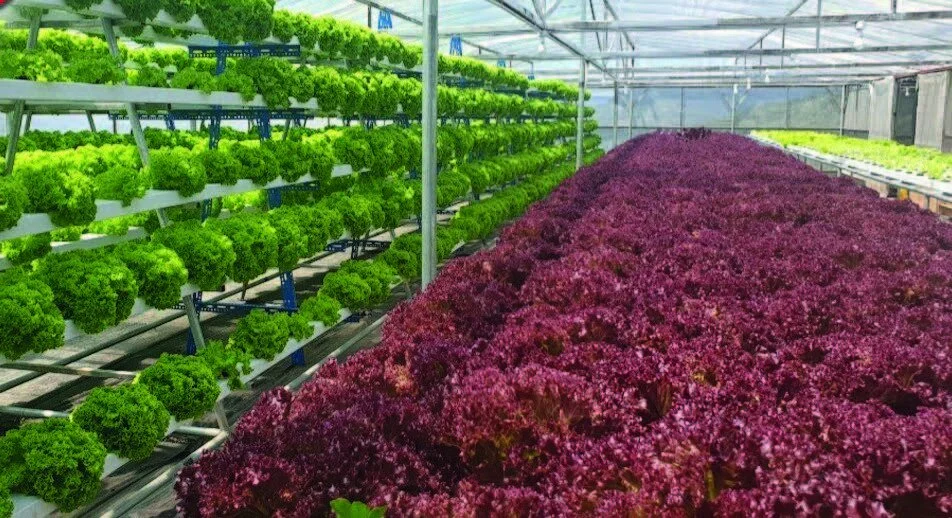
MALAYSIA: Aquaponic Farming Promises Higher Yields For Kundasang Farmers
Their ventures are proving to be lucrative and they encourage more young farmers to grow vegetables using these modern and more sustainable techniques

September 29th, 2020
Their ventures are proving to be lucrative and they encourage more young farmers to grow vegetables using these modern and more sustainable techniques
By MUHAMMAD BASIR ROSLAN
Aquaponic vegetables are chemical-free as no other fertiliser is used with the exception of the fish waste (pic: Bernama)
IN THE cool, hilly area of Kundasang in Ranau, about 100km from Kota Kinabalu, Sabah, a small group of young farmers are trying their hand at cultivating vegetables using aquaponic and hydroponic techniques.
Under the guidance of the Kinabalu Area Farmers Organisation (PPK), the farmers based in Kampung Desa Aman in Kundasang have gone into aquaponics and hydroponics since December 2019.
Their ventures are proving to be lucrative and PPK Kinabalu intends to encourage more young farmers to grow vegetables using these modern and more sustainable techniques.
According to PPK Kinabalu GM Muhammad Irwan Maruji, in aquaponics, the whole cultivation process — starting from planting the seedlings until they are ready for harvesting — takes only about three to four weeks. And, he added, vegetables harvested from a 223 sq m block of aquaponic plants can rake in sales of around RM5,600 a month.
“The capital to start an aquaponic venture, including setting up the pond and a 223 sq m block and greenhouse, comes to about RM85,000. The investment, however, is worthwhile compared to the returns,” he told Bernama, adding that aquaponic farming is suitable for young entrepreneurs who want to get involved in agriculture.
In aquaponic farming, aquaculture (rearing of aquatic animals such as freshwater fish or prawns in tanks) is combined with hydroponics (cultivating plants without soil) in an integrated system where the aquatic waste serves as nutrients for the plants which, in turn, purifies the water in the tank.
Prihatin Aid
Pointing out that vegetable farmers in Kundasang and other parts of Sabah were badly hit during the initial stage of the Movement Control Order, Muhammad Irwan said under the federal government’s Prihatin Rakyat Economic Stimulus Plan, each PPK in Sabah was allocated RM100,000 to RM200,000 to revitalise the agricultural sector.
“We are grateful for the allocation as it will be very helpful to the farmers and agro entrepreneurs here,” he said, adding that PPK Kinabalu plans to use the funds to start an additional hydroponic venture involving the local farmers, as well as introduce maize cultivation and a hanging fertigation system next month.
He said courses on aquaponic and hydroponic farming will be conducted starting early next month, following which he hopes to rope in at least 20 young farmers a year to pursue aquaponic and hydroponic ventures. “PPK Kinabalu also plans to expand the market for their vegetable produce to outside of Sabah,” he added.
Free of Chemicals
In aquaponic farming, aquaculture (rearing of aquatic animals) is combined with hydroponics (cultivating plants without soil) in an integrated system
Elaborating on PPK Kinabalu’s aquaponic venture with local farmers on a 2.83ha site in Kampung Desa Aman, Muhammad Irwan said vegetables such as red coral lettuce, green coral lettuce, mustard plant and celery are being cultivated as they are suitable for aquaponic farming. As for the aquatic component, ikan tilapia and ikan keli are being reared.
“Aquaponic vegetables are chemical-free as no other fertiliser is used with the exception of the fish waste.
“For this farming technique, we need not use much water and the plants mature faster and yield higher quality produce,” he said, adding that they also plan to sell the ikan tilapia once they mature.
“So, eventually, this project will enable us to ‘kill two birds with one stone’.”
Cattle Project
Sabah State Farmers Organisation (PPN) acting GM Mohd Sabri Jalaludin, meanwhile, said with the allocation his agency received under Prihatin, they plan to implement a cattle fattening project which is expected to have a positive impact on the state’s economic cycle.
He said PPN Sabah has expertise in the livestock industry as it has been involved in it for over 10 years. For the new project, the agency plans to buy 40 head of cattle from cattle rearers within the state in a bid to support local businesses.
Under the first phase of the project, expected to kick off next month, the cows will be fed palm kernel cake or palm kernel expeller, wheat husk, and soy residue to fatten them. Once they attain a minimum weight of 320kg each, they will be sold at RM4,000 to RM5,000 each.
Mohd Sabri added that in view of the project’s potential to contribute to the growth of the state’s GDP, they plan to increase the cat- tle to 320 heads by 2021. — Bernama

VIDEO: Featured Project: Brooklyn Grange Rooftop Farm #2 at Brooklyn Navy Yard, Building No. 3
Brooklyn Grange is a privately owned and sustainably operated enterprise, and the U.S.’s leading soil-based rooftop farming and intensive greenroofing business
September 28, 2020
65,000 sf. Greenroof
Greenroofs.com Featured Project September 28, 2020
We’re replaying Brooklyn Grange’s second rooftop farm at Brooklyn Navy Yard to recognize their hard work and commitment to sustainable urban agriculture through these trying times of the COVID-19 pandemic. It would be great for Aramis and me to visit again soon!
They’re currently booking small groups for private tours, and offering workshops along with other events. With information that is up to date as of September 2020, Brooklyn Grange states there “is no need to register in advance to visit our weekend open houses and markets; just follow the directions we link to below and come on by during the hours listed!” Brooklyn Grange’s sister organization is City Growers, a 501(c)(3) charitable nonprofit organization founded in 2011 by Brooklyn Grange. You can also book a variety of workshops and youth educational visit through City Growers. Continued success!

Image: rooflite
Excerpt from Greenroofs.com Project Profile:
Brooklyn Grange is a privately owned and sustainably operated enterprise, and the U.S.’s leading soil-based rooftop farming and intensive greenroofing business. Community-oriented, they host weekly open houses in season and feel the green space contributes to the overall health and quality of life, bringing people together through green business and around good food with their wholesale, retail, and CSA members.
Their goal is to put more farms on roofs throughout New York and beyond, and grow more food, train and employ more farmers.
Image: © Anastasia Cole Plakias/Brooklyn Grange
Brooklyn Grange’s second farm, located atop Building No. 3 at the historic Brooklyn Navy Yard, is a massive 65,000 square foot roof towering twelve stories over the East River.
Most of the financing was granted by the Department of Environmental Protection’s Green Infrastructure Stormwater Management Initiative, and Farm #2 manages over one million gallons of stormwater each year. Installed in 2012, the farm is covered in 10-12″ of rooflite Intensive Ag blend, rooflite drain granular drainage layer, and the Carlisle Roof Garden system by Carlisle SynTec Systems.
Image: rooflite

Image: rooflite
Brooklyn Grange’s second farm increased the business’ annual yield to 50,000 pounds of fresh produce between their two locations and created many new green jobs. (Update: as of 2019 the yield has increased to 80,000+ of pounds of fresh produce between three locations.) The farm cultivates row crops such as leafy greens, aromatic herbs, heirloom tomatoes and peppers April through November.
Brooklyn Grange sows cover crops, such as clover and oats in winter months to prevent soil erosion and replenish vital nutrients. The Brooklyn Navy Yard farm is also home to many of the 30+ hives comprising Brooklyn Grange’s Apiary.
Image: © Anastasia Cole Plakias/Brooklyn Grange courtesy Brooklyn Grange
More
They also host a robust events program here, with guests participating in yoga sessions or just enjoying a cocktail and some canapés overlooking the skyline at sunset. Brooklyn Grange partners with numerous non-profit and community organizations to extend the positive impact of the farm, including City Growers, a non-profit education program based on their rooftop farms.
Brooklyn Grange’s Rooftop Farm #2 at the Brooklyn Navy Yard is a win-win-win, reducing stormwater runoff, creating local jobs, and providing access to fresh produce for the community.
Image: Laura Messersmith of Goldfinch and Scout
Year: 2012
Owner: Lessor – Brooklyn Navy Yard Development Corporation
Location: Brooklyn, NY, USA
Building Type: Commercial
Type: Intensive
System: Single Source Provider
Size: 65,000 sq.ft.
Slope: 1%
Access: Accessible, By Appointment
Image: Kerry Ross, GRP
Credits:
CO-FOUNDER AND CHIEF EXECUTIVE OFFICER:
BEN FLANNER, BROOKLYN GRANGE
GREENROOF SYSTEM:
CARLISLE SYNTEC SYSTEMS
GROWING MEDIA:
ROOFLITE®
DRAINAGE:
ROOFLITE®
GREEN ROOF OVERBURDEN DESIGN:
ELIZABETH KENNEDY LANDSCAPE ARCHITECTS (EKLA)
GREEN ROOF OVERBURDEN DESIGN:
DILIP KHALE, ARCHITECT, PC
ROOFING CONTRACTOR:
MARFI CONTRACTING CORP
ROOFLITE BLENDER:
LAUREL VALLEY SOILS
GROWING MEDIA PNEUMATIC PLACEMENT / INSTALLATION:
DOWNES FOREST PRODUCTS
Image: Kerry Ross, GRP
See the Project Profile
See the Brooklyn Grange Rooftop Farm #2 at Brooklyn Navy Yard project profile to view ALL of the Photos and Additional Information about this particular project in the Greenroofs.com Projects Database.
The Brooklyn Grange Rooftop Farm #2 at Brooklyn Navy Yard, Building No. 3. Photo © Courtesy of Brooklyn Grange.
Did we miss your contribution? Please let us know to add you to the Project Profile.
Would you like one of your projects to be featured on Greenroofs.com? Read how, and remember we have to have a profile first! Submit Your Project Profile.
Love the Earth, Plant a Roof (or Wall)!
By Linda S. Velazquez, ASLA, LEED AP, GRP
Greenroofs.com Publisher & Greenroofs & Walls of the World™ Virtual Summits Host
Watch #VirtualSummit2019 Speaker Videos and EXPO and Speaker Q&A Videos on demand through 2020 with FREE Registration!
BIODIVERSITY, GREEN INFRASTRUCTURE, GREEN ROOFS, STORMWATER MANAGEMENT, URBAN AG

Harvest London Invests In State-of-The-Art Vertical Farm
Harvest London has invested in its second vertical farm in the capital, transforming an empty industrial unit in Leyton into a state-of-the-art indoor farm
30th September 2020
New facility in Leyton is vertical producer’s second site in north London and the latest construction project by booming tech firm CambridgeHOK
Basil will be the farm's first crop
Harvest London has invested in its second vertical farm in the capital, transforming an empty industrial unit in Leyton into a state-of-the-art indoor farm.
The site in north London, which boasts 152 m2 of growing area, will produce herbs and certain vegetables hydroponically for local restaurants 12 months of the year.
The business currently operates from a smaller vertical farm in Walthamstow, growing leafy greens, herbs, flowering plants, and root vegetables for London restaurants.
The main benefits for chefs, according to Harvest London, will be the quality, locality, and freshness of its produce.
Matt Chlebek, chief agronomist at Harvest London, said: “This is a really exciting development for us and a huge step up from our initial facility, which we established on the back of our own research and development two years ago in Walthamstow.
“We started the business having spoken to local chefs about providing freshly grown herbs just a few miles from their kitchens, thereby reducing the distance and time from production to consumption. This was something they were excited about.
“We have worked with a number of restaurants in London over the past two years who have become excellent customers and as a result of that success we wanted to improve further and become more sophisticated in what we are doing.”
He added: “We can certainly look to increase the number of restaurants we supply now, and ask chefs what herbs they want us to grow, and when.
“The plan is to demonstrate the increasing demand at this facility and secure further investment to create more, larger vertical farms across London in the coming years.”
The new farm’s ‘grow room’, which uses energy-saving LED lighting, is controlled by automated climate and irrigation systems to aid production and maximize growth.
Harvest London will be able to control the climate remotely via their mobile phones and analyze data on yield and growing capacity.
As well as the grow room, CambridgeHOK constructed a harvesting room and production management area, where crops will be processed and made ready for collection and delivery.
First, produce off the racks at the north London farm will be basil, of which the unit can produce around seven tonnes a year. The first crop is now almost ready to be harvested just four weeks after being planted.
This is the latest project to be completed by East Yorkshire-based horticultural engineering firm CambridgeHOK, which is currently also working on a multi-million-pound strawberry glasshouse for Beeswax Dyson in Lincolnshire as well as around 30 other projects.
The tech firm is on course for its best-ever financial year amid booming investments in glasshouse and vertical production in the UK.
Chlebek and Harvest London’s chief executive Chris Davies praised CambridgeHOK for their specialist knowledge and handling of their farm’s construction.
“As a client, it is reassuring to know you are working with a company that handles every aspect of planning, design, and building a vertical farm,” said Chlebek.
“You simply wouldn’t get the same knowledge and understanding by using a number of different companies for each element of the project, as we had to do when establishing our first facility.
“The great advantage CambridgeHOK brings is that they are experienced growers. They have explained why the specific approach was being taken with regards to each element of creating the ideal environment.”
Liberty Produce & James Hutton Institute To Transform Agriculture Through Collaboration
Liberty Produce and the James Hutton Institute have been awarded UKRI funding to address the challenges of Climate Change and the food production yield-gap
1st October 2020
London and Dundee, UK
Liberty Produce and James Hutton Institute remotely sign MoU in lockdown and launch new hydrobubble project. Image credit: 2020 Liberty Produce and the Hutton.
Liberty Produce & James Hutton Institute to transform modern agriculture through collaborative research and tech development
Liberty Produce and the James Hutton Institute have been awarded UKRI funding to address the challenges of Climate Change and the food production yield-gap. This ambitious project will develop technologies to utilize captured carbon to boost yields of hydroponic crops. It further develops the growing collaboration between Liberty and the Hutton, formalized in a recently signed Memorandum of Understanding.
By bringing together farmers, technologists, and scientists, the team will develop a unique 'hydrobubble' technology that will deliver significant benefits across the sector. This project will develop cutting-edge technology that will make nutrient delivery to crop roots more effective, efficient, and sustainable.
Through the injection of gas-enriched micro and nano-sized gas bubbles into the irrigation water, ‘hydrobubbles’ have the potential to boost plant growth in hydroponic systems by up to 30%.
The miniature sizes of these bubbles cause them to be negatively charged and electrostatically attracted to plant roots, where they cluster to provide an on-going additional gas resource to the plant.
This approach has proven benefits to plant yield with research demonstrating a marked improvement in root development, fresh weight, and the synthesis of specific plant biocompounds in a number of crop varieties.
This inaugural ‘hydrobubbles’ project is a milestone in the collaborative relationship between the James Hutton Institute and Liberty Produce that will push the boundaries of the vertical farming sector and accelerate its growth in the UK and globally.
A Memorandum of Understanding between the two organizations was recently signed by Professor Lesley Torrance, Executive Director of Science of the James Hutton Institute, and Alex Giles, Commercial Director of Liberty Produce.
Technological solutions are urgently required to overcome the challenges of productivity and sustainable production. This project and the cooperative relationship between Liberty Produce and the Hutton marks a step towards delivering those technological solutions and groundbreaking research through a collaborative multi-disciplinary approach.
Alexander Giles of Liberty Produce commented, “We are delighted to formalize our relationship with the Hutton. Even before the MoU was signed, the collaboration between our organizations has yielded incredible results and we’re excited to continue to work with the Hutton to push the boundaries of research and technology development, which will transform modern agriculture.”
Professor Lesley Torrance, Executive Director of Science of the James Hutton Institute, added: “Our collaboration with Liberty Produce marks the next step in the growth of our Open Science Campus initiative and brings new innovative companies to work closely with world-leading science. This has been facilitated by the Tay Cities Deal funding of an Advanced Plant Growth Centre in Invergowrie and our other new investments there and builds on our track record of engaging with industry, research partners, and the public.”
About Liberty Produce
Liberty Produce is a farming technology company founded in 2018 to drive innovations that will enable us to meet our global crop requirements over the next century, without harming the planet.
As experts in the development of technology (from advanced lighting systems to machine learning for integrated control systems) for the breadth of indoor agriculture (from glasshouses to Totally Controlled Environment Agriculture systems), Liberty delivers research and products that consistently push boundaries.
Liberty Produce develops and builds systems that reduce operational costs with enhanced resource efficiency, improve yields, and increase sustainability for greater food security through the growth of local produce year-round. www.liberty-produce.com
For further information contact:
Benita Rajania
+44 20 3290 8801
About James Hutton Institute
The James Hutton Institute is a world-leading, multi-site scientific organisation encompassing a distinctive range of integrated strengths in land, crop, waters, environmental and socio-economic science. The Institute takes its name from the 18th-century Scottish Enlightenment scientist, James Hutton, widely regarded as the founder of geology and agronomist. www.hutton.ac.uk
For further information contact:
Bernardo Rodriguez-Salcedo
Bernardo.RodriguezSalcedo@hutton.ac.uk
+44 (0)1224 395089 or +44 (0)7791 193918.
About Innovate UK
Innovate UK drives productivity and economic growth by supporting businesses to develop and realise the potential of new ideas. We connect businesses to the partners, customers and investors that can help them turn ideas into commercially successful products and services and business growth. We fund business and research collaborations to accelerate innovation and drive business investment into R&D. Our support is available to businesses across all economic sectors, value chains and UK regions. Innovate UK is part of UK Research and Innovation.
Liberty Produce, The James Hutton Institute, Errol Road, Dundee, Tayside DD2 5DA, UK, +44 20 3290 8801
VIDEO: Marc Oshima of AeroFarms: 'How Do We Have A Common Language To Find Solutions?'
The company builds indoor, urban, vertical farms using proprietary aeroponics and LED light technology. It also partners with universities and large corporations to improve their technology
by Amy Sowder
Sep 30, 2020
Marc Oshima's heritage, stemming from his Japanese and German parents, gave him a global perspective from an early age.
As a child, Oshima traveled a lot too and enjoyed exploring the food markets and learning about the food of other cultures.
These days, Oshima works to not only grow his Certified B Corp., mission-driven AeroFarms company based in Newark, N.J. but to help solve the most pressing issues across the produce industry, in the U.S. and beyond.
The company builds indoor, urban, vertical farms using proprietary aeroponics and LED light technology. It also partners with universities and large corporations to improve their technology.
Marc Oshima of AeroFarms on helping the industry move forward
Increasing the consumption of fresh produce is the overall mission, but there's more.
Learn what else Oshima cares about, why he cares, and all the organizations in which he participates to make these goals come to fruition.
Related news:
AeroFarms repeats Fast Company awards Industry leaders detail sustainable changes, opportunities ahead
Indoor farming companies rank high on FoodTech 500 list
NJ-based AeroFarms receives sustainability award, launches microgreens

Kalera Engages Financial Advisors
Kalera has engaged Bank of America Merrill Lynch International and Nordic banks ABG Sundal Collier and Arctic Securities as financial advisors to assist the Company with matters related to its financial strategy and in approaching equity capital markets, as Kalera’s expansion accelerates
Kalera Engages Financial Advisors
Kalera AS announced its engagement of financial advisors. Kalera has engaged Bank of America Merrill Lynch International and Nordic banks ABG Sundal Collier and Arctic Securities as financial advisors to assist the Company with matters related to its financial strategy and in approaching equity capital markets, as Kalera’s expansion accelerates.
"We are very pleased to have engaged these banks and are convinced that their combined impressive industry knowledge and investor outreach capabilities will enable us to continue attracting high-quality investors for further raising of equity capital," says chairman of the board Bjørge Gretland.
Kalera intends to accelerate its growth and has previously announced that it is planning for an IPO in Oslo and/or on Nasdaq in due course.
Kalera is rapidly executing on a US domestic and international expansion plan to grow fresh, clean, and nutritious leafy greens in close proximity to urban centers. Kalera currently operates two growing facilities in Orlando, and is constructing facilities in Atlanta and Houston which will open in 2021. As Kalera accelerates its growth over the next few years, it will continue to open additional facilities, expanding production capacity throughout the US and internationally.
For more information:
Kalera
info@kalera.com
www.kalera.com
Publication date: Fri 2 Oct 2020

How We Can Rethink Agriculture So It’s More Local
With a global population projected to exceed eight billion in 2023 and 10 billion by 2056, we can ill afford the inefficiencies and incremental gains of today’s industrial agriculture
SEP 21, 2020
Climate Week is a reminder of how susceptible global agriculture systems are to climate change risks. More than 800 million people went to bed hungry every night even before COVID-19 disrupted the global food supply chain, which put an additional 130 million at risk of food insecurity.
This unprecedented crisis comes as industrial agriculture already struggles to feed a growing global population under threats of declining resources and an increasingly inhospitable environment.
While we can still produce enough food to feed the world today, we are running out of time. Many experts believe that conventional farming techniques are becoming unsustainable because of the vast amounts of land, water, and energy required, as well as additional crop failures that will occur with the warming climate. To achieve sustainable food security, we must fundamentally disrupt the traditional forms of agriculture. We must pivot towards more cost-effective food production that is closer to home, more sustainable than factory farming, and less land-intensive.
Building more local capacity for agriculture
With a global population projected to exceed eight billion in 2023 and 10 billion by 2056, we can ill afford the inefficiencies and incremental gains of today’s industrial agriculture. Feeding 10 billion people will require an additional 109 million arable hectares, a landmass larger than Brazil. Given that 80 percent of arable land is already in use, the world faces even more acute food shortages if we can’t figure out how to grow more with less and get it where’s it’s most acutely needed.
The first step is to decentralize food production and distribute it more locally. When the 2017 famine in South Sudan took hold, it wasn’t because there wasn’t enough food to feed the five million people; it was because disruptions to the food supply prevented its distribution. Similarly, when food supply disruptions caused harrowing shortages on American supermarket shelves in the early months of the pandemic, we all witnessed how quickly panic and hoarding set in.
Urban agriculture is one way to build more local capacity. Building in cities, even on rooftops, can improve local food security and nutrition in food deserts where underserved communities suffer from access to fresh produce. Studies show that urban agriculture can meet 15 to 20 percent of global food demand today.
The next step is to bring food production indoors, when and where it makes sense. Technological innovation has helped bring food closer to local communities, enabling food to be grown more in places once thought impossible. However, we need to rethink our approach to indoor growing systems.
Today’s most advanced greenhouses and indoor vertical farms have significant shortcomings. Vertical farms, for instance, require massive amounts of energy due to the need for climate control systems and artificial lighting. Some argue that energy and environmental costs of vertical farms are offset by the reduced “food miles” of transporting food from afar. But as climate and environmental scientist, Dr. Jonathan Fole points out this argument turns out to be a red herring. Local food typically uses about the same energy per pound to transport as food grown away due to volume and method of transport.
And both indoor vertical farms and greenhouses suffer from a lack of the sun’s full light spectrum, compromising the robustness of indoor plant growth as well as the quality of the food.
The need for precise controls
Instead, a new model of agriculture is emerging that is nimbler than large-scale commercial farming, safer than outdoor farms, greener than greenhouses, more natural than vertical farms, and more efficient than almost any other growing technique in terms of water consumption, power usage, and CO2 production. It’s essentially a hybrid approach of all three growing modalities – outdoors, greenhouses, and indoor farms. This “fourth way” of agriculture integrates and continually refines entirely new approaches to crops, operations, facilities, systems, and the growing environment (COFSE). The model was developed to produce far higher yields per acre than outdoor farms, superior yields to greenhouses and up to 20 percent better yields than comparably sized indoor farming systems.
The new model has two key principles: first, bring the full sun indoors and, secondly, create and control an indoor ecosystem precisely tuned for each kind of crop.
Plants grow most robustly and flavorfully in full natural sunlight. While it may seem counter-intuitive to some, even the clearest of glass greenhouses inhibit the full light spectrum of the sun. But new cladding materials have emerged recently that enable the near-full-transmission of the sun’s RV and light spectrum.
Unlike plastic or glass, these new transparent membranes can help crops achieve their full genetic (and flavor) potential. Natural light also warms the microclimate when necessary, dramatically reducing heating energy requirements. And at times when the sun isn’t cooperating, advances in supplemental grow lighting can extend the plants’ photoperiod – even beyond natural daylight hours – to maximize crop growth and quality, and reduce time to harvest by up to 50 percent or better.
Greenhouses and vertical farms are also compromised by outdoor and human-introduced contamination. The new model relies on creating a tightly-sealed, cleanroom-like microclimate that keeps pests, pesticides, and other pollutants outside.
Thanks to artificial intelligence (AI), the Internet of Things, and similar advances, growers can create highly automated growing systems that reduce human intervention and its associated costs. Finely-tuned convective air circulation systems enable the microclimate to remain sealed and protective. Natural temperature regulation using sunlight and organic foam-based clouds can significantly reduce air-conditioning electricity requirements. And highly automated hydration, fertilization, and lighting are all continuously optimized by machine learning.
This new model, which has been designed over more than three years of research and development, is set to be put into large scale practice when the first of three new grow facilities completes construction on a 41-acre site in Coachella, Calif. Construction is set to commence within the next year. This unique approach, which included contributions from lighting experts who had previously worked at NASA sending plants into space, was developed to significantly affect local food security in an environmentally friendly way. It applies the best aspects of current growing methods – outdoors, greenhouse, and indoors – and, where possible, replaces their shortcomings with superior technology and processes, creating an overall improved approach. Yet as a result of the facility design and automated growing system, it is designed to and expected to consume up to 90 percent less energy than traditional indoor grow operations while producing up to 10 to 20 percent better yields than other comparably sized farming systems.
The world we live in now gives us the intelligence and technologies we need to change the outdated legacy of how farming is done today into tomorrow’s way of producing food, creating a robust, delicious, and nutritious food chain on a global level. Using these technologies, we can decentralize production, reducing our reliance on global supply chains, and move high-density growing systems closer to communities to ensure food security for all.
Image credit: Devi Puspita Amartha Yahya/Unsplash

Autogrow Expands Into Europe With New Role And New Farm Solutions
CEO Darryn Keiller says, “this expansion into Europe is counter-intuitive during a pandemic however innovation and crop production doesn’t slow down, and the challenges growers face haven’t disappeared because of COVID-19
29 September 2020: Autogrow has ramped up their activity in the Northern Hemisphere by establishing a new Sales Director Europe and U.K. role based in the Netherlands supporting their expanding customer base for new digital farming solutions FarmRoad® and Folium®.
CEO Darryn Keiller says, “this expansion into Europe is counter-intuitive during a pandemic however innovation and crop production doesn’t slow down, and the challenges growers face haven’t disappeared because of COVID-19. In fact, they have been exacerbated by the pandemic. We think now is the perfect time to introduce solutions that will help growers with productivity, gain greater economic benefits, and transform the market. Added to which, with cross-border restrictions and travel limitations likely to remain in place in the foreseeable future, establishing a local presence is the right move.”
“The Netherlands has been recognized by the World Economic Forum as a leader in efficient and sustainable agriculture and, after the United States, is the second-largest exporter of agriculture in the world. By establishing a role in the region, we create strong ties with growers and, like our partnerships in the United States, introduce our new digital farming solutions FarmRoad and Folium.”
Autogrow has been working closely over the past few months with customers and distributors in the region including some of the largest tomato producers. They are delighted to be working alongside Van der Voort, a member of the Prominent farming cooperative, who share Autogrow's focus on sustainable farming practices.
“We have been growing tomatoes for over 50 years and technology has always played a pivotal role in our success. With multiple farms and increasing production, we look for solutions that are leading the AgTech market. The work the Autogrow team are doing with sensor technology and farm management solutions is cutting edge and we are excited to be working together,” says Van der Voort Co-Owner, Joost Van der Voort.
Although Autogrow’s headquarters is based in New Zealand, large geographical distances have never hindered the organization from successfully operating on the global stage. Their endeavors also have the support of the New Zealand Government.
“It’s exciting to see AgTech innovation developed in New Zealand supporting growers here,” says Ariane Gonzalez, New Zealand Trade Commissioner to the Netherlands.
“New Zealand is recognized on the global stage for producing efficient and effective agricultural solutions that work in a range of climates, and this is another great example of that in action,” says Ms Gonzalez.
In addition, Autogrow has assistance from InnovationQuarter, the regional economic development agency for the Province of Zuid-Holland.
"The Netherlands, and Rotterdam - The Hague area specifically, is the worldwide center of horticulture. We are eager to attract and facilitate innovators with exciting solutions as Autogrow. They are a great addition to our region and the sector and support our regional economy. Next to that they benefit and contribute to strengthening our ecosystem of innovative companies in horticulture, impacting the societal challenge for feeding and greening the mega-cities of the future,” explains Chris van Voorden, Head of Internationalization at InnovationQuarter.
Autogrow is currently recruiting for the new role with the expectation to have someone in place over the next few months.
To see the advertised role - https://www.ceresrecruitment.nl/en/vacancy/sales-director-uk-europe/CEBI03123-en
For more information on Folium Network Sensor - https://autogrow.com/products/folium
For more information on Yield Prediction by FarmRoad - https://www.farmroad.io/
MEDIA QUERIES
Kylie Horomia, Head of Brand & Communications
(e) Kylie.horomia@autogrow.com
(m) +6421 733 025
(w) www.autogrow.com www.farmroad.io
Sales queries – sales@autogrow.com
About Autogrow
Autogrow leverages the power of technology, data science, and plant biology to provide indoor growers affordable, accessible, and easy-to-use innovation – 24/7, anywhere in the world.
Our hardware, software, and data solutions support growers and resellers in over 40 countries producing over 100 different crop types.
We are the experts in Controlled Environment Agriculture (CEA) and continue to stay ahead of a rapidly evolving landscape.

AppHarvest, A Pioneering Developer and Operator of Sustainable, Large-Scale Controlled Environment Indoor Farms, To Become A Public AgTech Company
Operates a 60-acre controlled environment agriculture facility in Morehead, KY — one of the largest high-tech greenhouses in the world — and has an active and robust development pipeline for future large-scale controlled environment indoor farm projects
September 29, 2020 | Source: AppHarvest
AppHarvest has entered into a definitive business combination agreement with Novus Capital Corporation (Nasdaq: NOVS)
Transaction to provide $475 million of gross proceeds to the company, including $375 million fully committed common stock PIPE at $10.00 per share anchored by existing and new investors – including Fidelity Management & Research Company, LLC, Inclusive Capital, and Novus Capital Corporation
Pro forma equity value of the merger is approximately $1.0 billion, at the $10.00 per share PIPE price and assuming minimal Novus shareholder redemptions
Transaction advances AppHarvest’s mission to redefine American agriculture and to build America’s AgTech capital in the heart of Appalachia through the development of several large-scale controlled indoor farms
MOREHEAD, Ky., Sept. 29, 2020 (GLOBE NEWSWIRE) -- AppHarvest (“the Company”), a developer and operator of large-scale, high-tech controlled environment indoor farms, and Novus Capital Corp. (Nasdaq: NOVS) (“Novus Capital”), a publicly-traded special purpose acquisition company, announced today a definitive agreement for a business combination that would result in AppHarvest becoming a public company. Upon closing of the transaction, the combined company will be named AppHarvest and is expected to remain listed on Nasdaq under a new ticker symbol. The combined company will be led by Jonathan Webb, AppHarvest’s Founder & Chief Executive Officer.
Company Overview
AppHarvest is redefining American agriculture by developing modern, large-scale and efficient indoor farms in Central Appalachia, a water-rich region strategically located within a day’s drive of approximately 70% of the U.S. population. AppHarvest has strong relationships with the leading agricultural and construction firms and universities in the Netherlands, the world’s leader in high-tech controlled environment indoor farms. The Netherlands, despite a land mass similar in size to Eastern Kentucky, is the world’s second-largest agricultural exporter behind only the United States due to its extensive network of controlled environment agriculture facilities. These relationships allow the Company to utilize the most recent proven technologies in an effort to sustainably increase crop yields, improve access to nutritious, non-GMO food, build a consistent and safe U.S.-grown food supply for national grocers, and increase investment in Appalachia. The Company operates a 60-acre controlled environment agriculture facility in Morehead, KY — one of the largest high-tech greenhouses in the world — and has an active development pipeline for additional large-scale indoor controlled environment farm projects.
Upon the closing of the transaction, AppHarvest will retain its highly experienced management, a team of growers with over 140 years of agricultural experience, including 120 years of sustainable agriculture experience, a sustainability team with more than 40 years of experience; and construction managers who have successfully managed over $19 billion in projects.
In addition, AppHarvest announced that Peter C. Halt has joined the executive team as Chief Financial Officer. Mr. Halt is a seasoned finance professional with several years of experience as a publicly-traded company CFO, most recently having served as the CFO for TiVo Corporation, up until its announced acquisition by Xperi Corporation.
AppHarvest Investment Highlights
Operates a 60-acre controlled environment agriculture facility in Morehead, KY — one of the largest high-tech greenhouses in the world — and has an active and robust development pipeline for future large-scale controlled environment indoor farm projects
First produce scheduled to be harvested, in early 2021, will be tomatoes, a crop that has seen imports rise to 60% of all fresh tomatoes available in U.S. stores
Designed to reduce water usage by 90% compared to traditional open-field agriculture and eliminate agricultural runoff
Aims to improve access to fresh non-GMO fruits and vegetables, as approximately 70% of the U.S. population is within a one-day drive of the Morehead, KY facility, which AppHarvest estimates will lower transportation costs compared to existing growers by up to 80%
Positioned to capitalize on the secular shift to plant-based foods, creating increased demand for locally grown, high-quality produce
Experienced leadership team and board of directors with experience in sustainable investing
Promoting sustainable change in agriculture as a Public Benefit Corporation, registered with Delaware, and a B Corporation, independently certified by the non-profit B Lab
Long-term distribution agreement in place to reach top grocers in the United States
“We are excited to transition AppHarvest to a public company and raise nearly a half a billion dollars in the process,” said Jonathan Webb, Founder & Chief Executive Officer of AppHarvest. “This will allow us to pursue our mission of transforming agriculture. A mission that’s become even more important since the global pandemic exposed how a rapidly increasing reliance on imports jeopardizes food security. We now know that to build a more resilient food system that meets our growing population demands, we must immediately start building controlled environment agriculture facilities, as these farms use far fewer resources to grow far more produce. We believe that this partnership with Novus Capital is a transformative transaction which will allow us to both rapidly scale our agriculture facilities, in pursuit of our goal to redefine American agriculture and build the country’s AgTech capital within Appalachia. Together we can transform agriculture.”
Bob Laikin, Chairman of Novus Capital, commented, “AppHarvest is a unique and compelling investment opportunity that is redefining American agriculture by improving access for all to fresh non-GMO produce, growing more with fewer resources, and creating an AgTech hub from within Appalachia. With significant tailwinds from heightened investor focus on ESG initiatives and the secular shift to plant-based foods, we believe AppHarvest is well-positioned to execute on its strategy for rapid growth and value creation.”
David Lee, Chief Financial Officer of Impossible Foods and AppHarvest Board Member, said, “AppHarvest is working to solve the critical need for a more resilient and sustainable food supply chain — both of which are fundamental to the future of farming, our food ecosystem, and our ability to ensure food security. I believe the company is building a scalable business that could revolutionize the business of food production in the United States.”
Dave Chen, CEO of Equilibrium Capital and AppHarvest Board Member, commented, “Jonathan Webb is exceptional at getting big complex projects done fast and with the highest precision. He is the right leader for AppHarvest’s disruptive mission. Furthermore, with his leadership, AppHarvest has drawn together some of the most talented individuals in the AgTech industry to drive the needed scale. I am extremely excited to see the fruits (or vegetables as the case may be!) of this team’s labors, as they execute on their plans to change food production in the United States.”
Martha Stewart, Founder of Martha Stewart Living Omnimedia and AppHarvest Board Member, said, “All Americans should believe in the AppHarvest mission to develop large-scale sustainable food production in the heart of Central Appalachia. Jonathan and his exceptional team are disrupting the food production ecosystem in the best way — to provide better, healthier food in a more sustainable manner.”
J.D. Vance, Narya Capital Partner, and AppHarvest Board Member, said, “AppHarvest is developing a world-class food production ecosystem to benefit a majority of consumers in the United States, right here from Central Appalachia. This region offers tremendous resources in terms of location, and in terms of the skilled hardworking people of the region who make this incredible mission possible.”
Jeffrey Ubben, Founder and Managing Partner of Inclusive Capital Partners and AppHarvest Board Member, said, “Our investment platform is about leveraging capitalism and governance in pursuit of a healthy planet and the health of its inhabitants — and AppHarvest is perfectly aligned with this mission.”
Transaction Overview
The business combination values AppHarvest at a $1.0 billion pro forma equity value, at the $10.00 per share PIPE price, and assuming minimal redemptions by Novus Capital shareholders. The transaction will provide $475 million of gross proceeds to the company, including $375 million fully committed common stock PIPE at $10.00 per share anchored by existing and new investors – including Fidelity Management & Research Company, LLC, Inclusive Capital and Novus Capital Corporation. Assuming minimal redemptions, it is anticipated that this transaction provides AppHarvest over $435 million of unrestricted cash at close, which will primarily be used to fund operations, including building additional high-tech controlled environment indoor farms, support growth, and for other general corporate purposes. In addition, AppHarvest issued a $30 million convertible note to Inclusive Capital which funded on September 28, 2020. The proceeds of the convertible note will primarily be used to fund operations, including the development of new high-tech controlled environment indoor farms, during the period prior to the close of this transaction. This note will convert to shares of AppHarvest’s common stock in connection with the close of this transaction.
The Boards of Directors of each of Novus Capital and AppHarvest have unanimously approved the transaction. The transaction will require the approval of the stockholders of both Novus Capital and AppHarvest, and is subject to other customary closing conditions, including the receipt of certain regulatory approvals. The transaction is expected to close late in the fourth quarter of 2020 or early in the first quarter of 2021.
Additional information about the proposed transaction, including a copy of the merger agreement and investor presentation, will be provided in a Current Report on Form 8-K to be filed by Novus Capital with the Securities and Exchange Commission and will be available at www.sec.gov.
Advisors
Cowen is serving as sole placement agent and capital markets advisor, and Blank Rome LLP is serving as legal advisor to Novus Capital. Cowen is serving as financial advisor and Cooley LLP is serving as legal advisor to AppHarvest.
Investor Conference Call Information
Novus Capital and AppHarvest will host a joint investor conference call to discuss the proposed transaction Tuesday, September 29, 2020, at 8:30, am ET.
Interested parties may listen to the prepared remarks call via telephone by dialing (877) 425-9470, or for international callers, (201) 389-0878. A telephone replay will be available until October 13, 2020, by dialing (844) 512-2921, or for international callers, (412) 317-6671, and entering the passcode: 13710943.
About AppHarvest
AppHarvest is an applied technology company building some of the world’s largest indoor farms in Appalachia. The Company combines conventional agricultural techniques with cutting-edge technology and is addressing key issues including improving access for all to nutritious food, farming more sustainably, building a home-grown food supply, and increasing investment in Appalachia. The Company’s 60-acre Morehead, KY facility is among the largest indoor farms in the U.S. For more information, visit https://www.appharvest.com/.
About Novus Capital Corporation
Novus Capital raised $100 million in May 2020 and its securities are listed on the Nasdaq under the ticker symbols “NOVS and “NOVSW.” Novus Capital is a blank check company organized for the purpose of effecting a merger, share exchange, asset acquisition, stock purchase, recapitalization, reorganization, or other similar business combination with one or more businesses or entities. Novus Capital is led by Robert J. Laikin and Larry Paulson, who have significant hands-on experience helping high-tech companies optimize their existing and new growth initiatives by exploiting insights from rich data assets and intellectual property that already exist within most high-tech companies. For more information please visit https://novuscapitalcorporation.com/.
Forward-Looking Statements
Certain statements included in this press release that are not historical facts are forward-looking statements for purposes of the safe harbor provisions under the United States Private Securities Litigation Reform Act of 1995. Forward-looking statements generally are accompanied by words such as “believe,” “may,” “will,” “estimate,” “continue,” “anticipate,” “intend,” “expect,” “should,” “would,” “plan,” “predict,” “potential,” “seem,” “seek,” “future,” “outlook,” and similar expressions that predict or indicate future events or trends or that are not statements of historical matters. All statements, other than statements of present or historical fact included in this presentation, regarding Novus Capital’s proposed acquisition of AppHarvest, Novus Capital’s ability to consummate the transaction, the benefits of the transaction, and the combined company’s future financial performance, as well as the combined company’s strategy, future operations, estimated financial position, estimated revenues and losses, projected costs, prospects, plans and objectives of management, are forward-looking statements. These statements are based on various assumptions, whether or not identified in this press release, and on the current expectations of the respective management of AppHarvest and Novus Capital and are not predictions of actual performance. These forward-looking statements are provided for illustrative purposes only and are not intended to serve as, and must not be relied on as, a guarantee, an assurance, a prediction, or a definitive statement of fact or probability. Actual events and circumstances are difficult or impossible to predict and will differ from assumptions. Many actual events and circumstances are beyond the control of AppHarvest and Novus Capital. These forward-looking statements are subject to a number of risks and uncertainties, including changes in domestic and foreign business, market, financial, political, and legal conditions; the inability of the parties to successfully or timely consummate the proposed transaction, including the risk that any regulatory approvals are not obtained, are delayed or are subject to unanticipated conditions that could adversely affect the combined company or the expected benefits of the proposed transaction or that the approval of the stockholders of Novus Capital or AppHarvest is not obtained; failure to realize the anticipated benefits of the proposed transaction; risks relating to the uncertainty of the projected financial information with respect to AppHarvest; risks related to the rollout of AppHarvest’s business and the timing of expected business milestones; the effects of competition on AppHarvest’s business; the amount of redemption requests made by Novus Capital’s stockholders; the ability of Novus Capital or AppHarvest to issue equity or equity-linked securities or obtain debt financing in connection with the proposed transaction or in the future, and those factors discussed in Novus Capital’s final prospectus dated May 15, 2020 under the heading “Risk Factors,” and other documents Novus Capital has filed, or will file, with the SEC. If any of these risks materialize or our assumptions prove incorrect, actual results could differ materially from the results implied by these forward-looking statements. There may be additional risks that neither Novus Capital nor AppHarvest presently know, or that Novus Capital nor AppHarvest currently believe are immaterial, that could also cause actual results to differ from those contained in the forward-looking statements. In addition, forward-looking statements reflect Novus Capital’ and AppHarvest’s expectations, plans, or forecasts of future events and views as of the date of this press release. Novus Capital and AppHarvest anticipate that subsequent events and developments will cause Novus Capital’s and AppHarvest’s assessments to change. However, while Novus Capital and AppHarvest may elect to update these forward-looking statements at some point in the future, Novus Capital and AppHarvest specifically disclaim any obligation to do so. These forward-looking statements should not be relied upon as representing Novus Capital’s and AppHarvest’s assessments of any date subsequent to the date of this press release. Accordingly, undue reliance should not be placed upon the forward-looking statements.
Important Information for Investors and Stockholders
In connection with the proposed transaction, Novus Capital will file a registration statement on Form S-4 (the “Registration Statement”) with the SEC, which will include a preliminary proxy statement to be distributed to holders of Novus Capital’s common stock in connection with Novus Capital’s solicitation of proxies for the vote by Novus Capital’s stockholders with respect to the proposed transaction and other matters as described in the Registration Statement, as well as the prospectus relating to the offer of securities to be issued to AppHarvest’s stockholders in connection with the proposed transaction. After the Registration Statement has been filed and declared effective, Novus Capital will mail a definitive proxy statement, when available, to its stockholders. Investors and security holders and other interested parties are urged to read the proxy statement/prospectus, any amendments thereto, and any other documents filed with the SEC carefully and in their entirety when they become available because they will contain important information about Novus Capital, AppHarvest, and the proposed transaction. Investors and security holders may obtain free copies of the preliminary proxy statement/prospectus and definitive proxy statement/prospectus (when available) and other documents filed with the SEC by Novus Capital through the website maintained by the SEC at http://www.sec.gov, or by directing a request to: Novus Capital Corporation, 8556 Oakmont Lane, Indianapolis, IN 46260. The information contained on, or that may be accessed through, the websites referenced in this press release is not incorporated by reference into, and is not a part of, this press release.
Participants in the Solicitation
Novus Capital and its directors and officers may be deemed participants in the solicitation of proxies of Novus Capital’s shareholders in connection with the proposed business combination. Security holders may obtain more detailed information regarding the names, affiliations and interests of certain of Novus Capital’s executive officers and directors in the solicitation by reading Novus Capital’s final prospectus filed with the SEC on May 15, 2020, the registration statement / proxy statement and other relevant materials filed with the SEC in connection with the business combination when they become available. Information concerning the interests of Novus Capital’s participants in the solicitation, which may, in some cases, be different than those of their stockholders generally, will be set forth in the registration statement / proxy statement relating to the business combination when it becomes available.
Contacts:
Novus Capital Corporation
Investors Relations
Robert Laikin, Chairman
RobertJLaikin@gmail.com
AppHarvest
Investor Relations
John Mills and Melissa Calandruccio, CFA
AppHarvestIR@icrinc.com
Media Relations
Cory Ziskind and Keil Decker
AppHarvestPR@icrinc.com

Largest Indoor Farm In The World To Be Developed In Abu Dhabi
The GreenFactory Emirates will produce 10,000 tons of fresh produce per year on a cultivation area of 160,000 square meters. It combines vertical and flat farming and solves the normal cultivation restrictions due to extreme climates in regions as the UAE
A Joint Venture Between GrowGroup IFS And RainMKRS Capital
Investment Announced The Construction of A 17,5 ha
Indoor Farm In The Desert of Abu Dhabi
2 October 2020
The GreenFactory Emirates will be the biggest indoor farm in the world. The farm uses 95 percent less water compared to conventional outdoor farming.
Vertical and flat farming
The GreenFactory Emirates will produce 10,000 tons of fresh produce per year on a cultivation area of 160,000 square meters. It combines vertical and flat farming and solves the normal cultivation restrictions due to extreme climates in regions as the UAE.
The total project amounting to 150 million euros is planned in different phases for the next 3 years.
Initiators CEO John Breedveld of GrowGroup and chairman Mohamed Jouan Salem Al Dhaheri of rainMKRS.
Extreme low water use
Compared to standard farming methods, the farm uses very little water. According to GrowGroup director John Breedveld the water use will be even lower than for conventional greenhouse cultivations.
‘The water scarcity made us decide to reuse the condensate water. In countries where water is less scarce, this is often considered to be too expensive. We expect to realize a water use of only 2 liter per kilogram produced food.'
The extremely low water use also helps the farm to achieve a low carbon footprint. Breedveld: ‘As we use so little water, we can get it from an inland freshwater source. Therefore we don't need to use freshwater that is produced by desalination of seawater. This is a very common water source in Abu Dhabi but it has a higher carbon footprint.’
‘It helps us to reduce the farmer’s CO2 footprint up to 40 percent compared to conventional outdoor production’, added Breedveld.
Mariam Hareb Almheiri, UAE Minister of State for Food Security.
Food security
Food security is high on the UAE’s agenda. The country aims to be number 1 on the Global Food Security Index by 2051.
Commenting on the announcement, Mariam Hareb Almheiri, Minister of State for Food Security said: ‘The UAE is applying concerted efforts to improve its domestic production of food, with agricultural technology having a hugely important role to play.‘
‘In fact, key targets of the government’s National Food Security strategy are to generate a 30 percent yield improvement from technology-enabled production. Indoor farms such as GreenFactory Emirates are instrumental in helping us reach these goals’, stated minister Hareb Almheiri.
Research and development
GreenFactory Emirates will include a built-in research and development component that will help ramp up the production beyond the 56 current varieties of lettuces, leafy greens, herbs, and kale. It will also optimize its production by collecting real-time data to inform future global expansion of indoor farming.
With confirmed partnerships with GAAS Wageningen and Delphy in The Netherlands, GreenFactory will benefit from live feedback provided by some of the best students and academia in the field.
Partnership
The partnership between GrowGroup and rainMKRS is a result of an introduction made by the Embassy of the Kingdom of The Netherlands in the United Arab Emirates and the Monarch Group which has played an instrumental role in seeking opportunities and nurturing relationships.
The joint venture announced the construction of more indoor farms in other regions of the world where extreme climates are a challenge to normal cultivation.
This news item is based on content originally published on the websites of Grow Group IFS, Rainmkrs Capital, and Emirates News Agency.
Lead photo: Impression of the 26 football field large indoor farm that will be built in Abu Dhabi.

Nature Fresh Farms Pledges To Plant 25,000 Trees In Sustainability Campaign
After two years of research and development, Nature Fresh Farms has officially launched their 100 percent home compostable Cucumber wrap, a first for the North American marketplace
Leamington, ON | October 1, 2020
Nature Fresh Farms has launched its sustainability campaign following the release of their new home compostable Cucumber wrap.
After two years of research and development, Nature Fresh Farms has officially launched their 100 percent home compostable Cucumber wrap, a first for the North American marketplace. Made from a starch-based PLA that is derived from plant-based resources, the film is home compostable breaking down naturally into CO2 and water within 90 days.
To celebrate its release and promote to consumers and customers alike, Nature Fresh Farms has launched a unique marketing campaign and want their followers to join in their initiative to make a difference. Their campaign has kicked-off with high-impact social media posts going live on their Instagram, Facebook, and LinkedIn accounts. Every time someone shares these posts during the month of October, they will plant a tree. With one share equalling one tree, the company is pledging to plant up to 25,000 trees to help our forests thrive.
“We really wanted to grab the attention of our consumers and followers with this home compostable film,” said Luci Faas, Product Development Specialist. “Through this initiative, we hope to raise awareness of this packaging design that will make a lasting change on the environment but also go even further by planting trees to help our North American forests flourish.”
This campaign seeks to spotlight the progression of their sustainable packaging design while encouraging their followers to spread the word by sharing social media posts and help plant a tree. The initiative supports Nature Fresh Farms commitment to bettering the environment and their continued investment in searching for more sustainable packaging designs.
“Our customers are looking for more environmentally friendly packaging and we want to give them that,” shared Director of Sales, Matt Quiring. “With our continued goal of finding more viable packaging solutions we want to provide more options and make it easier for most people to make positive environmental choices.”
At Nature Fresh Farms they are driven to accelerate innovation through evidence-informed sustainable packaging solutions providing a better experience for their customers, while also helping to preserve the vitality of our planet.
About Nature Fresh Farms
Continuously expanding, Nature Fresh Farms has become one of the largest independent, vertically integrated greenhouse vegetable farms in North America. As a year-round grower with farms in Leamington, ON, Delta, OH, and Mexico, Nature Fresh Farms prides itself on consistently delivering exceptional flavor and quality to key retailers throughout North America, while continuing to innovate and introduce more viable and sustainable growing and packaging solutions.
SOURCE: Nature Fresh Farms | info@naturefresh.ca T: 519 326 1111 | www.naturefresh.ca
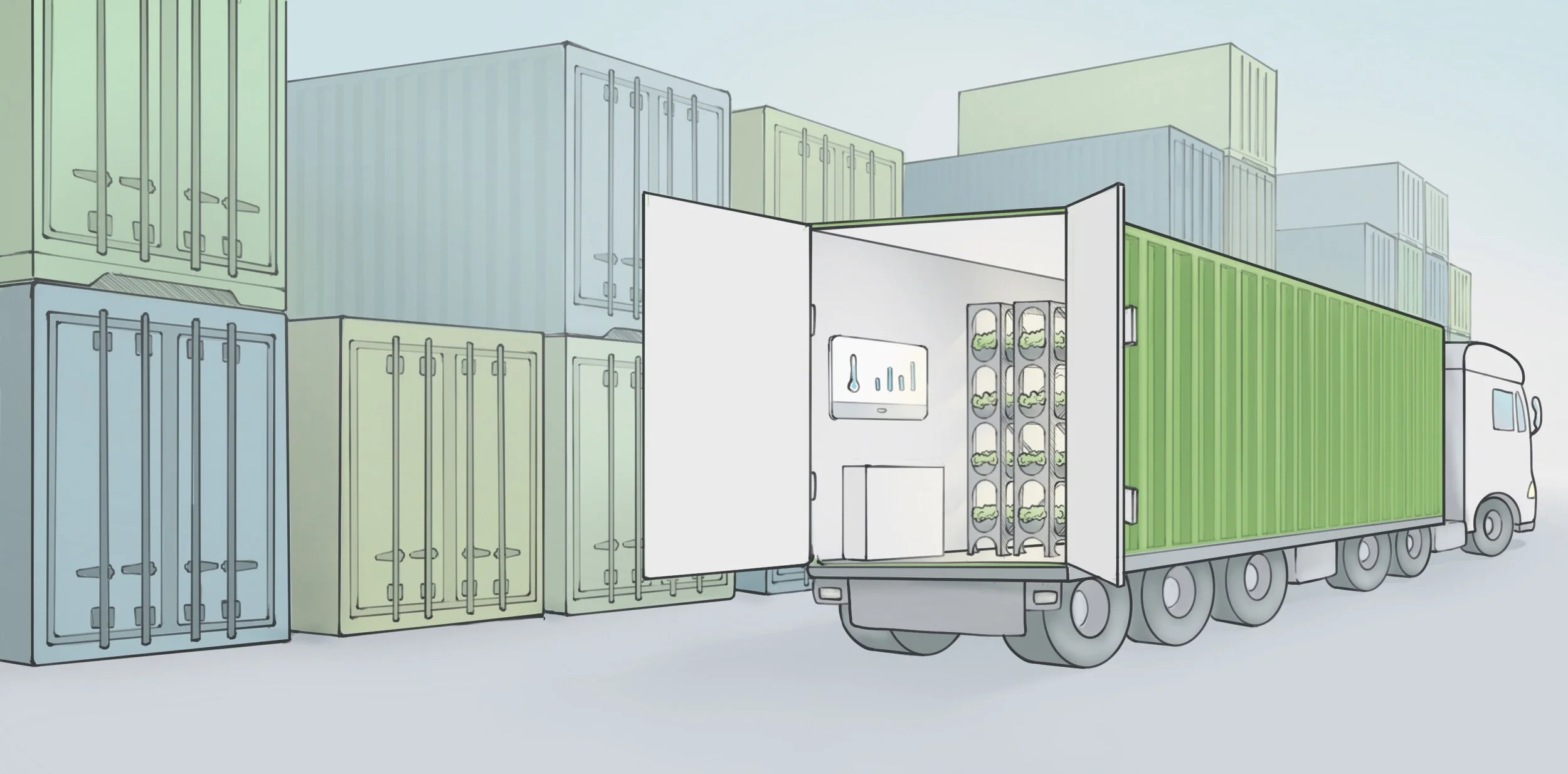
Tri-State, EPRI Team To Officially Bring ‘Farm In A Box’ Program To Moffat County School District
Tri-State will install one of EPRI’s cutting-edge indoor agriculture facilities on the grounds of Moffat County High School later this year, according to a press release from Tri-State
09-23-20 | Joshua Carney | Follow
Tri-State Generation and Transmission Association’s decades-long relationship with the Electric Power Research Institute is about to bear fruit for Moffat County School District students and the Craig community as a whole as the “Farm in a Box” project moves forward.
Tri-State will install one of EPRI’s cutting-edge indoor agriculture facilities on the grounds of Moffat County High School later this year, according to a press release from Tri-State.
The “Farm in a Box” is valued at $250,000 – which is covered as part of Tri-State’s EPRI membership – and will provide a new source for fresh produce in the region and educational opportunities for MCSD students. Moffat County High School Business Teacher Krista Schenck presented the project to City Council in early September. The project has the capability to produce various crops, such as lettuce, kale, arugula herbs, flowers, carrots, and radishes, year-round inside the shipping container.
“Tri-State invests in its EPRI membership and is keen to find immediately applicable uses for the remarkable technologies that emerge to benefit the electric sector and society at large,” said Tri-State CEO Duane Highley in a press release. “We also recognize that the transition brought on by our Responsible Energy Plan will have a major impact on coal-dependent communities, so if we can leverage a program to bring new educational, economic, and lifestyle benefits to support Moffat County schools, we are proud and eager to do so.”
An EPRI-led team is constructing the facility – a 40-foot long shipping container equipped with efficient lighting, temperature control, and plumbing infrastructure needed to grow crops inside the container on a year-round basis.
Since 2015, EPRI has been examining the operational, technological, sustainability, and environmental characteristics for indoor agriculture, by installing container farms across the United States and assessing their performance with local electricity providers, academic institutions, and other community organizations.“
As an emerging industry in urban and rural areas throughout the United States, indoor farming can help us use our energy and water resources more efficiently,” said EPRI President Arshad Mansoor. “EPRI’s indoor food production research aims to help electric utilities better understand, plan for, and engage with this novel enterprise while also offering educational opportunities for project collaborators, the local community, and the next generation of farmers to address food availability challenges.”
According to Tri-State, EPRI staff will monitor the container to evaluate nutrient quality of the produce, utility program compatibility, community impacts, sustainability performance, technology trends, market drivers, electricity load profiles, and other broader environmental and economic aspects of indoor food production for the first two years following installation. EPRI will conduct research on the container and MCSD will be the sole owner and operator of the equipment.
“Moffat County School District is excited about the learning potential this program affords its career and technical education students in our community,” said Principal Sarah Hepworth of Moffat County High School.“
Through the collaboration between agricultural, business, marketing, and culinary programs, the opportunities to learn about horticulture, conservation, food regulations, business, and project management, marketing, sales, and food preparation are endless for MCSD students,” said Schenck. “Students and faculty look forward to utilizing this partnership and the technology of ‘Farm in a Box’ to grow crops from microgreens to lettuce and carrots.”
Preparing the container farm will take several weeks and involve manufacturing and a customized graphic treatment of its exterior. School officials are targeting early to mid-November for its arrival in Craig. The EPRI team will consult with the school district on installation and operation.“
This is a true team effort,” added Highley. “One of the seven cooperative principles under which we operate is ‘Concern for Community,’ so we’re excited to see the school district adopt this project and turn it into a real asset for community betterment.”In January, Tri-State announced its Responsible Energy Plan, which will transition the company to more renewable energy production for its members to address changes in the industry and to support new state requirements for clean energy. The effort will result in the closure of the Craig Generation Station by 2030, and Tri-State has been working with state and local officials to support transition efforts in the community.jcarney@craigdailypress.com

How Space-Saving Retailers Can Bring Fresh Farming Indoors
Farm.One’s latest “mini-farm” in a Manhattan Whole Foods sets a precedent for other stores

SEP 23, 2020
Melissa Kvidahl Reilly | Sep 28, 2020
Retailers who pride themselves on using their own homegrown ingredients in foodservice operations previously looked to a rooftop or back lot for garden space. But New York’s Farm.One is changing the game, making it possible for even the most urban locations to optimize space and offer open, transparent, and clean food production.
Previously known for its restaurant partnerships, the brand recently opened a “mini-farm” at the new Whole Foods Market Manhattan West location. The custom-designed, 32-square-foot structure holds 150 plant sites on three growing levels. These plant sites provide the store’s food and beverage preparers with freshly grown and harvested blue spice basil. This type of structure will be a big part of Farm.One’s strategy going forward, and it’s currently on the hunt for new retail partners.

Farm.OneMini-farms can offer as many as 700 varieties of hydroponic-grown crops. “A display farm can have multiple crops, or just one as is the case in the Whole Foods Manhattan West farm,” says Michael Chin, the company’s vice president of corporate development. And, Farm.One can build, install, and train stores on using farms anywhere in the world.
The bottom line? This isn’t the indoor farming of decades past. “Indoor farming has come a long way, especially in the last few years,” says Chin. “We can now produce fresh, clean and healthy food and ingredients profitably, and in an environmentally responsible way. Developments in technology and new techniques will continue to help make onsite production even more accessible to retailers and other businesses in the years to come.”
TAGS: RETAILER AND DISTRIBUTOR

Matt Roney New Lumileds CEO
Roney most recently served as President of Lumileds’ Automotive Business Unit and succeeds Dr. Jonathan Rich who will continue with the company as Executive Chairman of the Board
Lumileds announced the appointment of Matt Roney as the company’s Chief Executive Officer, effective October 1, 2020. Roney most recently served as President of Lumileds’ Automotive Business Unit and succeeds Dr. Jonathan Rich who will continue with the company as Executive Chairman of the Board.
“Speaking on behalf of the Board of Directors, we are grateful for Jon’s contributions as CEO and believe Lumileds is well-positioned for success in this next phase under Matt’s leadership,” said Rob Seminara, Senior Partner at Apollo Global Management. “Matt has nearly 25 years’ experience in the automotive industry and his performance and leadership throughout his career have given us even greater confidence in his ability to drive long-term innovation and growth at Lumileds.”
“Lumileds has a long history of innovation in conventional automotive lighting and is a pioneer of leading-edge LED technology for the consumer electronics, automotive, and general illumination markets,” said Roney. “I am honored by the opportunity to lead this company and team in its next phase and excited by the opportunities ahead to bring new and innovative lighting solutions to market. I look forward to building on the foundation Dr. Rich has put in place to further advance our technologies and increase the value we deliver to customers across a broad set of industries.”
Prior to joining Lumileds, Roney served as Chief Operating Officer for Stanley Infrastructure, a division of Stanley Black & Decker. Previously, Roney was the President of Paladin Attachments, which was acquired by Stanley Infrastructure. He also spent eight years at TRW Automotive, now known as ZF TRW, in roles of rising responsibility, including Vice President and General Manager of its $2.5 billion Global Steering Business. Roney has a BS in Electrical Engineering from Cornell University, an MSE in Mechanical Engineering from Purdue, and an MBA from Harvard Business School.
For more information:
Lumileds
www.lumileds.com
Publication date: Tue 22 Sep 2020

October 7th Webinar - Harnessing The Growing Synergy Between Space Farming and Indoor Agriculture
Over the decades there has been the evolution & transformation of biologically-based life support innovations that have now been adopted in today's global vertical farming industry
OCTOBER WEBINAR SCHEDULE
Harnessing The Growing Synergy Between Space Farming & Terrestrial Indoor Agriculture
OCTOBER 7, 2020 | 2-3 PM EDT
What Do Space Farming, Greenhouse Equipment
& Triple Bottom Line Farms Have In Common?

Moderator:
Dr. Joel Cuello, Professor of Biosystems Engineering at The University of Arizona and Vice Chair of the Association for Vertical Farming
Panelists:
Dr. David Bubenheim, Senior Research Scientist, NASA Ames Research Center
Ralph Fritsche , NASA Space Crop Production Project Manager.
Dr. Gary Stutte, President, SyNRGE
Over the decades there has been the evolution & transformation of biologically-based life support innovations that have now been adopted in today's global vertical farming industry. And, the emergence of Industry 4.0 innovations -- from data analytics to automation to AI -- is certainly helping launch vertical farms into their exponential advancements.
All these set the stage for synergistic public-private partnerships for successful implementation of biologically-based life support systems for long-duration manned missions on the Moon and on Mars -- and all their powerful innovation multiplier effects extended further for application in the terrestrial vertical farming industry. Hosted by the Association For Vertical Farming, our panel will be delving into the various aspects of such brave and exciting scenarios, both present and future.
SAVE YOUR FREE SPOT
OCTOBER 21, 2020 | 2-3 PM EDT
Why Does Greenhouse Equipment Need To Be Simple?
What is the number one thing to look for in commercial horticulture and agriculture equipment? Simplicity. The best-selling & most successfully used products are easy to learn, easy to use and easy to fix. This is not to say that they are actually simple. But, they are engineered with simplicity in mind.
Why is that so important in commercial horticulture? Our panel will explore why its so important for key equipment components to be simple and discuss what characteristics to look for in lighting, irrigation, sensors & more.
MODERATOR
Chris Higgins, President & General Manager, Hort Americas LLC & Owner, UrbanAgNews
PANELISTS
Paul Brentlinger, President, Crop King Inc.
Dr. Nadia Sabeh, President & Founder, Dr. Greenhouse
Isaac Van Geest, Sales, Zwart Systems
SAVE YOUR FREE SPOT!
OCTOBER 29, 2020 | 2-3 PM EDT
BUILDING SUSTAINABLE TRIPLE BOTTOM LINE FARMS
During this insightful and inspiring session our moderator and panelists will discuss:
The concept of the Triple Bottom Line: People, Planet and Profits
The B-Certification process and reporting
The contributions indoor farms can make according to the Triple Bottom Line
Lessons learned from sustainable indoor farms that apply to all forms of indoor farming & more.
Moderator
Eric W. Stein, Ph.D., Executive Director of the Center of Excellence for Indoor Agriculture and Associate Professor of Business at Penn State
Panelists:
Dave Nichols, Director of Strategy, AppHarvest
Alexander Rudnicki, Senior Project Manager/ Plant Manager, Aerofarms
This session is hosted by Center of Excellence for Indoor Agriculture, whose mission is to accelerate the global transition to indoor farming production methods that are safe and sustainable and to empower indoor and vertical farmers with the knowledge, tools, and resources to build profitable businesses.
SAVE YOUR FREE SPOT!
Indoor Ag-Con, 950 Scales Road, Building #200, Suwanee, GA 30024, United States