


Welcome to iGrow News, Your Source for the World of Indoor Vertical Farming

Hydroponics For Beginners 101: The Basics
When broken up into two words -hydro and -ponics, it translates to “water” and “labor.” The Greek definitions of these words essentially translates to “working water.”
Hydroponics is a growing method for beginners and experts alike. This innovative farming system provides users with more controlled environments to grow their crops all-year-round. In this article, you will learn about hydroponics for beginners, and we’ll cover the basics to get you started.
What is hydroponics anyways?
When broken up into two words -hydro and -ponics, it translates to “water” and “labor.” The Greek definitions of these words essentially translates to “working water.” The reason for this is because hydroponics is a method used to grow crops without using soil. Through hydroponic systems, plants can grow by using nutrients in water instead.
What are the benefits of hydroponics?
There are various reasons why farmers are starting to adopt hydroponics as a means of growing crops.
1. Crops grow at a faster rate
Hydroponic plants tend to grow at a faster rate ranging from 30 to 50% faster than plants grown in traditional soil methods. This happens because hydroponically grown plants do not have to spend time searching for nutrients in the soil since it is provided several times throughout the day using hydroponic systems. With its saved energy, these plants can focus on growing into healthier plants.
2. Greater Yields
Since hydroponic plants can get the nutrients they need at all times, the plants don’t need to have large roots. With smaller roots, these plants don’t require as much room as traditional soil-grown plants, so farmers can plant more of these plants side-by-side, thus producing greater yields.
3. Hygienic Way of Growing
Since hydroponic plants are grown indoors, they’re free from the pests that soil typically attracts. This helps prevent disease and promotes hygiene.
4. Can Grow All Year Round
Hydroponic systems allow users to grow plants all-year-round. These automated systems are controlled by timers and computers, which helps growers to grow food no matter the season.
How do hydroponic systems work?
Hydroponics was created to take out the uncertainty aligned with growing plants in traditional farming methods. Hydroponic systems give users more control over the plant’s environment and nutrient sources to ensure it can grow without being interfered with by natural disasters, lack of nutrients, or pests. Knowing this, it makes sense as to why hydroponic systems work to give a plant what it needs.
Even though the soil is not in the equation, a growing medium is still used in hydroponics. Some mediums include perlite, sand, and Rockwool. These mediums get nutrients in the water and provide oxygen for the plant’s roots.
Want to learn more about hydroponics for beginners?
Now that you have a basic understanding of hydroponic systems, it’s time for you to learn more about this modern way of farming. We at the Nick Greens Grow Team use our knowledge and expertise to inform our readers about the innovations in farming. Want to learn more about hydroponics for beginners? Make sure to subscribe to our blog and YouTube channel for weekly updates! We also are teaching a microgreen class where you can learn more about microgreens and hydroponics for beginners.
Sign up for our microgreens class here.
#hydroponicsforbeginners #hydroponicforbeginners #startinghydroponics #startinghydroponic #hydroponics #hydroponic #hydroponicsfarming #hydroponicsgrowing #hydroponicfarming #hydroponicgrowing #usinghydroponics #hydroponicssetup #hydroponicsetup #hydroponicssystem #hydroponicsystem #hydroponicsfarmer #hydroponicfarmer

Greens Grown In A Warehouse? Vertical Farming A Growing Trend In Ontario
Vertical farming maximizes crop output in a limited space; the seasons don't matter: growing takes place anytime, anywhere
Andrew Coppolino · CBC News
Sep 26, 2020
This photo was taken inside We the Roots vertical farm in Toronto. Wired with LED lights, the hydroponic facility can grow up to 20000 leafy green plants at a time. (Yan Jun Li/CBC)
With vertical farming, seasons don't matter: growing takes place anytime, anywhere
It's a plain building in an industrial complex in Guelph, a few minutes from Highway 401. Inside is 4,000 square metres of high-tech "vertical farm" operated by GoodLeaf Farms, a Halifax-based company.
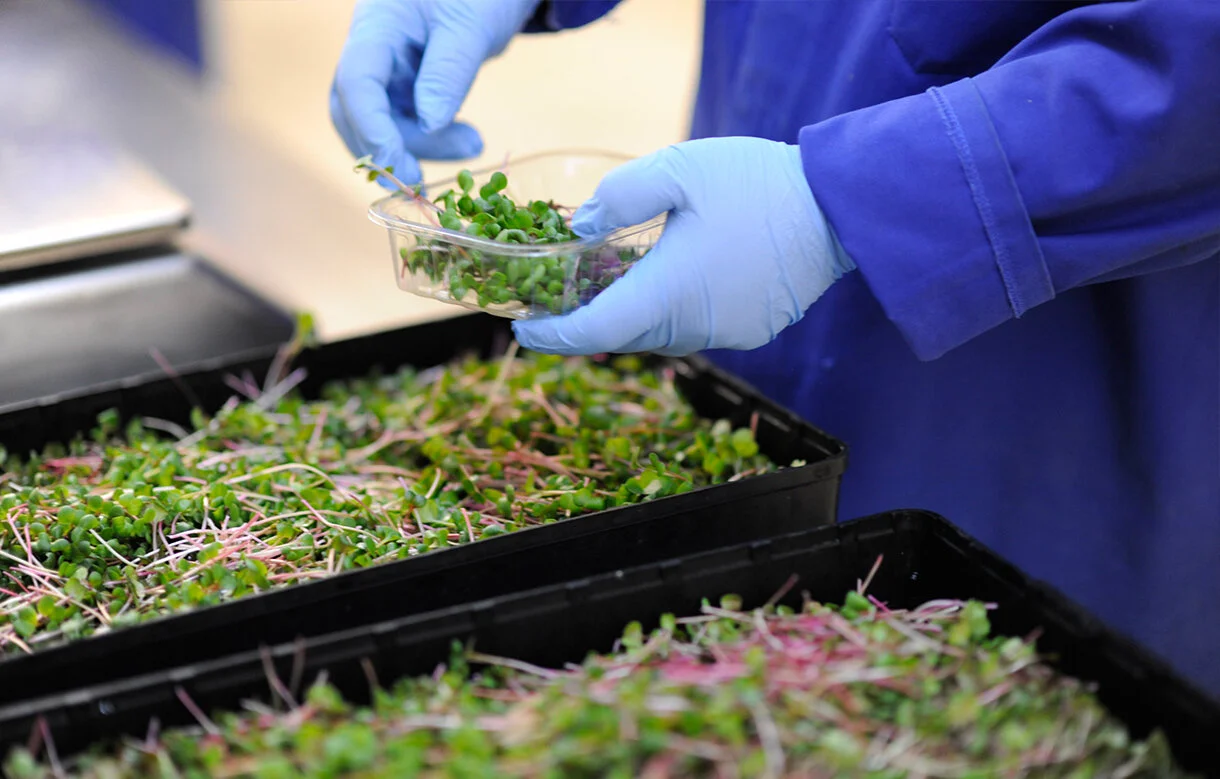
In the course of 12 months, GoodLeaf grows, harvests and packages 360,000-kilograms of pea shoots, mustard medley, Asian mix and arugula microgreens as well as baby kale and baby arugula. The growing room is a couple of storeys high with trays of microgreens settled into a peat moss-based substrate.
Vertical farming maximizes crop output in a limited space; the seasons don't matter: growing takes place anytime, anywhere.
The facility uses no pesticides, fungicides or herbicides. A blend of red and blue LED lighting casts a pink glow on the produce, which is helped in its growth with computer-controlled hydroponics. Nutrients such as nitrogen are added through the irrigation system.
"A vertical farm is where technology and traditional agriculture come together. We grow leafy greens vertically in stacks in an indoor controlled environment," said Jacquie Needham of GoodLeaf.
There are a lot of computers, so in a way it's farming with data. In this relatively new industry, "controlled environment agriculture" (CEA) uses technology that allows for the precise control of variables such as ventilation, light, heat and humidity to grow fresh greens and get them to market quickly and efficiently and without worrying about variables like drought, flooding, insects and frost.
Would you eat microgreens grown in a warehouse? Many people do. It's from technology called vertical farming. Food columnist Andrew Coppolino visited GoodLeaf Farms' Guelph facility recently to learn about this growing opportunity for farming. (Andrew Coppolino/CBC)
From seed to grocery stores
GoodLeaf, which built its first pilot farm in Truro, NS, in 2015, has been in the commercial market for about a year now. Its microgreens are available at Loblaw stores and Fortino's, and Needham says they hope to be in Longo's and Whole Foods soon.
GoodLeaf employs 70 people, whose goals, aside from producing good flavour, are efficiency and sustainability, which make it a part of the City of Guelph's vision to be Canada's first "circular" food economy.
"In a controlled environment, we can recycle 95% of the water we use," Needham said.
Seeds are planted in trays of peat substrate (later recycled as garden compost) which are loaded onto decks and rolled into a dark germination room, at about 85% humidity, for two days. They then head to the towers of the pink-light growing room, held at 21-degrees C., for a growing cycle between six and 20 days.
At harvest, the microgreen leaves from the miniature plants (these are not "sprouts") are quickly sliced by a machine, packaged and chilled. In the grocery store, they have a shelf-life of over two weeks. As for price, GoodLeaf products are roughly in line with organic greens.
The facility is strictly controlled, in all aspects, to ensure food safety; to protect intellectual property, no photography is allowed. Visitors must remove their jewlery, wear a hairnet, cover their footwear with disposable shoe covers and don a Tyvek anti-microbial lab coat. They then individually enter an air-lock and take an "air shower" before entering the production area.
Predictability in farming
The GoodLeaf facility is one of few state-of-the-art vertical farms in the country and collaborates in research and development with the University of Guelph.
According to Sylvain Charlebois, a professor in food distribution and policy at Dalhousie University, the technology represents a new wave of farming.
"Controlled environment agriculture is part of the future for Canadian agriculture. If we want to grow our food all year round, there is no other way. We need to think about these technologies, which will evolve and become more efficient," Charlebois said.
Predictability and farming do not go together. Charlebois says that CEA could be part of a solution for Canada, a country that imports most of its produce – a fact that makes us vulnerable. "Covid-19 got a lot of provinces and the country to think differently about food and producing food all year round."
He notes that the Agri-Food Analytics Lab at Dalhousie is currently working with Quebec and New Brunswick on food security projects. "A lot of those projects have to do with controlled environment agriculture," he said.
Is it sustainable?
At the other end of the spectrum is traditional outdoor farming, such as that done at Pfenning's Organic Farm in New Hamburg. Jenn Pfenning sees such vertical farms as "a supplement" to our food supply, though she wonders about the input side of such an energy-intensive operation.
"There's nothing wrong with vertical farming with specific crops, but how do you keep them healthy and growing without taking up too many resources in terms of having to heat it and light it? We struggle to produce greenhouse crops year-round as it is," says Pfenning.
She says microgreens are one thing but maturing a head of lettuce or kale, and moreso tomatoes or peppers is quite another. "It requires more than we can provide through artificial light."
GoodLeaf believes they have the technology to make nutrient-dense greens while acknowledging that it does require a lot of energy to keep the plant operating 24/7 and 365 days. They add, though, that their carbon footprint is less than conventional farming with energy emissions significantly reduced by the fact they use no fertilizers and the produce does not require long trips in vehicles in order to get to market.
Proponents of controlled environment agriculture like Charlebois say "it must be part of the future of Canadian agriculture." Around the world, the amount of arable, nutrient-rich land has diminished and demand for healthy foods has increased.
Vertical farms can also coincide with urban renewal planning that includes retrofitting old factories, which could help rejuvenate a city's core — if the capital is there — and be a local source of fresh food.
A worker checks on some microgreens at a GoodLeaf Farms facility. The company has a vertical farming facility near Guelph. (GoodLeaf Farms)
A growth opportunity
While a lot of our produce for much of the year is trucked in many thousands of kilometers from Mexico and the southern United States, these microgreens are local.
Charlebois says that as these technologies evolve, and if a vertical farm can be financially viable and sell its products at a competitive price, it could be a future model for allowing different markets in Canada to grow greens and give retailers an opportunity to sell fresh local produce.
"Think of the north," said Charlebois. "This is the type of technology you need to make sure communities in the north become food secure."
Whether or not vertical farming is a supplement and hybrid-type of farming, and despite the energy and capital required, GoodLeaf has that growth opportunity in their sights, Needham says.
"They're growing fruits and vegetables in other countries, and we will follow suit because we have heightened awareness of food security when it comes to fruit and vegetable production in Canada."
ABOUT THE AUTHOR
Food columnist, CBC Kitchener-Waterloo
Andrew Coppolino is a food columnist for CBC Radio in Waterloo Region. He was formerly restaurant reviewer with The Waterloo Region Record. He also contributes to Culinary Trends and Restaurant Report magazines in the U.S. and is the co-author of Cooking with Shakespeare. A couple of years of cooking as an apprentice chef in a restaurant kitchen helped him decide he wanted to work with food from the other side of the stove.
CBC's Journalistic Standards and Practices|About CBC News
Report Typo or Error

Aquaponic Farming Promises Higher Yields For Kundasang Farmers
Under the guidance of the Kinabalu Area Farmers Organisation (PPK), the farmers based in Kampung Desa Aman in Kundasang have gone into aquaponics and hydroponics since December 2019

September 26, 2020
By: Bernama
Green coral lettuce (left) and red coral lettuce thrive when cultivated using the hydroponic or aquaponic technique. Photo courtesy of Muhammad Irwan Maruji.
KOTA KINABALU: In the cool, hilly area of Kundasang in Ranau, about 100 kilometers from Kota Kinabalu, Sabah, a small group of young farmers are trying their hand at cultivating vegetables using aquaponic and hydroponic techniques.
Under the guidance of the Kinabalu Area Farmers Organisation (PPK), the farmers based in Kampung Desa Aman in Kundasang have gone into aquaponics and hydroponics since December 2019.
Their ventures are proving to be lucrative and PPK Kinabalu intends to encourage more young farmers to grow vegetables using these modern and more sustainable techniques.
According to PPK Kinabalu general manager Muhammad Irwan Maruji, in aquaponics the whole cultivation process, starting from planting the seedlings until they are ready for harvesting, takes only about three to four weeks. And, he added, vegetables harvested from a 223-square meter block of aquaponic plants can rake in sales of around RM5,600 a month.
“The capital to start an aquaponics venture, including setting up the pond and a 223-sq m block and greenhouse, comes to about RM85,000. The investment, however, is worthwhile when compared to the returns,” he told Bernama, adding that aquaponic farming is suitable for young entrepreneurs who want to get involved in agriculture.
In aquaponic farming, aquaculture (rearing of aquatic animals such as freshwater fish or prawns in tanks) is combined with hydroponics (cultivating plants without soil) in an integrated system where the aquatic waste serves as nutrients for the plants which, in turn, purifies the water in the tank.
Pointing out that vegetable farmers in Kundasang and other parts of Sabah were badly hit during the initial stage of the Movement Control Order, Muhammad Irwan said under the federal government’s Prihatin Rakyat Economic Stimulus Plan (Prihatin), each PPK in Sabah was allocated RM100,000 to RM200,000 to revitalise the agricultural sector.
“We are grateful for the allocation as it will be very helpful to the farmers and agro entrepreneurs here,” he said, adding that PPK Kinabalu plans to use the funds to start an additional hydroponic venture involving the local farmers, as well as introduce maize cultivation and a hanging fertigation system next month.
He said courses on aquaponic and hydroponic farming will be conducted starting early next month, following which he hopes to rope in at least 20 young farmers a year to pursue aquaponic and hydroponic ventures.
“PPK Kinabalu also plans to expand the market for their vegetable produce to the outside of Sabah,” he added.
Elaborating on PPK Kinabalu’s aquaponics venture with local farmers on a 2.83-hectare site in Kampung Desa Aman, Muhammad Irwan said vegetables such as red coral lettuce, green coral lettuce, mustard plant, and celery are being cultivated as they are suitable for aquaponic farming. As for the aquatic component, ikan tilapia and ikan keli are being reared.
“Aquaponic vegetables are chemical-free as no other fertilizer is used with the exception of the fish waste.
“For this farming technique, we need not use much water and the plants mature faster and yield higher quality produce,” he said, adding that they also plan to sell the ikan tilapia once they mature.
“So, eventually this project will enable us to ‘kill two birds with one stone’.”
Sabah State Farmers Organisation (PPN) acting general manager Mohd Sabri Jalaludin, meanwhile, said with the allocation his agency received under Prihatin, they plan to implement a cattle fattening project which is expected to have a positive impact on the state’s economic cycle.
He said Sabah PPN has expertise in the livestock industry as it has been involved in it for over 10 years. For the new project, the agency plans to buy 40 head of cattle from cattle rearers within the state in a bid to support local businesses.
Under the first phase of the project, expected to kick off next month, the cows will be fed palm kernel cake or palm kernel expeller, wheat husk, and soy residue to fatten them. Once they attain a minimum weight of 320 kilograms each, they will be sold at RM4,000 to RM5,000 each.
Mohd Sabri added that in view of the project’s potential to contribute to the growth of the state’s Gross Domestic Product, they plan to increase the cattle to 320 heads by 2021.

Lef Farms Keeps The Fresh Coming With The Addition of Fresh New Production Manager
Mariana’s new position was created to provide more time for training, education, and coordination between different departments within the organization
(Loudon, NH) – Coming off a very eventful summer that resulted in expanding distribution by adding Stop & Shop stores throughout New England and supporting medical first-responders during the pandemic with donations of a quarter of a million dollars in baby greens, hydroponic lettuce grower, lef Farms continues its forward momentum by adding a new production manager to its mix.
“We’re so excited to add Mariana Robles to our management team”, smiles lef founder, Henry Huntington. “As a 2015 graduate from the University of Los Llanos Colombia, specializing in Agronomy, Mariana brings with her some fresh, out-of-the-box thinking that we can’t help but benefit from”, finishes Huntington.
lef Farms of Loudon, NH, welcomes its new production manager, Mariana Robles.
But Mariana isn’t a new face at lef Farms. With a passion for farming that brought her to the region in 2015, Mariana was eventually hired by lef in early 2018 to support its seeding line. Since then, Mariana developed into one of lef’s key team members, taking on additional responsibilities as food safety officer and cooler supervisor. As the company continued to grow, Mariana’s new position was created to provide more time for training, education, and coordination between different departments within the organization. As production manager, Mariana will be responsible for driving efficiencies, improving procedures and protocols, and increasing teamwork at Farm.
“With expansion in our near future, putting Mariana in the role of production manager allows the Farm to continue its maturation process prior to pulling that trigger”, concludes Huntington.
lēf Farms is a 1-acre hydroponic greenhouse growing facility located in Loudon, NH, producing nearly 1.5 million pounds annually of its Crisp, Smooth, Spice, and Fusion baby greens for New England.

MALAYSIA: Econ 4.0: Why Focus on Farming?
So where is the future of food? Literally underground. South Korean start-up Farm8 has built a thriving underground farm next to the Sangdo metro underground station. The farm has been in operation since last September and grows an array of vegetables under bright LED lights
Raju Chellam/The Edge Malaysia
September 29, 2020
This article first appeared in Enterprise, The Edge Malaysia Weekly, on September 14, 2020 - September 20, 2020
Here’s a funny farming fable: An officer from the income tax department pays a visit to an old farmer in a rural community. “Show me the list of all your employees and how much you pay them,” he demands.“There are four employees,” the farmer says. “One is a plant picker and cleaner; he gets RM4,000 plus free room and food. Another is a sorter and packer who gets RM3,000 and free food. The third is a cook who gets RM2,000 and all the food he can eat. The fourth is an idiot who works 15 hours a day, does all the other work around here, gets paid only RM1,000, and has to pay for the room and food.”The officer is incensed. “Who’s this idiot and why is he paid so much less? I want to meet him right now.”
The farmer sighs. “You’re talking to him.”
If that joke sounds far-fetched, it isn’t. Our farmers and farm laborers work long hours, in blistering heat and mushy farms, earn low wages, and have uncertain, if not bleak, prospects. Yet, we expect them to deliver good-quality produce every time at low prices on set schedules.
The poor farmer faces a multitude of risks, including climate change, conflicts, pests, infectious crop diseases, a broken supply chain, and unreliable access to quality seeds and environment-friendly fertilizers. Yet, agriculture is crucial for economic growth. In 2014, it accounted for 33% of global gross domestic product (GDP).
“Agricultural development is one of the most powerful tools to end extreme poverty, boost shared prosperity and feed a projected 9.7 billion people by 2050,” says a World Bank report published in April. “Growth in the agriculture sector is two to four times more effective in raising incomes among the poorest compared to other industries. Our 2016 analysis found that 65% of poor working adults made a living through agriculture.”
On the flip side, the current food system threatens the health of people and the planet. Farming accounts for 70% of water use and generates unsustainable levels of pollution and waste. “Millions of people are either not eating enough or eating the wrong types of food, resulting in a double burden of malnutrition that can lead to illnesses and health crises,” the World Bank reports. “The absolute number of hungry and undernourished people increased to a little over 820 million in 2018, equivalent to around one in nine people. In 2018, an estimated 40 million children under five were overweight.”
MALAYSIAN AGRICULTURE
Agriculture is vital to Malaysia’s economy. It contributes 7% to 12% to the nation’s GDP and employs about 16% of the workforce. Large-scale plantations were introduced for cash crops — rubber in 1876, palm oil in 1917, and cocoa beans in 1950. Malaysia is also a significant producer of bananas, coconuts, durians, pineapples, rice, and rambutans.
In 2018, the agriculture sector contributed 7.3% (RM99.5 billion) to Malaysia’s GDP, with oil palm accounting for 38% of that. On the other hand, most farmers do not own mechanical equipment, so they need to hire an army of contractual seasonal labor.“
Due to the shariah law on inheritance, land holdings continue to be broken up between families, making padi farming even more difficult,” the Asia Sentinel reported last December. “Large belts of idle land, estimated at 119,273ha, can be seen across the country partly due to family land disputes. Farmers have no involvement through the supply chain, so opportunities to add value to rice are non-existent. Under the present padi farming system, there is no way farmers will be able to improve their incomes.
”The problem is insidious. “The local agriculture sector is too convoluted owing to bureaucracy,” Tun Daim Zainuddin, Malaysia’s former finance minister, wrote in an article in The Edge on Jan 11, 2020. “It is hard to break into the sector unless you have experience and contacts, which holds back many aspiring young farmers. I hope the relevant authorities will review their practices to ensure a simpler and more efficient process. Sometimes, people tend to forget that time is also a resource, and agriculture in Malaysia currently demands far too much time to jump through various hoops.”
The market for food is enormous, even within Asia. Asia’s current expenditure on food is set to more than double to US$8 trillion by 2030. “It is estimated that US$800 billion cumulative investment above existing levels will be required over the next decade to meet the region’s agri-needs for the future,” Tun Daim wrote. “New and emerging technologies will be needed to increase agricultural yields and nutritional value while addressing the effects of climate change.”
This burgeoning market has enticed the corporate sector. Many conglomerates have stepped in to revolutionize agriculture quietly. The Sunway Group, for example, is building a 50,000 sq ft urban farming innovation hub at Sunway City Kuala Lumpur. Called “Sunway FutureX”, it will bring together urban farming enthusiasts, tech firms, researchers, and young talent to create solutions for food and agritech.
“We hope to build innovations, which will contribute to improved long-term food security and sustainability in our nation,” says Matt Van Leeuwen, Sunway Group’s chief innovation officer, and Sunway iLabs director. “We aim to nourish our communities with the fresh produce grown at our farms and educate them on sustainable living and urban farming.”
The farming bug has also bitten companies in farm-free Singapore. “Singapore is a hymn to concrete and metal. But look closely, and you can see farms mushrooming across the city-state: on the roofs of malls and car parks, in schools, warehouses and even the site of a former prison,” The Economist reported on July 4. “This is new. Commercial farming in the land-scarce city was phased out in the 1970s and 1980s.”
Unlike virtually any other country on earth, Singapore has lost a generation of farmers, the magazine quoted Bradley Busetto, head of the Global Centre for Technology, Innovation and Sustainable Agriculture, a United Nations unit based in Singapore, as saying. “Less than 1% of Singapore’s 720 sq km landmass is set aside for farms,” the article noted. “But a new crop of entrepreneurs are betting on rewards from finding idle spaces where lettuces may be coaxed to life. Since 2014, 31 commercial urban farms have sprouted.”
FOOD TECH
Food production and distribution are undergoing tectonic shifts, thanks to technology. The most significant changes are in the meat market. More people are turning towards healthy diets, owing to a growing outrage over how animals are treated and the negative effect of livestock on climate change.
Dubbed “meat 2.0”, it includes, for example, “cultured meats” or lab-grown meat, the price of which dropped 99% from 2013 to 2017. “Before cultured meats hit the market, an even more significant piece of the meat-consumption market is rapidly growing: meat-replacement products made of, for example, soybean protein, potatoes, sunflower oil, and pea protein,” says a McKinsey study. “Surveys suggest that a majority of the population would be inclined to try meat-replacement products or ‘vegetal’ meat. This fast-growing segment is attracting funding from VC (venture capital) firms as well as established companies, and IPOs of alternative-meat companies have begun.”
The most prominent is California-based Impossible Foods, founded in 2011. It reverse-engineers animal products at the molecular level, then selects proteins and nutrients from plants to recreate the experience and nutrition of meat products. Its signature product, the “Impossible Burger”, was launched in July 2016. It now also makes plant-based sausages, and early this year debuted its plant-based pork.
In March 2020, Impossible raised US$500 million (RM2.1 billion) in its latest series F funding round, led by South Korea’s Mirae Asset Global Investments. The company has so far raised US$1.3 billion; other investors include Khosla Ventures, Horizons Ventures, and Singapore’s Temasek Holdings.“We designed our supply chain to be scaled globally,” David Lee, Impossible’s chief financial officer, told Forbes. “Unlike many companies, our technology can be dropped into any factory and can scale because we don’t have a lot of the problems the meat industry struggles with. We don’t grow animals over the years; we don’t ship cows and pigs to slaughterhouses and then process the meat. We make our product from plants, and it’s given us an advantage to quickly scale with co-manufacturers as well as with our own plant.”
The plant-based meat trend has caught on. Nuggs, a plant-based chicken nugget firm, began operations last year with a US$7 million investment round led by McCain Foods; it calls itself the “Tesla of chicken”.
Rebellyous Foods focuses on plant-based chicken nuggets, patties, and strips. Founder Christie Lagally is a mechanical engineer with 15 years’ experience and holds five patents in manufacturing technology.
Kellogg’s MorningStar Farms will launch vegan “Incogmeato Chik’n” nuggets and tenders this year. “Burgers to bacon, pulled pork to corn dogs, vegetarian to vegan, MorningStar Farms is plant-based goodness made for everyone,” the firm advertises.
Beyond Meat makes burgers, sausages, and beef products — all without animal protein. “Our quarter-pound beef burger uses 99% less water, 93% less land, 46% less energy and emits 90% less carbon dioxide compared to animal-based beef products,” the company claims.
So where is the future of food? Literally underground. South Korean start-up Farm8 has built a thriving underground farm next to the Sangdo metro underground station. The farm has been in operation since last September and grows an array of vegetables under bright LED lights.
Called the Metro Farm, it uses high-tech hydroponics to produces 30kg of vegetables a day and is 40 times more efficient than traditional farming. “Farm8 is hoping to expand its flagship farm to three more Seoul metro stations later this year,” the BBC reported on July 24. “If successful, the innovative venture may not only offer a more sustainable solution to urban farming but also has the potential to be rolled out in environments where traditional farming isn’t feasible, such as deserts and Arctic climates.”
The bottom line: The future of humanity depends on our ability to grow enough food to feed a surging global population. The future of food depends on sharpening our focus on farming, whether we use technology or not, whether we farm on horizontal acres of land or on vertical concrete farms. In the future, it is likely that every high-tech engineer will be proud also to call himself or herself a farmer.
Raju Chellam is vice-president of new technologies at Fusionex International, Asia’s leading big data analytics company

Indoor Ag Gets Social With New Farmbook Networking & Data Collection Initiative
“You don’t see a forum where people can get together who have small and medium-sized operations or who are thinking about investing in it. I get lots of calls from people asking for an hour of my time because they want to talk about the industry,” Farmbook’s Boston-based co-creator Peter Tasgal told AFN
September 28, 2020
Controlled environment agriculture (CEA) has seen a renewed bout of interest recently, but there are plenty of pain points still plaguing the growing industry. A new non-profit initiative called The Farmbook Project is hoping to resolve some of those issues by providing indoor growers with more opportunities to connect while aggregating data to establish benchmarks.
“You don’t see a forum where people can get together who have small and medium-sized operations or who are thinking about investing in it. I get lots of calls from people asking for an hour of my time because they want to talk about the industry,” Farmbook’s Boston-based co-creator Peter Tasgal told AFN. His fellow co-creator is Albuquerque-based Xander Yang, who has been working in the vertical farming industry for the last five years.
What Tasgal noticed was, when he got these requests, people were always asking him the same questions. He realized that growers in the space were mostly isolated and likely hungering for a chance to connect with their CEA colleagues. Growers in the space have a long history of keeping information to themselves, according to Farmbook. And while there may be a few good reasons for holding this info close to the chest, a bit more sharing could help move the industry forward as a whole.
Aggregating data confidentially through the Farmbook platform can also help with tackling another problem many CEA operators face: a lack of business planning and coaching. Having a cohesive business plan can help attract more investors, according to the Farmbook team. Investors cannot predict whether they will meet their ROI needs if an operation doesn’t have a business plan addressing how it plans to succeed.
In the CEA space, startups have chosen a wide variety of routes to market, including direct sales through grocers, selling to restaurants, and wholesaling. Others sell equipment in the form of turnkey container farms.
Invest with Impact. Click here.
Considering that 75% of all retail tomato sales in the US come from greenhouse production, by Farmbook’s estimate, there should be plenty of data to sift through.
“We’ll certainly have to look at the data because […] we don’t want all the data to come from successful operators. That won’t be helpful,” Tasgal said. “We are looking to get information from a wide range of operators.”
Perhaps Farmbook’s biggest objective is to standardize some of the metrics used in CEA production, such as pounds of production per plant hole per annum. The initiative thinks the use of such standards would be valuable not only for existing producers, but also for prospective farmers trying to determine how to start their own operations. Investors assessing revenue forecasts and retail purchasing managers who need to know a potential supplier’s capacity could also benefit from standardized metrics.
“In the retail industry or in the car industry there is always lots of information available that people use to benchmark themselves or to figure out how to set up. Performance indicators,” Tasgal said. “I think people know that information in this space [but aren’t sharing it] and I think that’s hindering growth.”
Farmbook is still testing its platform, but the website is live and project members are working to grow the team to capture a wide range of industry views.
As indoor ag continues to grow and evolve, it’s finding ways to fit in with, or compete against, the existing food chain. There is a variety of opinions regarding the ultimate role that CEA will have to play in our future food system.
“I think it will never be a pure commodity. Just the cost structure of indoor farms necessarily requires that it has to be somewhat of a specialized product,” Tasgal said. “That’s not to mean small – just that you won’t ever be growing wheat, cotton, or large commodity grains indoors. But when 75% of eating tomatoes are grown indoors that is pretty amazing. It tells me that the tomato business is becoming a purely indoor market.”
Do you think the CEA industry needs more benchmarks? Let me know at lauren@agfunder.com

Fresh Hydroponic Produce In A Swedish Ski Resort
ICA Åre, located in one of the leading Scandinavian ski resorts, is the second ICA supermarket store in Sweden to install a hydroponic vertical container farm from Boston-based Freight Farms – providing its customers with just-picked leafy greens grown onsite, year-round
ICA Åre, located in one of the leading Scandinavian ski resorts, is the second ICA supermarket store in Sweden to install a hydroponic vertical container farm from Boston-based Freight Farms – providing its customers with just-picked leafy greens grown onsite, year-round.
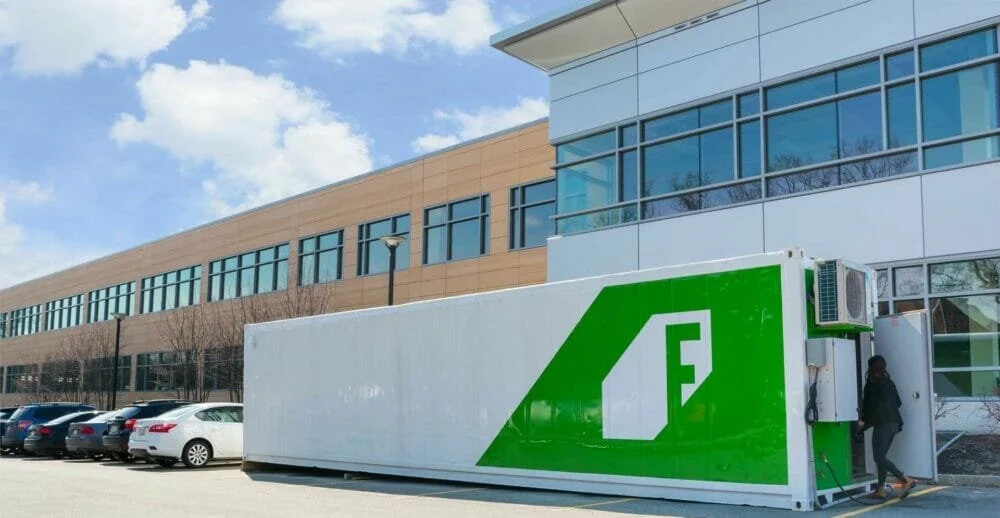
Housed inside a 13-meter long shipping container, the onsite Freight Farm will reduce ICA Åre’s reliance on transported produce shipped long-distance into the mountain region, while providing pesticide and herbicide-free greens to customers at the peak of freshness year-round.
The initiative, Åre Byodling, was led by ICA Åre store owner Lars Ocklind and real estate company Diös Fastigheter, who recognized the benefits Freight Farms’ environmentally-controlled technology can have in the Nordic climate, particularly within the resort community hub that’s home to ICA Åre, the main train station, and other surrounding stores and restaurants. Ocklind believes that the store’s ability to grow its own crops is an investment in its future and that of its community.
Freight Farms, founded in 2010, pioneered hydronic vertical container farming and has a large network of IoT-connected farms in the world. The container farms, integrated with IoT data platform, farmhand, creates and maintains the optimal growing conditions to harvest crops year-round using less than 5 gallons of water per day. The technology has empowered ICA Åre and ICA Maxi Högskolan to create closed-loop food systems onsite, eliminating transportation emissions. Harvesting crops onsite also keeps crops fresh and nutrient-dense for longer, significantly reducing food waste for both sellers and consumers.
ICA Åre’s first farm harvest is scheduled for mid-October. The supermarket will begin by selling a selection of lettuce, kale and herbs in-store, and crops will also be used in their own restaurant and sold to other restaurants in the village. The range of crop offerings will continue to develop and expand – there is already great interest in collaboration from local restaurateurs for special lines of locally-grown crops.
For more information:
Freight Farms
www.freightfarms.com

Publication date: Fri 2 Oct 2020

September Indoor Science Cafe Recording Is Now Available! "Hydroponic Nutrient Management Basics"
This presentation 'Hydroponic Nutrient Management Basics' was given by Dan Gillespie (JR Peters Inc.) during our 22nd cafe forum on September 22nd, 2020. Indoor Ag Science Cafe is organized by the OptimIA project team funded by the USDA SCRI grant program
This presentation 'Hydroponic Nutrient Management Basics' was given by Dan Gillespie (JR Peters Inc.) during our 22nd cafe forum on September 22nd, 2020. Indoor Ag Science Cafe is organized by the OptimIA project team funded by the USDA SCRI grant program.

Complete Packaging Solutions For Leafy Greens
JASA has been in the automatic packaging market for sliced vegetables for 35 years; consequently, they gained all the knowledge and expertise to pack mixed lettuce varieties in various ways
JASA has been in the automatic packaging market for sliced vegetables for 35 years; consequently, they gained all the knowledge and expertise to pack mixed lettuce varieties in various ways.
Bags filled with leafy greens on a vertical packaging machine.
Packed in trays with a lid or top seal.
Salad bowls with various extra components such as proteins and dressings.
A sleeve around the packaging ensures the leafy greens will stand out on the shelf.
As a packager of leafy greens, JASA can put together a complete packaging solution to pack mixed lettuce at high speed. And as a system integrator, the company takes full accountability of the weighing and packaging process.
"To make the packaging process as easy as possible for the customer, we are a partner throughout the entire process," says Sandra Somford. "We listen to the customer's wishes during the building phase and contribute ideas to arrive at the best packaging solution." This total solution also looks at the best options for the production line in combination with the packaging and packaging materials; printed or clear film, labels, or action stickers. "Our complete packaging lines make it all possible."
The company uses highly accurate weighers, ideal for leafy greens. With distribution rights for weighers from various brands, JASA develops and produces multiple machines, such as vertical packaging machines, under its own brand and management. In addition, the complete packaging lines are both maintenance and user friendly. The production lines have a hygienic design and are made from stainless steel, ensuring they meet the highest hygienic and quality standards.
For more information:
Sandra Somford
JASA Packaging Solutions, Inc.
Tel: +1 (804) 290-3683
Email: sandra.somford@jasapackaging.com
www.jasa.nl
Publication date: Mon 28 Sep 2020

Dr. Peter Quinn Appointed As New Chair of CHAP
Peter holds an MBA and BSc(Hons) & Ph.D. in Epigenetics & Microbiology and has published on the importance of nutrition to improve health and wellness in society
Crop Health and Protection (CHAP) one of the four UK Agri-Tech Centres of Innovation, has appointed Dr. Peter Quinn, CEO of Genius Foods, to be its new Non-Executive Chairman, following the retirement, earlier this year, of John Chinn.
Peter brings extensive business leadership experience to the CHAP Board, having held Chief Executive, Managing Director, and Non-Executive Director roles. He has a background in creating enterprise value across a range of complex FMCG brand and private label markets in food and drink, manufacturing and retail, biotech, and agri-tech.
He is currently CEO of Genius Foods and was previously divisional MD of Samworth Brothers. In addition, he holds several NED positions in the Agri-Tech/Produce sector. He is an expert in transformational turnarounds and the creation of growth and value strategies through organizational alignment and ingenuity.
He is also passionate about building business cultures committed to people and has served on the Boards of BITC Charities, dedicated to creating opportunities for disadvantaged young people through education and personal development.
Peter holds an MBA and BSc(Hons) & Ph.D. in Epigenetics & Microbiology and has published on the importance of nutrition to improve health and wellness in society.
As Chairman of CHAP, he is committed to the vital function of science, technology and collaborative innovation to transform UK agriculture and sustainable food production.
CHAP CEO Fraser Black said: “CHAP is experiencing an exciting period of growth and development and Peter is well-placed to help us cement our position at the centre of the UK agritech innovation sector. His commercial, non-profit, and academic experience are a perfect fit for CHAP. I look forward to working with him to ensure CHAP continues to act as a catalyst for innovation in UK agribusiness. This will enable us to achieve our vision of making the UK a global leader in the development of applied agri-technologies, to help secure our future by nourishing a growing population sustainably while delivering economic, environmental and health benefits to society.”
Peter Quinn said: “I am delighted to be appointed to the Board of CHAP as Non-Executive Chairman. There has never been a more critical time to invest in the future of UK agriculture and sustainable food production. CHAP plays a pivotal role in creating world-class innovations through collaborations between scientists, farmers, and industry to transform the productivity of UK agriculture. CHAP is the nexus for new ideas and ingenuity that will deliver agricultural solutions for tomorrow’s world.”
About Crop Health and Protection (CHAP)
Crop Health and Protection (CHAP), funded by Innovate UK, is one of four UK Agri-Tech Centres. CHAP’s vision is for the UK to be a global leader in the development of applied Agri-Technologies, to help secure our future by nourishing a growing population sustainably while delivering economic, environmental and health benefits to society. CHAP acts as a unique, independent nexus between the UK government, researchers, and industry, building innovation networks to identify and accelerate the development of cutting-edge solutions to drive incremental, transformative, and disruptive changes in sustainable crop productivity.
Website: www.chap-solutions.co.uk Twitter: @CHAP_Enquiries
For further information contact:
Darren Hassall (Marketing Manager): darren.hassall@chap-solutions.co.uk
Tel: +44 (0)7866 799152

Conference Schedule; See All 80 Sessions!
The Conference features OVER EIGHTY SESSIONS from October 16-18. Brunno (pictured above) will be helping us unlock all that iron in our aquaponic water!
Hello Aquaponics World,
We are so excited to publish our Agenda for The 2020 Aquaponics Conference, Cultivating the Future! The Conference features OVER EIGHTY SESSIONS from October 16-18. Brunno (pictured above) will be helping us unlock all that iron in our aquaponic water! Read more:
Friday Agenda
Saturday Agenda
Sunday Agenda
Early Bird Tix are only $149 and expire October 2, save $100!
Early Bird Tickets
Are you a K-12 teacher, home grower, or part of a small business or small farm? You may be eligible for STEM / Community Super-Saver Discount Tix! Learn more:
STEM / Community Ticket Info
All Conference tickets include:
Access to all content in all four Learning Tracks – STEM Education, Commercial, Community, and Research
Access to 100% of conference video files online through the end of 2020
Access to all conference slide presentation files through the end of 2020
Access to Aquaponics Virtual Vendors featuring the best products and services in the aquaponics industry
Access to Direct Messaging, Chat Rooms, Live Polls, and Virtual Cocktail Hour to interact with growers from around the world!
Ability to ask LIVE QUESTIONS to Aquaponics Experts!
We hope to see you there so we can advance aquaponics together!
Brian Filipowich, Chairman
Aquaponics Association

Crops Can Now 'Tell' Growers When They Are Stressed
All plants use internal electrical, mechanical, and chemical signaling networks to coordinate growth, reproduction, and defense – and Vivent is the first company in the world to launch a commercial crop health diagnostic system based on plant electrophysiology
Vivent, the Swiss biosignals analysis specialist, has closed a multi-million Euro Series A funding round. This first external investment from Astanor Ventures, will be used to expand sales of a unique plant electrophysiology system that diagnoses crop stress in real-time.
All plants use internal electrical, mechanical, and chemical signaling networks to coordinate growth, reproduction, and defense – and Vivent is the first company in the world to launch a commercial crop health diagnostic system based on plant electrophysiology.
Electrical signals are some of the fastest to transmit information throughout a plant – from roots to shoots. Vivent’s crop diagnostics system, called ‘PhytlSigns’, uses AI to interpret signals linked to plant stress and diagnoses pathogens and pests prior to the appearance of any visible symptoms. Early diagnosis increases yields, improves crop protection effectiveness, and encourages the adoption of environmentally preferable protection solutions.
“Growers are using PhytlSigns to monitor their crops in real-time. This additional information is improving their decision-making on climate control, irrigation, and crop protection,” explains Carrol Plummer, founder, and CEO.
“Thanks to low-cost powerful machine learning, we can give growers real-time information that results in safer, higher-quality, and tastier food with less reliance on preventive spraying and more focus on environmentally preferable crop protection. We are very excited to be working with Astanor, a top deep-tech venture fund, with ambitions to enhance food quality, security, and sustainability.”
Christina Ulardic, Partner at Astanor Ventures and new Vivent board member, explains that “Vivent is pioneering a new relationship with the crops we grow. It is remarkable to be able to see precisely how plants are responding to stressors in the environment and to learn how we can use these signals to provide treatments which improve plant husbandry.”
Vivent is already working with top global crop protection companies and growers in several countries to improve yields and product quality. Customers value early diagnosis of plant diseases, particularly those in roots, which are hard to identify using other methods.
For more information:
Vivent
www.phytlsigns.com
Publication date: Mon 28 Sep 2020
Sodexo Partners With Container Farming Startup Freight Farms To Bring Indoor Ag To College Campuses
The goal of the partnership is to bring fresh, traceable produce to college foodservice year-round that’s pesticide- and insecticide-free with low food miles
January 29, 2020
When a major foodservice player like Sodexo calls up your relatively young startup to ask whether you’d be interested in providing indoor ag services for their university clients, it’s safe to say you’ve arrived.
“Their partnership team reached out to us and said this is a huge problem we are trying to solve and we have been watching you guys from corporate headquarters and we saw you have proven adoption on all these different university campuses,” Brad McNamara, Freight Farms CEO, told AFN. “It’s a surreal moment when the 800-pound gorilla calls you and says we’ve been talking about you internally for six months. Can we work with you?”
The Boston-based container farming company announced today a new partnership to bring Freight Farms’ Greenery container farm setups to the campuses that Sodexo services throughout the US. The goal of the partnership is to bring fresh, traceable produce to college foodservice year-round that’s pesticide- and insecticide-free with low food miles. Sodexo is engaging the company as part of its Better Tomorrow Commitments, developed according to the UN Sustainable Development Goals.
Sodexo is one of the world’s largest multinational corporations serving 80 countries with nearly $17 billion in annual revenue, which means the partnership could go a long way towards demonstrating whether indoor ag systems can provide fresh produce at large-scale. The first Greenery system will be deployed at a college campus this Spring, according to McNamara.
As part of the deal, Sodexo’s campus clients will come under Freight Farms’ ‘farming-as-a-service’ program like any other Greenery user. Freight Farms provides turnkey farming software, training, monitoring, refillables, and support. The number of Greenery machines deployed to each campus will depend on the goal that the university has, which could involve providing as much produce as possible to its foodservice outlets. McNamara describes the units as being able to operate on a commercial scale and to scale up or down quickly depending on the ultimate need.
Invest with Impact. Click here.
More than local lettuce
In 2012, Freight Farms launched a farming system built inside a shipping container dubbed the Leafy Green Machine. Last year, it launched a new model, Greenery, in the same 320-square foot space but with 70% more growing space. It also packs new IoT-driven technology to improve yield, efficiency, and automation, according to the startup.
Today, it claims to have the largest network of connected farms in the world with customers in 25 countries and 44 US states that range from small business farmers to corporate, hospitality, retail, and education entities. So far, 35 educational and corporate campuses are using Freight Farms’ Greenery machine and technology to grow food onsight. The University of Georgia has already purchased two Greenery containers. A group called WhyNot Farm also made a purchase.
What Freight Farms is really trying to achieve is more than just growing lettuce in a shipping container, however. Last time we interviewed the outfit, the goal was to achieve a distributed food system that addresses many of the issues that the conventional produce industry has created: food waste, ugly produce being discarded, and a focus solely on yield maximization to the detriment of ecosystems.
“Schools are a good fit because of the value add that is placed on food and the variety and the quality of food served in cafeterias. There’s not just one customer that schools have to attract. They’re also selling to parents. They have to really be able to give comfort to mom and dad that the student has access to high-quality food and food programming,” McNamara explains.
Students are also hungry for this type of offering, as consumers at large search for ways to get closer to the roots of the food that they consume any way they can. At McNamara’s alma mater, Northeastern, for example, one of its educational programs includes a food co-op where students can work on real-world applications of local food systems.
The indoor ag space is seeing some renewed attention recently, with three of AFN’s top 10 best-read stories in 2019 focusing on the sector.
“I think what’s really exciting now versus just a few years ago is the recognition that this opportunity a lot of us have been talking about is, in fact, big and that there are various markets for us to go after,” McNamara says.
With a freshly inked Sodexo partnership under his belt, it’s hard to say he’s wrong.
Technology Quarterly, The Future of Agriculture
If agriculture is to continue to feed the world, it needs to become more like manufacturing, says Geoffrey Carr. Fortunately, that is already beginning to happen
Factory Fresh
If agriculture is to continue to feed the world, it needs to become more like manufacturing, says Geoffrey Carr. Fortunately, that is already beginning to happen
TOM ROGERS is an almond farmer in Madera County, in California’s Central Valley. Almonds are delicious and nutritious. They are also lucrative. Californian farmers, who between them grow 80% of the world’s supply of these nuts, earn $11 billion from doing so. But almonds are thirsty. A calculation by a pair of Dutch researchers six years ago suggested that growing a single one of them consumes around a gallon of water. This is merely an American gallon of 3.8 litres, not an imperial one of 4.5 litres, but it is still a tidy amount of H2O. And water has to be paid for.
Technology, however, has come to Mr. Rogers’s aid. His farm is wired up like a lab rat. Or, to be more accurate, it is wirelessed up. Moisture sensors planted throughout the nut groves keep track of what is going on in the soil. They send their results to a computer in the cloud (the network of servers that does an increasing amount of the world’s heavy-duty computing) to be crunched. The results are passed back to the farm’s irrigation system—a grid of drip tapes (hoses with holes punched in them) that are filled by pumps.
The system resembles the hydroponics used to grow vegetables in greenhouses. Every half-hour a carefully calibrated pulse of water based on the cloud’s calculations, and mixed with an appropriate dose of fertilizer if scheduled, is pushed through the tapes, delivering a precise sprinkling to each tree. The pulses alternate between one side of the tree trunk and the other, which experience has shown encourages water uptake. Before this system was in place, Mr. Rogers would have irrigated his farm about once a week. With the new little-but-often technique, he uses 20% less water than he used to. That both saves money and brings kudos, for California has suffered a four-year-long drought and there is social and political, as well as financial, pressure to conserve water.
Mr. Rogers’s farm, and similar ones that grow other high-value but thirsty crops like pistachios, walnuts, and grapes, are at the leading edge of this type of precision agriculture, known as “smart farming”. But it is not only fruit and nut farmers who benefit from being precise. So-called row crops—the maize and soyabeans that cover much of America’s Midwest—are being teched up, too. Sowing, watering, fertilizing and harvesting are all computer-controlled. Even the soil they grow in is monitored to within an inch of its life.
People will want to eat better than they do now
Farms, then, are becoming more like factories: tightly controlled operations for turning out reliable products, immune as far as possible from the vagaries of nature. Thanks to better understanding of DNA, the plants and animals raised on a farm are also tightly controlled. Precise genetic manipulation, known as “genome editing”, makes it possible to change a crop or stock animal’s genome down to the level of a single genetic “letter”. This technology, it is hoped, will be more acceptable to consumers than the shifting of whole genes between species that underpinned early genetic engineering, because it simply imitates the process of mutation on which crop breeding has always depended, but in a far more controllable way.
Understanding a crop’s DNA sequence also means that breeding itself can be made more precise. You do not need to grow a plant to maturity to find out whether it will have the characteristics you want. A quick look at its genome beforehand will tell you.
Such technological changes, in hardware, software, and “liveware”, are reaching beyond field, orchard, and byre. Fish farming will also get a boost from them. And indoor horticulture, already the most controlled and precise type of agriculture, is about to become yet more so.
In the short run, these improvements will boost farmers’ profits, by cutting costs and increasing yields, and should also benefit consumers (meaning everyone who eats food) in the form of lower prices. In the longer run, though, they may help provide the answer to an increasingly urgent question: how can the world be fed in future without putting irreparable strain on the Earth’s soils and oceans? Between now and 2050 the planet’s population is likely to rise to 9.7 billion, from 7.3 billion now. Those people will not only need to eat, they will want to eat better than people do now, because by then most are likely to have middling incomes, and many will be well off.
The Food and Agriculture Organisation, the United Nations’ agency charged with thinking about such matters, published a report in 2009 which suggested that by 2050 agricultural production will have to rise by 70% to meet projected demand. Since most land suitable for farming is already farmed, this growth must come from higher yields. Agriculture has undergone yield-enhancing shifts in the past, including mechanization before the second world war and the introduction of new crop varieties and agricultural chemicals in the green revolution of the 1950s and 1960s. Yet yields of important crops such as rice and wheat have now stopped rising in some intensively farmed parts of the world, a phenomenon called yield plateauing. The spread of existing best practice can no doubt bring yields elsewhere up to these plateaus. But to go beyond them will require improved technology.
This will be a challenge. Farmers are famously and sensibly skeptical of change since the cost of getting things wrong (messing up an entire season’s harvest) is so high. Yet if precision farming and genomics play out as many hope they will, another such change is in the offing.
Smart farms: Silicon Valley meets Central Valley
In various guises, information technology is taking over agriculture
ONE way to view farming is as a branch of matrix algebra. A farmer must constantly juggle a set of variables, such as the weather, his soil’s moisture levels and nutrient content, competition to his crops from weeds, threats to their health from pests and diseases, and the costs of taking action to deal with these things. If he does the algebra correctly, or if it is done on his behalf, he will optimize his yield and maximize his profit.
The job of smart farming, then, is twofold. One is to measure the variables going into the matrix as accurately as is cost-effective. The other is to relieve the farmer of as much of the burden of processing the matrix as he is comfortable with ceding to a machine.
An early example of cost-effective precision in farming was the decision made in 2001 by John Deere, the world’s largest manufacturer of agricultural equipment, to fit its tractors and other mobile machines with global-positioning-system (GPS) sensors, so that they could be located to within a few centimeters anywhere on Earth. This made it possible to stop them either covering the same ground twice or missing out patches as they shuttled up and down fields, which had been a frequent problem. Dealing with this both reduced fuel bills (by as much as 40% in some cases) and improved the uniformity and effectiveness of things like fertilizer, herbicide and pesticide spraying.
Bugs in the system
Bacteria and fungi can help crops and soil
MICROBES, though they have a bad press as agents of disease, also play a beneficial role in agriculture. For example, they fix nitrogen from the air into soluble nitrates that act as natural fertiliser. Understanding and exploiting such organisms for farming is a rapidly developing part of agricultural biotechnology.
At the moment, the lead is being taken by a collaboration between Monsanto and Novozymes, a Danish firm.
This consortium, called BioAg, began in 2013 and has a dozen microbe-based products on the market. These include fungicides, insecticides and bugs that liberate nitrogen, phosphorous and potassium compounds from the soil, making them soluble and thus easier for crops to take up. Last year, researchers at the two firms tested a further 2,000 microbes, looking for species that would increase maize and soyabean yields. The top-performing strains delivered a boost of about 3% for both crops.
In November 2015 Syngenta and DSM, a Dutch company, formed a similar partnership. And earlier that year, in April, DuPont bought Taxon Biosciences, a Californian microbes firm. And hopeful start-ups abound. One such is Indigo, in Boston. Its researchers are conducting field tests of some of its library of 40,000 microbes to see if they can alleviate the stress on cotton, maize, soyabeans and wheat induced by drought and salinity. Another is Adaptive Symbiotic Technologies, of Seattle. The scientists who formed this firm study fungi that live symbiotically within plants. They believe they have found one, whose natural partner is panic grass, a coastal species, which confers salinity-resistance when transferred to crops such as rice.
The big prize, however, would be to persuade the roots of crops such as wheat to form partnerships with nitrogen-fixing soil bacteria. These would be similar to the natural partnerships formed with nitrogen-fixing bacteria by legumes such as soyabeans. In legumes, the plants’ roots grow special nodules that become homes for the bacteria in question. If wheat rhizomes could be persuaded, by genomic breeding or genome editing, to behave likewise, everyone except fertilizer companies would reap enormous benefits.
Since then, other techniques have been added. High-density soil sampling, carried out every few years to track properties such as mineral content and porosity, can predict the fertility of different parts of a field. Accurate contour mapping helps indicate how water moves around. And detectors planted in the soil can monitor moisture levels at multiple depths. Some detectors are also able to indicate nutrient content and how it changes in response to the application of fertilizer.
All of this permits variable-rate seeding, meaning the density of plants grown can be tailored to local conditions. And that density itself is under precise control. John Deere’s equipment can plant individual seeds to within an accuracy of 3cm. Moreover, when a crop is harvested, the rate at which grains or beans flow into the harvester’s tank can be measured from moment to moment. That information, when combined with GPS data, creates a yield map that shows which bits of land were more or less productive—and thus how accurate the soil and sensor-based predictions were. This information can then be fed into the following season’s planting pattern.
Farmers also gather information by flying planes over their land. Airborne instruments are able to measure the amount of plant cover and to distinguish between crops and weeds. Using a technique called multispectral analysis, which looks at how strongly plants absorb or reflect different wavelengths of sunlight, they can discover which crops are flourishing and which not.
Sensors attached to moving machinery can even take measurements on the run. For example, multispectral sensors mounted on a tractor’s spraying booms can estimate the nitrogen needs of crops about to be sprayed and adjust the dose accordingly. A modern farm, then, produces data aplenty. But they need interpreting, and for that, information technology is essential.
Platform tickets
Over the past few decades, large corporations have grown up to supply the needs of commercial farming, especially in the Americas and Europe. Some are equipment-makers, such as John Deere. Others sell seeds or agricultural chemicals. These look like getting larger still. Dow and DuPont, two American giants, are planning to merge. Monsanto, another big American firm, is the subject of a takeover bid by Bayer, a German one. And Syngenta, a Swiss company, is being bid for by ChemChina, a Chinese one.
Business models are changing, too. These firms, no longer content merely to sell machinery, seed or chemicals, are all trying to develop matrix-crunching software platforms that will act as farm-management systems. These proprietary platforms will collect data from individual farms and process them in the cloud, allowing for the farm’s history, the known behavior of individual crops strains, and the local weather forecast. They will then make recommendations to the farmer, perhaps pointing him towards some of the firm’s other products.
But whereas making machinery, breeding new crops, or manufacturing agrochemicals all have high barriers to entry, a data-based farm-management system can be put together by any businessman, even without a track record in agriculture. And many are having a go. For example, Trimble Navigation, based in Sunnyvale, at the southern end of Silicon Valley, reckons that as an established geographical-information company it is well placed to move into the smart-farming market, with a system called Connected Farms. It has bought in outside expertise in the shape of AGRI-TREND, a Canadian agricultural consultancy, which it acquired last year.
By contrast, Farmobile of Overland Park, Kansas, is a startup. It is aimed at those who value privacy, making a feature of not using clients’ data to sell other products, as many farm-management systems do. Farmers Business Network, of Davenport, Iowa, uses almost the opposite model, acting as a co-operative data pool. Data in the pool are anonymized, but everyone who joins is encouraged to add to the pool, and in turn, gets to share what is there. The idea is that all participants will benefit from better solutions to the matrix.
Some firms focus on market niches. iTK, based in Montpellier, France, for example, specialises in grapes and has built mathematical models that describe the behaviour of all the main varieties. It is now expanding into California.
Thanks to this proliferation of farm-management software, it is possible to put more and more data to good use if the sensors are available to provide them. And better, cheaper sensors, too, are on their way. Moisture sensors, for example, usually work by measuring either the conductivity or the capacitance of soil, but a firm called WaterBit, based in Santa Clara, California, is using a different technology which it says can do the job at a tenth of the price of the existing products. And a sensor sold by John Deere can spectroscopically measure the nitrogen, phosphorous and potassium composition of liquid manure as it is being sprayed, permitting the spray rate to be adjusted in real time. This gets round the problem that liquid manure, though a good fertiliser, is not standardised, so is more difficult than commercial fertiliser to apply in the right quantities.
Things are changing in the air, too. In a recapitulation of the early days of manned flight, the makers of unmanned agricultural drones are testing a wide range of designs to find out which is best suited to the task of flying multispectral cameras over farms. Some firms, such as Agribotix in Boulder, Colorado, prefer quadcopters, a four-rotored modern design that has become the industry standard for small drones, though it has limited range and endurance. A popular alternative, the AgDrone, built by HoneyComb of Wilsonville, Oregon, is a single-engine flying wing that looks as if it has escaped from a 1950s air show. Another, the Lancaster 5, from PrecisionHawk of Raleigh, North Carolina, vaguely resembles a scale model of the eponymous second-world-war bomber. And the offering by Delair-Tech, based in Toulouse, France, sports the long, narrow wings of a glider to keep it aloft for long periods.
Even an endurance drone, though, may be pushed to survey a large estate in one go. For a synoptic view of their holding, therefore, some farmers turn to satellites. Planet Labs, a firm in San Francisco, provides such a service using devices called CubeSats, measuring a few centimetres across. It keeps a fleet of about 30 of these in orbit, which it refreshes as old ones die by putting new ones into space, piggybacking on commercial launches. Thanks to modern optics, even a satellite this small can be fitted with a multispectral camera, though it has a resolution per pixel of only 3.5 metres (about ten feet). That is not bad from outer space, but not nearly as good as a drone’s camera can manage.
Satellite coverage, though, has the advantage of being both broad and frequent, whereas a drone can offer only one or the other of these qualities. Planet Lab’s constellation will be able to take a picture of a given bit of the Earth’s surface at least once a week, so that areas in trouble can be identified quickly and a more detailed examination made.
The best solution is to integrate aerial and satellite coverage. That is what Mavrx, also based in San Francisco, is trying to do. Instead of drones, it has an Uber-like arrangement with about 100 light-aircraft pilots around America. Each of the firm’s contracted planes has been fitted with a multispectral camera and stands ready to make specific sorties at Mavrx’s request. Mavrx’s cameras have a resolution of 20cm a pixel, meaning they can pretty much take in individual plants.
The firm has also outsourced its satellite photography. Its raw material is drawn from Landsat and other public satellite programmes. It also has access to these programmes’ libraries, some of which go back 30 years. It can thus check the performance of a particular field over decades, calculate how much biomass that field has supported from year to year and correlate this with records of the field’s yields in those years, showing how productive the plants there have been. Then, knowing the field’s biomass in the current season, it can predict what the yield will be. Mavrx’s method can be scaled up to cover entire regions and even countries, forecasting the size of the harvests before they are gathered. That is powerful financial and political information.
A truly automated, factory-like farm, however, would have to cut people out of the loop altogether. That means introducing robots on the ground as well as in the air, and there are plenty of hopeful agricultural-robot makers trying to do so.
At the University of Sydney, the Australian Centre for Field Robotics has developed RIPPA (Robot for Intelligent Perception and Precision Application), a four-wheeled, solar-powered device that identifies weeds in fields of vegetables and zaps them individually. At the moment it does this with precise, and precisely aimed, doses of herbicide. But it, or something similar, could instead use a beam of microwaves, or even a laser. That would allow the crops concerned to be recognised as “organic” by customers who disapprove of chemical treatments.
For the less fussy, Rowbot Systems of Minneapolis is developing a bot that can travel between rows of partly grown maize plants, allowing it to apply supplementary side dressings of fertiliser to the plants without crushing them. Indeed, it might be possible in future to match the dose to the plant in farms where individual plants’ needs have been assessed by airborne multispectral cameras.
Robots are also of interest to growers of fruit and vegetables that are currently picked by hand. Fruit-picking is a time-consuming business which, even though the pickers are not well rewarded, would be a lot faster and cheaper if it were automated. And robot pickers are starting to appear.
The SW6010, made by AGROBOT, a Spanish firm, uses a camera to recognise strawberries and work out which are ripe for the plucking. Those that are have their stems severed by blades and are caught in baskets before being passed on by a conveyor belt for packing by a human operator sitting on the robot. In the Netherlands, researchers at Wageningen University are working on a robot harvester for larger produce such as peppers.
All these devices, and others like them, still exude a whiff of the Heath Robinson. But robotics is developing rapidly, and the control systems needed to run such machines are getting better and cheaper by the day. Some think that in a decade or so many farms in rich countries will be largely robot-operated.
Yet others wonder just how far farmers will let their farms be robotised. Self-guiding agricultural machinery such as that sold by John Deere is all but robotic already. It is like an airliner, in which the pilot usually has little to do between landing and take-off because computers do the work for him. Yet Deere has no plans to hand over complete control to the cloud, because that is not what its customers want.
Tunnel vision
If total control still seems some way off in outdoor farming, it is already close for crops grown in an entirely artificial environment. In a warren of tunnels beneath Clapham, in south London, Growing Underground is doing exactly what its name suggests. It is rearing around 20 types of salad plants, intended for sale to the chefs and sandwich shops of the city, in subterranean voids that began life as second-world-war bomb shelters.
In many ways, Growing Underground’s farm resembles any other indoor hydroponic operation. But there is one big difference. A conventional greenhouse, with its glass or polycarbonate walls, is designed to admit as much sunlight as possible. Growing Underground specifically excludes it. Instead, illumination is provided by light-emitting diodes (LEDs). These, in the minimalist spirit of hydroponics, have had their spectra precisely tuned so that the light they emit is optimal for the plants’ photosynthesis.
As you would expect, sensors watch everything—temperature, humidity, illumination—and send the data directly to Cambridge University’s engineering department where they are crunched, along with information on the plants’ growth, to work out the best regimes for future crops.
For now Steven Dring, Growing Underground’s boss, is confining output to herbs and vegetables such as small lettuces and samphire that can be brought to harvestable size quickly. He has reduced the cycle for coriander from 21 to 14 days. But tests suggest that the system also works for other, chunkier crops. Carrots and radishes have already been successfully grown this way, though they may not command a sufficient premium to make their underground cultivation worthwhile. But pak choi, a Chinese vegetable popular with trendy urbanites who live in inner-London suburbs like Clapham, is also amenable. At the moment growing it takes five weeks from start to finish. Get that down to three, which Mr Dring thinks he can, and it would be profitable.
The firms that make the LEDs could also be on to a good thing. Mr Dring’s come from Valoya, a Finnish firm. In Sweden, Heliospectra is in the same business. Philips, a Dutch electrical giant, has also joined in. In conventional greenhouses such lights are used to supplement the sun, but increasingly they do duty in windowless operations like Mr Dring’s. Though unlike sunlight they do not come free, they are so efficient and long-lasting that their spectral advantages seem clinching (see chart).
This kind of farming does not have to take place underground. Operations like Mr Dring’s are cropping up in buildings on the surface as well. Old meatpacking plants, factories and warehouses the world over are being turned into “vertical farms”. Though they are never going to fill the whole world’s bellies, they are more than a fad. Rather, they are a modern version of the market gardens that once flourished on the edge of cities —in places just like Clapham—before the land they occupied was swallowed by urban sprawl. And with their precise control of inputs, and thus outputs (see Brain scan, below), they also represent the ultimate in what farming could become.
Brain scan: Caleb Harper
PLANT breeders are understandably excited about manipulating botanical genomics (see next page). But it is a crop’s phenotype—its physical instantiation—that people actually eat, and this is the product of both genes and environment.
Optimising phenotypes by manipulating the environment is the task Caleb Harper has set himself. Dr Harper is the founder of the Open Agriculture Initiative (OAI) at the Massachusetts Institute of Technology’s Media Lab. At first sight, that seems odd. The Media Lab is an information-technology laboratory, best known for having helped develop things like electronic paper, wireless networks and even modern karaoke machines. It is very much about bits and bytes, and not much hitherto about proteins and lipids.
However, environmental information is still information. It informs how a plant grows, which is what interests Dr Harper. As he once put it, “people say they like peppers from Mexico. What they actually like is peppers grown in the conditions that prevail in Mexico.” He reckons that if you can replicate the conditions in which a botanical product grew, you can replicate that product. But this means you have to understand those conditions properly in the first place.
To help with this, he and his colleagues at the OAI have developed what they call the Personal Food Computer: a standardised tabletop device that can control illumination, carbon-dioxide levels, humidity, air temperature, root-zone temperature, and the acidity and dissolved-oxygen content of water delivered to the roots, as well as its nutrient content and any other aspect of its chemistry.
Plant phenotypes are monitored during growth by web cameras linked to software that detects leaf edges and colour differences and by sensors that can detect areas of active photosynthesis. After harvesting they are examined by lidar (the optical equivalent of radar) to record their shape in detail, and by gas chromatography/mass spectroscopy to understand their chemical composition.
The idea is that Personal Food Computers can be built by anyone who chooses to, and form part of an “open science” network that gathers data on growing conditions and works out those conditions’ phenotypic effects. Of particular interest are matters such as flavour and astringency that are governed by chemicals called secondary metabolites. These are often parts of plant-defence mechanisms, so in one experiment the computers are looking at the effect of adding crushed arthropod exoskeletons to the water supply, which may mimic attack by insects or mites. The hope is that this will change flavours in controllable ways.
Though Dr Harper is from a rural background, his career before the OAI was conventionally Media Lab-like. In particular, he designed environmental-control systems for data centres and operating theatres—keeping heat, humidity and so on within the tight limits needed for optimal function. But the jump from controlling those environments to controlling miniature farms was not enormous.
Some three dozen Personal Food Computers already exist and about 100 more are under construction the world over. This geographical dispersion is important. Dr. Harper’s goal, as his view on Mexican peppers suggests, is to decouple climate from geography by building a “catalogue of climates”. That would allow indoor urban farms to be programmed to imitate whatever climate was required in order to turn out crops for instant local consumption. This would certainly appeal to those who worry about “food miles”—the cost in terms of carbon dioxide of shipping edible items around the world. How it will go down with farmers in places whose climates are being imitated in rich-country cities remains to be seen.
The founder of the Open Agriculture Initiative at MIT’s Media Lab is building a “catalogue of climates” to help plants grow better
Crops of the future: Tinker and tailor
Farms need better products. Genomic understanding will provide them
C4 SOUNDS like the name of a failed electric car from the 1970s. In fact, it is one of the most crucial concepts in plant molecular biology. Plants have inherited their photosynthetic abilities from bacteria that took up symbiotic residence in the cells of their ancestors about a billion years ago. Those bacteria’s descendants, called chloroplasts, sit inside cells absorbing sunlight and using its energy to split water into hydrogen and oxygen. The hydrogen then combines with carbon dioxide to form small intermediate molecules, which are subsequently assembled into sugars. This form of photosynthesis is known as C3, because these intermediates contain three carbon atoms. Since the arrival of chloroplasts, though, evolution has discovered another way to photosynthesise, using a four-carbon intermediate. C4 photosynthesis is often more efficient than the C3 sort, especially in tropical climes. Several important crops that started in the tropics use it, notably maize, millet, sorghum, and sugar cane.
C4 photosynthesis is so useful that it has evolved on at least 60 separate occasions. Unfortunately, none of these involved the ancestors of rice, the second most important crop on Earth, after wheat. Yet rice, pre-eminently a tropical plant, would produce yields around 50% bigger than at present if it took the C4 route. At the International Rice Research Institute in Los Banos, outside Manila, researchers are trying to show it how.
The C4 Rice Project, co-ordinated by Paul Quick, is a global endeavour, also involving biologists at 18 other laboratories in Asia, Australia, Europe and North America. Their task involves adding five alien enzymes to rice, to give it an extra biochemical pathway, and then reorganising some of the cells in the plant’s leaves to create special compartments in which carbon dioxide can be concentrated in ways the standard C3 mechanism does not require. Both of these things have frequently happened naturally in other plants, which suggests that doing them artificially is not out of the question. The team has already created strains of rice which contain genes plucked from maize plants for the extra enzymes, and are now tweaking them to improve their efficacy. The harder part, which may take another decade, will be finding out what genetic changes are needed to bring about the compartmentalisation.
Genome editing resembles the natural process of mutation
The C4 Rice Project thus aims to break through the yield plateaus and return the world to the sort of growth rates seen in the heady days of the Green Revolution. Other groups, similarly motivated, are working on making many types of crops resistant to drought, heat, cold and salt; on inducing greater immunity to infection and infestation; on improving nutritional value; on making more efficient use of resources such as water and phosphorous; and even on giving to plants that do not have it the ability to fix nitrogen, an essential ingredient of proteins, directly from the air instead of absorbing it in the form of nitrates. Such innovations should be a bonanza. Unfortunately, for reasons both technical and social, they have so far not been. But that should soon change.
The early days of genetically engineered crops saw two huge successes and one spectacular failure. The successes were the transfer into a range of plants, particularly maize, soyabeans and cotton, of two types of gene. Both came from bacteria. One protected its host from the attentions of pesky insect larvae. The other protected it from specific herbicides, meaning those herbicides could be used more effectively to keep fields free from weeds. Both are beloved of farmers.
The spectacular failure is that neither is beloved of consumers. Some are indifferent to them; many actively hostile. Even though over decades there has been no evidence that eating genetically modified crops is harmful to health, and little that they harm the environment, they have been treated as pariahs.
Since people do not eat cotton, and soyabeans and maize are used mainly as animal fodder, the anti-GM lobby’s impact on those crops has been muted. But the idea of extending either the range of crops modified or the range of modifications available has (with a few exceptions) been thought commercially too risky to try. Moreover, transgenics, as the technique of moving genes from one species to another is called, is haphazard. Where the moved gene will end up is hard to control. That matters, for genes work better in some places than others.
Spell it for me
The search has therefore been on for a better way than transgenics of doing things. And one is now emerging that, its supporters hope, may kill both the technical and the social birds with a single stone. Genome editing, as this approach is known, tweaks existing DNA in situ by adding, subtracting or substituting a piece that may be as small as a single genetic “letter” (or nucleotide). That not only makes the technique precise, it also resembles the natural process of mutation, which is the basis of the variety all conventional plant-breeding relies on. That may raise fewer objections among consumers, and also holds out the hope that regulators will treat it differently from transgenics.
After a couple of false starts, most researchers agree that a technique called CRISPR/Cas9, derived from a way that bacteria chop up the genes of invading viruses, is the one that will make editing crop genomes a realistic prospect. Transgenic technology has steered clear of wheat, which is eaten mainly by people. But DuPont’s seed division, Pioneer, is already trying to use CRISPR/Cas9 to stop wheat from self-pollinating, in order to make the development of hybrids easier. Similarly, researchers at the Chinese Academy of Sciences are using it to try to develop wheat plants that are resistant to powdery mildew, a serious hazard.
Not all current attempts at agricultural genome editing use CRISPR/Cas9. Cibus, in San Diego, for example, employs a proprietary technique it calls the Rapid Trait Development System (RTDS). This co-opts a cell’s natural DNA repair mechanism to make single-nucleotide changes to genomes. RTDS has already created one commercial product, a form of rape resistant to a class of herbicides that conventional transgenics cannot protect against. But at the moment CRISPR/Cas9 seems to be sweeping most things before it—and even if it stumbles for some reason, other bacterial antiviral mechanisms might step in.
Whether consumers will accept genome editing remains to be seen. No one, however, is likely to object to a second rapidly developing method of crop improvement: a souped-up breeding technique called genomic selection.
Genomic selection is a superior version of marker-assisted selection, a process which has itself been replacing conventional crop-breeding techniques. Both genomic selection and markerassisted selection rely on recognising pieces of DNA called markers found in or near places called quantitative trait loci (QTLs). A QTL is part of a genome that has, because of a gene or genes within it, a measurable, predictable effect on a phenotype. If the marker is present, then so is the QTL. By extension, a plant with the marker should show the QTL’s phenotypic effect.
The difference between conventional marker-assisted selection and the genomic version is that the former relied on a few hundred markers (such as places where the DNA stuttered and repeated itself) that could be picked up by the technology then available. Now, improved detection methods mean single-nucleotide polymorphisms, or SNPs (pronounced “snips”), can be used as markers. A SNP is a place where a single genetic letter varies in an otherwise unchanging part of the genome, and there are thousands of them.
Add in the enormous amounts of computing power available to link SNPs with QTLs—and, indeed, to analyse the interactions between QTLs themselves—and the upshot is a system that can tell a breeder which individual plants are worth raising to maturity, and which should then be crossed with each other to come up with the best results.
Crop strains created this way are already coming to market. AQUAmax and Artesian are drought-tolerant strains of maize developed, respectively, by DuPont and Syngenta. These two, intriguingly, are competitors with another drought-tolerant maize strain, DroughtGuard, developed by Monsanto using the transgenic approach.
Genomic selection also offers opportunities for the scientific improvement of crops that seed companies usually neglect. The NextGen Cassava Project, a pan-African group, plans to zap susceptibility to cassava mosaic virus this way and then systematically to improve the yield and nutritional properties of the crop. The project’s researchers have identified 40,000 cassava SNPs, and have now gone through three generations of genomic selection using them. Besides making cassava resistant to the virus, they also hope to double yields and to increase the proportion of starch (and thus the nutritional value) of the resulting strains. If modern techniques can similarly be brought to bear on other unimproved crops of little interest to the big seed companies, such as millet and yams, the yield-bonuses could be enormous.
For the longer term, some researchers have more radical ambitions. A manifesto published last year by Donald Ort, of the United States Department of Agriculture’s Agricultural Research Service, and his colleagues proposes not merely recapitulating evolution but actually redesigning the photosynthetic process in ways evolution has not yet discovered. Dr Ort suggests tweaking chlorophyll molecules in order to capture a wider range of frequencies and deploy the resulting energy more efficiently. He is also looking at improving the way plants absorb carbon dioxide. The result, he hopes, will be faster-growing, higher-yielding crops.
Such ideas are controversial and could take decades to come to fruition. But they are not fantastic. A combination of transgenics (importing new forms of chlorophyll from photosynthetic bacteria), genome editing (to supercharge existing plant enzymes) and genomic selection (to optimise the resulting mixture) might well be able to achieve them.
Those who see this as an unnatural, perhaps even monstrous approach to crop improvement should recall that it is precisely what happened when the ancestors of modern plants themselves came into existence, through the combination of a bacterium and its host and their subsequent mutual adjustment to live in symbiosis. It was this evolutionary leap which greened the Earth in the first place. That something similar might re-green it is at least worth considering.
Fish farming: Catch of the day
Farming marine fish inland will relieve pressure on the oceans
IN THE basement of a building on a wharf in Baltimore’s inner harbour, a group of aquaculturists at the Institute of Marine and Environmental Technology is trying to create an artificial ecosystem. Yonathan Zohar and his colleagues hope to liberate the raising of ocean fish from the ocean itself so that fish farms can be built inland. Fresh fish, served the day it comes out of the brine (even if the brine in question is a judicious mixture of tap water and salts), would thus become accessible to millions of landlubbers who must now have their fish shipped in from afar, deep-frozen. Equally important, marine-fish farmers would no longer have to find suitable coastal sites for penning stock while it grows to marketable size, exposing the crowded animals to disease and polluting the marine environment.
People have raised freshwater fish in ponds since time immemorial, but farming species such as salmon that live mainly in saltwater dates back only a few decades, as does the parallel transformation of freshwater aquaculture to operate on an industrial scale. Now fish farming is booming. As the chart on the next page shows, human consumption of farmed fish has overtaken that of beef. Indeed, one way of supplying mankind with enough animal protein in future may be through aquaculture. To keep the boom going, though, technologists like Dr Zohar must become ever more inventive.
His ecosystem, which is about to undergo commercial trials, constantly recycles the same supply of brine, purified by three sets of bacteria. One set turns ammonia excreted by the fish into nitrate ions. A second converts these ions into nitrogen (a harmless gas that makes up 78% of the air) and water. A third, working on the solid waste filtered from the water, transforms it into methane, which—via a special generator—provides part of the power that keeps the whole operation running. The upshot is a closed system that can be set up anywhere, generates no pollution and can be kept disease-free. It is also escape-proof. That means old-world species such as sea bream and sea bass, which cannot now be grown in America because they might get out and breed in the wild, could be delivered fresh to the table anywhere.
Besides transforming the design of fish farms, Dr Zohar is also working on extending the range of species that they can grow. He has spent decades studying the hormone system that triggers spawning and can now stimulate it on demand. He has also examined the needs of hatchling fry, often completely different from those of adult fish, that must be met if they are to thrive. At the moment he is trying to do this for one of the most desirable species of all, the bluefin tuna. If he succeeds, and thus provides an alternative to the plummeting wild populations of this animal, sushi lovers around the world will be for ever in his debt.
Gone fishin’
Fish farmers used to dream of fitting their charges with transgenes to make them grow more quickly. Indeed, over the past couple of decades researchers have treated more than 35 fish species in this way. They have often been spectacularly successful. Only one firm, though, has persisted to the point of regulatory approval. AquaBounty’s transgenic Atlantic salmon, now cleared in both America and Canada, has the desirable property of rapid growth. Its transgene, taken from a chinook salmon, causes it to put on weight all year round, not just in spring and summer. That halves the time the fish will take to reach marketable size. Whether people will be willing to eat the result, though, is an experiment in its own right—one that all those other researchers, only too aware of widespread public rejection of transgenic crops, have been unwilling to conduct.
That may be wise. There is so much natural variation in wild fish that conventional selective breeding can make a big difference without any high-tech intervention. Back in 2007 a report by researchers at Akvaforsk, now part of the Norwegian Institute of Food, Fisheries and Aquaculture Research (NOFIMA), showed that three decades of selective breeding by the country’s salmon farmers had resulted in fish which grew twice as fast as their wild progenitors. Admittedly starting from a lower base, those farmers had done what AquaBounty has achieved, but without the aid of a transgene.
If conventional selection can yield such improvements, it is tempting not to bother with anything more complicated. Tempting, but wrong. For, as understanding of piscine DNA improves, the sort of genomic selection being applied to crops can also be applied to fish.
Researchers at SalmoBreed of Bergen, in Norway, have employed it not to create bigger, faster-growing fish but to attack two of fish farming’s banes—infestation and infection. By tracking SNPs (single-nucleotide polymorphisms, a variation of a single genetic letter in a genome used as a marker) they have produced varieties of salmon resistant to sea lice and also to pancreas disease, a viral illness. They are now looking into a third problem, amoebic gill disease. In Japan, similar work has led to the development of flounders resistant to viral lymphocystis, trout immune to “cold-water” disease, a bacterial infection, and amberjack that evade the attentions of a group of parasitic worms called the monogenea.
Altering nature, then, is crucial to the success of fish farming. But nurture can also give a helping hand, for example by optimising what is fed to the animals. As with any product, one key to success is to get costs down. And here, environmental and commercial considerations coincide.
A common complaint by green types is that fish farming does not relieve as much pressure on the oceans as it appears to, because a lot of the feed it uses is made of fish meal. That simply transfers fishing pressure from species eaten by people directly to those that get turned into such meal. But fish meal is expensive, so researchers are trying to reduce the amount being used by substituting plant matter, such as soya. In this they have been successful. According to a paper published last year by researchers at NOFIMA, 90% of salmon feed used in Norway in 1990 was fish meal. In 2013 the comparable figure was 30%. Indeed, a report published in 2014 by the European Parliament found that fish-meal consumption in aquaculture peaked in 2005.
It’s a gas
Feeding carnivores like salmon on plants is one way to reduce both costs and environmental harm. Another, which at first sight seems exotic, is to make fish food out of natural gas. This is the proposed business of Calysta, a Californian firm. Calysta feeds the gas—or, rather, its principal component, methane—to bacteria called methanotrophs. These metabolise the methane, extract energy from it and use the atoms thus liberated, along with oxygen from water and nitrogen from the air, to build their bodies. Calysta then turns these bodies into protein pellets that are sold as fish food, a process that puts no strain at all on either sea or field.
Even conventional fish foods, though, are low-strain compared with feed for farm animals. Because fish are cold-blooded, they do not have to eat to stay warm. They thus convert more of their food into body mass. For conservationists, and for those who worry whether there will be enough food in future to feed the growing human population, that makes fish a particularly attractive form of animal protein.
Nevertheless, demand for the legged and winged sort is growing too. Novel technologies are therefore being applied to animal husbandry as well. And some imaginative researchers are even trying to grow meat and other animal products in factories, cutting the animals out of the loop altogether.
Animal husbandry: Stock answers
Technology can improve not only productivity but animal welfare too
IF THE future of farming is to be more factory-like, some might argue that the treatment of stock animals such as chickens and pigs has led the way. Those are not, though, happy precedents. Crop plants, unsentient as they are, cause no welfare qualms in those who worry about other aspects of modern farming. Even fish, as long as they are kept healthy, rarely raise the ire of protesters. Birds and mammals are different. There are moral limits to how they can be treated. They are also individually valuable in a way that crop plants and fish are not. For both these reasons, they are worth monitoring one at a time.
Cattle, in particular, are getting their own private sensors. Devices that sit inside an animal’s rumen, measuring stomach acidity and looking for digestive problems, have been available for several years. They have now been joined by movement detectors such as that developed by Smartbell, a small firm in Cambridge, England. This sensor hangs around a cow’s neck, recording its wearer’s movement and transmitting that information to the cloud. An animal’s general activity level is a good indication of its fitness, so the system can give early warning of any trouble. In particular, it immediately shows when its wearer is going lame—a problem that about a fifth of British cattle suffer at some point in their lives—even before an observant farmer might notice anything wrong. If picked up early, lameness is easily treated. If permitted to linger, it often means the animal has to be destroyed.
Movement detectors can also show if a cow is ready for insemination. When she is in oestrus, her pattern of movement changes, and the detector will pick this up and alert her owner. Good breeding is crucial to animal husbandry, and marker-assisted genomic selection will ensure that the semen used for such insemination continues to yield better and better offspring. What is less clear—and is actively debated—is whether genome editing has a role to play here. Transgenics has given an even wider berth to terrestrial animals than it has to fish, and for the same reason: wary consumers. Some people hope, though, that this wariness will not apply to animals whose DNA has merely been tweaked, rather than imported from another species, especially if the edits in question will improve animal welfare as well as farmers’ profits.
Following this line of thinking, Recombinetics, a firm in St Paul, Minnesota, is trying to use genome editing of the sort now being employed on crops to create a strain of hornless Holstein cattle. Holsteins are a popular breed for milking, but their horns make them dangerous to work with, so they are normally dehorned as calves, which is messy, and painful for the animal. Scott Fahrenkrug, Recombinetics’ founder, therefore had the idea of introducing into Holsteins a DNA sequence that makes certain beef cattle hornless. This involved deleting a sequence of ten nucleotides and replacing it with 212 others.
Bruce Whitelaw at the Roslin Institute, in Scotland, has similarly edited resistance to African swine fever into pigs, by altering a gene that helps regulate immune responses to this illness to make it resemble the version found in warthogs. These wild African pigs have co-evolved with the virus and are thus less susceptible to it than are non-African domesticated animals. Randall Prather at the University of Missouri has similarly created pigs that cannot catch porcine reproductive and respiratory syndrome, an illness that costs American farmers alone more than $600m a year. And at the International Livestock Research Institute in Nairobi, Steve Kemp and his colleagues are considering editing resistance to sleeping sickness, a huge killer of livestock, into African cattle. All this would make the animals healthier and hence happier as well.
Not all such work is welfare-oriented, though. Dr Fahrenkrug has also been working on a famous mutation that increases muscle mass. This mutation, in the gene for a protein called myostatin, is found naturally in Belgian Blue cattle. Myostatin inhibits the development of muscle cells. The Belgian-Blue mutation disrupts myostatin’s structure, and thus function. Hence the animals’ oversize muscles. Two years ago, in collaboration with researchers at Texas A&M University, Dr Fahrenkrug edited the myostatin gene of a member of another breed of cattle to do likewise.
Where’s the beef?
There may, though, be an even better way to grow muscle, the animal tissue most wanted by consumers, than on animals themselves. At least two groups of researchers think it can be manufactured directly. In 2013 Mark Post of Maastricht University, in the Netherlands, unveiled the first hamburger made from muscle cells grown in laboratory cultures. In February this year a Californian firm called Memphis Meats followed suit with the first meatball.
Dr Post’s original hamburger, which weighed 140 grams, was assembled from strips of muscle cells grown in Petri dishes. Including all the set-up costs, it was said to have cost 250,000 ($350,000), or $2.5m a kilogram. Scaling up the process will bring that figure down a lot. This means growing the cells in reactor vessels filled with nutrient broth. But, because such cells are supposed to be parts of bodies, they cannot simply float around in the broth in the way that, for example, yeast cells used in biotechnology can. To thrive, they must be attached to something, so the idea is to grow them on small spheres floating in the vessels. Fat cells, which add juiciness to meat, would be cultured separately.
Do this successfully, Dr Post reckons, and the cost would fall to $65 a kilogram. Add in technological improvements already under way, which will increase the density of muscle cells that can be grown in a reactor, and he hopes that Mosa Meat, the firm he has founded to exploit his work commercially, will have hamburger mince ready for sale (albeit at the pricey end of the market) in five years’ time.
Meanwhile, researchers at Clara Foods, in San Francisco, are developing synthetic egg white, using transgenic yeast to secrete the required proteins. Indeed, they hope to improve on natural egg white by tweaking the protein mix to make it easier to whip into meringues, for example. They also hope their synthetic white will be acceptable to people who do not currently eat eggs, including vegans and some vegetarians.
Towards 2050: Vorsprung durch Technik
Technology will transform farmers’ lives in both the rich and the poor world
ONE of the greatest unsung triumphs of human progress is that most people are no longer working on the land. That is not to demean farming. Rather, it is to praise the monumental productivity growth in the industry, achieved almost entirely by the application of technology in the form of farm machinery, fertilisers and other agrochemicals, along with scientifically improved crops and livestock. In 1900 around 41% of America’s labour force worked on a farm; now the proportion is below 2%. The effect is less marked in poorer countries, but the direction of travel is the same. The share of city-dwellers in the world’s total population reached 50% in 2007 and is still rising relentlessly, yet the shrinking proportion of people living in the countryside is still able to feed the urban majority.
No crystal ball can predict whether that will continue, but on past form it seems perfectly plausible that by 2050 the planet will grow 70% more food than it did in 2009, as the Food and Agriculture Organisation (FAO) says it needs to. Even though some crops in some parts of the world have reached a productivity plateau, cereal production increased by 11% in the six years after the FAO made that prediction. The Malthusian fear that population growth will outstrip food supply, now 218 years old, has not yet come true.
Yet just as Thomas Malthus has his modern-day apologists, so does his mythical contemporary, Ned Ludd. Neo-Luddism is an ever-present threat that can certainly slow down the development of new technologies—as has indeed happened with transgenics. But while it is fine for the well-fed to be prissy about not eating food containing genetically modified ingredients, their fears have cast a shadow over the development of transgenic crops that might help those whose bellies are not so full. That is unconscionable. With luck, the new generation of genome-edited plants, and maybe even animals, will not provoke such a reaction.
Regardless of whether it does, though, some other trends seem near-certain to continue into the future. Precision agriculture will spread from its North American heartland to become routine in Europe and those parts of South America, such as Brazil, where large arable farms predominate. And someone, perhaps in China, will work out how to apply to rice the sort of precision techniques now applied to soyabeans, maize and other crops.
The technological rationale for precision suggests farms should continue to consolidate, though in an industry in which sentiment and family continuity have always played a big part that purely economic analysis might suggest is irrational, this may not happen as fast as it otherwise would. Still, regardless of the speed at which they arrive, these large holdings will come more and more to resemble manufacturing operations, wringing every last ounce of efficiency out of land and machinery.
Such large-scale farms will probably continue to be served by large-scale corporations that provide seeds, stock, machines and management plans. But, in the case of the management plans, there is an opening for new firms with better ideas to nip in and steal at least part of the market.
Other openings for entrepreneurs are available, too. Both inland fish farming and urban vertical farming—though niche operations compared with Midwestern soyabean cultivation or Scottish sea-loch salmon farms—are waves of the future in the service of gustatorially sophisticated urbanites. And in these businesses, the idea of farm as factory is brought to its logical conclusion.
It is in the poorer parts of the world, though, that the battle for full bellies will be won or lost; and in Africa, in particular, the scope for change is both enormous and unpredictable. Though the problems of African farming are by no means purely technological—better roads, better education, and better governments would all help a great deal—technology nevertheless has a big part to play. Organizations such as the NextGen Cassava Project, which apply the latest breeding techniques to reduce the susceptibility of crops to disease and increase their yield and nutritional value, offer Africans an opportunity to leap into the future in the way they did with telephony, bypassing fixed-line networks and moving straight to mobiles. Crops could similarly jump from 18th- to 21st-century levels of potential in a matter of years, even if converting that potential into productivity still requires the developments listed earlier.
Looking further into the future, the picture is hazier. Large-scale genetic engineering of the sort needed to create C4 rice, or nitrogen-fixing wheat, or enhanced photosynthetic pathways, will certainly cause qualms, and maybe not just among the neo-Luddites. And they may not be needed. It is a general technological truth that there are more ideas than applications, and perfectly decent ones fall by the wayside because others have got there first. But it is good to know that the big ideas are there, available to be drawn on in case other yield plateaus threaten the required rise in the food supply. It means that the people of 2050, whether they live in Los Angeles, Lucknow or Lusaka, will at least be able to face whatever other problems befall them on a full stomach.

VIDEO: IKEA Korea Launches Leap Year of Sustainability In FY21
IKEA Korea will introduce ‘IKEA FARMARE’—the first urban farm in IKEA restaurant worldwide at IKEA Gwangmyeong
Home furnishing retailer IKEA Korea announced the launch of FY21 brand campaign, ‘Good for me, Good for my home’. The new campaign will focus on driving a sustainable home furnishing movement in Korea, inspiring and enabling the many people to start living a better, more sustainable life at home while contributing to climate action and an inclusive world.
With the announcement of the new campaign, IKEA Korea revealed its plans to integrate sustainability into a happier home, healthier planet, and an equal, diverse, and inclusive society. First is making sustainable life at home easier and more accessible for more of the many, with affordable home furnishing products and solutions that use sustainable materials or help to save money and energy. IKEA Korea will introduce ‘IKEA FARMARE’—the first urban farm in IKEA restaurant worldwide at IKEA Gwangmyeong.
New services will be launched to contribute to circularity and climate action, which include the ‘Buy back & Resell’ service giving unused IKEA furniture a second life, and electric vehicle (EV) home delivery for furniture. As an activist for equality, diversity and inclusion, IKEA Korea will also launch activities to build an inclusive world where everyone feels welcome and valued.
With aims to become even more accessible and convenient, IKEA Korea will also expand and strengthen its existing service offer with the ‘Neighbourhood delivery’ service (KRW 29,000)—a more affordable delivery option to customers in nearby areas of IKEA Gwangmyeong, Goyang, Giheung and DongBusan. The new ‘Click & Collect’ service (KRW 10,000) allowing customers pick up their online orders at an offline store, and the ‘Remote Planning and Ordering’ service through the IKEA Customer Support Centre, will also cater to the growing needs for untact consumption.
“Thanks to the great interest shown towards the opening of new stores IKEA Giheung, DongBusan and city touchpoints in FY20, annual turnover has increased by 33% at IKEA Korea marking KRW 663.4 billion, with a total of 12.3 million visits to our stores. Also, with the impact of COVID-19 leading to an increased interest in home furnishing, we welcomed over 44.7 million visits to our e-commerce—a 14% increase since last year,” said IKEA Korea Country Retail Manager Fredrik Johansson. “In FY21 Leap year of Sustainability, we at IKEA Korea look forward to enabling the many Koreans to take part in the sustainability movement that we will create towards a happier home, healthier planet and an inclusive society.”
In addition, IKEA Korea is officially launching on August 25 the IKEA Catalogue 2021 in digital and print version using eco-friendly FSC™ certified paper, available at all IKEA stores and the IKEA Korea website. The new catalogue also features a total of 129 popular products that will be offered at ‘New Lower Price’. For more details and access to the digital catalogue, please visit the IKEA Korea website.
For more information:
www.ikea.com/kr/ko
Publication date: Wed 2 Sep 2020

US Farming Is Tasteless, Toxic And Cruel
and its monstrous practices have no place here: Radio 4’s veteran food presenter Sheila Dillon decries ministers’ dangerous plans
By SHEILA DILLON FOR THE DAILY MAIL
19 September 2020
And its monstrous practices have no place here: Radio 4’s veteran food presenter Sheila Dillon decries ministers’ dangerous plans
British farming and food production are a remarkable success story. In recent years, this sector has been at the forefront of a revolution that’s transformed the quality of our food — and acted as a guardian of our countryside.
Through the vision and dedication of our farmers, Britain is increasingly a global leader in animal welfare, environmental protection, and high standards of produce. Now all these achievements are at mortal risk. As we prepare to leave the European Union at the end of this year, our impressive agricultural system could soon be wrecked by ruthless competition and a flood of cheap imports.
The most serious threat comes from the U.S., whose vast and unwieldy farming industry is far less regulated than ours.
In the name of efficiency, it has built a highly mechanised, intensive, and shockingly cruel approach which keeps animals in conditions so appalling it’s hard for us in the UK to grasp. Meanwhile, an arsenal of chemicals that are banned here are also deployed on these poor creatures.
It is not the sort of produce that should be allowed to swamp our own. When Brexit supporters spoke of ‘taking back control’, they did not envisage the destruction of British farming caused by mass-produced goods soaked in chlorine and cruelty.
In an attempt to prevent this grim eventuality, a last-ditch battle is under way at Westminster aiming to establish essential safeguards in post-Brexit Britain.
As the Agriculture Bill — which sets out a new domestic, post-Brexit alternative to the EU’s Common Agricultural Policy — makes its way through Parliament, MPs in the Commons and peers in the Lords have tried to impose amendments to keep Britain’s high standards of animal husbandry and environmental care. So far the Government has rejected all such proposals. Desperate to reach a trade deal, ministers seem unwilling to block the hugely influential U.S. food and agriculture lobby from gaining access to our market.
Their argument is that, in the brave new world of deregulation, consumers will enjoy more choice and, crucially, will have access to ‘cheap’ food. But cheapness will come at a huge cost to our health, our countryside, our rural economy, and our animals.
The reality is that choice will be restricted — because British farmers and producers will find it impossible to compete. From the supermarkets to takeaways, this ugly juggernaut of American food will sweep all before it.
The Agriculture Bill is about to go to the final stage of its passage through Parliament. There is one last chance for legislators to stop a free-for-all from which our agriculture would emerge the loser.
As someone who has covered the food industry for 20 years presenting The Food Programme on BBC Radio 4, I am deeply alarmed at the prospect of the advances British food has made in recent decades going into reverse.
Before COVID, British food was flourishing as never before. I think of the surge in high-quality bakeries, of our farmhouse cheeses beating rivals across the world — we produce more than France.
Even McDonald’s UK now uses free-range eggs and organic milk and recently won an RSPCA award for its animal welfare standards. I need hardly say it’s not how McDonald’s operates in the U.S.
It’s all part of Britain’s deep and enduring compassion for animals. We have 25 million free-range hens here, more than any other country — and more free-range pigs than anywhere in Europe.
In frequent talks with farmers, I have been struck by how they see themselves, not just as producers, but as custodians of the land, a vital role they fill with imaginativeness in an age of mounting concern about climate change.
The U.S. farming model is completely different. Its aim is not to work with nature but to dominate it. Industrialised and chemicalised, the entire system is a monument to the denial of biology.
I am not in any way anti-American — I’ve lived across that wonderful country in Indiana, California, Massachusetts, and New York. I’m married to an American: my son and his family live in Pennsylvania.
It’s precisely because I visit regularly, and have seen at first hand the harshness of U.S. food production, that I feel so strongly.
The ‘chlorinated chicken’ has rightly become a symbol of U.S. farming at its worst, but few ask why poultry has to be washed in chlorine before it can be sold. It is because the birds are kept in such over-crowded squalor and so pumped with chemicals during their brief, unfortunate lives.
The same applies throughout American industry. Even the British Government’s farming Secretary George Eustice has admitted U.S. animal welfare law is ‘woefully deficient’. Pigs are reared in grotesquely inhumane battery farms. More than 60 million are treated with the antibiotic Carbadox, which promotes growth and is rightly banned in the UK.
Similarly, U.S. cattle are fed steroid hormones to speed growth by 20 percent — the use of such chemicals has been illegal in Britain and the EU since 1989. And as the cattle are kept in vast confined feeding pens, they need regular antibiotics.
Incredibly, some staff processing carcasses at huge meatpacking plants wear nappies because they are not allowed time off to go to the lavatory. In arable production, pesticides are used on a scale far beyond anything in Britain. In recent decades, the U.S. has banned or controlled just 11 chemicals in food, cosmetics, and cleaning products — the EU has banned 1,300.
Polar opposites: Cows in a British field, and in beef pens in Texas
In U.S. farming there’s almost no effort to mitigate climate change yet here the National Farmers’ Union is committed to achieving zero carbon production by 2040. What will happen to that commitment if cheap U.S. food floods in?
The U.S. genetically modified crops to be resistant to Roundup weedkiller — but after weeds grew resistant to Roundup and flourished, one U.S. farmer told me proudly crops were now engineered to be resistant to the infamous Agent Orange, a defoliant used by the U.S. military to kill vegetation in the Vietnam War.
Environmental devastation and health problems — including disabilities to as many as a million people — were caused in Vietnam by Agent Orange. Is this a road we want to go down in Britain?
The so-called cheapness of American produce is a delusion. These farming methods carry a heavy price in quality and health. A battery chicken is tasteless compared to an organic one, just as factory-farmed salmon has nothing of the flavour of wild.
Cheap, low-quality foods have brought with them disturbing health problems including obesity, diabetes, and heart disease.
The coronavirus crisis proved the need for resilient supply lines. But that cannot be achieved if we ruin our own domestic agricultural system and become reliant on imported food.
In World War II, when the survival of the nation was imperilled, the Government attached huge importance to domestic food output, reflected in the propaganda campaign ‘Dig for Victory’ and the Women’s Land Army. We need that collective spirit today.
It would be stupidity beyond measure to obliterate our farming industry for a short-term, unbalanced trade deal with the U.S.
A trade deal without agricultural safeguards would be a calamity for British farming and our prosperity. One in eight jobs in Britain is in food supply, while food exports brought in £9.6 billion to the economy. All that will be lost if cut-throat competition prevails.
And a vital part of our heritage will also be lost. From the robust imagery of John Bull as a yeoman squire to William Blake’s Jerusalem, with its evocation of our ‘green and pleasant land’, the countryside has always held a central place in our national soul. It must not be sacrificed on the altar of illusory cheapness or trans-Atlantic subservience.
Lead photo: It’s all part of Britain’s deep and enduring compassion for animals. We have 25 million free-range hens here, more than any other country — and more free-range pigs than anywhere in Europe
Sheila Dillon presents BBC Radio 4’s The Food Programme.

Gardyn Aims To Make At-Home Vertical Farming Small, Simple, And Stylish
Thanks to disruptions in the food supply chain, panic-buying sprees, and the general uncertainty of the times, growing food at home seems like a pretty good idea of late
SEPTEMBER 28, 2020
Thanks to disruptions in the food supply chain, panic-buying sprees, and the general uncertainty of the times, growing food at home seems like a pretty good idea of late. Trouble is, many consumers don’t have the know-how to cultivate their own leafy greens and other produce in the backyard. Even those who do often lack adequate space.
A company called Gardyn is addressing both of those issues with an at-home vertical farming system that requires minimal input from the user and can easily fit inside a small apartment if need be. The idea, as Gardyn founder and CEO FX Rouxel explained to me over the phone last week, is to make growing food in one’s own home as simple and straightforward as possible. To do that, the company has built a farm that relies on AI to do much of the heavy lifting in terms of monitoring and maintaining an edible crop of food. Or as Rouxel said, “The system is managing everything for you.”
Gardyn’s system is made up of two parts: a compact vertical tower, which can grow as many as 30 plants, and an accompanying app powered by an AI assistant named “Kelby.” Users only have to order seeds and “plug” the seed pods into the vertical towers. The system automatically circulates water and nutrients to the plants, while Kelby monitors plant growth and sends reminders when it’s time to add water to the garden or harvest the plants.
Right now, available crops from Gardyn’s site include mostly leafy greens and herbs, some flowers, cherry tomatoes, and jalapeños. Customers can also use their own seeds if preferred.
The system uses what Rouxel calls “a hybrid of different hydroponic technologies,” including the deep water method and aeroponics. (The company brands its approach as “hybriponics.”) By themselves, these different methods have certain limitations in the at-home setting. Deep water, where plant roots are fully submerged in nutrient-enriched water, requires a lot of space. Aeroponics is a great setup for outdoors, but once indoors it requires lighting, which gets expensive very quickly. Gardyn pulled elements from both to create a system that takes up only two square feet of space and doesn’t require any extra hardware. “Within just two square feet, you can produce a lot of food,” says Rouxel, adding that Gardyn’s units have produced “over 25,000 pounds of produce” during the last few months.
That quest to grow a lot of leafy greens in a small amount of space is an area with plenty of competition these days. Farmshelf recently unveiled its first-ever farm for the home, and companies like Rise Gardens and Agrilution (the latter recently bought by Miele) also offer promising solutions for the consumer space.
And while historically, investment in vertical farming has mainly gone towards the industrial-scale indoor farms (think AeroFarms), at-home farms are fast becoming a lucrative area. Investors, Rouxel explained to me, see traditional agriculture as a risky business that’s less insurable because its success is in part dependent on the weather outside. With climate change triggering more extreme weather, investors will look more and more to alternative solutions in controlled-environment agriculture.
“I am absolutely convinced we are going to see in the coming two years a total disruption in the way we grow things,” he says. Chiefly, that will be growing the food in much closer proximity to consumers, whether through at-home systems like Gardyn’s, in-store farms at grocery retailers, rooftop gardens, and high-tech greenhouses. “In future we’re going to have a spectrum of solutions,” Rouxel noted.
Getting these vertical farms closer to consumers and in their own homes will require bringing the price of the machines down. At the moment, Gardyn’s system is roughly on par pricewise with other systems out there that can realistically feed a family of four: $799 for the base model all the way up to $1485 for the “Plus” model.
Rouxel is aware that the cost is still too high for many consumers. “We don’t want this to be only for well-off people,” he told me. “It’s important that we find ways that anyone can afford this.”
Many companies, including Gardyn, offer financing options on their farms now. And more investment dollars going into the space in the future could mean companies have the time and space to innovate on ways to make their system cheaper for the average consumer.
While pricing remains a question, one thing that’s certain is that at-home vertical farming is on the path to becoming a regular part of the kitchen, rather than just a trend. “What we want is to develop solutions that will quickly change the way people access food,” said Rouxel. “We won’t solve everything, that’s for sure, but we want to be part of the solution for how we shape food.”

Hydroponic System Promises Cost Savings For Low To Mid-Tech Vegetable Growers
Plantlogic is focused on designing solutions for substrate production that will increase the health of plants and enable growers to adequately fertigate their crops
Plantlogic is focused on designing solutions for substrate production that will increase the health of plants and enable growers to adequately fertigate their crops. With these goals in mind, Plantlogic presents its newest, innovative product for hydroponic production of vegetables. The "Kratos" is aimed at offering low to mid-tech vegetable growers substantial purchase cost savings, reducing labor costs, and improving root health.

Kratos channels all drainage water into a narrow gutter below the center of the spacer. The open space between the slab and the gutter provides aeration and prevents the roots from growing out of the slab and coming into contact with drainage water.
Advantages of using Kratos:
Better drainage: V-shape improves drainage from slab by reducing the saturated zone.
Easy to use: Quick and simple installation. Easy to wash and disinfect.
Stackable: Reduce transportation costs by increasing packing efficiency.
Clean: Narrow gutter keeps ground free of water by containing all drainage below the slab, avoiding the dirt buildup and algae formation common in wide gutters. No concern of fruit touching dirty, wide gutter.
Airflow and oxygenation: Keeps roots off the ground and out of the gutter, preventing contact with pathogens.
Cost effective: More economical than wide gutter.
Durable: UV stabilized plastic is inexpensive and durable.
Plantlogic is committed to reducing the negative impact that substrate production runoff can have on the environment. Substrate production can produce great quality and yields of vegetables, but the run-off of irrigation water can also cause harm to the natural environment. Their drainage collection systems addresses this problem by collecting 100% of drained fertigation.
For more information:
Plantlogic
sales@getplantlogic.com
www.getplantlogic.com
Publication date: Fri 28 Aug 2020

VIDEO: Geothermal Energy For Greenhouse Application
Mariska Dreschler with GreenTech did an interview with Marit Brommer, passionate about geothermal energy and the Executive Director of the International Geothermal Association
Mariska Dreschler with GreenTech did an interview with Marit Brommer, passionate about geothermal energy and the Executive Director of the International Geothermal Association. In the interview, they talked about:
Why is geothermal energy a logical source for greenhouses
The sustainability factors of sustainable energies such as geothermal usage
What are the goals and missions of the IGA
The misconceptions about geothermal energy
The consequences of energy transition from gas and oil to sustainable energies
What are the basic necessities to implement and apply geothermal energy?
Examples of best practices of geothermal energy in greenhouses
For more information:
GreenTech
www.greentech.nl
Publication date: Fri 25 Sep 2020

Breakthroughs With Photonics: Growing Lettuce With Red And Blue Light
During Photonics Applications Week you can attend digital lectures and workshops on the applications of photonics, like those in agriculture and horticulture
During Photonics Applications Week you can attend digital lectures and workshops on the applications of photonics, like those in agriculture and horticulture.
1 October 2020
LUCETTE MASCINI - Innovation Origins
From October 5 to 9, the third edition of the Photonics Applications Week will take place. In this series, Innovation Origins highlights the breakthrough that the application of photonics has meant for three different fields: medical care, the gaming industry, and vertical farming. Today, Part 3: You can influence the shape and color of plants during their cultivation with special lighting in vertical farms.
“The market for vertical farming is growing,” says Sebastian Olschowski, a biologist at the bioengineering company Fluence, part of the Munich-based lamp manufacturer Osram. And this cannot be achieved without photonics. After all, plant growth is dependent on light due to the photosynthesis process it undergoes.
Vertical farming is gaining traction over the past five to ten years. Plant and flower growers set up farms within an enclosed space. The plants are then grown in multiple layers on top of each other.
Light influences shape and color of plants
The climate inside a vertical farm is regulated by nutrient supply, temperature, and lighting. Olschowski is an expert when it comes to lighting. The company he works for supplies the lamps. Olschowski is researching the effects of different light frequencies on plant growth. “We know that plants are able to perceive different frequencies of light. We also know how different types of light affect the plant’s metabolism, color, and shape.”
At the request of plant growers, vertical farms are set up on the basis of this science and the research that Olschowski is conducting in collaboration with universities and research institutes. A grower can, for example, ask the biologist how they can increase basil production so that they can sell more of it. Adjusting the lighting is one way of doing this.
A plant that needs to blossom quickly is subjected to a shorter night. The lighting is switched on earlier in the morning to provide more light. The lights are switched on later for plants that do not need to flower quickly.
Lighting formula is not a ‘one size fits all’ solution
However, these types of lighting formulas are not ‘one size fits all’ solutions, Olschowski notes. “Various light spectra and light intensities have a different effect on one group of plants than on another. A certain amount of extra infrared light when growing basil leads to longer stems. That doesn’t necessarily work like that with another plant.”
Several videos on YouTube present vertical farming as a possible solution for world population growth and to the lack of space for growing food crops such as grains. But Olschowski does not think this is very realistic. “Setting up a vertical farm is expensive and consumes a lot of electricity. In countries where the days are long, growing grain on fields is much more efficient. After all, the sun shines for free.”
Fewer pesticides
One advantage is that vertical farms that have good phytosanitary measures in place require fewer pesticides or even none at all. “At least if you know how to keep pests out. That’s definitely an advantage then.”
But if farming on land is just as good, why set up these expensive vertical farms? That’s because certain crops, such as leafy vegetables that do not last long, can be grown very close to their consumers like those in large cities, says Olschowksi. They can then be delivered to shops and the hospitality sector immediately after harvesting.
Moreover, there are plenty of vegetables that you want to eat in winter but can only grow outdoors in summer, like lettuce for example. “By growing them in a vertical farm, you are assured of quality all year round.”
REGISTER HERE FOR THE WORKSHOP ON
APPLICATIONS FOR PHOTONICS IN VERTICAL
FARMS TO BE HELD DURING THE PHOTONICS
APPLICATION WEEK FROM
2 PM TO 5.30 PM ON OCTOBER 8.
On Innovation Origins you can read the latest news about the world of innovation every day. We want to keep it that way, but we can't do it alone! Are you enjoying our articles and would you like to support independent journalism? Become a member and read our stories guaranteed ad-free.
Lead photo: Dr.-Ing. Grit Bürgow prüft Pflanzen an der vertikalen Farm © TU Berlin