

Welcome to iGrow News, Your Source for the World of Indoor Vertical Farming
Triple Threat
Vertical Harvest takes a new approach to CEA by focusing on the three bottom lines of people, profit and the planet, employing a staff of workers with different abilities
Vertical Harvest takes a new approach to CEA by focusing on the three bottom lines of people, profit and the planet, employing a staff of workers with different abilities.
Patrick Williams | Photos by Allison Krieg
When visitors walk into Vertical Harvest’s luminous three-story glass building for tours, they’re stepping into the architectural brainchild of Nona Yehia.
The singular combination vertical farm and greenhouse grows specialty greens, leafy greens, microgreens, and tomatoes using LED lights, robots and moving hydroponic carousels.
An eclectic mix of workers, many of whom have intellectual and physical disabilities, take care of the futuristic farm and its many technologies, growing some of the freshest produce around.
The Jackson, Wyoming, grower aims to provide those with disabilities opportunities for upward mobility, says Yehia, who is co-founder and CEO. The operation, she says, provides an example of how farms can change the perception of the abilities of workers with disabilities. Workers who often only have opportunities in entry-level jobs thrive here in an environment where they can help solve some of the world’s most pressing problems, including land and water shortages and other environmental issues.
“It’s the way Vertical Harvest is a team that’s conceived of the company that’s really different, saying that you can do well by doing good and that it actually benefits the bottom line of the business to do so,” Yehia says.
She says Vertical Harvest would never open a farm without helping an underserved population, whether that be people with disabilities or other underserved groups, such as refugees or veterans. And Vertical Harvest aims to expand; for example, it is developing a vertical farm project in Lancaster, Pennsylvania.
Vertical Harvest maintains high standards for its produce, too. Daily, it regulates three separate growing environments that, with the glass walls, are influenced by the outside environment. It follows integrated pest management protocols and offers a varied product mix — including 30 different microgreens varieties — catering to chefs, high-end restaurants and grocery stores.
“I like to say that people come to us because of our mission, but they come back because of the quality of our produce,” Yehia says.
Vertical Harvest in Jackson, Wyoming
The mission
From the outset, passions about social issues and the environment influenced Yehia, Caroline Croft Estay and Penny McBride to found Vertical Harvest in 2010.
When she met McBride at a party in 2008, Yehia was well established as an architect, with 13 years under her belt at E/Ye Design, where she was partner with Jefferson Ellinger. While her architectural knowledge and experience helped her design a distinctive greenhouse-vertical-farm, she also wanted to address some of the social problems in America.
“I have a brother with developmental disabilities. … This country’s done a very good job of nurturing and including this population during education, but when it comes to employment, you’re on your own,” she says. Her focus on nurturing and inclusion would prove essential to Vertical Harvest’s mission.
McBride, a sustainability consultant, was looking for unique ways to sustainably and efficiently grow produce, Yehia says. Jackson imports most of its food, but a foodie scene in the short summers illustrated a need for local, fresh food. Many consumers were not satisfied with produce that was shipped in and sold in local grocery stores.
While the demand for better product was there, it proved a challenge to find land where they could build a controlled-environment farm. The surrounding public lands minimize areas that can be used for construction. “Ninety-five percent of the land that is developable is already developed,” Yehia says. “So, locating a greenhouse that might serve our downtown community was actually kind of a difficult proposition.” They settled on a tenth of an acre next to a parking garage and looked to the skies for more real estate.
To build up Vertical Harvest’s social mission, Croft Estay, a longtime employment facilitator, looked to the Employment First model, which the U.S. Department of Labor says is based on the idea that everyone, including people with disabilities, should be able to work well-paying jobs in integrated workplaces that offer benefits and opportunities for advancement. Croft Estay also followed an approach called customized employment, which involves a personalized relationship between employer and employee that helps both parties.
From there, Croft Estay developed Vertical Harvest’s “Grow Well Employment Model,” which Yehia says involves spreading customized employment and Employment First throughout the company’s culture. (Croft Estay is now director of diversity and inclusion at Vertical Harvest; McBride is a shareholder.)
In addition, Yehia and her colleagues were inspired by Arthur & Friends, a hydroponic greenhouse in New Jersey that Wendie Blanchard founded to employ people with disabilities. Blanchard named the operation after her nephew Arthur Blanchard, who has Down syndrome and enjoys growing produce with workers both with and without disabilities, according to New Jersey Monthly.
“She’s been consulting around the country for people who want to be more inclusive in their growing practices and employment practices, so that was really an inspiration from the very beginning,” Yehia says.
People with disabilities are the largest minority group in the United States, Yehia notes, and more of them need opportunities to excel in the economy. “It’s an important thing to be able to bring together all the research and understand, being that this is surrounded around this effort into corporate cultures,” she says.
Some of Vertical Harvest’s team
Offering empowerment
Vertical Harvest opened its 13,500-square-foot facility in 2016 to meet the needs of its rare mountain town. Nestled in the Jackson Hole valley, Jackson lays about 5 miles from Grand Teton National Park and about 80 miles from Yellowstone National Park. It’s a ski town and many people come and go, Yehia says. Some move there after college, then eventually leave for other opportunities.
“There’s a very transient employee base,” she says. “On the other hand, there’s a group of people who live and work here, or want to find consistent employment here, but experience very high unemployment.” She says among people with physical and intellectual disabilities, there’s about a 78% unemployment rate.
Nineteen of Vertical Harvest’s 34 employees have disabilities. That level of inclusion provides a healthy balance of different perspectives, Yehia says.
“What happens sometimes is that you might employ one or two people with a form of a disability, and then in the end they feel more segregated because they are almost separated out from the rest of the culture,” she says.
In addition, Vertical Harvest uses language that is meant to be empowering. Rather than saying people have “disabilities,” they prefer to say they have “different abilities.” “It’s not like we’re scared of the word ‘disability,’” Yehia says. “But we prefer the word[s] ‘different ability’ because we work toward bringing out people’s ability.”
Every day, Emily Churchill, director of production, visits the departments of tomatoes, lettuce, microgreens and integrated pest management. Throughout the process, she works with people with various abilities.
“My senior grower for lettuce [Michelle Dennis] is one of our employees with a different ability, and I talk to her probably five times a day, making sure the harvest is on track and the transplanting and all of that stuff — whereas some of our other employees who work in microgreens have their routine down and they are less social and they just like to put their headphones in and seed,” Churchill says.
Decision-making at Vertical Harvest follows a triple bottom line of profit, people and the planet, Churchill says. “Maybe one of our managers will take 30 minutes out of her day to sit down and have a one-on-one meeting with her employee to check in or to ask what they need help with and what they’re enjoying,” she says. “On paper, that looks like we’re losing 30 minutes of work that day, but actually, that’s 30 minutes that is going to one of our triple bottom lines.”
The energy in the greenhouse reflects the resourceful collaboration among its team, Churchill says. “I’m reminded of how revolutionary it is when new people come into the greenhouse and they’re kind of blown away by what we’re doing,” she says.
Vertical Harvest’s greens grown under LED lights
Glass-box transparency
Vertical Harvest’s glass-walled design allows it to use the external environment to its advantage as much as it can, Yehia says. Borrowing ventilation, heating, air conditioning and lighting from the outside saves energy. But these clear walls also reflect the business’ openness.
“We’re in a glass box, so the transparency with which we run our company is key to every element of Vertical Harvest,” she says.
The farm quickly makes its produce available at retail and consumers are noticing, Churchill says. “For us to be able to provide food that was harvested the day that someone buys it or the day before you buy it, is so different compared to anything else you can get in a grocery store,” she says. “And I think you can really taste it when you eat the product.”
Vertical Harvest started working with the Teton County School District on a program called “Fancy Food Fridays.” Every Friday for two months, the students tried a different microgreen. Then, if their parents would bring them to the farm, they would already be familiar with the product.
“When parents would come to the greenhouse with their kids, their kids were like, ‘Hey, Mom, this is my favorite microgreen,’ which, if you can imagine that, it’s pretty exciting, being able to introduce kids to this very, very new and important crop,” Yehia says.
Vertical Harvest also hosts a hospital market with St. John’s Hospital every week and it’s working with the University of Wyoming on a nutritional study to explore the health benefits of local produce. Consumers not only value that Vertical Harvest provides local produce but that it conducts education and outreach, Yehia says.
“A consumer can really come and see all of Emily’s good work in her growing her lettuce, and then when they go to a grocery store, see us on the menu, they know exactly where that head of lettuce comes from,” Yehia says. “I think that’s a really important shift and why interest in our brand is growing — because it is really important that it is located in the heart of the community, not only for employees to be able to access it but also our anchor institutions.”
Product cards for Vertical Harvest’s microgreens
Expanding the model
The management and operational cultures at Vertical Harvest are laying the groundwork for expansion to other cities, Yehia says.
“Everything that we build there, we always say, ‘Could we do this in Lancaster?’” she says. “’Could we do this in any other greenhouse that we’re going to?’ and ‘How would we share this procedure or this practice or policy with other greenhouses?’”
Many CEA growers build their farms around intellectual property or growing technologies, but Vertical Harvest takes a different approach, she says.
“We are operators; we are farmers, so we build our intellectual property on our standard operating procedures and in our employment model,” Yehia says. “And so that is really what we are always looking at — how do we communicate with each other, how do we track data, how do we make something more efficient?”
At Vertical Harvest, the workers who grow microgreens are among the first people in the industry learning how to grow it, Yehia says, providing an example of how the farm empowers its community. Underserved populations, she says, will be leaders in the communities where the operation plans to expand.
“In our town, that was about people with different abilities,” Yehia says. “In another town, it might be refugees or veterans.”
The project in Lancaster could start as early as 2020, Yehia says. Then, Vertical Harvest could bring its model to other cities in the United States and beyond.
“If you invest in the people and the materials of your community, then you really strengthen not only the local economy, but the ethos, and you really empower a community,” Yehia says. “And I think that is worthy of being part of every urban community, to be another kind of civic building that we look at, like a community center or a library even.”
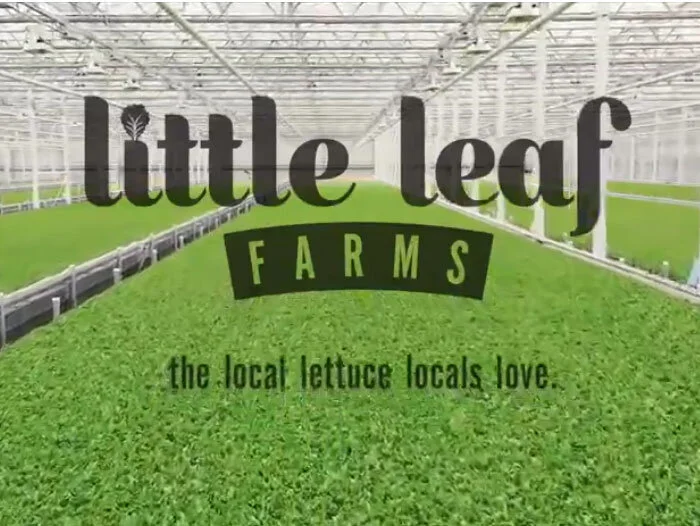
Little Leaf Farms’ CEO Paul Sellew Advances Hydroponics As Company Expands
As agriculture strives for sustainability, growers need to tackle the duel problem of food waste and the inefficiency of transporting fresh produce thousands of miles across the country
DEVENS, MASS. – As agriculture strives for sustainability, growers need to tackle the duel problem of food waste and the inefficiency of transporting fresh produce thousands of miles across the country.
Food waste is estimated at between 30-40 percent of the food supply, and 98 percent of the nation’s lettuce is trucked from California and Arizona, contributing to the problem of spoiled produce. These shipments generate over 10,000 lbs. of CO2 per truckload, and hundreds of hours are being spent planning the logistics of food distribution. Furthermore, California continuously faces major droughts, and soil erosion is a problem plaguing farmers nationwide. As a result, traditional farming is increasingly unsustainable.
With mounting concerns about climate change and growing population demands, Paul Sellew, the founder and CEO of Little Leaf Farms, has a model growing method that brings year-round sustainable farming to New England and the East Coast with a smaller carbon footprint.
With its expansion to 10 acres in Devens, Mass. and new greenhouses planned in Pennsylvania and North Carolina, Sellew and the company’s head grower and manager, Pieter Slaman, a Dutch master of growing produce, have designed the most technologically advanced greenhouses in the world to grow lettuce with nearly 100 percent natural sunlight and recycled rain water without pesticides, herbicides, or insecticides.
They are growing crisp, baby green lettuce, incorporating principles of sustainability and state-of-the-art climate control technology. Key features include:
Hydroponic production – growing without soil – naturally protects increasingly stressed topsoil that is vulnerable to soil erosion, an increasing problem in agriculture today. This precise, soil-less method utilizes up to 90 percent less water than field-grown greens to grow crunchy, flavorful lettuce.
Little Leaf Farms uses the best glass, which diffuses light throughout the greenhouse resulting in greatest possible distribution of natural sunlight. The greenhouse is designed with the most efficient LED lights that target the specific wavelength ranges to maximize photosynthesis in the plants.
Little Leaf Farms’ Nutrient Film Technique (NFT) mobile gutter system is the most advanced in the world, delivering an approximately 20x yield increase per acre compared to traditional West Coast field agriculture and higher yields compared to other hydroponic systems. The main advantage of this technique over other hydroponic growing systems is the plant roots are exposed to adequate supplies or water, oxygen and nutrients all at the same time. This better and more efficient use of inputs also leads to lower production costs.
At Little Leaf Farms, lettuce is grown with 100 percent captured rainwater and almost 95 percent natural sunlight through special high-light transmission glass windows. The average annual rainfall is 46 inches in New England, and Little Leaf Farms uses about 23 inches a year.
To heat the greenhouse, Little Leaf Farms burns clean natural gas and captures the CO2 and releases it back into the greenhouse – making the process net neutral. Solar panels also generate about 20-30 percent of electricity.
Hydroponic growing is also safer because the lettuce does not come into contact with contaminates that field-grown lettuce is subjected to from livestock. The lettuce is not handled by human hands. It is also grown free of chlorine, other chemical washing agents and harmful chemical residues.

Elevate Farms Inc.: Tech-Based Vertical Farming Company Completes Capital Funding to Scale Operations and Secure IP
A tech-based vertical farming company focused on cost-effectively growing leafy green vegetables at mass scale, Elevate Farms Inc. (“Elevate Farms”) is pleased to announce the closing of a $1.8M funding led by Brightspark Ventures
By urbanagnews
February 14, 2020
PRESS RELEASE – Toronto, CANADA / A tech-based vertical farming company focused on cost-effectively growing leafy green vegetables at mass scale, Elevate Farms Inc. (“Elevate Farms”) is pleased to announce the closing of a $1.8M funding led by Brightspark Ventures.
Elevate Farm’s unique solution uses hydroponics and a proprietary automation system, paired with photobiology, to grow high-quality leafy greens (such as arugula, kale, and basil) in a climate-controlled environment.
Elevate Farms’ system aims to deliver a product that is larger, tastes better and has higher nutritional content than traditionally-grown leafy greens – all at a lower cost. The produce grown by Elevate Farms also has the benefit of being local, completely non-GMO, as well as pesticide and chemical free.
“Elevate Farms represents the next generation of indoor farming: their system solves some of the biggest problems the first wave of vertical farms experienced,” says Mark Skapinker, Managing Partner at Brightspark Ventures. He continued, “their edge is their ability to cost-effectively create a tasty and nutritious product – and grow it at a mass-market scale. We invested because we saw meaningful potential, being a team of world-leading experts that can execute, proven technology, and true science being applied into a massive marketplace.”
Elevate Farms is the first to commercially implement an automated climate-controlled environment for plant-production that utilizes far less labor than other indoor farms.
Amin Jadavji, Elevate Farm’s CEO stated: “With the new funding, the company is now ready to scale significantly. This financing will allow us to execute on our currently secured flagship facilities in New Jersey and Niagara, each projected to produce in excess of one-million pounds of leafy greens annually.” Mr. Jadavji continued: “The funding will also fuel our plans to scale the business, grow our team, build and secure new and existing IP, prepare for business partnership opportunities, as well as finalize initial major orders and operational financing.”
Travis Kanellos, Elevate Farm’s Chief Strategy Officer added: “This is a major milestone for our North American operations. It also allows us to forge ahead on our global partnerships, as well as execute our global plan to build out facilities internationally over the next 12-months.”
ABOUT ELEVATE FARMS
Elevate Farms Inc., previously operating corporately as Intravision Greens Inc., is a technology-driven vertically-stacked indoor farming enterprise focused on a mass scale and cost-effective operations with patent secured and patent-pending technology as well as over a decade of advanced photobiology research deployed.
ABOUT BRIGHTSPARK VENTURES
Brightspark is one of Canada’s top-performing venture capital firms, actively investing in exceptional entrepreneurs since 1999. We provide growth capital and expertise to disruptive, market-transforming Canadian tech companies in seed to growth stages. Since inception, Brightspark has invested across traditional VC Funds, and more recently under an investment model open to individual and non-institutional investors.

Dissertation On Indoor Vertical Farming - Survey
I looked into several aspects of vertical farming including its advantages and disadvantages over conventional farming, energy requirements, perceptions of the industry and the challenges and opportunities that are currently facing the industry
My name is Caleb Owen and I am currently in my final year at Harper Adams University studying BSc (Hons) Agriculture. As part of my course, I am required to complete a dissertation. With the wide range of sectors within agriculture to choose from, I opted to look into urban agriculture and more specifically vertical farming. This field has become of growing interest to me due to it being a relatively young sector within agriculture. It offers exciting new opportunities for the industry as well as individuals who are interested in going into urban agriculture.
As it is a young industry I was intrigued to better understand the opinions that various stakeholders within vertical farming have towards the growth and especially the sustainability of their industry. I, therefore, decided to construct a questionnaire in order to understand the opinions and views of various stakeholders and try to determine any similarities as such.
Once my aims were established I underwent a literature review on the subject. I focused mainly on published peer-reviewed articles where I picked out their strengths and weaknesses. I discovered unsurprisingly that there was not much-published literature on vertical farming as it is such a young sector. However, I was surprised to find out that the concept was first mentioned over 100 years ago in a 1915 book by Gilbert Ellis Bailey where he described it as a utopian concept with the system similarly describing that of underground vertical farming in the Netherlands.
I looked into several aspects of vertical farming including its advantages and disadvantages over conventional farming, energy requirements, perceptions of the industry and the challenges and opportunities that are currently facing the industry. Although these were the topics that were mostly covered by the literature, there was still a lack of research. For example, there is a significant lack of information about the perceptions of vertical farming and more specifically the public perception of the industry. From looking at these various topics I drew out possible research gaps that can be looked into in the future. This included conducting more primary research into the sustainability and perceptions of vertical farming.
After conducting the literature review I was better informed in constructing a questionnaire that would help me achieve my targets. I then went to it to construct a short questionnaire that would provide me with as much information as possible about the views and opinions of vertical farming stakeholders. I chose to do this by using an online survey as it was easy to edit as well as being easy to distribute to as many people as possible. I understood from the start that there would not be many vertical farmers within the United Kingdom and therefore I have chosen to contact as many vertical farmers globally in order to make my results as statistically significant as possible. I hope that the results are drawn from my questionnaire highlight the knowledge that the stakeholders have on the sector as well as their concerns about any possible challenges.
Over the past few months, I have conducted a literature review on the topic and made a short questionnaire in order to better gain an understanding of vertical farmers perceptions on their industry
I would be very grateful if you are able to distribute the questionnaire link that is provided below to your members. The questionnaire should take 5-10 minutes to complete and will close on the 6th of March at 18:00 GMT.
Questionnaire link: https://harper-adams.onlinesurveys.ac.uk/vertical-farmers-perceptions-of-vertical-farming-copy

Containerized Vertical Farming Company Freight Farms Secures $15 Million
Freight Farms — a global innovation leader of containerized vertical farming — announced that it has raised $15 million in Series B funding
By Noah Long ● February 15, 2020
Freight Farms — a global innovation leader of containerized vertical farming — announced that it has raised $15 million in Series B funding
Freight Farms — a global innovation leader of containerized vertical farming — announced that it has raised $15 million in Series B funding led by Ospraie Ag Science. Spark Capital also participated in the round. Including this funding round, the company has raised over $28 million.
“It’s a big step forward for the industry when financial markets recognize and champion the value of creating a distributed food system,” said Freight Farms CEO Brad McNamara. “Aligned on mission-driven growth as a team, there is a massive opportunity before us to scale across global markets, propelling meaningful technology that’s already doing good.”
Freight Farms’ Greenery is able to produce over 500 varieties of crops like calendula at commercial scale year-round using 99.8% less water than traditional agriculture. Four rows of the company’s panels on a flexible moving rack system are able to house more than 8,000 living plants at once thus creating a dense canopy of fresh crops.
This round of funding will be used for advancing the Freight Farms’ platform through continued innovation with new services designed to benefit its growing global network of farmers and corporate partners. And this investment follows the announcement of Freight Farms’ strategic national partnership with Sodexo to grow food onsite at educational and corporate campuses nationwide and will support ongoing contributions to collaborative research projects and partnerships.
“Freight Farms has redefined vertical farming and made decentralizing the food system something that’s possible and meaningful right now, not in the ‘future of food,'” added Jason Mraz, President of Ospraie Ag Science. “Full traceability, high nutrition without herbicides and pesticides, year-round availability – these are elements that should be inherent to food sourcing. Freight Farms’ Greenery makes it possible to meet this burgeoning global demand from campuses, hospitals, municipal institutions, and corporate businesses, while also enabling small business farmers to meet these needs for their customers.”
Launched in 2010 by McNamara and COO Jon Friedman, Freight Farms debuted the first vertical hydroponic farm built inside an intermodal shipping container called the Leafy Green Machine with the mission of democratizing and decentralizing the local production of fresh, healthy food. And this innovation, with integral IoT data platform farmhand, launched a new category of indoor farming and propelled Freight Farms into the largest network of IoT-connected farms in the world.
Freight Farm’s 2019 launch of the Greenery raised the industry bar, advancing the limits of containerized vertical farming to put the most progressive, accessible, and scalable vertical farming technology into the hands of people of diverse industry, age, and mission.
“With the Greenery and farmhand, we’ve created an infrastructure that lowers the barrier of entry into food production, an industry that’s historically been difficult to get into,” explained Friedman. “With this platform, we’re also able to harness and build upon a wider set of technologies including cloud IoT, automation, and machine learning, while enabling new developments in plant science for future generations.”
Freight Farms has been an integral part of scientific and academic research studies in collaboration with industry-leading organizations, including NASA (exploring self-sustaining crop production) and Cold Spring Harbor Laboratory (exploring the integration of CRISPR seed genetics and vertical farming to create commercial opportunity).
The company’s customers hail from education, hospitality, retail, corporate, and nonprofit sectors across 44 states and 25 countries, and include independent small business farmers — who distribute to restaurants, farmers’ markets, and businesses such as Central Market, Meijer, and Wendy’s.

Singapore: Going Beyond Urban Farming
Urban farms are not just centers of food production, but also spaces to provide care to the community, says Mr. Bjorn Low, founder of social enterprise Edible Garden City.
February 5, 2020, By Asian Scientist Newsroom
Urban farms are not just centers of food production, but also spaces to provide care to the community, says Mr. Bjorn Low, founder of social enterprise Edible Garden City.
AsianScientist (Feb. 5, 2020) – Home to more than half of the world’s urban population, Asia is already beginning to feel the strain of rapid modernization. The expansion of cities takes a toll on the environment, and so does the provision of food for burgeoning populations—food production accounts for 30 percent of greenhouse gases generated globally.
New models for sustainable urbanization and food security are sorely needed, and countries may have found an answer in urban farming, the practice of cultivating, processing and distributing food in or around urban areas. Mr. Bjorn Low, the managing director and co-founder of social enterprise Edible Garden City, is a pioneer of urban farming in Singapore.
Returning to Singapore in 2012 after pursuing a diploma in agriculture in the UK, Low was confronted with the reality of a land-scarce nation and a populace that placed little emphasis on farming. Undaunted, Low took it upon himself to promote urban agriculture in the city-state.
“Edible Garden City was founded as a platform for like-minded people to come together to drive the urban farming movement,” Low said. “Today, we are a team of 40 full-timers and volunteers coming together to provide urban food production solutions for corporate offices, restaurants, and schools.”
With a keen focus on sustainability, Edible Garden City has created a farming system that takes in food waste and converts that into organic fertilizer that is fed back into the food production system. Low calls this a closed-loop urban farming system that generates minimal waste, echoing the principles of a circular economy, where resources are kept in use for as long as possible and regenerated or upcycled to extend their lifespan.
Low’s vision for urban farming is one that is not only sustainable but also inclusive. Among his collective of farmers are persons with disabilities who contribute to the farms and help advocate for urban farming. “One of the big shifts for us in the next five to 10 years is to really look at how to bring out the intangible values of the urban farms. So farms are not just about food production, we want to use the farms as spaces to provide care to the community,” Low explained.
“We have, over the last few years, done a series of studies together with the Center for Urban Greenery and Ecology (CUGE), Singapore, to look at the value of horticultural therapy for pre-dementia patients,” he added.
Horticultural therapy involves plants and gardening activities guided by trained professionals to maximize the benefits of engaging with nature. Highlighting a study conducted with CUGE in 2019, Low noted that the benefits of horticultural therapy are measurable and significant.
In the study, 59 older adults were randomly divided into two groups: one group receiving horticultural therapy and a control group. The researchers took blood samples from the study subjects for profiling of their immune cells and assessed each individual’s mental health, social status and functional capacity within the community. They reported that levels of a protein called interleukin 6 (IL-6) were reduced in the group receiving horticultural therapy.
“IL-6 contributes to inflammation of the body, and that causes dementia, arthritis, cancer, and other conditions,” Low said. Horticultural therapy may, therefore, hold benefits for patients suffering from those diseases.
“In addition, we have just started a small garden at the National Cancer Center, Singapore, where we’re not just carrying out horticulture therapy, but also identifying a handful of local herbs that possibly have anticancer properties,” he added.
The nutritional density of plants grown indoors in vertical farms (versus those grown outdoors under natural sunlight) is also something that Low is keen on investigating, and he is in talks with the National University of Singapore to initiate such studies.
“I think we need diversity in farming systems, which then means that you can’t have everything indoors in vertical farms and using hydroponics. There still needs to be outdoor farms, rooftop farms, and plants grown in soil,” Low said. “Technology is important, but it is not a silver bullet,” he quipped.

Framlab Proposes Modular Vertical Farms For Brooklyn Neighbourhoods
Creative agency Framlab has proposed building modular vertical farms in Brooklyn to provide low-income neighborhoods with access to fresh produce
Creative agency Framlab has proposed building modular vertical farms in Brooklyn to provide low-income neighborhoods with access to fresh produce.
The conceptual Glasir project comprises a stack of greenhouse-like modules that could be built in various locations across the New York borough, where Framlab's research has found that 20 percent of the population are food-insecure.
A Glasir farm would be constructed on top of a stand with an area of just four square feet (0.37 square metres). It is designed to be installed in a wide variety of places, including alongside sidewalks, in backyards or public parks.
Three types of modules called Production Module, Growth Module and Occupation Module would feature in each structure. Each unit would be framed with cross-laminated timber and could be stacked in different configurations depending on the space or the area's circumstances.
The Production Modules would be where the vegetables are grown. They would be topped with a solar panel and fronted with polycarbonate and aluminum mullions.
The system would use aeroponics, a process for cultivating plants in which crops are grown in mist environments rather than soil. In addition to being water-efficient, this system would also allow faster growth and enable plants to absorb more nutrients, according to Framlab.
"These systems are extremely water-efficient — requiring less than 10 percent of the water necessitated by traditional, geoponic cultivation, while allowing the use of fertilizers and pesticides to be drastically reduced," Framlab said.
"In addition, aeroponic growth environments enable plant roots to absorb much higher levels of minerals and vitamins, which yield vegetables that pack a stronger nutritional punch."
Each unit features an aeroponic tray, water feeder line, and water trunk line. Plants would be watered through mist nozzles attached inside each Production Module.
Water would be pumped through the structure's irrigation system, a closed-loop network made up of Growth Module components that act like trunks, branches, and feeders, to the misters.
"Glasir is a project that seeks to utilize a tree's adaptable growth processes as a dynamic framework for high-yield, vertical farming," said Framlab.

"Through the elevation and distribution of production modules, the system enables high-yield, local production of greens and vegetables, while engaging with the streetscape as a distinct new urban figure."
In addition to the Production Module and the Growth Module, the Occupation Module would provide platforms and pathways for people to move through the structure.
Framlab imagines that each Glasir would be fitted with artificial intelligence (AI) sensors that would be used to monitor plant growth and environmental conditions. Eventually, the AI would be used to inform how to grow each structure.
The modules would be stacked by crane-equipped trucks but the team also has plans to implement drone transit that would eventually both build and deliver modules, when the technology is proven viable.
It also imagines that in the future drones would also be used to deliver food to local residents.
In addition to its function as a source for harvesting food, Glasir could also serve as a social space for people offering shade and shelter during the day and illuminating its surroundings at night.
Framlab was founded by Norwegian designer Andreas Tjeldflaat, and has offices in Bergen, Norway, and New York.
In 2017, the studio proposed adding clusters of honeycomb-like pods to the sides of buildings to address New York City's growing homeless population.
Other vertical farming proposals include a modular housing complex by Precht in which residents produce their own food, a multi-storey bamboo-framed structure by Rogers Stirk Harbour + Partners and a conceptual skyscraper by Pawe l Lipiński and Mateusz Frankowski envisioned for locations across sub-Saharan Africa.
How Madar Farms Is Changing Agriculture
Countries such as the United Arab Emirates are increasingly facing problems growing food due to limited space, growing demand and decreasing resources.
FEBRUARY 1, 2020
SEATTLE, Washington — Countries such as the United Arab Emirates are increasingly facing problems growing food due to limited space, growing demand and decreasing resources. The creators of Madar Farms saw this need and put together a team and a process. This process includes vertical farming in combination with hydroponics to grow food using much fewer resources than traditional means. The benefits of this new style of farming are plentiful. In a world with a growing need for food security, it provides a promising solution.
In Need of a Solution
Despite the United Arab Emirates (UAE) being a relatively rich country, they still have unsolved issues with food security. As a desert country, there is not a large agricultural industry. This mostly stems from the lack of available fertile soil and freshwater supply. In fact, only 5 percent of the land in the UAE is even able to be farmed. Therefore, traditional methods would only be able to provide a small amount of the countries needs.
Beyond this, between 70 and 80 percent of the water consumption in the area is designated towards agriculture. Without a solution, it is not a sustainable practice. Furthermore, UAE imports between 80 and 90 percent of their entire food supply. This leaves them without a reliable domestic supply of food as well as a lack of fresh nutritious food. Concerns over political unrest in the region could potentially prevent full food shipments from entering the country. In order to ensure that the people of the UAE have access to food and water for years to come, it is necessary to think outside the box.
Starting Up
Abdulaziz Al Mulla co-founded Madar Farms in 2017 after realizing the stark issues that the UAE and many Arabian countries faced regarding food security. While working at his previous job, he encountered a project that exposed him to the numbers involved. He knew he could find a better way to produce food, so he resigned from his job and started working on Madar Farms. Using his background and passion for food security, he started Madar Farms and committed to developing solutions since then.
The team that makes up Madar Farms is a mix of people with business backgrounds, engineers and agricultural specialists. Together they have created a model that not only has created innovative ways to grow food but also has created a business model that can keep the farms running into the future. These innovative methods are proving to be a potentially revolutionary way for countries that suffer from poor agricultural climates to begin to secure a source of food.
Madar Farms is Changing Agriculture
Madar Farms uses advanced farming techniques to create an efficient farm in the desert. They used shipping containers as the exterior of their building and have the entire environment contained within. From here, they use a combination of vertical farming and hydroponics to maximize their output. Mader Farms regulates the temperature to keep the crops out of the blistering heat. They also utilize blue lights, used to replace sunlight. The design focus of the entire system is to be a better version of farming due to the extreme control and science that goes into the process.
The hydroponic system brings many benefits. The first of these is the lack of pesticides that are used in the crops. These crops, grown in water, do not require pesticides due to the fact that most pests live in the soil. Along with this, hydroponics allows for much less water to be used in the farming process. In fact, Madar Farms process uses 95 percent less water than traditional methods. By saving so much water, they are able to protect an important and scarce resource. Another added benefit of Madar Farms’ methods is year-long growth. Because they have control over every aspect, including water, nutrients, and sunlight, they are able to grow crops continuously.
They also do not have to worry about rotating crops or giving fields time to regain lost nutrients, as they control the nutrient levels in the water. These innovative methods are just one of the many ways Madar Farms is changing agriculture. Madar Farms will be able to provide fresh crops year-round. Further, these locally grown crops are pesticide- and GMO-free and help preserve precious resources.
Going Forward
The government of the UAE has identified food security as a top priority for the continued growth of the country. In 2018, the Minister of Food Security in UAE launched a national food security strategy that outlines the necessity of improved food security. The government’s interest in their project provides support and an opportunity to help Madar Farms; the farms could potentially become an established part of the food industry in the UAE.
Furthermore, experts estimate the vertical farming industry will become a multi-billion dollar industry in the 2020s. As the world’s need for food continues to increase with population growth, vertical farming such as Madar Farms will be in higher demand as countries look to secure their food and water supply. The world will have to put out more food with fewer resources. Madar Farms has developed a solution that could be a potential long-term solution.
A combination of innovative thinking and new technology make up how Madar Farms is changing agriculture in UAE. Madar Farms is using vertical farming and hydroponics to provide food using less water and never-ending growing cycles. This new way of farming could provide the UAE with a future of food security.
– Josh Fritzjunker

KyleTalksAgTech: Small Scale Indoor Farming Systems - The Future of How And Where We Grow w/ Alexander Olesen
On this episode of the CropTalk series, #KyleTalksAgTech, Kyle Barnett sits down with Alexander Olesen of Babylon Micro-Farms, to understand the ins and outs of small scale indoor farming systems
Feb 4, 2020
On this episode of the CropTalk series, #KyleTalksAgTech, Kyle Barnett sits down with Alexander Olesen of Babylon Micro-Farms, to understand the ins and outs of small scale indoor farming systems.
Alexander shares some unique perspective and what makes Babylon's growing system and service for their clients, special.
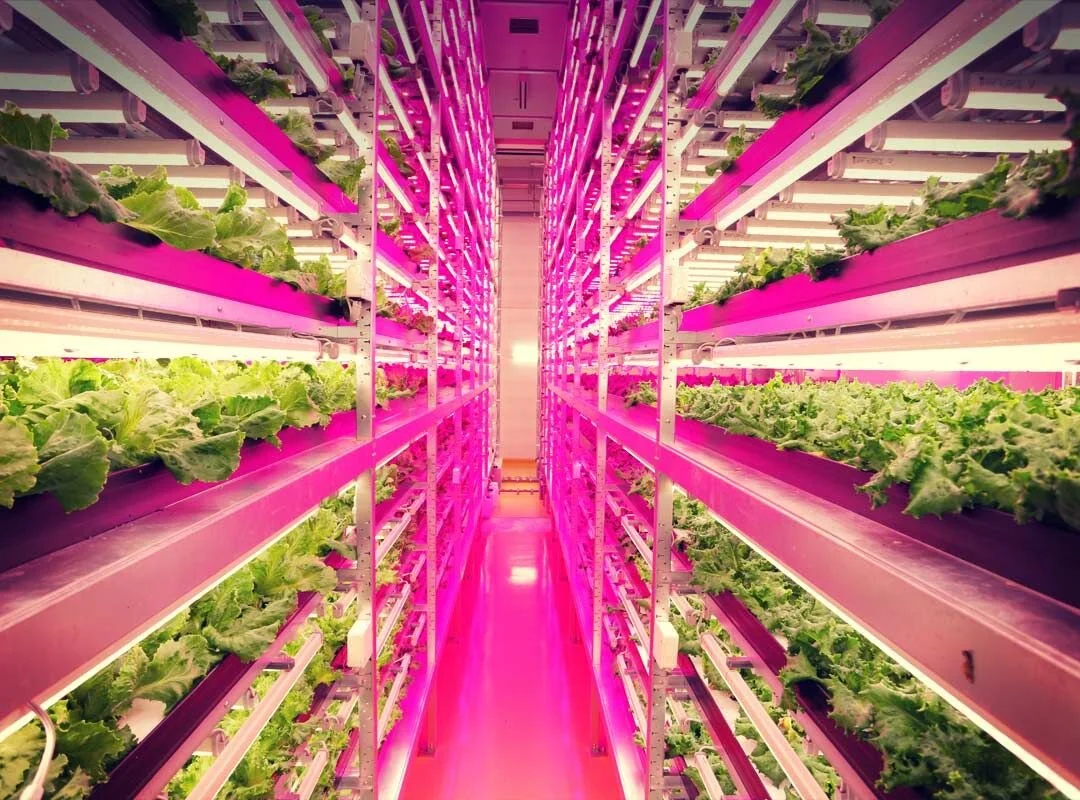
Why Growing Leafy Greens Indoors Is Trending
A group of horticulturists, engineers, and agricultural economists have been given the green light to study indoor production of leafy greens, thanks to a four-year, $2.7 million grant from USDA. But wait, there’s more
Posted by Paul Rusnak
February 6, 2020
A group of horticulturists, engineers, and agricultural economists have been given the green light to study indoor production of leafy greens, thanks to a four-year, $2.7 million grant from USDA. But wait, there’s more. Industry partners also recognize the value in the project and matched that funding, bringing the total to $5.4 million.
The multi-university team led by Michigan State University (MSU) Professor Erik Runkle knows production challenges outdoors with leafy greens, including food safety issues, have led to an interest in growing these specialty crops hydroponically in controlled environments. At this point though, there is little information on whether this is economically viable.ADVERTISEMENTCapital and operating costs can be significant for startups, especially as it relates to LEDs and cooling systems, Runkle points out.
“Indoor farming using LEDs has a lot of advantages,” he says.
“It takes much less space, there is a more efficient use of water and nutrients, production is year-round, and there are virtually no pesticides. But there is little science-based information about best-growing practices and very little economic data around indoor farming.”
To find some answers, Runkle is collaborating on the project with fellow MSU researchers Roberto Lopez and Simone Valle de Souza, as well as Chieri Kubota at Ohio State University, Cary Mitchell at Purdue University, and Murat Kacira at the University of Arizona.
The team has three major goals:
1. Define optimal profitability based on yield and other high-value attributes of the plants, such as nutrition content
2. Optimize indoor environmental conditions, such as humidity, air movement, temperature, light and carbon dioxide concentration, to increase yield and high-value attributes
3. Encourage indoor farming stakeholders to collaborate with academic and industry groups that are working in controlled-environment agriculture.“
It might not seem obvious, but energy prices are extremely important to growers looking at indoor farming,” Runkle says. “These costs can vary significantly across the country, so it’s something growers need to be aware of. There are other considerations as well, such as proximity to markets.”
According to the team, much of the work will be conducted in Runkle’s Controlled-Environment Lighting Laboratory, which opened in 2017 and is used to study how plants grow under various environmental conditions. The findings will be tested at partner locations.
For more information about the project and its progress, visit scri-optimia.org.
Paul Rusnak is Senior Managing Online Editor for the U.S. Horticulture Group at Meister Media Worldwide, which includes Florida Grower, American Vegetable Grower, American Fruit Grower, and Greenhouse Grower brand titles. See all author stories here.
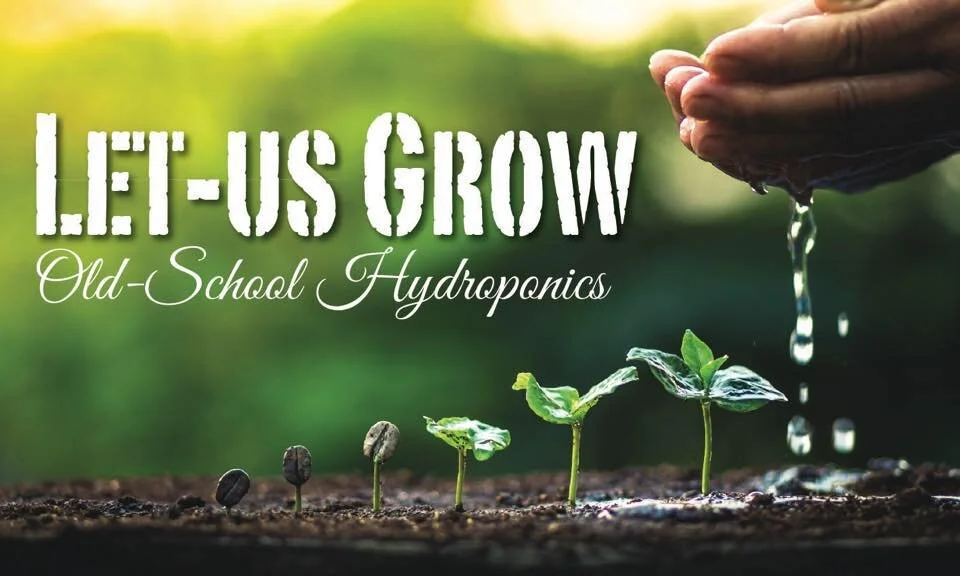
CANADA: Let-Us Grow Hydroponics One Year in Hudson Bay’s Former School
Fresh produce in Hudson Bay
(Facebook/Let-Us Grow)
By Mat Barrett
Feb 06, 2020
FRESH PRODUCE IN HUDSON BAY
The old Stewart Hawke School in Hudson Bay is getting some good use.
The town asked for bids for the building in late 2018, and in early 2019, they awarded it to ‘Let-Us Grow Hydroponics’. The company is run by Jan and June Nel who grow fresh lettuce, herbs, and radishes under LED lights with no pesticides or herbicides. Jan said when the town was looking for bids, he and his wife started to think.
“We started looking for ideas, and we went and proposed doing this,” Jan said. “And they loved it.”
At the time, Jan was – and still is – working full-time with Nutrien, while June was working at the Pharmasave. June said they took their family and started preparing the building in January, with the hope of helping Hudson Bay.
“And do something that can add to the community,” she said. “So, hopefully in the future, create jobs, expand and maybe do a few other things within the school. There’s a thousand ideas we have.”
By late February, Let-Us Grow Hydroponics was planting its first seeds. Currently, there are two rooms being used, and the gymnasium as well but Jan hopes that can be used for something else later on.
Jan said through their year of growing fresh produce in Hudson Bay, it’s been a huge learning curve.
“We learned lots,” he said. “Things we thought were going to be easy, were challenging. Things we thought were going to be challenging were simple.”
He said while working at Nutrien, he’s had to adjust how he thinks when it comes to growing now compared to how he’d think at his full-time job.
“Growing in an environment where there’s no soil, there’s no buffering capacity,” Jan told northeast now. “The plants react so much quicker to any deficiencies, and getting those recipes and formulas worked out took a bit of trial and error. And we’re still working on it, it’s not perfect, but it’s way better than it was.”
Let-Us Grow Hydroponics grows lettuce, herbs, and radish with no pesticides or herbicides, all under LED lights. (Facebook/Let-Us Grow)
With Hudson Bay being so far off the beaten path, it can be hard to find fresh produce, or local produce. June said one thing with theirs is it is local.
“It’s not two weeks old, it hasn’t traveled across the country or across the world,” she said. “It actually tastes like lettuce. Lots of people have commented on our herbs, it actually still tastes fresh when you get it, and there’s nothing sprayed on it.”
Jan added the carbon footprint on the regular produce bought at the store is massive compared to this.
As for the future of Let-Us-Grow Hydroponics, they’ve got a lot of building to work with and the Nel’s said soon they hope to be producing enough to provide fresh produce for Hudson Bay. Then in a few years, they hope to expand and grow enough where all of northeast Saskatchewan can have this fresh produce.
Right now, Let-Us Grow is only selling out of the school right now, but they hope to expand the retail side a little bit more soon. June said for anyone who wants to get in touch with them to get some produce, they can contact via phone, or their Facebook page.
Both June and Jan praised community support of Hudson Bay, as well as the help and support they have received from the town itself.
–
mat.barrett@jpbg.ca
On Twitter: @matbarrett6

INDIA: Top 5 Agritech Startup That Helps You Set Up Soil-Less Indoor Farming
Hydroponics or growing plants in water or sand, rather than soil, is done using mineral nutrient solutions in a water flush. Moreover, this indoor farming technique induces plant growth, making the process 50 percent faster than growth in soil and the method is cost-effective
Feb 11, 2020
Hydroponics or growing plants in water or sand, rather than soil, is done using mineral nutrient solutions in a water flush.
This indoor farming technique induces plant growth, making the process 50 percent faster than growth in soil and the method is cost-effective.
Only an expert gardener knows how tough it can be to grow plants and how much extra care it takes with special attention to soil, fertilizer, and light. One can’t get the process right and expect good yields without getting his/her hands dirty. But, to make their work a lot easy and convenient, many start-ups in India are working on hydroponics farming.
Hydroponics or growing plants in water or sand, rather than soil, is done using mineral nutrient solutions in a water flush. Moreover, this indoor farming technique induces plant growth, making the process 50 percent faster than growth in soil and the method is cost-effective. Mineral nutrient solutions are used to feed plants in water.
Here’s a list of five start-ups in India that are innovating agriculture methods and leading the way in indoor farming.
Barton Breeze: Gurgaon based Barton Breeze is a commercial hydroponic farm specialist, using controlled sustainable technology and modern farming techniques, to create highly productive agri-models for the new-age farmer. Barton Breeze is not just a hydroponic farm developer, but also a farmer, growth consultant and a retailer. We provide end to end farm management solution and execute projects on a turnkey basis from the development of climate-controlled Polyhouse/Polycarbonate house to Aeroponic set up and training resources on how to run the farm efficiently and impart technology training. Barton Breeze combines sustainable technology and modern farming techniques, to create highly productive models for the new-age farmer. We pride ourselves on providing knowledge and the best available products to our customers. Carefully chosen and tested equipment and nutrients ensure our customers have maximum results with their microgreens.
Future Farms: Chennai based Future Farms now grows 16 crop varieties, classified under English Exotic, Asian Exotic and Indian Exotic, across 15 acres of land spread over 10 states. It recorded a $1 million turnover last year. Their primary focus is on leafy vegetables with farms spread across the country from Delhi to Maharashtra, Tamil Nadu, and Gujarat.
Acqua Farms: Chennai based Acqua Farms grows everything from Italian basil to carom (ajwain), mint, spinach, lettuce and a host of leafy greens and herbs. Moreover, he grows these vegetables using planters made of PVC pipes. “Besides a starter kit, Acqua Farms also provides setups for larger planter systems with 24, 48, 72, 96 and going up to 1,000, depending on what the user needs. They also have a subscription-based service to those who have no knowledge of hydroponics, where, against a monthly amount, they assign the user an agronomist who takes care of their plants and monitors it once a week.
Letcetra Agritech: Goa-based Letcetra Agritech in the Mapusa area of Goa is the first such indoor hydroponic farm, which grows good quality, pesticide-free vegetables. Their farm, measuring 150 sq meters, produces tons of leafy vegetables like lettuce and salad greens, besides cherry tomatoes, bell peppers, and basil. “Letcetra has expanded to include two more farms with an overall area of 2,300 square meters. The combined fresh produce from all three farms put together is about 6-8 tonnes of different varieties of lettuce and other leafy greens, per month.
BitMantis Innovations: Based out of Bengaluru, this IoT and data analytics start-up have developed its IoT solution GreenSAGE, which allows individuals and commercial growers to grow fresh herbs throughout the year with the minimum of fuss. Under GreenSage, you have the Micro Edition and Greens Edition kits that use hydroponics methods for efficient use of water and nutrients.
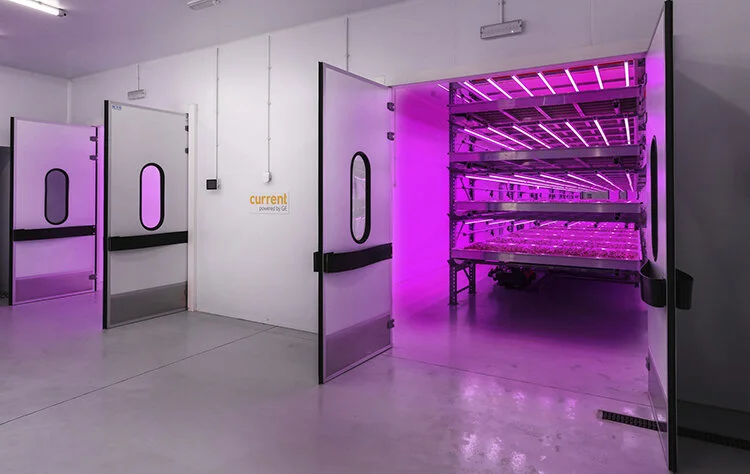
The Ups And Downs of Vertical Farming
Vertical farming can offer a practical solution in places where space is limited or land value is high, such as in cities, or where conventional greenhouses would not be viable, perhaps due to space or climate
The term Vertical Farming (VF) can be used to define a variety of concepts. For some, it might conjure up images of tall structures with plants growing on the outside, while others may imagine stacks of shipping containers. In essence, VF refers to the practice of building upwards, or downwards in the case of underground setups, to maximise production area for a given footprint.
by Jon Swain
Vertical farming can offer a practical solution in places where space is limited or land value is high, such as in cities, or where conventional greenhouses would not be viable, perhaps due to space or climate. It may also be possible to create a vertical growing setup within a conventional greenhouse, if an arrangement of layers can be set up adequately, without compromising crop quality, although the height of the structure could limit what is practical.
As vertical farming establishes itself as a viable alternative to traditional methods, sustainability is really the key. Building vertically not only saves space but can also allow unconventional spaces, such as underground tunnels, to be used for growing. Additionally, VF has also been demonstrated to reduce the amount of soil and water required, with many using hydroponics, making it an option in arid regions where conventional glasshouses are not viable.
An important consideration for vertical farms is to ensure sufficient light reaches all layers of the crop. Even if using daylight, shading of the lower layers, especially in built-up areas, will reduce the amount of light reaching the crop. Most VFs will require supplementary lights; a light fitting above each layer of the crop is likely to be necessary.
Growing Underground, a London based setup, uses a hydroponic system to grow microgreens on four levels in 500m2 of tunnels 33 metres underground. With no natural light, high-efficiency LEDs are vital to give the crop the light spectrum it needs, but these still consume a large amount of energy and produce a considerable amount of heat. Chris Nelson from Growing Underground says, “the aim is to become carbon neutral, but it is still an energy intensive business. With closely packed layers, it is easy for a microclimate to form, so it is important to have good, effective climate monitoring and control to ensure sufficient air movement and to maintain an optimum growing environment.”
Fully enclosed farms (i.e. with no windows) demand complete control over the environment. While the number of external factors is reduced, it can also be expensive, as there is no access to free daylight. This could be an interesting option for anyone with access to an underground space, but “a clear business case is crucial” warns Chris Nelson.
The temperate UK climate means conventional glasshouses work well; heating demands can be met easily and light levels are usually acceptable. As such, vertical farms have typically been aimed at supplying niche markets: low volume, high value. Vertical farming may not be the ‘greenest’ solution compared to crops grown under glass in warm, sunny climes, but it does allow produce to be grown close to the market. As such, food miles can be drastically reduced.
A self-contained setup lends itself well to consistent, year-round production with a quick turnover time. A closed system, i.e. with water and nutrient recycling and heat recovery from vented air, can help improve efficiency, but disease control is vital. Careful climate management is necessary. Depending on the location, vertical farms often need a significant amount of heating or cooling, as well as some form of humidity control. Air movement is also important to maintain an active climate. All of these will use energy and contribute significantly towards operating costs, but sustainable, local food production is a benefit in itself and offers a degree of security against the myriad of factors that can adversely affect conventional production methods.
Although VF may not yet drastically reduce the industry’s environmental impact, in the UK at least, it does offer a solution to food production in areas where conventional methods just would not work. This is one of the main drivers behind VF, which can help combat the need to produce more food for an ever-expanding world population.
For more information:
NFU Energy
024 7669 6512
www.nfuenergy.co.uk
Publication date: Wed 24 Apr 2019

Brick Street Farms Will Open A Pop-Up Market In A St.Pete Warehouse Next Month
Brick Street Farms, a St. Pete-based urban farming and produce company, comes into 2020 ablaze in change now its “cultivation hub” is set to debut at the end of this year
C/O BRICK STREET FARMS
A temporary spot to cop your fresh kale and spinach.
FEB 6, 2020
Brick Street Farms, a St. Pete-based urban farming and produce company, comes into 2020 ablaze in change now its “cultivation hub” is set to debut at the end of this year. Renovations to Brick Streets' market location—located at 2001 Second Ave. S. in St. Petersburg—have shut it down its market temporarily, so a Brick Street pop-up market will soon open in its production warehouse in St. Petersburg’s Grand Central District (at the corner of 3rd Avenue S. and 22nd Street, to be exact.)A press release says that the warehouse pop-up market hopes to open in March and will sell Brick Street's prized fresh produce as soon as doors are open.
This cultivation hub, which is still in the beginning stages of construction, will allow Brick Street Farms to increase production in order to satisfy high-demand. St. Pete’s Urban Canning Co. will also rebrand itself into the “Brick Street Canning Company” and sell canned and pickled goods out of the Brick Street Farms complex when it opens at the end of 2020. Until the cultivation hub opens, this warehouse space will be home to the Thrive Program—which allows consumers to buy or lease the shipping container farms that the Brick Street team manufactures.
Keep your eyes peeled for the opening of this warehouse pop-up market in the Grand Central Warehouse district by following Brick Street Farms on Instagram.
Want to know everything going on with Tampa Bay's food and drink scene? Sign up for our Bites newsletter.
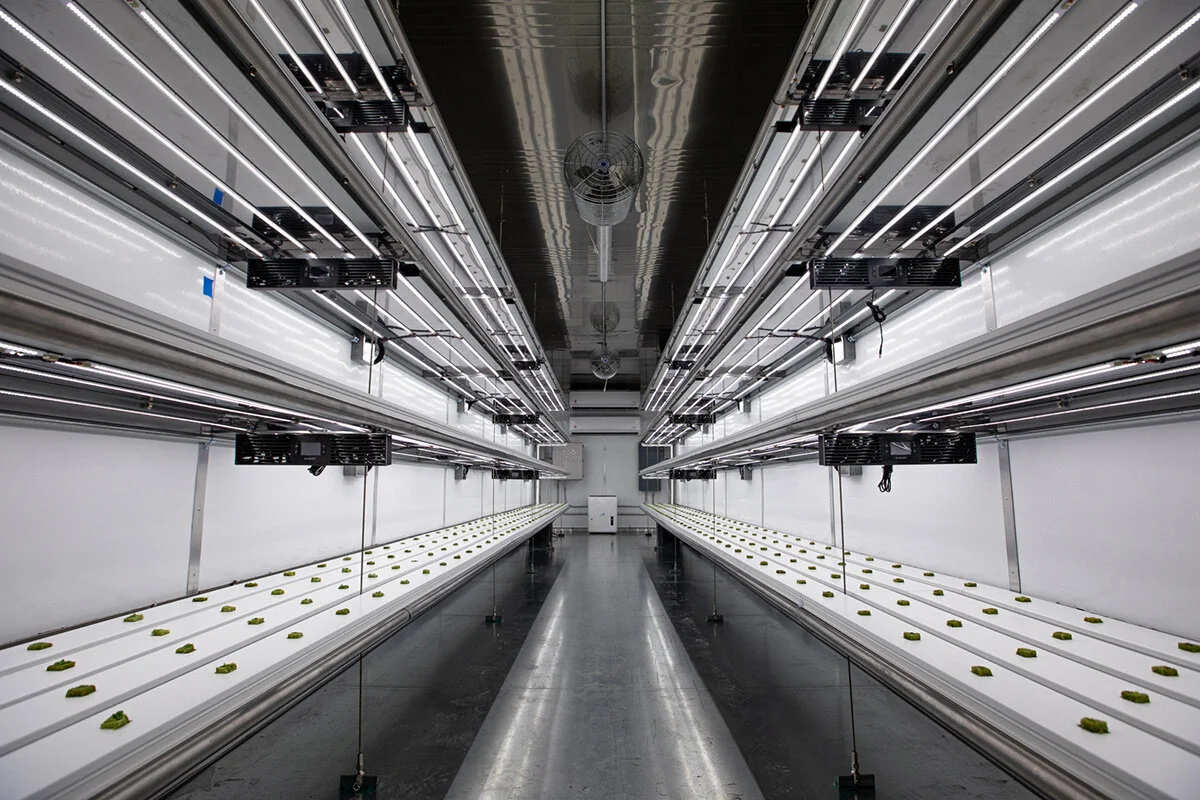
Top 7 Vertical Farming Companies
Vertical farming refers to the practice of producing fruits and vegetables or cannabis vertically, in stacked layers, perhaps on many floors inside a building, using artificial lights instead of the sun, and a whole range of relatively new technologies
Written by: GP Solutions
Vertical farming refers to the practice of producing fruits and vegetables or cannabis vertically, in stacked layers, perhaps on many floors inside a building, using artificial lights instead of the sun, and a whole range of relatively new technologies.
The three main reasons why it’s a much-discussed topic now is because:
There are a number of startup companies emerging in the sector and attracting tens of millions of dollars in investment; and more people live in cities than do in rural areas, a global trend which seems irreversible, and this means that the demand for fresh produce will increase in urban areas, and bringing the production closer to the consumer would make sense.
Vertical farming provides a low-cost, turnkey method to start farming. This is especially useful in the cannabis industry where traditional greenhouses require land that could cost many millions of dollars.
Some of these technologies have been available for some time, decades even, but they were probably too expensive in the past to make vertical farming a viable business proposition.
The key technologies in vertical farming include:
Perception Technologies – cameras and other sensors which can monitor for colour and other factors, such as disease;
Artificial Intelligence – which can process the data from the sensors and formulate solutions;
Automated and Even Autonomous Mechatronics – robots and other automated machines which pick the produce when it is ready for market, or apply cures to ailments during their growing.
The above list is a very simple breakdown of the fundamental technologies that will be required to, basically, reduce to a minimum or even eliminate the need for human involvement.
If vertical farms are run like traditional greenhouses, there would be too much human input required and it probably would not be profitable.
It’s the new automation technologies that will make it work.
Carnegie Mellon University is among a number of organizations which have developed integrated systems for vertical farming. CMU’s version is called ACESys, short for Automation, Culture, Environment, and Systems Model for Vertical Farming.
An academic paper probably worth checking out is called Advances in greenhouse automation and controlled environment agriculture: A transition to plant factories and urban agriculture.
In their introduction to the paper, the authors note: “Greenhouse cultivation has evolved from simple covered rows of open-fields crops to highly sophisticated controlled environment agriculture facilities that projected the image of plant factories for urban farming.
“The advances and improvements in CEA have promoted the scientific solutions for the efficient production of plants in populated cities and multi-story buildings.”
So the interest in the field is strong and most people seem to think it’s a viable business proposition.
And to underline the positivity about the sector, Research and Marketsforecasts the vertical farming market will grow to a value of $3 billion by 2024, from virtually nothing now.
In some sectors, such as marijuana production, indoor farming is providing a strong foundation for healthy profits.
COMPANIES FOCUS ON VERTICAL FARMING
It’s a very new business sector, so this list is subject to change:
1. AEROFARMS
This company has won many plaudits for its operation and uses its own patented “aeroponic technology… to take indoor vertical farming to a new level of precision and productivity with minimal environmental impact and virtually zero risks”.
The company has raised at least $138 million in funding since launch in 2004, according to CrunchBase. Some of its backers are quite impressive, as this article in Ag Funder News reports.
The term “aeroponic farming” refers to the process of growing plants in an air or mist environment without the use of soil or any earth-like material, which is known as “geoponics.”
Aeroponic systems enable the production of plants using 95 percent less water, which is what AeroFarms says it does.
2. GP SOLUTIONS
GP Solutions developed “GrowPods” – finely tuned, automated, transportable and scalable micro-farms that have been shown to grow all types of crops, including cannabis, at a faster rate than conventional means of agriculture.
GrowPods allow cultivation to take place year-round, which maximizes ROI. The systems are sealed from outside pathogens, contaminants, pesticides, and chemicals, and produce clean and robust crops.
The company has licensed its technology to Micro Lab Farms for the cannabis market only. The Pods from Micro Lab Farms differ slightly from the regular GrowPods from GP Solutions in that they have been specifically tuned for the production of cannabis.
Micro Lab Farms recently announced the development of a cannabis complex in Southern California that will hold many of the aforementioned GrowPods – some of which are being made available to farmers, businesses, and entrepreneurs looking to quickly enter the California cannabis market (the largest in the world).
GP Solutions also has a line of remarkable new proprietary soil mixtures, which contain no animal products. This is critical because many other soils and additives can contain harmful pathogens and contaminants that can cause crops to become tainted or fail rigorous testing.
The company is traded on the OTC stock exchange (ticker: GWPD) and is growing at a rapid pace (pardon the pun).
3. PLENTY
Like the other big vertical farming companies on this list, Plenty is another one that retails its produce, which includes kale and other greens, as well as some exotic herbs.
Plenty is probably the biggest company in terms of the amount of money it has raised in funding – approximately $226 million, according to CrunchBase.
4. BOWERY FARMING
You’d think any farming startup of any kind would steer clear of everything that’s genetically modified, but the fact that Bowery makes a point of saying it uses “zero pesticides and non-GMO” seeds might suggest that some vertical farming companies don’t have the same ideas.
Having raised more than $140 million in investment since inception in 2015, Bowery has carefully developed a distribution network in the US. Its leafy greens are available to buy in Whole Foods Market and Foragers. It also supplies a number of restaurants and sells online.
It doesn’t look like Bowery supplies its platform to other companies, even though some might be interested in its claims, such as: 95 percent less water usage than traditional agriculture; 100 times more productive on the same amount of land; and from harvest to shelf “within a few days”.
5. BRIGHTFARMS
Another of the big-money startups, BrightFarms has so far raised more than $112 million since its establishment in 2010, according to CrunchBase.
But unlike some of the other big companies, it isn’t into aeroponics as much. It seems more interested in hydroponics, which refers to growing plants with water, or, to be more accurate, mineral nutrient solutions in a water solvent.
6. GOTHAM GREENS
This company is one of many which have started up in the New York area. Strange to say it about such a new sector, but the market for vertical farming produce may be saturated – in that city at least.
Gotham Greens has so fair raised at least $45 million since its launch in 2011. It has four production-scale facilities, in New York City and in Chicago, and plans for more in several other states.
And, like BrightFarms, it’s more of a proponent for the hydroponic growing method, although it may well eventually mix it all up and try different approaches in different facilities.
7. IRON OX
This company appears to use robotics perhaps more than the others, in the picking process at least, and claims to operate fully autonomous indoor farmings. It too is a proponent of hydroponics, and is a retail-oriented company.
Its products are similar to the others’ – leafy greens such as lettuce and kale or things like that. It’s one of the newer startups on the list so a lot might change.
Iron Ox has only recently started supplying its products to local markets in California. The company has so far raised over $6 million in funding, according to CrunchBase.

Scottish Response To Global Food Security Profiled At UAE Summit
REPRESENTING IGS, the Scottish-based agritech business, CEO David Farquhar traveled to Abu Dhabi this week to attend the prestigious invitation-only 2020 Milken Institute Middle East and Africa (MEA) Summit
14th February 2020
David Farquhar, CEO IGS
REPRESENTING IGS, the Scottish-based agritech business, CEO David Farquhar traveled to Abu Dhabi this week to attend the prestigious invitation-only 2020 Milken Institute Middle East and Africa (MEA) Summit.
IGS supplies highly sophisticated plug-and-play vertical growing technology to indoor farms to enable the efficient production of food in any location around the world. The innovative Total Controlled Environment technology is capable of delivering yields of 225% and labor savings of up to 80% compared to glasshouse production, and energy savings of 50% in comparison to other indoor growing environments.
David was one of more than 100 speakers at the event and joined a panel of experts for a session focusing on how global food producers can scale up supply to ensure we can sustain the projected global population of 9 billion by 2050. David highlighted the potential of vertical farming, as well as the challenges still faced by the sector and the importance of increasing its credibility as we seek to help seriously address food sustainability and security.
During the event, he spoke alongside guests including United Arab Emirates Minister of State for Food Security Her Excellency Mariam Al-Muhairi, Chairman and CEO of Fresh Del Monte Produce, Mohammad Abu-Ghazaleh, and His Royal Highness Prince Khaled bin Alwaleed bin Talal Al Saud, Founder and CEO of KBW Ventures.
David commented: “It was an honour to receive the invitation to attend this remarkable summit and to represent Scottish innovation on a global stage, where such vital discussions are taking place. It is no secret that the global population is rising at an unprecedented rate and our ability to grow healthy food reliably under mounting pressure. It is vital that we act now to ensure that we are putting systems in place and adapt our behaviours to develop a sustainable route forward.
“This was a hugely exciting opportunity for IGS to join some of the most influential people in the world to profile our platform and met other people with bright ideas. It is essential that we talk honestly about the role of technology in agricultural development and the opportunities provided by vertical farming to exist alongside traditional agriculture for future generations.”
The annual summit is now in its third year and brought together a carefully curated group of more than 1,000 interdisciplinary thought leaders and decision-makers to address global topics including food security, trade, capital markets, financial inclusion, job creation, gender parity and more.

Walmart's Victor Verlage Joins Keynote, Panel Line-Up
You won’t want to miss Victor’s presentations! And, learn more about our other keynotes too, including David Rosenberg, CEO, AeroFarms; Mike Zelkind, CEO, 80 Acres Farms and Sonia Lo, CEO, Crop One Holdings
Feb 7, 2020
Walmart's Senior Director Of Agricultural Strategy Joins Growing May 18-20, 2020 Conference Line-Up
VICTOR VERLAGE, WALMART, TO LEAD LUNCHEON KEYNOTE
Indoor Ag-Con is pleased to announce that Victor Verlage, Senior Director of Agricultural Strategy leading Strategic Food Sourcing at Walmart Inc, has joined our growing conference lineup!
He will lead our luncheon keynote on Tuesday, May 19 and he will also be part of the United Fresh Produce Association panel discussion on Monday, May 18 (more details to come soon!)In 2014 Victor relocated to Bentonville, Arkansas to spearhead the development of next-generation produce and is responsible to secure long term food supply for Walmart’s growth demand plans while delivering enhanced freshness and flavor in produce to delight Walmart’s customers around the world. You won't want to miss Victor's presentations! And, learn more about our other keynotes too, including David Rosenberg, CEO, AeroFarms; Mike Zelkind, CEO, 80 Acres Farms and Sonia Lo, CEO, Crop One Holdings.
LEARN MORE ABOUT VICTOR ›
Sananbio, PARsource, and Total Grow Control are the latest companies to join our growing exhibitor roster for the May 18-20, 2020 edition. From greenhouse manufacturers and vertical farming technology providers to automated control systems, lighting, containers, propagation media and seeds, you'll find some of the biggest and best names in the business, as well as up-and-coming leaders, on our show floor. And, don't miss our new Start-Up Showcase, which will feature early to mid-stage indoor farming and agtech companies, too!
SNEAK PEEK - EXHIBITOR LIST ›
CHECK OUT GROWING MAY 2020 SPEAKER ROSTER!
EARLY BIRD SAVINGS INCLUDE:
$999 Early Bird General Access Pass
($1299 Full Price)
$799 Early Farmer|Grower| Non-Profit | Academic|Government
($1099 full price)
$499 Early Bird Undergraduate Student
($699 Full Price)
$599 Expo Floor Only*
(*No Discount --and Floor Access Only)
YOUR PASS IS A GREAT VALUE, INCLUDING access to all conference sessions and exhibition floor*; Event App; Indoor Ag Library; Cocktail Receptions and Hospitality Features; and Welcome Gift Bag, including NEW White Paper
Register Now & Save, Use code IGROW520 ›
SPECIAL THANKS TO OUR GROWING ROSTER OF
SPONSORS, MEDIA ALLIES & INDUSTRY PARTNERS

International Partnership For New Certificate For CEA-Grown Produce
The FarmTech Society and GlobalGAP recognize each other in their membership programs, initiating a new open partnership to develop and implement a certification specifically for new “indoor” high tech systems with natural and artificial lights
The FarmTech Society and GlobalGAP recognize each other in their membership programs, initiating a new open partnership to develop and implement a certification specifically for new “indoor” high tech systems with natural and artificial lights.
The partnership is open to all industry stakeholders small and large to help advance a comprehensive new certificate for innovative production systems.
Innovative production systems in CEA require new standards
The partners have identified the need for all stakeholders active in the production of produce in CEA systems to form a working group at a pre-competitive level to address critical challenges, such as climate change, consumer trust and food security facing the industry. The partnership will develop best-practice standards for the certification process, recognizing the need for a multidisciplinary/multi-stakeholder approach in developing a certificate – by and for industry stakeholders in CEA.
The partnership will strengthen the existing well-established foundation of the GlobalGAP Integrated Farm Assurance (IFA) process by adding criteria for new technologies and cultivation methods, inserting dynamic data collection applications and adapting to the potential of the digital era, keeping future options valid.
The main goal of the GlobalGAP revision process is to deliver a standard that will take into account producers’ practices and the risks presented. The unique challenges presented by vertical farming or more generally, produce grown in controlled environments will be addressed to ensure appropriate user experience. Additionally, the group will focus on implementing real-time monitoring and data-driven solutions to facilitate the certification process, enabling transparency and traceability.
Taking into consideration the limits in technology by engaging with growers, retail, innovators and proven experts in the supply chain, the certification target will enhance the advantages of the end products and differentiate them in the marketplace.
The development roadmap will have three milestones: The first phase “open call for design and information gathering” will be kicked-off with a press conference at Fruit Logistica 2020, on February 6th, 2020. The second phase commences in June 2020 with the conclusion of the public consultations with multiple partners, and extensive international stakeholder meetings. The third phase is scheduled for the fall of 2020 with pilot testing in key supply chains followed by a market-wide peer review and introduction in 2021.
For more information:
www.globalgap.org
www.farmtechsociety.org
www.ukuat.org
www.cultinova.com
www.integar.de
Publication date: Mon 3 Feb 2020

February Indoor Science Cafe - February 18th 11:00 am EST - 'Managing Water Quality and Biofilm in Indoor Production' Presented by Paul Fisher (University of Florida)
Indoor Ag Science Cafe is an open discussion forum, organized by Chieri Kubota (OSU), Erik Runkle (MSU), and Cary Mitchell (Purdue U.) supported by USDA SCRI grants
Please Sign Up so that you will receive Zoom link info
one day before the cafe (Monday, Feb 17).
Indoor Ag Science Cafe is an open discussion forum, organized by Chieri Kubota (OSU), Erik Runkle (MSU), and Cary Mitchell (Purdue U.) supported by USDA SCRI grants.
Sign up for Feb 18th Cafe
Submit Your Questions for 'Indoor Ag Sci Queries'!
Please submit your questions (anonymously if you wish) about the sciences and technologies of indoor farming to this submission site. Any questions are welcome! The site is always open for your questions. Selected questions will be discussed in our future Indoor Ag Science Queries series.
Previous café recordings are available in this YouTube channel and OptimIA project site.
Please contact for more info: kubota.10@osu.edu
Upcoming Cafes:
February 18th, 11 AM EST [Dr. Paul Fisher, University of Florida]
March 10th 1:30PM EST [Paul Lightfoot, BrightFarms]
April 14th, 12 PM EST [Dr. Roberto Lopez and Kellie Walters, Michigan State University]
Interested in giving a talk to share your thoughts and experiences? Please contact us!
Related Events:
February 20-21, 2020 - HVAC for Indoor Farms (Davis, CA) [More Information]
March 15-18, 2020 - NCERA-101 Committee on Controlled Environment Technology and Use Annual & International Meeting (Tucson, AZ) [More Information]
July 10, 2020 - Plant Empowerment Workshop - Advanced learning to optimize crop production (Columbus, OH) [More Information]
July 11-14, 2020 - Cultivate '20 (Columbus, OH) [More Information]
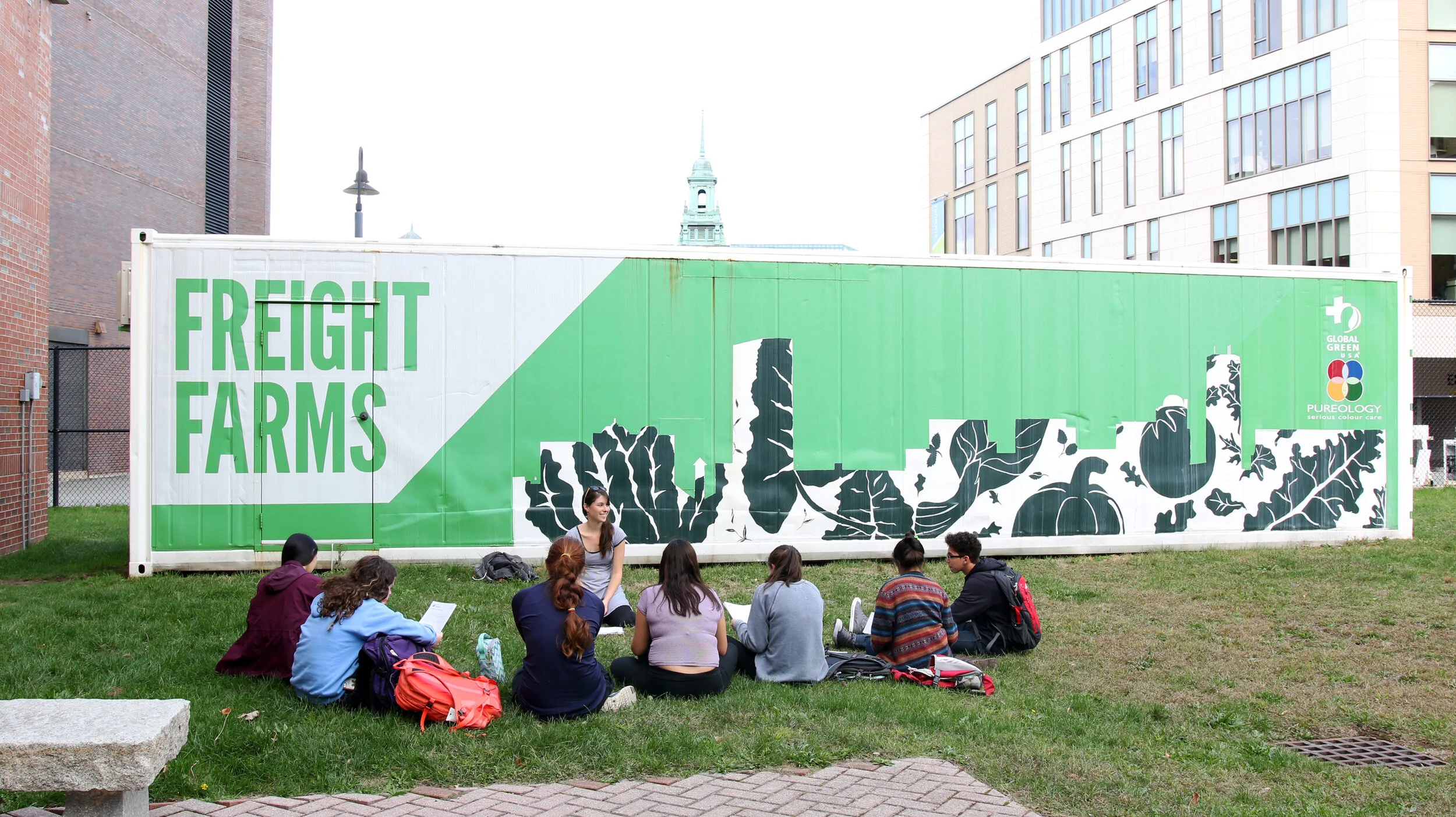
US: Georgia State University - Freight Farms - Leafy Green Machine
Just yards behind Piedmont North, the Leafy Green Machine is a fully functional hydroponic farm built inside a shipping container. Configured for the immediate growth of a variety of crops such as lettuce, kale, spinach and other herbs, its innovative climate technology and growing equipment allow for the perfect environment 365 days a year
Freight Farms
Just yards behind Piedmont North, the Leafy Green Machine is a fully functional hydroponic farm built inside a shipping container. Configured for the immediate growth of a variety of crops such as lettuce, kale, spinach and other herbs, its innovative climate technology and growing equipment allow for the perfect environment 365 days a year.
LEAFY GREEN MACHINE
Ready, set, grow. Want to try our freshly-grown produce? Stop by Miss Demeanor’s or Centennial Café to try some on your salad or sandwich.
About Our Leafy Green Machine:
Seeds begin in the nursery area, where they germinate and grow into little seedlings.
In this area, plants grow in a shallow trough that periodically floods and drains with the nutrient-rich water solution.
This area holds up to 3,600 plants at one time.
After three weeks in the seedling station, the sprouts will grow into a sturdier leafy green. The plants are transplanted into vertical growing towers that hang from the ceiling.
This method creates a high-density growing environment and maximizes the cubic footage in the container.
Emitters drip nutrient-rich water down the vertical grow tower using only 10 gallons of water daily to grow more than 4,500 plants.
The water that isn’t consumed by the plant flows out the bottom of the tower and is then recirculated right back to the water tank.
As sunlight is important during photosynthesis, the windowless farm is equipped with LED lighting that mimics the sun’s natural light via growth-optimized blue and red hues.
There are 128 lighting strips running about 18 hours per day to maximize the growth cycle, with the lights turned off to give plants time to rest and during peak hours.